

Understanding the multifaceted role of plastic round nestable food containers is essential for professionals in the food service industry. These containers offer an efficient storage solution that caters to the unique demands of Bubble Tea Shops, Restaurants, Food Trucks, Catering Services, and Event Planners. Throughout this article, we will explore the innovations that set these containers apart, delve into their diverse applications in meal prep and storage, analyze their economic impact within the kitchenware market, consider environmental factors surrounding their use, and identify current consumer trends and preferences. Each chapter aims to highlight how plastic round nestable food containers can optimize operations, enhance food storage, and support sustainability initiatives in your business.
Smart Space, Safe Storage: The Evolution of Plastic Round Nestable Food Containers
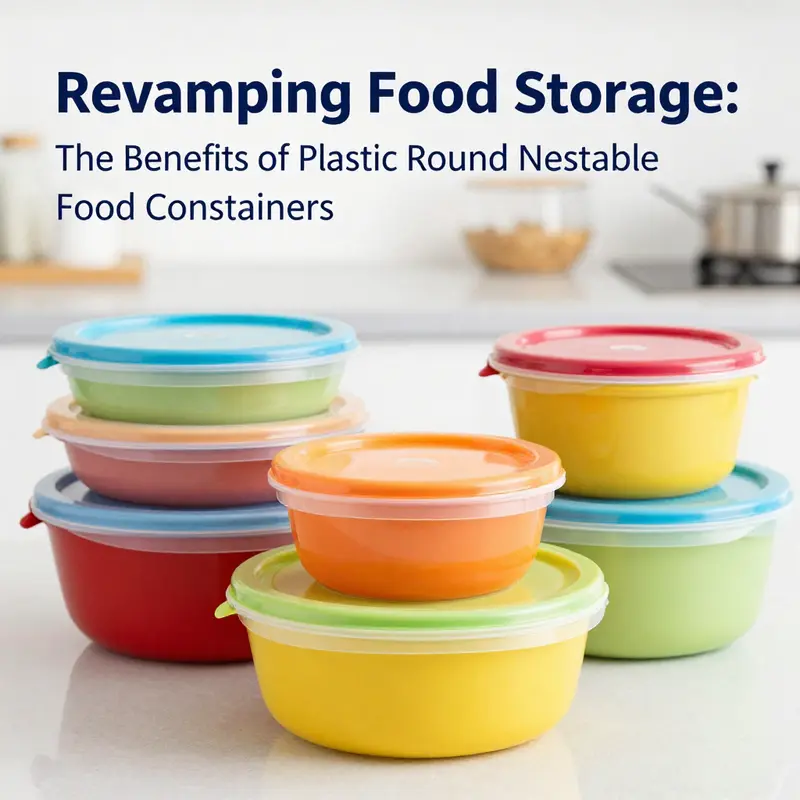
Round containers sit at the quiet intersection of everyday necessity and purposeful design. They are not flashy gadgets but practical tools that reshape how households think about food preservation, leftovers, and pantry organization. Over time, these containers have evolved from simple, stackable vessels into a cohesive system engineered for safety, durability, and maximum utility. Their round geometry is more than an aesthetic choice; it supports even pressure distribution, reduces the snagging of lids, and minimizes the risk of cracking under repeated use. The result is a family of kitchen tools that can be tucked away neatly, found with a glance, and pulled from the cabinet without waging a small war against misfit lids and wedged bases. At their core, plastic round nestable containers marry form and function in a way that aligns with how modern households cook, store, and reimagine meals across a week, a season, or a busy life. The materials science behind these containers has progressed toward safer, more resilient plastics, with polypropylene and high-density polyethylene as common workhorses chosen for toughness, chemical resistance, and affordability. These polymers withstand repeated cycles of washing, reheating, and freezing while maintaining shape and surface integrity, and many are BPA-free and marketed as food-grade to minimize chemical exposure. The practical reality is that these containers are designed to handle the rhythms of kitchen life, from quick snacks to batch meal prep, without buckling under heat or moisture. Nestability remains a defining feature that saves cabinet space and enables predictable storage. Lids with flat, smooth surfaces resist warping and double as labeling surfaces for meal planning, while cross-compatibility of sizes makes mixing and matching intuitive. The integration of leakproof seals with silicone gaskets marks a key leap, enabling secure transport and fridge stability for liquids and moist foods, and reducing spillage during commutes or busy days. A typical design features a robust snap-lock lid with a gasket that forms an airtight seal with a simple press, delivering less cleanup and more confidence when carrying leftovers. Beyond seals, safety standards and lifecycle considerations have shaped a shift toward durable, microwave-safe plastics and recycled content, aligning with a broader desire for long lasting, less wasteful kitchen gear. Design improvements emphasize ergonomics and usability, including easier nesting, faster access to the right size, and clearer lids or transparent sides for quick content checks without removing the lid. Consumer and retailer dynamics reward round nestable containers for organized fridges, predictable portions, and attractive presentation, while markets and bakeries benefit from clear display and reliable packaging. End-of-life considerations increasingly focus on recyclability and single-material constructions, though local recycling capabilities vary, driving ongoing innovation toward sustainable options without compromising safety. In practice, these containers support meal prep, pantry organization, and portable meals, while their rounded shape minimizes hard edges that could trap residues and preserves labeling readability. The narrative suggests a future with materials that blend rigidity and flexibility for impact resistance, smarter sealing for easier opening across ages, and packaging designs that integrate labeling aids or modular shelf compatibility. The evolving story of plastic round nestable containers thus reflects a balance of safety, durability, space efficiency, and user-centric design, with continued emphasis on reducing waste, extending lifespans, and simplifying daily kitchen routines.
How Round Nestable Plastic Containers Transform Meal Prep, Fridge Order, and Food Transport
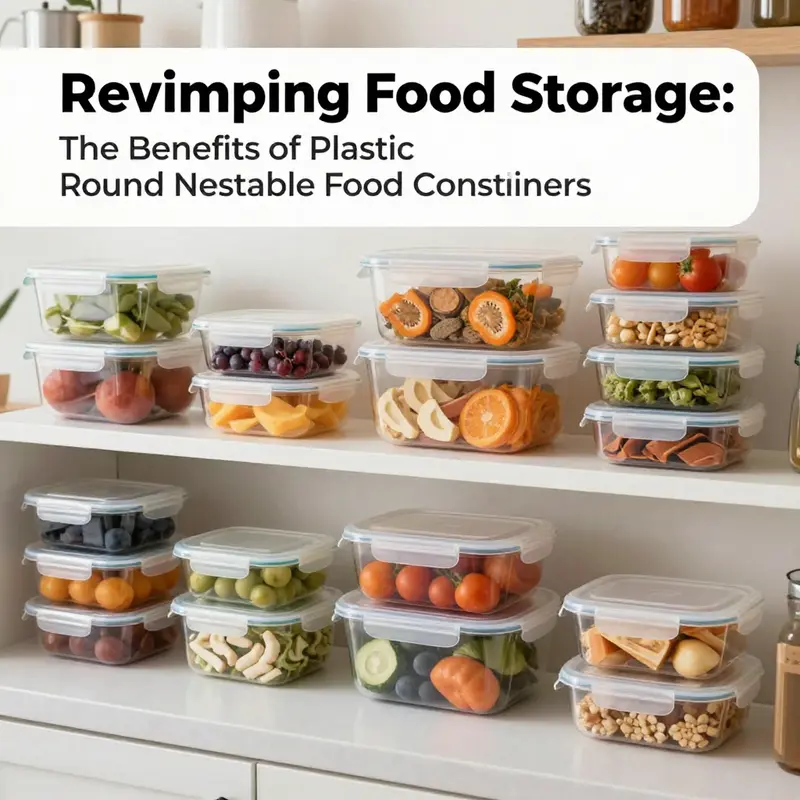
Round nestable plastic food containers are quietly practical tools that change how people plan meals, arrange refrigerators, and move food from place to place. Their simple circular form pairs with a clever nesting feature. When empty, containers stack inside each other to free cupboard space. When filled, they stack with lids to make tidy towers in a fridge or cooler. That core behavior—compact storage and stable stacking—shapes nearly every way these containers are used in kitchens, offices, and food-service settings.
At the heart of their appeal is convenience for meal preparation. People who portion breakfasts, lunches, or dinners rely on containers to control portions and speed morning routines. Round shapes match bowls and some plates, which makes transferring food quick. These containers also avoid awkward corners that trap sauces or crumbs. For cooked grains, salads, pasta, or stews, a single container can hold an entire meal component. By pre-cooking and portioning into multiple containers, cooks reduce daily decision fatigue and limit waste. The ability to label lids or sides further supports weekly planning. Clear plastic options keep contents visible so users can identify meals at a glance.
Fridge organization improves immediately with consistent container sizes. A collection of round nestable containers creates regular, predictable volumes on refrigerator shelves. This regularity reduces wasted space between mismatched items. Smaller containers corral snacks, dips, and chopped produce. Medium sizes hold leftovers and side dishes. Larger containers store family-sized portions or bulk-prepped staples. Because many models are stackable and stable, they permit vertical storage that preserves shelf area for taller items, such as milk cartons or bottles. When organizing a fridge for multiple family members, using a set of similar containers makes portion tracking and rotation easier.
Portability and transport are practical strengths. These containers shuttle meals to work, school, or outdoor events with less spill risk than loose bowls or bags. Secure lids, especially those with tight seals, prevent leaks. Plastic’s light weight reduces load compared with glass alternatives, and its resistance to breakage minimizes accidents during transit. For multi-dish transport, round containers pack neatly into insulated bags or coolers. Reusable containers also reduce reliance on single-use packaging during commutes or lunches. For catering and small food businesses, clear round containers present food attractively while protecting it during delivery.
Material selection matters. Food-grade plastics such as polypropylene or high-density polyethylene are common because they resist oils, acids, and detergents. Many are BPA-free, so reheating in a microwave is safer. Freezer-safe grades prevent cracking at low temperatures. Dishwashing compatibility simplifies cleanup and supports hygiene. Still, repeated exposure to high dishwasher heat can warp some lids, so checking manufacturer guidance helps preserve seals. Choosing thicker, professionally manufactured plastics yields longer service life and better resistance to staining from highly pigmented foods.
Reusable containers also play a role in sustainability strategies. Using them repeatedly reduces single-use waste from disposable clamshells, bags, or foil. For households trying to cut packaging waste, a set of nestable containers offers a long-term investment. They replace daily disposables for packed lunches, leftovers, and bulk ingredient storage. For market vendors or bakeries, reusable transport boxes and display containers reduce the need for constant single-use packaging. In situations where disposables remain necessary, pairing reusable containers with targeted disposable items, such as small sauce cups, can be efficient. For example, businesses often combine meal containers with separate disposable sauce cups with lids for dressings or condiments to keep textures and flavors fresh.
Care and maintenance influence longevity and performance. To avoid stains and odors, rinse containers quickly after use. Foods with turmeric, tomato, or curry pigments are the usual culprits for persistent discoloration. Using baking soda or diluted vinegar in a soak removes many residues. Avoiding prolonged exposure to oily foods in low-quality plastics reduces clouding. Store lids separately from bases for airflow when stacks are dry. For dishwasher-safe models, placing lids on the top rack and selecting a gentler cycle can prevent warping. When freezing, leaving headspace reduces lid distortion as contents expand.
Adaptability extends beyond home kitchens. In offices, consistent round containers streamline communal refrigerators. Labeling systems for dates and names reduce lost meals. Employers can encourage reusable packaging policies by supplying or subsidizing containers for staff. In schools, round food containers meet many lunchbox needs. Their resealability keeps snacks fresh until lunchtime. For catering, the ability to offer individual portions in clear, uniform containers elevates presentation. Desserts, salads, and layered dishes look polished in round, transparent vessels. For farmers’ markets and small food stalls, round nestable containers are handy for presenting berries, small pastries, or mixed snacks while keeping handling minimal.
Choosing the right sizes and lid styles matters. Small containers suit sauces, dips, or single-serve snacks. Medium sizes are ideal for side dishes and lunch portions. Large containers accommodate bulk meal components, such as cooked grains or marinated proteins. Lids come in snap-on, twist, or press-fit styles. Leak-resistant seals perform best for liquids and dressings. Rigid snap lids typically offer quick closure and consistent stacking. Flexible lids may compress better in packed coolers, but they sometimes sacrifice long-term airtightness. Interchangeable lids across a matched set increase versatility and reduce clutter.
Practical labeling and inventory habits maximize utility. A small writable area on a lid or a strip of masking tape is helpful. Date labels encourage first-in, first-out rotation and reduce spoilage. For meal-preppers, noting reheating instructions on containers saves time later. Clear containers help visually track remaining portions without opening lids. For professional kitchens, color-coded lids or container bands speed selection during service.
There are limitations to consider. Plastic will generally stain with strong pigments and can retain odors if not cleaned promptly. Not all plastics tolerate elongated exposure to high microwave temperatures. Oven or broiler use is out of the question. Thin, low-cost plastics may degrade faster, and lids can lose shape after repeated cycles. For long-term storage of acidic or oily foods, inspect containers periodically for clouding or brittleness. Replacing worn lids restores sealing performance more than replacing bases.
In terms of buying and stocking, sets that share a single lid style and nest neatly inside each other make the best use of cabinet space. Look for consistent rim sizes that allow lids to fit multiple bases. Clear walls and stable bases aid both presentation and stacking. For food businesses, choosing containers that meet local food-safety standards is essential. Durable, recyclable materials reduce environmental impact while preserving functionality.
Using round nestable containers changes how food moves and lives. They standardize portions, streamline refrigeration, simplify transport, and present food cleanly. With mindful material choice and maintenance, they serve kitchens for years. For shoppers who want detailed product selection help, this guide offers a useful starting point: https://www.amazon.com/dp/B0CZQXJ9V2
Stacking Value: The Economic Ripples of Plastic Round Nestable Containers in the Modern Kitchen
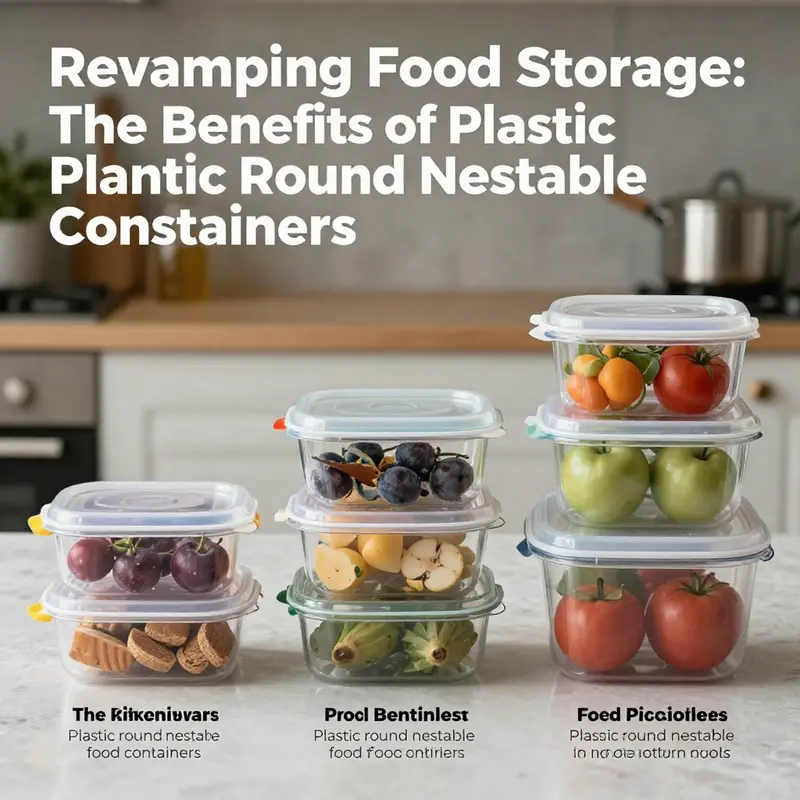
The rise of plastic round nestable containers has quietly become a foundational current in the kitchenware market, not merely because they save space, but because they reorganize cost structures, waste streams, and consumer expectations in a way that surfaces across households and commercial kitchens alike. The nestable design translates storage efficiency into tangible economic benefits. When empty, containers collapse into a compact form, freeing shelf space in a way that reduces the need for expansive pantry real estate. In urban homes where every square foot matters, this space optimization lowers the perceived cost of organization. In the commercial sphere, storage density becomes a lever for inventory planning, cold chain management, and throughput in meal prep operations. The economic equation is not simply the sticker price of a box, but the downstream effects: fewer single use packages, lower spoilage, more consistent portioning, and streamlined handling that lowers labor costs and increases throughput. Taken together, these containers act as economic multipliers in the modern kitchen, a role amplified by the broader push toward sustainable, reusable packaging in both consumer markets and food service supply chains.
The market context helps illuminate why nestable plastic containers command attention. Recent market analysis places the global plastic food containers market at around 7.69 billion dollars in 2025, with a forecasted compound annual growth rate of roughly 13.32 percent from 2026 through 2033. That momentum reflects a convergence of urbanization, busy lifestyles, and expanding meal prep and delivery ecosystems. As households and businesses seek reliable, reusable solutions that can withstand freezing, microwaving, and regular handling, the appeal of durable, stackable options sharpens. The economic value emerges not only from the purchase price, but from the cumulative savings realized over time as repeated use displaces single use packaging and reduces food waste. In other words, nestable containers help convert one time purchases into long term operating efficiency, a shift that resonates with budget minded households and cost conscious operators alike.
A telling example of lifecycle efficiency is the category’s ability to blend affordability with durability. In many markets, standardized, mass produced lines provide a low entry price and predictable performance. A representative consumer-grade option often priced around a couple of dollars per unit in bulk demonstrates how accessibility fuels adoption. The cost per unit is not simply a matter of initial outlay; it folds into the savings from reduced spoilage, easier meal planning, and less frequent replacement. When a family or a food service operation can rely on a single design across multiple sizes, the value of cross-size compatibility compounds. Compatible lids and stacking patterns mean equipment, lids, and storage strategies cohere into a predictable system, which minimizes confusion and training time for staff while maintaining consistent portion control for customers. In budget planning, the lower unit price, coupled with a longer lifecycle, translates into a lower total cost of ownership and a higher return on investment over the container’s life.
The economic logic extends into the manufacturing and supply side as well. From an industrial perspective, nestable shapes benefit from economies of scale, as standardized geometries and widely available plastics such as polypropylene and high-density polyethylene drive lower unit costs. PP and HDPE are favored for their durability, chemical resistance, and relative safety in food applications. The tooling for nestable designs is efficient when applied to uniform measurements across a family of sizes; once the tooling is amortized, incremental production costs for additional sizes rise only modestly. This convergence of material science and design yields predictable margins for manufacturers and reliable price points for buyers. It also encourages retailers and food service chains to standardize their packaging assortments, reducing the complexity of inventory and the risk of overstock or obsolescence. In markets where margins are tight and competition intense, such standardization can be a strategic differentiator, enabling a steady supply of reliable containers that support consistent operations across multiple outlets and regions.
Beyond the factory floor, the nestable container’s structural features drive value in ways that ripple through the supply chain. A leak-proof lid that remains compatible across sizes, for instance, reduces the complexity of packaging ecosystems. Operators do not need to maintain a sprawling lid assortment to match every dish and container, which translates into lower procurement costs, simplified warehousing, and easier returns or exchanges in logistics networks. Transparent construction enhances product presentation, aiding consumer decisions at the shelf or in the display case and, importantly, supporting brand storytelling around freshness and quality. For retailers and market sellers alike, this transparency can reduce the perceived risk of buying a new packaging solution, increasing the likelihood of broader adoption and standardization across departments or outlets.
In households, the impact is amplified by everyday use cases. Nestable round containers are a natural ally to meal prepping, fridge organization, and dry goods storage. They are well suited to hold grains, nuts, and snack items, where the ability to stack without clutter translates into cleaner, more navigable kitchens. The design also supports portion control, as measured by size compatibility and the predictable resealing of lids. The result is a cascade of savings: less food spoilage due to better portioning, reduced waste from open packaging, and a more efficient kitchen workflow that saves time during busy mornings or late-night meal assembly. For families coordinating lunches or school snacks, the predictability of a shared system reduces the cognitive load of meal management and fosters consistent routines that minimize waste and optimize freshness.
Commercial kitchens and meal prep services experience amplified benefits. In these contexts, space is a premium asset, and every square foot counts toward profitability. Nestable containers allow operators to maximize cold storage capacity and optimize packaging for takeout or delivery. When containers stack neatly, pallets and shelving can be scaled with fewer frictions, enabling more efficient temperature control, inventory audits, and speed in order fulfillment. The consistent lid fit and cross-size compatibility limit the number of packaging SKUs that staff must manage, reducing training time and error rates. Over time, these efficiencies compound: faster turnarounds in busy service periods, lower labor costs associated with packaging tasks, and enhanced customer satisfaction due to reliable performance and presentation. The kitchen becomes a leaner operation, more resilient to demand variability, with packaging contributing to margins rather than eroding them.
Environmental considerations inevitably braid into the economic narrative. While plastic containers deliver durability and reuse value, heightened awareness of plastic waste and climate impacts pressures brands to innovate. Market players are increasingly exploring recyclable or biodegradable alternatives and adjusting business models toward circularity. Take-back programs, refill systems, and other closed-loop initiatives are being piloted to preserve the economic advantages of reusable packaging while addressing environmental concerns. These efforts shape the long-term economics by reallocating waste management costs, creating new revenue streams around recycling or refilling services, and potentially preserving or expanding consumer willingness to invest in durable, reusable solutions. In parallel, there is a clear acknowledgment that sustainability can influence brand perception and demand dynamics. Consumers may pay a premium for packaging that signals responsible stewardship, while retailers may demand suppliers who can demonstrate robust take-back or recycling capabilities. The result is a nuanced economic landscape where the cost of sustainability is weighed against the benefits of waste reduction, resource optimization, and enhanced corporate reputation.
Even as the market expands and the lifecycle economics become clearer, certain constraints temper growth. Staining from tomato-based or curry sauces can affect the aesthetic longevity of plastic containers, sometimes prompting more frequent replacement or a more careful segmentation of use cases. In high heat or oven environments, most plastic round nestable containers are not designed for direct oven use, which can limit certain culinary applications and influence product positioning. Such limitations do not erase value, but they inform a more precise market segmentation and a clearer map of where these containers fit best. The ability to withstand dishwasher cycles and freezer temperatures, while not universal across every model, remains a key selling point that supports long-term use and reduces the need for frequent replacements. These practical boundaries underscore the importance of clear consumer communication and reliable product testing to sustain trust and market growth.
Looking forward, the economic trajectory of plastic round nestable containers hinges on several converging forces. The ongoing push toward material efficiency and lighter weight, combined with advances in recycle-ready formulations, will shape cost structures. Design for disassembly and standardized lids can further compress the total cost of ownership, while cross-size compatibility continues to drive procurement efficiency. In markets where urban living continues to favor compact, organized spaces, the appeal of nestable designs is likely to deepen, reinforcing steady demand. For manufacturers, the challenge will be to balance affordability with emerging sustainability expectations, investing in materials and processes that preserve the economic virtues of reuse while addressing end-of-life concerns. For retailers and service providers, the message is equally clear: the most successful packaging ecosystems are those that minimize complexity, optimize space, and deliver reliable performance across a broad range of use cases, from daily meals at home to bulk provisions for markets and catering operations.
In sum, the economic impact of plastic round nestable containers is both real and multifaceted. They reduce storage and labor costs, lower the long-term cost of ownership through durable reuse, and simplify supply chain management through standardization. They also intersect with broader sustainability agendas, inviting innovations that can preserve or even enhance value in a world increasingly attentive to waste and resource use. As the market continues to evolve, firms that align product design with lifecycle efficiency, scalable manufacturing, and responsible end-of-life strategies are likely to command enduring economic advantages. For readers seeking a deeper dive into market trends and forecasts shaping this space, the latest industry analysis provides a comprehensive lens on how containers of this type are positioned to influence pricing, volume, and competitive dynamics across regions and channels.
For further trends and forecasts, see the external market analysis: https://www.grandviewresearch.com/industry-analysis/plastic-food-containers-market. In addition, this chapter nods to the evolving packaging landscape where practical, reusable solutions meet responsible, scalable business models. A related reference point for more practical packaging options and design considerations is the concept of eco friendly takeout boxes for food packaging, which can be explored here: eco-friendly takeout boxes for food packaging.
From Nest to Necessity: Environmental Trade-offs and the Lifecycle of Plastic Round Nestable Food Containers
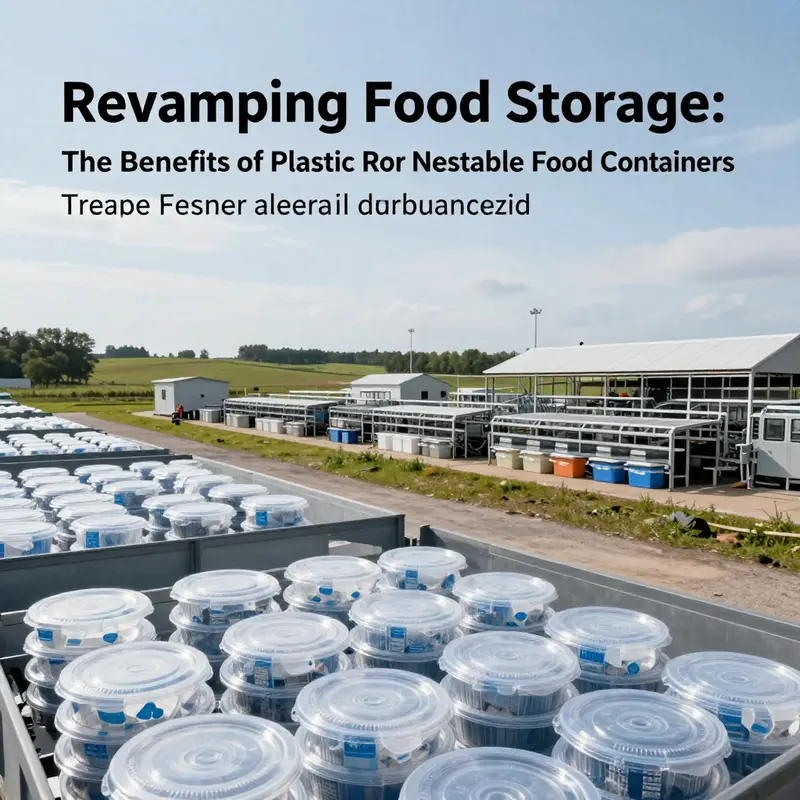
The quiet efficiency of plastic round nestable food containers hides a deeper conversation about how we design, use, and ultimately dispose of everyday objects that touch nearly every meal. Their round form, light weight, and nestable geometry promise space in a crowded kitchen and streamlined logistics in a bustling market. Yet every tray, lid, and seal sits within a larger system that depends on fossil fuels, energy-intensive manufacturing, and complex waste streams. Reading the environmental picture of these containers requires tracing a path from cradle to grave—where raw materials are extracted, transformed, transported, used, reused, and finally discarded or repurposed. The result is a nuanced balance: the same features that make nestable containers so attractive can, if not managed thoughtfully, amplify environmental costs. Still, when designed for longevity and used within a robust circular economy, these containers can contribute to tangible reductions in waste and resource use compared with single-use options, especially when reuse, proper cleaning, and effective end-of-life management are part of a reliable system.
The foundational environmental footprint begins with resource extraction and manufacturing. Most resins used for durable, food-grade plastics originate from fossil fuels—oil and natural gas. Each stage of extraction, refining, and polymerization consumes energy and emits greenhouse gases. The very durability that makes these containers long-lasting also means they remain in circulation longer, lengthening their exposure to the energy and emissions embedded in their production. The nesting feature, by enabling compact storage and transportation, can reduce the number of shipments and the space required in warehouses. Fewer trips and smaller packaging margins can lower logistical energy use. But the lifecycle ledger does not balance solely on in-use efficiency; it hinges on what happens after the containers have served their purpose. Contamination with food residue can impede recycling. When containers are left dirty or are made from blends of materials, many end up diverted to landfills or incinerators. In oceans and rivers, abandoned or mismanaged plastics become microplastics, contributing to ecological disruption that extends far beyond the kitchen.
To understand the broader ecological performance of reusable plastic containers, life cycle assessments (LCAs) have been conducted to evaluate their overall environmental profile relative to single-use alternatives. A 2024 study focusing on reusable takeaway packaging found a clear pattern: while the early energy investments in manufacturing are higher for durable, reusable systems, the environmental burden declines with repeated use. When consumers or foodservice operators reuse containers many times, the cumulative energy and emissions per meal drop well below those of disposable options. The take-home message from this work is not that durability alone solves the problem, but that longevity and disciplined reuse do. The design imperative is to maximize a container’s lifespan and to ensure that the systems for cleaning, returning, or reprocessing are reliable, convenient, and affordable. Without a supportive reuse culture and infrastructure, even well-made containers can underperform in environmental terms.
The sustainability of reuse, however, is not a given. It hinges on consumer behavior, the surrounding infrastructure, and the actual estimated lifespan of the containers in circulation. If a family washes and uses a set for months or years, the environmental advantages accumulate. If a workplace or school uses a well-organized return-and-clean system, the same logic applies. Conversely, if containers are misused, frequently damaged, or discarded after only a handful of cycles, their advantages evaporate. This is a reminder that lifecycle performance is not solely about material science; it is heavily dependent on human practices and system design. The practical implication for manufacturers and policymakers is to invest in not only robust, durable materials but also in clear usage guidelines, intuitive cleaning requirements, and easy-to-integrate return pathways that minimize friction for the user.
End-of-life questions loom large in any plastics discussion. Recycling remains a major challenge for many plastic storage solutions. The end-of-life phase is where the promise of reuse meets the reality of waste streams. Food residues complicate recycling by increasing contamination risk, which can degrade the quality of recycled resin and push streams toward landfill or incineration. Even when a container is made from a recyclable resin, the actual recycling rate depends on local facilities, collection systems, and consumer compliance. Some programs permit recycling of rigid plastics if contamination is minimal and the item is clean. In practice, achieving this cleanliness is easy to say but harder to implement universally in households, schools, and small businesses. Consequently, a substantial portion of reusable containers may be redirected away from recycling channels and into disposal pathways that do not recover materials. This outcome underscores the need for better waste management infrastructure, standardized labeling, and consumer education that aligns expectations with local capabilities.
An important dimension of the environmental narrative is the potential for reuse to meaningfully reduce resource use over the long term. The 2024 study on reusable takeaway containers highlighted that, despite higher upfront energy inputs, repeated use can yield a tangible net environmental benefit. The crucial caveat is that the benefit only materializes if the containers are used many times and if the system around them—collection, cleaning, and return—functions efficiently. This insight shifts some focus onto the design of the containers themselves and the ecosystems that support reuse. Designers are encouraged to pursue longevity as a core attribute, including robust lids that maintain seal integrity across sizes, smooth surfaces that resist staining and microbial buildup, and compatibility with standard dishwasher cycles or cleaners. The more versatile and durable the container, the more feasible it becomes to realize the reuse dividend. Crucially, the system must make it easy for users to return, clean, and redeliver containers to where they will be reused, rather than relegated to the waste stream after a fixed number of cycles.
Sustainability, in this sense, is a collaborative achievement. It relies on consumer habits—such as rinsing before reuse, avoiding overheating that could warp lids, and selecting containers that tolerate repeated cleaning—alongside supply-chain logistics that minimize handling energy and shrink-wrapped packaging wherever possible. It also requires transparent labeling about material composition and care instructions. When users see clear guidance on the safe reuse horizons of their containers, they are more likely to treat them as a resource rather than as a disposable item. At the same time, manufacturers can contribute by adopting modular designs that allow easier replacement of worn lids or seals, enabling a single worn component to be swapped out without discarding the entire system. Such design choices extend the usable life of the product, reducing the need to extract new materials to fulfill demand.
The nesting feature itself can influence environmental outcomes beyond space efficiency. By enabling empty containers to nest within each other, storage becomes compact, reducing the energy footprint associated with warehousing and transport. Fewer pallets, smaller bulk loads, and reduced handling all translate into lower operational emissions. Yet nesting also complicates end-of-life sorting in some recycling streams if, for instance, lids from various sizes are mixed or if the nesting design confuses automated sorting equipment. This is where standardization becomes important. When the market converges on uniform dimensions and lid compatibility, the post-use phase can be streamlined, improving recyclability and reusability across suppliers and municipalities. In other words, the ecological advantages of nesting are strongest when accompanied by harmonized designs that ease the path from consumer to circular use.
From a policy and system-design perspective, the environmental story grows more compelling as it widens beyond material performance to address recycling capacity, take-back programs, and consumer education. The European Economic and Social Committee’s report on recycling food packaging and food waste in the plastics revolution offers a framework for thinking about how policy can align with industry practice to foster better outcomes for packaging systems, including reusable, nestable containers. The report discusses challenges and policy recommendations aimed at closing loops in plastic packaging and reducing waste. It suggests integrating recycling targets with labeling standards, enhancing collection infrastructure, and promoting design for recyclability. These policy levers can help ensure that the environmental benefits of reusable, nestable containers are realized at scale, rather than remaining confined to controlled experiments or niche markets.
For practitioners and students alike, translating these insights into practice involves more than selecting a durable resin. It means rethinking the value proposition of a container from a one-use convenience to a durable, serviceable component of a circular system. Designers can incorporate features that enhance longevity without sacrificing safety. They can select resins with high chemical resistance to oils, acids, and common kitchen cleaners, and they can ensure that finishes and colors resist staining so the containers retain a clean, attractive appearance over many cycles. Cross-compatibility among sizes, lids, and seals helps reduce waste by enabling users to replace a single component rather than the entire set. In addition, making the cleaning process as straightforward as possible—whether through dishwasher compatibility or heat-tolerant materials that withstand hot-water sanitizing—encourages consistent reuse. Yet even with robust design, the social and logistical scaffolding around reuse matters most: accessible return points, efficient cleaning cycles, and affordable shipping back into circulation.
To connect these ideas to everyday choices, consider the consumer decision as part of a wider system. When households or organizations decide to invest in reusable containers, they partly authorize a redistribution of environmental benefits and burdens across stages of the life cycle. The nesting nature of these containers helps optimize storage and reduces intra-household clutter, making the choice feel practical and scalable. But the environmental payoff depends on behavior and infrastructure. If reuse is limited to a handful of cycles, the system’s energy and resource savings are small. If reuse is embraced across households, schools, and workplaces, with reliable cleaning and robust return loops, the benefits compound. This is why the design and the system must work in tandem: the container should look and feel like a reliable long-term partner, while the system around it should invite and simplify reuse rather than complicate or hinder it.
In practice, this means coupling material science with a logistics mindset. It means communicating expectations clearly to users and building partnerships among manufacturers, retailers, and local authorities to support a circular workflow. It also means recognizing that even the most thoughtfully designed reusable container exists within a larger consumption culture that often rewards convenience over stewardship. The challenge is to nudge that culture toward reuse without compromising food safety, convenience, or affordability. A forum that brings policymakers, designers, and communities together to align incentives—such as standardized recycling guidelines, transparent labeling, and convenient take-back schemes—can unlock systemic gains that individual consumer choices alone cannot achieve. The nested container becomes more than a storage tool; it becomes a dependable node in a broader, more resilient loop that sustains both appetite and environment.
For readers seeking a practical bridge between theory and practice, consider how a packaging option might be integrated into a broader sustainability plan. The idea is not to replace all single-use items with durable plastics overnight but to cultivate an ecosystem that makes reuse the default and recycling a reliable second act. In kitchens, offices, and marketplaces, that means choosing containers that are designed for repeated circulation, offering predictable cleaning requirements, and enabling easy, cost-effective return and refilling cycles. It also means choosing packaging that can be easily sorted and diverted to recycling or upcycling streams once its useful life ends. When such choices proliferate, the environmental footprint of our meals—across homes, schools, and businesses—starts to tilt toward a more sustainable equilibrium.
As this chapter moves toward the next, the conversation is not about sanitizing plastics of all risk or eliminating convenience. It is about acknowledging the real environmental costs baked into the lifecycle, and then designing and operating systems that minimize those costs through reuse, better end-of-life management, and smarter product architecture. The nesting design remains a powerful example: a small, mechanical decision about how containers stack has the potential to influence transport efficiency, storage practices, and the likelihood of durable reuse. The challenge is to ensure that improved storage geometry does not mask the ongoing need for responsible production, responsible consumption, and robust waste management. When these elements align, plastic round nestable containers can contribute meaningfully to a kitchen that respects both function and the planet. And as consumers increasingly demand transparency, durability, and clear guidance, the path toward a more sustainable packaging future becomes less about trade-offs and more about integrated design and systemic support.
To explore concrete pathways further, readers can consult resources that connect packaging design with recycling policy and practice. For example, a practical entry point is the concept of eco-friendly takeout packaging options that emphasize durability, microwave safety, and grease resistance while remaining compatible with recycling streams. This approach demonstrates how a simple design choice can echo across the supply chain, influencing how waste is collected, sorted, and reintegrated into production cycles. By thinking of the container as a modular component with an expected service life and a clear end-of-life trajectory, designers and operators can optimize for both performance and sustainability. The chapter’s overarching message, then, is not that reuse is a panacea, but that reuse, when supported by thoughtful design and strong infrastructure, can redefine the environmental footprint of a staple kitchen item. It invites a shift from “how cheap is it today?” to “how durable and circular can it be over many meals, many months, and many seasons?”
External resource: https://www.eesc.europa.eu/en/publications/reports/recycling-food-packaging-food-waste-plastics-revolution
Internal link for further reading on sustainable packaging options: eco-friendly-takeout-boxes-for-food-packaging-stylish-food-containers-safe-microwave-craft-paper-lunch-boxes-leak-grease-resistant
Beyond Convenience: How Health, Sustainability, and Smart Features Redefine Plastic Round Nestable Food Containers
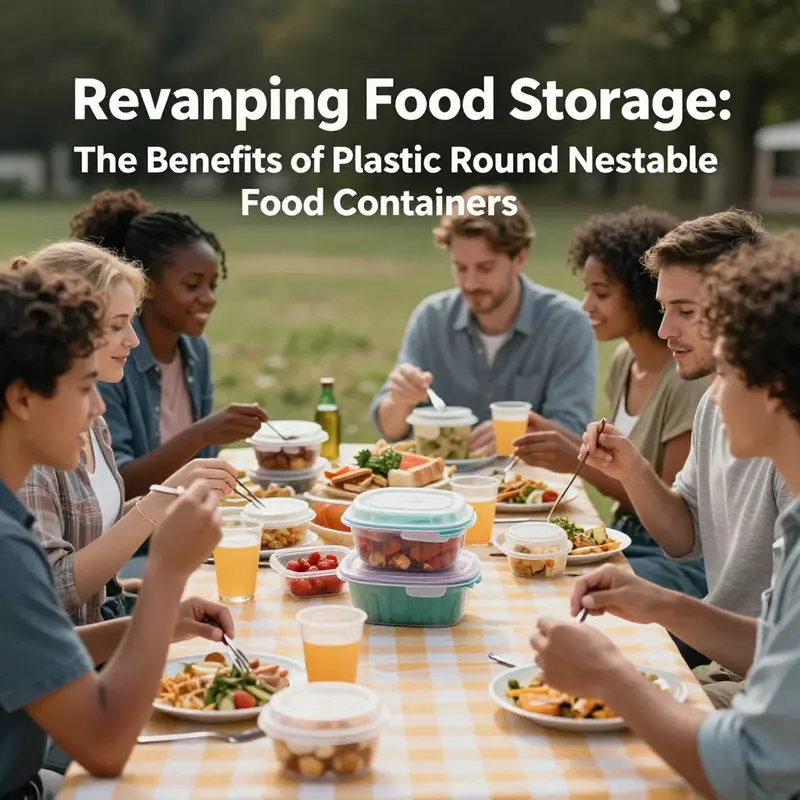
The everyday kitchen has long valued plastic round nestable food containers for their simplicity, durability, and space-saving prowess. Yet as households confront growing concerns about health, environmental impact, and digital-enabled convenience, the conversation surrounding these containers has shifted from a narrow focus on affordability and capacity to a more holistic view. Consumers are not merely looking for a clever way to stack forks and lids; they want materials that protect what they store, designs that align with eco-conscious habits, and features that connect storage with information, guidance, and even surprise value. In this evolving landscape, plastic round nestable containers are being reimagined as a small but telling hinge between daily practicality and broader consumer expectations about health, sustainability, and smart design.
Health considerations have moved to the foreground of purchase decisions. The rise in health awareness translates into a preference for materials that minimize chemical migration into food. When families choose containers, they are increasingly prioritizing products that are BPA-free and certified for food safety. This concern is not just about factory labels or a momentary trend; it reflects a broader understanding that storage materials interact with what we eat, especially when containers are heated or used repeatedly over time. For households with infants or young children, the stakes feel even higher. The desire for peace of mind translates into clear, trustworthy labeling, straightforward care instructions, and assurances that the container components are designed to withstand routine kitchen use without compromising safety. In practice, this has encouraged manufacturers to emphasize food-grade polymers, tested contact with oils and acids, and compatibility with common kitchen workflows, including microwaving and freezing. The overall message is that health security is now a baseline expectation, not a differentiator that only premium products must meet.
Alongside safety, environmental sustainability has become a defining criterion. Plastic round nestable containers continue to dominate many kitchen setups, yet public sentiment increasingly questions the long-term environmental footprint of disposable and reusable plastics alike. Market data from early 2026 show plastic containers maintaining a sizable presence in packaging ecosystems, signaling entrenched consumer habits and the logistical realities of food storage at scale. At the same time, this moment of inertia is being tempered by a rising demand for materials that are recyclable, degradable, or sourced from renewable feedstocks. Consumers are less tolerant of a veneer of eco-friendliness that doesn’t translate into meaningful material choices or end-of-life options. A growing segment seeks options that minimize deforestation, avoid non-renewable inputs, and prioritize circular design principles. Even among those who still value the practicality of round, nestable formats, there is a clear expectation that sustainability should be built into the product’s lifecycle—from production to reuse to recycling.
This shift is reflected in subtler but powerful consumer expectations: the packaging should tell a transparent story about its environmental footprint. Consumers want to understand whether a container is recyclable in their local system, whether it can be recycled without compromising the integrity of the plastic, and whether the manufacturing process reduces waste, energy use, and greenhouse gas emissions. They are drawn to materials that support a circular economy—whether through higher recyclability, compatibility with compostable streams, or the use of renewable resins that do not rely on virgin fossil inputs. Even as many households still rely on durable plastics for reuse over weeks and months, the allure of greener options is not fading. Companies are responding with improved resin blends, easier disassembly for recycling, and clearer labeling that directs end-of-life actions, all without sacrificing the lightness, leak resistance, and easy-care features that make these containers so appealing in the first place.
Functionality and smart features represent the third pillar that reshapes consumer preferences. The container itself is increasingly viewed as a node in a broader information and efficiency network. Smart packaging concepts—such as RFID tags or QR codes—are moving from novelty to practical utility. For a family planning weekly meals, a QR code on a lid can reveal recipe ideas, portion guidance, and storage timelines, turning a simple storage vessel into a gateway for healthier choices and reduced waste. RFID, where present, can enable automated inventory tracking at home or in commercial settings, helping both households and retailers understand usage patterns, reduce overbuying, and minimize spoilage. The value proposition extends beyond safety and containment: it’s about turning a basic object into a touchpoint for nutrition knowledge, cooking inspiration, and even personalized promotions that align with dietary goals or family routines. These capabilities, when implemented with care, enhance consumer trust and deepen brand relationships without compromising the core advantages of nestability, durability, and reasonable cost.
Interwoven with health, sustainability, and smart features is a practical appreciation for the nestable design itself. The ability to nest containers when empty translates into meaningful space savings in crowded kitchens or compact urban homes. This design efficiency reduces clutter, streamlines pantry organization, and makes daily meal routines feel less chaotic. But the nestable form also invites design complexities. The lids must be compatible across sizes to maintain the seamless stacking dream, and the seals have to remain leak-proof under typical kitchen conditions. Over time, consumer expectations may push for lids that are more robust against staining from tomato-based sauces or curry, a common pain point that can affect the perceived longevity of the entire set. Likewise, while microwave and freezer compatibility remains a selling point, users increasingly expect oven-free assurances as well; many households reserve oven-safe containers for baking or reheating more delicate components. A careful balance is required: keep the containers light and budget-friendly, ensure reliable sealing, and still offer a level of performance that suits mixed-use tasks—from freezing to microwaving to quick fridge cooling.
Taken together, these trends describe a consumer who does not merely want a container to hold leftovers. They want confidence that the container is safe for family use, responsible in its environmental impact, and capable of adding value through smart cues and guided functionality. The challenge for designers and manufacturers is to honor the core strengths of plastic round nestable storage—lightweight, space-saving, cost-effective—while weaving in the non-negotiables that modern buyers demand. That means selecting food-grade polymers that perform under heat and cold while providing a clear, reassuring safety profile; choosing materials and additives that improve recyclability or enable renewable content; and crafting lids and rims that maintain a secure seal through repeated cycles of use and cleaning. It also means exploring how to communicate these qualities in a way that is easy to understand at the shelf or online, so consumers can quickly compare, decide, and feel confident in their choice.
The business implications of these evolving preferences extend beyond product attributes alone. Retailers and manufacturers are increasingly asked to articulate a coherent sustainability narrative and a robust health-and-safety story without overcomplicating the consumer decision. This demands transparent labeling about material composition, heat tolerance, and end-of-life options. It also invites a more deliberate approach to packaging aesthetics. Clear, transparent bowls that allow visibility of food contents remain a powerful draw for markets and home kitchens alike, offering premium presentation for berries, baked goods, or multi-component desserts while supporting efficient stacking. The visual clarity of the container complements the desire for honest, straightforward information about safety and environmental attributes. In this light, the container transcends its basic function and becomes a reliable, informative partner in daily food management.
From a design perspective, the challenge is not just to improve one feature but to harmonize several priorities. A successful line-up of plastic round nestable containers should deliver dependable performance, intuitive use, and a sense of trust that reflects both health-conscious choices and environmental responsibility. Companies can pursue this through material science innovations, such as resins that minimize odor transfer and staining, while preserving clarity and impact resistance. They can also pursue lifecycle-oriented design, creating lids that are cross-compatible across sizes to extend the usable life of the set, and employing reduced-waste packaging and clearer recycling messaging. In parallel, smart features can be introduced thoughtfully. A discreet QR code on the lid, a simple RFID tag embedded in the lid rim, or a companion app with helpful tips on storage durations can elevate everyday use without complicating manufacturing or raising costs beyond reason. The best outcomes emerge when form and function, safety and sustainability, and convenience and education are woven together in a coherent, user-centric product family.
As these trends converge, the consumer’s ultimate decision-making process becomes a thoughtful evaluation rather than a reflexive instinct. People weigh how the container fits into their kitchen routines, the credibility of safety and environmental claims, and the tangible benefits of added information and guidance. They increasingly expect that the very act of storing and reheating food will be governed by materials and designs that respect health, protect the planet, and engage them in meaningful ways. For designers and marketers, this means that the nested solution must do more than occupy a small footprint; it must stand as a responsible, well-communicating, and genuinely useful part of the cooking and eating experience.
To connect this with practical consumer journeys, consider how a family planning a week of meals might approach selection. They evaluate ease of use, dishwasher compatibility, and the reliability of seals to prevent leaks in a lunchbox scenario. They also skim for cues about sustainability—whether the container signals recyclability, whether it uses renewable content, and whether care instructions are straightforward. And they appreciate little enhancements: the option to scan a code for a quick recipe idea or to log when a batch was frozen for later. Such features convert storage into a small, tangible enrichment of daily life rather than a mere functional purchase. This is how consumer trends crystallize into real-world choices, shaping demand not only for containers that nest neatly but for sets that reinforce healthier eating, simpler routines, and a lighter environmental footprint.
For stakeholders across production, retail, and design, the path forward lies in balancing three pillars: safety, sustainability, and usefulness. Underpinning safety is a steadfast commitment to food-grade materials and clear, honest labeling. Underpinning sustainability is the shift toward recyclable or renewable-coded options and clearer end-of-life guidance. Underpinning usefulness is the integration of intuitive design with gentle touches of technology that support better storage decisions without overpowering the user. When a line of plastic round nestable containers embraces these priorities in a coherent, well-executed way, it resonates with diverse households—from busy families seeking reliable meal prep to minimalist kitchens that prize organization and efficiency. The result is not a single product but a trusted storage ecosystem that keeps pace with evolving consumer expectations while honoring the practical DNA that made nestable containers a mainstay in the first place.
To explore practical implications for readers who are designers, buyers, or brand storytellers, it helps to keep one eye on the broader ecosystem. Consider how a consumer might encounter your containers in a store, on a brand’s site, or through a smart packaging feature. The choice to highlight BPA-free certification, recyclable packaging, or a QR-driven recipe library can influence a shopper’s confidence and willingness to invest in a set that promises long-term utility. And while the nestable attribute remains a core advantage, it becomes more persuasive when paired with transparent health information and credible sustainability claims. In this way, the humble plastic round nestable container becomes a thoughtful platform where health, environment, and technology meet daily kitchen realities. By acknowledging and integrating these trends, manufacturers can deliver products that not only meet current expectations but anticipate future ones, keeping pace with a market that increasingly equates good storage with responsible living.
Internal link reference: For readers seeking a concrete example of how eco-friendly packaging messaging can align with storage design, see this example of an eco-friendly takeout packaging solution that emphasizes safety, recyclability, and practical usability: eco-friendly takeout boxes for food packaging.
External resource: For a broader industry perspective on the market landscape of disposable plastic food containers and related trends, see the following external analysis: https://www.linkedin.com/pulse/disposable-plastic-food-containers-market-landscape-james-harris/
Final thoughts
The strategic integration of plastic round nestable food containers into your culinary operations can enhance efficiency, maximize space, and align with sustainability goals. As we’ve explored, these containers present innovative features, versatile applications in meal prep and storage, a notable economic impact, and are driven by evolving consumer preferences. Investing in high-quality plastic round nestable food containers not only facilitates better food management but also positions your business as a forward-thinking entity committed to safety and environmental responsibility. Now is the time to elevate your food service with these essential tools.