

Clear plastic square storage cups have emerged as essential tools in enhancing the organization and operational efficiency across various sectors, particularly in the food and beverage industry. From bubble tea shops to catering services, these versatile containers not only provide practicality but also ensure inventory visibility and space optimization. In this guide, we will explore the significant applications these storage cups have in home organization, their vital role in retail and inventory management, and important considerations for material and design, all tailored to your specific business needs.
Seeing Through Clutter: The Quiet Efficiency of Clear Plastic Square Storage Cups in Everyday Home Organization
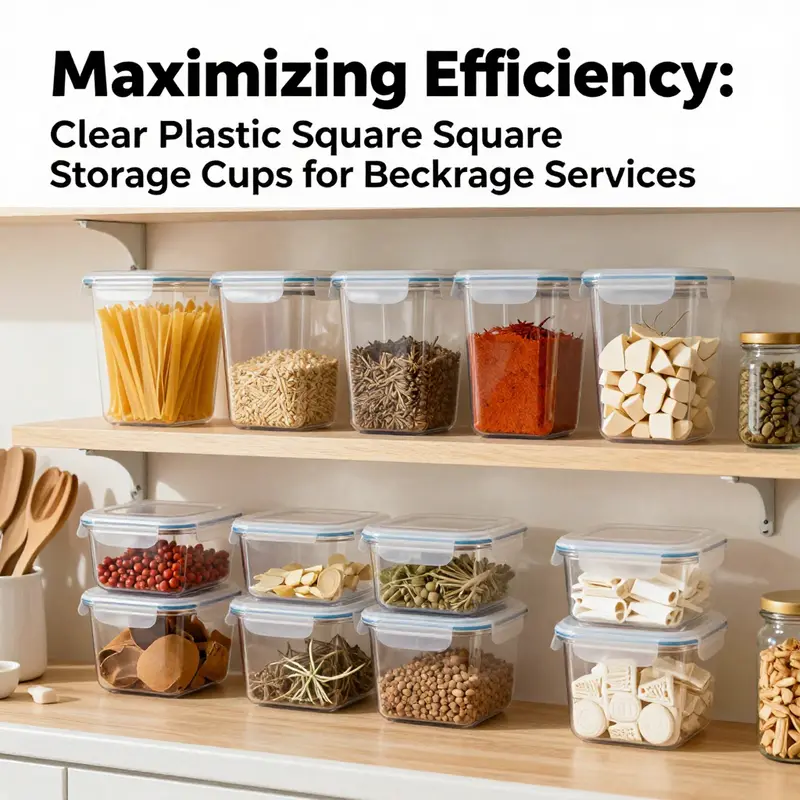
Every home accumulates its own ecosystems of small, invisible challenges. The magnets that pull at our attention are the little boxes, baskets, and containers that hold everything from pantry staples to office odds and ends. In many households, the most persistent friction point is not the number of items but the friction of finding them when they are needed. Clear plastic square storage cups enter this scene not as flashy novelties but as reliable tools that expand how we see, access, and reimagine the spaces we occupy. The appeal lies in a simple truth: when you can see what you own, you can manage it more efficiently. The transparent walls, the square geometry, and the option to stack or nest create a predictable system where items cease to drift into the uncertain hinterlands of a crowded drawer or a cluttered shelf. The result is more than tidiness; it is a disciplined rhythm of use that shapes daily routines and reduces the cognitive load that comes with disorganization. As homes become more multifunctional—kitchens doubling as workspaces, bathrooms doubling as small gyms, and craft corners morphing into mini studios—the value of a adaptable, durable, and easy-to-clean container grows correspondingly. Clear plastic square storage cups respond to this evolving need with a design that favors visibility, modularity, and longevity over merely decorative appeal.
From a design perspective, the square form stands out not because it is novel, but because it maximizes space without compromising accessibility. A round container can waste corner real estate, while a square container tucks neatly into corners, drawers, and shelves. Stacking is a natural consequence of that geometry. When emptied, cups can be nested; when full, they can form a tidy column in a cabinet or on a pantry rack. The ability to stack reduces vertical clutter and enhances the sense of order in the room. The lids, often leak-resistant, close the loop by protecting contents from moisture, dust, and accidental spills. This is particularly valuable in busy households where liquids, powders, or powders masquerading as dry goods can become a source of anxiety if containment is uncertain. The lid also supports the practice of batch-prepping: seal several cups with different contents, label them, and store them in the refrigerator, freezer, or pantry with the confidence that the sources of potential mess are contained behind a transparent shield.
A closer look at the materials helps illuminate why these cups endure daily use. Clear plastic storage cups are commonly fashioned from materials such as polypropylene (PP) or polycarbonate (PC), both chosen for clarity, impact resistance, and resilience to temperature shifts. In many variants, especially those designed for broader consumer markets, other clear plastics—such as PET or polystyrene—appear in the mix to balance cost, rigidity, and weight. These material families share a key trait: they resist cracking under typical falls or knocks, which makes them suitable for families with children or wildlife-filled homes where a dropped container is a routine occurrence rather than a catastrophe. Temperature tolerance matters too. From the cool edge of a refrigerator to the warmer hum of a kitchen counter, the containers maintain their shape and clarity, preserving the contents’ appearance and reducing the risk of condensation that could obscure visibility. This resilience matters not only for dry goods like spices, nuts, pasta, and grains, but also for refrigerated or slightly damp items where moisture management is part of keeping contents fresh or dust-free.
In practical terms, the chapter of home organization where these cups shine is wide and continuous. In the kitchen, the cups transform the pantry into an archive of everyday ingredients. Spices, herbs, and baking essentials can be grouped by cuisine or by use, then relocated to the front of the shelf to speed cooking. Dry goods—pasta varieties, rice, grains—are kept in uniform, modular stacks that invite a rotational system: use from the front, replenish from the back. A simple, repeatable workflow emerges: pull a cup, open the lid, reach for the ingredient, and return the container to its precise slot with a clear view of what remains. The ability to see contents without lifting or removing lids reduces the time spent hunting for items and minimizes the chance of inadvertently creating a second, smaller mess in the process. The same logic extends to the refrigerator. Here, the cups act as precise, labeled compartments for crumbles of cheese, chopped vegetables, or pre-portioned sauces. For households that prefer to pre-measure and portion meals, these cups become a practical backbone, supporting portion control and reducing waste by making leftovers more legible and accessible.
The bathroom presents a different, equally important use case. Cotton squares, cotton balls, floss, brushes, and small containers of lotions or pharmaceuticals find a home in clear square cups that keep moisture and dust at bay while allowing quick checks of stock levels. The transparent surfaces let users scan the cabinet at a glance and notice when something is running low, turning a passive space into a proactive one. The modular and often compact footprint of these cups means they can live atop vanity tops, under sinks, or inside medicine chests without crowding the space. The corners of a bathroom drawer can suddenly hold an organized display of items that previously rolled around and disappeared behind tubes and bottles. In a home office or craft room, the cups reappear as organizers for stationery, spare parts, or sewing notions. Paper clips, binder clips, spare buttons, beads, and small tools can be arranged in a sequence that makes daily tasks feel less like a scavenger hunt and more like a rehearsed choreography. The cups’ clear walls allow a quick visual inventory of supplies, enabling a faster, more deliberate approach to replenishment and creative work alike.
One of the most compelling aspects of these containers is their modularity. The square form itself is a natural building block. Group several cups side by side to create a customized drawer insert or to form a tiered shelf on a desk or vanity. The idea is not to fix every item into a single, rigid plan but to invite light, space, and flexibility into the organization system. If your routine shifts—perhaps you start integrating more baking supplies, or you decide to run a mini craft station for a new hobby—the same set of cups can be reconfigured to accommodate the new layout. This adaptability resonates with the evolving nature of modern homes, where spaces must be as versatile as the people who use them. In a broader sense, the cups embody a philosophy of sustainable, repeatable organization. They are not merely containers but tools for rethinking how space is allocated, how attention is directed, and how routine behavior can be shaped by the clarity and accessibility of the storage system.
Beyond the design and the practical use, the habit of maintaining a neat, visible storage system carries a broader psychological benefit. When items are easy to locate and return, the effort required to keep them in good order drops. The visibility factor reduces the cognitive friction associated with decision-making about where an item belongs and whether it is worth keeping. This is not just about aesthetics; it is about forming a reliable spatial map within the home. People are happier when the environment feels navigable, especially in households that juggle work, family care, cooking, and a multitude of small daily rituals. The cups provide a straightforward, repeatable method for creating that sense of navigable order. They encourage a habit of checking and returning, a small daily act that compounds into longer-term improvements in cleanliness, efficiency, and even mood.
In terms of maintenance and care, the longevity of these cups depends on a few practical routines. Cleaning is typically straightforward, given the smooth surfaces and the absence of intricate grooves that can trap residue. Most cups respond well to gentle washing with warm, soapy water, and many can tolerate dishwasher cycles on gentle settings or top racks, depending on the exact material and manufacturer guidance. To preserve clarity, it is wise to avoid abrasive cleaners and sharp scrubbing tools that could scratch the surface. When used for humid or damp environments, ensuring the lids are dry before sealing helps prevent mold or odors from developing inside the cup. Over time, the cups acquire character—the faint micro-scratches and the soft patina of everyday use—that signal their role in a home that makes space for life as it unfolds. They become not just containers but quiet, dependable partners in keeping rooms orderly while supporting everyday activity.
A note on purchasing and scaling up: the market offers a spectrum of sizes, from compact 2.56-inch mini boxes to larger, 2-liter to 22-liter options designed for bulk use. This range makes it possible to tailor a system to any room and any purpose, whether you are organizing a kitchen drawer, a bathroom cabinet, a craft table, or a warehouse-like storage area in a small home workshop. The availability of lids, different lockings, and modular sets further influences how one builds a cohesive grid of storage that still feels human-sized and easy to navigate. In practice, the challenge is to select a consistent set of dimensions that harmonizes with the furniture and the space’s architectural lines. A uniform set of cups can anchor a visual rhythm, while a mixed collection—carefully coordinated by size and label color—can deepen the sense of intentional design in a room that tends toward clutter.
From a design and lifestyle perspective, these cups also invite a moment of reflection about how everyday objects shape our routines. The clarity of the material invites us to reimagine what counts as “visible” storage. When you can literally see through the container, you tend to treat the contents with the same respect you give to the container itself. Items are less likely to be hidden away behind opaque packaging or buried in crowded shelves. Instead, they are acknowledged as part of a system that you command. The cups become agents of organization that gently steer daily behavior toward efficiency, predictability, and calm. In households where family members share responsibility for upkeep, the uniform look and straightforward use of clear square storage cups help distribute tasks more evenly. Each person can participate in a shared hierarchy of order without needing complicated instructions because the logic is self-evident: if it is visible, it is accessible; if it is accessible, it is more likely to be used thoughtfully and returned.
In the end, the promise of clear plastic square storage cups lies in their quiet efficiency. They do not force a particular lifestyle or aesthetic; instead, they enable a wide range of approaches to organization. They align with a growing preference for simple, repeatable practices that support balance between work, family, and personal projects. They accommodate a spectrum—from the cautious, labeled, color-coded approach to a more exploratory, minimalist style that leans on the sheer clarity of the contents. The result is a home that feels more navigable, more controllable, and more humane. When shelves are glimpsed through transparent walls, when items are sized to fit a system rather than forcing a system to fit items, the everyday rhythm of life shifts subtly but meaningfully. In such an environment, the small, practical act of selecting a storage cup becomes an act of care toward the space you inhabit and the routines you perform within it.
For readers curious about adjacent packaging and storage paradigms that echo this clarity, a related example exists in the broader ecosystem of clear, windowed packaging options. These designs share a philosophy of visibility and modularity, enabling creatives and home organizers to borrow the same logic from one domain to another. The analogy extends to dessert packaging concepts that emphasize transparency and accessibility, offering a useful parallel to storage systems that prioritize quick recognition and easy retrieval. To explore a concrete instance of this packaging approach, consider the concept behind clear cake cups used for desserts and pastries. These containers exemplify how a transparent structure can simplify selection, portioning, and presentation in a way that mirrors how square storage cups streamline everyday organization. For additional context, see the resource dedicated to clear cake cups packaging for desserts. clear cake cups packaging for desserts.
As a practical takeaway, a well-chosen set of clear plastic square storage cups can be the backbone of a home organization system that is both resilient and adaptable. Start with a core collection—perhaps a few sizes that fit your most-used spaces—and build outward as needs shift. Pair them with simple labeling, easy-to-read inventory methods, and a consistent lid system to keep contents clean and accessible. Allow the cups to guide your arrangement: let the visibility do the prioritization, let the stacking determine the heights, and let the ease of use encourage regular upkeep. In doing so, you create more than a tidy home; you cultivate a sustainable practice that respects the space you live in and the daily rituals that unfold within it. External references can provide a broader sense of the market’s options and help contextualize your choices within a larger landscape. For a general sense of consumer-grade options, an accessible reference point is the widely available square plastic storage box listings that illustrate how transparency and modular design translate into everyday utility. External reference: https://www.amazon.com/Square-Plastic-Storage-Boxes-Transparent/dp/B0BQZ8F6XH?th=1
Clear, Square, and Stock-Savvy: How Transparent Plastic Storage Cups Drive Retail Inventory Efficiency
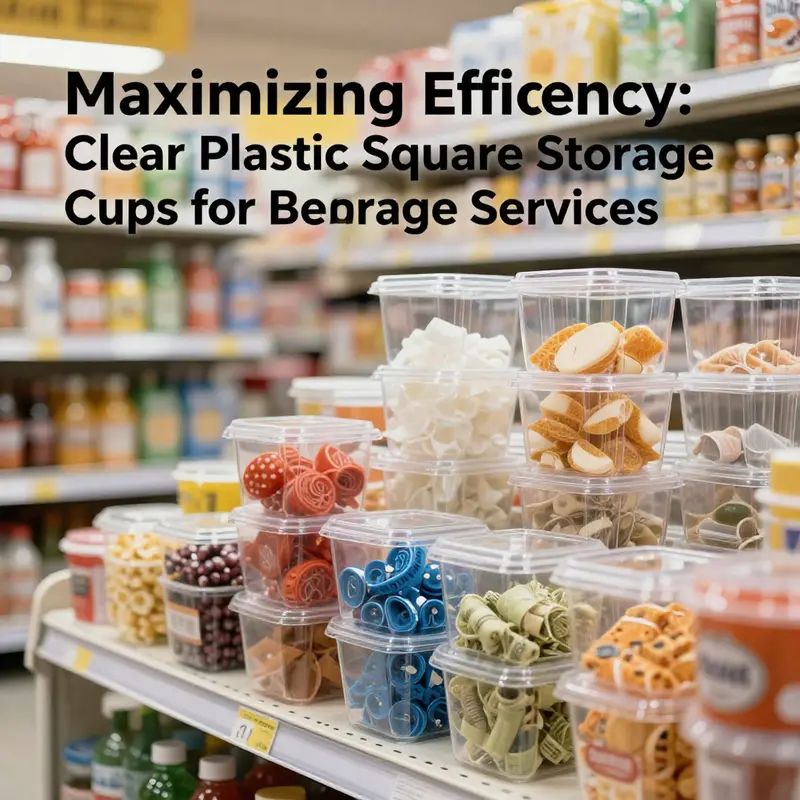
Clear plastic square storage cups do more than hold product. They change how inventory is seen, organized, moved, and counted. Their transparency makes stock visible at a glance. Their square footprint saves shelf and bin space. Their stackable shape makes vertical space useful. That combination of attributes delivers measurable advantages for retail and inventory management.
Visibility is the most immediate operational benefit. When items sit in transparent containers, staff and managers can inspect stock levels without opening lids. That reduces handling time and lowers the chance of contamination or damage. Visual cues become inventory data: low levels, mismatched items, and expired goods are easier to spot. This reduces the frequency of manual checks, and it diminishes picking errors during restocking and fulfillment.
Beyond visual access, the square profile is a geometric advantage. Circles leave dead space between units. Squares pack tightly. On shelving, the square cup eliminates wasted gaps between containers. In back-of-house storage, square cups let teams stack rows flush to the wall or up to shelf edges. This increases storage density and often delays the need for physical expansion. For high-turn items, that improved density directly supports higher throughput and better inventory turnover.
Stackability matters for safety and stability. Many clear square cups include reinforced rims, interlocking edges, or nesting lips. These design choices make vertical stacking secure, even when employees move multiple containers at once. Safer stacks mean fewer product drops and less breakage. They also allow staff to use vertical storage more confidently. In busy stockrooms, adding stable vertical layers reduces floor clutter. That improves sightlines and streamlines daily operations.
Portion control and standardized servings are key in both retail and foodservice. Clear square storage cups with measurement graduations let staff portion consistently. Graduations printed in liters, quarts, or milliliters help managers standardize recipes and serving sizes across locations. Standard portions reduce waste and improve cost control. They also help inventory managers forecast reorder points with greater accuracy. When every container holds a known volume, pack counts translate more reliably into usable stock levels.
Lids extend the utility of these containers. Leak-resistant lids prevent spills during transport and handling. Hinged or snap-top lids speed opening and reclosing during repeated access. For perishable items stored in display areas or refrigerated cases, sealed lids preserve freshness and limit cross-contamination. Lids also keep contents organized and identifiable during inventory audits. When combined with clear walls, lids make each container a discreet, reusable unit for both storage and display.
Durability increases total cost efficiency. Many clear square cups are molded from polypropylene or polycarbonate. These materials resist impact and tolerate temperature fluctuations. They can move from shelf to fridge, or from prep station to display, without failing. Several types are microwave, dishwasher, and freezer safe. Durability reduces replacement frequency and lowers long-term operational costs. For businesses that reuse containers across shifts or locations, durable cups reduce procurement cycles and waste.
Hygiene and food safety are non-negotiable. Smooth interior walls inside clear cups minimize nooks where residue can hide. That makes cleaning faster and more effective. For food retailers and deli counters, the ability to sanitize containers between uses is essential. Using clear storage cups that clean well reduces cross-contact risks and keeps regulatory compliance programs simpler. Many models meet common food contact standards, which simplifies vendor qualification and auditing.
Operational workflows improve when modular containers replace random boxes. Clear square cups create repeatable systems for receiving, staging, and restocking. New deliveries can be placed in labeled cups and staged on shelves by product category. When staff perform cycle counts, they work from identical units with consistent visual cues. That reduces training time and error rates. Using the same type of container across multiple departments standardizes picking patterns and reduces variability in task completion times.
The front-of-store presentation benefits too. Transparent cups let customers see contents clearly. When used in self-serve or prepackaged displays, these containers present product neatly. They work well for sauces, toppings, small snacks, or prepared food samples. For retailers selling single-serve or grab-and-go items, clear cups provide a hygienic barrier while keeping the product visible. When combined with clean labeling, they support upselling through attractive presentation.
Labeling integrates seamlessly with transparent storage. Clear cups accept adhesive labels on their flat sides. Labels can display SKU numbers, lot codes, expiration dates, or barcodes. Flat exterior surfaces make scanning barcodes easier and more reliable. For stores that use handheld scanners or mobile devices, labeled cups reduce the time to capture inventory data. Labels on clear containers also make FIFO rotation straightforward. Older stock sits in front, and labels guide staff about which containers to pick first.
Small item organization is simplified. Parts, components, and accessories are easy to manage when sorted into clear square cups. Hardware items like screws or bolts are visible and accessible. Jewelry, craft supplies, and small packaged goods stay separated and identifiable. For retail environments that include repair kiosks or craft sections, clear cups let employees find parts quickly during service and sale.
Loss prevention receives a subtle boost. Clear containers discourage misplacement and theft by making contents visible. When inventory is transparent, it is harder to conceal items. In addition, standardized containers make stock levels predictable and anomalies easier to detect. An unexpected missing unit becomes apparent sooner. Combined with regular cycle counting, the visibility of clear cups supports tighter shrink control.
Integration with inventory management systems multiplies value. When each clear cup holds a known volume or a fixed pack count, scanning a barcode can automatically update inventory levels accurately. Some operations label each cup with unique identifiers and track them through receiving and consumption. This links physical containers to electronic records and reduces reconciliation efforts. As a result, the time between discovery of discrepancies and resolution shortens.
Training staff is easier with uniform containers. New employees learn one system instead of many. Clear cups create consistent procedures for filling, labeling, storing, and rotating stock. That consistency reduces onboarding time. It also reduces mistakes during peak hours. When every team member recognizes the same visual system, the risk of misplaced goods declines.
Design considerations influence how effective cups become in a given operation. Size selection matters. Choose cup sizes that match typical pick quantities. Too large a cup invites overfilling and waste. Too small a cup increases handling and increases the number of containers to manage. Selecting a size range that aligns with SKU profiles helps maintain balance between handling and storage density.
Material selection matters too. Polypropylene is lightweight, chemically resistant, and cost-effective. Polycarbonate offers superior clarity and impact resistance. The right choice depends on application, regulatory needs, and budget. If heat resistance or repeated microwave use is required, confirm the material specification. If clarity is paramount for display, prefer materials with lower haze and better optical properties.
Customization can extend usefulness. Companies add measurement markings, snap-in dividers, or color-coded lids to differentiate product categories. Built-in graduations help with portion control. Dividers separate similar SKUs in one footprint. Color-coded lids speed category recognition for staff and customers. Customization supports faster picking, easier audits, and better compliance with internal standards.
Cleaning and maintenance protocols must be practical. Establish a cleaning schedule that matches use frequency. For food-contact applications, ensure cleaning agents and methods align with material compatibility. Avoid abrasive tools that scratch surfaces because scratches trap residue. When containers are reusable, set maximum reuse cycles and inspect cups routinely. Damaged or cloudy cups should be replaced before they compromise visibility or hygiene.
Environmental considerations are increasingly important. Clear plastic cups are reusable, which can reduce single-use waste. However, end-of-life recycling depends on local infrastructure and material type. Some materials recycle more easily than others. Encourage reuse within operations and set up a recycling or recovery plan for worn-out containers. Where single-use clear cups are unavoidable, prioritize materials with better recyclability and clear disposal guidance for staff.
Cost-benefit analysis favors clear square cups in many retail scenarios. The upfront cost of standardized containers is offset by labor savings, reduced product loss, and fewer replacements due to breakage. Efficiency gains during picking and restocking translate to lower operating costs. Reduced waste from better portioning supports margin improvements. The combined savings often justify investment in multiple sizes and lids for various departments.
Implementation tips increase success rates. Start with a pilot area. Choose a high-traffic aisle or a fast-moving category. Monitor pick times, stock discrepancies, and employee feedback. Adjust sizes and lid types before a full rollout. Train staff on labeling, rotation, and cleaning. Document procedures and post them near staging areas. Small, measurable goals help build momentum and acceptance.
Avoid common pitfalls. Don’t mix too many different container types. Variety creates confusion. Don’t ignore lid fit. Lids that don’t seal encourage spills and contamination. Don’t over-stack without reinforcement. Even stable cups have weight limits. And don’t skip labeling; visual containers still need consistent identifiers to link physical stock to systems.
For stores with display needs, combine clear cups with tidy merchandising. Use trays, risers, and small signage to keep displays neat. Group similar items together and keep popular items at eye level. The clear cups will showcase contents, but well-planned merchandising keeps customers engaged and reduces handling by hesitant shoppers.
For multi-location operations, standardizing container types simplifies logistics. One set of sizes and lids can move between sites. That reduces procurement complexity and eases cross-site auditing. When corporate teams design SOPs, a standardized container policy reduces ambiguity and supports consistent reporting.
When selecting a supplier, assess lead time, quality control, and customization options. Reliable suppliers support volume discounts and consistent product dimensions. Consistency is critical because minor dimensional differences can affect stacking and labeling. Choose suppliers that provide clear material spec sheets and testing data.
Clear square storage cups blend practicality with operational rigor. They tighten the link between physical stock and inventory systems. They improve workflows, hygiene, and presentation. When chosen thoughtfully, these containers push inventory processes toward greater accuracy and lower cost.
For applications involving sauces, dressings, or condiments, consider ready-made transparent sauce containers with lids for quick integration into display and storage systems. A practical example of such items can be found among common food packaging supplies like disposable sauce cups with lids, which illustrate how clarity and sealing combine in food retail contexts: https://ecocupbowl.com/product/disposable-sauce-box-sauce-cups-transparent-conjoined-plastic-box-sauce-container-box-with-lids-kitchen-home-supply/
For a product example and detailed supplier specification, see: https://www.alibaba.com/product-detail/In-Stock-Transparent-Square-Plastic-Container-4k_1600579258371.html
Material and Design: Choosing Clear Plastic Square Storage Cups That Work
Material and Design: Practical Choices for Clear Plastic Square Storage Cups
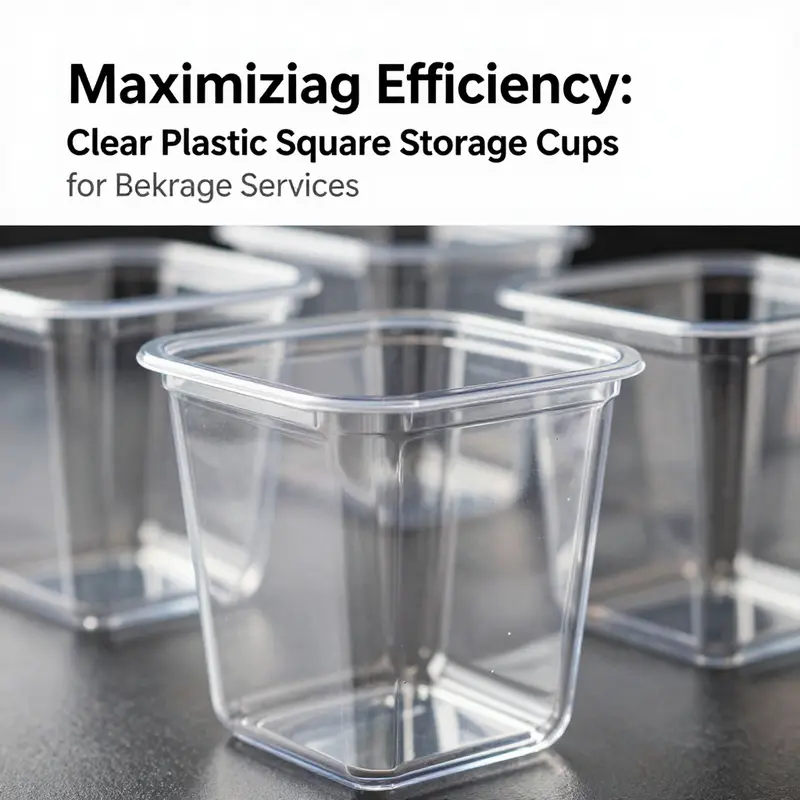
Choosing the right clear plastic square storage cup depends on how you plan to use it. Material and design determine durability, safety, stackability, and overall performance. This chapter walks through the trade-offs you will face. It explains why one material suits a refrigerator pantry while another fits a hot-food takeout line. It also explores the design elements that make these containers space-efficient and user-friendly. Read on to learn how small choices add up to better storage solutions.
Materials form the foundation of every storage cup. Each polymer brings a different balance of clarity, toughness, heat resistance, and recyclability. Polyethylene terephthalate, polypropylene, and high-density polyethylene are the most common options. PET stands out for optical clarity and lightweight stiffness. A cup made from PET looks glasslike and displays contents sharply. That clarity is a major advantage when presentation matters. Shelf-ready foods, ready meals, and retail-ready deli items benefit from PET’s transparency. PET also provides a good barrier to moisture and oxygen, which helps preserve freshness in dry and prepared foods.
However, PET has limits. It softens at relatively low temperatures. Avoid PET in high-heat or prolonged UV exposure situations. PET is not ideal when repeated microwaving is expected, unless the product is explicitly rated for that use. For many consumers, PET’s recyclability and visual appeal outweigh its thermal limits. If you need to show contents clearly and often replace containers, PET often makes sense.
Polypropylene, by contrast, offers higher temperature tolerance and greater chemical resistance. PP can tolerate temperatures from roughly -20°C to 120°C. This wide range makes PP suitable for hot foods, microwaveable items, and sterilizable reusable cups. PP’s clarity is good but not glasslike. It tends to appear slightly hazier than PET. Still, when heat resistance and repeated use matter more than perfect optical clarity, PP is frequently the better choice.
Because PP resists oils, acids, and many solvents, it works well for dressings, sauces, and oily condiments. Its resistance to stress cracking and its lower density than many other plastics keep weight down. PP is also recyclable, though local recycling options vary. For reusable meal-prep containers, portion-control cups, and microwave-safe inserts, PP frequently offers the best mix of safety and utility.
High-density polyethylene prioritizes toughness over transparency. HDPE is strong, impact-resistant, and largely impervious to many chemicals. It resists microbial growth on surfaces and provides excellent moisture barriers. HDPE is commonly used where durability outweighs optical requirements. If the primary need is rugged storage or frequent handling in industrial settings, HDPE can be a superior choice.
Because HDPE tends toward opaque or translucent finishes, it is not the best pick when content visibility is essential. But in back-of-house retail or warehousing, HDPE containers hold up better to rough use. They tolerate drops, stacked loads, and abrasive environments. They also perform well at lower temperatures and in contact with certain cleaning agents.
Beyond these three, other materials occasionally appear, such as polycarbonate or blended polymers. Polycarbonate provides excellent clarity and very high impact resistance. It also handles heat well. But concerns about additives and regulatory approvals can limit its appeal for food contact applications. When polycarbonate is used, it often appears in reusable, long-life products intended for non-disposable usage.
Choosing material means balancing optical clarity, chemical and heat resistance, recyclability, and cost. If presentation and shelf visibility are critical, opt for PET. If you plan to microwave, sanitize, or reuse, choose PP. If you need heavy-duty durability in a non-display setting, HDPE often wins.
Material choice is only half the story. Design features determine how well square storage cups function in the real world. The square profile solves space problems by eliminating the wasted corners common to round containers. Four straight walls allow containers to sit flush against each other. That yields better use of shelf space in home pantries, walk-in refrigerators, and retail shelving. Square cups also create more stable stacking columns. When a lid locks in place, square stacking minimizes lateral movement and reduces the risk of toppled stacks.
Visibility is a secondary advantage of well-designed clear cups. Transparent walls let staff and home users identify contents at a glance. That saves time during busy service periods and lowers the risk of cross-contamination caused by repeated handling. Clarity also helps inventory management. A quick scan of stacked square cups reveals stock levels, making restocking decisions faster.
Sealing and lid design deserve special attention. Tight-fitting lids must match the cup’s material and dimensions. A lid that fits poorly defeats the purpose of a clear container by allowing spills, leaks, or moisture loss. Consider lids that provide more than a friction fit. Hinged lids, snap locks, or tamper-evident bands add practical value. Lids designed with a slight lip provide easier opening while reducing accidental spills.
For liquids and semi-liquids, a gasket or softer seal material improves leak resistance. Some manufacturers pair a rigid cup body with a thin elastomeric gasket within the lid. That small addition prevents leaking during transit. If you need to transport sauces or dressings, choose a cup-lid combination designed for liquids.
Ergonomics matter as well. Cups intended for quick service should be easy to pick up and open with one hand. Low-profile lips and textured sides help with grip. When portion control is important, clearly marked volume graduations help staff and home users portion consistently. Standard sizes, such as small 60 ml portions up to 2L commercial bins, allow integration with existing workflows and shelving systems.
Durability ties back to both material and design. Scratch-resistant surfaces preserve clarity longer. Some plastics receive hard coatings during production to resist abrasion. Thicker wall sections near corners improve impact resistance during stacking and handling. Reinforced corners act as shock absorbers, protecting the cup’s structural integrity. For reusable or long-life applications, look for cups with these reinforcement features.
Portion control and modular design also influence usability. Standardized square cups that nest neatly when empty save storage space. When full, they should stack securely. For meal prep, a set of identically sized square cups simplifies packing and refrigeration. For retail, consistent sizing aligns with shelving dimensions and merchandising plans.
Real-world limitations are worth noting. Narrow openings make filling and cleaning harder. If you plan to use a cup for thick or chunky items, choose a model with a wider mouth. For dips and chunky salads, a wider opening reduces the need for forced stirring or spooning. Similarly, very thin-walled PET cups can deform under weight or pressure. For heavy ingredients, pick thicker walls or a sturdier polymer like PP.
Heat tolerance varies across materials. PET and HDPE resist only limited heat. They can warp or release unwanted compounds if exposed to high temperatures. When microwave use is likely, verify microwave safety. For reheating and sterilization, PP usually offers the best choice among common clear plastics. Always follow manufacturer guidelines and food-contact approvals.
Cleaning and reusability are practical considerations. Not all clear plastic square cups are intended for repeated use. Single-use cups often cost less and meet hygienic needs for catering or events. Reusable cups cost more upfront but reduce waste in routine operations. For reusable options, check if the cups tolerate dishwashing and sterilization. Repeated heat cycles can cause some plastics to become brittle. Longevity depends on both material and cleaning method.
Sustainability plays an increasing role in purchasing decisions. While many of these plastics are recyclable, recycling outcomes depend on local facilities. PET and HDPE enjoy broad recycling streams in many regions. PP is recyclable too, but collection and processing rates vary. Reusable PP or HDPE cups reduce environmental impact compared to single-use alternatives. When disposables are unavoidable, choose materials that local systems can handle. Also look for designs that minimize mixed-material components, which hinder recycling.
Food safety and regulatory compliance are essential. Materials must meet food-contact regulations in the regions where they will be used. That includes limits on residual monomers and additives. Look for clear declarations or certifications indicating the cups meet relevant food-safety standards. For hot-fill or high-acidity applications, confirm the cups resist leaching and maintain integrity under expected conditions.
In commercial food service, tamper evidence and labeling surfaces matter. Lids with tamper-evident seals provide reassurance to customers. Flat, clear sides allow for labeling or stickers. Labels should adhere well to the cup surface without damaging recyclability. A smooth, flat side is better for printing or sticker application than a highly textured finish.
Cost considerations often drive final selections. PET tends to be less expensive for high-clarity disposables. PP costs can be higher but deliver longer life and heat resistance. HDPE may cost more for thicker-walled, heavy-duty applications. Factor in lifetime costs, not only unit price. Reusable cups may cost more per unit but become cheaper per serving when used repeatedly.
Specialty design features further refine functionality. Nesting rims reduce the storage footprint of empty cups. Graduated volume markings help with consistent portioning. Stack-lock features reduce the risk of sliding when stacked. Hinged lids reduce lost components and speed up service. Some cup designs include integrated measurement marks molded into the wall for durability. Others provide snap-fit lids that can be folded back and retained on the container during service. Consider which features matter most in your workflow.
A final practical consideration is the match between cup dimensions and existing equipment. Square cups must fit into shelving, refrigeration trays, and serving carts. Choose sizes that align with standard shelving widths or that nest efficiently into any storage bins you already use. For retail shelving, standardized cubes make planograms and stocking easier. For professional kitchens, compatible dimensions with rail and tray systems speed service.
Selecting the right clear plastic square storage cup means combining material science with smart design. The balance of clarity, heat resistance, mechanical strength, and recyclability shapes the product’s suitability. Design choices, from lid sealing to stacking geometry, determine daily convenience. Think through how the cups will be filled, stored, transported, and cleaned. Match polymer properties to real needs. Prioritize features that reduce waste, protect food, and speed handling.
Where presentation is critical, PET’s clarity often wins. Where heat resistance, sterilization, and reuse are needed, PP frequently outperforms. For rugged industrial use, HDPE brings lasting durability. Lids, seals, and reinforced corners complete the package and turn a simple cup into a dependable storage solution.
If you need examples of small, clear condiment cups suitable for catering or food-to-go, consider looking at options for disposable sauce cups with lids. These model types illustrate how sealing and size choices affect performance.
For deeper technical and regulatory information about clear plastic food packaging, consult the comprehensive industry guide available at https://www.foodpackagingguide.com/clear-plastic-container-food-packaging-complete-guide/.
Final thoughts
In conclusion, clear plastic square storage cups have proven to be an invaluable asset for businesses in the food and beverage industry. Their versatility in applications, role in retail inventory management, and practical material options make them an excellent choice for improving organization and visibility. Embracing these storage solutions not only enhances operational efficiency but also contributes to better customer experiences. By selecting the right containers, businesses can streamline their workflows and maintain a polished, professional appearance across their services.