

As businesses in Australia, especially in the beverage industry, grapple with evolving regulations and environmental concerns, the use of disposable plastic cups with lids is undergoing significant scrutiny. Effective October 1, 2022, Western Australia implemented legislation prohibiting the supply of these single-use items. This change not only necessitates compliance from bubble tea shops, restaurants, food trucks, and event planners but also highlights the pressing need for sustainable practices. Each chapter of this article will delve into the regulations impacting your operations, the environmental implications of plastic cups, available market alternatives, shifting consumer behaviors, and anticipated trends for the future, empowering you with the knowledge to take proactive and informed steps toward a greener business model.
From Ban to Behavior: Navigating Western Australia’s Disposable Cup Regulation and the Search for Sustainable Substitutes

Across the vast landscape of Australia, a quiet but forceful regulatory shift is reshaping how everyday beverages are served. In Western Australia, the move is not a mere marketplace anomaly; it is the hinge on which suppliers, venues, and consumers are recalibrating their expectations of convenience, cleanliness, and care for the environment. The state’s approach sits within a broader national conversation about reducing single-use plastics, yet it stands out for its concrete deadline, scope, and the practical demand it places on businesses to rethink both product choices and the systems that support them. The core of this shift is a regulation known as the Plan for Plastics, a comprehensive framework that targets a suite of single-use items with the aim of reducing waste, litter, and the downstream effects of discarded plastics. Within this framework, disposable plastic cups with lids—specifically the cups used for cold drinks such as coffee, iced beverages, and other cold beverages—became a focal point. As of 1 October 2022, the supply of these cups within Western Australia is prohibited, a policy designed to curb plastic leakage from café counters, takeaway outlets, and convenience stores that once relied on a continuous stream of disposable cups and lids. The prohibition has a clear intent: to shift the sector away from reliance on plastic packaging and toward materials and practices that better fit a circular economy, whether through reuse, biodegradability, or streamlined recycling. The regulation’s reach is broad, applying to any business that provides these items to consumers within the state’s borders. Cafés, restaurants, grocery stores, and other retail points of sale all come under the same rule, with compliance measured against the products’ plastic construction and their function as a single-use item. The aim is not merely to police a single product category but to catalyze a systemic rethink of how beverages are served and contained during and after consumption. The enforcement logic is aligned with the policy’s wider goals: reduce plastic waste at the source, lower the volume of plastic entering landfills and the environment, and push stakeholders toward durable, sustainable options that can either be reused many times or returned to a composting or recycling stream where feasible. The Plan for Plastics therefore acts as a compass for decision-making at the point of procurement, encouraging buyers to prioritize alternatives that minimize environmental harm while still meeting the functional needs of businesses and customers. To translate policy into practice, Western Australia’s approach places emphasis on practical alternatives. The immediate implication for operators is the need to source cups and lids made from materials that are either compostable or recyclable and designed for reuse. Sugarcane bagasse, a pulp derived from the fibrous remains of sugarcane, has become a widely discussed substitute in many industry circles because it offers a sturdy, heat-tolerant alternative to conventional plastic. Similarly, cups made from corn starch-based bioplastics have gained traction as an option that aligns more closely with composting infrastructures in some regions. These materials are not miracle solutions; they come with their own caveats around processing facilities, labeling, and end-of-life pathways. The conversation around replacements also highlights a broader infrastructural challenge: the availability and capacity of composting facilities and recycling streams to handle these materials responsibly. In many cases, what distinguishes a truly sustainable option is not only the material itself but the system for collecting, processing, and reintegrating that material back into the economy. This is why policy design in Western Australia emphasizes not just the product switch but the entire lifecycle, from manufacturing through disposal, and even consumer behavior. The regulatory landscape in WA is part of a mosaic of state-level efforts throughout the country. While WA has advanced its own ban, other states have begun to explore phased restrictions on certain single-use plastics, with Victoria and South Australia among those implementing or planning restrictions on specific items. The national dialogue on harmonization continues, and the WA example has become a reference point for businesses evaluating how to align with evolving standards while maintaining service quality. For business stakeholders, the immediate question is practical: what materials and processes will meet both regulatory requirements and customer expectations? The regulator’s stance is clear about intent, but it also invites ongoing engagement. The government encourages stakeholders to register for updates and to stay informed about compliance requirements and potential amendments through the official channel. This call for ongoing dialogue reflects an understanding that policy cannot stand in isolation from the lived realities of hospitality operations, supply chains, and consumer culture. In this sense, the WA plan signals not only a constraint but an opportunity. The constraint—reducing disposable plastic cups—creates a clear demand for innovations in packaging and service models. The opportunity lies in shaping a narrative around responsible consumption, where customers participate in waste reduction goals through choices such as bringing their own reusable cups or choosing venues that offer reusable cup programs. In practice, many operators have started to pivot from mere substitution to a more holistic approach: rethinking the cup’s lifecycle while reconfiguring customer flow and point-of-sale dynamics to reward sustainable choices. For instance, some venues have introduced incentives for customers who bring a reusable cup, or they’ve redesigned service processes to minimize single-use waste altogether. These shifts require not only supplier changes but also staff training, adjustments to inventory systems, and revisions to health and safety protocols to accommodate reusable containers where appropriate. The cumulative effect is a reimagined coffee culture that values efficiency, cleanliness, and environmental accountability in equal measure. The policy’s design recognizes the role of consumer education and behavior as essential components of success. Without broad public buy-in, even the most scientifically sound substitutes can fall short of reducing waste meaningfully. As a result, communication strategies accompany product choices. Clear labeling, transparent information about disposal pathways, and easily accessible guidance on how to participate in reuse programs become integral to the customer experience. The narrative of Western Australia’s ban, therefore, can be read as a dual call: reform the tools we use to hold drinks and coffee, and reform how we think about waste and responsibility when we finish a beverage. The regulation is not isolated from other policy movements across states. Victoria and South Australia have taken steps that reflect similar concerns and, in some cases, parallel phasing plans. The shared aim across jurisdictions is to move toward a more harmonized and predictable framework for manufacturers, retailers, and consumers while still respecting local differences in waste infrastructure and consumer habits. The result is a political and practical landscape in which businesses must monitor regulatory developments attentively, adapt procurement strategies, and cultivate customer relationships built on trust and transparency about sustainability commitments. In this evolving environment, the WA government’s call to action is pragmatic: stay informed, engage with the public and the industry, and pursue compliant, sustainable packaging solutions. Stakeholders are invited to register updates on the official site to ensure they receive the latest guidance on compliance timelines, permitted materials, labeling requirements, and any exemptions or transitional arrangements that may apply. This ongoing conversation underscores a larger fact: policy does not exist in a vacuum. It intersects with supply chains, consumer expectations, and environmental outcomes in tangible ways that affect day-to-day operations. For practitioners seeking concrete pathways through the transition, the literature of sustainability increasingly points to a portfolio approach. Rather than relying on a single replacement material or a one-size-fits-all solution, successful operators diversify packaging options and invest in processes that improve reuse, compostability, and recyclability across a product’s life. A practical route involves combining in-store behavior changes with external partnerships—working with packaging suppliers to source bagasse- or starch-based cups, collaborating with waste-management services to align sorting and processing, and participating in community education campaigns about sustainable consumption. As part of this, the packaging ecosystem must evolve in tandem with consumer convenience. The introduction of reusable cup programs, supported by clear hygienic standards and easy-to-use return mechanisms, offers a powerful model for reducing waste without sacrificing service speed or customer satisfaction. In many ways, Western Australia’s policy embodies a broader shift toward responsible hospitality that does not rely solely on the allure of convenience. It signals a cultural change in which customers expect more than a disposable solution; they expect a system that minimizes environmental impact and maximizes clarity about what happens to the packaging after the last sip. The long-term effect could extend beyond the state’s borders as businesses and policymakers observe outcomes, compare experiences, and share lessons learned. For those seeking further exploration of related packaging options and innovative takeout solutions, a practical point of reference can be found in materials discussing eco-friendly takeout packaging and containers. For example, one relevant resource discusses a range of sustainable packaging solutions that complement the shift away from single-use plastics. eco-friendly takeout boxes for food packaging. This kind of resource helps illuminate how operators can extend the logic of the ban into everyday practice by embracing durable, recyclable, and compostable packaging that aligns with customer expectations and waste-management capabilities. Of course, the regulatory foundation remains the primary driver, and operators should remain vigilant about official guidance. The WA site for plastics, along with the broader Department of Water and Environmental Regulation materials, offers the most authoritative statements about compliance timelines, acceptable substitutions, and any forthcoming amendments. Businesses and stakeholders are encouraged to consult these resources regularly and to participate in public consultations when opportunities arise. By engaging with the policy as an evolving framework rather than a fixed rule, the hospitality sector can cultivate resilience, foster consumer trust, and demonstrate leadership in environmental stewardship. The journey from a plastic cup to a more sustainable cup requires coordinated action—from procurement and training to waste management and consumer engagement. Western Australia’s experience illustrates how policy can catalyze meaningful change when it is paired with practical alternatives, clear guidance, and an inclusive approach to stakeholder involvement. As the landscape continues to evolve, the story is less about a single prohibition and more about a shared commitment to build a beverage-service system that reduces waste while preserving the social and cultural value of shared coffee, tea, and cold drinks. The regulatory narrative thus remains alive, dynamic, and policy-informed, inviting ongoing collaboration among government, industry, and the public. For those who want to follow the most current developments, the official channel remains the best place to register for updates and to understand how to align business practices with WA’s evolving plastics regime. In this sense, the Plan for Plastics is less a conclusion than a prompt—an invitation to participate in shaping a more sustainable and responsible hospitality sector. For authoritative details, see Western Australia’s Plan for Plastics – Department of Water and Environmental Regulation.
Redefining Convenience: The Environmental Toll and Policy Shifts Surrounding Disposable Cups with Lids in Australia

The daily ritual of picking up a hot coffee or a cold takeaway drink often hinges on a seemingly disposable convenience: a cup with a lid. In Australia, this convenience sits at the crossroads of consumption, waste, and policy, where the environmental costs of single-use cups become harder to ignore as urban landfills fill and microplastics drift through soil and water systems. The lifecycle of these cups is a chain that begins with a bright, lightweight material—often polypropylene or polystyrene—that feels efficient in the moment but carries a heavier burden over years and generations. Each stage—production, transport, use, and disposal—consumes energy, relies on fossil fuels, and contributes to climate-altering emissions. While these cups may be compact and portable, their end-of-life story is rarely neat. Even when recycling streams exist, a surprising share arrives contaminated with food or liquid residue, turning a potential recycling stream into a landfill-bound item. The-scale nature of this issue is evident in the annual inflow of cups that end up in landfills across the country, a reminder that a habit built on convenience translates into a measurable environmental footprint. When the lids and rims are considered, the marginal gain in temperature control or spill prevention often comes with an invisible price: lasting persistence in the environment and a footprint that lies far beyond the moment of purchase.
Australia’s environmental discourse around disposable cups with lids has grown more urgent as policymakers, businesses, and consumers confront the realities of waste and resource use. The Western Australian Plan for Plastics represents a concrete policy response designed to curb the supply and distribution of single-use plastics, including cups with lids, to reduce environmental leakage and resource consumption. This regulatory stance is not merely a ban; it is a shift in what is deemed acceptable for daily service industries and retail outlets to offer. The logic rests on reducing the downstream pile of discarded cups, promoting better waste management, and prompting a transition to materials and systems with clearer end-of-life outcomes. In practical terms, the policy signals to cafes, restaurants, and convenience stores that their product choices contribute to a broader waste narrative and that safer, more sustainable options can be found and implemented. Even as some online marketplaces continue to list disposable options, the WA framework emphasizes compliance for suppliers within the region, urging businesses to align with alternatives that are either biodegradable in suitable conditions or fully recyclable with minimal contamination. The policy landscape thus interlocks with consumer behavior, guiding choices toward reusables and toward products that fit within a circular economy mindset. In this sense, the chapter’s focus widens from the cup in the hand to the system that brings it into existence, use, and ultimate fate.
To understand the environmental stakes, one can look at the material reality of most disposable cups. Polypropylene and polystyrene offer durability and low cost, but they are not easily broken down in natural environments. Even when cups are marked as recyclable, the reality of municipal sorting facilities shows a gap between potential recyclability and actual recovery. When cups are contaminated by liquids or food residues, they become non-recyclable in practice, contributing to landfill mass and complicating efforts to close material loops. The takeaway is not simply that these cups are wasteful; it is that the current infrastructure and consumer habits often fail to convert potential recyclability into actual recovery. The result is a waste stream that lingers for decades, if not centuries, before decomposition—if decomposition occurs at all in a way that avoids microplastic release. Microplastics, once dispersed, can travel through soils, waterways, and even the food chain, creating long-term ecological and health considerations that transcend any single consumer choice.
In addressing such enduring issues, policy acts as a roadmap for change. The Plan for Plastics in Western Australia is crafted to curb reliance on single-use cups and other single-use plastics by steering procurement, supply, and consumer behavior toward more sustainable pathways. The policy recognizes that the surface-level goal—reducing litter—requires deeper changes: redefining what constitutes convenient service, incentivizing reusable options, and ensuring that replacements meet environmental standards across lifecycle stages. Enforcement mechanisms, reporting requirements, and public awareness campaigns are all part of the approach, signaling that a transition is not merely technical but cultural. The regulatory stance acknowledges the reality that cafés, fast-service outlets, and retail platforms operate on margins that can be sensitive to changes in packaging costs. Yet it also emphasizes that the environmental costs of single-use cups are not borne by any single stakeholder; they accumulate through shared systems of production, consumption, and waste management. This recognition fosters collaboration across government, industry, and communities as they work to align business practices with environmental objectives while still meeting consumer expectations for convenience and reliability.
Beyond law and policy, the chapter should consider the broader shifts in consumer culture that accompany bans and restrictions. A growing segment of Australians has begun to adopt reusable cups, not only for the immediate benefit of reducing waste but also for the longer-term gains in durability, temperature control, and overall lifecycle efficiency. Reusable designs—particularly double-walled tumblers with vacuum insulation—offer advantages in insulation, durability, and aesthetics, making them attractive for daily use at home, in the office, or during travel. While such options require an upfront investment, their repeated use over time translates into lower per-use emissions and resources compared with single-use alternatives. The adoption of reusable systems is not simply about personal habit; it involves rethinking the service model—how beverages are served, how customers are incentivized to bring their own cups, and how cafés and retailers can integrate cup-sharing or cup-reuse programs into their operations. In doing so, communities can shift from a linear “take-make-dispose” approach toward a more resilient, circular approach that reduces waste, saves energy, and curbs greenhouse gas emissions associated with production and disposal cycles.
The conversation around alternatives also highlights the potential for longer-term material innovation. Bagasse and corn-starch-based cups represent a class of products that align more closely with a circular economy when properly designed and managed at end-of-life. Bagasse, a byproduct of sugarcane processing, can be molded into sturdy cups that biodegrade under appropriate industrial conditions. Cornstarch-based materials offer another route to compostability, provided that they are kept separate from conventional plastic streams and supported by accessible composting infrastructure. The choice among these options is not purely technical; it involves considerations of supply security, processing facilities, consumer acceptance, and the energy and water footprints of production. In the Australian context, such decision-making is interwoven with policy signals, public procurement practices, and market development that encourage investment in alternatives that align with environmental goals while maintaining service quality and price competitiveness.
As the country navigates this shift, the role of retailers and service providers becomes pivotal. The supply chain must evolve to prioritize reusable systems, but it also needs to offer accessible, affordable alternatives that do not compromise on user experience. Clear labeling, consumer education, and visible incentives can help guide decision-making at the point of sale. The policy framework can support these efforts by facilitating pilot programs, streamlining certification processes for compostable or recyclable materials, and providing guidance on how to manage contamination and collection streams effectively. When consumers understand where their packaging ends up and how it is processed, they are more likely to participate in recycling and reuse programs with intention and confidence. The narrative thus moves beyond compliance to a shared stewardship, where every cup becomes a marker of community values rather than a mere disposable item.
To connect these themes back to practical implications, the chapter suggests a continuum of action that readers—whether policymakers, business owners, or everyday consumers—can join. For policymakers, the emphasis is on coherent, enforceable regulations that push markets toward safer, more sustainable options while preserving consumer access and service quality. For business owners, opportunity lies in rethinking packaging choices, embracing reusable systems, and communicating environmental commitments to customers in a way that builds trust. For consumers, the message is about mindful consumption, carrying personal reusables, and supporting retailers that align with a broader environmental agenda. The convergence of these efforts shapes a more resilient Australian packaging landscape, where the convenience of today is balanced with the health of tomorrow’s environment.
In the broader arc of the article, this chapter bridges the raw environmental data with the policy and behavioral dynamics that define modern waste management. It underscores that the environmental impact of disposable cups with lids is not a fixed statistic; it is a living, evolving conversation about how society values resources, how governance translates values into practice, and how individuals choose daily habits that accumulate into significant environmental outcomes. As awareness grows and policy instruments mature, the path toward reduced waste and more sustainable packaging becomes clearer, even as challenges persist. The WA Plan for Plastics, along with complementary efforts across the country, represents a meaningful step in aligning convenience with responsibility, and it invites ongoing dialogue about the most effective routes to a cleaner, more sustainable future. For readers seeking a practical gateway to policy specifics and ongoing updates, the external resource below offers a starting point for understanding how Western Australia is shaping its plastics landscape and what that means for suppliers, retailers, and households alike.
External Resource: https://www.wa.gov.au/planforplastics
Internal Reference: For readers curious about how disposable cup options are represented in retail packaging, one example can be explored here to illustrate the range of packaging solutions that accompany beverages in modern markets: disposable-clear-plastic-cup-outdoor-picnic-pet-cup-drinking-cup-for-parties-birthdays-weddings-camping-utensils. The link demonstrates how such items are depicted in contemporary marketplaces and highlights the need for clear labeling and sustainability-focused alternatives as policy and consumer expectations evolve.
Practical Alternatives and Procurement Strategies for Disposable Plastic Cups with Lids in Australia
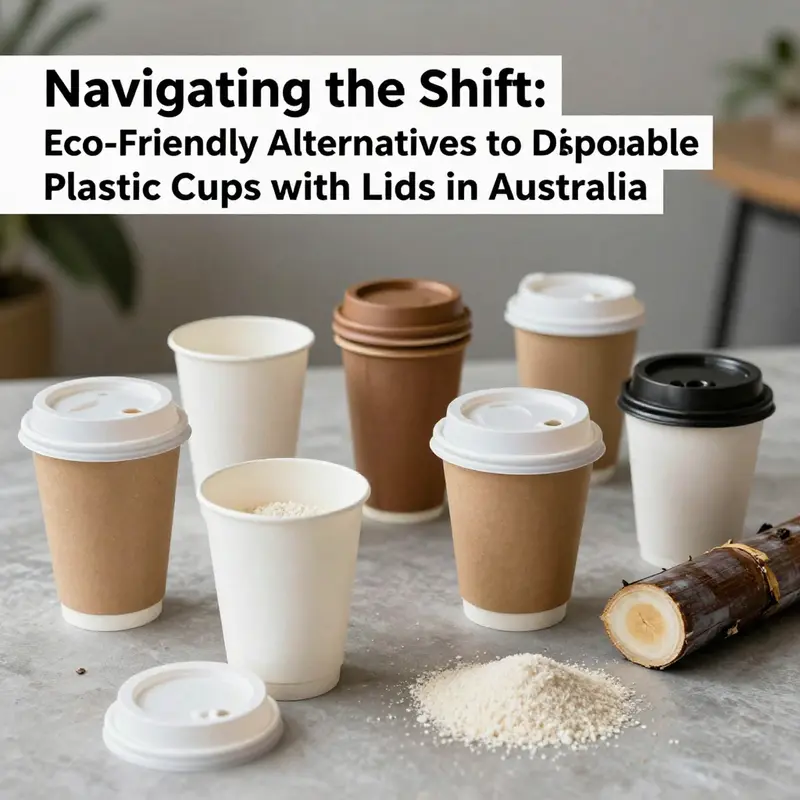
Practical alternatives and procurement strategies for disposable plastic cups with lids
The shift away from disposable plastic cups with lids in Australia moves beyond policy. It now shapes purchasing, operations, and waste management decisions for cafes, retailers, event organisers, and food service operators. Understanding realistic, compliant alternatives—and how to integrate them into daily practice—reduces risk, controls costs, and improves customer experience. This chapter explains the primary material options, operational implications, and procurement strategies to help businesses respond to the regulatory landscape while keeping service seamless.
Compostable paper cups paired with plant-based lids are the most visible single-use alternative. These cups are formed from renewable plant fibres such as bagasse or bamboo pulp. They often carry an inner lining of compostable bioplastic like PLA, which provides a moisture barrier without using conventional plastic. Lids for these cups are similarly produced from plant-based polymers or molded fibres. These alternatives work well for takeaways and events when an industrial composting stream exists. The systemic requirement is clear: certification under recognised standards is essential. Only certified products meet some regulatory exemptions, and certification provides assurance to waste contractors that the materials are compostable at scale.
Molded fibre cups—made from pressed paper pulp—offer a fully compostable option without bioplastic liners. They perform best with hot and cold beverages when paired with compatible lids designed for a tight fit. The surface finish and barrier properties matter for shelf life and leak resistance. Operators should verify that lids and cups are explicitly matched by size and material, because mismatched components can cause leaks or contaminate composting streams. A practical procurement tip is to source matched sets from a single supplier to reduce compatibility issues.
Reusable cup systems are the most effective way to eliminate single-use waste. These systems range from discounts for customers who bring personal cups to deposit-return models that circulate durable containers. Reusable schemes require reliable logistics for collection, cleaning, and redistribution. For small cafes, charging a refundable deposit or offering a loyalty discount encourages reuse without complex infrastructure. For larger operations, partnerships with third-party reuse providers create circular reuse loops. Reuse reduces ongoing material costs but requires investment in processes, staff training, and quality control to maintain hygiene standards.
Biodegradable and recyclable alternatives bridge the gap between single-use convenience and sustainability. Recyclable paper cups, which have linings designed for recycling, and compostable alternatives coexist in the market. The key is aligning the product with the available end-of-life infrastructure. If a council provides industrial composting, compostable cups are appropriate. If reliable paper recycling of cups exists regionally, recyclable cups may be preferable. Misalignment leads to contamination: compostable products in a recycling stream, or recyclable items in composting, can undermine both systems.
Operational considerations are as important as material choice. Storage conditions affect shelf life; compostable liners can be sensitive to moisture and heat. Lids and cups must be stacked and handled to avoid warping. Staff need clear labeling and training to guide customers and manage disposal bins. Communicating the reasons for changes helps customers accept new lids or cup styles. Simple signage that explains compostability, reuse discounts, or deposit mechanics reduces confusion and litter at collection points.
Cost comparisons often drive decisions. Per-unit costs for certified compostable cups and plant-based lids are typically higher than conventional plastic. However, factoring in avoided fines, brand value gains, and potential waste disposal savings changes the equation. Reuse systems require capital and operational investment, but they yield the largest long-term waste reductions. Many businesses find a hybrid approach effective: adopt compostable disposables for external takeaway customers while promoting reuse within the venue.
Supply chain realities matter. Domestic production of plant-fibre packaging in Australia is limited. This increases reliance on imports from regions with established moulded-fibre manufacturing. Lead times, minimum order quantities, and shipping variability should be considered when switching suppliers. Smaller operators benefit from consolidating orders through distributors to achieve manageable quantities and consistent quality. When evaluating suppliers, ask for certification documents, compostability test results, and matching lid-cup compatibility data.
Certification and standards form the compliance backbone. Australian standards and regional policies define what qualifies as compostable. Some regulatory exemptions apply only to products certified under specific norms. Insist on certificates from accredited bodies and cross-check whether certificates cover both the cup and lid. Where possible, choose products that carry an Australian compostable standard mark or equivalent international certification recognised by local regulators. This step reduces risk of non-compliance and ensures end-of-life systems accept the material.
End-of-life logistics determine real environmental outcomes. Industrial composting facilities reach higher temperatures and complete breakdown faster than home compost heaps. Many certified compostable cups require industrial conditions. Before adopting compostable disposables, verify that local municipal or commercial composting services accept these items. Where composting is unavailable, consider recyclable or reusable alternatives. Clear bin labeling and staff training prevent contamination of streams, which preserves value and avoids costly sorting errors at processing facilities.
Consumer incentives and education accelerate adoption. Discounts for using personal cups, loyalty rewards, and visible reuse counters all nudge behaviour. Signage that explains the material and correct disposal method reduces contamination. Staff scripts and point-of-sale prompts improve compliance more than signage alone. Where deposit-return or reusable programs operate, provide visible collection points and convenient return options. Simplicity encourages participation.
For procurement, adopt a checklist approach: verify certification, confirm lid-cup compatibility, assess local composting or recycling infrastructure, request performance samples, and model total cost of ownership. Include storage and handling instructions in supplier agreements. If switching to reusable systems, map collection and cleaning logistics. Pilot changes in a single site or event to identify friction points before scaling up. Use customer feedback loops to refine the offering.
Practical installations often pair multiple strategies. A cafe might use compostable paper cups with plant-based lids for delivery and walk-up sales, while rewarding customers who bring personal cups. A larger food service operator might pilot a deposit-return reuse program for coffee and condiments. Event organisers can require vendors to use certified compostables and provide central compost bins to ensure proper collection. The best solutions avoid a one-size-fits-all approach. They match material choices to service models and local end-of-life systems.
Finally, product examples in market catalogs provide ready options. For venues needing insulated options, consider double-wall paper cups made from bamboo pulp. These offer improved heat insulation and stackability for labour-efficient service. When sourcing, ensure lids are supplied in matched sizes to reduce spillage and customer dissatisfaction. See a supplier listing for double-wall bamboo-pulp paper cups for a typical product profile and specifications.
For definitive guidance on approved compostable materials and certification standards, consult the Australian Government resource on plastic pollution and materials standards. https://www.dcceew.gov.au/environment/plastic-pollution
How Australian Consumers Think About Disposable Cups with Lids: Convenience, Health and Climate in Balance

Consumer Attitudes and Buying Patterns Around Disposable Cups with Lids in Australia
Consumer decisions about disposable cups with lids are shaped by a few powerful forces that act together: convenience, hygiene concerns, growing environmental awareness, and questions about health safety. These forces pull behavior in different directions. Businesses that serve beverages must navigate this tension while adapting to regulation and supply changes.
Convenience remains a central driver. For many Australians, single-serve cups with lids solved a real problem. They made takeaway coffee quick, reduced spillage, and worked well for busy commutes or office routines. The pandemic intensified these habits. With more takeaway and delivery orders, demand for single-use containers rose. Remote work and intermittent office hours also boosted purchases for home use. These habits have not fully reversed as restrictions eased. Many consumers value that immediate, low-effort option, and they will pay for it if the price is reasonable.
Hygiene concerns amplified the preference for disposable options. During health scares, consumers associated single-use items with lower contamination risk. Lids especially became important, both to prevent spills and to reduce direct contact with surfaces. Even after the acute phase of the pandemic, this perception persists. Customers often prefer to accept a sealed cup rather than use shared mugs or communal dispensers. Cafés and quick-service outlets respond by offering tamper-evident lids, sealed cups, and individually wrapped stirrers—signals that reinforce trust.
At the same time, environmental awareness is shifting the landscape. Australians are increasingly aware of the impacts associated with single-use plastics. Policy changes and bans in some regions have made sustainability a visible priority. As a result, many people now consider the lifecycle of a cup before buying. They weigh whether the cup can be recycled locally, whether it will biodegrade, and whether the lid complicates disposal. For a growing segment, environmental credentials are now a deciding factor, not a fringe concern. This is evident in the steady rise of demand for compostable or clearly recyclable options.
Health concerns around microplastics add another layer. Recent studies have shown that some materials release tiny plastic particles when exposed to heat or alcohol. This has prompted consumers to avoid certain kinds of foam or brittle plastics. Instead, many seek cups made from more thermally stable polymers or from plant-based fibre. The message is clear: perceived health risk can shift preferences as fast as regulation can. Businesses that switch materials must communicate the health advantages as clearly as the sustainability gains.
Market sourcing plays a pragmatic role in consumer choice. The majority of disposable cups in the Australian market are supplied through imported manufacturing hubs. This keeps prices competitive and supply consistent. However, rising demand for certified compostable products has created pressure on retailers to vet suppliers for environmental claims. Customers now ask whether a cup is truly compostable in local facilities, not just industrial ones. Transparent sourcing and third-party certification are becoming important trust signals.
Price sensitivity cannot be ignored. Convenience and hygiene often trump environmental concerns when cost differences are large. Many consumers will accept a standard disposable cup if it is substantially cheaper than a greener alternative. The key for businesses is to reduce the cost gap through bulk procurement, supplier negotiation, or by absorbing small margins for the sake of brand positioning. When cost differences narrow, sustainable options gain ground quickly.
Behavioral patterns also vary by segment. Urban, younger and environmentally engaged consumers more readily choose compostable or recyclable cups. Older or more convenience-driven customers prioritize low price and instant availability. Hospitality outlets encounter a mix: some patrons want the eco option, others demand the cheapest, most reliable cup. Successful outlets often offer tiered choices—basic disposable, certified compostable, and reusable-incentive programs—so customers can align buying with their priorities.
Reusable options complicate the picture. While reusable cups reduce waste, they require consistent cleaning and customer buy-in. Many consumers expect businesses to provide a hygienic way to accept reusables, such as dedicated rinsing stations. Loyalty programs or discounts for bringing a personal cup can motivate repeat behavior, but uptake tends to be gradual. The barrier is convenience: reusables demand an extra step many users resist during rushed mornings.
Communication matters more than ever. Labels that explain material type, thermal stability, and local end-of-life options help consumers make informed choices. Simple messages—whether a cup is recyclable, compostable, or made from renewable fibre—reduce confusion at the point of sale. Visual cues like colour codes or short icons are effective in high-traffic environments. Businesses gain trust by being explicit about limitations too: for example, noting if a product requires industrial composting rather than home composting.
Retailer behavior follows consumer signals. Many cafés and quick-service chains now source cups with recognized certification, and some have phased out problematic materials. Others hedge by offering alternative packaging made from plant fibres or certified recyclable polymers. Supply chain changes are gradual, because procurement cycles, minimum order quantities, and cost structures complicate immediate transitions. Yet where consumer demand and local regulation align, changes accelerate.
Regulation acts as a forcing function. Where bans or restrictions exist, consumer choices quickly adapt. Legal measures signal that a change in norms has arrived. Businesses that anticipate regulation by introducing sustainable options often gain brand advantage and reduce operational risk. Consumers respond well to visible commitments; a business that removes certain single-use plastics or introduces a reusable discount signals leadership and aligns with shifting public expectations.
Practical steps for businesses to respond to consumer trends are clear. First, audit current materials and suppliers to identify problematic items. Second, test alternatives in small runs to gauge customer response. Third, communicate changes with clear signage and staff training so customers understand the benefits and trade-offs. Fourth, use pricing levers—discounts for reusables, small surcharges for premium compostable cups—to nudge behavior thoughtfully. Finally, verify third-party certifications to support sustainability claims and protect reputation.
Consumers are not a single block. They make trade-offs among cost, hygiene, health, and environmental impact. The future of disposable cups with lids in Australia depends on how businesses balance those trade-offs while responding to evolving regulation and supply realities. When convenience is preserved, health risks are addressed, and environmental impact is reduced, consumer acceptance grows. Thoughtful product choices, clear communications, and incremental pricing strategies will determine who adapts successfully.
For businesses interested in practical alternatives for takeaway cups, one useful supplier reference discusses double-layer paper options that balance insulation and sustainability: double-layer disposable paper cups for coffee shops.
Further reading on market trends and applications provides additional context and data for planning and strategy: https://www.linkedin.com/pulse/australia-disposable-coffee-cup-market-application-john-doe/
Rethinking the Cup: How Australia’s Disposable Cups with Lids Are Moving Toward a Circular Future

Across Australia, a transformation is unfolding in how take-away cups and lids are designed, sourced, and disposed. Western Australia’s Plan for Plastics and subsequent bans on supplying disposable plastic cups for cold drinks mark a pivotal shift toward a circular economy. On 1 October 2022 it became illegal to supply disposable plastic cups for cold drinks in Western Australia, signaling a tightening regulatory stance that other states are monitoring. For operators, the change means rethinking practicalities of compliance, choosing compostable or recyclable cup-and-lid systems, and communicating disposal guidance to customers. The broader trend is toward materials such as bagasse and cornstarch and toward certified pathways for industrial or home composting, while maintaining leak resistance and heat retention. Suppliers are increasingly offering integrated solutions that cover cups, lids, and end-of-life pathways, enabling a smoother transition for venues. The design challenge is to keep performance while ensuring end-of-life options exist, which requires clear labeling and alignment with certification schemes. In practice, this shift also affects waste infrastructure and collection streams, as facilities with industrial composting capabilities become more important. While WA is at the forefront, the policy signal fuels national dialogue about responsible take-away packaging, with many operators adopting reusable programs or compostable/recyclable cups as the middle ground. The outcome is a market moving away from conventional plastics toward circular, lower-carbon options that meet consumer expectations for transparency and sustainability. For readers seeking up-to-date details on the WA plastic ban and related developments, official government resources remain the definitive guide for requirements and steps forward. External resource: https://www.plasticsbanwa.com.au
Final thoughts
As the landscape of disposable plastic cups with lids continues to evolve in Australia, understanding and adapting to the associated regulations is crucial for every beverage business. The shift towards sustainability is not merely a compliance issue; it reflects a broader societal movement towards protecting our environment. By embracing eco-friendly alternatives, you not only comply with regulations but also cater to growing consumer demand for sustainable practices, positioning your business as a leader in mindful consumption. Staying informed about market trends and consumer behavior will empower your decision-making and foster a resilient business model capable of thriving in an increasingly eco-conscious market.