

In today’s rapidly evolving food industry, the need for reliable and efficient food transport solutions has never been more critical. Plastic food transport containers serve as a backbone for businesses ranging from bubble tea shops to large catering services, ensuring food quality and safety. This article dives into the essential components of these containers, focusing on their material composition, design features, and various applications across the industry. Understanding these elements will empower your business to thrive in a competitive market, by choosing the right container that meets your specific needs.
Resin, Resilience, and Ration: The Material Science Behind Safe Plastic Food Transport

The material that holds food in transit is often unseen, yet it governs safety, shelf life, and the efficiency of every link in the supply chain. When a cake is boxed for delivery, or a batch of ready meals travels from kitchen to customer, the container’s resin chemistry and physical design become active participants in the process. In a field where minor shifts in heat, humidity, or acidity can alter texture, color, and taste, the choice of plastic is a decision about reliability as much as it is about cost. This chapter follows the arc from resin selection to the finished container that enters the logistics network, showing how two workhorse polymers and a few supporting regulations turn raw polymer science into practical, food-safe transport solutions. It is a story of balance: between toughness and lightness, between clarity and containment, between reuse and recycling, and between national standards and global commerce. The aim is not to celebrate a material for its novelty but to illuminate how its properties translate into real-world performance in cold chains, hot holds, and everything in between. The underlying truth is straightforward: the chain of custody for food hinges on the material’s ability to resist degradation, avoid contaminant transfer, and preserve the organoleptic integrity of foods, all while standing up to repeated handling, stacking, and temperature cycling.
Two polymers dominate this landscape: high-density polyethylene and polypropylene. Each has a distinct personality shaped by its molecular structure, crystallinity, and the way it interacts with water, fats, acids, and bases. High-density polyethylene is the steady, rugged workhorse of the sector. It forms rigid, impact-resistant containers that tolerate heavy loads and rough handling without buckling. Its chemical resistance is a shield against the little acids and bases that migrate from foods or cleaning agents, and it excels in resisting moisture migration that could compromise texture or promote microbial growth. The rigidity and toughness of HDPE make it a reliable choice for large tote boxes, intermediate bulk containers, and bulk storage bins used in warehousing and transport. These features render HDPE a natural ally in environments where containers must be stacked, nested, and carried through long routes with exposure to sun, rain, and temperature swings. Importantly, HDPE’s safety profile is reinforced by its long-established presence in food-contact applications and its broad acceptance in regulatory ecosystems around the world.
Polypropylene, by contrast, is the versatile companion that adds resilience where temperature variance and lightness matter most. PP containers are lighter than HDPE while offering strong resistance to moisture and an impressive tolerance for temperature extremes. The polymer’s semi-crystalline nature yields a balance of rigidity and flexibility, enabling containers that resist cracking under impact yet flex enough to absorb shocks during transit. PP also benefits from clarity in certain formulations, which enables visual inspection of contents through a lid, a practical advantage in kitchens and distribution centers that seek quick content identification without opening boxes. In many supply chains, PP underpins food-grade bins and crates that must survive repeated cycling through cold storage, freezing, and heating up to moderate cooking or reheating temperatures, depending on the exact resin and design. The same material that keeps a dish looking and smelling stable in the cooler may also survive gentle reheating in microwave-friendly configurations, expanding its utility in consumer-facing settings while maintaining safety margins.
A third material often enters the conversation, especially in contexts where visibility is desirable and weight is at a premium: PET, or polyethylene terephthalate. PET provides a transparent, lightweight alternative for short-term storage of salads, beverages, and other cold foods. Its transparency offers a clear view of freshness and portion size, an important factor in retail display and consumer perception. PET’s recyclability is a strong attribute, and in many recycling streams it is a highly valued feedstock. Yet PET’s advantages are tempered by its temperature constraints. While PET can perform well in cold chain conditions, elevated temperatures can accelerate leaching and compromise mechanical properties over time. This makes PET a preferred option for short-term display and transport rather than long-term, high-temperature storage. Taken together, HDPE, PP, and PET cover a broad spectrum of use cases in plastic food transport containers, and each material is selected for a specific combination of strength, chemical resistance, weight, and thermal behavior that aligns with the intended application and the durability required by the logistics network.
Beyond the materials themselves lies a framework of safety and compliance that grounds these choices in public health protection. The global landscape features a mosaic of standards, reflecting different regulatory philosophies and risk assessments. In China, for instance, hygiene requirements for food contact materials are codified under specific regulations that aim to prevent the migration of harmful substances into food products. Internationally, the landscape is shaped by frameworks such as the U.S. FDA and the European EFSA, each with its own testing regimes and acceptance criteria. This regulatory diversity is not a barrier to global trade but a map that guides manufacturers as they formulate resins, test migration, and validate performance. It also means that a container designed for use in one market must meet the expectations of the others when destined for cross-border distribution.
A key area where regulations touch everyday practice is the labeling and traceability of containers. Clear identifiers on exterior surfaces—such as language indicating food-grade status or special-use designations—assist users in selecting appropriate containers for different stages of the food supply chain. In some regulatory scenarios, explicit labeling is part of compliance, helping to communicate safe use parameters to end-users and auditors alike. The design implications are practical as well: lids that snap securely, seals that resist leakage, and transparent elements that enable quick checks of contents all contribute to safer and more efficient transport. The interplay between material choice and lid design is a recurring theme in container architecture. A robust lid and a well-engineered seal complement the inherent properties of HDPE, PP, or PET to form a closed system that minimizes contamination risk, reduces spills, and preserves product quality from origin to consumer.
From a functional perspective, the ability to stack containers securely across long journeys is a nontrivial requirement. Many containers incorporate interlocking features or tapered sides that allow efficient, space-saving stacking in trucks, containers, and warehouses. Such design choices reduce handling time, lower labor costs, and improve overall transport efficiency. Yet stacking capability also interacts with material properties. Repeated stacking imposes compressive loads that tests the container’s load-bearing capacity and stiffness. The result is a dialogue between geometry and polymer physics: the geometry provides the mechanical advantage, while the material supplies the resistance to deformation, impact, and fatigue over repeated cycles.
An equally important design consideration is temperature performance. Cold-chain logistics demand containers that resist embrittlement at low temperatures and maintain a stable seal as volumes contract with freezing. In contrast, hot holds or microwave-assisted reheating scenarios require materials that retain impact resistance and structural integrity at higher temperatures. PP often earns a place in these mixed-use roles because of its favorable balance of heat resistance and toughness. HDPE’s high chemical resistance and rigidity also contribute to long service life in high-volume operations, where containers must perform under heavy loads, be cleaned with aggressive sanitizers, and resist chemical migration from foods or cleaners. PET’s thermal limits must be respected, with attention to the temperatures to which PET containers are exposed during transit and display.
The spectrum of sizes and shapes available reflects the diverse needs of the food industry—from compact 22-ounce containers for individual meals to large 25-kilogram bins for bulk ingredients. In between lie an array of dimensions and configurations designed for specific tasks: portioning accuracy, moisture control, leak prevention, and ease of stacking. This variability underscores a broader design principle: the material choice must align with the container’s intended use case. A high-demand takeout operation might prioritize stackability and leak resistance under frequent handoffs, while a catering service might lean toward lightweight, microwave-safe options that can endure quick reheat cycles. Even within a single polymer family, the resin grade, wall thickness, and lid mechanics create myriad performance envelopes.
Across applications, the chain remains aware of sustainability goals. There is a growing emphasis on recyclability, reusability, and reduced environmental footprint. Reusable containers reduce single-use waste when properly collected and sanitized but require durable materials and robust cleaning protocols. Recyclability outcomes depend in part on the resin family: HDPE is widely accepted in recycling streams and is often favored for its mechanical resilience, while PP offers excellent heat resistance compatible with many sterilization regimes and is increasingly engineered for repeated reuse. PET’s strength lies in clarity and recyclability, though its use case often centers on short-term storage rather than multi-cycle transport.
The broader industry conversation also includes the push toward customization and smarter packaging. Suppliers increasingly offer configurable colors, sizes, and branding opportunities to meet retailer and service-level requirements. In digital-forward segments, smart packaging elements—such as temperature indicators and QR codes—are beginning to accompany plastic containers. These features enable real-time monitoring of transit conditions, traceability of batches, and rapid response if a temperature excursion occurs. Such innovations do not replace the core material properties but enhance the container’s ability to maintain quality and safety during transit. They exemplify how the material and design choices integrate with data systems to support proactive quality management rather than reactive problem-solving.
In formal terms, the materials chosen for plastic food transport containers are evaluated against standardized tests that define their physical and mechanical properties. These tests often cover dimensional accuracy, which may be specified within regulatory guidelines to ensure predictable fit and stacking compatibility, and load-bearing capacity to quantify what a container can endure during a given time under realistic load, including moments of peak weight during handling. Such standardization gives manufacturers a reliable metric basis for comparing resins, wall thicknesses, and design features, enabling a transnational supply chain to ship compatible containers across borders while maintaining safety margins. The numbers cited in some guidelines—such as a plus-or-minus tolerance for dimensions and declared load-bearing limits—provide more than technical specs; they are commitments to consistent performance under real-world conditions. Material science thus channels the complexities of chemistry, physics, and ergonomics into containers that keep food safe from the production line to the plate.
The practical consequence of all these considerations is a system in which material choices influence not only safety but also cost, efficiency, and sustainability. HDPE’s durability can translate into lower replacement rates, though the energy and water use associated with cleaning and sanitizing must be accounted for in life-cycle assessments. PP’s lighter weight can improve transport efficiency and reduce fuel consumption, but some formulations may demand more careful handling in hot storage scenarios. PET’s optical clarity and recyclability deliver advantages in retail and display contexts but require vigilance regarding temperature exposure. The ideal container for a given operation is thus a careful synthesis of location, product type, storage duration, and handling practices—an answer that evolves as new polymer formulations, processing techniques, and regulatory expectations emerge.
For readers who want a glimpse into how packaging choices play out in the field, one useful anchor is the broader category of takeout and display packaging that emphasizes safety, sanitation, and user-friendly design. The concept of eco-friendly, multilayer takeout boxes with compartmentalization, snap lids, and clear labeling illustrates how materials and geometry converge to support safe meals on the move. These designs embody the same material logic described here: a balance of toughness, lightness, and process compatibility that translates into reliable performance in kitchens, distribution centers, and consumer environments. In practice, such containers demonstrate how a well-chosen polymer, combined with thoughtful geometry and robust seals, can reduce leakage, preserve temperature, and maintain food quality throughout the journey from producer to plate.
The conversation about materials would be incomplete without acknowledging regulatory developments that shape every step of this journey. From the production floor to the customer’s door, material choices must align with safety assessments, migration testing, and labeling requirements. In some jurisdictions, the requirement to mark containers with precise identifiers under specific road transport permits or food-contact material standards informs the packaging’s exterior language and informs handlers about appropriate use. Given the cross-border nature of modern food logistics, manufacturers frequently design containers to meet the strictest applicable standard to avoid barriers in international trade. This harmonization of material science with regulatory expectations helps ensure that a container that travels thousands of miles will not become a compliance risk on arrival. The end result is a supply chain that respects science, public health, and global commerce while remaining adaptable to new materials and evolving safety criteria.
If one day the industry moves toward even more transparent, data-rich packaging, the material foundation laid by HDPE, PP, and PET will continue to undergird reliability. Innovations in polymer chemistry, surface coatings, and barrier technologies may broaden the safe operating window for each resin, enabling safer transport under more extreme conditions or enabling more aggressive sanitation regimes without compromising integrity. Yet the core truth will endure: the container’s material composition determines how well it protects food against contamination, preserves taste and texture, and endures the rigors of a dynamic, global supply chain. In that sense, the material choices are not merely technical specifications; they are commitments to the people who will eat the food, to the businesses that rely on timely delivery, and to the ecosystems that seek to balance consumption with responsibility. The science behind these choices matters because it translates into everyday acts of care—keeping meals safe, fresh, and ready to enjoy, no matter where in the world the journey begins.
For those seeking a concrete touchpoint on how packaging decisions translate into real-world options, consider the practical example of containers designed for multi-compartment, fast-food-style transport. These configurations emphasize not only barrier performance and leak resistance but also the ergonomics of stacking and the ease of cleaning and sanitization. The essential logic remains consistent: material composition informs physical behavior, which in turn governs how well containers support food safety across the many stages of transport, from the moment a product leaves a kitchen to the moment it reaches a consumer’s hands. In short, resin selection is more than a technical step; it is a foundational decision that aligns safety, efficiency, and sustainability across a complex, globalized food system.
External resource: https://www.samr.gov.cn/zwgk/fgwj/202602/t20260203_352142.html
Guardians of Freshness: The Key Features That Make Plastic Food Transport Containers Safe, Efficient, and Sustainably Integrated
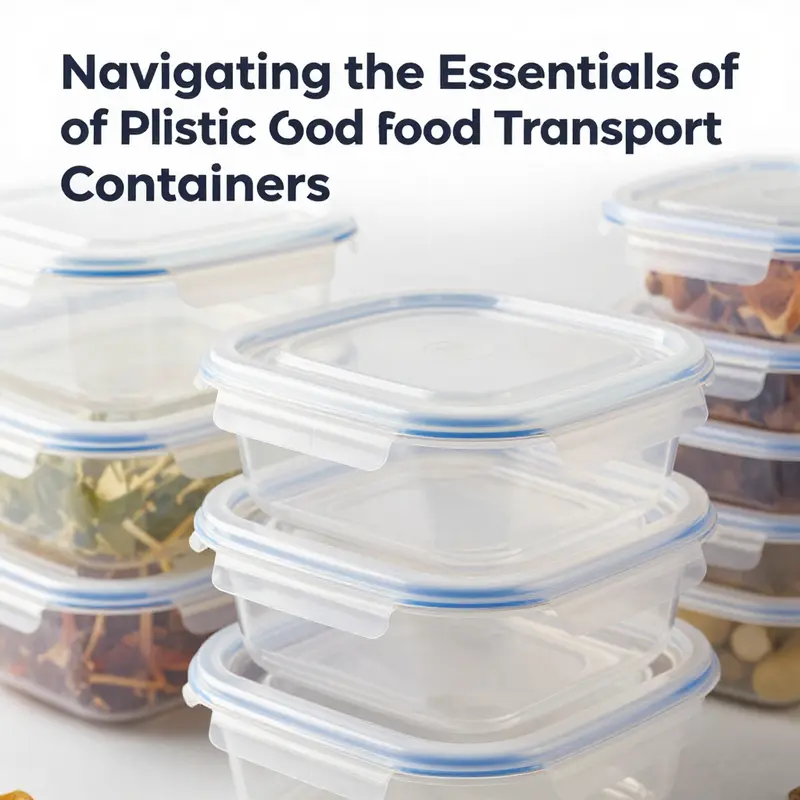
Every link in the chain that moves food from processing plants to tables hinges on one kind of ally that remains largely unseen: the plastic food transport container. These workmanlike vessels carry more than meals; they guard quality, enable efficient logistics, and, increasingly, reflect a growing commitment to responsible materials use. When we trace their value, the narrative unfolds as a careful balance among material science, engineering design, practical usability, and environmental accountability. At the center of this balance lie a few defining features that, taken together, explain why plastic containers have become foundational to modern food distribution.
First, the choice of material is not incidental. The trio most commonly involved—HDPE, PP, and PET—embodies a spectrum of properties tailored to different segments of the supply chain. HDPE offers a robust defense against chemical attack and moisture, making it a natural choice for liquids, sauces, and viscous products that traverse long distances or endure rough handling. Its chemical inertness contributes to a low risk of interaction with food, preserving flavor integrity and texture even after repeated cycles of use and wash. Polypropylene, meanwhile, adds heat resilience and mechanical durability. Its higher heat tolerance means containers made from PP can more readily withstand reheating in batch-service settings or microwave-based reheating after delivery, a practical edge for takeout and meal kits. PET, with its clear visibility and superior barrier properties, excels in short-term storage and display applications where the content needs to be easily identified at a glance. Its barrier characteristics help maintain carbonation in beverages and minimize permeation of oils and aromas that could otherwise compromise freshness. Together, these polymers form a palette of choices, allowing designers and operators to tailor containers to temperature ranges, shelf life expectations, and handling practices without sacrificing safety.
But material choice is only the first layer. A true container must behave predictably in real-world conditions. Chemical inertness goes beyond avoiding taint; it translates into reliability under a wide span of temperatures, from freezing lows to hot-fill operations and, in some cases, microwave reheating. The ability to resist leaching is a fundamental safety attribute backed by regulatory frameworks that define what constitutes food-grade material. In practice, that means formulations and processing methods that minimize extractables and leachables, even after repeated exposure to detergents, varying pH levels, or cycle temperatures. The best containers are tested to confirm these properties across time, ensuring reliability from the first use to the last, with a predictable performance curve that logistics planners can count on.
Barrier properties also deserve close attention. The choice of material naturally implies certain gas and moisture barriers, which in turn influence product quality during transit. PET’s gas barrier performance helps preserve freshness for perishable items like salads and certain prepared foods that might otherwise degrade through oxidation or moisture exchange. HDPE’s lipid and acid resistance makes it a robust shield for sauces, oils, and other watery or fatty products that can demand a tougher chemical resistance profile. PP contributes a sensible balance of barrier performance and heat resistance suitable for a wide array of applications, from ready-to-heat meals to bulk ingredients that require more conservative storage conditions.
Thermal behavior is a second pillar of practical viability. The temperatures containers must endure are not merely about keeping cold or hot; they include cycles of freezing, heating, and rapid temperature shifts during handling, as well as the micro-environments created inside a truck, a warehouse, or a consumer’s refrigerator. PP’s heat tolerance—capable of withstanding higher temperatures without warping or losing form—enables reheating by microwave or hot-holding in catering contexts. HDPE’s stable performance across a broad -20°C to 60°C range makes it a versatile workhorse for frozen, refrigerated, and room-temperature products. PET’s performance tends to skew toward short-term storage where visibility is a plus, and its temperature limits steer it away from high-heat applications. In combination, these materials enable a family of containers that can be deployed across the supply chain with confidence that the container and its contents will remain separated from a host of potential environmental and process-induced risks.
Structural design follows from material behavior and from the logistics realities containers must endure. One of the most visible design principles is stiffness and stability. A reinforced base and a carefully engineered lid system delete the chances of leaking or tipping—an essential feature when pallets are double-stacked or when containers are moved with forklifts or pallet jacks. Lids often incorporate locking mechanisms or airtight seals to preserve contents and limit microbial exposure, while some designs opt for transparent or semi-transparent lids to enable quick visual checks without opening, a small but meaningful improvement to inventory accuracy and food safety oversight.
Durability and impact resistance are also central. Containers experience a blend of rough handling, stacking pressure, and sometimes accidental drops. The use of thickened edges and corners, along with interlocking or tapered sides for secure stacking, is more than a space-saving trick; it is a practical response to the realities of multiple trips, harsh warehouses, and busy kitchens. When containers are reusable, their life-cycle durability matters even more, because every reuse cycle compounds the cost and environmental impact of the packaging. Materials and geometry that minimize wear, resist denting, and maintain form across repeated wash and reuse sequences extend the economic viability of the packaging and reduce waste without compromising safety.
Functional versatility is another hallmark. The modern market rewards modular, stackable solutions that can be tailored to a range of sizes and shapes—from compact 22-ounce cups for individual meals to larger, bulk-ready bins that accommodate ingredients for catering or warehouse storage. A well-conceived container is not merely a vessel; it is a mobile platform for workflow efficiency. Some models incorporate folding or collapsible forms, enabling substantial reductions in return transport costs when empty. Others feature built-in ergonomic handles, gussets, or cutouts that align with pallet jacks, streamlining handling for workers and reducing the risk of injury. Visibility, too, is a design virtue. Clear or translucent materials and components allow immediate content recognition without opening, which speeds up inventory checks, reduces unnecessary openings, and supports compliance with strict hygiene regimes.
Hygiene, of course, is inseparable from safety. The production and finished-use realities of food transport demand surfaces that are smooth, non-porous, and easy to sanitize. Seamless or well-sealed joints, rounded corners, and uniform wall thicknesses minimize crevices where residue can linger, making cleaning quick and thorough. Dishwashing compatibility is a practical advantage in professional settings, enabling rapid turnover in high-demand environments. Even in households, the ease of cleaning and resistance to staining and odor absorption reinforce safe use across multiple meals and storage cycles. Cleanability is not a cosmetic feature; it is a functional prerequisite that supports consistent performance and reduces the risk of cross-contamination in busy supply chains.
Sustainability is increasingly woven into the design conversation. Reusability, recyclability, and the broader idea of a circular economy are no longer afterthought considerations. Containers are conceived with reuse in mind, intended to shrink the frequency of replacement and the overall material footprint of food packaging. When end-of-life comes, the ability to recycle, reprocess, or repurpose the material into new packaging or other products makes a tangible difference in reducing waste streams. In practice, that means choosing polymers with established recycling paths and designing for decontamination and sorting to improve recyclability. It also means recognizing that not all reuse or recycling streams are created equal; some configurations may be more amenable to waste-to-energy approaches when faced with difficult contamination scenarios. The net effect is a packaging ecosystem that seeks to reduce the environmental cost of transport, without compromising the safety and efficiency that modern food supply chains demand.
A complete picture of these features would be incomplete without acknowledging the regulatory frameworks that govern material safety and performance. Standards at national and international levels guide what is allowed in terms of composition, surface finish, mechanical properties, and the boundary conditions for use. For instance, in many jurisdictions, a coherent set of requirements ensures that plastics in contact with food do not leach harmful substances, even after repeated heating or cooling cycles. These standards translate into specific test methods, acceptance criteria, and traceability that give buyers confidence in performance and safety. They also create a level playing field, encouraging continuous improvement while protecting consumers and workers alike. The interaction between material science and regulation is not abstract; it is the engine that transforms a raw polymer into a dependable tool in the hands of cooks, logisticians, and managers.
The applications of plastic food transport containers span the entire spectrum of the food industry. In commercial kitchens, containers streamline the movement of ingredients and prepared meals from line to staging area, from service to delivery back-up, and from event venues to refrigerated storage. In food delivery services, containers balance the dual demands of keeping meals hot or cold and protecting food while in transit. The ability to withstand reheating, maintain moisture barriers, and resist leaks makes these containers a reliable choice in a marketplace that prizes speed and reliability. In retail environments, containers sometimes serve a display function as well as a transport function, with clarity and branding playing roles in consumer perception. And for households, these containers support meal prep, portion control, and long-term fridge organization, turning a simple container into a quiet ally for healthy, organized living.
The trend lines shaping this sector point toward smarter packaging and more thoughtful material choices. Sustainability remains a core driver, with businesses weighing options for recyclable and reusable designs against cost and logistical complexity. Customization grows in importance; suppliers increasingly offer options for colors, sizes, and branding that align with corporate identity or marketing campaigns while preserving the functionality required for safe transport. Even more promising is the integration of smart features—digital or physical indicators that can track temperature, confirm seal integrity, or connect to inventory management systems. In practice, that means a future where a container not only carries food but also communicates its safety status, location, and shelf life to the stakeholders monitoring a shipment. Such capabilities support safer, more transparent supply chains and reduce waste by enabling timely interventions when temperature excursions or contamination risks are detected.
People who design and select these containers face ongoing questions about optimization and life-cycle performance. How many times will a container be reused before replacement? What is the marginal environmental benefit of a reusable design versus a recyclable one, given the energy costs of cleaning and transport? Which packaging configuration offers the best balance of stackability, weight, and security for a given route or mode of transport? These are not theoretical debates; they affect the bottom line, the reliability of critical food flows, and the perceived quality of a brand. In solving them, practitioners rely on standards and practical testing alike. They look at the physical properties of materials, the geometry of the walls and joints, the reliability of lid seals, and the ease of cleaning across tens or hundreds of reuse cycles. They also weigh consumer expectations around safety and convenience, including the ability to heat or reheat food in a consumer environment without sacrificing container integrity.
In closing, plastic food transport containers represent a sophisticated synthesis of science, engineering, and stewardship. Their core features—material inertness and safety, barrier performance, thermal resilience, durable and thoughtful geometry, hygienic accessibility, and responsible end-of-life considerations—together create an indispensable platform for modern food logistics. The containers do not just move meals; they uphold the integrity of the food, protect the consumer, and reduce waste through intelligent design. They are, in many ways, the quiet guardians of freshness, ensuring that what lands on a shopper’s table is as safe, delicious, and reliable as it was when it left the production line. As technology evolves and regulatory expectations become more nuanced, these containers will continue to adapt—incorporating advanced materials, smarter seals, more durable constructions, and richer data streams—without losing sight of the fundamental mission: to keep foods safe, accessible, and sustainable as they travel from one hand to another.
Further reading and ongoing research into materials safety are available through global food safety authorities, which provide notifications and guidelines about the use of food contact materials. External resource: https://www.fda.gov/food/food-contact-materials-notifications
Internal resources and industry examples can be explored for deeper context on how design choices translate into real-world performance. For example, certain supplier portals offer customizable packaging solutions with a focus on safety, branding, and logistics efficiency. Among these, a representative example highlights the breadth of options available for different food service models, from takeout and catering to bulk storage and retail display. custom-takeaway-packaging-supplies-disposable-tableware-for-theme-party. This link illustrates how a single packaging family can be scaled across different use cases while preserving core safety and usability features, a reminder that the packaging choices made in the supply chain echo through every bite consumers take and every shipment that reaches a store shelf.
From Kitchen to Curb: Applications, Market Shifts, and Sustainable Directions for Plastic Food Transport Containers

Plastic food transport containers sit at the intersection of food safety, logistics efficiency, and consumer experience. They move food through every stage of the supply chain, from ingredient storage in processing facilities to prepared meals arriving at a customer’s door. That movement requires containers to solve many practical problems at once: preserve quality, prevent contamination, optimize space, and enable predictable handling. This chapter follows how those practical demands shape the containers chosen in different settings, and how the industry is adapting to regulatory pressure, consumer expectations, and sustainability requirements.
Applications span a wide spectrum, yet common functional needs tie them together. In commercial kitchens and catering, containers must be tough, stackable, and hygienic. Catering fleets and event teams depend on standardized rectangular bins and insulated carriers that fit into transport racks and food warmers. Meal prep companies need heat-resistant containers that survive reheating and handling while preserving portion control. Fast food and takeout operations prioritize speed and low cost, often using clamshells and disposable cups that seal quickly on a production line. Retail settings lean toward clarity and presentation; transparent trays and cups let shoppers inspect freshness without opening packages. Households value versatility—containers that go from fridge to microwave and back into storage. Across these environments, small differences in material, shape, and lid design translate into real operational gains or losses.
Design choices are driven first by the food being moved. Hot, oily, or acidic foods demand materials that resist leaching and degradation. Cold-chain items require containers that tolerate freezing and condensation without cracking. Liquids need secure seals and drip-proof spouts. Size and shape choices reflect how food is portioned and stacked. Tapered sides speed nesting and reduce storage volume. Interlocking rims and reinforced corners stabilize stacks in transit. Lids with raised centers protect delicate items like pastries. Clear lids allow quick visual checks without opening packages, saving time and lowering contamination risk.
Material selection maps to these needs. Durable, heat-tolerant polymers are common where reheating occurs. Moisture-resistant and chemically stable types serve bulk ingredient storage. Clear, lightweight plastics work for short-term retail display. Manufacturers tune wall thickness, ribbing, and closure systems to meet load-bearing and drop-resistance requirements. Specifications for dimensional accuracy and stacking load are often set by buyers to ensure containers work with their racks and trolleys. These small technical specs influence cost, logistics, and lifecycle performance more than many realize.
Operational environments further refine container choice. High-volume QSR kitchens need containers that run smoothly on automated conveyors and sealing machines. Meal delivery platforms need packaging that preserves temperature for the typical travel time, while also fitting in standardized insulated bags or carriers. Supermarket pre-packaging lines value containers that accept automated labeling and barcode systems. In contrast, event caterers prioritize modular containers that fit transport trolleys and banquet service setups. The same product family rarely fits all uses; procurement teams therefore select a portfolio of containers to match each workflow.
Practical features that make a measurable difference include stackability, sealing systems, and durability. Stackability reduces wasted space in vans and warehouses. Airtight or locking lids limit spills and bacterial ingress. Durability reduces replacements and controls cost over time. Reusable containers offer lower per-use environmental impact when logistics support return and sanitization. When reuse is infeasible, recyclability and compostability matter. Buyers increasingly measure container value by lifecycle metrics rather than upfront price alone.
Regulatory and hygiene requirements shape design and sourcing. Food contact standards mandate specific material choices and migration limits. Suppliers document compliance to reassure buyers and auditors. For global providers, meeting a mix of national and regional standards is routine. These certifications guide which container types are allowed for hot foods, liquids, and acidic contents. Proper labeling—recycling codes, microwave-safe icons, and temperature limits—reduces misuse and helps downstream handlers make correct choices.
Sustainability is the dominant force changing how containers are produced and used. Regulatory pressure and consumer awareness have accelerated material shifts and operational innovations. Many businesses are replacing polystyrene foam with recyclable PET or engineered paperboard for short-lived packaging. Others adopt bio-based polymers where industrial composting infrastructure exists. Operators that offer returnable container programs are scaling them alongside delivery services in dense urban areas. These systems rely on standardized containers, reverse logistics, and hygienic processing to keep containers in circulation. When designed well, return-and-reuse models reduce solid waste, lower long-term cost, and offer marketing advantages to eco-conscious consumers.
Sustainability also shows up in material optimization. Reduced wall thickness, smarter ribbing, and hybrid constructions cut raw material without degrading performance. Some manufacturers incorporate recycled resin to lower carbon footprint while keeping mechanical properties acceptable for handling. Containers designed for easier material separation at end-of-life allow recycling streams to function more efficiently. Where recycling is limited, compostable options made from plant-based polymers provide a viable exit path—provided the local composting infrastructure accepts them.
Customization for brand identity remains important. Retailers and foodservice operators use color, embossed logos, and tailored dimensions to stand out and streamline operations. Custom sizes that match portioning requirements reduce leftover waste. Customized lids with vents or integrated cutlery can enhance functionality for specific meal types. Suppliers commonly offer color matching, printing, and tailored tray geometries to meet buyer needs. This flexibility helps operators balance aesthetics, function, and sustainability goals.
Smart packaging features are moving from novelty to operational tool. QR codes and NFC tags on containers enable traceability, inventory tracking, and customer engagement. Temperature indicators on cold-chain containers provide a clear record of exposure during transit. Time-temperature indicators and humidity strips can alert a handler to potential food safety risks. For businesses that ship high-value or perishable items, these technologies reduce spoilage and improve accountability across logistics partners. As sensors become cheaper and software platforms more integrated, smart features will be embedded in more transport systems.
The last-mile delivery revolution has a strong influence on container trends. As direct-to-consumer deliveries rise, containers must survive repeated handling while preserving food quality longer. Insulated containers and modular thermal inserts complement polymer trays to keep hot food hot and cold food cold. Stackable modular inserts allow couriers to mix item types without cross-contamination. For platforms running multiple deliveries per route, container uniformity speeds bag packing and reduces errors. Where reusable container fleets are deployed, logistics systems must track asset location, cleaning cycles, and condition. Digital deposit systems and incentives encourage return behavior from customers.
Procurement strategy matters as much as product design. Buying teams should measure total cost of ownership. That includes upfront price, expected lifespan, cleaning costs, replacement frequency, disposal fees, and the environmental regulatory risk. Procuring slightly higher-quality containers often reduces breakage and contamination, which lowers operating interruptions. Conversely, over-specifying a container increases cost without corresponding benefit. The right balance depends on use case, handling intensity, and whether reuse is practical.
Operational best practices help containers perform as intended. Standardize container types across similar workflows to simplify storage and handling. Train staff on proper sealing, stacking, and temperature handling. Track container failure modes to inform procurement and design tweaks. When adopting reusable systems, define clear cleaning protocols that meet food safety rules and verify with regular audits. For recycling, segregate materials on-site and communicate clearly with waste handlers. Small process changes—how lids are closed, how trays are loaded on racks—can reduce spillage, breakage, and labor time.
Supply chain resilience is essential. Diversify suppliers to reduce single-source risk. Specify dimensional tolerances so alternate suppliers can supply compatible replacements during disruptions. Maintain a buffer stock of critical container types, but keep it small enough to avoid excess inventory and obsolescence. Close collaboration between operators and manufacturers supports rapid change when consumer demand or regulation shifts.
Industry evolution will be shaped by three converging pressures: tighter regulation, consumer demand for greener options, and innovation in materials and logistics. Regulations increasingly restrict certain single-use materials and demand clearer labeling on recyclability. Consumers reward businesses that reduce visible plastic waste or replace it with credible alternatives. At the same time, materials science and smart logistics create new options that combine durability with lower environmental impact. The most successful operators will be those that treat containers as a strategic component of service delivery, not a disposable expense.
Adopting circular strategies pays off. Standardized, durable containers combined with efficient reverse logistics reduce lifecycle emissions. Where centralized washing facilities exist, economies of scale cut per-use costs. For decentralized networks, modular designs that fold or nest reduce return logistics costs. Pairing container programs with customer incentives boosts return rates and reduces contamination. For non-returnable needs, designing packaging for recyclability and aligning with local recycling systems improves end-of-life outcomes.
Practical transition steps for businesses include a targeted audit, pilot programs, and a phased rollout. Start by mapping container types, failure rates, and disposal paths. Run pilots for reusable fleets or new recyclable materials in one geography. Measure cost, labor impact, and customer feedback. Use measured results to optimize specifications, staff training, and partner agreements. Scale once operational metrics and compliance are validated.
The future will not be a single universal container. Instead, expect a richer ecosystem of specialized containers, linked by design standards, traceability tools, and aligned recycling streams. This ecosystem will enable operators to choose container types by use case, while still achieving broader sustainability goals. As materials and logistics improve, plastic food transport containers will continue to offer unmatched utility. Their evolution will depend on how well industry players integrate product design, operational discipline, and environmental stewardship.
For a concise industry reference on material standards, recycling codes, and best practice guidance, consult the Plastics Industry Association.
For examples of eco-aware alternatives in takeout packaging, see this supplier of eco-friendly takeout boxes for food packaging: https://ecocupbowl.com/product/eco-friendly-takeout-boxes-for-food-packaging-stylish-food-containers-safe-microwave-craft-paper-lunch-boxes-leak-grease-resistant/
External resource: https://www.plasticsindustry.org
Final thoughts
Understanding the intricacies of plastic food transport containers can make a significant difference in the operational efficiency and safety of food businesses. These containers are not just vessels for transportation, but essential tools in maintaining food integrity, meeting customer expectations, and complying with safety standards. Whether you manage a bubble tea shop, a catering service, or a food truck, selecting the right type of plastic food transport container tailored to your needs will set your business up for success and sustainability.