
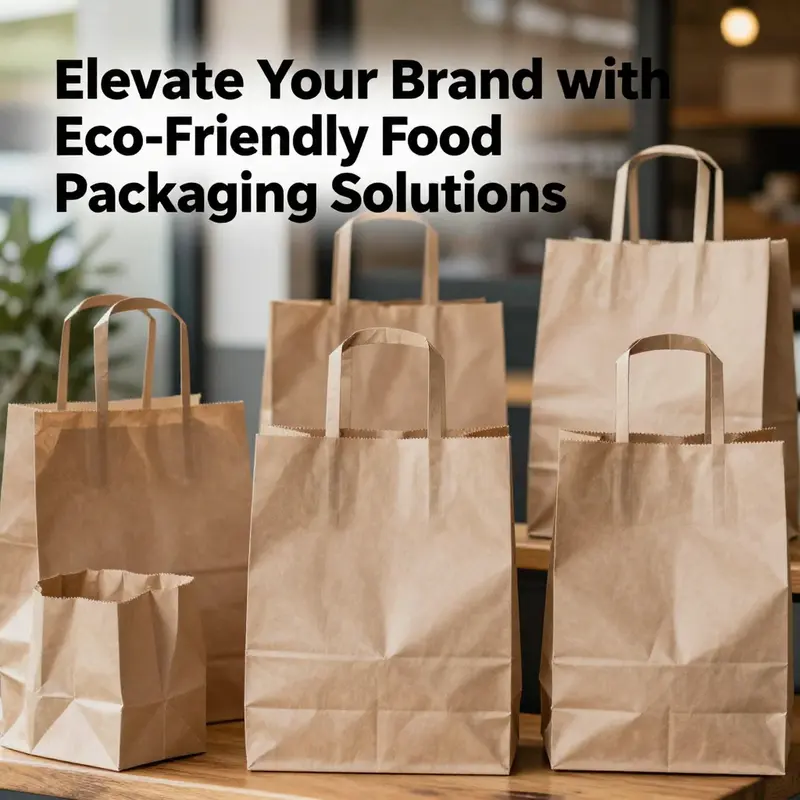
The rise of disposable food packaging paper bags with flat handles is not merely a trend; it’s a vital response to evolving consumer demands for sustainability and practical solutions. In the beverage and food industry, including bubble tea shops, restaurants, food trucks, and catering services, these bags are becoming an essential packaging choice. As a shift towards eco-friendly solutions takes center stage, it’s crucial to explore the market trends that impact your business, the sustainability benefits these bags offer, the innovative designs that can enhance your brand, and the economic implications for your operations. Each of these facets contributes to a comprehensive understanding of why investing in disposable food packaging paper bags with flat handles is both a savvy and responsible choice.
Rising Currents: How Flat-Handled Disposable Paper Bags Are Redefining Sustainable Takeout Packaging

A steady wind is blowing through the world of disposable food packaging, and it carries the scent of paper rather than plastic. Disposable food packaging paper bags with flat handles have moved from a utilitarian backstage role to a front-and-center choice for brands seeking sustainability, durability, and a chance to tell a story through design. The market for these flat-handled paper bags has grown in step with a broader push toward eco-friendly packaging, with 2025 marking a pivotal year when the value reached about USD 13.08 billion and the trajectory pointed clearly toward continued expansion. Projections place the compound annual growth rate at 14.35 percent from 2026 to 2033, a pace that signals not only resilience but an ongoing redefinition of what “disposable” means in the context of food service. This isn’t merely a niche trend; it is a systemic shift driven by changing consumer expectations, regulatory landscapes, and innovations in materials and manufacturing that align environmental responsibility with practical performance. The emphasis on flat handles, in particular, reflects a convergence of grip security, stackability, and branding opportunity that gives operators a reliable tool for managing heavier items and high-traffic service.
At the heart of this shift is consumer awareness. People are increasingly attuned to the environmental footprints of the products they buy and the packaging that accompanies them. Paper bags, especially those crafted from kraft paper, have become symbols of natural aesthetics and responsible choice. Yet awareness alone does not move markets; it must translate into tangible alternatives that perform as well as—or better than—previous solutions. Here, the combination of recyclability and the possibility to incorporate branding elements makes flat-handled bags particularly appealing. When a customer hands a bag to a companion or carries it through a busy street, the quality of the handling and the visual impression of the bag itself can reinforce a brand’s values about care, quality, and sustainability. In markets where takeout and delivery are rising, the ability to deliver a consistent user experience through packaging becomes a differentiator.
Regulatory influences have accelerated the transition away from single-use plastics, clearing space for paper-based options to scale. Regions across the globe are enacting bans and restrictions that increase the cost and friction of plastic carry-out solutions, nudging both operators and suppliers toward compostable or recyclable materials. Paper bags with flat handles emerge as a robust response to these regulatory pressures because they can be designed for compostability while maintaining sufficient strength and moisture resistance for typical takeaway orders. Designers respond by layering coatings that are food-safe and environmentally considerate, enabling moisture management without compromising end-of-life options. This regulatory dynamic also pressures manufacturers to innovate in adhesives, coatings, and linings so that the bags withstand the demands of greasy sandwiches, pastries, and other items that generate moisture and grease.
Online food delivery services amplify the urgency of this packaging evolution. The convenience economy relies on fast, reliable, and visually consistent packaging that travels well and maintains product integrity from restaurant to doorstep. Flat handles contribute to this reliability by providing a sturdy grip that reduces the risk of accidental drops, especially when bags are carried by drivers who are managing multiple orders. The market thus rewards systems that can deliver both performance and scalability—bags that hold heavier items, resist tearing, and can be produced in bulk with minimal variance. In practice, suppliers report that large-volume purchases can bring unit costs down substantially, sometimes to levels around $0.02 per piece for orders exceeding 100,000 units. Such economics open pathways for small chains and independent operators to adopt sustainable packaging without destabilizing budgets, reinforcing the view that eco-friendly packaging can also be cost-effective when managed at scale.
Design trends also play a central role in shaping demand. Customization is no longer a luxury; it is a standard expectation. Brands seek flexibility across paper type, size, and branding capabilities so that the bag itself becomes a walking advertisement and a tactile reflection of company values. Kraft paper continues to be a preferred material, celebrated for its natural appearance, strength, and suitability for high-quality printing. Flat handles are frequently reinforced or produced with thicker substrates to improve load-bearing capacity, enabling operators to package sandwiches, burgers, and pastries securely. The design language often integrates practical enhancements such as window cutouts to offer a preview of contents, full-panel printing for bold branding, and moisture-resistant coatings that preserve product quality while remaining compatible with recycling streams. The result is a product that meets functional needs and elevates customer experience, turning a routine takeaway into a small, memorable interaction between consumer and brand.
The discourse around cost efficiency mirrors the creative and environmental imperatives. Large-scale procurement, bulk ordering, and the ability to sample and test before full-scale production have become essential elements of strategic purchasing. Suppliers emphasize that unit costs can fall as production volumes rise, a dynamic that enables experimentation with different bag configurations without exposing a business to prohibitive risk. For example, buyers can trial several variations in sizing, handle reinforcement, and coating options to optimize for durability and moisture management before committing to a long-term contract. This testing phase is vital when introducing features like reinforced flat handles or hybrid coatings that strike the right balance between grease resistance and recyclability. The practical upside is clear: brands can iterate toward a packaging solution that is both responsible and reliable while maintaining cost discipline.
Where regional nuance matters, the market reveals a mosaic of adoption patterns. In some regions, the appeal of minimalist, fold-over bags with precision-cut handles aligns with a premium unboxing experience. In others, the emphasis is on rugged, heavy-load designs that deliver consistent performance under unpredictable handling. The Gulf Cooperation Council (GCC) markets, for instance, have shown robust growth, reflecting a blend of hospitality culture and a growing takeout scene that values packaging as part of the dining experience. Yet across all geographies, the logic holds: consumers expect packaging to be recyclable or compostable, perform under duress, and offer room for brand storytelling. This multi-faceted demand pushes manufacturers to diversify their materials portfolio, expand coatings options, and invest in modular production capabilities that can accommodate a spectrum of weights and aesthetics without sacrificing speed or quality control.
If one traces the tension between sustainability and practicality, the answer lies in thoughtful material science paired with smart manufacturing. Compostable and biodegradable materials are increasingly embraced as standard options for disposable food bags, including those with flat handles. Some designs incorporate compostable paperboard layers or food-safe coatings to improve moisture resistance while maintaining environmental credentials. Others lean into recycled content or responsibly sourced kraft fibers to align with circular economy principles. The conversation about coatings is particularly nuanced. Waterborne or soy-based inks, grease-resistant linings, and careful selection of adhesives can preserve recyclability and compostability alike, depending on the end-of-life handling preferred by a given region. Manufacturers who navigate these choices successfully often present customers with a packaging suite that can be customized by size, weight capacity, and branding, while staying within regulatory and sustainability targets.
The value proposition for retailers and foodservice operators centers on compatibility with branding, customer experience, and cost predictability. The ability to customize a bag to reflect seasonal campaigns or corporate identities strengthens shopper engagement and fosters repeat business. A well-designed bag can convey story and trust, acting as a portable advertisement that customers carry into the real world. The practicalities of daily operations—ease of stacking in storage, predictable downstream packaging workflows, and compatibility with merchandising systems—are equally critical. Flat-handled bags tend to offer stable stacking and efficient use of space in kitchens and pickup areas, reducing the probability of mishandling that can lead to product damage or spillage. In essence, the bag becomes a logistics ally as much as a marketing asset.
Within this evolving landscape, opportunities for brands to grow exist alongside challenges that demand vigilance. The capacity to adapt to diverse end-uses—from bakery items to ready-to-eat meals—requires a flexible product line that can scale with demand and diversify with market preferences. Sustainability is not a one-size-fits-all destination; it is a spectrum that includes structural design, material choices, coatings, and end-of-life considerations. Companies that invest in this spectrum—developing reinforced flat handles, moisture barriers that do not compromise recyclability, and branding-ready surfaces—are more likely to secure customer loyalty in a crowded marketplace. The predictability of supply chains also assumes greater importance as demand fluctuates with regulatory developments and consumer sentiment. In this context, the value of supplier collaboration and transparent sourcing becomes as important as the bag’s contents.
To illustrate how these factors converge in practice, consider the design logic that guides a typical takeout program aiming to reduce its environmental footprint while maintaining a premium customer experience. The program starts with selecting kraft paper as the baseline, balancing appearance and strength. It then explores load-bearing capabilities through reinforced flat handles and, where needed, thicker liners or coatings that resist moisture and grease during transit. The design may incorporate window cutouts to showcase a product, or opt for a full-panel print to maximize brand visibility. The color palette and typography reflect the brand’s voice, while the bag’s finish—matte, gloss, or subtle texture—contributes to the tactile experience. Each choice feeds back into the overall sustainability narrative, since coatings and inks must be compatible with recycling or composting streams. The packaging team collaborates with procurement to manage volume discounts, sample testing, and supplier certifications, ensuring that every batch meets performance specifications without compromising environmental commitments. It is this integrated approach, combining materials science, design aesthetics, and supply chain discipline, that elevates the role of flat-handled paper bags from a simple carrier to a strategic asset in the foodservice ecosystem.
For brands exploring these options, additional insights can be found in resources that emphasize eco-friendly takeout packaging approaches. eco-friendly takeout boxes for food packaging offers a contemporary look at how such designs translate into real-world practice, combining stylish containers with durable, grease-resistant surfaces that still respect end-of-life goals. This resource can help teams envision how a single packaging family can support multiple channels—from quick-service restaurants to boutique bakeries—without sacrificing sustainability or performance. External data points, supplier capabilities, and market expectations converge in a way that makes the case for flat-handed paper bags even more persuasive, particularly for operators seeking a scalable, brand-forward solution that can evolve with consumer priorities.
As the market continues to mature, the conversation will inevitably touch on new materials breakthroughs and policy developments. The push toward compostable and biodegradable alternatives will likely accelerate, with innovations in paperboard compositions, surface coatings, and adhesives that maintain barrier properties yet degrade in appropriate industrial or home composting environments. Recyclability will remain a central criterion, guiding choices around coatings and inks that do not contaminate recycling streams. Security and safety considerations will continue to shape how bags perform under heat, moisture, and rough handling, particularly for hot or greasy foods. In this ongoing dialogue, flat handles will persist as a practical feature that supports usability and brand communication while aligning with sustainability goals. The result should be a packaging ecosystem in which performance and responsibility are not trade-offs but mutually reinforcing forces that propel the industry forward.
Internal reference and further exploration can be found in resources dedicated to eco-conscious packaging solutions, such as this example: eco-friendly takeout boxes for food packaging. This example demonstrates how a well-designed bag and its accompanying container family can offer a coherent customer experience and a credible sustainability profile. For decision-makers seeking broader market validation and supplier perspectives, external supplier listings provide practical benchmarks. A representative example can be found on major e-commerce and supplier platforms that offer bulk, customizable options for flat-handled paper bags, along with material and coating choices that ensure regulatory compliance and product safety. External reference: https://www.alibaba.com/product-detail/High-Quality-Factory-Price-Restaurant-Brown-Fashion_1601087953873.html?spm=a2700.191312.0.0.6c4e4f77b5d6aD
From Footprint to Freshness: Tracing the Sustainability Profile of Disposable Paper Bags with Flat Handles

The shift from single use plastics to paper based disposables has not merely altered shelves and menus; it has reshaped how businesses conceive packaging as a fragment of their environmental narrative. Disposable food packaging paper bags with flat handles have emerged as a focal point in this shift, not because they solve every problem, but because they offer a combination of strength, recyclability, and branding potential that aligns with growing expectations of responsibility. In markets where takeout and delivery are solidifying as core growth channels, the pressure to minimize environmental impact while maintaining service quality falls squarely on packaging choices. Industry analyses released in the last two years underscore a robust outlook: a double digit compound annual growth rate for the handle paper bag segment, driven by consumer demand for sustainable solutions and by regulatory frameworks aimed at reducing single use plastics. Kraft based options stand out for their tactile strength and their ability to hold heavier items, from sandwiches to pastries, without sacrificing the clean finish that brands seek for blank spaces that can host logos, messages, and seasonal artwork. This is not a simple material choice; it is a strategic decision about how a business communicates its values with every bag carried from the counter to the curb. In this sense, the flat handle design is more than a convenience feature. It represents an engineered response to real world usage where gripping comfort, load distribution, and stackability influence both customer experience and waste streams. The market dynamics are complemented by regional variation. In the GCC and other fast growing markets, demand has expanded rapidly as boutique retail and food service demand premium, design oriented packaging. The implication is clear: sustainability and style can coexist, and when they do, they reinforce each other, creating a virtuous circle that feeds adoption as well as innovation. The research material points to a notable trend: a shift toward compostable and biodegradable materials that do not compromise performance. Compostable paperboard offerings are increasingly meeting the stricter expectations of food service and retailers who want packaging that can be disposed of with minimal friction in municipal composting systems. Yet the practical realities of end of life remain a decisive factor in assessing the true sustainability of any package. An increasing proportion of bags feature water resistant coatings to preserve food quality during transit, while still maintaining compostability when those coatings are selected with compostable standards in mind. This balancing act—between moisture resistance, durability, branding potential, and end of life—defines the modern design brief for flat handled bags. At the same time, durability remains non negotiable. The reinforced flat handle design is a response to the needs of heavier items such as stacked sandwiches, burgers, and boxed pastries. The design prevents premature tearing, distributes weight, and improves user comfort, all of which reduce the likelihood of bag failure and associated waste. This is not purely an engineering concern; it is a consumer experience issue. A bag that feels flimsy or fails under modest load undermines trust in sustainability messaging and can drive customers back to less environmentally friendly options simply for the sake of reliability. The interplay of form and function thus becomes a case study in how ecological aims translate into tangible, everyday outcomes. Beyond the base material and handle geometry, coatings play a critical role. Food safe moisture barriers are essential for most takeout scenarios, yet coatings can complicate end of life. The choice of coatings—whether water resistant, grease resistant, or moisture barrier coatings—determines how easily a bag can be processed in recycling streams or composted in industrial facilities. When coatings rely on non compostable plastics, the bag’s ultimate fate may be less favorable than its raw material would suggest. Industry guidance increasingly favors coatings that are compatible with composting under recognized standards such as ASTM D6400 or EN 13432. The goal is to ensure that performance does not come at the expense of compostability, so that the bag can return to the cycle of materials without becoming a contaminant in recycling facilities. This delicate balance is at the heart of sustainable design and requires meticulous attention to the life cycle of the product, from procurement to post consumer fate. The lifecycle perspective is crucial for understanding why paper bags can outperform plastics in climate metrics when end of life is properly managed. Kraft paper is typically derived from responsibly managed forests or is regenerated from recycled fibers, which can reduce the energy demand and greenhouse gas emissions associated with production relative to many plastic processes. The energy intensity of producing paper bags is often lower than that of producing plastic bags, particularly when one considers the entire lifecycle rather than a single stage. This does not mean the paper option is problem free; it emphasizes that benefits are maximized when the supply chain prioritizes sustainable sourcing, efficient pulp and paper processing, and responsible waste management. The broader climate narrative hinges on a simple truth: the environmental performance of disposable paper bags improves as the system around them improves. When households and businesses participate in proper disposal, composting where feasible, and high quality recycling streams, a bag’s carbon footprint is reduced and its value as a sustainable choice is reinforced. At the design level, this means selecting materials and coatings that minimize barrier requirements without sacrificing compostability. It also means creating flat handles that share the load evenly and reduce user fatigue, making the act of carrying food a more comfortable, less wasteful experience. The visual language of these bags also matters. In addition to performance, brands can leverage full-panel printing and window cutouts to enhance consumer engagement, all while preserving the integrity of the end of life. A well designed bag becomes a silent ambassador for sustainability, communicating a brand’s values through form, color, and messaging without overburdening the waste system with non recyclable components. In practice, the story of sustainability for disposable paper bags with flat handles is a narrative in which material science, waste management infrastructure, and consumer behavior converge. The science of materials guides decisions about pulp sources, fiber blends, and coatings that can be responsibly composted. Waste management policy and the economics of recycling influence what is practical for a given region. And consumer behavior determines whether a bag is properly disposed of as compostable material or redirected to recycling streams. Each of these elements interacts with market dynamics that are already shifting toward smarter, more sustainable packaging. Industry forecasts indicate that this is not a passing trend but a long term reorientation of how food service packaging is conceived and valued. As packaging becomes a more explicit element of a brand’s environmental promise, businesses increasingly look to solutions that deliver both functional reliability and clear environmental advantages. The literature highlights an important dimension: consumer education. Many shoppers understand the need to reduce plastic pollution, but they may not know how to dispose of compostable or recyclable bags correctly. This knowledge gap can undermine the environmental benefits of better materials if disposal is misconstrued. For this reason, clear labeling, consumer guidance, and visible disposal instructions become integral to the packaging itself. The most successful designs communicate at a glance whether a bag is suitable for home composting, industrial composting, or standard recycling, and they do so without complicating the user experience. The ultimate performance metric is not simply how a bag behaves on Day One, but how its life cycle aligns with a city’s waste infrastructure. In places where municipal composting facilities are robust, mass adoption of compostable paper bags can significantly reduce landfill dependency. In other regions, the emphasis may shift toward recyclable designs that fit existing paper recycling streams and avoid contamination from coatings or laminations. The research landscape underscores an emergent principle: sustainability is a transportable capability, not a one off product feature. A bag can be sustainable in one city and less so in another if it relies on infrastructure that is not available. Therefore, the best practice is to pursue adaptable designs that perform well across multiple waste streams and regulatory contexts. The implications for business strategy are meaningful. Companies that align with sustainability goals see improvements in brand loyalty, especially among younger consumers who vote with their wallets for responsible packaging choices. This alignment also dovetails with regulatory pressures that aim to curb single use plastics and to promote compostable alternatives where feasible. Market expansion into regions like the GCC reflects both growth opportunities and a growing expectation that packaging will contribute to a premium, environmentally aware consumer experience. In this sense, the aesthetics of packaging—fold over finishes, minimalist palettes, and precision cut handles—become more than style; they become signals of commitment to sustainability and quality. For practitioners, the design brief is clear: optimize for durability and comfort, minimize coatings that impede end of life, and maximize brand visibility in a way that does not compromise recyclability or compostability. This is a tall order, but it is increasingly achievable through advances in pulp technology, smarter coating chemistries, and better waste management. It is also worth noting the continuous drive toward innovative packaging formats that still use paper as the primary medium. For example, integrated takeout solutions that pair a sturdy bag with complementary packaging options can create a coherent, sustainable ecosystem around a single dining experience. A notable trend worth watching is the emergence of premium, minimalist designs such as fold over shiny paper bags with precision cut handles. Though these may be associated with fashion retail, their adaptation to food packaging demonstrates how aesthetics and sustainability can converge to deliver a premium unboxing experience while maintaining the environmental advantages of a paper based system. Consumers increasingly associate well designed packaging with quality and attention to detail, which means that the bag itself can become a narrative device that communicates care for the environment. In parallel, businesses must remain vigilant about the trade-offs involved in coatings and laminations. While light coatings can help control moisture and extend shelf life, they can also hinder recycling or composting. This is why the industry has been moving toward certifications and standards that verify compostability under realistic conditions. The presence of coatings does not automatically disqualify a bag from sustainable credentials, but it does require transparency about disposal expectations and adherence to recognized standards wherever possible. As a result, the sustainability profile of disposable paper bags with flat handles rests on a matrix of decisions. The forest stewardship and pulp processing paths influence raw material impact. The choice of coatings and laminations determines how easily the bag participates in composting or recycling streams. The design of handles influences user experience and the distribution of load, which in turn affects consumer behavior and bag life. And the alignment with waste management infrastructure determines whether a bag truly reduces environmental harm over its entire life. All these considerations feed into a broader corporate narrative about responsibility and resilience. A business that can demonstrate measurable improvements in waste diversion, lower energy use, and reduced greenhouse gas emissions gains a competitive edge beyond the immediate functional benefits of the bag. It is this integrated perspective that makes the topic of sustainable disposable paper bags with flat handles more than a technical footnote in a packaging strategy. It becomes a core element of how an organization positions itself in a world where consumers, regulators, and peers increasingly expect packaging to do more with less. To illustrate a practical path forward, consider how a packaging program can weave sustainability into its everyday decisions. The program would start with material selection: prioritizing responsibly sourced kraft fibers, recycled content where feasible, and coatings that support compostability or recycling. It would continue with process decisions that minimize energy use in production and maximize recovery at end of life. It would also integrate education and labeling that helps customers understand disposal options and why those choices matter. In addition, there is room for design innovation. The flexibility of flat handle bags lends itself to branding opportunities that do not compromise sustainability. For instance, full panel printing can convey a brand story or seasonal campaigns without adding layers of non recyclable materials. Window cutouts can enhance product appeal while keeping the bag structurally simple and easy to process at end of life. The bottom line remains that sustainability is not only about materials; it is about an integrated system of sourcing, design, use, and disposal. Businesses that cultivate this system can better navigate regulatory shifts and consumer expectations while also supporting a healthier planet. If you want a concrete reference point for how some packaging ecosystems balance multiple objectives, consider exploring a practical example in the industry that demonstrates how a multi compartment, eco friendly design can function in fast casual settings; such a model reflects the broader sustainability logic of flat handle paper bags and their capacity to carry a diverse range of products securely while maintaining a responsible disposal profile. This approach shows that sustainability can be embedded in everyday operations and experiences, rather than treated as a separate, aspirational goal. The interconnected nature of these decisions means that a single bag can carry social and environmental value across the value chain, from forests to consumer kitchens, to recycling or composting facilities. When implemented thoughtfully, the result is a packaging system that supports takeout growth while reducing ecological impact, reinforcing brand trust, and aligning with both policy direction and consumer intent. For readers seeking a tactile example of the diversity within this category, a closer look at materials and designs can reveal the subtle choices that determine ecological performance. The journey from raw fiber to finished bag is filled with opportunities to optimize fiber sourcing, processing energy, moisture protection, and post consumer fate. In this sense, the sustainability profile of flat handled disposable paper bags becomes a lens through which the entire takeaway experience can be improved. The broader takeaway for researchers and practitioners is that materials science, waste management, and consumer behavior are in a dynamic equilibrium in which advances in one area enable improvements in others. Crack open the door to this intersection, and one discovers that even a seemingly small object like a flat handle paper bag can be a powerful instrument of environmental responsibility and brand storytelling when designed and managed with care. The industry continues to push forward, embracing smarter materials, design for end of life, and the alignment of packaging with evolving consumer expectations. As a result, the chapter on sustainability in this field remains a living conversation, expanding with new standards, emerging waste management capacities, and innovative design strategies that together help define a more responsible packaging future. Internal link for reference to practical design options appears here in the context of a broader sustainability narrative: eco-friendly-disposable-3-compartment-food-grade-packaging-box-for-fast-food-high-quality-takeout-boxes-for-fried-chicken-french-fries-packaging. As this example suggests, even within the constraints of a single bag format there is room to innovate and to signal care for the environment without compromising service. The conversation now turns to the policy and infrastructure context that shapes how well these designs perform in the real world. Municipal and national waste management policies increasingly favor packaging that is either recyclable through standard paper streams or compostable in facilities that accept food contact materials. This policy arc creates a dynamic environment in which manufacturers are motivated to optimize packaging for specific regional capabilities, rather than chasing a universal solution that may not be practical everywhere. The regional dimension matters as much as the material science dimension because the effectiveness of a given design depends on local waste processing infrastructure, consumer education, and the availability of certified compostable or recyclable options. The GCC market example in the overview reflects a broader pattern: high growth markets often embrace premium packaging aesthetics as part of sustainability narratives. In such contexts, minimalist, fold over designs with carefully engineered handles and precise branding achieve a premium feel while remaining compatible with core waste streams. This synergy between aesthetics and environmental responsibility demonstrates that sustainability can enhance both operational efficiency and market differentiation. While the pasture of possibilities is broad, the core principle remains constant: the success of disposable paper bags with flat handles is not only a matter of how they perform in transit, but how they participate in a circular economy. The evidence from recent analyses suggests that the most durable solutions will be those that unify material choice, coating strategy, and user guidance into a cohesive system. In the end, what matters most is whether the bag helps reduce total environmental impact when paired with appropriate disposal behavior. If a business can articulate and demonstrate improvements across procurement, production, use, and end of life, the packaging becomes not merely a container but a statement about corporate responsibility. This is the broader promise of sustainable packaging in the takeout era, and it invites ongoing collaboration among producers, retailers, waste managers, and consumers to turn a simple bag into a responsible, effective, and celebrated component of daily life. External resource: https://www.epa.gov/sustainability/paper-bags-vs-plastic
From Kraft to Clarity: Designing Flat-Handled Paper Bags That Elevate Takeout Packaging

The shift toward sustainable, consumer-friendly packaging has transformed disposable paper bags with flat handles from simple carriers into curated branding surfaces and reliable transport tools. In this chapter, we trace how design innovations—rooted in material science, ergonomics, and visual storytelling—are redefining what a takeout bag can do. The aim is not merely to carry food from point A to point B but to enable a seamless, appetizing moment of engagement that aligns with environmental values and the realities of fast-paced service. As consumer demand for eco-conscious solutions grows, manufacturers are balancing strength, moisture management, and recyclability with the tactile and aesthetic expectations that accompany modern brand experiences. This balancing act is most evident in the material choices, coating technologies, and structural innovations that underpin flat-handled bags and shape how they perform in kitchens, on sidewalks, and within the hands of customers.
Material selection remains foundational. Thicker kraft paper, specified in grams per square meter (GSM), improves the bag’s load-bearing capacity, enabling it to carry heavier items like sandwiches, burgers, and pastries without buckling. The pursuit of higher GSM is not about excess weight alone; it is about stability during transport. A bag that resists sagging under greasy contents reduces the risk of leaks and spills, protecting both the customer experience and the integrity of the food inside. Material choices are increasingly paired with barrier coatings that guard against oil and moisture. Wax and silicone-based coatings, for example, have matured to offer oil-proof properties while maintaining a level of compostability or recyclability that aligns with emerging end-of-life standards. The practical effect is a packaging unit that not only holds up during transport but also preserves the intended texture and freshness of the item inside, whether it is a flaky pastry or a steamed bun.
Coatings are more than functional barriers; they are a bridge between performance and sustainability. Oil resistance is essential for fast food and bakery categories, where grease can compromise the bag’s grip and the product’s appearance. Modern coatings are engineered to be food-safe and, where possible, compatible with compostable or recyclable workflows. This compatibility matters greatly in systems that aim to divert waste from landfills. Even as coatings improve moisture resistance, designers must preserve the ability to recycle or compost the bag after use. The conversation around coatings thus intersects with regulatory expectations, consumer preferences, and the logistical realities of waste management. In practice, coatings are selected not only for their barrier properties but also for their impact on printability, color fidelity, and overall bag curvature when handled by customers or during automated packing lines.
Brand visibility and consumer engagement have become central to the design language of flat-handled bags. The flat handle doubles as a branding surface, enabling high-visibility logos, colorways, and even scannable codes that connect customers to digital content. One notable trend is the expansion of printing across the bag body and onto the handle itself. This multi-surface approach turns every packaging unit into a portable advertisement, reinforcing brand recognition and loyalty at the moment of purchase and in post-consumption moments when customers reference their previous order. In addition to printing, some designers integrate window cut-outs into the bag design. Windowed designs offer a visual cue of the product inside, heightening appetite appeal and reducing contamination risk by allowing customers to view the item without exposing it to potential handling. For applications ranging from bakery confections to sandwiches and savory pastries, these windows strike a balance between visibility and protection. See an example of windowed, kraft-based packaging with clear windows here: windowed kraft paper packaging with clear windows.
The human factors of handling are central to the evolution of flat-handled bags. Ergonomic improvements focus on the grip, weight distribution, and the tactile feedback that comes with carrying hot or greasy foods. Reinforced stitching and wider grip areas address concerns about fatigue and security, especially when bags are loaded with multiple items or heavier fare. Non-slip textures on the handle surface reduce the risk of slips, even under damp conditions, while the flat configuration remains space-efficient for stacking and storage. Some iterations explore foldable or collapsible structures that shrink down for shipping and storage without sacrificing post-assembly strength. These space-efficient designs help retailers streamline inventory management and curb transportation costs, a practical advantage as takeout and delivery volumes scale upward.
Designs are increasingly guided by life-cycle thinking. Compostable and biodegradable materials appear not as optional add-ons but as baseline expectations for many operators and consumers. Paperboard composites labeled as compostable often feature coatings that degrade under industrial composting conditions while still providing necessary moisture barriers during transit. This duality—durability during handling and rapid, friendly degradation afterward—defines modern design goals. Recyclability is also a critical criterion. Bags are being engineered so that every layer—from paper substrate to coatings and inks—supports efficient recycling streams. The goal is to minimize contaminants that complicate disposal while preserving the bag’s structural performance in real-world use. These material choices reflect a broader shift in the packaging ecosystem toward smarter, end-of-life-conscious solutions that do not compromise on form or function.
The aesthetic language of these bags has also matured. The growing interest in minimalist, premium looks borrows from fashion and retail packaging to elevate the unboxing or carry experience. Fold-over or flat-handled bags now often feature clean lines, restrained color palettes, and precision-cut details that convey a sense of quality. The integration of window cut-outs, subtle branding, and high-quality finishes contributes to a premium unboxing moment that customers increasingly associate with responsible sourcing and thoughtful design. This premium aesthetic is not merely decorative; it communicates values—quality, care, and sustainability—staging customer trust and preference long after the meal is consumed. When brands can convey these values through a single packaging unit, that unit becomes a lasting impression rather than a disposable afterthought.
Technology supports this evolution in several converging directions. Printing methods have become more versatile and cost-efficient, enabling full-coverage branding and even interactive elements such as QR codes integrated into the flat handle or the body of the bag. QR codes connect to menus, nutritional information, sustainability stories, or loyalty programs, enriching the consumer experience at the moment of purchase and allowing brands to extend engagement beyond the bag’s lifecycle. The physical design also accommodates digital integration—printing on the handle, for instance, invites direct brand storytelling in a compact, highly visible format. The result is a more dynamic dialogue between companies and customers, where packaging acts as an ongoing touchpoint rather than a one-off container.
From a logistics perspective, the flat-handled bag must perform across the entire chain: from the kitchen line to curbside pickup, through delivery corridors, and into the customer’s home. A reliable bag resists tearing during stuffing, bagging, and transfer. The reinforced handle stitching and broader grip provide a more stable hold when bags are carried with heavy or multiple items. In practice, this translates into fewer incidents of bag failure, reduced customer dissatisfaction, and improved operational efficiency for whoever is packing the order. The foldable or collapsible variants, while seemingly a minor convenience, can also yield meaningful savings in warehousing and shipping, where space and weight add up quickly across large volumes.
The regional development patterns reflect both consumer demand and strategic adaptation. In markets where takeout and delivery are ingrained as daily practice, designers are accelerating the shift toward smarter, sustainability-forward solutions that still deliver the sensory satisfaction of a premium experience. The GCC market, for example, has shown strong uptake of advanced paper bag concepts, aligning with broader growth in boutique and fashion-forward retail packaging trends that emphasize visual minimalism and functional elegance. Such shifts demonstrate that the bag is no longer just a carrier; it is an integral part of the brand’s storytelling and a tangible extension of the customer experience. Innovation here tends to blend traditional kraft aesthetics with modern touches—precise cuts, subtle textures, and high-clarity finishes that signal both reliability and refinement.
As design teams push toward more ambitious solutions, the engineering behind these bags becomes increasingly interdisciplinary. It blends fiber science, surface chemistry, and mechanical design with branding and consumer psychology. The choice of fiber grade, the calibration of coatings, and the geometry of folds and handles must cohere to offer predictable performance under varied conditions: hot contents, greasy foods, and a range of bag sizes. The engineering challenge is to create a unit that behaves consistently in the hands of a busy restaurant staff, a hurried courier, and a careful shopper who may reuse the bag for other purposes. In such a context, the flat handle is not a mere feature; it is a fulcrum around which durability, usability, and brand expression revolve.
The chapter’s strand of practical guidance also respects the realities of supply chains. Paper-based packaging must be produced at scale, with materials and coatings that can be sourced reliably, applied uniformly, and finished with color and branding that endure handling and environmental exposure. This requires coordination among pulp suppliers, coating manufacturers, and printing houses to ensure that performance, appearance, and end-of-life properties align across millions of units. When a business chooses a design direction—whether it leans into windowed aesthetics, bold brand statements, or quiet minimalism—the decision cascades through production lines, inventory planning, and distribution networks. The most successful innovations are those that harmonize customer appeal, operational practicality, and environmental stewardship in a single, coherent system.
The future trajectory of these bags likely involves even deeper integration with the circular economy. More coatings may be engineered to degrade under specific composting conditions while leaving behind no harmful residues. Barrier properties could be tuned to allow the bag to perform as a moisture shield during transport yet break down quickly when composted in appropriate facilities. The use of recycled fibers is probable to rise, accompanied by branding strategies that celebrate recyclability and responsible disposal. In tandem, the visual language of packaging will continue to evolve, balancing the desire for a premium, minimal look with the need to convey environmental commitment and product visibility. The result will be a set of flat-handled bags that not only carry food securely and elegantly but also reinforce a brand’s values and the consumer’s trust in sustainable practice.
This conversation about design is inseparable from the broader discourse of standards and engineering applications. A technical lens helps translate aesthetic ambitions into material performance and process feasibility. It anchors decisions in measurable properties such as tensile strength, crease resistance, and moisture barrier efficacy, while also acknowledging the realities of production tolerances and waste-stream compatibility. For readers seeking a more technical treatment of standards, properties, and engineering considerations in paper-based food packaging, a comprehensive overview provides a rigorous foundation. The integration of such standards with the design philosophy described here helps ensure that every bag not only looks and feels right but also behaves consistently under the stresses of real-world use. As this design language matures, it will continue to propel the market forward, delivering stronger, smarter, more sustainable packaging that elevates the everyday act of taking a meal home.
In closing, the evolution of disposable food packaging paper bags with flat handles is a story about the convergence of form, function, and responsibility. Material science and structural design have enabled bags that hold up under pressure, protect contents, and present brands in compelling ways. Coatings and prints expand the bag’s capabilities without compromising recyclability or compostability. Window features and ergonomic handling strategies deepen the sensory and practical connections between consumer and product. And as markets evolve—from bustling urban centers to rapidly expanding regional hubs—the need for space-efficient, performative packaging becomes even more acute. The result is a packaging paradigm that respects the environment while delivering an enhanced, brand-forward customer experience. For a deeper technical perspective on the standards and engineering applications relevant to these disposable paper bags, see the referenced literature: Paper Food Packaging: Key Standards, Physical Properties, and Engineering Applications.
Carrying Growth: The Economic Trajectory of Flat-Handled Disposable Paper Bags in Modern Retail

The shift toward sustainable packaging has moved beyond a moral imperative into a clear economic calculus for retailers. The disposable food packaging paper bags with flat handles embody this shift in a form that is both functional and strategically valuable. In many ways, these bags do more than carry a sandwich or a pastry; they carry brand signals, customer experience, and long‑term profitability. The flat-handle design was not chosen merely for comfort or aesthetics. It reflects a disciplined response to evolving consumer expectations and regulatory landscapes, combining strength, recyclability, and the potential for powerful branding in a single, cost-conscious package. Within this frame, the economic implications of adopting such bags ripple through the supply chain, pricing strategies, and the broader competitive dynamics of the retail sector. As takeout and delivery continue to rise, and as plastics regulations tighten, the business case for flat-handled paper bags becomes increasingly robust, even as retailers weigh the upfront costs against the longer arc of value creation they enable.
A keystone of the economic argument is the growing demand for sustainable packaging. Consumers are more acutely aware of environmental footprints, and they reward brands that align with responsible practices. This behavioral trend translates into tangible economic outcomes: stronger brand equity, higher perceived quality, and, in some contexts, a willingness to pay a premium for packaging that signals environmental responsibility. The paper bag, especially when crafted from kraft or other recyclable fibers, has a lower environmental liability than many single-use plastics. Firms that integrate these bags into their CSR narratives often see improved customer loyalty and enhanced in-store and digital engagement. The consequence is not just a softer, reputational benefit; it is a measurable shift in customer retention rates and incremental sales, particularly in the fast-casual and specialty food segments where presentation and sustainability intersect.
Market dynamics further illuminate the economic path. Global data show the paper bags market was valued at approximately USD 5.47 billion in 2025 and is projected to grow to about USD 9.14 billion by 2034, a testament to sustained demand for paper-based packaging across multiple sectors, including food retail. This trajectory implies a compound annual growth rate (CAGR) of roughly 5.86 percent over the decade, signaling a durable upshift in both production volumes and value-added services such as customization and branding. Within this broader market, the subset of flat-handled bags—engineered for heavier items and higher usability—enjoys a similar or even higher momentum, supported by the need for sturdier disposables in high-volume takeout environments. The procurement choices retailers make today—whether to lock in long-term supplier contracts, invest in higher-quality coatings, or adopt compostable formulations—will cascade into cost structures and pricing power over the coming years.
Another economic lever is customization. Customization has emerged as a powerful differentiator in a crowded retail landscape. The ability to imprint logos, brand colors, and distinctive graphics on bags turns a simple packaging item into a marketing channel with measurable return. Customization supports brand storytelling at the moment of purchase, reinforcing recall and facilitating word-of-mouth sharing as customers carry branded bags through their daily routines. This isn’t superficial branding; it translates into premium pricing opportunities and improved margins for retailers and manufacturers alike. In specialty food stores, cafes, and gourmet outlets, where presentation signals quality and care, tailored bags justify higher retail prices and foster stronger per-unit profitability. The trend toward high-visibility branding—think full-panel printing and strategic window cutouts—also raises the perceived value of the bag itself, enabling retailers to achieve better price realization without compromising the customer experience. To support this strategic edge, collaborations with packaging suppliers who offer end-to-end customization, including color management, coatings, and print fidelity, are increasingly common, and they can yield long-run cost efficiencies as economies of scale take hold.
The economics of production and the supply chain frame additional considerations. Paper bags generally carry higher raw material costs than plastics, driven by fiber, pulping, and specialized coatings that ensure moisture resistance and food-safety compliance. Yet several countervailing forces narrow this gap over time. First, improvements in manufacturing efficiency—automation, optimized layup, and reduced waste—lower unit costs. Second, rising recycled-content mandates and increasing use of recycled fibers reduce virgin-fiber exposure, which can dampen input costs and stabilize supply. Third, the regulatory environment—where many jurisdictions implement plastic bans, fees, or mandates for recycled content—shifts the cost calculus in favor of paper solutions. In practical terms, retailers are balancing the higher upfront price of flat-handled bags against long-term benefits. These benefits include reduced liability from plastic bans, stronger supplier partnerships, and the reputational capital that comes with sustainable procurement practices.
From a logistics standpoint, the flat-handle design contributes to more efficient handling, storage, and distribution. The reinforced handles that are often part of modern designs allow retailers to confidently offer heavier items like sandwiches, burgers, and pastries without increasing the risk of tearing or customer dissatisfaction. This reliability minimizes shrinkage and returns due to packaging failure, lowering ancillary costs and improving the customer experience. Material innovations—such as moisture-resistant food-safe coatings that maintain environmental integrity—help protect product quality from the moment of packing to the moment of consumption. These enhancements are not merely cosmetic; they translate into tangible reductions in product waste and customer complaints, a combination that reduces post-sale costs and bolsters repeat business.
The regional dynamics add another layer to the economic equation. Markets such as the GCC have shown strong demand growth, reflecting broader consumer adoption of stylish, minimalist designs that still prioritize function. In these markets, the premium perception associated with well-crafted, fold-over paper bags with clean, precision-cut handles aligns with consumer expectations for quality and experience. This premiumization, while potentially elevating unit costs, can also unlock higher price points in boutique and specialty retail contexts. When brands position their packaging as part of a premium customer journey, the unboxing experience becomes part of the product narrative, contributing to social media visibility and organic marketing effects that extend far beyond the checkout counter.
Retailers must also contend with the total cost of ownership. While the per-unit cost of a paper bag with flat handles is higher than a basic plastic bag, the broader economic picture includes avoided plastic ban penalties, reduced environmental liability, and stronger brand equity. Moreover, as consumer demand for sustainable options grows, retailers can reconcile cost with value by leveraging the bag as a long-lasting marketing asset. A higher-margin bag that carries a company logo over multiple uses—whether in a café setting or at a community event—can yield a lower effective cost over its lifecycle than a disposable plastic alternative, which carries little marketing value and often incurs regulatory and environmental costs.
In practice, retailers may pursue a mixed strategy that blends cost management with branding ambitions. Long-term supplier relationships and contracts that secure favorable pricing for high-volume orders can smooth quarterly margins. At the same time, selective investments in premium customization—such as reinforced, compostable coatings or partially transparent window designs—allow a retailer to command premium pricing in targeted segments without sacrificing overall cost discipline. This approach supports a resilient business model, one that aligns with broader market expectations for sustainable packaging while preserving the agility required in dynamic foodservice environments.
The interplay between sustainability and profitability becomes more visible when we consider the packaging ecosystem as a marketing infrastructure. Paper bags with flat handles can extend the reach of a brand far beyond the point of sale. A customer walking through a shopping district or commuting on public transport carries the retailer’s branding into everyday spaces, turning ordinary transactions into incremental advertising. In sectors where competition is fierce, such as coffee and bakery or fast-casual dining, the packaging choice—from material to design to finish—can influence a consumer’s choice, repeat visits, and even willingness to pay a small premium for a preferred packaging experience. The economic implication is clear: investing in high-quality, well-branded bags is a form of customer acquisition and retention expenditure that can yield outsized returns over time.
Within this framework, the potential of customization as an economic driver cannot be overstated. As retailers increasingly treat packaging as a micro-marketing platform, the demand for tailored designs—logos, colorways, and messaging—will continue to rise. This trend is especially potent for retailers operating in specialty food channels or boutique segments, where presentation and brand narrative are inseparable from the product itself. The revenue upside is not limited to higher per-unit prices; it also includes enhanced customer lifetime value through stronger engagement and more frequent repeat purchases. For suppliers, customization commands premium pricing and shorter product iteration cycles, especially when they offer complete design-to-delivery solutions, including coatings that meet food-safety standards and print methods that maintain fidelity on textured fibers.
As the market evolves, so too do consumer expectations around sustainability. The literature and market analyses from 2026 point to a broader shift toward compostable and biodegradable materials that still offer practical performance. Food-safe coatings that bolster moisture resistance, coupled with compostable paperboard substrates, are becoming standard rather than exceptional. For retailers, this evolution reduces long-term disposal concerns and aligns with circular economy ambitions. It also informs capital budgeting decisions: investments in compostable or recycled-content bags may require higher initial outlays but can yield favorable regulatory positioning and potential subsidies or tax incentives in some jurisdictions. The overall economic message is that the bag is no longer a disposable afterthought; it is an asset with lifecycle costs, regulatory considerations, and a clear role in brand strategy.
The broader strategic outlook remains favorable for flat-handled disposable paper bags in food retail. The combination of rising demand for sustainable packaging, the opportunity for premium branding, and advances in production efficiency points toward a durable uptrend in both volume and value. Retailers that align procurement with sustainability commitments while embracing design-driven differentiation will likely experience stronger foot traffic, higher average tickets, and improved customer loyalty. The packaging choice should thus be viewed as an integrated business decision—one that links product quality, consumer perception, regulatory compliance, and marketing effectiveness into a single, measurable path toward resilience and profitability. In other words, the economic implications extend well beyond the cash register; they shape the retailer’s capacity to compete, innovate, and grow in a rapidly changing marketplace.
For readers seeking a broader market perspective, the ongoing research and industry outlook emphasize a continued trajectory of growth and opportunity in the paper bags domain. The sector’s expansion is not merely about replacing plastics; it is about rethinking how packaging can support sustainable consumption patterns, enhance customer experiences, and reinforce brand narratives in a cost-aware way. Retailers who translate this into disciplined sourcing, smart customization, and scalable operations will be well-positioned to capitalize on the momentum in the flat-handled segment. The economic implications, when viewed through the lens of value creation, reveal a compelling case for integrating packaging design, sustainability goals, and customer-centric branding into a cohesive growth strategy.
To connect this chapter to practical paths for implementation, consider how retailers can leverage customization without destabilizing supply chains. One approach is to segment packaging strategies by store format and product category, enabling targeted design investments that match consumer expectations and willingness to pay. For example, premium outlets can feature full-panel branding and window cutouts that showcase product quality, while value-focused locations might optimize for durability and cost efficiency with reinforced handles and moisture-resistant coatings. The overarching objective is to convert a packaging item into a strategic asset that reinforces the retailer’s value proposition, elevates the unboxing moment, and sustains profitability across a spectrum of operating environments.
As a final note, the economic implications of flat-handled disposable paper bags are inseparable from broader macroeconomic and policy contexts. The market’s growth trajectory and the reinforcement of sustainability as a core business concern signal a durable shift in how retailers view packaging—from a cost center to a strategic lever. The ability to blend performance, aesthetics, and environmental responsibility within a single packaging choice positions the flat-handled paper bag as a critical element of modern retail strategy, capable of delivering measurable financial returns while supporting a more sustainable supply chain. Retail leaders who recognize and act on this convergence will likely set the standard for how packaging can harmonize profitability with responsibility, turning an ordinary carry-out item into a cornerstone of brand value and competitive advantage.
Internal link reference: For retailers exploring how customization can translate into tangible branding and revenue benefits, the option to explore dedicated packaging solutions is worth considering. custom-takeaway-packaging-supplies-disposable-tableware-for-theme-party.
External resource for broader market context: For a wider perspective on market size and trends beyond single-channel implications, see MarketsandMarkets’ paper bags market report. https://www.marketsandmarkets.com/Market-Reports/paper-bags-market-174411243.html
Final thoughts
As the food service industry continues to adapt to consumer preferences and regulatory changes, the importance of disposable food packaging paper bags with flat handles becomes ever more pronounced. From embracing sustainable practices to leveraging design innovations and understanding the economic benefits, these bags represent a prime opportunity for businesses to enhance their operational efficiency and customer appeal. Adopting eco-friendly packaging is not just an ethical decision—it’s a strategic move that can elevate your brand while meeting the demands of an environmentally-conscious customer base. As you navigate the evolving landscape of food service, remember that investing in quality packaging solutions like paper bags with flat handles offers potential dividends for both your brand and the planet.