
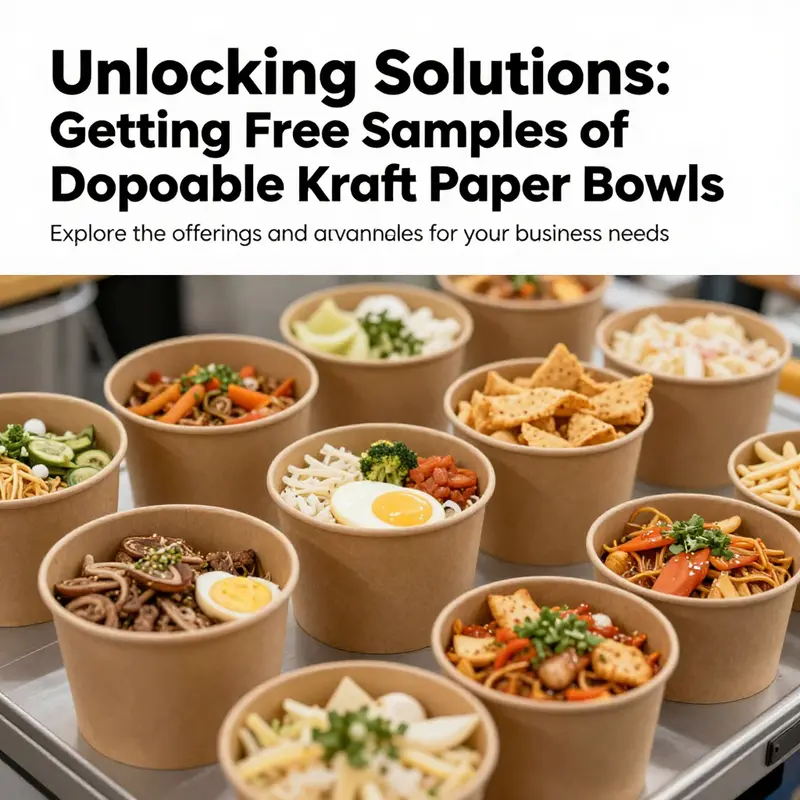
In a dining landscape continuously evolving toward sustainability and convenience, disposable kraft paper bowls have emerged as optimal choices for food service establishments. These eco-friendly options not only suit diverse culinary needs but also resonate with the growing consumer preference for environmentally conscious packaging. This article dives into the world of disposable kraft paper bowls, specifically focusing on the availability of free samples from various suppliers. Understanding supplier insights, economic aspects of sample offerings, technical specifications, and current market trends will equip bubble tea shops, restaurants, food trucks, catering services, event planners, and corporate procurement teams with essential knowledge to make informed decisions for their operations.
Choosing the Right Supplier: Requesting Free Samples of Disposable Kraft Paper Bowls with Confidence
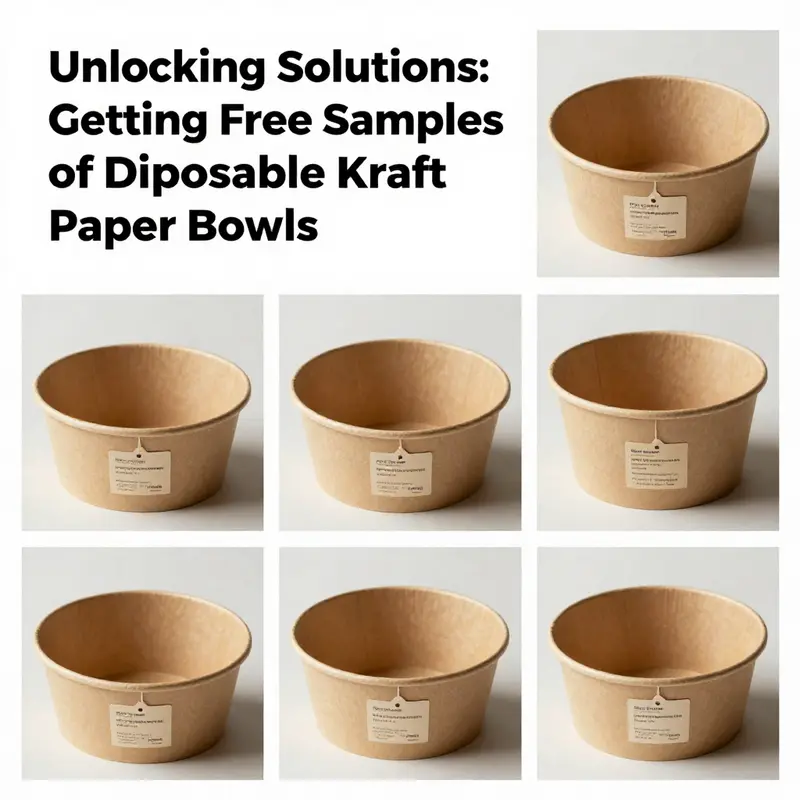
Supplier selection and sample strategy
Sourcing disposable kraft paper bowls often begins with one simple request: a free sample. Yet that single sample can determine whether a product meets your brand standards, satisfies food-safety rules, and supports your sustainability goals. Treat the sample request as a structured test rather than a courtesy. A reliable supplier will welcome scrutiny and provide documentation that proves their claims. When you approach suppliers, prioritize those who present verifiable credentials: third-party inspection reports, valid business licenses, and an export track record of at least a decade. These indicators lower risk and show a history of consistent fulfillment.
Start by asking about previous audit results. Third-party audits and inspection agency certifications show a supplier’s willingness to be measured against external standards. Suppliers who share audit summaries or allow direct verification through industry platforms tend to maintain better quality control and faster corrective actions. Repeat buyer ratios are another strong signal. A supplier claiming more than 50% reorder rates typically indicates steady product consistency, responsiveness, and satisfactory post-sale support.
Free sample policies reveal much about a supplier’s approach to partnerships. Many suppliers provide complimentary sample items for quality checks, but shipping is often charged. A fair practice is to refund shipping fees when you place a confirmed bulk order. Clarify this in writing. Confirm whether customization of samples is available: color, inner coating type, embossed logos, or specific lid fits. Custom sample options let you evaluate not just the standard product but also how well a supplier handles bespoke requests.
Material and performance claims should be verified on the sample and via documentation. Ask for material specifications such as paper grade and basis weight; a minimum of 230gsm is a common threshold for sturdy bowls intended for hot fillings. Confirm the coating type on the sample: traditional PE, compostable PLA, or new PFAS-free barrier coatings. Each coating influences heat tolerance, grease resistance, and end-of-life disposal. Request the sample’s test reports for thermal tolerance, grease resistance, and microbial safety. Suppliers that test to international standards and share lab reports demonstrate transparency. For hot foods, verify temperature performance—some high-quality bowls are rated to withstand up to 120°C—by running controlled trials once the sample arrives.
Sustainability credentials matter for many buyers. If your market emphasizes eco-claims, require proof: FSC-certified fiber usage, third-party compostability certification such as TÜV OK Compost, and laboratory biodegradability reports. Confirm the supplier’s stance on PFAS; request specific test certificates showing PFAS-free coatings. If the supplier claims recyclable or compostable coatings, ask for clear handling instructions and disposal notes you can pass to customers.
Price and order economics shape supplier decisions. Public listings and marketplace entries often show per-unit ranges and minimum order quantities. For instance, bowls in the 400ml–1500ml range sometimes appear at around $0.029 to $0.031 per unit with minimum orders around 50,000 units. These figures reflect a competitive landscape where large-volume buyers receive the best pricing. If your initial volumes are smaller, negotiate a pilot order or explore consolidated shipments. When a supplier offers a free sample, ask whether the sample composition matches the bulk production standard. Verify the sample’s die-cut, seal, and lid-fit quality—small mismatches can become large problems at scale.
Delivery time and responsiveness are practical factors. Fast lead times—around 15 days for production in some verified cases—are advantageous, but confirm real-world performance through references. Request contactable customer references who have received samples and placed follow-up orders. A supplier that lists rapid delivery on their profile should be able to provide recent examples and explain how they maintain quick turnarounds without sacrificing quality.
Testing the sample involves more than a visual check. Conduct a series of real-use trials: pour hot liquid and check for deformation and leakage; place oily food and observe grease migration; microwave if the supplier claims microwave-safe performance; and subject the bowl to stacking and transportation simulation. Note any peeled layers, delamination, or finished surface cracks. Match these observations against the supplier’s lab test results. If discrepancies appear, document them and request clarification or an adjusted sample. This iterative process not only verifies a product but also gauges the supplier’s problem-solving approach.
Certification and documentation are non-negotiable. Demand copies of CE or equivalent food-safety certificates, material test reports, and photos of factory production lines. If ecological claims are important, ask for FSC or equivalent fiber sourcing certificates and third-party compostability test reports. Confirm that the supplier’s packaging and labeling comply with your target market’s regulations. Some suppliers will provide multilingual packaging options or blank packaging ready for private-label printing, which can simplify customs and retail requirements.
Customization and brand control matter when scaling. A supplier should be able to produce private-label runs and control color consistency, print registration, and packaging formats. Insist that sample customization closely mirrors production capabilities; a supplier offering custom-printed sample bowls should show equivalent quality in low-volume production runs. Clarify mold and tooling ownership if you require bespoke shapes or sizes. Some suppliers retain tooling, while others transfer dies or return molds to the buyer—understanding this early avoids disputes later.
Price transparency and contract terms reduce surprises. Confirm the sample cost breakdown if any fees apply and how those fees will be refunded upon order. Discuss payment terms, typical deposit percentages, and acceptable payment methods. Clarify warranty terms and the supplier’s policy on defective batches. A clear agreement on defect thresholds and remedies—replacement, credit, or refund—builds trust before large orders begin.
Logistics and minimum order considerations influence your total landed cost. Confirm minimum order quantities for each size and lid type. Understand packing configuration—how many bowls per carton, cartons per pallet, and pallet dimensions—to calculate storage and freight. If you plan to consolidate several SKUs, ask whether mixed-pallet shipments are supported and what additional lead time or fees apply. For global buyers, request a sample shipping plan that estimates door-to-door lead times and duties, and confirm whether the supplier can assist with export documentation.
Finally, treat the sample interaction as an audition. A supplier’s speed in responding, clarity in providing certificates, flexibility on shipping, and willingness to test variations indicate how they will behave under the pressure of a production timeline. When you receive a satisfactory sample, keep a record: save reports, photos, and test results, and update your sourcing dossier. This documentation shortens future procurement cycles and enables faster negotiation for larger runs.
For a practical next step, view a product demonstration and specification listing to compare typical bowl dimensions, lid compatibility, and packaging formats. One relevant product page with specification details for similar items is available here: disposable kraft paper bowls product page.
For quick access to verified supplier credentials, third-party inspection labels, and an option to request a customizable free sample, consult a verified supplier profile directly: https://www.made-in-china.com/company/Beixuan/
These steps will help you convert a free sample into a reliable, scalable supply. By insisting on documentation, testing samples under realistic conditions, and clarifying commercial terms up front, you ensure the free sample serves its true purpose: validating a supplier as a dependable partner for your disposable kraft paper bowl needs.
Economic Pathways: Free Samples, Volume Discounts, and the Business Case for Disposable Kraft Paper Bowls

Packaging decisions in the food service sector are not just about fitting a meal into a container. They are a calculus of cost, quality, risk, and reputation. When a café, restaurant, or caterer weighs disposable kraft paper bowls against alternatives, the decision often pivots on price per unit, the stability of pricing as volumes rise, and the ability to evaluate performance without committing capital. Free sample programs and bulk discounts play central roles in shaping that calculus, turning what could be small, tentative orders into strategic purchases that align with longer-term goals around sustainability and customer satisfaction. In practice, the economic logic is straightforward: lower unit costs after scale, paired with the confidence gained from early-quality validation, creates a powerful incentive to switch to kraft containers for regular service.
Bulk pricing models appear as a clear lever. A typical tiered structure rewards scale, with mid-range orders costing roughly six cents per piece and very large orders dropping toward five cents per piece. The difference may seem modest in a single transaction, but it compounds quickly for food service operations that routinely stock tens of thousands of bowls each week. The economics become even more favorable when the bowls prove reliable under heat and leakage tests, exhibiting sturdy edges and consistent performance through busy service periods. In markets where plastic or foam previously dominated, the cost advantages of a stable kraft option extend beyond the sticker price. When long-term waste handling, sustainability reporting, and regulatory compliance are counted, the lifecycle costs often tilt decisively in favor of kraft if the total cost of ownership is mapped with care.
Free samples function as a risk reducer in this equation. They enable buyers to conduct hands-on quality checks—assessing heat resistance, leakage prevention, and structural integrity—before committing to multi-month procurements. Many suppliers offer samples at no charge, while others request a nominal amount such as a dollar to offset handling. The possibility of credits or refunds on subsequent orders further sweetens the deal, effectively turning the sampling phase into a low-risk trial period. For startups and small businesses testing menus that include hot soups, stews, or heavy sauces, this testing phase matters as much as the final price. A tested bowl that holds heat without cracking under steam translates into fewer customer complaints and a stronger brand impression. Moreover, when a kraft-based system is paired with third-party safety and environmental certifications, the buyer gains additional assurance that the packaging supports regulatory and consumer expectations rather than merely meeting a price point. In this way, samples become not just a cost-cutting mechanism but a quality assurance channel that supports smoother scale-up.
Beyond price, the presence of certifications and compliance codes adds tangible value. Certifications that signal safety and ecological alignment are not mere labels; they are signals to buyers worried about regulatory risk and corporate responsibility. When suppliers present credentials that resemble CE, FSC, EC 1935/2004, and RoHS-like assurances, they offer more than a product. They provide a governance framework that reduces risk to buyers who must meet corporate responsibility criteria, investor expectations, or municipal guidelines around waste and packaging. In a business environment that increasingly rewards transparency, these credentials can justify premium pricing, foster long-term supplier partnerships, and accelerate the adoption of sustainable alternatives within a broader procurement program. The economic logic here is not only about immediate cost reductions but about creating a packaging strategy that resonates with stakeholders who care about safety, traceability, and environmental stewardship.
The decision to adopt disposable kraft bowls is also a strategic response to shifting consumer preferences and regulatory environments. Even as customers push for reduced plastic usage, they still expect convenience and cleanliness from take-away options. A well-designed kraft bowl can offer a credible balance of recyclability and performance, particularly when combined with features like grease resistance and secure lids. The best outcomes emerge when price, quality, and sustainability reinforce one another in the purchase decision. Yet the path to such alignment requires careful vendor evaluation. The sampling stage, catalog review, and quote negotiations all contribute to a smoother rollout. When orders scale, the purchasing function must coordinate with production planning, inventory, and waste management to ensure bowls arrive in time for peak service periods and that returns or waste stay within acceptable margins. In this sense, the economic picture is not a single-line chart but a mosaic of interdependent processes that begin with curiosity about a free sample and end with a well-tuned, cost-conscious supply chain.
The supplier ecosystem supporting these decisions is increasingly digital and transparent. Catalogs, sample policies, and performance data can be accessed through online platforms, enabling buyers to compare options without lengthy back-and-forth. A practical approach is to treat the sampling phase as a controlled test of several bowl sizes and configurations—just enough to understand how each performs under typical service conditions, how much space is required in storage, and how the lids interact with different take-away bags. This method helps map usage patterns across departments—from the quick-service counter to the catering kitchen—so pricing decisions can be anchored to observed demand rather than guesswork. The more buyers perceive suppliers as partners who offer stability, quality, and ongoing support, the more likely they are to commit to longer-term contracts that lock in favorable terms and reinforce cost predictability over time.
For businesses exploring broader take-away options, see bulk kraft paper bowls with lids for take-away. The link points to a category that underscores how lids, grease resistance, and size variety can multiply the value of a single procurement decision. It is not simply about choosing one container; it is about constructing a packaging portfolio that supports fluctuating demand, seasonal spikes, and evolving menus. A diversified assortment enables restaurants to tailor packaging to the meal type, the temperature profile, and the desired customer experience. This versatility often translates into lower waste, fewer returns, and less strain on kitchen operations during peak hours. The ability to swap, trial, and refine offerings—before committing to large-scale orders—helps preserve cash flow and reduces the risk of over-investment in packaging that may not match real-world usage.
In this broader frame, the economics of free samples and bulk pricing intersect with sustainability imperatives. Many buyers now weigh the environmental footprint of their packaging as a determinant of supplier choice. The presence of credible certifications can lower the perceived risk of switching away from familiar plastics, while also reassuring regulators and investors that the company is following best practices. When the certification story is strong, it can support market differentiation and even enable premium pricing for a brand that communicates responsibility as a core value. This creates a virtuous cycle: sustainable choices attract customers who are willing to pay a bit more for packaging that aligns with their values, which in turn reinforces the business case for continued investment in higher-quality, more durable kraft options.
All of these elements—volume-driven pricing, low-risk sampling, certification-backed trust, and a supply chain that can scale—combine to form a coherent economic narrative. The chapter’s underlying message is simple: the right mix of free samples, clear pricing tiers, and credible compliance reduces both cost and risk, making kraft paper bowls a financially viable and strategically attractive choice for a broad range of food service operations. The practical effect for buyers is a smoother transition from pilot testing to full deployment, with predictable costs, improved service reliability, and a packaging solution that supports a responsible brand story. The next chapter will explore how performance metrics and consumer perceptions shape the adoption of these packaging solutions across different segments of the food service landscape.
External reference: https://www.alibaba.com/product-detail/Food-Grade-Round-Kraft-Paper-Bowls-with-Cover (400ml–1000ml)
What to Expect from Free-Sample Disposable Kraft Paper Bowls: Detailed Technical Specifications and Practical Checks
Material and construction
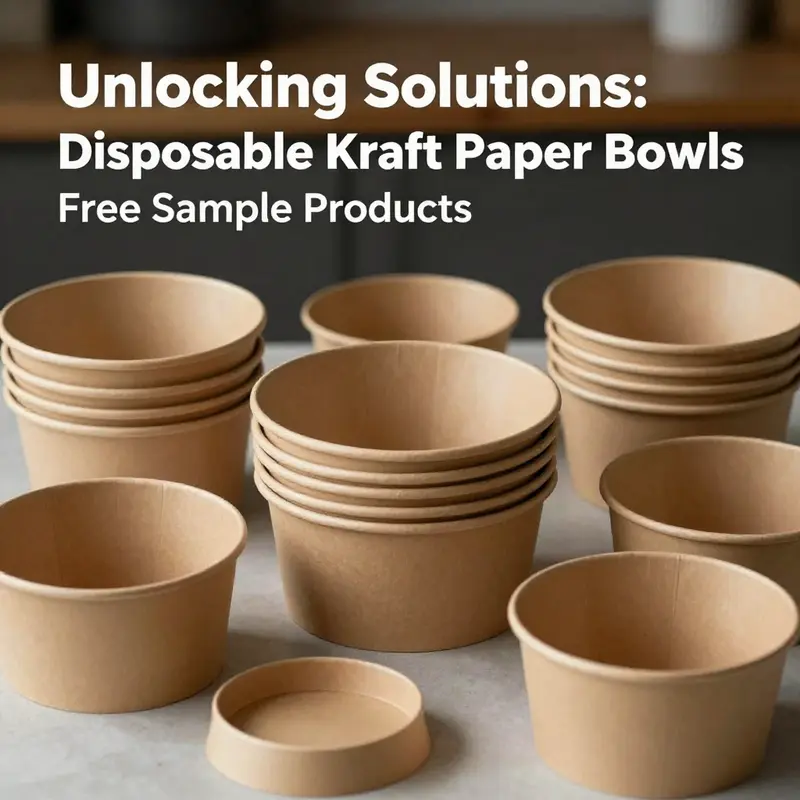
Disposable kraft paper bowls offered with free samples are built primarily from food-grade kraft paper. Typical base weights start at around 320gsm and can be higher, depending on intended use. Heavier papers improve stiffness and heat resistance. Many bowls feature an inner lining. Two common options are a thin polyethylene (PE) layer and a compostable polylactic acid (PLA) coating. PE gives excellent grease and leak resistance, but it is not compostable. PLA provides a compostable surface, but it is best suited for cold and warm foods rather than prolonged heating. When you request a free sample, confirm the lining type to match your end use.
Bowl walls are formed by molding and pressing processes that ensure uniform thickness. Quality samples will feel solid, with no soft spots or delamination. The mouth rim needs a clean fold and consistent bead for secure lid fit. Suppliers often supply bowls with or without lids; lids may be sold separately.
Capacities, dimensions, and common formats
These bowls come in a wide array of volumes. Standard capacities include 500ml, 650ml, 750ml, 850ml, 1000ml, 1100ml, and 1300ml. Many suppliers also list versions up to 1500ml. Physical dimensions vary by design, but a representative large bowl used for outdoors measures about 182mm in diameter at the rim and 160mm at the base. When sampling, request the exact rim and base diameters, and the height. These three measurements determine stack density, transport volume, and lid compatibility.
Capacities influence paper weight and reinforcement. Bowls for hot soups at higher volumes generally use heavier kraft or double-layer constructions. Lightweight bowls are fine for salads and cold dishes, but check grease and wet-strength properties.
Lids, fitment, and leak resistance
Lid options include clear PET or PP lids, and compostable PLA lids. Some lids clip on; others press-fit with a small sealing flange. For takeaway soups and liquids, a leak-proof or tamper-evident lid is essential. Free samples often include at least one lid type upon request. Confirm whether lids are supplied as a matched set for the bowl model.
Leak performance depends on the rim finish and the lid geometry. Ask suppliers to perform a short-duration liquid hold test and report any seepage. A simple inspection on receipt of samples should replicate that test: fill with hot water and watch for drips for five to ten minutes.
Functional features and temperature limits
These bowls are designed for both hot and cold foods, but specific temperature limits differ. Bowls with PE lining tolerate hot liquids and short microwave use in many cases. PLA-lined bowls are more sensitive to high heat; they perform well for warm meals and cold dishes, but they may deform under extended microwaving. Always check manufacturer guidance when testing samples with microwaves.
Insulation depends on paper weight and wall structure. Single-wall kraft performs adequately, but double-wall designs or corrugated sleeves increase user comfort with hot contents. If thermal protection matters, request samples showing typical hand-feel at service temperatures.
Environmental claims and end-of-life considerations
Many suppliers market these bowls as biodegradable and compostable. Understand the distinction: a PLA-lined bowl is compostable in industrial facilities, not always in home compost. PE-lined bowls are not compostable, though the paper portion is recyclable in some streams if the lining is removed. Certifications and third-party test reports are crucial. When receiving a free sample, ask for copies of any certification, such as compostability or food-safety test reports, and for details on test standards.
Customization and printability
Customization is a frequent request. Suppliers typically offer flexo or offset printing. Flexo works well for simple, cost-effective color runs. Offset gives higher-fidelity print for complex branding. Keep in mind that coatings and linings affect ink adhesion. PLA-coated interiors often limit print colors near the rim. Print lead times and MOQ will change with customization choices. Many suppliers require a minimum order quantity for custom-printed runs. Typical MOQs observed in market samples are high; one illustrative range lists MOQs from 50,000 units for certain sizes. Pricing in that landscape has been reported in the low cents per unit, approximately $0.029 to $0.031 each, but pricing changes with design, coating, and order quantity.
Quality tolerances and manufacturing controls
Sample inspection must include dimensional accuracy, rim bead uniformity, and stackability. Manufacturers calibrate forming dies to hold tolerances within a few millimeters. Look for consistent stacking height across a 10-piece stack. Check for creases, ink smudges, and irregular inner coatings. If the bowl is intended for hot liquids, pressure during transport may deform poorly formed rims. Ask whether the supplier conducts routine production checks and what their reject rates are.
Practical sample checklist and testing steps
When you receive a free sample, perform a structured series of checks. First, confirm material markings and lining type. Second, measure rim and base diameters and height. Third, conduct a leak test by filling the bowl with hot water for five minutes. Fourth, test a brief microwave cycle if the supplier claims microwavability. Fifth, try stacking and unstacking to simulate assembly. Sixth, inspect printed samples for registration and color match. Seventh, perform a grease test by placing oily foods on the paper surface to watch for seepthrough. Record all results and share them with the supplier when requesting production samples.
Free sample policies and logistics
Most suppliers offering free samples ask that the buyer cover shipping costs. That shipping fee is often refundable or credited back on a first bulk order. Confirm the exact sample policy: number of free samples allowed, whether lids are included, typical sample lead time, and how shipping refunds are processed. For international shipments, customs and import duties may apply; clarify these responsibilities in advance.
If you need multiple sizes or printed samples, expect the supplier to charge for each unique die or printing plate. Some suppliers will provide one blank sample for free and charge for printed mock-ups. Plan sample requests to cover representative sizes and the lid type you plan to use.
Negotiation points and scale considerations
Use free samples to verify quality, not to finalize price. Once satisfied, confirm the supplier’s MOQ, price breaks, production lead time, and packaging methods. Discuss palletization, inner packaging, and protective measures to avoid rim deformation. Many suppliers accept customization only above certain order thresholds. If your projected volumes are lower than supplier MOQs, negotiate shared tooling costs or pooled orders with other buyers.
Final practical advice
Free samples are your chance to confirm technical fit before committing. Request plain and printed samples, matching lids, and material certificates. Test for leak-proof performance, heat tolerance, and print quality. Confirm MOQ, sample shipping refund policies, and production lead times. If sustainability claims matter, obtain and review test certificates. A careful sample inspection saves time, cost, and brand risk when scaling to production.
For a close look at commonly offered free-sample specifications and a supplier listing, review a product summary of disposable kraft paper salad bowls. For design options that pair well with these bowls, consider complementary takeaway packaging supplies such as disposable kraft paper bowls with lids in bulk. (Internal resource: disposable kraft paper bowls food containers with lids in bulk).
For the specific sample listing and technical details referenced in this chapter, see the external supplier summary: https://www.made-in-china.com/products/402924332-254174276/Free-Sample-Disposable-Kraft-Paper-Salad-Bowl-Eco-Friendly.html
Sample-First Strategies: How Free Kraft Paper Bowl Samples Shape Buying, Innovation, and Competition

The market for disposable kraft paper bowls has shifted decisively toward a sample-first purchasing model. Buyers now expect to handle physical examples before committing to large orders. This shift reflects a deeper change in buyer priorities, where sustainability and performance are weighed equally. The free sample has become both a sales tool and a quality gate. It reduces perceived risk and speeds decision-making for foodservice operators, caterers, and retail brands exploring eco-friendly tableware.
Manufacturers and suppliers treat samples as entry points. They let prospective customers test material strength, feel, thermal resistance, and moisture performance. Many suppliers offer individualized samples for free, requiring only express shipping fees. Those shipping fees are often credited back on an initial bulk order. This arrangement lowers barriers for new customers. It also builds trust and encourages repeat business.
The reasons this practice matters are practical and strategic. Practically, kraft paper bowls vary in thickness, coating type, and forming technique. Small differences affect leak resistance and food presentation. A free sample allows kitchen managers to simulate real use. They can test a hot soup, a saucy meal, or a cold salad in a sample bowl. They can check lid fit, stacking behavior, and rim integrity. Strategic advantages are no less important. Samples let brands assess printing quality and branding options. Buyers can check how logos appear when printed on kraft paper. They can evaluate optional lids and sealing methods. This is essential for operators who use packaging as a marketing channel.
The sample-first trend dovetails with several technical and regulatory developments. Advances in material science now allow kraft paper bowls to hold liquids at higher temperatures. Modern barrier coatings tolerate temperatures up to 120°C and resist seepage. These improvements expand use cases to soups, ramen, and hot takeout. Meanwhile, the market is moving away from plastic-laminated paper bowls. Demand for fully biodegradable or plant-based coated products is rising. Buyers care about end-of-life disposal. They want packaging that fits into composting or municipal waste streams. Free samples give buyers immediate evidence of biodegradability claims. They can arrange local compost tests or seek third-party verification with less upfront cost.
Price transparency is another outcome of widespread sampling. Many suppliers publish sample policies and base unit prices online. For larger runs, some common price points appear. Bowls in the 400–1500ml range often sit near three cents per unit at high-volume quantities. Minimum order quantities can be substantial, sometimes tens of thousands of units. This creates a two-step buyer journey. First, a small sample proves product fit. Second, a large minimum order commitment confirms supplier capacity and pricing. The sample stage often includes lead-time discussions, mold or tooling options, and printing setup details.
Logistics and payment practices have adapted to support sampling. Suppliers typically prepare samples within three to five business days. They use express couriers for rapid delivery. Buyers are usually asked to provide a freight account number for DHL, UPS, FedEx, or similar carriers. If a freight account is not available, the supplier will invoice for shipping through common payment channels. PayPal, bank transfer, and other mainstream methods are supported. These flexible arrangements make it easy for small chains, startup brands, and event planners to evaluate bowls before committing to production runs.
Samples serve an important role in private-label and OEM processes. When a buyer wants custom printing, bespoke sizes, or exclusive lid designs, samples act as prototypes. Suppliers provide printed samples to show color fidelity and placement. They also supply sample lids to confirm fit and sealing. This avoids costly surprises during mass production. For buyers launching seasonal or limited-edition packaging, samples validate design choices. They allow marketing teams to photograph packaging for promotional materials before full manufacture.
From a supplier perspective, offering free samples is an investment. It raises short-term logistics costs. It also exposes production processes to potential competitors. Yet the return is clear. Samples shorten sales cycles. They improve conversion rates. They raise the average order value by establishing buyer confidence. Suppliers also use sample feedback to refine materials. If a recurring issue appears across sample returns, suppliers can troubleshoot proactively. This iterative loop improves product quality across the catalog.
Market competition is also affected. When many suppliers offer free samples, buyer power increases. Buyers can request multiple samples from different manufacturers to compare performance. This dynamic pushes suppliers to differentiate beyond the sample itself. Differentiation can appear in faster sample turnaround, refundable shipping policies, better printed mockups, or a wider range of lid options. Suppliers that combine fast sampling, transparent pricing, and eco-certified materials win more business. The overall effect raises industry standards.
Sustainability claims are scrutinized through sampling. Buyers often undertake simple tests. They subject samples to heat, grease, and stacking pressure. They time how long a wet noodle dish may sit before leakage occurs. They also press samples into community composting facilities when possible. These hands-on checks supplement documentation and certifications. For this reason, suppliers who market uncoated or plant-based coated kraft paper provide composting guidance with samples. They include recommended disposal instructions and local compost specifications. This helps buyers align packaging choices with local waste handling practices.
The growth of on-demand food delivery has increased the need for effective sampling. Delivery platforms require packaging that survives transport. Buyers test sample bowls in real delivery scenarios. They check lid security during transit and stack stability during multi-item deliveries. Sample-first procurement supports this need. It helps operators identify bowls that reduce spill risk and preserve food presentation. As a result, many kitchens adopt sample evaluation protocols. These protocols standardize how samples are tested. They often include thermal trials and simulated delivery tests.
There are practical tips buyers should consider during sample requests. Ask for a range of sizes to match menu items. Request both unprinted and printed samples to compare cost and appearance. Confirm lead times for custom printing and ask about minimum print run quantities. Inquire about return policies for defective samples. Request certification details for compostability and food safety. If possible, request a sample kit that includes lids, sealing options, and packing inserts. A kit gives a realistic sense of the entire serving system.
For suppliers, clear sample policies matter. Publishing turnaround times, shipping costs, and refund rules reduces ambiguity. Offering sample kits that represent typical use cases adds value. Suppliers can include instructions for simple in-house tests. They can also suggest third-party labs for rigorous verification. Transparency about minimum order quantities and price breaks after particular volume thresholds reduces friction. It also helps buyers plan pilot runs and seasonal orders.
The sample-first approach is not a static tactic. It evolves with materials science and buyer expectations. As more plant-based coatings emerge, samples will showcase performance before buyers commit. As composting infrastructure improves, sample testing will include local disposal validation. Suppliers that emphasize clear communications and responsive sampling processes will keep winning contracts.
For those exploring options, online catalogs provide practical starting points. Catalog pages often show size ranges, lid compatibility, and common capacities. One convenient reference is the supplier catalog for disposable kraft paper bowls with lids, which shows typical sizes and options. You can review size ranges and lid styles directly through the supplier catalog.
For broader market context and projections, authoritative industry reports remain useful. They provide data on demand growth, regional adoption trends, and regulatory impacts. One comprehensive market overview is available here: https://www.grandviewresearch.com/industry-analysis/disposable-food-packaging-market
Final thoughts
As disposable kraft paper bowls continue to gain popularity across the food service sector, understanding the dynamics of free sample offerings can significantly enhance purchasing decisions. By exploring supplier options, evaluating economic implications, and recognizing technical specifications, businesses can make confident strides toward sustainability while meeting their customers’ needs. Keeping abreast of market trends further ensures that your operations remain competitive and appealing to eco-conscious consumers. Don’t miss out on the opportunity to leverage free samples to test and integrate these essential products into your service offerings.