
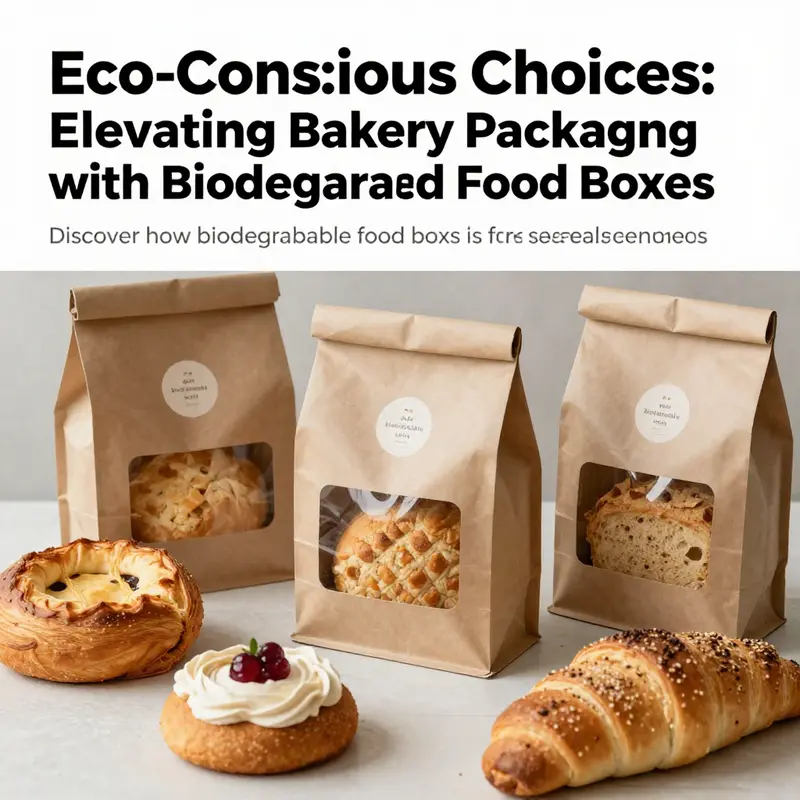
In today’s environmentally conscious market, the demand for sustainable packaging solutions is growing rapidly. For bubble tea shops, restaurants, food trucks, catering services, event planners, and corporate procurement teams, making the shift towards biodegradable bakery packaging is not just a trend but a necessity. This article highlights the core advantages of biodegradable bakery food packaging, innovative designs that enhance user experience, the importance of certifications for compliance, and the current industry applications and trends. Together, these chapters will provide a holistic understanding of how biodegradable packaging can boost both sustainability efforts and brand presence in a competitive landscape.
null
null
Windows, Touch, and Story: Designing Biodegradable Bakery Food Boxes That Delight
Design that Sells: marrying function, feel, and narrative in biodegradable bakery boxes
Design for biodegradable bakery food boxes must do more than protect pastries. It needs to make the product feel desirable, reduce waste, and carry a brand’s values. The best designs resolve practical performance with emotional impact. They let customers see, touch, and understand a product. They simplify handling, improve shelf appeal, and tell a clear sustainability story. When these elements work together, packaging becomes a direct extension of the bakery’s craft and ethos.
A primary practical requirement is intuitive handling. Small details matter: guiding notches, pull-tabs, hinged lids, and secure tuck-in flaps reduce the risk of crushing, spilling, or soggy crusts. These features cut friction at the point of use. They let a customer open the box without a struggle and remove fragile items without damaging them. That ease of use increases repeat purchase likelihood. It also reduces returns and waste from damaged goods. Designing the closure to lock with minimal effort, while keeping the structure tight enough for transport, raises perceived quality. Simple mechanical solutions—rather than excess glue or plastic—help maintain compostability and simplify disposal.
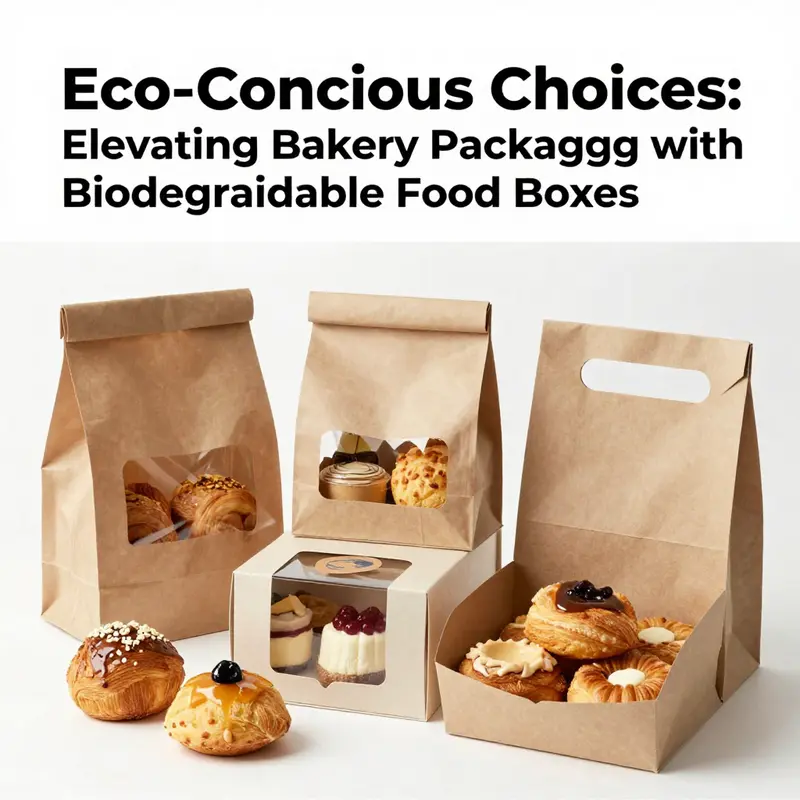
Visual access is the second core function. Transparent windows deliver immediate clarity about the product. A clear pane made from a compostable film or degradable PLA lets colors, textures, and glazes show through. This visual confirmation reduces the temptation to open packages in-store, maintaining hygiene and preserving shape. Windows also act as a stage for the product; a well-framed view highlights artisan details. Designers balance window size and placement to protect fragile areas while giving a full view of signature items. For bakeries that rely on gifting and impulse purchases, a window is often the difference between passersby and buyers. If your bakery range includes gift-ready cakes, consider full-face windows with reinforced edges to combine display and protection. For inspiration on practical windowed options, see examples of picnic kraft paper cake boxes with clear windows.
Material choice ties these design moves to sustainability. Compostable kraft paper and recycled cardboard are the backbone of modern biodegradable bakery boxes. They offer structural strength with a warm, tactile finish that reinforces a handcrafted image. Advances in barrier coatings and biobased films reduce moisture transfer while maintaining compostability. These coatings can be water-based or derived from plant polymers. When properly selected, they keep crusts crisp and frostings intact, without resorting to conventional plastics. Heat resistance is also important. Boxes must tolerate brief microwave use or hot-filling without losing shape. Well-engineered kraft with a food-safe lining meets these needs and supports clear labeling about microwave safety and compostability.
Size optimization is another decisive lever for sustainability and cost. Reducing package volume from a bulky standard to a snug fit cuts material use and cuts transport emissions. A thoughtfully downsized box also improves shelf density and reduces storage footprint for retailers. Good fit does not mean cramped fit; inserts and partitioning can secure individual items while keeping the overall footprint small. For example, single-wall constructions with modest thickness deliver enough rigidity while keeping resource use low. The aim is to match the packaging volume to the product’s actual needs, reducing excess space that invites movement and damage during transit.
A bakery’s visual language should extend across texture, color, and typography on the box. Minimalist printing with natural inks communicates restraint and ecological integrity. Natural dyes and water-based inks allow legible branding while preserving recyclability and compostability. Embossing and debossing add tactile cues without extra materials. Small design gestures—like a printed line that suggests slicing, or an icon indicating compostability—help orient the user quickly. Transparency here matters: clear claims about certifications and disposal instructions earn trust. Many consumers will look for marks showing responsible sourcing or conformity with extended producer responsibility regulations. Including simple disposal guidance—compost, recycle, or dispose in a specific stream—reduces contamination and improves end-of-life outcomes.
Barrier performance and food preservation sit at the intersection of material science and design. Delicate pastries need protection from moisture and oxygen. Modern biodegradable materials incorporate bio-based barrier layers that delay staling and prevent grease migration. These barriers are thinner than conventional plastic laminates and can be engineered to break down under industrial composting conditions. Designers must weigh shelf-life needs against end-of-life. For same-day or short shelf-life items, a lightweight paper-based box with a small PLA window may be ideal. For longer storage or delivery, a stronger barrier or a double-layer base can preserve freshness without sacrificing compostability. The choice of barrier also affects printing and finishing techniques, so packaging decisions should involve suppliers early in the product development process.
User experience extends beyond opening to carrying and storing. Integrated carry handles, stack-friendly lids, and stable bases improve functionality for both customers and point-of-sale staff. A subtle handle cutout works well for small cake boxes. For multi-item orders, nested trays or compartmented inserts enable secure transport. Carrying convenience often determines whether a customer walks out with the purchase intact or with a dropped cake. Durable corners and reinforced edges prevent deformation when stacked. These structural reinforcements should be achieved through engineering rather than added materials. Clever folding patterns and strategic corrugation deliver strength without heavy lamination.
Customization strengthens brand value in ways that matter to customers. Personalization can be as simple as a stamped logo or as sophisticated as full-color branding cycles that align with seasonal products. The printing approach needs to respect the material’s ecological profile. Full-bleed CMYK printing is possible on kraft, but brand teams should prioritize inks that do not hinder composting. Clear, concise storytelling on the package—about the bakery’s sourcing, the compostable nature of the box, or charitable partnerships—builds emotional connection. A short, well-worded sentence about the product’s origin or ingredient quality often resonates more than long paragraphs of claims.
Designers must also consider retail dynamics. Packaging that stacks cleanly and presents a uniform front face is favored by buyers. Retail-ready features like tear-out sample windows or pricing label areas ease shelf management. For bakeries selling wholesale to grocery or delis, packaging must function at scale. This means optimizing for automated filling lines, ensuring consistent closure performance, and choosing sizes that fit existing shelving.
Testing and certification provide credibility. Claims about biodegradability or compostability must be supported by recognized standards. Clear labeling with the right certification marks helps avoid consumer confusion and regulatory issues. Beyond certification, real-world testing is essential. Simulating delivery conditions, refrigeration cycles, and handling by non-specialist staff reveals failure modes early. Iterate on prototypes until the box protects the product consistently while meeting sustainability criteria.
Finally, design innovation includes rethinking the life cycle. A box that can be reused, repurposed, or composted expands its value. Instructions for creative reuse—for gift wrapping or storage—encourage customers to interact with the packaging and prolong its usefulness. When composting is the intended end, include concise guidance on how and where to compost, and note any required conditions. This helps close the loop and reduces contamination in municipal compost streams.
Layering function, feel, and narrative transforms a simple food container into a strategic asset. Biodegradable materials and intelligent construction bring new possibilities for display, handling, and brand storytelling without compromising environmental goals. When design choices center on user convenience, product protection, and honest communication, bakery packaging becomes a driver of both sustainability and sales. For practical examples and options that illustrate windowed kraft designs and user-friendly cake boxes, review picnic kraft paper cake boxes with clear windows.
For deeper reading on innovation trends and material developments in sustainable packaging, consult this industry overview: https://www.foodtalks.com/sustainable-packaging-innovations
Certifications and Compliance: Navigating Global Environmental Regulation for Biodegradable Bakery Packaging

Certifications and compliance form the backbone of trust in biodegradable bakery packaging. Brands can demonstrate that materials come from responsibly managed forests, that fibers and inks meet food safety standards, and that disposal pathways align with local waste infrastructure. Recognized certifications such as FSC provide forest stewardship signals, while third party tests verify compostability or recyclability under defined conditions. Clear, verifiable documentation helps prevent greenwashing and supports cross border selling where disposal rules differ.
Regulatory frameworks push better design: extended producer responsibility schemes in several regions incentivize recyclable and compostable packaging and require clear disposal instructions. Standards like ASTM D6400 in the United States and EN 13432 in Europe define compostability in industrial facilities and caution that home composting is not always suitable. Packaging should declare the intended disposal route and provide accessible labeling for consumers.
Supply chain transparency is essential. Brands should obtain recent test data, confirm supplier certifications, and ensure materials, inks, and coatings are food safe. Window films and coatings must be compatible with the end of life pathway. Finally, design choices should consider end of life from the outset, balancing aesthetics with recyclability and compostability so that the packaging supports waste management goals rather than undermines them.
In practice, building a credible evidence base allows brands to communicate confidently with customers, retailers, and regulators. When a box carries credible certifications and clear disposal guidance, it becomes part of a sustainable value proposition rather than a marketing claim.
Where Biodegradable Bakery Boxes Work Best: Use Cases, Market Momentum, and Design Drivers
Biodegradable bakery boxes have moved beyond novelty to become practical tools for food businesses that need to marry presentation with planet-friendly performance. Across artisan bakeries, specialty coffee shops, grocery delis, event caterers, and direct-to-consumer patisserie lines, these boxes carry more than food; they communicate values. Their natural kraft tones and textured surfaces reinforce artisanal branding. Their compostable credentials respond to regulatory pressures and consumer expectations. Together, these attributes shape a clear set of application scenarios and industry trends that every packaging decision-maker should understand.
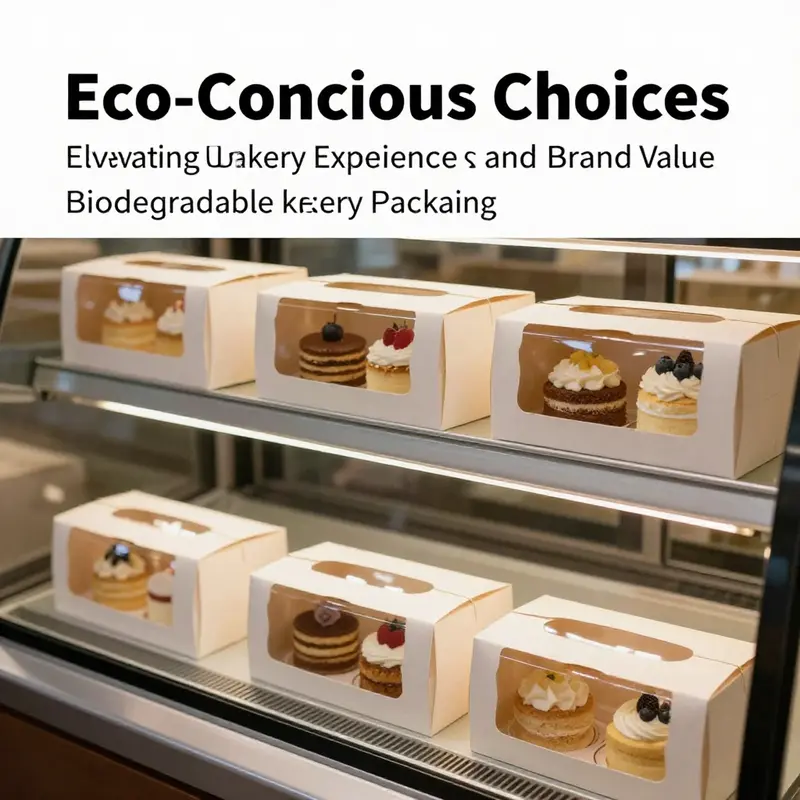
In retail and in-shop sales, packaging is both protection and a merchandising asset. Biodegradable boxes provide a sturdy platform for delicate items such as tarts, éclairs, cupcakes, and slices of layered cake. Single-wall structures with moderate thickness—typically one to three millimeters—offer the strength needed for stacking and display without adding excessive bulk. When combined with custom printing, these boxes effectively carry logos and product information, helping small bakers present premium goods on par with larger brands. A transparent window made from bio-based film serves a dual purpose: it reduces the tactile friction of opening a package while letting color and texture drive impulse purchases. Windowed designs are particularly effective for gift-ready items and seasonal collections where visual appeal matters.
Takeout and delivery are other fast-growing scenarios. Consumers expect food to arrive intact, warm when appropriate, and in an attractive state. Modern biodegradable materials can meet these expectations. Compostable kraft paper and recycled cardboard provide thermal stability and grease resistance. Some formulations tolerate microwave reheating and brief exposure to hot fillings. That said, specifications vary, and businesses should test materials under real operating conditions before committing to large runs. For multi-item orders, compartmentalized biodegradable boxes maintain separation and presentation. They also reduce the need for multiple single-use plastic containers, aligning operations with local plastic restrictions.
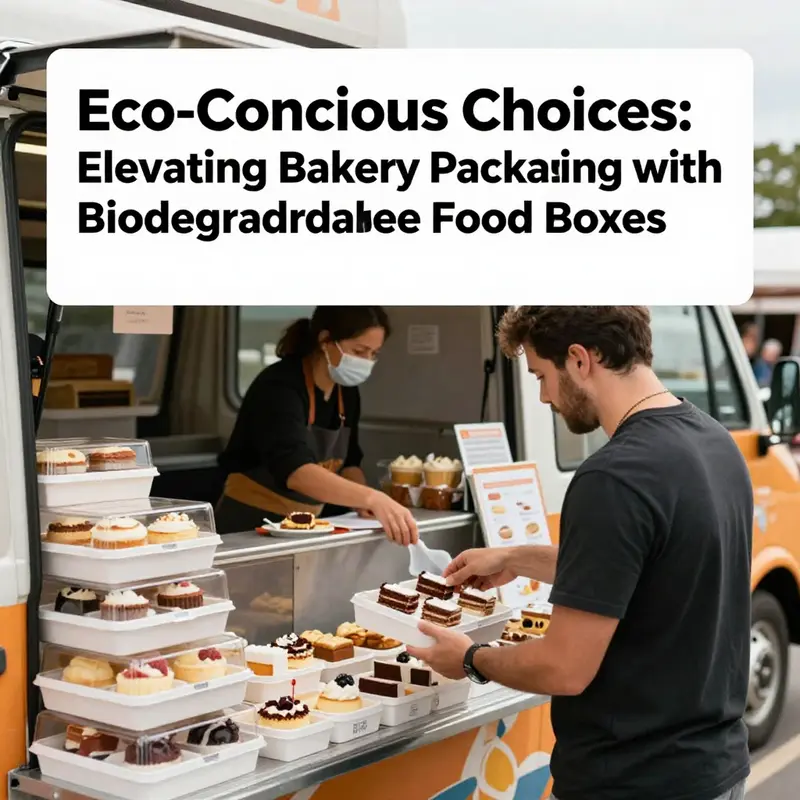
Catering and events provide a third strong application. Event planners increasingly incorporate sustainable elements. Biodegradable cake boxes and pastry carriers are practical choices for weddings, corporate events, pop-up dinners, and farmers’ markets. The aesthetic of earthy, natural packaging complements seasonal menus and outdoor settings. At scale, disposable biodegradable options also ease logistics. After events, waste streams that go to industrial compost facilities convert packaging into compost rather than landfill mass, assuming local infrastructure supports this outcome.
Food service operators also find opportunities. Cafés and bakeries that pair drinks with pastries can use matched biodegradable cups, sleeves, and utensils to create a cohesive sustainability story. When integrated across the point of sale, these choices reinforce brand promises and reduce confusion for customers about proper disposal. Eco-conscious grocery stores adopt biodegradable boxes for in-store bakeries and prepared food counters. This reduces reliance on plastic clamshells, adds perceived value to bakery items, and helps stores comply with packaging mandates.
Material innovation drives broader adoption. Plant-based polymers such as polylactic acid (PLA) and films derived from starches mimic the clarity and stiffness of plastic. They enable windowed boxes that remain compostable under industrial conditions. Recycled fibers and compostable kraft paper balance strength with biodegradability. Importantly, many of these materials require industrial composting to fully break down. That distinction affects both labeling and end-user education. A box labeled compostable is only truly compostable if it reaches the right facility. Businesses should be explicit about disposal recommendations on packaging or at the point of sale.
Certifications and compliance inform purchasing and market entry. Third-party marks like forest stewardship or regional extended producer responsibility attestations matter to regulators and buyers. Certifications demonstrate that raw materials meet sustainability criteria and that manufacturers comply with waste management laws. For companies selling into the EU or into countries with strict packaging rules, certified supply chains reduce legal risks and simplify procurement. Certifications also signal credibility to consumers, helping brands justify premium packaging investments.
Supply chain and customization capabilities shape practical choices. Many suppliers now offer OEM services, multi-color printing, and a range of dielines sized for everything from mini-tarts to whole cakes. These capabilities matter for product presentation and inventory management. Standardized sizes simplify stock control, but the ability to customize packaging allows seasonal promotions and limited runs. Printed messaging may include shelf-life guidance, composting instructions, and branding elements that speak to provenance and ingredient transparency. When ordering, businesses should verify lead times and minimum order quantities. Local warehousing or regional sales offices can reduce transit time and carbon footprint.
Consumer behavior and perception play a central role. Shoppers increasingly associate paper-based, kraft-style packaging with wholesome, small-batch food. That association boosts perceived freshness and authenticity. Visual transparency—provided by biodegradable windows—lets appearance do much of the selling work. At the same time, consumers expect convenience. When compostable options are labeled clearly and paired with in-store disposal choices, the perceived hassle of sustainable packaging decreases. Conversely, poor labeling or limited compost infrastructure can create frustration and undercut the sustainability claim.
Policy and infrastructure are twin levers for change. As more jurisdictions ban single-use plastics, demand for compostable alternatives grows. Yet compostable materials only deliver environmental benefits when processed correctly. Investment in municipal and industrial composting capacity will determine whether biodegradable boxes are diverted from landfill. Businesses can play a role by connecting with local waste managers and communicating disposal options to customers. In some markets, takeback programs or on-site composting at event venues provide a direct route to responsible disposal.
Operational realities determine material choice. Heat-resistant, greaseproof coatings extend the range of applications. For hot fillings, inner barriers may be necessary to maintain structural integrity and prevent soggy bottoms. For refrigerated goods, moisture-resistant liners preserve presentation. Manufacturers now offer coatings that are compostable, but their performance varies. Testing and collaboration with suppliers are essential to match packaging properties to menu items. Retailers and caterers benefit from trial runs that simulate transport, stacking, and reheating.
Sustainability conversations increasingly include life-cycle thinking. Decision-makers are looking beyond end-of-life and comparing embodied emissions, transport impacts, and recyclability. Recycled cardboard reduces virgin fiber demand. Locally sourced materials cut transport emissions. Lightweight designs economize on material use while maintaining strength. Packaging choices that factor in procurement, disposal, and customer acceptance tend to succeed. Clear labeling, combined with an honest account of what compostable means locally, helps maintain trust.
Design innovations are sharpening competitive edges. Windowed boxes, easy-open tabs, and integrated handles make biodegradable packaging more user-friendly. Decorative embossing and tactile finishes preserve premium feel while avoiding plastic laminates. Multi-functional designs that convert into serving trays or storage containers add perceived value and reduce immediate waste. These small details influence buying decisions and repeat purchases.
Finally, the market outlook supports continued investment. Growth projections signal expanding demand for biodegradable food packaging across retail, food service, and e-commerce channels. This momentum encourages manufacturers to scale production and expand material portfolios. As composting infrastructure improves and standards harmonize, biodegradable bakery boxes are likely to shift from boutique options to mainstream staples. Businesses that adopt them thoughtfully, with attention to certifications, material performance, and end-of-life guidance, position themselves well for regulatory and consumer shifts.
For practical examples of product styles and windowed designs suitable for pastry and cake presentation, review the picnic kraft paper cake boxes with clear windows offered by suppliers that focus on food-grade, eco-friendly packaging. For an industry-level market forecast and the latest projected growth figures through 2033, see this market research report: https://www.marketsandmarkets.com/Market-Reports/biodegradable-food-packaging-market-185735591.html
Final thoughts
The move towards biodegradable bakery food packaging is not merely an option but a pivotal step for businesses aiming to bolster their sustainability credentials. By understanding the core advantages, embracing innovative designs, ensuring compliance with certifications, and recognizing the industry trends, bubble tea shops, restaurants, food trucks, catering services, and event planners can align with consumer values and lead the charge for a greener future. Transitioning to biodegradable packaging not only fulfills corporate responsibility but enhances brand perception and customer engagement—key elements for prosperity in today’s market.