
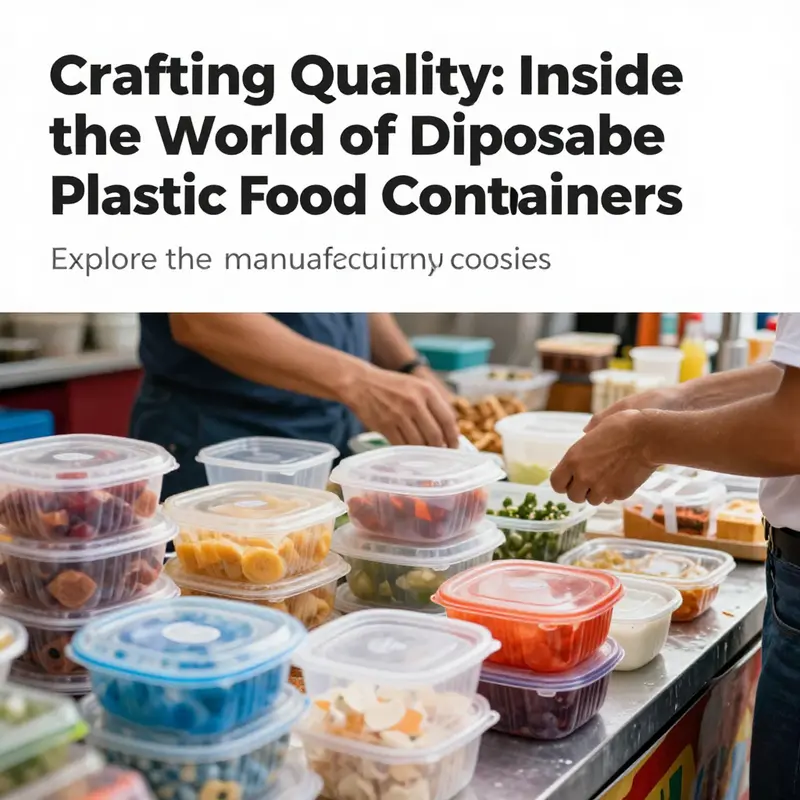
Disposable plastic food containers play a crucial role in the food service industry, providing convenience and efficiency for businesses like bubble tea shops, restaurants, and catering services. Understanding the manufacturing processes behind these products reveals not only where and how they are made but also highlights their importance in meeting diverse customer needs. This article delves into the intricate manufacturing techniques utilized by factories, the environmental challenges facing the industry, and the current market trends that drive economic impact. Each chapter will unravel a facet of the disposable plastic food container industry, bringing these insights together for food businesses seeking to enhance their operations and sustainability practices.
From Melt to Meal: Inside the Making of Disposable Plastic Food Containers in a Southern Chinese Factory Complex
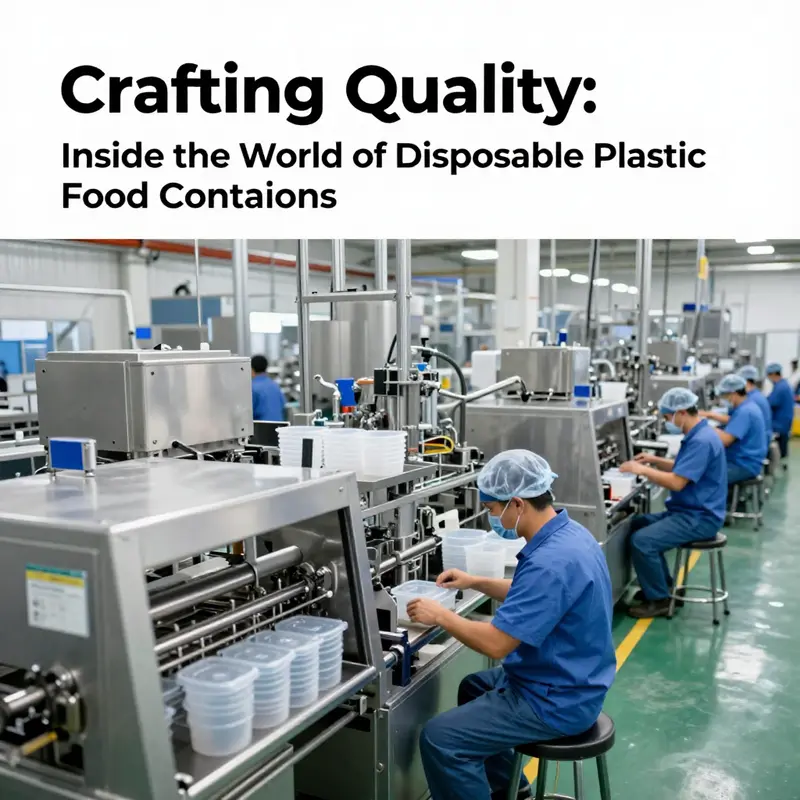
The factory floor is a choreography of heat, pressure, precision, and speed, where raw plastic pellets become the familiar containers that hold meals, snacks, and takeaway moments. In the southern manufacturing clusters of China, a quiet but rigorous ecosystem converts material science into everyday convenience. The process begins long before a container ever leaves the factory. It starts with the choice of material, typically food-grade polymers such as polypropylene, polystyrene, or PET, sometimes engineered with barrier layers or reinforced with additives to balance stiffness, clarity, and resilience. These pellets arrive in bulk, a small forest of resin that will later prove its worth in the way a lid snaps shut or a tray resists deformation under heat. Suppliers in this region have cultivated a mature supply chain that emphasizes traceability, consistent quality, and speed to market. This is not a single production line but a network of capabilities that can scale from small, customized runs to mass-produced standard designs, all under one roof or within a few kilometers of each other. The complete chain—mold design, injection or thermoforming, printing, and packaging—allows factories to tune processes to the specific geometry, the expected use case, and the environmental expectations of customers who increasingly demand recyclability and safety.
Two pathways dominate the production of disposable containers: thermoforming and injection molding. Each path reflects different design freedoms and performance criteria, and each path is a thread in a larger tapestry of modern plastics manufacturing. Thermoforming starts with sheets of thermoplastic—a flat, sturdy substrate that can be heated to a pliable state and then drawn over or into a mold using vacuum pressure. The result is often lightweight trays, clamshells, or takeout boxes with glazed, smooth outer surfaces that can print well or accept labeling. The process requires a well-calibrated oven section, a controlled platen system, and an array of molds designed to extract precise features such as wall angles, ribbing, or snap-fit lids. In facilities optimized for high-volume output, multiple thermoforming lines run in parallel, each with its own sheet handling, heating, forming, and trimming stages. This parallelism is essential: it allows a factory to respond quickly to demand spikes, such as seasonal promotions or new packaging formats for food service clients.
Injection molding, by contrast, shines when the design calls for tighter tolerances, more complex closures, or integrated features like molded-in handles or secure-seal lips. In these systems, molten polymer is injected into a precisely engineered mold under high pressure, then cooled and ejected as a finished part. Lids and more rigid components—often requiring snap-fit assemblies or specific fit with thermoformed bases—emerge with a degree of precision that is harder to achieve through forming alone. The key to success here is tooling: the molds must be designed and fabricated with exacting standards, and many suppliers maintain in-house mold design teams to shorten cycle times and improve repeatability. That capability is a major differentiator for factories that want to control quality and delivery cycles, avoiding the uncertainty of relying on external mold makers or trading partners. The ability to reuse, refurbish, or debug a mold in response to design changes further accelerates time-to-market and reduces the risk of misfit parts.
Printing and labeling constitute the visible face of a factory’s branding and regulatory compliance. In many plants, printing lines are integrated directly into the production flow, enabling a seamless handoff from formed or molded components to final decorative layers. This integration minimizes handling, reduces the risk of contamination, and ensures color fidelity and alignment across components. Printing can incorporate regulatory information such as material codes, batch numbers, and recycling instructions, as well as brand logos and promotional graphics. The capacity to print on multiple surfaces—tops, sides, or even interior walls—expands the design space and allows customers to achieve strong shelf impact without adding separate outsourcing steps. The cost and speed advantages of in-line printing become even more meaningful when a customer wants a limited run of customized packaging for a special event or a regional campaign.
The workflow does not end with the artwork. After forming, molding, and printing, containers pass through inspection and packaging, the final steps that ensure the product is ready for distribution to food service operators and retailers. Quality control in these facilities blends automated testing with manual checks. In-line sensors monitor dimensions, weight, and surface finish, while random sampling verifies seal integrity, heat resistance, and leak performance under simulated use conditions. The materials themselves are vetted for food safety, with suppliers expected to provide certificates of conformity and, in many cases, traceability documentation that can follow a batch from pellets to finished goods. Factories emphasize clean manufacturing environments, well-maintained machines, and standardized operating procedures that help maintain consistent results across shifts and lines. The goal is not simply to produce containers but to deliver predictable performance under real-world conditions: hot beverages without deformation, cold meals without cracking, and takeout boxes that stay closed during transport.
The southern clusters’ emphasis on self-production capabilities underpins a broader narrative about supply-chain resilience. In many cases, factories own or closely partner with mold shops, extrusion or thermoforming lines, printing units, and sometimes even post-processing operations such as surface treatment or lamination. This integration provides a degree of vertical control that trading companies rarely offer. When a customer requests a specific feature—say, a high-clarity CPET option for microwave-safe functionality or a temperature-resistant seal for hot takeout—the factory can propose a design, fabricate necessary tooling, and adjust the production line to realize the concept. The result is a product that aligns with regulatory expectations in target markets, whether those markets are domestic or international. The ability to demonstrate compliance with standards and to present test reports quickly has become a competitive advantage for responsible manufacturers who want to reduce risk for their customers.
Economies of scale, but also economies of speed, define the business model. The region’s factories are situated along well-developed logistics corridors, with close access to major ports that connect to global supply chains. This proximity reduces lead times and enables more frequent shipments, a critical capability when customers require just-in-time delivery to support menus or event-based programs. The model also supports a diverse product mix: containers of various shapes and sizes, lids designed for secure sealing, and even specialized variants for microwave-safe or high-temperature contexts. The design space expands when green and sustainable criteria come into play. Eco-conscious customers push for lighter-weight designs, efficient material usage, and the integration of recyclable or chemically compatible components. Some producers respond with multi-layer configurations that combine barrier properties with recyclability or with materials optimized for high-temperature use. The emphasis on environmental responsibility has grown from a regulatory requirement in some markets to a genuine market preference, influencing both product design and process choices. Yet the core principle remains straightforward: safety, reliability, and performance in feeding people, no matter what the meal looks like on the other end of the container.
To maintain this standard, many factories in the region invest in certification programs and quality-management systems that reassure buyers about safety and sustainability. Audits, supplier assessments, and batch-level documentation create a transparent map from raw material to final product. The presence of in-house mold design teams and multi-line production facilities helps ensure that quality control is not compromised by outsourcing cycles or misaligned supply. In practice, this translates into shorter lead times and higher confidence for customers who need to meet stringent procurement requirements, whether those requirements come from European or North American standards or emerging regional regulations. In some cases, CPET-based designs are favored for their clarity and rigidity, while in others, simple but robust PP or PS solutions may be preferred for cost efficiency. The choices reflect a balance between performance needs, regulatory constraints, and the overall life-cycle costs that buyers must account for when selecting packaging for different food-service contexts.
The broader operating environment is, in many ways, a reflection of the global appetite for convenient, safe, and well-packaged food. The factories described in the region’s industrial landscape are not isolated producers; they are part of a dynamic ecosystem that includes designers, material suppliers, mold makers, and distribution networks. The ability to align production with customer requirements—whether the need is for a small batch with a specific logo or a high-volume run with standardized dimensions—speaks to the maturity of the southern cluster. It also means that buyers can leverage multiple complementary capabilities within a short supply chain to accelerate product development cycles, test new design concepts, and adjust packaging to evolving consumer expectations. In practice, this translates into a more responsive and resilient supply chain that can adapt as new materials, performance criteria, or environmental standards emerge.
The conversation around this manufacturing landscape would be incomplete without acknowledging the ethical and environmental considerations that increasingly guide procurement decisions. Recyclability and post-consumption disposal are not mere afterthoughts; they are central to product development and to how customers assess supplier value. Factories are often evaluated on their ability to offer recyclable materials, compatible printing inks, and packaging formats that minimize waste without compromising performance. The trend toward greener packaging has prompted some producers to explore alternative configurations, such as multi-layer yet recyclable structures or designs that facilitate easier separation of different materials for recycling streams. The market rewards transparency in material composition and supply-chain provenance, and it rewards the demonstration of safe handling throughout the lifecycle—from raw resin to the end-of-life container. In this sense, the factory becomes not only a production site but also a partner in helping customers meet sustainability targets, whether those targets are driven by brand strategy, local regulations, or end-user expectations.
Despite the emphasis on standardization and efficiency, the most successful factories remain adaptable. They cultivate a culture of continuous improvement, investing in the latest toolmaking capabilities, process monitoring, and automation that reduces human error and accelerates changeovers. They foster close communication with customers, welcoming feedback on dimensions, tolerances, and functional requirements. They also maintain vigilant attention to evolving international trade frameworks, since shifts in tariffs, export controls, and certification regimes can influence how and where containers are produced for global markets. The resulting products reflect a careful synthesis of material science, engineering precision, and practical design that attends to the realities of everyday use. In practice, this means that a container must not only contain food safely but also withstand the practicalities of transport, stacking, and consumption, while remaining cost-effective for large-scale service providers and flexible enough for boutique uses in regional markets.
The chapter of the factory’s life that we glimpse here is part of a larger story about industrial capability, regional specialization, and the everyday logistics of feeding millions. A single container may seem ordinary, but its manufacture embodies a complex network of decisions about materials, processing, and performance. It embodies decades of accumulated know-how in material handling, mold engineering, and process optimization that the southern Chinese clusters have honed into a robust, globally connected system. Buyers who seek to understand this system should look not only at the finished product but at the embedded capabilities—the in-house mold design teams, the multi-line production floors, the integrated printing and packaging operations, and the stringent quality and safety assurances—that collectively define the reliability of disposable plastic food containers as a everyday utility. The next steps in this exploration will consider how such factories position themselves for future shifts in demand, including the growth of eco-conscious packaging, the expansion of flexible manufacturing for small batches, and the ongoing necessity to balance cost, performance, and regulatory compliance in a rapidly changing global market. For readers who want a concrete example of how such capabilities translate into practice, an in-depth look at an external reference offers a snapshot of how a major regional player demonstrates its production breadth and aligns it with international expectations. External resource: https://www.fujianlongyi.com/
From Waste to Resource: How Disposable Plastic Food Container Factories Tackle Environmental Risk

The manufacturing footprint of disposable plastic food containers extends far beyond the factory floor. Waste accumulates quickly when single-use containers leave production lines and enter distribution, retail, and consumer life cycles. Many of these items are made from materials that can persist for centuries. That persistence turns everyday packaging into long-term pollution if systems fail to capture and recycle them. Factory managers and procurement specialists must therefore see environmental impact as an integral part of product design and production. This chapter explores the environmental risks tied to disposable plastic food containers and the practical innovations factories deploy to reduce harm while maintaining safety, performance, and supply reliability.
Factories make containers from polymers chosen for cost, formability, barrier performance, and safety. Common polymers include polypropylene (PP), polystyrene (PS), polyethylene terephthalate (PET), and high-density polyethylene (HDPE). Each material has strengths. PP resists heat and suits microwaveable meals. PET gives transparency and good barrier properties. Yet these same polymers resist biodegradation. Their life in soil, landfill, or ocean can stretch from a hundred to a thousand years. Over that time, physical weathering breaks solids into microplastics. Those particles travel through water, soil, and the food web. The persistence of polymer fragments and the potential for chemical additives to migrate raise real environmental and health concerns.
The pathway from factory to environmental burden is not inevitable. The journey depends on design, materials, end-of-life systems, and behavior. Factories can help at each step. The first leverage point is material selection. Shifting from virgin fossil-based resins to recycled feedstocks reduces the carbon footprint and the demand for new polymer. Recycling resin such as rPET can be incorporated into thermoforming and injection molding processes. When factories specify rPET, they reduce lifecycle impacts while keeping needed performance. But recycled feedstock has variability. Quality control and supply chain verification are essential. Factories are investing in incoming-material testing and traceability to ensure recycled resin meets food-contact safety standards and maintains mechanical properties.
Biobased and compostable polymers represent another path. Polylactic acid (PLA) and other plant-derived polymers can be composted under industrial conditions. They may reduce reliance on petrochemical feedstocks and lower cradle-to-gate emissions. However, biodegradability has limits. Compostable plastics often need high-temperature, controlled composting facilities to break down. Where industrial composting is unavailable, these materials can become contaminants in the recycling stream. Factories must therefore match product claims with realistic end-of-life options in their core markets. Clear labeling and coordination with waste management providers are required to avoid creating mixed-waste problems.
Beyond material choice, container design has enormous influence on recyclability and waste generation. Mono-material packaging simplifies recycling. When trays, lids, and labels use the same polymer family, mechanical sorting and processing become markedly easier. Multi-layer structures that combine polymers or add metalized layers increase barrier performance but complicate recycling. Some manufacturers are moving toward mono-material barrier strategies—using surface treatments or compatible coatings rather than dissimilar laminates. These approaches preserve shelf life while allowing products to enter recycling streams more readily.
Lightweighting is another pragmatic innovation. Reducing wall thickness and optimizing geometry lowers resin use per container. This reduces raw material demand and lowers transport emissions per unit. However, lightweighting must not compromise functional performance. Containers must still resist puncture, hold sauces, and seal reliably. Factories increasingly use simulation and finite-element analysis during mold design to ensure thinner parts remain fit for purpose. Advances in tooling and thermoforming technology allow consistent thin-wall production at scale. When lightweighting is coupled with increased recycled content, the environmental gains amplify.
On the production side, process efficiency reduces energy use and scrap. Injection and thermoforming lines generate trimmings and offcuts. Traditional practice treated those offcuts as waste. Today, many factories capture production scrap and re-feed it into extrusion or pelletizing lines. Closed-loop systems convert in-plant scrap back into usable resin, reducing both material cost and waste. Some operations extend this principle to takeback and recycling schemes with customers and distributors. By coordinating logistics, a factory can collect post-consumer containers or production rejects from large buyers and process them into regrind suitable for non-food or, after advanced purification, food-contact applications.
Energy consumption is another critical vector. Heating, cooling, and drying operations are energy intensive. Upgrading to more efficient extrusion equipment, installing heat recovery, and optimizing line balancing can cut energy use per unit. Solar arrays and on-site cogeneration are increasingly common in regions with high production density. Factories that reduce energy intensity improve both operating cost and GHG profile. They also lower the embodied emissions of each container.
Certification and third-party verification matter. International standards for food-contact safety, recycling compatibility, and compostability help buyers and regulators determine whether a product meets performance and environmental claims. Factories pursuing global markets increasingly secure recognized certifications. Those certifications show buyers a baseline of compliance and open access to demanding markets. Yet certification is not a silver bullet. It must be accompanied by robust quality control systems and material traceability to be meaningful.
A growing area of investment is design for disassembly and separation. Containers designed so lids separate from trays without tools help sorting facilities and consumers. Clear on-product labeling indicating polymer type and disposal route improves the odds containers enter the correct end-of-life stream. Some producers add visible tear lines or easy-peel lids that enable consumers to empty and rinse containers. Simple consumer actions, such as removing food residue, dramatically improve recyclability. Factory-level design that anticipates and supports these actions is high-impact and low-cost.
Mechanical recycling remains the dominant technology for post-consumer plastics. Yet it faces limits when contamination, food residues, or mixed polymers are present. Chemical recycling or advanced depolymerization promises to convert mixed or contaminated waste back into feedstock indistinguishable from virgin resin. Several factories are piloting partnerships with chemical recyclers. Those pilots aim to stabilize recycled feedstock supply and enable higher recycled content in food-grade packaging. Early adoption requires careful discussion of regulatory compliance and material testing, as chemical recycling processes must meet food-contact safety standards.
Closed-loop programs can change material flow dynamics. When factories partner with restaurants, caterers, and large retailers to collect used containers, they create concentrated streams of relatively clean material. That collected material is far easier to recycle mechanically. Logistics are central. Efficient collection routes, separation protocols, and rapid processing minimize contamination. Factories that can offer takeback and processing build competitive advantage while reducing environmental leakage.
Compostable packaging introduces distinct challenges and opportunities. Industrial composting infrastructure is unevenly distributed. Factories must therefore align product deployment with local waste systems. Marketing compostable containers in regions with no industrial facilities can generate confusion and misuse. To manage expectations, some producers provide dual-communication: compostable options are offered where facilities exist, while recycled-content or returnable solutions are promoted where they do not. The goal is honesty in claims and alignment with feasible end-of-life outcomes.
Reducing microplastic formation starts upstream. Improved formulation reduces fragmentation risk. Additives that increase brittleness can accelerate fragment release. Process control that avoids over-stressing parts during forming can improve durability. Testing for fragmentation under weathering or mechanical stress helps designers understand how parts will age. Factories that embed such testing into product development can choose polymer grades and processing parameters that resist microplastic generation.
Transparency and traceability are rising expectations. Buyers now ask where resin comes from, what percentage is recycled, and how the material will be handled after use. Digital tools help. QR codes on packaging can link to material disclosures, recycling instructions, and corporate sustainability reports. Blockchain and other immutable ledgers can document recycled feedstock origin and processing steps. This data supports both regulatory inquiries and brand claims.
Economics remain a decisive factor. Sustainable materials and processes often cost more up front. Yet total cost of ownership can favor sustainable choices. Using recycled feedstock can stabilize raw material costs by reducing exposure to virgin resin price swings. Energy efficiency investments pay back over time. Buyers who account for end-of-life costs and reputational risk see that environmentally optimized solutions can be competitive. Many factories offer product lines at different price points and with clear environmental tradeoffs. This allows buyers to choose solutions shaped by budget and policy constraints.
Policy also shapes factory behavior. Regulations requiring recycled content, extended producer responsibility, or bans on certain single-use items push both innovation and system change. Factories in regions with strict regulatory regimes adjust product portfolios proactively. Voluntary industry standards often precede regulation. Collective action within manufacturing clusters accelerates transformation by spreading best practices and harmonizing demands on suppliers.
Practical metrics help factories measure progress. Material intensity per serving, recycled content percentage, energy per kilogram of product, and rate of production scrap reused are all useful. Lifecycle assessment (LCA) provides a quantitative comparison of alternatives. LCAs help teams decide whether a compostable tray or recycled PET option reduces overall environmental burden. LCAs also reveal tradeoffs. For example, compostable materials may reduce fossil carbon but demand greater land or water for feedstock. Neutral, transparent LCA helps avoid unintended consequences.
Finally, effective change requires collaboration. No single actor controls the full lifecycle. Waste managers, brand owners, logistics providers, and regulators all influence outcomes. Factories that build partnerships gain access to stable recycled feedstock, efficient collection, and processing capacity. These partnerships can incubate innovations like pooled collection for high-volume buyers, regional chemical recycling hubs, and labeling standards. Collaboration reduces investment risk and speeds deployment of beneficial technologies.
Factories producing disposable plastic food containers face a dual imperative. They must ensure food safety and product performance. At the same time, they must reduce environmental harm across the lifecycle. The most impactful strategies combine material choice with smart design, efficient production, and closed-loop thinking. They also rely on clear labeling, robust testing, and partnerships that connect production to viable end-of-life systems. Buyers who evaluate suppliers should ask about recycled content, closed-loop programs, certifications, and traceability. Those factors indicate whether a factory treats sustainability as a cost center or as a source of innovation.
For buyers seeking alternatives to conventional fossil-based containers, there are practical, market-ready options. One accessible choice is available in eco-friendly takeout boxes that prioritize recyclability and compostable options. These solutions demonstrate how thoughtful design and material selection can produce functional, lower-impact packaging. For suppliers, the lesson is clear: sustainability must be integrated, not bolted on. That integration starts in the mold design room and continues through procurement, production, and aftercare logistics. When factories move beyond incremental fixes to systems thinking, disposable food packaging can transition from a persistent pollutant to a managed resource.
External reference for lifecycle analysis and technological trends: https://pubs.acs.org/doi/10.1021/acs.est.5b03487
How Market Forces and Factory Economics Shape the Disposable Plastic Food Container Industry

The disposable plastic food container industry sits at the confluence of consumer convenience, manufacturing scale, and evolving environmental standards. Demand dynamics have shifted meaningfully in recent years, and factories that produce single-use containers now operate in a landscape defined by rapid urbanization, online food delivery growth, stricter regulatory frameworks, and accelerating material innovation. Manufacturers that succeed balance cost-efficiency with certification, flexible production, and supply chain agility. This chapter examines the market forces that drive demand, the factory-level economics that determine competitiveness, and the technological and sustainability trends reshaping production.
Global valuation and demand patterns set the stage. Market research projects substantial growth in the sector, with a multibillion-dollar market expanding solidly over the coming decade. This expansion reflects rising demand from restaurants, catering, and fast-food operations, and the massive surge in takeaway and delivery services. Urban consumers favor convenience, portioned meals, and sealed packaging for hygiene and transport. Simultaneously, institutional buyers such as large chains and meal service providers require predictable volumes, consistent quality, and cost transparency. Those combined needs create regular, large-scale orders that underpin factory throughput and justify capital investment in molding lines and printing equipment.
At the factory level, production capability defines how suppliers capture this market. Mature manufacturers maintain an integrated chain that includes design, mold fabrication, molding or thermoforming, printing, and packaging. A factory with in-house mold design can iterate faster on custom parts. Thermoforming and injection or blow molding capacity determine product types and output rates. Printing lines add branding and barcode capability. Material processing lines allow blending, coloring, and preproduction testing to meet food-grade standards. When these functions sit under one roof, lead times compress and quality control tightens. Buyers gain predictability and lower total cost of ownership.
Economies of scale are central to pricing. Large production runs dilute tooling and setup costs. For bulk orders measured in hundreds of thousands or millions, per-unit prices fall dramatically. This cost profile explains why many buyers place large orders with factories in concentrated manufacturing regions. A factory that can deliver high daily output benefits from amortized capital costs, optimized labor scheduling, and streamlined logistics. Those efficiencies matter when margins are tight and competition is global.
Material selection influences both market appeal and factory economics. Polypropylene remains a dominant material due to its favorable balance of cost, heat resistance, and recyclability. PP containers are microwave-friendly, often dishwasher-safe, and compatible with many food types. These attributes satisfy both consumer convenience and regulatory demands in many markets. For high-temperature applications, crystalline PET variants provide superior performance. CPET handles oven-ready meals and hot-fill processes without deformation. Factories that offer multiple material options broaden their market reach, serving low-cost takeout needs while also addressing premium or specialty segments.
More than raw material, certification and compliance shape buyer decisions. International buyers often insist on FDA, CE, and equivalent certifications for food contact safety. Certifications demonstrate that a factory controls raw material sourcing, maintains hygienic production environments, and performs routine testing. Factories with documented compliance can command higher prices and access export markets. They also reduce buyer risk, a key factor in long-term supply relationships. Investing in third-party audits and laboratory testing is both a cost and a market enabler for manufacturers.
The manufacturing cluster model underpins global sourcing. Concentrated regions with multiple specialized factories create a mature ecosystem of toolmakers, resin suppliers, printing specialists, and logistics providers. Proximity to major ports accelerates export processes. Regional clusters also foster knowledge transfer and competitive benchmarking that raise productivity levels. For buyers, sourcing from a cluster means access to multiple suppliers for comparison, faster sampling cycles, and easier coordination of mixed-material orders. For factories, competing locally drives ongoing improvements in manufacturing practices, waste reduction, and product design.
Digitalization and smart manufacturing amplify those gains. Factories adopting process monitoring, predictive maintenance, and production scheduling tools reduce downtime and scrap. Automated systems improve repeatability and lower labor intensity. Digital records also simplify traceability, an increasingly critical requirement for food packaging. When a factory can trace a batch from resin lot through forming and printing to shipment, it strengthens compliance claims. Digital workflows reduce human error and support flexible order management, enabling factories to handle both large runs and smaller custom orders without sacrificing efficiency.
Sustainability is no longer optional. Consumers and regulators push for reduced plastic waste and higher recycled content. This pressure affects raw material choices, product design, and end-of-life pathways. Some manufacturers respond by integrating recyclable polymers and designing for recyclability. Others explore biodegradable or compostable alternatives for certain product lines. Closed-loop recycling solutions within a factory network can divert production scrap back into new products, reducing feedstock costs. However, sustainable materials often come at higher raw material cost or require modified processing lines. Factories must assess total cost, market willingness to pay, and logistical feasibility when transitioning product portfolios.
Financial considerations extend beyond raw material costs. Capital investment in molding machines, thermoformers, and printing presses is substantial. Lead times to procure and commission equipment can stretch months. Factories plan capacity to match forecast demand, balancing the risk of idle machines against missed orders due to constrained capacity. Working capital requirements are significant. Factories often maintain inventory buffers for resin and finished goods to smooth production and shipping cycles. Pricing strategies must therefore consider not only per-part cost but also inventory carrying costs, financing fees, and potential tariff exposure for exports.
Labor and skills affect execution. While automation reduces some labor needs, skilled technicians and engineers remain essential. Mold makers, process engineers, and quality control personnel ensure the manufactured part meets dimensional, material, and functional requirements. Factories that invest in training retain institutional knowledge and adapt faster to new product designs. Labor costs and availability also influence where production locates. Manufacturing hubs with a skilled workforce can sustain more advanced product lines and complex tooling.
Logistics and lead times play a decisive role in buyer decisions. Factories located near major ports or logistics hubs can offer shorter transit times and lower shipping costs, key advantages for export customers. Efficient packaging and palletization reduce freight costs and minimize damage in transit. For time-sensitive products, air freight might be used, but costs rise sharply. Buyers weigh the trade-off between lower unit prices and longer lead times when working with distant suppliers. Integrated factories that manage packaging and documentation can speed customs clearance and simplify international shipping.
Market segmentation creates diverse demand pockets. Low-cost, high-volume items serve quick-service restaurants and mass takeout needs. Premium containers for oven-ready meals, microwave-safe options, or multi-compartment trays target food service channels that require specialized performance. A factory capable of supplying across segments benefits from diversified revenue streams. Customization capability adds another layer of value. Private-label orders and printed branding increase buyer stickiness and justify higher margins. Factories that offer short-run customization with efficient setup processes cater to smaller chains and regional brands.
Price transparency and procurement models are evolving. Large buyers increasingly negotiate long-term contracts or framework agreements to stabilize supply and pricing. These agreements provide factories with predictable volumes and better capacity planning. Spot markets continue for opportunistic sourcing, especially where seasonal demand spikes. For many buyers, total landed cost, including duties and transportation, outweighs simple per-unit pricing. Factories that support buyers with accurate yield calculations and logistics planning foster stronger partnerships.
Risk management is integral. Factories face supply-side risks such as resin price volatility, equipment failure, and labor disruptions. Regulatory changes can affect allowable additives or recycling requirements, forcing rapid product redesigns. Geopolitical developments can influence shipping routes and tariffs, altering cost competitiveness. Diversified sourcing, multiple production lines, and contingency stock help factories mitigate these risks. Insurance and contractual terms such as force majeure clauses also play a role in protecting both suppliers and buyers.
Innovation continues to open new opportunities. Advances in barrier coatings, multi-layer forming, and sealing technologies enable extended shelf life and improved leak resistance. Integrated printing systems allow for variable data printing at scale. These capabilities increase the functional performance of disposable containers and open markets such as meal kits and ready-to-heat retail channels. Factories investing in R&D and collaborative testing with buyers can capture higher-value segments.
Buyer selection criteria extend beyond price. Buyers now check for self-production capability, in-house mold making, and testing facilities, as these attributes reduce dependency on middlemen. Certifications for food contact materials and environmental standards are formal prerequisites for many international contracts. Transparency in production data and willingness to share supply chain documentation builds trust. Factories that provide sampling, timely communication, and responsive customer service differentiate themselves in a crowded field.
Finally, the future will be shaped by the interplay of regulation, demand, and manufacturing innovation. If regulatory trends tighten around single-use plastics, the industry will pivot toward recyclable systems, hybrid materials, and takeback programs. If consumer preference remains focused on convenience and hygiene, demand for disposable containers will persist, but with higher expectations for sustainable options. Factories that combine scale, flexible materials capability, certifications, and digital systems will be best positioned to lead. Those that invest in closed-loop practices and regional logistics can reduce costs and environmental impact while serving diverse global markets.
For buyers and manufacturers alike, the key is pragmatic adaptation. Understand market segmentation, price structures, and production economics. Prioritize factories with integrated capabilities and documented compliance. Evaluate total landed cost and logistical realities. And consider sustainability not only as a compliance requirement but as a design and process opportunity. These considerations determine whether a factory is merely a supplier or a strategic partner capable of supporting growth in a rapidly evolving global market.
For further data on market size and long-term projections, refer to the industry report: https://www.linkedin.com/pulse/disposable-plastic-food-containers-market-size-2026-linkedin/.
Explore a relevant product example to see how eco-conscious options sit alongside traditional offerings: eco-friendly takeout boxes for food packaging.
Final thoughts
The insights gained from examining the manufacturing processes, environmental challenges, and market trends in the disposable plastic food container industry are invaluable for businesses looking to optimize their operations. By understanding these dynamics, food service providers can not only enhance efficiency and safety but can also align with sustainability goals. As consumer demand for eco-friendly options continues to rise, investing in high-quality, responsibly produced containers will be essential for future success. The evolution of this industry represents an opportunity for businesses to lead in innovation while meeting the growing expectations of both customers and regulatory bodies.