
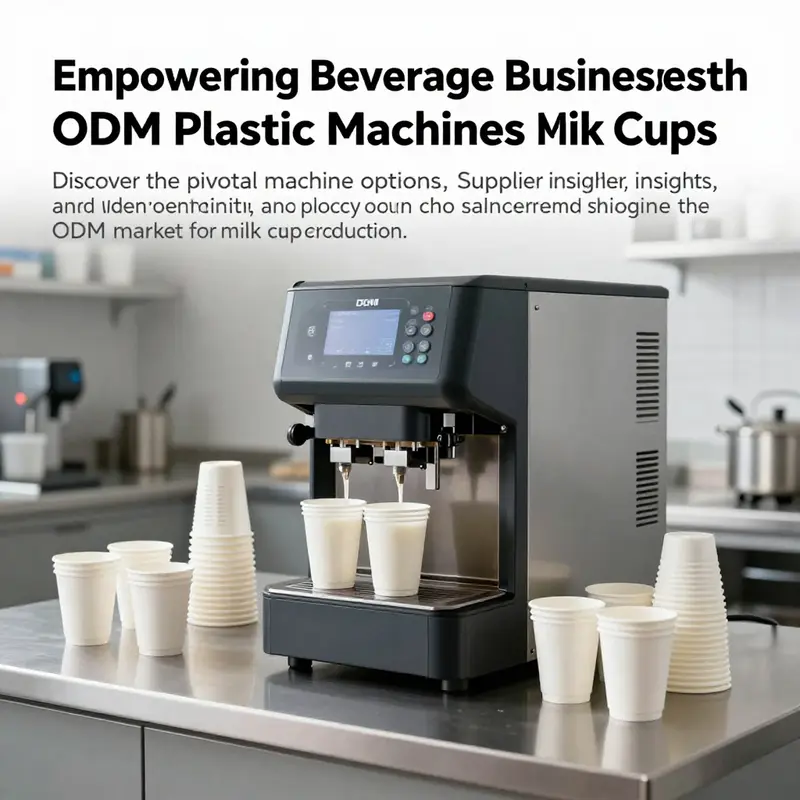
The demand for disposable milk cups is rising, fueled by the beverage industry’s need for hygiene, convenience, and efficiency. Catering to this need, Original Design Manufacturers (ODMs) offer specialized plastic machines capable of mass-producing milk cups, essential for bubble tea shops, restaurants, and catering services. Understanding the various machine options available, insights from suppliers, technological innovations, and the economic and geopolitical factors affecting the industry will empower your procurement decisions. Each chapter will delve into these aspects, ensuring a comprehensive exploration of how ODM cup plastic machines play a crucial role in the modern food and beverage landscape.
Engineering the ODM Cup Plastic Line: Core Machinery for High-Volume Disposable Milk Cups

In the dairy landscape, where hygiene meets convenience, the quest to supply disposable milk cups at scale drives a careful orchestration of design, materials, and machinery. The ODM (Original Design Manufacturer) model emphasizes not only the ability to produce a standard cup but the capacity to tailor the line to a producer’s evolving needs. A well-conceived ODM cup plastic production line begins long before the first sheet is heated or the first mold is closed. It starts with a clear understanding of the end product’s performance in real-world conditions: how the cup will be held, how the liquid remains uncontaminated, how long it stands on a dairy shelf, and how the line itself preserves uniform quality across millions of units. The narrative of this chapter is a single, flowing exploration of the core machinery that links raw materials to finished cups, how each machine fits into a seamless production flow, and why choices in equipment reverberate through cost, quality, and supply resilience.
At the heart of the process is the dilemma of choosing between a thermoforming approach and an injection molding approach, each with its own strengths, trade-offs, and visions of scale. Thermoforming is a natural fit for disposable milk cups that require a reliable, cost-effective pathway from sheet stock to finished geometry. This method starts with flat, consumer-safe plastic sheets that are heated to a pliable state and drawn into the cup shape by a forming tool and a punch. The material options—food-grade resins such as polypropylene, polystyrene, and polyethylene terephthalate—each carry distinct advantages in terms of stiffness, clarity, barrier properties, and heat resistance. The typical sheet thickness that a modern thermoforming line can adeptly handle spans a practical range from about a third of a millimeter up to roughly two and a half millimeters. That spread is not a mere technical footnote; it defines the final cup’s strength, rigidity, and ability to hold dairy products without deforming under pressure or cooling quickly enough to tempt condensation. A robust thermoforming cell then works in concert with an efficient sheet feeder, a precise heating array, and a sophisticated forming press, all designed to deliver consistent cup bodies with minimal scrap. In an ODM context, the form tooling is not an ordinary commodity; it is a key parameter of customization, enabling families of cups, sizes, and bottom configurations to be produced on a shared line with quick mold changes and tight tolerances.
But a different pathway comes into play when a producer needs more complex geometries or integrated features, such as a lid fit or an ergonomic base that improves stacking and transport. Injection molding can deliver these possibilities with higher precision and consistency, especially when the cup body includes features that demand tighter tolerances than thermoforming can easily achieve. In food-contact applications, injection molding is often paired with feed systems capable of delivering multiple resins—food-grade PP, PS, or PET—into high-precision molds. The resulting parts can include integrated lip details, specialized bottom profiles for stacking stability, or even tiny features that assist in sealing and tamper-evidence. For an ODM project, this option is compelling when product families demand a mix of bare-cup options and more engineered variants, all produced on the same overarching platform with standardized control hardware and software interfaces.
No matter which core forming approach is selected, the line must incorporate the essential finishing steps that guarantee product integrity. After forming, cups pass through trimming and quality-check routines, where flash is removed and edge finishes are smoothed to prevent skin irritation or dental snagging during handling. The next critical stage is sealing or closing, which is where a building of hygiene and containment lines up with consumer expectations for safety. A manual or semi-automatic sealing station may suffice for small- or medium-scale runs, especially when product lines require agile response to demand shifts or customized packaging formats. A typical sealing unit for a modular ODM line can operate at hundreds of cups per hour, depending on diameter, material, and the exact sealing method. The equipment must accommodate different cup mouth diameters—common sizes around ninety to ninety-five millimeters—and be capable of using straightforward seal films or simple lids without requiring a complete line reconfiguration. The interplay between forming, trimming, and sealing is where artisanship meets engineering: the tolerances must be tight enough to ensure a hygienic seal while remaining forgiving enough to avoid frequent stoppages for adjustments.
For producers aiming at reach and resilience, the narrative shifts toward full-automation options. An integrated, fully automatic shaping and forming production line can synchronize all steps from raw material handling to final packaging. In this envisioned setup, automatic loaders feed resin sheets or pellets into heaters, robots position and insert forming tools, and scrapers or punching modules trim defect margins while a cooling station stabilizes the geometry before the product is conveyed to downstream equipment. Downstream, a continuous loop of quality checks, laser or optical gauging, and rejection logic ensures that any deviation is caught early and corrected, reducing waste and variance. The benefits of such a line are evident in high-volume contexts where consistency, throughput, and reproducibility translate directly into lower unit costs and shorter lead times. The ODM advantage here is the flexibility to tailor the line’s architecture—footprint, automation levels, cell lengths, and control protocols—to a customer’s factory layout, energy profile, and maintenance cycles. In practice, this means the line can be designed to fit a modest production area or to scale into a regional hub for dairy beverage packaging, with modular expansions as demand grows.
A complete ODM solution also emphasizes material compatibility and process cleanliness. The cups must be compatible with the intended contents and the expected shelf life, while remaining easy to clean and sanitize between batches. The flow of materials from handling to finished goods requires careful housekeeping: dust control at the sheet or pellet intake, clean air enclosures around the forming and sealing zones, and robust lubrication and corrosion-resistant components in contact areas. The selection criteria for equipment in this context extend beyond mechanical performance. They encompass hygienic design principles that facilitate washing, the use of food-grade materials for contact surfaces, and the ability to operate in cleanroom-adjacent environments if required by the customer’s quality programs. An ODM provider’s capability to customize these features becomes a decisive factor when a plant must adhere to stringent regulatory expectations or to corporate food-safety standards.
The economic calculus of choosing among core forming options is nuanced. Capital expenditure is only part of the picture. Operating costs—energy consumption, maintenance, and material utilization—shape the long-term return on investment. A line optimized for low scrap and minimal downtime will deliver the most favorable total cost of ownership, even if the upfront price is higher. In addition, the security of the supply chain begins at the machine room: the ability to source components, to service critical subsystems, and to swap in upgraded control software without a costly overhaul. The global pressure toward disposable plastics for dairy packaging has been intense, with rising demand from retailers and consumers for convenient, single-serve formats. That pressure has also sharpened awareness of geopolitics that influence raw-material pricing, access to machine parts, and the availability of certified resins. For a dairy producer, this means not only selecting equipment that gives predictable performance but also choosing a partner that can safeguard continuity through supplier diversification, strategic spares, and proactive maintenance plans. These considerations, woven into the ODM concept, support a line that remains productive even as market conditions fluctuate.
As a narrative about core machinery, it is helpful to tether the discussion to the practical cadence of a production day. The morning starts with material handling and sheet preparation, where resin stock is checked for compliance and stored under conditions that preserve its properties. The next act is heating and forming, where the sheet is brought to precise temperatures and formed into cups with uniform wall thickness. In the case of the injection-molded path, the resin is melted in a controlled furnace, injected into precisely machined molds, and cooled to a stable form before trimming. Regardless of the approach, the trimming and finishing steps ensure the cups are evenly formed and comfortable to hold. The sealing phase, whether manual, semi-automatic, or fully integrated, is where hygiene and tightness are achieved, ensuring the product can safely contain dairy liquids from the store shelf to the consumer’s fridge. A crucial but sometimes understated dimension is the data-rich intelligence embedded in modern ODM lines. PLCs, sensors, and vision systems monitor temperatures, pressures, cycle times, and product geometry in real time. The data stream informs maintenance, quality control, and process optimization, turning a single line into a learning system that continuously improves yield and consistency.
The ODM approach thrives on customization because no two dairy operations are identical. Some facilities require compact footprints, with a line that tucks into a corner while still delivering high volume. Others demand stacks of different cup sizes and lid configurations, with automated switching that minimizes changeover time. In either case, the supplier’s willingness to co-create the chemistry of the line—how the forming tool changes, how the feeder adjusts to alternative resin grades, how the sealing module handles different film thicknesses—makes a meaningful difference in uptime and product quality. This is not a vague promise; it is a practical outcome of an integrated design philosophy that treats the line as an ecosystem rather than a collection of standalone machines. The producer benefits from standardized control interfaces, modular equipment blocks, and a shared set of safety and maintenance procedures that simplify operator training and regulatory audits. A well-engineered ODM route, therefore, is not merely about choosing between thermoforming and injection molding. It is about aligning the entire production system with strategic goals: speed to market, consistent quality, resource efficiency, and resilient supply chains.
In thinking about the broader packaging ecosystem, it is useful to recognize that a mature ODM cup line does not exist in isolation. It sits beside storage, handling, and distribution networks, all of which must be harmonized with the line’s performance characteristics. The packaging downstream of the cups, including seal films, lids, and outer packaging, must be compatible with the cup geometry and the line’s throughput. The line’s automation architecture can be designed to minimize operator intervention while maximizing traceability, so that batches can be traced from resin lot to final carton. This traceability is increasingly essential for dairy producers who must demonstrate compliance with food-safety standards and respond promptly to any quality issue. In sum, the ODM cup plastic production line is not only a machine installation; it is a carefully engineered system of processes, materials, and software that, when integrated, yields a reliable source of clean, safe, and convenient disposable milk cups for consumers.
Within this framework, it is important to acknowledge the role of standards and certifications. Materials selected for contact with dairy products must be food-grade and compatible with the intended cleaning and sanitizing regimes. The equipment itself should be designed and operated to meet recognized quality management and safety standards. For producers exploring ODM options, a thoughtful combination of process understanding, material science, and machine design translates into a line that can adapt to new product formats or stricter regulatory expectations without a rearchitecture. The capacity to reconfigure a line—whether to switch from a simple cup to a variant with an integrated lid or to adopt a different resin family—becomes the tangible advantage of the ODM paradigm. The journey from sheet stock or pellets to a finished cup is thus not merely a sequence of steps; it is a disciplined orchestration of choices that influence product integrity, cost efficiency, and the business’s ability to respond to market dynamics.
For readers seeking practical cues about the broader technology and supplier landscape, the emphasis remains on credible engineering fundamentals, tested process control, and a vendor ecosystem that supports continuous improvement. The line must not only produce in spec today but be adaptable for tomorrow’s flavors, sizes, and packaging conventions. A well-conceived ODM strategy creates room for experimentation with new closures, anti-spill features, or even compostable materials, provided the supply chain can sustain them with consistent quality. The end goal is a consistent, safe, and cost-effective supply of disposable milk cups that meet consumer expectations for hygiene and convenience while aligning with the plant’s operational reality. This is the essence of turning a set of individual machines into a purposeful, resilient, end-to-end production capability that underpins reliable dairy packaging in a competitive marketplace.
As with any specialized manufacturing venture, one should keep an eye on the exchange between innovation and practicality. The ODM machine selection, from the core forming stage through sealing and packaging, must account for plant footprint, utility requirements, and maintenance routines. The dream of a fully automated, zero-changeover production line is appealing, but it must be grounded in real-world expectations about downtime, part availability, and operator training. The most successful ODM configurations balance sophistication with simplicity, allowing for rapid adaptation when a dairy client requests a different cup size or an alternate seal method while preserving the integrity of the original line design. In this sense, the ODM philosophy aligns closely with the dairy industry’s practical rhythm: a steady cadence of reliability, quality, and responsiveness that builds trust with customers and end-users alike.
For readers who want to see how these concepts translate into real-world packaging ecosystems, one can consider the broader packaging landscape that surrounds disposable cups. The trend toward theme-based and convenient takeaway packaging has intensified interest in adaptable, hygienic, and scalable production lines. The journey from resin to finished cup is part chemistry, part mechanical design, and part business strategy. It requires a careful synthesis of material science, process engineering, and supplier collaboration to yield a line that not only performs today but remains relevant as tomorrow’s consumer expectations evolve. In this sense, the ODM cup line becomes more than a factory asset; it becomes a strategic advantage—an adaptable engine that can support a dairy’s growth, a retailer’s shelf presence, and a consumer’s daily rituals with quiet reliability.
To close this reflection in a practical frame, producers exploring ODM options should look for a partner who can articulate how each subsystem can be configured to meet their unique demand profile. The right collaboration will yield a line that harmonizes sheet or pellet handling with exacting forming, accurate trimming, hygienic sealing, and dependable packaging. It will also offer a pathway to scale that respects capital constraints while delivering consistent product quality. The resulting capability is not merely about making cups; it is about building a robust, flexible, end-to-end platform for dairy packaging that can weather market fluctuations and support sustained growth.
External reference to technical resources can provide a concrete sense of feasibility and performance benchmarks for the core forming and sealing components discussed above. For readers seeking deeper technical grounding, see the practical overview of resin and process options in the external resource linked here. Factory Direct Selling Film Cup PP Injection
Internal link for related packaging ecosystem considerations can be explored here: custom takeaway packaging supplies—disposable tableware for theme party. This connection highlights how the supply chain and downstream packaging choices intersect with the upstream line design, reminding readers that the cup is just one element in a broader system of consumer-ready packaging.
Choosing the Right ODM Partner: Supplier Insights for Plastic Machines Making Disposable Milk Cups

Supplier selection determines the difference between a production line that meets requirements and one that underdelivers. For businesses scaling disposable milk cup output, understanding what an ODM partner brings matters as much as the machine specs themselves. A capable original design manufacturer will do more than sell equipment. They will translate a product brief into robust tooling, validate forming parameters, and support uptime across the cup lifecycle. This chapter walks through the supplier traits, machine capabilities, and pragmatic checks that let you pick an ODM that fits milk cup production goals.
The core of any decision centers on three overlapping areas: technical fit, customization capability, and long-term service. On the technical side, the thermoforming platform is the usual choice for single-use milk cups. Key machine characteristics to weigh include forming area, sheet thickness range, cycle speed, drive systems, and electrical requirements. A wider forming area means you can run larger cup nests or multiple cavities, improving per-cycle yield. Machines that accept sheet thickness from thin films up to thicker thermoformable plastics allow flexibility for both lightweight cups and sturdier variants designed for sturdiness or barrier layers. Cycle speed is a function of cup complexity, material, and machine design; typical commercial machines offer several dozen cycles per minute, but real-world throughput depends on cooling time, plug-assist efficiency, and mold cavity count.
Servo-driven components are a vital technical advantage. Servo motors for plug assist and sheet feeding provide consistent motion profiles, faster acceleration, and energy savings compared to older pneumatic or purely hydraulic designs. That consistency delivers even wall thickness, better rim definition, and repeatable results when switching between cup sizes. For milk cups, where hygiene and fit for lids may matter, these details affect user experience and sealing performance. Consider also the machine’s power supply profile. Three-phase electrical systems are common in industrial settings; confirm compatibility with your site’s voltage and safety earthing arrangements to prevent costly on-site modifications.
Customization capability is where an ODM partner earns its keep. Look for suppliers that explicitly accept design inputs—sketches, 3D files, samples, or detailed drawings—and commit to developing new molds. Effective ODMs will translate product concepts into manufacturable tooling, advise on mold steel selection, and design cavities that hit wall-thickness targets. They will also propose tooling features that ease demolding and finishing. When evaluating suppliers, ask for examples of custom molds they built and for case studies showing how they solved common thermoforming issues such as thin-wall stretching or uneven forming around the rim. A supplier that offers tailored mold design, combined with fast iteration cycles, will accelerate product-to-market timelines.
Service and warranty terms must be scrutinized carefully. A standard one-year warranty is common, but longer service commitments, lifetime warranty language, or extended spare-parts agreements signal a supplier confident in their engineering. Pay attention to response times. Suppliers that guarantee prompt reply windows and provide technical support within 24 hours reduce downtime risk. Ask whether they provide remote troubleshooting, on-site commissioning, and operator training as part of the package. Training is especially important; a well-trained staff prevents operator errors that lead to wasted sheets, premature mold wear, and hygiene risks.
Beyond warranty language, consider spare parts availability and logistics. Thermoforming machines use bespoke mold components, specialized motors, and control-system electronics. Confirm stock levels for common wear parts and lead times for replacement mold components. A mature market often features pre-owned machines for sale, which can be an alternative for constrained budgets. However, used equipment carries trade-offs in warranty, lifecycle, and upgradeability. If pursuing a used machine, verify maintenance records, inspect critical alignments, and budget for potential control-system modernization.
Economic considerations extend to energy consumption, throughput, and total cost of ownership. Calculate ROI not just from machine price but from material yield, downtime risk, staffing needs, and maintenance costs. Machines with servo drives often consume less energy and reduce scrap through precise control. Higher initial cost may be offset by lower operating expenditure and higher yield. Evaluate how many cavities you require. Multi-cavity molds increase output per cycle but complicate mold design and raise tooling costs. Balance tooling expense against expected volume and product lifetime.
Material compatibility plays a major role in milk cup production. Thermoforming machines commonly process materials such as PET and PP. Each material requires specific forming temperatures and cooling profiles. PET offers clarity and good barrier properties but may need tighter temperature control and pre-drying to avoid webbing or voids. PP is forgiving at higher line speeds and provides good heat resistance, which can be useful if the cups hold warm liquids. Discuss material recommendations with potential ODMs and request sample runs on the same resin you plan to use. That reduces risk during scale-up.
Regulatory and hygiene compliance is non-negotiable. Milk cups must meet food-contact regulations and be manufactured under hygienic conditions. Suppliers should be familiar with relevant standards and provide machines that are easy to clean, have sanitary guarding, and minimize crevices where residue can accumulate. Ask about the factory’s quality control processes. An ODM that supports written process validation, traceable material certifications, and documented cleaning procedures helps your own compliance and reduces audit friction.
Supply chain and geopolitical factors are practical realities. Evaluate where the supplier manufactures components, how they source critical electrics and motors, and their logistics capabilities. Diversified sourcing reduces the chance that a single disruption halts deliveries. Lead times for custom molds can vary widely, influenced by tooling capacity, material availability, and transportation bottlenecks. Build realistic timelines into project plans and agree on milestone deliveries and penalties where appropriate.
Procurement best practices include insisting on acceptance testing and trial production before final payment. An acceptance protocol should define performance benchmarks for cycle rate, dimensional tolerances, material yield, and electrical safety. Request sample production runs that produce cups representative of your target product. Test those samples for wall thickness uniformity, rim integrity, dimensional consistency, and fit with lids. The supplier should support on-site commissioning and provide a period of assisted production during which they help optimize settings.
Service infrastructure affects long-term viability. Ask whether the supplier has authorized service agents or offers long-term contracts for preventive maintenance. Machines are long-lived assets. A supplier that offers lifecycle planning and parts kits will reduce unexpected interruptions. Determine what spare mold parts you should hold in-house. Some components, like sealing strips or drive belts, are inexpensive and worth stocking. Others, like bespoke cavity inserts, may be expensive and best sourced on agreed lead times.
When talking terms, clarify intellectual property and design ownership. ODM arrangements often involve the supplier creating proprietary tooling based on your specifications. Define who owns the mold designs and whether the supplier can reuse them for other clients. Protecting your brand and design is important, and contractual clarity prevents future disputes.
Finally, validate supplier claims through references and factory visits where possible. Request client references and, if feasible, inspect installations that run similar cup sizes or materials. A site visit shows how they manage quality control, parts inventory, and post-sales support. Where visiting is impossible, insist on virtual tours and video demonstrations of the machine running your material and your sample mold.
A practical step toward final selection involves a small pilot order. Ask the ODM to develop a prototype mold, run a measured batch, and deliver finished cups for independent testing. Use those results to refine design tolerances and production parameters before committing to high-cavity molds or multiple lines. This iterative approach reduces risk and improves time to stable, high-quality output.
Choosing the right supplier for an ODM cup plastic machine is a strategic decision. Prioritize partners who combine strong thermoforming technology, demonstrable custom mold expertise, transparent service terms, and a commitment to supporting food-grade production. Insist on thorough acceptance testing, clear IP terms, and an after-sales plan that keeps your line running. One practical product resource that aligns with disposable clear cup requirements can be reviewed here: disposable clear plastic cup product page.
For a direct reference to an ODM-capable thermal forming machine listing, consult the supplier machine page provided here for technical details and contact options: https://www.made-in-china.com/products/1075981373-144112436/Pingyang-Litai-Machinery-Co.-Ltd.-Disposable-Plastic-Cup-Mould-Machine.html
From Mold to Milk: How ODM Plastic Machines Redefine Disposable Milk Cup Manufacturing

The chapter of modern ODM cup plastic machines unfolds as a continuous journey from raw sheet to ready-to-ship cups, with the dairy and beverage sectors demanding ever-higher standards of hygiene, precision, and throughput. The production line that turns a simple sheet into a disposable milk cup is more than a sequence of mechanical steps. It is a carefully choreographed system where every motion, every pressure, and every alignment matters. In this landscape, the ODM approach—where the design is customized to fit the buyer’s needs while leveraging shared manufacturing capabilities—enables producers to tailor cup geometry, thickness, and finish to meet diverse market demands. The result is a family of machines that does not merely form cups; it forms a reliable, scalable platform for a wide array of single-use containers that must carry dairy, yogurt drinks, or tea-based milk beverages with confidence. The emphasis across contemporary ODM platforms is a cohesive blend of precision, automation, and modularity, designed to adapt to evolving regulatory expectations and sediment at the point of consumer use. Precision, in particular, anchors the entire value proposition. When a forming cycle repeats with near mathematical consistency, the cups exhibit uniform wall thickness, uniform base dimensions, and predictable rigidity. This, in turn, reduces material waste and minimizes the need for downstream corrections. The consequence is not only cost efficiency but also the ability to maintain strict hygiene standards through consistent surface finish and clean release from molds. In high-throughput environments, small deviations in cup geometry can cascade into misfeeds, seal failures, or compromised stacking. The cam-controlled drive technology prevalent in many modern thermoforming systems addresses this risk by delivering 100% repeatability of each forming cycle. Rather than relying on stochastic hand-tuning or discrete actuator timings, cam profiles synchronize the position of the forming station, the closing of the die, and the coordinated action of the suction and support features. The result is a stable rhythm, a predictable cycle time, and a baseline of product conformity that is essential for food contact applications. The importance of such repeatability becomes especially evident when cups are produced in sizes that accommodate different dairy products or beverage concentrations. A producer that can dial in precise tolerances and repeatedly hit them, cup after cup, gains both material efficiency and process reliability. The interplay between form and finish, however, is not governed by a single mechanism. The dual-pressure forming method—combining positive pressure to drive the plastic sheet into the mold cavity and negative pressure to pull the material snugly against every contour—emerges as a pivotal advancement in ODM capabilities. Positive pressure serves to push the web into complex mold geometries, while vacuum pressure tightens the material against curved rims, vertical walls, or footed bases. This two-stage pressure approach enables the creation of cups with intricate contours, generous rims for easy gripping, and even thinner walls where needed without sacrificing structural integrity. Milk-based beverages, with their tendency to seek stability through adequate rigidity, benefit particularly from this balance. When cups must support hot or warm liquids, wall integrity and rim stiffness become non-negotiable attributes. The dual-pressure strategy helps ensure that the finished cups resist deformation during downstream handling, stacking, and customer use. It also reduces the incidence of thin-walled areas that would otherwise be prone to collapse under pressure or heat during transport. Alongside these forming dynamics, automation in stacking and ejection completes the transformation from sheet to stack of finished cups. The tilt mechanism of the forming table, a feature increasingly common in advanced ODM lines, enables a direct, gravity-assisted or mechanically guided transfer of finished cups onto an accumulator or a dedicated stacker. This reduces manual handling, mitigates worker fatigue, and minimizes the risk of accidental contamination that could arise from transport between operations. The ability to stack directly from the mold, with precise spacing and orientation, streamlines downstream packaging lines and aligns with the broader goal of end-to-end automation. The practical upshot is a notable jump in throughput—machines on the floor can reach high cycle frequencies without compromising quality. In some regions, these capabilities translate into speeds measured in tens of cycles per minute, a scale that makes the difference between meeting seasonal demand and missing delivery windows. The economics of such systems hinge on a combination of upfront capital, energy efficiency, and robust maintenance support. A well-designed ODM line operates on three-phase power in industrial settings, a configuration that provides stable voltage and current to multiple forming stations and servo-driven components. Such electrical architectures are not merely conveniences; they underpin the consistent performance of high-speed cycles and the reliability of critical subsystems like vacuum pumps, hydraulic actuators, and servo motors. Certification—CE, ISO, and ISO9001—plays a foundational role in building buyer confidence. These norms signal that the equipment adheres to international safety, quality management, and process control standards. For manufacturers selling into global markets, compliance with such certifications reduces barriers to entry and accelerates procurement decisions. Beyond the machinery itself, ODM strategies also emphasize customization options that reflect the realities of the dairy and beverage supply chains. Cup dimensions—diameter, height, and wall thickness—may be tuned to meet varying fill volumes and consumer ergonomics. The finish on the cup—matte, glossy, or patterned—affects grip, heat transfer, and brand presentation. Wall thickness can be adjusted to balance rigidity against material economics, allowing producers to optimize for the type of liquid they intend to contain, as well as the reliability of their sealing and labeling processes. Moreover, the ability to design liners, rims, and pour mouths with precise radii can influence pour performance and consumer experience. In practice, ODM providers couple mechanical know-how with digital control and process analytics to help buyers reach a target yield and a predictable defect rate. Real-time monitoring of forming forces, vacuum levels, and cycle timing enables quick corrections and preventive maintenance. This is especially valuable when scaling from small production runs to continuous, high-volume operations. At the same time, the supply chain considerations surrounding disposable cups demand a broader perspective. Manufacturers must assess lead times for replacement tools, die sets, and consumables. They must anticipate fluctuations in resin pricing, energy costs, and labor availability. They must also account for regulatory changes in packaging materials, food-contact standards, and environmental guidelines that influence recyclability and waste streams. ODM solutions offer a degree of resilience in this context. Because the design and fabrication can be adapted without abandoning the installed base, producers can migrate to higher-performance configurations or modify wall thickness and cup geometry as market preferences evolve. The capacity to retool within an integrated platform minimizes downtime and preserves capital value. The human factor remains essential. Even as automation reduces repetitive labor, skilled operators and maintenance technicians are needed to calibrate cams, adjust pressure parameters, and manage the interface with downstream packaging. The most effective ODM ecosystems treat operation and maintenance as a single discipline, combining mechanical tuning, electrical diagnostics, and software updates in a seamless workflow. This holistic view extends to downstream packaging integration. After cups exit the mold and are stacked, they often flow into sealing, labeling, or carton-erection lines. An integrated approach minimizes handling, reduces contamination risk, and ensures that the final container meets the end-user expectations for hygiene and convenience. The broader market context rewards machines that can flex with different dairy formats, from simple milk cups to cups designed for tea-based beverages and smoothies. The demand for thin-walled, high-clarity cups that still resist deformation has driven material science alongside mechanical innovation. While the ODM approach centers on machine design, it is inseparable from the plastics and resins that feed the cup body. Process engineers must consider material flow characteristics, sealing compatibility, and the thermal properties of the resin. In practice, this means choosing resins with the right melt behavior, crystallinity, and heat resistance to maintain cup shape during hot-fill or hot-tea scenarios. When integrated with precise forming and controlled cooling, these material choices become a critical determinant of performance. The discussion around innovation would be incomplete without noting the role of information and data in modern ODM lines. The most advanced systems collect performance metrics on every cycle, enabling continuous improvement through data-driven decisions. Operators can compare defect rates across shifts, optimize cycle times for different cup styles, and correlate sensor data with outcomes in packaging. This data-centric approach supports quality assurance programs and demonstrates compliance with food-safety standards. The end result is a more predictable supply chain for disposable milk cups, where the machine’s capability to produce consistent cups under diverse conditions translates into fewer bottlenecks and more reliable fulfillment. For readers seeking practical context on how these capabilities translate into real-world procurement decisions, consider the broader ecosystem of packaging design and manufacturing options. A well-chosen ODM line offers not only the mechanical means to shape cups but also a roadmap for customization, maintenance, and scale. It provides a platform that can evolve as new regulations arise, as consumer preferences shift toward different cup aesthetics, or as the economics of resin and energy shift. As demand continues to rise for convenient, hygienic, single-use packaging, the ODM model’s emphasis on integrated, adaptable capability becomes a strategic asset. The value proposition extends beyond the immediate cost per cup. It encompasses supply reliability, consistency in product quality, and the flexibility to tailor solutions to regional market requirements. In practice, the ability to adapt to different container shapes, fill volumes, and downstream packaging configurations is what ultimately differentiates a successful producer from a merely capable one. For practitioners who wish to explore further how customization intersects with packaging strategy, a coordinating resource on custom takeaway packaging and disposable tableware can offer useful insights and exemplars of how design choices map to operational realities. See Custom Takeaway Packaging and Disposable Tableware for Theme Party for context on how packaging design considerations align with consumer expectations and brand positioning. External research points to the broader influence of automation in high-volume cup production, where the convergence of cam-controlled drives, dual-pressure forming, and automated stacking defines the competitive landscape. The emphasis on safety, efficiency, and scalability aligns with international standards and the needs of global markets. In this ongoing evolution, ODM cup plastic machines for disposable milk cups remain a focal point where engineering ingenuity, material science, and supply chain strategy intersect to deliver reliable, hygienic, and cost-effective packaging solutions. External reference: https://www.alibaba.com/product-detail/HFTF-70T-Thermoforming-Machine-for-Disposable1600472817528.html?spm=a2700.productlist.0.0.2a4e6b81dQJjWZ
How Economics and Geopolitics Reshape ODM Plastic Machines for Disposable Milk Cups

Economic and geopolitical currents are redefining how ODM manufacturers design, sell, and support plastic machines used to make disposable milk cups. Demand remains driven by urbanization and convenience, yet cost pressures, regulation, and global tensions force buyers and makers to adapt. This chapter explains how raw materials, trade dynamics, regulatory shifts, and technological responses interact. It also outlines practical strategies for buyers evaluating ODM machines in an uncertain environment.
The most immediate economic pressure is material cost volatility. Virgin polymers commonly used for milk cups — especially polypropylene and PET — track oil and gas prices. When crude prices climb, resin costs follow. Manufacturers face sudden increases in per-cup material expense. For an operator producing millions of cups, even modest percentage swings translate into large budget impacts. Those dynamics push buyers toward machines that extract more value from material. High-efficiency thermoforming and molding lines with reduced trim loss become more attractive. So do machines that enable lightweighting without sacrificing cycle time or regulatory compliance.
Supply chain disruption magnifies price swings. Critical components for modern machines — servo drives, motion controllers, precision sensors, and specialized tooling — often have concentrated sources. Geopolitical tensions in key regions can slow shipments or drive up prices. Export controls, sanctions, or port congestion add lead time and contingency costs. For ODMs, the response is twofold: diversify suppliers and design systems with interchangeable components. A modular control architecture that accepts controllers from multiple vendors reduces dependency risks. Buyers should favor OEMs or ODMs that document multiple sourcing paths and maintain a cross-reference of compatible parts.
Regulatory pressure is shifting product demand as fast as raw material costs. Regions are tightening rules around single-use plastics and promoting compostable, biodegradable, or recycled inputs. This legal landscape creates a technical challenge: alternative materials often have different forming windows, melt behavior, and stiffness. Machines built for conventional polymers may underperform or fail with biopolymers. That reality is why flexible, retoolable machines are gaining attention. An ODM that offers adjustable heating systems, customizable tooling, and robust process controls helps manufacturers trial and scale alternative materials more quickly. Buyers must factor in the capital cost of retooling against future compliance risk.
The capital equation matters. Investments to retrofit or buy new, more flexible machinery can be daunting. Interest rates, access to credit, and macroeconomic risk shape whether a plant upgrades. For larger firms, cost-benefit models can justify automation and modularity through labor savings and higher uptime. Smaller players often turn to the secondary market for used machines, or to leasing, to avoid full capital outlay. The used-equipment channel can be a practical entry point, but it carries hidden costs: older controls and obsolete spare parts amplify downtime risk. The best procurement strategy pairs careful lifecycle costing with vendor support guarantees and clear spare-parts availability.
Geopolitical factors also alter where machinery is built and installed. Trade tariff regimes, regional subsidies, and resilience planning have prompted some buyers to favor nearshoring or regional assembly. Shorter supply chains reduce exposure to container shortages and port delays. They also simplify regulatory compliance for local packaging requirements. ODMs that can offer regional manufacturing hubs or authorized local integrators gain a competitive edge, because they mesh with buyers’ risk mitigation plans.
Automation and digitalization are both response and opportunity. Advanced control systems enable predictive maintenance, which lowers unexpected downtime. Remote diagnostics and cloud-based performance monitoring let suppliers support dispersed machines without frequent site visits. Those capabilities matter when travel is restricted or when geopolitical risks make parts shipments slow. From a procurement standpoint, digital features become part of the machine’s total value. Buyers should request demonstrated metrics: mean time between failures, overall equipment effectiveness gains, and examples of remote fixes. Machines that improve OEE and reduce human intervention justify higher upfront cost during periods of material and labor cost pressure.
Energy cost is another decisive factor. Many manufacturing processes for cups require significant heating and vacuum systems. Energy price volatility places a premium on thermal efficiency. Leading ODMs optimize oven designs, implement zoned heating, and recover waste heat where possible. Energy-smart control strategies can reduce per-cup energy consumption by meaningful percentages. Buyers focused on long-term operating cost should factor energy performance into procurement specifications as much as cycle time and output.
A less obvious but important trend is the rising importance of standards and certifications. Compliance with food-contact regulations, compostability standards, and local recycling mandates affects both the substrate and the machine’s processing profile. Machines that support traceable production, maintain validated process records, and integrate with quality management systems make regulatory compliance easier. For milk cup producers, being able to show documented control of forming temperature, cycle consistency, and material traceability reduces liability and eases market entry.
Financial and commercial terms have adapted as well. With uncertainty high, manufacturers and ODMs often craft flexible commercial arrangements. These include performance-based pricing, extended warranty and service bundles, spare-parts stocking agreements, and on-site training packages. Strategic buyers will negotiate clauses addressing lead times for critical parts, penalties for missed delivery, and clear service-level commitments. Long-term service agreements can convert an uncertain supply chain into a predictable operating rhythm.
Sustainability trends create new market segmentation. While some customers still demand the lowest per-unit cost, others prioritize compostability, recycled content, or reduced carbon footprint. Machines that can switch between materials, or that can process films and sheets made from recycled feedstock, will be more resilient to demand shifts. Manufacturers may also seek certification for their processes to meet customer procurement criteria. An ODM that supports pilot trials, offers rapid tooling iteration, and provides process recipes for alternative materials eases adoption.
Logistics realities matter day to day. Container shortages, fluctuating freight rates, and regional port bottlenecks all increase the effective lead time for new machines. This encourages businesses to maintain higher safety stocks of critical spares or invest in machines with simpler, more robust subsystems. Planning for logistics includes clarity on installation timelines, customs documentation, and local certification requirements. Buyers who align their procurement calendar with realistic shipping windows and who budget for potential delays maintain production continuity.
Risk mitigation is not just about procurement. It includes operational and strategic choices across the factory floor. Practices such as dual-sourcing of consumables, cross-training staff on machine operation and maintenance, and investing in condition monitoring reduce vulnerability. At the strategic level, firms may diversify packaging portfolios to include paper-based or compostable options, allowing them to shift quickly if policy or customer demand changes.
Opportunities exist amid disruption. ODMs that emphasize modularity, digital support, energy efficiency, and multi-material capability will attract buyers looking for resilience. There is also a market for retrofit solutions that update older lines to handle new materials or to add predictive maintenance. For investors and entrepreneurs, the used-equipment market plus targeted reconditioning offers a lower-capital path to enter cup production where demand is solid.
When evaluating ODM plastic machines for disposable milk cups, buyers should blend technical specifications with macro-aware criteria. Assess material flexibility, spare-parts strategy, digital support, energy use, and the vendor’s multi-sourcing approach. Understand total cost of ownership, not just purchase price. Ask for documented case studies of material transitions, automation gains, and service responsiveness under stress.
Finally, maintain situational awareness. Economic indicators, oil price trends, and shipping capacity forecasts can alter procurement timing and specification. Geopolitical signals that impact export controls, tariffs, and component availability must feature in investment decisions. A procurement plan that integrates these macro drivers will reduce risk and protect margins.
For practical market benchmarking and live listings of machines and suppliers, consult real-time industry platforms that aggregate new and used equipment and list supplier capabilities and price points. These resources provide a window into current pricing and supply conditions as you finalize technical and commercial requirements. (https://www.alibaba.com)
For an example of how packaging choices intersect with machine selection, consider reviewing a supplier page for clear plastic cups to compare material profiles, finishing options, and typical production methods. The product page for a disposable clear plastic cup provides context on dimensions, polymer type, and common uses, which inform machine choice and tooling strategy: disposable clear plastic cup product page.
Taken together, economics and geopolitics do more than change costs. They shift priorities. The resilient buyer will invest in machines that reduce material waste, offer digital support, and allow rapid adaptation to new substrates. The resilient ODM will design for interchangeability, remote service, and energy efficiency. In this evolving market, flexibility and foresight matter as much as machine throughput.
Final thoughts
In the ever-evolving beverage landscape, ODM cup plastic machines for disposable milk cup production highlight the intersection of technology, supplier engagement, and strategic procurement. By staying informed about machine options, understanding supplier capabilities, embracing technological advancements, and considering the broader economic and geopolitical influences, beverage businesses can make more informed decisions. Investing in efficient production machinery not only meets rising consumer demand but also amplifies operational efficacy—crucial for success in today’s market. Make your move towards optimizing your production capabilities with ODM solutions tailored to drive your business forward.