

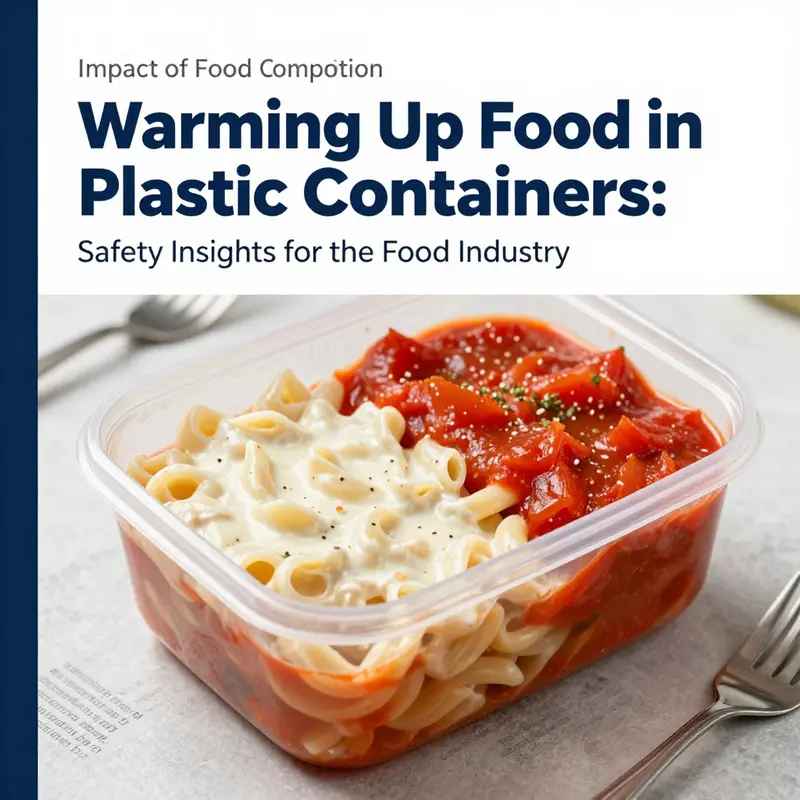
As the food industry embraces convenience, warming up food in plastic containers, particularly in microwaves, raises critical safety concerns. This issue is especially relevant for bubble tea shops, restaurants, food trucks, catering services, and event planners who rely on reheating food for service. Each chapter in this article delves into vital aspects of this practice: understanding chemical migration risks, the safety of ‘microwave-safe’ plastics, the influence of food properties on leaching, the emerging threat of microplastic contamination, and safety recommendations for food service businesses. By developing an awareness of these factors, food industry professionals can make informed decisions that prioritize customer health without compromising on efficiency.
Heat, Plastic, and Hidden Dangers: Tracing Chemical Migration in Home Reheating

When leftovers move from the stovetop to the microwave, a routine gesture becomes a moment of quiet chemical negotiation. Plastic containers are designed for convenience and containment, not for the chemistry of heat. Yet as soon as microwaves push food to high temperatures, the dialogue between polymer and plate begins. Heat accelerates molecular movement, and the very act of warming can loosen the bonds that once kept additives or breakdown products securely in place. The result is a migration trail: substances from the plastic leaching into food, especially when fats, acids, or sugars are present and the container has aged, become scratched, or warped. The science is not a single warning but a constellation of risks that complicate a simple kitchen practice, and the more we learn, the more cautious the advice becomes.
At the heart of the concern are endocrine-disrupting chemicals (EDCs) embedded in many plastics. Bisphenol A (BPA) has long been the poster child for this class of substances, but attention has broadened to its common alternatives, such as BPS and BPF. These chemicals can mimic or interfere with natural hormones, raising questions about reproductive health, metabolic regulation, and development in the earliest years. Phthalates—used to add flexibility to plastics—also disrupt the hormonal system and have been linked to reproductive toxicity and metabolic disturbances. Even when products are marketed as BPA-free, the substitutes may carry similar biological activity, a sobering reminder that labels can be imperfect guides to safety. The migration of these chemicals is not static; it depends on the container, the food, and the heating conditions, creating a shifting risk profile with every reheating.
The type of plastic matters profoundly. PET, designated as #1, is not suitable for microwaving. When heated, it can release substances such as antimony and acetaldehyde into the food, introducing a chemical burden that was not present at room temperature. PVC (#3) contains phthalates and should be avoided, especially under heat, where leaching can increase. PS (#6), common in foam takeout containers, can melt or deform under heat, releasing styrene, a possible carcinogen, into the meal. PP (#5) is often labeled microwave-safe and is considered more stable, but even with this label, the migration of substances is not guaranteed to be zero. Regulatory approvals typically set migration thresholds that allow trace amounts, but the health risk is a function of exposure over time and across multiple heating cycles, not a single instance.
Recent findings add another layer to the concern. Research published in 2023 showed that heating inside plastic containers can drive the formation and release of both intentional additives and non-intentional additives (IAS and NIAS) that migrate into food. NIAS, in particular, refers to unidentified substances that appear as byproducts or breakdown products, complicating risk assessment because their identities and toxicities may be less well characterized than those of known additives. The presence of a “microwave-safe” label does not guarantee safety. It signals basic thermal stability testing, not a guarantee of zero migration over time or with repeated heating. This nuance matters because many households reuse plastic containers, subjecting them to cumulative exposure that may exceed initial safety assumptions.
The conversation extends beyond chemistry into the realm of microplastics. A growing body of work identifies microwave heating as a notable source of microplastic release, a development that opens new questions about inhalation and ingestion pathways. While the long-term health implications of microplastics are still under investigation, the possibility that reheating could contribute to daily microplastic exposure is a reminder that the kitchen is also a frontier of environmental health concerns. In this sense, the debate about safe reheating becomes part of a broader reckoning with how everyday plastics interact with food, heat, and people.
What does this mean for everyday practice in a busy home kitchen? The practical answer begins with recognizing that plastics are not a universal safe solution for reheating. Not all plastics tolerate heat in the same way, and even plastics labeled as microwave-safe should be approached with caution. High-fat or high-acid foods amplify the risk of migration, given that fats can solubilize certain additives and acids can alter the polymer matrix more readily under heat. The duration and intensity of heating play a critical role: longer warming times, higher temperatures, or repeated cycles increase the cumulative exposure to migrating substances. The physical condition of the container matters as well; scratches, cracks, or heat-induced warping compromise barrier properties and create more surface area for leaching.
This is not a call to abandon all plastic altogether, but a push toward more informed choices. For many households, convenience remains a powerful driver, so the question becomes how to minimize risk while preserving practicality. The evidence strongly supports preferring glass or ceramic containers for reheating. Glass, in particular, is inert under heat, does not degrade to release chemicals, and provides a stable environment that minimizes any risk of molecular migration. This is why researchers and public health advocates often point to glass as the gold standard for reheating. The message is not to fear every plastic option, but to reserve reheating in plastic for cases where it is truly necessary and to prefer plastics known to behave more predictably under heat when alternatives are not feasible.
To guide safer choices, it helps to translate the science into actionable kitchen habits. First, when possible, preempt chemical migration by transferring food to glass or ceramic containers before reheating. If plastic must be used, select containers clearly labeled as microwave-safe and avoid reheating foods that are high in fat or high in acidity. Use containers that are in good condition—free of cracks, deep scratches, or warping. Do not reuse disposable containers for reheating; their structural integrity is often compromised after one use, increasing the likelihood of leaching. It is also wise to avoid heating in non-food-grade plastics, such as some take-out boxes and beverage bottles not intended for cooking or reheating. The overarching principle is to minimize the cumulative exposure that can arise from repeated heating and to favor materials with inert, stable performance under heat.
For households navigating these choices, there is valuable guidance from health researchers and nutrition scientists. Glass eliminates the risk of chemical migration during heating, making it the preferred option for safe food reheating. This framing aligns with authoritative guidance on safe storage and preparation practices, and it resonates with a growing consensus that while some plastic use may be acceptable in specific, limited contexts, safer alternatives should be prioritized when health considerations are at stake. The conversation is not about vilifying plastics but about recognizing heating as a condition that changes risk. Embracing safer containers makes everyday meals less murky in terms of long-term health outcomes, particularly for pregnant individuals, infants, and people who regularly reheat foods.
For readers seeking additional context and validated guidance, public health resources offer practical recommendations that complement this discussion. A detailed overview from a leading nutrition research center emphasizes the importance of choosing appropriate storage and preparation methods, reinforcing the idea that storage and reheating practices significantly shape exposure to potential toxins. This resource helps connect the science of chemical migration to everyday choices, translating laboratory findings into kitchen-smart habits that protect health over the long term.
To explore safer container options and the rationale behind them, readers can consider resources that discuss microwave-safe paper-based alternatives and other non-plastic packaging solutions. For a practical example of safer, microwave-friendly packaging that avoids plastic altogether, you can learn more about paper-based takeout solutions through this resource on microwave-safe craft-paper lunch boxes. This option demonstrates how design and material choice can align with safety aims while preserving convenience in a busy cooking environment: microwave-safe craft-paper lunch boxes.
The broader narrative remains clear: while the kitchen is built for heat and habit, it is not a neutral testing ground for chemical exposure. The path forward lies in combining an understanding of plastic chemistry with practical choices that reduce unnecessary risk. Glass and ceramic reheating options provide a robust baseline, while plastics can still play a role when used judiciously and thoughtfully. By coupling informed material selection with mindful heating practices, households can preserve the convenience of modern food storage and reheating without compromising long-term health.
External resources offer further, officially grounded guidance to help readers translate this knowledge into daily routines. For those who want a concise, authoritative overview of safe food storage and preparation, the nutrition science resource from a leading public health institution provides essential context and recommendations that complement the considerations outlined here: https://www.hsph.harvard.edu/nutritionsource/food-storage-and-preparation/
Beyond the Label: Understanding the Real Risks of Warming Food in Microwave-Safe Plastics

Reheating a meal in a plastic container is a familiar daily ritual for many households. The ritual feels routine, almost inconsequential, until you pause to consider what happens when heat meets plastic. The label on the package often promises safety, a promise reinforced by regulators and the convenience of modern packaging. Yet a growing body of research suggests that the everyday act of warming food in plastic—even when it bears a microwave-safe mark—carries more complexity than the label communicates. The conversation moves beyond a simple yes-or-no choice and into the realm where chemistry, materials science, and long-term health intersect in subtle, often cumulative ways.
The core concern is chemical migration. When plastics are heated, their molecular structure can shift, altering how components behave under the influence of heat. Endocrine-disrupting chemicals surface in this discussion because they can interact with hormone systems even at very low doses. Bisphenol compounds—most famously BPA, but also alternatives such as BPS and BPF—have shown estrogenic or anti-androgenic activity in various biological systems. Phthalates, added to plastics to modify flexibility, are likewise linked to reproductive toxicity and metabolic disturbances. The risk is not restricted to one molecule or one plastic type; it is a pattern that emerges across several commonly used polymers, especially when heat is involved. It is also worth noting that products marketed as BPA-free may harbor substitutes that behave similarly in biological systems, a reminder that the label alone cannot guarantee safety in this area.
The danger is not uniform across all plastics. The type of plastic matters, as do the food properties and the heating conditions. For example, PET—a common plastic in beverage bottles and some takeout containers—tends to be less stable under heat and has been associated with the release of unwanted byproducts such as acetaldehyde or other compounds when subjected to microwaving. The composition of the food itself plays a decisive role: high-fat or high-acid foods can increase the likelihood and magnitude of chemical migration from a container. A creamy sauce, an oily curry, or a tomato-based dish may push more compounds out of the plastic and into the food than a low-fat, neutral liquid. Add to this the duration and intensity of heating. Prolonged exposure to microwave temperatures amplifies the potential for migration, and even short bursts can contribute to a cumulative exposure scenario when meals are reheated repeatedly over days or weeks.
Container condition matters as well. Scratches, cracks, and aged plastics can harbor microcracks through which chemicals migrate more readily. Disposable plastic containers, often marketed for single-use convenience, are not designed for repeated heating and may degrade faster under microwave stress. Even containers that pass a basic “microwave-safe” test can fail to protect against long-term health risks when they are used repeatedly, heated to high temperatures, or used with fatty or acidic foods. These factors combine to create a mosaic of risk rather than a single, straightforward answer to whether reheating in plastic is safe.
A key emerging theme is the idea that the term microwave-safe is not an absolute guarantee of safety. Regulatory frameworks have established safety standards for many plastics used in food-contact situations, and the label “microwave-safe” is intended to indicate that the plastic won’t melt or physically degrade under typical conditions. Yet new research indicates that even under these conditions, trace amounts of potentially problematic substances can migrate into food. These findings underscore a broader reality: safety testing often focuses on immediate physical integrity rather than complex, long-term biological effects. The real-world picture includes cumulative exposure, mixture effects, and low-dose hormonal dynamics that conventional testing may overlook.
One illuminating study, published in Environmental Science & Technology in 2023, analyzed more than 50 commonly used plastic food containers. It found that nearly seven in ten released measurable levels of endocrine-disrupting chemicals when microwaved, even if the containers were labeled microwave-safe. The chemicals included bisphenol compounds, including BPA substitutes, and phthalates. The study argued that current safety testing protocols may not adequately reflect real-world conditions, such as how people actually heat leftovers day after day or how small, persistent exposures might accumulate over time. The implication is not a dramatic, single-use hazard but a nuanced pattern of risk that plays out over years for some populations.
For populations with heightened vulnerability—pregnant individuals, infants, and those with high-frequency heating routines—the potential consequences are particularly salient. Endocrine disruptors are associated with reproductive health impacts, metabolic dysregulation, and developmental timing shifts in children. While a single reheated meal may constitute a small exposure, the concern compounds with repeated exposures, especially if the same container is used again and again. This is not to say that every microwaved meal in a plastic container will cause harm, but it does urge a precautionary mindset that weighs convenience against potential, cumulative risk.
In recent years, additional analyses have leaned toward a cautious, long-haul approach to food storage and reheating. A 2026 synthesis highlighted glass as a standout option for reheating leftovers. Glass containers—especially tempered borosilicate or soda-lime glass—offer chemical inertness, strong heat resistance, and broad compatibility with microwaves, ovens, freezers, and dishwashers. The message is practical: use glass when possible to minimize chemical migration and microplastic concerns. Glass does not yield plastic-derived compounds into food and does not shed microplastics in the heating process. Of course, glass lids or silicone gaskets can play a role in storage, but the core advantage remains the absence of plastic migration during heating. This shift toward glass-friendly practices has grown more pronounced as public awareness of the plastic-heating risk has increased and as research clarifies the long-term health implications for sensitive groups.
Alongside this, the topic of microplastics adds another layer of concern. Heating plastics may contribute to degradation that releases microplastic particles into food. Although the health implications of incidental microplastic ingestion remain an active field of study, there is growing concern that cumulative microplastic exposure could interact with other environmental factors in ways scientists are only beginning to understand. In essence, reheating food in plastic may contribute not only to chemical migration but also to physical particulates entering the food chain, a dual pathway for exposure that should influence consumer decisions as well as regulatory scrutiny.
With these scientific threads in mind, practical guidance becomes essential. For those who must reuse plastic containers or who rely on plastic for immediate convenience, several precautionary steps can reduce risk without sacrificing all practicality. First, only containers clearly labeled as microwave-safe should be used, and even then, they should be inspected for scratches, cracks, or cloudiness that can indicate degradation. Second, avoid reheating high-fat or high-acid foods in plastic. Fats can mobilize more chemicals from the container into the food, and acids can enhance the leaching process. Third, minimize heating duration and avoid repeated reheating of the same container. If you have to reheat, consider transferring food to a microwave-safe glass or ceramic container for the final minutes of heating. Fourth, be mindful of disposable plastics and non-food-grade plastics; these materials are not intended for repeated heating and can release more contaminants or deteriorate more quickly under heat. Finally, ensure that containers are truly food-grade and designed for reheating, rather than relying on general-purpose containers that may not be appropriate for hot foods.
In practice, many households find it helpful to create a simple checklist for reheating. Start by choosing glass or ceramic as the default for leftovers. If plastic must be used, limit its use to short heating intervals, and transfer the food to a glass dish if the dish requires longer heating or higher heat. Store foods in appropriate containers with tight-fitting lids to control moisture and prevent splatter, but avoid sealing in a way that traps steam and raises the temperature of the plastic environment. While it may require a small behavioral shift, the payoff is a reduction in potential chemical exposure and a lower likelihood of microplastic release during reheating.
This chapter has drawn on the broader research landscape that frames microwave-safe labeling as a nuanced signal rather than an absolute guarantee. It also echoes a growing consensus that safer options—such as glass and ceramic—offer a more robust defense against both chemical migration and microplastic concerns while preserving the quality and flavor of reheated foods. For consumers who want to dig deeper, the body of evidence points toward a cautious, evidence-informed approach that prioritizes long-term safety alongside everyday convenience. The practical takeaway is not to shun plastic altogether, but to recognize its limits and to favor materials with inert chemistry and durable performance, particularly for repeated reheating.
For readers seeking a tangible example of safer packaging choices that still meet everyday needs, consider exploring options that emphasize safety features without compromising practicality. A widely suggested alternative path is to transition toward containers that are explicitly designed to minimize migration and degradation under heat, such as glass-based systems with secure, non-plastic lids. These are not merely theoretical recommendations; they reflect a shift in public health thinking that aligns consumer behavior with scientific findings about chemical migration, hormonal disruption, and long-term exposure. In this light, the decision to reheat in plastic becomes a calculated trade-off—one that leans toward caution when the same meals can be stored and reheated in glass with minimal risk.
Internal reference for further exploration: some packaging discussions on-site address the balance between convenience and safety in takeout and meal-prep contexts. For a practical example of packaging that emphasizes safe microwave use while maintaining durability and grease resistance, see this resource: eco-friendly takeout boxes for food packaging with safe microwave mention.
As research continues to evolve, the message remains clear: microwave safety labeling should be interpreted with nuance, and individuals who prioritize long-term health—especially pregnant people and young children—may find that glass or ceramic containers offer the most reliable path to safe reheating. The shared goal is to enjoy warm meals without compromising well-being, a balance that increasingly favors materials with inert chemistry and proven heat tolerance.
External resource for further reading: https://pubs.acs.org/doi/10.1021/acs.est.2c06489
null
null
Heat, Leachates, and Microplastics: Unraveling Hidden Dangers When Warming Food in Plastic Containers
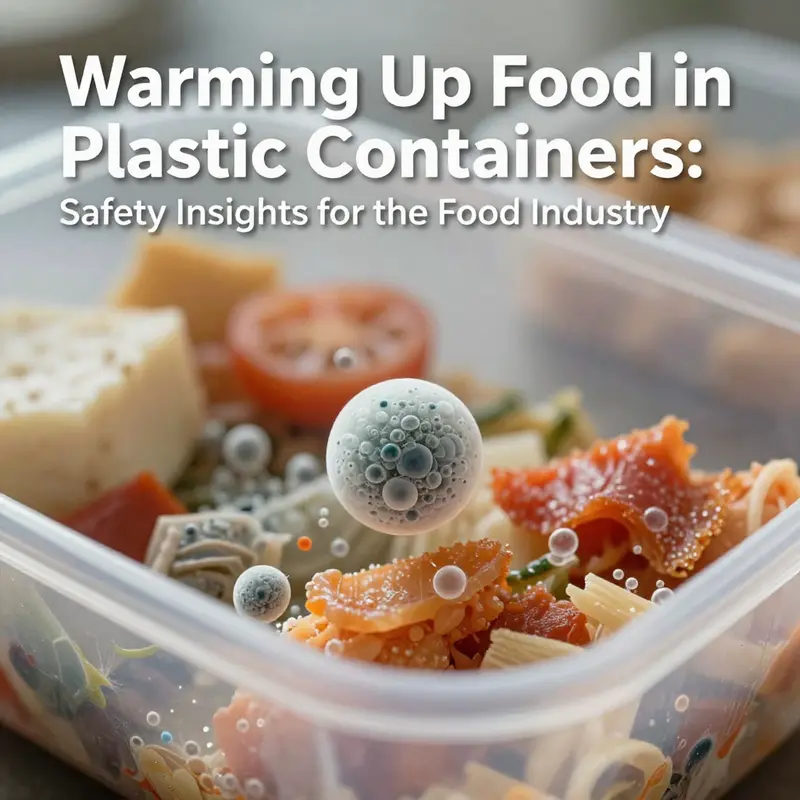
When people warm food, the expectation is simple: heat it safely, eat it warm, and move on. Yet the act of reheating in plastic containers—especially in microwaves or with hot liquids—has revealed hidden layers of risk that extend far beyond the plastic’s surface. This chapter follows a thread from heat to hazard, showing how thermal contact can transform everyday packaging into a conduit for microplastics and chemical migrants. It is not merely about a plastic scent or a momentary concern; it is about the long arc of exposure that may shape metabolic and organ health over time, especially for those who heat food frequently or rely on plastic for extended periods. The emerging evidence paints a consistent, worrying pattern: heat accelerates release, and even containers marketed as safe for heating do not guarantee complete protection. The implications ripple through kitchen choices, consumer behavior, and public health guidance, inviting a careful reconsideration of what we deem acceptable in the name of convenience.
A pivotal line of inquiry centers on thermal exposure and microplastic release. In 2024, researchers from Ningxia Medical University published a study in Science of the Total Environment that used boiling water as a stress test for disposable takeout containers. Only 15 minutes of contact with boiling water caused leachates that visibly damaged heart muscle tissue in mice, with effects including fiber rupture, mitochondrial swelling, and elevated inflammatory markers. The takeaway is stark: heat magnifies the potential for toxic exposure via leachates, transforming ordinary contact into a biological signal that can trigger tissue damage at a cellular level. While extrapolating from mice to humans requires caution, the study underscores a direct connection between thermal transfer and toxic migration and positions heat as a catalyst for harm rather than as a neutral medium of delivery.
The materials most often implicated in these debates—polypropylene (PP) and polystyrene (PS)—offer further nuance. When heated, styrene monomer migration from PS packaging rises dramatically once temperatures climb above roughly 70°C, increasing up to three to five times compared with room temperature conditions. The familiar “plastic smell” that accompanies hot soup in a disposable PS container is never just a sensory cue; it is a hint that the container is releasing volatile compounds into the surrounding fluid. Styrene itself is not benign. The International Agency for Research on Cancer classifies it as Group 2B—possibly carcinogenic to humans—raising concerns about liver and nervous system risks with prolonged or repeated exposure. The story grows more complex when one considers the role of fats and acidity. High-fat and high-acid foods can pull more chemicals out of the container, intensifying the migration of hazardous substances and broadening the scope beyond styrene to a suite of associated migrants that may accompany a reheated meal.
In addition to chemical migrants, another hazard center is microplastics—the tiny debris shed from plastic as it degrades under stress. A 2025 study using spectroscopic methods found that newer plastic containers release microplastics of various shapes, including cubes, spheres, rods, and irregular fragments. The study quantified average microplastic releases by container type, reporting roughly 12 ± 5.12 mg per round container, 38 ± 5.29 mg per rectangular container, and 3 ± 1.13 mg per disposable cup. Although the precise health consequences of ingesting these microplastic particles remain a field of active investigation, researchers warn that these particles can interact with biological systems, potentially disrupting metabolic processes and organ function over time. The variability in particle morphology and the sheer mass of microplastics released under typical reheating conditions highlight a gap between consumer experience (a hot, ready-to-eat meal) and long-horizon health effects that may accumulate with habitual use.
The dual threats of chemical migrants and microplastics do not exist in isolation, and several layers of risk interact in real-world meals. First, the composition of the container matters. PS and PP are common in takeout and disposable ware, and both have distinct vulnerabilities to heat. PS, in particular, not only sheds styrene at elevated temperatures but also tends to degrade more readily under repeated heating, potentially releasing a broader mix of chemicals over time. PP, while perceived as sturdier, is not immune to thermal leaching when used for foods with high fat content or prolonged heating. The quality and age of the container amplify risk: scratched, damaged, or aged plastics show higher migration rates, undermining any safety assurances printed on the box or lid. Second, the characteristics of the food shape the exposure picture. Foods with high fat content or acidity create favorable conditions for both chemical and microplastic release, turning a simple reheating step into a vector for more intense exposure. Third, the duration and intensity of heating are critical. Prolonged heating or high-temperature bursts compound the risk, shifting an ordinary reheating event into a more hazardous encounter with the material in contact with the food.
A sobering reminder of the potential for cumulative exposure comes from refrigerated storage as well. Studies indicate that sealing meat in plastic wrap for more than 24 hours can double the migration of benzene and styrene into the food. The message here is that exposure is not confined to the moment of heating; it can begin well before reheating, during storage, when in contact with plastic. This broader perspective compounds concerns for individuals who frequently heat leftovers, families who rely on packaged meals, and populations with higher baseline exposure to persistent chemicals. If the goal is to minimize risk, then simply targeting the act of microwaving is not enough; it requires a more holistic reevaluation of how plastic packaging interacts with foods from storage to reheating and beyond.
What does this mean for practical choices in kitchens and in policy guidance? The body of evidence converges on a consistent recommendation: when possible, avoid heating in plastic containers. Safer alternatives—glass or ceramic—do not release chemicals and do not shed microplastics, effectively decoupling heat from chemical migration and particle formation. For situations where plastic use is unavoidable, a cautious approach is warranted. Containers should be clearly labeled as microwave-safe, but with the understanding that even these labels do not guarantee absolute safety in every scenario. Reheating should avoid high-fat or high-acid foods in plastic, and disposable or non-food-grade plastics should be avoided altogether. Damaged or aged containers should be retired from use for heating, and containers designed for non-heat applications should not be pressed into reheating duty.
The broader public health signal is clear. Widespread reliance on plastic for heating food introduces multiple pathways for exposure that can accumulate over time, particularly for pregnant individuals, infants, and people who routinely reheat meals. The convergence of microplastics with chemical migrants raises questions not only about acute toxicity but also about potential long-term metabolic and developmental effects that may unfold at population scales. In the face of these uncertainties, precaution becomes a rational public health strategy. The shift toward safer packaging choices—especially for reheating—takes on added urgency in settings where meals are hot-related and frequently consumed, such as households with young children or caregivers who prepare, portion, and reheat meals for others.
For those who cannot completely abandon plastic heat exposure, informed decision-making becomes essential. The balancing act involves recognizing the benefits of convenience against the potential health costs. It also invites a design-focused response: encouraging packaging that minimizes migration, reduces surface area in contact with foods, and uses materials that degrade harmlessly rather than fragment into microplastics. The practical takeaway is not simply to avoid plastic; it is to favor packaging systems that reduce exposure risk across the life cycle of a meal—from storage to reheating to disposal. When alternatives are considered, the options range from sturdy glass containers for frequent reheating to durable ceramic ware that can withstand repeated cycles of microwaving without contributing to microplastic pollution. Even within plastic options, choosing products with robust testing, clear labeling, and explicit guidance on heating can help, but the most protective strategy remains a transition toward non-plastic materials for heated foods whenever feasible.
In sum, the current research underscores a sobering reality: heat can transform everyday containers into sources of microplastics and chemical migrants that may accumulate in the body over time. The evidence invites a shift in mindset from a casual acceptance of heated plastic to a deliberate, health-protective approach to food reheating. It is a call to reimagine kitchens and supply chains around materials that do not shed particles or leach hazardous substances when hot. For readers seeking safer packaging alternatives, consider eco-friendly options that reduce reliance on traditional plastics, such as takeout boxes designed with non-plastic materials that still meet practical needs. eco-friendly takeout boxes for food packaging.
External research that helps frame the larger context of these findings can be explored in more depth through the Science of the Total Environment study, which provides a detailed account of the toxicological and exposure pathways involved in heating plastics and the resulting implications for human health: https://www.sciencedirect.com/science/article/pii/S0038092524005675
null

null
Final thoughts
In sum, while the convenience of warming food in plastic containers is undeniable, a deeper understanding of the associated risks is essential for food service professionals. Awareness of chemical migration, the varying safety of ‘microwave-safe’ options, food composition effects, and emerging microplastic contamination is critical in making informed choices. By adopting safer practices, such as prioritizing glass or ceramic alternatives and being cautious with available plastics, businesses can protect their customers’ health and enhance their reputation. As we move forward, it’s crucial for everyone in the food service industry to evaluate their practices closely and embrace the changes necessary to ensure safety and well-being for all.