
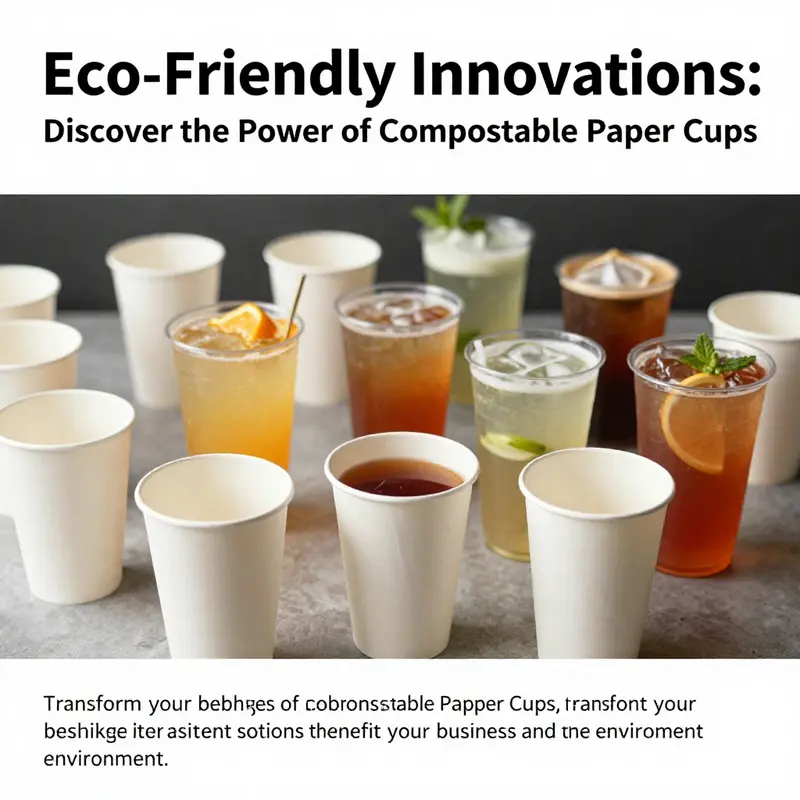
In an era where sustainability is paramount, the demand for compostable cups made from paper is on the rise. These products are not only eco-friendly but also cater to various sectors, including bubble tea shops, restaurants, and catering services. This article delves into the market landscape, specifications and benefits, economic impact, and the ongoing innovations in compostable cups, equipping businesses with knowledge to make informed decisions. By exploring each facet, we aim to understand how compostable cups paper for sale can transform operations and elevate brand image in an environmentally conscious market.
Green Takeout: Navigating the Expanding Market of Compostable Paper Cups for Sale
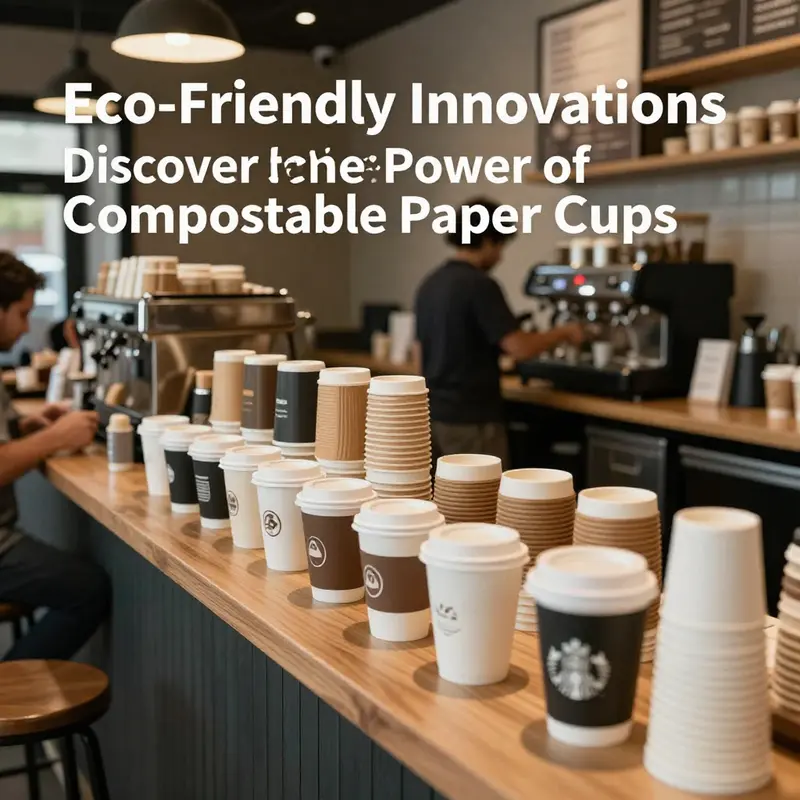
The market for compostable paper cups is not merely growing; it is evolving in ways that reach beyond a simple substitution for plastic. In cafes, canteens, airports, and event venues, operators are seeking packaging that aligns with sustainability goals while delivering reliable performance. The shift away from plastic-lined disposables is being accelerated by rising environmental awareness, stricter rules governing single-use materials, and a consumer base that is increasingly selective about brand values. The arc from early experiments with biodegradable coatings to today’s near-true compostability mirrors a broader transformation in how packaging is designed, sourced, and used to support responsible waste management. It is not enough to claim that a cup will degrade; buyers increasingly demand certification and verifiable end-of-life outcomes that fit within local waste streams and municipal programs. In practice, this means a market that rewards clarity about compostability, performance in real service conditions, and the ability to scale without compromising environmental claims.
At the core of this transformation lies material innovation. Historically, compostable cups relied on paper with coatings that would begin to break down under certain conditions but required specific processing to realize end-of-life benefits. The contemporary generation moves beyond mere degradability toward true industrial compostability. Some cups use coatings derived from polylactic acid, or PLA, which can be integrated with paper to preserve strength and heat resistance while remaining compatible with composting infrastructure. Others rely on natural-fiber sources such as bagasse—the fibrous byproduct of sugarcane—offering a distinctive balance of grease resistance, strength, and compostability. The result is a family of cups designed to withstand the demands of hot beverages, cold drinks, sauces, soups, and even small gift or sampling packaging, all while signaling a brand’s commitment to sustainability. In many cases, the most successful options enable a unified story across front-of-house branding and end-of-life messaging, turning packaging into a visible pledge rather than a passive container.
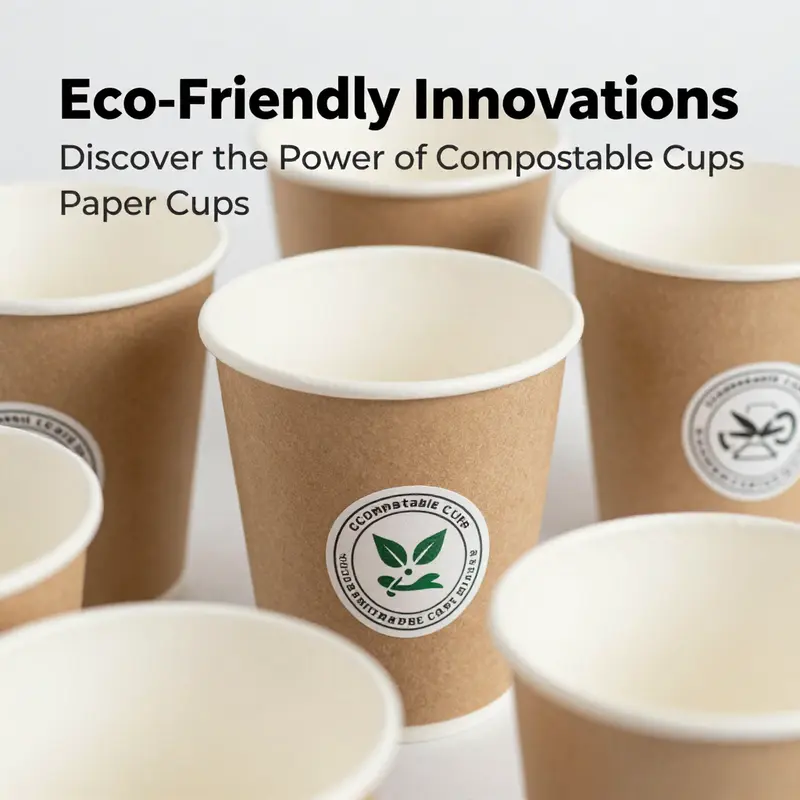
The versatility of these cups mirrors the breadth of modern food service. They are now used across the spectrum of beverages and foods, including hot drinks that require insulation, cold beverages that benefit from a stable structure, and sauces or soups that demand reliable moisture and grease barriers. The ability to customize—varying sizes, colors, and lid configurations—enables operators to maintain a cohesive brand identity while honoring environmental promises. The most compelling offerings pair performance with a design language that communicates sustainability at a glance, whether through color-coding, printing, or labeling that reinforces compostability and recycling or composting guidance. This alignment between form and function is essential in a crowded market where customers often decide in seconds whether a brand’s packaging communicates care for people and the planet.
Regulatory momentum is a powerful contextual driver. Governments around the world are tightening the rules that govern disposable cups, particularly those with plastic linings or coatings. The European Union’s approach to single-use plastics has accelerated the shift toward compostable solutions, and similar policy directions are taking hold in North America and parts of Asia. These policies do more than push manufacturers toward alternative materials; they shape procurement patterns in food service, hospitality, and retail. For operators, the implications are practical: a greater likelihood that packaging decisions will be guided by end-of-life considerations, third-party certifications, and a desire to align with broader environmental commitments. This regulatory environment has the effect of accelerating adoption and encouraging investment in compostable, certified products that can be scaled to meet demand without compromising compliance or performance. When combined with consumer expectations for responsible brands, policy and behavior together create a powerful growth engine for compostable cups.
From a cost perspective, the economics of compostable cups have generally improved as manufacturing scales up and processes become more efficient. What once looked like a premium option for select operators is increasingly viable for large-scale use. Bulk procurement—whether by restaurant chains, stadiums, universities, or event organizers—can yield per-unit costs that are competitive with traditional disposables, especially when measured over a service cycle. The trend toward 100% compostable solutions, including PLA-coated paper or natural-fiber options, also helps stabilize pricing by reducing dependence on volatile commodity markets and by leveraging the economies of scale achieved in major production hubs. For many buyers, the decision hinges on total cost of ownership, including end-of-life processing, waste diversion, and the brand value associated with sustainability. In practice, this means operators can plan with greater confidence, knowing that the price per unit at scale can align with a responsible waste strategy while still delivering reliable performance under typical service conditions.
Customization and branding remain a central feature of the market. Today’s compostable cups are not simply functional containers; they are branded touchpoints that convey a company’s sustainability story. Suppliers offer a broad spectrum of sizes, from small 1-ounce vessels for sauces to larger 8-ounce cups for hot or cold beverages. Printing and labeling capabilities enable consistent on-brand packaging across takeout and dine-in experiences alike. In a marketplace crowded with options, the ability to harmonize design with material choice provides a meaningful competitive edge. For many operators, selecting a cup is a decision about visual identity as much as about performance, because customers remember packaging that communicates clear environmental intent.
The supplier landscape for compostable cups reflects the scale and specialization required to deliver consistent quality at volume. A considerable share of reliable suppliers operates out of regions with mature manufacturing ecosystems, including China, where the industry now offers end-to-end services—from minimum order quantities to secure payment options and logistics support. Verified platforms help buyers navigate a complex ecosystem by offering supplier guarantees, quality assurances, and transparent lead times. While the concentration of production in particular regions does not imply scarcity, it does underscore the importance of choosing partners that can maintain consistent quality and supply reliability as orders scale. For buyers, this means considering not only the cup itself but the entire packaging ecosystem—lids, sleeves, and related components—that must function together to deliver a seamless, compostable service.
For operators seeking to translate these capabilities into real-world results, it helps to start with a clear sense of end-use requirements. A venue handling soups or heavy sauces will prioritize grease resistance and vented or secure lids, while a coffee shop serving hot beverages may emphasize insulation and microwave compatibility. Branding considerations drive the selection of color, surface finish, and print quality, balanced against the need to maintain compostability. The procurement decision thus becomes a multi-criteria balancing act, where performance, cost, branding potential, and end-of-life outcomes are weighed in concert. The market rewards suppliers who can deliver a cohesive package—cups, lids, and branding elements that fit a brand’s sustainability narrative and can be tied to real waste-management outcomes. In turn, buyers benefit from streamlined sourcing, reduced complexity in warehousing, and clearer communication to customers about how to dispose of the packaging at the end of its life.
A practical path for decision-making often includes considering the end-of-life infrastructure in the communities where the cups will be used. True compostability implies that the cups can degrade in an industrial composting facility within a defined timeframe, leaving behind compost that benefits soil health and avoiding residual toxins. By contrast, some degradable materials may require processing capabilities that are not widely available, or they may leave behind microplastics or other residues that undermine environmental goals. This nuance has become increasingly important as customers and regulators scrutinize claims of sustainability. Certification programs and third-party verifications provide a layer of trust, reducing confusion for buyers who must assess claims about compostability in diverse markets. As more venues commit to compostable packaging, the demand for transparent labeling and standardized testing grows, professionalizing the sector and raising the bar for quality across suppliers.
Packaging decisions extend beyond the cup itself to the broader system of takeout packaging. A cup is part of an ecosystem that includes lids, sleeves, and dispensing or serving systems, as well as the logistics of waste separation. Some operators prefer a coordinated kit with cups, lids, and sleeves from a single supplier to guarantee compatibility and performance. Others pursue a more modular approach, testing a set of configurations from different suppliers before committing to a full rollout. The reality is that a well-rendered program hinges on compatibility and a clear plan for staff training and customer education. If customers understand how to dispose of compostable cups properly, and if waste streams are connected to local infrastructure, the environmental benefits multiply. This is where the market’s maturation shows its strength: not only the variety of products but the readiness of the ecosystem to absorb them through coordinated procurement, labeling, and waste management guidance.
On a practical level, switching to compostable cups has implications for supply chains and inventory management. While these products are designed to reduce waste, their adoption requires careful planning in procurement cycles, storage, and restocking of related components. Operators should consider the capacity of local composting facilities, the clarity of disposal instructions on packaging, and the potential for contamination that can undermine end-of-life outcomes. Municipal programs or private facilities may influence the feasibility of composting in a given region, and retailers should design packaging and signage that guide customers to proper disposal practices. When these elements align, compostable cups become not just a packaging choice but a tangible contributor to an overarching sustainability program that touches procurement, marketing, and waste strategy in a unified way. It is this integration—the alignment of product design, consumer behavior, and infrastructure—that ultimately determines the real environmental impact of transitioning to compostable solutions.
For teams evaluating options, a practical example of how markets are maturing can illuminate what a well-executed program looks like. The current landscape accommodates a wide range of sizes and configurations, from compact containers for sauces to insulated cups for hot drinks, all designed to resist grease and moisture in busy service environments. The combination of advances in material science with manufacturing scale makes it feasible to source with confidence at competitive prices, while maintaining performance standards and brand integrity. When selecting suppliers, buyers often begin by comparing minimum order quantities and lead times, then assess the breadth of packaging assortments available to ensure compatibility across cups, lids, and branding elements. The procurement journey thus becomes a test of how efficiently a brand can coordinate orders, uphold consistent quality, and communicate environmental responsibility across every consumer touchpoint, from in-store display to on-pack disposal instructions.
Finally, the broader opportunity extends beyond the beverage cup itself. Compostable cup programs can influence packaging strategy, product presentation, and even customer expectations around waste. A carefully designed program emphasizes a circular economy mindset—where materials are kept out of landfills and returned to soil health through appropriate waste streams. The cups then serve as a visible signal of a brand’s commitment to resource conservation, not merely as a disposable item used once and discarded. This reframing invites businesses to view packaging as a system rather than a standalone product, integrating procurement, branding, and waste-management partnerships into a cohesive story that visitors can recognize and trust. In this light, the market’s growth is less about replacing one material with another than about rethinking how packaging can contribute to sustainability as part of a broader strategic vision.
For readers seeking to deepen their engagement with the market landscape and verify supplier credibility, a practical starting point is exploring established marketplace listings that connect buyers with verified producers and offer assurances around quality and capacity. This approach supports operators who require reliable, scalable supply to meet rising demand and who value transparency in the sourcing process. The path from curiosity to procurement becomes straightforward when buyers can compare materials, certifications, and lead times side by side, then select configurations that align with their brand, service model, and waste-management capabilities. External resource: https://www.made-in-china.com/products?keyword=compostable+paper+cups
null
null
From Cup to Catalyst: How Compostable Paper Cups for Sale Reshape Markets, Costs, and the Circular Economy
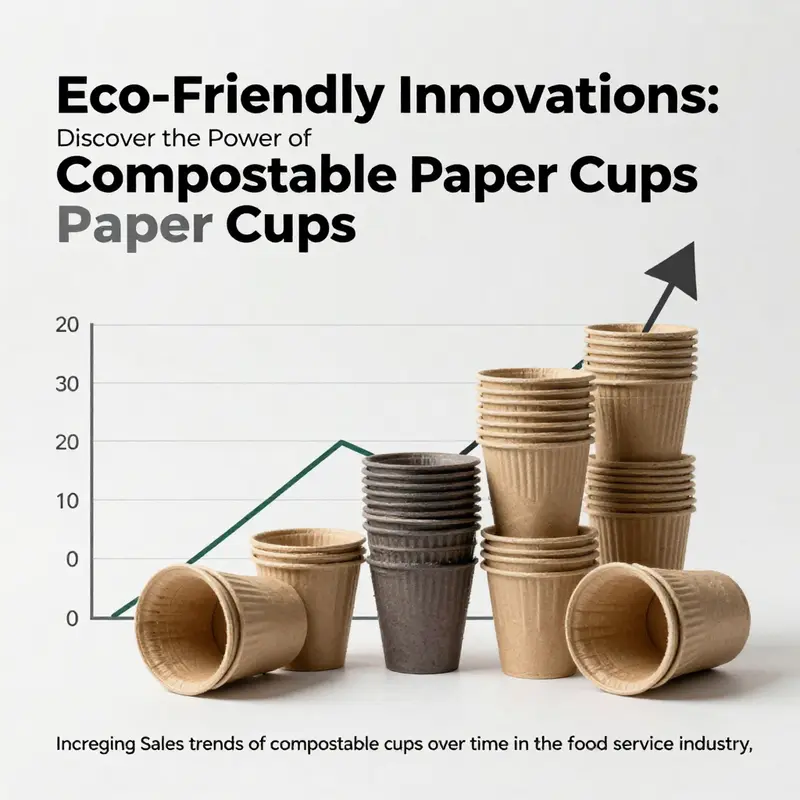
The emergence of compostable paper cups as a staple of modern food service represents more than a shift in materials; it marks a leveraging of small, everyday choices into broad economic and environmental effects. As restaurants, coffee shops, and event venues seek solutions that align with sustainability goals, the market for compostable cups has evolved from a niche niche into a dynamic sector. This evolution is not simply about swapping one packaging material for another. It is about translating a growing commitment to waste reduction into tangible economic activity, new capabilities across the supply chain, and a recalibration of risk and opportunity for businesses large and small. In this light, the financial implications extend beyond per-unit cost. They touch brand equity, supplier innovation, municipal waste strategies, and the long arc of circular economy thinking that seeks to keep resources circulating rather than consigning them to landfills. The result is a market that rewards foresight and scale while challenging participants to manage costs, certifications, and consumer expectations with equal care.
Demand for compostable paper cups is increasingly anchored in three intertwined drivers: regulatory pressure, corporate sustainability programs, and shifting consumer preferences. Regulations around single-use packaging and post-consumer waste are tightening in many jurisdictions. Governments are not just setting targets; they are shaping procurement criteria that favor materials capable of returning nutrients to the soil through proper composting streams. This regulatory glue binds procurement decisions, forcing operators to consider not only the functional performance of a cup but also its end-of-life trajectory. Meanwhile, corporate sustainability agendas—often tied to public reporting, investor scrutiny, and consumer trust—depend on credible packaging choices. Many brands have pledged to reduce plastic in packaging, raise recyclability or compostability standards, and partner with suppliers who can verify compostable credentials. These commitments translate into demand signals that favor paper-based options with clear composting pathways, even if the upfront costs are higher. Finally, consumer preferences are evolving in a practical, everyday way. Diners and coffee drinkers increasingly associate sustainability with quality and responsible business practices. When a cup is composted properly, it becomes part of a nutrient cycle rather than a burden on waste streams. That perception drives loyalty, repeat business, and the kind of word-of-mouth that matters in crowded markets.
The economics of compostable cups reflect this demand reality while exposing a closer look at production costs. Plant-based coatings, renewable fibers, and enhanced barrier properties all contribute to higher raw-material costs compared with conventional paper cups that use plastic linings. Specialized processing technologies add capital expenditure that is not easily amortized in small-batch operations. Yet the same factors that lift unit costs also open doors to differentiation and price resilience. In markets with strict waste management mandates or premium-leaning customer bases, the willingness to pay for sustainable credentials can offset higher production expenses. Over time, economies of scale begin to bite. As manufacturers expand capacity and standardize certifications, the per-unit cost declines. Advances in biopolymer formulations, improved sourcing of renewable inputs, and automation in handling and forming processes have a compounding effect, narrowing the gap with older systems while preserving compostability and food-safety performance.
Public policy also plays a crucial role in shaping the cost landscape. Government incentives, subsidies for green manufacturing, and grants for pilot programs can lower the capital barrier to entering or expanding compostable cup production. These supports tend to accelerate the realization of economies of scale and the diffusion of best practices across suppliers. In addition, collaborations among brands, waste-management firms, and municipalities can unlock efficiencies that were previously unattainable. When a city or region coordinates curbside composting with local facilities and accepts compostable cups that meet recognized standards, disposal costs for restaurants and service providers often decrease. That reduction lowers the total cost of ownership and improves the financial attractiveness of switching to compostable options, particularly for higher-volume operations that generate more waste streams and thus stand to gain more from optimized end-of-life handling.
Beyond the price per cup, the value proposition of compostable cups rests on intangible but powerful economic benefits. A strong sustainability narrative can sharpen a brand’s competitive edge, drawing customers who are willing to support businesses that align with their values. In practice, this can translate into greater customer loyalty, higher trial rates for new offerings, and the premium that eco-conscious consumers sometimes assign to responsible packaging. Staff morale and supplier relationships also benefit when teams work with materials that reflect a clear commitment to environmental stewardship. The reputational gains, while not always immediately monetizable, contribute to long-run profitability through increased market share, favorable procurement terms, and more predictable regulatory compliance. In a landscape where waste management laws are tightening, the cost of non-compliance—whether through fines, remediation requirements, or reputational damage—can be steep. Compostable cups, when paired with proper waste streams and consumer participation, can mitigate those risks more effectively than non-compliant alternatives.
Another significant economic thread is the circular economy dynamic that compostable cups help to unlock. In a closed-loop vision, cups do not end up as waste alone; they become inputs for compost and soil enhancement. Municipal and private waste programs that are designed to collect compostable materials can convert spent cups into nutrient-rich compost, which supports agricultural productivity and soil health. This creates a potential revenue or cost-offset stream for municipalities and waste-management companies, while offering brands and operators a platform to participate in a broader resource-return system. The economic logic extends to the private sector as well. Compostable cup programs can seed complementary revenue opportunities—from compost sales to service models around take-back logistics and post-consumer processing. The net effect is a rebalanced resource ledger where the financial rewards of compostability are realized not only in direct sales but in the broader value chain created by a more efficient, less landfill-dependent economy.
For suppliers and manufacturers, the growth of compostable paper cups signals more than market demand; it signals an ongoing maturation of the packaging ecosystem. Industry data suggests that disposable food and beverage containers, with a focus on compostable formats, are a major growth segment within the broader packaging market. The prospect of durable demand, paired with policy tailwinds and heightened consumer awareness, makes this a compelling space for investment, product development, and workforce expansion. The employment implications are meaningful: research-and-development roles advance biopolymer science, manufacturing jobs scale with new lines and automation, and the downstream logistics required to support composting programs create additional opportunities. In this sense, the compostable cup market contributes to a broader green jobs ecosystem, blending science, manufacturing efficiency, and municipal service delivery into a coherent, growth-oriented narrative.
Yet the path forward is not without friction. Cost differentials persist, particularly for small operators who must decide between lower upfront costs and long-term sustainability benefits. Certification and standardization challenges remain as different regions adopt varying compostability standards and testing protocols. Ensuring supply chain transparency—knowing that a cup will truly degrade in the intended environment—requires robust traceability and third-party verification. Consumer participation is another variable. A cup that is technically compostable is only effective if it is disposed of correctly. Without accessible composting streams or clear labeling, missteps can undermine environmental impact and erode economic advantages. These realities place a premium on education, clear packaging signals, and partnerships that align product design with the practicalities of local waste systems.
In this context, hospitality operators and retailers are learning to view packaging decisions through a broader lens. The choice to stock compostable cups extends beyond the drink itself; it becomes a statement about supply-chain ethics, waste management responsibility, and the ease with which a business can manage its environmental footprint. Strategic procurement practices increasingly favor suppliers who provide not only a compliant product but also the attached infrastructure and services that support composting at scale. When a business can integrate packaging choices with waste-stream optimization, the resulting operating efficiency can contribute to lower disposal costs, simpler audits, and a clearer pathway to regulatory compliance. These advantages are not guaranteed; they require careful planning, collaboration with waste-management partners, and ongoing assessment of local composting capabilities. But for those that invest in the full spectrum—from material science and manufacturing to logistics and consumer engagement—the economic upside can be substantial and lasting.
An important dimension of this chapter’s narrative is the way the global market context reframes local decisions. The broader growth trajectory of compostable packaging, including cups, reflects long-run expectations of sustained demand and ongoing innovation. Market projections point toward continued expansion as more regions formalize composting infrastructure and as brands seek to differentiate themselves through responsible packaging. This macro perspective does not erase micro-level costs or challenges, but it does offer a lens through which businesses can align investment, pricing strategies, and long-term planning with anticipated policy and consumer trends. A gradual but persistent reallocation of investment toward sustainable materials—not merely as a compliance tactic but as a strategic growth engine—appears to be a defining feature of this era. The same forces that fuel product development and scale also invite collaboration: co-investment in composting facilities, shared testing and certification programs, and cross-industry partnerships that streamline take-back and processing, reducing friction and cost for participants on every rung of the supply chain.
Within this evolving landscape, a practical touchstone for practitioners is the idea of linked value chains rather than isolated product purchases. The focus shifts from price-per-cup to total-cost-of-ownership, factoring in end-of-life handling, regulatory compliance, brand impact, and potential revenue from compost streams. Businesses that treat packaging decisions as part of a holistic sustainability and operations strategy stand to reap benefits in a condensed period, with potential long-term advantages as waste-management ecosystems mature. This approach also encourages suppliers to innovate in ways that compensate for higher raw-material costs with performance gains, reliability, and end-of-life assurances that reduce customer risk. It is this integration—between product design, production economics, waste management, and consumer engagement—that will ultimately determine which players gain lasting footing in the compostable cup market.
In closing, the economic narrative around compostable paper cups for sale is not a simple tale of rising costs or growing demand. It is a story of systemic change: how regulatory clarity, sustainability commitments, and consumer values are aligning to shift investment, job creation, and market structure. It is a story of circular economy pilots becoming scalable business models, with cups acting as both product and signal. And it is a story that invites collaboration across the entire supply chain, from fiber suppliers and coating developers to waste processors and municipalities, each contributing to a more efficient loop of use, reuse, and renewal. For operators, it means weighing immediate costs against longer-term advantages, and for policymakers, it means continuing to design frameworks that reward real, verifiable progress rather than mere intent. The economics of compostable cups, then, are best understood not as a price comparison but as a gateway to a more resilient, resource-efficient economy—one where a simple paper cup can become a catalyst for broader change.
Internal link note: for a practical example of how packaging choices integrate with broader sustainable offerings, see the concept of eco-friendly takeout boxes for food packaging. This example illustrates how materials, design, and logistics can align to support a cohesive, sustainable takeaway solution. eco-friendly takeout boxes for food packaging.
External resource: for a macro view on the growth and economic implications of the global compostable packaging market, see the analysis from Reuters detailing expected growth from 2025 to 2030. https://www.reuters.com/business/retail-commerce/global-compostable-packaging-market-expected-growth-2025-2030-2024-07-16/
Compostable Paper Cups: Navigating Performance, Disposal, and Cost
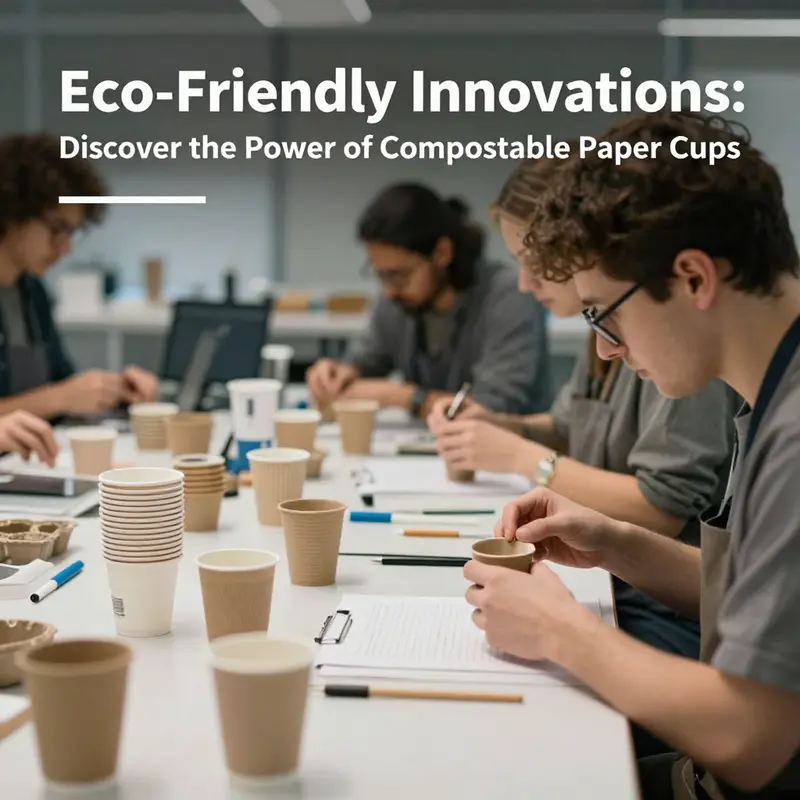
Compostable paper cups face a balance between performance, end-of-life processing, and cost. Advances in barrier coatings, fiber blends, and wall geometry aim to deliver leak resistance and temperature tolerance while enabling industrial or home composting. User education and clear disposal guidance are essential to ensure cups reach appropriate facilities and avoid contamination of waste streams. Market adoption depends on scaled production, stable supply chains, and policy incentives that reward sustainable packaging. As the packaging ecosystem evolves, cups must integrate with lids, containers, and logistics to realize a circular economy in practice.
Final thoughts
Embracing compostable cups paper for sale is not just a trend; it’s a commitment to sustainability and responsible business practices. By integrating these environmentally friendly products into your operations, you can appeal to eco-conscious customers, reduce waste, and enhance your brand reputation. As challenges are met with innovation, the future is bright for businesses that choose to invest in sustainable solutions.