
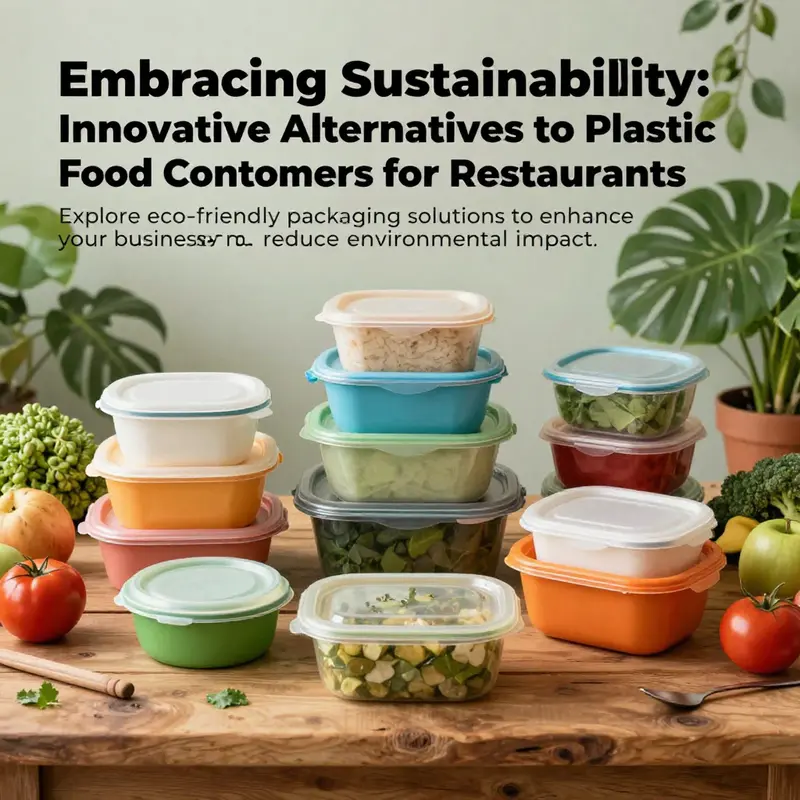
As the demand for sustainability rises among consumers, restaurants, food trucks, and catering services must adapt to new standards for food packaging. Gone are the days when plastic containers dominated the market; today, eco-friendly alternatives are transforming the food service landscape. This article discusses three vital alternatives to plastic food containers: glass containers, bioplastics, and innovative materials like bamboo, mushroom, and seaweed. Each section aims to inform restaurant owners, event planners, and procurement teams about these options—highlighting their benefits, practicality, and alignment with growing consumer preferences for environmentally responsible choices.
Seeing Through Safety and Sustainability: Glass Containers as the Next Chapter in Restaurant Packaging
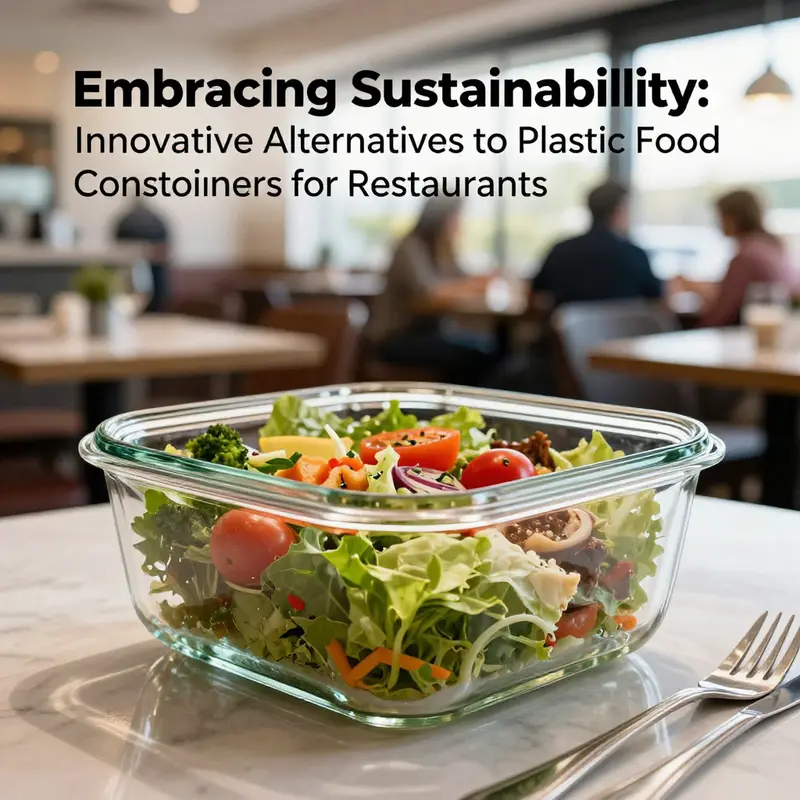
In many kitchens, a quiet revolution is unfolding around what holds our food before it reaches the table. The move away from plastic food containers toward safer, more sustainable options is not merely about meeting a policy or ticking a sustainability box. It is about reconciling the practical demands of a busy restaurant—speed, reliability, temperature control, visual appeal, and cost—with a growing expectation from guests that what comes in the box is as safe as what arrives on the plate. Glass containers sit at this crossroads with a quiet confidence. They respond to several core concerns that often shadow plastic: health risks from chemical leaching, the fragility of long-term performance, and the question of what waste actually means in a dining ecosystem that values transparency and accountability. When temperatures swing—from hot soups and stews to cold salads and desserts—glass handles heat with a stability that many plastics struggle to match. High-quality glass, especially forms engineered for resistance to thermal shock, can withstand microwave use, oven finishing, and dishwasher cycles with integrity preserved. Unlike some plastics, glass does not acquire heat-induced warps, microcracks, or changes in texture that can compromise food safety or presentation. The result is a container that keeps its seal and its surface, decade after decade of use, rather than a disposable residue that adds to the waste stream and the disposal calculus.
The safety profile of glass rests on its chemical inertness. Food interaction is a two-way street: what a container might give to food and what the food might extract from the container. Glass, by its nature, resists this exchange. It does not leach plasticizers or absorb flavors, and when used within appropriate temperature ranges, it does not alter the chemical composition of the meal it carries. This is especially relevant for hot and acidic foods, where plastic can be a source of concern for diners who are increasingly mindful of what they eat and how it is packaged. For staff, this means fewer variables to track during service and a clearer understanding of how the packaging behaves under normal kitchen routines. The guest experience benefits too. When transparency is part of a container’s design, the food itself becomes the centerpiece of the presentation. Clear glass showcases color, texture, and composition, which in turn reduces the likelihood of misidentification or misallocation of items in buffet lines, catering trays, or quick-service back-of-house workflows. In a takeaway context, the ability to inspect the contents without opening the lid supports a sense of trust between restaurant and patron, an intangible but powerful driver of repeat business.
Glass also commands a distinctive performance profile in terms of durability and lifecycle. It can be crafted into borosilicate or tempered varieties that resist thermal shock, enabling safe transition from a hot kitchen to a cold display or a cooled transport environment. This resilience matters, because a common obstacle to broader adoption of glass in busy operations is the fear of breakage. The reality is nuanced: while glass can be more fragile in certain circumstances than rugged plastics, it often outperforms plastics over the long term when you factor in reuse, cleaning, and the energy associated with producing new single-use containers. The cost equation tips toward glass when containers are designed for multiple cycles of use and sanitization. The lids, seals, and stacking geometry matter as much as the glass itself. A modular system with reliable lids and compatible seals minimizes spill risk, aids inventory management, and supports branding consistency across a business’s menu and service formats. In kitchens where the front-of-house team can rely on predictable, stackable shapes, glass becomes not just a container but an instrument of efficiency.
From a circular economy perspective, glass offers interesting advantages. Reuse systems—whether for meal prep, condiment dispensing, or even dessert service—can be scaled to meet mid- to large-scale restaurant needs. In such systems, containers are washed, sanitized, and returned for re-use through a network that maintains hygiene standards and minimizes waste. The implications for carbon emissions and resource use are meaningful when the lifecycle is extended through repeated use rather than disposed after a single service. This approach aligns with the broader shift toward responsible packaging strategies within hospitality. It also dovetails with a growing appetite among guests for brands that demonstrate environmental stewardship, delivering a narrative they can see in the glassware that carries their meals as much as in the plates themselves. For restaurateurs, the switch to glass thus becomes a story of reliability, risk reduction, and a geometry of reuse that can be measured in both waste diversion and long-run cost containment.
Operationally, glass challenges the traditional takeout paradigm, especially for items designed for portability and speed. The weight of glass, its breakage risk, and the need for careful handling during transport are real considerations. Yet with thoughtful process design, these challenges can be transformed from drawbacks into opportunities for differentiation. Takeout programs, for instance, can reserve glass containers for safeguarding premium lines—stews and gravies that benefit from tight seals and heat retention, or salads and grain bowls that rely on a crisp finish and visible freshness. For hot items, heat retention within a glass vessel reduces the need for reheating at the point of sale, preserving texture and preventing sogginess from condensation or pooling sauces. For cold items, glass maintains a barrier to moisture transfer while sustaining a clean, crisp presentation that can enhance the perceived value of the dish.
In many kitchens, the decision to embrace glass extends beyond the practical to the aspirational. The clarity of glass invites a storytelling dimension: it communicates a commitment to transparency, quality, and care in food handling. It is a material that signals a certain seriousness about the customer’s dining experience—one that guests notice in the way food is stored, displayed, and served. This perception matters, because packaging in hospitality is never merely functional; it is a facet of the brand’s narrative about safety, cleanliness, and modernity. For staff, the tactile experience of working with glass—its cool, sturdy heft, the crisp lid seals, the way it stacks neatly in racking or on steam tables—reinforces a culture of care and precision. The simple act of selecting glass for a portioned service or a family-style takeout order becomes a daily practice of the restaurant’s values, echoing through social media posts, customer reviews, and the impressions guests carry after they leave the dining room.
Sourcing and standards are essential threads in this story. The practical concern of purity—ensuring the glass itself is food-grade and free from bubbles or impurities—requires partners who can demonstrate rigorous quality control and consistent supply at scale. In B2B environments, this translates into clear specifications for purity, seal integrity, and resistance to breakage, enabling chefs and managers to plan menus and service formats with confidence. The conversation around these standards is not abstract. It informs product development, warehousing, and the economics of inventory turns. When a kitchen team understands that a glass container can endure multiple wash cycles without degradation, the team can design a workflow that minimizes downtime and reduces the need for frequent replacement—a critical factor in fast-paced service periods. And because glass does not degrade in the same ways plastics do, it provides a more stable platform for branding and customization over time, allowing logos, colors, and labels to remain legible and intact through numerous cycles.
As restaurants experiment with different packaging logic, a realistic strategy emerges: use glass for applications where it improves safety, reliability, and dining experience, while maintaining flexibility through a hybrid approach that preserves the benefits of other sustainable materials where appropriate. For single-use contexts that demand a compostable or biodegradable solution, other materials can be deployed, with the understanding that glass remains the preferred choice for reusability and repeated service in places where a deposit or return model is feasible. The conversation, then, is not about choosing a single material but about aligning packaging choices with menu design, service model, and guest expectations. A thoughtful plan might begin with a staged rollout, focusing on high-margin items, flagship dishes, or services where guests value premium presentation and heat retention, such as hot mains delivered in glass containers to dining rooms or accessible takeout options where the container tells a story of quality at first sight. As operations mature, glass can become a core component of the restaurant’s packaging ecosystem, with a clear pathway to scale reuse programs, reduce waste, and reinforce a brand narrative anchored in safety and sustainability.
To anchor this approach in practical terms, many teams look to suppliers who can provide food-grade glass containers designed for professional kitchens. They seek products that meet stringent hygiene requirements, withstand regular washing cycles, and offer interchangeable lids and seals that secure contents without leakage. The modularity of such systems is essential; it helps kitchens standardize sizes across menu items, streamlines inventory management, and supports consistency in portion control. The availability of compatible accessories—stoppers, gaskets, and inserts that optimize heat retention and seal integrity—further enhances the viability of glass in both dine-in and takeout contexts. The end goal is a packaging ecosystem in which glass containers do more than hold food; they contribute to a safer, cleaner, and more aesthetically pleasing dining experience that aligns with contemporary expectations around sustainability and health.
Beyond in-house operations, the shift toward glass resonates with broader industry trajectories. Many researchers and practitioners argue that packaging choices should reflect lifecycle thinking, prioritizing materials that enable reuse and minimize waste over single-use paths. The glass story intersects with this logic because it can be embedded into a circular model more readily than many alternatives. In such a model, containers are cleaned and returned, rather than discarded, at the end of a service. The environmental payoff—reduced plastic production, less landfill, and lower downstream emissions—rests on robust cleaning systems, efficient logistics, and a culture of responsibility among staff and guests alike. The practical implementation requires partnerships with process-minded suppliers who understand the nuances of hospitality workflows and can tailor solutions to the scale of the operation. It also requires clear communication with guests, who must understand how a glass container can be part of a responsible, value-driven dining experience without compromising convenience.
For those exploring the supplier landscape, the pathway often includes a blend of standardization, education, and experimentation. Standardization ensures that containers fit neatly into existing kitchen racks, dishwashers, and transport baskets, reducing the risk of spillage and breakage. Education matters because staff must be trained not only in how to handle glass safely but also in how to communicate its benefits to guests who may be more comfortable with familiar plastics. This is not about blame or fashion; it is about translating a scientific and environmental logic into everyday practice in a way that is accessible and persuasive. The narrative that emerges is pragmatic and optimistic: glass can be durable, safe, and aesthetically elevating, and its continued use can support both cost efficiency and brand trust when integrated with thoughtful processes and reliable service partners.
As one considers the practicalities of adoption, a crucial reminder remains: no single material satisfies every use case. The logistics of delivery, the needs of staff, and the expectations of guests all shape the decision to deploy glass containers. Restaurants may choose to phase in glass progressively, prioritizing core items and service formats where the benefits are most pronounced. They may reserve glass for dine-in service, for hot items that benefit from heat retention, and for premium takeout experiences where the container itself reinforces quality. For everyday, high-volume takeout, a hybrid approach can still function well—pairing glass with compostable or biodegradable single-use options where appropriate, while maintaining a longer-term plan to shift a larger share of packaging toward reusable or recyclable glass systems. The ultimate design objective is to create a packaging ecosystem that is adaptable, measurable, and aligned with the restaurant’s values and guest expectations.
In this ongoing dialogue between safety, sustainability, and service, glass containers offer a compelling narrative. They provide a safer alternative to plastics at a time when consumers demand accountability for what surrounds their meals. They support clear presentation, which enhances the dining experience and reduces waste through improved portion recognition and container integrity. They enable reusable systems that, with proper process design, can significantly cut waste and energy use across the lifecycle of the packaging. And they invite a new level of partnership with suppliers and guests alike—a shared commitment to packaging that is as serious about health and safety as it is about flavor, texture, and the pleasure of dining. For kitchens ready to reimagine their packaging, the path forward is not simple, but it is coherent: invest in glass where it improves safety and presentation, build a robust reuse or takeback framework, and communicate the story to guests in ways that reinforce trust and loyalty. In doing so, restaurants can move beyond plastic not as a rejection of convenience, but as an informed, values-driven evolution of how food leaves the kitchen and travels to the table.
For teams exploring practical implementation, one small but powerful step is to connect with suppliers who can provide glass containers designed for professional kitchens, with clear purity standards and durable seals. In parallel, consider the packaging ecosystem as a whole, mapping where glass provides the most value and where other materials may be appropriate to complement a balanced sustainability strategy. The objective is not a single hero material, but a coherent system in which glass stands as a core component—where safety, durability, and presentation intersect with the restaurant’s commitments to guests and the planet. As the industry continues to test, measure, and learn, glass remains a compelling part of the conversation—one that invites chefs, managers, and guests to see packaging in a new light and to understand how a simple container can embody health, trust, and stewardship across the dining experience.
Internal link reference for further exploration of adaptable packaging options in the hospitality space is available here: eco-friendly takeout boxes for food packaging.
External resource for additional context on food-grade glass containers and food-safety standards can be found here: https://www.ziyanyanglass.com/food-grade-glass-containers
From Bioplastics to Breakthroughs: Reimagining Restaurant Packaging Beyond Traditional Plastic
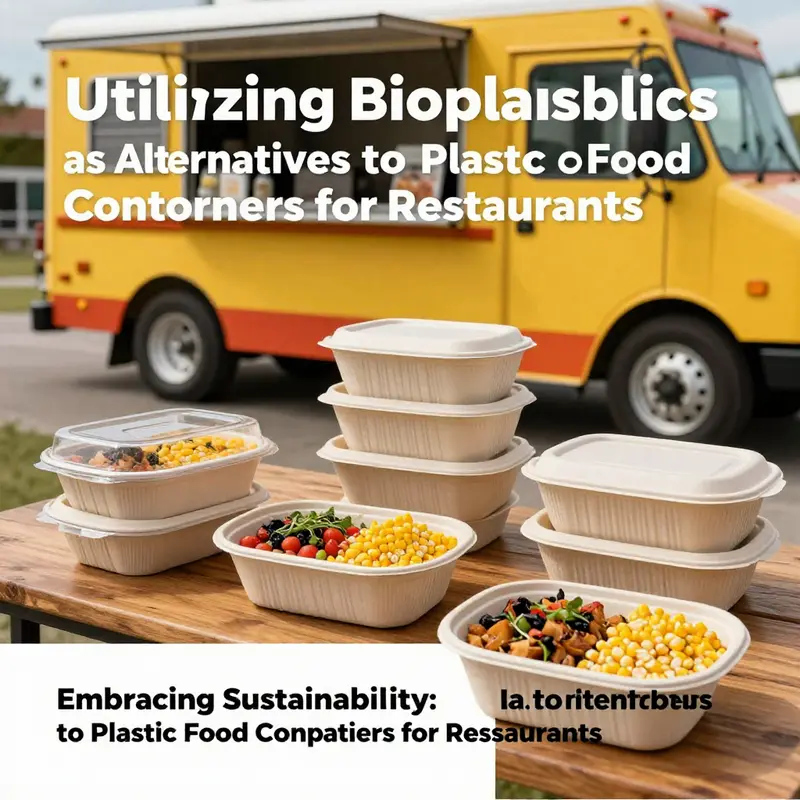
In the evolving landscape of food service, packaging is not a mere wrapper but a strategic element that shapes safety, perception, and waste streams. Restaurants now face rising expectations from regulators and guests who want containers that perform reliably while minimizing environmental footprints. The shift away from traditional plastic is a spectrum of options that can be blended to fit different menus, service styles, and local waste infrastructure. Among the most talked-about approaches are bioplastics derived from renewable resources, glass alternatives, and a cadre of bio-based materials that promise to balance convenience with responsibility. Understanding how these options work, where they shine, and where they stumble is essential for operators aiming to maintain quality, protect staff and guests, and manage costs in a sustainability-conscious market.
Bioplastics have moved from curiosity to consideration for many operations. Made from renewable biomass such as corn starch or sugarcane, these materials offer the narrative that they can reduce reliance on fossil fuels and may lower greenhouse gas emissions relative to petroleum-based plastics. The appeal is especially strong for takeout and single-use applications, where convenience meets environmental goals. In practice, many operators test or adopt bioplastic packaging in portions of their operations—often for cold or mildly heated foods where performance is predictable and the risk of deformation or leakage is manageable.
A key advantage of bioplastics is potential compostability under industrial conditions. In theory, these containers can break down into simple organic matter without leaving harmful residues. In practice, however, the environmental benefits hinge on local waste systems. Not all communities have robust industrial composting infrastructure that accepts bioplastic streams, and labeling can be confusing. If a bioplastic item ends up in a conventional landfill, its degradation may be slower and the environmental benefit dissipates. These realities mean successful adoption requires alignment among supplier labeling, municipal capabilities, and the restaurant’s own waste sorting practices. Restaurants should assess local composting availability and provide clear disposal guidance for staff and customers while ensuring packaging performance meets food safety requirements.
Beyond compostability and labeling concerns, there are supply chain and cost considerations. Bioplastics can be more expensive upfront than traditional plastics, and price volatility of feedstocks can impact budgeting. Yet when used strategically, bioplastics can fit upper-tier offerings or premium takeout that wants to communicate a strong sustainability message. As developers refine these materials—creating tougher, heat-resistant formulations that still break down cleanly—costs may stabilize and performance gaps can shrink. A growing body of research suggests bioplastics will become more mainstream as technology matures and policy measures encourage greener packaging.
Green Frames for a Greener Menu: Bamboo, Mushroom, and Seaweed as Fresh Alternatives to Plastic Food Containers
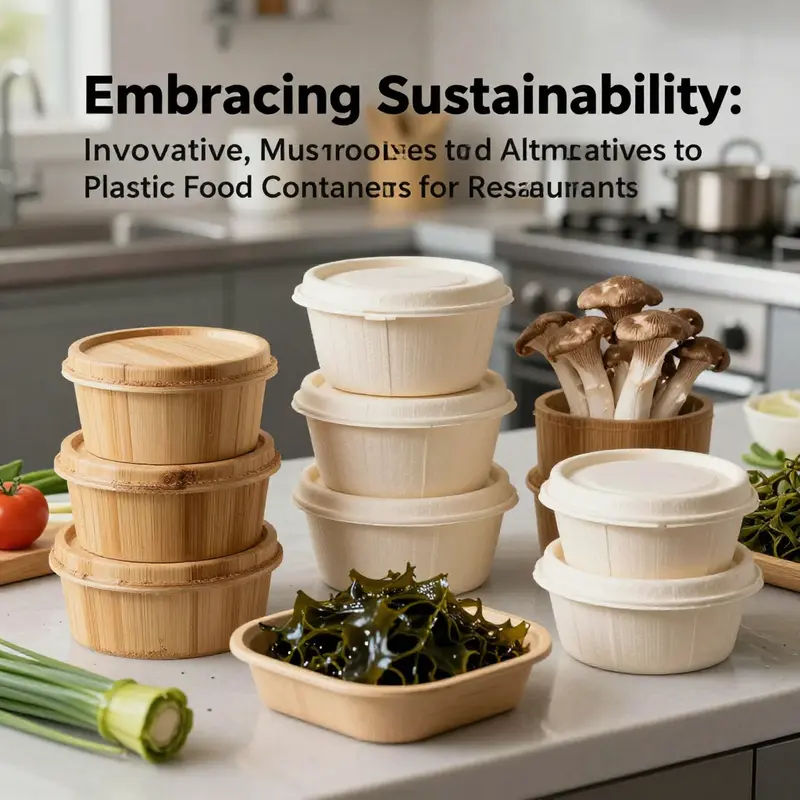
The move away from conventional plastic containers in restaurants is not a single decision but a shifting conversation about values, responsibility, and the practicalities of daily service. In this evolving dialogue, three materials—bamboo, mushroom-based packaging, and seaweed-based films—are gaining traction not as novelties but as integrated parts of a broader strategy to reduce waste, preserve food quality, and communicate a brand ethic to guests. This chapter explores how these materials perform in real-world settings, how they align with operational realities, and what smooth adoption looks like for a restaurant that wants to keep pace with a changing market while protecting taste, safety, and the bottom line. It is a story of materials that evolve with the restaurant’s needs—taste, texture, and delivery experience all matter, and so does the lifecycle of what arrives at the customer’s door and how it returns or returns to soil, depending on the choice made.
Bamboo emerges as a compelling first line of defense against plastic because it sits at an intersection of strength, beauty, and renewability. In practice, bamboo containers bring a premium feel to takeout or dine-in service while offering structural integrity that holds up with hot and cold foods. The renewable nature of bamboo—fast-growing, biologically durable, and relatively low maintenance—addresses a core environmental concern: how to reduce dependence on fossil-fuel-based packaging without compromising performance. The aesthetic impact cannot be overstated; bamboo carries a warm, earthy visual that complements a restaurant’s attention to craft and sustainability. Guests often respond positively to packaging that feels deliberate and story-driven, and bamboo boxes or bowls can become part of a restaurant’s brand language, signaling care for materials as much as care for food.
Yet every material has trade-offs. One practical consideration with bamboo is moisture management. For foods with high water content or sauces, an inner lining or moisture barrier is often necessary to prevent penetration that could compromise texture or cause sogginess. This adds cost and a layer of complexity to sourcing and production. It also means that kitchens must adapt their prep and portioning sensibilities to ensure that the outside of the container remains presentable and functional through the delivery journey. For some operators, the cost delta compared with traditional plastics or basic paper products remains the decisive factor, especially in high-volume environments where every cent counts. Despite these considerations, the bamboo option has moved from novelty to routinely chosen in many settings where a premium consumer experience is part of the value proposition. Luxury brands, for example, have adopted bamboo in various forms as a signal of quality, sustainability, and craftsmanship. That trend translates well to eateries seeking to elevate their own guest experience without sacrificing practical performance.
The conversation around bamboo is also inseparable from the broader logistics of supply and end-of-life outcomes. The lifecycle of bamboo packaging aligns with broader circular economy principles when there is a robust waste management framework. If local facilities support industrial composting or certified composting streams, bamboo packaging can be diverted from landfills and returned to the soil with minimal residue. The bottom line for operators who embrace bamboo is not just a greener footprint; it is the potential for reduced waste via reuse where possible, and a clearer, more positive narrative about the restaurant’s commitment to sustainability. This narrative matters because consumers increasingly expect a brand story that is coherent, transparent, and actionable—from how ingredients are sourced to how packaging is disposed of after a meal. When a guest sees a bamboo container and understands that it is part of a system designed to minimize harm, the overall dining experience gains depth. It’s not merely about a container; it’s about a philosophy realized in everyday practice.
Mushroom-based packaging, or mycelium-based packaging, offers an entirely different tapestry of advantages. The material is grown from agricultural waste and the root-like network of fungi that binds the organic matter into stable, moldable shapes. The result is a container that can be designed to fit a wide range of food types and portion sizes, with the added benefit of being fully compostable in industrial facilities. What makes mycelium-based packaging particularly attractive for restaurants is its adaptability and its connection to waste-reduction narratives. Because the material can be grown into custom shapes, it lends itself to branding opportunities through form and texture. A well-designed mycelium container can cradle a bold gastronomic concept while keeping the performance metrics—grease resistance, heat tolerance, and structural integrity—within practical targets.
The practical implications of mushroom packaging stretch beyond the aesthetic or the compostability story. The use of agricultural waste in production underscores an important principle: the material does not compete with food crops for land or water, and its origin speaks to a circular economy mindset. From a kitchen operations standpoint, mushroom-based containers can be tailored to deliver the same protective performance as traditional disposables, with the added advantage of robust compostability. However, scalability and supply reliability remain essential considerations for restaurant operators. The manufacturing process must be accessible enough to meet demand without long lead times, and the end-of-life infrastructure must be in place to ensure the material is composted properly rather than discarded in landfills. Restaurants that pursue mushroom-based packaging often pair it with education for staff and guests about how to dispose of containers correctly, thus reinforcing the sustainability narrative and ensuring that the material’s environmental promise translates into real-world outcomes.
Seaweed-based packaging adds another dimension to the conversation by offering renewability and a potential edible or dissolvable alternative. Derived from algae, seaweed films exhibit interesting barrier properties that are well suited to certain kinds of food packaging, particularly for products with sauces or oils where grease resistance is critical. The research trajectory around seaweed biopolymers is dynamic, with ongoing development aimed at improving oxygen barriers, moisture resistance, and overall strength. The appeal of seaweed compounds includes not only their biodegradability but also the potential to avoid harsh chemical residues and to participate in nutrient cycles in compatible waste streams. Still, this is not a one-size-fits-all solution. The flavor, aroma, and texture of seaweed-based packaging can interact with the food it encases, and there is a delicate balance between functional performance and culinary neutrality. For certain small-portion applications or sauces meant to be consumed together with the packaging, seaweed films can offer a zero-waste option that aligns with a restaurant’s commitment to minimizing trash and avoiding synthetic materials.
All three materials—bamboo, mushroom, and seaweed—suggest a future in which packaging is not a passive container but a material that communicates the restaurant’s values. They invite a shift in how operators think about the lifecycle of a dish beyond the plate. Reducing waste is not only about choosing a different container; it is about designing a service experience that integrates packaging with the customer journey. A guest who receives a visually appealing, sturdy, and clearly compostable container is more likely to participate in a broader sustainability program, whether that takes the form of a take-back system, a composting initiative, or simply a responsible disposal action at home or in a communal waste stream.
This integrated approach is reinforced by practical sourcing considerations. For operators seeking reliable pathways to sustainable packaging, the landscape is increasingly populated by suppliers who specialize in certified options. Partnerships with providers that can verify compostability, recyclability, or other end-of-life pathways help avoid greenwashing and enable consistent messaging to guests about what happens after a meal leaves the table. When a restaurant needs to balance cost, performance, and environmental impact, it can adopt a blended strategy that uses bamboo or mushroom containers for most takeout orders and reserves seaweed-based films for particular menu concepts that benefit from a lighter, more delicate presentation or that align with zero-waste campaigns. Such a strategy is not merely about choosing one material over another; it’s about curating a portfolio of packaging options that can flex with demand, seasonality, and evolving waste infrastructure.
From the guest experience perspective, packaging becomes part of the storytelling, not just a utility. The tactile quality of bamboo, the natural texture of mycelium, and the organic feel of seaweed films can be future-facing signals of care and conscientious sourcing. When guests learn that the packaging is compostable or that it was produced using agricultural waste that would otherwise have limited value, their perception of the restaurant shifts from a one-off transaction to a choice aligned with personal values. This has implications for pricing, marketing, and customer loyalty programs, but more importantly it influences how staff speak about sustainability as part of the dining experience. The best outcomes arise when packaging is woven into the brand’s narrative in a way that feels authentic and credible rather than merely decorative.
Sourcing considerations are not simply about the materials themselves but about the ecosystems that support them. Certification schemes, waste-management capabilities, and regional regulations all shape what is feasible in a given market. For restaurants, working with suppliers that offer clear documentation of material composition, end-of-life pathways, and test data for food safety helps reduce risk. It also informs staff training and guest communications, ensuring that the packaging story is consistent across takeout counters, dine-in service, and social media. With this clarity, operators can build trust and demonstrate a genuine commitment to reducing plastic usage without compromising the guest experience.
Operationally, there is a practical logic to integrating bamboo, mushroom, and seaweed containers into daily workflows. The containers must hold up under the realities of a fast-paced kitchen—from portioning and sauce-heavy dishes to the rigors of delivery and refrigeration. They must stack efficiently, resist leaks, and hold their integrity through the journey from kitchen to doorstep. In some cases, the materials may require adjustments in prep or packaging technique to preserve food quality and texture. For example, moisture-sensitive items may benefit from a brief rest in a more controlled internal environment or from the use of a compatible barrier liner that does not undermine the environmental benefits. Importantly, the transition must be accompanied by clear labeling for staff and guests alike so that disposal decisions align with the intended end-of-life route. The conversation about performance then becomes a living dialogue with customers, who can offer feedback about the experience, the ease of disposal, and how well the packaging reflects the restaurant’s broader commitment to sustainability.
A broader view reveals that no single material will replace plastics in every situation. The most robust path forward is a blended, context-sensitive approach that blends the strengths of bamboo, mushroom, and seaweed with other strategies such as reusable container systems for dine-in and some takeaway models. In a reusable system, customers return containers after use, which can dramatically reduce waste when scaled across a network of locations or a loyalty program. While setting up a return program involves logistics, data tracking, and customer incentives, many operators find it worth the investment because it aligns with elevated brand perception and long-term waste reduction goals. Even when reuse is not feasible, choosing materials with clear compostability or recyclability—with robust municipal support—can deliver meaningful environmental benefits. The key is to couple material choice with honest, transparent communication about what happens to the packaging after use and how it contributes to a circular economy.
Sourcing decisions should also consider the broader ecosystem of suppliers and platforms that specialize in sustainable packaging. While cost remains a critical factor, it is increasingly paired with the price of waste and the cost of landfill diversion in many markets. Operators can explore certified packaging options, which helps ensure that what is being used meets recognized standards for compostability or recyclability. Platforms that connect food-service buyers with certified suppliers can simplify procurement, reduce risk, and provide a clearer path to scale. For a restaurant pursuing this path, the emphasis should be on building a material ecosystem that supports both operational reliability and the storytelling of sustainability. In this way, the choice of packaging becomes a strategic asset rather than a reactive substitution.
To illustrate the range of possibilities, imagine a menu that leverages bamboo for high-end takeout boxes during weekend brunch, shifts to mushroom-based packaging for weekday lunch services that emphasize sustainability, and uses seaweed films for small-portion sauces and side items that pair well with a zero-waste narrative. The restaurant’s packaging becomes a microcosm of its values, a visual and tactile cue that resonates with guests who care about how their meals are treated from the kitchen to the table and beyond. The power of these materials lies not merely in their technical performance but in their ability to tell a story—a narrative of regenerative materials, responsible waste, and a product journey that mirrors the restaurant’s culinary philosophy. In this sense, packaging is not a separate concern but an integrated element of culinary craft and guest engagement.
For those seeking a practical pathway into this material shift, a starting point is to engage with suppliers who can verify compostable or recyclable options and who can provide transparent documentation about the material’s origin and end-of-life path. Such partnerships can accelerate adoption by reducing questions about safety, compliance, and disposal. They also help ensure that the packaging you choose will perform under the specific conditions of your menu and service model. In practice, this means negotiating with suppliers about minimum order quantities, lead times for new designs, and the possibility of co-developing packaging that is tailor-made for your most common dishes. When done thoughtfully, this collaborative approach not only minimizes waste but also strengthens supplier relations and aligns procurement with the restaurant’s sustainability goals.
The conversation about innovative materials for food containers is still evolving, and it is shaped by ongoing research, regulatory developments, and consumer expectations. The trajectory suggests that bamboo, mushroom, and seaweed can each occupy a meaningful role in a diversified packaging strategy. The decisive factor is how well a restaurant translates material properties into operational realities, how clearly it communicates the end-of-life path to customers, and how effectively it ties packaging choices to the broader story of culinary responsibility. In a marketplace where environmental stewardship is increasingly a factor in loyalty, choosing the right combination of materials can become a differentiator that goes beyond the plate and into the public conversation about sustainable dining. The future of restaurant packaging, therefore, is not about a single silver bullet but about thoughtful material design, rigorous logistics, and a narrative that invites guests to participate in a more sustainable dinnerware cycle.
Internal resource for further detail on bamboo packaging can be found in industry guides that map renewability, biodegradability, and practical considerations, including how to navigate appetite and willingness to pay for premium takeout experiences. For operators exploring a practical path, consider the option described on a supplier’s eco-conscious lineup: eco-friendly takeout boxes for food packaging. This link offers a window into a family of packaging solutions that balance aesthetics, performance, and end-of-life considerations, helping to translate the theory of sustainable materials into everyday restaurant practice. Of course, the supply chain and waste-management infrastructure in a given locale will shape how these choices manifest, so local testing, feedback channels, and staff training remain critical components of any transition plan.
External resource: for a practical, industry-focused overview of bamboo packaging and its role in reducing waste, see https://www.sustainablepackaginghub.com/disposable-bamboo-container-complete-guide. This resource provides context on how bamboo-based containers perform across use cases and what operators should consider when evaluating this material as part of a broader packaging strategy.
Final thoughts
Transitioning to sustainable food packaging is not just good for the planet but also enhances your brand’s loyalty among customers who value eco-friendliness. Utilizing glass containers, embracing bioplastics, and exploring innovative materials like bamboo, mushroom, and seaweed can make a significant difference in your operations and customer satisfaction. With the right choices, your restaurant or catering service can lead the way in reducing plastic waste while promoting a positive environmental impact. Make the switch today to enjoy both business benefits and a cleaner planet for future generations.