
The Overflowing Bin: A Crisis We Can No Longer Ignore
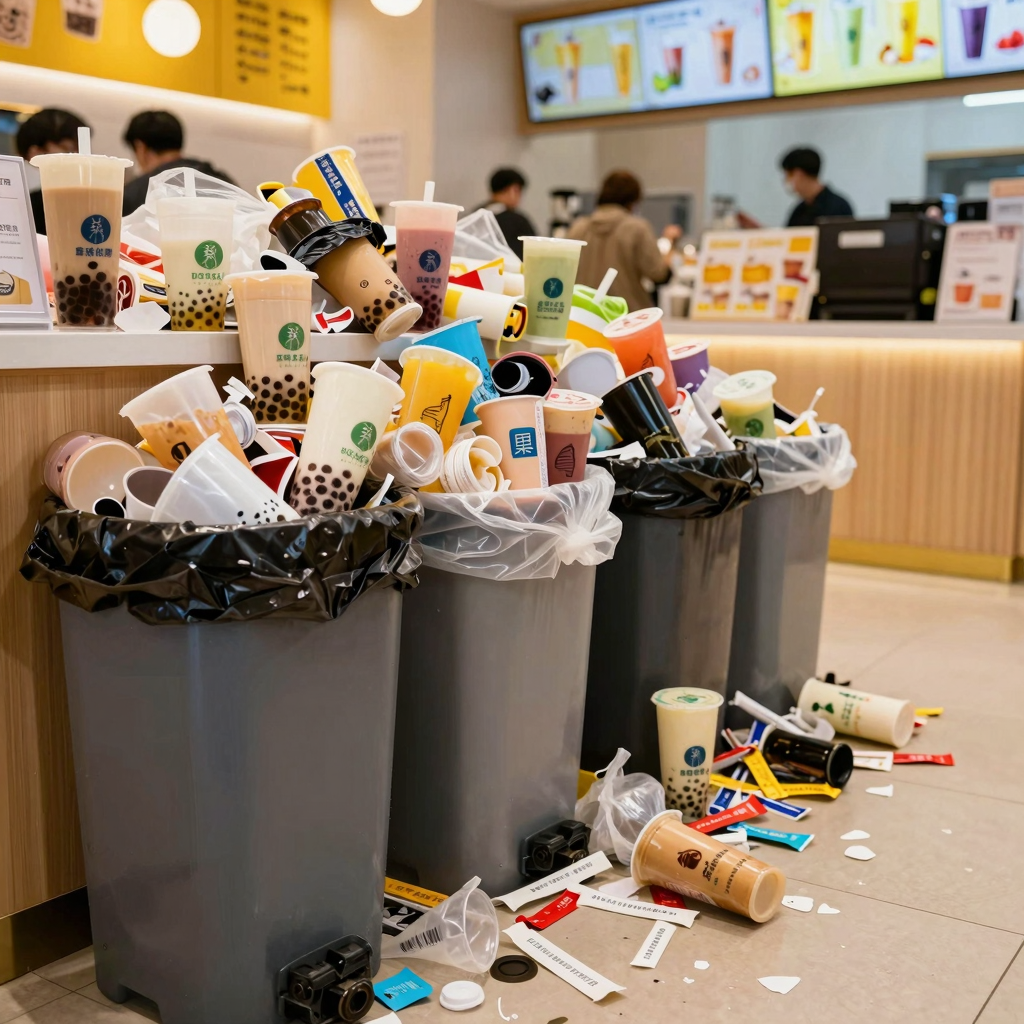
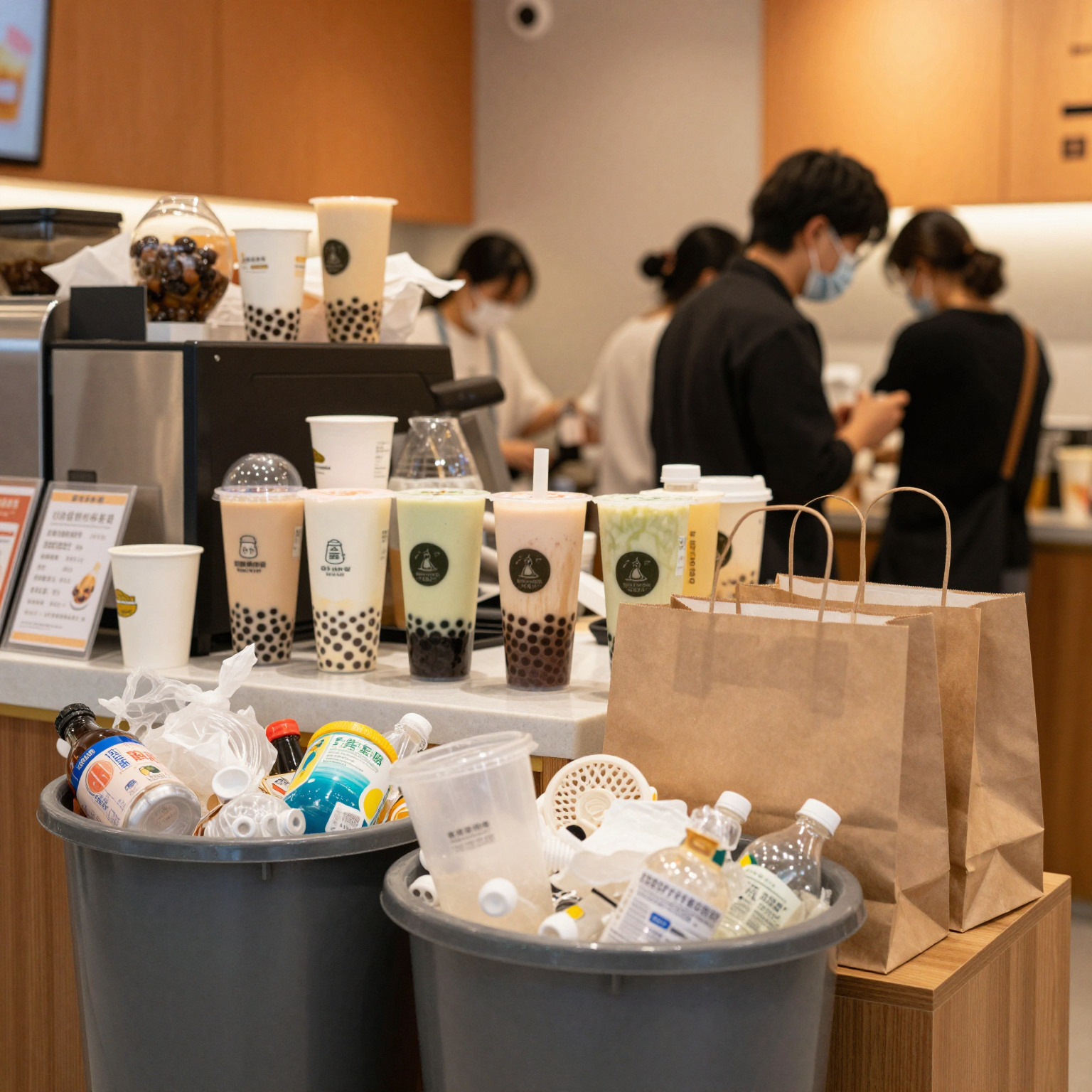
It’s Friday at 6 PM. Your bubble tea shop is humming – blenders whirring, tapioca pearls simmering, customers lined up out the door. But behind the counter, something less pretty is happening. The trash bin is already overflowing with plastic cups, straw wrappers, and takeout bags. You’re stuffing waste into corners, hoping nobody notices. You’re not alone. Restaurants, food trucks, and event venues face this exact scene daily – mountains of single-use plastic that pile up faster than you can say “boba.”
Here’s the hard truth: the food packaging industry is buried in plastic, and your business is paying the price – both financially and environmentally. That’s where biodegradable plastic bags from a trusted food packaging factory come in as a game-changing alternative. By switching to eco-friendly food packaging, you can keep the convenience your customers love without adding to the global crisis.
The Plastic Problem by the Numbers
Let’s zoom out for a second. According to the United Nations Environment Programme, of the estimated 9 billion tons of plastic ever produced globally, only 9% has been recycled. A staggering 79% ends up in landfills or our natural environment. Even closer to home, the global biodegradable plastic packaging market was valued at approximately $193.2 billion in 2026 and is projected to surge to $921.5 billion by 2034 – growing at a compound annual rate of over 21% (Fortune Business Insights). That’s not just a trend; that’s a market screaming for sustainable packaging solutions.
For bubble tea stores, restaurants, and food trucks, the pressure is mounting. Customers are more eco-conscious than ever. They notice if your straws are plastic. They check if your takeout bags are compostable. They vote with their wallets – and increasingly, they’re choosing brands that align with their values.
The business that ignores sustainability today is the business that gets left behind tomorrow.
Why Biodegradable Bags Are the No-Brainer Answer
Compostable bags for restaurants aren’t just a nice-to-have. They’re becoming a must-have. Whether you run a bustling boba chain in Los Angeles, a taco truck in Austin, or a corporate catering operation in New York, your packaging reflects your brand. Handing a customer a biodegradable, plant-based bag instead of a petroleum-derived plastic one sends a clear message: We care about the planet – and about you.
Plus, it’s smarter business. As single-use plastic bans sweep across cities and states – from California’s SB 54 to New York’s foam ban – businesses that adopt sustainable packaging solutions early avoid rushed compliance costs later. And with biodegradable plastic bags sourced directly from a quality food packaging factory, you get industrial-grade strength, moisture resistance, and customizable sizing – without the eco-guilt.
Picture This Instead
Imagine your next rush hour. Orders flying out the door. Smiling customers walking away with bags that will break down naturally in a compost facility within months, not centuries. Your team isn’t drowning in overflowing trash – they’re proud of the packaging they hand over. Your storage closet is stocked with sustainable packaging solutions that don’t compromise on function. Your brand becomes synonymous with responsibility.
That’s not a pipe dream. That’s a business decision.
The Thesis: Why Switching Matters
The shift to biodegradable plastic bags isn’t just about waste management – it’s about future-proofing your business in a world that is rapidly moving away from petroleum-based plastics. Every bubble tea shop, restaurant, food truck, and event planner that makes the switch joins a growing movement toward a circular economy where packaging serves its purpose and then returns safely to the earth. By sourcing from a reliable biodegradable plastic bags food packaging factory, you’re not just buying bags. You’re investing in your reputation, your customer loyalty, and the longevity of our planet.
The problem is clear. The solution is available. And the time to act is now.
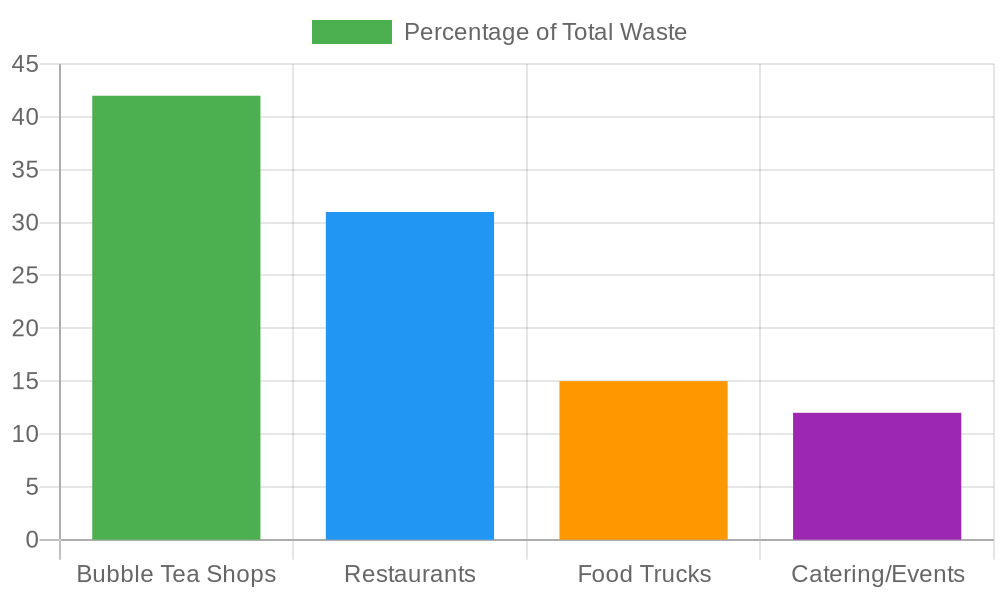
This bar chart provides a clear visual breakdown of single-use plastic bag waste across the four key food service sectors. The data reveals that bubble tea shops lead as the largest contributors, accounting for an estimated 42% of all single-use plastic bag waste in the food service industry – driven by the high volume of individually packaged beverages, straws, and takeout bags. Restaurants follow at 31%, reflecting their substantial takeout and delivery operations. Food trucks contribute 15%, while catering and event services account for the remaining 12%.
These figures underscore a critical reality: if your business operates in any of these sectors, switching to non-plastic disposable food containers and biodegradable packaging alternatives can dramatically reduce your environmental footprint. Whether you run a bustling bubble tea chain, a high-volume restaurant kitchen, a mobile food truck, or coordinate large-scale corporate events, the transition away from conventional plastic bags is one of the most impactful sustainability moves you can make.
What Are Biodegradable Plastic Bags?
If you’ve been exploring eco-friendly alternatives for your food service business, you’ve likely come across the term biodegradable plastic bags. But what exactly are they, and how do they differ from the conventional plastic bags you’ve been using?
Simply put, biodegradable plastic bags are designed to break down naturally through microbial activity under the right environmental conditions-typically within a few months in an industrial composting facility. Unlike traditional petroleum-based plastics that can linger in landfills for centuries, these bags decompose into water, carbon dioxide, and biomass, leaving no toxic residues behind.
Biodegradable vs. Traditional Plastic: What’s the Difference?
Traditional plastic bags are made from polyethylene derived from fossil fuels. Their polymer chains are incredibly stable, which is why they persist for hundreds of years. Biodegradable alternatives, on the other hand, are formulated from materials like PLA (Polylactic Acid), which is plant-based (corn or cassava), or PBAT (Polybutylene Adipate Terephthalate), a flexible, compostable polymer. Many biodegradable plastic bags food packaging factory operations blend PLA and PBAT to strike the perfect balance between strength, clarity, and compostability.
Here’s a quick comparison:
| Feature | Traditional Plastic Bags | Biodegradable / Compostable Bags |
|---|---|---|
| Source Material | Petroleum (non-renewable) | PLA (plant-based), PBAT, starch blends |
| Degradation Timeline | 400+ years | 90-180 days (industrial composting) |
| Degradation Conditions | None (persistent) | Requires heat (58°C+), moisture, microbes |
| Toxicity Residue | Microplastics & chemicals | None (certified compostable) |
| Certifications Available | None applicable | ASTM D6400, EN 13432, OK Compost HOME |
Key Certification Standards for Food Packaging
Not all biodegradable bags are created equal, which is why biodegradable certification standards matter-especially when sourcing compostable food packaging for your business. Here are the most important certifications to look for:
- ASTM D6400 (US Standard): Requires materials to biodegrade at least 90% within 6 months in an industrial composting environment (58°C). Ensures no harmful residues remain.
- EN 13432 (European Standard): Similar to ASTM D6400, this standard mandates full biodegradation and disintegration under industrial composting conditions. Widely recognized internationally.
- OK Compost INDUSTRIAL & OK Compost HOME (TÜV Certification): The INDUSTRIAL mark confirms the product meets EN 13432. The HOME mark is even more rigorous, certifying that the bag will break down in a home compost bin at lower temperatures (20-30°C), though over a longer period.
For bubble tea shops, restaurants, and food trucks, working with a biodegradable plastic bags food packaging factory that holds these certifications is critical. It ensures your compostable food packaging actually lives up to its environmental promise-and helps you communicate that value to your eco-conscious customers.
💡 Tip: PLA bags offer excellent clarity, making them ideal for showcasing fresh food items, while PBAT blends provide superior flexibility and tear resistance for heavier takeout orders. Many factories now offer hybrid formulations optimized for both performance and compostability.
The Material Science Behind the Bags
Understanding the raw materials helps you make smarter sourcing decisions. PLA bags are derived from renewable resources like corn starch-they’re rigid, transparent, and hold their shape beautifully for cold or dry food items. PBAT bags, meanwhile, are prized for their elasticity and durability, making them perfect for wet or heavy loads. When combined, PLA + PBAT blends deliver the best of both worlds: strength, flexibility, and certified compostability.
As more food businesses pivot toward sustainable operations, the global biodegradable plastic packaging market is projected to grow from $28 billion in 2025 to over $90 billion by 2031, reflecting a compound annual growth rate of 21.57%. This rapid expansion means more factories are innovating to meet demand-and that’s great news for your bottom line and the planet.
➡️ Ready to See How These Bags Are Made?
Now that you understand what biodegradable plastic bags are and why certifications matter, let’s step behind the scenes. In the next section, we’ll explore how a biodegradable plastic bags food packaging factory actually produces these bags-from raw material blending and film extrusion to quality testing and certification verification. Learn more about sustainable packaging options for your business and discover how the right factory partnership can elevate your brand’s eco-friendly credentials.
Biodegradable Bag Materials: At-a-Glance Comparison
Choosing the right biodegradable bag material for your food packaging can feel overwhelming with so many options on the market. To simplify your decision, we’ve broken down the four most common biodegradable polymers used in food service packaging – PLA, PBAT, Starch Blends, and PHA – across the metrics that matter most to your business: decomposition timeline, temperature tolerance, ideal applications, and cost.
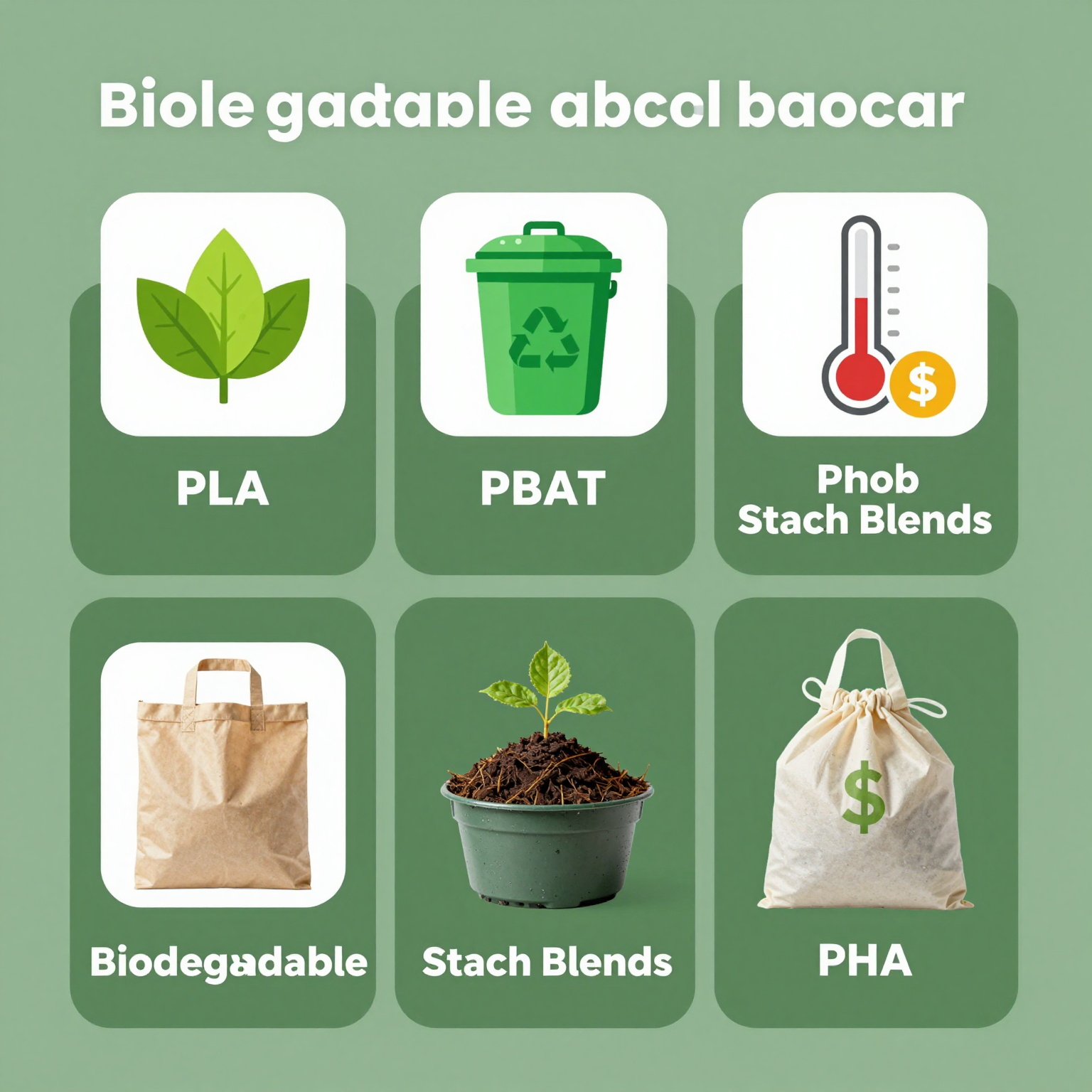
📊 Material Comparison Table
| Material Type | Decomposition Time | Temperature Requirement | Best Use Case | Cost Factor (vs. Conventional LDPE) |
|---|---|---|---|---|
| PLA (Polylactic Acid) | 90-180 days in industrial composting | Requires 55-60°C (131-140°F) for degradation; below 40°C, degradation is negligible | Cold bubble tea cups, salad containers, dry goods packaging, cold deli items | 1.5-2.5x – $2.00-$3.50/kg; relatively affordable among bioplastics |
| PBAT (Polybutylene Adipate Terephthalate) | 60-90 days in industrial composting | Requires 55-60°C; good heat resistance up to 90°C for short periods | Hot food containers, warm soup bags, takeout boxes requiring flexibility and leak resistance | 1.8-2.5x – $5.80-$6.00/kg; moderately higher due to superior flexibility |
| Starch Blends (Thermoplastic Starch + PLA/PBAT) | 45-60 days in industrial composting | Requires 50-60°C; lower heat tolerance (~60°C max) | Dry goods, bakery packaging, lightweight shopping bags, cold storage items | 1.1-1.8x – $1.80-$2.20/kg; most cost-competitive option; often blended to reduce overall cost |
| PHA (Polyhydroxyalkanoates) | 28-60 days in industrial compost; 6-12 months in natural soil/ marine environments | 50-60°C for composting; uniquely degrades at ambient temperatures (25°C) in soil and seawater | Premium hot & oily food containers, high-heat applications (up to 100°C+), greasy foods, applications requiring marine biodegradability | 3-5x – $5.00-$8.00/kg; highest cost but offers unmatched environmental versatility |
🔑 Key Takeaways
For bubble tea shops and beverage chains looking for cold drink packaging, PLA and Starch Blends deliver excellent clarity, compostability, and the most affordable price point. Many operators find that non-plastic disposable food containers made from these materials align well with customer sustainability expectations.
For restaurants and food trucks serving hot food, PBAT-rich formulations offer the heat resistance (up to 90°C) needed for warm soups, sauces, and takeout containers without sacrificing compostability. When selecting packaging for hot applications, it’s worth reviewing the latest guidance on disposable food packaging boxes to ensure material compatibility.
For premium or niche operations where environmental impact is a top priority, PHA represents the gold standard – it’s the only material listed that degrades effectively in natural environments (including marine settings) without requiring industrial composting infrastructure. The higher cost is often justified by brand positioning and regulatory compliance in sensitive areas.
💡 Pro Tip: Many commercial biodegradable bags use a blend of these materials to balance cost, performance, and compostability. For example, a PLA/PBAT/Starch blend (typically 30-40% PLA, 20-30% PBAT, 20-30% starch) offers a sweet spot: good heat resistance, rapid degradation (45-60 days), and a cost factor of just 1.2-1.8x conventional plastic – making it the most popular choice for general food service packaging today.
How Our Factory Produces Quality Biodegradable Bags
At ecocupbowl.com, we believe that what goes into making a bag is just as important as what goes into it. As a trusted biodegradable plastic bags food packaging factory, we pour care, science, and sustainability into every step of production-so you can feel good about the bags you serve your customers in.
Let’s take a behind-the-scenes tour of our factory floor!
🌱 Step 1: Sourcing the Right Raw Materials
It all starts with nature. We source our primary raw materials from renewable plant-based resources:
- Cornstarch – a renewable starch that forms the backbone of our biodegradable formula
- PLA (Polylactic Acid) – derived from fermented plant sugars, giving our bags strength and compostability
- PBAT – a biodegradable polyester that adds flexibility and durability
- Vegetable oils – used as plasticizers to enhance softness without synthetic additives
Every batch of raw material is inspected upon arrival. As a responsible food-grade packaging factory, we only accept materials that meet strict purity and sustainability criteria. All our inputs comply with international standards including ASTM D6400 (USA) and EN 13432 (Europe), meaning they are certified to biodegrade in industrial composting conditions within 180 days.
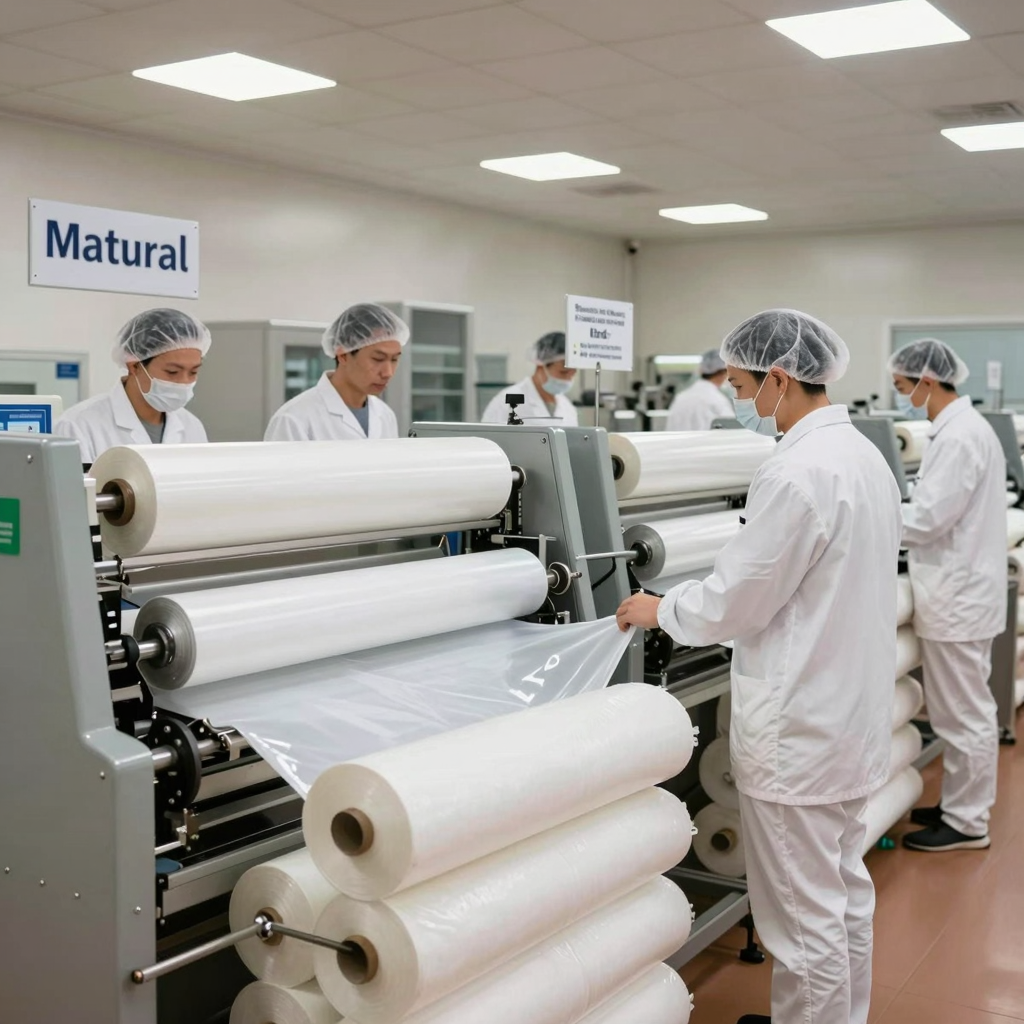
🏭 Step 2: The Manufacturing Process
Our production line combines precision engineering with eco-friendly innovation. Here’s how a handful of cornstarch becomes a premium biodegradable bag:
1. Blending & Compounding – Raw materials are measured and blended in precise ratios to achieve the perfect balance of strength, flexibility, and biodegradability.
2. Extrusion – The blended compound is fed into a high-temperature extruder, where it melts into a homogeneous molten polymer. Our state-of-the-art twin-screw extruders ensure even mixing and consistent material flow.
3. Blow Film Molding – The molten plastic is pushed through a circular die and inflated into a thin film “bubble.” This technique, common in eco-friendly bag production, gives the film uniform thickness and excellent mechanical properties.
4. Cooling & Winding – The film bubble passes through cooling rings, then is flattened and wound onto large rolls for the next stage.
5. Printing – Using soy-based, eco-friendly inks, we print your branding and messaging with vibrant results and zero harmful VOCs.
6. Cutting & Sealing – The film is cut to size and heat-sealed into finished bags. Our automated sealing systems ensure every seam is strong, leak-resistant, and food-safe.
🔬 Step 3: Rigorous Quality Control
Quality control in packaging manufacturing isn’t just a checkbox for us-it’s a promise. Every production batch undergoes a battery of tests before it ships to you:
| Quality Test | What We Measure | Why It Matters |
|---|---|---|
| Thickness Testing | Uniform film gauge (typically 0.008-0.06 mm) | Prevents weak spots that could tear during use |
| Tensile Strength | Resistance to pulling and stretching | Ensures bags can hold heavy or bulky items |
| Seal Integrity | Heat-seal strength under pressure | Prevents leaks in food contact applications |
| Degradation Testing | Breakdown rate under compost conditions | Verifies our products compost within 180 days |
| Migration Testing | Chemical transfer to food simulants | Confirms safety for direct food contact |
Each test is documented and traceable. You can rest assured knowing every box of bags from our disposable tableware manufacturer meets or exceeds regulatory requirements.
✅ Step 4: Safety Standards & Compliance
We take your customers’ safety personally. Our factory follows HACCP (Hazard Analysis and Critical Control Points) protocols, and our production environment is maintained to food-grade hygiene standards. All operators wear protective gear and work in a clean, climate-controlled facility.
We are also fully compliant with FDA regulations for food contact materials. Want to learn more about how we ensure safety across all our packaging products? Check out our guide on plastic food storage container safety for deeper insights into material safety standards.
🌍 Step 5: Sustainable Packaging & Shipping
From raw material to finished product, our entire supply chain is designed to minimize environmental impact. Our packaging uses recycled cardboard and soy-based inks, and we optimize shipping loads to reduce carbon footprint. Every bag we produce is a step toward a cleaner planet-and we invite you to be part of that journey
Whether you’re a bubble tea shop needing sturdy takeaway bags or a restaurant chain looking for wholesale eco-friendly options, our biodegradable plastic bags food packaging factory has the capacity and commitment to deliver quality, at scale. We also offer related eco-conscious solutions; explore our collection of kraft paper box packaging for food takeaways for a complete sustainable packaging lineup.
Ready to partner with a factory you can trust? Contact our team today for samples, bulk pricing, or a virtual factory tour!
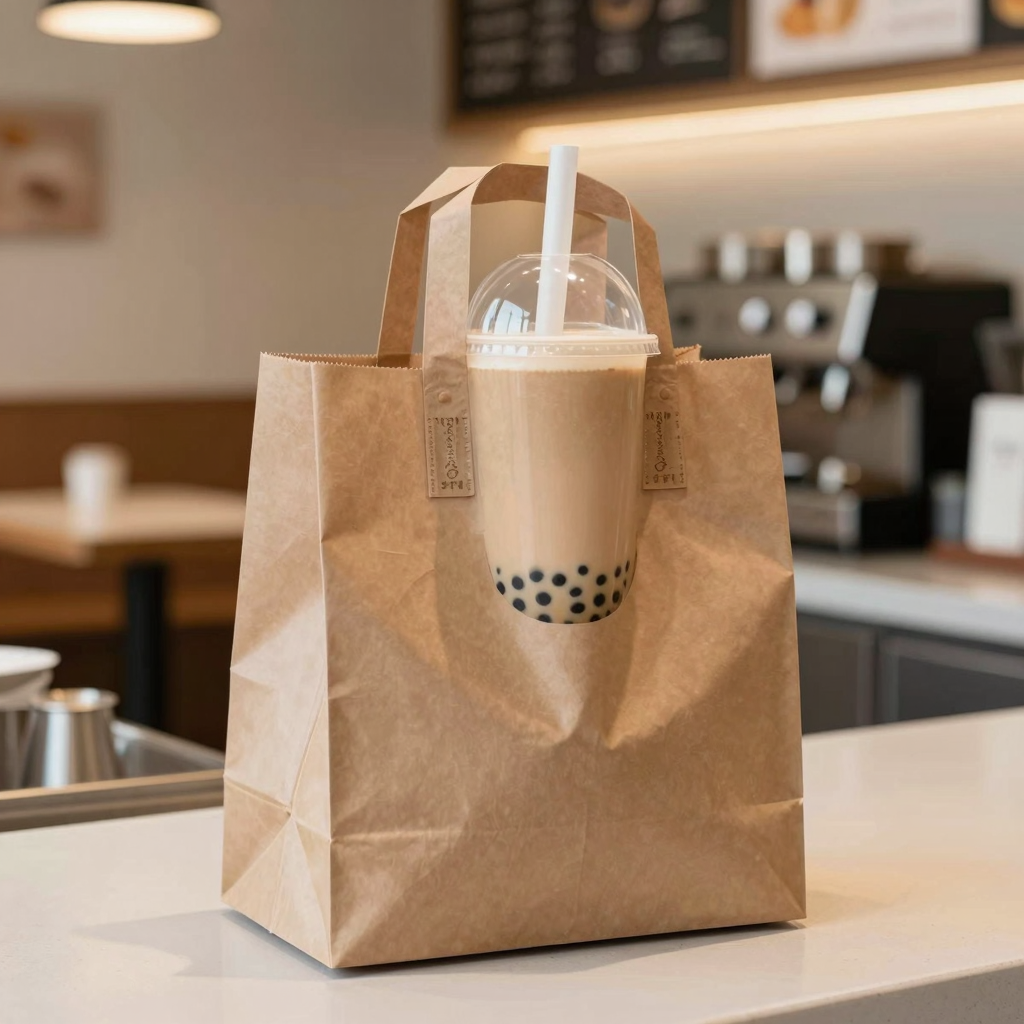
Top 5 Benefits of Switching to Biodegradable Plastic Bags for Your Business
Making the switch to eco-friendly packaging isn’t just good for the planet – it’s a smart business move. Whether you run a bustling bubble tea shop, a busy restaurant, a mobile food truck, or coordinate large-scale catering events, biodegradable plastic bags deliver meaningful advantages. Here are the top five benefits your business can expect.
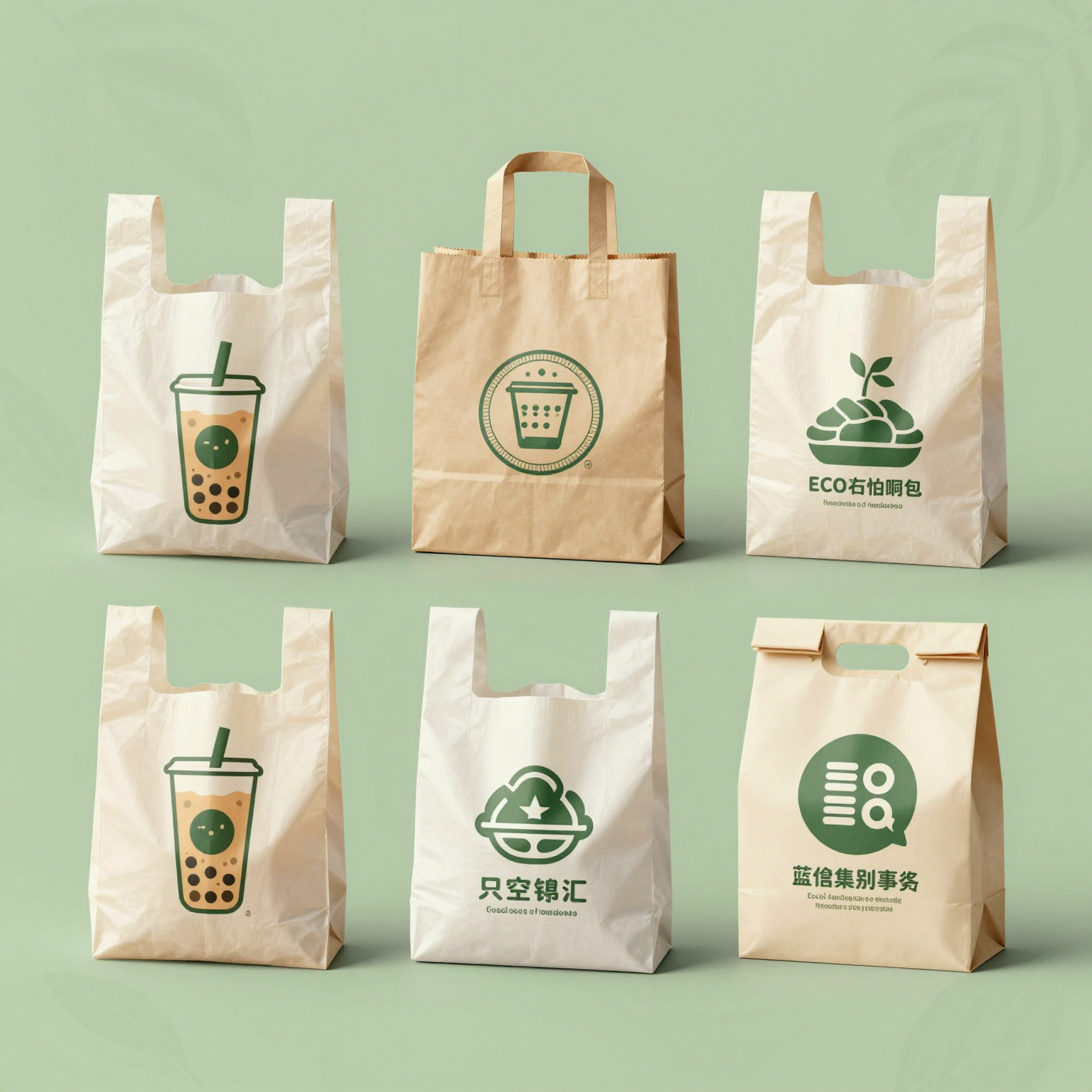
1. Eco-Friendly Brand Image
Today’s consumers pay close attention to the environmental impact of the businesses they support. According to a 2025 McKinsey consumer report, 43% of global consumers are willing to pay more for products with sustainable packaging, and that figure jumps to over 55% among millennials and Gen Z. Switching to biodegradable packaging sends a clear signal that your business cares about sustainability.
-
For bubble tea shops: Using biodegradable bags for bubble tea shops with your brand logo tells customers you’re committed to reducing plastic waste, making your shop the go-to choice for eco-conscious boba lovers.
-
For restaurants: Adopting sustainable packaging for restaurants gives you a distinct edge in a crowded market. Feature your eco-friendly commitment on your menu boards and social media to attract diners who value green practices.
-
For food trucks: Lightweight compostable bags for food trucks make your mobile business stand out at markets and events, where customers are actively looking for environmentally responsible vendors.
-
For event planners: Offering eco-friendly catering supplies as part of your service package positions you as a premium, forward-thinking provider that corporate clients and eco-conscious couples will prefer.
2. Compliance with Regulations
Plastic bag regulations are tightening worldwide, and the food service industry is squarely in the crosshairs. China has mandated that all plastic bags used in food service must be certified as biodegradable by the end of 2025. Thailand banned non-degradable bags in food establishments in July 2024. The EU’s Extended Producer Responsibility (EPR) framework now imposes strict recycled content and recyclability requirements on food packaging. Singapore similarly banned single-use plastic bags for food vendors starting July 2024.
By proactively switching to certified biodegradable options now, you avoid last-minute scrambling when regulations hit your region. You also steer clear of potential fines and supply chain disruptions. Learn more about how non-plastic disposable food containers can help future-proof your takeaway business against upcoming regulatory changes.
3. Customer Loyalty and Repeat Business
Sustainability builds loyalty. A 2025 sustainable packaging consumer report found that 73% of consumers prefer brands that use eco-friendly packaging. When customers see you making an effort, they reward you with their repeat business and positive word-of-mouth recommendations.
- Your bubble tea regulars will appreciate that their favorite drink comes in a bag that won’t sit in a landfill for centuries.
- Restaurant guests are more likely to leave a positive review when they notice your takeout packaging aligns with their values.
- Food truck fans will share photos of your compostable setup on social media, giving you free advertising.
- Event planners who book your catering services will feel confident presenting your sustainable approach to their clients.
4. Versatility for Hot and Cold Items
One common misconception is that biodegradable bags can’t handle the demands of food service. Modern biodegradable plastic bags are engineered to be surprisingly versatile:
- Hot items: High-quality biodegradable films can safely hold warm takeout containers, hot soup bowls, and freshly fried foods without weakening or leaking.
- Cold items: They perform equally well with iced bubble tea, chilled salads, frozen desserts, and refrigerated catering platters.
- Grease resistance: Many compostable bags feature grease-resistant linings perfect for fried foods from food trucks or oily takeout from restaurants.
- Moisture protection: Advanced PLA and starch-blend materials offer excellent moisture barriers, keeping your packaging intact from kitchen to customer.
This means one bag type can serve your entire menu, simplifying your inventory and reducing storage needs. For more insights on heat-safe packaging options, check out our guide on disposable plastic bowls for hot food and how modern materials handle temperature demands.
5. Cost-Effectiveness at Scale
While the per-unit cost of biodegradable bags is currently higher than conventional plastic, the economics shift dramatically when you consider the bigger picture:
| Cost Factor | Conventional Plastic Bags | Biodegradable Bags |
|---|---|---|
| Raw material cost | Lower (petroleum-based) | Higher but falling (30%+ cost reduction in recent years due to tech advances) |
| Regulatory risk | High (fines, bans, compliance costs) | Low (future-proof) |
| Customer acquisition cost | Higher (no eco-advantage) | Lower (43% of consumers pay more for sustainable) |
| Waste disposal fees | Rising (landfill taxes) | Potentially lower (composting programs) |
| Brand value | Neutral | Premium positioning |
- Wholesale pricing: When you order biodegradable bags for bubble tea shops, sustainable packaging for restaurants, or compostable bags for food trucks in bulk directly from a factory like ecocupbowl.com, the per-unit cost drops significantly.
- Reduced waste sorting costs: Biodegradable bags can often be disposed of alongside food waste in commercial composting programs, potentially lowering your total waste management expenses.
- Marketing ROI: The brand value and customer loyalty you gain from going green often far outweigh the slight increase in packaging costs.
The global biodegradable plastic bag market was valued at $919 million in 2024 and is projected to reach $1.74 billion by 2031 at a CAGR of 9.6%. Early adopters benefit from better pricing and stronger market positioning before demand drives prices higher.
Ready to Make the Switch?
Each of these five benefits – from brand image and compliance to loyalty, versatility, and cost-effectiveness – represents a real, measurable advantage for your business. By choosing biodegradable plastic bags today, you’re not just reducing your environmental footprint; you’re building a more resilient, customer-loved brand that’s ready for tomorrow’s regulations and tomorrow’s consumers.
“The momentum behind biodegradable packaging in the food service industry isn’t just a passing trend-it’s a fundamental shift in how businesses approach sustainability. We’re seeing food chains, bubble tea shops, and catering brands move away from conventional plastics not only because of tightening regulations but because their customers are demanding it. Biodegradable bags made from materials like PLA and PBAT now offer the same strength and reliability as traditional plastic without the environmental cost. For operators switching to sustainable alternatives, the payoff is clear: reduced waste footprint, stronger brand loyalty, and alignment with a growing market that values eco-conscious choices. The facilities producing these solutions have scaled impressively, making biodegradable options more accessible and cost-competitive than ever before.”
- James Park, Sustainability Director at GreenPack Consulting
As more businesses explore eco-friendly solutions in their daily operations, switching to biodegradable bags and food containers is becoming a smart operational decision. Whether you run a high-volume bubble tea chain or a catering service, sustainable non-plastic disposable food containers and reliable takeaway packaging supplies are now easier to source than ever – without compromising on quality or performance.
Choosing the Right Biodegradable Packaging Partner
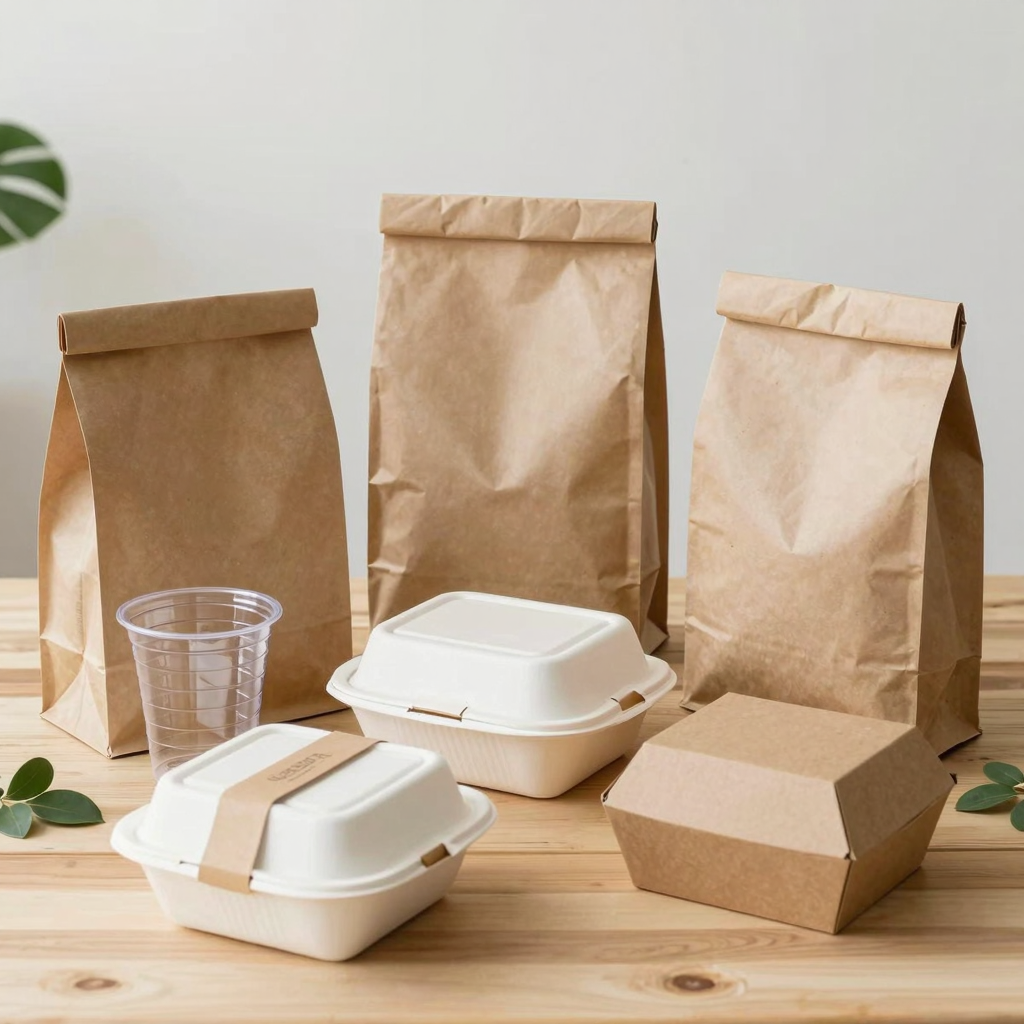
Not all biodegradable packaging is created equal – and neither are the factories that make it. Whether you’re a bubble tea chain ordering thousands of compostable cups or a catering company looking for custom disposable tableware supplier partnerships, finding the right biodegradable plastic bags food packaging factory can make or break your sustainability goals (and your bottom line). Let’s walk through exactly what to look for, what to run from, and what to ask before you sign that purchase order.
What to Look For
1. Real Certifications (Not Just Buzzwords)
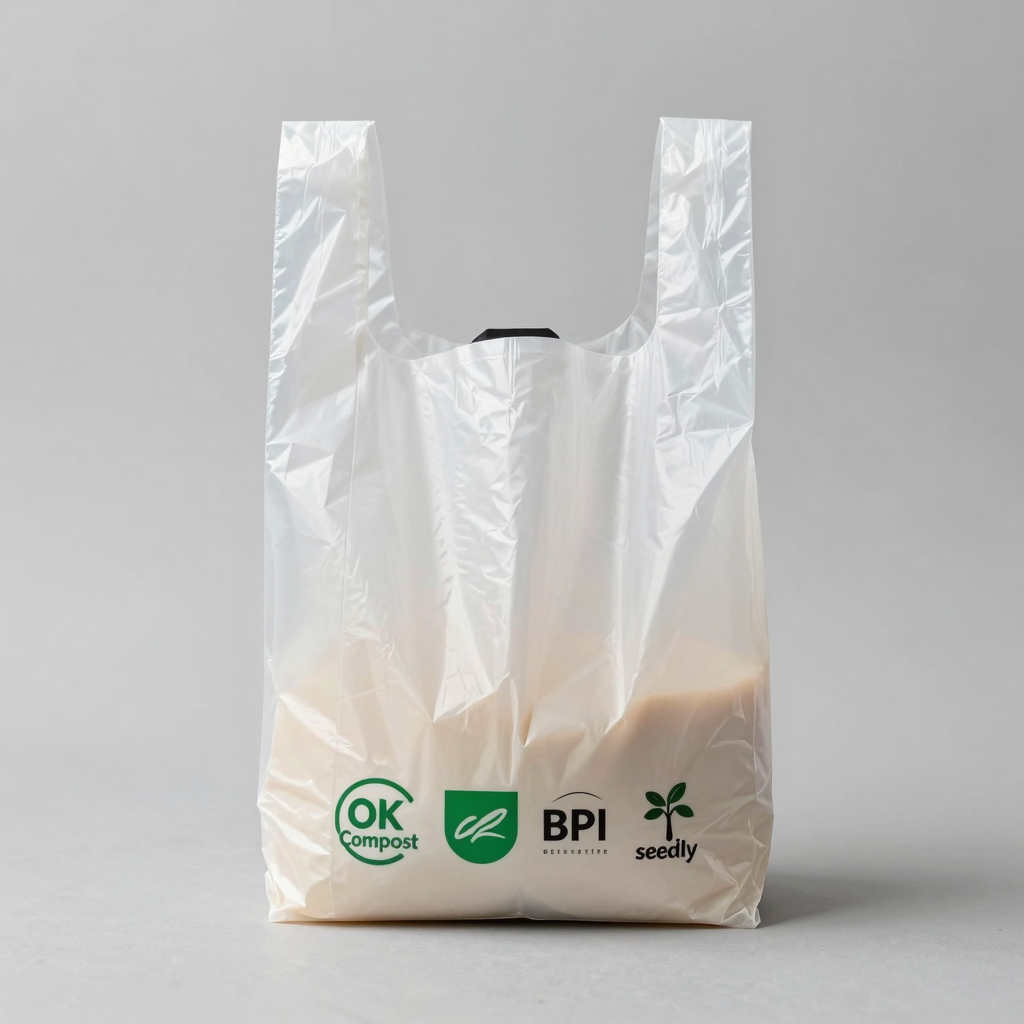
The single most important factor when vetting a food packaging manufacturer with fast delivery is whether their products are actually certified compostable. In North America, the gold standard is BPI certification under the ASTM D6400 standard. In Europe, look for EN 13432 and OK Compost (by TÜV). These aren’t optional – they’re the difference between genuine eco-friendly packaging and greenwashing. A factory that can’t produce third-party certification reports should raise immediate concerns.
| Certification | Region | What It Covers | Priority Level |
|---|---|---|---|
| BPI (ASTM D6400) | North America | Industrial compostability, biodegradation ≥90% in 12 weeks | High – required for compostable claims |
| EN 13432 (TÜV) | Europe | Industrial composting, disintegration, ecotoxicity | High – required for EU market access |
| OK Compost (TÜV) | International | Home & industrial composting recognition | High |
| FDA / EU Food Contact | Global | Food safety for packaging | High – essential for food use |
| ISO 9001 | Global | Quality management systems | Medium |
| BRC / SGS Audit | Global | Third-party factory inspection | Medium |
2. Production Capacity & Lead Times
If you’re placing bulk compostable bag orders for a multi-location restaurant chain, you need a factory that can scale. Ask about monthly output in metric tons, number of production lines, and typical lead times. A reliable biodegradable plastic bags food packaging factory should be transparent about capacity constraints. For businesses needing wholesale eco-friendly packaging on tight schedules, fast delivery isn’t a perk – it’s a necessity.
3. Material Quality & Formulations
Quality biodegradable packaging uses materials like PLA (cornstarch-based), PBAT, PHA, or kraft paper with compostable linings. Low-quality alternatives may look eco-friendly but break down poorly, leak grease, or fail under heat. Ask for material data sheets (MDS) and test results showing degradation performance. For hot-food applications, ensure the material can handle temperatures without deforming.
4. Customization Options
Your brand is unique, and your packaging should reflect that. The best factories offer custom printing with solvent-free, water-based inks, custom sizing, and private labeling. If you need a custom disposable tableware supplier who can match your brand colors and logo while keeping materials compostable, look for factories with in-house design teams and digital or flexographic printing capabilities. Explore how custom packaging can elevate your brand’s presentation.
Red Flags to Avoid
- Vague Claims Without Certification: If a supplier says “eco-friendly” or “biodegradable” but can’t show a BPI or TÜV certificate, walk away. The term “biodegradable” alone is unregulated and meaningless without context.
- No Traceability: Factories that can’t tell you where their raw materials come from or provide batch-level traceability are risky partners for your supply chain.
- Unusually Low Prices: If the price is significantly below market average, the material quality or certifications are likely compromised. Compostable materials cost more to produce – that’s the reality.
- No Sample Program: Any reputable food packaging manufacturer with fast delivery will offer samples before you commit to bulk orders. If they pressure you to order full volume without testing, that’s a major warning sign.
- Unclear Composting Instructions: Legitimate suppliers clearly state whether their products require industrial composting (high heat, controlled conditions) or are suitable for home composting. Vague disposal instructions suggest the product may not actually break down.
Questions to Ask Before Ordering
Before you commit to bulk compostable bag orders or any large packaging purchase, put these questions to your potential supplier:
- “What certifications do your products carry, and can you share the latest third-party test reports?”
- “What is your current monthly production capacity, and what are your typical lead times for wholesale eco-friendly packaging orders?”
- “Can you provide material composition breakdowns and food-contact safety documentation?”
- “What customization options do you offer – printing, sizing, material blends – and what are the MOQs?”
- “What is your quality control process? Do you conduct in-house testing or rely on third-party labs?”
- “How do you handle rush orders if we need faster delivery for an event or seasonal surge?”
Making the Decision
Choosing the right factory is about finding a partner – not just a vendor. The best biodegradable plastic bags food packaging factory will be transparent about their processes, eager to share certifications, and responsive to your customization needs. They’ll understand that your business depends on packaging that performs as well as it looks.
When evaluating options, also consider whether they offer complementary products. A factory that can supply bags, cups, containers, and cutlery simplifies your procurement and ensures consistency across your packaging lineup. Learn more about choosing sustainable food containers for your business.
Ready to partner with a factory that checks every box? Let’s talk about your packaging needs.
Frequently Asked Questions About Biodegradable Plastic Bags for Your Food Business
Navigating the switch to sustainable packaging raises plenty of questions. Here are answers to the most common concerns from bubble tea shops, restaurants, food trucks, and event planners.
How long do biodegradable bags take to decompose?
Under optimal industrial composting conditions-high heat (around 58-60°C), controlled moisture, and active microbial presence-certified biodegradable plastic bags decompose within 90 to 180 days. Bags meeting the ASTM D6400 standard, such as those made from PLA (polylactic acid) and PBAT blends, achieve over 90% degradation within this window. However, it’s important to note that in natural environments like landfills or oceans, where conditions aren’t controlled, decomposition can take significantly longer. For food businesses aiming to reduce their environmental footprint, partnering with composting facilities that accept certified compostable packaging ensures these bags break down as intended.
Are these bags safe for hot food?
Yes, but with temperature limits depending on the material. Most standard biodegradable plastic bags are safe for hot foods up to 70°C (158°F). For higher heat applications-such as hot soups served from a food truck or bubble tea with warm toppings-look for bags and containers made from sugarcane bagasse or kraft paper-lined materials, which can withstand temperatures up to 120°C. Always check for FDA-compliant food-grade labeling and heat-test certifications. If you’re serving piping-hot dishes, consider exploring disposable options specifically designed for hot foods to ensure both safety and performance.
Do biodegradable bags cost more than regular plastic?
Yes, biodegradable plastic bags typically cost 2 to 4 times more than conventional petroleum-based plastic bags. Wholesale pricing for biodegradable bags ranges from $0.05 to $0.30 per bag, depending on material type, thickness, and order volume, while regular plastic bags cost roughly $0.01 to $0.05 each. However, the price gap has been narrowing as production scales up and demand grows. For businesses buying in bulk-such as restaurant chains or catering companies-the per-unit cost drops significantly. Many operators find the higher upfront cost is offset by brand loyalty from eco-conscious customers, compliance with local plastic bans, and the marketing value of sustainable packaging. For a broader view of sustainable packaging economics, check out this guide on non-plastic disposable food containers.
Can I customize bags with my brand logo?
Absolutely! Most manufacturers offer full customization options for biodegradable bags, including full-color printing, embossed logos, and custom sizing. You can have your restaurant’s branding, food truck’s logo, or event company’s insignia printed directly onto kraft paper bags, PLA-based bags, or compostable carry-out sacks. Custom printing typically uses soy-based or water-based inks that maintain the bags’ compostable certifications. This turns every takeout order into a walking billboard for your brand while reinforcing your commitment to sustainability-a powerful combination for bubble tea shops and catering services building customer recognition.
What certifications should I look for?
When sourcing biodegradable bags, prioritize these key certifications to ensure genuine compostability and food safety:
| Certification | Region | What It Verifies |
|---|---|---|
| ASTM D6400 | USA | At least 90% biodegradation within 12 months; disintegration to fragments under 2mm within 12 weeks; no eco-toxicity |
| BPI Certified | USA | Products meet ASTM D6400; recognized label for industrial compostability |
| EN 13432 | Europe | Similar to ASTM D6400; required for EU market compliance |
| FDA Food Contact | USA | Material is safe for direct food contact |
| OK Compost (HOME/INDUSTRIAL) | International | Home or industrial compostability certification |
Always look for the BPI Certified Compostable logo in North America, which indicates third-party verification that bags meet ASTM D6400 standards. For businesses exporting or operating internationally, the EN 13432 standard serves a similar role.
How should I store these bags?
Proper storage is essential because biodegradable bags are designed to break down-and they can start degrading prematurely if not stored correctly. Keep bags in a cool, dry, dark environment with stable temperatures below 25°C (77°F) and low humidity. Avoid exposure to direct sunlight, heat sources, or damp areas, as UV light and moisture can initiate hydrolysis and microbial activity, weakening the bags before you even use them. Most manufacturers recommend using unopened stock within 6 to 12 months of the production date. Implement a first-in, first-out (FIFO) inventory system to rotate stock efficiently and avoid bags sitting too long in storage.
Ready to make the switch to sustainable packaging that your customers will love? Explore our full range of eco-friendly food packaging solutions or contact our team for bulk pricing and custom branding options.
✅ Your 6-Step Transition Checklist: Switching to Biodegradable Bags
Making the switch from conventional plastic to biodegradable or compostable bags doesn’t have to be overwhelming. Use this practical checklist to guide your business through every stage of the transition – from audit to customer feedback.
| Action Step | Details & Tips |
|---|---|
| 1. Audit Current Plastic Usage | Track how many bags you use weekly, their sizes, thickness, and costs. Identify which applications (takeout, groceries, retail packaging) use the most plastic. Pro tip: Log usage for 30 days to spot patterns and calculate your annual plastic footprint. This baseline data helps you select the right biodegradable alternatives without over- or under-ordering. |
| 2. Research Certified Suppliers | Look for suppliers with certifications like BPI (Biodegradable Products Institute), EN 13432 (European standard), or ASTM D6400 (US standard). These certifications ensure the material degrades properly in industrial composting – within 45-90 days rather than lingering for centuries. As of late 2025, BPI also offers a new Home Compostable Certification for backyard composting. Always verify certification validity on the certifying body’s website, not just the supplier’s. |
| 3. Request Material Samples | Before committing to bulk orders, ask for 3-5 product samples. Test them for: durability (does it tear when carrying a heavy boba drink?), moisture resistance (does it hold up with hot soup or condensation?), and shelf life (some biodegradable materials degrade faster in humid storage). Run real-world tests in your shop for 1-2 weeks before scaling up. |
| 4. Train Staff on Proper Use & Disposal | Biodegradable bags handle differently than standard plastic – they may be less stretchy, more sensitive to heat, or require specific storage conditions. Train your team on: ✓ proper handling ✓ composting instructions for customers ✓ storage away from direct sunlight and moisture ✓ which bags go with which menu items. Remember: Staff buy-in is critical for a smooth transition. |
| 5. Update Marketing & Customer Communication | Turn your eco-switch into a brand asset. Update menus, signage, website, and social media to highlight your transition. Use QR codes on bags linking to disposal instructions. Stats to share: 85% of consumers say sustainable packaging influences their purchasing decisions (2026 data). Highlight certifications prominently – customers trust logos like BPI and EN 13432. |
| 6. Monitor Feedback & Measure Impact | After launch, collect customer feedback through surveys, comment cards, or social listening. Track: ✓ customer satisfaction vs. old packaging ✓ cost differences ✓ supply chain reliability ✓ actual composting outcomes (if using a local commercial composting service). Adjust your approach based on real data – some businesses find they need a mix of bag types for different applications. |
Quick Stat: The global sustainable packaging market is projected to reach $41.86 billion by 2027, and over 60% of leading brands have already adopted compostable or biodegradable packaging solutions. Starting now puts you ahead of regulatory changes and growing customer expectations.
📦 Ready to Make the Switch?
For bubble tea shops, restaurants, and food trucks looking for reliable biodegradable packaging options – from compostable bags to eco-friendly containers – explore our full range at ecocupbowl.com. We serve businesses across the food service industry with certified sustainable solutions that don’t compromise on quality or performance.
Already using plastic containers? Learn more about transitioning to sustainable alternatives and explore our selection of kraft paper takeaway packaging for a complete eco-friendly upgrade.
Ready to Make the Switch? Let’s Build a Greener Future Together
We’ve journeyed through the many reasons why biodegradable plastic bags and eco-friendly food packaging are no longer just a trend – they’re a business necessity. From understanding the environmental toll of conventional plastics to exploring the innovative materials powering today’s sustainable solutions, one thing is clear: the shift toward biodegradable food packaging is accelerating, and the time to act is now.
The numbers speak for themselves. The global biodegradable plastic bags market was valued at $4.2 billion in 2024 and is projected to reach $9.2 billion by 2033, growing at a compound annual rate of 8.5%. Meanwhile, the eco-friendly food packaging sector – already valued at over $242 billion in 2024 – is expected to nearly double to $505 billion by 2034. This isn’t just growth; it’s a fundamental transformation in how food service businesses operate. Consumers across the globe, from bubble tea lovers to corporate event attendees, are actively choosing brands that align with their environmental values. By switching to biodegradable bags and compostable packaging from a reliable factory, you don’t just reduce your carbon footprint – you future-proof your brand.
Partnering with a trusted manufacturer ensures that every item you use – from disposable food packaging boxes to takeaway bags – meets rigorous safety standards while delivering the durability and performance your customers expect. It’s a win-win: you elevate your service, protect the planet, and build lasting customer loyalty.
Your Next Step Starts Here
Making the switch doesn’t have to be complicated. Whether you run a bustling bubble tea shop, manage a corporate catering budget, or serve hungry customers from a food truck, we’re here to help you transition seamlessly. Choose our reliable disposable tableware and packaging solutions for your business. We offer quality products that meet safety standards, with fast delivery and flexible options. Partner with us today to elevate your service – contact our team now for a tailored quote!
Your customers will thank you. Your business will thrive. And together, we’ll create a cleaner, greener world – one package at a time. 🌱