
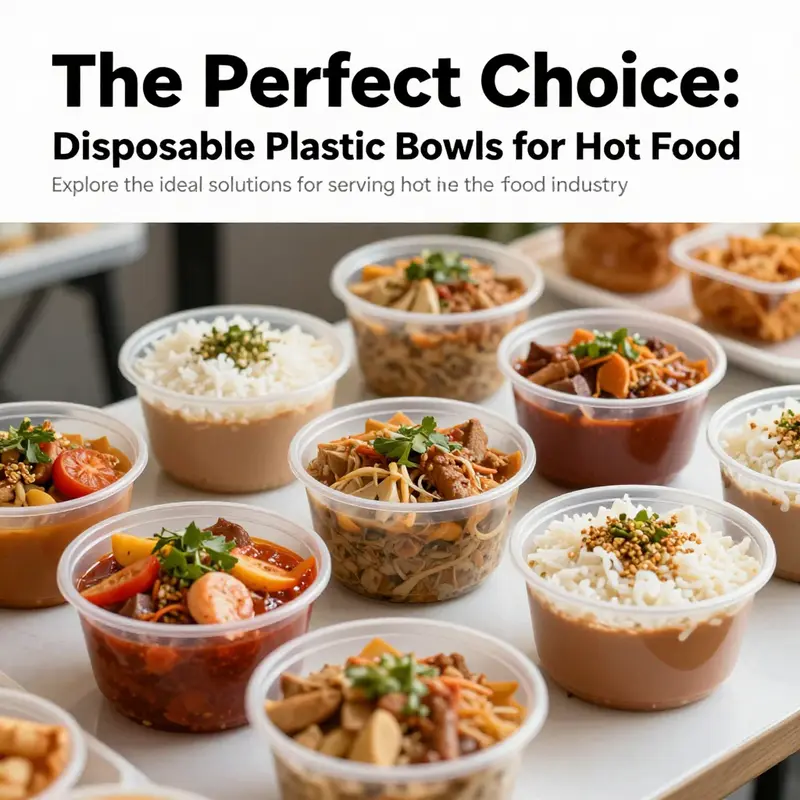
Disposable plastic bowls for hot food are revolutionizing the way restaurants, food trucks, and catering services serve their meals. Made from heat-resistant materials like polypropylene and PET, these bowls provide the necessary durability and safety for hot dishes ranging from soups to stews. They cater perfectly to the needs of bubble tea shops and corporate event planners providing food on-the-go. This article delves into various aspects of disposable plastic bowls for hot food including their material composition, design features, market trends, environmental impact, and regulatory considerations. Each chapter will equip you with a deeper understanding of how these products can enhance your business and ensure safety in food service.
Heat-Resistant Carriers: How Material Choices Shape Disposable Bowls for Hot Food
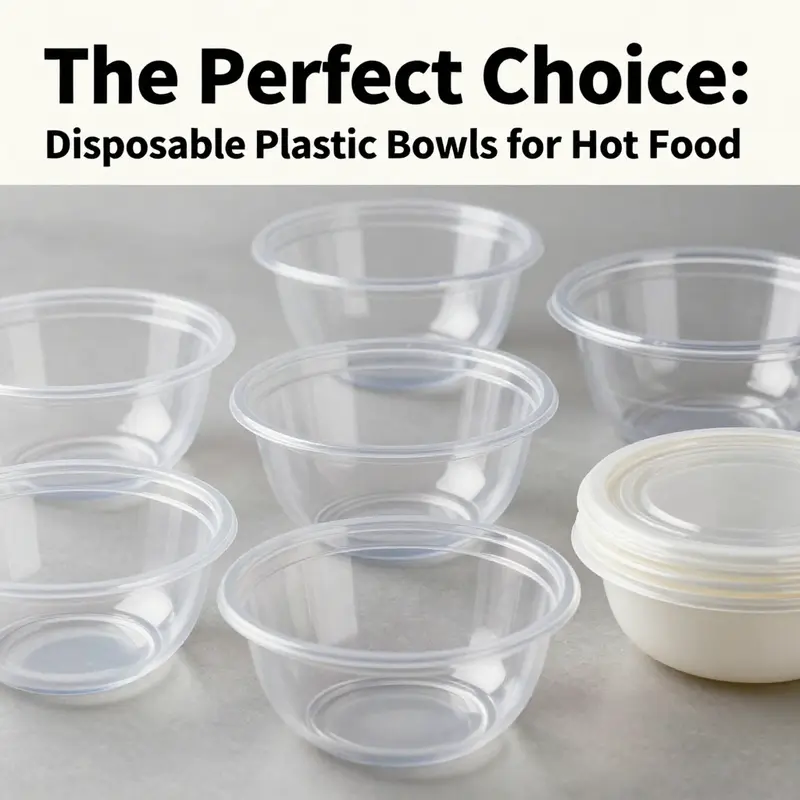
Disposable plastic bowls designed for hot food sit at the intersection of performance, safety, and practicality. They are not mere vessels; they are engineered interfaces between a steaming meal and the journey from kitchen to table, from vendor to consumer. The material choices behind these bowls are deliberate, reflecting a balance of heat tolerance, mechanical strength, ease of manufacturing, and compliance with food-safety standards. In most markets, the workhorse polymers are polystyrene (PS), polypropylene (PP), and high-density polyethylene (HDPE). Each brings a different balance of properties to the table, and each carries its own set of trade-offs when it comes to safety, cost, and environmental impact. The resulting bowls must withstand hot liquids, resist deformation during transport, and remain inert enough to protect the food from contamination while still being practical for mass production and end-of-life management.
Polystyrene has long been favored for its clarity and light weight. Transparent bowls help showcase a colorful soup or sauce, which matters in both retail display and consumer perception. PS is generally compatible with microwave use in many formulations and can withstand temperatures around 93°C (200°F) in typical hot-food applications. This makes PS a reliable choice for short-to-moderate hot-service scenarios, especially when presentation and stackability are priorities. Yet exposure to higher temperatures or prolonged heating can cause PS to warp or deform, particularly if the walls are thin or the product is subjected to direct, radiant heat. For operations that rely on quick service and rapid turnover, PS can perform well, but its performance under heavy reheating or extended travel in hot climates is a consideration. Some operators keep PS bowls for applications where heating is brief or where the customer is expected to consume the meal soon after pickup, rather than for long-distance deliveries that involve extended heat exposure.
Polypropylene, by contrast, is celebrated for its toughness under heat. PP performs well across a broader range of temperatures, often tolerating 110°C (230°F) or more. This higher heat resistance makes it a common choice for bowls that will hold hot meals through delivery, immediate consumption, or consumer reheating. The polymer’s crystallinity and stable chemical structure enable it to maintain shape when steam and hot liquids push against the walls. PP tends to be more resistant to warping than PS, and it is frequently marketed as microwave-safe across many packaging standards. For operators, PP bowls offer a robust blend of stiffness, impact resistance, and the ability to withstand the thermal shocks that accompany moving from cooking to holding to serving. They also pair well with lids designed to contain steam and prevent leaks during transport, an important feature for hot-food service where spillage can compromise safety and cleanliness.
HDPE sits a bit differently in the hot-food landscape. Its heat tolerance tends to be lower than PP and PS, typically maxing out around 71-79°C (160-175°F). That makes HDPE a logical choice for bowls that are used to hold cold or room-temperature foods or for hot meals that are held briefly before serving. HDPE’s advantages lie in chemical inertness, toughness, and cost-efficiency. When HDPE bowls are used for hot foods, it is usually in contexts where heat exposure is brief or where a lid can trap heat without encouraging excessive deformation. While HDPE is widely recognized for its durability and recyclability in many systems, its lower heat tolerance means it is less common for bowls intended to carry very hot meals over longer durations.
The material story cannot be told without addressing safety and regulatory alignment. These plastics are designed to be inert under normal consumer-use temperatures, but the risk profile shifts as temperatures rise. Food-contact standards, often enforced by regulatory bodies in various regions, set limits on migratable substances and require materials to meet criteria for daily handling of foods. With PS, while most formulations perform satisfactorily at standard hot-food temperatures, there is ongoing attention to migration potential under extreme heat or prolonged exposure. PP tends to be favored for higher-heat applications because of its chemical stability under thermal stress, though no polymer is entirely risk-free. Manufacturers often conduct compatibility and migration studies, and many bowls are marketed with microwave-safe labeling and usage caveats.
Beyond safety, the environmental dimension looms large. A major portion of disposable bowls in these categories remains non-biodegradable, contributing to persistent waste streams that can challenge waste-management systems. The debate around hot-food containers increasingly intersects with policies that promote recycling, energy recovery, or compostable alternatives. When alternatives exist, they hinge on a careful balance: the performance needed to hold hot foods reliably and the environmental benefits claimed, whether through reduced material usage, improved recyclability, or lower lifecycle impacts. In practice, many facilities still lean toward PP or PS because of their established performance histories and compatibility with existing logistics and end-of-life streams, even as sustainability teams seek incremental improvements.
For those seeking greener compromises without sacrificing function, options such as PE-coated paper bowls offer a practical middle ground in catering and event settings. These products leverage the barrier properties of paper with a lightweight polymer coating that tolerates heat and supports leak resistance. Yet the coating introduces recycling challenges, and while not biodegradable, PE-coated paper bowls can be more manageable within certain waste streams where composting or specialized recycling is not feasible. The choice between a crisp, clear PS bowl and a rugged PP bowl, or between a paper-based coated option and a plastics-only solution, rests on the priorities of the operation: heat tolerance, leak containment, presentation, and end-of-life management. The sizing spectrum—from smaller portions to larger servings—reflects the varied demands of hot meals in different service contexts, including delis, food halls, and quick-service counters. The size selected often correlates with the thermal profile of the dish and the expected handling time. Narrow walls may heat unevenly or accumulate condensation, while thicker walls increase insulation and resistance to deformation but at a higher material cost.
In practice, the best choices are often contextual: the menu, the typical distance to the consumer, the peak temperatures during transit, and consumer expectations for heat retention and ease of use. A bowl that handles a steaming broth in a cafe must survive a few minutes of transport while staying rigid enough to hold its shape when stacked with a lid. A larger vessel intended for a hearty stew in a delivery setting must resist sagging under heavy contents during a longer journey and should be compatible with a microwave or reheating cycle if the customer chooses to reheat. The shared goal across these considerations is consistent: the container should be food-grade, inert within the temperatures it will encounter, and predictable in its performance so the end user experiences a seamless transition from kitchen to table or curbside pickup. The reality, however, remains that no single polymer perfectly meets every possible scenario. Operators weigh heat tolerance, lid performance, stackability, and end-of-life disposition when selecting a material platform for hot servings.
What this means for designers and manufacturers who streamline takeout operations is a focus on a few core material properties: heat resistance, chemical stability, rigidity, and processability. The walls must be thick enough to dampen heat-induced warping while remaining thin enough to keep costs reasonable. The edges and rims must provide a comfortable handhold yet be compatible with lids designed to seal in steam and prevent leaks. The material should tolerate repeated exposure to hot liquids without releasing unacceptable levels of migrating compounds. And given the broader push toward sustainability, designers are increasingly evaluating how these bowls perform within recycling streams, how they cooperate with lids and sleeves to minimize spillage, and how they can be integrated with coatings or barrier layers that improve performance without complicating end-of-life management.
Industrial data and supplier literature emphasize these points through performance testing and standardization. The materials at the core of hot-food disposable bowls map to distinct service profiles, and the choice among them is rarely about raw heat tolerance alone. It is about compatibility with lids, the likelihood of leakage, the ease of stacking for transport and storage, the weight customers are willing to carry, and the environmental narrative the brand wants to tell. As markets evolve, the bowl must adapt to new cooking habits, delivery ecosystems, and consumer expectations for safety, convenience, and sustainability. The core message remains: heat tolerance and safety are necessary, but not sufficient. The best solutions deliver reliable performance across the lifecycle—from production to disposal—while remaining aligned with regulatory expectations and environmental considerations.
For readers seeking a more technical treatment of composition, standards, and the industrial benefits of these materials, a detailed external resource explores how plastic bowls for food service are characterized and regulated in practice. https://www.foodservicefutures.com/plastic-bowls-for-food-service-composition-standards-and-industrial-benefits/
Heat, Clarity, and Convenience: Designing Disposable Bowls for Hot Food

In the fast pace of takeout, catering, and communal dining, disposable plastic bowls for hot food must perform as more than mere vessels. They are the interface between a steaming, comforting dish and the hands that receive it. The design philosophy behind these bowls integrates heat management, mechanical strength, and safety into a single, coherent solution. The aim is to preserve the food’s integrity, present it appealingly, and deliver it with ease through the journey from kitchen to table. This requires careful consideration of material choice, geometry, and ancillary features that together determine how well a bowl handles heat, how it withstands everyday handling, and how it upholds the standards of food safety that consumers expect, even when the user is hurried or distracted. The result is a product that can safely contain hot soups, stews, and sauces while remaining user-friendly from the moment the lid is removed at the table or during a fast-paced pickup.
At the heart of these bowls is material selection. Polypropylene (PP) and, in some cases, polyethylene terephthalate (PET) are favored for their heat resistance relative to many other plastics. These polymers can tolerate the warmth of hot foods without significant deformation, and they help keep the lid secure during transport. In practice, this means a bowl can hold a steaming broth or a thick rule of sauce without the vessel buckling or releasing unwanted odors or constituents into the surrounding environment. In many cases, packaging engineers are balancing several properties at once: a high glass transition temperature to prevent softening under heat, enough rigidity to stand up to piles of utensils and the jostling of a delivery bag, and a surface that remains inert enough to avoid imparting flavors or contaminants to the meal. While PS (polystyrene) also makes an appearance in some designs, PP tends to win on toughness, rigidity, and microwave compatibility, while PET offers clarity and strength for see-through presentation. The choice among these materials is not simply about heat resistance; it is about a nuanced set of thermal, mechanical, and regulatory considerations that shape a bowl’s ultimate character.
The geometry of a hot-food bowl is more than a matter of aesthetics. A smooth, seamless rim is not merely a design flourish; it is a critical functional feature that reduces stress concentrations and helps prevent leaks when the bowl is filled with liquid or semi-liquid foods. The rim must be comfortable to grip, especially when hands are gloved or when the bowl is hot to the touch. A crisp, crystal-clear design—where the material stays transparent and the edges remain clean and unmarred—serves a practical purpose as well. The ability to see the contents clearly enhances the dining experience, enabling customers to assess portions and textures without removing lids in a crowded setting. This visibility also speaks to the perceived quality of the meal, a subtle but influential factor in consumer satisfaction. The structural integrity extends beyond the rim to the bowl’s body, where wall thickness and curvature are tuned to resist warping under the weight of a generous serving while minimizing heat transfer to the exterior. A bowl that warps or flexes under a simple lift can spill or leak, undermining confidence in the product. Therefore, designers optimize thickness, radii, and the junctions between wall and base to maintain form when exposed to heat and during the bumpy ride of a handoff.
From a safety standpoint, the design and material choices are guided by stringent regulatory expectations. These bowls are often designed to be chemically inert and food-safe, with adherence to standards set by authorities such as the FDA in the United States and EFSA in Europe. The goal is to ensure that even when in contact with hot foods, there is no unwanted migration of substances into the meal. In practice, this translates into careful selection of polymers that resist migration at elevated temperatures, as well as manufacturing processes that minimize impurities and ensure consistent material performance. The safer, more predictable behavior of these bowls under heat is a cornerstone of their credibility and utility. Yet safety is not a static target; it sits alongside liability considerations, such as the compatibility of the bowl with lids. Many high-heat bowls are designed primarily for open-topped serving or for situations where lid compatibility is not a given. While a proper lid can mitigate spills and heat loss, not all heat-resistant bowls are designed to snap onto a standard lid, which can constrain their use in certain delivery or mass-service contexts. In practice, this means operators must carefully select a bowl that aligns with their service model, be it dine-in, takeout, or catering, to prevent leaks and ensure a consistent user experience.
The environmental footprint of disposable bowls cannot be ignored in today’s discourse on single-use items. As with any plastic product, there is ongoing tension between the convenience of disposable service and the imperative to reduce waste. There are eco-friendly alternatives, such as PE-coated paper bowls, that aim to balance performance and responsibility. These alternatives often offer the advantage of being more compatible with composting streams or recycling programs in specific jurisdictions, but they are not universally biodegradable or compostable, and their end-of-life handling varies by locale. The design community responds to these challenges with continued innovation: experimenting with more recyclable polymer blends, improving barrier properties to enable thinner walls without sacrificing heat resistance, and exploring coatings or additives that can both preserve food safety and ease recycling. The trade-off between performance and environmental impact remains a central thread in shaping how new designs emerge and how existing lines are improved to deliver better outcomes for operators and customers alike.
In real-world use, the language of design becomes a matter of timing, texture, and resilience. For restaurants, takeout, catering, and banquet settings, the bowl is the first point of contact with the meal’s presentation. A bowl that maintains its shape, stays clean at the rim, and reveals the food through a clear or lightly tinted wall can elevate the perceived quality of the dish. The functional takeaway—leak resistance, heat retention, and a reliable grip—translates directly into a smoother service and fewer mishaps during delivery or service hallways. Yet the bowl also has to navigate the practicalities of a busy service environment: stacks of bowls in storage, rapid retrieval by staff, efficient loading into delivery bags, and straightforward pairing with compatible lids where possible. These considerations underscore a design philosophy that values not just what happens in the buyer’s hand, but what happens in the kitchen, the car, and the customer’s dining space. In this sense, the bowl becomes a reliable extension of a restaurant’s service ethos, embodying a quiet confidence that the hot food will arrive as intended—hot, intact, and ready to be enjoyed.
The trajectory of design in disposable bowls for hot food also encompasses a forward-looking view of regulation and standards. Industry practice increasingly emphasizes material safety, traceability, and consistency, ensuring that every batch meets established migration thresholds and performance criteria. The FDA’s corpus of guidance on food-contact materials provides a framework within which manufacturers validate that heat-exposed bowls do not impart undesirable substances to food. EFSA’s principles echo the same commitment from a European perspective, reinforcing the global nature of these safety expectations. Together, these standards shape what is possible in terms of material selection, processing tolerances, and end-use behavior. Designers and engineers therefore work within a landscape where performance must be reliable under heat and handling while staying aligned with evolving environmental and regulatory pressures. The practical upshot is a product that can support a broad spectrum of hot foods—from light broths to hearty stews—without compromising safety, presentation, or convenience.
Looking forward, the chapter of disposable bowls for hot food is unlikely to stand still. The quest for greater recyclability, reduced weight without sacrificing strength, and improved barrier properties continues to drive research and development. The industry is exploring alternative polymers and composite structures that can offer a similar or improved heat resistance with a smaller environmental footprint. Innovations may include smarter closures, more efficient lid designs that sweat less and seal more reliably, and surface finishes that resist staining while preserving clarity. As these improvements unfold, they will influence not only how bowls perform during service but how they are perceived by customers who place a high value on both performance and sustainability. The challenge remains to balance the demands of hot-food handling with the responsibilities of waste management and resource conservation, a balance that will continue to shape the next generation of disposable bowls.
For readers who want to delve deeper into the regulatory underpinnings of food-contact materials, the FDA’s guidelines offer a comprehensive reference. They illuminate how safety, compatibility, and performance are defined and tested, and they underscore why designers must think beyond mere practicality to consider long-term food safety implications. This broader view helps connect the everyday experience of enjoying a hot meal in a disposable bowl with the larger questions of consumer health, environmental stewardship, and industry accountability.
External resource: FDA guidelines on food-contact materials provide detailed context and regulatory grounding for these design decisions. https://www.fda.gov/food/food-contact-materials
Heat, Hold, and Brand: Navigating the Market Trends of Disposable Bowls for Hot Food

Disposable bowls designed for hot food occupy a paradoxical space in the packaging world. They must be economical and convenient, yet strong enough to bear the weight of a steaming curry, the slick surface of a hearty soup, or a thick stew without buckling. They must also deliver a clean, safe experience when heated, stored, and transported. In recent years, the market for these bowls has evolved through material innovation, sustainability pressures, and a sharper focus on branding and consumer experience. The overarching arc is clear: performance remains non negotiable, but the route to achieve it is increasingly shaped by how responsibly those choices align with social expectations and regulatory realities. This convergence is not a passing trend; it defines the competitive landscape for food service operators, caterers, and retailers who rely on hot foods to drive traffic and satisfy customers.
Material choice sits at the heart of this landscape. Polypropylene stands out as the dominant material in this segment because it can withstand temperatures well above the typical range of hot soups, curries, and stews. The heat resilience, often cited up to approximately 120 degrees Celsius, makes PP bowls microwaveable and suitable for reheating. This capability is crucial for takeout meals and self-serve stations where meals may be finished back at home or in a workday routine. By contrast, polystyrene, while cheaper, falls short in heat resistance. It lacks reliable performance in microwaves and dishwashers, and it risks deformation under heat. In the long run, this performance gap translates into higher total cost of ownership for PS when those bowls are repeatedly heated or exposed to steam. The market’s gravitation toward PP is not merely about technical superiority; it reflects the practical realities of food safety, user experience, and the logistics of busy kitchens that depend on predictability and durability.
Yet sustainability concerns are reshaping how the industry talks about plastics themselves. Traditional PP bowls are not biodegradable, but their recyclability offers a path toward more circular use. Resin code five labeling supports recycling programs that many large-scale food service operators already deploy to meet corporate sustainability goals. The promise is not simple; it requires robust collection and processing streams, as well as consumer cooperation to ensure proper disposal. For some operators, this translates into established recycling partnerships and clear internal standards that govern supply chain choices. For others, the call to explore even more ambitious options—compostable, bio-based, or easily separable materials—presents a mix of opportunities and trade-offs. One clear tension remains: higher performance in hot applications tends to demand materials with greater rigidity and heat tolerance, which can complicate compostability or biodegradability. In that sense, the industry is navigating a spectrum, where PP offers reliable performance today while researchers and manufacturers pursue breakthroughs that could broaden options without sacrificing safety or user convenience.
In parallel, there is a growing appetite for durable, more sustainable packaging solutions that still perform under heat and handling stress. Eco-friendly alternatives such as PE-coated paper bowls attract attention for their reduced plastic content and potential for better compostability in some municipal programs. The trade-off, however, often appears in rigidity, stacking stability, and tolerance to repeated reheating. A paper-based structure with a plastic coating can flex or degrade under heat or moisture, which complicates timing during service and affects consumer perceptions of quality. The upshot is a nuanced balancing act: operators must weigh the intangible value of a paper-based option against the tangible benefits of a stacked, rigid PP vessel that remains stable on a busy prep line.
Customization and branding have emerged as powerful differentiators in this space. Companies increasingly demand bowls that do more than merely hold hot food; they want a canvas for branding, promotions, and event-specific aesthetics. Flexographic printing can accommodate multiple colors, enabling brands to imprint logos, color schemes, and messages directly on the bowl or on the lid. The result is a cohesive packaging experience that extends the brand beyond the meal container and into the consumer’s perception of quality. Beyond color, novelty shapes and designs are gaining traction. Creative forms—such as cone-shaped dessert bowls or other distinctive silhouettes—offer a memorable plating or display option for events, festivals, and retail environments. These forms can spark social sharing and word-of-mouth marketing, turning a simple disposable vessel into a mini-brand ambassador. The push toward customization aligns well with the broader consumer trend toward experiential dining, where packaging plays a role in storytelling and engagement as much as in function.
From a regulatory standpoint, the market is adjusting to tightening rules around single-use plastics in many regions. The emphasis has shifted toward high-performance, responsibly sourced materials that can safely serve hot foods while still enabling recycling, reuse, or composting pathways where available. In practice, this regulatory backdrop reinforces a pragmatic approach: while there is ongoing interest in compostable and bio-based solutions, the immediate market demand often rewards materials that can reliably withstand heat, deliver leak resistance, and integrate cleanly into existing waste streams. The regulatory drivers encourage brands to design for end-of-life suitability, even as they optimize for heat resistance and user convenience in the here and now. This intersection of policy and product design is shaping supply chains, influencing vendor selection, and guiding investment toward materials and molds that can satisfy both performance and compliance requirements.
Operational realities also shape the market. For large cafeterias, institutional kitchens, and catering firms, the choice of bowls is as much about process efficiency as about material properties. Lids that seal securely, rims that provide a comfortable grip, and a stackable geometry that minimizes space during storage and transport are essential. Even small differences in thickness can influence heat retention, the ease of stacking, and the risk of deformation when hot bowls are nestled together in buses, vans, or service carts. The economics of scale matter, too. Bulk purchases, consistent quality across shipments, and predictable compatibility with existing cold-to-hot transition systems help operators meet service windows and reduce waste from damaged bowls or ill-fitting lids. In this context, PP remains the industry’s workhorse because it offers a favorable blend of performance, cost, and compatibility with standard warewashing regimes, supporting both frontline staff and back-end processes.
The design and branding dimension also intersects with consumer psychology. A well-branded bowl can elevate perceived value, signal quality, and reinforce trust in a brand’s commitment to safety and sustainability. For event planners and food service directors, it is not enough to offer a reliable container; the container must reflect the event’s tone, align with corporate identity, and resonate with the audience. The possibility of six-color flexographic printing, along with selective use of novelty shapes, enables operators to craft packaging narratives that complement the dish inside. At an experiential level, a branded container can become part of the meal experience, carrying a story that extends beyond taste to visual and tactile cues that influence satisfaction and recall. In this way, the market’s trend toward customization is not about gimmicks; it is about building a cohesive consumer journey from the moment the hot dish is picked up to the last bite, and perhaps even after the meal has cooled.
The landscape also includes a visible ecosystem of suppliers who emphasize quality certifications and food-grade safety. The materials used in hot food bowls must meet health and safety standards for direct contact with food. Beyond that, suppliers are increasingly transparent about resin codes, recyclability options, and compatibility with common end-of-life streams. This transparency supports procurement teams in making decisions aligned with sustainability goals and regulatory constraints, while still ensuring the bowls perform reliably in heat-exposed conditions. The industry is learning to navigate this information-rich environment, translating technical data into actionable guidance for kitchens and event planners who need to balance cost with performance and responsibility.
As the market evolves, one can observe a convergence of ideas that will likely define the next wave of products. Expect continued emphasis on PP-based solutions that combine ruggedness with recyclability, alongside ongoing exploration of compostable or recyclable composites that can withstand repeated heating without compromising safety or structural integrity. Brand-focused manufacturers are likely to invest in more sophisticated printing capabilities and a broader palette of shapes to support targeted campaigns and seasonal promotions. In tandem, suppliers will seek to demonstrate end-to-end value by offering integrated solutions—lids, liners, and accessories—that optimize leak resistance and temperature management, while ensuring compatibility with existing disposal or recycling programs. The ultimate outcome is a market that delivers not only reliable performance under heat but also meaningful choices for sustainability, customization, and brand storytelling. The shift is not about replacing PP overnight but about expanding the set of viable options so operators can tailor packaging to specific contexts—home meals, takeout, cafeterias, and catered events—without sacrificing safety or user experience.
For readers seeking a real-world glimpse into current product specifications and market availability, it helps to look at how suppliers frame these capabilities in practical terms. The combination of heat tolerance, lid integrity, and branding potential is often presented as a package deal rather than as separate features. And while no solution is perfect for every scenario, the direction of travel is clear: durable, heat-savvy, and brand-friendly bowls that fit into sustainable waste streams will dominate the discourse in the near term. When paired with the right end-of-life approach, these bowls can support a more resilient, responsible hot-food ecosystem that serves consumers well, from casual dinners at home to bustling crowds at large events. In this evolving context, the market’s energy comes from a blend of technical performance, environmental awareness, and the joy of good design gripping the attention of both operators and guests.
As a practical illustration of how design and function align in the broader ecosystem, consider how novelty shapes, like themed or playful bowls, can coexist with the core requirements of reliability and safety. One example in the catalog of disposable vessels demonstrates this balance in a memorable way, showing that a bowl can be both whimsical and robust. The broader takeaway for buyers is clear: seek packaging that preserves heat and prevents leaks, while also offering opportunities for storytelling and brand expression that enhance the dining experience. This is how the market is maturing—from a focus on basic utility to a more intentional fusion of performance, sustainability, and identity.
External reference: For a snapshot of current market listings and product configurations that reflect these trends, see this external resource: https://www.alibaba.com/product-detail/Disposable-Soup-Bowls-Plastic-Free-Party_1600784899875.html?spm=a2700.1.x.d&productDetail=1600784899875&isSelling=true. Internal example: for a vivid demonstration of novelty shapes that merge whimsy with practical use, explore the Old Lady Cactus bowl here: Old Lady Cactus.
From Sizzle to Footprint: The Environmental Cost of Disposable Plastic Bowls for Hot Food

Most disposable bowls used for hot food are made from plastics like polypropylene or polystyrene, chosen for their heat tolerance and structural integrity. These polymers can resist softening under typical hot-fill conditions and maintain stiffness when filled with dense, hot contents. Yet heat resistance is not a neutral attribute; it is part of a broader story about how a material behaves from cradle to grave. The same attributes that let a bowl withstand a steaming bowl of soup also determine how it interacts with the environment after its short life ends. Polypropylene and related materials are not inherently biodegradable, and their persistence translates into long-term environmental challenges. When discarded improperly or allowed to escape waste streams, these bowls contribute to litter and fragmentation in terrestrial and aquatic ecosystems, eventually breaking down into microplastics that pervade soils and oceans and can accumulate in the food chain. The very feature that makes them convenient—rigidity at high temperatures—also contributes to their longevity in the environment, where they do not readily disintegrate through natural processes.
The environmental footprint of these bowls extends well beyond their single-use status. The production phase draws on fossil fuels and energy-intensive processes, contributing to greenhouse gas emissions and resource depletion. In many regions, plastic production relies heavily on petrochemical feedstocks and energy inputs that heighten the carbon intensity of daily conveniences. Once manufactured, the bowls are distributed, stored, and used in settings that demand quick turnover, further embedding them in fast-paced consumer behaviors that favor disposability. The end-of-life phase is where the most persistent questions arise. Even when a bowl is collected for recycling, the pathway is fraught with complexity. Recycling streams for consumer plastics grapple with contamination from food residues, labeling, and the sheer diversity of polymer types. The result is often downcycling—where a high-value material is transformed into a lower-value product—rather than closed-loop regeneration. Globally, recycling rates for consumer plastics remain uneven, and many plastic bowls ultimately end up in landfills or in environments where they can degrade into microplastics, a form of environmental contamination that has been linked to ecological and potential human health concerns.
A growing body of research reinforces the need to examine the full lifecycle rather than focusing solely on the moment of use. A 2024 investigation in Waste Management highlights that the environmental costs of disposable plastic tableware extend from production through disposal. The analysis underscores that even when materials are recycled, the energy demands and process inefficiencies associated with recycling reduce the environmental benefits. The study points to the broader reality that the lifecycle of plastic containers—manufacturing, distribution, use, collection, and end-of-life treatment—collectively shapes their ecological footprint. Notably, the same study calls for a more nuanced approach to material selection, waste management infrastructure, and policy interventions to reduce emissions, conserve resources, and limit toxicity across the lifecycle.
In response to these challenges, the industry and policymakers are increasingly exploring alternatives that aim to balance functionality with sustainability. Disposable bowls crafted from food-grade paper with water-resistant liners—whether PLA-based or wax-coated—are being positioned as eco-friendly contenders for hot-food service. These compostable options are designed to break down under industrial composting conditions, a process that can significantly reduce their environmental footprint compared to conventional plastics. The concept is appealing in theory: a single-use vessel that can re-enter the soil or compost system rather than persisting as litter. Yet practical constraints remain. Compostable paper bowls require compatible disposal infrastructure and consumer participation. They may not biodegrade efficiently in standard household composting or in environments lacking industrial composting facilities. Costs, supply chain readiness, and consumer education all influence the actual environmental gains achieved when switching from plastic to compostable paper options. The potential gains are meaningful, but they hinge on aligning the entire waste management system with the disposal pathway, rather than assuming universal compatibility across regions.
If the aim is to reduce the environmental footprint of hot-food packaging, it helps to look beyond the material and toward system-level strategies. Reuse and refill models, where feasible, stand out as the most direct way to cut emissions and resource use. In contexts where single-use is unavoidable—large events, high-demand takeout, or temporary food service—authorities and businesses can still steer outcomes through design and policy cues. Standardized materials, clearer labeling about recycling and composting eligibility, and incentives for proper waste separation can make a difference. The decision to favor a compostable alternative should be guided by the local waste infrastructure. In regions with robust industrial composting capacity, paper-based bowls with appropriate liners can deliver meaningful environmental benefits. In places where such infrastructure is limited or unevenly available, the same option may present fewer gains than expected. This reality underscores a broader truth: the environmental performance of disposable bowls is inseparable from the systems that collect, process, and redistribute their end-of-life contents.
The environmental debate also intersects with social and economic dimensions. The convenience provided by disposable bowls supports employment in food-service sectors and helps reduce certain labor costs for caterers and retailers. Yet those benefits must be weighed against the long-term costs borne by ecosystems, communities, and the broader economy through resource depletion, pollution, and health considerations associated with microplastics. The transition toward more sustainable options is not simply a matter of swapping one material for another; it requires a reimagining of packaging ecosystems. Policymakers, manufacturers, and users must coordinate to build a lifecycle-aware framework that rewards lower emissions, higher recycling or composting rates, and responsible consumption patterns. This means not only selecting materials with better end-of-life compatibility but also investing in collection and processing capacity, creating incentives for reuse, and fostering consumer literacy about disposal pathways.
For individuals and organizations seeking practical guidance, the message is clear: reductions in environmental impact depend on more than a single purchase decision. They hinge on the context of use, the availability of disposal infrastructure, and the behavior of end-users. Choosing an option that aligns with a region’s waste-management realities is essential. In some settings, the most responsible choice may be a reusable system, while in others, a compostable alternative paired with a supported industrial composting network could yield measurable gains. The overarching objective is to integrate packaging decisions into a broader sustainability strategy that prioritizes circularity, resilience, and health across ecosystems.
For readers desiring a deeper technical exploration of these themes, a comprehensive life-cycle assessment of disposable plastic tableware provides a rigorous benchmark for comparing materials such as paper and compostable bioplastics against conventional plastics. This body of work invites ongoing dialogue about how best to balance immediate practicality with long-term planetary health. It highlights the need for transparent life-cycle data, standardized methodologies, and policy frameworks that can adapt to regional differences in waste processing capabilities. As researchers refine models and policymakers adjust incentives, the conversation around hot-food packaging will continue to evolve, ideally toward solutions that keep both people and the environment warmer in the right ways.
To expand on these insights, readers can consult a detailed life-cycle analysis of disposable plastic tableware, which examines greenhouse gas emissions, resource depletion, and toxicity across materials and end-of-life pathways. The study emphasizes that while plastic bowls may offer cost-effective and functional benefits, their environmental costs can be substantial when viewed across the entire lifecycle, underscoring the need for smarter materials, better waste streams, and more deliberate consumer choices. https://www.sciencedirect.com/science/article/pii/S0956053X24001875
Safeguarding Heat, Health, and Habits: Regulatory Pathways for Disposable Bowls in Hot-Food Service

Every day, kitchens and foodservice operations balance speed, convenience, and safety as disposable bowls meet hot meals. The regulatory landscape that governs these bowls is not a bureaucratic backdrop but a practical framework that shapes material choice, performance, labeling, and end-of-life decisions. When a bowl must hold steaming soup, thick stews, or bubbling sauces, the stakes are higher than keeping the lid on. It is about ensuring that heat does not trigger chemical migration, that the container retains its shape under pressure, and that the consumer and the environment are protected from unintended hazards. This chapter examines how regulators in major markets define acceptable materials, how they measure heat resilience and leaching, and how operators can translate these rules into sound procurement, handling, and labeling practices. The aim is to illuminate the regulatory pathways that connect policy with everyday decisions in hot-food service, without losing sight of the practical realities that drive cost, performance, and sustainability.
In the United States, the regulatory conversation starts with the Food and Drug Administration and its framework for food contact materials. Under Title 21 of the Code of Federal Regulations, plastic bowls intended for hot foods must be crafted from polymers that have been evaluated for safety in contact with food. The most common choices are polymers like polypropylene and certain forms of polyethylene terephthalate, selected not merely for their ability to resist heat but for their compatibility with food-contact requirements. What matters in practice is that these materials have undergone testing to limit the migration of substances into food, especially when exposed to high temperatures. Regulators look closely at substances such as bisphenol A and phthalates, which can pose risks if they migrate into food under heat or in acidic conditions. For operators, this means that choosing a bowl is not only a matter of whether it can withstand a serving at near-boiling temperatures, but whether its composition has been vetted to minimize leaching and to comply with defined migration limits. The regulatory emphasis on migration underscores a broader design principle: heat resistance must be paired with chemical safety so that performance and health protections move in tandem.
Across the Atlantic, the European Union enforces its food safety regime through Regulation (EC) No 1935/2004, which governs all materials and articles that come into contact with food. Like the U.S. framework, the EU requires that containers intended for hot food be made from compliant raw materials and subjected to testing that demonstrates minimal risk of transfer of harmful substances. The emphasis here is not only on the presence of safe materials but on the integrity of the container at temperatures that can approach or exceed 100°C (212°F). In practical terms, this means that a hot-food bowl must remain structurally stable and non-leaching under expected service conditions. The EU approach reinforces the idea that heat stability is inseparable from safety in hot-food contexts. For operators, this translates into selecting dependencies—materials and product configurations—that can perform reliably in a hot serving environment while meeting the region’s rigorous standards for contact with food.
Regulatory attention has grown beyond safety alone to include environmental considerations. Governments and regulatory bodies in several regions are advancing bans or restrictions on certain single-use plastics, particularly those that are not recyclable or compostable. The drive toward more sustainable options pushes manufacturers toward alternatives such as recyclable plastics and, in some markets, bioplastics derived from renewable resources. Even when a material is technically capable of withstanding heat, its environmental fate matters. Compostability standards like EN 13432 or ASTM D6400 provide frameworks for evaluating whether packaging can be processed in industrial facilities and returned in a more sustainable loop. However, it is important to recognize that compostable materials do not automatically equate to home composting or widespread municipal composting, and true environmental impact depends on local infrastructure and consumer behavior. Regulators, therefore, encourage transparency about end-of-life pathways in labeling and marketing, so operators can make choices that align with their environmental goals and regulatory obligations.
Labeling plays a central role in both compliance and consumer safety. In both the United States and the EU, packaging must communicate clearly the intended use of the bowl. Labels should indicate whether a container is microwave-safe, suitable for hot foods, or appropriate for freezing, along with any constraints such as limits on heating duration or maximum temperatures. Misrepresentation can lead to unsafe use, such as exposing a container to direct flame or oven temperatures that exceed its heat tolerance. For hot-food applications, labeling may also address performance with acidic foods, potential effects of prolonged heating, and the presence of any substances that could migrate under specific conditions. These labeling requirements create a practical map for operators, helping them design service procedures and consumer guidance that reduce risk while preserving the quality of the meal.
Compliance and best practices, therefore, are not abstract obligations but actionable steps that businesses can embed into procurement, handling, and logistics. A robust supply chain approach begins with sourcing from suppliers who can furnish certificates of compliance, third-party testing reports, and documentation that attests to material sourcing and safety. Such documentation supports audits and helps operators demonstrate due diligence, particularly when audits are triggered by regulatory changes or consumer safety concerns. In parallel, operational best practices emphasize how hot food is transported and served. Keeping hot foods above safe temperatures during transport—from cooking to plate service—helps minimize microbial growth. Thermally insulated transport boxes and rigorous time–temperature controls reduce the risk of temperature abuse, which could otherwise amplify the likelihood of migration or compromise the container’s performance. The practical upshot is that safety is achieved not only by choosing the right polymer but by integrating temperature management, storage, and handling into daily operations.
The regulatory landscape also demands careful consideration of performance in real-world conditions. A bowl must resist deformation when filled with soup or stew and must maintain its lid’s integrity against splashes and heat escape. In practice, this means evaluating heat resistance under representative service conditions and confirming that the packaging materials sustain their barrier properties without warping or leaking. The migration considerations must be evaluated in the context of typical serving temperatures, container geometry, and any additives or coatings used to improve barrier properties. For a foodservice operator, this translates into accepting test data and compliance certificates as part of the normal purchasing workflow rather than a one-time verification during supplier onboarding. It also implies a collaborative approach with suppliers, where feedback from field use informs ongoing material selection and potential reformulations to meet evolving regulatory expectations.
As markets evolve, so too do expectations around sustainability and circularity. Regulators increasingly view packaging as a system, not merely as a single component. In many regions, this means encouraging recyclability when possible and ensuring that recycled-content streams remain safe for contact with hot foods. Operationally, that shifts procurement decisions toward materials that balance heat performance with compatibility for recycling streams. It also necessitates clear consumer messaging about whether a given bowl is recyclable or if it must be disposed of through specific waste streams. In practice, the chain of custody can become more complex, requiring documentation from manufacturers about the recyclability of the base polymer, the presence of any coatings or liners, and the compatibility of the final product with local recycling facilities. This systems perspective helps keep regulatory compliance aligned with broader environmental goals while still delivering the performance customers expect when they order a hot meal.
For those responsible for implementing these requirements, a practical approach begins with a clear specification. Define the expected service temperature, duration of heating, and the type of food most commonly served. Then, request material declarations and migration data that cover key substances of concern. Verify that the supplier can provide test reports from accredited laboratories and a CoC (certificate of conformity) that aligns with applicable regulatory frameworks. In addition, consider labeling clarity for end users, ensuring guidance on microwave reheating, hot-food handling, and safe disposal is present and easy to understand. These steps reduce the risk of noncompliance and support a smoother response if regulatory authorities request documentation or if consumer safety concerns arise.
The broader narrative is that regulatory compliance for disposable bowls used with hot foods is not a static checklist but a living practice. It requires ongoing attention to evolving standards, an understanding of how heat interacts with materials, and a commitment to transparent communication with customers and regulators. It also invites a broader conversation about sustainability—balancing performance with environmental responsibility within the realities of waste management systems and recycling infrastructure. In this sense, choosing and using disposable bowls for hot food becomes part of a responsible operational ethos, one that respects health considerations, adheres to clear guidelines, and remains adaptable as policy and technology advance.
As you explore the options and tests that support safe hot-food service, you may encounter catalog pages and product entries that illustrate how packaging choices are displayed in practice. For a sense of how catalog-style references and product detail pages frame options in the supply chain, see the internal catalog entry old-lady-cactus. Such pages, while not prescriptive regulatory documents, reflect how material choices are communicated to buyers and how those choices align with standards, labeling, and end-of-life considerations. The key takeaway remains: heat resilience, chemical safety, and environmental stewardship must work in concert within a coherent compliance program. When these elements are integrated, hot-food serving becomes safer for consumers, more predictable for operators, and more responsible toward the broader environment.
For authoritative guidance, see the FDA’s Food Contact Materials resources, which provide comprehensive guidance on substance control, testing expectations, and compliance pathways for containers used with hot foods: https://www.fda.gov/food/food-contact-materials.
Final thoughts
Disposable plastic bowls for hot food represent a vital component of modern food service. They combine material safety, design efficiency, and market adaptability to meet evolving consumer needs. As the food service industry continues to grow, being informed about materials, design features, market trends, environmental considerations, and regulatory standards will empower businesses to make the right decisions. Ultimately, adopting high-quality disposable plastic bowls can enhance service efficiency and safety, ensuring customer satisfaction from the first sip to the last bite.