
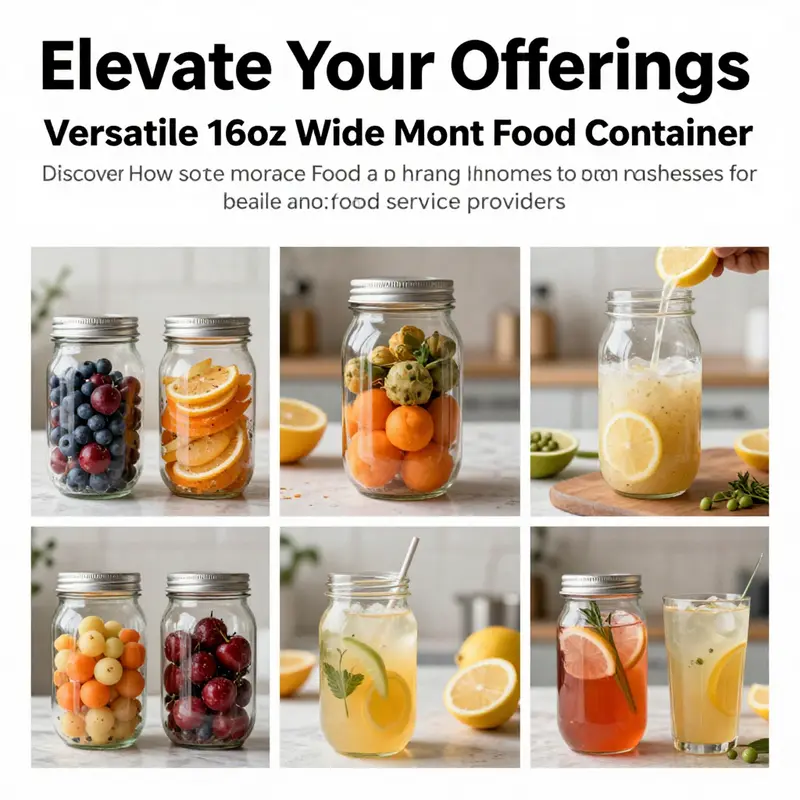
In today’s food and beverage industry, efficient storage solutions play a vital role in maintaining quality and presentation. The 16oz wide mouth food container plastic jar is designed for versatility, making it an ideal choice for bubble tea shops, beverage chains, restaurants, food trucks, and catering services. This article explores the comprehensive features that make these jars practical for commercial use, delves into the materials that ensure durability, investigates their various applications across different sectors, and assesses the economic trends that influence their demand. Each chapter builds upon its predecessor to provide a holistic view of the benefits these jars bring to the food service industry.
Open Doors, Fresh Keeps: The 16oz Wide-Mouth Plastic Jar as a Keystone of Modern Pantry Design
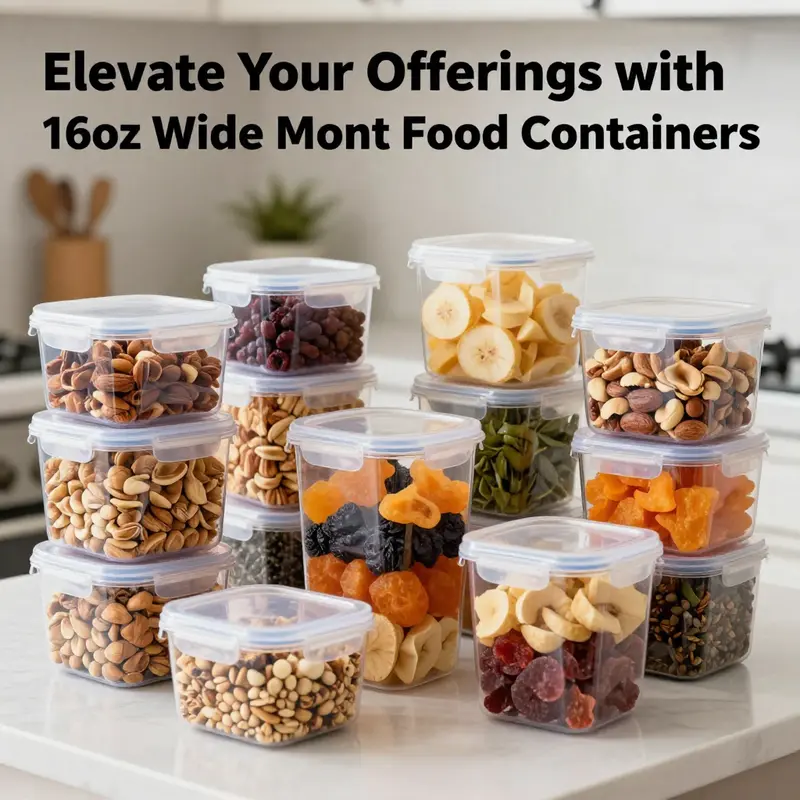
A jar is more than a receptacle; it is a doorway to everyday efficiency. The 16oz wide-mouth plastic jar embodies that idea by turning storage into a quick, almost effortless act rather than a chore. With a generous opening, it invites hands, scoops, and fingers to glide in without wrestling with cramped rims or spouts. This simple design choice—an opening broad enough to reach into—transforms how people interact with dry ingredients, bulk staples, or even small batches of crafts that demand clean, measured access. It reduces the friction between planning and action, making it easier to portion oats for a week’s breakfasts, to scoop nuts for a quick trail mix, or to retrieve dried herbs for a last-minute dinner. The broader goal is not just to hold things but to integrate storage into daily routines with a calm, intuitive rhythm. In a kitchen where minutes matter and mistakes threaten freshness, the wide mouth is a practical philosophy realized in plastic. The jar’s size, at 16 ounces or about 500 milliliters, sits at a sweet point on the spectrum of home storage: larger than a starter pantry canister yet compact enough to sit beside smaller jars in a neatly organized cabinet. It is a form that respects space as much as function, acknowledging that the real value of storage lies in how quickly and cleanly we can access what’s inside, not merely how much it can hold. Because access is the hinge on which freshness swings, this particular design deserves closer attention, not as a curiosity but as a working tool in kitchens, studios, and small-scale retail settings where presentation and reliability matter as much as capacity.
Where shelf life and flavor stay intact, the sensory cues of a product also matter. The jar’s transparency is a quiet superpower. When you can see what is inside at a glance, you reduce the cognitive load of pantry management. You know at a moment’s glance whether the almonds need replenishment or if the oats have lingered longer than anticipated. That visibility also supports presentation in retail settings, where a clear container allows the product itself to tell its story. In homes and businesses alike, this simplicity translates into less waste, fewer mismatches, and more consistent usage. The 16-ounce format anchors a user’s rack or shelf in a tangible way: not so large as to overwhelm a crowded cabinet, not so small as to require constant refilling. It invites a rhythm of use that fits bulk-minded routines while staying within the practical limits of most household workflows.
The material story behind the jar is equally important as the mouth’s width. Transparent PET, a common choice for this kind of container, balances lightness with robust everyday resilience. It is designed to withstand the bumps and shifts of real life, from the gentle jostle in a kitchen drawer to the occasional tumble in a travel bag. PET’s clarity makes the contents legible even when stored among other bottles and jars, which in turn supports quick inventory checks and precise meal prep. The decision to use PET is about visibility in more than one sense: you can see what you have, and you can see it clearly enough to judge freshness and quality. The lightness of the material also makes it practical for transport—whether you’re carrying a jar to a friend’s house, bringing a batch of herbs to a shared workspace, or loading a cabinet for a pop-up event. In applications beyond the home kitchen, such as light-scale cafes or artisanal stores, the same material properties help the jar withstand daily handling while remaining cost-effective for high-volume use.
The lid—the lid—often defines whether a container truly earns trust in ongoing use. The ribbed aluminum screw-on lid is more than a finishing touch. It’s a guarantee of a tight seal that guards against spills, leaks, and contamination, especially during transport. The metallic lid also adds a tactile dimension: the ribbed texture provides grip, which matters when hands are wet, greasy, or just hurried. A secure seal protects the contents from exposure to air, which means flavors, aromas, and textures stay consistent over time. In practical terms, this translates to fresher nuts, crisper dried fruits, and herbs that retain their essential oils longer than they would with a looser top. The combination of a wide mouth and a reliable seal might seem like a simple pairing, but it is the quiet backbone of long-term storage performance. It ensures that the jar works not only when you’re actively using it but also when it sits passively on a shelf awaiting its next assignment.
The design’s versatility speaks to a broad spectrum of applications. Home cooks appreciating bulk buys will find the jar excels in pantry organization, simplifying the transition from bulk shopping to portioned meals. Small cafés or bakeries that prioritize consistent ingredient handling may rely on the same design to hold toppings, spices, or even prepared ingredient kits. The clear body helps staff and customers identify contents at a glance, reducing misreads and misfills, which are common sources of waste and frustration in busy settings. For creative uses beyond food—such as storing craft supplies or other non-edible items—the same structural logic holds. A caregiver organizing dry goods for a class or activity, for example, benefits from the combination of wide access, straightforward labeling surfaces, and a sturdy lid that can endure repeated opening and closing. In short, the jar is not a one-note tool but a flexible instrument, capable of performing across contexts while maintaining a consistent standard of quality.
Another layer of practicality comes from the scale and economy of options offered around these jars. The family of containers extends from compact 100 milliliters up to a full liter, with 500 milliliters (the 16-ounce mark) representing a practical center point. This range is meaningful because it supports a wide range of user needs: a single-person kitchen, a small family, a café, a workshop that ships DIY kits, or a retailer that curates gift bundles. The possibility of choosing different sizes without changing the fundamental design reduces friction for buyers who want to standardize packaging across a product line while still tailoring capacity to specific uses. The potential for customization—logo printing through silk screening or decals—offers a way to translate function into branding. When a shop or a home label fits a brand’s aesthetic, it elevates the packaging from a mere container to a component of the user’s experience. The combination of standard sizes and optional branding supports both practical inventory management and the small business impulse to present products with care and personality.
Safety and trust are essential in any food-contact packaging, and this jar’s specifications reflect that emphasis. The materials and coatings used in PET containers are chosen with food safety in mind, and many production lines align with recognized safety standards, including FDA-related assurances. Such certifications matter because they translate into real-world confidence for households and businesses alike. When a consumer sees a jar that meets these standards, the implicit message is that the product inside is as important as the way it is stored. This confidence is reinforced by the material’s versatility: it handles dry goods with ease and can even take on liquids and semi-liquids in a pinch, provided the lid remains sealed and the contents are compatible with PET’s chemical resistance. The interface between container and user—how easily it fills, pours, or scoops, how cleanly it cleans, how well it resists leaks—becomes a daily factor in choosing packaging for both personal routines and retail presentation. The broader implication is that a well-designed jar does more than contain; it enables consistency in taste, texture, and quality across repeated uses.
In practice, choosing a jar of this kind invites a thoughtful balance of form and function. Considerations include the mouth diameter, which determines how large a scoop or hand can reach into the jar; the overall height, which affects how many jars can be stacked or lined up on a shelf; and the lid’s construction, which influences both sealing performance and user comfort over time. Cleaning is another practical concern: the wide mouth makes washing easier, reducing the risk of residues that can cling to tight corners or narrow rims. A jar that stays clean is a jar that stays in service longer, preserving its transparency and the clarity of its contents. That readability supports better pantry hygiene and, ultimately, better eating or project outcomes. The reusability story is also compelling. Rather than discarding a container after a single use, this jar invites ongoing reuse, recycling, and repurposing. It becomes part of a sustainable practice when households adopt a routine of cleaning and refilling with fresh ingredients, or when retailers encourage customers to repack goods in durable, attractive jars that can be reused for different products over time.
In environments like small-scale retail or hospitality, the physical presence of a 16-ounce wide-mouth jar can contribute to a curated, trustworthy experience. A clear, well-built jar with a durable lid conveys care for both the product and the customer. It signals that the business has thought through the entire lifecycle of the packaging—from how the contents are accessed and how freshness is maintained, to how the container looks on a shelf and how easily it can be integrated into daily routines. When the jar is deployed as part of a broader packaging strategy, its strengths become a visible anchor for quality and consistency across the board. Importantly, the design does not demand elaborate handling or specialized equipment. It is accessible to households and small operations alike, which makes it a practical standard rather than an exception. The result is a packaging option that feels reliable, approachable, and even a little empowering—the kind of container that quietly supports people as they plan meals, organize their spaces, and present products with pride.
As the pantry evolves toward more thoughtful storage solutions, the 16-ounce wide-mouth plastic jar stands as a compact yet versatile solution. It represents a convergence of accessibility, visibility, and durability that makes everyday storage not merely bearable but enjoyable. The empty container promises potential—how it can be filled, labeled, and used in countless ways to complement a busy life. The interior space invites customization, catches the eye with its clear body, and rewards proper handling with lasting freshness. It is, at its heart, a straightforward tool, but its impact is cumulative: a small change in how we store something can ripple through the day, smoothing workflows, reducing waste, and creating a sense of order that spills over into cooking, crafting, and even the playful rituals of gift-giving. In that light, the jar is less a passive object than a partner in daily practice, thoughtfully designed to keep pace with the rhythm of modern life.
External resources can offer broader context about materials safety and packaging standards for food contact. For readers seeking deeper technical background or supplier perspectives, the following reference provides a concrete example of how a supplier describes 16oz wide-mouth PET jars and their lids, including the emphasis on clear visibility, secure sealing, and customization options: https://www.alibaba.com/product-detail/FUZHOU-WEIHUA-Custom-16oz-32oz-500ml_1600497618321.html?spm=a2700.15935854.0.0.5c5b4e3aXuKjxP
null

null
Wide Mouth, Big Impact: How the 16oz Plastic Jar Redefines Commercial Storage and Service

A single 16oz wide mouth plastic jar can feel humble in the line of sight between a shelf and a register, yet its influence in commercial settings stretches much farther than its modest footprint suggests. In the hustle of retail displays, back-of-house prep, and front-of-house service, a jar designed with a wide mouth, a trusted seal, and transparent visibility becomes a quiet multiplier of efficiency, consistency, and customer confidence. When you consider the practicalities of daily operations—bulk packaging, inventory control, portion accuracy, and the uninterrupted flow of a busy service window—the 16oz wide mouth container emerges not as a novelty but as a foundational tool. Its value rests on the interplay of material science, thoughtful design, and the realities of scale that define modern food businesses. Made from durable, food-safe polymers such as PET or PP and often fitted with secure aluminum lids, these jars balance rigidity with user-friendly handling. They resist leaks and impacts, endure repeated filling and washing, and maintain clarity enough to let staff and customers see what’s inside. In commercial environments, where presentation matters as much as practicality, the transparency of a 16oz jar is more than cosmetic. It accelerates decision-making, reduces misfills, and supports fresh, appealing displays of dry goods, snacks, spices, and ingredients that might otherwise disappear into opaque packaging. The story of this container is not just about storage; it is about the choreography of everyday operations—how a simple arc from open mouth to closed seal can streamline workflow, maintain quality, and reinforce brand integrity across channels.
In retail settings, the jar’s most immediate advantage is its visibility. Consumers are drawn to products they can evaluate at a glance: texture, color, and portion size become tangible cues in the shopping experience. A tightly sealed, clearly labeled jar communicates cleanliness and reliability, a crucial signal in aisles crowded with competing options. The wide mouth, meanwhile, invites interaction. Staff can scoop, fill display trays, or portion out samples with minimal spillage, a small but meaningful improvement during peak periods. This ease of access also translates into back-end efficiency. For store-level operations that rely on high turnover and quick replenishment, the ability to fill, dispense, and restock with both speed and accuracy reduces the cadence of bottlenecks around production lines and checkout lanes. It is not merely about speed; it is about consistency. When a product is portioned with the same scoop and the same container geometry every time, customers receive a predictable experience, reinforcing trust and repeat business.
The materials choice—largely PET or PP—underpins the jar’s suitability for a wide range of commercial applications. PET’s clarity provides the crisp, glass-like look that showcases contents without compromise. It resists shattering, which matters in busy environments where jars are stacked or handled by multiple employees. Its chemical compatibility with a broad spectrum of dry goods keeps flavors stable and reduces the risk of interaction with packaging that could compromise product quality. PP, when used, offers excellent heat resistance and durability, adding resilience for services that require frequent washing, sanitizing, or refrigeration compatibility. In both cases, the securing lid options—ranging from screw-on aluminum bands to aluminum lids—bring a sense of permanence to the container. The metal closure not only reinforces freshness with a tighter seal but also aligns with contemporary retail aesthetics, where metallic accents and clean lines communicate professionalism. The combination of a leak-resistant seal, robust construction, and a visually appealing form elevates the jar from a mere container to a product-presenting tool that can live on shelves, in prep stations, or in catered events with equal aplomb.
In the realm of food service and kitchen operations, the 16oz wide mouth jar is equally at home in both back-of-house prep and front-of-house display. For batch cooking, overnight oats, grain salads, or marinated legumes, these jars provide a practical solution for bulk storage that preserves texture and moisture control without trapping odors in dense plastics. Their wide opening makes loading and portioning straightforward, even when dealing with sticky ingredients or multi-ingredient mixes. The lid’s tight seal helps keep aromas contained during transport from prep area to service line or catering event, mitigating the risk of cross-contamination while supporting consistent flavor profiles across shifts. In front-of-house contexts, the jars can be displayed as part of a self-serve or grab-and-go setup. Transparent walls create an appetite appeal that is difficult to replicate with opaque packaging, and the ability to see product condition at a glance supports faster decisions for refill cycles and waste management. For cafés and bakeries that rely on bulk dry goods—coffee beans, tea leaves, sugar, dried fruit toppings, or custom spice blends—the same principles apply. The clean, professional aesthetic of a wide-mouth jar pairs well with display fixtures and shelving typical of retail coffee and pastry concepts. The user-friendly design reduces the need for staff to handle fragile vessels or to juggle multiple small containers during busy service periods. This simplicity translates into fewer mishaps, less product loss, and a more seamless customer experience.
Beyond the immediate components of display and service, the jar’s role expands into sustainability and operational efficiency. Reusability is a cornerstone of many modern procurement strategies. A durable PET jar can endure countless cycles of filling, washing, refilling, and repurposing, contributing to lower long-term packaging costs and less waste compared with single-use alternatives. When linked with standard inventory practices, the jar supports better stock control. Its transparent body acts as a visual inventory cue, enabling team members to identify when a product is running low without resorting to manual counts or bar-code checks. In high-volume operations, this visibility speeds up the reorder process, reduces stockouts, and minimizes the need for disruptive stock-taking. The wide mouth design itself supports efficient cleaning—a pragmatic benefit in commercial kitchens and retail back rooms where downtime for sanitization matters. With a few minutes of hand-washing or machine washing in appropriate settings, staff can restore the jar to a near-new state, maintaining hygiene standards and extending the jar’s useful life. The capacity of 16oz, roughly 500ml, offers a practical sweet spot. It is large enough to hold meaningful portions for batching and dispensing, yet compact enough to fit en masse on shelves and in prep stations. That balance matters in crowded kitchens and bustling storefronts, where space is always at a premium.
The 16oz wide mouth jar also plays a role in branding and presentation, particularly for retailers and small food-service operators who seek a cohesive, professional look without sacrificing practicality. The combination of transparency and a metallic lid or band can evoke a premium feel, suggesting care and quality in the product inside. In cases where packaging aligns with a store’s design language, these jars become part of a curated display that reinforces the business’s identity—from minimalist modern to rustic artisanal. The ability to customize at wholesale levels, including lid finishes and size ranges, further supports brand consistency as a business expands. Suppliers often offer variations in cap style, color accents, or labeling options, enabling operators to tailor the packaging to specific product lines or seasonal campaigns. In addition, the high degree of compatibility with existing storage systems—bins, shelves, and display racks—simplifies integration into established workflows. The result is a coherent, scalable packaging ecosystem where a single jar model can cover multiple product categories and use cases without requiring a complex assortment of different containers.
From a compliance standpoint, the safety and regulatory framework surrounding these jars reinforces their suitability for commercial use. The documents and standards commonly cited in the supply chain—such as FDA 21 CFR 177.1630 for the use of specific plastics in contact with food and applicable EU standards—provide reassurance to operators that the packaging meets essential safety criteria. While many buyers are guided by practical performance metrics—leak resistance, ease of handling, and cost per unit—the safety certifications give procurement teams a critical baseline for risk management. When a jar has passed these certifications, it signals more than compliance; it signals reliability and a commitment to protecting brand integrity and customer health in every serving. Businesses can therefore focus on maximizing efficiency and guest satisfaction, confident that the container will perform under the demanding conditions of a busy kitchen, a crowded display, or a crowded catering event.
Procurement considerations for the 16oz wide mouth jar extend into the realm of wholesale and bulk supply. For operations pursuing scale, the ability to source consistent, food-grade containers in the 16oz (or 500ml) range becomes a strategic advantage. The market often segments these jars by material, closure type, and finish, with suppliers offering bulk pricing, standardized lead times, and options for custom branding or labeling. The flexibility to choose among clear PET or durable PP, select an aluminum lid or a screw-on cap, and align with specific regulatory requirements enables businesses to tailor packaging to their unique operational needs. In practice, this translates into simpler reordering processes, fewer SKU diversions, and improved supplier relationships anchored in predictability and quality assurance. The result is a packaging solution that scales with the business—from a single-store operation to a multi-site network—without sacrificing consistency or performance.
The practical math of using 16oz wide mouth jars in commercial settings is straightforward but meaningful. Calculate the weekly volume of bulk goods dispensed or repackaged, align it with shelf and display space, and measure the cost-per-measured-portion or cost-per-unit of display. When done thoughtfully, the numbers demonstrate not just savings but the ability to sustain a steady customer experience. Customers notice when shelves are well organized and when products are easy to access. They also notice when freshness is consistently preserved, and when the jar’s seal prevents leakage during transit or handling. Those moments of reliability accumulate into trust, repeat business, and positive word-of-mouth, which are invaluable assets in a crowded marketplace.
In terms of long-term value, the 16oz wide mouth jar embodies a philosophy of practical durability married to contemporary design. It supports a culture of inventory discipline, where staff can quickly identify, measure, and present the contents of a jar, while also supporting sustainability goals through reuse and efficient waste management. For operators who aim to maintain a clean, organized, and professional storefront or kitchen, this container offers more than storage. It delivers a framework for consistency—from the moment a product is scooped into the jar to the moment a customer departs with a ready-to-serve snack, a measured portion, or a thoughtfully packaged gift. The result is a tangible improvement in operational tempo and customer satisfaction, achieved through a packaging choice that consistently aligns with the practical realities of commercial environments.
External reference: For more information on commercially viable 16oz wide mouth plastic jars with food-grade safety certifications, visit https://www.alibaba.com/product-detail/FUZHOU-WEIHUA-Custom-16oz-32oz-500ml_1600485796564.html.
Between Function and Freight: The Economic Pulse of the 16oz Wide-Mouth Plastic Jar

A container is not merely a vessel; it is a decision point in a vast system that moves ingredients from kitchen to table, from farm to storefront, and from pantry to playlist of daily routines. The 16oz wide-mouth plastic jar sits at the heart of this system as a compact yet capable unit that embodies how modern packaging balances accessibility, safety, and cost. Its broad opening invites hands to reach in, scoop, and measure with ease, while the reinforced walls and secure seal guard against leaks and spoilage. In markets that prize convenience, visibility, and efficiency, this seemingly simple object reveals a complex choreography of materials science, consumer preference, and global logistics. The economic life of the 16oz wide jar is a lens through which to understand how packaging evolves when customers demand both practicality and sustainability, and how manufacturers and distributors respond with designs, price discipline, and service that keep shelves stocked and brands competitive.
Material choice anchors much of this analysis. PET, or polyethylene terephthalate, offers a blend of light weight, strength, and relatively transparent clarity that makes contents easily recognizable at a glance. PP, or polypropylene, brings chemical resistance and durability that can extend shelf life for dry goods as well as liquids, depending on the lid and seal. The wide-mouth configuration enhances user experience by reducing the friction of filling and dispensing; it also simplifies cleaning and reusability, an attribute that resonates with both home cooks who bulk-prep meals and small-business operators who portion ingredients for ready-to-assemble offerings. In practical terms, the cost per unit is closely tied to the material mix and the processing requirements. PET is generally economical at scale and lends itself to recyclable end-of-life pathways that increasingly factor into brand storytelling and compliance with regional recycling programs. The jar’s construction—rigid walls, a secure thread on the lid, and a seal that curtails moisture ingress—translates into tangible value for consumers who need to preserve the freshness of nuts, oats, herbs, and even prepared salad components during transport and storage.
Alongside material choices, the lid design plays a pivotal role in both performance and perceived value. A tight-sealing aluminum lid, for example, can elevate the aesthetic and durability profile of the jar, capturing a retail shelf presence that distinguishes a product in crowded aisles. Ribbed grips on metal or plastic lids improve handling, especially during filling or when containers carry heavier dry goods. This ergonomic detail may seem small, yet it becomes an important point of differentiation for brands aiming to reduce mess in transit and at the point of service. The combined effect is twofold: improved user confidence and reduced cost leakage from damaged goods or spilled contents during shipping. When a container is used for bulk meal prep or for ingredients in a cafe or bakery, the reliability of the lid and the predictability of the seal directly influence repeat purchase behavior and brand loyalty.
The economic story of the 16oz jar is inseparable from a broader shift toward sustainable and recyclable packaging. Consumers increasingly seek transparency—literally and figuratively—about what their packaging is made from and how it will be disposed of. Clear PET jars satisfy the demand for visibility, letting shoppers see the product and assess quality at a glance, while also offering a pathway to recyclability that aligns with circular economy goals. The market response to this dynamic is a growing portfolio of packaging solutions that emphasize recyclability without compromising performance. For manufacturers, this means investing in resin suppliers, optimizing molding and finishing processes, and ensuring that labeling and additives do not impede recycling streams. In economic terms, the push toward recyclable packaging supports price competitiveness by reducing waste-related costs for retailers and by unlocking access to markets with strict packaging mandates or higher demand for sustainability-driven SKUs. It also enables brands to lean into certifications and eco-labels that can command premium placements in stores and online marketplaces, even as per-unit costs remain anchored by the efficiency of high-volume production lines.
Supply dynamics further shape the economics of 16oz wide-mouth jars. The proliferation of digital marketplaces has made bulk procurement more accessible, enabling small businesses and even individual entrepreneurs to source in scale. Buyers increasingly look for suppliers that present credible safety certifications and reliable logistics arrangements. The ability to secure durable jars with consistent tolerances—clear walls that show uniform clarity, consistent wall thickness, and lids that seal without slippage—reduces the risk of rejects in filling operations and returns during distribution. In practice, this means MOQs (minimum order quantities) and pricing windows that reward bulk purchases. Market intelligence in this space often points to bulk price ranges that can be competitive, with per-unit costs dipping when orders move into twelve-pack unit configurations or other multi-unit bundles. While exact pricing is sensitive to global resin prices, energy costs, and freight rates, the trend line shows a favorable tilt toward lower per-unit costs at scale, provided quality controls are maintained and lead times are reliable.
The buyer’s calculus also extends beyond the sticker price. The ability to customize—whether through lid type, capacity variants like 16oz, 32oz, or 500ml, or branding opportunities on the label—impacts the total value proposition. Customization enables brands to tailor their packaging to niche markets such as organic or health-focused offerings and to align the container with a brand’s visual identity. In competitive retail contexts, visual differentiation on the shelf translates into higher click-through and conversion rates online and more impulse purchases in brick-and-mortar environments. The ease of labeling, the stability of the jar during stacking, and the compatibility of lids with automated filling lines all contribute to a packaging solution that reduces downtime on production lines and minimizes damages in transit. Even the possibility of pairing a 16oz jar with a clear, recyclable lid can be a meaningful signal to consumers who weigh environmental impact alongside convenience and price.
Another aspect of the economic landscape is the growth of direct-to-consumer and v-commerce channels. Bulk purchases by entrepreneurs who launch micro-brands or by small clinics and wellness shops seeking efficient inventory management have amplified demand for cost-efficient, reliable packaging. The ability to buy in bulk with predictable lead times supports the cash flow planning of these businesses and improves profitability by spreading logistics costs over more units. The packaging itself becomes part of the product experience, not merely a container, and as such, brands invest in design elements that reduce product breakage and improve consumer trust. In this context, the 16oz wide-mouth jar is particularly well-suited to a wide range of consumer formats—from grab-and-go snack jars to DIY herb blends and overnight oats—creating a versatile platform that can be repurposed across categories as market opportunities shift.
Innovation continues to inform the economics of this jar category. Advances in resin chemistry have yielded formulations that balance clarity with toughness, enabling lighter and stronger walls that still resist impact during stacking and shipment. Coatings and finishes that resist staining from turmeric, coffee, or certain spice oils help preserve the jar’s appearance over multiple uses, thereby extending its lifecycle in a household or professional setting. In parallel, improvements in screw-on lid threading and gasket materials bolster seal integrity, reducing spoilage risk and returns. These material and design refinements, while incremental on a per-unit basis, accumulate into meaningful margins for producers who operate at scale. The market thus rewards not only the jar’s fundamental features—wide mouth, clear visibility, and reliable seal—but also the subtle enhancements that reduce waste, improve handling, and elevate brand storytelling.
From a geographic perspective, the market for 16oz wide-mouth plastic jars remains strongest in regions with high consumer demand for convenient meal solutions and reliable food storage. North America and parts of Europe continue to drive growth, supported by urbanization, busy lifestyles, and a robust food-service ecosystem that values efficient packaging for takeout, bulk purchases, and retail display. Yet there is also momentum in emerging markets where consumer interest in organized pantries and ready-to-use ingredients is rising, aided by the availability of affordable bulk packaging options on global sourcing platforms. In all these markets, the underlying economics hinge on balancing cost efficiency with product performance and sustainability commitments. Retail buyers increasingly want packaging that can withstand the rigors of cold storage, freezer handling, and shipping—without adding prohibitive costs that would erode profit margins for distributors and retailers.
The integration of supply-chain resilience into packaging economics has become a practical priority. Firms are re-evaluating regional supply networks to mitigate volatility in resin pricing, freight capacity, and port congestion. This resilience often translates into diversified sourcing, longer-term supplier relationships, and a careful appraisal of finished goods inventories. When a SKU like the 16oz wide-mouth jar becomes central to a line of pantry staples or meal-prep offerings, manufacturers and distributors must consider not only the immediate cost per unit but also the broader implications for uptime, service levels, and the ability to support promotions or seasonal demand surges. In this sense, the jar is a vehicle for operational as well as financial stability: a stable, scalable packaging platform that reduces the risk of stockouts and reinforces a brand’s reliability in a crowded marketplace.
Customization, sustainability, and sourcing dynamics intertwine with the evolving expectations of retailers and consumers alike. The packaging industry is moving toward more transparent supply chains, better recyclability metrics, and smarter packaging that communicates value beyond its functional purpose. The 16oz wide-mouth jar, with its clear walls, wide opening, and adaptable lid options, exemplifies how a simple design can accommodate a spectrum of use cases while supporting sustainable packaging narratives. It is a reminder that economic viability in packaging is not merely about the price tag on the box; it is about the total value delivered across the product’s lifecycle—from the moment it is conceived and molded to the moment it is opened by a user, emptied, cleaned, and possibly recycled. This lifecycle consideration, in turn, informs how manufacturers price, how suppliers bundle offers, and how retailers present these containers to shoppers who demand efficiency without compromising quality.
External reading can offer deeper context on supplier capabilities and bulk pricing dynamics in this category. For a broader view of sourcing and product specifications in bulk packaging options, see external resources that discuss market dynamics, certifications, and wholesale terms. https://www.alibaba.com/product-detail/FUZHOU-WEIHUA-Custom-16oz-32oz-500ml_1600497618321.html?spm=a2700.15935854.0.0.5c5b4e3aXuKjxP
Final thoughts
To summarize, the 16oz wide mouth food container plastic jar is more than just a storage solution; it’s a vital tool in enhancing operational efficiency and product presentation in the food service industry. From their practical features and durable materials to their diverse applications and steady market growth, these containers present numerous advantages for bubble tea shops, restaurants, food trucks, and beyond. Embracing these jars can lead to improved organization and customer satisfaction, making them a wise investment for any food service provider.