
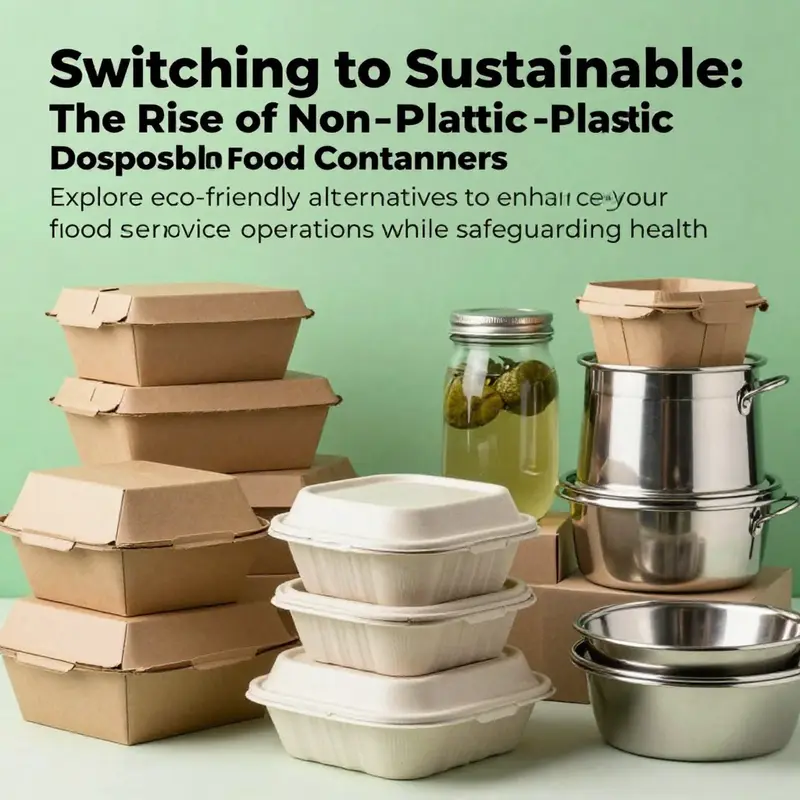
In an era where environmental consciousness is rising, the food industry must adapt. Non-plastic disposable food containers are taking center stage, providing businesses like bubble tea shops, restaurants, food trucks, and catering services with innovative options. This article delves into the types of non-plastic containers available, their environmental and health impacts, and the latest market trends. Each chapter will shed light on how adopting these alternatives not only meets consumer demand but also aligns with corporate responsibility and operational sustainability.
Beyond Plastic: Safer, Smarter Takeout Futures in Non-Plastic Containers
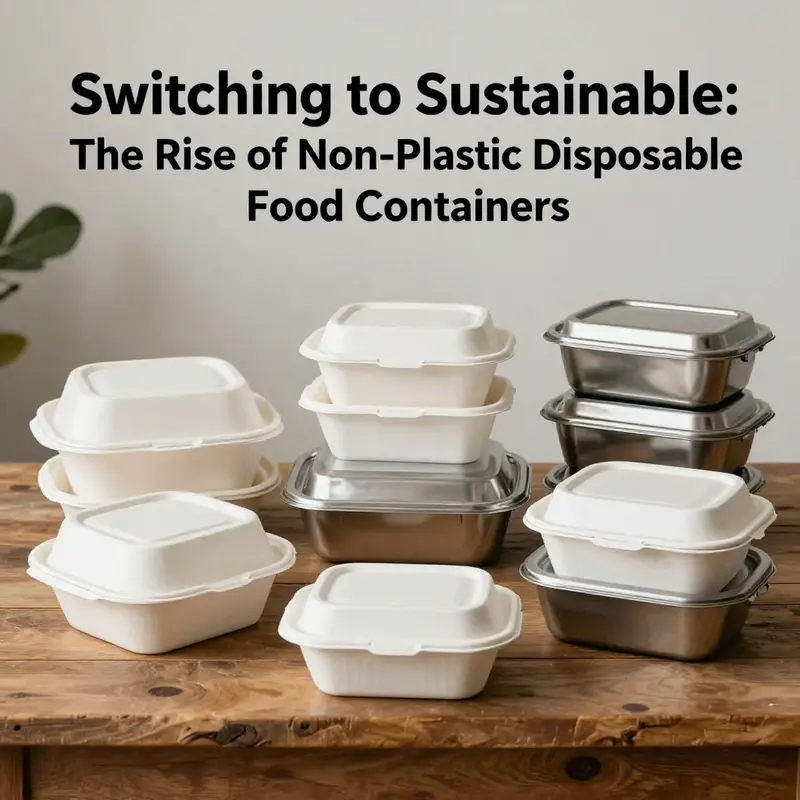
A shift is underway in disposable food packaging, moving away from conventional plastics toward non-plastic materials that can be safer for people and kinder to the environment. Plant-based fibers, molded pulp, and durable reusables are emerging as viable options for restaurants, cafeterias, and homes. The goal is to reduce microplastics, minimize chemical exposure, and cut waste by combining safer substrates with smart use and proper disposal pathways.
At the heart of plant-based options are molded pulp and laminated papers. Molded pulp, made from wood pulp, bagasse, or bamboo, can form sturdy boxes and bowls with heat tolerance suitable for many takeout applications. Depending on the facility, these products may biodegrade in industrial composting streams, home composts, or simply biodegrade in the environment. The end-of-life reality matters for environmental outcomes and should guide design and consumer choices.
Laminated paper containers, which pair food-grade paper with thin PE or PLA coatings, offer strong barrier properties. The coatings improve moisture resistance and heat tolerance but can complicate recycling. PLA coatings can be compostable in the right facilities, while PE layers often hinder conventional recycling. This creates a nuanced trade-off: better performance in use, but more selective end-of-life options.
Reusable options such as tempered glass and stainless steel provide durability and long service life. They avoid disposables altogether when care is taken to maintain and clean them properly, and they can be part of household or institution-wide reuse programs. The trade-off includes higher upfront cost and the need for collection and sanitation infrastructure.
Across all non-plastic choices, safety and transparency matter. Look for food-contact safety labels and trustworthy certifications. Relying solely on recycling symbols is insufficient for ensuring safety. Clear labeling helps consumers and businesses maintain safe storage, reheating, and disposal practices. Standards bodies such as ASTM, ISO, EN, and regional programs shape testing for mechanical strength, barrier properties, and compostability, helping products meet stated performance and safety expectations.
Ultimately, reducing harm from packaging comes from using safe materials and prioritizing reuse where possible. Biodegradable and compostable variants can contribute when appropriate systems exist, but the strongest gains come from eliminating disposables through effective reuse. As technology, policy, and infrastructure evolve, the safest choice remains: favor non-plastic, food-safe materials; verify reliable certifications; and design for end-of-life compatibility with local waste streams.
Beyond Plastic: The Subtle Promise of Paper, Glass, and Steel in Non-Plastic Disposable Containers

Disposables are being redesigned from the inside out. The shift away from plastics isn’t a mere ban; it is a rethinking of performance, safety, and end-of-life. In kitchens, takeout windows, and catering settings, three non-plastic families are rising to the occasion: paper-based containers, glass, and stainless steel. Each carries a distinct balance of convenience, safety, and environmental footprint, yet together they illuminate a practical path toward a future where disposables support health and the planet rather than undermine them. The conversation begins with paper, where the oldest packaging material meets modern sustainability practices. Paper-based disposable containers are prized for their renewable origins and their capacity to break down in appropriate conditions. Molded pulp, derived from natural plant fibers such as wood pulp, bagasse from sugarcane, or bamboo, is shaped into containers through vacuum forming and careful drying. This process yields forms that can hold hot or cold foods while retaining their structure during transit. The appeal rests not only in biodegradability but also in the potential for compostability when industrial facilities are available. Yet the story is nuanced. Some paper containers are laminated with a thin layer of polyethylene PE or polylactic acid PLA to impart moisture resistance and leak protection. PLA, a bioplastic sourced from renewable feedstocks like corn, often carries a green halo, but the presence of coatings can complicate recycling streams. The coating may render the container unsuitable for certain recycling facilities or for home composting, and the heat performance can hinge on the nature of the coating. Consequently, anyone choosing paper must read the coating details and seek certification that the container is food contact safe and, ideally, compostable in appropriate settings. The industry has responded with certifications and standards to distinguish truly compostable options from those that merely carry an eco label. In practice, the molded pulp option is inherently biodegradable and can be a robust choice for short-term use, especially when disposal options include industrial composting. However, it is wise to consider the specific use case. For hot, fatty foods or long storage, the integrity of the coating and the structural resilience of the container matter as much as the fiber base itself. The laminated variants, while offering excellent moisture control, can present a challenge for recycling and may not be ideal for high-heat applications. In balancing these factors, the environmental and safety calculus favors pulp-based solutions for many takeout and meal-prep scenarios, provided the conditions support proper end-of-life treatment. A related avenue in the paper family is the laminated paper container, which combines food-grade paper with a film layer such as PLA or PE. The film improves water resistance and keeps leaks at bay, which is indispensable for soups, sauces, and moisture-rich dishes. The catch is that the laminate can impede recycling streams. PLA coatings, although derived from renewable resources, do not always align with recycling facility capabilities, and PE films can complicate sorting. That is why demand has grown for clear labeling and third-party certification that informs the consumer about compostability and recyclability. Even with these caveats, paper-based containers offer a practical, lower-wiber packaging option when the primary goal is to reduce plastic input and keep waste manageable. The paper story shines when paired with a strong takeout or meal-prep culture: a container that is easy to carry, lightweight, and inexpensive, yet whose end-of-life path aligns with local waste infrastructure. The environmental math becomes more favorable when the container is used for short durations and then diverted to proper composting or recycling streams rather than ending up in a landfill alongside non-biodegradable plastics. The safety dimension of non-plastic containers surfaces in every choice. The global concern about microplastics has driven inquiries into heat, leaching, and the potential for plastics to migrate into food. Paper and glass present a straightforward advantage here: they do not introduce plastic-derived microplastics into the food chain. The laminated paper option, however, invites careful scrutiny of the coating, heat tolerance, and disposal pathways. Informed choice rests on two pillars: clear labeling that signals food contact safety and an honest assessment of the end-of-life route. Consumers are advised to seek certifications that attest to safe contact with food, and to look beyond marketing phrasing to verify whether the container is truly compostable or recyclable within local facilities. The discourse around safety and sustainability also invites a broader view of reuse. While paper can serve well in single-use contexts with proper disposal, glass and steel offer durability that can redefine what disposal means. When weight, breakage risk, and reuse potential are weighed, glass enters as a middle ground: heavier than paper, but chemically inert and highly reusable. Tempered glass, specifically, represents a robust option for households that value long-term storage. It withstands temperature fluctuations better than ordinary glass and is compatible with microwaving when the lid is removed, a distinction that matters for reheating and meal planning. The lids themselves often use silicone gaskets to preserve seal integrity, which helps maintain freshness without relying on plastics. The upside of glass is its purity and its compatibility with many cleaning processes. Reusability reduces waste over time and minimizes the need for frequent replacements. Yet the trade-off is weight, fragility, and the need for careful handling, especially in busy households or catering environments where transport and stacking come with risk. Beyond glass lies the enduring strength of stainless steel. Stainless steel containers have carved out a niche as durable, reusable vessels that resist leaching and retain flavor integrity. They are designed for hot and cold foods, and many configurations employ double-walled insulation to sustain temperature, a feature particularly valued for on-the-go meals and picnics. The steel option aligns with a philosophy of long-term use: a single high-quality container can outlast many disposable plastic alternatives. In practice, the stainless steel path supports a culture of reuse rather than single-use consumption. It is heavier, and sometimes more expensive upfront, but its long-term performance can translate into lower waste and a more reliable seal under a range of temperatures. The central aim—minimizing chemical exposure and avoiding plastic-derived contaminants—remains a common thread across these materials. The choice among them hinges on context. A meal-prep routine that relies on quick reheats, leak resistance, and industrial-scale composting may favor paper with a certified coating that is compatible with local waste streams. A household or event that emphasizes ongoing reuse will likely find tempered glass or stainless steel to be the most effective long-term investment. And all of these decisions benefit from clear, trustworthy labeling. Look for explicit food contact safety assurances and avoid relying on recycling symbols alone as evidence of safety. The infamous triangle symbol is not a reliable indicator of repeated-use suitability; the presence of a specific food-contact mark or a chopstick and spoon icon is a more meaningful signal. In practice, a thoughtful consumer can navigate these choices by aligning material properties with use scenarios, waste infrastructure, and personal safety priorities. For readers seeking a concrete sense of how metal options surface in real-world product lines, an exploration of related non-plastic options can illuminate the path forward. aluminum-plant product page
For a real-world example of metal-based non-plastic options, see the aluminum-plant product page. This link points to how metal alternatives are presented in a practical catalog, underscoring the ongoing shift toward durable, reusable containers that minimize environmental impact. The broader conversation about non-plastic containers has been sharpened by accumulating evidence about the health and environmental costs of plastics. Institutions and researchers increasingly advocate for materials that do not leach chemicals, maintain food integrity across temperature ranges, and offer feasible end-of-life options. The cited literature reinforces the idea that non-plastic containers—especially those designed for reuse and proper end-of-life handling—are a meaningful component of a sustainable kitchen ecosystem. They do not single-handedly solve waste, but they shift the balance toward safer, more responsible choices that align with growing consumer demand for healthier, cleaner pathways of food storage and transport. Reading across the evolving field reveals a common thread: safety, transparency, and practicality must guide every container choice. The ideal outcome is a system in which meals travel in vessels that preserve flavor, protect health, and eventually re-enter the circular economy in a way that minimizes harm. As households, institutions, and industries move toward these non-plastic options, the broader food system can begin to decouple from plastic dependency while preserving convenience and reliability. For those seeking to deepen understanding of the risks associated with plastics and the benefits of safer alternatives, the following external resource offers a rigorous perspective grounded in environmental health research: https://www.sciencedirect.com/science/article/pii/S004896972500054X
Rethinking the Footprint: The Lifecycle Realities of Non-Plastic Disposable Food Containers

Non-plastic disposables promise a cleaner narrative than traditional plastics. Paper, bamboo, and plant-based fibers are often sold as inherently greener alternatives, carrying the hopeful label of being easier on the environment. Yet a lifecycle perspective reveals a more nuanced truth. The journey from raw material to disposal is long and energy-intensive, and the benefits that appear at first glance can be mitigated—or even reversed—by how these products are produced, used, and finally disposed of. The discussion is not merely about whether a container is plastic or not; it is about how a material’s entire life interacts with ecosystems, energy grids, and waste streams. When we examine resource demands, water use, emissions, and end-of-life options, the story becomes a careful balancing act rather than a simple substitution of one material for another.
Resource depletion and land use lie at the heart of the equation. Fiber-based containers draw on wood pulp, bamboo, sugarcane fiber, and other plant-derived sources. The scale of demand matters. Paper-based production, for instance, can require substantial forest resources. It is well documented that producing one ton of paper can necessitate as many as twenty trees, depending on species, pulp process, and recycling input. Bamboo and sugarcane, while fast-growing on some fronts, still require vast land areas for cultivation. Those lands may compete with food crops or push natural habitats toward fragmentation. Even when trees or grasses are managed under sustainable schemes, the pipeline from forest or field to molded pulp or laminated sheet involves energy-intensive steps: fiber extraction, pulping, washing, bleaching, drying, and shaping. Each stage consumes water and energy, contributing to a local and global carbon footprint that must be weighed against the benefits of replacing a fossil-fuel-based plastic film. The immediate environmental costs—water withdrawal, chemical use in pulping, and emissions tied to energy production—can be nontrivial, sometimes erasing perceived gains from avoiding petroleum-based plastics.
Water and energy consumption further complicate the calculus. Pulping and bleaching processes demand copious quantities of water, and the chemicals used in these steps can pose risks to aquatic systems if effluents are not properly treated. The subsequent drying, forming, and finishing operations require significant energy input. In aggregate, the life cycle carbon footprint of some non-plastic disposables can be comparable to, or even exceed, that of certain plastics when evaluated on a cradle-to-grave basis. This is not a universal verdict—plastic production has its own heavy energy and emissions profile—but it does challenge the assumption that “non-plastic equals low impact” across every scenario. In some cases, more efficient plastic manufacturing and supply chains have introduced a bias toward plastic when measured by energy intensity per unit—reminding us that the environmental advantage of a material is highly context-dependent.
End-of-life challenges reveal further twists in the tale. Many so-called biodegradable or compostable paper-based containers are lined with polyethylene, wax, or other coatings to prevent leakage. Those coatings can severely limit recyclability and compostability in ordinary facilities. Even unlined paper containers may require industrial composting infrastructure to achieve meaningful breakdown, and such facilities are not universally available. When products do end up in regular landfills, they behave similarly to other carbon-containing waste: they can decompose slowly and generate methane, a potent greenhouse gas, particularly when organics accumulate in anaerobic conditions. Contamination with food residues further complicates sorting and processing, potentially contaminating large batches of recyclable or compostable material and reducing overall system efficiency. The net effect is that the promise of easy end-of-life derived from “biodegradable” claims often dissolves in the face of practical disposal realities.
Chemical migration and health considerations add another layer of complexity. The additives used in paper products, bleaching agents, and adhesives can migrate into food, especially when containers are exposed to heat or acidic contents. The safety picture depends on precise formulations, processing controls, and robust labeling. Certification schemes and regulatory standards can vary in stringency, which leads to a patchwork of eco-label claims that may mislead consumers about what is truly safe and sustainable. The presence of a so-called eco-friendly label does not automatically guarantee a favorable fate at the end of the container’s useful life, nor does it ensure absence of chemical migration. Inconsistent standards can erode consumer trust and make responsible choice-making more difficult.
Against this backdrop, the temptation to declare a universal win for non-plastic disposables weakens. The most effective environmental strategy often lies not in switching to a different single-use material, but in reducing usage altogether and embracing reuse. Reusable options—glass and stainless steel, in particular—offer a pathway to dramatically lower waste when they are designed for long life, safely engineered for repeated heating or cooling, and paired with straightforward cleaning routines. The micro- and macro-level benefit of reuse compounds over time: each additional cycle that avoids a single-use item compounds into meaningful waste reduction. In settings such as cafeterias, workplaces, and schools, a systematic push toward bring-your-own-container or on-site refill programs can shift behavior and infrastructure toward a circular model. In this context, the debate shifts from “Is this fiber-based container better than plastic?” to “How can we close the loop so that containers are used again and again rather than discarded after a brief moment of use?”
The practical path to a more sustainable mix of options also depends on thoughtful product design and credible signals to consumers. True safety markings—clear, consistent indications of food-contact safety—are essential. The familiar triangle recycling symbol, outsize in public perception, does not guarantee suitability for reuse. Consumers are often misled by marketing that implies safety or recyclability without robust verification. Instead, look for explicit food-contact certifications or marks, and be wary of vague “eco” claims that do not tie to transparent standards. The discussion around certification is not an abstract concern; it directly translates into the safety of what we feed ourselves and how reliably we can manage waste streams in our communities.
Yet even with all these caveats, there is a recognizable value in non-plastic disposables when considered as part of a broader, more deliberate strategy. Paper-based and fiber-based containers can complement a circular economy if designed with careful attention to the end-of-life system and if paired with infrastructure capable of processing them appropriately. The move away from plastics remains essential, but it is not sufficient by itself. Real progress comes from aligning consumer choices with systemic changes: designing for reuse, improving materials’ lifespans, and building robust take-back and recycling or composting pathways. When these pieces align, the environmental arithmetic improves significantly, because reuse and repair slowly erode the energy and waste footprints that single-use items accumulate in a real-world setting.
At the level of everyday practice, a practical example of this alignment can be seen in offerings that emphasize durability and reuse. Some producers and retailers are expanding lines of reusable containers designed to withstand repeated use, easy cleaning, and safe reheating. For instance, a durable, plant-fiber-based line that is built for repeated use and supported by a convenient cleaning protocol can provide a meaningful reduction in waste, particularly when paired with a policy or culture that encourages customers to bring their own containers. In this vein, there are options that illustrate how design choices affect performance over time, showing that non-plastic doesn’t automatically mean disposable in perpetuity. For readers seeking to explore tangible examples, a recent example line demonstrates how a fiber-based container can be engineered for multiple cycles and compatible with typical cleaning routines. And for consumers curious about where to look for reusable forms, Green Soil Lotus offers a case study in how a durable, reusable design can fit into daily life and standardized service environments.
As we map out these considerations, a broader message emerges. Non-plastic disposables contribute to the conversation about safer materials and reduced reliance on fossil fuels, but they are not a universal salvation. The environmental benefits depend on careful sourcing, judicious use, responsible disposal, and a shared commitment to reuse. The most enduring lesson is that sustainability unfolds through systems thinking: how we design products, how we pay for waste processing, how institutions structure service models, and how individuals change daily habits. The Environmental Protection Agency frames the guiding principle clearly: sustainable outcomes arise when consumption is reduced and products are designed for longer life and easier reuse. Non-plastic disposables have a place in this landscape, yet their value must be measured against their full lifecycle, not just their surface-level eco-labels. In practice, the strongest guidance remains straightforward: favor containers that can be reused many times, supported by practical cleaning methods and accessible take-back or refill programs. When reuse isn’t feasible, choose fiber-based options with credible end-of-life infrastructure, and maintain vigilance regarding labeling, standards, and true safety signals. This balanced approach keeps the focus on a durable, low-impact future rather than a quick replacement that merely shifts the burden from one waste stream to another.
External resource: https://www.epa.gov/sustainable-management-waste/understanding-environmental-impact-disposable-food-containers
Health at the Table: Safety Realities and Hidden Risks in Non-Plastic Disposable Food Containers

Non-plastic disposable food containers have gained traction as safer alternatives to conventional plastics, but their health profile is not uniformly straightforward. The headline promise is clear: fewer microplastics, fewer chemical leachates, and a lower long-term chemical burden on the body. Yet the reality depends on how these containers are made, what they are made from, and how they are used. The health considerations that accompany non-plastic options center on material composition, the processing steps that bring them to market, and the potential for chemical migration when they face heat, acidity, or prolonged contact with food. In other words, safety is a product of careful material choices, rigorous standards, and informed use, not an automatic guarantee simply because a container is marketed as non-plastic. This nuanced view matters because the consumer landscape is crowded with claims of greenness, often overlapping with misconceptions about what is truly safe for repeated use, heat exposure, and immersion in fats or acidic sauces. The challenge, then, is to translate a general move away from plastic into specific actions that protect health while still delivering the environmental benefits that many of these options claim to offer.
Among the most common non-plastic categories are paper-based containers, including molded pulp and laminated varieties. Molded pulp, created from plant fibers such as wood pulp, bagasse from sugarcane, or bamboo, presents a compelling sustainability story. It is formed into bowls and clamshells via vacuum forming and drying, with the core assumption that plant-based fibers are inherently safer than synthetic polymers. In practice, the safety picture depends on what protects the contents. Many molded pulp products rely on minimal coatings to resist moisture, or on coatings that are designed to be food safe. The laminated paper options add a thin layer of polymer, frequently polyethylene or polylactic acid. This coating serves a practical purpose, providing grease resistance and leak protection. However, the presence of a polymer layer complicates recycling streams and can introduce challenges for end-of-life disposal. The health angle here is twofold. First, the coatings themselves can carry additives or impurities that migrate under heat, especially if the container is used with hot foods or is heated in a microwave. Second, even when a coating is labeled as food contact safe, the joint between the fiber base and the coating can become a site of minor migration, particularly over time or with repeated use. PFAS in grease-resistant coatings, for instance, have become a focal concern because these substances persist in the environment and can accumulate in the human body. The potential for such chemicals to migrate during heating highlights a practical caution: even non-plastic options are not automatically inert, and heating any disposable container intensifies the risk of chemical migration.
Plant-based materials extend the safety conversation beyond coatings to the raw materials themselves. Sugarcane bagasse, bamboo, cornstarch, and wheat straw are celebrated for deriving from renewable resources and for their tendency to break down more readily than many conventional plastics. Yet these materials are not universally free of health concerns. Contaminants can creep in through processing, storage, or the use of adhesives and binders during manufacturing. Some bagasse products have shown trace amounts of heavy metals such as lead or cadmium, a reminder that the purity of the raw feedstock and the quality of processing are critical. The very appeal of plant-based containers—biocompatibility with natural cycles—can be undermined if producers do not uphold stringent material controls. The same caution applies to paperboard used for some plant-based packaging; even when the base fiber is from a renewable source, recycled or mixed fibers can carry residual contaminants like dioxins or PAHs if processing or bleaching is not tightly controlled. In short, the health benefits of plant-based containers hinge on the absence of harmful additives and contaminants, which in turn depend on supply chain integrity and robust quality assurance.
The fiber-based segment—often recycled paper or fiber composites—exposes another axis of health risk that merits scrutiny. Recycled content is admirable from a waste reduction perspective, but it introduces the possibility of residual contaminants that survived prior use. Dioxins and PAHs are among the substances that can accompany recycled fibers if the recycling stream includes paper treated with certain chemicals or if the fibers are exposed to high-heat processing. Dioxins, in particular, are a small but potent class of compounds known for carcinogenic and endocrine-disrupting properties. The migration risk from these fibers into food is generally low in well-controlled manufacturing environments, yet it is not zero, especially when containers are subjected to heat or highly acidic foods. The takeaway is not to vilify recycled fiber but to insist on supply chain transparency and certifications that attest to the absence of hazardous residues and successful detoxification during processing.
To help navigate these complexities, health and safety guidance emphasizes several practical steps. First, seek products that carry credible certifications or standards that address both biodegradability and the absence of harmful chemicals. Standards such as ASTM D6400 or EN 13432 signal a commitment to safe, certified compostability and to minimizing the use of additives that could leach into food. While certifications do not erase all risk, they do offer a baseline assurance that the product meets defined non-toxicity criteria and that the materials were processed within a regulated framework. In addition, always verify that the product is labeled for food contact and bears the appropriate markings beyond generic green claims. The infamous recycling triangle or chase arrows do not inherently indicate that a container is safe for repeated food use or heating. In practice, the safest path is to look for explicit food contact labels and symbols, including any indicators of microwave or oven compatibility, and to favor brands that publish clear material specifications and testing results.
Another crucial guideline revolves around heating. Thermal stress enhances the likelihood of chemical migration from coatings, adhesives, or the substrate itself. The health risk becomes especially relevant for containers that are used for hot meals, fatty foods, or acidic contents. Consumers should avoid heating disposable containers in microwaves or conventional ovens unless the manufacturer explicitly states that heat is safe for that specific product. When in doubt, transferring hot contents to a proven heat-resistant container—such as glass or stainless steel—remains a prudent choice. This aligns with a broader sustainability mindset: while compostable or biodegradable disposables can reduce waste, reusables like glass or metal offer the most robust protection against chemical migration and long-term exposure, and they significantly cut waste over time.
The practical path forward, therefore, blends careful material selection with disciplined use. For individuals who must rely on disposables, prioritizing molded pulp or laminated paper products with transparent, third-party certifications can reduce risk relative to non-certified options. It is also important to scrutinize the source and avoid products with ambiguous coatings or unclear origin. A simple, proactive habit is to check for a food contact label or a chopstick and spoon icon that signals safety for direct food use. When possible, choose products from suppliers who publish testing data or who participate in recognized certification programs, and prefer those that commit to minimizing or eliminating PFAS and heavy metal additives in their coatings and inks.
For those who pursue the broader aim of safer and more sustainable consumption, the preference for reusable options should remain strong. Reusable glass and stainless steel containers provide the most reliable protection against chemical leaching, permit repeated use, and remove the ongoing production-related exposure associated with disposable packaging. Yet even with these advantages, awareness is essential. If a consumer must rely on disposables, the safer choices are those with transparent material disclosures, robust labeling practices, and clear guidance about heat resistance and dishwashing compatibility. The goal is not to chase a perfect once-and-for-all solution but to assemble a portfolio of safer, well-tested options that minimize health risks while aligning with environmental goals. An informed consumer stands at the intersection of science, regulation, and everyday practice, translating standards into everyday meals.
For readers seeking authoritative guidance on safe use and certification standards beyond the chapter, consult sources from the EPA that discuss food packaging and safety, including how to minimize health and environmental impacts when selecting and using packaging. This broader regulatory framework complements the material-focused discussion above and reinforces the idea that safety is a multi-layered concern, encompassing substrate choices, processing controls, labeling clarity, and responsible consumer habits. Practical, evidence-based choices—rooted in certification and transparency—can help translate the non-plastic disposables movement into real health and environmental benefits. And as the conversation about avoidance of microplastics continues to evolve, continuing education on material science, supply chain integrity, and consumer behavior remains essential for a safer, more sustainable table.
In this landscape of options, one additional signal of seriousness can be found in consumer-facing product pages that emphasize not just compostability but also the cleanliness of the supply chain. For instance, some plant-based packaging pages pair ecological claims with explicit statements about the absence of dangerous additives and about the safety of the coating systems used. While not every product can claim perfect safety, readers can benefit from approaching each choice with a habit of asking questions: What is the base material? What is the coating and how does it interact with food under various temperatures? Is there independent testing data or certification? And does the supplier provide clear disposal guidance that aligns with local waste management practices? Answering these questions helps ensure that the health benefits attributed to non-plastic disposables do not dissolve into unintended exposures.
As a closing reminder, the landscape of non-plastic disposables is not a single track toward safety or sustainability. It is a mosaic of materials, processes, and practices that can either mitigate or magnify health risks depending on how they are sourced and used. The best practical approach remains a combination of choosing well-certified, food-safe materials, using disposables only when necessary and avoiding heating them, and prioritizing reusable glass or stainless steel whenever possible. This balanced strategy recognizes both the environmental rationale and the health realities that accompany non-plastic options, while linking practical daily choices to a larger, ongoing conversation about safe packaging. For readers curious about specific product examples and their material compositions, the Green Soil Lotus page offers a concrete case study of how plant-based packaging can be presented and evaluated in real-world contexts: Green Soil Lotus. Keeping this approach in mind can help consumers navigate the nuance between safety claims and actual practice in a market that continues to evolve.
External reference for further authoritative guidance on safe use and certification standards is available at the EPA’s resources on food packaging and safety, which discusses regulatory frameworks and best practices for minimizing health and environmental impacts. https://www.epa.gov/sustainable-management-food-waste/food-packaging-and-safety
Beyond Plastic: Market Currents, Material Realities, and the Consumer Pulse Driving Non-Plastic Disposable Food Containers

Non-plastic disposable food containers have shifted from a niche alternative to a central feature of modern packaging strategy. This evolution rests on a convergence of consumer preference, regulatory pressure, and practical constraints that shape what gets produced, bought, and discarded. At the heart of the shift is not merely a rejection of plastic, but a thoughtful redefinition of convenience, safety, and sustainability. When consumers say they value recyclability and the absence of plastic in packaging, they are signaling a preference for products that can close the loop without introducing new contaminants into food, water, or landfills. This mindset is not uniform, but it is cohesive enough to move markets toward non-plastic materials that perform as well as or better than conventional options in key use cases. The data point that nearly 68 percent of consumers prize recyclability and the absence of plastic in their packaging choices serves as a bellwether. It suggests that the demand for non-plastic disposables is less about novelty and more about reliability and responsibility. In practice, this translates into a growing appetite for compostable and biodegradable alternatives, including molded pulp, bagasse, and other plant-based materials that are designed to degrade in appropriate facilities rather than persist in the environment. Yet the journey from concept to consumer is not linear. Each material brings its own set of trade-offs—moisture sensitivity, heat tolerance, and costs—that shape how widely it is adopted and under what conditions it performs best. The market narratives, therefore, weave together ecological intent with industrial feasibility, producing a spectrum of products designed for different chains of custody, from quick-service outlets to full-service restaurants and consumer households.
One of the most consequential shifts is the growth of sustainable packaging ecosystems within large regional clusters. In parts of East Asia, for example, manufacturing hubs have evolved into vertically integrated systems that cover compostable tableware from raw fiber to finished goods. Such ecosystems enable scale, standardization, and cost efficiencies that were previously impossible for smaller operators. They also create a feedback loop: as brands push zero-waste goals, suppliers refine throughput, reduce waste in production, and expand certifications. This alignment between brand ambitions and supplier capabilities helps explain why packaging firms now emphasize materials like molded pulp and laminated papers made from recycled fibers. Molded pulp, derived from wood pulp, sugarcane bagasse, or bamboo, offers a natural pathway to compostability and a lower carbon footprint relative to plastics. Its value proposition rests on its intrinsic biodegradability and the potential to be molded into sturdy, heat-resistant shapes suitable for meals and take-out formats. Laminated paper, which combines food-grade paper with a thin coating such as polyethylene or polylactic acid, is another major branch of non-plastic disposables. The coating choices matter a great deal: PE can hinder recycling streams, while PLA—though derived from renewable resources—still presents challenges in high-heat conditions and may complicate end-of-life processing. The industry’s challenge, then, is to balance performance, safety, and recyclability in a way that aligns with what the waste stream can actually handle.
A parallel narrative is the rise of reusable non-plastic options that stand as long-term alternatives to single-use disposables. Reusable glass and stainless steel containers are increasingly recognized as the most effective means of reducing waste over time. They do not leach chemicals, tolerate repeated heating and washing, and deliver predictable performance across a range of foods. While these options diverge from the traditional notion of a disposable container, they anchor conversations about sustainability by demonstrating a clear path to waste elimination through redesign of consumption patterns rather than mere substitution. At the same time, the modularity and durability of these reusable options push brands to rethink logistics, inventory management, and consumer education so that reuse cycles become convenient rather than burdensome. In practice, retailers and foodservice operators are discovering that a hybrid strategy—offering high-quality non-plastic disposables for one-off occasions while encouraging reuse for everyday use—often yields the best environmental and economic outcomes.
Policy and consumer sentiment intersect in meaningful ways here. The data point that 81 percent of respondents support bans on certain plastic food packaging, such as expanded polystyrene, reflects a broader willingness to accept more robust standards and to support safer, more sustainable choices. This sentiment helps explain why certifications and explicit food-contact markings matter more than ever. Labels that certify food-contact safety or bear a recognized symbol signaling safe reuse or compostability provide essential assurances to both retailers and consumers. In practice, this means that a growing share of non-plastic disposables emphasize clear, auditable markings and third-party validation. The absence of plastic must be complemented by clear guidance on end-of-life handling, so that compostable products are directed to industrial composting facilities when home composting is not feasible. As regulators in several regions tighten waste separation and recycling requirements, brands face a dual mandate: ensure product safety and optimize material stewardship across the entire life cycle.
The material conversation remains central to consumer choice. Bagasse and molded-fiber products, in particular, have emerged as strong contenders because they can offer a low-carbon footprint and compostability relative to conventional paper and plastic hybrids. They do, however, carry limitations. Moisture sensitivity can limit their performance in humid environments or with wet foods, and their decomposition often hinges on access to industrial composting infrastructure rather than home composting. Production costs for plant-based fibers can also be higher, so brands must weigh these costs against the long-term savings from waste reduction, brand differentiation, and consumer trust. In many markets, these trade-offs are navigated through a combination of process efficiency, advances in coating chemistry, and consumer education. The result is a menu of options that allows operators to tailor packaging to temperature, moisture exposure, and handling conditions while maintaining a perception of sustainability.
From a strategic perspective, the market is also moving toward strong supplier partnerships and compliance with international standards. Brands increasingly seek suppliers who can demonstrate adherence to FDA, LFGB, and other recognized standards, ensuring that materials are food-contact safe and that performance is consistent across geographies. This standardization is essential for large-scale deployment, especially as multinational brands expand into markets with diverse waste management infrastructures. It also helps reduce the risk of regulatory disruption caused by noncompliant materials or ambiguous labeling. The strategic focus on standards, traceability, and quality is a key reason why materials like molded pulp and bagasse-based products are gaining traction. They provide a credible narrative of safety, environmental responsibility, and practical utility—elements that resonate with both customers and regulators.
Market projections underscore the economic dimension of these trends. The global collapsible food container market, a proxy for both reusable and innovative non-plastic options, is anticipated to grow from about USD 325 million in 2024 to roughly USD 390 million by 2032. Such growth signals not simply incremental demand, but a shift in how packaging is conceived and purchased. It implies that consumers and businesses are willing to invest more in alternatives that align with zero-waste objectives, even when those alternatives require different supply chains, storage, and handling practices. Brands are responding by careful sourcing and by seeking suppliers who can deliver scalable, sustainable products while maintaining robust quality control. This alignment helps ensure that the shift away from plastic can be sustained across various service models—from quick-service operations to catering and large-scale events.
As the conversation about non-plastic disposables matures, it becomes clear that knowledge and communication are as important as product development. Consumers need to understand what “biodegradable” or “compostable” really means in practice, including the conditions required for optimal decomposition. They also need clarity about reuse, recycling, and waste management in their region. A practical approach is to emphasize food-contact safety, recyclability, and compostability with clear, consistent labeling. For those who want a tangible example of safe, sustainable tableware aesthetics and materials, there are plant-based designs that illustrate the marriage of form and function. See the Green Soil Lotus line for a visual reference to how plant-derived fibers can shape consumer expectations around sustainability, without sacrificing performance in everyday use. green-soil-lotus
Ultimately, the market momentum behind non-plastic disposable containers rests on a simple truth: safety, sustainability, and convenience can converge without compromising one another. The most successful products are those that deliver reliable performance, clear end-of-life pathways, and a credible environmental story. The consumer’s willingness to support environmentally responsible practices creates room for innovation at the material, design, and process levels. It also invites continued scrutiny of coatings, additives, and the true recyclability of so-called “eco-friendly” options, ensuring that green claims withstand the test of real-world waste streams and regulatory review. For researchers, policymakers, and brand teams, the chapter ahead is about translating these market signals into actionable strategies—whether that means investing in industrial composting infrastructure, refining molded-fiber formulations, or reimagining the supply chain to support zero-waste commitments. As the dialogue evolves, the non-plastic disposable category will continue to expand not just in size, but in clarity and resilience, shaping how meals are packaged, consumed, and ultimately returned to the earth.
External reference: for a rigorous examination of the broader dangers posed by conventional plastics and the benefits of alternatives, see https://www.sciencedirect.com/science/article/pii/S004896972500054X
Final thoughts
As the food industry evolves, non-plastic disposable food containers represent a pivotal step toward sustainability and health safety. By embracing these eco-friendly options, you not only meet consumer preferences but also contribute positively to environmental stewardship. With alternatives like paper, glass, and stainless steel at your disposal, your operations can align with modern values while enhancing overall service quality. Make the switch today and be part of the movement toward a greener future.