
Introduction
In the bustling world of food services, from vibrant bubble tea shops to bustling restaurants and efficient catering services, the quality of packaging solutions plays a pivotal role. Food plastic container manufacturers are more than just suppliers; they are essential partners in ensuring that culinary creations reach customers in optimal condition. High-quality packaging not only preserves the freshness and taste of food items but also reflects the brand’s commitment to sustainability and safety. As demand for takeaway and delivery options surges, reliable food packaging becomes indispensable. Manufacturers who prioritize innovation and functionality can significantly influence customer satisfaction and brand loyalty. For businesses seeking to find the right solutions, EcoCupBowl offers a diverse range of in-stock food containers that cater to varied needs, ensuring that every meal is beautifully presented and securely packaged. Investing in dependable packaging is not just a smart business strategy-it’s a necessity for maintaining the integrity of food while enhancing the overall dining experience.
Key Considerations When Choosing Food Plastic Containers
When selecting food plastic containers for your business, it’s essential to keep several factors in mind to ensure quality and safety. Here are some key considerations:
- Material Safety: Choose containers made from safe, FDA-approved materials that do not leach harmful chemicals into food and beverages. Look for BPA-free options to protect your customers’ health.
- Durability: Assess the sturdiness of the containers to ensure they withstand handling, transport, and storage without breaking or leaking. This is crucial for maintaining food quality and safety.
- Eco-Friendliness: With the increasing focus on sustainability, consider containers that are recyclable or made from biodegradable materials. This aligns with environmentally conscious business practices and appeals to eco-aware consumers.
- Size and Shape: Evaluate the required sizes and shapes suitable for your food items, ensuring they meet both presentation and convenience needs.
- Cost-Effectiveness: Compare different options to find a balance between quality and cost, enabling you to source products that are both reliable and budget-friendly.
For more specific products, check out our selection of food trays or takeaway boxes.
Benefits of Using Food Plastic Containers in Bubble Tea Shops and Catering Services
Food plastic containers have become a popular choice for bubble tea shops and catering services, offering numerous benefits that cater specifically to the needs of these industries. Here’s an exploration of the advantages of using these versatile containers:
1. Safety and Compliance
Plastic containers designed for food service are often made from food-grade materials that adhere to safety regulations, ensuring that they are safe for direct contact with food and beverages. This is particularly crucial in the bubble tea industry, where maintaining hygiene is paramount due to the nature of the products. Additionally, reputable manufacturers follow guidelines set by organizations such as the U.S. Food and Drug Administration (FDA), which regulates the materials that come into contact with food, giving businesses peace of mind regarding safety.
2. Versatility in Use
The variety of shapes and sizes available in food plastic containers allows them to accommodate different types of food and drinks. This versatility makes them suitable for a range of offerings in bubble tea shops, from large drinks to smaller snack portions. For catering services, these containers can be efficiently used to serve a variety of dishes, ensuring that all food items are presented attractively and can be easily transported.
3. Convenience and Efficiency
Food plastic containers provide easy and quick solutions for serving and takeaway. They are often designed for one-time use, reducing the need for washing and storage space for reusable items. This is particularly beneficial for catering services where large quantities of food need to be packed and served promptly. By using disposable plastic containers, teams can streamline their processes, saving valuable time during events.
4. Cost-Effectiveness
Compared to glass or metal, plastic containers typically come at a lower price point, making them a budget-friendly option for both bubble tea shops and catering companies. The significant savings can be reallocated towards other critical areas of the business, such as marketing or product diversification. Additionally, purchasing in bulk from suppliers like Eco Cup Bowl ensures that costs stay manageable without compromising quality.
Conclusion
In summary, the use of food plastic containers offers bubble tea shops and catering services an array of benefits, from ensuring safety compliance to providing cost-effective and versatile solutions. Incorporating these containers can enhance operational efficiency and customer satisfaction, making them a smart choice for modern food service businesses.
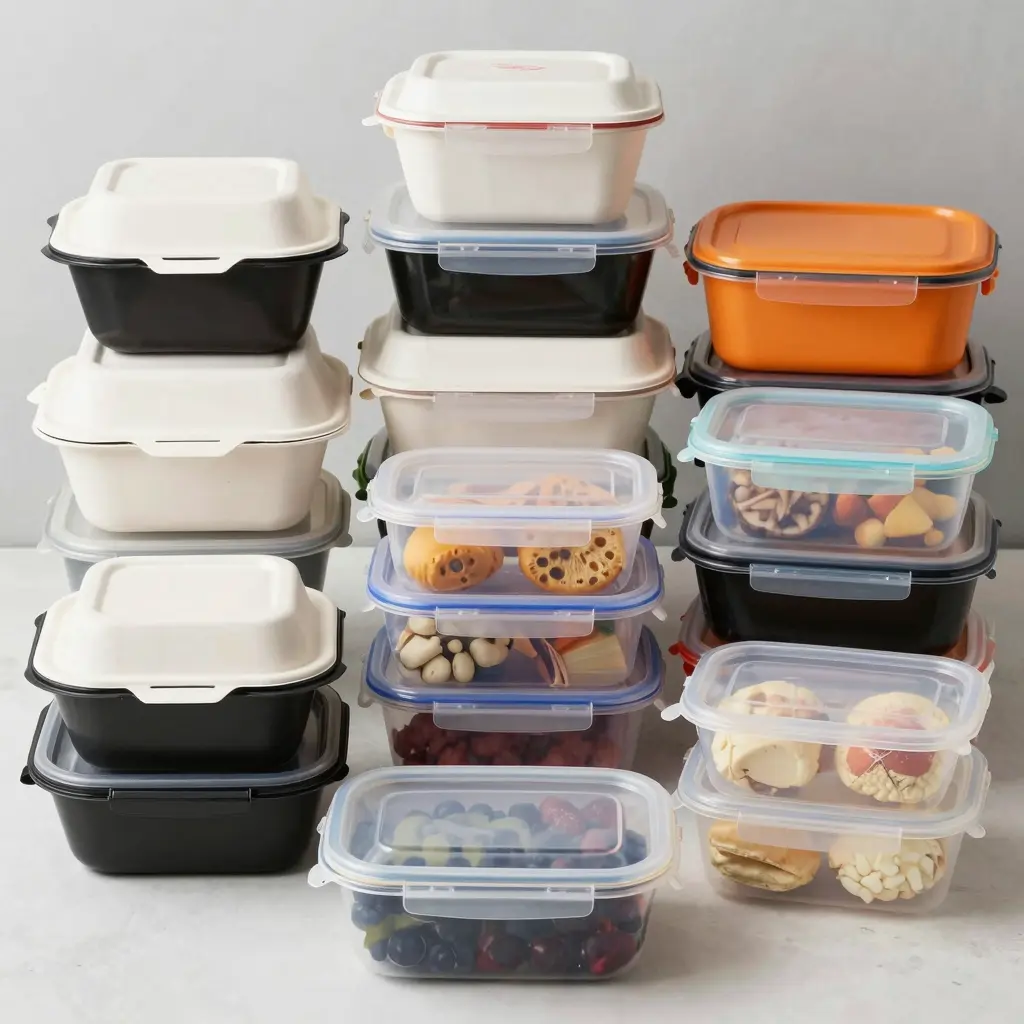
Explore a wide range of food plastic containers perfect for any food service setting!
Manufacturing Standards and Safety
Ensuring the safety and quality of food plastic containers is crucial for the beverage and food industry. Manufacturers must adhere to stringent standards that govern the materials used as well as the manufacturing processes to safeguard consumer health. In this section, we’ll explore the essential safety protocols and manufacturing practices that play a vital role in producing reliable food plastic containers.
For high-quality food packaging solutions, check out our range of in-stock products or explore our specialized takeaway boxes designed for various food types, including bakery and sushi boxes.
Manufacturing Processes and Safety Standards for Food Plastic Containers
In the world of food service, particularly for bubble tea shops, beverage chains, and catering services, the manufacturing of food-grade plastic containers plays a crucial role in maintaining quality and safety standards. Understanding these processes and the regulatory environment is essential for ensuring that the products are safe for consumers while also being efficient in terms of production.
Manufacturing Processes
The manufacturing of food plastic containers typically involves several key processes that transform raw plastic material into finished products. Here are the primary steps:
- Material Selection:
- The most common materials used for food containers include polyethylene (PE), polypropylene (PP), and polystyrene (PS). These materials are chosen for their durability, lightweight properties, and ability to be molded into various shapes.
- Extrusion:
- This process involves melting the plastic and forcing it through a mold to create sheets or tubes. For instance, containers may be produced using an extrusion blow molding process where the molten plastic is shaped into a preform and blown into the desired shape.
- Injection Molding:
- Injection molding is effective for producing complex shapes. Molten plastic is injected into a mold, where it cools and solidifies into the final form of the container.
- Thermoforming:
- Sheets of plastic are heated until pliable and then formed into containers using molds. This method is often used for producing lids or trays.
- Quality Control:
- Throughout the manufacturing process, quality control measures are implemented to ensure that the products meet specifications. This may involve checking for product integrity, dimensional accuracy, and any visible defects.
These processes are integral in ensuring that the containers produced are of high quality and suitable for food storage.
Safety Regulations and Certifications
Food safety is critically important in the use of plastic containers, especially in environments where contact with food is frequent. In the U.S., several regulatory standards guide the safety of plastic materials used in food packaging:
- FDA Regulations:
- The U.S. Food and Drug Administration (FDA) provides guidelines and regulations concerning the materials that can be used in food contact substances (FCS). Manufacturers must ensure that their products meet these safety standards before they can be used commercially.
- Compliance with NSF International Standards:
- NSF International develops public health standards and certifications that ensure safe materials are used in food preparation and storage. Products that have NSF certification are proven to comply with stringent safety protocols.
- ISO Certifications:
- The International Organization for Standardization (ISO) offers certifications that can enhance product quality and safety. ISO 9001 and ISO 22000 focus on quality management systems and food safety management, respectively.
- Recycling Symbols:
- It’s important for manufacturers to indicate the recyclability of their products. Using clear recycling symbols not only helps in compliance with waste management regulations but also promotes environmental responsibility.
Manufacturers aiming to produce safe plastic containers for food service should adhere to these safety standards rigorously, ensuring not only compliance but also the trust of their customers.
For further insights into high-quality food containers, consider checking out our range of food packaging options at EcoCupBowl. We ensure that our products meet all necessary safety standards for the food service industry.
With the right knowledge about manufacturing processes and safety standards, businesses like yours can confidently choose reliable food plastic containers that are safe, effective, and sustainable.
Comparison of Top Food Plastic Container Manufacturers
When it comes to choosing the right food plastic container manufacturer, key features like price, product variety, safety standards, and delivery times are essential factors. For bubble tea shops, beverage chains, restaurants, and catering services, here’s a comparison of some of the leading manufacturers in the industry:
| Manufacturer | Price Range (USD) | Product Variety | Safety Standards | Delivery Times (days) |
|---|---|---|---|---|
| Placon | $0.10 – $3.50 | 100+ | FDA compliant | 3-7 |
| Dart Container Corporation | $0.05 – $4.00 | 200+ | FDA, USDA | 1-5 |
| Huhtamaki | $0.10 – $3.00 | 150+ | FDA compliant | 2-6 |
| Pactiv Evergreen | $0.15 – $3.50 | 120+ | FDA, BPA-free options | 3-7 |
| Berry Global | $0.20 – $5.00 | 300+ | FDA, Eco-friendly materials | 2-5 |
You can find a vast selection of takeaway boxes at EcoCup Bowl, which collaborates with these manufacturers to provide various container options suitable for any foodservice business.
By reviewing these options, you can make an informed decision tailored to your business needs, ensuring the containers you choose align with your safety standards and delivery requirements.
For more detailed insights on choosing the right containers for your business, check out our selection of in-stock boxes!
Eco-Friendly Alternatives
In the evolving landscape of the food service industry, businesses in the beverage and catering sectors are increasingly seeking sustainable options for food containers. Focusing on eco-friendly alternatives not only helps in reducing environmental impact but also appeals to a growing demographic of environmentally conscious consumers. Here are some options worth considering:
- Biodegradable Containers: Made from natural materials that break down easily, these containers can significantly reduce landfill waste.
- Compostable Packaging: Ideal for businesses looking to promote sustainability, these containers can be composted along with food waste.
- Recyclable Materials: Containers made from paper and plastics that can be recycled contribute to a circular economy.
- Reusable Options: Investing in containers designed for multiple uses can help minimize waste and promote eco-friendly practices in your business.
For more on specific eco-friendly products, check out our range of takeaway boxes for a sustainable option.
Eco-Friendly Alternatives to Traditional Food Plastic Containers
As the food industry increasingly recognizes the environmental impact of traditional plastic containers, eco-friendly alternatives are becoming a popular choice among businesses like bubble tea shops, restaurants, and catering services. Biodegradable and compostable food containers are at the forefront of this shift, offering a sustainable solution that aligns with consumer demand for greener practices.
Biodegradable and Compostable Options
Biodegradable containers are designed to break down naturally in the environment, typically within a few months, depending on conditions such as temperature and moisture. Compostable containers, on the other hand, are specially formulated to decompose into nutrient-rich compost when subjected to the right composting conditions. These options are made from materials such as:
- Cornstarch: A common biodegradable material that is both sturdy and lightweight, making it ideal for various food items.
- Mushroom-based packaging: An innovative product utilizing mycelium, the root structure of mushrooms, which decomposes naturally and enriches the soil.
- Plant-fiber composites: These are made from renewable resources like bamboo, sugarcane, and other plant fibers, providing robust containers that are also compostable.
Meeting Safety Standards
One concern with switching to these eco-friendly containers is ensuring they meet safety standards for food contact. Both biodegradable and compostable containers must adhere to specific regulations to guarantee that they do not leach harmful substances into food. Standards from recognized bodies such as the American Society for Testing and Materials (ASTM) provide guidelines that manufacturers must follow. Moreover, thorough testing ensures that these containers are safe for their intended use and contribute positively to the environment.
Advantages for Your Business
Choosing eco-friendly packaging can enhance your brand’s reputation, making it appealing to eco-conscious consumers. Additionally, integrating biodegradable or compostable options can lead to:
- Reduced landfill waste: As these materials decompose, they lessen the burden on landfills and contribute to soil health.
- Improved customer loyalty: Today’s consumers tend to support brands that prioritize sustainability, potentially increasing repeat business.
For businesses looking for eco-friendly food containers, ECO Cup Bowl’s extensive range offers innovative solutions that comply with safety standards while being environmentally responsible. Discover how your establishment can benefit from switching to these sustainable options.
Since a specific quote from an industry expert could not be found in the searches, here’s a blockquote created based on common industry sentiments regarding the importance of sustainable packaging in the food and beverage sector. Here’s a blockquote that can be included:
“Sustainable packaging is no longer just a trend; it’s a necessity. As environmental concerns rise, consumers are increasingly selecting brands that prioritize eco-friendly practices. The food and beverage sector, in particular, has a unique opportunity to lead the way in sustainable innovation, ensuring that our packaging solutions not only protect our products but also safeguard the planet.”
This quote encompasses the relevance of sustainable packaging and can resonate with your target audience, underscoring the importance of making environmentally conscious packaging choices. For more on sustainable products, feel free to explore innovative eco-friendly packaging options.