
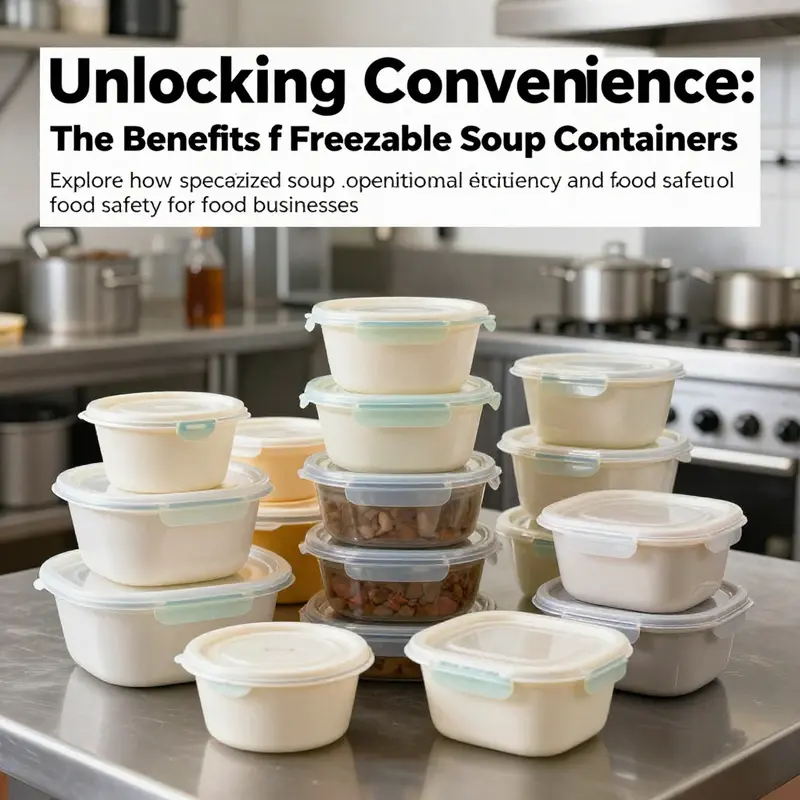
Freezable disposable soup containers with lids are rapidly becoming essential for food service providers, from bubble tea shops to catering services. These innovative products not only streamline food storage but also ensure higher hygiene standards and eco-friendliness. As we delve into the benefits, food safety, environmental considerations, market trends, and design features of these containers, you’ll discover how they can elevate your service offerings and operational efficiency.
From Freezer to Front Door: The Subtle Power of Freezable Disposable Soup Containers with Lids

The modern kitchen is a workshop of efficiency, where time-saving choices shape daily routines as surely as the skillet and stove do. Among the small, often overlooked tools that quietly multiply our capacity for homemade meals, freezable disposable soup containers with lids sit at a sweet spot of practicality and hygiene. They are more than mere vessels; they are a poised response to rhythm, space, and safety in a world where meals are frequently planned weeks in advance and eaten on the go. When used thoughtfully, these containers transform a habit—meal prepping—into a reliable system that preserves flavor, protects texture, and reduces waste. The power of this approach emerges from details that might seem modest at first—the right materials, the right seals, and the discipline to portion and store—but together they create a seamless bridge between the kitchen and the plate that arrives at your desk or back-to-school lunch bag.
Material choice anchors the promise of safety and performance. The most common construction for freezable disposables is BPA-free polypropylene, selected for its safety profile and resilience under a wide temperature range. By design, these containers are expected to endure the shocks of cold storage and the quick transition to heat when needed. Freezing demands materials that resist becoming brittle, while reheating calls for compatibility with microwaves or hot water baths without leaching undesirable flavors or chemicals. In practical terms, this means a container that remains sturdy in the freezer while avoiding any off-tastes or contaminants. A well-made unit keeps soups and broths free from freezer burn by limiting air exposure and providing a tight seal that minimizes moisture loss. This balance—stability in cold, safety in heat, and protection against dehydration—defines the core value proposition of these containers in everyday meal planning.
Airtightness and leak resistance are not ornamental features; they are essential safeguards for both safety and convenience. The lids on freezable disposable soup containers are engineered to interlock with the body through a gasketed or snap-seal system, creating a barrier against leaks during freezing, transit, and even a bump in a crowded office fridge. In practice, this means you can stack containers in the freezer without worrying about cross-contamination or spills when you reach for a bag of ingredients or a tote for a lunch break. The value is especially clear for liquids—soups, stews, or broths—that can otherwise threaten to escape or seep into other foods. When combined with clear, durable lids, these designs also support easy visual inventory, a small but meaningful convenience for busy households. It is not merely about keeping contents contained; it is about preserving the integrity of the dish so that the first spoonful after thawing tastes much like the last enjoyed hot from the stovetop.
Temperature resilience is another pillar of confidence. The typical temperature window for these containers—extending from well below freezing to well above typical refrigerator temperatures—permits both safe freezing and reheating. Many models are rated to handle temperatures down to around -20°C (-4°F) and up to around 110°C (230°F). That broad span means a single container can accommodate freezer storage, thawing in the fridge, and microwaving without switching vessels. Yet even within that range, it is prudent to respect manufacturer instructions about heating in the microwave or oven, particularly when the lid is on. The ability to reheat directly in the same container simplifies routines, reduces dishes, and supports a cleaner kitchen environment by limiting the transfer of food between multiple bowls or pots. In another sense, temperature resilience reinforces the value proposition: these containers are adaptable allies for people who batch cook, portion meals, and rely on consistent hydration and texture throughout the week.
The convenience factor extends beyond safety and temperature. Portion control emerges as one of the most practical benefits for families, students, and professionals. Disposable containers offer pre-measured servings that align with dietary goals or time constraints. For someone balancing a full schedule, the ability to pull out a single portion for lunch or a midweek dinner eliminates guesswork and reduces the temptation to overeat or rely on less nutritious grab-and-go options. The minimal maintenance requirement—no need to wash and dry reusable containers after every use—appeals in households where the pace of life can outpace dishwashing cycles. Yet this convenience is not merely about saving time; it is a strategic aid to consistency. When portions are standardized, planning becomes more accurate, grocery lists become more precise, and the risk of food waste diminishes as leftovers are allocated to specific meals before they spoil.
Space efficiency is another subtle but powerful advantage. The lightness of disposable containers coupled with a stackable design creates tangible savings in freezer and pantry real estate. In small kitchens, every inch matters. A stack of compact, uniform containers can be tucked alongside bags of frozen vegetables or jars of pantry staples, making it easier to see what is on hand and what needs replenishment. The ability to nest or stack without fear of crushing or leaking further simplifies organization, enabling more time for cooking and less for reorganizing. In this sense, the design not only serves individual meals but also supports broader household routines, such as planning a weekly menu around the soups, stews, or broths that fit into a compact stock of containers.
From a user’s perspective, clear lids and durable construction contribute to a more intuitive kitchen workflow. When contents are visible through the lid, it becomes easier to rotate stock, identify flavors, and avoid unnecessary openings that might compromise safety. This transparency reduces the cognitive load of meal prep, letting a cook focus on flavor development rather than hunting for the right container. In settings where soups travel to work, school, or care facilities, the combination of clarity and reliability creates a simple trust: a meal that looks and tastes as intended after thawing and reheating. The ergonomic emphasis—easy-to-grip edges, secure latching mechanisms, and lids that stay on during transport—further enhances confidence that meals remain pristine from freezer to final bite.
For households seeking sustainability, there is an evolving spectrum of eco-conscious options. Alongside the classic recyclable or reusable pathways, some producers offer containers designed to be recyclable with clear guidance on local recycling streams, and others explore compostable options where appropriate and feasible. The environmental calculus of disposable solutions must weigh the benefits of reduced dishwashing, improved food safety, and waste reduction against the costs of single-use items. The most responsible choices, in practice, balance performance with ambition: select materials certified as food-safe, prioritize products with recyclable packaging or onward recycling options, and be mindful of local waste-and-recycling capabilities. As with any packaging decision, a thoughtful approach—paired with a plan for responsible disposal—amplifies the daily advantages of using freezable disposable soup containers with lids while aligning with broader sustainability goals.
In daily life, the practical implications of these containers become most evident in the rhythm of meal preparation. Batch cooking a weekend soup, portioning it into a set of 8-ounce or 16-ounce cups, labeling with the date, and then freezing for later use creates a reliable pantry of ready-to-eat warmth. The system elegantly reduces the friction of weeknights. The reheating step, often the most time-consuming, is simplified when the container is microwave-safe and heat-stable. A few minutes later, a portion emerges steaming, the lid providing a gentle vent for steam and ensuring the surface remains appetizing rather than scalded. For office lunches or school days, the same containers fit into lunch bags, keeping foods compact and contained. The net effect is not a fashion statement in packaging but a practical discipline that supports healthier eating habits, everyday flexibility, and a cleaner, less cluttered kitchen workflow.
As this chapter threads through the broader topic of freezable disposable soup containers with lids, it becomes clear that the most compelling examples combine safety, efficiency, and thoughtful design. The materials protect the integrity of the contents; the seals prevent leaks and spills; the temperature range supports a seamless journey from freezer to table; the portioning and stacking optimize space and planning; and the subtle design cues—clear lids, comfortable grips, and reliable lids—enhance everyday use. In a world where meals are increasingly planned, prepared in advance, and consumed away from home, these containers offer a measured, dependable solution. They are not the end-all of food storage, but they are a well-considered component of a modern, efficient kitchen system. They deserve attention not as disposable afterthoughts but as practical tools that multiply the value of home cooking, protect health, and reduce the friction that often accompanies busy lives.
External resource: https://www.walmart.com/ip/PrepNaturals-Food-Storage-Containers-60-Pack-Reusable-BPA-Free-Microwave-Freezer-Safe-Plastic-with-Lids/1234567890
Safeguarding the Freeze: Freezable Soup Containers and Food Safety
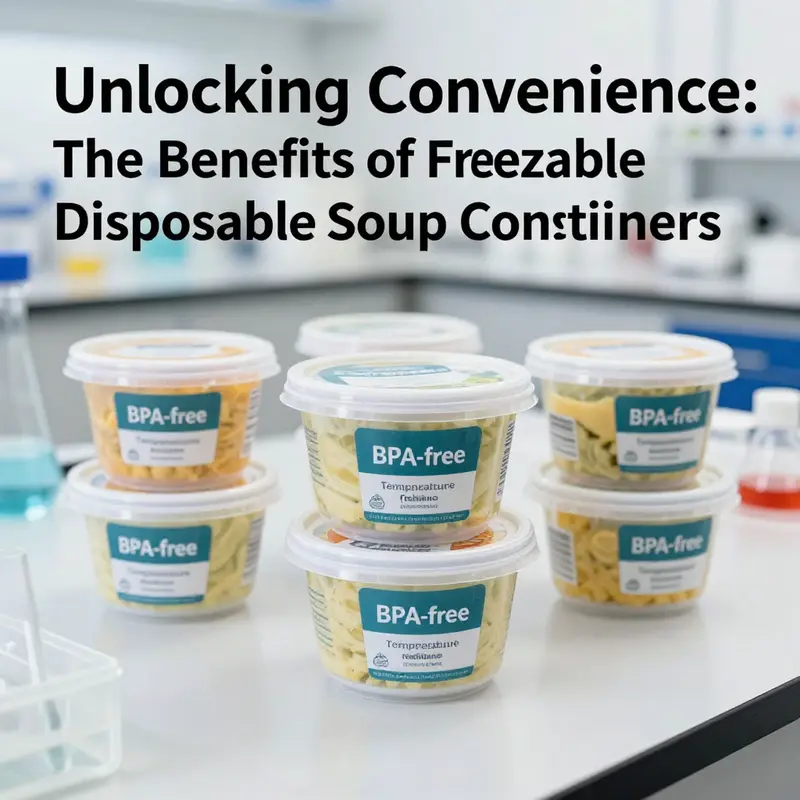
Freezable soup containers with lids help preserve safety and quality by keeping soups sealed during freezing and reheating. They are typically made from BPA-free plastics such as polypropylene, sometimes silicone, and are designed to withstand temperatures from freezing to reheating. When used correctly, they reduce moisture loss, prevent cross-contamination, and support a consistent cold chain. Best practices include choosing freezer-safe materials, cooling soup before sealing, labeling portions with dates, and maintaining stable freezer temperatures. By following these guidelines, households and food-service operations can minimize freezer burn, microbial risk, and chemical migration while enjoying convenient, portioned meals.
Stirring the Footprint: Environmental Realities of Freezable Disposable Soup Containers
The promise of freezable disposable soup containers with lids lies in convenience: portion-controlled meals that can be prepared, frozen, reheated, and enjoyed with minimal effort. Yet the environmental story behind this convenience runs deeper than a simple product description. It nudges readers to weigh the value of nourishment against the long, intricate life cycle of packaging materials. In this chapter, we explore how the very design intended to reduce kitchen friction interacts with resource use, waste, and ecological disruption. The aim is not to condemn efficiency but to illuminate the trade-offs and to spark a more nuanced conversation about how households, manufacturers, and policymakers can steer consumption toward durability without sacrificing safety and sanitation. The chapter interweaves the practicalities of materials and usability with the broader consequences that ripple far beyond a single meal’s footprint.
Resource depletion and production impact are foundational concerns. Disposable containers for soups most often rely on plastics such as polypropylene or polystyrene, or on paper and composite laminates. Each material carries its own environmental burden. Plastics, rooted in fossil fuels like oil and natural gas, trace their energy-intensive journeys from extraction to polymerization to shaping. The greenhouse gas emissions embedded in these steps accumulate across millions of containers, contributing to climate pressures that affect weather patterns, agriculture, and biodiversity. Paper-based options, by contrast, hinge on forests. Even if certified, the demand for paper-based packaging translates into tree harvesting, land-use change, and habitat disturbance. A 2025 study on consumer disposables highlights the scale of forest resource use even in seemingly small items. It notes the vast annual footprint associated with disposable goods such as wooden utensils, clocks in on the broader packaging ecosystem with implicit warnings about deforestation and the cascading effects on biodiversity. While the exact figures differ by product class, the underlying message is clear: replacing one disposable with another does not automatically reduce ecological strain; it often shifts the burden elsewhere in the supply chain.
Pollution during use and disposal compounds these material concerns. The end-of-life pathway for disposable containers is typically landfilling, incineration, or, less often, recycling. Plastic containers, especially those made from polystyrene, may persist for hundreds or thousands of years as microplastics infiltrating soils and waterways. Microplastics migrate through ecosystems, entering food chains and potentially affecting wildlife and human health through exposure. When plastics burn in uncontrolled conditions, toxic gases such as dioxins and furans can be released, posing risks to air quality and public health. Even paper-based options are not free from trouble; many carry plastic linings or coatings to repel moisture, which can hinder recyclability and slow degradation. In practice, these design choices—driven by the need to keep soup safe from leaks and moisture—can complicate end-of-life outcomes and hamper circular economy goals.
A growing concern in the discourse on eco-friendliness is the proliferation of misleading “green” or “biodegradable” claims. A 2025 report found that a surprising majority of so-called eco-friendly disposable utensils and containers do not truly degrade under natural landfill or ocean conditions. Many require industrial composting facilities with specific temperature and moisture regimes that are rarely available in ordinary settings. This disconnect between marketing and real-world disposal fosters greenwashing,制造 consumer confusion, and undermines legitimate sustainability efforts. The implication for freezable soup containers is immediate: even if a product is BPA-free, compostable, or recyclable in theory, the practical environmental benefit depends on whether the material actually completes a viable end-of-life loop in the user’s region.
The long-term environmental consequences of widespread reliance on disposable containers are often described as white pollution—a term that captures the pervasive, lingering presence of discarded packaging across landscapes and waterways. The cumulative energy embedded in producing, transporting, filling, sealing, and discarding billions of containers translates into a sizable carbon footprint that extends beyond a single meal or week. Meeting the demand for convenience in modern food systems frequently means trading short-term practicality for longer-term ecological costs. This tension invites a rethinking of what sustainability means in everyday choices and how to balance safety, hygiene, and environmental stewardship in practical terms.
Turning to the specific context of freezable soup containers, the materials and the design aim to address food safety and usability. BPA-free polypropylene is widely used because it resists temperature swings—from freezing to reheating—while maintaining a seal that helps prevent leaks. The ability to freeze soups at home reduces the likelihood of food waste by preserving meals that might otherwise spoil. But the green question remains: does the freedom to store and reheat automatically equate to a smaller footprint? The answer hinges on usage patterns. If a consumer uses a container once and discards it, the environmental cost remains high, even though the product has delivered safety and convenience. If, however, a durable container is reused many times, the per-use impact can drop significantly, to the point where the savings in food waste, spoilage reduction, and reduced jar-and-cap consumption may outweigh the production costs. In practice, the environmental calculus of these containers is not fixed; it varies with how people integrate them into daily routines and whether they adopt reuse as a habit.
Beyond the chemistry of the container itself lies a broader opportunity space. Design for recyclability, for instance, can enhance the end-of-life options. Clear guidance on recycling streams, compatible with local infrastructure, can improve recovery rates. Some packaging regimes attempt to minimize plastic content while preserving barrier properties essential for food safety. Yet even with recyclability baked into the design, downstream realities matter: recycling facilities differ by region, contamination rates can derail processing, and market demand for recycled resins fluctuates with commodity prices. In other words, the environmental advantage of a freezable soup container is not simply a function of its material choice but a function of the entire system surrounding it—collection, sorting, processing, and the presence of a robust circular economy.
This is where consumer behavior meets policy and industry practice. A practical step toward reducing environmental harm is the deliberate shift from disposables to reusables when feasible. Reusable stainless steel, glass, or ceramic containers offer clear durability advantages. They spread their environmental cost over many uses, especially when households make a habit of cleaning and reusing them for a variety of meals. Conversely, the rebound effect can occur if rejected temptations toward convenience lead to more waste-generating behaviors elsewhere in the system. Education about proper reuse, care, and long-term viability of containers can help consumers maximize benefits while minimizing harm. In the context of food delivery and meal-prep culture, policy signals can reinforce this shift. Initiatives such as “no-utensils” options or incentives for customers who bring their own containers can tilt the balance away from single-use packaging without compromising safety or sanitation. The goal is not to stigmatize disposables but to recognize when and where they are appropriate, and to ensure their use aligns with overarching environmental objectives.
The environmental dialogue around freezable containers also invites a broader, systemic assessment of packaging choices. Life-cycle thinking—evaluating raw material extraction, manufacturing, transport, usage, and end-of-life handling—provides a framework for comparing options. It suggests that a truly sustainable solution may combine improved recycling, greater reuse, and more responsible consumer habits. For manufacturers, this means exploring design innovations that maintain food safety while reducing environmental impact, such as thinner walls that preserve strength, more easily separable components for recycling, or alternative materials with lower ecological footprints. For consumers and retailers, it means choosing storage solutions that favor durability, implementing reuse where practical, and supporting policies that reward sustainable practices rather than relying solely on the allure of convenience.
In sum, the environmental considerations surrounding freezable disposable soup containers with lids reveal a layered reality. The safety and convenience these products offer are real benefits, especially for meal-prep routines, school and office lunch programs, and catering operations. Yet the environmental costs are equally real, extending from fossil-fuel dependence and deforestation pressures to persistent pollution and misleading marketing. The most robust path forward lies in a balanced approach: encourage reuse whenever practical, improve end-of-life outcomes through recyclability and better waste management, and align consumer incentives with durable, low-impact packaging systems. As the chapter on environmental considerations suggests, transforming consumption habits into durable, reusable systems stands out as the most effective lever for reducing waste, lowering emissions, and protecting ecosystems over the long horizon.
For readers seeking a deeper dive into the scientific and policy debates underpinning these issues, an external resource offers a rigorous perspective on how production, consumption, and disposal of disposable packaging intersect with climate goals and circular economy strategies: https://www.sciencedirect.com/science/article/pii/S095965262500789X
From Freezing to First Bite: Market Currents Shaping Freezable Soup Containers with Lids

The family dinner and the busy restaurant kitchen share a common challenge: keeping soups safe, flavorful, and ready when needed. Freezable disposable soup containers with lids have emerged not merely as a convenience, but as a strategic response to how households and foodservice operators manage time, safety, and waste. These containers are designed to survive the journey from freezer to microwave without compromising the texture or aroma of a good broth, bean soup, or chowder. They are typically made from BPA-free polypropylene, a material chosen for its durability and food-safety assurances. The design story goes beyond the simple cube or tub: airtight lids lock in moisture and prevent leaks, while the containers themselves are engineered to resist cracking during freezing and reheating. Their shapes and sizes, often ranging from 8 ounces to 32 ounces, reflect a market that values portion control and meal-prep flexibility. The combination of safe materials, dependable sealing, and practical sizes has helped these containers transition from niche, occasional-use items to everyday staples in homes, catering operations, and quick-service settings alike.
Yet the value of these solutions extends far beyond their immediate practicality. In a world increasingly oriented toward hygiene, sustainability, and circular economies, the narrative around disposable packaging has shifted. The market now privileges products that can perform reliably in the freezer and in the dishwasher, while also fitting into recycling or compost streams wherever possible. For freezable soup containers with lids, this means a deliberate choice of plastics that minimize migration of flavors or chemicals, alongside lids that stay firmly attached during transit. The design challenge is to maintain a balance: the material must be light enough to reduce freight costs and emissions, but robust enough to resist freezer burn, heat stress, and rough handling. The result is a packaging proposition that supports family meal planning and the broader goals of food safety and hygiene in public-facing foodservice models.
The temperature envelope these containers are expected to navigate helps explain their appeal. They must withstand temperatures well below freezing—down to about -14°F (-10°C)—and rise to temperatures suitable for reheating, occasionally reaching around 230°F (110°C). This wide heat-and-freeze tolerance is essential because it enables straight-line workflows: prepare, freeze, transport, reheat, and serve without switching vessels. The lids must provide airtight seals to prevent leaks and protect the contents from freezer odors or contamination, while the bottoms and walls bear up under repeated cold cycles. The stackable, space-saving design also matters. In home freezers, pantry shelves, or takeaway coolers, efficient stacking translates into more organized storage and less energy spent on maintaining product quality. In foodservice environments, space efficiency becomes a direct driver of throughput and cost management as operators juggle high volumes and tight timelines.
Sustainability has become the compass guiding product development in this segment. The shift from niche eco-friendly choices to regulatory and consumer-driven expectations has accelerated the adoption of alternatives and the refinement of existing plastics. Biodegradable, compostable, and recyclable materials are moving from aspirational labels to practical features that affect a product’s lifecycle. Molded fiber, plant-based plastics like polylactic acid (PLA), and other renewable materials are increasingly considered for certain applications where performance and cost align with environmental goals. This evolution is more than a trend; it marks a systemic change in how packaging solves the tension between convenience and environmental stewardship. For freezable soup containers, the challenge is to maintain the heat resistance, leak protection, and structural integrity that users rely on, while offering viable paths to end-of-life disposal that don’t leave households with extra waste or confusing recycling streams. The result is a richer choice set for brands and operators who want to market a product as both practical and responsibly designed.
Lightweighting without sacrificing performance sits at the heart of contemporary packaging innovation. Manufacturers are reducing the material burden without compromising the critical functions of the container—heat resistance, airtight sealing, and resilience during transport. This requires advances in polymer science, but it also demands clever engineering in the geometry of the container. Wall thickness, ribbing, and lid interlock mechanisms are optimized to deliver strength where it matters most, while minimizing material use elsewhere. The payoff is twofold: lower raw material costs and lighter shipments, which translate into smaller carbon footprints and improved sustainability credentials for brands. Consumers notice the difference not only in price sensitivity but in the ease with which they can store and reuse product leftovers. Heavy-duty performance, achieved through smarter design rather than simply stacking on more material, aligns with a market that rewards efficiency and long-term value.
An emergent element of market evolution is smart and connected packaging. The idea is to embed traceability and safety assurances into the packaging experience. QR codes, NFC tags, and temperature-sensitive inks can help track a container’s journey from production to the consumer’s doorstep, and even through freezer-to-microwave transitions. For soup containers, this can translate into real-time indicators of whether a product has remained within safe temperature ranges, reducing the risk of foodborne issues and giving brands new ways to engage with customers through digital content such as recipes or portion guidance. While widely adopted at scale may still be on the horizon, early implementations point to a future where a simple lid can carry a wealth of information about shelf life, storage conditions, and optimal reheating guidance, all without sacrificing speed or convenience at the point of service.
The market outlook, as reflected in industry analyses, underscores the scale and velocity of these changes. The global foodservice disposable packaging market is projected to grow substantially, with estimates approaching USD 98.93 billion by 2031. This trajectory mirrors the demand across fast-casual dining, delivery services, and retail takeout, where the efficiency of a container and the reliability of its seal are virtually as important as taste and presentation. China, with manufacturing hubs that support rapid production and export, remains a vital link in the supply chain, yet the emphasis for suppliers now includes stringent regulatory compliance and certifications for food contact materials. FDA approval and similar certifications in other regions become more than a box-ticking exercise; they are credible signals that a product can be trusted across multiple markets and distribution channels. For operators, this translates into smoother procurement, clearer quality assurance, and confidence that the packaging will not become a bottleneck in service delivery.
For businesses seeking to succeed in this landscape, a holistic approach matters more than a single advantage. It’s not enough to offer a container that freezes and reheats well. The packaging must also fit into broader sustainability narratives, align with recycling or composting streams where feasible, and be designed with lifecycle thinking in mind. Suppliers are increasingly evaluated on scalability, quality assurance, sustainability credentials, and readiness to leverage new technologies rather than solely on price. This is a market that rewards the capacity to innovate responsibly and to demonstrate, through certifications, traceability, and end-of-life strategies, that a product can perform under pressure while still supporting a cleaner planet. In the end, the success of freezable soup containers with lids rests on a simple balance: they must be safe, sturdy, and easy to use; they must travel well in a world of complex logistics; and they must respect the environmental responsibilities that consumers and regulators now demand.
As households and service providers continue to incorporate meal-prep routines, takeout, and convenient reheating into daily life, these containers become invisible enablers of everyday nutrition. The best designs are not just about sealing and freezing; they are about enabling a practical, hygienic, and sustainable food experience. The ongoing convergence of material science, industrial design, and regulatory clarity will continue to shape the evolution of freezable soup containers with lids. Consumers will come to expect packaging that safeguards flavor and safety, minimizes waste, and communicates its own lifecycle story with honesty and precision. The market’s forward march will be guided by resilient materials, smarter packaging concepts, and a shared commitment to delivering nourishment without compromising the environment. External reference: https://www.grandviewresearch.com/industry-analysis/foodservice-disposable-packaging-market
null
null
Final thoughts
In conclusion, freezable disposable soup containers with lids are not just a trend but a necessity for efficient food service operations. From enhancing food safety to promoting environmental sustainability, their versatility and unique features make them an invaluable asset in the culinary industry. By incorporating these containers into your food packaging strategy, you can lead the charge in operational excellence while catering to the needs of modern consumers seeking convenience and quality.