
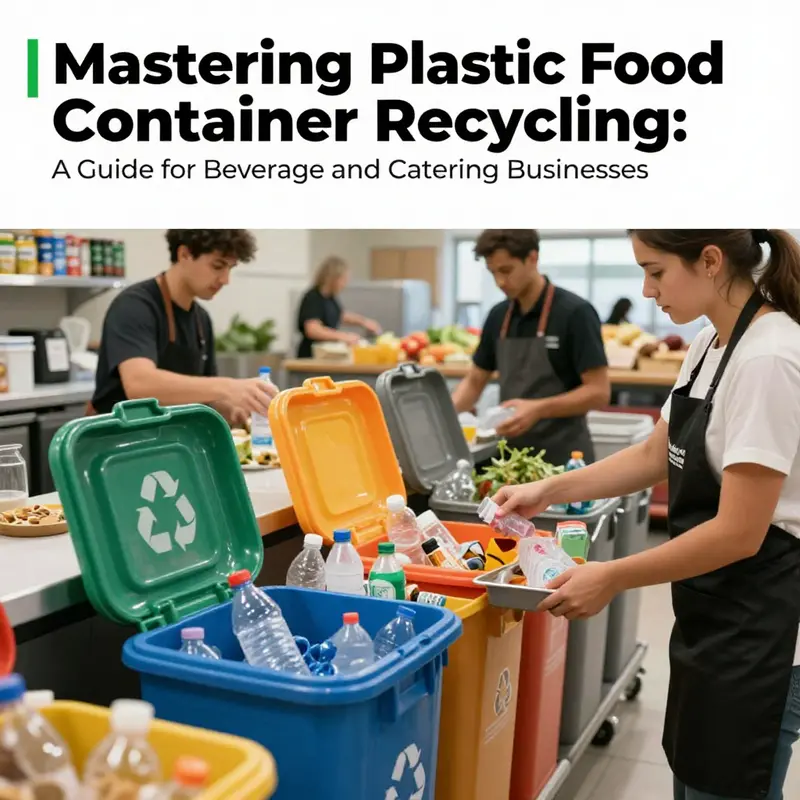
Recycling plastic food containers is not just a good practice—it’s an essential component of sustainability. For businesses like bubble tea shops, restaurants, food trucks, and catering services, understanding how to efficiently recycle these materials can set your establishment apart. This guide will walk you through identifying different types of plastics, essential cleaning methods, proper handling of lids and labels, local recycling guidelines, and innovative ways to reuse containers before sending them off for recycling. Understanding these processes helps ensure environmental compliance and promotes a greener future for everyone involved in food service.
Decoding the Container: Identifying Plastic Types to Recycle Food Packaging Effectively
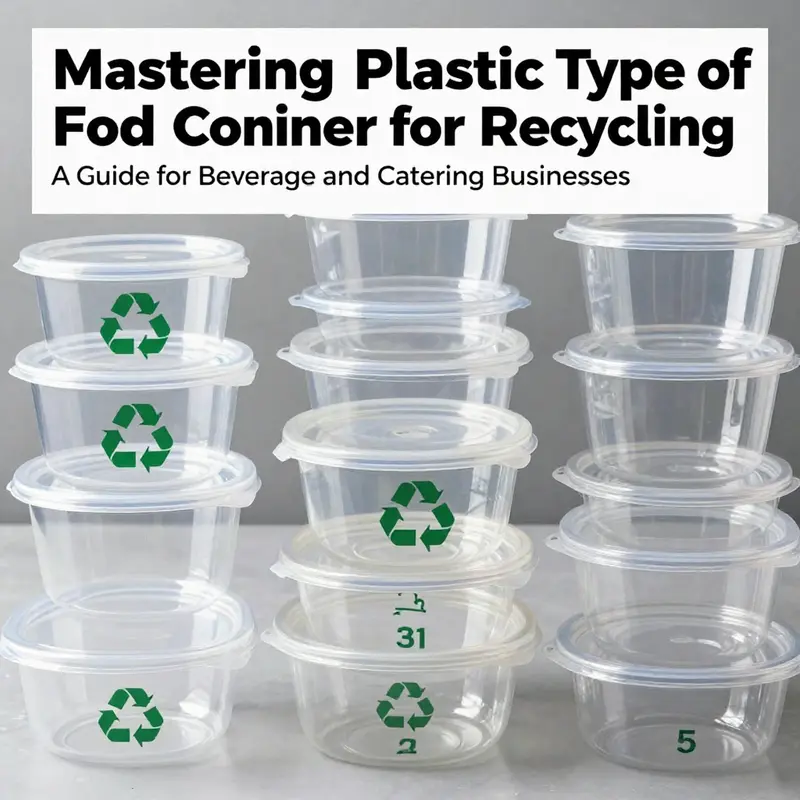
Identifying the exact type of plastic in a food container is more than a technical detail; it is the first step in turning waste into resources. The triangular resin identification code (RIC) etched on the bottom of many containers is designed to help you determine recyclability and safe use. When you understand what the number inside the triangle means, you gain a practical compass for deciding what to wash, what to toss, and what to repurpose. The RIC is not a universal passport, but a practical guide that should be read in the context of your local recycling rules. In many communities, the symbol is the key to knowing which items belong in curbside bins and which should go to drop-off centers. In others, it is only a rough guide, with certain numbers accepted only in specific programs. The chapter that follows is a walk through that code, intertwined with everyday decisions about how to handle containers from morning yogurt to takeout boxes, and how to keep the system working for everyone involved in recycling.
To begin, locate the resin identification code—the number inside the triangle—on the bottom of the container. The digits range from 1 to 7 and point to the resin family used to make the product. Each number carries a history of safety, durability, and recyclability that should influence your next action with the container. The most common numbers in food packaging are #1, #2, #4, and #5. These are generally part of curbside programs in many regions, though you must verify with local guidelines. The other numbers exist for a broader spectrum of plastics, each with different recycling realities and health considerations. The precise square the symbol sits in or the location on the product may vary, but the triangle and number usually appear clearly somewhere on the bottom. If you cannot find a number, treat the container as non-recyclable through curbside services and look for a local drop-off option or reuse opportunities.
A careful reading of the numbers can illuminate both safety and recyclability. The most familiar is #1, PET, short for polyethylene terephthalate. PET is widely recyclable and commonly found in beverage bottles and many food packaging items. Yet, heat changes everything. PET should not be reused for long-term food storage or heated in microwaves. When PET is heated, some contaminants can migrate into food, and the material can release chemicals if subjected to high temperatures repeatedly. This is a reminder that recyclability and reusability are not the same thing. PET is convenient and recyclable but not designed for repeated heating or long-term storage in hot food conditions. The caution about reheating is not merely theoretical; it reflects real concerns about chemical migration when PET is warmed or damaged through micro-cracks. In many households, PET containers are excellent for short-term use with cold or room-temperature foods but are not intended for repeated heating.
Next, #2, HDPE, stands for high-density polyethylene. HDPE is a workhorse in food packaging due to its chemical resistance and sturdy feel. Milk jugs, detergent bottles, and many yogurt containers are HDPE. It is considered safe for contact with food and is widely recyclable. HDPE’s durability makes it well-suited for reuse in some contexts—think modular storage, seedling pots, or classroom organizers—before it returns to recycling streams. The key with HDPE is that it tends to tolerate a broad range of cold and room-temperature uses, making it a reliable option for reuse before recycling.
Then we have #3, PVC, polyvinyl chloride. Food-use PVC is relatively rare today because there are health and recycling concerns associated with it. PVC can contain additives that raise safety questions, especially when heated. Because it is not commonly recycled through curbside programs, PVC is generally best avoided for food containers or hot foods. If you encounter a PVC container, it is prudent to separate it from other recyclables and check local guidance for any available drop-off programs or to consider reuse alternatives that do not involve heating.
Moving to #4, LDPE, low-density polyethylene. LDPE is common in flexible packaging like some wraps, bags, and squeeze bottles. It is recyclable in many programs, but it is not accepted as broadly as #1 or #2. The food-contact LDPE often has a softer feel and may be accepted at dedicated drop-off points rather than in curbside bins. Heating LDPE should be avoided, as high temperatures can degrade the material and potentially release substances more readily. If your program accepts LDPE, you can place it in the appropriate bin after ensuring it is clean and dry; otherwise, look for store drop-off options that handle LDPE and similar flexible plastics.
Another widely encountered resin is #5, PP, polypropylene. PP is a favorite for takeout containers, yogurt cups, and bottle caps. It is notable for its heat resistance and stability, which makes it suitable for repeated use and safe for many microwave applications when labeled as microwave-safe. PP is among the more recycling-friendly plastics in daily use, and its resilience makes it a practical choice for households seeking reusable solutions. When you recycle PP, you are contributing to a stream that can be reprocessed into new containers and products that benefit from heat tolerance and chemical resistance.
The seventh category, #7, is the “other” category. It includes various plastics not classified into the six primary groups, sometimes including polycarbonate and other mixed plastics. Recyclability for #7 varies dramatically by region, and some forms may contain substances with health concerns, such as BPA in certain polycarbonates. Because of this variability, many programs advise caution with #7s and encourage checking local guidelines before recycling or reusing them. In many cases, #7 items are not accepted curbside and may require special drop-off or should be kept out of recycling entirely unless you have a clear local program that explicitly accepts them.
The practical upshot is simple, though not always convenient: know the code, verify with local rules, and remember that safety comes first. If you are uncertain about a container’s recyclability, treat it as non-recyclable through curbside channels and seek a drop-off option or reuse opportunity. A quick online search of your city’s rules can prevent contamination and keep recycling streams clean. In many communities, a simple step like visiting the municipal site or using a dedicated recycling lookup tool helps you determine exactly which numbers are accepted by your program. Contamination is the chief enemy of recycling; a small amount of food residue can ruin an entire batch. Before you decide to place any container in the bin, give it a rinse and a quick dry. A container with greasy or sticky surfaces is a good candidate for repurposing or recycling in the correct stream only after cleaning.
Lids and labels also deserve a mindful approach. Lids often come from a different plastic than the container body and may have different recycling rules. Some programs accept the lids with the containers, while others request that you remove them. Labels and stickers generally stay on, but removing them can improve the quality of the recycled material, especially if they are heavy or stacked with adhesives. If the guidelines you follow are strict about removing lids, do so, and then place the containers in the appropriate recycling stream. If the rules are more permissive, you can leave the labels on, provided the container is clean and the label paper does not introduce significant contamination.
In this light, following local guidelines remains essential. The same resin code can be treated differently from city to city. A program in one region may accept all numbers, while another may restrict accepted plastics to #1 and #2 only. Some communities provide plastic bag drop-off centers for LDPE (#4) and other flexible plastics, a reminder that the recycling system often decouples rigid containers from flexible packaging in a way that requires separate streams. An action step you can take today is to search for your city’s guidelines on a waste management site or a national lookup tool, which helps you map your container to the correct path. The chapters of this article weave together to create a practical mindset: identify the resin code, clean the container, consider whether to remove the lid, and always align your actions with local guidelines.
To illustrate how breadth and scale can harmonize with these rules, consider a real-world example of a large-scale takeout packaging initiative. In China, platforms partnered with governments and recyclers to establish dedicated collection and processing for PP takeout containers. The system collects, cleans, and processes these containers into new products, from bins to brooms and even new packaging. The mission is clear: when a chain is designed with end-of-life in mind, recyclables flow back into usable materials rather than into landfills. This example underscores an essential truth: robust recycling is not merely an act of sorting; it is a system built around clear codes, reliable cleaning practices, and local policy support that makes recycling a practical habit for households and businesses alike.
As a practical conclusion, keep a few core ideas at the forefront whenever you handle plastic food containers. First, confirm the resin identification code and learn what it means in your local program. Second, clean containers thoroughly and dry them before placing them in the bin. Third, remove lids only if your municipality requires it, and be mindful of labels as they can affect the quality of recycled material. Fourth, consult your local rules so you know exactly what is accepted in curbside collection and what should go to a drop-off center. Fifth, whenever possible, choose reuse over recycling. A clean, well-cared-for container can serve many purposes before it earns its way into the recycling stream. Finally, support broader programs like Extended Producer Responsibility when you can, and stay informed about how manufacturers and policymakers shape the recycling ecosystem. A well-informed choice at the household level is the foundation of a recycling chain that truly closes the loop.
For a quick way to explore local rules and to see how different plastics are treated in various programs, you can explore a resource here: ecocupbowl product page. This example, while specific to a product page, serves as a reminder that reuse and recycling live in a broader system that includes product design, waste management, and consumer behavior. To deepen your understanding of the science and the policy landscape that shape these decisions, refer to external resources like the Plastics Industry Association, which offers detailed information about plastic types, safety, and recycling pathways. For more detailed information, consult the Plastics Industry Association: https://www.plasticsindustry.org.
The Quiet Gatekeeper: Cleaning Plastic Food Containers to Unlock Real Recycling

Cleaning plastic food containers before recycling is more than a preparatory ritual; it is the quiet gatekeeper that determines whether a container becomes raw material for something new or stays trapped in a stream of waste. The process is simple in concept, yet its impact scales with care. When food residue lingers, it invites contamination, invites odors, and invites the fear of contamination that can derail an entire batch of recyclables. The result is not just a stubborn cup or tub; it is a reminder that recycling is a systems problem. A single greasy smear or a whisper of sauce can compromise the purity of a whole load, forcing facilities to reject material, wash it again, or worse, send it to landfills. This is why the steps that follow are worth embracing as part of everyday waste management, not as an afterthought, and why the practice deserves attention at every hand-off—from kitchen counter to curb, and from curb to processing plant.
Begin with the simplest truth: remove the solid remnants. Scraping off any leftover food with a spoon or dull knife clears the bulk, but it is not enough to ignore stubborn bits that cling to ridges, lids, and seams. Dried-on residue is not just unsightly; it is harder to wash away and more likely to resist the next rinse. The goal is a container that looks clean and smells neutral, not just a container that appears empty. After this initial scrape, the container should be ready for a thorough rinse that follows the same logic as a careful dishwashing routine, but with a focus tailored to recycling realities. Hot water makes the difference here. It loosens oils and grease that cling to plastic surfaces, and it softens residue enough to lift it away with soap and a brush. The temperature matters: water around a comfortable, practical heat helps without warping the plastic, which is a particular concern for containers made from common resins like polyethylene and polypropylene.
Next comes the washing stage, where mild detergent and a sponge or brush do the real work. The goal is to remove food oils, sauces, and any traces of residue from the inside, the lid, and those tiny corners where grime loves to gather. Harsh cleaners have no place here. Bleach and caustic agents can damage the plastic or leave residues that contaminate future recycling. If you want a simple boost without complicating the routine, a few natural options can help without introducing new hazards. A baking soda paste—made by mixing baking soda with a little water—offers gentle abrasion that helps lift stains and odors without scratching the surface. A white vinegar soak can be a useful occasional step for containers that have carried strong odors. Mix equal parts white vinegar and water, submerge for 15 to 30 minutes, and rinse well afterward. Lemon juice, too, can be a pleasant ally; letting slices soak in warm water for an hour or two can brighten the container and neutralize lingering smells. Each of these boosters should be used sparingly and rinsed away thoroughly, so they don’t leave residues that might confuse the recycling stream.
Rinsing itself is an act of thoroughness. After washing, rinse under running water until you can no longer detect soap, ideally three full passes or more. This step matters because soap residue can interfere with the recycling process in downstream facilities, just as food residue can. The rinse should be hot enough to feel comfortable on the skin but not so hot that it risks deforming delicate plastics. The aim is a clean surface with no slippery film left behind. If you’ve done the job well, you should be able to soap up the container again and wipe away the suds cleanly—proof that the container is prepared for its next journey into the recycling stream. It is not a matter of aesthetics alone; it is about preserving the integrity of the recycled material so it can be melted down and reformed into sturdy new products without contaminants that would degrade the quality of the recycled resin.
Drying is the often overlooked step that can make or break the recycling outcome. Moisture can create conditions for mold or bacteria in the bin and can introduce water into the processing stream, which, in turn, can complicate sorting and washing at facilities. A thorough dry is achieved by air drying in a dish rack or in a clean, dry towel. If possible, place containers in a sunny spot or a well-ventilated area to encourage evaporation. The goal is to arrive at a container that is completely dry to the touch. It may seem pedantic, but the difference between a dry container and a damp one can ripple through the recycling system, affecting how efficiently a batch moves through processing and how cleanly it can be separated from other materials.
Beyond the mechanics, there is a practical mindset to adopt: follow your local guidelines. Recycling rules vary widely, and a perfectly clean container can still be rejected if a community requires the removal of lids, or if it bans certain plastics in curbside bins. The best way to avoid surprises is to check your municipal website or a reliable recycling search tool, and to understand whether your program accepts containers with residual liquids, how to treat plastic bags and lids, and whether certain plastics or labels must be removed before recycling. This is where the everyday act of cleaning intersects with civic responsibility. Clean containers are less likely to contaminate a batch, but accurate sorting and adherence to local rules are what ensure the material actually becomes a resource in the recycling system. The effort to rinse and dry becomes part of a larger commitment to efficient recovery, one that respects the labor of waste workers and the technology of modern recycling plants.
A further consideration is the balance between reuse and recycling. Precycling—the practice of reusing containers for storage, craft projects, or organization—remains an important habit. Reuse can reduce the volume of containers entering the recycling stream in the first place, which lowers the energy and water demands of processing facilities. Yet reuse must be done with care: containers used for hot or acidic foods can leach substances over time, and repeated use of certain plastics may not be ideal. When reuse is not feasible, or when the container shows signs of wear, clean, dry, and recycle it with confidence. The cleaning steps described here are meant to preserve the integrity of recyclable plastics, ensuring that the materials can be reconstituted into something useful. In the grand arc from consumption to recycling, cleaning is the hinge that keeps the system moving smoothly instead of getting hung up on avoidable contamination.
Finally, consider the broader context of responsible recycling. In regions that implement Extended Producer Responsibility programs, manufacturers help fund and shape recycling systems, encouraging better packaging design and easier end-of-life processing. This is not a contradiction to individual action but a reminder that small, consistent steps—like properly cleaning a container before placing it in the bin—contribute to a larger movement toward circular packaging. The chain of custody for a plastic container begins in the home with a careful rinse, ends with its transformation into a new product, and travels through a network of collectors, sorters, recyclers, and manufacturers who reuse the material. Each link depends on reliability, which starts with the everyday act of cleaning.
In short, cleaning plastic food containers before recycling is a disciplined, practical practice with outsized environmental impact. It protects the quality of recycled material, reduces the likelihood of contamination in processing facilities, and supports the broader goal of keeping resources in use longer. It is a straightforward habit that can be integrated into daily routines without requiring specialized equipment or costly products. By combining a thorough scrape, a hot rinse, a mild wash, optional natural boosters, and a complete dry, you empower your recycling to perform as it should: to close the loop, to conserve resources, and to contribute to cleaner communities and healthier ecosystems. For official guidance and region-specific instructions, you can consult the U.S. Environmental Protection Agency’s resources on recycling preparation and plastic container cleaning: https://www.epa.gov/sustainable-management-plastics/how-clean-plastic-containers-recycling
Stripping the Seal: Mastering Lids and Labels to Keep Plastic Food Containers in the Recycling Loop
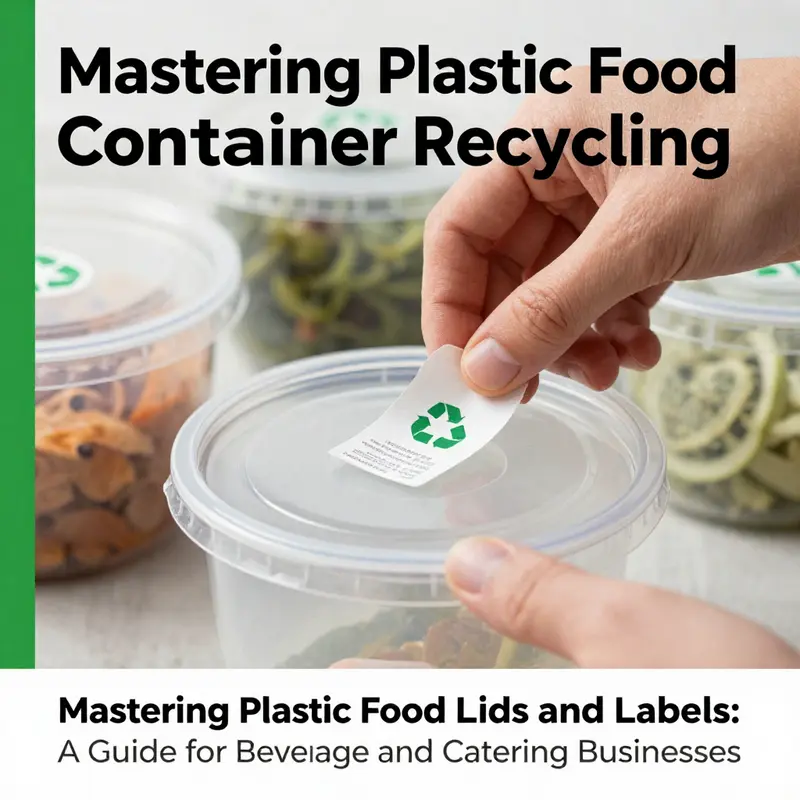
When we talk about recycling plastic food containers, the conversation often centers on what can be recycled and where to drop it off. Yet a quieter, equally important step determines whether that container actually makes it back into the resource stream: removing the lid and peeling away or loosening the labels before it ever reaches the bin. This ritual, simple as it seems, keeps the recycling process efficient and reduces the chance that a batch of otherwise eligible recyclables will be rejected or downgraded at the facility. The logic is practical and grounded in the way plastics are processed. Each container is a different plastic type, and the joining of these types in a single melt can create defects, reduce quality, or even cause equipment to reject a load. By separating lid from container and minimizing adhesive residue, we honor the physics of melting and the workflow of reclaiming plastics into new products. It’s not a glamorous step, but it is essential for preserving the value of what we throw away and for guiding containers back into useful life instead of landfills.
The first principle to hold in mind is that the lid is often made from a different plastic than the body of the container. A common pairing you might encounter is a PET container, labeled #1, paired with a lid that is HDPE, labeled #2. The two plastics have different melting points and different processing characteristics. If they are fused in the same stream, the result is a less predictable mix that can complicate the reprocessing line. Because manufacturers and recyclers optimize for uniform types, separating the lid from the container helps preserve the purity of the melted plastic and the quality of the final product. It also reduces mechanical stress on sorting equipment, which relies on consistent material properties to separate materials accurately. This is why many programs advise removing the lid before placing the container in the recycling bin, even if some facilities can accept the mix.
If you choose to leave the lid on, you should at least confirm whether your local program accepts a mixed load or only certain plastics. Rules vary widely from one jurisdiction to another, and the same container might be processed differently just a few miles away. The key is to know your locality’s expectations and to adapt your practice accordingly. The act of separating the lid is often quick and simple: lift the lid, which sometimes requires a gentle twist or a lift with a fingernail to release a stubborn seal. With practice, this becomes almost automatic. You’ll notice the lid is usually lighter and sometimes stiffer than the container body, reflecting its different material; a little habit of glancing at the lid before you recycle can prevent a small but meaningful error.
Labels, too, deserve attention. Most labels are paper or lightweight film with an adhesive backing. Many facilities can handle small adhesive residues, and some labels will pass through without issue if the container is otherwise clean. However, the more adhesive remains attached, the more likely it is to create friction or separation problems at the recycling plant. The adhesive can cause flux or debris in the machinery, which in turn can reduce the overall efficiency of the process. The simplest approach is to loosen and remove the label as completely as you can. If the label stubbornly clings, a practical method is to soak the container in warm, soapy water for a few minutes. This loosens the adhesive and makes the label easier to peel off without tearing. A soft brush or cloth can help remove any stubborn glue; some people use a touch of cooking oil or rubbing alcohol to dissolve residual adhesive, then wipe away the film. It’s not necessary to achieve perfection, but the more you remove, the cleaner the stream becomes.
Rinsing follows these prep steps. A container with lingering food residue can become a source of contamination that spreads through an entire batch. The goal is to remove all visible food particles and smells, so a quick rinse with warm water suffices in most cases. If you ever doubt whether a container is truly clean, a brief rinse and a careful inspection should reveal lingering grease or residue. A good habit is to rinse thoroughly, then let the container air dry before it goes into the recycling bin. Wet plastics can cause clumping and other issues at the plant, especially in facilities that rely on automated sorting. The dryness step is often overlooked but is crucial in maintaining the integrity of the recycling stream.
The choices you make about lids and labels sit at the intersection of personal practice and municipal rules. After you’ve removed lids and labels, you still need to consider whether the container meets the local program’s requirements. Some programs accept only certain numbers of plastics in curbside bins, while others feature drop-off centers for more challenging materials. The definitive guidance remains your city’s official recycling guidelines, which may be accessed through municipal websites or through national search tools. When in doubt, a quick lookup using a community resource can save time and prevent confusion. The overarching aim is clear: maximize the recyclability of plastic containers by ensuring that what goes into the bin is as clean, uniform, and label-free as possible.
Beyond the mechanics of preparation lies a broader philosophy of reuse and responsibility. If a container has served its purpose multiple times, there are still opportunities to extend its life before it enters the recycling stream. Clean, dry containers can become storage bins, organizers for small items, or even seedling pots for a balcony garden, depending on the material and its condition. This mindset reduces the frequency with which we reach for newly manufactured plastics and reinforces a cycle of reuse before recycling. Yet the caution remains: avoid reusing single-use containers for hot or acidic foods, because repeated exposure can increase chemical leaching and compromise safety. The balance between reuse and recycling is delicate, and the best approach is context-driven: reuse for appropriate purposes, and recycle when reuse is no longer sensible.
The conversation about lids and labels also connects to broader systems that shape recycling outcomes. In regions where extended producer responsibility programs are active, manufacturers participate in collecting and recycling their packaging. This shift places greater accountability on the producers who design and market containers, encouraging them to consider end-of-life fate from the outset. When such programs exist, it is often easier for communities to maintain clean recycling streams and for brands to invest in packaging that is more consistently recyclable. The Meituan experience and similar initiatives in other parts of the world demonstrate that organized, system-level approaches can unlock higher recycling rates for common packaging formats, including those used for takeout and ready-to-eat foods. The practical takeaway for households is straightforward: support reuse whenever feasible, remove lids and labels diligently, and align your actions with local rules.
As you practice this habit, you’ll notice how the small acts of preparation accumulate into meaningful environmental impact. Each container that reaches the recycling stream in a clean, uniform state is more likely to contribute to new products rather than to waste. The clarity of the supply chain matters, and the simple act of separating a lid from a container or peeling away a stubborn label helps to preserve the integrity of plastic recycling. For those seeking more precise guidance tailored to their region, internal resources and community guides offer the quickest path to conformity. And for broader context, trusted external resources provide up-to-date information on how to navigate local programs and what kinds of plastics they will accept.
In closing, the ritual of removing lids and labels is a practical expression of stewardship. It acknowledges the material reality of plastics, respects the machinery that transforms used containers into new products, and reinforces a culture in which reuse and recycling act as a single, continuous loop. By starting with the lids and the labels, and by finishing with a clean, dry container ready for the recycling stream, you become part of a system that reimagines waste as a resource. The path is straightforward, the impact tangible, and the habit easily integrated into daily life. The more consistently you apply this practice, the more reliably the recycling system can function, and the better the outcome for communities and ecosystems alike.
External resource: https://www.earth911.com/
Local Rules, Global Impact: A Practical Pathway for Recycling Plastic Food Containers

When you lift the lid on a plastic food container and rinse away last night’s sauce, you might think your job is done. In truth, the next step is just as important and far more variable: whether that container will be accepted by your local recycling system. The fate of every item in the bin depends not only on the material, but on the rules that govern waste streams where you live. This is where the practical path to recycling begins to feel less abstract and more actionable. To recycle plastic food containers effectively, you must align your actions with the local guidelines, and that alignment starts with a clear understanding of the symbol on the bottom, the cleanliness you can realistically achieve, and the specific rules your city or county applies to different plastics. The outcome hinges on how well these elements come together in a routine you can repeat with consistency, every week, in every season, no matter how busy life gets.
First, the symbol on the container is not a decorative stamp; it is a guide to what your program may or may not accept. The most common recyclable numbers you’ll encounter are #1 PET, #2 HDPE, #4 LDPE, and #5 PP. Each resin type carries its own recycling story, but the key point is not to assume that every symbol is treated the same in every community. In many places, #1 and #2 are widely accepted, while #4 and #5 are increasingly included in curbside programs, and #7 remains more problematic. The practical takeaway is simple: check your local rules before tossing anything labeled with these numbers into the curbside bin. Some communities will gladly take a broad mix, but others will only accept specific plastics, sometimes only when they’re clean and dry. A quick check of your city’s waste management site or a trusted recycling finder can prevent a silent mistake from compromising an entire batch of recyclables.
Cleaning is often presented as the most important preparatory step, and for good reason. Contamination is the single biggest barrier to recycling success. A container that still carries grease, sauce, or lingering oils can make an entire load of otherwise recyclable material unfit for processing. The practical approach is straightforward: rinse the container with soap and water, give it a light scrub if necessary, and let it air dry before placing it in the bin. If a container is heavily soiled, the best course of action may be to dispose of it in the regular trash rather than risk contaminating a larger stream of recyclables. The aim is not perfection, but a repeatable routine that minimizes residue and improves the quality of the material that enters the sorting stream.
Lids and liners deserve careful attention, too. Lids are often made from a different plastic than the container body—for example, a container that is identified as #5 PP might have a lid made from #2 HDPE or another resin altogether. Local programs differ in whether the lid is accepted with the container, accepted separately, or not accepted at all. The simplest rule of thumb is: remove the lid if your local rules discourage including it, and dispose of it according to local guidance. This step prevents mixing incompatible plastics that can complicate recycling machinery. Likewise, plastic wraps or liners inside the container should usually be discarded, even if the container itself is recyclable. These elements add complexity to the recycling stream that many facilities are not equipped to handle, so separating them at the source helps keep the process efficient and effective.
Guidelines vary widely by locality, which is why the most reliable practice is to consult your municipality’s official guidance. Some communities accept a broad range of plastics in curbside bins, while others may restrict acceptance to a subset and require certain preparation steps. Some areas provide drop-off centers specifically for flexible plastics like LDPE #4, which aren’t always curbside-friendly. In this context, a general rule can help: if you’re unsure whether a container is recyclable where you live, seek the official instruction rather than guessing. It’s a small investment of time that pays off in reduced contamination and better recycling outcomes. If you want a quick, location-specific check, trusted recycling search tools and the official municipal site are your best partners. Clear, current guidance ensures you avoid the disappointment of placing a recyclable item in the wrong stream and unintentionally stalling a batch that might otherwise be transformed into new products.
There is a practical, almost civic-minded dimension to this work as well. Recyclers operate within systems that are designed to function best when the input stream is predictable and clean. Aligning your actions with local rules turns everyday packaging into a resource rather than a question mark in a landfill. In regions that have adopted broader EPR (Extended Producer Responsibility) programs, the responsibility for collection and recycling often extends beyond the single household action to include manufacturers who participate in take-back and recycling initiatives. Even if your locale has not adopted such programs, staying informed about them can motivate consumer choices and support for more sustainable packaging practices. When producers participate in take-back schemes or when local authorities optimize collection networks, the collective impact can be substantial, reducing the environmental footprint of plastic packaging at its source by shaping design choices and end-of-life pathways.
A concrete illustration of organized, systemic recycling comes from a real-world initiative in another country. In some places, platforms around takeout food have piloted collection systems for PP (#5) containers, designed to work with municipal partners to collect, clean, shred, and repurpose the material into new products—from bins to brooms to future packaging. The success rests on a coordinated chain that begins with individual accountability—clean containers, properly prepared lids, and an informed curbside decision—paired with a trusted network that can receive, treat, and reintroduce the material into the economy. It is a blueprint for what can happen when households align with structured programs and when policy and industry design converge to create circularity rather than waste.
In everyday practice, the local rules you follow become your personal contribution to a broader system. If your city accepts #1 and #2 plastics but has stricter rules for #4 and #5, you tailor your preparation accordingly. If a container bears no symbol, or if it is riddled with residue that stubbornly refuses to wash away, the safest choice may be to place it in general waste rather than risk contaminating the recycling stream. The decision is rarely black and white, but it becomes clearer when you know your local policy and apply a disciplined routine every time you recycle. And as you develop this routine, you may discover that reusing containers for storage or organization not only reduces waste but reinforces the habit of thoughtful packaging, a habit that keeps single-use impulses from undermining a responsible recycling cycle.
Reuse, in fact, deserves emphasis as a complement to recycling. Before you place a container in the recycling bin, ask whether it can be repurposed instead of discarded. Clean, dry containers can become handy organizers for small items, craft materials, or seed starters for a kitchen garden. The act of reusing delays disposal and keeps valuable plastic out of landfills longer, while you still honor the ultimate goal of reducing the amount of material that needs to be processed at all. It is wise to avoid using containers repeatedly for hot or acidic foods, since prolonged exposure can alter the material in ways that complicate downstream recycling or reuse. The balance between reuse and recycling is not a maxim that fits every situation, but a practical framework that respects both the resource and the system designed to handle it.
For those who want to go beyond individual action, engaging with larger programs and policies can amplify impact. Look for programs that encourage manufacturers to take responsibility for the lifecycle of their packaging, or local drop-off options that handle plastics not accepted in curbside bins. Participation in such programs, whether through advocacy or direct involvement, helps strengthen the infrastructure that makes recycling more reliable and inclusive. The more consistent households become about following guidelines, the more stable the feedstock becomes for recycling facilities, and the more confident communities can be in the environmental benefits of recycling plastic food containers rather than treating them as waste that disappears without trace.
In practical terms, the core actions stay simple and repeatable. Confirm the plastic number on the bottom and understand what your local program accepts. Rinse thoroughly and allow the container to dry. Remove lids and liners when required by local rules. Follow the municipality’s guidance, and when in doubt, choose the option that minimizes contamination and aligns with official recommendations. Reuse when feasible, and consider participating in or supporting programs that promote extended producer responsibility. These steps, practiced consistently, transform everyday packaging into a resource that circles back into new products, rather than filling landfills or polluting waterways.
A reliable compass for many households is the official waste and recycling guidance published by local governments. For people seeking a broader, national perspective, the EPA’s Recycle Right Guide offers comprehensive resources and links to local programs, helping translate local rules into clear, actionable steps. This external resource serves as a practical reminder that while rules differ, the goal is shared: to keep plastics in productive use and out of the environment. By following local guidelines with care and purpose, you contribute to a system that treats plastic containers as a resource rather than a consequence, and you help ensure that the journey from kitchen to recycling bin remains efficient and meaningful.
External link: EPA Recycle Right Guide
Reuse First, Recycle Next: Giving Plastic Food Containers a Second Life Before They Return to the Recycling Stream

Giving plastic food containers a second life starts with a simple, deliberate mindset shift: treat them as resources to be stretched, not disposable packaging to be discarded after use. This chapter threads together practical reuse ideas with the cautions and guidelines that keep us safe, sane, and environmentally responsible. It’s not a call to abandon recycling; it’s a call to a smarter sequence—reuse where feasible, clean, and then recycle when the container has outlived its usefulness for any purpose. The aim is to reduce contamination, extend the useful life of plastics, and cut down on waste at every turn. When we view a container less as a one-and-done product and more as a modular, adaptable tool, the everyday environment—our kitchen, workspace, and garden—becomes a proving ground for ingenuity and stewardship.
At the core of this approach is knowledge about the plastic itself. Most households encounter containers made from common resins: PP (#5) stands out for durability and heat resistance, making it a primary candidate for multiple uses. By contrast, #1 PET and #7 “other” plastics often carry greater concerns about long-term safety when reused, especially with hot or acidic foods. Reuse decisions should be grounded in the recycling code, with an emphasis on safety and practicality. The guidance is clear, but not rigid: reuse should be avoided for containers that are cracked, warped, discolored, or scratched, because such imperfections can harbor bacteria and may leach chemicals over time. Before any reuse, a hot, soapy wash followed by thorough drying is essential. This ensures that residual food or oils don’t create odors, promote mold, or complicate the later recycling process.
The most effective reuse often begins in the pantry and kitchen, where containers already pass as clean, dry, and sturdy. Clean, undamaged containers can store dry goods like rice, pasta, flour, or spices, protecting them from moisture and pests while keeping the pantry orderly. The same idea translates into the office and workshop. A simple plastic container can become an efficient caddy for paperclips, push pins, or small hardware. Its rigid walls and clear sides help you see contents at a glance, reducing rummaging and waste. In both settings, the key is to keep the containers clean and dry, so their surfaces remain hygienic and ready for reuse. If you want a tactile example of a container finding new life in a different domain, the garden offers an especially practical transformation. Clean, food-grade PP #5 containers can become seed starters or small planters. You can punch drainage holes in the bottom, fill with soil, and plant herbs or seedlings indoors. They’re compact, lightweight, and perfect for starting a balcony or windowsill garden. For gardeners, this reuse is not just about saving money; it’s about turning a once-wasted material into a live, growing resource. When I think of a real-world example of a structured reuse ecosystem, I recall how container-based takeout packaging—if designed for recovery and reuse—can be directed into local collection networks rather than landfills. In some regions, communities have built systems around reuse that mimic the efficiency of a small, closed loop: containers cycle from home to collection to cleaning to repurposing, and finally into new products. The takeaway is not only about individual containers but about designing systems that accept, reclaim, and repurpose materials in ways that avoid wasteful shortcuts.
The garden example also highlights a practical, less discussed truth: reuse isn’t about sacrificing safety or quality. It’s about selecting the right containers for specific reuses. When you rehome a container into garden duties, you’re prioritizing durability and chemical stability over the possibility of repurposing it for hot foods again. The safety guidelines are explicit on this front: if a container has held hot foods before, or if it’s marked as #1 or #7, reuse for food storage should be avoided or limited to non-food applications. For non-food tasks, such containers can serve as organizers for craft supplies, seedling trays, or rainwater collectors, as long as you’ve confirmed there are no residues that could contaminate future uses.
In the kitchen, a thoughtful reuse plan can extend beyond dry storage. You can repurpose containers as portioned snack packs for lunches, as long as you’ve removed all previous food residues and ensure the containers are labeled correctly and clean. If you plan to reuse a container for liquids, test its seal integrity and ensure there are no cracks that could leak. One recurring theme in successful reuse is keeping lids and bodies compatible and ensuring the closure system remains reliable. Lids often come from a different plastic family than the container body and aren’t always accepted in every program. When you reuse in ways that keep the container in everyday circulation, you’re effectively reducing the overall demand for new packaging, a small but meaningful step in the broader effort to minimize plastic waste.
The broader culture of reuse intersects with the economics of recycling in subtle but powerful ways. By giving containers a second life, you reduce the volume that reaches municipal collection points, which can help lower contamination risks in the recycling stream. Contaminants—especially food grease and residue—are the biggest barriers to recycling. When containers are kept clean, the recycling process becomes more efficient, and more material can be recovered and reintroduced into the economy. This is precisely why a thorough wash, even when you intend to recycle after reuse, is essential. A quick rinse and air dry can prevent grease from migrating to other items in the bin, protecting the quality of bales of recyclables and making it easier for processors to separate, sort, and wash.
When reuse is no longer feasible, or when the container has reached the end of its useful life for any purpose, recycling remains the next logical step. The guidelines emphasize following local instructions, because municipal programs vary widely in what they accept. Some communities broaden curbside acceptance to include most plastics, while others limit acceptance to specific resins. For LDPE (#4) and other flexible plastics, drop-off centers at supermarkets may be the route to take. The act of recycling becomes even more effective when we minimize contamination and maximize material purity. Lids, labels, and the container body may require different handling depending on local rules. In many places, leaving labels and stickers on the containers is permissible, but removing them can improve the quality of the recycled stream. By familiarizing ourselves with local rules and seeking out reliable information—such as city guides or dedicated recycling search tools—we place ourselves on solid ground for responsible disposal.
The social and systemic dimension of reuse is equally important. Regions with Extended Producer Responsibility (EPR) policies shift some of the responsibility for packaging from municipalities to manufacturers. When brands participate in take-back programs or loops, containers re-enter the economic cycle with clarity and accountability. Even in places without formal EPR structures, individual actions compound. The small decision to reuse a PP #5 container can ripple through a community, pushing neighbors to rethink packaging choices, prompting schools and workplaces to adopt reuse-friendly habits, and encouraging local businesses to design packaging that supports reuse or easy cleaning for multi-purpose use. In a more dramatic historical example, China’s takeout container initiative shows how coordinated systems can transform a ubiquitous plastic into many useful products after proper processing. The Meituan-led Qingshan Plan demonstrates how dedicated collection, cleaning, shredding, and remanufacturing can create a closed loop for PP (#5) containers, turning them into bins, brooms, or even new packaging. The takeaway for readers is not simply clever reuse ideas, but the reminder that policy design and community infrastructure can unlock real recycling potential when people participate thoughtfully.
As a practical matter, the chapter’s guidance coalesces into a simple, memorable rhythm. Confirm the plastic number before reuse. Wash thoroughly and dry completely. Remove lids if local programs don’t accept them with the containers. Reuse for non-food purposes when possible, and save the more sensitive or damaged items for recycling at appropriate drop-off points. Consider the container’s long-term safety profile: never reuse containers for food after their initial use, especially if they are not clearly labeled for repeated food contact. Maintain vigilance about heat exposure; high temperatures can accelerate degradation and raise concerns about chemical migration. By building this rhythm into daily routines, you create a culture of reuse that complements responsible recycling, rather than competing with it. This approach aligns with EPA guidance on organics and materials management, which emphasizes reducing, reusing, and responsibly disposing of packaging in ways that protect health and the environment. For readers seeking a broader, authoritative perspective on safe reuse and recycling practices, the EPA’s Organics guidance provides a complementary framework to the practical steps outlined here.
In sum, the art of reusing plastic food containers before recycling is a practical, ethical, and creative discipline. It invites us to look at familiar items with fresh eyes, to imagine them as building blocks for storage, organization, gardening, travel, and art. When done thoughtfully, reuse reduces waste, sharpens our resourcefulness, and supports a more sustainable relationship with the materials we rely on every day. It also creates an opportunity to connect with neighbors and communities as we share ideas, swap containers, or participate in local reuse initiatives. If a container is truly past its prime for any reuse—contaminated, damaged beyond safe cleaning, or not compatible with local rules—then recycling, done correctly, is a legitimate and valuable end-of-life option. The practical steps—cleaning, checking the resin, separating lids, and following local guidelines—remain the backbone of responsible plastic stewardship. And as we practice reuse, we lay groundwork for a more resilient system that treats plastic as a resource for as long as possible rather than a single-use convenience that ends up in landfills or oceans.
For gardeners curious about converting containers into planters and seed-starting pots, a real-world example of a practical reuse path can be found at the green-soil-lotus page. This specific reuse approach demonstrates how a sturdy PP #5 container can serve as a durable, reusable component in a growing garden, illustrating how small, everyday choices accumulate into meaningful environmental benefits. See green-soil-lotus for a concrete illustration of garden reuse in action.
External resources can further enhance understanding and provide a trusted reference point for readers seeking broader guidance. For more detailed information on safe plastic reuse and recycling practices, consult the EPA’s guidance on organics and materials management: https://www.epa.gov/organics
Final thoughts
Adopting effective recycling practices for plastic food containers is vital for any food service operation aiming for sustainability. By identifying plastic types, cleaning containers thoroughly, removing lids and labels, following local recycling guidelines, and creatively reusing containers before recycling, businesses can significantly reduce their environmental impact. Each action taken not only contributes to a cleaner planet but also enhances your brand’s reputation as a responsible steward of the environment. Make recycling a priority in your operations, making a positive difference for our communities and future generations.