
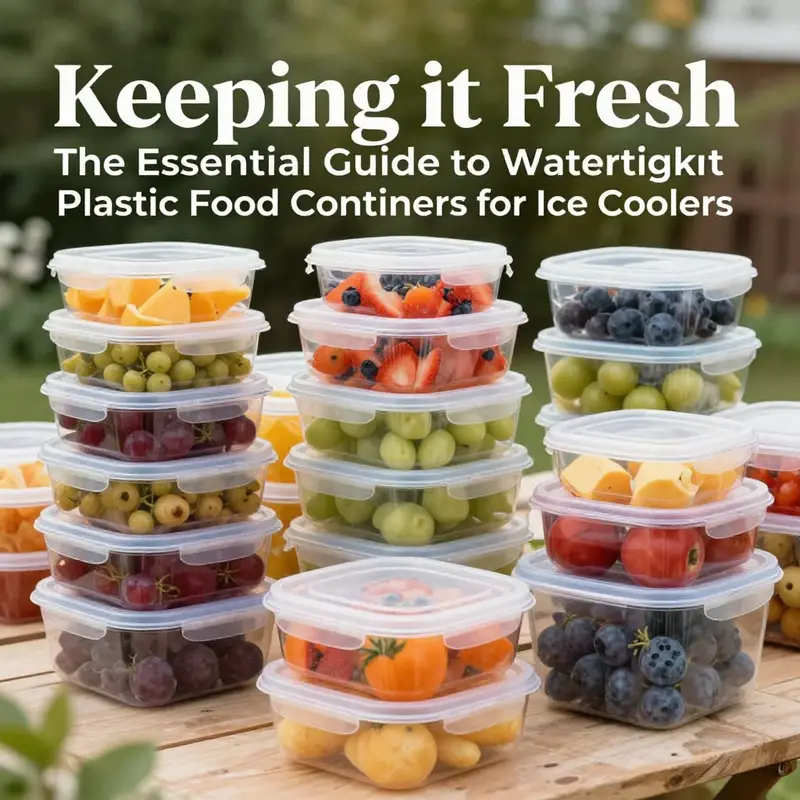
In the vibrant world of food and beverage services, preserving freshness is not just an option, but a necessity. For Bubble Tea Shops, Restaurants, Food Trucks, Catering Services, Event Planners, and Corporate Procurement Teams, watertight plastic food containers are more than a storage solution—they are a vital tool for efficiency and quality control. These innovative containers keep food and beverages leak-proof and fresh, whether nestled among ice or stacked for transport. This article delves into the features that make these containers indispensable, explores the science of materials used, discusses their economic impact, examines their environmental implications, and shares user experiences that illuminate best practices for their use.
Sealed for the Chill: Innovative Design Features of Watertight Plastic Food Containers for Ice Coolers
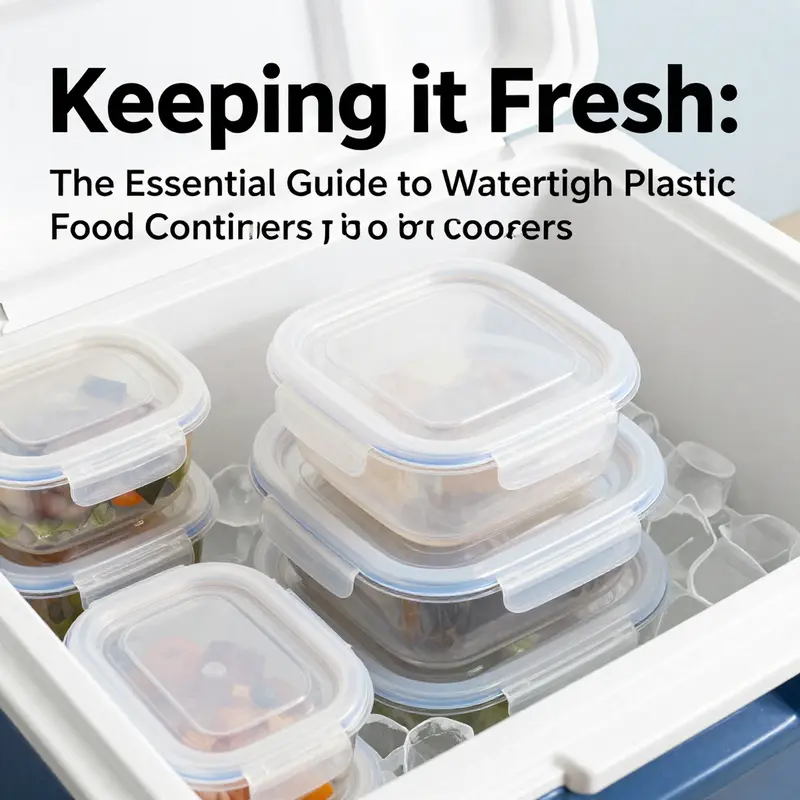
In outdoor settings where a cooler functions as the hub of nourishment, the containers inside matter as much as the ice that surrounds them. Watertight plastic food containers designed for ice coolers are engineered not only to hold meals but to protect freshness against moisture, vibration, and the daily grind of travel. They embody a careful balance of seal integrity, material resilience, and user-friendly details, creating a system that works with meltwater rather than fighting it. The result is a practical, durable solution that keeps contents secure, preserves flavor, and minimizes mess across a spectrum of adventures, from family camping trips to multi-day hikes where every inch of space and every drop of cold matters. At the heart of these designs lies a leak-proof, snap-and-lock lid system that is more than a clever mechanism; it is a coordinated partnership of components that work in concert. A robust gasket sits in a raised channel around the rim, while a locking lip yields an audible click when the lid seats correctly. This combination creates an airtight interface that keeps liquids contained and air out, forming a microclimate inside each container that resists frost damage and protects contents from cross-contamination as the cooler endures bumps and shifts. In practice, the benefit is tangible: no puddles on the ice, no stray drips staining cups or bags, and a calmer organization when several containers nestle together in a crowded cooler. Materials chosen for these containers emphasize safety and endurance. They are typically made from BPA-free plastics that meet strict food-contact standards, with formulations designed to resist cracking and deformation under cold, hot, or fluctuating conditions. The rigidity helps the container keep its shape when pressed against ice blocks or stacked with other units, yet the material remains light enough for easy handling on a windy shore or a rocky campsite. This durability matters beyond a single trip, translating into years of reliable service and reducing the volume of disposable packaging that would otherwise accumulate after each outdoor season. Beyond safety and strength, transparency plays a practical role in the daily rhythm of outdoor food management. Clear lids or translucent sides let travelers identify contents without opening the container, a small feature that compounds into meaningful savings in time and temperature stability. When you are negotiating space inside a cooler, every minute saved by avoiding unnecessary openings helps keep the overall internal temperature down and reduces the likelihood of condensation that can dampen flavors or compromise textures. The advantage is especially evident in longer excursions, where quick recognition of perishables like greens, cheeses, or fruit can prevent temperature excursions caused by repeated rummaging. The interior geometry and exterior profile are designed with space efficiency in mind. Stackable shapes with flat, rectangular silhouettes maximize cooler real estate, while rounded corners prevent catching on ice sheets and other containers during packing. The lids are engineered to sit flush on top of stacks and the bases often interlock or nest when empty, creating a tidy system that stays organized even as plans evolve from day to day. This spatial intelligence matters when plans shift from a simple lunch to a multi-day meal plan, or when a group needs to rotate items in and out of the cooler with minimal fuss. Versatility extends the value proposition far beyond preservation. Many designs are tested for freezer durability, enabling pre-freezing of portions for long trips or in high-output households where meals are prepared in advance. Some models are compatible with occasional reheating, provided users follow the guidelines set by the manufacturer, which means you can thaw and warm a portion without transferring to another dish. In home kitchens, dishwasher compatibility makes post-trip cleaning less onerous, reinforcing the idea that outdoor gear should simplify routines rather than complicate them. The overarching benefit is a seamless, reliable workflow: plan, seal, store, and retrieve meals with a rhythm that mirrors the cadence of travel rather than the friction of packing and cleaning. Additional enhancements elevate everyday use in meaningful ways. Integrated handles reduce the effort of transporting a full container, while non-slip bases improve stability on wet or uneven surfaces—a common issue near melting ice. Some designs offer compatibility with cooler inserts or dividers that keep meats, vegetables, and desserts separate, reducing cross-contamination and making it easier to maintain a balanced bipartite or multipart meal plan. Subtle touches—tactile capacity markings, easy-open lips, or moisture-resistant seals—contribute to a calmer, more predictable routine in outdoor settings, transforming what could be a fiddly chore into a straightforward step in meal preparation. The design philosophy behind these innovations centers on preserving food quality while simplifying outdoor life. Engineers balance temperatures that swing between near-freezing and the warmth of a resting camp, protect against accidental pinches or drops, and anticipate cleanup needs after long days outside. They consider how containers behave when nestled among ice and how frost forms on lids, yet they also imagine the moment when a family or group needs to rearrange portions to satisfy evolving appetites. The aim is not novelty for its own sake but reliability: a sealed, clean, and easy-to-use system that harmonizes with the flow of travel, enabling a broader range of people to enjoy fresh meals wherever the road leads. When choosing watertight containers for ice coolers, the decision becomes a practical pledge toward freshness and organization. The seal and shell operate in tandem to sustain a small, controlled environment inside each unit. The melting ice bath remains present, but it is predictable rather than disruptive, keeping liquids contained while preserving the integrity of the food inside. With such design coherence, leftovers can endure longer, salads can stay crisp, and beverages remain chilled without leaking into nearby items. The cumulative effect is a reduction in waste, easier cleanup, and greater confidence that a planned meal will taste as intended after hours of travel. This is the essence of modern watertight storage for ice coolers: a quiet, durable toolkit that makes outdoor dining more accessible, more enjoyable, and more reliable across a spectrum of adventures. External resource: https://www.yeti.com
From Powder to Perimeter: Material Science Behind Leak-Proof Ice Cooler Containers
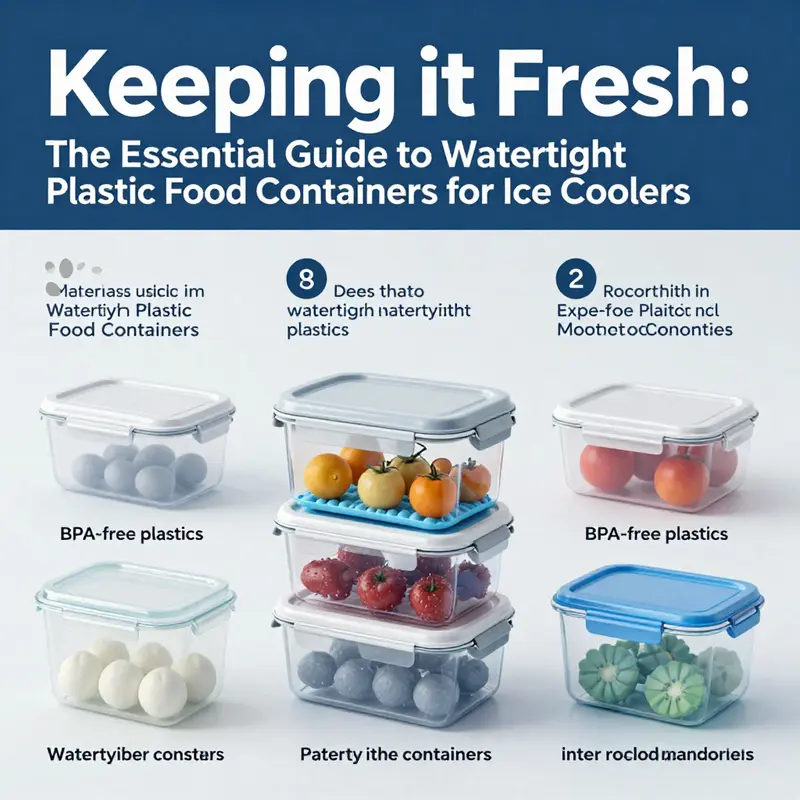
Material science sits at the core of watertight plastic food containers designed for ice coolers. These containers must endure cold, damp, and rough handling while preserving contents with a reliable seal. At the heart of the design are two workhorse plastics: high-density polyethylene (HDPE) and polypropylene (PP). HDPE provides rugged water resistance and impact strength, ideal when ice shifts or a container is dropped. PP offers chemical stability and temperature tolerance, supporting sealing surfaces and lids. Both are typically formulated to be BPA-free to address safety concerns while withstanding repeated freezing and heating. The manufacturing method commonly used is rotational molding, which builds a seamless shell by heating plastic powder inside a rotating mold. The result is uniform wall thickness and fewer leak-prone joints. The lack of sharp corners reduces stress concentrations that could crack or warp. Stabilizers, including UV absorbers and antioxidants, extend life in sun and heat and help maintain clarity and stiffness without compromising safety. The lid and gasket system completes the barrier: a well-fitted gasket sits in a channel around the rim and, when the lid snaps shut, creates a uniform seal that blocks leaks and minimizes air ingress. In practice, the interplay of material choice, wall geometry, and sealing technology governs performance: slower heat ingress, better leak resistance, and easier cleaning. Cleanability matters because repeated wash cycles can erode surfaces; designers thus choose smooth interiors and food-grade additives. The result is a durable, leak-resistant container that protects freshness during outdoor use, while staying safe for food storage. For readers seeking deeper technical depth, the broader context of polymer packaging science offers parallels in many protective enclosures and temperature-controlled systems.
Seal, Save, Sustain: The Long-Term Economic Footprint of Watertight Plastic Food Containers in Ice-Cooled Travel
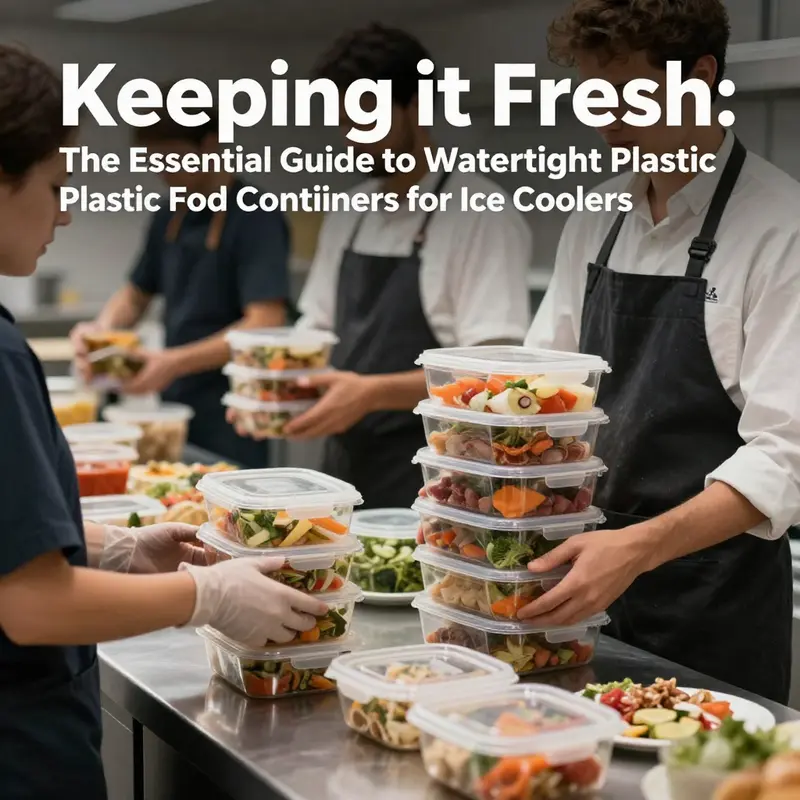
The appeal of watertight plastic food containers for ice coolers is simple and practical: a tidy seal that keeps liquids from leaking, a clear lid that reveals contents at a glance, and a price tag that fits within the budget of many travelers and outdoor enthusiasts. Yet a closer view shows that the economic story behind these containers unfolds along a longer arc than a single shopping trip. The initial purchase price is only the opening chapter. In outdoor settings where ice and warmth jostle for control, the true cost picture includes health considerations, durability under freezing and thawing cycles, and the downstream effects of how often replacements are required. Understanding this broader financial horizon helps readers weigh the convenience of a low upfront cost against the potential for hidden expenses, waste, and compromised performance over time.
At the outset, the lure of inexpensive plastic storage seems straightforward: more containers for less money, more organization in the cooler, and easier meal prep for trips with crowded schedules. This short-term savings can be compelling, especially when planning for family outings, camping weekends, or long road trips where every item counts. However, when these containers repeatedly encounter acidic, oily, or hot foods, the cost calculus grows more complex. Scientific and regulatory discourse on food-contact materials warns that certain plastics can release trace additives into food under particular conditions. Bisphenol A (BPA) and phthalates are frequently cited in public discussions about chemical migration. While many modern consumer packages claim to be BPA-free or designed to minimize migration, the reality remains nuanced: the risk is a spectrum rather than a binary yes-or-no, and exposure can accumulate across meals and days. This nuance translates into a health-cost dimension that businesses and individuals should factor into the total cost of ownership, especially for families that routinely store leftovers, marinades, or hot beverages in the same container used later for cold storage.
From a budgeting standpoint, the health dimension often reveals itself not as a line item on a receipt but as a potential future cost that could arise from chronic exposure or from handling repeated recalls and replacements if a container proves unsuitable for safe food contact over time. The cost of medical care, even if rare, does not neatly align with a single purchase. This creates an uncertain risk profile that some shoppers prefer to hedge by choosing higher-quality, purpose-built containers that are explicitly designed for freezer use and food contact safety. The longer horizon matters: a container might start as an inexpensive entry point, but if it becomes a source of leaks, contamination, or degradation after several freezing-thaw cycles, the replacement cycle can erase the initial savings. In practice, households that accumulate a larger set of containers with varied ages inevitably confront a mismatch between the apparent affordability of new units and the cumulative expense of frequent replacements or inconsistent performance.
Durability is the second pillar in the long-run economic assessment. Plastic can endure many trips, yet exposure to freezing temperatures accents material fatigue in ways that are not always obvious at the point of sale. Repeated cycles of freezing and thawing can generate microcracks or micro-fractures even in containers that feel sturdy. Those microstructures may seem inconsequential at first, but over time they increase the likelihood of leakage, seepage, and microbial exposure risk in the cooler environment where ice melts and water mixes with residues. The savings from buying a larger pack can quickly vanish if frequent replacements are needed due to cracking, warping, or degraded seals. In a practical sense, the lifetime cost of these plastics becomes a calculus of initial price versus the probability of degradation, the hassle of disposal when plastics reach end-of-life, and the opportunity cost of time spent managing leaks instead of enjoying outdoor experiences.
This tension between cost and durability helps explain why some consumers gravitate toward higher-quality, freezer-safe containers that are specifically engineered for long-term storage in cold environments. The upfront premium on such items is offset by a lower risk of chemical migration, greater resistance to cracking, and better seal integrity across multiple cycles. When these high-quality options are chosen, the economic advantages extend beyond mere durability. They often align with broader environmental and consumer-value trends—less waste, fewer replacements, and a clearer signaling effect to outdoor enthusiasts about health and safety. In markets where sustainability and safe design are increasingly valued by buyers, the premium can translate into tangible business benefits for retailers and brands that advocate for responsible storage practices. The calculation here, then, is not only about the price tag but also about the reliability and brand perception that come with choosing safer, more durable materials.
Beyond safety and durability, the decision framework for ice-cooler storage also includes a practical component: the compatibility of containers with cold-chain needs and the potential for waste reduction through better meal planning. When leftovers are stored correctly in reliable, leak-proof containers, fewer spoilage incidents occur during transport. This not only minimizes food waste but also reduces the number of trips and substitutions that people must make during a trip, translating into savings on fuel, time, and the emotional cost of dealing with messy coolers. In essence, the economic case for higher-quality storage extends into the pantry, the kitchen, and the campsite itself. The habit of using containers that resist leaching and degradation can drive down the overall cost of camping and travel over a season or multiple seasons by reducing waste and the associated disposal costs, while preserving the quality of meals carried in the cooler.
From a market perspective, consumer demand is increasingly informed by the lifecycle costs of products, not just the purchase price. Transparent labeling about freezer suitability, food-contact safety, and dishwasher compatibility matters in shaping long-run value. Shoppers who weigh the total cost of ownership may discover that the most economical choice is not the cheapest option on the shelf but a durable, certified container whose price persists more as an investment than as a transient expense. This perspective resonates with the growing consumer emphasis on eco-conscious decisions and responsible consumption. Durable, non-migrating materials, when paired with energy-efficient production and responsible end-of-life recycling, can yield a product lineage that reduces waste and supports a brand’s reputation for safety and stewardship. In turn, retailers may find that aligning with these expectations can unlock customer loyalty, encourage repeat purchases, and elevate the perceived value of the entire storage system within ice-cooler ecosystems.
To balance short-term budget constraints with long-term financial health, shoppers should weigh several practical considerations. First, assess the conditions most common in your use case: how acidic or oily are your typical contents? Are you storing hot beverages or foods that could increase migration risk? Second, examine the expected lifecycle of the container and the environment in which it will be used most often. If you anticipate frequent use and multiple freeze-thaw cycles, a higher-quality, freezer-safe option may offer better return on investment. Third, consider alternatives that minimize risk and waste. For some households, glass or stainless steel containers offer compelling long-run advantages, aligning with a preference for materials that do not leach chemicals and that withstand repeated cycling with minimal degradation. While these materials require higher upfront costs, the extended lifespan and better end-of-life recyclability can yield meaningful savings over several seasons.
The economic narrative thus moves beyond the immediate sticker price to a broader concept of value. It encompasses health considerations, reliability under cold conditions, and the environmental footprint of storage choices. In the end, the most prudent approach blends mindful purchasing, informed about material safety and durability, with realistic expectations about how often replacements are necessary in real-world use. The resulting decision supports not just personal budgets but also a broader commitment to safer food handling and more sustainable consumption patterns. For readers who plan for resilience in outdoor adventures, this integrated view of cost, safety, and longevity helps transform a simple cooler accessory into a strategic investment in reliable food storage.
For regulatory context on how materials used in food-contact packaging are evaluated, see the following external resource: https://www.fda.gov/food/packaging-labeling-food-contact-substances/food-contact-substances-faqs
Guarding Freshness and the Planet: Environmental Realities of Watertight Plastic Food Containers in Ice Coolers
Choosing watertight plastic food containers for ice coolers is not only about keeping contents dry; it’s about reducing environmental harm across a product’s life. The main concern begins with material composition. Many older plastics used for food storage contain BPA, a chemical linked to endocrine disruption. BPA-free options reduce potential leaching, which matters when containers shuttle between freezing cold and the warmth of the day or when condensation forms on the lid. Beyond safety, a container that is genuinely durable invites repeated use. When you slice, dice, and rinse in a campsite or on a boat, a well-sealed, robust design that survives repeated cold-plunge and wash cycles is the difference between long service and a short life. In practical terms, this means fewer replacements, less plastic waste accumulating in landfills, and less demand for new resin production. It also means fewer spares to juggle in a cramped cooler, and less chance that a single leak spoils the entire load.
Material choices drive both safety and sustainability. Reputable containers rely on food-grade plastics such as high-density polyethylene and polypropylene, chosen for their rigidity, chemical resistance, and relative resilience to freezing and hot washing. These polymers withstand temperature swings, resist cracks, and can be recycled through established municipal programs, though local infrastructure varies. A forward-looking option clearly states that it is BPA-free and compliant with food-contact safety standards, which helps reduce the risk of unwanted substances migrating into foods or beverages. Additionally, the physical design matters: thick walls, a seal that remains flexible after repeated freezing, and a lid that closes with a satisfying ‘click’ without excessive force. The interplay between a tight seal and airtight lid is key. It prevents leaks—crucial when ice sheets lie adjacent to liquids—and reduces odors that would otherwise travel across stored items. Finally, the environmental benefits multiply when the container’s components are chosen for end-of-life compatibility. A model that uses recyclable polymers, avoids composite laminates that complicate recycling, and provides guidance on how to recycle the product at the end of its life is more sustainable in the long run, even if recycling rates in a given region are imperfect.
Durability and reuse sit at the heart of sustainable storage in outdoor settings. A long-lived container reduces overall resin demand and lowers per-trip emissions, especially when it supports dishwasher, freezer, and microwave tasks (where appropriate). But longevity also depends on human care: gentle cleaning, yearly gasket checks, and prompt replacement of worn seals. A well-conceived design facilitates that maintenance, offering resealable lids, replaceable gaskets, and minimal parts that can be swapped without specialized tools. The balance of rigidity and flexibility matters: too rigid a lid may crack under impact, while a flexible gasket that dries out and tears invites leaks. In practical terms, this means emphasizing a seal that remains watertight even after repeated cycles of icing and thawing, and a lid that remains secure when jostled during transport. By prioritizing repairability and modular components, manufacturers enable households to keep using the same unit for many seasons. When a product can be disassembled, its seals replaced, and its interior cleaned without risk of corner cracking, it remains a resource rather than a throwaway commodity. Adopting such design philosophies moves the conversation from mere functionality to stewardship, aligning consumer practice with broader goals of waste reduction and resource conservation.
Lifecycle thinking extends beyond the resin itself to the energy and water used in manufacture. A container that requires less energy to produce but lasts longer in use creates a smaller footprint per year of service. Transparent manufacturers share data about energy intensity and the recyclability of their materials, helping shoppers compare options more responsibly. In many cases, HDPE and PP offer favorable routes to recycling, yet global recycling rates for plastic remain far below ideal. This reality underscores that product choice is only part of the equation; proper disposal matters as well. When possible, select items with minimal packaging, and look for brands that publish environmental criteria and supplier codes of conduct. These commitments signal a broader intent to reduce emissions, conserve water, and minimize waste across supply chains. While end-of-life recycling is imperfect, opting for a sturdy, long-lasting container reduces the need for constant replacement and the volume of single-use plastics entering the waste stream. Such choices ripple outward, supporting marginal gains in resource efficiency and encouraging industry players to invest in durability, recyclability, and responsible production practices that benefit outdoor users and communities alike.
In day-to-day use, the container’s performance under outdoor conditions often dictates its environmental value. An actual watertight seal prevents liquids from escaping, preserving the cooler’s contents and reducing the chance of leak-induced messes that require extra bags or paper towels. In many trips, standing water from melted ice can threaten other foods; a reliable seal mitigates that risk and helps maintain a sanitary environment. The ability to withstand freezing temperatures without becoming brittle, while resisting dents from bumps and drops, contributes to a longer life in demanding environments. Lightweight yet sturdy construction helps reduce the energy costs associated with transport, too. And because the product is designed for repeated washing, it becomes a practical ally for meal prep and leftovers, encouraging people to pack smart and minimize waste. When the value of food safety intersects with environmental impact, well-made containers that endure become efficient tools for reducing spoilage, avoiding unnecessary packaging, and cutting down the number of containers that must be replaced over time.
Environmental responsibility goes beyond materials to corporate practice. Brands that publish clear environmental metrics, engage in third-party safety certification, and pursue ethical production practices provide a more complete picture of sustainability. Such transparency helps consumers assess whether a product’s environmental benefits come with genuine responsibility across the supply chain. A durable design paired with repairability—such as replaceable gaskets or modular lids—demonstrates a commitment to longevity rather than planned obsolescence. Efficient, low-waste packaging at the point of sale, water- and energy-saving manufacturing processes, and evidence of responsible end-of-life programs further distinguish truly sustainable options. In practice, this means choosing a container you expect to use for many seasons, knowing that it is built to withstand the rigors of outdoor use and that the producer is attentive to environmental and social considerations. The result is a purchase that aligns everyday practicality with a broader mission: keeping foods fresh while reducing plastic waste, supporting recycling systems where they exist, and encouraging more responsible production in the outdoor gear sector.
For the environmentally minded shopper, concrete criteria guide the selection. Prioritize BPA-free materials, validated food-contact safety, and real-world leakage performance. Look for a product that demonstrates true airtight sealing, ease of cleaning, and replaceable gaskets. Check whether the container is compatible with freezing, washing, and, where appropriate, microwaving, without compromising its structural integrity. Seek out statements about recyclability and the materials used, and prefer items sold with minimal packaging or with packaging that can itself be recycled. Larger meals or multi-item trips benefit from stackable designs that maximize space efficiency in crowded coolers, but these should not come at the expense of seal quality. The environmental payoff emerges when a unit lasts for years and remains in good condition with routine maintenance. In the end, a well-considered choice supports both food safety and resource stewardship, reducing waste and keeping the focus on dependable storage during outdoor adventures.
As a final reflection, environmental considerations in watertight plastic food containers for ice coolers connect chemistry with responsibility. The chemistry ensures safety and performance: the right materials resist leaching, endure cold and heat, and hold tight under transport. Responsibility shapes how we use and dispose of the product, how we care for it, and how we demand transparency from manufacturers. The outcome is a practical choice that serves both the user and the planet: fewer leaks, less waste, and longer-lasting utility in outdoor settings. For readers seeking broader context on material safety standards and consumer protection in food-contact plastics, the following external resource offers further guidance:
External resource: https://www.yeti.com/products/coolers-and-storage/yeti-plastic-food-storage-container.html
Seal, Stow, and Stay Cold: Practical Wisdom for Watertight Plastic Containers in Ice Coolers
Across rugged trails, by quiet lakes, and in the back of a sun-warmed SUV, the way food is stored inside an ice cooler often decides the success of a trip. Watertight plastic containers offer more than mere containment; they promise a reliable barrier that keeps liquids from leaking, flavors from cross-contaminating, and perishables from slipping into a puddle of melted ice. When these containers perform as intended, meals remain fresh, beverages stay accessible, and cleanup becomes a straightforward task rather than a scavenger hunt through slippery, damp packs. Yet the real measure of effectiveness lies not only in a container’s factory claims but in how users organize, select, and arrange them in real-world settings, where movement, shifting ice, and varying temperatures test performance.
From the outset, the most consistent theme in user experiences is organization. Without a methodical approach, food items can vanish beneath a mound of ice, or worse, be partially submerged and exposed to warmer air as the lid is popped to retrieve a meal. A simple but powerful practice emerges: group similar items together and label them clearly. This can be as basic as designating one container for salads, another for proteins, and a third for sauces and dressings. When every item has a designated home, access becomes predictable, and the internal temperature near the surface of the ice can be better preserved by reducing the frequency and duration of cooler openings. The act of labeling itself matters, not as a vanity project but as a practical cue that helps prevent cross-contact and reduces the temptation to rummage through multiple containers for a single item. In a well-organized setup, the risk of prolonged exposure to marginally warm air is minimized, and the contents endure with less texture loss and fewer changes in sensory quality.
Choosing the right container is the next crucial thread in the narrative of reliability. The core expectation is airtightness paired with a robust seal. A leak-proof seal protects the contents from moisture that travels with condensation or from the occasional tug of a differently shaped lid during transport. It also safeguards the cooler’s interior from any potential splashes when ice begins to melt more rapidly. Importantly, the material itself must be safe for food storage and resilient to freezing and thawing. BPA-free plastic is a common baseline, offering reassurance to travelers who want to minimize chemical considerations while on the move. Beyond safety, durability matters as much as capability. Containers that can endure freezing temperatures without cracking and that resist warping during stacking tend to gain a place in the pack of seasoned outdoor cooks. A transparent body or lid earns its keep by allowing quick content recognition without introducing additional temperature swings from repeated openings. Seeing what’s inside at a glance reduces the temptation to open multiple containers in search of the right item, which in turn helps maintain a stable cool environment for longer stretches.
The practical dynamics of stability and arrangement cannot be overlooked. Ice coolers are not perfectly rigid systems; they evolve as ice melts and items shift. The advice of seasoned users is direct: heavier containers should sit toward the bottom to form a stable base, while lighter, more delicate items go on top. This ergonomic principle minimizes the risk of crushing fragile packaging and helps preserve the integrity of seals and tops. Stackable designs gain favor here because they maximize the limited footprint inside a cooler while preserving the ability to access specific items without redistributing the entire contents. When space is tight, a modular approach—where containers nest or stack neatly without forcing lids to press against each other—becomes essential. The goal is not just to fit more but to fit smarter, so that each retrieval feels like a controlled action rather than a chaotic scramble.
For those who want an extra margin of insulation, a simple, often overlooked tactic emerges from field testing: place a small towel, a compact insulating mat, or a foam pad beneath the cooler’s base or under the lid when weather conditions demand it. This additional barrier slows heat transfer from the surroundings, extending the window when the cooler remains truly cold. It’s not a substitute for ice, but it complements a thoughtful packing method by reducing the rate at which warmth infiltrates the interior. In combination with a well-sealed container lineup, this practice helps maintain a stable microclimate inside the cooler, which translates into safer storage for perishable items and a longer shelf life for prepared meals.
Material quality remains a steady undercurrent through every anecdote and recommendation. Reusable containers that survive repeated freezing and thawing without becoming brittle or discolored are valued for their longevity and cost-effectiveness. The most dependable options are those crafted from high-quality, BPA-free plastic that stands up to the daily roughness of outdoor use. A clear advantage goes to containers whose walls and lids resist scuffing and cracking after accidental drops or tight squeezes during loading. When materials age, even slightly, the risk of micro-leaks increases, and the confidence in a container’s seal can waver. In contrast, well-made transparent containers earn respect because their visibility reduces the impulse to open multiple times merely to check what is inside, thereby limiting temperature fluctuations caused by frequent lid removals.
A particular insight from user experiences centers on the type of container used for liquids or semi-liquid items. Cylindrical jars with wide mouths and screw-top lids offer distinct benefits for liquids such as soups or dressings. The shape and seal work together to prevent leakage even under the jostles and shifts of a moving cooler. Wide mouths ease filling, portioning, and cleaning, while screw-top lids provide a reliable seal that remains secure when the container is stacked or when ice is pressing from all sides. This approach does not imply a one-size-fits-all solution; instead, it recognizes that certain formats excel for specific contents. By aligning the container design with the nature of the item—dense proteins, crisp vegetables, creamy dressings, or liquid sauces—users can maintain quality and reduce waste across the diverse needs of a trip.
The broader objective behind these practices is straightforward: minimize waste and maximize safety while traveling. When leftovers stay sealed and cold, they retain taste and texture longer, reducing the likelihood of discarding food at journey’s end or upon reaching a campsite. A well-executed system also lessens the chance of cross-contamination, which is particularly important when transporting a mix of ingredients that require different handling. In this sense, watertight containers function as both a practical utility and a safeguard, aligning with food safety principles that emphasize clean separation, temperature control, and careful handling during storage and transport.
All of these considerations connect back to a core understanding of how coolers function in real life, not just in theory. The simplest takeaway is that a thoughtful combination of organization, quality materials, and container shape translates into tangible benefits: easier access, reduced mess, less time spent managing the cooler, and a clearer path toward enjoying a safe, fresh meal on the go. In practice, this means planning a packing method that matches the nature of the trip—anticipating how often the cooler will be opened, what foods are essential for each day, and how to arrange items to maintain balance and stability throughout the journey.
For readers seeking deeper guidelines on safe storage and cooling practices, the U.S. Environmental Protection Agency provides authoritative recommendations that reinforce the principles discussed here. By integrating these recommendations with careful selection and disciplined organization, travelers can safeguard both food quality and overall experience while enjoying the outdoors. See the EPA’s guidance for comprehensive context on safe food storage and cooling practices, which complements the practical, experience-based approach outlined in this chapter: https://www.epa.gov/sustainable-management-food/food-storage-and-cooling
Final thoughts
The versatility and efficacy of watertight plastic food containers present numerous benefits for businesses in the food and beverage sector. By leveraging their innovative design, durable materials, and environmental considerations, organizations can enhance operational efficiency and improve their sustainability profile. Ultimately, these containers not only safeguard freshness but also support cost-effective practices. Investing in watertight plastic food containers is a commitment to quality, customer satisfaction, and responsible business practices.