
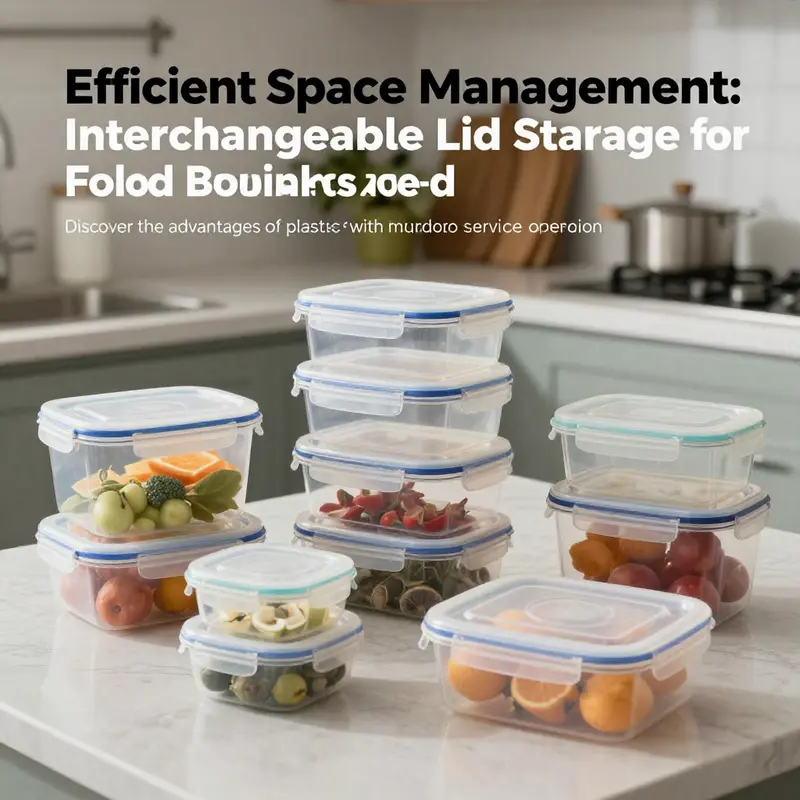
In the competitive world of food and beverage service, efficient storage solutions can the difference in operational efficiency and customer satisfaction. Plastic food storage containers with interchangeable lids have emerged as a game-changer for industries like bubble tea shops, restaurants, and catering services. By maximizing space, enhancing food safety, and offering adaptability, these containers provide a versatile storage solution that meets the dynamic demands of the food service sector. This article will explore the innovative design features that make these containers indispensable, analyze market trends and consumer preferences driving their popularity, and examine a variety of applications and benefits for diverse settings.
Interchangeable Lids, Unified Systems: Reclaiming Kitchen Space with Modular Plastic Storage
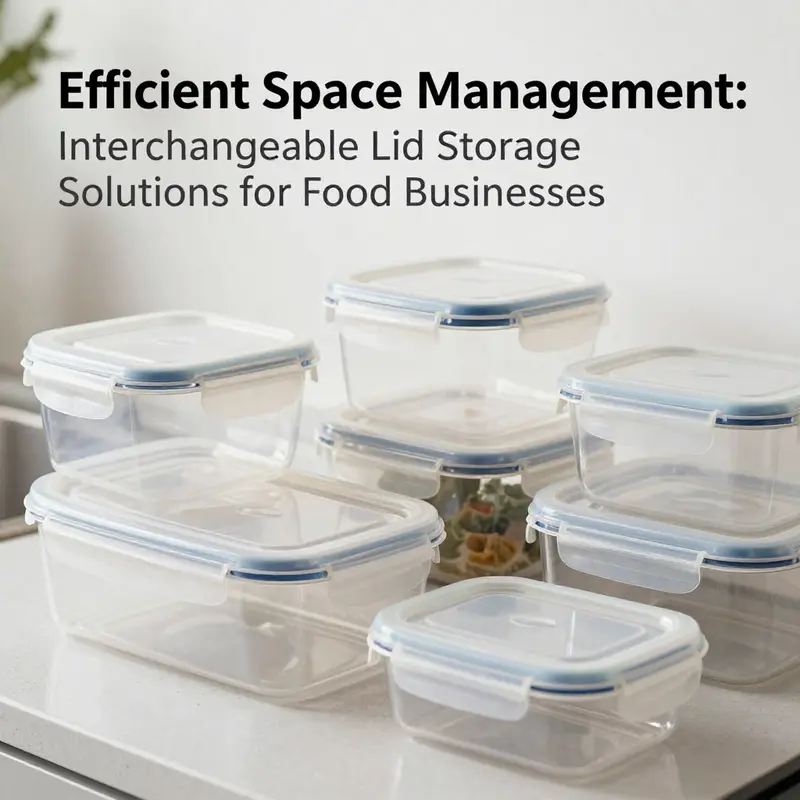
Walk into a modern kitchen and you can feel the quiet tension of a cluttered pantry. Plastic containers line the shelves in neat rows, yet the mismatched lids and the bases that don’t quite fit create a stubborn disarray. The problem isn’t lack of storage so much as the friction between pieces that should work together. Interchangeable lids change that dynamic, not by adding more pieces, but by rethinking what a storage system is capable of. The idea is deceptively simple: design a family of containers with a shared interface, a consistent diameter, and a standardized sealing mechanism, so lids and bases can be swapped across sizes without sacrificing reliability. When this logic takes root in a kitchen, the effect is almost architectural. Every shelf becomes a flexible module rather than a maze of incompatible parts. The eye reads a clean line, the hand finds the right lid with minimal searching, and meal planning gains a calm rhythm instead of a scavenger hunt. In this sense, the chapter explores more than a product category; it traces a shift in how households visualize containers as dynamic tools rather than static vessels. The payoff is immediate: a pantry that breathes, stacks efficiently, and invites a more deliberate approach to what ends up stored inside the walls of a cabinet or a refrigerator.
The core strength of a modular system rests on modular thinking itself. Bases, lids, and inserts are not locked into a single pairing. They can be mixed and matched across a range of container sizes, so a single set becomes a flexible toolkit rather than a collection of one-off pieces. This is especially valuable in homes where storage needs are in flux, such as seasons of baking, bulk purchasing, or family meal planning, where different items require different volumes but benefit from a common seal and a predictable footprint. In practice, one sturdy base can accept several lids, and inserts can transform a large container into a focused, specialty bin for coarse grains, powdered sugar, or dried beans. The result is a system with fewer gaps, fewer duplicate purchases, and less mental load when reorganizing a pantry after a move or a kitchen remodel. The approach also scales beyond the home to small offices, co-working kitchens, and community pantries, where a single, well-thought-out standard reduces waste and simplifies inventory management. In the end, modularity is not a luxury for the kitchen; it is a practical framework for maintaining order amid the realities of daily life.
A critical element in achieving true modularity lies in the intimate relationship between a lid and its base. If the interface is well designed, a single lid can seal multiple containers that differ in capacity while maintaining the same negative tolerance that keeps edges aligned. This is where precision engineering matters. In a well-executed system, a 1.0 millimeter dimensional tolerance is not a boutique detail but a functional cornerstone. It ensures that when lids are placed on bases, the interface seats with uniform pressure along all four sides, forming a consistent seal that resists air leakage and moisture ingress. The exacting fit enables tight stacking—containers align like puzzle pieces rather than scattered units. The practical upshot is tangible: stacks that save space in crowded refrigerators or cramped pantry corners, and a configuration that remains stable when moved, carried, or slid along shelves. The promise extends to everyday use as well. A good sealed lid prevents spills when the container is tipped during a hurried lunch packing, and a confident seal keeps the contents fresh longer in the fridge and the freezer. The result is a kitchen where the system feels invisible because it works so reliably, freeing mental energy for cooking, planning, and even a touch of creative organization.
Behind the skin of a clean interface lies the choice of materials. These interchangeable lid systems typically rely on BPA-free, food-grade plastics such as PET or polypropylene. The safety profile matters because these containers are designed for repeated exposure to food, heat, moisture, and time. PET and PP offer clarity for easy content visibility without sacrificing strength, so users can see at a glance what is inside without opening every lid. The materials are also chosen for odor and stain resistance, important for keeping flavors and colors from previous contents from lingering. A popular claim is that these containers can be lighter than traditional metal or glass counterparts while remaining resilient under daily handling and transport. The lightweight quality is not merely a convenience; it translates into reduced fatigue when packing lunches, loading a dishwasher, or stacking containers in a tight cabinet. In addition, plastics that are safe for long-term contact support confidence in bulk storage needs, whether for household staples like flour and sugar, or for perishable leftovers that merit a careful handoff from fridge to microwave to table. The safety-forward material choices thus anchor the system in real-world durability and hygiene, which together elevate the routine of food storage into a more reliable practice.
The virtue of an interchangeable lid system is not only in what is fixed but in how it can be customized for different contexts. Many configurations recognize the value of labeling and quick visual cues. Some lids carry integrated labeling options or offer colored indicators that make it easier to sort based on category, date, or dietary plan. In commercial or bulk settings, large-capacity containers that still share a sealed, standardized interface offer scalable solutions that optimize space in warehouses, catering kitchens, and bulk-distribution environments. The ability to stack without compromise becomes a critical driver of efficiency in places where space is at a premium, and where waste and mismanagement carry clear costs. The sense of control gained through clear labeling and consistent dimensions fosters a disciplined approach to inventory, with intuitive cues for rotation, use-by dates, and replenishment. When labeling is combined with a uniform seal that remains strong after repeated cycles of opening and closing, the system becomes a reliable backbone for organization. The combination of modularity and labeling also supports branding in a small business setting, where a uniform look helps staff and customers quickly identify the right storage for bulk ingredients, spices, or prepared foods. This level of customization is not an indulgence; it is a practical tool for reducing confusion, improving hygiene, and enabling faster, more consistent operations.
The life of the contents inside matters as much as the design of the container itself. For dry goods such as grains, coffee beans, and baking staples, an airtight seal can extend shelf life by protecting against air, moisture, and odors that would otherwise degrade quality. A silicone sealing ring paired with strategic multi-point latching creates a reliable barrier against environmental factors. The advantage here is not only freshness but a broader sense of security: the possibility of storing pantry staples for longer periods without the risk of contamination or flavor transfer. For many households, that translates into fewer trips to the store, less waste when bulk purchases are not used as quickly as planned, and more mindful cooking where ingredients are organized and prioritized by plan rather than impulse. The same sealing principles apply to liquids and semi-liquids when stored in the right configurations. A well-sealed lid on a container designed for liquids reduces the probability of leaks during transport from kitchen to refrigerator, during a commute, or when repurposing a container to take soup to a meeting or a friend. The technology of sealing thus touches multiple dimensions of daily life—taste preservation, convenience, and peace of mind—while remaining invisible in the sense that it simply works as intended.
In addition to the airtight dimension, these systems pay attention to the realities of handling and cleaning. Dishwasher-safe plastics, microwave compatibility, and heat resistance broaden the range of uses and reduce friction in daily routines. For many families, a container that can go from freezer to microwave is particularly valuable, allowing leftovers to transition directly from storage to reheating without the need to transfer contents to another dish. The ease of cleaning, aided by smooth interiors and minimized nooks where crumbs can accumulate, supports a hygienic kitchen. When combined with the uniformity of lid interfaces, the risk of residual smells or color transfer from one item to another declines, preserving the integrity of stored ingredients. The practical benefits extend beyond personal use. In a family kitchen, the ability to reclaim space with a smaller footprint by stacking containers efficiently reduces clutter and fosters a calmer culinary environment. In a café or restaurant setting that relies on quick, repeatable operations, the same principles translate into faster restocking, more predictable prep routines, and a clearer path to maintaining consistent portion control and freshness. In all cases, the design choices thread together with everyday needs, making the system feel natural rather than engineered. The result is less time spent wrestling with lids and more time spent cooking, baking, and sharing meals with others.
The reach of the concept extends to larger scale applications as well. Industrial or commercial-grade storage solutions take the same rational design philosophy and scale it up to meet demanding units of storage and transport. Large-volume containers with sealed lids and standardized dimensions can be used for the bulk staging of dry goods, liquids, or mixed ingredients in a way that minimizes losses during handling and shipping. In these contexts, tight tolerances and robust sealing mechanisms do not merely promise containment; they defend efficiency across the entire supply chain. Leaks, spills, and air ingress can erode margins and damage products, especially when goods are transported through multiple touchpoints. A standardized, leak-proof interface reduces these risks and makes inventory management more predictable. Even with heavy use, the stacking geometry remains stable, thanks to precise tolerances and well-considered design details. In practice, this translates into fewer damaged units, lower spoilage rates, and a cleaner workflow on loading docks and in storage rooms. The commercial value is clear: when a container family behaves as a single language across sizes, it reduces complexity and supports steady operation at scale. That stability, in turn, helps teams focus on core activities—food safety, quality control, and timely service—rather than the mechanics of container management.
A broader environmental logic also sits behind the appeal of interchangeable lid systems. The space they save is not only physical but metabolic: fewer pieces to produce, transport, and dispose of. A standardized, modular ecosystem reduces waste by eliminating redundant containers and enabling reuse across a spectrum of needs. The longevity of materials, their resistance to staining and odor, and the capacity to clean thoroughly in dishwashers all contribute to a lifecycle that emphasizes durability and reuse. In practice, this means a kitchen that produces less debris, with fewer lids ending up in landfills due to incompatibility. Even when a lid eventually reaches the end of its service life, the modular design can ease replacement by allowing the user to swap one component rather than the entire set. The cumulative effect of these design choices extends beyond a single kitchen; it resonates with sustainable practices in small facilities, food-service operations, and community projects that prioritize responsible consumption and waste reduction. The result is a system that is not only functional and efficient but also aligned with a broader responsibility to use resources wisely.
All these qualities—modularity, precision sealing, safe materials, customizable labeling, and scalable geometry—combine to redefine what a storage system can be. The everyday act of organizing becomes an exercise in foresight, planning, and adaptability, rather than a constant reconfiguration of mismatched pieces. When the lids fit across sizes with predictable performance and when the interiors invite clear visibility without compromising seal integrity, users experience a new level of control over their food storage. The kitchen becomes a place where organization supports creativity rather than constrains it, where leftovers can be saved with confidence, and where bulk ingredients are handled with a clarity that makes meal planning straightforward rather than laborious. In this light, interchangeable lid systems are less about novelty and more about a practical design philosophy that treats containers as adaptable tools rather than discrete objects. They invite a broader habit of mindful storage, which in turn can yield tangible benefits: reduced waste, steadier costs, and a kitchen environment that supports healthier, more intentional cooking and eating.
For readers who want to explore practical examples of the category in a broader market context, a representative listing that reflects these design principles can be found at an online marketplace. It showcases a range of airtight storage solutions that emphasize modularity, standardization, and leak-proof performance, illustrating how the core concepts discussed here translate into real-world products. External resource: https://www.alibaba.com/product-detail/24-Pack-Airtight-Food-Storage-Container-Set-BPA_1600968767834.html
Modular Minds, Efficient Pantries: The Market Pulse of Interchangeable-Lid Plastic Storage
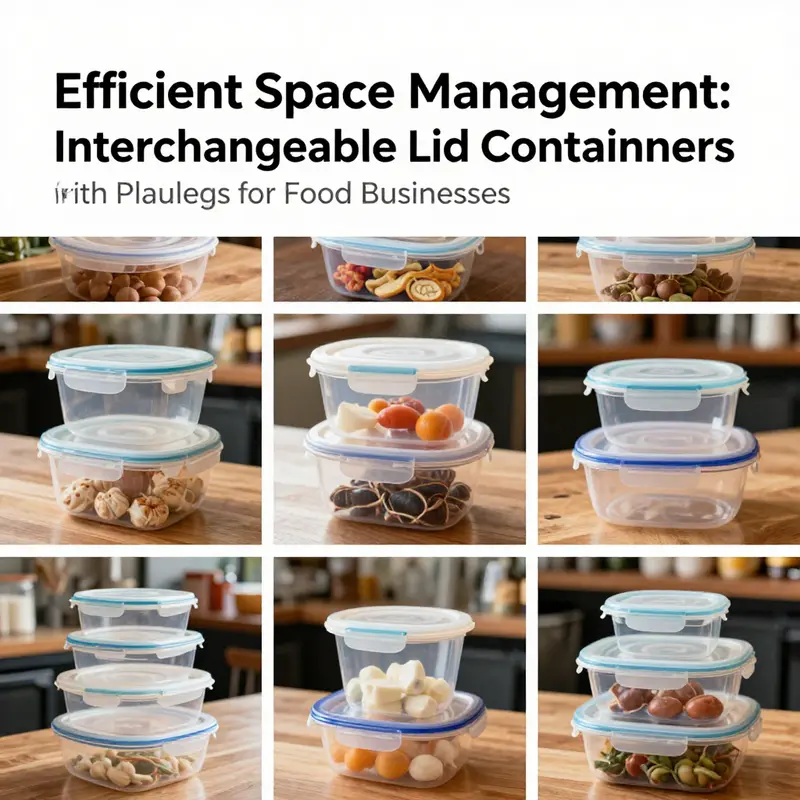
A new quiet revolution has taken root in kitchens and storerooms alike: a shift toward modular, interchangeable-lid plastic storage that promises to reorganize not just our cabinets but the way we think about everyday efficiency. This trend is not simply about one clever product feature; it is a recalibration of how households and businesses manage space, waste, and time. When a single lid can seal a family of containers of different capacities, the mental load of choosing, stacking, and labeling diminishes. The result is a pantry that behaves more like a well-tuned system than a collection of individual pieces.
In market terms, demand is guided by a move toward standardization and durability. Projections show the global plastic food storage container market growing steadily, with a healthy compound annual growth rate and an expanding value base as modular designs gain traction. Interchangeable lids offer a high degree of customization; they enable a single lid to pair with multiple containers, thereby reducing the number of separate products a consumer must own. That simplification translates into tangible benefits: less clutter, fewer SKUs, and easier decision-making during busy mornings.
Policy and regulation are acting as accelerants. Environmental targets and plastic-pollution controls reshape expectations, pushing designers toward materials that balance performance with end-of-life considerations. The industry notes that sustainable materials and modular, reusable designs are increasingly intertwined with regulatory compliance. In practice, this means experimenting with materials that can withstand repeated heating, cleaning, and retorting, while remaining compatible with standard recycling streams. For consumers, this translates into confidence that the containers they choose are functional today and responsible over the long life cycle of the product.
From the consumer perspective, modular lids address demand for safety, convenience, and personalization. They enable efficient meal planning, portioning, and storage without juggling mismatched lids. Color indicators or labeling systems become practical tools that aid organization and reduce cognitive load. The trend also taps into a broader desire for customization, allowing households to reflect their preferences without sacrificing universal usability.
Looking ahead, opportunities include digital touchpoints such as labeling sensors or QR-linked storage tips, and design aesthetics that celebrate transparency, tactile finishes, and color-coded systems. The supply chain benefits from modularization that reduces tooling complexity and inventory fragmentation. In sum, the trajectory of interchangeable-lid storage is toward safer, smarter, and more sustainable products that fit seamlessly into modern life.
The convergence of convenience and responsibility is not accidental; it reflects deliberate design choices that respect safety standards and environmental considerations while remaining affordable. When designers and engineers align these aims, interchangeable-lid systems become a practical framework for everyday living, enabling a kitchen or a workspace to operate as a coherent system rather than a pile of parts.
As this chapter unfolds, the narrative stays anchored in the idea that market trends and consumer preferences move together. The best products translate modularity, safety, and sustainability into tangible daily advantages: a kitchen that feels calmer, a pantry that runs like a well-oiled machine, and a commitment to reuse and extend product lifecycles rather than discard them at the first sign of wear.
The chapter closes with a note about future work: exploring how these trends intersect with education, branding, and the regulatory landscape that shapes design testing and marketing. The promise remains clear: modular, durable, and intelligent storage will continue to redefine what it means to organize a kitchen or a bulk-packing operation in ways that respect both people and the planet.
Interchangeable Lids, Infinite Organization: How Plastic Storage Systems Redefine Kitchen Efficiency
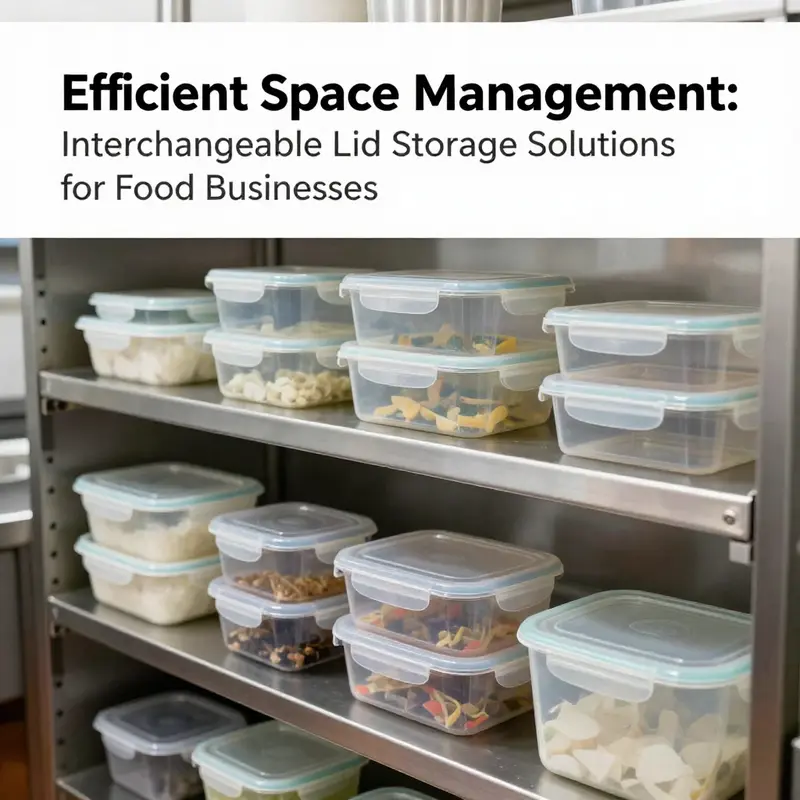
In spaces where efficiency is measured by moments saved and ingredients preserved, the humble lid becomes a partner in productivity. Plastic storage containers with interchangeable lids embody a design philosophy that treats containers not as solitary boxes but as nodes in a connected system. They turn what once felt like an assortment of mismatched vessels into a modular grid, where a single lid can crown many containers, and a family of shapes can share a common sealing language. This shift from one lid per container to a shared lid library restructures how both households and professional kitchens think about space, access, and freshness. It is a quiet revolution in everyday routines, one that translates into less clutter, faster access, and better preservation of what matters most when food moves from market to pantry to plate.
The essence of these systems rests on two intertwined ideas: standardization and reliable sealing. Standardization means more than matching ring sizes or cap colors; it means establishing a predictable interface between containers of varying capacities. A uniform lid design, coupled with tight dimensional tolerances, enables a user to pair a relatively small container with a lid that also fits a larger sibling. The practical upshot is a more flexible, responsive pantry that adapts to real-life cooking patterns—raiding the fridge for quick meal components, batch cooking on weekends, or reorganizing after a shopping haul. When lids are reusable across multiple containers, the entire storage ecosystem becomes leaner: fewer lids scatter across shelves, and the cognitive load required to maintain order falls. People accustomed to bigger kitchen workflows recognize this as a core advantage. The same lid that seals a modest 500-milliliter jar can seal a 1.5-liter counterpart, provided the design tolerances and sealing geometry align. The result is a dramatic simplification of inventory management in cramped spaces and a noticeable drop in time spent hunting for the right lid.
That simplification would be of little value if the seal faltered, yet these systems are built around airtight, moisture-blocking performance that directly translates into longer freshness windows. The sealing mechanism often blends a flip-top operation with a silicone or elastomeric seal ring. When closed, the system minimizes air exchange, which matters as much for dry goods—pennies of sugar, the aroma of coffee beans, the integrity of rolled oats—as it does for refrigerated ingredients. The science behind this preservation is straightforward: reducing exposure to air slows the oxidation and moisture migration that degrade flavor, texture, and nutritional quality. In many modern iterations, the materials comply with global safety standards, offering BPA-free options in polypropylene or PET formulations. This is not merely a claim of safety; it is a practical assurance for households and businesses that food contact materials meet recognized health benchmarks while withstanding the demands of daily use, including room-temperature storage, refrigerated conditions, or the occasional warm dishwasher cycle.
A particularly compelling dimension of interchangeable lid systems is their performance in stacking and organization. Precise tolerances, sometimes cited as around 1.0 millimeter, enable tight stacking without slippage. The benefits extend beyond ease of storage to tangible space savings. In dense kitchens or busy service environments, every extra centimeter of vertical stack translates into more usable floor or shelf space. When a set of containers and lids is designed with such precision, the physical footprint of a collection shrinks, and back-of-house workflows become more efficient. For households, this translates to up to a measurable portion of space reclaimed—figures from design studies suggest significant gains, such as around a fifth more usable storage when compared to loosely matched sets. The mental clarity that follows is equally valuable: neat rows of uniformly sized containers with matching lids create a sense of order that reduces time spent searching, sorting, or repacking as ingredients move through the kitchen lifecycle.
Material choices reinforce the reliability of these systems. BPA-free plastics, notably polypropylene and certain PET derivatives, offer a balance of rigidity, resilience, and safety. They stand up well to repeated cycles of heating and cooling, a necessity for reheating leftovers or gradually bringing ingredients to temperature before storing them again. The ability to tolerate brief exposure to microwave environments and standard dishwasher cycles makes these containers practical for daily use in the home. At scale, this safety profile becomes a logistical asset, supporting sustainable practices in commercial kitchens and bulk storage operations where durability and ease of cleaning are non-negotiable. The emphasis on food-grade plastics also aligns with broader consumer expectations around health and environmental stewardship. When a lid system is paired with materials that resist staining and odor absorption, it enhances long-term hygiene, a crucial consideration in kitchens handling diverse ingredients and frequent throughput.
The interlocking promise of shared lids also supports customization without sacrificing uniformity. A set may include labeling zones or color-indicator features that assist with categorization, allergen identification, or batch organization. In fast-paced work environments, such cues can dramatically reduce the risk of cross-contact or mislabeling, enabling cooks and staff to locate required items at a glance. Some designs incorporate dedicated label areas or compatible marking schemes that integrate with existing inventory practices. The labeling capability is not merely cosmetic; it connects to operational discipline—when containers are consistently labeled, inventories are more accurate, waste is reduced, and ordering decisions reflect actual consumption patterns. In domestic kitchens, these features translate to greater control over pantry curation, enabling households to maintain a predictable stock of staples, snacks, and prepared components while evaluating rotation and first-in-first-out principles with greater confidence.
But interchangeable lid systems are not limited to small containers used in homes. The research landscape acknowledges that the same design philosophy scales to larger formats used in bulk storage, transport, and even industrial settings. In commercial kitchens, the demands of high throughput, hygiene, and reliability intersect with the physics of stacking and sealing. Large-volume containers, such as drums designed for food-grade storage of grains, powders, or liquids, benefit from standardized lids that ensure leak-proof closures and repeatable performance under heavier handling. The capacity to stack them securely, with matched lids across a range of diameters and capacities, reduces the footprint and lowers the risk of spills during movement or storage. In environments where every kilogram matters, such efficiencies contribute to lower labor costs, reduced product losses, and improved overall workflow. The savings are not merely aspirational; they translate into measurable improvements in pantry design, cold storage organization, and transport logistics. A well-integrated lid system can cut the losses associated with mishandling and leakage, a factor that has real economic ramifications for operations that handle bulk goods and liquids.
A practical extension of the standardized approach is the way it accommodates customization without fragmenting the ecosystem. Some models incorporate color-coded lids or compatible marking options that help teams sort materials by type, origin, or allergen status. In a wholesale or restaurant setting, this kind of visual language is more than a convenience; it becomes a risk-management tool that supports food safety protocols and helps maintain consistent portioning and preparation practices. In a household context, labeling becomes a family habit, guiding younger cooks and guests in selecting the right items for meals, meal-prep routines, or emergency shelf-restocking. The resulting behavior changes are subtle but meaningful: faster retrieval, fewer mistaken uses, and longer life for pantry items that may otherwise be overlooked or forgotten until they become stale. These dynamics illustrate a broader truth about standardized lid systems: they are not merely about fit but about creating a shared vocabulary for storage that aligns with human habits and seasonal cooking rhythms.
The appeal of interchangeable lids also lies in their adaptability to diverse environments beyond the kitchen. In agricultural or greenhouse contexts, for instance, some lid designs feature ventilation-compatible openings. While most food storage variants focus on airtight seals to prevent spoilage, the underlying modular concept holds potential for applications where controlled airflow is desirable for seed storage, humidity management, or microclimate control. The ability to tailor a system to both preserve dry goods and manage moisture during storage is a practical demonstration of how modular, standardized components can cross boundaries between domestic kitchen use and more specialized agricultural or horticultural tasks. In all these scenarios, what matters is the predictable, robust interface that makes it feasible to mix and match containers with confidence, knowing the lid will perform reliably across a spectrum of sizes and use cases.
The economic and environmental implications of adoption are central to understanding why such systems gain traction. In households, less clutter means better use of precious real estate, with a corresponding reduction in the stress associated with disorganization. Fewer containers wandering between fridge, pantry, and sink translate to less duplicate purchases and more precise meal planning. In commercial settings, the mathematics shifts toward labor efficiency, reduced product loss, and faster throughput during busy service periods. The ability to seal, stack, and label with ease translates into tangible savings that can be measured in both time and material costs. From a sustainability standpoint, durable, reusable systems reduce single-use packaging and the consumption of plastics that may contribute to waste streams. If a family or business adopts a standardized lid system across a broad range of container sizes, the cumulative impact can be meaningful, especially over years of use where replacements and disposables are minimized and reimagined as enduring components of the kitchen or storage infrastructure.
Real-world practice helps illuminate why these systems resonate with so many users. In a home kitchen, a pantry can become a model of efficiency when dry goods are stowed in uniformly sized containers. A simple rack of matching lids sits in a corner, always ready to crown the next jar, bag, or bin. The same approach translates to a refrigerator or freezer, where different foods share a common temperature envelope and a common sealing mechanism that keeps flavors intact and odors in check. The end user experiences a sense of control that is often missing in traditional storage setups, where mismatched lids and inconsistent seals create daily friction. The result is less time spent fiddling with lids and more time devoted to cooking, experimenting with new recipes, or simply enjoying a well-ordered space that supports a healthier, more deliberate approach to eating.
In the context of industrial scale and bulk storage, the advantages are amplified. A standardized lid system supports inventory classification and traceability, enabling more precise stock rotation and easier audits. When lids are designed to fit a family of containers rather than a single vessel, warehouse teams can adapt quickly to shifting demands without hunting for uncommon parts. This flexibility reduces downtime and streamlines replenishment. In addition, the emphasis on durable plastics and reliable seals aligns with hygiene and safety standards required by food service operations, where cleanability and resilience against routine cleaning cycles are essential. The ability to withstand repeated use, resist staining, and maintain airtight performance across cycles is not only a matter of convenience but also a compliance-oriented attribute that supports consistent quality control.
Of course, any system of shared lids must acknowledge potential challenges. Compatibility remains the central question when a consumer or organization already owns a legacy collection of containers. The promise of interchangeability depends on maintaining a clear boundary of tolerance specifications and a thoughtful kit of lids designed to cover a necessary spectrum of sizes. Designers face the task of balancing universality with practicality, ensuring that the core sealing geometry remains effective even as the range of compatible containers expands. In practice, this often means offering sets that specify tight 1.0 millimeter tolerances and robust gasket materials that can endure repeated use without losing elasticity. It also means embracing standardized labeling zones so that as users mix and match, the risk of confusion declines rather than rising. These considerations remind us that the victory of interchangeable lids is not merely a feat of engineering but a continuous negotiation between universality and real-world constraints. Yet when executed with care, the system delivers an experience that feels almost intuitive: grab a lid, snap it on a compatible container, and know it will seal, stack, and travel with the same quiet efficiency as the one before.
Looking forward, the trajectory of plastic storage systems with interchangeable lids invites continued refinement. Innovations in molding accuracy, material science, and surface treatments can further improve fit, seal integrity, and ease of cleaning. The integration of smart labeling or RFID-compatible zones could elevate inventory management to new levels, especially in professional kitchens where precise portion control and allergen segregation are paramount. Another promising direction lies in sustainability through design for disassembly and recyclability. As consumer and regulatory pressures push toward greener materials and end-of-life options, lid and container partnerships that facilitate recycling while preserving safety standards will gain importance. The chapter of this design story is not closed; it is being rewritten as materials improve, manufacturing processes advance, and user expectations evolve toward greater clarity, efficiency, and accountability in how we store, access, and reuse what we buy.
In sum, plastic storage containers with interchangeable lids crystallize a practical philosophy: when the interfaces between components are well designed, a simple circle of plastic becomes a versatile, durable, and trustworthy system. This philosophy echoes through the rhythm of daily life—from the quiet, orderly kitchen at dawn to the bustling backrooms of a professional kitchen and into the carefully managed warehouses that keep the supply chain moving. The shared lid concept removes a layer of friction from the everyday act of preserving food, turning storage into a streamlined routine rather than a recurring puzzle. It is an understated but powerful reminder that good design, when scaled across size, material, and use-case diversity, can transform ordinary tasks into predictable, quiet efficiencies that add up to meaningful improvements in how we feed ourselves and others. For readers seeking more practical context on how these systems are positioned in current markets and how safety and performance are balanced in real-world products, an external reference offers a useful frame of reference: https://www.alibaba.com/product-detail/24-Pack-Airtight-Food-Storage-Container-Set-BPA-Free_1601387915723.html.
Final thoughts
The adaptability of plastic food storage containers with interchangeable lids presents an invaluable resource for food service businesses. By integrating these containers into storage systems, establishments can enhance food safety, streamline operations, and ultimately deliver a higher level of service to their customers. As consumer preferences shift towards efficiency and sustainability, investing in innovative storage solutions becomes a strategic decision that can define a business’s success.