
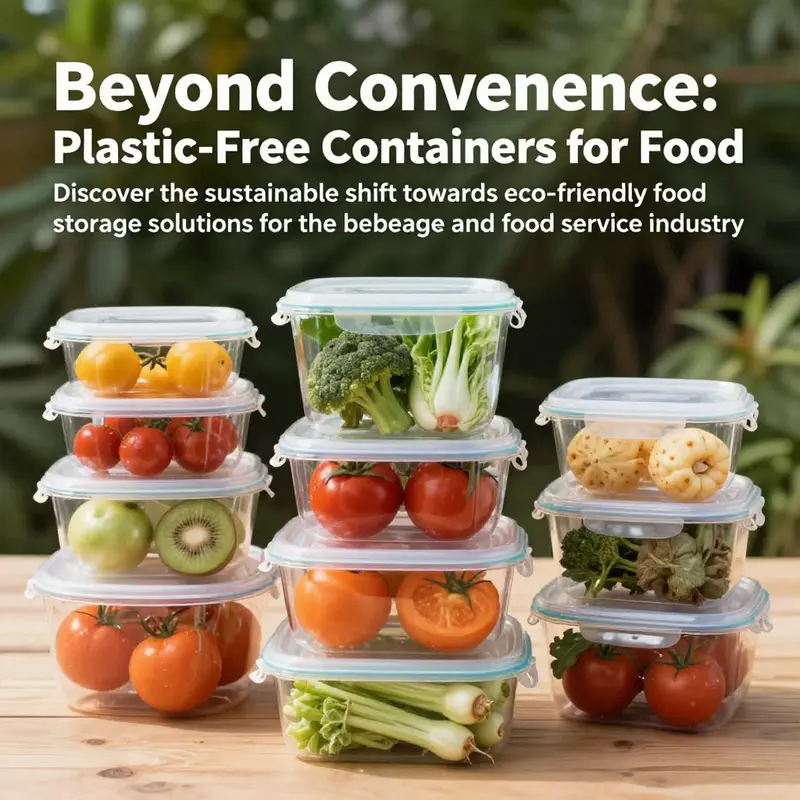
As environmental concerns rise globally, the food service industry is increasingly pivoting towards sustainable practices, with plastic-free containers for food taking center stage. These containers, made from innovative materials such as glass, metal, and natural textiles, not only contribute to reducing plastic waste but also align with the growing consumer preference for healthier food storage options. This article aims to explore the various innovative materials that make up these containers, the economic impacts of transitioning to plastic-free options, and the societal benefits and challenges faced by businesses. Each chapter will delve into these interconnected themes, enabling beverage chains, restaurants, catering services, and event planners to recognize the significance of embracing plastic-free solutions within their operations.
From Bamboo Fibers to Breathable Bags: The Materials Revolution in Plastic-Free Food Containers
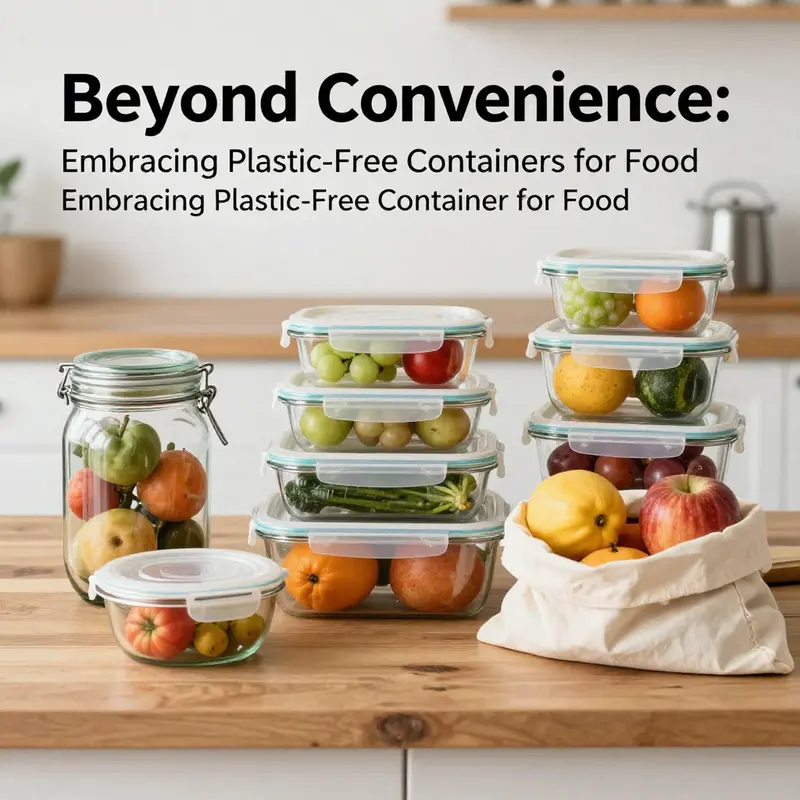
A quiet revolution is reshaping how households store and protect what we eat, and it centers not on new flavors or clever lids but on the very materials that cradle our food. Plastic-free storage is no longer a niche choice but a growing norm, propelled by the search for safer, more sustainable, and more durable alternatives. In this evolving landscape, innovative materials are doing more than replacing plastic; they are redefining the rules of durability, safety, and circularity. At the forefront is full-bamboo fiber, a material path that blends natural abundance with engineered reliability, and it is guided by collaborations that bridge research institutes, industry labs, and policy discourse. The result is not merely a substitution but a reimagining of what a kitchen container can be: lightweight yet strong, heat-tolerant yet compostable, and designed with an eye toward the entire life cycle from cradle to cradle.
The bamboo story begins with a recognition of bamboo’s remarkable properties as a renewable raw material. In large parts of Asia, bamboo stands as one of the most efficient crops for converting sunlight and soil nutrients into structural fiber. When transformed into packaging and tableware, bamboo fibers can yield products that are sturdy, heat-resistant, and water-resistant enough to withstand everyday use. Yet bamboo by itself is only the starting point. The breakthrough lies in how it is processed and formed into safe, food-contact materials. The development team behind full-bamboo fiber containers follows a disciplined, 18-step production pathway that begins with coarse grinding and fine grinding, then moves through mold pressing and antibacterial treatment. Each step is calibrated to produce a finished product that remains robust under refrigeration, oven temperatures, and even the rigors of travel in a lunchbox.
This manufacturing choreography relies on a pair of core technologies that are as interesting as the containers themselves. Steam explosion–mechanical thermal grinding uses high-pressure steam to soften and break down the raw bamboo into a clean, consistent matrix. It reduces energy demand while improving the polymer-like bonding characteristics of the resulting fibers. Hydrogen bond self-adhesive wet molding then uses the natural propensity of these fibers to form strong, reversible bonds under controlled moisture and temperature. The combined effect is a fully biodegradable product that can be produced under natural conditions without resorting to petrochemical additives. What emerges is a container that feels familiar in form yet behaves differently in practice: the performance envelope includes lightness and strength, but with the reassuring end-of-life potential of biodegradability.
The evidence—both technical and market-facing—helps to place bamboo fiber at the center of why these materials matter. Independent assessments from researchers in INBAR highlight that bamboo fiber containers, relative to conventional polylactic acid (PLA) and polypropylene (PP) equivalents, exhibit striking advantages. They offer a lower density than PLA and, more importantly, deliver about 2.43 times higher tensile strength and 1.67 times greater elastic modulus. In practical terms, a bamboo fiber container resists deformation and cracking under typical loads, resisting the kind of flexing that makes cheaper bioplastics crack at the hinges when carried by a busy family. Perhaps most important for daily use is the safety dimension: these bamboo-based systems emit far fewer volatile organic compounds into food simulants, outperforming even PP in cleanliness metrics. The implications for taste perception and food safety are meaningful, especially when the containers are used for hot meals, sauces, or items with higher oil contents. The numbers are not merely academic; they translate into real-life confidence for households that want reliable, reusable storage without compromising safety or flavor.
Behind the technical prowess stands a significant financial commitment and a pathway to scale. An investment of more than 70 million RMB into research and development underpins the creation of an dedicated engineering research center and a portfolio of 23 national patents and software copyrights. The work has not stopped at the lab bench. The containers and associated processes have earned quality certifications in key markets, including the United States and the European Union, signaling that bamboo fiber can meet stringent regulatory standards for food-contact materials. In short, bamboo fiber is not a novelty; it is moving from a theoretical promise to a practical, scalable solution that can compete with traditional packaging in performance, safety, and lifecycle impacts.
It is impossible to discuss bamboo fiber without recognizing its broader role in the material ecosystem of plastic-free containers. While bamboo is central, the field has grown to include a spectrum of materials that pair natural fibers with innovative design to meet consumer needs. Organic cotton fabric bags, for example, offer a breathable alternative for produce storage. These textiles are designed to wick moisture while allowing airflow, a critical factor in extending the shelf life of many fruits and vegetables. This contrasts with the sealed environment of common plastic bags, where moisture buildup can accelerate spoilage or encourage anaerobic conditions favorable to unwanted microbial activity. Breathability, therefore, becomes a feature as much as a virtue, reducing the need for chemical preservatives and aligning with a broader consumer preference for natural storage environments.
Another important strand is the emergence of reusable and recyclable containers made from aluminum, glass, and certified compostable bioplastics. Each material offers its own balance of advantages and constraints. Aluminum, for instance, is exceptionally durable and recyclable, delivering long service life and resilience to temperature changes. Glass is inert, non-porous, and widely regarded as the gold standard for food safety and flavor preservation, with the added benefit of easy recyclability. Certified compostable bioplastics, derived from plant-based feedstocks or other bio-based polymers, aim to bridge the gap between the performance expectations of traditional plastics and the environmental imperative to reduce petroleum reliance. In practice, these materials typically pair with careful design attention to sealing mechanisms, lid materials, and the overall weight of the container, so that everyday use feels as convenient as the plastics many households have long relied upon.
The broader backdrop against which all these innovations play out is stark. Global plastic production surpasses 400 million tons annually, with a heavy reliance on petrochemical sources. The consequence is not just waste but a climate footprint that weighs on every decision about materials. Emissions from plastic production are significant, estimated at well over 120 million tons of CO2 each year. Against this horizon, more than 140 countries have implemented bans or restrictions on single-use plastics. In such a policy and market climate, the economics of plastic-free containers become more compelling—yet the decision must also stand up to everyday practicality, durability, and value. The bamboo fiber pathway demonstrates that it is possible to reconcile environmental aims with real-world performance. It shows how material science, when aligned with circular economy principles, can drive choices that reduce waste, lower emissions, and keep food fresh and safe without compromising convenience.
The consumer dimension cannot be overlooked. Surveys and market analyses across regions point to a resilient growth in reusable food storage solutions, with annual growth often cited near 20 percent in recent years. That trajectory reflects a convergence of concerns: health, environmental impact, and a desire for products that feel like everyday rather than exceptional purchases. The bamboo story is especially resonant here because it speaks to a natural cycle of origin, use, and end-of-life that many households want to align with their values. The bamboo fiber containers bring a sense of place to storage—rooted in renewable crops, produced with sophisticated but transparent processes, and designed for multiple uses. They embody a shift not only in materials but in mindset: storage is changing from a disposable, line-item purchase to a sustainable practice integrated into daily life.
As households explore these options, a practical consideration emerges—the care and maintenance of such containers. Bamboo fiber products, while robust, often require gentle handling compared to conventional plastics. Heat exposure should be managed, and cleaning routines should align with the material’s properties to preserve the integrity of the fibers and any surface treatments. The field acknowledges these practicalities, and ongoing research aims to optimize coatings, sealants, and adhesives that keep the containers safe for food contact while ensuring they remain fully biodegradable or recyclable at the end of their life. It is a dynamic balancing act: engineers and designers aim to maximize heat resistance, dishwasher compatibility, and structural integrity, all while preserving the environmental benefits that motivate the shift in the first place. In this sense, each container becomes part of a broader design philosophy that integrates material science with everyday behavior.
The bamboo fiber movement is not occurring in a vacuum. It sits within a network of innovations that includes improvements in natural textiles, like organic cotton storage bags, that support breathable environments for produce. It also intersects with the adoption of silicone storage options and beeswax wraps, which offer practical alternatives to single-use films and plastic wraps. While not all of these alternatives are strictly plastic-free in the sense of the raw materials used, they collectively contribute to a transition toward reusable, low-impact storage practices. The wider ecosystem—encompassing durable glass and metal containers, breathable textiles, and plant-based coatings—reflects a shared objective: to minimize reliance on fossil fuels while maximizing product longevity. It is this ecosystem that makes the bamboo fiber containers more than a novel solution; they become part of a modular system of storage that families can mix and match to fit different foods, occasions, and preference for end-of-life outcomes.
Within this evolving landscape one can begin to see the practical steps households can take to participate in the transition. Start with a plan that prioritizes use cycles and end-of-life outcomes. A kitchen that favors bamboo fiber for certain meal components, glass for liquids, and cotton bags for produce can significantly cut plastic use without sacrificing convenience. The choice of material often hinges on context: what foods are stored, how long they are kept, whether reheating is necessary, and how the container will be returned for cleaning or recycling. The design challenge is to build containers that handle these varied use cases with grace—containers that adapt to the rhythm of daily life rather than demanding a fixed and exclusive ritual. The bamboo fiber containers, with their combination of biodegradability, safety, and performance, offer a compelling path forward for households who want to minimize waste without compromising the everyday pleasures of a well-stored meal.
If we zoom out to consider the supply chain and policy environment, the bamboo fiber initiative gains further traction. The partnership between Chongqing RuiZhu Plant Fiber Products Co., Ltd. and the International Bamboo and Rattan Center (INBAR) underscores a cross-border commitment to sustainable manufacturing. The collaboration leverages a robust research framework and ensures that innovations reach markets with appropriate safeguards and certifications. The scale of this effort—from laboratories to factories to kitchens—suggests a model for how plastic-free alternatives can be developed with both environmental and economic vitality. The manifold patents, the attention to quality assurance, and the adherence to international standards collectively illustrate that sustainable materials can meet or exceed the performance expectations of mainstream containers while delivering tangible environmental benefits.
Yet the bamboo fiber narrative is only one thread in a broader tapestry of material innovation. Organic cotton bags serve as a reminder that the storage toolkit is expanding toward fabrics designed for moisture management and airflow. The breathability of these textiles translates into longer shelf life for certain fruits and vegetables, reducing both spoilage and packaging waste. It is a small but meaningful shift that complements the sturdier, heat-tolerant performance of bamboo and glass. Similarly, the resurgence of beeswax wraps, silicone storage options, and other reusable alternatives points to a cultural moment where households are open to experimenting with different materials to fit different foods and use-cases. The key is not a single perfect container but a constellation of options that, together, reduce single-use waste and create practical pathways to sustainable living.
In this evolving picture, one must not lose sight of the central purpose: containers designed for food storage should protect health, preserve flavor, and minimize environmental impact across their entire life cycle. The bamboo fiber containers, the cotton produce bags, the glass and aluminum options, and the biodegradable or compostable plastics each contribute to a system that aims to balance safety, performance, and sustainability. It is a systems problem solved at the level of material choice, manufacturing processes, product design, and consumer behavior. The gains are incremental, but they compound across households, supply chains, and policy actions to transform a global waste problem into a set of opportunities for cleaner, more resilient living.
For readers curious about the fuller implications of bamboo fiber and related innovations, this chapter points toward a future where materials are no longer evaluated solely by cost or convenience. They are weighed in terms of environmental footprint, end-of-life options, and the ability to support a circular economy. The bamboo fiber containers symbolize a shift in how we approach production and consumption: a move away from disposable cycles toward durable, repairable, and reusable patterns. The challenge ahead is to keep pushing the boundaries of what is possible—enhancing heat resistance, extending lifespan, and confirming safety through rigorous testing—while ensuring that these breakthroughs remain accessible to households across diverse economic contexts. The path is less about replacing plastic in kind and more about reimagining what storage can be, and should be, in a world prioritizing health, climate stability, and stewardship of resources.
In closing, the bamboo fiber story suggests a broader design ethos for plastic-free containers: materials that emerge from natural abundance, refined by science, and stewarded through policy and consumer practice. This is where innovation becomes everyday reality. It is not merely about one material replacing another; it is about a shift in how we think about storage, lifecycle responsibility, and our relationship to the materials that touch our food. As households continue to experiment with bamboo fiber, cotton bags, glass, aluminum, and responsibly sourced bioplastics, the cumulative impact will be measured not only in cleaner kitchens but in cleaner air and a healthier planet. The momentum is real, and the potential is vast, because these materials invite a future where storage is sustainable by design, not by chance.
For readers who want to dig deeper into the policy and research dimensions of bamboo fiber containers, see the broader discussion around this technology in international reporting on sustainable packaging and the ongoing exploration of bio-based materials. External reference: China’s Bamboo Fiber Food Containers: A Sustainable Alternative to Plastic – Xinhua News Agency (2025) https://www.xinhuanet.com/energy/2025-11/28/c_1129784567.htm. As you explore these materials, you may also come across a range of practical examples and case studies that illuminate how households, communities, and industries are embracing plastic-free storage—one container, one breath of air, one fewer plastic wrap at a time. In that spirit, even as you read about bamboo fibers and other innovative options, consider how your own kitchen could participate in this shift. A single thoughtful choice can contribute to a broader movement toward healthier food storage and a more sustainable future.
Within the daily rhythms of cooking and meal planning, the cinnamon scent of a fresh bag of produce, the crisp snap of a sealed jar, or the gentle squish of a beaded, breathable cotton bag can signal more than convenience. They signal a decision to treat materials with care, to choose options that align with health and planetary well-being, and to support a circular economy that values end-of-life outcomes as much as performance today. This is not a distant ideal but a practical reality already at work in kitchens around the world, where innovative materials—bamboo fiber, organic cotton fabric, glass, aluminum, and compostable bioplastics—are quietly reshaping how we store, protect, and enjoy the foods we love. The conversation continues as researchers, manufacturers, policymakers, and consumers collaborate to refine formulations, optimize processing, and broaden access to these solutions. The future of plastic-free containers lies in the fusion of natural abundance with engineered reliability, and in the willingness of people to choose materials that honor both taste and the planet.
For those seeking a concrete example of how this innovation is materializing in the market, an internal reference to a metal-based container line illustrates the trend toward durability and recyclability. See the aluminum plant container page for a practical glimpse into how metal options balance form and function in everyday storage: aluminum plant container.
From Costs to Consequences: The Economic Case for Plastic-Free Food Storage

A shift away from plastic in food storage is not just an environmental stance; it is an economic recalibration that reframes how households, institutions, and entire economies measure value. The transition rests on a simple truth: durable, reusable containers made from glass, metal, or bamboo can demand a higher upfront price, yet they deliver long-run savings that accumulate in multiple channels—household budgets, municipal treasuries, and national economies alike. When families compare the price of a single-use plastic box to a high-quality stainless steel or glass container that can endure for years, the calculation moves beyond sticker price and into the realm of lifetime cost. In practice, the numbers tend to tilt in favor of durable options once usage patterns, replacement frequencies, and maintenance costs are considered. A stainless steel container in the typical household may cost roughly fifteen to twenty-five dollars at purchase. It can easily endure a decade or more with proper care, resisting deformation, staining, and exposure to temperature swings. In that frame, the aggregate cost of thousands of disposable containers over ten years can far exceed the initial investment in a few robust jars or pouches. The logic is straightforward: buy once, reuse often, and avoid the cycle of disposal and replacement that plagues single-use plastic storage. This dynamic nudges both households and institutions toward a slower, steadier, and ultimately cheaper operating model, even as it aligns with broader sustainability goals. The payback, however, is not merely measured in dollars and cents. It unfolds across time, health, and environmental quality, where each year of continued reuse compounds the savings and reduces the drag of waste on communities. These savings are not purely private; they echo through local economies as well. Households reinvest money saved on storage into other goods and services, sustaining demand in related sectors such as home goods, kitchenware design, and repair services. In institutions—schools, hospitals, cafeterias, and corporate dining—durable containers support more predictable procurement cycles. They simplify inventory management, reduce the administrative burden of waste streams, and offer a tangible way to demonstrate commitment to sustainability to staff, students, and patients alike. The initial cost barrier is real, and it matters. For families already juggling tight budgets, the upfront price of glass or metal containers can feel daunting. Yet the cost arguments gain clarity over time as usage accumulates. A well-chosen jar or bottle that lasts ten years can transform what would be a recurring monthly expense into a one-time investment. The math grows more favorable when one accounts for the longer-term consequences of waste. Plastic, with its deeply embedded role in modern consumption, remains a stubborn fixture in many supply chains. While recycling efforts exist, the reality is sobering: in the United States, plastic recycling rates are strikingly low. The Environmental Protection Agency has documented that a small fraction of plastic actually makes it back into usable material. The rest ends up in landfills, incinerators, or the environment. That gap translates into tangible costs—municipal budgets strained by sorting, cleanup operations, and the remediation of pollution tied to plastic waste. The financial burden of managing and mitigating polluted landscapes is not a distant concern; it levelizes the price of convenience across tens of millions of households and countless businesses that must foot the bill for waste disposal and environmental stewardship. When communities shift toward plastic-free storage, those costs can be redistributed and reduced. The advantage is twofold. First, there is a direct cost saving for municipalities that can reallocate funds from waste management toward other essential services. Fewer plastics in the waste stream mean simpler logistics, lower fuel consumption for collection, and less pressure on landfills, which translates into lighter operational costs and, potentially, lower tipping fees for residents. Second, industries that once depended on disposable packaging are forced to reorient their value proposition toward durability, reusability, and design efficiency. The result is a ripple effect that motivates investment in manufacturing, logistics, and end-user services focused on longevity and repairability. This reorientation is already visible in the broader market: as consumer demand for sustainable storage grows, manufacturers and designers respond with solutions that emphasize modularity, repairability, and multi-purpose use. The investment calculus for producers shifts from maximizing one-off sales to building enduring product ecosystems. That shift, in turn, creates skilled jobs and supports the growth of a green manufacturing base. A robust ecosystem around plastic-free containers includes material science, precision manufacturing, corrosion resistance testing, sealing technology, and ergonomic design. Each of these components fosters employment opportunities and stimulates regional economies through higher-value production, export potential, and specialized services. Consumers and institutions alike also benefit from a more predictable cost structure over time. The upfront price of an elegant glass jar may be higher, but it is balanced by predictable performance and fewer surprises in the kitchen. A container that does not crack or warp under chill and then heat—from fridge to oven or microwave, where appropriate—reduces the need to replace damaged goods and lowers the risk of accidental waste. In practice, households often discover that the transition yields not only financial advantages but also a quieter, more organized kitchen. A tidy system for storing leftovers, dry goods, or produce helps minimize waste, making it easier to plan meals and track inventory. The result is a subtle but meaningful reduction in food waste, another facet of economic efficiency that aligns with environmental objectives. The market signals supporting this transition come from a blend of consumer sentiment and policy stimuli. NielsenIQ’s 2023 finding—that 73 percent of global consumers are willing to alter their consumption patterns to reduce environmental impact—speaks to a broad shift in attitudes. When a critical mass of buyers is prepared to choose sustainability despite higher upfront costs, producers must respond by offering better value propositions, including longer warranties, repairability, and improved customer service. This market reality also invites retailers and distributors to rethink their incentive structures. Retailers can promote bundles that lower the effective price per use, or implement loyalty programs that reward long-term purchases of durable storage solutions. By aligning incentives across the chain—from producer to retailer to consumer—the economic advantages of plastic-free storage become clearer and more attainable. The health dimension is often underappreciated in price-only discussions, yet it contributes materially to the economic case. Reducing exposure to plastic additives, such as BPA and phthalates, can lower the risk of hormonal disruptions and, in some cases, cancer risk. While healthcare costs are complex and influenced by many variables, public health economists increasingly recognize that prevention and safer consumer environments can yield long-term savings. The Green Living Institute, in its research discussions, has highlighted that shifting away from plastic storage is a practical step that can yield both personal health and planetary benefits. This perspective matters in budget planning for families with long horizons. When people consider health-related costs, even modest improvements in exposure risk can translate into meaningful lifetime savings. Beyond individual households, there is a wider economic narrative at play. Governments and municipalities are beginning to recognize the potential of plastic-free packaging to relieve waste-management systems. If plastics use declines sharply, there is less need for new landfills, fewer environmental remediation projects, and reduced pollution-control expenditures. The environmental externalities associated with plastic waste—cleanup, air and soil contamination, marine ecosystem damage—are not externalities in the strict sense for local budgets; they translate into costs borne by taxpayers and future generations. The economic argument thus encompasses not merely direct price and cost outcomes but a broader consideration of how public resources are allocated and how future liabilities are mitigated. The transition to plastic-free containers also has strategic implications for business risk and resilience. In a world where consumer preferences are increasingly linked to sustainability, brands that embrace durable storage solutions stand to gain a reputational edge. They can demonstrate corporate responsibility while building trust with customers who value transparency, durability, and repairability. This does not happen in a vacuum. It requires thoughtful product design, reliable supply chains, and robust end-of-life stewardship. The ongoing development of beeswax wraps, silicone bags, and textile produce bags illustrates how the market is diversifying around plastic-free alternatives. Each option has a different cost and performance profile, and buyers weigh these against their usage patterns. For households that cook often and store leftovers regularly, the combination of a durable container with a breathable bag for produce can yield meaningful savings in food quality and waste reduction. For institutions that serve large volumes of prepared meals, the investment in modular, reusable systems can streamline kitchen workflows, reduce waste, and lower the risk of supply chain disruption caused by plastic restrictions or price volatility. The macroeconomic narrative also includes the labor market effects of scaling plastic-free packaging. A growing segment of the economy is dedicated to the design, manufacture, assembly, and maintenance of reusable storage. This expansion stimulates demand for skilled labor, from material scientists to machinists, from packaging engineers to repair technicians. Regions that cultivate a local capacity for sustainable packaging can tap into export opportunities, spreading the economic benefits beyond national borders. The political economy of this transition is nuanced. Policies are increasingly oriented toward extended producer responsibility, waste reduction targets, and incentives for circular economy models. When policy aligns with market signals—recognizing the long-term savings embedded in durable containers and the jobs generated by sustainable packaging—investments in infrastructure, recycling innovation, and consumer education gain momentum. The interplay between policy and market behavior matters because it shapes the pace of transition. If public funds support research into safer materials, better sealing technologies, and repair-friendly designs, the resulting products can offer superior long-term value. Conversely, if subsidies are misdirected toward short-lived alternatives, the economic advantages of plastic-free storage can be muted, delaying the very gains that this chapter outlines. Yet the core message persists: plastic-free food storage systems can be economically advantageous for individuals, institutions, and societies when evaluated across lifetimes rather than per-use costs. The payoff is not a single, dramatic swing but a series of steady improvements—lower waste management costs, job creation in green industries, improved health outcomes, and greater consumer confidence in sustainable options. The result is a resilient economic structure in which households feel the benefits in their budgets, businesses see stability in demand and product reliability, and communities enjoy cleaner environments. The transition, therefore, is not merely a substitution of materials but a reconfiguration of value—the shift from a model of discard and replace to one of reuse and responsibility. Embracing plastic-free containers is, in economic terms, a strategic investment in durability, efficiency, and public health. It is a choice that aligns fiscal prudence with planetary stewardship, turning a societal challenge into an opportunity for smarter production, smarter consumption, and smarter governance. As the market continues to evolve, additional data will clarify the precise financial trajectories of households and institutions adopting plastic-free storage. Yet the current trajectory is already telling: demand for durable, reusable options is rising, waste costs are standing as a fiscal hurdle, and the economic incentives for designers, manufacturers, and policymakers converge around a shared objective—reduce plastic waste while enhancing value for people and communities alike. External resource: https://www.epa.gov/energy/understanding-plastics-recycling
Plastic-Free Plates, Greener Societies: The Social Promise and Practical Hurdles of Plastic-Free Food Containers

The shift toward plastic-free containers for food is more than a change in consumer preference; it is a movement that reshapes daily life, the appetite for responsibility, and the expectations we hold for the systems that ferry food from farm to table. When households choose to store leftovers in glass jars or tote groceries in breathable cotton bags, they are not merely swapping materials. They are participating in a rethinking of value, reconfiguring routines, and signaling a new social contract about waste, health, and intergenerational stewardship. The benefits flow like ripples through neighborhoods, schools, and local markets. They touch on accessibility and trust, on the visible and invisible costs of our everyday choices, and on the ways communities can organize around shared goals. Yet the path to broad adoption is not without friction. The same dynamics that drive excitement—clarity, health, and environmental integrity—also intersect with price, infrastructure, and education. This chapter follows those intertwined currents, tracing how practical realities, cultural expectations, and policy landscapes converge to shape the societal outcomes of embracing plastic-free containers for food.
The most immediate and tangible benefit is environmental: plastic pollution has become a defining marker of the modern era, with microplastics pervading rivers, soils, and even the air we breathe. Replacing disposable plastic food containers with reusable or compostable alternatives interrupts a familiar lifecycle. When glass, metal, or natural textiles are used with care, food can be stored, transported, and preserved in ways that leave less residue behind in ecosystems. Glass, for instance, is inert, durable, and highly recyclable, qualities that translate into lower long-term waste when products last for years and are easily reclaimed through circular systems. The environmental argument is not merely about reducing waste; it is about reducing the persistence of waste. Plastic can linger in the environment for centuries, fracturing into micro-sized fragments that infiltrate wildlife and human food chains. By design, plastic-free containers minimize that risk and underscore a public commitment to safeguarding ecosystems for future generations. In turn, this fosters a sense of communal responsibility. Communities that rally around such goals often experience a shift in social norms, where sustainable choices become the default rather than the exception. People begin to recognize that small daily decisions—how to store picnic leftovers, how to pack school lunches, how to portion grains for weekly meal prep—aggregate into meaningful environmental outcomes. The cumulative effect is a culture that values durability, repair, and reuse as legitimate forms of environmental care rather than mere frugality or trendiness.
But the environmental logic extends beyond waste counts. Reducing reliance on fossil fuels, the origin point for many plastics, supports a broader energy transition. If households lean toward glass, metal, or compostable materials, the upstream demand for petrochemicals declines, reinforcing the economics of renewables and circular materials. This is not an abstract calculation; it affects labor markets, investment incentives, and the design priorities of manufacturers who must balance performance with end-of-life considerations. When products are built with lifecycle thinking—from the materials chosen to the ease of disassembly at the end of use—the entire supply chain begins to align with resilience rather than take-make-waste patterns. The social benefit here is the creation of a healthier atmosphere for innovation: designers and engineers are incentivized to develop modules that are easy to clean, easy to repair, and easy to repurpose. In this sense, plastic-free containers contribute to a broader social project, one that privileges longevity and responsible stewardship over disposability.
A crucial, and sometimes overlooked, dimension is the way plastic-free options underwrite a trust-based relationship between producers and consumers. When people see containers that are visibly reusable, repairable, or compostable, they begin to trust that the product will perform as promised across many meals, many seasons, and many households. This trust is not only about functionality; it is about transparency and dignity in everyday shopping. Consumers increasingly expect that the items they purchase are designed with health and safety in mind. Glass, metal, and natural textiles can be scanned for safety across a range of conditions—from refrigeration to oven use—without the risk of leaching associated with some plastics. The long-standing concern about chemicals migrating into food is reinterpreted here as a social contract: when a community chooses materials that are inert, recyclable, or biodegradable where appropriate, it affirms a shared standard for how food storage should interact with human and environmental health. Trust, once earned, compounds into loyalty. Families that invest in durable storage solutions can reduce waste, save money over time, and model prudent consumption to younger generations, reinforcing values that extend into school projects, local businesses, and civic life.
Yet the social benefits are not evenly distributed by default. The practical realities of adopting plastic-free containers can create socioeconomic and geographic disparities that must be acknowledged and addressed if the vision is to be truly universal. Higher upfront costs, limited access to retailers carrying a full range of options, and insufficient infrastructure for end-of-life management pose real barriers. These barriers, however, are not exclusive to the plastic-free movement; they reveal where policy, markets, and community programs can step in to reduce friction. When communities invest in subsidies or bulk purchasing programs for durable glassware or shared community kitchens that provide access to safe, reusable storage, the benefits cascade outward. Schools can incorporate lessons on waste reduction into science and home economics curricula, turning storage choices into practical demonstrations of resource stewardship. Hospitals and care facilities can model sustainable practices in cafeterias and patient meals, normalizing the use of reusable vessels and containers. By weaving plastic-free storage into the fabric of local economies and institutions, the social dividends expand beyond households to neighborhoods, workplaces, and civic spaces.
A practical dimension of social value concerns the visibility and accessibility of alternatives. The most durable containers—glass and metal—offer long life, but they require careful handling, reliable replacement parts, and an understanding of temperature tolerance. For perishable foods, questions about shelf life and microbial safety normalize not as obstacles but as opportunities for education. When people learn how to use appropriate materials for different foods and climates, the result is a more informed citizenry. Public campaigns that explain when to use a sealed glass jar versus a perforated cotton bag, or how to store leafy greens to maximize their shelf life, can democratize knowledge that has historically been scattered across households, retailers, and specialized shops. The social impact, in essence, is knowledge empowerment: more people can make confident choices because the information ecosystem around packaging and storage becomes clearer, more consistent, and more accessible.
Innovation in this space has not stood still. Transitional technologies like beeswax wraps and silicone storage bags have emerged as practical steps between disposable plastics and fully plastic-free systems. These innovations can shorten the path to broader adoption by offering familiar tactile experiences while reducing plastic consumption. They also spark conversations about lifecycle trade-offs—for instance, the durability of silicone compared to conventional plastics, or the compostability of beeswax-coated fabrics versus their recyclability. The social value of such innovations rests on their ability to bridge habit and aspiration. They lower the cognitive barrier for households and institutions that want to do better but fear disruption. A family might begin with a beeswax wrap for a bowl cover and gradually expand to glass jars for leftovers and cotton bags for bulk produce. This phased adoption can reduce resistance and help communities build the knowledge and infrastructure needed for a fully plastic-free regime. It is not only about the materials themselves but about the mindset they cultivate: a mindset of experimentation, gradual transition, and reinforced norms that storage choices contribute meaningfully to public health and planetary wellbeing.
The economic dimension of social benefit is often presented as a trade-off, yet in practice it reveals a nuanced balance. Some plastic-free options come with higher upfront costs, and the price puzzle can tempt households into sticking with cheaper disposable options. But durability and reuse can yield financial payoffs that accrue over time. A simple calculation—how many times must a container be used to offset its higher price—often favors glass and metal when viewed over several years. Moreover, the market for reusable storage is expanding, with consumer interest propelling investment and innovation. The data on growth, while not definitive in every market, shows a robust trajectory: sales of reusable food storage solutions have risen at notable rates, signaling a willingness to shift purchasing priorities in favor of sustainability. This economic signal translates into jobs, supply chain development, and opportunities for local producers to compete by offering durable, repairable options that align with community values.
Education and communication form a critical axis of social impact. Public education campaigns that teach disposal practices, composting options, and the nuances of recycling are essential to ensure that plastic-free materials achieve their intended environmental benefits without unintended contamination of recycling streams or compost facilities. When communities lack clear guidance, well-meaning households can inadvertently undermine outcomes by mixing incompatible materials or by assuming that all biodegradable options are a universal cure. Clear labeling, standardized care instructions, and accessible guidance about end-of-life pathways help transform a well-intentioned choice into a practiced habit. This educational groundwork also supports social equity. If information is too technical or inaccessible, the most environmentally engaged individuals will carry the burden of translating that knowledge for others. Strong public education helps democratize understanding, so that people at different income levels, ages, and languages can participate fully in the plastic-free transition.
An important but often underappreciated social benefit lies in how plastic-free containers influence communal rituals and shared spaces. Kitchens become laboratories of experimentation, where families test what works best for different meals, seasons, and cultural traditions. School cafeterias, community centers, and workplaces that adopt reusable storage practices can reduce waste at scale and demonstrate a practical model of stewardship to children and employees alike. The social fabric tightens when people collaborate on better storage strategies: neighbors borrow a spare glass jar, co-ops share bulk purchases of fabric produce bags, and local makers run repair clinics for chipped containers. In these interactions, the act of choosing plastic-free storage becomes a social practice, reinforcing a sense of belonging to a community that values health, fairness, and resilience. The moral narrative that emerges—protect the land, respect the labor that brings food to the table, and care for future generations—often strengthens civic engagement and a willingness to invest time and creativity in collective solutions.
Of course, no substantial transformation occurs without confronting challenges. The most immediate are economic: higher production and sourcing costs for some alternatives can translate into higher prices for consumers and businesses. This fiscal reality can slow adoption unless counterbalanced by policy interventions, market design, or shared ownership of the transition. For many households, the decision to purchase a plastic-free container is not only about personal values but about a budget that must accommodate groceries, utilities, and housing. If the plastic-free option is a luxury, the social promise falters, and inequities widen. Addressing this requires a combination of affordable financing, tiered product lines, and public support for community programs that subsidize access to durable, safe storage. When communities design inclusive pathways—from subsidies for school lunch programs to rebates for households adopting sustainable containers—the social benefits begin to reach those who might otherwise be left behind.
Another set of challenges revolves around infrastructure. While glass and metal thrive in controlled environments, not all regions possess robust systems for industrial composting or convenient take-back programs for end-of-life materials. This creates a mismatch: individuals may choose plastic-free options with the intention of reducing waste, but if there is no accessible end-of-life solution, the environmental advantage can be diminished. The solution lies in coordinated policy and investment: expanding composting capacity, establishing standardized labeling to prevent cross-contamination with compost streams, and creating easy-to-use recycling and take-back channels for materials that are recyclable but not compostable. When such infrastructure exists, the social benefits are amplified. People feel that the system supports their choices and respects their time. They trust that their efforts do not end up as a drop in a bucket of waste but as part of a well-designed loop that closes with reuse, recycling, or safe disposal.
Food safety and shelf life occupy a critical space in the conversation about plastic-free storage. The public often asks whether glass can protect flavors as effectively as plastic, whether perishable foods remain safe and fresh in non-plastic containers, and how the choice of material might influence heat tolerance and moisture control. Scientific literacy helps here: different materials have different properties, and the best storage choices depend on the food in question, the ambient conditions, and the duration of storage. Transparent glass may reveal spoilage sooner, but that visibility can be a strength, enabling timely decisions. The challenge is to communicate clearly about the limits and possibilities of each material, so that consumers can make informed choices without fear. Manufacturers and retailers play a pivotal role by providing guidance, labeling, and assurances about safety standards. The social payoff is a more confident consumer base that feels empowered to protect health through everyday actions.
Cultural expectations also shape the pace and nature of adoption. In some communities, households have long maintained elaborate systems of jars, stoneware, and cloth wraps, presenting a natural compatibility with plastic-free storage. In others, the habitual ease of disposables has become so ingrained that any departure feels like a disruption. To navigate these cultural realities, strategies must be context-sensitive and participatory. Community workshops, peer-to-peer demonstrations, and local repair events can reduce anxiety about new materials and foster a sense of shared experimentation. The most enduring changes rarely emerge from top-down mandates; they arise when people recognize themselves as co-authors of a more sustainable everyday life. In this sense, plastic-free containers are not just products to buy but cultural artifacts that reflect a community’s values and aspirations.
The role of governance should not be underestimated. Policy instruments—such as standards for durability, clarity about end-of-life options, and incentives for households and institutions to choose reusable storage—can influence behavior at scale. When policies align with market possibilities and consumer desires, adoption accelerates. Conversely, misaligned incentives can stall progress, or worse, push communities toward contradictory practices. The optimistic path is one in which governments, businesses, and civil society collaborate to create enabling environments: accessible financing, consistent labeling, reliable waste management, and education campaigns that normalize plastic-free storage as a reliable, safe, and convenient option. In such an ecosystem, the social benefits accumulate not as isolated successes but as a tapestry of everyday practices that collectively reduce waste, improve health outcomes, and reinforce a sense of shared responsibility.
The trajectory of social impact, then, becomes clearer when we connect the dots between personal choice, local action, and national or global aspiration. A household may start with a simple swap in the kitchen; schools and workplaces may adopt reusable containers for meals; cities may pilot curbside composting or material-recovery programs. Each step amplifies the others, creating a reinforcing cycle of trust, knowledge, and economic vitality. The gains are not just environmental or economic; they are deeply social. They reshape how communities talk about waste, how they allocate resources, and how they imagine their responsibilities to one another and to the planet. In this sense, plastic-free containers for food are a social technology as much as a material one. They encode a worldview that nourishment is a shared resource deserving careful stewardship and that the means of storing and transporting food should reflect that care. They invite a culture of longevity, repair, and respect for both people and planet.
For readers seeking a concrete glimpse of how these ideas play out in practice, one practical reference point is the growing availability of eco-friendly storage options in retail and community settings. A representative example highlights how a durable, non-plastic option can be implemented at scale while remaining accessible to households with varied budgets. This example, while not exhaustive, illustrates the potential for plastic-free storage to migrate from niche experiments to everyday practice. It shows how the right mix of product design, consumer education, and supportive infrastructure can translate aspiration into routine behavior. See the practical example at https://ecocupbowl.com/product/green-soil-lotus/ for a sense of what accessible, well-designed storage looks like in the real world. This link is offered as a starting point to ground the narrative in tangible options that households can evaluate as they plan their own transitions toward plastic-free storage.
As the field progresses, it becomes clear that the social benefits of plastic-free containers for food hinge on thoughtful integration with broader sustainability goals. The 20 percent annual growth in reusable storage solutions signals a strong appetite for change, but it is not a universal panacea. The journey requires attention to equity, infrastructure, education, and health. It requires a shared language that translates environmental ambition into everyday decisions that families can sustenance. And it requires a commitment from both public and private actors to nurture environments where durability, safety, and accessibility go hand in hand. If these conditions are met, plastic-free storage can become a social norm that sustains not only healthier meals and cleaner air but also more resilient communities in the face of changing climates, supply chain disruptions, and resource constraints. In that sense, the story of plastic-free containers for food is a story about people: how they live, learn, and care for one another through the small, consistent acts of choosing, storing, and sharing that define everyday life.
External resource for further context and nuanced analysis can be found at https://www.nature.com/articles/s41598-023-47698-0, which offers broader scientific perspectives on the environmental and societal implications of shifting packaging paradigms. The ongoing dialogue among researchers, policymakers, industry, and communities will continue to shape how plastic-free storage evolves from aspiration to widespread, everyday practice.
Final thoughts
The transition to plastic-free containers for food is not merely a trend but a necessary evolution for the food service industry aiming for sustainability. By adopting innovative materials that enhance food safety and shelf life while resonating with consumer expectations, businesses can not only improve their environmental footprint but also enjoy economic benefits. The pathway towards these changes may present challenges, but the societal gains and the growing market demand significantly outweigh the hurdles. It’s time for beverage chains, restaurants, food trucks, and catering services to lead the charge for a greener future.