
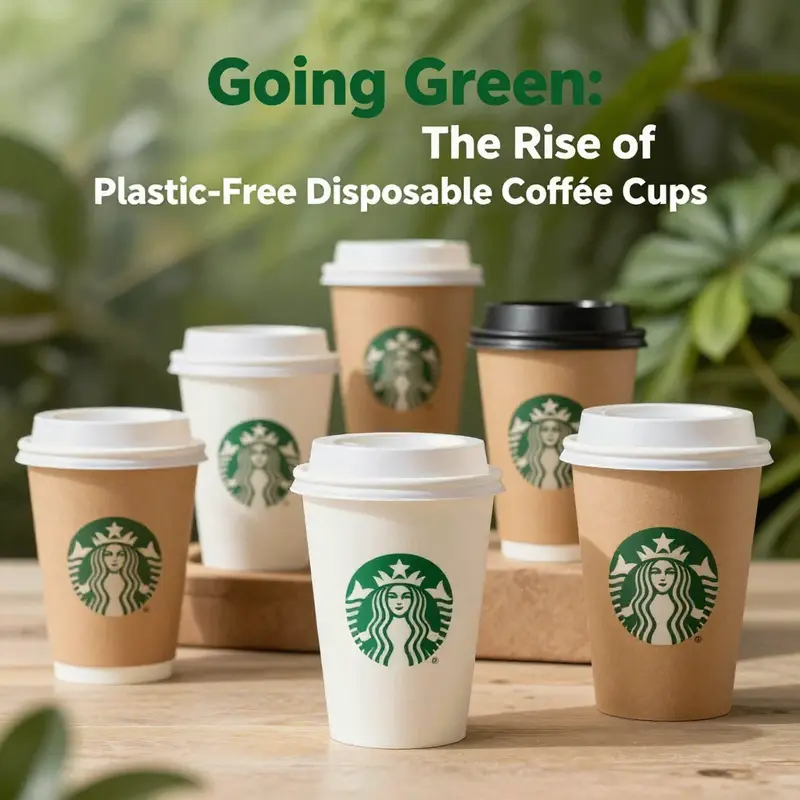
As the global push for sustainability gains momentum, the demand for plastic-free disposable coffee cups has become increasingly significant. Beverage chains, bubble tea shops, food trucks, and event planners are now seeking eco-friendly alternatives that not only reduce environmental impact but also meet consumer expectations for quality and functionality. This article delves into the technological innovations shaping the market, the dynamics driving its growth, the environmental implications of these changes, and the evolving consumer preferences surrounding plastic-free disposable coffee cups. Together, these insights will illustrate how businesses in the food and beverage industry can transition towards greener practices while maintaining high standards of service.
Rethinking the Rim: The Tech Frontier of Plastic-Free Disposable Coffee Cups

The move toward plastic-free disposable coffee cups marks a pivotal shift in how we think about everyday packaging. It is not merely a material swap but a reimagining of the entire supply chain, from raw materials and coatings to end-of-life pathways and branding implications. The chapter that follows examines the core technological breakthroughs driving this transition, tracing how innovations in coatings, paper structures, and novel biobased materials align with manufacturing realities, consumer expectations, and the broader push for a circular economy. At the heart of this inquiry lies a simple question with complex answers: can the cup that holds our morning coffee be both functional for hot beverages and kind to the planet without relying on fossil-based plastics? The answer emerges not from a single breakthrough but from a tapestry of interlocking advances, each addressing a specific constraint in the system while collectively expanding what is possible.
A fundamental pillar of plastic-free cups is the shift from traditional plastic linings to water-based aqueous coatings. These coatings, derived from renewable resources such as plant starches and cellulose derivatives, are engineered to provide a grease- and liquid-resistance barrier without the synthetic polymers that have long defined disposable packaging. The chemistry here matters as much as the branding. Water-based resins, when properly formulated, form a continuous film that can repel hot liquids even as the cup remains fabricable under standard paper-processing conditions. The environmental promise hinges on two critical attributes: compostability under controlled conditions and compatibility with existing industry infrastructure. In practice, many suppliers emphasize industrial composting environments because these coatings break down when exposed to the heat, humidity, and microbial activity found in facility settings designed for compostable materials. While home composting is a laudable goal for some households, the current industrialized pathway remains the more reliable route for achieving full material decomposition within a practical timeframe. The potential benefits are substantial: reduced reliance on fossil-based materials, lower greenhouse gas emissions over the product life cycle, and a step closer to aligning single-use cups with waste-management realities rather than forcing them into the recycling stream when it simply cannot process them.
Aqueous coatings also introduce a degree of design flexibility that is hard to achieve with traditional plastic linings. Because the barrier is a film formed from bio-based polymers, there is room to tune performance for different beverage profiles. For hot coffee, the barrier must resist thermal softening and grease migration toward the outer surface, preserving both structure and aesthetics. For iced drinks, the coating must prevent liquid permeation without compromising rigidity or imparting off-flavors. The ability to modulate the coating thickness and layered structure means manufacturers can tailor cups for specific markets or branding requirements without retooling their entire production line. The result is a class of cups that offer comparable insulation and leak resistance to conventional options while delivering tangible environmental advantages. Importantly, these benefits hinge on accurate life-cycle assessment and transparent certification, since the public often equates “biobased” with “low-impact” without considering the energy inputs and end-of-life realities embedded in production and disposal.
Beyond coatings, the architecture of the cup itself has evolved. Advanced paper structures now routinely employ multi-layer designs that optimize barrier properties while preserving recyclability and compostability. A growing design strategy combines a thin bioplastic layer—such as PLA, derived from fermented plant sugars—with a sturdy paper core. PLA offers notable moisture resistance and grease control, which is essential for hot beverages and beverages with creamer or oils. When integrated thoughtfully, this multi-layer approach reduces the risk of seepage and keeps the cup structurally sound through the typical clink of a busy coffee shop line. Yet the choice of PLA as a barrier is not merely a material preference; it reflects a systems-thinking stance. PLA is compostable under industrial conditions and is derived from renewable resources, which better align with goals to lower dependence on fossil fuels. At the same time, the packaging must still dance with the realities of recycling streams and composting facilities. The line between “plastic-free” and “recyclable” remains nuanced: a cup can be free of traditional plastics yet still require facilities that can process it into useful end products. This nuance underscores why certifications and precise material descriptions matter as much as the raw materials themselves.
In addition to coatings and layered architectures, researchers are exploring genuinely novel materials that push the boundaries of what a disposable cup can be. Mycelium, the network of fungal threads that binds together organic substrates, offers promising possibilities in combination with natural fiber reinforcements. When processed correctly, mycelium-based composites can achieve competitive strength, lightness, and insulation while being biodegradable. Bamboo fiber composites likewise present a compelling avenue, providing robust mechanical properties and a degree of heat resistance that can rival traditional paper-based systems. The allure of these materials lies in their potential to deliver a true materials-level transformation: a cup that not only avoids petroleum-based plastics but also derives its structural integrity from sources that regenerate quickly and decompose cleanly after use. Realizing this potential, however, requires careful attention to supply chain consistency, manufacturing scalability, and the broad ecosystem of end-of-life facilities. In practice, the deployment of such materials tends to be incremental, with pilots and phased rollouts that allow manufacturers to validate performance, cost, and logistics before broad market adoption.
Manufacturing advances play a critical enabling role in turning these material innovations into scalable products. The shift to plastic-free cups demands changes in processing lines, coating application methods, drying and curing cycles, and quality-control checkpoints. Modern coating technologies emphasize uniform film formation, adhesion to paper substrates, and controlled penetration into the material without creating defects that compromise insulation or warmth. Process optimization, including precision dosing of bio-based resins and improved laminate lamination techniques, helps producers achieve consistent performance while keeping production costs competitive. This is essential because the economic argument for plastic-free cups must stand alongside environmental advantages. When the cost delta narrows, brands can pursue broader adoption without sacrificing margins or brand differentiation. In parallel, manufacturers are investing in automated printing and branding streams so that cups can carry vivid, durable designs without the risk of contaminating the coating layer or impairing compostability. The ability to provide customized branding at scale—think variable graphics and colors—gives retailers and businesses a powerful tool to communicate sustainability commitments directly through their packaging.
A key aspect of scaling these innovations is alignment with existing recycling and composting infrastructures. As discussed in various authoritative resources, plastic-free does not automatically mean recyclable. The end-of-life destination for each cup depends on local facilities and the available processing options. Some regions are equipped with industrial composting plants capable of handling aqueous and PLA-based coatings, while others rely on dedicated programs that sequester organic residues through anaerobic digestion or composting. The best practice for manufacturers and purchasers alike is to scrutinize environmental claims, confirm that products carry credible certifications, and verify the availability of appropriate end-of-life pathways near the user base. Certifications such as OK Compost or TÜV OK Biobased can provide third-party validation of compostability and biobased content, respectively. These endorsements, when present, should accompany transparent, component-level disclosures about coating compositions and barrier properties. The emphasis should be on traceability from raw material sourcing to finished cups and, crucially, on demonstrating real-world performance in real-world facilities rather than relying on laboratory demonstrations alone.
Market uptake of these innovations has progressed alongside rising consumer demand for sustainable options. Major food-service players, eco-branding cafés, and retailers seeking to align with sustainability goals have shown increasing willingness to pilot and, in some cases, widely deploy plastic-free cups. The business case rests not only on environmental stewardship but also on brand differentiation and risk mitigation in a world where customers increasingly scrutinize packaging choices. Yet such adoption is not without its challenges. The cost of bio-based feedstocks can be sensitive to agricultural markets and climate variability. The energy intensity of some production processes, especially for bioplastics, must be balanced against the savings from reduced fossil fuel inputs. Regulatory frameworks, too, can influence progress, as policies favoring compostable packaging or imposing labeling requirements shape how products are designed and marketed. What emerges is a landscape that rewards careful system-level thinking: design for end-of-life, transparent material disclosures, and robust supply chains that can absorb fluctuations in feedstock availability and processing capacity.
The literature and industry forums point to a future in which the cup is not merely a passive vessel but an actively managed part of the waste stream. In this vision, manufacturing ecosystems converge with composting facilities, consumer education campaigns, and standardized certifications to create a coherent, traceable lifecycle. This is why scholarly journals and industry coalitions remain central to progress. They provide the technical rigor, comparative analyses, and consensus-building necessary to move from isolated innovations to a widely adopted paradigm. The Journal of Cleaner Production, for instance, has documented the lifecycle tradeoffs and optimization opportunities associated with sustainable packaging solutions, while coalitions such as the Sustainable Packaging Coalition curate best practices and open-access innovations that help practitioners navigate choices without getting overwhelmed by premature hype.
For readers seeking a concrete touchstone while contemplating the broader implications, consider a real-world example where branding meets material science in a way that underscores both opportunity and responsibility. A case study approach can illuminate how a brand might balance performance with compostability, how coatings are formulated to resist hot beverages, and how end-of-life pathways are communicated to customers. It is in these integrated narratives that the sector’s progress becomes tangible, moving beyond lab demonstrations to consumer experiences that are both satisfying and sustainable. As the field advances, the most compelling cups will be those that combine reliable barrier performance with clear, verifiable environmental credentials and a transparent supply chain that customers can trust.
The practical takeaway for practitioners and enthusiasts is twofold. First, the plastic-free cup is no longer a singular material fix but a portfolio of technologies that together achieve a viable substitute for conventional plastic-lined cups. Second, and perhaps more important, is the recognition that true sustainability rests on how the product is manufactured, used, and disposed of. This means that a responsibly designed cup must be compatible with a real-world ecosystem of composting facilities, recycling streams, and consumer behavior. It must also deliver brand value through credible claims supported by verifiable certifications and transparent material disclosures. With these elements in place, plastic-free cups can fulfill their promise: a convenient, familiar consumer experience that aligns with society’s broader environmental objectives rather than working at cross-purposes with them.
As you reflect on these developments, you can also explore how ecosystem thinking translates into branding and product strategy. For a sense of how sustainability branding intersects with product design, see Green Soil Lotus. This example illustrates how a design ethos centered on natural materials and responsible sourcing can permeate multiple touchpoints—packaging, store signage, and customer communications—without compromising the tactile and aesthetic qualities customers expect from their daily coffee ritual. The chapter closes with an emphasis on the path ahead: continued cross-disciplinary collaboration, rigorous third-party verification, and a vigilant eye toward end-of-life infrastructure. Only then can the plastic-free disposable cup truly deliver on its promise as a practical, scalable, and environmentally attuned alternative to conventional options.
External resources that offer deeper technical detail and the latest developments in this field can further illuminate the landscape. A representative source is the Sustainable Packaging Coalition, which curates up-to-date innovations and provides a framework for comparing different material approaches and their implications for the circular economy. Readers seeking a rigorous, external synopsis should consult their ongoing work and related publications, which offer nuanced analyses of material performance, life-cycle considerations, and policy contexts that shape adoption across markets.
In sum, the innovations shaping plastic-free disposable coffee cups reflect a deliberate convergence of science, manufacturing proficiency, and responsible stewardship. Water-based aqueous coatings, advanced paper architectures, and novel bio-based materials each contribute essential pieces to a more sustainable cup. When aligned with careful process optimization, credible certifications, and an informed understanding of end-of-life realities, these technologies enable a practical transition that preserves the beloved coffee experience while reducing environmental impact. The journey is ongoing, and its success will depend on transparent communication, scalable production, and a shared commitment to building packaging that serves both people and the planet. The chapter’s synthesis points toward a future in which the simplest moments of daily life—holding a cup, savoring a sip—are underpinned by a packaging system that respects resources, supports local waste-management capabilities, and reinforces trust between brands and consumers.
Plastic-Free Coffee Cups: Market Dynamics and the Path to Sustainability

A concise overview of how plastic-free disposable coffee cups gain traction through regulation, consumer demand, and materials innovation. Regulatory actions in the European Union and several North American jurisdictions are guiding suppliers toward compostable or recyclable options and clearer end-of-life pathways. Consumers, especially younger cohorts, increasingly seek credible environmental claims and certifications, and retailers respond by adopting cups that balance grease resistance, heat retention, and waste-stream compatibility. Technical progress in aqueous coatings and bio-based linings enables performance without traditional plastics, but real benefits depend on local waste infrastructure and proper labeling. Economics improve with scale and efficient supply chains, while ongoing investments in composting capacity and robust certification programs help sustain adoption. The result is a market that treats plastic-free cups as a scalable solution aligned with broader sustainability goals rather than a niche experiment, with brands using transparent messaging to build consumer trust and drive continued growth.
Beyond the Label: Tracing the True Environmental Footprint of Plastic-Free Disposable Coffee Cups
What does plastic-free really mean when a cup must endure heat, grease, and daily use, all while moving through waste systems that were never designed for it? The promise of plastic-free disposable coffee cups rests on the appeal that removing traditional plastics from the lining will automatically reduce harm. In practice, the story is more nuanced. These cups often rely on paper substrates that are lined with plant-based bioplastics, such as PLA, or with aqueous, water-based coatings. Some lean toward bamboo or other compostable fibers. The logic is seductive: if the container avoids petroleum-derived plastics, surely its life cycle must be gentler on the planet. Yet the environmental ledger of these products shifts across stages of production, use, and end-of-life, and those shifts can be surprising. A lifecycle mindset helps reveal the hidden costs and the real opportunities, guiding brands, policymakers, and consumers toward outcomes that actually reduce harm rather than simply trading one set of problems for another.
The manufacturing phase is the first place where complexity appears. PLA, derived from renewable plant resources such as corn starch, is often marketed as a greener alternative because it is compostable under certain conditions. But PLA is still a plastic in a broad sense, and its production is energy-intensive. Growing crops requires irrigation, land, and inputs that can include fertilizers and pesticides. The journey from crop to bioplastic involves processing steps that consume water, generate emissions, and necessitate specialized facilities. Even when the raw materials are renewables, the energy mix used in fabrication, the efficiency of the manufacturing plants, and the transport footprint from farm to factory all contribute to the total greenhouse gas burden. In some cases, the energy required to convert biomass into bioplastic can rival or exceed the energy footprint of conventional plastics, especially when produced at scale in regions with high fossil fuel dependence. The cascade of effects—from soil health to biodiversity—further complicates the picture. When paper is coated with a plant-based resin, the underlying wood fiber’s origin matters as well. Sustainable forest management and responsible fiber sourcing can mitigate some impacts, but they do not eliminate them. Even with aqueous coatings, which rely on water-based resins to form a waterproof and grease-proof barrier, the production process demands precise control and significant energy input to ensure uniform performance. The materials choices are not simply a matter of selecting “green” chemistry; they are a matter of balancing agronomic realities, industrial processing, and supply chain logistics that stretch across continents.
A key feature of plastic-free cups is their claimed end-of-life advantage. The idea is that if a cup is compostable under industrial conditions, it will return nutrients to soil rather than linger in a landfill. The caveat is essential: industrial composting facilities are not universal, and many municipalities do not yet have the capacity to accept compostable cups at scale. Contamination of recycling streams is another real-world problem. If a PLA-lined cup ends up in a standard recycling bin, it can disrupt the process, or it may simply end up as waste in a landfill with limited or no composting options. The result is that plastic-free does not automatically equal recyclable, and it does not guarantee a reduced lifecycle impact in every jurisdiction. The end-of-life reality highlights a critical point: the actual environmental benefits of these cups depend on the local waste infrastructure and the consumer’s ability to sort and divert waste into appropriate channels. This is a disposition problem as much as a material problem, and it requires coordinated action among manufacturers, waste managers, and public policy.
The life cycle assessment data that exist for plastic-free cups underscore the importance of context. A 2025 study by the UK Environment Agency quantified the carbon footprint of a single-use paper cup with a PLA lining at roughly 1.2 kilograms of carbon dioxide equivalent (CO2e). This estimate is striking because it places the PLA-lined variant at nearly three times the carbon footprint of a standard plastic-lined paper cup under certain conditions. The drivers are not only the crop production of corn or the bioplastic manufacturing process but also the agricultural inputs and land-use implications that accompany large-scale feedstock production. In other words, the environmental benefit of substituting plastics with plant-based coatings can be eroded by the resource intensity of agriculture, by transport, by processing energy, and by the mismatch between product design and waste management capacity in many places. The lifecycle perspective thus reframes the conversation from a simple “biobased equals better” narrative to a more nuanced assessment of where and how benefits accrue.
Disposal and infrastructure realities amplify the complexity. Even the most well-intentioned consumer can face a frustrating system if local facilities lack industrial composting capabilities or if the cup’s compostability claims are not backed by certification. Certifications such as OK Compost or TÜV OK Biobased provide assurance that a product meets specific standards, but the presence of a certification does not guarantee universal acceptance or end-of-life success. The verification process matters: certifications confirm that a material can break down under defined industrial conditions, not that it will do so in every disposal setting. Therefore, a truly environmentally responsible choice requires diligence at the point of purchase. Product pages typically describe the lining material and the disposal requirements, but robust environmental claims should be supported by explicit certifications and clear guidance about compatible waste streams. Without this clarity, even the most promising product can fail to deliver meaningful environmental benefits in practice.
The consumer’s decision, then, becomes a matter of aligning material choice with local waste capabilities. In jurisdictions with robust industrial composting networks, PLA or aqueous coatings may offer a clearer path to end-of-life diversion. In places without such infrastructure, these cups may contribute to waste in a way that mirrors conventional options—potentially undermining the intended sustainability gains. The challenge is not merely scientific or engineering; it is logistical and policy-driven. It requires municipal planning that prioritizes organics infrastructure, creates clear post-consumer guidance, and ensures that compostable streams are not contaminated by non-compostable items or by products that can disrupt recycling facilities. The interaction between material science and municipal systems is where the promise of plastic-free cups is tempered by reality. The result is a social contract: consumers agree to sort, manufacturers invest in verifiable certifications, and regulators align policies to encourage the development of suitable waste management pathways.
The broader ecological narrative invites reflection on how we design, consume, and dispose of single-use items. If a cup is to be truly gentler on ecosystems, it must minimize not only its own embodied energy and emissions but also the downstream costs of waste management and the risks of mis-sorting. Innovations in materials science continue to push toward more sustainable coatings, bio-based fibers, and improved mechanical properties that allow for more efficient recycling and composting processes. Bamboo fibers, plant-based resins with lower energy footprints, and advanced coatings that reduce the need for heavy, multi-layer laminations are part of this frontier. Yet each advancement requires a parallel improvement in labeling, consumer education, and waste infrastructure. The lifecycle payoff is maximized when product design is paired with practical waste routes, not when one aspect is optimized in isolation.
For designers and brand owners, the lesson is to foreground lifecycle thinking in both product development and marketing. It is not enough to claim that a cup is plastic-free; the claim must be supported by verified life cycle data, credible certifications, and a transparent map of end-of-life options. When considering customization and branding, companies can also explore how materials choice influences the sustainability narrative. For instance, a cup designed with plant-based coatings might be paired with messaging and packaging that directs users to certified composting facilities or to local initiatives that accept compostable items. The integration of material science with consumer-facing guidance enables a more trustworthy proposition. As a practical example of linked design thinking, consider plant-based design options that emphasize soil health and ecological compatibility; such designs can be reflected in product pages that showcase how compostable materials align with sustainable landscaping and urban greening efforts. See a real-world example of plant-based design options on the product page green-soil-lotus, which illustrates how organic-inspired materials can inform the broader packaging narrative. green-soil-lotus
The global supply chain adds another layer of nuance. Even when a coating is truly biodegradable under industrial conditions, the geographic dispersion of raw materials and processing facilities introduces transport-related emissions and energy use that may offset some of the perceived benefits. A robust assessment thus calls for systemic improvements: sourcing from regions with renewable energy for manufacturing, optimizing logistics to reduce miles traveled, and encouraging suppliers to participate in extended producer responsibility programs. In the end, the environmental scorecard for plastic-free disposable coffee cups is not static. It evolves with advances in agronomy, catalysis, and recycling technologies, as well as with shifts in waste management capacity and public policy. The best available science suggests that these cups can be a meaningful improvement over conventional plastics in some contexts, while in others they may offer only incremental gains or, if not properly disposed, could incur the same kinds of environmental costs as their plastic-containing counterparts.
This layered understanding has practical implications for shoppers and policymakers alike. When evaluating claims, readers should ask pointed questions: What is the exact coating or lining material used? Which certifications back the claim, and what do they guarantee about end-of-life conditions? Is there accessible industrial composting capacity in the consumer’s region, and is there an explicit mandate or infrastructure to manage compostable packaging separately from recycling streams? Are there trade-offs in land use or fertilizer input that could offset carbon savings elsewhere in the lifecycle? The answers require not only technical data but transparent communication from manufacturers and clear governance from municipalities. Only then can the label plastic-free translate into a verifiable environmental benefit across real-world contexts.
The chapter’s takeaway is neither a blanket endorsement nor a blanket rejection of plastic-free cups. It is an invitation to hold the term plastic-free to the same scrutiny we apply to any environmental claim: scrutinize the lifecycle, verify the certifications, and consider the local waste landscape. The most responsible path is to cultivate systems where product design and waste management reinforce one another, so that substitution of plastics with plant-based alternatives does not become a new bottleneck of emissions, resource use, or contamination. As materials science continues to evolve, a growing emphasis on cradle-to-cradle thinking—designing products with recyclable or compostable endings in mind—could help align the intentions of designers with the realities of waste streams. Collaboration among farmers, processors, waste managers, retailers, and consumers will determine whether plastic-free cups deliver meaningful reductions in harm or simply shift where that harm is concentrated. In the interim, informed choices, critical evaluation of claims, and investment in waste infrastructure remain essential for turning the promise of plastic-free into a durable environmental benefit.
External resource: For comprehensive lifecycle data and policy context, see the UK Environment Agency’s Life Cycle Assessment of Disposable Coffee Cups (2025): https://www.gov.uk/government/publications/life-cycle-assessment-of-disposable-coffee-cups
Rethinking the Morning Brew: Consumer Shifts Toward Plastic-Free Disposable Coffee Cups
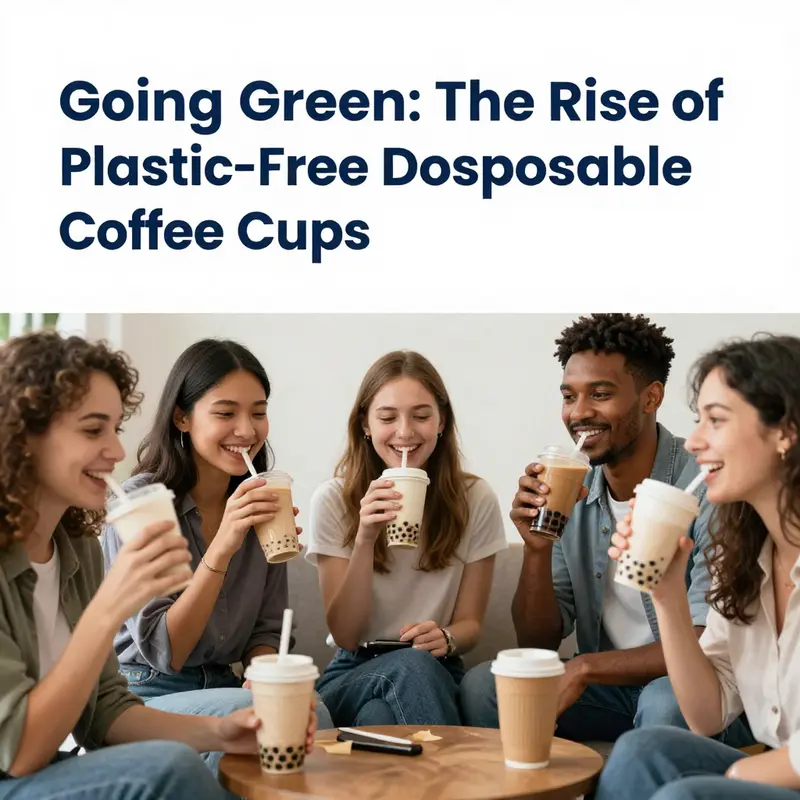
The morning ritual of grabbing a hot drink in a disposable cup sits at a crossroads. On the one hand, convenience remains nonnegotiable for busy lives. On the other, growing awareness about the environmental footprint of single-use packaging—and the health implications of microplastics in beverages—has shifted how people choose, perceive, and trust the materials that cradle their coffee. This chapter traces how consumer demand for plastic-free disposable cups is rising, what drives that demand, and how it reshapes retail, supply chains, and everyday behavior. It is a story about values meeting practicality, and about how material science, regulation, and consumer preference are converging to redefine a familiar product category without sacrificing function.
At the center of the shift is an explicit concern: plastic-free does not automatically mean recyclable. The linings that have long kept cups grease- and leak-resistant are, in many cases, non-recyclable plastics that complicate waste streams. The market response has been to develop alternatives that are either biodegradable or compostable under defined conditions. Two broad approaches have emerged as technically viable and increasingly accepted: aqueous coatings and biobased plastics such as PLA. An aqueous coating uses water-based resins to create a barrier layer. When paired with a paper substrate, it can deliver grease resistance and moisture containment while avoiding traditional polyethylene. PLA, a polylactic acid derived from renewable resources, presents itself as a biologically sourced option that is compostable under industrial conditions. These coatings and films are not mere niche options; they underpin a market that has already begun to scale up, with products designed for mass production and branding flexibility.
Consumer interest in these materials has been fueled by a combination of environmental data and everyday health concerns. A 2025 global survey reported by Statista indicates that 68% of consumers in North America and Europe prefer eco-friendly packaging, with plastic-free disposable cups emerging as a top preference. This is not simply a trend in sentiment; it is translating into purchasing behavior and brand loyalty. A parallel anxiety has taken hold around microplastics. A 2026 study from a major research university highlighted that hot beverages in conventional plastic-lined cups can release thousands of microplastic particles per drink. While laboratory findings continuously evolve, the takeaway is clear enough for consumers: the fewer plastics in contact with hot beverages, the better the perceived and actual health outcome. As people connect health and environmental impact, they increasingly look for packaging that is labeled as “plastic-free” and “compostable.”
In parallel with consumer demand, there is a tangible shift in corporate commitments and policy landscapes. Many large coffee brands and retailers have pledged to phase out plastic-lined cups by 2030. The logic is straightforward: aligning product packaging with broader sustainability goals can reduce waste, simplify recycling streams, and appeal to a growing cohort of environmentally conscious customers. To meet these ambitious timelines, suppliers have introduced a range of fully compostable, plastic-free cups made from materials such as sugarcane bagasse, bamboo fiber, or FSC-certified paper. These products often employ water-resistant coatings that are designed to break down under composting conditions, rather than in conventional landfills. The net effect is a packaging ecosystem that offers insulation, strength, and a lighter environmental footprint when properly processed.
Regulatory pressure also plays a decisive role. In the European Union, the Single-Use Plastics Directive prohibits non-compostable plastic-lined cups beginning in 2027, effectively accelerating the market’s pivot toward plastic-free options. This policy environment creates a powerful incentive for operators and suppliers to invest in alternative coatings and substrates that can satisfy both performance criteria and compliance timelines. In such a context, downstream consumers become more than passive recipients of packaging; they act as market signals that influence store menus, branding, and even store design. The result is a packaging landscape that rewards transparency and certification. Consumers increasingly seek out documentation confirming that a product is truly plastic-free and compostable, including environmental certifications such as OK Compost or TÜV OK Biobased. These labels help separate genuine plastic-free solutions from marketing claims and provide a basis for responsible disposal in appropriate facilities.
From a consumer standpoint, the material choice matters, but so does how the choice is communicated. The labels “100% plastic-free” and “compostable” carry different implications depending on whether a cup is industrially compostable or home-compostable. The practical distinction—whether a consumer can dispose of the cup in a municipal composting program or must seek a dedicated facility—has real consequences for waste management, municipal infrastructure, and even the end-user experience. As such, clear disclosures on product pages and packaging are essential. In practice, shoppers increasingly rely on third-party certifications and verified claims rather than marketing gloss. This is not merely about pet projects and niche ecologists; it is about everyday decisions that accumulate into meaningful reductions in waste and pollution.
Material science has responded to these expectations with a suite of options. Aqueous coatings provide a relatively low-energy, water-based barrier that can be tuned for different levels of grease resistance and liquid barrier properties. They are compatible with a broad range of base papers and can be formulated to meet both industrial and home-composting standards, depending on the resin chemistry used and the testing protocols. PLA offers a biobased alternative that reduces fossil resource dependence, but it is not a universal panacea. Its performance under high heat and mechanical stress must be evaluated in context of the entire system: cup design, lid interaction, and the composting facility’s capabilities. Consumers who see a PLA- or water-based coating claim should also look for certification to confirm compostability under real-world conditions, rather than relying solely on the label. It is precisely this combination of material science and certification that gives plastic-free cups the credibility they need to compete with conventional packaging in a crowded marketplace.
The practical realities of production and distribution further shape consumer choices. Market analysis shows a spectrum of options, from double-wall paper cups lined with aqueous or PLA coatings that deliver robust insulation, to lighter single-wall white paper cups with biodegradable linings. These offerings align with different use cases and price points, enabling cafés and retailers to tailor their packaging to the expected beverage temperature, volume, and service pace. A glance at current market dynamics reveals that mass production capabilities are well established for these categories. For example, disposable white single-wall cups with biodegradable linings are produced at scale, and customers can access them at surprisingly low unit costs, underscoring that plastic-free options can be as economical as their plastic-containing counterparts when viewed across the total cost of disposal and environmental impact. This affordability matters, because consumer willingness to pay a premium for eco-friendly disposables is meaningful but not limitless. A growing portion of the market is ready to shoulder a price uplift, but the premium must be credible and clearly connected to sustainable outcomes.
The customer mindset is also evolving in how it balances sustainability with performance. People want cups that resist leaks and heat loss, preserve beverage flavor, and withstand typical handling in a busy café or on the go. A plastic-free solution must not compromise user experience. If a cup fails to keep a drink hot or to prevent grease from seeping through, the trust in the brand—and in green packaging more broadly—diminishes. Brands that succeed in this space tend to emphasize both the environmental benefit and the practical value of robust performance. They demonstrate that sustainability is not a trade-off but a feature that can coexist with reliability and user-friendliness. The best examples of this approach are those that connect packaging choices to the broader mission of reducing waste, simplifying recycling, and improving public health outcomes by minimizing microplastic exposure.
The consumer journey toward plastic-free cups also hinges on availability and convenience. Even as demand grows, access remains uneven. Data from major urban centers shows that a minority of cafés stock plastic-free cups yet; adoption is expanding rapidly as suppliers broaden their offerings and cafés integrate these options into their procurement routines. The gap between consumer desire and storefront availability is a critical pressure point. When accessibility improves, the likelihood of sustained use increases, reinforcing a virtuous cycle of demand and investment in better packaging. In this context, the packaging decision becomes part of the customer experience, not a separate or hidden back-end choice.
From a shopper’s perspective, best practices are straightforward but essential. First, seek out cups clearly labeled as “plastic-free” and either “home-compostable” or “industrial-compostable.” Second, avoid cups that merely appear paper because they may still carry a plastic lining. Third, support brands and retailers that publish transparent environmental data and publish relevant certifications. Fourth, whenever possible, bring a reusable cup to reduce overall waste. This last habit is not a rejection of convenience but an upgrade in responsibility that many cafés actively encourage through pricing incentives and loyalty programs. Taken together, these practices empower consumers to make choices that align with both personal health goals and community-wide environmental aims.
The consumer narrative about plastic-free cups is inseparable from the broader branding and design decisions that accompany them. A packaging ecosystem that values storytelling around sustainability must also deliver practical benefits. This means choosing materials and coatings that perform under heat, resist leakage, and maintain structural integrity across the intended lifespan of the cup. It also means presenting information in a way that is accessible and trustworthy. When consumers encounter a packaging claim, they want to see verification, not rhetoric. This is why certifications and third-party testing play such a pivotal role in the market’s maturation. The goal is not only to reduce plastic use but to build consumer confidence that the choice is genuinely better for the environment and for health.
The revenue and branding implications of these shifts are real. A wave of product design opportunities is emerging—from the way cups are constructed to how brands present sustainability on the packaging. While a few early adopters demonstrated the viability of specific coatings and fibers, the broader market now supports a range of customization options. This includes the possibility of tailored branding and color that reflect environmental commitments, as well as adaptable printing and handling that do not jeopardize compostability. Packaging designers and brand managers are learning that sustainable packaging can be a differentiator, not a concession. The goal is to harmonize aesthetics, function, and environmental performance in a single product that delivers a reliable beverage experience while aligning with consumer values.
In practical terms, the market has a clear path forward. Double-wall cups with aqueous or PLA coatings offer strong insulation and grease resistance for hot drinks, while single-wall options provide lighter, often more economical solutions for cold beverages or shorter service periods. The ongoing refinement of coatings and fibers will likely expand the performance envelope still further, enabling even hotter beverages to be served in plastic-free cups without compromising user satisfaction. For cafés and retailers, the implication is straightforward: invest in coatings and materials that meet verified standards, communicate those standards clearly, and participate in certification programs that reinforce trust. For consumers, the message is equally clear: seek out labeled, certified plastic-free options, support establishments that prioritize sustainable packaging, and consider reusable cups where feasible. Even small choices—like selecting a plastic-free cup for a take-away order instead of defaulting to a conventional option—compound into meaningful environmental benefits when adopted widely across urban centers and communities globally.
As this transition unfolds, it is helpful to keep in mind how packaging design can intersect with branding and customer experience. A small example from the world of packaging customization illustrates how sustainability can be integrated into consumer perception. A product page such as Old Lady Cactus demonstrates how a café or brand might embed distinctive, eco-conscious visuals into disposable packaging while maintaining a clean, functional form. Such branding options are a reminder that sustainability and aesthetic identity can reinforce one another, helping customers feel connected to their choices rather than merely compliant with policy.
In sum, consumer trends toward plastic-free disposable coffee cups reflect a broader shift in how people evaluate everyday packaging. The convergence of environmental concern, health information, corporate accountability, and regulatory incentives is driving a more thoughtful approach to what we drink from and how we dispose of it. The result is a packaging landscape that prioritizes compostability, transparency, and performance. For individuals, the implications are straightforward: favor clearly labeled, certified plastic-free options; favor practical reuse where possible; and participate in a system that rewards responsible disposal. For the industry, the implications are strategic: invest in robust coatings, sustainable fibers, and certification-driven trust signals; and align product design with the evolving expectations of consumers and regulators alike. The chapter ends not with a conclusion, but with a direction—toward a future in which the ritual of coffee remains intact, while the waste it leaves behind is dramatically reduced.
External resources for further reading on microplastics and health considerations include the Griffith University research on microplastics in hot beverages, which provides a peer-informed perspective on why material choice matters when heat and liquid interact with packaging: https://www.griffith.edu.au/news/2026/01/microplastics-in-hot-beverages.
Final thoughts
The shift toward plastic-free disposable coffee cups represents a critical evolution in the beverage industry, driven by technological advancements, consumer preferences, and a greater awareness of environmental impacts. As bubble tea shops, beverage chains, restaurants, food trucks, catering services, event planners, and corporate procurement teams adopt these sustainable alternatives, they not only contribute to global sustainability efforts but also enhance their brand image and meet customer expectations. The future beckons for a commitment to innovation and responsibility that reflects the values of conscious consumers, making the choice of plastic-free disposable coffee cups not just a trend, but a necessity for a thriving business.