
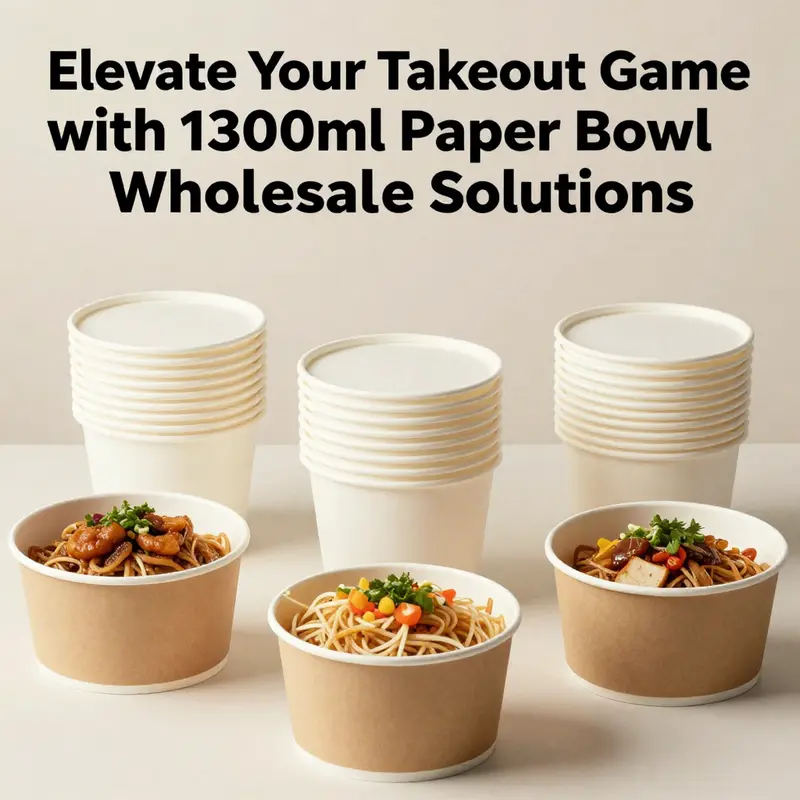
In today’s highly competitive food service landscape, the demand for sustainable and efficient packaging solutions is at an all-time high. This is particularly true for businesses catering to takeaway and delivery formats such as Bubble Tea Shops, Restaurants, Food Trucks, Catering Services, and Event Planners. The 1300ml paper bowl stands out as an ideal choice for both functionality and eco-friendliness. Through an in-depth exploration of market dynamics, product features, and strategic procurement practices, this article will equip you with the insights needed to optimize your packaging choices and improve service delivery.
容量与价值:1300ml纸碗批发在绿色供应链中的市场动态与应用前景

在全球餐饮包装市场的错综网络里,1300ml容量的纸碗以其恰到好处的尺寸、出色的耐用性与环保属性,逐渐成为批发端的重要组成部分。这个容量,并非仅仅是一个数字,而是一系列供应链设计、材料选择与使用场景的交汇点。对经营者而言,它既代表可控的单位成本,也承载品牌在外卖、快餐、轻食甚至零售场景中的视觉表达与使用体验。对于供应商而言,1300ml纸碗的生产既要兼顾食品级安全与防水性能,又要在大规模生产中实现稳定的质量控制。这样的平衡,使得1300ml纸碗批发市场呈现出高度的成熟度和可预测性,同时也为未来的创新留出空间。
从材料与工艺的角度看,1300ml纸碗的核心在于食品级牛皮纸(Kraft Paper)的选择与处理。多数产品采用这类材料,因其天然质感和耐受性同时具备一定的防水涂层能力,使碗在盛装湿润或带汤品的情况下仍能保持结构稳定。防水涂层不仅提升耐用性,还在某种程度上延长了保温与携带的舒适度,便于消费者在路途中完成食用过程。这种材料选择与工艺组合,成为实现绿色、可降解餐具的关键一步,也是市场偏好逐步从传统纸质容器向更环保方案过渡的直接体现。
在定制化方面,市场普遍提供灵活的印刷与个性化设计服务。企业客户常常寻求在包装上印制自家品牌Logo、专属图案或促销信息,以提升品牌辨识度与用户黏性。这一需求推动了印刷技术的持续进化,灵活印刷(如柔印)与胶印的结合应用,使得1至6色的印刷方案在成本与视觉效果之间找到了可接受的平衡点。对于追求品牌一致性和统一视觉传达的商家来说,定制化不仅仅是美观的需求,更是提升转化率、增强消费者情感连接的重要手段。更进一步,定制化也带来一定的采购节奏挑战:印刷前的样品确认、色彩偏差的控制、以及大货交付周期的协调,都是采购端需要提前规划、与供应端协同的关键环节。
配套选项同样是这一品类竞争力的重要组成。多数1300ml纸碗在出厂时会配备盖子,常见的盖子材料有塑料(PP)和纸质两种。盖子的存在不仅提高携带的便捷性,也对保温性能有所促进,尤其是在外卖、校园餐食和野外活动等需要短时保持热度的场景中发挥着重要作用。这些组合策略,使得单件产品在功能性、使用场景与成本之间形成多样化组合,便于不同经营者在不同渠道和时段灵活调配资源。
价格结构方面,市场呈现出清晰而分层的梯度。基础款的1300ml纸碗,若以常规批发价计算,单价往往落在一个较低的水平区间,以人民币计价的基线大约在0.14元/件上下。这一价格区间的稳定性,反映出规模化生产、原材料供应稳定以及交易平台更完善的支付与物流保障所带来的综合收益。对那些将品牌化、耐用性与美观度叠加到包装中的客户而言,带印刷定制的款式定价通常在0.45元至0.62元/件之间,体现出高附加值商品的定价策略与利润空间。需要特别指出的是,行业在更大体量的订单情境下,仍存在以美元计价的优惠结构,例如在超过50,000件的批量采购中,单价可能进一步降低,折算后呈现出更具竞争力的成本优势。这种跨币种定价与大额折扣的组合,是跨境贸易与国内市场并存的常态,也促使采购端在预算与采购周期上做出更灵活的安排。
供应链的地理分布也对成本与交付速度产生直接影响。行业统计显示,生产与组装资源较为集中的区域多集中在东部沿海与中部内陆的多地协同体系内,诸如广东、浙江、安徽、湖北等省份形成了较为完备的产业集群。这些区域的优势在于:完善的原材料供应、熟练的加工工艺和成熟的物流网络,以及对外贸与OEM/ODM模式的熟练运作能力。企业能够提供从来样、到小样、再到大货的完整服务链,确保样品申请后能在较短时间内完成质量确认并进入量产。许多工厂还承诺48小时内发货的高效响应,结合严格的验厂体系与品质检控流程,为大规模采购提供了信心。对于采购端而言,这样的供应链韧性意味着在应对市场波动、季节性需求变化与区域性价格波动时,能以较小的运营成本实现快速扩张或灵活调整。
一方面,市场的需求端呈现多元化与分层化的特征。以外卖、快餐、轻食、食品零售和家庭餐盒等场景为代表,1300ml纸碗以其容量恰好覆盖从单人份到多人餐的使用需求,在不同场景中的应用频率相对稳定。轻食沙拉、早餐打包、家庭餐盒以及野营食品等场景尤为明显,这些领域对纸碗的稳定耐用性提出了更高要求,同时也推动了对食品安全、耐温性和防漏性的综合考量。对于追求强品牌视觉表达的连锁餐饮和网红店而言,定制化需求尤为旺盛,因而品牌方愿意为包装投入额外成本,以换取更强的市场辨识度和顾客忠诚度。复购率的统计数据也映射出这一点:在以品牌为中心的供应链中,印刷定制、稳定供货与质量一致性之间的正相关性明显,复购率往往有显著的提升,超过四分之一的客户在重复采购中体现出对供应商的信任和依赖。
另一方面,外部政策与消费趋势共同推动了市场的发展。随着限塑令等环保法规的逐步深化,对一次性塑料餐具的使用进行限制成为全球趋势。这一政策环境使得可降解、食品级且耐用的一次性纸碗成为更受欢迎的选择。与此同时,绿色消费理念的兴起促使消费者在外卖包装的选择上倾向于对环境影响较小的产品。企业在品牌故事与供应链透明度方面的投入也越来越明显,包装上的环保信息成为促销与品牌传播的一部分。对经营者来说,这意味着在采购决策中,除了价格、质量与交付,还需要把供应商的环保承诺、材料来源与生产过程的可追溯性纳入评估维度。
在数据与市场反馈层面,1300ml纸碗的月度销量通常处于数千至数万件的量级区间,这显示出该品类在批发市场的稳定性与规模化潜力。针对企业客户的定制化服务,尤其是印刷与品牌设计的深度参与,使得这类产品在连锁餐饮、校园餐饮、企业团餐与电商配送中的应用前景更为广阔。客户对快速样品与快速打样的需求,也推动了平台化交易与供应链协作的升级。更重要的是,市场对质量与安全性的持续关注,让供应商在原材料的选择、印刷色彩的稳定性、以及成品的一致性方面投入更大资源,以降低退货率与不良品率。这种质量驱动的竞争力,正成为行业长期健康发展的核心。
展望未来,随着对塑料制品替代、绿色材料普及和数字化供应链的持续推进,1300ml纸碗在商用餐具、连锁餐饮、电商配送与户外活动等领域的应用将进一步扩展。企业在提升包装的品牌价值与消费者体验方面的投入,将不仅局限于美观与功能性,更延伸到供应链的透明度、可追溯性与可持续性评估。结合市场对定制化、快速交付与成本控制的综合需求,1300ml纸碗批发正进入一个以规模化生产、绿色材料与数据驱动的协同发展阶段。新兴技术的应用、材料科学的创新,以及跨境贸易环境的稳定性,都会成为推动这一品类进一步成长的关键因素。换言之,容量的简单数字背后,是一个复杂而互联的商业生态系统,其运行效率与创新能力,最终决定了包装在现代餐饮中的角色与价值。
外部参考资源将为读者提供对全球市场与供应链生态的更广阔视角。详情可参阅以下外部资源链接:
https://www.alibaba.com/product-detail/Custom-1300ml-Paper-Box-For-takeout_1600495987240.html
产品特性与定制化选项:1300ml纸碗批发的技术细节
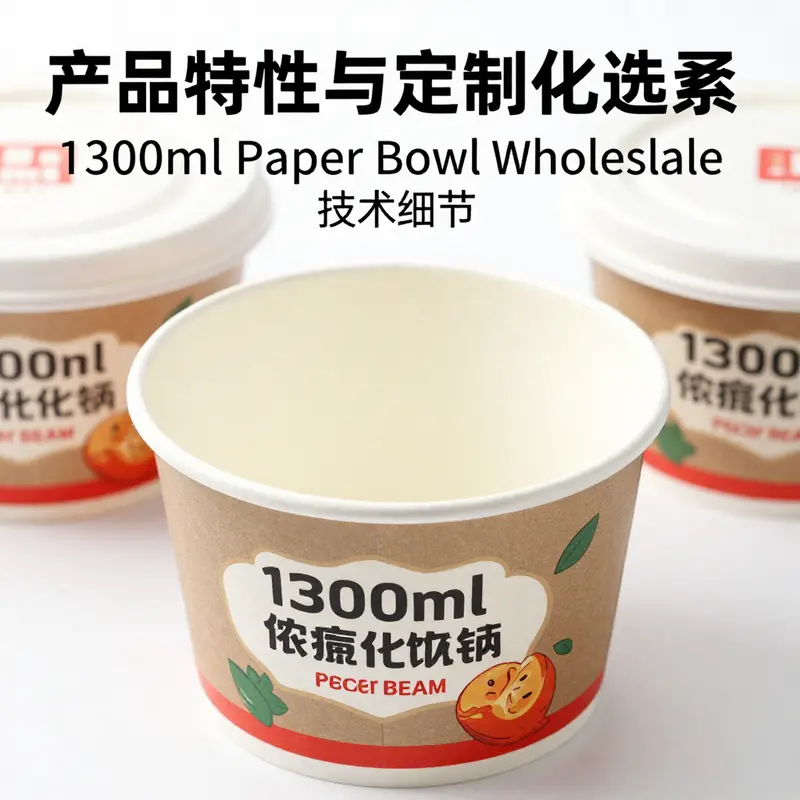
在现代餐饮包装的生态与效率诉求之中,1300ml纸碗作为一次性包装的主力尺寸,凭借稳定的材料特性、可靠的结构设计与灵活的定制能力,成为外卖、快餐和健康轻食场景不可或缺的载体。它不仅承载着热汤、炒饭或表层酱料的重量,更承载着品牌的识别度与消费体验的细节。围绕这类产品的讨论,往往从材料选择、成型工艺到印刷与盖子的组合,再到如何在大批量采购中实现成本与质量的平衡,形成一个完整的供应链认知。对批发商、品牌方和餐饮端而言,最关键的,是在不牺牲性能的前提下,实现环保诉求与功能性之间的动态平衡,并通过可追溯的生产过程,确保每一个环节都符合安全与合规的要求。.
材料与结构设计是此类纸碗的基石。大多数产品采用食品级牛皮纸作为基材,这种材质不仅具备良好的卷曲与成形性,还能在后续加工中保持稳定的强度。为了实现防油、防水和耐温的综合性能,常见的方法是对纸张进行单面或双面淋膜处理,涂层材料多为聚乙烯(PE)或等效的热塑性薄膜。这种淋膜层的厚度往往落在较窄的范围内,常见的是介于140到320克/平方米之间的纸张规格,通过控制涂层的均匀性,容器在承载热汤或油脂时的渗漏风险大幅降低。同时,合规前提下的降解性与可回收性也被逐步强调,使得“以纸代塑”的理念更具可操作性。这些因素共同决定了成品在盛装高温高油食物时的密封性与保温性,以及在冷藏或微波条件下的稳定性。
从生产技术角度看,确保1300ml纸碗的稳定成型和一致性,离不开自动化生产线的综合作用。当前的主流设备往往采用高精度斜齿传动结构与喷淋式自动润滑系统,并结合CNC加工中心的一体成型模具。这种组合可以实现每分钟数十件的稳定产出,且在快速更换模具以适应不同容量时,50盎司至20盎司等多种规格的切换都能保持较短的停机时间。具体到1300ml这一容量的模具切换,厂家通常设计成可在同一生产线实现快速转位,确保在批量订单中仍具备高产量与高精度并存的特性。设备还集成光电检测与故障报警等智能功能,能够对成品的外观、容量和密封边缘进行实时监控,及早发现偏差并触发修正措施,确保整批次产品的均一性。这种质量控制体系不仅缩短了次品率,也提升了对全球客户的信任感。
在定制化方面,1300ml纸碗的生产与销售环节提供丰富的服务维度。企业可以选择在碗身、盖子或包装盒上印刷品牌LOGO、宣传语或图案,以提升品牌识别度和市场传播效果。印刷工艺方面,一些供应商提供柔印(Flexo Printing)或胶印(Offset Printing),支持1到6色的颜色方案,并可对表面进行覆膜处理,增强色彩还原度和表面耐磨性。印刷质量的稳定性在批量生产中尤为重要,因此对印刷油墨的食品级安全性、对印后封膜的粘附性及对涂层与纸材兼容性的综合评估,是选择印刷工序时必须考量的要点。
除了印刷,盖子的选择也构成了定制化的重要维度。多数供应商提供PP塑料盖或纸质盖子两种方向的解决方案,以便在不同应用场景下实现便携与保温的平衡。PP盖在食品安全和密封性方面表现稳定,适合需要较强保鲜性的沙拉、健身餐或含汤类产品;纸质盖则在环保与降解方面更具议价空间,且在视觉上与纸碗的整体风格更为统一。对于需要快速收口和增强密封性的场景,部分产品还提供密封圈或嵌入式盖设计,这些细节虽然微小,却直接影响到用户在运输过程中的体验与对品牌形象的评价。
更进一步,许多行业参与者在供应链管理上强调可追溯性与质量可控性。通过对原材料来源、生产日期、批次号、操作人员等信息的记录,企业能够在出现异常时迅速定位问题源头并采取纠正措施。这种追溯机制不仅对食品安全有直接意义,也在全球化采购与跨境配送中提升了合规性与透明度。综合这些技术与服务要素,1300ml纸碗的批发产品在性能、外观与价格之间实现了更为平衡的综合解决方案。
在实际采购层面,批量采购通常享有显著的成本优势。随着采购规模的扩大,单位成本往往呈现出明显下降趋势,这对于品牌方在多站点、多品类场景中的统一采购具有重要意义。以较大的订单规模为例,单位价格可能下降至极具竞争力的水平,从而使企业有更大的灵活性去调整市场策略、优化配送和降低总成本。对于需要帮助实现快速扩张的企业来说,这种成本优势往往成为决定性因素。
在材料与工艺的持续优化中,行业正逐步将环保理念融入到工艺选择与视觉设计的每一个环节。为此,企业在包装设计中也越来越关注材料的循环利用与再设计的可能性。例如,借助生态友好型视觉元素来提高消费者对包装的好感度,并通过案例页面展示可持续的包装理念与实际应用。一个代表性的绿色灵感示例可参见一个生态友好型包装设计的案例页面green-soil-lotus,在那里,设计者将自然与功能性结合,以直观的图像传达环保价值。
总的来看,1300ml纸碗批发在材料、工艺与定制方面已经形成较为成熟的生态闭环。它既能承担日常餐饮场景的高温高油负荷,又能通过可定制印刷和灵活的盖子组合,帮助品牌在市场中实现差异化表达。与此同时,严格的质量追溯体系确保每一个批次都在可控范围内运作,从而降低食品安全风险并提升消费者信任。为了进一步理解这类设备在大规模生产中的具体技术细节与参数,行业资料与设备厂商的技术页面提供了丰富的参考信息,并帮助采购方在不同供应商之间进行理性比较。
外部资源方面的技术细节也提示,纸碗成型设备在速度、模具切换、检测与维护方面有着较高的要求。对于需要了解设备级参数的读者,可以参阅相关厂家的技术参数页面,了解ZLD-1150W等型号在中速领域的运作原理与参数设定,这些信息对于评估自建产线或选择外包生产都具有参考价值。有关纸碗成型设备的更多技术参数,请参阅外部资源: https://www.zldmachine.com/product/zld-1150w.html
From Materials to Margins: The Economics of 1300ml Kraft Paper Bowls in Wholesale Sourcing

Every wholesale decision around a large, disposable paper bowl begins with a simple equation: how to deliver a product that is sturdy enough to hold a meal, water-resistant enough to survive takeout handling, and affordable enough to scale across dozens of restaurants, caterers, and retailers. The 1300ml size sits at a critical intersection of capacity and practicality. It is large enough to serve generous salads, soups with toppings, and bulk snacks, yet compact enough to stack efficiently in warehouses and transport fleets. When viewed through the lens of supply chain management and procurement strategy, this product becomes a case study in how cost, capacity, and customization interact to determine profitability in wholesale markets. The logic is not about chasing the lowest unit price alone. It is about balancing material quality, production capability, and demand predictability to unlock sustainable margins across a spectrum of buyers who demand reliability as much as value.
Raw materials drive the earliest, and most consequential, bend in this curve. The common foundation for a 1300ml kraft paper bowl is a food-grade paper substrate, typically kraft (brown) or white flute reinforced paper, selected for its strength-to-weight ratio and its performance under heat and moisture. The choice between a heavier stock and a lighter one is not trivial. A heavier, high-grade paper—often described in industry terms as a higher gsm (grams per square meter)—offers improved water resistance and tear strength. It can maintain shape when hot liquids are involved and resist delamination when oils seep into the interior. Yet the premium is not just the ink on the plate; it is the cost of raw material per unit that escalates by roughly 20% to 30% when the stock shifts from a standard to a premium grade. For 1300ml bowls, where the material footprint per piece is considerable, this cost delta expands the impact of material choices across the entire batch.
Coatings and laminations further blur the line between economy and premium performance. A water-repellent or moisture barrier coating can dramatically extend the bowl’s usability in delivery contexts where condensation or brief immersion could compromise integrity. A biodegradable or compostable coating—such as a plant-based layer—adds environmental credibility but also adds production complexity and unit cost. The procurement team must weigh the value of these features against the number of meals a buyer expects to transport without incident. In practice, many batches reserve premium coatings for bowls destined for higher-end segments—premium teas, salad bowls, or hot soups with longer delivery windows—while standard stock serves the broader mass-market demand. The economics here hinge on knowing the intended application mix and matching material spec with anticipated handling realities; misalignment can erode margins quickly as a few thousand units with premium coatings raise the average cost per piece beyond what the market is willing to bear.
Production technology then translates material choices into value through the lens of efficiency and capability. Bowl manufacturers leverage a spectrum of processes, from simple die-cutting and forming to more sophisticated, automated lines that incorporate in-mold labeling, thin-film lamination, and even plant-based coatings. The added value of such processes is most evident in durability, heat resistance, and visual appeal. In-mold labeling, for instance, embeds branding directly into the wall of the bowl during formation, eliminating post-formation labeling steps and producing a cleaner, more durable finish. Lamination with a PLA or similar biodegradable layer can deliver enhanced water resistance without sacrificing compostability, a feature increasingly important to buyers who want to minimize environmental impact. The challenge for the buyer or the outsourcing procurement team is to align the production complexity with market demand. While a high-tech process can justify higher pricing, it also requires stable, high-volume orders to amortize the cost of equipment, maintenance, and skilled labor. Forecast accuracy becomes a core competency in this setup; a mismatch between anticipated and actual orders can quickly erode margins because fixed-capital investments must be recuperated, and idle capacity adds cost without commensurate revenue.
This is where the procurement strategy becomes decisive. In wholesale activity, the leverage rests with sourcing partners who can combine capacity with reliability. For a 1300ml bowl, the path to profitability often begins with engaging suppliers that operate at scale and maintain a clear line of sight to their raw material inputs. This implies working with manufacturers or certified trading entities that practice disciplined supply planning, have standardized bills of materials, and can demonstrate consistent yield on their substrate. A well-structured relationship with such an supplier base can translate into meaningful cost reductions. The economics of large-scale purchasing conventions—where the raw paper is procured centrally at the supplier’s end or where the supplier offers bulk pricing—can yield procurement savings in the realm of 10% to 15% versus small, ad-hoc purchases. The bulk discount is not merely a reflection of unit price; it is an accelerator of working capital efficiency, reducing the per-unit landed cost as well as the risk of stockouts.
Another layer of procurement strategy concerns inventory architecture. A widely used rule in manufacturing and packaging sectors is the 3:7 inventory principle: maintain about 30% of stock as standard, broadly available configurations, and allocate 70% to prepared or semi-custom production that can be activated for specific orders. In practice, this balance supports both steady turnover on the core product and responsiveness to customer-specific demands—such as branding, particular lid types, or color accents. The interplay between stock-keeping and customization is central to margin management. When buyers demand large-scale customization—logos, multi-color prints, or specific lid designs—the incremental value added through customization must cover the incremental cost of setup, plate changes, and possible minimum order quantities. This often translates to higher minimums for customized runs but yields elevated selling prices capable of achieving robust gross margins, especially when the customized designs command premium placement in the market.
The procurement calculus becomes more intricate when considering the packaging ecosystem that accompanies the bowls. Lids, whether plastic PP or paper-based, add another axis of cost and value. A lid contributes not only to convenience and thermal retention but also to potential waste concerns and regulatory scrutiny regarding recyclability and compostability. Suppliers frequently bundle bowls with lids as a package, customizing the compatibility between components to deliver a seamless customer experience. The cost of lids and their compatibility with the bowl thread into the total landed cost per unit, and the procurement strategy must account for both the accessory’s price and its impact on order fulfillment speed. For instance, a stable supply of lids may reduce the risk of last-minute shortages that disrupt delivery timetables, enabling a more predictable revenue stream and reducing the need for expensive expedited freight.
Scale is a driver of efficiency in every step of the chain. When a supplier’s production line runs near capacity, the fixed costs per unit fall, creating a larger margin for the same price point. This is particularly relevant in the context of a 1300ml bowl, where the cost structure is materially influenced by the substrate width, the energy used in forming, and the lamination or coating application. A semi-automated facility that processes tens of thousands of units per day can achieve a remarkably low unit cost—often reported in industry analyses as sub-0.50 currency per piece for base-stock bowls with standard finish. In some configurations, ex-factory prices around 0.40 per unit become feasible when the batch size crosses certain thresholds and delivery commitments are tight. The margin story, then, hinges on a combination of robust capacity, predictable demand, and the ability to lock in favorable rates on the substrate and coatings used across the product family.
But price and capacity are not the sole determinants of profitability. The market’s willingness to pay for features tied to brand and sustainability introduces another layer of strategic decision-making. Buyers increasingly seek products that align with their environmental and reputational goals. The option to move from a conventional coating to a biodegradable alternative can unlock a higher price tier and broaden the customer base to include segments that prioritize sustainability. Yet this shift requires a careful cost-benefit analysis. The added cost must be offset by the premium that buyers assign to such features, and the supplier must manage the risk of demand volatility for specialized finishes. In practice, the most resilient wholesale models combine a strong, standard core offering with a clearly segmented premium line. The standard line ensures broad market reach and stable cash flow, while the premium line captures margin opportunities with less price sensitivity when the feature aligns with buyer values and regulatory expectations.
Quality assurance and certifications form the backbone of trust in wholesale relationships. Suppliers who pursue ISO certifications and offer OEM/ODM services signal a disciplined approach to process control, traceability, and product customization. This is not abstract compliance; it translates into real performance outcomes—fewer defects, tighter tolerances, and more predictable delivery. For buyers, especially larger distributors or chain restaurants, this reliability translates into lower operating risk and a stronger case for longer-term contracts. The economic payoff is not solely about the unit cost; it is about the total cost of ownership, where reduced returns, lower mis-ship rates, and faster replenishment cycles contribute to a leaner, more profitable supply chain. When a supplier can accompany the bowl with a credible production roadmap—capacity expansions, new finishes, or updated packaging—buyers gain confidence that the product line will remain available and consistent as their own demand grows.
Beyond the obvious benefits of scale and reliability, the channel strategy surrounding wholesale 1300ml kraft paper bowls relies on a deep understanding of customer segments. The larger, cost-sensitive segment values price and fast fulfillment, while smaller or premium segments place a higher premium on durability, branding, and aesthetic appeal. For the former, the procurement play is straightforward: secure a low landed cost through bulk stock and stable delivery windows, leveraging a typical 50,000-piece minimum to unlock the best price points—pricing potentially as low as a few cents per unit when the total landed cost is averaged across the entire run. For the latter, the emphasis shifts toward customization options, consistent print quality, and packaging that protects branding through transit. The supplier’s ability to deliver flexible run lengths, branded prints in 1–6 colors, and on-demand sample programs becomes a strategic differentiator.
As buyers weigh these choices, the practical question remains: how does one translate this complex web of material choice, process capability, capacity, and customization into a workable procurement plan? The answer lies in a disciplined, collaborative approach. A buyer should work with suppliers who can demonstrate a transparent cost structure, a reliable forecast process, and a credible capacity expansion plan. This requires robust demand signaling, clear specifications, and an agreement on lead times and quality standards. The modern wholesale environment rewards partnerships that reduce the risk of stockouts and quality variance while preserving the ability to scale. A well-structured contract might include clauses for price review tied to raw material indices, service level agreements that define on-time delivery percentages, and a joint innovation roadmap that explores improvements in coatings or printing techniques without destabilizing the core product’s availability.
In the end, the economics of wholesale 1300ml kraft paper bowls crystallize into four interdependent pillars: source control, process uplift, scalable procurement, and flexible inventory management. Source control means selecting the substrate and coating options that meet the target performance while maintaining cost discipline. Process uplift entails adopting production techniques that add tangible value—durability, heat resistance, print fidelity—without eroding efficiency. Scalable procurement is about aligning orders with supplier capacity and the economics of bulk purchasing, while flexible inventory focuses on balancing standard SKUs with customization to maximize yield without creating excessive stock risk. Put together, these pillars create a pathway to profitability that respects both the buyer’s need for value and the seller’s need for sustainable margins.
The practical implications for a wholesale buyer become clear when you translate these ideas into a sourcing dialogue. Ask for the supplier’s range of stock papers, the precise gsm and coating options, and the standard lead times. Request data on yield, defect rates, and the impact of coatings on recyclability and compostability. Explore the cost implications of premium finishes versus standard alternatives across a mixed order volume. Probe the supplier’s capacity and schedule—their ability to accommodate peak seasons without sacrificing delivery reliability. Finally, insist on a transparent pricing framework: the unit price at various MOQs, the incremental cost of customization, and the timeline for changes in raw material costs that could affect the price ladder.
The overarching takeaway is straightforward yet powerful: profitability in wholesale packaging hinges not on a single price point, but on a tightly orchestrated system where material choice, production method, and capacity planning converge with demand forecasting to produce dependable supply at predictable prices. The 1300ml bowl—an apparently simple vessel—thus serves as a microcosm of wholesale strategy, where the right combination of substrate, process, and supplier partnership can convert a commodity into a durable, scalable business asset. The challenge, then, is not merely to purchase more units, but to design a procurement ecosystem that makes the unit cost meaningful in the context of brand experience, customer satisfaction, and long-term market growth. This is the essence of strategic sourcing in the packaging arena: the alignment of cost, capability, and confidence, so that every 1300ml bowl carried through the supply chain contributes to a stronger, more sustainable business.
External resource: https://www.alibaba.com/product-detail/1300ml-1500ml-1000ml-1100ml-1300ml-1500ml-1000ml-1100ml-1300ml-1500ml-1000ml-1100ml-1300ml-1500ml-1000ml-1100ml-1300ml-1500ml-1000ml-1100ml-1300ml-1500ml-1000ml-1100ml-1300ml-1500ml-1000ml-1100ml-1300ml-1500ml-1000ml-1100ml-1300ml-1500ml-1000ml-1100ml-1300ml-1500ml-1000ml-1100ml-1300ml-1500ml-1000ml-1100ml-1300ml-1500ml-1000ml-1100ml-1300ml-1500ml-1000ml-1100ml-1300ml-1500ml-1000ml-1100ml-1300ml-1500ml-1000ml-1100ml-1300ml-1500ml-1000ml-1100ml-1300ml-1500ml
Final thoughts
In summary, the 1300ml paper bowl presents a versatile and sustainable solution for food service businesses striving to enhance their takeaway offerings. With favorable market dynamics, customizable features, and strategic procurement strategies, investing in high-quality paper bowls can significantly improve customer experience while bolstering your brand’s commitment to sustainability. Adopting these eco-friendly practices not only fosters customer loyalty but also positions your business ahead in the competitive landscape.