

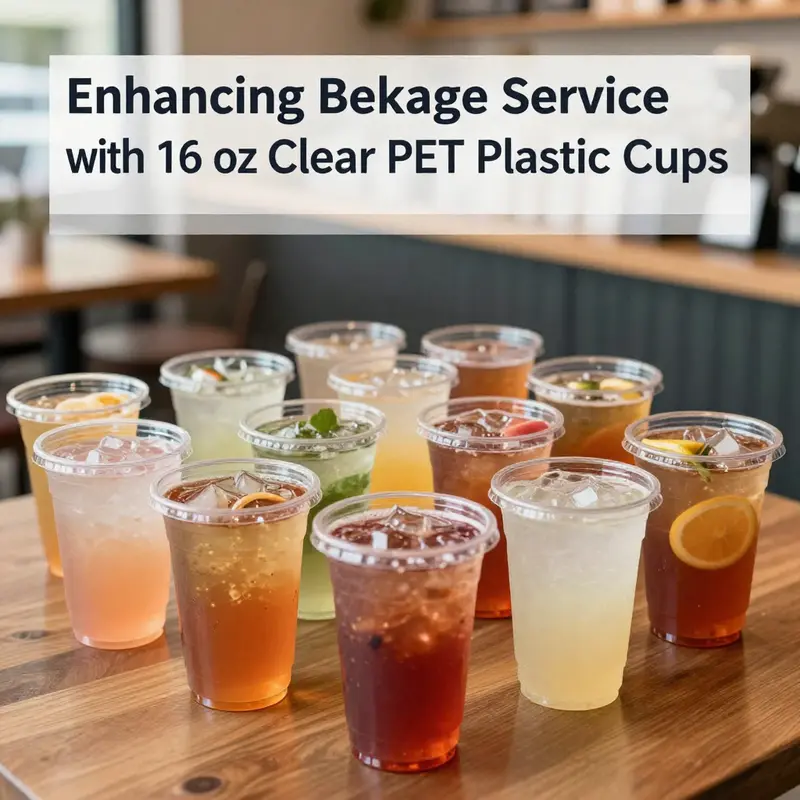
In the bustling realms of foodservice, the choice of serving materials can significantly impact customer satisfaction, brand identity, and operational efficiency. 16 oz clear PET plastic cups have become a go-to solution for bubble tea shops, beverage chains, restaurants, food trucks, catering services, event planners, and corporate procurement teams. Their exceptional clarity enables customers to appreciate the vibrant colors of drinks and desserts while ensuring durability and functionality. This article delves into the robust advantages of these cups, covering their durability and functionality, economic benefits, and environmental impact—offering insights that help businesses make informed decisions about their disposable tableware.
null
null
Crystal Economics: How 16 oz Clear PET Cups Shape Costs, Scale, and Customer Experience
The 16 oz clear PET cup sits at the intersection of practicality and perception in today’s foodservice landscape. Its clarity, light weight, and shatter resistance make it a go-to choice for servers and guests alike. In fast-paced settings, these cups become economic levers that influence procurement, storage, branding, and waste management. When a cafe fills a cup with iced coffee or a vendor serves dozens of beverages, the choice quietly affects the bottom line. The economic value rests not only in the per unit cost, but in the compound effect of supply chain efficiency, branding opportunities, and the ease with which cups integrate into a busy service model.
The first major advantage is scale. In high-volume environments the per unit cost falls with quantity as fixed setup costs and tooling are spread over many units. Bulk orders reduce labor for handling, inventory churn, and waste per event. The cups’ light weight also lowers freight charges and energy used per shipment. With a high-throughput program, savings compound over time, contributing to operating margins.
Beyond unit price, the supply ecosystem matters. Global wholesalers and factory-direct suppliers offer rim styles, stacking efficiency, and lid compatibility to minimize spills while preserving freshness. Bulk pricing provides budgeting predictability for menu planning and seasonal promotions. A key dimension is customization. Logo imprinting or color matching is amortized across thousands of cups, lowering per cup branding costs while reinforcing brand identity at the moment of purchase. Volume-driven tiered pricing and bundled services help operators balance product quality, customization, and logistics.
From sourcing to end-of-life, PET cups live in a global manufacturing footprint designed for cost efficiency and reliable delivery. A competitive base of producers keeps unit costs down while maintaining quality, and multiple regions offer similar performance. The material’s recyclability in many markets adds regulatory predictability and aligns with sustainability goals.
Branding and messaging extend beyond the price tag. A cup acts as a moving billboard during purchase and transport, influencing perceived value and customer recall. When paired with a cohesive branding program, cups can elevate the overall guest experience and support repeat visits.
Operationally, disposable cups reduce warewashing needs, support fast service during peak periods, and improve guest flow. The result is improved labor efficiency and lower water use, with outdoor events or bar environments benefiting most from this dynamic.
Regulatory and sustainability considerations are increasingly shaping packaging economics. Recyclability expectations, waste diversion incentives, and CSR reporting can drive long-term savings and improve investor and customer perception. A recyclable PET cup aligns cost discipline with responsible packaging and a clear value proposition.
In practice, decision makers compare unit price at scale, customization costs, lead times, and compatibility with lids and stacking. They account for total landed costs and sustainability metrics. The goal is to achieve a favorable total cost of ownership while maintaining brand integrity and guest satisfaction.
For operators exploring options, samples with shipping costs covered lower the barrier to trial, allowing teams to validate performance and print quality before large-scale purchases. This approach blends cost-conscious procurement with quality assurance and risk management.
The overarching takeaway is that the 16 oz clear PET cup is a strategic asset that influences costs, supply resilience, branding, and customer perception. Its value accrues through scale, branding opportunities, operational efficiency, and sustainability alignment.
For ideas on event-focused branding and themed-service strategies, consider resources that discuss disposable packaging options and branding potential. Internal link for bundled branding and packaging ideas: custom takeaway packaging supplies. External resource: a detailed examination of PET cup materials and market dynamics is available in industry catalogs. External resource: https://www.alibaba.com/product-detail/16oz-PLA-Clear-Plastic-Disposable-Cold_1600457938222.html?spm=a2700.15918166.0.0.7c3b1e9dYKvLHw
Balancing Use and Responsibility: The Environmental Reality of 16 oz Clear PET Plastic Cups
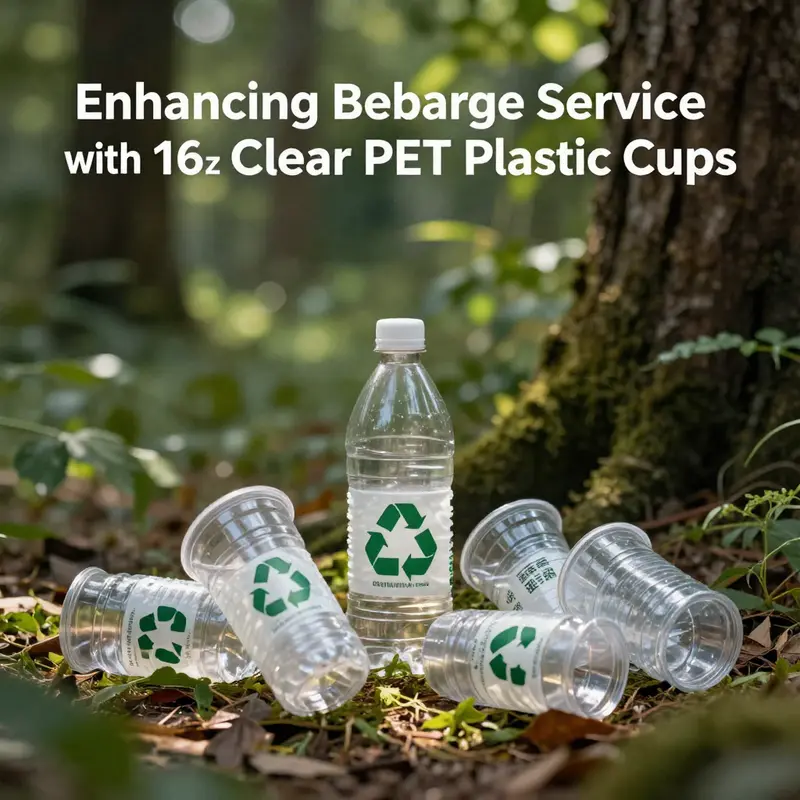
Understanding the environmental footprint of 16 oz clear PET plastic cups requires a clear view of their life cycle, the systems that handle them after use, and the practical choices available to businesses and consumers. These cups excel at clarity, light weight, and low cost. They perform reliably for cold beverages and single-serve desserts. But their benefits come with externalities that must be managed. A careful, integrated narrative helps explain where environmental risks arise, which mitigation strategies matter most, and how organizations can make meaningful improvements without sacrificing service quality.
From the moment a 16 oz PET cup is manufactured, environmental impacts are set into motion. The raw material, polyethylene terephthalate, is derived from petroleum feedstocks. Its production consumes energy and emits greenhouse gases, though PET is comparatively efficient among many plastics because it is strong at thin gauges and thus uses less material per unit volume. The cup’s clear appearance often requires a high degree of polymer purity and processing that adds incremental energy use. Yet the product’s light weight lowers transport emissions compared with heavier alternatives. The first tension becomes clear: PET cups reduce shipping energy but still embed fossil-carbon emissions from feedstock extraction and polymer production.
The more significant environmental consequence emerges after use. PET is technically recyclable and can be reclaimed into fibers, containers, or other products, which conserves material and reduces demand for virgin feedstocks. In practice, recycling relies on an organized infrastructure: collection, sorting, cleaning, and reprocessing. Contamination — from beverage residues, food particles, or non-compatible materials — often prevents cups from entering the recycling stream. Mixed-material items (for example, lined paper cups or cups with non-PET lids) create separation challenges. Many communities have robust bottle recycling systems but less capacity for single-use PET cups, especially in on-site waste streams like events, stadiums, and food courts where mixed waste and short dwell times increase contamination risk.
Real-world recycling rates show this gap starkly. Even where PET bottles achieve modest recycling percentages, cup-specific recovery is typically lower. The reason is operational more than chemical: a clear cup soiled with coffee, smoothie residue, or sauce is often diverted to landfill by automated sorters or manual handlers. That shift transforms a recyclable material into persistent waste. PET will not biodegrade quickly in natural environments; instead, it fragments over centuries, contributing to microplastic load in soils, waterways, and marine systems. Reducing that leakage is a priority for sustainability.
Another layer of complexity lies in the energy and emissions involved in recycling. Mechanical recycling of PET uses energy, water, and processing chemicals. When done well, it avoids the greater emissions associated with producing virgin PET. However, not all recycled PET (rPET) is equal: downcycling to non-food applications often occurs when food-contact safety or material quality is compromised, limiting closed-loop potential for beverage containers. Chemical recycling technologies promise higher-quality rPET from mixed or degraded feedstocks, but these processes are still scaling and require careful life-cycle accounting to ensure environmental benefits.
Given these realities, many businesses and municipalities consider alternatives. One common substitute is PLA (polylactic acid), a plant-based polymer marketed as compostable. PLA can be attractive: it is derived from renewable resources and can break down under industrial composting conditions. Yet the label “biodegradable” is conditional. PLA requires high-temperature, controlled composting to decompose efficiently. Where industrial composting facilities do not exist — which is the norm in much of the world — PLA will persist much like PET. Its agricultural origin also raises questions about land use, fertilizer and pesticide inputs, and the greenhouse gas profile of crop production and polymer conversion. A direct swap from PET to PLA does not automatically yield a smaller environmental footprint.
Reusable systems present a different calculus. Reusable cups require washing, transport, and logistics that consume water, energy, and labor. The environmental break-even point depends on the number of reuses, the washing method, the transport distances, and the system’s return rate. In many catering and café contexts, a well-run reusable program reduces waste footprints, but it also imposes operational complexity and capital needs. For event planners and quick-service operations, hybrid approaches — reusable where feasible and high-recovery single-use where necessary — often offer the best overall outcome.
Certification and labeling can guide better choices but must be read with care. Some cups are sold with claims or badges suggesting environmental credence. Certifications that apply to compostable materials, such as those from certain institutes, relate specifically to compostable polymers under defined conditions. Standard PET does not meet compostability criteria. Buying decisions informed by accurate certification checks prevent greenwashing and align procurement with achievable end-of-life management.
There are practical design and procurement actions that can materially reduce negative outcomes without radical operational upheaval. First, specifying PET cups that are mono-material and free of additives or multi-laminates increases recyclability. A clear PET cup with a matching clear PET lid simplifies sorting and processing. Second, buying cups with a high post-consumer recycled content incentivizes demand for rPET and supports markets that pull collected material back into production. Third, choosing suppliers that provide take-back or closed-loop programs can make collection more reliable for businesses with large, centralized waste streams. These choices lower the chance that a cup becomes waste and improve the circularity of the material.
Operational controls also matter. On-site waste handling — whether in cafes, convenience stores, or event venues — should aim to keep wet waste separate from dry recyclable streams. Placing clearly labeled bins for “containers only” next to beverage points encourages cleaner capture. Training staff at high-volume locations to remove liners, napkins, or straws from recycling streams can prevent contamination. For transient settings like outdoor festivals, deployable systems that combine dedicated cup collection points and on-site rinsing stations can dramatically improve recovery rates. These interventions reduce the proportion of cups sent to landfill or incineration.
Consumer-facing communication has a role too. Clear, concise signage that tells people where to dispose of their cup and why matters. Many end-users assume that all clear plastic is recyclable; explaining how to prepare a cup for recycling (for example, emptying liquids and removing food scraps) raises compliance. Moreover, incentivizing returns — a small deposit or loyalty credit for returning a cup — can nudge behavior toward higher recovery.
Policy levers are increasingly shaping how single-use items are managed. Some jurisdictions impose extended producer responsibility (EPR) schemes that require manufacturers and retailers to finance collection and recycling programs. Others have banned certain single-use items outright or restricted their use in public venues. These measures shift costs and planning responsibilities upstream, incentivizing manufacturers to design for recyclability and motivate wider adoption of reusable systems. Businesses that monitor regulatory trends and engage proactively can avoid last-minute compliance costs and can often secure better pricing by working with suppliers who optimize for evolving rules.
On the technology front, innovation is lowering the barriers to better outcomes. Improved sorting technologies increase the capture of PET from mixed waste streams. Advanced recycling methods can reclaim polymer from contaminated or mixed materials. Bioplastic research is exploring feedstocks and chemistries that lower the agricultural burden and increase degradation in a wider range of environments. Meanwhile, digital tools help manage reusable cup logistics, tracking pieces and predicting return flows to reduce loss. Businesses should assess these innovations with a focus on demonstrated benefits and realistic deployment timelines.
Cost considerations often dominate procurement. PET cups are inexpensive on a per-unit basis, and that affordability explains their ubiquity. But unit price alone omits end-of-life costs: disposal fees, litter management, and reputational risk. When calculating true cost, include these externalities. Lifecycle cost accounting that captures collection and processing expenses, as well as potential savings from reduced virgin material use, can reveal that small investments in higher-quality, recyclable cups or in collection systems pay off over time.
When an organization decides to improve the sustainability profile of their cup usage, a phased approach works best. Start with a baseline: measure cup volumes, current disposal pathways, contamination rates, and costs. Pilot targeted interventions such as mono-material cup specifications, improved on-site bins, or a return-for-reuse program at a few locations. Monitor capture rates and customer feedback. Scale what works. These pilots provide real data to refine supplier contracts and operational processes.
Supply chain choices can also lock in improvements. Working with verified manufacturers who offer OEM or ODM services allows customization for recyclability and branding without sacrificing collection potential. Local or regional manufacturing reduces transport emissions and shortens lead times. Asking suppliers about their sourcing of rPET and their environmental management systems ensures alignment with a broader sustainability strategy.
A candid assessment acknowledges trade-offs. Switching to compostable cups may reduce landfill mass where industrial composting exists, but offers limited advantage elsewhere. Investing in reusable systems reduces single-use waste but requires operational commitments and user compliance. Continuing with PET but improving recovery can be pragmatic in contexts where return logistics and recycling infrastructure are strong. No single path suits all use cases.
In practice, a blended strategy often produces the best environmental balance. Use reusable solutions where daily flows make logistics simple and customer behavior favors returns. For takeout and large events, specify mono-material PET cups and matched lids, increase collection infrastructure, and contract with reputable recyclers. Consider PLA or other compostable options only where industrial composting is accessible and the supply chain has been validated. Always prioritize design for end-of-life and keep transparent reporting on volumes and outcomes.
Finally, businesses that act publicly and authentically on cup sustainability reap intangible benefits. Clear reporting on cup volumes, recovery rates, and emissions reductions builds trust with customers and regulators. Partnering with waste service providers and local governments amplifies impact and can unlock joint investments in infrastructure. When sustainability steps are communicated effectively, customers often respond positively and may even be willing to pay a small premium for reduced environmental harm.
For organizations seeking practical tools, start with the established guidance from national authorities on waste and recycling. These resources provide up-to-date statistics and policy frameworks that inform local choices. For example, the U.S. Environmental Protection Agency maintains comprehensive materials on municipal solid waste and recycling that can help align procurement and disposal practices with regulatory expectations and best practices: https://www.epa.gov/epahome/waste-and-recycling.
If you operate a venue or run events and want a simple product reference to complement improved waste handling, consider pairing PET cup procurement with complementary, recyclable disposables to reduce mixed-material contamination. A readily available product example is the disposable clear plastic cup product page, which illustrates how mono-material designs and clear lids can help simplify sorting and improve recovery.
Taken together, the environmental story of 16 oz clear PET plastic cups is not binary. These items are not inherently good or bad. Their impact depends on design choices, collection systems, consumer behavior, and policy frameworks. Thoughtful procurement, smarter on-site waste management, and selective adoption of alternatives or reusables can reduce harm while preserving the practical benefits that make PET cups so widely used.
Adopting a pragmatic, evidence-based approach yields the best outcome. Start with data. Prioritize mono-material design and recycled content. Improve capture at the point of disposal. Pilot reusables where feasible. And align product claims with the actual end-of-life pathways available in your operating regions. Over time, incremental improvements across procurement, operations, and customer engagement add up. That cumulative progress, more than a single dramatic change, will determine whether PET cups continue to serve customers responsibly or become another source of persistent pollution.
This chapter follows through on how organizations can weigh the practical advantages of 16 oz clear PET plastic cups against the imperative to limit long-term environmental damage. It emphasizes actionable steps grounded in real-world constraints and highlights the systems that must work together to close material loops. The path forward favors transparency, deliberate design, and the willingness to invest in collection and recovery — measures that together make single-use materials far less harmful.
Final thoughts
In conclusion, the 16 oz clear PET plastic cups represent a versatile and sensible choice for those in the foodservice industry. From enhancing customer experience with their transparency and durability to providing significant economic benefits and aligning with sustainability goals, these cups stand out as a premier option. Understanding their value can aid bubble tea shops, restaurants, food trucks, and catering services in selecting the right disposable packaging that meets both operational needs and customer expectations.