
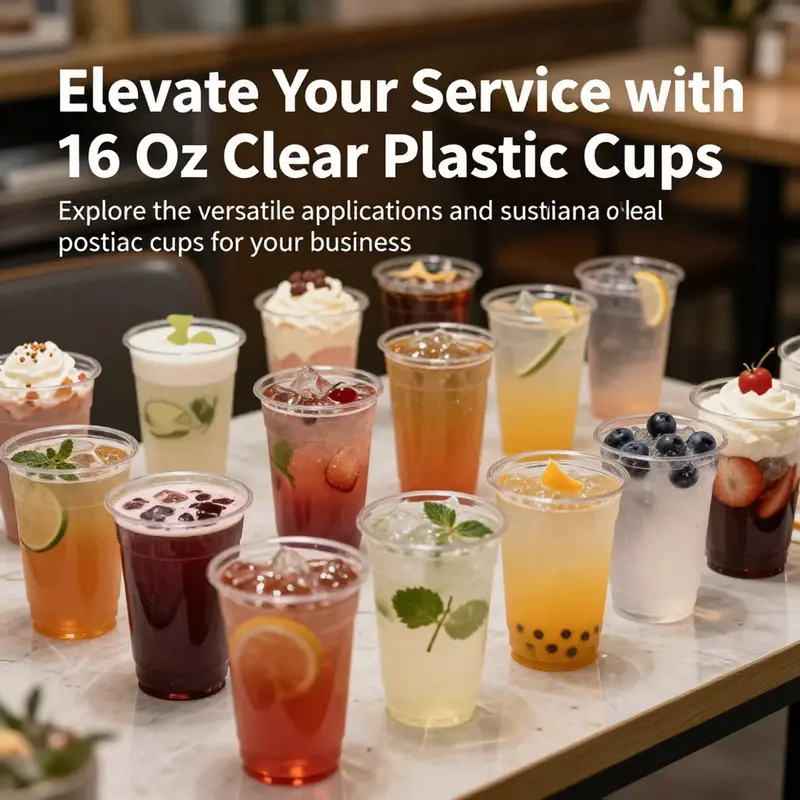
Clear plastic cups have become a staple in the foodservice industry, particularly in bubble tea shops and beverage chains. Their eye-catching transparency and robust construction make them ideal for presenting delightful beverages while ensuring customer satisfaction. Understanding the material composition, applications across various foodservice sectors, environmental impact, and market trends will empower businesses to make informed choices. Each of these facets is crucial in enhancing customer experience while aligning with modern sustainability goals.
Clarity Without Compromise: The Material DNA of 16 oz Clear Plastic Cups
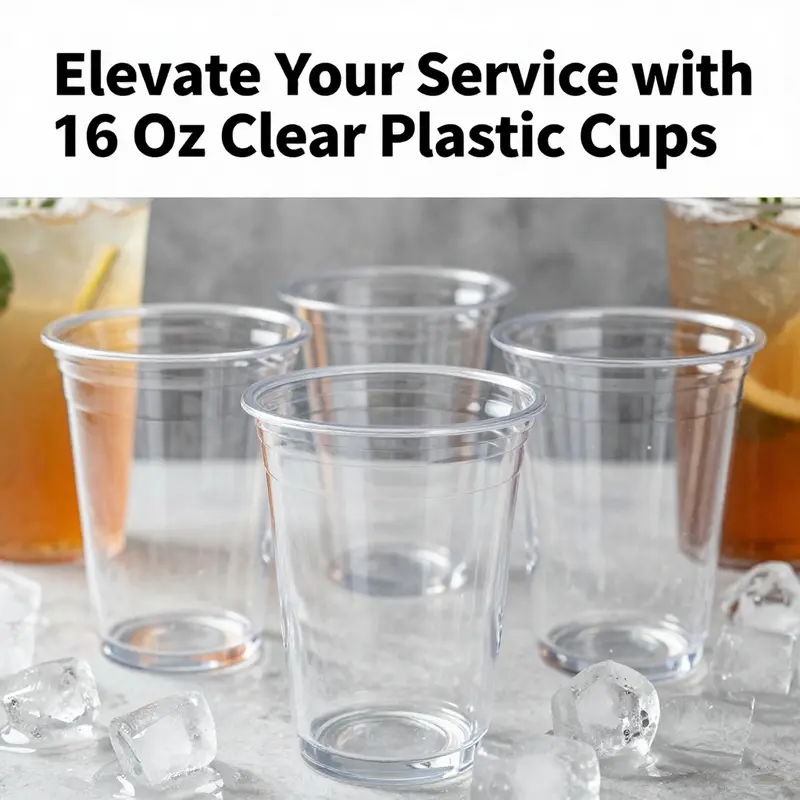
The transparent 16 oz cup is a familiar workhorse in cafes, catering events, and quick-service outlets. Its appeal rests first on the unspoken promise of clarity: you can see the beverage or dessert inside, gauge portion size, and trust the contents without peeking at a label. But the glassy exterior is only the surface of a much deeper story. The material composition of these cups—principally PET, PP, PS, and increasingly PLA in some eco-conscious variants—defines how well they perform from the moment a drink is poured until the last sip is taken. Each resin offers a distinct balance of clarity, strength, heat tolerance, and end-of-life options, and the choice among them is rarely about aesthetics alone. It is a careful calibration of function, safety, and sustainability, tailored to the beverage, service model, and environment in which the cup will live its short life. In practice, that means the material choice affects not just how a drink looks and feels but how it travels through a whole system of production, service, and disposal.
Polyethylene terephthalate, better known by its acronym PET, is by far the most common backbone for 16 oz clear cups. PET’s claim to fame is its combination of high clarity and rigidity. A cup made from food-grade PET tends to look like a solid pane of glass without the weight, and it resists cracking even when handled roughly by busy staff or hurried customers. Clarity remains one of PET’s strongest selling points. It creates a visual profile for cold drinks—fizzy beverages, iced tea, fruit slushes, and milk-based cold beverages alike—where transparency helps customers assess color, texture, and portion. PET’s barrier properties also help keep a cold drink from absorbing flavors from the outer environment, contributing to a consistent tasting experience across servings. For producers and retailers, PET cups are a reliable baseline that supports branding through high-visibility labeling schemes, including in-mold labeling or surface decoration via screen printing. The material’s toughness also translates into a level of crack resistance that reduces breakage during transport and stacking, a practical advantage in busy service contexts.
Yet PET is not a universal remedy. While it performs admirably with cold and temperate beverages, its performance under heat is more constrained. When hot liquids are introduced, PET cups can deform if the temperature exceeds the material’s design envelope. This makes PET less ideal for beverages that arrive steaming or near-boiling and then stay hot for the duration of service. In many markets, the remedy is a design adaptation: adding thicker walls, choosing a PET variant engineered for heat resistance, or pairing the cup with a compatible lid that minimizes direct heat transfer. The lid itself becomes part of the thermal story. If a cup is to carry hot coffee or tea, the overall system must be engineered so that the cup plus lid remains stable and leak-free, while still delivering the clean, clear appearance customers expect.
Polypropylene, or PP, occupies the next tier of thermal resilience. PP cups are notably forgiving of warm or hot beverages, and their utility encompasses cold drinks as well. The material’s heat tolerance makes PP a common choice for beverage programs that blur the line between cold and hot offerings, such as aguas frescas, hot chocolate drinks, or milk-based beverages that shift from cold to warm during service. PP is also BPA-free, a point of reassurance for many customers, even though public understanding of BPA has evolved to emphasize overall exposure risk rather than single chemicals. In terms of appearance, PP cups can be nearly as clear as PET, though some PP formulations skew slightly toward translucency. The trade-off is a durable, chemical-resistant surface that stands up to gentle dishwashing in some reuse-oriented programs, and to the thermal surprise of a drink that may cool or heat as it travels through the service cycle. PP’s abrasion resistance helps preserve the cup’s surface against scratches and scuffs that would otherwise dull its optical clarity over time.
Polystyrene, PS, also appears in the landscape of clear cups, though its use is increasingly scrutinized from an environmental and end-of-life perspective. PS can offer a perfectly crisp, glass-like transparency that makes the contents appear vivid and appealing. However, PS tends to be brittle and less forgiving under mechanical stress, which can translate into more breaks in transport or handling. From a heat standpoint, PS is not the strongest option for hot liquids; exposure to heat can lead to deformation or dissolution of the structural integrity, depending on the specific formulation. Another consideration is recyclability. In many regions, PS is not as widely collected or recycled as PET or PP, and some programs limit its acceptance to specific streams. For brands and operations prioritizing a streamlined waste-management plan, PS often represents a trade-off between optical perfection and end-of-life convenience.
A newer and increasingly discussed option is PLA, or polylactic acid, a biodegradable and compostable alternative derived from renewable resources such as corn starch. PLA can deliver a level of clarity that approaches PET and PP, and it aligns with sustainability goals that aim to reduce non-renewable resource use. But PLA’s story is not without caveats. Its compostability depends on the end-of-life infrastructure present in a given market. Industrial composting facilities, rather than home composting, typically handle PLA; without the right composting channels, a PLA cup may not break down as intended in a practical timeframe. Moreover, PLA can be more brittle and less heat-tolerant than PET or PP, which can influence performance with hot beverages or during extended service windows. For brands that emphasize compostable packaging, PLA offers an attractive narrative, but the chain of custody must be clear, certified, and supported by appropriate composting facilities to deliver the promised environmental benefits.
The resulting picture is one of complementary trade-offs rather than a single, universal solution. The 16 oz format sits at a crossroad where the material choice interacts with the beverage type, service context, and consumer expectations. A café that serves primarily cold drinks may favor PET for its stiffness and superior clarity, combined with a lid designed for splash protection and leak resistance. A fast-casual restaurant that offers both hot and cold beverages might lean toward PP for its broader heat tolerance, paired with a lid that minimizes heat loss while preserving the cup’s visual appeal. An event planner focusing on sustainability might explore PLA options, provided there is infrastructure to support industrial composting and a clear end-of-life path for attendees. The layering of these considerations is what makes the material composition of 16 oz clear cups a nuanced decision rather than a straightforward one-size-fits-all choice.
Beyond the resin itself, the design ecosystem surrounding the cup reinforces its material identity. The 16 oz standard capacity—roughly 473 milliliters—occupies a sweet spot in the service repertoire. It suits a range of beverages, from sweetened coffees and milk-based drinks to fruit-based iced beverages and desserts served in a cup, such as soft-serve or shaved ice with toppings. The practical realities of serving in a fast-paced setting demand compatibility with lids, and the market has responded with a spectrum of lid designs: vented, splash-proof, and leak-resistant variants. Some lids accommodate sipping directly through a small opening, while others rely on a gap that can be sealed with a straw. The interaction between cup material and lid design is not decorative; it determines whether the drink can travel securely from the server’s station to a customer’s table or out the door with minimal risk of leakage. When manufacturers and retailers consider branding, the cup’s material becomes a blank canvas for surface decoration. In-mold labeling (IML) and screen printing offer reliable ways to imprint logos, color, and messaging without compromising the cup’s clarity or structural integrity. Yet branding must be balanced against clarity; excessive decoration near the rim or on the exterior wall can introduce visual distractions that obscure the beverage’s appearance and undermine the very reason customers gravitate toward transparent packaging.
Recycling and end-of-life considerations form another dimension of the material narrative. PET and PP cups benefit from broad recycling streams in many regions, with PET often singled out for its high recycling rate and the clarity that recycling can preserve across cycles. PS, although clear and crisp, faces more variable recycling acceptance, depending on municipal programs. PLA’s environmental promise hinges on the availability of industrial composting facilities; without appropriate infrastructure, the environmental advantages can be diminished. For businesses aiming to communicate sustainability to customers, it is essential to align material choices with local waste-management capabilities and to clearly label end-of-life guidance on packaging. In practice, this means not only selecting materials with robust recycling or composting pathways but also educating staff and customers about disposal options. The dialogue around material composition thus extends from the supplier’s facility to the consumer’s hands, underscoring that the journey of a cup is as much about systems as it is about resin chemistry.
From a safety and regulatory perspective, food-contact materials must meet strict expectations for safety, migration of additives, and compatibility with specific beverages. Manufacturers typically certify their cups to food-contact standards, ensuring that adhesives, coatings, and any surface treatments are appropriate for the intended use. This is particularly pertinent when a cup is designed for long service life in a self-serve environment or when it is used for beverages with particular acidity or temperature profiles. The internal structure—wall thickness, surface smoothness, and absence of defects—also influences user perception of quality. A cup that feels sturdy and smooth in the hand reinforces consumer confidence in the product’s safety and reliability. For operators, this emphasizes the importance of selecting suppliers who can provide clear technical specifications, including material composition, heat tolerance, and compatibility with lids and branding options. In the broader context of the article, the material composition is not merely a technical footnote; it is a decision that shapes quality, safety, and the customer experience across the entire lifecycle of the cup.
As the industry evolves, so too does the creative liability of designers and manufacturers. The push toward clearer, lighter, and more recyclable cups has accelerated in recent years, with a growing emphasis on reducing plastic waste without sacrificing the performance customers expect. In some markets, this has translated into the exploration of layered structures or blends that optimize optical clarity while delivering enhanced heat resistance or improved end-of-life outcomes. It has also spurred interest in biobased resins and alternatives that attempt to reconcile the demand for recyclability with the drive for compostability. The result is a dynamic landscape where the material makeup of a 16 oz clear cup is not static. It is in constant dialogue with performance requirements, environmental goals, and the practical realities of high-volume foodservice and event environments. The clarity customers seek remains a constant, but the path to achieving that clarity keeps shifting as materials science, waste-management infrastructure, and consumer expectations evolve.
To illustrate the practical implications of these material choices, consider how a given cup performs in typical service contexts. PET cups offer a crisp, premium look for cold beverages and desserts, delivering a sense of purity that enhances product presentation. PP cups, with their better heat tolerance, provide more versatility for beverages that transition between warm and cold states or experience longer hold times in line queues. PS cups can deliver that exquisite crystal-like appearance, but their environmental and heat-handling drawbacks may limit their suitability in many programs. PLA cups, while appealing for sustainability messaging, require careful logistics to ensure they reach the appropriate composting streams. The decision matrix—clarity, heat tolerance, recyclability, and life-cycle considerations—plays out differently across venues, whether a coffee shop, a catering operation, or a pop-up event. It is this matrix that underpins a chapter like this, linking material science to everyday experiences in a way that guides responsible choices for vendors and brands without sacrificing the consumer’s visual or tactile satisfaction.
For readers who want to see how these cups perform in a real-world setting, consider the disposable clear plastic cup intended for outdoor use. The design is optimized for portability and resistance to the rigors of outdoor events, from sunny picnics to evening gatherings. The cup’s material selection, wall thickness, and lid compatibility work in concert to prevent leaks, minimize heat transfer, and maintain an appealing appearance across abundance of usage scenarios. Such practical examples underscore the central theme: material composition is the backbone of a 16 oz clear cup’s performance profile, shaping how it looks, feels, behaves, and ultimately ends its life in the waste stream.
In synthesizing these threads, the central takeaway is that the material DNA of a 16 oz clear cup is a balancing act. It must deliver optical clarity that showcases the beverage, tolerate the thermal demands of the service scenario, support reliable packaging with lids and branding, and align with the local end-of-life infrastructure. Each resin—PET, PP, PS, and PLA—offers distinct strengths and limitations. The best choice depends on the beverage portfolio, the service model, and the sustainability commitments of the operation. As readers move forward through the article, they will see how these material decisions ripple outward, influencing procurement strategies, customer communication, and environmental outcomes. The chapter, in this sense, serves as a bridge between the chemistry of plastics and the practical realities of running a beverage program in a world where clarity is prized, but responsibility is required.
External resource: For a broader look at material options and supplier considerations, see the listed external reference from a major commercial platform that hosts a range of 16 oz cups in PET, PP, and other materials. This resource provides context on specifications, pricing, and end-of-life considerations that complement the discussion here. https://www.alibaba.com/product-detail/FUN+500ml-16oz-PP-Cups-clear-disposable_1600289768677.html
Internal link reference: To explore a real-world example of outdoor-use clear cups and how their material properties support portability and leakage prevention, you can review a product page dedicated to disposable clear plastic cups designed for outdoor events. disposable clear plastic cup for outdoor use.
Seeing Through Service: The Subtle Power of 16 oz Clear Plastic Cups in Foodservice
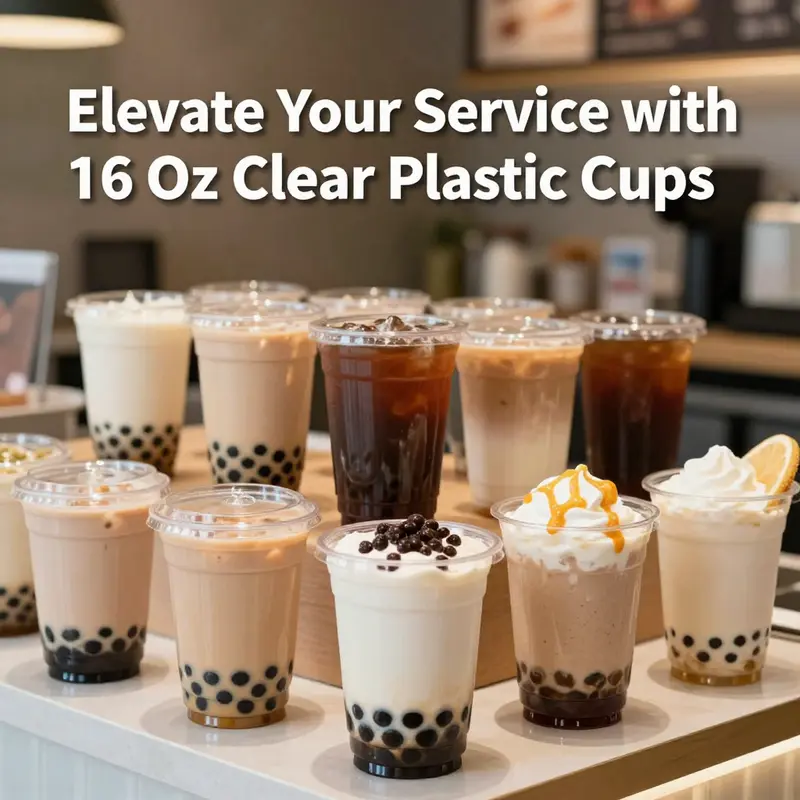
In the rhythm of a modern foodservice operation, the 16 oz clear plastic cup is more than a vessel. It is a silent ambassador for cleanliness, quality, and efficiency. The cup’s transparency invites customers to see the drink as it is meant to appear—vivid, fresh, and inviting. This visual access matters as much as the taste itself. When a beverage sits behind a clear wall, the consumer’s eye travels from the color and texture of the drink to the idea of care that went into its preparation. The cup becomes a stage prop in the drama of a meal or a refreshment, letting the color of a smoothie, the swirl of a milk tea, or the gradient of a layered iced coffee do the talking. In fast-paced settings, this transparency becomes a strategic asset: it builds trust at a glance, reduces ambiguity, and accelerates decision-making at the point of sale. A customer can assess portion size, visual consistency, and even the presence of toppings or cream without lifting a lid. In this sense the 16 oz cup channels a simple virtue with remarkable impact—clarity, both literal and figurative, in the service encounter.
Layered into that visual clarity are the material choices behind the cup. Commonly manufactured from PET, PP, or PS, these materials each bring a handful of trade-offs to the table. PET is known for its crystalline clarity, a high gloss that makes beverages appear bright and appealing. It also offers robust strength for cold drinks and, with the right design, respectable resistance to minor heat exposure during handling. PP adds flexibility and better heat tolerance, often with a slightly warmer touch in feel and a tad more forgiving performance when hot beverages are involved, though not all PP formulations are created equal for high-temperature use. PS cups tend to deliver sharp clarity and a stiff structure, but they can be more brittle under stress and are sometimes less forgiving in a busy kitchen where rough handling and rapid turnover are common. In practice, choosing among these polymers is about balancing clarity with durability, temperature tolerance, and recyclability. For the foodservice operator, that means selecting a cup that not only showcases the drink but also maintains shape under the daily pressures of service, from crowded lunch lines to the back-alley delivery handoffs that mark a busy shift.
Design matters as much as material. The standard 16 oz cup commonly features a wide top opening, a smooth cylindrical silhouette, and a lip that feels comfortable against the palate. This geometry simplifies filling, drinking, and quick rinsing between uses. Dome lids, where used, play a crucial role in preventing spills during transport, which is especially valuable for outdoor events and catering where customers must traverse crowded aisles or park through the parking lot. The lid’s fit is not merely a convenience; it preserves the integrity of the drink from the moment it leaves the blender to the moment it reaches the customer’s lips. In a high-volume setting, such as a festival or a busy cafe, these seemingly small design choices compound, reducing waste, decreasing spill risks, and accelerating turnover without compromising the drinking experience.
Beyond the practicalities, the clear cup is a canvas for branding and messaging. The ability to see through the cup allows brands to pair their beverages with color and garnish, creating a visually cohesive product story. This is why customization options—screen printing, labeling, and in-mold labeling—are especially valuable. A logo or color accent on the cup can align with a shop’s identity, reinforcing recognition as customers handle the cup across the service path. For beverage-driven concepts, where the color of the drink communicates mood and flavor, the cup’s transparency magnifies the impact of color, layering, and texture, whether a vibrant fruit puree, a velvety milk foam, or a translucent ice shard suspended in the liquid. The cup thus morphs into an active participant in branding, not merely a disposable receptacle, and that elevates its importance in the chain from supplier to consumer.
In the practical theater of fast-paced venues, the 16 oz size has established itself as a reliable standard for cold drinks, smoothies, and iced beverages. To the extent that a cafe or quick-service restaurant wants to maintain consistent portion control, the 473 ml measurement becomes a familiar reference point for baristas and servers alike. The identical capacity simplifies inventory forecasting, batch preparation, and customer expectation. It also aligns neatly with standard cups used in catering contexts, where the same vessel must perform across indoor service counters, outdoor pop-up stalls, and take-away windows. That uniformity reduces the cognitive load on staff, who can focus on the quality of the drink rather than worrying about mismatched serveware. In this way, the 16 oz clear cup is a logistical anchor as much as a consumer-facing instrument of presentation.
The environmental dimension of this cup choice is increasingly central to decision making. Eco-conscious operators weigh recyclability and the availability of compostable alternatives. PET and other clear plastics carry a recycling footprint that depends on local infrastructure. In markets where recycling streams are robust, the clear cup can be diverted from landfills and reintroduced into the manufacturing cycle. In some cases, manufacturers are experimenting with compostable or bioplastic variants, offering biodegradable options that align with sustainability goals. Certifications, such as those indicating compostability in industrial facilities, help operators communicate environmental responsibility to customers who increasingly expect transparency about end-of-life outcomes. The environmental conversation does not end with disposal; it also informs the lifecycle of the cup’s supply chain, encouraging producers to optimize resin usage, reduce weight, and improve transport efficiency, all of which ripple through to the menu’s price and the consumer’s experience.
As a practical matter, high-volume operations must also consider the ease of waste management and the speed of turnover. A disposable cup provides a clean break between customers and the cleanup cycle, a factor that matters as much as the beverage’s taste. Stacking ability, compatibility with lids, and a predictable footprint help minimize storage space and simplify warewashing or post-consumer handling. In many venues, clear cups are paired with lids that clamp securely, creating a seal that supports on-the-go consumption. This combination is particularly advantageous for outdoor events, where weather fluctuations and crowd movement increase the risk of spills and mess. The dome lid’s shape and the cup’s lip design work together to keep drinks intact when carried through crowds, around corners, or along windy promenades. The operational implications are straightforward: better containment, faster service, and a more reliable guest experience, which in turn translates into repeat visits and positive word-of-mouth in a competitive market.
Sourcing and supply considerations are the practical gears that turn these principles into everyday outcomes. Operators seeking reliability look for cups that meet standard dimensions, offer consistent clarity, and resist warping under expected temperature ranges. Wholesale and bulk options help reduce unit costs, supporting competitive pricing for beverages that rely on volume to drive margins. The sourcing landscape for 16 oz clear cups reflects a broad ecosystem of resin types, lid styles, and customization pathways. For buyers, the key is to verify that the cups are food-contact safe, meet local regulatory requirements, and are compatible with the intended beverage line—in particular, the temperature spectrum of cold drinks versus hot beverages that might be in play during seasonal spikes. In markets where sustainability is emphasized, requests for recyclable or compostable variants can influence supplier choice and pricing, guiding procurement toward options that align with an operator’s environmental commitments.
In this web of considerations, a single clear cup becomes a linchpin in the customer’s perception of quality, a facilitator of efficient service, and a tangible expression of a brand’s values. The cup’s ability to convey freshness, to support a rapid dining or take-out experience, and to align with a company’s sustainability narrative gives it a quiet but powerful role in the overall guest journey. The choice of cup interacts with other packaging decisions—how the drink is built in the cup, how it is presented at the point of sale, and how it travels to the customer’s hands. The result is a cohesive service experience in which the cup, though easily overlooked in the moment, quietly reinforces the message that the beverage inside is handled with care, attention, and respect for the guest.
For operators seeking practical, immediately actionable cues, the path forward is guided by alignment of cup material with beverage type, lid compatibility with service style, and an eye toward end-of-life considerations. When the drink is meant to be seen, the crystal clarity of the cup should not be compromised by waviness, clouding, or brittle edges that threaten a smooth service. Ensuring that lids seal well and that staff can assemble a drink in a manner that reduces spills will pay dividends in customer satisfaction and staff morale. Customization options can further distinguish a brand in a crowded field, turning an ordinary cup into a tangible signal of identity and care. And as sustainability practices mature, the capacity to transition toward recyclable or compostable variants without sacrificing performance becomes a differentiator that resonates with informed consumers.
In summary, the 16 oz clear plastic cup operates at the intersection of form, function, and brand storytelling. Its transparency makes the drink the focal point while the cup’s engineering handles the realities of busy service environments. It is a practical tool that enables quick service, helps manage waste streams, and supports marketing and sustainability goals. For those planning weddings, festivals, pop-up markets, or the daily rhythms of a bustling cafe, the cup’s role is both simple and essential: a vessel that carries not just a beverage, but a message about quality, efficiency, and conscience. As the foodservice landscape continues to evolve, the 16 oz clear cup remains a reliable companion—an unobtrusive but indispensable instrument in the craft of hospitality.
If you’re exploring everyday choices for outdoor or high-volume service, consider how a disposable clear plastic cup specifically designed for on-the-go occasions can complement your broader packaging strategy. For a practical example of the type of product often chosen for such settings, you might review options that emphasize clear visibility, leak resistance, and compatibility with a range of lids and branding techniques. This approach helps ensure that the cup you select supports not just the drink, but the entire service flow—from prep to pickup to presentation. For more on the types of disposable clear cups used in everyday outdoor service, see the product page focused on outdoor-clear plastic cups designed for parties and events. disposable-clear-plastic-cup-outdoor-picnic-pet-cup-drinking-cup-for-parties-weddings
External reading to broaden the sourcing perspective can be informative. A detailed supplier listing for 16 oz clear, PLA-based options highlights the balance between clarity, heat tolerance, and compostability. This resource offers a sense of how bioplastic variants are positioned in the market and how they contrast with traditional clear plastics in terms of performance and end-of-life pathways. Access the external resource here: https://www.alibaba.com/product-detail/16oz-PLA-Clear-Plastic-Disposable-Cold-Drink_1600579234786.html?spm=a2700.15984960.0.0.1c9b5d4eGtBvTm
Transparency with Footprints: Environmental Impacts and Sustainable Paths for 16 oz Clear Plastic Cups
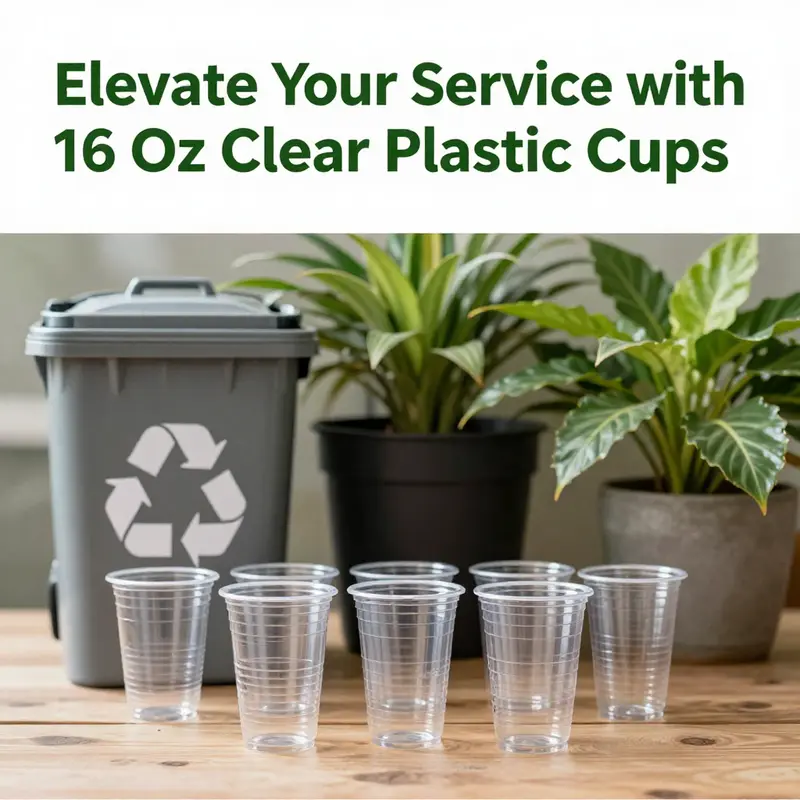
The ubiquity of 16 oz clear plastic cups in modern foodservice and retail is a story told in transparency. Their crystal clarity showcases a beverage, dessert, or layered treat as if the content itself is on a pedestal. The appeal is practical as well: a uniform, familiar size that travels easily from café to event, from street fair to office break room. But as operations managers, chefs, and sustainability leads increasingly understand, clarity in appearance does not automatically translate to clarity in impact. The very materials that give these cups their sheen also determine the scope of their environmental footprint. The dialogue surrounding these cups hinges on a triad of material choice, end-of-life pathways, and the real-world behavior of consumers and waste systems. In this chapter, the focus remains on the 16 oz clear format, but the conversation widens to consider how different plastics and disposal frameworks shape the long-term consequences of widespread use. It is possible to hold both the appeal of clear cups and a commitment to responsible stewardship, provided we understand the trade-offs, the options, and the practical steps brands and customers can take together.
Material choice is the first hinge on which sustainability turns. Clear cups are most commonly made from PET, PP, or PS, each bringing distinct properties to the table. PET offers exceptional clarity and strength, which supports long service life in both cold and room-temperature contexts. It resists shattering and maintains form during transportation, which is why PET is so widely employed in beverage packaging. Yet PET is not biodegradable. Even when recycled, it remains a polymer that must be carefully managed through efficient collection streams, sorting facilities, and markets that value recycled resin. Recycling rates for PET vary by region, but globally they are not universal, and contamination or downcycling can erode the environmental benefits that recycling promises. The other traditional clear option, PS, tends to be cheaper and offers a crisp, translucent appearance. However, PS is more brittle, often has lower heat resistance, and tends to be less favored in sustainability discussions because its end-of-life pathways are less straightforward and its environmental profile is comparatively heavier in waste concerns. PP cups, while not always as crystal-clear as PET or PS, present a different balance. They can withstand higher temperatures than some PS variants and are more amenable to certain recycling streams in the right infrastructure. The practical implication for a business choosing among these materials is not simply a vote for the clearest cup; it is a nuanced assessment of how the cup will be used, how it will be disposed of, and what local waste systems can realistically process.
The promise of plant-based bioplastics, especially polylactic acid (PLA), adds an additional layer to the sustainability conversation. PLA cups are designed to be biodegradable under industrial composting conditions, often claiming breakdown within roughly 90 to 180 days when facilities exist to support this process. In a world where single-use items proliferate, PLA represents a potential path to reducing long-lived waste when disposal facilities are aligned with composting capabilities. Certifications—such as those indicating industrial compostability—provide a level of assurance that these cups meet specific standards for end-of-life handling. Yet, real-world composting is not a universal convenience. Home composting, backyard setups, or informal waste streams rarely reach the temperatures or microbial activity necessary to break PLA down efficiently. This means the environmental benefits of PLA cups depend strongly on the presence of certified industrial composting infrastructure and on consumer behavior that supports proper disposal. Where such infrastructure is available, and where compostable labeling is clear and accurate, PLA cups can deliver a meaningful advantage over conventional petroleum-based plastics in terms of end-of-life outcomes. It is crucial for businesses to verify certifications and to educate customers about proper disposal steps, so the promise of compostability translates into actual waste reduction rather than diverted waste into landfills.
The lifecycle implications of these materials extend beyond end-of-life. PET, for instance, carries manufacturing energy costs and emissions that reflect the energy intensity of polymer production, polymerized resin, and the transformation into finished cups. Recyclability offers a potential counterbalance, but the effectiveness of recycling depends on adequate collection systems, clean streams, and market demand for recycled PET (rPET). In many places, mechanical recycling remains challenged by contamination (oils, oils or food residues, colorants, or multilayer constructions) and by the tendency of consumers to mix streams—recycling bins can be confusing, and the presence of lids or printed markings can complicate processing. PS and other petrochemical plastics invite similar considerations, and their environmental story is often shaped by the availability of recycling streams that are specifically designed for foam or rigid plastics and by the quality of recycled material that can be reintroduced into the supply chain.
The PLA pathway adds a different set of lifecycle dynamics. PLA production typically uses renewable feedstocks such as corn starch or sugarcane, offering a potential reduction in fossil fuel dependency during production. The biobased origin is attractive, yet it is not a universal shield against environmental impact. The cultivation of crops for bioplastics consumes land, water, and energy. When disposed of properly in industrial composting facilities, PLA can contribute to a shorter end-of-life footprint compared to conventional PET or PS cups. However, the infrastructure needs are nontrivial. Industrial composting requires high heat, controlled moisture, and specific microbial activity over a defined period to achieve the targeted disintegration. In the absence of such facilities, PLA cups end up in the same waste streams as other plastics, where they may not degrade any faster than their petroleum-based counterparts. Certifications such as BPI (Biodegradable Products Institute) labeling provide a credible signal that a given PLA product meets compostability standards, but the presence of certification alone does not guarantee environmental benevolence unless disposal pathways are aligned with the intended end-of-life treatment. Businesses should not rely on compostability as a blanket solution; instead, they should integrate material choice with local waste realities and consumer education.
A practical takeaway for decision-makers is to evaluate the compatibility between product design and waste management realities in their markets. Clear cups designed for beverages that require heat tolerance must be evaluated for heat resistance and potential chemical interactions. PET’s clarity remains excellent for cold drinks, and its barrier qualities help maintain beverage integrity; however, heat exposure can open questions about chemical migration, even though PET is generally regarded as safe for food contact. PP can be a middle ground, offering sturdiness and higher heat tolerance in many cases, with clearer visual properties than some PS options. For hot beverages, some suppliers offer specializedPP or multi-layer designs that preserve clarity while improving heat resistance. Yet these designs can complicate recycling streams if they combine materials in a way that resists separation. The net effect is that a cup’s environmental performance cannot be judged purely by its appearance. The real impact rests in how the cup is produced, used, disposed of, and integrated into a closed-loop or near-closed-loop system.
Beyond material physics and disposal logistics, consumer behavior and labeling play pivotal roles. The most attractive cup in the world loses value if users do not separate streams correctly or if labeling is confusing. Clear labeling that indicates whether a cup is recyclable, compostable, or neither helps guide behavior and reduces the likelihood of contamination in recycling or composting streams. In some regions, the presence of a compostable label implies a requirement for industrial facilities; shoppers who place such cups in a standard recycling bin can undermine the intended environmental benefits. Conversely, a well-communicated message about proper disposal can empower customers to participate in composting programs when available, or in high-quality recycling streams, which are essential to achieving meaningful environmental gains. The best packaging strategies couple clear, honest labeling with public education campaigns that explain local waste pathways and how individual actions contribute to a broader circular economy. The interplay between product design, labeling, and consumer action is a dynamic that brands must navigate with transparency and consistency.
For brands weighing the sustainability equation, several strategic considerations emerge. First, align material choice with local waste infrastructure. If industrial composting is scarce or unavailable, PLA may offer limited advantages over PET or PP. Second, assess total cost of ownership, not just production costs. Recyclability and compostability can influence supplier relationships, waste management fees, and potential incentives or penalties from municipalities. Third, consider branding and consumer expectations. A clear, consistent sustainability narrative—one that honestly communicates the capabilities and limitations of a given material—can build trust and drive responsible consumer behavior. This does not require sacrificing clarity or performance; it requires thoughtful design choices that reflect how a product will be disposed of in the real world. For readers seeking a tangible example of clear dessert cups designed for packaging and presentation—without naming specific brands—the concept of clear cake cups for dessert packaging offers a useful reference point. See clear cake cups for dessert packaging for a practical illustration of how form, function, and messaging can converge in a single product.
The sustainability conversation cannot ignore the broader policy and market forces shaping plastic cup use. Public policy increasingly emphasizes a hierarchy of waste management—reduce, reuse, recycle, and recover—with growing emphasis on eliminating unnecessary single-use items or accelerating the transition to materials with lower environmental footprints. Regulations may incentivize recycled content, require clearer labeling, or mandate standards for compostability in food-contact packaging. In markets where such policy signals strengthen, 16 oz clear cups may evolve toward design for recyclability or compostability, with specifications that minimize contamination and maximize end-of-life value. Yet policy alone cannot close the loop; it must be paired with industry innovation and consumer participation. The convergence of regulatory expectations, consumer demand for responsible packaging, and supplier capability creates a landscape in which the cheapest option may no longer be the most sustainable, particularly if it locks a business into wasteful disposal practices or inconsistent waste management outcomes.
From an operational standpoint, the path forward involves embracing a spectrum of tolerances and solutions rather than seeking a universal answer. Some operations will prioritize highly recyclable PET cups, paired with robust take-back or recycling partnerships, to ensure products move efficiently through the system. Others may explore PLA-based options aligned with industrial composting facilities, coupled with consumer education campaigns that clarify how to dispose of these cups properly. Still others might adopt PP-based designs that strike a balance between clarity, heat resistance, and recyclability in local contexts. The most resilient approach is to view cup selection as a spectrum of design choices tuned to local infrastructure, rather than a single, universal standard. In practice, this means suppliers, brands, and waste facilities working together to optimize collection, sorting, and processing, so the end-of-life story of a 16 oz clear cup matches its in-use performance. It also means designing for reuse when feasible—such as in hospitality venues that can credibly support dishwashing and reuse programs for high-volume service—while recognizing that this path may not always be practical in every setting.
The internal ecosystem of an organization—the procurement teams, sustainability officers, and frontline staff who handle cups in service, storage, and waste streams—plays a decisive role in translating material decisions into environmental outcomes. Training frontline workers to rinse and reduce oil-laden residues before recycling, or to segregate compostable cups from non-compostables, can dramatically alter the downstream outcomes. The cultural shift toward sustainability is not a minor cost or a single initiative; it is a change in daily practice, supplier selection, and customer communication that, over time, compounds into meaningful reductions in waste and resource use. In this sense, the 16 oz clear cup becomes more than a container; it is a node in a larger network of materials, facilities, and behaviors that determine the pace and scale of improvement.
As the industry continues to innovate, the shared objective remains clear: preserve the benefits of a clear, convenient cup while reducing the burden of waste and environmental harm. The decisions we make about material selection, labeling, and end-of-life pathways directly influence that trajectory. For businesses, this means asking hard questions as part of product development and supplier selection: What is the real end-of-life outcome in our primary markets? Are there reliable recycling or composting streams to handle this cup? What labeling and consumer education are needed to avoid contamination and misrouting of waste streams? The answers will vary by location, but the discipline of asking them is universal. With thoughtful planning, transparent communication, and collaborative action across production, disposal, and consumer behavior, the environmental footprint of 16 oz clear plastic cups can become smaller, more manageable, and more compatible with a future where materials circulate rather than accumulate.
In closing, the visibility that these cups provide—while attractive for marketing and user experience—carries a responsibility to consider what happens after the last sip. The best outcomes arise when material choices align with actual disposal options, when certifications are matched with robust waste systems, and when brands invest in educating customers about proper separation and recovery. There is no single silver bullet, but there is a practical path: design for recyclability where possible, prioritize compostable options where industrial facilities exist, and invest in consumer guidance that helps people participate effectively in local waste programs. The journey toward sustainable use of 16 oz clear plastic cups is ongoing, shaped by policy, technology, and everyday choices. By keeping transparency about environmental performance at the forefront—and by providing clear, actionable disposal guidance—we can preserve the clarity that stakeholders expect while reducing the footprint that accompanies it.
For readers seeking a concrete example of a clear dessert cup option that aligns with packaging and presentation needs, consider exploring the internal resource linked above. It demonstrates how form, function, and branding can converge in a single packaging solution without losing sight of end-of-life realities. External references can also broaden the understanding of compostability standards and the role of third-party certifications in guiding responsible purchasing decisions. In particular, credible certification signals help distinguish genuinely compostable plastics from generic “biobased” claims, directing business and consumer attention toward products that actually perform within established waste-management systems. As these ecosystems evolve, the goal remains to harmonize the desire for clarity and convenience with a commitment to stewardship that respects both people and the planet.
External resource reference: BPI-certified compostable PLA options and related standards are documented by industry sources and certification bodies. See https://www.alibaba.com/product-detail/BPI-Certified-Compostable-PLA-16oz_1600457523559.html for an external reference to certified compostable PLA cup offerings and the assurances they provide to buyers seeking verified end-of-life performance.
Transparency as Brand Signature: Navigating Trends and Customization for 16 oz Clear Plastic Cups
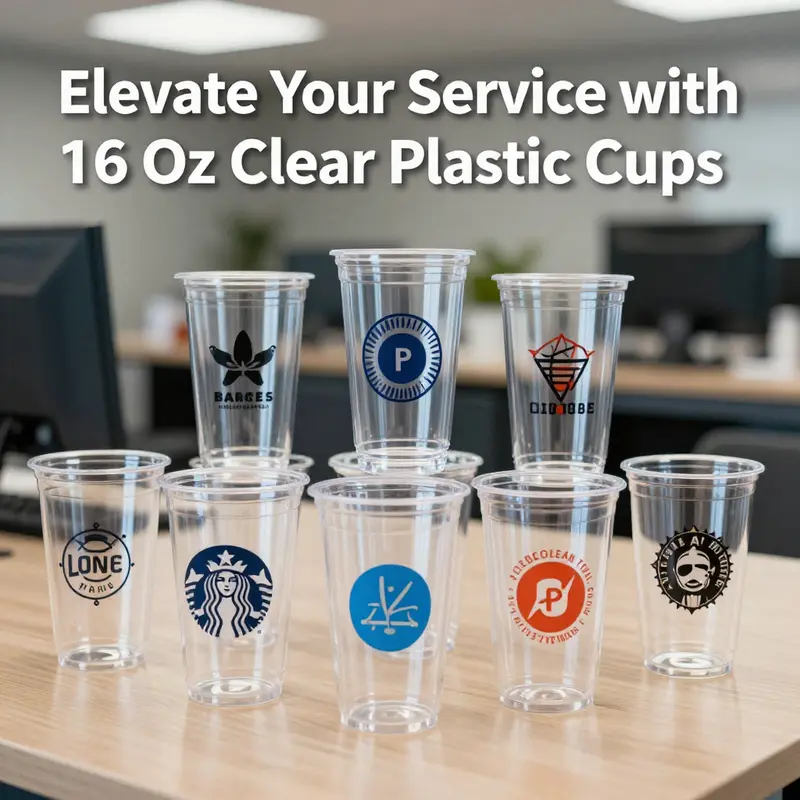
The beauty of a 16 oz clear plastic cup lies not just in its ability to hold a beverage or dessert, but in the way its clarity becomes a silent partner to a brand’s story. In a crowded service landscape, where customers skim menus and social feeds in seconds, the visual honesty of a cup—its clean walls, uncolored glow, and pristine rim—transforms a simple serving into a branding moment. The 16 oz size has become a standard because it strikes a reliable balance: enough capacity to satisfy an individual portion or a generous sample, while still staying compact for quick service and efficient stacking. Behind that practical utility, though, there is a world of material science, sustainability choices, and customization options that are reshaping how operators think about disposables. The most compelling narratives within this space are not merely about containment; they are about how a cup communicates quality, responsibility, and a brand’s voice with every sip or bite that travels from hand to mouth and from event to memory.
Material science underpins this entire ecosystem. Clear cups are commonly manufactured from several polymers, each bringing distinct advantages. PET, PP, and PS dominate the market, each chosen for a mix of clarity, heat resistance, and recyclability considerations. PET is prized for its high clarity and strong barrier properties, making it a reliable canvas for beverages that demand a transparent showcase. It is well-suited for cold drinks, while modern iterations of PET-based designs have edge protections and structural reinforcements that make them comfortable to hold and convenient to stack. PP often serves when a tougher, more heat-resistant option is desirable; it can withstand slightly warmer contents and offers robust resilience during repeated handling in busy environments. PS, with its clear, glass-like appearance and lightweight character, remains a cost-effective choice for high-volume applications where margins are tight and turnover is brisk. Each material carries a set of trade-offs that operators consider not only at the point of purchase but across the product’s lifecycle, including end-of-life outcomes and compatibility with in-store or in-venue recycling systems.
Alongside these conventional options, there is a growing interest in eco-conscious materials that align with broader sustainability goals. Bioplastics, including PLA (polylactic acid) variants, have begun to appear in discussions about 16 oz clear cups as a response to consumer demand for greener packaging. PLA-clear cups are often marketed on claims of being more eco-friendly and food-grade safe, appealing to venues that highlight compostability, reduced fossil fuel dependence, or the desire to communicate environmental stewardship to guests. Yet the story is nuanced. While PLA can offer a transparent, crisp appearance and compatibility with many cold beverages, its compostability hinges on industrial facilities capable of efficient breakdown. In standard municipal streams, PLA can complicate recycling if mixed with conventional PET or PS streams. This nuance nudges brands toward a careful, locality-aware packaging strategy: selecting materials that fit the restaurant, cafe, or festival’s waste management reality while still delivering the visual clarity customers expect. The ongoing dialogue around sustainability also includes the exploration of recyclable PET variants and the development of compostable or bio-based coatings that preserve clarity and extend the cup’s usable life in high-turnover settings.
That clarity—both optical and symbolic—drives the demand for customization. In a market where a cup is often the first tangible touchpoint of a brand’s identity at an event, a menu, or a store counter, customization is less a luxury and more a strategic imperative. Suppliers and manufacturers have responded with a robust set of options for turning a plain, clear cup into a mobile billboard and a practical tool for marketing and customer experience. Full-color printing on cup surfaces, logo integration, and even in-mold labeling (IML) have become accessible for bulk orders, enabling brands to embed their identity directly into the cup’s surface. The result is more than a visual flourish; it is a deliberate extension of brand language—colors, typography, and iconography that reinforce recognition during promotional campaigns, seasonal launches, or everyday coffee runs.
This trend toward branding at the cup level is particularly notable in sectors with high foot traffic and high frequency of purchase, such as cafes, quick-service restaurants, festivals, and corporate gifting programs. When a cup bears a company name or a striking logo, it travels farther than the drink in it. It becomes a portable advertisement that can spark conversation in bustling queues, at outdoor events, or on social feeds where guests share photos of their beverages. The practical payoff is measurable: increased brand recall, heightened perceived value, and a touchpoint that can elevate the overall customer experience. From a production perspective, suppliers have responded with scalable customization options that accommodate both large campaigns and more targeted, event-specific runs. MOQs—minimum order quantities—have become more flexible. For standard, unprinted clear cups, the minimums are often modest enough to enable small brands to participate in the market, while printed, branded cups typically require larger commitments. A common construction in industry practice is a tiered approach: base models with standard finishes for everyday use, and higher-visibility branded options for promotions, launches, and partner events. Payment terms follow established patterns in international trade, with deposits and balance terms that reflect the scale of the project.
In tandem with printing and branding, the physical design of the cup itself has evolved to optimize both user experience and operational efficiency. The standard 16 oz capacity has become a reliable baseline, ensuring consistency across the supply chain—from production lines to prep stations to service counters. The cylindrical form, with a wide top opening and a smooth, even rim, is engineered to facilitate smooth filling, easy drinking, and comfortable handling. These features are not cosmetic; they reduce spill risk, improve customer satisfaction, and streamline staff training in busy settings. Uniform rims contribute to stability during stacking and transport, a critical consideration for venues that manage large volumes of cups in bulk. For operators, the design translates into tangible benefits: faster service during peak hours, reduced waste through more precise portioning, and a lower risk of customer frustration caused by flimsy or ill-fitting lids.
Packaging strategies further amplify the cup’s effectiveness as a branding vector. In many cases, cups are bundled in bulk for shipping and stocking, with shipping configurations engineered to minimize space and protect integrity during transit. Basic packaging often includes linerless or lined configurations that balance cost, protection, and ease of handling. Custom packaging, meanwhile, can extend branding beyond the cup itself, echoing the design language of the beverage or the event. This approach aligns with broader packaging trends that view disposable tableware as a holistic system rather than a standalone product. The packaging design may echo the cup’s branding, providing a cohesive experience as customers move from counter to table to event space. When brands leverage integrated packaging concepts, they create a tactile continuity that reinforces memorability and perceived quality.
The operational realities of producing and using 16 oz clear cups also shape decision-making around sustainability and customization. MOQs and payment terms reflect the realities of global manufacturing, where capacity planning, lead times, and logistics influence how brands plan campaigns. Some suppliers offer notably flexible MOQs, allowing smaller brands to participate in custom branding without taking on overwhelming inventory risk. Conversely, large campaigns can leverage bulk printing and IML to achieve consistent, high-impact branding across thousands or tens of thousands of cups. The economics of customization must be balanced with environmental considerations: the choice of material, whether PET, PP, PS, or a PLA-based alternative, interacts with waste streams and recycling infrastructure. Brands that commit to sustainability often pair their clear cups with de-packaging strategies, compostable or recyclable liners, and clear messaging about how to dispose of the cups properly. The objective is to deliver a product that looks pristine and performs reliably, while also aligning with the values of customers who increasingly judge brands by their environmental responsibility as much as by taste and price.
From a sourcing perspective, the market for 16 oz clear cups is global and dynamic. The supply ecosystem includes a wide range of manufacturers and distributors who can accommodate both small tests and large-scale deployments. The capability to print, label, and even mark cups with logos or seasonal motifs enables marketers to tailor campaigns to different venues and audiences without changing the fundamental component—the clear cup itself. This adaptability is particularly valuable in event settings, where branding needs can shift rapidly—from a single-day festival to a multi-week expo—without sacrificing the integrity of the serving hardware. In such contexts, the cup becomes a flexible asset that supports both the functional and marketing needs of the operation. For venues seeking to optimize both sustainability and branding, the conversation often turns to lifecycle considerations: choosing materials that align with local waste-processing capabilities, selecting inks and coatings that do not compromise recyclability, and designing packaging streams that minimize contamination and maximize recoverability at end-of-life.
The practical implications of these trends extend into everyday business decisions. Cafes contemplating menu innovations might consider aligning their cup environment with seasonal beverages, where a branded cup can emphasize a limited-time theme and encourage social sharing. Catering outfits and event planners can harness the power of branded cups to create a cohesive event identity, extending the look from the dessert station to the takeaway gift bags or photo opportunities. Retail outlets that emphasize “grab-and-go” convenience can use clear cups as a reliable platform for showcasing product quality—clear walls that reveal the beverage’s color, texture, and even visible inclusions like pearls, fruit pieces, or layered toppings. The cup thereby participates in storytelling, offering a visual cue that communicates freshness, value, and a brand’s attention to detail.
Design and manufacturing considerations also come into play when brands pursue more ambitious customization. Full-color printing on clear cups requires precise color management to ensure legibility and vibrancy on transparent substrates. Logos, brand names, and event graphics must be calibrated to maintain readability against varying beverage hues. Some manufacturers offer additional coating options to protect printed graphics from moisture and handling wear, thereby extending the display life of branded cups in busy environments. In certain cases, brands may opt for in-mold labeling (IML) or laminated films that become part of the cup’s structure, improving durability and reducing the risk of ink flaking during use. These technical choices influence both the user experience and the logistics of production, including tool changes, run lengths, and the complexity of quality control. When implemented thoughtfully, they yield a cup that not only looks polished but performs consistently, even under the demanding conditions of a high-volume cafe or a festival setting.
The market’s current trajectory suggests that customization will continue to be a key differentiator. The combination of material choices, branding opportunities, and packaging integration creates a compelling value proposition for brands seeking to deepen customer engagement through a disposable product traditionally viewed as utilitarian. Consumers are increasingly aware of packaging choices and their environmental footprint, yet they still expect reliability, cleanliness, and ease of use. The 16 oz clear cup sits at the crossroads of these expectations: a dependable vessel that can be customized to echo a brand’s personality while accommodating various content types—from iced beverages to cold desserts and smoothie blends. The ongoing evolution of materials—balancing clarity, heat tolerance, and recyclability—will push brands to be thoughtful about the entire lifecycle of the cup, from production to disposal, and to communicate those choices clearly to customers who value transparency as part of the brand’s integrity.
For brands exploring sourcing and technical specifications in a scalable way, the landscape offers credible options across platforms that connect buyers with manufacturers. When a business seeks to implement a branded solution at scale, it is common to engage with suppliers who can handle bulk printing, reliable lead times, and consistent quality control. In practice, this means planning for a range of scenarios: standard, unprinted cups for everyday service; partially branded cups for limited promotions; and fully branded, IML-enabled cups for flagship campaigns. Each path involves trade-offs between cost, speed, and impact, but together they provide a spectrum of choices that empower brands to meet customers where they are. The result is a market that is not merely about disposables but about a strategic channel for branding, sustainability signaling, and operational efficiency.
Internal link note: from a packaging perspective, brands often explore complementary packaging solutions to reinforce their cup branding. For example, custom takeaway packaging and disposable tableware can extend the branding narrative beyond the cup itself and into the broader unboxing or takeaway experience. This approach can be particularly effective for themes, events, or seasonal promotions. See more details on customizable takeaway packaging and disposable tableware here: custom takeaway packaging and disposable tableware.
As the conversation around 16 oz clear cups continues to mature, it remains clear that these vessels are more than vessels. They are stages for clarity, sustainability, and storytelling—a practical, portable surface upon which brands craft memorable guest experiences. The cup’s transparency invites trust, its design invites ease, and its endless customization invites ongoing conversation about how best to balance function, form, and footprint in a disposable world. Those who embrace this balance stand to gain not only in customer satisfaction but also in the reputational value of choosing materials and processes that align with evolving consumer expectations and regulatory landscapes. The future of the 16 oz clear cup is ultimately a reflection of how well a brand can translate a simple, transparent object into a coherent, responsible, and engaging element of the guest journey.
External resource: For additional context on sourcing and material specifications for clear plastic disposable cups, including eco-friendly options and bulk customization, see this external resource: https://www.alibaba.com/product-detail/16oz-PLA-Clear-Plastic-Disposable-Cold_1600499789145.html?spm=a2700.1.w5001-23873372565.1.7d2f6a12cKxjPb&src=1
Final thoughts
Incorporating 16 oz clear plastic cups into your beverage service not only enhances the visual appeal of your offerings but also supports sustainability efforts. Understanding the materials used, their applications in various sectors, the impact on the environment, and the current market trends are essential for making responsible and informed procurement decisions. Elevate your business by aligning with eco-friendly practices while fulfilling customer expectations with these versatile clear plastic solutions.