
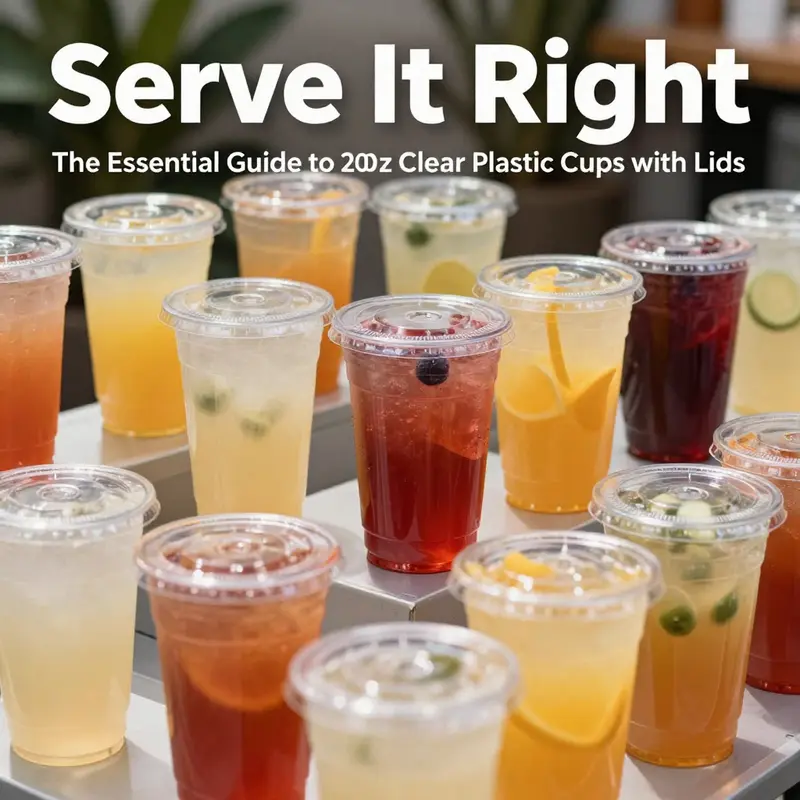
In a bustling food and beverage environment, presentation and functionality are crucial. This guide explores the benefits of using 20 oz clear plastic cups with lids in your business—be it a bubble tea shop, restaurant, food truck, catering service, or corporate procurement team. Each chapter unveils insights into the cups’ durable materials, convenient bulk purchasing options, custom branding opportunities, environmental considerations, and current market trends. Together, these facets will illuminate how this versatile product can enhance your beverage service while aligning with your business goals.
Crystal Clarity and Enduring Strength: Exploring the Material and Durability of 20 oz Clear Plastic Cups with Lids
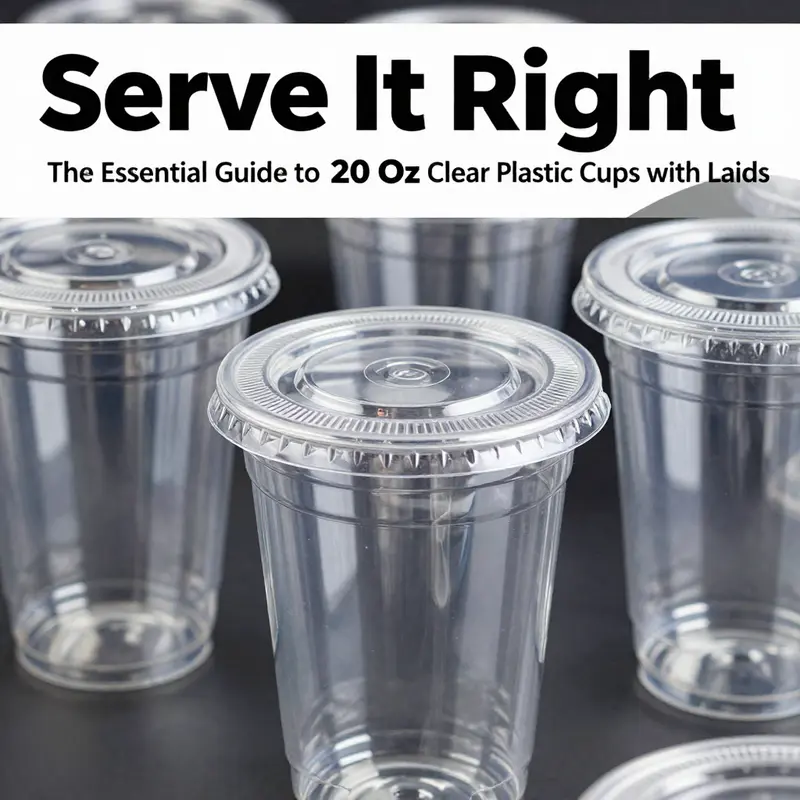
When considering the equipment for serving cold drinks at gatherings, the 20 oz clear plastic cup with a lid often appears as a baseline choice. Its value lies not only in simplicity and convenience but also in the material science that makes it dependable under real-world use. At the heart of these cups is a plastic called PET, or polyethylene terephthalate, a material that has earned a wide following in the beverage industry for good reason. PET is a food-grade plastic that presents a combination of attributes that matter to event planners, caterers, and everyday users: exceptional clarity that showcases the color and texture of the drink, light weight that reduces baggage and fatigue during transport, and a level of rigidity that helps the cup hold its shape as it travels from cart to table and then to the eater’s lips. This trio—clarity, weight, and shape retention—defines the pedestrian but essential magic of a disposable cup that earns its keep in both casual and more formal settings. Beyond aesthetics, the material’s safety profile has become a talking point for many buyers. PET is typically labeled BPA-free, a selling point that resonates with health-conscious consumers who want confidence that their beverages won’t pick up unwanted chemical residues as they sit in clear plastic for a short time. This safety claim, widely echoed by major retailers and product pages, aligns with the broader expectations of food-contact packaging: the cup should neither impart flavors nor leach substances into the drink, especially when the beverage is consumed within a typical event window or during a commute. The combination of BPA-free assurance with a strong, crack-resistant structure makes PET cups a dependable option for cold beverages such as iced coffee, fruit juices, smoothies, and even milk teas that travel in warm-to-cool conditions.
What makes PET particularly well-suited for the 20 oz cup is how the material behaves under everyday handling. Its clarity remains a visual promise: as long as the cup is clean and free from deep scratches, the beverage inside is visible in all its color, density, and texture. This transparency is not just a matter of appearance; it helps servers and guests gauge drink levels at a glance, which matters when traffic flows quickly at an event or during a busy service window. For the host or operator, that visible cue translates into fewer interruptions for beverage checks, quicker replenishment, and a smoother overall service rhythm. PET also brings practical resilience to the table. When filled and capped with a tightly fitting lid, these cups become more forgiving of minor bumps during transport, reducing the likelihood of leaks that might otherwise dampen a guest’s experience or create safety hazards on event floors. The lid, designed to fit securely, works in concert with a rigid wall to create a portable, spill-aware package that can be carried, stacked, or set down with relative ease. The combination of strong rims and a snug lid closure contributes to reliable transport from beverage station to seating area, a small but meaningful detail that elevates the entire guest experience without requiring elaborate equipment.
Durability for disposable cups is a nuanced subject. PET’s strength lies not only in its rigidity but in its crack resistance, which helps the cup maintain its form under normal handling and during the act of drinking. This is particularly important in high-traffic environments where cups are handed from server to guest and shuffled through crowded spaces. While these cups are primarily designed for single-use convenience, the durability profile can sometimes support careful, limited reuse through hand washing. The nuance here matters: some brands promote the idea that their PET cups can be washed by hand and reused a few times, but durability can degrade with repeated exposure to water, detergents, or abrasion on the cup’s interior surface or edges. The safest interpretation is that, while a PET cup with a lid can withstand normal, short-term reuse in a careful household setting, it is not engineered for the rigorous cycles of a dishwasher, prolonged soaking, or aggressive scrubbing. In practice, this means planning for single-use reliability while recognizing the occasional, gentle reuse scenario may be acceptable for short-term personal use or educational demonstrations, provided proper care and inspection are observed. The rolled rim feature, frequently highlighted in product descriptions and retail listings, adds a tactile liability-resistance to the edge of the cup. A rolled rim helps resist chipping and makes the drinking edge more comfortable, especially when a straw is used. This design detail contributes to a sturdier overall feel, even when the cup is moved through crowded spaces or stacked with other cups for quick restocking.
The performance of these cups also hinges on their interaction with lids and accessories. A secure lid forms a critical component of the overall durability equation. It acts as a brake on spills during transport and serves as a protective seal against dust or incidental exposure to the surrounding environment. In practice, guests appreciate a lid that fits snugly enough to prevent leaks during a brisk walk or a hurried carry between zones at a festival or conference. The presence of a corresponding straw or sipping access can further influence the user experience; the combination of a clear cup, a lid, and a straw system makes the beverage portable without sacrificing cleanliness or convenience. Clarity remains a key advantage here; the drink’s appearance communicates freshness, temperature, and even the beverage’s viscosity—qualities that can influence a guest’s perception even before the first sip. A well-chosen PET cup with a reliable lid does more than hold liquid; it conveys a sense of order and care that elevates the event’s overall impression. From the host’s perspective, the material’s recyclability adds another layer of value. PET’s broad acceptance in recycling streams means that, after the event, the cups can be disposed of in a way that aligns with environmental stewardship, assuming local guidelines support PET recovery. The public narrative around disposables increasingly prizes packaging that reduces long-term waste, and PET’s recyclability is a tangible strength in that discourse. This is not a universal guarantee, of course; disposal results depend on local recycling infrastructure and consumer participation. Still, the broad availability of PET recycling streams makes it a comparatively responsible choice among disposable beverageware options.
From an operational standpoint, the fee structure typically rewards bulk purchases. A 20 oz PET cup with a lid is commonly sold in bulk, often in 100-pack or larger sets, making it a practical option for large events, corporate picnics, or busy cafés that need dependable, ready-to-serve drinkware. The economics of bulk purchasing—lower per-unit cost and reduced handling time—align well with the needs of organizers who prize efficiency without compromising guest experience. The transparency of the material also buys additional time in the service flow: guests can immediately assess the color and texture of the beverage, which reduces the need for additional tasting or checking during service, letting staff move more quickly through crowd lines. In terms of brand storytelling and retail strategy, the clear cup’s visual potential is a double-edged sword. On one hand, the see-through nature of PET aligns with a consumer desire to assess freshness and quality at a glance. On the other hand, the optical clarity can reveal any residue or staining from prior use if the cup is not properly cleaned or stored. For disposable applications, this is less of a concern, but it remains part of the broader conversation about how beverages appear in the cup and how that affects perceived quality.
As you weigh the material and durability attributes, the scene becomes clearer: PET’s combination of food-grade safety, elite clarity, light weight, and practical durability under normal handling makes 20 oz cups with lids an appealing option for cold beverages that travel and for venues that require swift, reliable service. The rolls-on rims and secure lids contribute to a durable yet simple ecosystem of use—one that supports efficient service, reduces spill risk, and simplifies cleanup. The durability narrative also underlines a practical reality: while these cups are primarily designed for single-use convenience, they can be used more than once in certain gentle contexts. Yet the most consistent outcome arises when the cups are treated as intended—dispensed, enjoyed, and recycled with minimum fuss. This alignment between material properties and real-world use is what lends the clear PET cup its enduring relevance in the spectrum of disposable drinkware.
For readers who want a broader perspective on event-ready disposables and the packaging ecosystem that supports them, a related resource exploring takeaway packaging and theme-party tableware provides useful context about how these pieces fit into larger packaging strategies. custom takeaway packaging and disposable tableware for theme party
External reference: For a practical overview of PET cup characteristics and market listings, see external resources such as the product page from a major retailer, which highlights BPA-free construction, clarity, and crack resistance as core attributes. External reference: https://www.amazon.com/GUSTO-Clear-Plastic-Cups-Flat/dp/B07XZJ6Y9Q
Bulk Buying Mastery: 20 oz Clear Cups with Lids for Events, Café Service, and Everyday Use
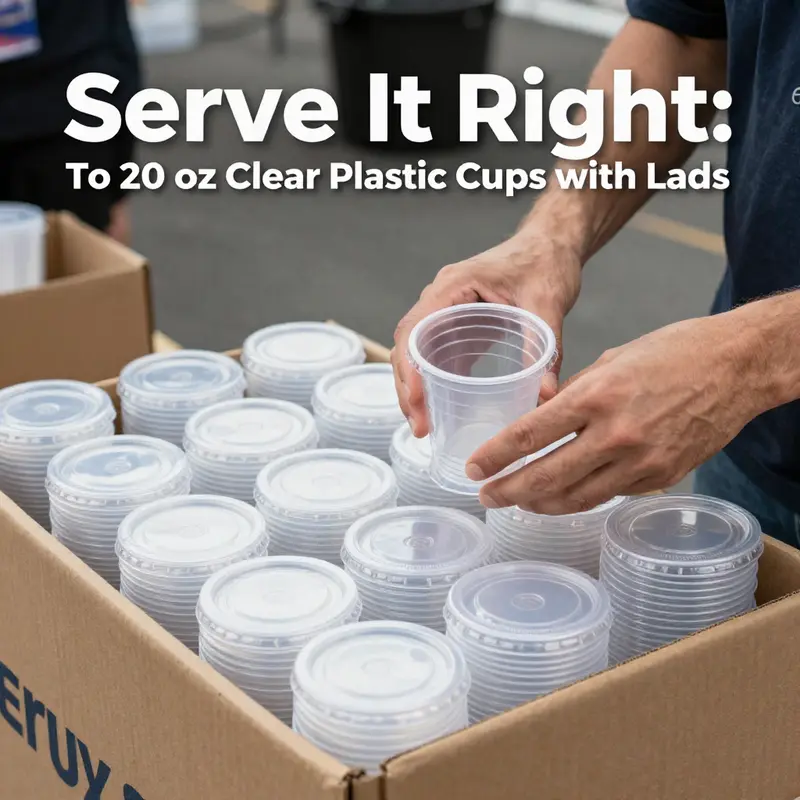
When planning a gathering, a café run, or a busy week at home, the right disposable cup can shape the entire experience. The 20 oz clear plastic cup with a lid sits in the sweet spot between capacity and manageability. It accommodates a generous cold serve, from iced coffee to smoothies, while staying light enough to handle in bulk and easy to transport. The appeal of a clear design goes beyond aesthetics. Transparency lets each beverage speak for itself, showcasing color, texture, and garnish. In bulk, these cups become a practical backbone for service zones, event kits, and even home hospitality where efficiency and presentation matter as much as price. Yet bulk purchasing is not a hobbyist exercise; it requires a careful balance of material, compatibility with lids and straws, packaging counts, and supplier reliability. The best path through this landscape is not simply to chase the lowest price but to align the purchase with the exact context of use, storage realities, and sustainability goals.\n\nMaterial choice sits at the core of that alignment. Most 20 oz clear cups are made from food grade polymers, with PET as a common option for its crisp clarity, light weight, and resistance to shattering. For some applications, alternatives such as PS or PP appear on the market. PS cups shine with an exceptionally clear, glass-like look that makes the beverage visually appealing; however, they tend to be more brittle and less forgiving in heat or mishandling. PP cups trade some clarity for greater toughness and a broader tolerance to knocks and minor drops; they can offer better margin in environments where cups travel through crowded spaces, such as event corridors or café pickup lines. They may also provide higher resistance to oils and acids, which matters for certain cold drinks that feature syrups or dairy additions. In practice, for cold drinks, PET remains a reliable baseline because of its balance of clarity, cost, and performance, while PP becomes attractive when the usage pattern includes rough handling, frequent transport, or a need for slightly more durability.\n\nBeyond material, the size and shape of a bulk buy must match the specific serving scenario. A 20 oz capacity is intentionally versatile: enough for generous beverages, with room for ice and toppings, yet compact enough for a steady workflow of service. When planning a bulk order, it is common to encounter packs sold in sets of 50, 100, 200, 500, or 1000 units. The choice hinges on the cadence of service, the duration of an event, and how often cups will be reused or restocked during the day. Storage is another practical consideration. Bulk cases require clean, dry space, and a simple rotation plan to prevent boxes from piling up or incurring moisture exposure. For venues with quick turnarounds, a two or three-tiered storage approach near the serving point can dramatically reduce the time spent restocking and clearing tables. The lid geometry matters as well. Matching lids that seal properly help prevent spills during transport and in crowded service areas. Some lids are designed to be press-on or snap-fit, while others use straws to maintain a clean top. If your operation includes to-go orders, consider bundles that pair cups with lids and compatible straws. The result is a streamlined workflow where staff can grab a cup, cap it, and hand it off with confidence.\n\nThe practical benefits of bulk purchasing extend into branding and customization. For businesses and organizations that want a consistent brand message or a memorable giveaway, many suppliers offer customization options on clear cups. Custom printing can include a logo, message, or color scheme, transforming a disposable cup into a portable advertisement as customers carry beverages to and from events or stores. The feasibility of customization depends on the printing method, the color palette, and the size of the run. When the objective is branding rather than sheer volume, it may be worth investing in a modest batch with a logo to test response before scaling up. In addition to branding, customization can include the choice of lid types, straw colors, and packaging presentation. The overall effect is a cohesive, on-brand experience that elevates the perception of value, even in a disposable format.\n\nEco considerations increasingly steer purchasing decisions. Recyclability of clear cups is a central criterion in many buying guides and in-store conversations. In practice, curbside recycling acceptance varies by municipality, and some facilities require specific sort streams for plastics. Brands and suppliers frequently emphasize the recyclability of PET clear cups, yet the end-of-life outcome depends on local infrastructure and consumer participation. This is especially important for events and businesses that operate on a recurring cycle; choosing cups that align with regional disposal capabilities reduces the risk of materials being diverted to landfill or mismanaged. Businesses can also explore cups manufactured with recycled content or cups designed for easy separation of components for recycling. Such considerations add a layer of responsibility to bulk buying, ensuring that the convenience of disposables does not come at an outsized environmental cost. For some buyers, a broader packaging strategy might include encouraging customers to recycle cups on-site through clearly marked receptacles and signage, turning a routine purchase into part of a responsible waste management plan.\n\nWhen it comes to sourcing, bulk options are widely available through multiple channels, each with its own strengths. Large mass-market retailers offer convenience, consistent stock, and reliable shipping windows that fit tight event timelines and recurring business needs. They often present a one-stop solution for cups, lids, and sometimes straws, enabling buyers to coordinate orders and reduce the risk of mismatches in diameter or lid style. Online marketplaces also play a major role, particularly for those who need to compare a broad spectrum of suppliers, request quotes for large runs, or secure favorable per-unit pricing on bulk quantities. In some instances, overseas suppliers can offer the most aggressive unit costs for very large orders, though this route comes with longer lead times, potential import duties, and the need to vet quality and communication standards carefully. The choice depends on timing, budget, and the buyer’s tolerance for risk. For ongoing service operations and events that recur throughout the year, establishing a preferred supplier relationship can yield steadier pricing, predictable delivery schedules, and simplified reordering as demand fluctuates.\n\nTo illustrate the practical realities of bulk buying, consider the interplay of timing, price, and performance. A typical bulk scenario might involve a 50 to 100 pack of 20 oz cups with lids, suitable for a mid-size event or a café shift with a high to-go volume. Prices in this bracket can be modest, reflecting the reduced per-unit cost that comes with volume. For users pursuing even larger programs, 500 or 1000 cup lots become attractive, as the unit price often declines further. The trade-off is storage and warehousing requirements, as well as the commitment to a single style for a stretch of time. On the other end of the spectrum, some buyers prioritize the lowest possible unit cost for very large orders and are comfortable with longer shipping times or more negotiation with suppliers. In these cases, platforms that aggregate wholesale offers can reveal a spectrum of terms, from expedited shipping to bulk discounts, enabling buyers to tailor the purchase to seasonal demand, promotional campaigns, or special events.\n\nA practical pointer to a real-world example of a disposable cup offering exists in the product pages of a well-known supplier focused on disposable drinkware. The page highlights a disposable clear plastic cup with lid option suited for outdoor events, picnics, or party settings. This reference can serve as a tangible benchmark for visualizing how the cup looks when filled, how a lid completes the package for transport, and how optional straw attachments extend the product’s usability. For readers seeking a direct example in the catalog, see the disposable clear plastic cup page. disposable-clear-plastic-cup-outdoor-picnic-pet-cup-drinking-cup-for-parties-birthdays-weddings-camping-utensils.\n\nAs you evaluate the decision, keep a simple framework in mind: match the cup and lid to the drink type, align with handling and transport needs, ensure compatibility with planned branding or messaging, and factor in end-of-life considerations. If the service environment emphasizes presentation and ease of use, a clear PET cup with a snug lid and a complementary straw set offers a polished look without sacrificing practicality. If durability and transport resilience are paramount, a slightly sturdier PP cup may be worth the extra investment, even if it sacrifices a touch of transparency. In all cases, verify the product specifications carefully—top diameter, cup wall thickness, lid style, and straw compatibility—to prevent mismatches during a busy shift or an on-site setup. For organizations with ongoing takeout and catering requirements, negotiating a predictable delivery window and a stable supply line is as important as achieving the right visual impression. The long game is not merely about the next event but about building a dependable, scalable approach to drinkware that serves customers well while keeping operations smooth and cost-conscious.\n\nFinally, the broader literature and expert guides on bulk plastic cups with lids provide technical context and practical checklists that can complement this chapter. For a deeper, technical overview of bulk options, materials, and practical uses, refer to a comprehensive industry guide. External resource: https://www.plasticcupguide.com/bulk-plastic-cups-with-lids-guide/
Branding on the Transparent Canvas: Elevating 20 oz Clear Cups with Lids into Mobile Brand Displays
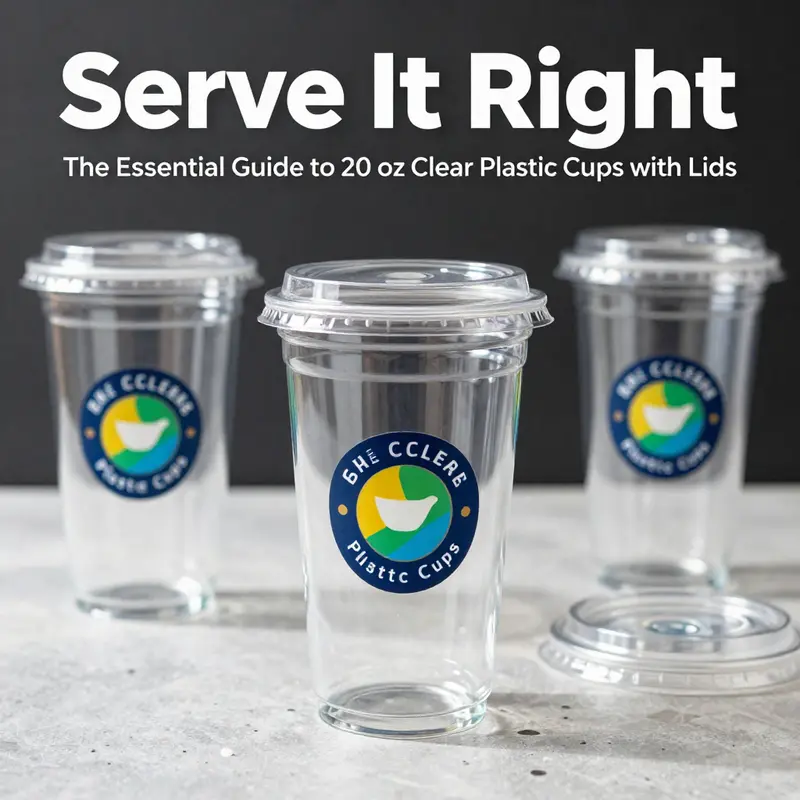
When a beverage is poured into a 20 oz clear plastic cup with a lid, the cup becomes more than a vessel; it becomes a moving billboard. The transparent surface transforms ordinary service into a canvas that showcases a brand’s color, personality, and story. In crowded venues, a well-designed cup can convey what a printed menu or a wall of signage cannot: immediacy, clarity, and a tactile link between the consumer and the brand. The 20 oz size is particularly suited to this role because it is large enough to accommodate bold, legible artwork and extended messages, yet compact enough to be carried through aisles, queues, and open spaces with ease. The design language on these cups—whether a prominent logo, a vivid color palette, or a playful illustration—acts as a subtle yet continuous reminder of the brand each time the cup is held, swirled with ice, or set down beside a napkin. It is no longer about merely serving a drink; it is about shaping an experience that travels from the event to the street and into the consumer’s daily routine.
At the heart of this branding potential lies the printing technology that can translate a brand’s assets onto a curved, translucent surface without losing fidelity. Advanced UV printing enables detailed logos, slogans, and artwork with exceptional edge definition and color saturation. The durability of the print is crucial because cups encounter moisture, cold temperatures, and the occasional splash. The best processes maintain legibility even after days of use and multiple rinses, which matters when cups are reused in some settings or carried through a festival crowd. The possibility of full-wrap or near-wrap designs means brands can wrap their visual language around the cup, ensuring that a viewer from any angle catches a coherent, cohesive message. This is not a one-off decorative choice; it is a strategic extension of brand identity onto a disposable surface that customers encounter repeatedly during an event or outing.
Material choice reinforces the credibility of branding efforts. The cups are typically made from food-safe, FDA-approved PET, a material chosen for its clarity, rigidity, and light weight. PET’s transparency is what makes the beverage inside the cup glow with color and texture, amplifying the impact of any colorway or brand motif applied on the exterior. The same PET that supports the visual impact also offers robustness in the hands of guests and during transit. Yet, this material is not just about aesthetics. It is about safety, compliance, and confidence for operators in cafes, concessions, and event spaces. A printed cup must meet safety standards while preserving the integrity of the liquid it contains, whether it is iced coffee, a smoothie, or a fruit-based tea. The combination of clear PET and food-safe printing yields a product that feels premium yet remains practical for heavy-use environments.
From a design perspective, readability and visual hierarchy are essential considerations. On a clear surface, dark or saturated colors tend to provide the strongest contrast, while white or light typography can achieve a sophisticated, minimal look. The cup’s curved geometry demands careful placement of logos and copy so that messages remain legible as the cup is rotated or tilted. Negative space becomes a powerful tool; by allowing the beverage’s color to interact with the printed elements, brands can create a layered effect that is both eye-catching and easy to parse at a glance. Simplicity often works best—bold brand marks, a concise tagline, and a color statement that resonates with the product line. The clarity of the surface also invites experimentation with gradients, subtle textures, or metallic inks that catch the light when a cold drink beads condensation. The objective is to strike a balance between attention-grabbing artistry and practical readability, ensuring that the branding enhances the customer’s experience rather than competing with it.
Beyond the aesthetic, the practical benefits of customization for brands and event organizers run deep. Lids and straws, when included, contribute to a complete branded package. Matching lid shapes and straw colors can echo a campaign’s color story, while a lid with a secure seal adds a sense of reliability—crucial for on-the-go consumption and transport. The branding thus moves from static display to a dynamic, portable presentation. In many campaigns, these cups function as mobile touchpoints that reach audiences in lines, at booths, or during commutes. The cups become not only drinkware but also a conduit for brand storytelling, enabling passersby to retain a visual cue long after the event concludes.
Sourcing and customization are highly adaptable, with bulk ordering and fast turnaround options that fit both scheduled campaigns and urgent promotions. Operators can procure in bulk lots—hundreds or thousands of units—while maintaining control over print quality, color matching, and lead times. A streamlined supply chain makes it feasible to deploy seasonal designs for festivals, limited-edition collaborations for cafes, or branded giveaways at corporate events. Importantly, the ability to customize across a large quantity aids consistency; the same visual language appears across all cups in a pack, ensuring that the brand story feels cohesive whether a guest receives one cup or several during an afternoon. Regarding the sourcing journey, many suppliers emphasize not only the quality of the cups themselves but also the end-to-end experience—proofing, color calibration, and reliable distribution timelines that align with event calendars and promotional windows. This end-to-end service is central to turning branding from a concept into a reliable, scalable practice.
Sustainability remains a central consideration in design and procurement, even as the surface becomes a marketing instrument. PET is recyclable in many communities, and responsible suppliers increasingly highlight the lifecycle benefits of their products. For brands promoting eco-conscious messages, it is essential to align the printed design with clear recycling instructions, as the combination of print and lid components may influence recycling streams. Print inks and adhesives are selected for safety and recyclability; the aim is to preserve the cup’s recyclability while delivering a durable, visually compelling print. In addition to material considerations, some campaigns emphasize reuse in settings where guests might refill drinks or reuse cups in creative ways. While disposable by intention, the cups can contribute positively to a brand’s environmental narrative when paired with clear recycling guidance and properly managed waste streams.
For teams pursuing a turnkey branding approach, the question often shifts from whether to print to how to print. The solution lies in partnering with suppliers who can translate a brand’s identity into a tangible, portable artifact. The process begins with a brand brief—a concise articulation of logo usage, color codes, typography, and any campaign-specific elements. It moves through proofs and color calibration to ensure the on-cup result aligns with brand standards. The final product is a set of cups that carry the same visual language as digital media, signage, and packaging, creating a coherent brand ecosystem that customers encounter at multiple touchpoints. The impact is measurable in brand recall, social media sharing, and word-of-mouth promotion, particularly when the cup becomes a familiar symbol at recurring events or frequent venues.
For readers seeking practical directions, consider exploring comprehensive resources on custom takeaway packaging and disposable tableware for theme party needs, which outlines a spectrum of design, material, and production options. This kind of resource helps brands visualize how a single cup—once a standard, ordinary item—can be transformed into a consistent brand vehicle across an entire campaign. Access the resource here: custom takeaway packaging supplies and disposable tableware for theme party. The page illustrates how the surfaces of everyday items can accommodate complex branding while preserving usability and safety in fast-paced environments.
As brands consider next steps, the role of external sourcing networks becomes meaningful. When evaluating options, many teams weigh the trade-offs between lead times, customization capabilities, and cost. Bulk orders from reputable suppliers can offer favorable pricing while delivering high-quality printing and reliable delivery. The decision often hinges on the balance between creative ambition and operational feasibility. A streamlined approach might involve piloting a campaign with a smaller run to validate the design, followed by a larger rollout if feedback is positive. This staged approach minimizes risk while maximizing the opportunity to learn how customers respond to branded cups in real-world contexts.
For those who want to anchor their strategy in broader industry guidance, practical sourcing insights can be found on established marketplaces that connect buyers with manufacturers. Such platforms highlight the availability of 20 oz clear plastic cups with lids in various configurations, from straight-sided to subtly tapered profiles, and with different lid and straw options. These options enable brands to tailor the packaging to fit a campaign’s tone—from sleek and modern to friendly and approachable. Customization does not happen in a vacuum; it occurs within a broader ecosystem of design, production, and logistics, all of which influence how a cup performs as a branding tool across events, retail settings, and consumer experiences.
Looking ahead, the ongoing evolution of branding on disposable drinkware suggests a continued emphasis on clarity, durability, and sustainability. Brands that adopt a thoughtful approach to the cup as a branding surface will likely see greater engagement and recall as beverages travel through crowded spaces and into everyday routines. The 20 oz clear cup with a lid serves not only as a practical vessel but as a portable stage for brand storytelling. It invites consumers to encounter color, typography, and imagery in a moment of refreshment, and it invites marketers to think strategically about every sip as a potential impression. In this light, the cup becomes more than packaging; it becomes a compact, accessible form of brand architecture that travels with the consumer and expands the reach of a campaign beyond the confines of a single venue.
For continued exploration of related packaging and event-supply solutions, you can find further context on a broader range of disposable tableware and takeaway packaging options. External resource: Alibaba’s listing for 20 oz custom clear plastic cups offers additional perspectives on production scales, material specifications, and customization capabilities that complement the in-house knowledge of branding teams seeking to scale these efforts. See the Alibaba supplier page for 20 oz custom clear plastic cups here: https://www.alibaba.com/product-detail/20-oz-custom-clear-plastic-cup-made-in_1600485993716.html
Clarity and Consequence: The Environmental Footprint of 20 oz PET Cups with Lids and the Quest for Better Recycling
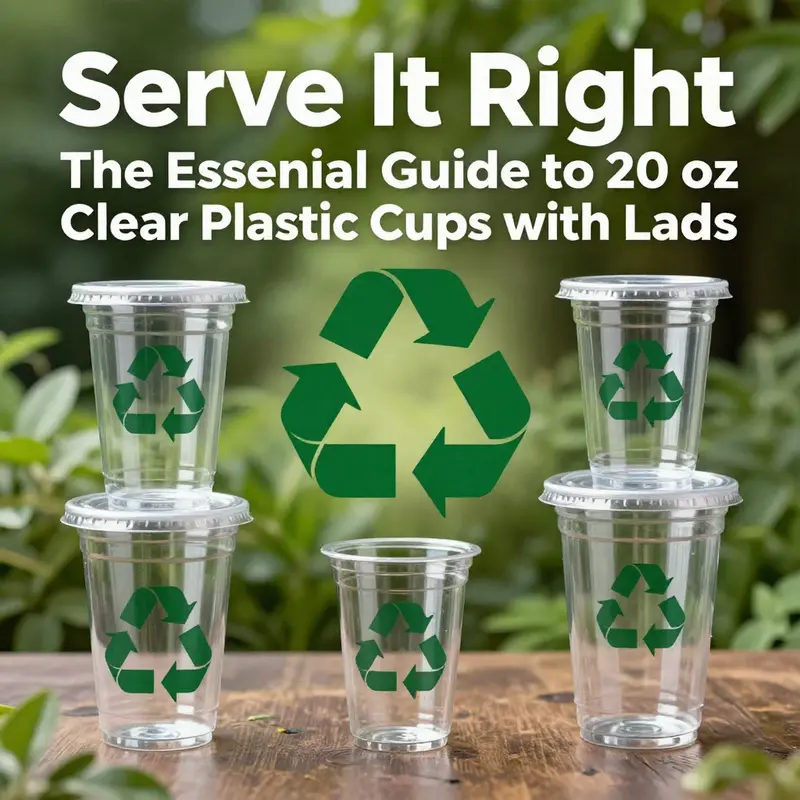
The translucent charm of a 20-ounce cup is more than aesthetic. It promises a clear view of what you’re about to drink, from iced coffee to fruit-forward smoothies, and it travels well from event tents to backyard barbecues. That clarity is achieved with PET, a polymer known for being light, durable, and shatter-resistant. In ordinary use, this material makes cold beverages feel accessible and convenient, limiting breakage and mess while maintaining a neat presentation. Yet beneath that apparent simplicity lies a web of environmental implications that challenge both producers and consumers to rethink how single-use drinkware fits into a more sustainable economy. The environmental footprint of these cups begins with their material choices and extends through every stage of their life, from creation to disposal, and into the recycling streams that try to absorb them.
PET’s appeal rests on practical properties. It is strong for its weight, transparent enough to show the beverage, and relatively inexpensive to manufacture at scale. Those attributes have fueled a proliferation of 20-ounce clear cups with lids designed for cold drinks—drinks that crowd event lines and household kitchens alike. The same properties that enable easy transport and broad consumer acceptance also complicate end-of-life outcomes. PET is technically recyclable, but recycling rates remain disappointingly low in many places. In the United States, the broader category of PET bottles—widely collected and processed—has a recycling rate around thirty percent. The rate for cups, which are often smaller, more contaminated by food and drink residues, and composed of multiple components, is typically much lower. This dissonance between recyclability and actual recycling performance is one of the central tensions of the topic.
A major hurdle is contamination and design. When PET cups reach a recycling facility with residual liquids or foods, the stream can be contaminated, reducing the quality of the material that can be recovered. Even when the cup itself is made from PET, the accompanying lid is frequently a different polymer—such as polypropylene or high-density polyethylene. These disparate materials require separation to maintain the integrity of the plastic stream. In many regions, automated sorting relies on the assumption that items are distinct when in fact consumer behavior does not consistently separate cups from lids or remove accessories like straws. The result can be a rejection of whole batches, with the downstream recycling system paying a price in efficiency and material purity.
Design and disclosure play pivotal roles in whether a cup system can be recycled effectively. Even if a cup is labeled as recyclable, that label is only meaningful if the local recycling infrastructure can process the material and if consumers follow disposal guidelines. The problem is not just the option to recycle; it is the practical ability to do so in everyday life. For example, cups that are not designed for easy disassembly hinder the manual separation process, leaving up to waste-management workers to determine what can and cannot be recycled. When lids and cups are not distinguishable or easy to separate, the entire item may be diverted to landfill rather than entry into a recycling stream. This is a reminder that the life cycle of a single-use cup is interconnected with the capacity and habits of the communities that collect and process recyclables.
Beyond the technicalities of the process, consumer behavior and infrastructure determine real-world outcomes. In markets where curbside collection is robust, with clear instructions and accessible facilities, the likelihood of recycling increases. In places where infrastructure is uneven or consumer education lags, the same product becomes a symbol of waste. Some campaigns have highlighted recyclability by emphasizing the ease of recycling in certain jurisdictions, but the truth remains nuanced: a claim of 100 percent recyclability is only as credible as the local end-of-life chain that can absorb the material. This is not a critique of individuals but of systemic gaps that make responsible disposal inconsistent. The result is a mismatch between the convenience of a disposable cup and the longer-term needs of a circular economy.
The path forward hinges on several converging strategies. First, there is a push toward material and design innovations that make recycling easier and more reliable. This includes standardizing the materials used for cups and lids and encouraging compatibility with existing sorting systems. When possible, choosing materials that can be separated with simple, passive steps at the consumer level or that share common recycling streams reduces friction in processing. Second, consumer education is essential. Clear labeling about disposal and recycling expectations helps households and events align their practices with local capabilities. Simple, consistent guidance—what to rinse, what to separate, and where to drop off—can shift behavior enough to boost capture rates. Third, there is growing interest in alternative solutions that balance convenience with environmental responsibility. Plant-based bioplastics and, importantly, reusable cup systems offer potential paths that reduce dependence on single-use plastics while maintaining the benefits of portability and ease of service at events and in daily life.
As a broader societal response, many observers advocate for better collection and recycling systems. A robust system includes transparent reporting on what is collected, where it goes, and how it ends up recycled. It also involves policy levers, such as extended producer responsibility, deposit-return schemes, and incentives for designers to adopt recyclable configurations. When the design of a cup aligns with the capabilities of the local recycling stream, and when consumers understand and participate in proper disposal, the environmental benefits of PET cups can be realized to a greater extent. The bottom line is that every cup’s journey—from factory floor to waste stream—depends not only on its material properties but on the ecosystem surrounding it.
In the meantime, a balanced perspective is warranted. PET cups with lids deliver undeniable value in terms of convenience, temperature control, and user experience. They keep beverages secure during transport and reduce spill risk, which can be especially important at large gatherings or in transit. Yet the environmental trade-offs invite a deliberate reckoning: can we preserve the benefits of a clear, reliable cup while diminishing its ecological footprint? The answer is not a single invention but a combination of intelligent design, accountable recycling infrastructure, and informed consumer choices. For some applications, heightened reuse and slower turnover of cups may be feasible, while for others, targeted material substitutions could offer meaningful reductions in life-cycle impact. The reality is layered, and the best path forward will likely be a hybrid strategy tailored to local realities.
To illustrate how this complexity plays out in practice, consider the lifecycle from production to disposal. The initial energy intensity of PET production is tied to fossil-fuel use and emissions at the factory, followed by the transportation of raw materials and finished goods to warehouses and retailers. Once used, the cups must contend with the realities of washing, compacting, and sorting in recycling facilities. Each of these steps presents opportunities for emissions, energy consumption, and material loss, depending on how efficiently the system operates and how vigorously the public participates in recovery. In places where bottle-to-bottle recycling streams are well-established and where consumer inputs are consistently clean and properly segregated, the cup’s end-of-life impact can be mitigated. In places without such infrastructure, the same cup is more likely to contribute to landfill pressure.
The dialogue around packaging and sustainability often returns to the tension between convenience and responsibility. The choice to use disposable cups is not inherently wrong, but it demands a commitment to better disposal practices, better design, and better policy support. One practical implication of this mindset is the attention paid to the end-of-life pathway when planning events or operations that rely on single-use drinkware. Organizers can, for example, designate clearly labeled recycling and compost streams where appropriate, educate participants about disposal expectations, and partner with waste-management services that understand the local recycling landscape. Even small shifts, such as providing accessible education on rinsing cups and removing lids before disposal, can reduce contamination and improve downstream recyclability. Each improvement compounds over time and contributes to a broader shift toward more responsible consumption patterns.
One tangible takeaway is the importance of interoperability between product design and community infrastructure. For those tasked with sourcing and managing beverage service ware, the question becomes not only what material is used but how it will be collected, sorted, and processed after use. This is where the broader ecosystem—the supply chain, local government initiatives, and consumer behavior—meets the chemistry of the cup itself. When teams consider durability, transparency, and cost alongside the realities of recycling capacity, they can identify configurations that maximize recyclability without sacrificing the benefits that make PET cups appealing in the first place. In many regions, this means embracing a mixed approach: retaining the practicality of PET for cold beverages where disposal and recovery infrastructure support it, while exploring reusable systems for high-traffic venues and events where waste volumes are concentrated and recovery rates can be improved through structured programs.
For further reading on recycling pathways and best practices, researchers and practitioners point to centralized resources that compile the latest data and guidelines. These resources emphasize not only the technical aspects of material recovery but also the social and logistical foundations that enable efficient recycling. As with any material that serves broad public needs, the real difference comes from aligning design, policy, and behavior to create a coherent, achievable system. The journey from clarity to consequence is not a straight line; it is a lattice of decisions that must be revisited as technologies evolve and as communities invest in better waste-management capabilities. The aim is not to vilify a single product but to elevate the conversation around how disposable drinkware fits into a resilient, circular economy.
To explore practical examples of how to approach this balance in real-world settings and to connect with suppliers that prioritize recyclability in line with local capabilities, readers can visit one example of the range of disposable clear cups designed for outdoor and event use. disposable clear plastic cup for outdoor picnics and events. The broader takeaway remains that material choice, product design, consumer behavior, and infrastructure must advance together to transform the environmental footprint of these ubiquitous vessels. The journey toward a more sustainable consumption pattern for single-use drinkware is ongoing, and it requires continued collaboration across manufacturers, waste managers, policymakers, and everyday consumers.
External reference for deeper context on recycling principles and industry guidelines can be found at the Plastics Recycling Center of Excellence. It offers up-to-date data and best practices for PET recycling in the United States and beyond, helping to frame how local capabilities shape the fate of a seemingly simple cup. https://www.plasticsrecycling.org/
Clear Choice, Complex Market: Navigating Trends and Price Dynamics of 20 oz PET Cups with Lids
A high-performing ecosystem surrounds the everyday plastic cup, yet behind the familiar clear cylinder lies a web of trends, scale, and price that shape how businesses and event organizers choose their disposable drinkware. The 20 oz clear plastic cup with a lid is not merely a container; it is a small, efficient platform for delivering beverages—from iced coffee and milk tea to fruit smoothies and water infused with herbs. Consumers value the ability to glimpse the beverage inside, a feature that enhances perceived freshness and appeal. That visual clarity is not an accident but a deliberate attribute engineered into PET, the durable, lightweight plastic that dominates this segment. PET’s combination of clarity, resilience, and recyclability makes it a practical choice for cold drinks, where the need for shatter resistance and secure lids is heightened by on-the-go consumption. In markets where events, takeout, and casual gatherings intersect with brand visibility, the 20 oz cup with a lid becomes a critical touchpoint. It carries not only liquid but also a brand story, a service promise, and an experience that travels outside the store, across parking lots, and onto sidewalks.
From a strategic perspective, the market for these cups is defined by two forces that often move in tandem: scale and customization. Production in major manufacturing hubs—most notably in China—has reached astonishing levels, with capacity estimates indicating that plants can churn out hundreds of thousands of units each day. This scale is not just a matter of volume; it underpins the price landscape. When a factory can run near its maximum capacity, per-unit costs decline, enabling suppliers to offer bulk packages at compelling prices. For buyers, that translates into real savings when purchasing in quantities such as hundreds or thousands of units, rather than dozens. Yet scale alone does not determine the market. The breadth of customization options—logo printing, branding, and even lid and straw configurations—creates a nuanced pricing spectrum. The same 20 oz format can be plain, promotional, or branded, and the cost delta between a plain cup and a customized one can be material, especially when the order includes high-visibility branding or a complex print. The manufacturing base supports this spectrum with a robust set of capabilities, making it feasible for brands to pursue a custom look at a competitive price point. In practical terms, a supplier might offer standard, unbranded cups at a lower baseline while presenting tiered pricing for custom logos, varied lid designs, or bundled shipments that include straws and branding inserts.
The price architecture for these cups shows how competitive the landscape has become. A ballpark comparison reveals the pressures and opportunities that buyers encounter. For example, a 100-pack of a larger cup with lids and straws, even when not identical to the 20 oz size in question, is often listed around the $19.99 mark. If a 20 oz version follows a similar packaging logic but with slightly smaller volume, the price point is typically in the same neighborhood or a touch lower, reflecting the smaller fill capacity and the efficiency of material use per unit. The presence of promotions is common in this space, illustrating the intense price competition among suppliers. A discount—such as a reduction of nearly five dollars on a 20 oz cup with lids—signals how promotional pricing can complement ongoing cost advantages from scale. For buyers, these patterns mean there is both a baseline fiscal expectation and a window for negotiation that reflects current demand, supply commitments, and the willingness of a supplier to secure a long-term relationship.
Beyond the numbers, the market’s trajectory is increasingly shaped by sustainability and design flexibility. Consumers are more conscious of packaging’s environmental footprint, and brands are recognizing opportunities to align disposable drinkware with ecological values. Recyclability, curbside sorting compatibility, and the use of food-grade PET that preserves beverage quality all influence purchasing decisions. For the supplier, presenting eco-conscious options—whether in the form of recycled-content PET, easy-to-recycle components, or clear labeling that facilitates recycling—can differentiate a standard cup from a more appealing, brand-forward solution. Design flexibility remains a major lever. Custom printing, logo integration, and even color accents on lids can transform a simple cup into a portable marketing tool. The combination of clear visibility and branded customization offers a compelling value proposition for events, coffee shops, quick-service concepts, and corporate functions that want to project consistency and professionalism without sacrificing practicality.
The sourcing landscape supports these ambitions with a well-developed ecosystem of bulk manufacturers and online distributors. Buyers increasingly approach procurement with a tiered mindset: secure baseline, then layer in customization as needed. This approach helps ensure reliable supply while preserving budget room for branding initiatives. The global nature of production—the convergence of cost efficiencies, rapid logistics, and quality control—means buyers can assemble a pipeline that blends cost savings with timely delivery. A mature market for clear cups with lids also means that procurement teams can leverage standard terms, negotiated lead times, and long-term contracts to stabilize prices amid seasonal demand spikes, promotions, or shifts in consumer beverage trends. The result is a buying environment that rewards thoughtful planning, diversified supplier engagement, and a willingness to invest in branding when it aligns with overall marketing goals.
For those exploring options online, the spectrum of choices often includes bulk bundles with lids and sometimes straws, designed to minimize spills during transport and to maintain beverage integrity on the move. The ability to pair cups with compatible lids and straw components is not merely a convenience; it reduces operational friction for catering, event management, and takeout services. A practical takeaway for purchasers is to assess not just the per-unit price, but the total cost of ownership across the order. This includes packaging, lids, straws, branding costs, and the potential savings derived from a single shipment that consolidates multiple SKUs or branding iterations. In many cases, suppliers can tailor packaging configurations to align with the customer’s distribution model, whether the cups are destined for a fixed-location café network, mobile beverage trucks, or large-scale outdoor events.
The decision calculus becomes even more intricate when considering sustainability credentials alongside price. Modern buyers often demand transparency about the material composition, recyclability, and end-of-life handling of cups and lids. While PET remains the dominant material, the market rewards suppliers who can demonstrate responsible sourcing and clear post-consumer recyclability data. This aligns with broader consumer expectations and helps brands tell a consistent story about their commitment to the environment. In turn, cup manufacturers and distributors that can couple competitive pricing with credible environmental attributes are better positioned to win long-term partnerships, particularly in sectors where seasonal demand and event-based purchasing are the norm.
Within this framework, the internal landscape of supplier pages and product assortments becomes a practical map for procurement teams. A representative product page may feature variants by size, lid type, and customization level, sometimes bundled with printed straws or logo-ready inserts. Buyers who navigate these pages with an eye for consistency—ensuring that lid fit, cup diameter, and stacking compatibility align across the portfolio—can achieve smoother inventory management and fewer returns due to misfit components. The interplay between font, color, and branding scale is subtle but real: a consistent lid color, a visible logo, or a branded wrap can elevate a standard cup into a recognizable marker of a brand’s presence, whether perched on a café counter or bobbing along a catered event itinerary.
For readers who want a concrete touchpoint on supplier dynamics and pricing frameworks, online supplier guides and market analyses offer valuable context. These resources illuminate how production capacity, logistics, and bulk packaging influence price tiers and delivery terms. As a practical step, buyers can compare quotes across multiple suppliers to identify where the best value lies—not just in unit costs but in the reliability of delivery windows, consistency in lid compatibility, and the feasibility of co-branded packaging. The market’s maturity means that even as prices move with feedstock costs and global shipping cycles, the combination of scale and customization continues to deliver meaningful, measurable value for buyers who approach procurement strategically. When pondering how to approach a new bulk order, consider how a supplier’s capability to print logos, offer ready-to-ship bundles, and support a seamless reordering process can reduce lead times and administrative overhead.
To anchor these reflections in a practical observation, one can explore examples from product pages that highlight the breadth of options available to buyers seeking clear plastic cups with lids. The accessible model of these suppliers—where bulk pricing, customization, and fast fulfillment intersect—illustrates why the market remains robust and why institutions of all sizes gravitate toward bulk purchases for events, takeout programs, and everyday service. For a direct look at category pages and the details that shape expectations around design, packaging, and pricing, you can explore the following resource: disposable-clear-plastic-cup-outdoor-picnic-pet-cup-drinking-cup-for-parties-birthdays-weddings-camping-utensils. This page illustrates how a straightforward product can be presented with clarity, efficiency, and branding potential, reinforcing the central message that price is only part of the value equation.
As the market continues to evolve, buyers should also stay attuned to external analyses and procurement guides that capture the broader price dynamics and sourcing strategies in play. An external resource that provides a macro view of bulk clear cups with lids, including manufacturing scale, pricing, and procurement considerations, can help frame daily decisions within a larger, long-term plan. External resource: https://www.sourcing.org.cn/bulk-clear-cups-with-lids-supplier-guide/
In sum, the 20 oz clear PET cup with a lid sits at a compelling intersection of visible beverage presentation, practical transport, and scalable production. Price and value are not built on a single factor but on the alignment of capacity, customization, and brand objectives. The market rewards buyers who can articulate their needs clearly, compare options with an eye toward total cost of ownership, and leverage supplier capabilities to create consistent, high-quality drink experiences across channels. The result is a cycle where, as demand metrics rise for milk tea, smoothies, and iced beverages, scale enables more aggressive pricing, while customization enables stronger brand resonance. When these elements converge, the simple act of pouring a cold drink into a clear cup becomes a strategically meaningful moment in a broader portfolio of product, packaging, and consumer experience.
Final thoughts
In summary, 20 oz clear plastic cups with lids offer a multitude of advantages for businesses in the food and beverage sector. Their durable construction ensures reliability and a premium look, while bulk purchasing options cater to any event scale, from casual picnics to large corporate functions. Custom branding transforms ordinary cups into marketing tools that enhance visibility and customer engagement. Moreover, choosing recyclable materials supports eco-friendly practices, aligning with modern sustainability goals. As market trends continue to evolve, staying informed about pricing and options enables businesses to make the most strategic choices for their beverage services.