
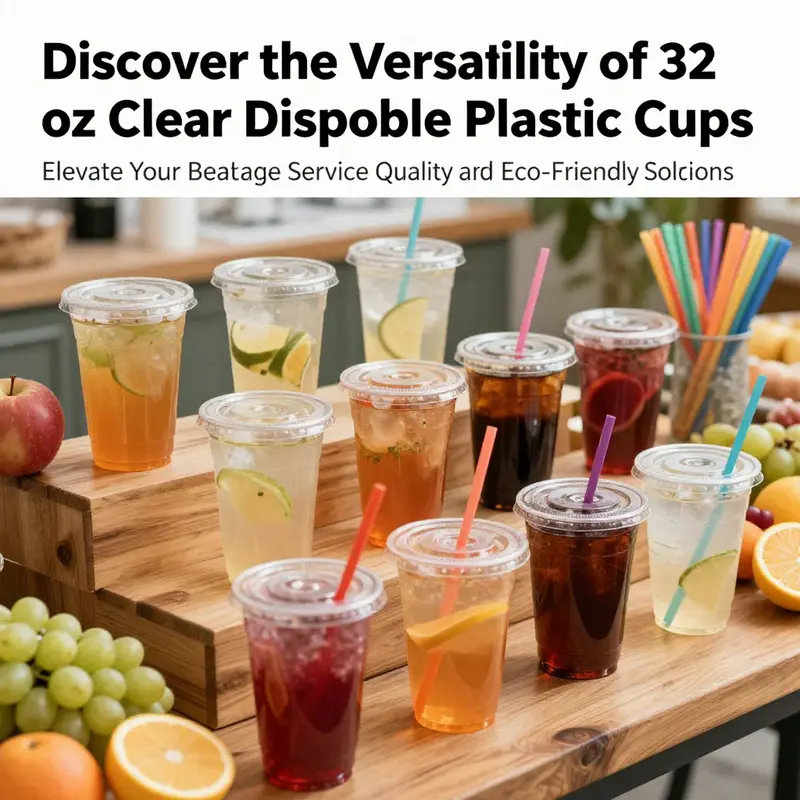
Whether you’re running a bubble tea shop, a fast-paced restaurant, or planning a large corporate event, the choice of disposable cups can significantly impact both your service and brand presentation. The 32 oz clear disposable plastic cups are ideal for a variety of beverages, food orders, and event needs. In this guide, we explore the material properties, design considerations, application scenarios, and pricing strategies for 32 oz clear disposable plastic cups. Understanding these aspects will help your business maintain quality, enhance customer satisfaction, and optimize operational efficiency.
Crystal Clarity, Quiet Strength: The Material Truth Behind 32 oz Clear Disposable Plastic Cups
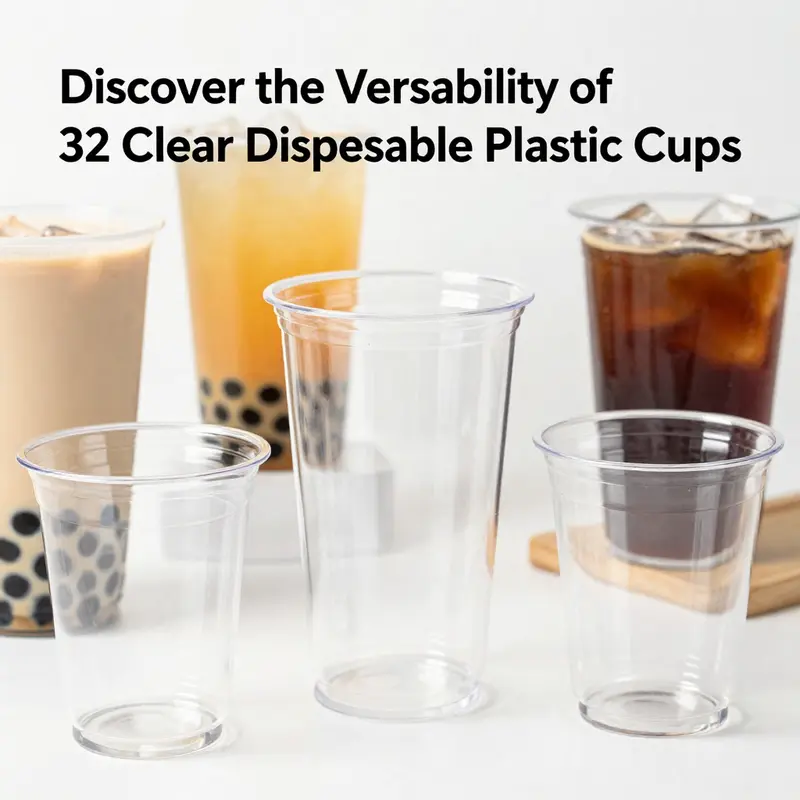
A 32 oz clear disposable plastic cup may look simple, but its material foundation sets the stage for every moment of use, from the first pour to the final disposal decision. This size is popular in cafes serving large iced beverages, catering events, and bulk beverage service where reliability matters. The cup’s performance hinges on a careful balance of safety, durability, and visibility. In practice, two plastics stand out for this format: polypropylene (PP) and polyethylene terephthalate (PET), with polylactic acid (PLA) playing an increasingly visible role for sustainability-minded brands. The distinctions between these materials matter in real-world service: heat tolerance, rigidity, clarity, seal compatibility, and alignment with regulatory and environmental expectations. In practical terms, the 32 oz cup is a conduit for experience; the material informs cold-beverage reliability, handling comfort during long shifts, and the perception of brand quality as customers gaze through transparent walls.
Durability and safety are not mutually exclusive. PET, when food-grade, offers strength and clarity, often described as shatterproof in ordinary handling, an attribute that matters at outdoor events, during transit, or in crowded service lines. The sensation of a sturdy PET cup reflects molecular structure and manufacture that resists cracking under normal stresses, enabling it to carry cold drinks with reduced leakage risk. The rigid PET wall helps stacking and transport, crucial for bulk orders and delivery logistics.
PP emphasizes heat resilience and lightness. Food-grade PP cups handle hot beverages more confidently, withstanding temperatures near 100 C in some formulations. That makes PP practical for hot beverages on the go or blended hot/cold beverages. PP’s wall can resist deformation, preserve lid fit, and prevent leaks as steam and pressure accumulate during transit. The lid interface benefits from PP’s compatibility with precise sealing and user-friendly handling.
Environmental and regulatory considerations add nuance. PLA, derived from renewable resources, offers compostability where facilities exist to process it. PLA’s sustainability narrative is compelling, but end-of-life processing must align with local capabilities; some programs accept PLA only in compost streams or require separation to avoid contamination. Buyers should evaluate disposal infrastructure when choosing PLA. The overall decision among PP, PET, and PLA considers intended use, disposal options, and which certifications align with the markets where the product circulates.
Transparency is a functional attribute. Clear PET and PP enable beverage visuals that showcase color, texture, and ingredients. In promotions or displays, the cup’s clarity helps the beverage become the focal point, while aiding quality control by revealing crema, layered hues, or visible fruit bits. Manufacturing processes that preserve surface finish and optical properties are essential to maintain this clarity.
Safety and regulatory compliance underpin confidence. Food-contact materials in the United States must meet FDA standards, with EU 1935/2004 shaping the framework in Europe. Resins, additives, and colorants are evaluated to prevent harmful migration under expected conditions. Food-grade labeling signals compliance with these expectations, and certifications such as ISO 22000, BRC, or FSC can reinforce responsible sourcing. When choosing materials for a 32 oz cup, buyers weigh not only safety but the broader sustainability story and supply chain integrity.
Performance in use depends on thoughtful design. Cups often incorporate reinforced structures and reliable lids to manage volume and movement. PET’s rigidity aids lid fit and spill resistance; PP’s wall resilience supports repeated stacking while maintaining a secure seal. Wall thickness, ribs, and geometry are tailored to end-use scenarios—hot or cold beverages, fast service, or bulk distribution—so customers experience steadiness and confidence with every sip.
End-of-life considerations matter as much as on-cup performance. PET and PP cups are generally recyclable within established streams, while PLA requires appropriate composting infrastructure where available. The sustainability narrative becomes a system decision that includes usage, collection, and processing facilities. For brands seeking eco-friendly positioning, PLA can be attractive when disposal options support composting rather than recycling contamination.
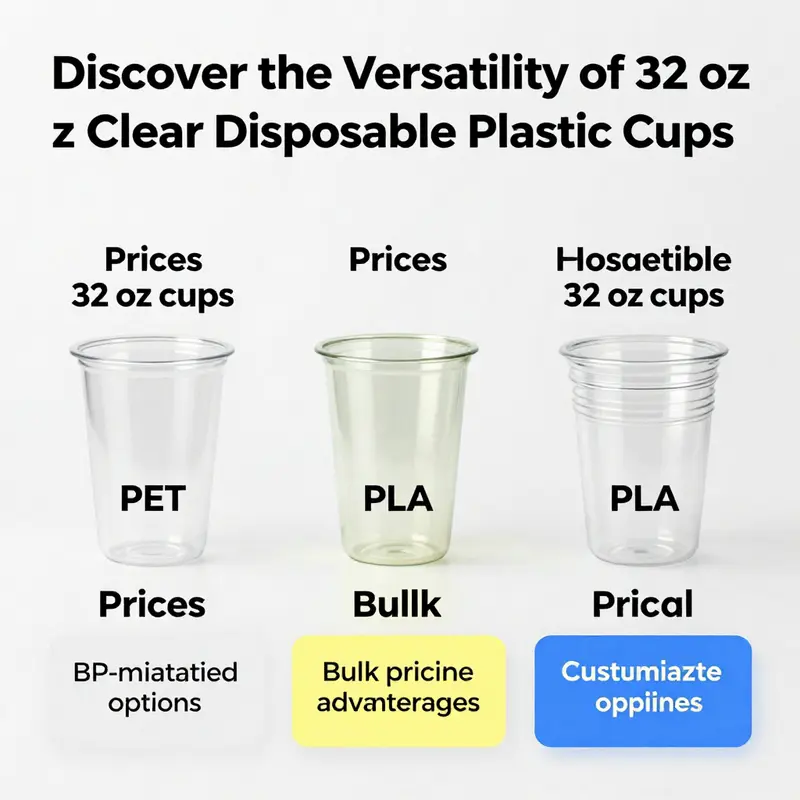
In practice, procurement often involves balance. Current market observations suggest PET cups may carry a premium for clarity and stiffness, while PP cups typically price lower with advantages in hot-beverage service. PLA options may sit between, reflecting eco-conscious branding alongside disposal considerations. When ordering in bulk, buyers should consider minimum quantities, customization needs, and compatibility with lids, sleeves, and branding elements. A practical strategy is to align material choice with the service model: prioritize PP for hot beverages and flexible handling, prefer PET for visibility and rigidity in cold drinks, and consider PLA only where composting infrastructure exists and is verifiable.
If you want concrete market positioning, supplier pages offer summarized features, including clear visibility, leak-resistant designs, and compatibility with various lid types. The combination of food-grade safety, labeling, and brand-enhancing options such as silkscreen or laser branding demonstrates that a cup is more than a container; it is a platform for service experience and brand story.
Ultimately, selecting between PET, PP, or PLA depends on the trade-offs customers are willing to accept: clarity and cold resilience, or heat tolerance and budget. The best choice aligns with the business model, service environment, and consumer expectations in the markets you serve. In that alignment, the cup supports reliability, attractive presentation, and responsible packaging as a small but vital component of modern beverage service. For readers seeking deeper regulatory context, consult the FDA materials on food-contact and related regulatory frameworks.
Seeing Size and Substance: Design, Capacity, and the Practical Reality of 32 oz Clear Disposable Cups
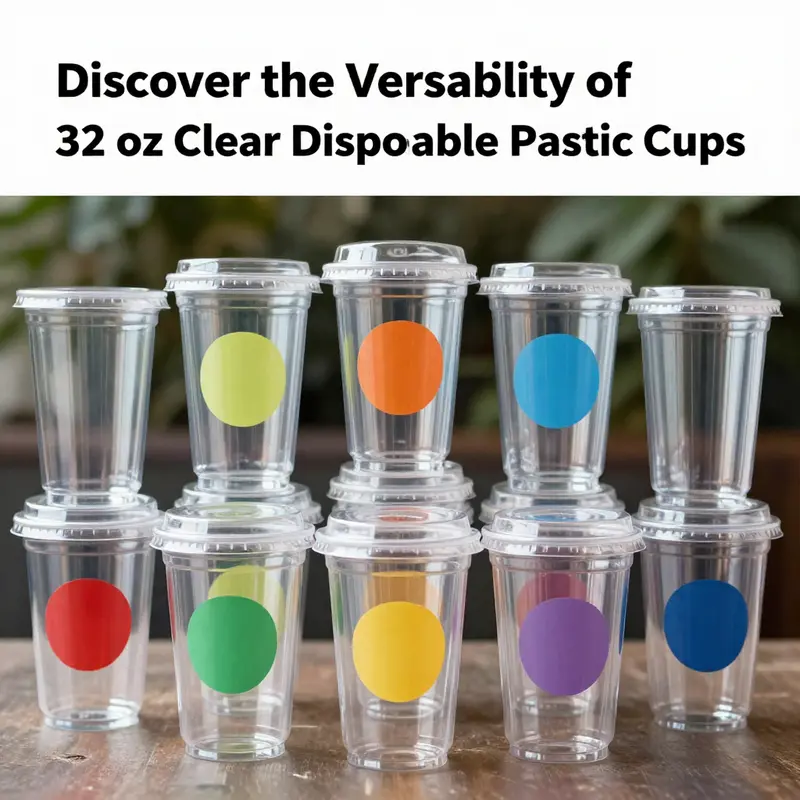
The large, crystal-clear 32 oz cup sits at the intersection of beverage culture, logistics, and design. Its silhouette is simple, but the decisions behind its shape, material, and capacity are anything but. In the hands of a barista pulling a grand iced coffee, a caterer serving a fruit smoothie at a festival, or a hospital canteen distributing a nutritional drink, this cup becomes a tiny yet consequential instrument of experience, safety, and efficiency. A single cup must be transparent enough to display a drink’s color and texture, strong enough to withstand the momentary rigors of transport, and economical enough to justify single-use dispensing across dozens or hundreds of servings. The design choices—material selection, lid compatibility, and the overall geometry—frame what is possible in production, delivery, and brand storytelling, all while meeting rigorous safety and regulatory expectations.\n\nMaterial technology anchors the conversation. In many high-volume contexts, the primary material is food-grade PET, polypropylene’s cousin in the plastic family, celebrated for its clarity and resilience. PET’s transparency is nearly unrivaled among common single-use plastics, a quality that invites customers to visually assess the beverage—an iced tea’s amber glow, a fruit smoothie’s vibrant gradient, or the layered hues of a bubble tea. This visibility is not merely aesthetic; it supports consumer perception of freshness and quality, encouraging trust in the product inside. PET also brings practical durability: it is lightweight, which reduces shipping weight and makes handling easier for staff and customers alike. For beverages carried in open outdoor environments or during transit, PET’s reinforced structures help resist bulges when carbonation or pressure from cold temperatures plays a role, reducing the risk of leakage or breakage during service or movement.\n\nBut PET is not the only option in the 32 oz category. PP, or polypropylene, plays a complementary role, particularly where heat exposure or short-term reuse considerations are relevant. PP cups are known for their heat resistance, withstanding temperatures around one hundred degrees Celsius, which makes them suitable for certain hot beverages or warmer serving conditions when the lid and sealing system are designed to manage thermal expansion and pressure. The weight-to-strength ratio of PP contributes to a cost-effective, durable cup that remains comfortable to hold and easy to stack. This balance matters in quick-service settings where speed and portion control are essential. Then there is PLA, polylactic acid, a biodegradable alternative that aligns with sustainability goals and green branding ambitions. PLA cups offer a path for brands seeking an eco-friendly narrative, especially in markets where consumers reward compostable or renewable-content packaging. Yet PLA’s performance profile can differ from PET and PP under heat and in long-term storage, so its adoption often involves trade-offs between environmental messaging and practical use conditions.\n\nThe capacity of 32 oz—roughly 946 milliliters—serves a deliberate purpose in menu design and service flow. It enables large servings of iced beverages, heavyweight milk teas, fruit drinks, or blended coffees without forcing customers to downsize. In the bustling atmosphere of a cafe, a food truck, or a large event, a single cup size can streamline the menu architecture, reduce decision fatigue for customers, and support a consistent service tempo. The capacity also interacts with the cup’s design features, including lids and seals. Most 32 oz configurations come with flat or slightly domed lids, and many designs offer leak-proof performance with a secure fit and integrated straw holes. This combination of lid geometry and material rigidity minimizes spills during transport from drink station to table or curb, a critical factor in high-volume settings where even small leaks can disrupt service and create waste.\n\nThe physical design is more than just capacity—it is about grip, stability, and user comfort. A well-considered cup shape can reduce slip in a crowded environment, particularly when hands are gloved, wet, or carrying multiple items. Some versions incorporate ergonomic grip contours or tapered profiles that naturally guide the fingers toward a secure hold without compromising the cup’s stacking efficiency. The see-through aspect of the cup heightens branding opportunities and product appeal. Because what customers see is the color, texture, and layering of the beverage, the cup becomes a living advertisement for the drink’s quality. In practice, this transparency means brands can lean on the drink’s visual identity to encourage purchase and repeat visits—without relying on elaborate in- cup decorations that could complicate recycling streams.\n\nThe decision matrix for material selection also weighs safety and compliance. Food-grade PET, PP, and PLA must meet regulatory expectations to ensure that migration of substances is controlled under the conditions in which the cups are used. In many markets, producers align with standards such as FDA regulations or European food-contact rules, along with broader quality systems like ISO or BRC certifications to demonstrate consistent production and safety practices. The commitment to food-grade materials is not merely about compliance; it is a pledge to consumers that the cup in hand will not introduce unsafe elements into their beverage experience. In addition to safety, recyclability and end-of-life considerations are increasingly important. PET is widely accepted in recycling streams where local infrastructure supports it, which informs procurement decisions where sustainability continues to be a strategic differentiator. PLA, while offering compostability in some contexts, requires suitable industrial composting facilities and clear labeling to avoid contamination of recycling streams. The choice among PET, PP, and PLA thus becomes a balancing act between clarity, durability, heat tolerance, environmental goals, and the practical realities of the business’ supply chain and waste stewardship commitments.\n\nFrom a design and production perspective, the 32 oz cup must also be compatible with a family of lids and accessories. Leak-proof lids that feature integrated straw access, a secure snap-fit, and appropriate venting when necessary are essential to preventing spills during transit and to ensuring customer confidence in the product. The lid design, in turn, interacts with the overall geometry of the cup. A snug lid requires precise tolerances in diameter and wall thickness, which can influence manufacturing cost and yield. In environments where rapid assembly and high throughput are critical, even modest improvements in lid fit or cup rigidity can yield measurable gains in service speed and customer satisfaction. For operators who rely on branding, there is room for customization—silkscreen printing, hot stamping, or laser engraving enable menus to display logos, event branding, or corporate artwork on the cup itself. This capability turns a disposable vessel into a portable canvas for marketing while leveraging the clear cup’s transparency to keep the drink visible and attractive.\n\nIn terms of procurement and pricing, market data from early 2026 shows a continuum of options aligned with material choice and customization. PP cups with lids typically present a favorable unit cost in the low single digits per piece at large volumes, with price ranges commonly cited around $0.03 to $0.05 per unit, assuming MQlike orders exceed ten thousand units. Bulk orders may push the per-unit cost below $0.03, representing the efficiency of scale. PET cups with lids tend to be more expensive, reflecting their improved clarity and shatter resistance, with typical ranges of about $0.05 to $0.15 per unit. PLA options sit around $0.05 to $0.09 per unit but carry the environmental branding advantage that many buyers find compelling. Customization services—whether via silkscreen, heat stamping, or laser engraving—are usually offered as add-ons, with price implications tied to coverage area, color complexity, and volume. The flexibility to tailor cups with branding allows businesses to extend their brand identity into bulk packaging, supporting a cohesive customer experience from order to pickup.\n\nRegulatory and certification considerations cannot be ignored in this discussion. Reputable suppliers typically hold certifications attuned to food safety and quality management systems, including FDA or EU food-contact compliance, as well as ISO 22000 or BRC standards, with FSC certification sometimes cited for broader supply chain integrity. These assurances help ensure consumer safety, brand trust, and operational resilience. For operators who need to demonstrate sustainability credentials, the choice of resin—PET or PLA, for instance—becomes a narrative as well as a technical decision. The packaging story becomes part of a brand’s environmental communication, with recyclability or compostability positioned as a value proposition in line with consumer expectations and local waste-management capabilities.\n\nWith these design and capacity considerations in mind, the practical use cases for 32 oz clear disposable cups emerge clearly. In coffee shops and cafes, they support large iced beverages and milk teas that customers often prefer in generous portions. In food delivery and catering, they enable bulk distribution with reliable lid-seal integrity, reducing the likelihood of leakage during rapid handoffs and transit. At large events, clear visibility helps with color-coded drink stations and visually dynamic beverage displays, while the stackable form factor simplifies storage, loading, and restocking in crowded back-of-house environments. Medical and pharmaceutical settings may also employ food-grade cups for certain beverages or nutritional products, where compliance and material safety intersect with patient or consumer needs. The overarching narrative here is that a seemingly straightforward cup embodies a range of strategic choices—between speed and safety, visibility and sustainability, cost and customization—that shape how beverages are served, experienced, and perceived.\n\nTo support ongoing procurement decisions, it helps to think in terms of a holistic design and supply chain approach rather than in silos of material science or price alone. The right cup choice aligns with the beverage type, service model, and environmental strategy, as well as the retailer’s or venue’s branding goals. It also benefits from a reliable supplier ecosystem that can provide consistent quality, rapid lead times, and scalable customization. For readers who want to explore related packaging ecosystems and supply options beyond the cup itself, a broader look at custom takeaway packaging and disposable tableware can be informative. Custom takeaway packaging supplies offers a window into how brands pair cups with complementary packaging solutions for events, catering, and themed experiences, illustrating how the cup fits into a larger packaging narrative.\n\nExternal resource for broader industry context: https://www.industryweek.com/plastics/prime-plastic-cups-types-key-features-and-how-it-supports-industrial-performance\n\nThe bottom line is that the 32 oz clear disposable cup is more than a container. It is a design specimen that coordinates material science, ergonomic form, branding opportunities, and logistical practicality. Its success rests on selecting the right material for the intended use, pairing it with a compatible lid system, and integrating it into a procurement strategy that respects cost, sustainability, and regulatory expectations. When these elements align, the cup becomes a reliable workhorse in the modern beverage landscape, capable of supporting high-volume service while reinforcing a brand’s visual language and consumer trust. The result is a cohesive experience that begins with a clear outer shell and a beverage that speaks for itself through color, texture, and temperature, all wrapped in a design that balances performance with practicality and storytelling with stewardship.
Clarity in Action: The Versatile Role of 32 oz Clear Disposable Cups Across Service, Events, and Promotions
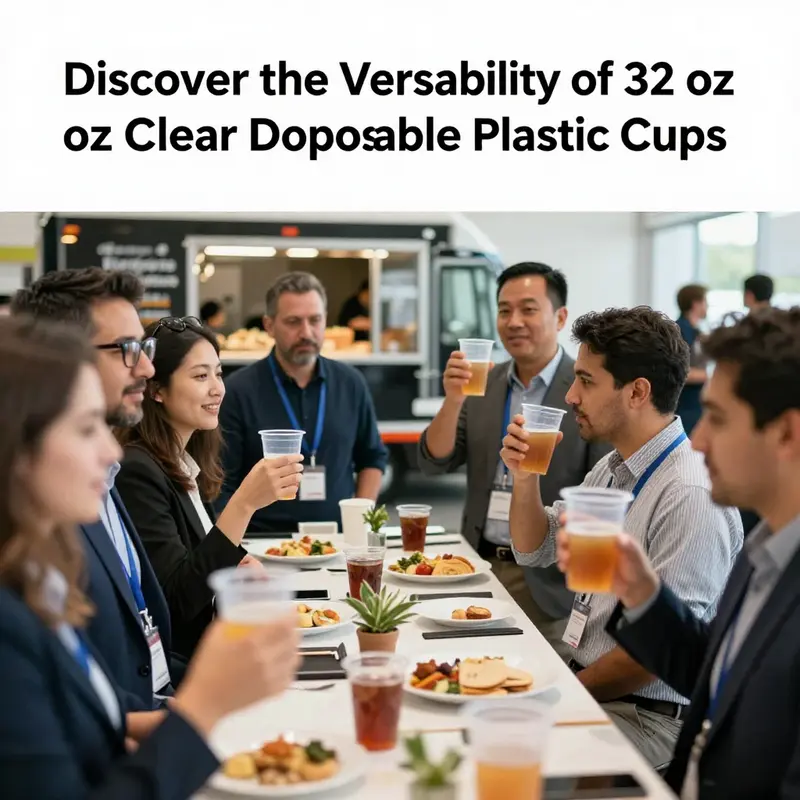
A large cup carries more than liquid; it carries customer expectations, branded moments, and the practical logistics of serving at scale. The 32 oz clear disposable cup sits at a strategic intersection of capacity, visibility, and convenience. Its sheer size signals value to the customer while its transparency invites a quick read of contents, layers, and even the quality of the drink itself. This combination—size plus clarity—shapes how venues, caterers, and retail operations deploy the cup in daily service, special events, and marketing campaigns. To understand its impact, it helps to examine the underlying materials, the way design supports handling and transport, and the scenarios in which the cup proves most effective. The journey from material choice to consumption is not merely a chain of technical facts; it is a chain of decisions about safety, speed, sustainability, and brand experience that unfolds every time a server fills a cup and hands it to a customer. In this narrative, the focus remains on 32 oz clear disposable cups as a practical instrument in food service, hospitality, and promotional settings, while acknowledging the broader regulatory and environmental context that governs their use.\n\nAt the heart of the 32 oz cup’s usefulness is material diversity. Many of these cups are manufactured from food-grade polypropylene, or PP, a thermoplastic known for dependable heat resistance, light weight, and durability. PP cups can typically withstand hot or warm beverages up to around 100°C, which means they’re suitable for hot coffee or tea in some applications, as well as cold drinks. The clear, smooth surface of PP not only showcases the drink but also supports branding through silkscreen or laser marking when customization is desired. In facilities where the cup will travel from kitchen to table, or from event site to vehicle trunk, PP’s combination of stiffness and break resistance helps minimize the chance of leaks or spills during handling. In certain contexts, manufacturers supplement PP with specialized lid designs that seal more securely, adding an extra layer of spill resistance during transport and in crowded spaces.\n\nAnother common material choice is PET, or polyethylene terephthalate, known for its high clarity and impact resistance. PET cups tend to offer even greater shatter resistance and durability in outdoor or high-traffic environments, where the risk of accidental drops or rough handling is higher. Clear PET cups maintain their transparency even after repeated handling, which makes them particularly suitable for displays at outdoor events, concessions lines, or touring food service where there is a premium on visibility of the beverage and its color or ingredients. When a cup travels with a lid, the combination of PET’s strength and a well-engineered seal can reduce spill risk dramatically, even in transit or at crowded venues. PLA provides another vector in the sustainability conversation. As a biodegradable alternative, PLA cups align with brands pursuing greener image and waste reduction strategies. While PLA is not a universal solution—composting infrastructure and material performance in certain conditions must be considered—it offers an option for buyers seeking to balance convenience with environmental responsibility. In practice, choosing among PP, PET, and PLA becomes a matter of weighing the drink’s temperature profile, the anticipated handling conditions, and the end-of-life preferences of the business or event.\n\nCapacity and design are more than just numbers. The standard 32 oz capacity translates into a sizable serving that minimizes refills and supports a perception of value, a factor that is central in fast-service, cafes, and promotional settings. Yet capacity alone does not guarantee a smooth user experience. The design must accommodate the realities of service workflows, storage, and transport. Flat or sealed lids are the most common closure options, balancing speed in a high-volume environment with the need to prevent leaks during delivery or carryout. In many applications, stacks of cups with lids can be pre-arranged for rapid assembly, enabling staff to work efficiently during peak hours or at busy events. The cups are also designed with transport in mind: they stack compactly for space-efficient storage, and the rigid walls help maintain form whether the cup is filled with a tall iced tea, a layered fruit tea, or a milkshake topped with toppings and ice.\n\nThe settings where these cups travel—from back-of-house to front-of-house, or from the stand to the customer’s hands—reflect a broad spectrum of use cases. In food service and fast-food environments, the 32 oz cup is a natural choice for large-volume beverages such as slushies, smoothies, milkshakes, iced tea, and fountain drinks. The large size makes the cup a focal point in value-driven promotions or combo meals, where the customer’s perception of getting more for less can influence purchase behavior. The lid’s leak-proof design is not merely a convenience feature; it is a safeguard that reduces waste during delivery or carryout, helps staff manage flows, and maintains cleaner service areas. The clear walls also enable staff and customers to verify fill levels, ensuring consistency in portioning, a factor that matters for both aesthetics and cost control. In cafes and specialty beverage shops, oversized iced coffee or cold brew drinks are increasingly popular. A clear cup allows patrons to appreciate the beverage’s visual composition—the gradient of syrups, the sparkle of ice, the color of coffee or tea—enhancing the sensory appeal that cafes lean on to differentiate themselves. For beverages that feature layers, a transparent cup can transform the drinking experience into a visual showcase, reinforcing branding and making social media shares more compelling.\n\nEvents and catering services reveal another dimension of the cup’s utility. Outdoor weddings, corporate functions, and festivals demand practical, economical, and visually clean solutions. The sturdiness of a 32 oz cup reduces worry about breakage in outdoor environments where glass is impractical, while the single-use convenience supports efficient cleanup. Ergonomic design elements, such as bucket-style handles or comfortable rims, aid in quick service and easy carrying by event staff, enabling attendants to manage large beverage stations with grace and speed. The clear plastic walls permit staff to monitor fill levels at a glance, a small but important detail when service lines move rapidly and guests expect consistent portions. For bulk operations—vending machine networks, grocery-store beverage dispensers, or school canteen systems—the 32 oz cup functions as a reliable, scalable container. The combination of large capacity and a stable structure helps reduce labor costs associated with cleaning and reusing cups, while allowing operators to standardize branding across a wide distribution network. In the realm of promotions and product sampling, the ability to present a generous sample in an eye-catching container is valuable. A transparent cup lets customers evaluate the beverage visually and invites curiosity about the product, increasing the likelihood of trial in a retail setting or at a trade show.\n\nThe health and wellness sector also makes use of these cups in hydration stations, protein shakes, or herbal infusions. The single-use design helps maintain hygiene in shared spaces such as fitness centers or spas, while the clear walls support quick checks for cleanliness and fill levels. In all these contexts, customization remains a practical lever. Suppliers widely support branding through silkscreen, hot stamping, or laser engraving. The ability to imprint logos, colors, or slogans on the cup or lid adds a marketing dimension, turning a functional item into a portable advertisement that travels with the guest. Customization becomes especially potent at events, where distinctive branding can reinforce a sponsor’s message or help guests remember the experience. The choice of material interacts with this branding strategy. If the cup is intended for hot beverages or for extended exposures to warmth, PP’s heat resistance might be prioritized, paired with a robust lid. If the priority is maximum visual clarity for a cold drink and a sleek, transparent appearance, PET may be the preferred material. If sustainability is central to the brand’s message, PLA offers a narrative thread that can be woven into the event’s overall sustainability story.\n\nFrom a procurement perspective, buyers weigh cost against performance and compliance. Data from early 2026 indicates that PP-based 32 oz cups with lids often retail in the vicinity of a few cents per unit at scale, with minimum orders typically in the tens of thousands. PET variants command a higher unit price, reflecting their greater clarity and durability, while PLA cups sit within a similar range but are selected for eco-conscious campaigns. Customization services—silkscreen printing, hot stamping, or laser engraving—add a further dimension to the total cost but deliver tangible branding benefits. The economics are not only about price per unit; they also hinge on the total cost of ownership, including potential waste disposal costs, the labor associated with cleaning reusable alternatives, and the convenience of single-use cups for events that require rapid turnover and easy cleanup. In a world where brands aim to combine speed with safety, the choice of cup becomes a decision that touches operations, guest experience, and corporate messaging.\n\nSafety and compliance underpin every material choice. Reputable suppliers align with food-grade standards to prevent the migration of potentially harmful substances into beverages. For buyers, that means looking for certifications such as FDA compliance and EU food-contact regulations, along with quality-management credentials that demonstrate consistent manufacturing practices. The presence of clear labeling and documentation helps buyers verify that the cups meet the required safety benchmarks before they ever reach a service line or an event site. In practice, this creates a reliable baseline for service environments where beverages are served to a broad audience, including children and sensitive populations. It also supports regulated industries such as healthcare and nutrition, where the packaging of beverages or nutritional supplements must meet stringent standards. The broader conversation about materials and safety highlights a core tension in disposable packaging: the desire for performance and convenience versus the imperative of environmental responsibility. PLA presents an option that aligns with sustainability marketing, but its performance in hot beverages, composting compatibility, and end-of-life processing must be weighed against the operational realities of a given venue or program. In many contexts, responsible procurement means evaluating the whole lifecycle of the cup—from raw material selection and manufacturing to waste handling and potential recycling or composting streams.\n\nIn the procurement sphere, practical sourcing often converges with branding strategy. For buyers who operate at scale, platforms that specialize in food-grade cups and lids offer access to a range of material choices, lid configurations, and customization options. The pricing landscape generally shows PP cups with lids as the most cost-efficient option at high volumes, followed by PET for higher clarity and durability, with PLA as a compelling but more specialized choice tied to sustainability narratives. Where to buy becomes a question of supply reliability, lead times, and supplier qualifications. The recommended approach is to align product selection with the business’s operational needs and brand goals. If speed and cost dominate, PP with a reliable lid and batch-print branding can serve most high-volume service contexts. If brand storytelling rests on visual appeal and outdoor resilience, PET cups with secure lids and a consistent supply chain may be preferable. For brands that want to emphasize environmental stewardship in their communications, PLA offers an avenue to weave sustainability into the guest experience, provided that end-of-life options are clearly communicated and realistically available in the venue’s waste management ecosystem.\n\nTo ground these considerations in a real-world sourcing frame, it helps to look at typical procurement threads. Bulk buyers often explore suppliers that can provide 32 oz clear disposable cups with lids, a combination that streamlines operations across multiple service points. Customization options add another layer of value, enabling brands to present a consistent image across catering, events, and retail channels. For those who want to understand current market dynamics and price ranges firsthand, large marketplaces remain a practical starting point. One representative sourcing route involves exploring bulk options on major platforms that host verified suppliers, where buyers can compare material choices, lids, printing methods, and minimum order quantities. The ability to request samples, review material specifications, and verify certifications before placing a large order helps reduce risk and align expectations. For teams planning campaigns that integrate packaging with marketing initiatives, the opportunity to customize with brand colors, logos, and messaging can be an important differentiator that extends the reach of an event or promotion beyond the beverage itself. In this space, the 32 oz clear disposable cup becomes more than a container; it becomes a canvas that communicates quality, value, and attention to detail.\n\nAs this discussion loops back to the broader article topic, the practical implications for operators become clear. The choice of 32 oz clear disposable cups with lids is rarely about a single property in isolation. It is about how the material, design, and capacity come together to support service speed, safety, and guest experience while also enabling branding and sustainability narratives. The cups play a role in shaping the sequence of customer interactions: from the moment a server fills the cup, through the act of handing it across a counter, to the moment a guest carries the cup to a table or a seat in the event space. When manufacturers and buyers coordinate these elements, the result is a smoother service flow, a more predictable handling process, and a clear, visible beverage that can contribute to upsell opportunities and brand recognition. In that sense, the cup is not merely a passive receptacle; it is a crafted instrument that helps a business deliver value, promise safety, and tell a story through the everyday act of pouring and presenting a drink.\n\nFor readers seeking a concrete glimpse into current product options and supplier arrangements, one representative internal resource can illuminate typical packaging configurations and customization capabilities. Disposable clear plastic cup for outdoor events demonstrates how a clear, sturdy container can be paired with lids and branding to serve at weddings, corporate gatherings, or casual gatherings in outdoor spaces. It illustrates how the cart of choices—material, cap design, branding method, and packaging format—aligns with the realities of event planning, inventory management, and guest experience. The broader context is that these cups exist not in isolation but as part of a system that includes lids, branding options, waste management considerations, and the logistics of bulk purchasing. Consumer-facing perception of quality, the speed of service, and the alignment of packaging with sustainability claims all hinge on the careful selection and application of these cups.\n\nExternal resources that inform the regulatory and safety expectations for food-contact materials help anchor the discussion in the broader framework of consumer protection and food safety. For readers seeking further guidance on how packaging interacts with food and beverages from a regulatory standpoint, the U.S. Food and Drug Administration provides comprehensive coverage of food-contact materials and related safety considerations. See the FDA’s overview of food-contact materials for more details on compliance expectations and safety criteria. https://www.fda.gov/food/packaging-labeling-food-contact-materials
null
null
Final thoughts
Choosing the right disposable cup can transform service efficiency and customer experience in your beverage business. Clear plastic cups in the 32 oz size provide versatility, durability, and eco-friendly options to suit any event. By understanding the material properties, design considerations, and application scenarios outlined in this guide, you can confidently procure the best solutions for your needs. Whether you prioritize sustainability with PLA or opt for the durable reliability of PP and PET, there’s a perfect cup waiting to enhance your service.