

As the demand for convenient dining options rises, 4 compartment disposable food containers have become a staple in the food industry. Ideal for bubble tea shops, restaurants, food trucks, catering services, and event planners, these containers offer an effective way to serve diverse meals while prioritizing safety and sustainability. Understanding the materials used, their role in preserving food quality, and the economic implications of sourcing these versatile containers can help businesses enhance their service and cater to environmentally-conscious consumers. Each chapter explores crucial aspects of 4 compartment disposable food containers and their significance in the food service landscape.
Sustainable Materials in Four-Compartment Takeout: Designing Eco-Conscious Containers for Modern Meals
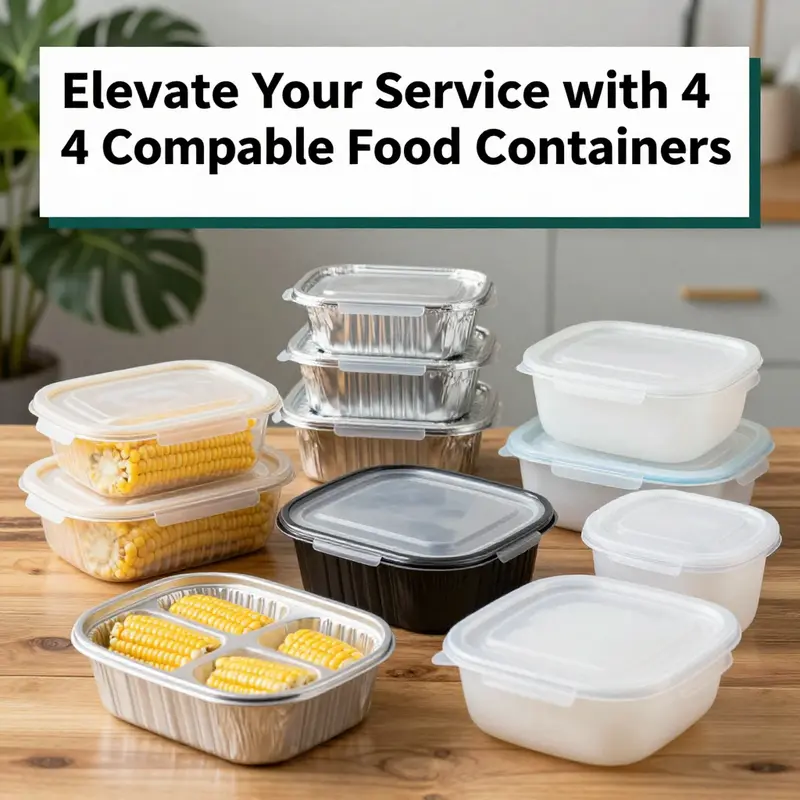
The four-compartment disposable food container has become more than a convenience; it is a stage where sustainability, design, and practical food service converge. In a market that values portion control, organized presentation, and the ability to keep components separate, the choice of material matters as much as the size and shape of the dish. This chapter traces how sustainable materials are woven into four-compartment containers, balancing performance with end-of-life considerations and the evolving expectations of consumers who want packaging that respects the planet without sacrificing convenience.
Among the most discussed options is polylactic acid, or PLA, a bio-based polymer derived from renewable resources such as corn starch or sugarcane. PLA can be formed into molded shapes that fit four-compartment geometries and can offer a clean, crisp appearance. When processed correctly, PLA can meet food-contact safety standards and, in facilities with industrial composting, may break down into compostable residues. However, the practical environmental benefit depends on local waste infrastructure; without industrial composting, the disposal pathway may default to landfilling or conventional recycling, limiting the carbon savings. Designers must consider barrier properties and heat resistance, which are often achieved through blends or coatings that remain compatible with composting streams. In short, PLA-based containers offer a potential pathway toward lower fossil-energy use, but end-of-life reality is shaped by the presence and accessibility of composting networks.
Molded fiber and recycled paperboard originate from post-consumer or post-industrial fibers and form rigid, impact-resistant compartments. They can provide excellent moisture and oil barriers in many configurations and are often lauded for being 100% fiber-based, recyclable, and compostable. Their end-of-life prospects align with municipal composting and fiber recycling streams, though performance can vary with moisture content and coating choices. Many molded fiber options are FDA-approved for contact with foods, supporting a wide range of service styles. The rustic aesthetic appeals to sustainability-conscious consumers, and the lack of petroleum-based resins helps minimize fossil content in waste streams. However, some molded fiber products require barrier liners or coatings to resist heavy oils, which can complicate recycling or composting if not matched to local programs.
Kraft paper containers offer durability, recyclability, and compostability with a natural appearance. They are widely reclaimable in many municipal recycling streams and can be combined with interior barrier layers to resist oils and moisture. The challenge is that very oily or liquid-heavy foods may require coatings or liners that affect recyclability or compostability; careful design can minimize these trade-offs. Kraft-based designs also pair well with brand storytelling about sustainability, enabling a clear alignment between packaging and corporate values. The environmental profile improves when coatings are minimized and when products are used in contexts that support fiber-based waste streams.
Aluminum foil containers provide heat retention and excellent barrier performance for certain meals, but their sustainability profile is more complex. The material is highly recyclable in many markets, yet the energy intensity of primary production is high, and closed-loop reuse is not always practical within municipal systems. Aluminum is not microwave-safe in typical consumer use-cases, which can complicate end-user experience. When evaluating four-compartment configurations, aluminum often serves as a functional option for special use cases but may offer limited end-of-life advantages compared with bio-based or fiber-based alternatives.
Lifecycle thinking and certifications are critical when comparing these material families. End-of-life pathways depend on local facilities, consumer disposal behavior, and the presence of composting or recycling streams. Certifications such as industrial compostability standards and food-contact approvals help buyers compare options with confidence and illuminate the potential for a material to re-enter biological or mechanical cycles. Lifecycle assessments can reveal trade-offs between energy use, water consumption, and emissions across the supply chain. A holistic approach considers production, transport, usage, and end-of-life processing to identify opportunities for real gains in environmental performance.
Practical guidance for practitioners includes several core principles. Align material choice with the end-of-life infrastructure available to customers; prioritize options that can participate in local composting or recycling streams. Seek clear certifications and robust performance data for barrier properties, heat tolerance, and safety. Consider total cost of ownership in a lifecycle sense, including potential savings from reduced waste, leakage, or product spoilage. Design for disassembly where possible, enabling waste streams to separate compatible materials. Communicate clearly with customers about disposal expectations and available programs.
The four-compartment design remains a useful vehicle for portion control and meal presentation, while the material choices determine the packaging’s environmental trajectory. By weighing PLA-based bio-plastics, molded fiber, recycled paperboard, kraft paper, and aluminum in light of local infrastructure, manufacturers can support a circular economy narrative without sacrificing performance. As waste-management systems evolve and materials science advances, continued attention to barrier improvements, certifications, and supply-chain transparency will enable four-compartment containers to deliver healthier outcomes for both people and the planet.
Guardians of Meal Integrity: How Four-Compartment Disposable Trays Preserve Safety, Flavor, and Sustainability
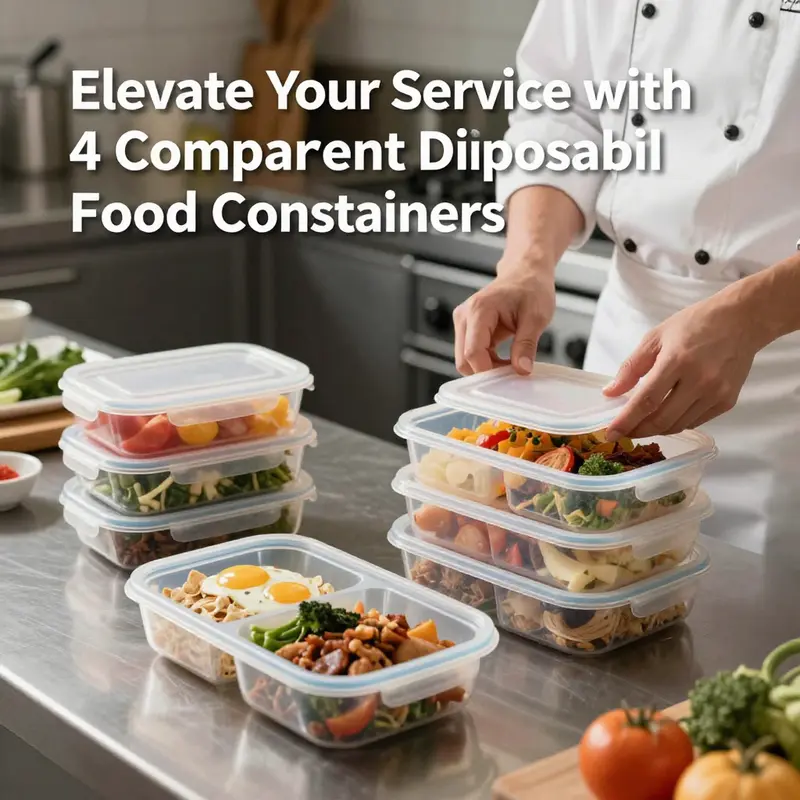
For readers who want a concrete, navigable example of how such packaging choices translate into everyday practice, consider the following reflection. A four-compartment container designed for mixed meals can reduce the need for multiple carry items and separate sauces, which in turn minimizes opportunities for spillage. The sturdy walls help prevent cross-talk between components during transport, a common source of compromised presentation when lids fail to seal properly. The lid design itself can contribute significantly to preserving freshness, especially in scenarios where meals travel longer distances or require protection from air exposure. This integrated approach—careful partitioning, reliable sealing, compatible materials, and mindful user education—contributes to safer, more satisfying meals while supporting sustainable ambitions. In sum, four-compartment disposable containers are a practical solution that embodies principles of safety, preservation, and stewardship, embodying a thoughtful response to current foodservice challenges without sacrificing efficiency or customer satisfaction.
Economies of Scale and the Four-Compartment Frontier: Bulk Sourcing, Sustainability, and the Business of Disposable Food Containers
The four-compartment disposable food container sits at a quiet crossroads where portion control, logistics, and sustainability converge. In the high-volume environments that feed millions—corporate cafeterias, school lunch programs, and large-scale catering—the ability to predefine portions, keep foods separated, and deliver meals efficiently matters as much as the food quality itself. The economics of these containers extend beyond the sticker price on a single unit. They ripple through procurement decisions, kitchen workflows, inventory management, and even a brand’s environmental narrative. When a manager maps out a packing and serving system, the four-compartment design becomes less a retail item and more a widget in a carefully choreographed supply chain, one whose cost, safety credentials, and material footprint shape every downstream outcome from waste to customer perception.
At the core of the economics are material choices. Plastic containers, particularly those made from food-grade polypropylene, have long held the appeal of durability, cost effectiveness, and versatility. In bulk, these PP-based four-compartment boxes can reach unit costs that are surprisingly low, especially when ordered with minimum quantities and predictable lead times. The appeal of lower per-piece pricing grows with volume, enabling operators to keep packaging costs in line with tight meal prices and high service volumes. The volume economics are simple in principle: the more units a business orders, the more the supplier spreads fixed costs such as tooling, setup, and freight across a larger base, producing incremental savings that show up as a lower per-piece price. For businesses eyeing annual packaging budgets, this creates a reliable incentive to standardize on a single, widely compatible design that can be used across menus and service formats, reducing both procurement complexity and the risk of misfit containers in the kitchen.
Yet the cost story isn’t one-note. The same plastic advantage can become a longer-term environmental concern, especially for brands that aim to minimize waste or that want to communicate environmental responsibility to customers. The non-biodegradable nature of conventional plastics means that even when a container is recyclable, the end-of-life outcomes are not guaranteed. That reality pushes many operators to weigh plastic’s cost benefits against sustainability goals, a calculation that increasingly factors in consumer expectations for greener packaging. The market has responded with an array of alternatives that target sustainability without sacrificing the performance and the cost structure that bulk buyers value. Biodegradable and compostable options, such as cornstarch-based containers, offer appealing attributes: renewability, compostability, and compatibility with many recycling streams when disposed of properly. They also often tolerate both microwaving and cold storage, with notable resistance to oil and water at elevated temperatures. In practical terms, cornstarch-based options enable a business to advertise an eco-friendly footprint while still meeting the nourishment and temperature demands of meals that travel from kitchen to customer. The tradeoffs manifest in several areas. The upfront unit price per container tends to be higher than polypropylene in many cases, and the environmental performance depends on local waste infrastructure and composting capabilities. The lifecycle impact—considering extraction, processing, use, and end-of-life—can favor cornstarch when disposal aligns with local composting programs, but may not translate into universal environmental gains if compost facilities are scarce or if contamination occurs during sorting.
Alongside plastic and cornstarch, aluminum foil containers offer a different set of pros and cons. Their hallmark is heat retention and moisture protection, which makes them especially attractive for hot meals, steam-rich dishes, or events where food must stay warm on delivery. Aluminum boxes are lightweight and can be formed into many configurations that suit different portioning needs. But there are practical limitations for bulk operations: most aluminum foil containers are not microwave-safe, because metal can interact unpredictably with microwave fields. They also require more specialized recycling channels to responsibly manage the end of life, which may complicate sustainability reporting for some venues. For bulk operators, the decision to use aluminum often hinges on the intended serving format and the logistics of reheating and repackaging. If the meal will be finished in a guest’s hands or in a warming station, aluminum’s advantages can outweigh the drawbacks; if the meal must be reheated in a standard microwave, aluminum becomes a red flag and a potential conversion cost.
The interplay of these material options translates into a fundamental procurement calculus: does the scale of operations justify the upfront premium for a biodegradable or compostable option, or does the cost discipline of a durable plastic container better align with current margins and service expectations? The bulk market tends to favor polypropylene for its combination of stiffness, leak resistance, heat tolerance, and prominent manufacturing ecosystems. When MOQs are in the tens of thousands of pieces, suppliers can offer aggressive unit pricing, sometimes as low as six to eleven cents per piece for four-compartment plastic configurations. Those numbers are not mere trivia; they translate into tangible decisions about how many SKUs are supported, how many menu cycles can be served without restocking, and how resilient a supply chain remains during demand bursts or disruptions. The key is that bulk pricing is not solely a function of the unit’s design; it also hinges on the supplier’s ability to produce at scale, the reliability of raw material streams, the predictability of demand, and the efficiency of the logistics network that moves containers from factory floors to warehouses and then into kitchens.
Still, the bulk pricing story must be balanced against reliability and compliance. In regulated food service markets, it is not enough to offer a low per-piece price. Suppliers must provide consistent quality, food-grade safety assurances, and traceability that can be audited by buyers and inspectors. The presence of documented certifications—such as FDA-compliance for food contact materials, or equivalently robust national standards—reassures procurement teams that the containers won’t introduce contaminants or unpredictable leachables into meals. In bulk procurement, these assurances are as critical as the price. A slightly lower cost per unit is attractive until it is undermined by inconsistent wall thickness, leakage failures, or inconsistent dosages of inks and coatings used for printing or branding. For that reason, many buyers adopt a multi-criteria approach: they weigh per-piece cost, MOQs, lead times, defect rates, and the supplier’s ability to verify material safety and regulatory compliance. The calculus grows in complexity as a business contemplates a transition to more sustainable options, because green credentials often add another layer of verification—certifications, third-party audits, and credible lifecycle assessments that can be cross-checked during supplier qualification processes.
As demand for sustainable packaging expands, suppliers respond with more options that are both compliant and customizable. The market increasingly supports a spectrum of choices that can align with a company’s environmental ambitions while preserving the operational benefits of bulk sourcing. A cornstarch-based four-compartment container, for example, can be structured for reliable performance under typical kitchen and delivery conditions, yet it may require careful management of disposal streams to realize its environmental benefits fully. For some operators, this means investing in waste-stream education, adding compostable liners to receptacles at point of service, or partnering with waste-management vendors that can handle compostable packaging in the local jurisdiction. In other cases, manufacturers add features that appeal to sustainability-minded customers without sacrificing economics—for instance, designing the container with reduced material usage, optimizing shelf packing to minimize space, or offering compostability certifications that resonate with green-brand narratives. These enhancements, while potentially increasing unit cost, can attract a segment of customers willing to pay a premium for a demonstrably greener solution, thereby offsetting some of the higher upfront expense through enhanced brand value and customer loyalty.
The sourcing story, however, would be incomplete without acknowledging the importance of reliability and standardization in bulk procurement. For large-scale operators, a family of four-compartment designs with standardized dimensions and predictable tolerances streamlines both production and logistics. Standardization means that kitchens stock a single form factor, reducing the risk of misfit lids, varying stacking heights, or incompatibilities with fill lines and equipment. It also supports more efficient warehousing, as pallets and containers can be stacked consistently and stored with minimal handling complexity. The design consistency helps drive reductions in breakage and returns, which are costly in both material losses and labor hours. In practice, suppliers who focus on standardized, microwave-safe, leakproof, and stackable configurations often win repeat business from institutions that value reliability above all else. This reliability is not purely technical; it extends to customer service, responsiveness to change orders, consistent documentation for audits, and transparent communication about lead times and capacity. In environments where demand fluctuates with school terms or event calendars, a supplier’s ability to deliver a steady stream of containers within agreed timelines becomes a competitive differentiator that can compound the advantages of bulk purchasing.
An additional layer to consider is the customization that many buyers seek. Customization options—such as specific sizes within the four-compartment family, variations in wall thickness for extra rigidity, or branding touches like logos and color accents—can enhance a container’s market appeal and align with corporate or institutional branding guidelines. The cost impact of customization tends to be proportionate to the degree of variation and the required minimums for new tooling or molds. In bulk scenarios, even moderate customization can be accommodated at incremental costs that are offset by higher order values or longer contract terms. The most successful customization strategies balance the desire for brand visibility with the need for supply chain simplicity. Too many SKUs in the same family can fragment inventory, complicate forecasting, and erode the very efficiency bulk sourcing aims to achieve. The smartest approach tends to be a core, standardized container complemented by a limited number of high-impact customization options that respond to specific customer segments or event-driven needs.
The procurement journey is rarely linear. It unfolds as a negotiation between cost, performance, compliance, and sustainability goals. A buyer evaluates the tradeoffs with a view toward total cost of ownership, which includes not only the per-piece price but also the costs associated with storage, handling, waste management, potential shrinkage from damage, and the risk of supplier disruption. Each of these components can shift with market conditions: raw material prices can surge, freight costs can swing with fuel prices, and regulatory interpretations can tighten, requiring additional testing or documentation. In that context, bulk sourcing strategies that emphasize diversified supplier networks, standardized product families, and robust quality assurance programs tend to yield the greatest long-run stability. The ability to negotiate favorable MOQs while maintaining legitimate supply options—especially during peak seasons—becomes a core competency for procurement teams. The most resilient organizations plan for contingencies, including alternate manufacturing routes, buffer stock for critical sizes, and clear escalation pathways to address any deviation from agreed specifications.
The sustainability dimension remains ever-present in these deliberations. A growing proportion of buyers is prepared to pay a premium for packaging that demonstrates environmental responsibility, provided that the lifecycle benefits are credible and well communicated. Green certifications, supplier transparency, and third-party verifications become not only marketing signals but also risk management tools that reassure regulators and customers alike. For the four-compartment family, the choice of material is not just a technical parameter; it is a strategic statement about where a brand wants to position itself in the broader conversation about waste and resource stewardship. The market recognizes that a plastic container with high-performance characteristics at a low unit price may win short-term sales, but a compostable or otherwise environmentally credentialed option can cultivate longer-term loyalty among customers who prioritize sustainability. In practice, that means procurement teams increasingly weigh certifications, supply chain traceability, and end-of-life options with the same rigor as price and performance.
Within this evolving landscape, one practical takeaway emerges for buyers who aim to optimize both cost and performance: cultivate a supplier ecosystem that mirrors the complexity of your needs. Rely on standard, microwave-safe, leakproof designs for the bulk backbone while keeping a smaller, well-curated set of eco-friendly alternatives in reserve for opportunities to differentiate on sustainability. Such a portfolio supports flexible operations, helps manage waste streams, and preserves the possibility of appealing to environmentally conscious customers without sacrificing the efficiency of a bulk program. It is not about choosing one material over another in a vacuum; it is about aligning three axes—cost discipline, compliance certainty, and environmental stewardship—with the organization’s service objectives and brand promises. In practice, this translates into disciplined supplier qualification, ongoing performance monitoring, and a clear framework for when and how to introduce new materials or formats as market demands evolve.
For teams seeking a concrete example of how this alignment plays out in practice, consider the broader ecosystem of eco-friendly packaging options and how they fit into a four-compartment strategy. A related avenue worth exploring is a family of eco-friendly, multi-compartment packaging options that emphasize renewability, safety, and practical usability in fast-paced service contexts. This approach showcases how smaller, modular innovations can extend the life of a bulk program without sacrificing the economies of scale core to the four-compartment format. If you want to explore a representative example of this approach, you can learn about a related eco-friendly, multi-compartment packaging option here: eco-friendly disposable 3-compartment packaging.
Ultimately, the economics of four-compartment disposable containers in bulk sourcing boil down to disciplined tradeoffs. The lowest per-piece price rarely tells the whole story when transport, waste, and regulatory compliance are factored in. The most sustainable and cost-effective programs typically emerge from a thoughtful, multi-tiered sourcing strategy: a standardized core that delivers on performance and price, combined with carefully selected eco-friendly options that align with corporate sustainability goals and customer expectations. In that balance lies the pathway to scale—where four compartments become more than a convenient design; they become a durable and adaptable backbone of a meal service operation able to meet today’s demands while remaining flexible for tomorrow’s opportunities.
External resource: for deeper data on bulk pricing dynamics and supplier performance in four-compartment containers, see industry listings and supplier profiles that provide real-time pricing, MOQs, and certifications. This external reference offers a practical lens on how market forces shape unit costs and reliability in bulk procurement: https://www.alibaba.com/product-detail/Microwave-Safe-Disposable-4-Compartment-Lunch_1600793287734.html
Final thoughts
Incorporating 4 compartment disposable food containers into your food service operations can significantly enhance efficiency, sustainability, and customer satisfaction. By selecting the right materials, prioritizing food safety, and leveraging bulk sourcing advantages, businesses can not only meet consumer expectations but also contribute positively to environmental goals. Choosing reliable suppliers and innovative packaging solutions will empower your brand to remain competitive and service-oriented in this dynamic industry.