
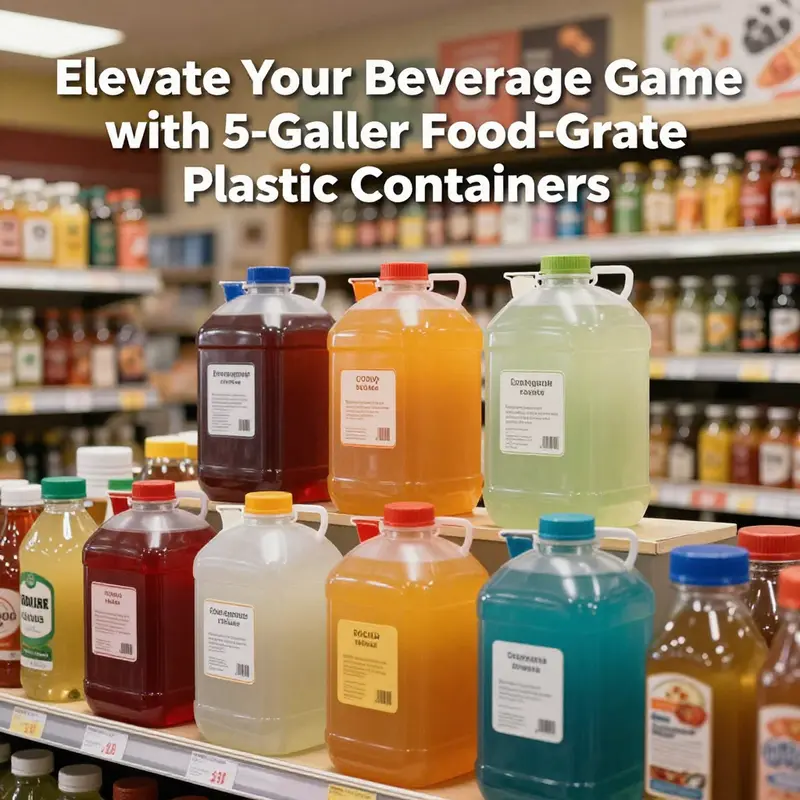
As the beverage industry continues to grow, the need for effective and safe packaging solutions becomes increasingly pertinent. One of the unsung heroes in this sector is the 5-gallon food-grade plastic container. These containers, often utilized by bubble tea shops, restaurants, food trucks, and catering services, offer unique advantages that cater to the specific needs of businesses in the food and beverage industry. In this article, we will delve deep into the core specifications and materials of these containers, explore their primary advantages in terms of safety and practicality, and provide market insights to assist corporate procurement teams in making informed purchasing decisions.
Core Specifications and Materials: The Structural Craft of 5-Gallon Food-Grade Containers

The five-gallon footprint in food storage is more than a convenient size; it is a balance of capacity, durability, safety, and ease of handling that serves kitchens, warehouses, and production lines alike. In the current landscape, where food-grade containers are expected to perform under varied conditions—from bustling restaurant backrooms to long-term pantry storage—the core specifications and material choices must align with practical use while satisfying regulatory and consumer expectations. This chapter threads together how capacity, structural design, and material science converge to produce an item that is not merely a container but a reliable partner in preserving food integrity over time. The discussion leans on the standard 5-gallon measure—roughly 18.9 liters—a size that has proven versatile for bulk storage, ingredient staging, and even the transportation of certain non-edible raw materials in controlled settings. While the consumer-facing narrative often highlights aesthetics or branding, the real story lives in how a drum-shaped body, a secure closure, and a compatible inner surface work in concert to minimize risk and maximize shelf life. The design philosophy is simple in intent yet complex in execution: maximize containment reliability while keeping the structure economical to produce, easy to clean, and safe for food contact across a spectrum of contents, from dry grains to viscous syrups and liquid oils.
The physical form of a typical 5-gallon container begins with its volume, which dictates not only how much can be stored but how the walls must behave under load. The container must withstand the downward pressure of its contents as it is moved, stacked, and set down in a variety of environments. To achieve this without excessive material use, manufacturers rely on a careful combination of wall thickness, reinforcing ribs, and a geometry that distributes stress evenly. The walls are often smoothly finished on the interior to facilitate cleaning and minimize residual surface roughness where microflora could hide. This is particularly important for containers that will see repeated use or that store ingredients with high oil content, which can cling to rough surfaces and complicate sanitation. The exterior may wear a color that signals content type or brand identity, but this cosmetic choice never replaces the need for a robust internal surface that can tolerate washing and chemical exposure.
Handling features are a quiet but essential component of practicality. A sturdy handle—commonly a metal band or a molded plastic grip—must endure repeated lifting without fatigue. The lid, typically a screw-on cap or a threaded closure, forms the primary line of defense against leaks, moisture ingress, and contamination. When designed for food storage, the lid often incorporates a gasket to improve seal integrity and to minimize oxygen permeation. In some configurations, a secondary tamper-evident seal accompanies the screw cap, providing visual assurance of product integrity at the moment of purchase or transfer. For certain applications, the closure is designed to handle viscous contents, with features like a tight-thread profile and, occasionally, a pour spout insert or a sealable plug. The mechanical interface between body and lid is a critical junction; any compromise here can undermine the entire storage purpose by enabling leaks, bacterial migration, or loss of aromatic compounds in sealed products.
Material selection anchors the entire conversation around safety, durability, and cost. The two materials most commonly employed for 5-gallon food-grade containers are high-density polyethylene (HDPE) and polypropylene (PP). Each brings particular strengths that suit different use cases, and both can meet the standards that govern food contact materials. HDPE is the workhorse of the category. Its chemical stability is well established, and its resistance to water, many acids, and a broad range of oils makes it a versatile choice for both dry and liquid contents. HDPE’s compatibility with food contact is reinforced by widespread certification, migration testing, and the absence of certain migratory substances, including bisphenol A (BPA) in modern formulations. Because HDPE tends to be opaque or semi-opaque, it provides protection from light-induced degradation for light-sensitive contents while still offering practical handling and stacking advantages. In addition, HDPE is relatively impact resistant, which helps containers survive the rough-and-tumble realities of transport and warehouse handling. The interior surface is typically molded to be smooth, with a finish that minimizes residuals after cleaning, making it easier to sanitize and recycle as appropriate when the container’s life ends.
PP, while less common than HDPE for traditional bulk storage, occupies a complementary niche. PP containers often exhibit higher heat resistance, which can be advantageous when contents require modest elevated temperatures during processing or storage. They can be more chemically stable against certain solvents and fats, and some PP formulations are semi-transparent, which aids content level visibility without opening the container. For high-clarity needs, PET is occasionally used for container shells or outer components, but its use is generally limited to single-use or limited-reuse scenarios due to migration characteristics and a different lifecycle footprint. The external glass-like appearance of PET contrasts with the more mature, robust performance profile of HDPE and PP in repeated-use contexts. Across all these materials, the aim remains consistent: a safe, non-reactive surface for contact with food, with mechanical properties that resist cracking, crazing, or significant deformation under the typical loads and temperature ranges encountered in storage and transport.
The modern specification suite for 5-gallon containers also embraces cleanliness and processing efficiency. A primary goal is to ensure that the interior walls are smooth enough to resist bacterial colonization during storage and to simplify cleaning regimes. The surface finish must withstand routine washing with standard detergents and occasional chemical sanitizers without degrading or altering the taste or safety of the stored goods. In practice, that translates into selecting resin grades that exhibit minimal extractables and a migration profile within regulatory limits, even after repeated cycles of washing and exposure to typical kitchen or industrial cleaning agents. The geometry of the container, including the lid channel and sealing groove, is engineered to prevent capillary wicking and to maintain a consistent seal under thermal or mechanical stress. The geometry also takes into account stacking behavior; containers should nest or permit safe stacking for space optimization during storage and transport, without deforming the lid perimeter or compromising closure integrity.
From the perspective of safety certification and regulatory alignment, these containers are designed to meet a broad array of standards that span regional and international markets. They are commonly aligned with food-contact safety frameworks that require materials to be BPA-free and to have acceptable migration profiles. In addition to intrinsic material safety, the finished product generally adheres to testing regimes that assess not just the resin but the entire assembly—the cap, gasket, and any inserts or colorants. The presence of certifications from recognized bodies such as ISO-based schemes, SGS testing, or CE and EU conformity marks offers a level of assurance that the container has been evaluated for its intended food-contact applications. This certification ecosystem is not merely decorative; it translates into tangible assurances for downstream users, including commercial kitchens, distributors, and end consumers who rely on predictable performance across demanding use cases.
Another axis along which these containers are evaluated is practicality in storage and long-term use. The choice between HDPE and PP is often guided by the expected content profile. For liquids with higher viscosity, a container may benefit from a slightly more aggressive sealing strategy, which PP can support in some formulations due to its thermal characteristics. For bulk dry goods, HDPE’s barrier properties against moisture and its robust impact resistance are typically more than adequate. The color and opacity choices are not only aesthetic; they can reflect content type, age, or hazard labeling needs. A white or opaque HDPE body, for example, helps limit light exposure that could degrade oils or pigments, while semi-transparent PP variants enable quick visual checks of remaining quantities without opening the container. In this sense, the material decision is a practical decision about how a product will flow through a storage and usage workflow, from receipt to dispensing to final disposal.
Beyond the resin itself, there is a broader consideration of virgin versus recycled content. The current industrial context increasingly favors the use of 100% virgin materials in many food-grade applications to ensure uniform performance and predictable safety characteristics. Virgin HDPE and PP deliver consistent mechanical strength, surface finish, and heat resistance, which are critical when the container will experience multiple handling cycles, including potential cold storage, transport vibration, and stacking pressure. However, where performance and safety criteria permit, recycled content can be leveraged in non-food-contact components or in parts of the ecosystem that do not come into direct contact with foods. The trade-offs include potential color variations, slightly different mechanical properties, and the need for more rigorous testing to verify migration and contamination control in specific end-use scenarios. The prevailing takeaway is that manufacturers tailor material strategies to the container’s life cycle, content type, and regulatory expectations, always prioritizing safety and reliability first.
The practical implications of these material and design choices surface in everyday use. For food storage, a key benefit is the ability to store grains, pulses, flours, dried fruit, and oils with a high degree of confidence in product integrity. The container’s sealed environment slows moisture ingress, microbial growth, and oxidative changes that would otherwise undermine quality. When liquids such as cooking oils, syrups, or liquid dairy ingredients are involved, the seal and interior surface finish become even more critical. For viscous liquids, a container with a gasketed lid provides improved leak protection during transport and handling, while a tight seal reduces odor migration and preserves the aromatic profile of the contents. Hygiene remains a central driver; the interior geometry is designed to resist nooks and crannies where residue could cling, and the materials resist staining and odor absorption, enabling repeated cycles of cleaning without undesirable side effects. In practice, a well-specified 5-gallon container is expected to deliver years of service under proper care, with a balance of light weight and ruggedness that makes it a cost-effective choice for bulk operations.
The procurement landscape for these containers reflects the scale at which they operate. Market data from early 2026 shows a robust demand for containers manufactured from HDPE and PP in virgin material composition. Typical unit prices in bulk ranges from modest price points to higher tiers for specialized features, with the minimum order quantities often in the hundreds to thousands of units depending on the supplier and the degree of customization. Lead times can extend from several days to a few weeks in response to order size, production scheduling, and shipping arrangements. The emphasis across suppliers is on maintaining consistent quality control, with emphasis on interior smoothness, lid integrity, and overall dimensional stability under expected storage and handling conditions. Early-stage design and tooling costs are amortized across volume, making mass production of 5-gallon containers a favorable pathway for long-term cost efficiency for bulk users who require standardized packaging that can be scaled with growing operations.
To illustrate the broader applicability and the practical alignment of the 5-gallon format with modern packaging needs, consider the packaging ecosystem in which such containers often operate. In other segments of the industry, takeout and food-service packaging share the same fundamental aims: protect product quality, enable efficient handling, and maintain safety from processing through consumption. A comparable logic governs the design of related packaging solutions, where durability, seal integrity, and ease of cleaning are constant priorities. A useful touchpoint within this broader packaging family can be found in a range of disposable takeout packaging systems that echo the same principles of barrier protection and cleanability, emphasizing how the core values of safety, practicality, and user-friendliness thread through both single-use and reusable storage solutions. For readers who want a concrete example of how these principles translate into everyday packaging choices, an internal reference to a related line of eco-friendly takeout packaging demonstrates the practical application of durable, seal-capable designs in a real-world context. See here for a representative illustration of packaging principles aligned with these standards: eco-friendly takeout packaging.
The bottom line is that the 5-gallon food-grade container stands at the intersection of material science, mechanical design, and regulatory compliance. HDPE remains the dominant material due to its well-understood safety profile and robust performance across a wide range of contents. PP serves as a valuable alternative where higher heat resistance or visual content management is desired. The choice between these materials should be guided by the nature of the intended contents, the expected storage conditions, and the regulatory expectations in the target markets. The lid and seal system, interior finish, and exterior design all contribute to a reliable, sanitary, and cost-effective solution that can serve kitchens, warehouses, and manufacturers alike for many cycles of use and handling. While glass or metal containers may offer transparency or distinct aesthetic value, plastic 5-gallon containers offer a compelling combination of lightness, resilience, affordability, and sanitation that continues to sustain their prominence in both domestic and commercial settings.
External resource for regulatory context and deeper standards can be found here: https://www.fda.gov/food/packaging-food-contact-substances-fcs. For a concrete look at related packaging categories and practical examples of durable, safe takeout containers, readers can also explore industry packaging resources that discuss multi-compartment and seal-focused designs in a broader context. In addition, a practical reference to contemporary packaging choices highlights how similar design principles translate across the packaging continuum and underscores the importance of compatibility between container materials, closures, and the contents they safeguard. The overarching message remains consistent: when 5-gallon containers are chosen for food storage, the intersection of safe materials, robust sealing, and thoughtful design yields a trusted system for safeguarding food quality over time. The precise material selection—HDPE for broad compatibility and cost efficiency, with PP in scenarios that demand higher heat resistance or clearer content visibility—paired with a dependable screw-cap closure and a smooth interior finish, creates a durable solution that meets the needs of modern storage and distribution.
External reading: FDA guidance on food-contact substances and packaging safety can provide regulatory context for these designs and their safe use in food storage. See https://www.fda.gov/food/packaging-food-contact-substances-fcs for more detail.
安全性与实用性的协奏曲:5加仑食品容器在储存与运输中的核心优势
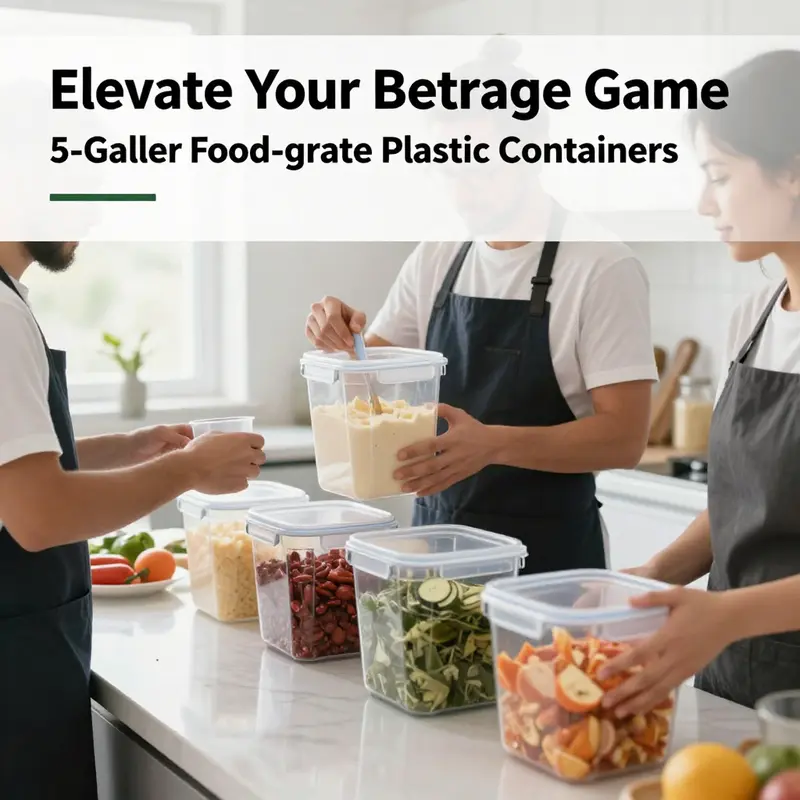
5加仑食品容器在现代食品储存和运输中的地位不仅来自其容量,更来自材料选择、制造工艺以及对食品安全的持续承诺。本文在前一章的基础上,深入探讨其核心优势与实际应用情境,揭示为何这种容器成为家庭、餐饮与工业领域的常用选择。核心要点围绕安全性、实用性以及对长周期存储与高强度搬运场景的适应性展开,力求呈现一个完整且可操作的认知框架,帮助读者在采购与使用时做出更明智的决策。首先,从材料与安全层面说起,5加仑食品容器通常采用高密度聚乙烯HDPE或聚丙烯PP这两类材料。它们在食品接触安全领域拥有广泛的认可度,具备良好的化学惰性、耐腐蚀性以及机械强度。更重要的是,主流产品普遍标注为不含双酚A BPA-free,这一属性在当前消费健康关注度持续走高的背景下显得尤为关键。材料本身的无毒性与低气味特征,确保在日常使用中不会改变食品的原味或产生微量有害物质迁移。与此并行的是对材料来源的严格要求——许多领先生产体系坚持使用100%原生材料,以确保一致的物理性能和对环境的最小负担。此类源头控制不仅影响容器的耐用性,还直接关系到其在冷藏、冷冻、加热或长时间堆放条件下的稳定表现。对采购方而言,选择具备完整生产链条与多项国际认证的供应商尤为重要,因为这意味着产品在从原材料到成品的每一个环节都经过严格把关,能够在全球范围内满足食品安全法规与卫生标准的要求。跨区域的认证体系,如CE、EU、ISO及SGS等,构成了一个对比参考框架,帮助企业和机构快速评估风险与合规性。与此同时,容器的结构设计也直接影响其安全性与卫生性。对内壁进行光滑处理,避免了死角和缝隙,降低了微生物滋生的可能性,也方便日常清洁与消毒,延长重复使用的有效寿命。盖子部分的密封性能则是防止泄漏、受潮和污染的关键环节。多数5加仑容器采用螺纹盖或其他紧密封闭结构,加上耐用的密封圈,能在长途运输和高密度堆码环境中保持内容物的完整性。这一密封性不仅提升了食品的保质期,还降低了运输过程中的损耗风险。伴随密封性而来的还有容器的结构稳定性。桶身通常采用圆柱形或方矩形设计,底部宽大、重心低,确保在地面上具有良好的稳定性,减少翻倒与溢出事故。加强筋和厚壁结构在需要时被添加,以增强抗压、抗冲击与耐久性,使其能够承担大批量堆放、叉车搬运及频繁转运等实际操作中的应力。五加仑容量(约19升)所带来的组合性优势也在此体现:它既能满足家庭或小型餐饮单位对大量液体食品的集中存储需求,又因其相对较低的单件重量和便于搬运的手柄设计,在日常操作中实现了更高的作业效率。这种实用性不仅限于液体食品。干性食品如谷物、米面、糖类等的散装储存同样适用,因为结构坚固、可叠放性良好且清洁维护简便,使长期存放成为可行且经济的解决方案。对企业级用户而言,容器的灵活性与通用性是另一大优势。其耐化学性使之能够与多种食品原料及调味品一起使用,同时在极端条件下仍保持性能稳定性;这也是为何这类容器在蜂蜜、油脂、果汁、调味品等领域得到广泛应用的原因之一。更进一步,它们在家庭日常、餐饮服务以及工业应用中的多场景性也值得关注。家庭层面,5加仑容器提供了高效的家庭食品储存与备餐解决方案,特别是对于需要周期性购买大批量基础食材的人群;餐饮领域,尤其是对中小型餐厅、餐饮车与外卖备餐点,容器的耐用性和密封性能显著降低食品浪费和交叉污染的风险;工业侧,物流与供应链中的分装、分发与大宗加工环节也常将这类容器用于高强度的日常作业。与此同时,易清洁与重复使用的特性使得这类容器在环保与成本控制方面也具备明显优势。其内壁光滑、无孔结构降低了污垢积聚的可能,清洗与消毒流程的执行成本相对较低,能支持多轮周转利用,进而降低长期使用成本与废弃物产生。此处的“成本”不仅指金钱支出,还包括劳动强度、维护难度和环境影响。若将成本纳入综合考量,企业在选型时往往会权衡初期采购成本、使用寿命、维护成本与潜在的回收再利用程度。与玻璃等材质相比,塑料容器在重量、破损风险及运输能耗方面通常具备明显优势,从而在供应链中提供更高的灵活性和可控性。这些综合因素共同构成了5加仑食品容器在市场上持续受欢迎的根本原因:在确保食品安全的前提下,它们以高效、低成本、易操作的方式支持了广泛的日常操作需求。尽管如此,必须认识到任何材料在长期使用中都存在局限性。对于强酸、强碱或强氧化性化学品,应避免盛放,以免对材料造成降解或迁移风险。长时间暴露于紫外线或直射阳光下也可能促成材料老化、色变和力学性能下降,从而缩短使用寿命。因此,存放环境的选择与管理同样重要,建议避光、阴凉、干燥环境下存放,并避免暴露在高温或极端温度下。透明度方面,尽管HDPE与PP在清晰度方面优于部分高分子材料,但在与玻璃的对比中仍存在“纯净感”与视觉透明度的差距。这一点对于需要观察容器内部内容物状态的场景尤为明显。因此,在设计与采购阶段,应综合考虑透明度、密封性、耐久性及成本之间的平衡,以便制定最符合目标应用的解决方案。最后,在采购信息与供应链管理层面,行业内的多家专业制造商通常愿意提供大批量批发、定制化方案以及长期供货保障,帮助客户实现稳定的库存管理与生产计划。尽管具体条款会因地区、产能和市场波动而异,选择具备完整生产链条、先进设备和良好客户口碑的供应商,通常能获得更高的产品一致性与售后保障。为读者提供一个更广阔的采购视角,文中还引用了与包装材料相关的更多资源,以帮助读者在不同场景下做出更合理的决策。对于那些正在探索多分区或可重复使用包装解决方案的采购方,这类产品在提升操作效率、降低交叉污染风险方面展现出明显的优势。相关的包装变体在市场上逐渐增多,能够为不同食品类别和运输条件提供量身定制的密封与防护组合。此处的概念性总结指向一个核心理念:在确保食品安全与卫生条件的前提下,实用性应成为衡量容器价值的关键标准之一。为帮助读者将理论与实践更好地结合,本文还提出了一些采购与使用的要点。在选材时,优先考虑HDPE或PP材质、100%原生材料、并明确标注BPA-free的产品,以确保生物化学风险降至最低。对认证与检验的关注不可忽视,要求产品具备食品接触材料检测、符合相关法规要求并通过权威第三方认证的证明。密封与耐久性是卫生与运输安全的直接体现,螺旋盖、密封圈、以及桶身的结构设计应共同作用,防止泄漏、受潮与污染进入内容物。容量与外形设计的平衡是另一个关键决策点:圆柱形或矩形桶身的稳定性、底部支撑的宽大与重心低等因素,决定了在堆码和搬运过程中的安全性。最后,环境与经济性的综合考量不能被忽视。环境友好与多轮使用的潜力,以及在合规前提下的总成本控制,往往决定了一个长期选型的成败。为了便于读者在实际购买时快速比对,本章在内部提供一个便捷的对比框架:材料选型、认证情况、密封设计、容量与形态、清洁维护、使用寿命及潜在风险点。需要强调的是,尽管5加仑容器在许多场景下表现突出,但不同食品类别、运输条件和储存环境对材料耐久性与安全性提出了具体要求。采购方应基于实际使用需求进行定制化评估,必要时与供应商沟通以获取试用样品、技术参数测试和现场验证的机会,以确保最终选型最契合自身的操作流程与卫生标准。除了材料与结构的考量,现代包装系统中对“零污染”与“可追溯性”的追求也在持续增强。企业在选型时应关注供应商的可持续性承诺、回收再利用策略和对产品全生命周期的影响评估。这些因素在宏观经济与法规环境日趋严格的背景下,越来越成为影响采购决策的核心要素。对最终用户而言,理解这些技术与管理层面的要点,可以帮助他们更高效地执行日常操作、降低潜在的食品安全风险,并在合规框架内实现成本控制与流程优化。作为对本文主题的一个总结性启示:五加仑食品容器的核心价值在于它把安全、稳定、可用性和经济性融合在一个可管理的系统中。这个系统不仅能满足当下对大批量食品存储与运输的需求,也为未来的卫生标准更新、原材料替代和数字化供应链管理提供了可操作的基础。正是在这种综合性、可执行性的框架下,5加仑容器才真正具备跨场景的适用性与长期价值。为读者进一步拓展视野,我们提供一个在行业中广泛使用的参考性资源,帮助理解不同包装设计与材料选择在实际应用中的影响。请参考以下链接以获得更多关于多分区、可重复使用包装解决方案的行业洞见:eco-friendly disposable 3-compartment packaging boxes. 该资源可帮助读者在选型时考虑更广的包装生态与供应链协同。本文所述要点与内部链接的应用示例共同构成一个对5加仑食品容器全面理解的框架,既强调安全性也强调实用性,且注重与现实场景的对接。为了拓展外部参考,读者还可查阅下述外部资源以获取更多关于包装设计趋势和材料性能的专业信息:https://ecocupbowl.com/product/pure-color-foldable-cake-boxes-with-window-bakery-boxes-pastry-box-for-cake-chocolates-cupcakes-gift-packaging-paper-boxes/ 结语在于提醒:无论是家庭日常还是商业运营,选择合适的5加仑食品容器都不仅是一个材料选择问题,更是一个对食品安全承诺、运营效率与环境影响综合权衡的过程。通过对材料、认证、密封性、容量设计和使用场景的全面理解,读者可以在复杂的市场中作出自信且可持续的决策。
null

null
Final thoughts
In conclusion, the utilization of 5-gallon food-grade plastic containers is not only a practical choice for the modern food and beverage industry, but it also meets essential safety standards necessary for protecting the integrity of your products. Understanding the specifications, advantages, and market dynamics surrounding these containers can empower businesses—from bubble tea shops to restaurant chains—to make smarter sourcing decisions that align with their operational needs. By integrating these containers into your packaging strategy, you can enhance both efficiency and customer satisfaction.