
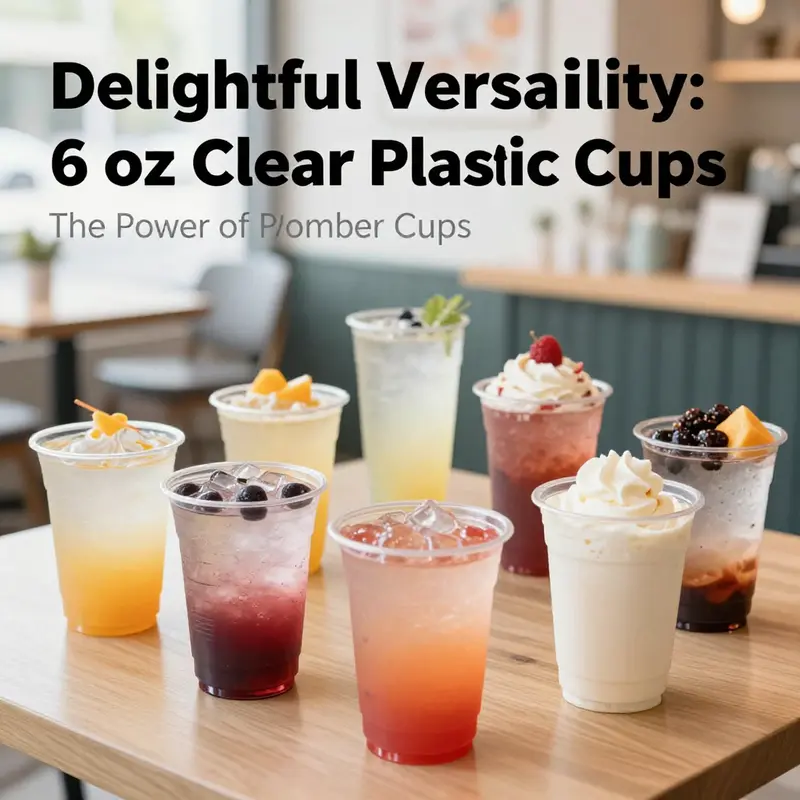
In the vibrant world of food service, the details matter. Enter 6 oz clear plastic cups, a small yet significant player in the beverage and dessert landscape. Their adaptability makes them ideal for bubble tea shops, restaurants, and catering services alike. Not only do these cups offer convenience, but their clarity enhances presentation, making them a favorite for serving drinks and desserts. This article will delve into an overview of 6 oz clear plastic cups, explore the materials used in their construction, examine their various applications, highlight current market trends, and address the crucial environmental considerations surrounding their use. By understanding these aspects, food and beverage businesses can make informed choices that align with their operational needs and sustainability goals.
Crystal Clarity in Service and Style: The Unified Role of 6 oz Clear Plastic Cups in Modern Food Packaging

Six ounces may seem modest, yet it is a sweet spot in the world of single-use containers. The 6 oz clear plastic cup embodies a blend of practicality and presentation that suits fast-paced service environments and the more deliberate demands of hospitality, catering, and at-home entertaining. With a capacity close to 180 milliliters, these cups strike a balance between portion control and the ability to showcase contents from the first glance. In a marketplace that prizes speed, portability, and visual appeal, the transparent shell becomes more than a vessel; it is a stage for color, texture, and texture. The cup’s translucence allows the vivid greens of a fruit smoothie, the rich browns of a chocolate milkshake, or the delicate swirls of a layered dessert to reach the eye before the palate even engages. In a way, the cup functions as a micro-mediator between food and consumer, the object that translates kitchen craft into an accessible, on-the-go experience.
Behind that clarity lies a careful selection of materials that balance safety, durability, and cost. Most 6 oz clear cups are fashioned from PET (polyethylene terephthalate) or PP (polypropylene). PET’s reputation for high clarity and shatter resistance makes it a favorite for cold beverages, while PP offers a slightly tougher, more heat-tolerant option that can perform well in a wider range of handling conditions. Both materials are typically BPA-free, aligning with a growing consumer expectation that disposable ware should be safe for direct contact with foods and drinks. The trend toward recyclability remains strong, and many manufacturers promote these cups as recyclable in appropriate facilities. Beyond conventional plastics, there is a quiet but persistent shift toward eco-friendly variants, including biodegradable or compostable formulations such as PLA (polylactic acid). These options reflect a broader consumer demand for sustainability, though they can demand trade-offs in thermal resistance, stiffness, and shelf-life under certain conditions. The conversation around materials is not merely about the core cup but about the entire lifecycle—from production and use to end-of-life disposal.
Design versatility is another hallmark of the 6 oz clear cup. The most common form is a straightforward, straight-sided cylinder that maximizes stackability and minimizes material use. Yet many designers experiment with tapering, which can improve grip and reduce the perception of volume, or with slightly flared rims that enhance drainage and lid fit. Some cups even adopt a high-heel silhouette or stem-like contour for event branding where a premium look matters. If the cup is to travel, snap-on lids or dome lids with spill-proof features can transform a once-dinner-table-side dessert into a portable treat, preserving temperature and preventing leaks during transit. In venues that emphasize branding, the clarity of the cup becomes a canvas for logos, color schemes, and seasonal campaigns when lids or cups are printed with custom designs. The synergy between cup and lid—clear material with a printed or colored top—offers a way to maintain the “brand moment” from service to takeout, a gentle reminder that even disposable items can carry a consistent visual language.
The practical uses of these cups are as diverse as their design variations. They are equally at home in a bustling cafe taking iced coffee orders, a bakery displaying parfaits and mousses, or a catered event offering chilled cocktails and bite-sized desserts. Their size makes them ideal for single servings of smoothies, lemonades, and iced beverages, as well as for desserts like pudding, yogurt, or fruit parfaits. The visual benefit is clear: customers immediately perceive the texture, color, and density of the contents, which can influence perceived freshness and quality. The capacity also lends itself to portion control, a factor many operators consider when balancing profit margins with guest satisfaction. In practice, the cup’s transparency becomes a marketing tool, inviting customers to rely on their senses to judge freshness and vibrancy before the first sip or spoonful.
Cost, supply, and reliability are not mere footnotes in the decision to adopt 6 oz clear cups. In bulk environments—whether a chain, caterer, or event planner—these cups are commonly sold in large quantities, often in packs ranging from fifty to thousands of pieces. The economics of scale play a crucial role: lower per-unit costs per cup, coupled with standardized lids and packaging, can translate into smoother operations and predictable inventory management. Bespoke branding options add another layer of value. Logo printing on cups or lids enables private-label experiences or event-specific collateral, reinforcing brand recognition and creating a cohesive guest experience. For operators who need flexibility across menu offerings, the same cup can house a hot-cold beverage, a layered dessert, or a fruit-forward parfait, reducing the need for multiple container formats and simplifying procurement.
The sourcing landscape for 6 oz clear cups is wide and dynamic. Manufacturers with long-standing experience in PET production, often based in regions known for plastics manufacturing, bring a track record of consistent quality and customization capacity. For buyers seeking branding or packaging differentiation, suppliers can offer branded logos and custom packaging that align with campaign themes or restaurant aesthetics. In addition to traditional channels, bulk buyers frequently explore marketplaces that connect buyers with verified manufacturers across regions. This expanded access accelerates procurement for holiday peaks or large events while enabling more nuanced options, such as Australian-market-specific designs aimed at cold beer or coffee formats. Even with the ease of access, it remains essential to verify material safety data, confirm compatibility with food contact standards, and assess the environmental claims associated with eco-friendly variants. The conversation around these cups often intersects with broader packaging decisions, including sleeves, lids, and other components that together form a complete takeaway solution.
Sustainability remains a moving target in the disposable-ware domain. The rising demand for alternatives that reduce environmental impact has spurred a wave of eco-friendly cups, including those derived from renewable resources or designed to be compostable under industrial conditions. Yet these options bring nuanced considerations. Thermal performance, mechanical strength, and barrier properties can differ from traditional PET or PP cups, affecting their suitability for certain beverages or desserts. Therefore, choosing an eco-friendly cup is not simply a matter of selecting a greener material; it requires assessing the specific use case, the expected shelf life, transport conditions, and local disposal infrastructure. For many operators, the most practical path is a hybrid approach: continuing to offer high-clarity, durable cups for cold beverages and premium desserts, while gradually integrating compostable or bio-based variants where feasible, supported by responsible waste streams and clear consumer guidance.
From a quality-control standpoint, the reliability of a 6 oz cup hinges on consistent wall thickness, rim integrity, and edge smoothness. A well-made cup should resist cracking under the pressure of a full beverage and should maintain its shape through repeated handling—from pantry to service line to customer. This reliability is not just about customer satisfaction; it reduces waste, protects brand reputation, and lowers logistical risk during peak service. Quality assurances often include sample testing for clarity, impact resistance, and seal integrity of the lids. For buyers, a trusted supplier is one who provides transparent product specifications, clear labeling about materials and certifications, and accessible support for custom orders or returns. A robust supply chain also matters: consistent lead times, predictable packaging configurations, and responsive customer service all contribute to smoother operations in busy settings.
As consumers increasingly expect experiences that look as good as they taste, the role of the 6 oz clear cup expands beyond mere utility. The cup becomes a storytelling device, a familiar, trusted format that signals quality and cleanliness. It supports a menu’s visual narrative by enhancing the appearance of layered desserts and colorful beverages, turning a simple portion into a shareable moment. The symbiotic relationship between container and content is why many bakers, baristas, and caterers pay close attention to packaging choices. The same cup that holds a bright mango mousse or a dark espresso-fueled milkshake also carries a promise: the quality inside is worth preserving, presenting, and sharing. And because the cups are often sold in bulk, they also enable consistent experiences across multiple outlets or events, reinforcing brand coherence in a landscape crowded with competing visuals.
For readers exploring concrete, real-world examples of how these cups are positioned in the market, consider a product listing that highlights versatility for smoothies, iced coffee, milkshakes, and desserts. This kind of listing demonstrates how a simple, transparent cup can be framed for diverse uses while emphasizing safety and convenience. To see a practical listing, you can explore a product page that showcases the 6 oz cup with lids and its promotional messaging. clear-cake-cups-transparent-cupcake-muffin-packaging-dessert-slice-container-for-weddings-birthdays-parties-bakery-dessert-bowl-for-fruit-pastries. This link provides a vivid example of how these cups are positioned for bakery and event contexts, illustrating the value of clear presentation and branded packaging in practice.
The journey from raw material to finished, branded cup is a reminder that packaging is not an afterthought. It is a carefully choreographed balance of form, function, safety, and story. In the end, the 6 oz clear plastic cup is more than a disposable container; it is a flexible platform for beverages and desserts, a reliable unit of measure that travels well, and a canvas that helps food and drink reach customers with clarity and confidence. As the industry continues to innovate—with safer materials, smarter lid designs, and more sustainable options—the cup remains a versatile workhorse in kitchens and event spaces around the world. For those seeking to expand their sourcing or to experiment with new formats, the landscape offers both volume-based efficiencies and opportunities for distinct branding that can differentiate a menu in a crowded market. The result is a simple, effective tool that supports culinary creativity while meeting the practical demands of modern service and promotion. For further reading on real-world product options, see external resources that showcase how these cups are marketed and sold in contemporary retail environments: https://www.amazon.com/dp/B0CJZV7H2K.
Crystal Choices: Material Science Behind 6 oz Clear Plastic Cups

The simple, transparent 6 oz cup is a study in material nuance. What you see as a clear, disposable vessel is the product of careful choices about clarity, rigidity, heat tolerance, and life cycle. In a market built on speed and convenience, the materials behind these cups determine not just how they perform in a hotel lobby or a cafe, but how brands communicate safety, reliability, and responsibility to their customers. When we peer into the thin walls of a 6 oz cup, we glimpse a spectrum of polymers, each with its own strengths and trade-offs. The most common options—PET, PS, PLA, and PP—offer distinct performance profiles that guide everything from the type of beverage they confidently cradle to the end-of-life options that align with a business’s sustainability goals. The choice among these materials is rarely about price alone; it is a decision about user experience, regulatory compliance, and environmental accountability that reverberates from the kitchen to the curbside recycling bin.
Polyethylene terephthalate, or PET, often sets the default for clear, disposable cups in many eateries and events. PET’s hallmark is clarity: the cup looks like glass, but it is lighter and cheaper to manufacture in bulk. The transparency lets the color and texture of a beverage shine through, turning a cold drink, a layered smoothie, or a vibrant juice into a visual proposition as much as a gustatory one. PET also earns points for impact resistance; a sturdy, rigid cup feels trustworthy when a drink is handed over a crowded counter or stowed in a bag for a quick takeaway. For cold beverages, PET excels as a practical container that remains stiff and slosh-free, a quality not to be underestimated in high-traffic settings. In terms of sustainability, PET is widely recyclable, a characteristic that resonates with operators aiming to showcase responsible sourcing and waste minimization. Yet, even with recyclability, the footprint of PET cups depends on local recycling infrastructure, collection efficiency, and consumer participation. A 16 oz clear PET cup, often cited in supplier guides for its ubiquity, embodies the material’s popularity as a standard in the foodservice ecosystem. When a beverage makes its way through the lifecycle of a PET cup, the story continues beyond the counter, into the recycling stream, and sometimes into a circular economy narrative that teams are increasingly eager to articulate to patrons.
Polystyrene, or PS, is another familiar option, prized for its combination of clarity and rigidity at a lower cost than PET in many cases. PS cups tend to feel more affordably robust to the touch, which can translate into perceived value during fast-service experiences where speed is paramount and margins are tight. The material’s rigidity helps maintain shape, reducing the risk of dented rims or leakage during transport. However, PS generally offers less heat resistance than PET, making it less suitable for hot beverages or long tableside service in cooler climates where the cup could encounter warmer contents or even ambient heat from kitchen equipment. PS is also less commonly recycled in many regions, and its end-of-life story can be less favorable in terms of waste diversion. For operators, PS presents a trade-off: lower material cost and clear presentation versus more careful handling around heat and recycling realities. If a venue leans into rapid service and straightforward, no-frills presentation, PS often remains a dependable choice, provided the beverage profile and service conditions align with its performance envelope.
Biodegradable options, notably those based on polylactic acid, or PLA, have emerged from demand for more sustainable packaging. PLA cups are designed to deliver the same crystal clarity as their petroleum-based counterparts while offering the advantage of compostability under appropriate conditions. The appeal of PLA aligns with venues aiming to reduce plastic waste and respond to consumer calls for greener packaging. Yet, PLA does not behave like PET in every situation. Its heat resistance tends to be lower, which constrains its use to cold beverages; hot drinks can soften the cup and alter the drinking experience. Compostability is not a universal outcome; PLA requires industrial composting infrastructure to break down efficiently. In typical home setups or municipal facilities without specialized composting, PLA cups may persist in landfills or require different disposal pathways. These realities shape how, where, and when PLA cups are deployed. For events that emphasize sustainability, PLA can be a compelling option when the supply chain and waste management partners can ensure appropriate end-of-life processing. The growing presence of PLA signals a broader industry shift toward bio-based materials, but it also highlights the necessity of aligning material choice with local capabilities and consumer expectations about waste streams.
Polypropylene, or PP, adds another layer to the decision matrix. Known for durability and chemical resistance, PP can handle higher temperatures and more aggressive contents than PS, making it a sensible option for beverages that might see more heat exposure or for products requiring sturdier containment. Clear PP cups exist, but the material is also frequently used for colored or translucent cups that emphasize different branding or functional goals. PP’s heat tolerance makes it a candidate for hot drinks or for cup-to-hurbing applications where hot liquids are expected to be retained briefly. While PP offers robustness, it is less commonly the default for standard 6 oz clear cups in every market, and some suppliers reserve it for specialized lines that demand greater thermal resilience or chemical resistance. In choosing PP, operators balance the added versatility against cost considerations and the specific service context in which the cup will operate.
Putting these materials side by side reveals a more nuanced picture of what a “6 oz clear cup” actually represents. Clarity is not a single property but a composite of how the material interacts with light, the beverage, and the environment. Rigidity and thickness factor into how well the cup resists bending when full, how it handles stacking and transport, and how pleasant the user experience feels when holding a chilled drink. Heat resistance matters not only for hot beverages but also for beverages that might be served in venues where ambient temperatures or direct sunlight could push the cup toward deformation. End-of-life considerations shape brand narratives as much as the cup’s performance in the moment. Recyclability, compostability, and the infrastructure available to a venue or consumer ultimately determine the true sustainability of a given option. In the end, the material chosen for a 6 oz clear cup is a statement about the priorities a business wants to foreground—clarity and recyclability for cold drinks, ultimate rigidity for fast service, or a mid-weight balance that suits a broad range of beverages and scenarios.
From a practical perspective, the decision about which material to deploy often hinges on the intended use: cold drinks demand clarity and rigidity, while hot offerings move toward materials with greater heat tolerance. Environmental goals influence material choice, but they must be reconciled with cost, performance, and customer expectations. Some operators opt for a hybrid approach, offering PET cups for certain cold beverages and PLA or even PP variants for environmentally themed events or markets with robust composting programs. It is a reminder that a 6 oz cup is not a one-size-fits-all item but a small but consequential component in a larger system of foodservice design, packaging, and waste management. The capacity to customize with branding, logos on cups or lids, and bulk packaging further integrates these material choices into a broader strategy that blends practicality with brand storytelling.
For readers who want a tangible reference to the spectrum of clear-cup materials, there is a practical catalog of options and performance notes that mirrors real-world supplier guidance. See this disposable clear plastic cup page for a concrete example of how one vendor positions the different materials and their uses in everyday operations. The link below connects you to a product line that illustrates how clarity, stiffness, and end-of-life considerations are threaded into a single, accessible product family:
(disposable-clear-plastic-cup-outdoor-picnic-pet-cup-drinking-cup-for-parties-birthdays-weddings-camping-utensils)
In practice, a restaurant or event planner weighing these materials might ask: Will this cup hold up under a crowd? Will it perform reliably in a hot kitchen or a sunny outdoor venue? Is the end of life straightforward for guests who want to recycle or compost? Are we communicating a clear sustainability message through our packaging choices? The answers hinge on material properties as much as on service design. When a cup is chosen with attention to the beverage profile, service tempo, and waste management capabilities, the material narrative reinforces the overall guest experience. It is not merely about making a drink portable; it is about shaping expectations, from the moment a guest views a beverage through the final step of disposal or recycling. The 6 oz cup becomes a small but telling element in the broader story of how foodservice, sustainability, and consumer perception intersect at the point of purchase.
External resource: for a broader, industry-wide synthesis of 6 oz cup materials, applications, and specifications, see the guide on 6 oz plastic cups and their material options, which offers a deeper dive into the technical distinctions and performance benchmarks across PET, PS, PLA, and PP. https://www.dixie.com/blog/6-oz-plastic-cups-blue-specifications-types-applications/
Everyday Uses and Commercial Applications for 6 oz Clear Plastic Cups

A compact, visible stage for food and drink presentation. Six-ounce clear plastic cups balance portion control with visual appeal. Their modest volume, transparency, and light weight make them a practical choice across hospitality, retail, event, and home settings. This chapter examines where these cups shine, how operators and hosts use them, and what features matter most when choosing the right style.
Six-ounce cups are naturally suited to cold beverage service. They hold a single tasting portion of iced coffee, lemonade, iced tea, smoothies, and cocktails. For venues that offer samplers, splash tastings or flight-style menus, these cups provide a tidy, hygienic vessel. Their clear walls let customers see color, layers, and texture. That visual cue helps staff upsell, and it helps customers identify flavors without having to remove lids. In quick-service environments, they speed service. A barista or server can fill and cap drinks in seconds. For outdoor events, the cups are easy to stack, hand out, and collect after use, improving flow and reducing bottlenecks.
Desserts and layered treats gain from the cups’ see-through design. Parfaits, puddings, fruit cups, mousse, and single-serve ice cream all look more appealing when visible from the side. Chefs and caterers use them for plated-style desserts that require neat portioning. The small format controls calorie counts while still delivering an attractive portion. For bakeries and pastry shops that need compact packaging for slices or cupcakes, clear dessert containers offer an elegant display solution. Many suppliers also make small clear cake cups designed to hold pastries or layered desserts securely. If you sell or serve desserts and need a packaging solution that showcases your work, consider these clear cake cups for desserts (https://ecocupbowl.com/product/clear-cake-cups-transparent-cupcake-muffin-packaging-dessert-slice-container-for-weddings-birthdays-parties-bakery-dessert-bowl-for-fruit-pastries/).
Events and catering benefit from the cups’ convenience and economy. Wedding buffets, corporate receptions, and festival food stalls all rely on fast, disposable serviceware. These cups minimize cross-contamination and reduce cleanup time. For tastings and grazing tables, they keep portions uniform and attractive. When stacked, they save space in transport and on service lines. For sampling menus, their modest capacity implies moderation, which guests often appreciate when offered multiple choices. Because many models accept lids—snap-on, low-profile, or dome—it’s simple to prepare items in advance and deliver them without spills.
In commercial hospitality, the cups serve multiple roles beyond drinks and desserts. They are ideal for condiments, sauces, or small sides. Servers can plate sauces in the cups and place them beside entrees for grab-and-go orders. Hotels and cafes often use them for small amenity portions—yogurt with granola, fruit cups for breakfast buffets, or pre-portioned toppings. Their food-safe composition—usually PET or PP—meets regulatory needs when sourced from reputable manufacturers. The combination of clarity and food-grade material makes them a safe, visible option during high-volume service.
Branding and promotional use is another important application. Clear cups can be printed or fitted with branded sleeves and stickers to heighten recognition. At trade shows and product launches, they are handy for sample distribution. Businesses also use them as giveaway vessels: a branded tasting cup with a small treat inside leaves a memorable impression. Custom printing or logo placement on lids provides a subtle but effective branding touch that supports marketing campaigns.
Practical features shape how the cups perform. The two most common materials are PET and PP. PET offers excellent clarity and a glossy finish. It presents colors well and resists fogging. PP tends to be a bit more heat tolerant and can feel sturdier in hand. Both are available in BPA-free formulations. Lids expand functionality: flat lids are great for stacking and display, dome lids work for items with toppings, and spill-resistant options are essential for transport. Textured or ribbed walls improve grip and reduce slips. Flared rims and reinforced bases add stability for chilled or shaken beverages.
Pairing cups with accessories enhances their usefulness. Small wooden tasting spoons are perfect for parfaits and mousse. Short stirrers or paper straws work well for iced drinks. Disposable sauce pots fit neatly inside box-style packages for complete takeaway meals. When designing a service concept, think of the cup as part of a system: cup, lid, insert, and utensil together create a repeatable guest experience. Many caterers also integrate labels or colored bands for dietary or allergen marking. These small additions reduce mistakes and speed service during busy events.
Sustainability influences choices more than ever. Traditional PET and PP are recyclable where local programs accept them. Recyclability depends on local infrastructure and proper sorting, however. Compostable or biodegradable alternatives, often made from plant-based polymers like PLA, exist for operators prioritizing reduced plastic use. These options often require industrial composting and may have different heat limits. When selecting an eco alternative, consider how the product will be used, stored, and disposed of. Proper consumer communication—clear disposal instructions on menus or signage—improves recycling and composting outcomes.
Choosing the right size and style is a practical decision tied to menu planning and waste control. Six ounces work well for tasters and desserts but are too small for a full beverage in many cafés. For multi-course tasting events, they help standardize portions and reduce food waste. For retail sampling, the size signals modesty and invites customers to try more. When ordering, evaluate wall thickness (gauge) for stability, opt for lids that match the intended service, and check stack height for storage efficiency. Buying in bulk reduces unit cost, but confirm supplier lead times and minimum order quantities to avoid overstocking.
Safety and handling tips make daily use easier. Avoid using these cups for high-temperature items unless the material explicitly supports heat. Label perishable items with a time prepared and a best-by timestamp when prepackaging. Store cups in their original packaging to protect them from dust and bending. If transporting filled cups, use trays or carriers designed to hold them upright; this prevents tipping and spillage during service. Train staff on lid application to ensure a secure seal, and keep a small supply of repair or replacement lids during events.
Finally, integration into broader packaging strategies matters. Operators often combine clear cups with boxes, trays, and carriers for multi-item orders. Coordinating cup size with complementary packaging creates a cohesive delivery experience. For instance, when offering dessert samplers, pair cups with a molded tray insert or a window-box to preserve presentation. By thinking beyond the single item, you create scalable systems that work under pressure, maintain aesthetics, and support operational efficiency.
For sourcing and customization options suited to commercial volumes and specific market needs, review verified manufacturers and wholesale listings for feature comparisons and material specifications. One useful resource for exploring bulk options is: https://www.alibaba.com/product-detail/Vasos-180ml-PP-Plastic-Drinking-Cups-6_1602453978817.html
Clear Signals: Market Trends Shaping the 6 oz Clear Plastic Cup Landscape

Clear signals are emerging from a market that prizes simplicity yet relies on sophistication in materials, design, and delivery. The 6 oz clear plastic cup, a compact vessel holding around 180 ml, has become a mainstay in the foodservice toolkit. Its transparency is more than aesthetic; it communicates freshness, color, and texture with a clarity that helps beverages and desserts shine. In busy cafes, bustling event halls, and even at home gatherings, this small cup travels far and fast, becoming part of the ritual of a quick service encounter or a curated tasting experience. The size matters: it offers a portion-controlled solution that aligns with on-the-go lifestyles, while its light weight and stackable form support lean operations and smart inventory. Yet beneath its modest exterior, buyers and designers are navigating a landscape defined by sustainability, performance, and branding potential, all of which are reshaping how 6 oz cups are sourced, used, and perceived.
Sustainability has moved from a trend to a baseline expectation. The most common materials—PET and PP—are chosen for their clarity, rigidity, and proven food-safety profiles. PET’s transparency and barrier properties make it ideal for cold beverages and vivid desserts, while PP contributes durability and heat resistance for certain seal systems. Across markets, there is a clear shift toward BPA-free formulations, driven by consumer health concerns and stricter regulatory standards. But visibility into a cup’s entire life cycle matters as much as its performance on the shelf. Recyclability remains a central selling point for bulk buyers such as restaurants and event operators pursuing responsible waste streams. In some regions, compostable variants derived from cornstarch or other bio-based polymers are entering the mix, appealing to venues that can connect cups with industrial composting facilities. The market’s direction is not just toward being recyclable or compostable; it is toward packaging ecosystems where cups are integrated into waste management, supplier certifications, and circular programs that reduce overall footprint. This trend reinforces a larger discipline: packaging that supports brand promises while meeting practical needs in busy service contexts.
The rise of on-the-go consumption has accelerated demand for a cup that can travel confidently from curbside to conference room. The 6 oz size fits precisely into single-serve rituals—whether a smoothie blend, an iced coffee, a small cocktail, or a cold dessert shot. Quick-service outlets prize speed and consistency; staff can portion, cap, and present with a predictable, repeatable workflow. Convenience stores and mobile caterers rely on compact vessels to display options and to minimize shelf-to-guest friction. The cup’s shape allows for efficient stacking and compact storage, while its lid compatibility keeps beverages intact during transit. This is not merely about portability; it is about preserving the sensory experience from first glance to the moment of consumption. In desserts, the cup becomes a stage for color and texture—layers of pudding, mousse, yogurt, or parfait caught behind transparent walls that invite inspection and appetite before the first bite.
Design innovations are broadening what the cup can do, beyond containment. Dome lids with or without straws improve spill resistance without sacrificing access to the contents. Ribbed textures on the exterior enhance grip, reducing the chance of accidents in warm venues or on crowded trays. Flared rims contribute to stability on displays and during transport, while keeping the user’s grip comfortable. Clarity remains a focal point; manufacturers chase higher surface smoothness and transparency to ensure the contents look pristine, even after temperature fluctuations or rough handling. In parallel, sealing technologies are evolving to provide secure, reliable closures that help maintain freshness during short-term storage and while in transit. The cup thus becomes a more reliable component of a service system, supporting a smooth handoff from kitchen to guest.
Branding and customization have become central to the value proposition of 6 oz clear cups. The transparent surface is an advertising canvas, capable of carrying high-resolution logos, seasonal graphics, or promotional color schemes that align with a broader campaign. For beverage brands seeking to capture attention in a crowded space, the visual impact of a well-printed design on a clear wall can outpace opaque alternatives in a social media-driven marketplace. The ability to print consistently across thousands of units helps hospitality programs and event organizers build cohesive brand narratives—from menu boards to takeout windows. However, customization also introduces complexities: color management, supply chain reliability, and lead times must be carefully planned to ensure that branding remains consistent, especially during peak seasons or large-scale promotions. As a result, buyers increasingly value suppliers who can offer not just cups, but integrated branding options across cups and lids, with predictable quality and scalable production.
From the perspective of volume and operations, the economics of scale come into clearer focus. In large institutions and chains, the 6 oz cup supports dense stacking and efficient bulk packaging, which translates to lower shipping costs and streamlined storage. The cups must endure cold beverages without deformation, while lids must seal securely to prevent leaks during delivery or outdoor service. This reliability is essential for institutions that handle heavy usage cycles and fluctuating temperatures—schools, hospitals, and large catering operations—where a small failure can disrupt service and erode trust. In this context, the cup is not just a disposable item; it is a dependable element of a broader quality program. Its performance under real-world conditions—impact resistance, lid compatibility, sealing integrity, and labeling accuracy—drives trust and repeat business, which in turn fuels broader adoption across markets.
The marketing and experiential dimensions of the cup landscape further underscore its strategic value. Tasting events, cocktail samplings, and promotional giveaways rely on standardized, clear cups to deliver consistency and enhance savor perception. The transparent walls showcase color, texture, and layering, turning the cup into a visual focal point that complements the product and the brand story. Event planners, retailers, and beverage producers view these cups as portable touchpoints that extend a brand’s reach beyond the point of sale, into the moment of consumption and recall. Standardization across venues helps ensure a uniform guest experience, while branding adds a lasting impression that can translate into social sharing and word-of-mouth momentum. The result is a packaging element that is not merely functional but increasingly integral to a brand’s identity and market presence.
In contemplating the future, three pillars stand out: sustainability, user-centric design, and branding efficiency. The ongoing refinement of lid technology, including improved anti-leak features and accessible drinking options, will continue to elevate the user experience. Environmental considerations will push further into recycling streams and composting feasibility, with regional infrastructure shaping which options are practical for a given operator. At the same time, branding will grow more sophisticated, leveraging high-fidelity printing, color-consistent processes, and modular packaging ecosystems that align with restaurant concepts and event themes. The cup’s role as a portable canvas is likely to expand, turning it into a versatile tool for portion control, waste reduction, and guest delight without adding friction to service.
To illustrate how these trends manifest in real-world choices, consider the practical deployment across different programs. A cafe chain might standardize on 6 oz cups for cold drinks and mini-desserts, paired with a uniform lid to prevent leaks during curbside pickup. A catering company may use the same cups for tasting portions at a fundraiser, printing bold branding to maximize recognition at scale. A school cafeteria could opt for recyclable PET variants that balance safety, price, and ease of cleaning. Across these scenarios, the cups serve a dual function: protecting contents while projecting a polished, credible brand image through clear visibility. This visible quality—what customers see in the cup before tasting—often becomes a defining moment in their overall impression of the product and the establishment alike.
For readers seeking a concrete example of how a disposable clear cup can adapt to outdoor and high-traffic settings, one practical reference is a product page designed for outdoor use. It demonstrates how the format supports events, picnics, and on-site service with portable, secure containment. (disposable-clear-plastic-cup-outdoor-picnic-pet-cup-drinking-cup-for-parties-birthdays-weddings-camping-utensils) If you would like to explore a real-world listing that reflects current market expectations for clear, stackable cups with lids, you can review external resources that discuss availability, durability, and value for money in bulk purchases. External resource: https://www.amazon.com/dp/B0CJZV7H2K
Clear Cups, Hidden Footprints: The Environmental Reality Behind 6 oz Clear Plastic Cups
Internal Link: For readers exploring sustainable packaging options at events and how to integrate greener choices into service models, consider the broader range of eco-conscious packaging solutions available. One practical entry point is a curated collection of takeout packaging that emphasizes sustainable materials and design for reuse and recycling. eco-friendly-disposable-3-compartment-food-grade-packaging-box-for-fast-food-high-quality-takeout-boxes-for-fried-chicken-french-fries-packaging
Final thoughts
In conclusion, 6 oz clear plastic cups represent more than just functional containers; they bridge convenience and aesthetics, enhancing the service experience across various sectors. From bubble tea shops to corporate events, these cups provide an ideal solution for both practicality and presentation. As the market evolves, understanding the materials, applications, trends, and sustainable alternatives will empower businesses to make choices that align with consumer expectations and environmental responsibility. By embracing these small yet significant cups, food and beverage professionals can elevate their service and create lasting impressions on their customers.