
As beverage preferences evolve, the demand for practical and reliable serving solutions grows. The 8 oz disposable plastic cup has emerged as a favorite among bubble tea shops, restaurants, food trucks, catering services, event planners, and corporate procurement teams. These versatile cups not only accommodate hot drinks like coffee and tea but do so with durability and style. This article delves into the materials and design of these cups, environmental considerations, market trends, and the safety standards that govern their use. By the end, you’ll have a comprehensive understanding of why 8 oz disposable plastic cups are an essential asset for beverage businesses.
null
null
Rethinking the Tiny Cup: Environmental Truths and Pathways for 8 oz Hot-Drink Cups
Every sip of a hot beverage carried in an 8 oz disposable plastic cup is a moment of practicality. The cup is a small, almost invisible hinge in the broader system of modern hospitality and daily routine. It keeps coffee piping hot for the walk to the office, tea warm on a chilly morning, or cocoa ready for a late-night study session. Yet the same cup, once emptied, becomes part of a much larger conversation about materials, waste, and the long arc of environmental impact. In one sense, the cup is ordinary; in another, it is a revealing proxy for how we balance convenience with responsibility. Behind the smooth sides and leak-proof lids lies a cascade of decisions about what the cup is made from, how it is disposed of, and what future generations will inherit from today’s packaging choices. The chapter that follows seeks to weave together the technical realities of these cups with the social and ecological implications that frame every purchase, use, and disposal decision. It is not a sermon on abstention, but a careful map of alternatives and responsibilities that can guide suppliers, buyers, and policymakers toward smarter, more durable outcomes for a planet that craves both comfort and care.
The material heartbeat of most 8 oz hot-drink cups is a sturdy, heat-resistant plastic—commonly polypropylene, a polymer prized for its resilience in high temperatures and its relative chemical stability. PP is chosen because it can hold up under the heat of freshly poured coffee or tea without deforming, and it offers an effective barrier that helps keep the beverage uncontaminated and the exterior cool to the touch. In practice, these cups are often described as BPA-free, a designation that reassures health-conscious consumers that the risk of certain harmful chemical leaching is minimized compared to older plastic formulations. This safety narrative matters because the very act of sipping a hot drink from a disposable cup involves direct contact with the container’s inner surface. The absence of bisphenol A in many modern cups is a meaningful improvement over certain legacy plastics, reducing concerns about leaching under heat. Yet safety is only one facet of the environmental equation. The production of PP, like most fossil-fuel-derived polymers, is energy-intensive and relies on petrochemical feedstocks. Even though PP can be recycled, the practical reality in many supply chains is more nuanced. While the material can be secured in reliable, food-safe grades, the true environmental story extends beyond the cup’s ability to resist heat. It includes the energy used in its manufacture, the emissions associated with that energy, and the ease, or difficulty, of incorporating the cup into a circular economy.
When one peels back the label that reads “recyclable” or “compostable,” another layer of complexity emerges. The word recyclable promises a potential end-of-life loop, but the actual fate of many cups hinges on the availability, accessibility, and efficiency of local recycling streams. In practice, cups labeled recyclable may end up in landfills or incinerators because the contamination from food and beverage residues makes sorting and processing more difficult or expensive. The small size of an 8 oz cup adds another challenge: it is easy to lose in the recycling stream, slipping through screens and becoming a contaminant that complicates the processing of other plastics. Even when cups are accepted by recycling programs, the economics of the market for recycled PP can fluctuate, affecting whether the material actually re-enters new products. In this context, the environmental benefit of recycling is strongly tied to system-level infrastructure, which is uneven across regions, and to consumer behavior, which often lags behind best practices. The outcome is that the nominal recyclability of a cup does not automatically translate into a maximal environmental advantage. The same applies to claims of compostability that accompany some biodegradable options. Many PLA or compostable polymer cups promise a path to breakdown, yet their effectiveness hinges on functioning industrial composting facilities that can reach the right temperatures and timeframes for disintegration. Home composting is rarely sufficient for these materials, and mismanaged compost streams can contaminate other recycling flows, undermining broader waste-management gains.
Against this backdrop, the environmental conversation often turns to a broader question: what is the real value of continuing to supply single-use cups for hot beverages, and what alternative strategies might deliver better outcomes with comparable practicality? Advocates of a more sustainable approach point to two broad avenues. The first is a move toward genuinely biodegradable or compostable materials that can break down within appropriate facilities, rather than lingering in ecosystems for centuries. PLA-based cups, for example, are plant-based and designed to degrade under industrial composting conditions. The second avenue emphasizes the reduction of single-use usage through reuse-and-refill models or deposit schemes, where cups are returned, cleaned, and reused multiple times. Each path has its own trade-offs. Biodegradable cups require robust composting networks and careful waste sorting, which are not universally accessible. Reuse programs demand infrastructure for cleaning, logistics, and customer participation, plus a redesign of how cups are transportable and identifiable throughout the service chain. In either case, the central challenge is aligning material choices with a waste-management framework that thrives on separation, accountability, and scale. Without a functioning circular system, even the most promising material innovations can falter because they are deprived of the end-of-life pathways that would unlock their environmental advantages.
A critical dimension of this discussion is the policy and regulatory environment that shapes how cups are manufactured, marketed, and disposed of. In many markets, standards from food-safety authorities—often allied with third-party verification bodies—certify that cups do not leach harmful substances, a prerequisite for consumer protection in hot-drink service. The same standards also influence how cups are processed after use, by clarifying which materials are acceptable streams for recycling and which require special handling. In parallel, broader regulatory frameworks that encourage extended producer responsibility (EPR) push manufacturers to design packaging with end-of-life in mind, facilitating take-back schemes or improved funding for waste collection and upgrading facilities. These regulatory levers can shift incentives toward more sustainable outcomes, especially when coupled with incentives for using recycled content or for adopting compostable materials where appropriate. The interplay between product design, consumer behavior, and regulatory design determines whether small cups can be a minor footnote in a sustainable economy or a catalyst for more ambitious systemic improvements.
From a business and operational perspective, the practical implications are not about existential utopias but about real-world decisions. If an organization continues to rely on 8 oz cups for hot beverages, the first priority should be selecting materials and finishes that minimize health risks and maximize packaging integrity under heat, while keeping lines of communication open about end-of-life options. For many operators, this translates into choosing BPA-free PP cups for hot coffee and tea, paired with sturdy lids that minimize leakage during transport. It also means engaging suppliers who can provide transparent information about the cups’ life cycles, the energy and water embedded in their production, and the status of any recycling or composting streams they are designed to fit into. The choice between recyclable and compostable options should be guided by local waste-processing realities rather than marketing claims. If a city or region has advanced composting capacity for PLA-based products, a switch to compostables can be feasible and beneficial. If not, a recyclable PP option with robust cleaning and sorting streams may deliver more net environmental benefit. The decision-making process benefits from a lifecycle perspective: starting with raw material sourcing, moving through manufacturing and distribution, and ending with end-of-life handling. Each stage carries distinct environmental footprints and potential improvements, whether through improved energy efficiency in factories, reduction in packaging layers, or better consumer education about how to dispose of cups and lids correctly.
The end-to-end narrative also invites a broader look at consumption patterns and the architecture of the service system that delivers hot beverages. The reality is that single-use cups are convenient precisely because they minimize complexity in the moment of service. They are quick, familiar, and food-safe, but their convenience should not blind us to the larger consequences. In practice, a portfolio approach can help: for some venues or events, adopting reusable cup programs with a reliable cleaning and return system can dramatically reduce waste, while in others, strategically chosen compostable cups paired with accessible industrial composting can yield meaningful reductions in landfill throughput. The key is to tailor the approach to the local context, recognizing that a one-size-fits-all solution rarely delivers optimal environmental outcomes. A thoughtful strategy also recognizes the social dimension—consumer preferences, staff practices, and the economic realities of waste management. Education plays a critical role, not as a lecture but as a dialogue about how disposal choices affect the environment and the community’s waste-management infrastructure.
In policy terms, the chapter’s thread converges with the broader imperative of moving toward a more circular economy. The European Commission’s Circular Economy Action Plan, among other frameworks, highlights the need for design for recyclability, improved collection and sorting, and better alignment of packaging with end-of-life capabilities. The plan underlines how material innovations must be accompanied by systems that can absorb and reuse these materials effectively. It also emphasizes accountability for producers, which can drive investment in more sustainable packaging designs and in the development of robust take-back or recycling programs. In this light, the discussion about an 8 oz hot-drink cup is not merely about material science or consumer habits; it is about integrating product design with waste-management systems, regulatory incentives, and consumer education in a way that makes sustainable choices the default rather than the exception. When the cup is part of a more transparent and accountable chain, the path from production to disposal becomes easier to navigate and more likely to yield tangible environmental benefits.
Ultimately, the environmental considerations surrounding 8 oz disposable plastic cups for hot beverages remind us that small packaging choices accumulate across millions of daily transactions. Each cup embodies a set of trade-offs among safety, functionality, cost, and end-of-life feasibility. The most responsible course favors a holistic assessment: maintain safety and performance while progressively shifting toward materials and systems that can be reintegrated into a circular economy. This does not require a single grand victory; it calls for incremental improvements grounded in data, policies that level the playing field for sustainable options, and customer engagement that translates ecological intent into everyday actions. The cup, in its modest dimensions, can symbolize a larger commitment to responsible resource stewardship—one that respects the value of efficiency and convenience while honoring the limits of the natural world. For readers seeking practical next steps, consider how your organization can pair a clear lifecycle assessment with procurement decisions that reflect local waste capabilities, and how future product changes can align with evolving standards for circular design and producer responsibility. For those who navigate the public policy landscape, stay attuned to developments in the Circular Economy Action Plan and similar initiatives, because these forces will increasingly shape the feasibility and appeal of greener cup solutions.
External resource: European Commission Circular Economy Action Plan. https://ec.europa.eu/environment/circular-economy/
Heat, Habit, and the Hybrid Cup: Reimagining 8 oz Hot-Drink Cups in a Changing Market
In the world of food and beverage service, the humble 8 oz disposable cup has grown into more than a simple vessel. It sits at the intersection of performance, economy, and responsibility, a microcosm of how small choices ripple through operational efficiency and environmental impact. These cups, designed to cradle hot drinks like coffee, tea, and specialty warm beverages, must perform under temperature stress without compromising safety or user experience. The core material behind many of these units is a heat-tolerant polymer known for its resilience against deformation when poured with steaming liquids. This resilience is not just about keeping the cup from collapsing under heat; it also translates into a dependable barrier against leaks and a predictable experience for customers who expect their beverage to arrive intact, even when the cup is jostled during pickup, transit, or a busy service line. The cups themselves are paired with lids that seal against humidity, steam, and occasional splashes, enabling a transport-ready package for take-away or event settings. In practice, the combination of cup and lid becomes a compact system that supports a fast-paced service model while still addressing safety concerns such as scalding risk and spill prevention. For many operators, that fetchingly simple pairing—fill, seal, and deliver—represents a reliable baseline for consistent service across shifts and venues. Yet beneath this baseline lies a rapidly evolving landscape shaped by concerns beyond immediate practicality.
A central driver of change is the growing emphasis on the lifecycle of single-use packaging. While the market for disposable cups of all sizes is broad and diverse, there is a discernible tilt toward greener options that can reduce the environmental footprint of hot beverages. The traditional petroleum-based plastics that long powered disposable cups are facing intensifying scrutiny from consumers, regulators, and waste managers alike. In response, manufacturers have expanded into biodegradable and compostable alternatives, particularly those based on biopolymers such as polylactic acid (PLA). PLA-based cups can align with composting infrastructure, offering a route to recover value from materials that would otherwise persist in landfills for generations. The shift is not merely about using a different substance; it is about rethinking the end-of-life story for a product that travels from café to curbside, from office break room to festival stall. Consumers increasingly expect that a cup designed for hot liquids can also be responsibly managed after use, creating a feedback loop that influences product design, supplier selection, and even how a café markets its packaging choices to customers.
These dynamics are not isolated to one region or business type. They manifest across coffee shops, tea rooms, and quick-service operations, as well as in catered events and hospitality settings where quick, clean service is essential. The 8 oz class, in particular, occupies a niche that blends portability with the need to retain heat long enough for a satisfying sip. The practical challenge is to maintain a cup’s structural integrity at elevated temperatures while offering a material option that matches environmental expectations. In many cases, the default solution—an established polymer with proven heat tolerance—remains a reliable choice for daily use. Yet the industry’s appetite for change pushes suppliers to present alternatives that do not force a compromise on performance. This tension between reliability and responsibility lies at the heart of current market movements, and it helps explain why the 8 oz hot-drink cup has become a focal point for broader conversations about sustainability in everyday packaging.
Customization has emerged as a parallel force shaping the market. In a world where packaging serves as a moving surface for branding, many manufacturers now offer options to imprint logos, colors, and messaging directly onto the cup. The ability to customize turns a practical tool into a marketing channel, enabling operators to reinforce brand identity with every cup that passes a customer’s lips. This capability matters not just for large chains but for independent cafés and pop-up concepts that rely on a distinctive look to stand out in a crowded marketplace. When a cup carries a recognizable mark or a locally resonant design, it becomes part of the customer experience, extending the brand beyond the interior walls of a shop and into the street through the act of take-away consumption. The result is a packaging experience that feels intentional rather than incidental, a small but meaningful capability to connect with patrons amid a landscape of similar offerings.
Alongside customization, sustainability certification and clear labeling have grown in importance. Consumers crave transparency about how a cup is made, what it is made from, and how it should be disposed of after use. Certifications that signal compliance with food safety standards provide reassurance in a market where handling hot liquids requires strict sanitary controls. At the same time, eco-labels or assurances of compostability surface as signals of environmental stewardship. When a cup carries credible endorsements or offers tangible information about end-of-life options, it helps customers make informed decisions and supports operators who want to align their procurement with sustainability goals. These certifications do not merely exist as badges; they influence supplier selection, contract terms, and the way a business communicates its packaging choices to customers who frequently evaluate material provenance as part of their daily purchases.
Policy and regulation further shape the landscape in which these cups operate. Governments and municipalities have become more active in restricting single-use plastics, a development that places pressure on operators to seek greener options or to redesign packaging for compliance. The policy environment creates a moving target that can vary by jurisdiction, sometimes encouraging a shift toward reusable systems or toward compostable solutions that claim to reduce environmental impact. For operators, staying informed about local rules and available infrastructure is essential. A cup’s environmental footprint is not only about its material composition but also about the feasibility of its end-of-life processing in the places where it is collected and treated. The practical implication is that the most sustainable choice in one location may not translate to a meaningful improvement where waste management facilities differ. In other words, the context of use matters just as much as the material itself, and this nuance influences decisions at every level from product development to procurement.
In practice, suppliers of 8 oz hot-drink cups now emphasize a spectrum of options that extends beyond traditional polypropylene. Biodegradable and compostable alternatives, particularly those based on PLA, are pitched as answers to both consumer demand and regulatory expectations. The appeal of PLA-based cups lies in their ability to be processed within certain industrial composting streams, potentially shortening the time it takes for packaging to return to the earth in a controlled setting. For operators, the transition involves a careful balance of cost, performance, and the realities of waste disposal in their region. While a PLA cup may deliver comparable heat resistance and leak protection, the infrastructure to render it into compost must be available and accessible, which is not guaranteed everywhere. This mismatch between product promise and disposal capability is an important part of the ongoing dialogue about responsible packaging. It underscores the need for clear communication with customers about how to dispose of cups, and for stronger coordination between manufacturers, waste haulers, and municipalities to ensure that the end-of-life story aligns with the material’s intended environmental benefits.
The market’s emphasis on customization and sustainability is not an either/or proposition. It is increasingly common to see offerings that blend the reliability of traditional heat-resistant plastics with the environmental advantages of biopolymers where feasible. In such hybrids, suppliers may propose a PLA-based cup with a robust design that can handle typical hot beverage temperatures while maintaining a compostable claim within the bounds of a compatible waste stream. The practical takeaway for operators is to evaluate both the performance parameters and the end-of-life options when selecting packaging. This often involves conversations with suppliers about exact temperatures, lid compatibility, seal integrity, and the availability of certified end-of-life processing in the operator’s locality. The result is a more nuanced procurement approach, one that seeks to optimize service quality, cost efficiency, and environmental responsibility without sacrificing the simple, reliable experience customers expect when they reach for a hot drink.
For those seeking a deeper understanding of the shifts toward biodegradable options and the availability of PLA-based cups, external resources offer detailed product insight and market context. These resources highlight how the industry is reorganizing around compostability credentials, while acknowledging the practical limitations of infrastructure and consumer awareness. The conversation continues to evolve as new materials emerge and as waste management systems adapt to accommodate a broader range of packaging formats.
In summary, the journey of the 8 oz disposable cup for hot drinks is less about a single material choice and more about a holistic approach to design, branding, and end-of-life responsibility. The cup remains a simple interface between liquid and consumer, yet its production and disposal touch a network of stakeholders who shape its meaning in the modern marketplace. The ongoing trends—biodegradable materials, customization, sustainability certifications, and regulatory dynamics—collectively influence how these cups are specified, sourced, and used. As operators balance performance with purpose, they craft an experience that respects both the immediate needs of service and the longer-term considerations of environmental stewardship. In doing so, they contribute to a broader narrative about how everyday packaging can evolve to meet rising expectations without compromising the warmth and convenience that define hot beverages in the modern era.
External resource for broader context on PLA-based options and compostability in the disposable cup space: https://www.alibaba.com/product-detail/Biodegradable-PLA-8oz-12oz-16oz-20oz-24oz_1600759314563.html
Guardians of Heat: Navigating the Safety Standards for 8 oz Hot-Drink Disposable Cups
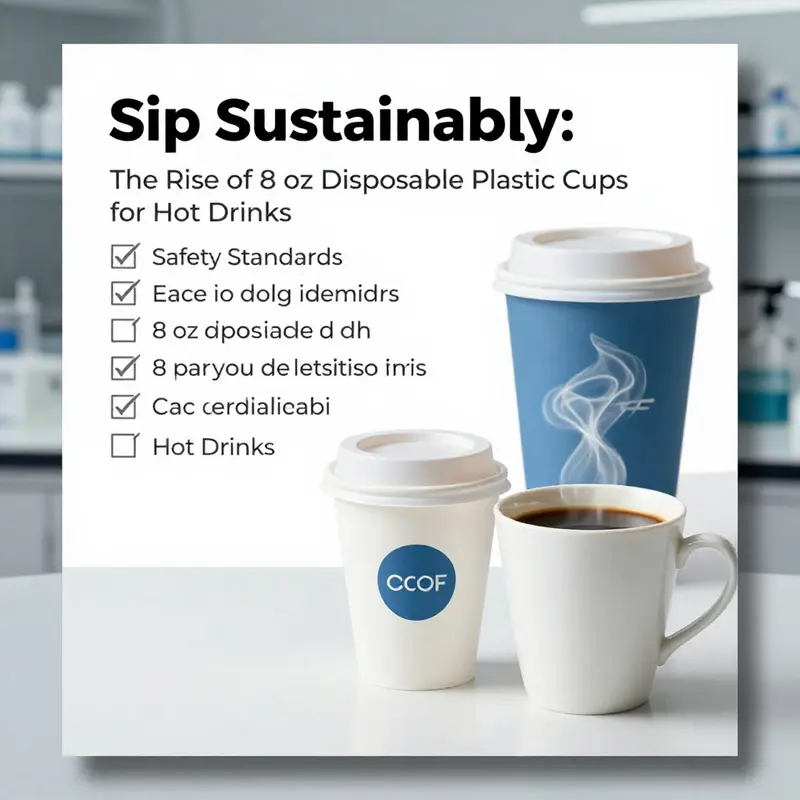
A cup of hot coffee in the morning, the steam rising in lazy swirls, is more than a beverage; it is a test of trust between a consumer and the container that holds it. The 8 oz disposable cup, designed for hot drinks, sits at the intersection of convenience, performance, and public health. Its everyday ubiquity—at cafés, catering events, and office breakrooms—belies a careful engineering problem: how to keep heat contained, avoid leakage, and ensure safety from the moment hot liquid is poured to the moment it is disposed of. The chapter that follows maps the regulatory landscape that shapes every facet of these cups, from the choice of plastic to the design of the lid, and from the laboratory tests that simulate the harsh realities of use to the certifications that reassure buyers across borders. The story is not about a single product but about a class of containers that must perform under heat while meeting strict rules designed to protect food safety and environmental health.
Central to this story is the material itself. For hot beverages, the material must withstand contact with heat without deforming, leaching, or releasing unpalatable flavors into the drink. In practice, this means a curated set of plastics that have been evaluated for food contact. While polypropylene has long been associated with heat resistance, the market has increasingly leaned toward BPA-free options that are approved for food contact and that deliver a combination of clarity, rigidity, and resilience. Among these, PET stands out for its balance of strength, transparency, and barrier properties, which help preserve the beverage’s temperature and aroma while resisting the intrusion of moisture and oxygen. In the culinary world, clarity is not simply aesthetic; it communicates freshness and quality, while rigidity helps cups maintain their shape as hot liquids are handled and circulated through crowds. The temperature reality is practical as well: many of these cups are tested to withstand temperatures up to roughly 160°F (71°C) without compromising the material’s stability or introducing unwanted substances into the drink. This threshold is not arbitrary; it reflects a tiered understanding of what a disposable cup must endure during typical hot-service scenarios—from the initial pour to a few moments of transport in a sleeve or a lid that provides an extra layer of protection.
But material choice is only one dimension of safety. The design of the cup and its companions—the lid and, increasingly, the sleeve—play a crucial role in preventing spills and preserving heat. A leak-proof design is a hallmark feature, often paired with a polyethylene (PE) lid that is itself formulated to be compliant with food-contact regulations. The lid does more than seal; it helps manage the dynamics of heat transfer and external handling. A well-fitted lid reduces the risk of scalds from accidental spills and minimizes heat loss during transit. The engineering challenge is to achieve a balance: a lid that stays sealed under movement, yet opens smoothly for drinking when intended. This balance is part of what customers experience as reliability in a disposable cup system. From a compliance standpoint, it also means that both the cup and the lid must come from materials and processes approved for contact with food, aligning with regulatory expectations for consumer safety.
Across the Atlantic, safety standards extend beyond single-item performance. The European framework, under Regulation (EC) No 1935/2004, places emphasis on materials and articles intended to come into contact with food, requiring that substances migrate in negligible amounts and that any migration be traceable to a level that does not pose a risk to public health. In practice, this has translated into an ecosystem where manufacturers voluntarily pursue risk-based assessments, traceability, and quality management systems that stand up to audits. Certification schemes, whether they arise from global players or regional authorities, function as signals of consistency and reliability. They do not replace internal testing; rather, they complement it, ensuring that the chain from raw material to finished cup remains under scrutiny. The result is a kind of regulatory choreography in which suppliers align their materials, processes, and products to a shared set of expectations, enabling buyers—cafés, restaurants, event organizers, and others—to source with confidence.
The governance of safety also extends into the realm of food-contact substances, where agencies outline permissible materials and provide guidance on what must be tested. In the United States, the U.S. Food and Drug Administration (FDA) is the central authority for food-contact materials. Its framework under Title 21 of the CFR sets out the rules for what plastics may be used, how they may be used, and what conditions must be met to ensure that contact with hot beverages does not introduce hazardous substances into the drink. In practical terms, this translates to a requirement that the cup be BPA-free and made from materials approved for food contact. BPA, a substance once common in some plastics, has been banned or restricted due to concerns about health risks, leading manufacturers to pivot toward BPA-free formulations that still deliver the performance demanded by hot-beverage service. The FDA’s guidance emphasizes that safety testing, good manufacturing practices, and traceable compliance are indispensable to the product’s legitimacy in the marketplace. This regulatory backbone is not merely a formality; it is a practical assurance that the cup in the hand of a customer has passed rigorous evaluation and is designed to avoid direct or indirect harm from the container itself.
In a crowded market, the alignment with international standards adds another layer of assurance. Certifications such as SGS and ISO 22000, while not guarantees of product perfection, signal that a supplier has embraced recognized safety management systems and third-party testing. SGS, as a certification body, provides independent verification that materials and processes comply with applicable standards. ISO 22000, focused on food safety management, promotes a systematic approach to hazard analysis and critical control points throughout the supply chain. For buyers, these certifications translate into a measurable reduction in risk: a structured framework for supplier oversight, ongoing quality checks, and documented evidence of safety compliance that can be shared with customers or auditors. The cumulative effect is a marketplace where hot-drink cups are not just inexpensive disposables but components of a trusted safety system that upholds consumer health from cup to cup.
Beyond safety and regulation lies the conversation about environmental impact. A growing segment of the market highlights eco-friendly claims, including options that are compostable or biodegradable. When such claims surface, they are typically accompanied by standards that govern compostability and end-of-life processing, and they must be supported by credible certifications. The environmental narrative does not diminish the safety criteria. Instead, it intensifies the need for transparent labeling, reliable performance, and robust testing to ensure that a product can perform in hot-service contexts while also offering a feasible pathway for waste management. In practice, this means evaluating not just heat resistance and leak protection but also how a cup will be treated at the end of its life—whether it can be processed in standard composting streams or recycling systems, and under what conditions those outcomes are achievable. The modern supply chain therefore treats safety and sustainability as two sides of the same coin, each reinforcing the other to sustain consumer confidence and environmental stewardship.
For stakeholders, the regulatory landscape translates into a set of practical decision criteria when choosing a cup for hot drinks. The cup must be constructed from a material that is BPA-free and approved for food contact, with enough heat tolerance to survive the peak moments of service. The lid must work in harmony with the cup to prevent leaks and manage thermal transfer, without compromising safety or consumer experience. The entire system—the cup, the lid, and any sleeves or insulating features—should be backed by a traceable supply chain and appropriate certifications that reassure buyers about compliance and quality. In day-to-day operations, this translates into clear procurement requirements: insist on documented food-contact approvals, verify the absence of restricted substances, require dates and lot numbers for traceability, and request third-party certifications that attest to safety and quality management. For buyers who must navigate regulations across regions, the combination of FDA alignment in the United States, EU safety provisions, and independent certifications can help build a compliant, consistent sourcing strategy that reduces the risk of non-conformance and protects brand integrity.
The story of the 8 oz hot-drink cup is ultimately a narrative about trust. It is trust in a container that can hold a hot beverage safely, a lid that stays sealed under ordinary handling, and a system of standards that keeps that safety visible to consumers. It is also a trust in the processors and manufacturers who apply rigorous internal controls and seek credible third-party verification. When a cafe server hands over a cup to a customer, that small exchange is the visible tip of a much larger iceberg of research, testing, and regulation that makes the moment possible. Consumers rarely see the migration tests or the compliance audits, but they are the quiet guardians of health and quality, working behind the scenes to ensure that every hot drink remains as close as possible to the pristine experience imagined at the time of pour.
In this light, the choice of 8 oz cups becomes less about a single price point and more about a decision to align with a responsible, well-governed supply chain. Cafés and event organizers that prioritize safety and compliance often find that the peace of mind offered by robust standards is itself a competitive advantage. Customers respond to consistent, safe experiences; they notice when a lid does not leak or when a cup remains free of off-flavors even after a long day of service. This is not a story about abstraction but about the tangible, measurable outcomes of sound regulation: reduced risk of contamination, clearer labeling, and a product that can be trusted to perform as expected, from the first pour to the final disposal.
For further reading on the foundation of food-contact safety in the United States, the FDA provides comprehensive guidance on what constitutes safe materials for contact with food, including plastics used in hot beverage containers. FDA guidance on food-contact materials offers in-depth information on regulatory expectations, approvals, and the scope of substances permitted in food-contact applications. This external resource complements the chapter’s focus on how safety standards are applied in practice, grounding the conversation in regulatory reality as suppliers and buyers navigate the complexities of heat, risk, and responsibility.
Final thoughts
The popularity of 8 oz disposable plastic cups for hot drinks is anchored in their blend of durability, design, and versatility. Businesses that prioritize quality while being mindful of environmental impacts can leverage these cups to enhance their beverage offerings. By understanding the materials, trends, and safety standards specific to these products, you can make informed decisions that elevate your service and align with consumer preferences. This knowledge empowers bubble tea shops, restaurants, food trucks, and event planners to thrive in a competitive market.