

The world of beverage service is evolving, with clear plastic cups becoming a staple for businesses ranging from bubble tea shops to corporate events. 9-ounce clear plastic cups are not only practical but also communicate brand elegance and product quality. This article explores prominent manufacturers in this niche—Wuhan Broadyong Tech Group Inc., TashiBox, and MATANA—while dissecting their unique offerings. Additionally, we will examine the specifications and market demands for 9-ounce cups, alongside emerging trends that could define the future of beverages in an eco-conscious world. By tapping into insights from each section, businesses can better align their product choices with customer expectations and industry standards.
Wuhan Boyuan New Materials: Pioneering 9-Ounce Clear Cups Through AI-Driven, Precision Injection Manufacturing
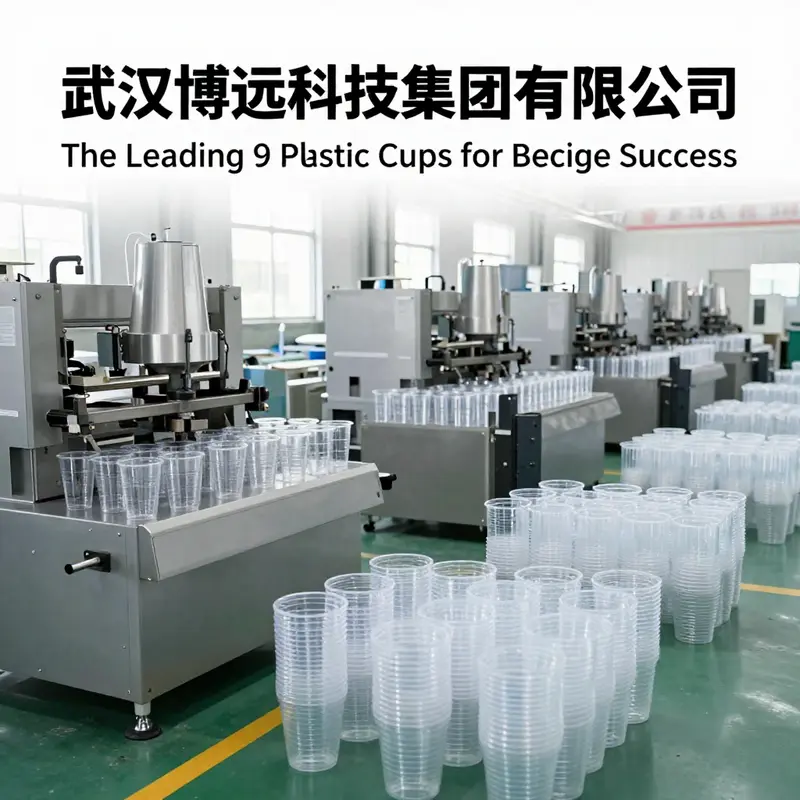
In the world of packaging, the humble 9-ounce clear plastic cup often appears as a mere utility, a non-descript vessel slipping into the background of busy hospitality and retail workflows. Yet the producers behind this seemingly simple component operate at the intersection of materials science, precision engineering, and data-informed process control. Among the leaders shaping this space is Wuhan Boyuan New Materials Technology Group Co., Ltd.—a core enterprise whose work on the clear cup category illustrates how modern plastics manufacturing blends scale with safety, customization, and proactive quality management. The narrative of this company is not a tale of a single breakthrough; it is a narrative of cumulative capability built through disciplined material selection, meticulous mold design, and increasingly intelligent production control. The result is a production system that can deliver massive throughput while maintaining optical clarity, consistent wall thickness, and robust performance across cold beverages, juices, and even specialty drinks. In short, the cup becomes a lens through which the plastics industry’s most pressing shifts—automation, traceability, and collaboration with customers—are made manifest on a factory floor.
This enterprise, established in the early 2000s, positioned itself as a foundational player in the plastics segment by marrying robust injection-molding capacity with a strategic emphasis on materials science. The 9-ounce cup category, roughly 267 milliliters, demands more than a clear body; it requires reliability under a range of conditions, from busy cafes to crowded events. The company recognized early that a successful product must satisfy three interlocking criteria: food-grade safety, mechanical resilience, and process compatibility with high-volume runs. Over time, its catalog developed to emphasize clear cup bodies that could accommodate prints or decorations without compromising the base’s optical integrity. This balance—between the clarity customers expect and the functional demands of a busy service environment—has become a hallmark of their approach. The leadership’s decisions reflected a simple logic: invest where it matters most for scale, and privilege process stability where defects and variability erode margins. The result is not merely a single product line, but a scalable platform capable of meeting brand-level requirements while preserving cost efficiency in mass production.
On the shop floor, the core technology remains injection molding, a method well-suited to the high-volume demands of disposable cups. Clarity, after all, is not cosmetic in this context; it shapes consumer perception and influences how liquid color and freshness are displayed. The materials team emphasizes resin choices that resist hazing and maintain stiffness in cold liquids, all while staying within food-contact safety standards. This is not only about selecting a transparent material; it is about understanding how resin viscosity, refractive index, and thermal behavior interact with mold geometry and cycle timing. The company’s approach marries these material considerations with a manufacturing rhythm designed to minimize variance. A key layer of control is the AI-guided production system that monitors and adjusts core parameters in real time. By tracking indicators such as cycle time, mold wear, and temperature profiles, the system detects subtle deviations early and re-aligns processes before a defect can propagate. The upshot is a line that sustains uniform wall thickness, consistent edge quality, and reliable dimensional integrity even as demand fluctuates across seasons and regions.
Yet the cup is not merely an engineering artifact; it is a canvas for brand differentiation and a node in a broader packaging ecosystem. The company’s capabilities extend to customization—ranging from rim geometry and lip thickness to surface finishes that enhance the consumer’s tactile and visual experience. In a market that can seem commoditized at a glance, real differentiation often lies in how a brand’s identity translates into packaging affordances: how easily a cup can be stacked on a crowded display, how lid interfaces perform under service stress, and how print-ready areas retain legibility under heat and beverage splash. The production platform supports mode switching between large, standard runs and smaller, design-rich batches without sacrificing throughput. That flexibility matters in hospitality networks and retail chains that require both scale and cadence alignment with promotional campaigns, seasonal menus, or regional preferences. In practice, it means the difference between a supplier that quietly ships and a partner that can adapt packaging strategy to a brand’s experiential goals.
Quality and safety are deeply embedded in the enterprise’s operating philosophy. The cups must satisfy stringent food-contact criteria while performing in hospitality settings that demand reliable leak resistance and clean, stain-free surfaces. A culture of quality translates into more than compliance paperwork; it translates into traceability, from raw resin lots to finished cups. Clean environments, rigorous inbound inspections, and finished-goods certifications all play their part in a holistic quality system. The emphasis on food-grade status signals more than a label; it signals lifecycles that account for supplier qualification, lot traceability, and post-production quality checks. In such a system, the interplay between materials and molding equipment becomes a critical source of competitive advantage. Even identical resin batches can yield subtly different results depending on mold design and the precision of cycle control. The company’s integrated approach—material science connected to disciplined process engineering—reduces variability, lowers scrap rates, and ensures that customers receive consistent performance across shipments and over time.
The market context for disposable clear cups further illuminates why this integrated approach matters. As consumer habits shift toward on-the-go beverages and event-based consumption, the need for dependable packaging grows correspondingly. A leader in this space understands that cups are not standalone products; they are nodes in a logistics chain that includes supply, labeling, distribution, and point-of-sale display. The ability to deliver predictably on large orders while still accommodating customization speaks to a broader industry push toward supplier partnerships rather than transactional exchanges. This is especially true for brands that rely on consistent branding across locations or campaigns. The manufacturing strategy thus serves as a backbone for brand consistency as much as for operational efficiency. In this sense, the cup becomes a critical interface between product design, customer experience, and the practical realities of high-speed service.
Patents and intellectual property quietly reinforce this leadership. The company’s status as a core enterprise in its field is partly grounded in protections for both equipment and process governance. Public patent disclosures highlight innovations such as a specialized plastic cup production injection device and an AI-guided production control system tailored for PP cups. These patents matter not merely as legal instruments but as indicators of strategic intent—investing in the core capabilities that determine how quickly and reliably a facility can scale, how tightly it can control quality, and how resilient it can be to supply-chain disruptions. Patents also signal to customers and suppliers that the company is committed to long-term capability building rather than short-term optimization. For practitioners in the field, this translates into a dependable rhythm of product availability, predictable lead times, and a shared language around process improvements that derive value across the supply chain. The practical outcome is an ecosystem in which research, development, and manufacturing continuously inform one another, rather than operating as siloed functions.
Beyond the plant floor, the company’s strategic stance on global supply and regulatory readiness reinforces its leadership posture. The ability to meet varied market requirements—whether for regional flavor in product design, different regulatory regimes, or diverse consumer expectations—depends on a robust compliance framework and a flexible manufacturing footprint. The cup category’s apparent simplicity masks a web of specifications that can shift with market demands, seasonal peaks, and logistical constraints. The firm’s capacity to navigate these dynamics without sacrificing quality or speed speaks to a broader industry trend: the convergence of advanced manufacturing technologies with proactive supply-chain planning. It is this convergence that elevates a seemingly ordinary packaging item into a reliable platform for brand narratives, consumer trust, and scalable commerce.
For readers who want a tangible, referenceable touchstone within this ecosystem, the broader disposable cup landscape can be explored through industry products that illustrate the range of applications and usage contexts. In particular, a product page for disposable clear plastic cups designed for outdoor use and parties provides a concrete example of how such products are positioned for events, catering, and home entertaining. This resource helps connect the technical narrative of materials, tooling, and control systems to the end-user experience of packaging during celebrations or everyday occasions. It also demonstrates how design choices—clear visibility, rim geometry, and stacking behavior—translate into practical benefits on-site. See: disposable clear plastic cup for outdoor use and parties.
As the industry continues to evolve, the next chapters will explore how adjacent packaging subsegments—such as decorated or specialty dispensing cups—reuse core technologies like precision molding, automated inspection, and AI-assisted process optimization. The throughline remains clear: leadership in a targeted product category arises from tightly coupled capabilities that span material science, equipment design, software-enabled control, and customer-aligned service. This holistic view helps explain why a single product category can illuminate broader patterns in industrial manufacturing, from capital investments in automation to the cultivation of long-term partnerships with brand owners. External resources and patent records further contextualize this trajectory, underscoring how legal protections and regulatory readiness reinforce and extend practical manufacturing advantages. External resource: https://www.cnipa.gov.cn/col/col17468/index.html
Crystal Clarity in Every Cup: Navigating the Manufacturing Landscape of 9-Ounce Clear Plastic Cups

In the world of disposable drinkware, the 9-ounce clear plastic cup has earned a quiet ubiquity. It is the unassuming workhorse for coffee shops, catering events, vending stands, and backyard parties alike. When you examine what makes this cup reliably useful, you see a chain of decisions that begins long before the first tray leaves the factory floor and ends only when the finished cups are stacked, stored, and sent to their final destinations. The chapter is less about a single product and more about a system—one that balances material science, manufacturing precision, regulatory standards, and practical design with the unpredictable rhythms of demand across diverse markets. To understand how such a cup comes to be, it helps to trace the decisions that shape its clarity, strength, and cost, and to recognize how those decisions align with different buying needs, from bulk industrial orders to retail shelves for everyday use.
At the heart of the 9-ounce cup is material choice. The most common base material for clear cups is a transparent polymer with excellent clarity and relatively high impact resistance. This material is chosen not only for its optical properties but also for its compatibility with cold beverages, iced coffees, fruit smoothies, and other entertainingly colorful drinks that crowd on busy service lines. The material must perform under a range of temperatures and pressures, resist cracking during stacking and transport, and remain safe for contact with food and drinks. Moisture barriers, edge strength, and the ability to hold a consistent wall thickness are all critical. Beyond the standard clear option, suppliers sometimes offer variants that improve rigidity or reduce weight, enabling more cups per pallet or per shipping container. The trade-offs are real: a thinner wall saves material and weight but may demand tighter process controls to avoid deformation during filling and handling. A thicker wall increases material costs and weight but can deliver longer shelf life in stacked storage and a margin of safety in high-volume environments where cups may be dropped or bumped during busy service.
A practical dimension of this landscape is the choice of the polymer’s form and how it is manufactured. Two dominant pathways exist for clear cups: thermoforming and, less commonly for generic 9-ounce cups, injection molding. Thermoforming starts with a sheet of plastic that is heated and formed over a mold to shape the cup. This method lends itself to high-volume production with uniform wall thickness and smooth rims, and it allows for rapid cycle times when a facility is tuned for consistency. The process demands precise control of temperatures, pressures, and tooling wear. Even small deviations can lead to edge burrs, inconsistent stacking, or subtle variations in clarity. For buyers, the predictability of thermoforming translates into reliable bulk pricing and a stable supply chain, provided the supplier maintains rigorous quality checks and tight mold maintenance schedules.
In more specialized settings, another layer of consideration emerges: the finish and the rim. The rim is where handling comfort meets stacking efficiency. A well finished rim should feel smooth to the lips and fingers, return into a neat circular edge after stacking, and resist cracking when cups are set down or stacked for bulk packaging. Some manufacturers add subtle features—slightly rounded rims, reinforced lips, or textured exterior surfaces—to improve grip and reduce slippage during transport. These small design choices can be the difference between a cup that feels premium on the counter and one that arrives as a budget afterthought in a crowded storage room.
Design variety often speaks as loudly as material science. The 9-ounce size is a versatile middle ground—slender enough to be elegant for a café, sturdy enough for a party setting, and familiar enough for retail displays. Straight-walled forms are common, but you will also find gently tapered shapes that optimize stacking efficiency and reduce the chance of sticking when cups are nested in bulk. Some applications call for cosmetic embellishments, such as decorative rims or embossed textures that catch the light in a way that makes beverages seem more appealing. It is here that the market reveals its segmentation: while one segment seeks the clean, unembellished look of crystal-clear glass-like plastic, another segment seeks a touch of personality through rim accents or subtle branding elements that do not overwhelm the drink’s appearance. The balancing act—clarity, strength, and visual appeal—defines which suppliers are best suited for a given project, whether the goal is a uniform fleet of cups for a national chain or a smaller run designed for a themed event.
Scale and supply dynamics shape how buyers approach this product category. Large-scale purchasers, such as multi-site operators or distributors serving a broad hospitality network, tend to prioritize bulk consistency, favorable unit costs, and dependable lead times. They expect suppliers to offer a clearly defined specification package, including material compliance, wall thickness tolerances, rim finish standards, and documented quality-control procedures. For these buyers, the value lies not in a single cup’s beauty but in the reliability of thousands, even millions, of units shipped on schedule with uniform performance across continents. In contrast, smaller buyers—whether they are regional retailers, pop-up vendors, or party planners—often prize the ability to source ready-to-use cups from online platforms and direct-to-consumer channels. They look for transparent product information, straightforward packaging options, and clear indications of whether customization can be accommodated and at what scale. The existence of both supply channels is a telling sign of a healthy market, where the same basic product can satisfy both mass distribution needs and more selective consumer desires.
A core area where buyers and manufacturers often converge is customization. Customization is not simply about slapping a logo onto a cup; it is a complex blend of branding, regulatory compliance, manufacturability, and cost control. For brands seeking a customized cup, suppliers typically offer options such as logo printing on the cup body, branded packaging for bulk orders, and packaging inserts that align with a campaign’s theme. In addition, some customers request color-tinted rims or interior coatings to enhance beverage presentation or improve opacity for certain drinks. The technical feasibility of such features depends on the chosen material and process, with deeper color or surface treatments potentially affecting clarity, recyclability, or heat resistance. The OEM pathway—where a manufacturer collaborates closely with a brand to design, validate, and produce a cup that meets exact specifications—reflects how a seemingly simple product becomes a strategic element of a brand’s identity. Yet even in customization, practical constraints remain: minimum order quantities, tooling costs, lead times, and the availability of compatible packaging and logistics options must be aligned with the brand’s launch schedule and budget.
As buyers and manufacturers negotiate these dimensions, the conversation inevitably touches on sustainability and end-of-life considerations. PET-based clear cups are widely recyclable in regions with established PET streams, but recycling realities vary by geography, municipal capabilities, and consumer participation. In markets where recycling infrastructure is robust, these cups can contribute to circular material flows if correctly sorted and processed. In others, labeling and supply chain clarity around material composition become essential to prevent contamination of recycling streams. This dynamic pushes suppliers to be transparent about resin codes, any surface treatments, and the full environmental profile of their products. For buyers, the decision to pursue a standard, off-the-shelf clear cup or to commission a customized, brand-aligned variant also ties back to waste reduction goals, packaging optimization, and the broader strategy around single-use plastics in a given jurisdiction.
Evaluating supplier capabilities becomes the next critical phase. Buyers increasingly favor suppliers who can demonstrate not just a single production line but an integrated capability set: material sourcing, resin consistency, mold and tooling maintenance, and a robust quality-control regime that includes traceability from raw material to finished cup. It is common to see tiered quality assurances, ranging from basic batch conformity to advanced optical inspection and sampling plans designed to detect minute variations in clarity, thickness, or edge integrity. The decision framework for a buyer includes assessing the supplier’s response times, the flexibility of tooling for minor design changes, and the supplier’s ability to scale in response to sudden demand surges—such as seasonal peaks or promotional campaigns.
In practice, the landscape often reveals a spectrum of manufacturers that cater to different niches within the same overarching product category. Some suppliers emphasize customization and brand-oriented packaging, offering bespoke solutions for a limited run with close design collaboration. Others focus on delivering consistent, cost-competitive solutions for large networks that require standardized parts and predictable delivery windows. Still others carve out a position by combining finished goods in attractive, retail-ready packaging with straightforward online ordering. Each approach has its merits, and each speaks to a different facet of the consumption ecosystem: brand storytelling, operational efficiency, or convenience for time-pressed buyers.
For readers who wish to explore related resources that discuss broader packaging strategies and modular takeout systems, a relevant reference can be found here: custom-takeaway-packaging-supplies-disposable-tableware-for-theme-party. This resource illustrates how the same cup is often integrated into a broader ecosystem of disposable tableware and packaging, highlighting how downstream decisions—branding, packaging, and display—interact with upstream material and process choices. Such a perspective can help a procurement professional articulate requirements in a way that aligns production capabilities with marketing goals, ensuring that the resulting cups not only perform but also reinforce a brand’s story at the point of consumption.
Ultimately, the 9-ounce clear plastic cup embodies a pragmatic balance: clarity that welcomes the eye, strength to withstand everyday use, and the flexibility to serve a wide range of beverages and occasions. It sits at the intersection of material science, industrial engineering, and commercial strategy. For buyers and suppliers alike, success hinges on the ability to translate a simple specification into a repeatable, scalable, and responsible production and delivery plan. As markets evolve, this chapter’s theme remains constant: the cup’s value emerges not from a single feature but from the disciplined integration of material choice, process control, design finesse, and supply-chain reliability. The result is a product that, despite its ubiquity, still rewards thoughtful sourcing, rigorous quality assurance, and a clear alignment between end-use demands and the realities of modern manufacturing.
External reference: For a concrete example of a manufacturer’s listing on a major online platform and its presentation of a 9-ounce clear cup, see https://www.amazon.cn/dp/B07QYJVHLQ. The page offers a snapshot of how a finished product is positioned, described, and authenticated for consumer purchase, illustrating how technical specifications, safety notes, and packaging details come together in a retail context.
Clarity, Craft, and Commercial Reach: Navigating the 9-Ounce Clear Plastic Cup Manufacturing Landscape

The 9-ounce clear plastic cup sits at a curious intersection of visual appeal, functional reliability, and production pragmatics. In the world of cold beverages, party rituals, and on-the-go service, this size has become a workhorse precisely because it blends a generous viewing window with a sturdy, manageable form. Clarity matters as much as thickness, and buyers increasingly equate a cup’s look with a brand’s perceived quality. The challenge for manufacturers is not merely to produce a transparent hollow cylinder but to deliver a consistently smooth edge, uniform wall thickness, and dependable performance under a range of cold applications. The demand drivers extend beyond the cup itself. Retailers, event organizers, beverage distributors, and quick-service venues all seek a supply line that combines predictable lead times, scalable volume, and the flexibility to accommodate customization. In this context, the manufacturing landscape for 9-ounce clear cups is less about a single most efficient mold and more about a network—an ecosystem that links resin suppliers, toolmakers, converters, and logistics partners into a seamless flow from raw material to ready-to-ship product. The result is a product that, at first glance, seems simple, but in practice reflects a careful balance of material science, process control, and market intelligence.
Material choice sits at the heart of that balance. The most common resin for these cups is a clear, food-grade polymer that can deliver high clarity and good stiffness without excessive thickness. The goal is to maximize the visual appeal of the drink while ensuring the structure remains robust enough to resist cracking during handling, stacking, and transport. The thickness of the cup wall, the radii of the base, and the smoothness of the rim all contribute to a perception of quality. In a competitive market, even small deviations in wall uniformity can translate into cosmetic flaws or inconsistent performance across production lots. For manufacturers, this elevates the importance of precise molding parameters, resin consistency, and stringent in-process inspection. The handling of resin moisture, mold temperatures, cooling rates, and ejection forces all ripple through to the final product’s strength and clarity. In short, the plastic cup is a product of many moving parts, each of which must be tightly controlled to keep the final appearance crisp and the user experience reliable.
Beyond raw materials and molding, food-safety compliance remains a nonnegotiable baseline. Buyers expect documentation that attests to FDA compliance or equivalent standards in their jurisdiction. The production environment must be clean, with process controls that minimize the risk of contamination and ensure the resin’s suitability for direct-to-beverage contact. In addition to safety, there is a growing emphasis on consistency across batches. A cup must not only look good in a sample but hold its form under the pressures of mass production. That is why reputable manufacturers invest in quality-control regimes that couple automated vision systems with human inspection, ensuring that each run preserves the smoothness of the edge and the uniformity of the wall. The result is a supply option that can scale—from pilot runs to industrial orders—without sacrificing the visual integrity that customers associate with a premium beverage experience.
Customization is another vital axis in this market. While many buyers seek a dependable generic cup for broad use, others want branded or event-specific solutions. Customization can range from branding and printing on sleeves or cartons to decorative rim finishes and coordinated lid designs. A large portion of demand arises from campaigns that require a consistent visual identity across multiple touchpoints: cups, lids, sleeves, and even promotional packaging. The manufacturing capability to accommodate such requests depends on the supplier’s flexibility, minimum order quantities, and cycle times. Some manufacturers can support relatively small print runs with short lead times, enabling brands to test messaging or seasonal themes without tying up capital. Others offer more extensive customization, including color-tinted walls, embossed textures, or gold-toned rims that add a festive or premium look. The practical implication for buyers is a spectrum of choice: a scalable, no-frills option for everyday use, paired with selective customization options for higher-impact campaigns. In this landscape, the ability to deliver consistent quality while meeting branding requirements often distinguishes a reliable supplier from a fluctuating source.
The distribution channels for these cups mirror the breadth of their use. Some makers sell direct to manufacturers of foodservice equipment, others engage with distributors serving grocery chains, coffee shops, or hospitality operations, and a growing segment reaches online marketplaces that connect brands with manufacturers in a more modular, project-based way. This multi-channel approach matters because it influences how quickly a buyer can move from concept to confirmation. A fast, seamless ordering experience is as important as the cup’s physical properties. Lead times, inventory transparency, and the clarity of price signaling all play into a buyer’s planning accuracy, especially when campaigns hinge on precise delivery windows or seasonal spikes in demand. For large-scale foodservice operators, the ability to lock in supply for months ahead can be as valuable as a few cents saved per unit. Conversely, startups or boutique events often prioritize flexibility, smaller minimums, and rapid prototyping. In either case, the right manufacturing partner becomes an extension of the buyer’s operations, aligning production schedules with brand calendars and event timelines. The overarching narrative here is not a single formula for success but a flexible framework in which material science, process discipline, and market responsiveness converge.
Within this framework, buyers increasingly consider the broader packaging ecosystem as part of their cup strategy. The way a brand presents its beverages extends beyond the cup itself to the packaging and display environment that surrounds the product. In some cases, this means coordinating with foldable packaging solutions that carry windows or other design elements to showcase the product inside. Such coordination reinforces the idea that packaging is a continuum rather than a series of isolated components. For readers curious about how these ecosystems interact, a practical example can be found in Pure Color Foldable Cake Boxes with Window, which illustrate how a well-integrated packaging suite can elevate a product’s presentation across multiple channels. Pure Color Foldable Cake Boxes with Window demonstrates the kind of design discipline that brands often seek to parallel in their beverage presentation. This linkage matters because it reminds us that a cup does not exist in isolation; it is part of a broader visual and logistical system that shapes consumer perception and operational effectiveness.
As the market evolves, sustainability considerations increasingly inform both choice and design. Even as the clear cup remains a staple for many applications, buyers demand clarity about recyclability, end-of-life options, and the environmental footprint of manufacturing. PET-based cups, widely used for their clarity and strength, are recyclable in many jurisdictions where local facilities exist. This makes it feasible for brands to communicate a recycling-friendly story, provided the supply chain can support proper sorting and collection. Yet the reality on the ground varies by region, facility capacity, and consumer participation in recycling programs. Consequently, manufacturers must stay attentive to regional preferences and evolving regulatory expectations. The push toward more sustainable solutions also drives interest in alternative formulations or post-consumer recycled content, balanced against the need to retain optical quality and mechanical performance. These considerations require ongoing collaboration among resin suppliers, mold makers, testing labs, and finally packagers who translate material choices into reliable, finished products. The result is a manufacturing ecosystem that rewards thoughtful planning, transparent communication, and steady investment in process improvements.
With these dimensions in view, the decision-making calculus for buyers becomes clearer. For high-volume, brand-driven campaigns, a supplier that offers both scale and customization, supported by robust quality control and regulatory compliance, becomes especially valuable. For routine operations, stability, cost efficiency, and predictable delivery frequently take precedence. In either case, the 9-ounce clear cup embodies a compact but telling signal about a supplier’s capabilities: the ability to deliver a visually undistorted, mechanically sound product at a consistent price point and on a reliable schedule. The longevity of a cup’s appeal rests on more than its transparency; it rests on a disciplined manufacturing approach that keeps every parameter—edge quality, wall thickness, and finish—aligned with the expectations of modern beverage service. The interplay of material science, process excellence, brand needs, and packaging coordination forms the backbone of this story, turning a simple disposable item into a reliable component of many enterprises’ customer experience strategy. External factors such as logistics, demand forecasting, and regulatory compliance continue to shape the options available to buyers, but the core appeal remains the same: a clear, sturdy, adaptable vessel that can be molded to fit many occasions, from everyday coffee runs to high-impact promotional events. For readers navigating this space, the takeaway is not only about selecting a cup but about choosing a partner who can deliver consistent quality, align with branding ambitions, and integrate smoothly with the broader packaging and distribution ecosystem. External resource: https://www.amazon.com/dp/B0CJQZKXVY
9盎司透明塑料杯的技术规格与市场需求
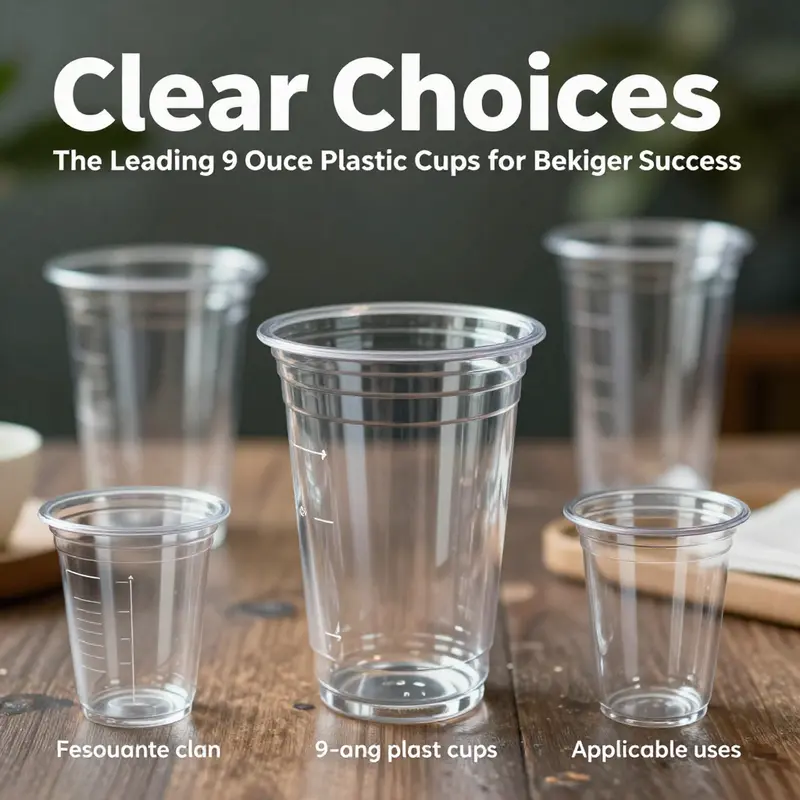
在现代商业饮品服务的日常运作中,9盎司透明塑料杯以其恰到好处的容量、清晰的视觉呈现和广泛的应用场景,成为不可或缺的一种容器形式。这种尺寸的杯子既能承载冷饮、果汁和奶茶等常见饮品,也能作为样品杯、促销杯或活动用杯出现在各种场合。技术规格的统一性在推动大规模采购时格外重要,因为它直接关系到批量生产、物流分发以及品牌标识的呈现效果。容量、口径和材质的组合决定了杯子在不同环境中的表现与成本效益。若把需求从日常家庭用具扩展到餐饮连锁、活动组织和跨境贸易,9盎司杯的市场弹性就会变得尤为关键。\n\n技术规格是市场理解的第一层门槛。以容量而言,9盎司约等于255毫升,这一容量在全球范围内被广泛视作“国民规格”中的标准选项之一。杯体直径通常在口径处达到约92毫米,杯高则因品牌设计而异,常见的范围落在90至110毫米之间,部分型号会显示78毫米的口径与95毫米的高度差异,甚至还存在Φ65×h110毫米等不同体积线。尺寸的差异并非小事,它影响握持舒适度、叠放稳定性以及在冷饮和冰块加入时的容积边界。\n\n材质方面,主流选择是食品级PET或PP材料。PET具备高透明度、无异味和较好的低温耐受性,适用于冷饮、冰咖啡、果汁甚至冰淇淋的外带场景;PP则在耐热性方面更为出色,能够承受0至70℃的温度波动,适合装温热饮品或热饮的过渡场景。两类材料的耐用性、透明度和对加入配料如肉、珍珠等颗粒物的兼容性都直接影响到最终口感呈现与用户体验。壁厚通常分布在0.1毫米至0.26毫米之间,单只重量大约11克,保证了杯体在单手持握时的平衡感,同时又能在运输和堆叠中保持一定的结构强度。\n\n另一方面,环保与包装形式同样是不可忽视的考量因素。多数制造商在材料选择上强调食品级安全与降解友好性,并提供可印刷的LOGO定制服务,以满足品牌传播与营销活动的需要。包装方面常见的组合包括单个入PE袋、12个装、300个装、500个装或1000件/箱等多种形式,既便于零售商的货架管理,也方便批发商进行分发与补货。这些包装细节不仅影响成本,也影响运输效率、库存管理以及供应链的响应速度。在不同市场,供应商往往还会按照当地法规和回收体系对包装材料与印刷工艺进行调整,以确保合规性与可持续性。\n\n定制化在当前市场尤为重要。许多企业在追求品牌曝光时,会选择在杯身或杯口区域添加印刷、烫金或刻纹等设计元素。尽管主要杯体通常保持透明以展示饮品本身,但通过金边、色带或纹理处理,品牌形象可以被传达得更加鲜明。这种定制化能力也解释了为何市场上出现从工业级大规模生产到面向零售端的成品杯的多样化策略。对企业客户而言,能够在大批量生产中实现稳定的印刷质量、颜色一致性与交付周期,往往成为选择供应商的决定性因素。\n\n市场需求的结构性特征体现在若干使用场景上。办公环境、学校、机场、写字楼和会议场景对“一次性杯”的需求稳定且持续;在餐饮业,奶茶店、咖啡馆、便利店等以“9盎司”为基准的外带杯仍是常态,虽然部分订单趋向于10盎司(约280毫升)的容量以满足常温饮品的订单结构,但9盎司的比例在冷饮与果汁领域依然占据显著份额。活动与派对需求尤其明显,透明杯的外观使饮品可视性增强,易于观感评估与品尝分发,因此常被用于婚礼、生日、企业年会等场景。这些场景的共同点是对价格敏感性与交货时效的高要求,以及对批量订货的稳定性需求。\n\n从全球视角看,9盎司透明杯的出口市场呈现多元化格局。北美、欧洲、澳大利亚以及部分亚洲市场对品牌定制、包装规格和印刷容量的需求尤为明显。供应链的韧性在这类产品中显得尤为重要:原材料价格波动、模具更替、印刷色彩的稳定性以及跨境运输时的清关节奏,都会直接影响到最终的价格与交期。因此,理性的采购策略应包括对供应商生产能力、质量控制流程以及应对产能调整的灵活性进行全面评估。对希望扩大市场、提高品牌辨识度的企业而言,选择具备稳定供货能力和可追溯质量体系的制造商,是实现长期增长的关键。\n\n在评估具体供应商时,企业往往会综合考虑多种因素:是否具备食品级认证与合规保障、对印刷与定制能力的覆盖范围、不同包装规格的灵活性、以及对不同批量需求的响应速度。对于寻求大规模定制的企业,能够提供从原材料筛选、杯体成型、印刷到最终包装的一体化服务的制造商将更具吸引力。对于偏向成品购买的小型零售或特殊活动的买家,能提供现货库存和快速交货的供应商则更具竞争力。上述因素共同塑造了9盎司透明杯在市场中的地位:它既是一个成本敏感型的标准化产品,也是一个可以通过定制与品牌传递来实现附加值的营销载体。\n\n对于希望进一步了解具体型号与案例的读者,行业渠道通常会提供大量选型信息和实物样杯的对比。在此背景下,一个直接的参考路径是关注那些具备明确容量、材料和包装选项的成品杯页面,以及能够展示品牌定制实例的制造商入口。这些信息有助于建立对常见壁厚、重量分布和热稳定性等关键性能的直观认知,并在实际采购中作为与供应商沟通的技术语言。\n\n在本文章节的传播链条中,前几章已经勾勒出不同地区的供应商能力与产品定位。当前章节将技术规格与市场需求拉到一个更广阔的框架内,强调杯子作为产品形态在生命周期中的角色转换:从单一外观的容器,到可视化饮品、品牌表达和活动体验的一部分。正是通过对容量边界、材料特性、印刷可能性和运输成本的综合考量,企业才能在竞争激烈的市场中找到最优解。若你在策划大规模采购或品牌推广活动时需要一个直接可操作的参考点,可以通过以下页面获取与此相关的具体实例与设计思路: Disposable clear plastic cup for parties and picnics 在继续探索供应链与制造细节的下一章中,我们将把焦点转向成本驱动因素、质量控制的关键步骤,以及如何通过数据驱动的选择来优化整个采购流程。这一连串分析不仅帮助企业理解市场现状,也为实现更高效的生产节奏与更具吸引力的产品方案奠定基础。
Toward a Transparent Future: Trends in 9-Ounce Clear Plastic Cup Manufacturing and Industry Evolution
The 9-ounce clear plastic cup sits at a quiet crossroads in modern food service. It is small enough to slide through a busy checkout, yet large enough to hold beverages from iced coffee to chilled juice, even light desserts in party settings. For operators who rely on disposable packaging, this size represents a practical balance—uniform across brands, adaptable for branding, and forgiving enough to accommodate a wide range of beverages and service models. This chapter treats the cup not as a simple container but as a dynamic node within a vast network of design choices, material science, and market forces that echo through factories, supply chains, and consumer-facing shelves. By following its evolution, we glimpse how demand patterns, regulatory expectations, and technological innovations coalesce to push the industry toward new capabilities and smarter choices about what ends up in the consumer’s hand.
Market data reinforce the central position of the 7–9 ounce family. In many beverage channels, this size remains the backbone of automated vending and quick-service operations. The Asia-Pacific region leads the global market, with Europe and North America close behind, and the 7–9 ounce segment consistently capturing the lion’s share of demand across submarkets. In dense urban areas where takeout and delivery are norms, the need for a transparent cup that can be stacked, transported, and presented without compromising appearance is a constant. This demand translates into a steady cadence of orders for manufacturers who can scale production while preserving clarity, smooth edges, and reliable performance. The broader takeaway is not merely more cups; it is a commitment to delivering consistent quality at scale, so retailers can plan menus, promotions, and seasonal offers with confidence.
Material choices remain the core of performance. PET continues to dominate because it delivers high clarity, good barrier properties for cold beverages, and affordable manufacturing costs. Yet the industry is adjusting to a policy and consumer push toward sustainability. Biodegradable alternatives based on biopolymers are moving from pilot projects to broader implementations as supply chains mature and recycling infrastructure improves. Forecasts point to a growing share of green materials within the overall cup ecosystem, expanding a substitution pathway without sacrificing safety or visual appeal. Even as eco-friendly options gain ground, PET’s advantages in transparency, process compatibility, and cost keep it central. The ongoing challenge for product developers is to harmonize optical perfection with environmental responsibility, without forcing compromises on strength or user experience.
Beyond base materials, the design and production methods are becoming more intentional and efficient. Innovations such as micro-foaming enable thinner walls that still resist denting and deformation, trimming material use while maintaining the cup’s stiffness. Surface treatments and coatings can enhance odor and flavor neutrality, improve printability for branding, and support temperature tolerance during hot-fill or iced drinks. Some manufacturers are exploring coatings that indicate temperature changes or provide subtle, tactile cues about freshness, turning the cup itself into a functional element of the consumer experience. In short, the cup evolves from a passive vessel into a tested, predictable platform that communicates quality at a glance and performs reliably under varying service conditions.
The progression of production technology complements these material and design shifts. Smart factories—where automation, data collection, and analytics optimize every stage from resin handling to finished cups—are changing throughput, quality, and predictability. Automated inspection, traceability, and predictive maintenance reduce defects and shorten cycle times. The industry is also embracing circular economy concepts, looking for ways to reduce waste, reuse scraps, and close the loop with post-consumer recovery. Even modest improvements in wall thickness through controlled foaming can yield meaningful material savings across millions of cups, contributing to both cost efficiency and environmental performance. These manufacturing advances are not isolated improvements; they reshape the economics of scale and the timing of new product introductions.
Geography continues to steer competitive dynamics. Southern and eastern manufacturing hubs—regions with dense supplier networks, tooling options, and logistics advantages—benefit from tight integration across resin suppliers, mold makers, and packaging finishers. The result is a more resilient supply chain able to respond to sudden shifts in demand, such as a spike in delivery orders or an unexpected promotional campaign. As the market matures, many producers move beyond pure manufacturing toward broader brand services, offering co-branded packaging concepts and decoration that align with campaigns and seasonal themes. This shift toward brand-centric packaging complements the traditional strengths of OEMs, creating a dual pathway: mass-produced, economical cups for everyday needs and higher-value formats for targeted market segments.
Policy and market pressures add a tempered edge to growth projections. Environmental and regulatory cues push the industry toward materials that can be more easily recycled or composted, while still delivering the performance consumers expect. At the same time, these pressures expand the opportunity set for new materials science and process innovations that can be monetized through premium offerings and expanded life cycles. Smart manufacturers are also exploring adjacent value streams—such as takeout packaging ecosystems and sterilizable formats for sensitive applications—while maintaining the core competency of producing a reliable, clear cup. In practice, this means maintaining a steady baseline of clear, economical cups for everyday use while developing higher-value variants that leverage sustainable materials, enhanced functionality, or aesthetic upgrades for selective markets.
From a strategic standpoint, four interlocking forces are likely to define the decades ahead for this cup family. First, environmental responsibility will become a baseline expectation rather than a differentiator, as buyers seek materials that degrade more readily or fit more cleanly into recycling streams. Second, intelligent manufacturing unlocks real-time process insights that translate into consistent product performance and reduced waste. Third, customization and branding elevate the cup from a passive container to a carrier of identity, enabling retailers and food-service brands to align packaging with campaigns, logos, and color narratives. Fourth, there is a clear movement toward higher-end formats—whether through enhanced clarity, better thermal tolerance, or decorative touches—that expands applications beyond routine use. Together, these forces form a resilient arc that should guide investment and product development for years to come.
To illustrate how these dynamics translate into practical choices without naming specific suppliers, consider the value of a versatile transparent cup that can carry a dessert slice, a fruit cup, or a cold beverage with style. The essence is consistency: smooth edges, stable performance, and dependable compatibility with a range of lids and seals. When buyers seek a steady supply, they look for a line that can deliver at scale with predictable quality and the flexibility to adapt to campaigns that require branding or seasonal packaging. For readers who want to connect theory to tangible formats, a catalog example of clear cake cups demonstrates how packaging can extend the product experience into the dessert realm. clear cake cups for desserts and bakery packaging. This reference helps anchor the discussion in concrete formats that retailers and caterers rely on when designing coherent offerings.
Looking forward, the industry’s trajectory will be shaped by policy cues, consumer behaviors, and technological breakthroughs that redefine cost structures, pricing, and supplier relationships. The capacity to demonstrate traceability—from resin to cup to consumer—will increasingly appeal to buyers who demand safety, quality, and environmental accountability. The leading producers will be those who balance steady, reliable supply with a willingness to explore above-market materials and smarter manufacturing architectures. The broader story is not simply about producing more cups; it is a narrative about confidence—confidence in performance, responsibility, and the agility of the supply chain to meet evolving demand with integrity.
External resource: https://www.gminsights.com/industry-analysis/automated-vending-cup-market
Final thoughts
As businesses navigate the complexities of beverage service, choosing the right 9-ounce clear plastic cups remains crucial. With reputable manufacturers like Wuhan Broadyong Tech Group Inc., TashiBox, and MATANA leading the charge in quality, design, and innovation, beverage establishments can enhance their service while meeting consumer demands for durability and presentation. Furthermore, staying informed about technical specifications and industry trends will enable shops, restaurants, and caterers to make informed decisions that align with both operational efficiency and market expectations.