
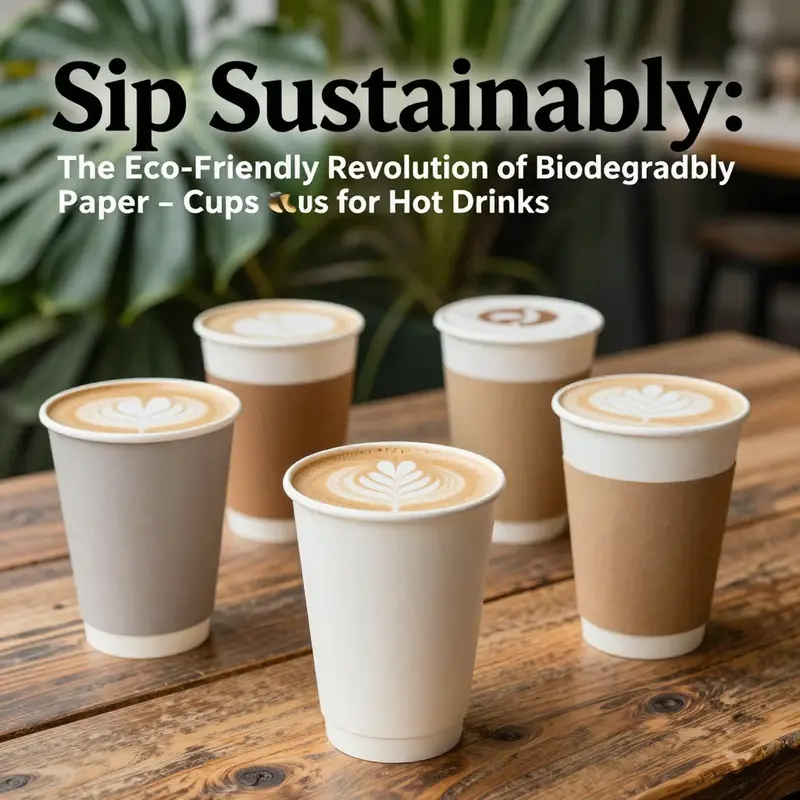
The shift towards eco-friendly practices has gained significant momentum in recent years, especially among businesses in the food and beverage sector. Biodegradable paper cups for hot drinks emerge as not just an alternative but a necessary evolution. Designed primarily for enterprises like bubble tea shops, beverage chains, restaurants, food trucks, catering services, and event planners, these cups serve a dual purpose: functionality and sustainability. In the chapters that follow, we will delve into the sustainability impact of these cups, the manufacturing processes that ensure their quality, the market trends influencing consumer preferences, and the regulatory landscape shaping their adoption across various regions.
Brewing a Greener Cup: Tracing the Real Sustainability of Biodegradable Paper Cups for Hot Drinks
Biodegradable paper cups for hot drinks invite a straightforward assumption: switch from a petroleum-based, plastic-lined cup to one that can dissolve back into the natural cycle. Yet the sustainability of these cups unfolds as a careful balancing act among material choices, end-of-life realities, and the everyday behaviors of consumers, waste managers, and businesses. When we pull the threads of this story, we find a narrative that is less about a single green toggle and more about systems thinking—how the cup is made, how it is disposed of, and how those choices ripple through the broader footprint of hot beverages that travel from a barista’s counter to a consumer’s hand, and finally to a waste stream that either recycles, composts, or punts the burden to a landfill. The central feature of these cups is the paperboard itself, a material chosen for its perceived safety, printability, and texture. It is typically a high-quality, food-grade paperboard designed to be the skeleton of a cup that must endure the scalding realities of coffee, tea, and other hot drinks. The coating, frequently a layer of polylactic acid, or PLA, is the second crucial decision. PLA is a bioplastic derived from renewable resources such as corn starch, chosen to enable heat resistance and leak-proof performance while offering a more favorable headline on sustainability compared with traditional plastic coatings like polypropylene or polyethylene. The coating’s role is not cosmetic; it is the practical barrier that allows a cup to hold a hot beverage without bowing, soaking, or failing at the seams. The resulting product can be produced in a range of capacities—from compact 8-ounce cups to large 24-ounce templates—and is often branded through flexographic printing in multiple colors. These design choices matter, but their environmental significance is inseparable from what happens after the consumer finishes the drink. The eco-claim attached to PLA-coated cups rests on two pillars: potential biobased content and the promise of biodegradability or compostability. In a best-case world, the cups are fully biodegradable and compostable under industrial conditions, meaning that in a facility designed to maintain higher temperatures and specific humidity, the cup can break down in a timeframe that aligns with compostable packaging expectations. In practice, however, the end-of-life story is contingent on the availability and accessibility of industrial composting infrastructure, the clarity of disposal labels, and the willingness of municipalities to collect and manage compostable streams separately from traditional recycling and general waste. The literature and industry reports from early 2026 reveal a nuanced reality. On one hand, PLA-coated cups offer a lower reliance on fossil-based coatings during production and a potential shortcut toward a circular economy when the materials reach facilities capable of processing compostables. On the other hand, the life cycle of these cups cannot be fully understood without scrutinizing the end-of-life infrastructure that actually processes them. Without robust industrial composting networks, PLA-coated cups may persist in landfills for extended periods, potentially outlasting their intended compostable label and undermining the environmental narrative that accompanies their use. This gap between promise and practice matters because the global waste system often lacks universal access to industrial composting, and even where such facilities exist, consumer behavior can undermine the system through missorting or improper disposal. In turn, the sustainability impact of these cups becomes highly context-specific, varying with regional waste management capabilities, municipal policies, and the physical design of the cup itself. When we turn to studies that analyze cradle-to-grave performance, a broader picture emerges. The Life Cycle Assessment of Bioplastics, a comprehensive review published in Environmental Science & Technology in 2023, synthesizes evidence across multiple bioplastic types, feedstocks, and end-of-life scenarios. It emphasizes that biobased content does not automatically equate to lower environmental impact if the disposal infrastructure does not honor the composting or recycling roles those materials are designed to fulfill. This finding is particularly salient for PLA-coated cups, which rely on industrial composting to realize their lower-energy, lower-fossil-fuel potential. The procurement of PLA itself introduces another layer of complexity. PLA is derived from renewable resources, typically corn or sugarcane, which can reduce reliance on fossil feedstocks. Yet cultivating crops for bioplastics can create competing demands on land, water, and agricultural inputs. The resource-use dimension is not inherently negative, but it requires careful accounting of feedstock sourcing, energy used in farming and processing, and the emissions associated with transporting biomass to conversion facilities. In some cases, the net environmental benefit may be modest if the supply chain depends on long-distance trucking, if the farming practices are resource-intensive, or if the end-of-life system fails to separate the biodegradable stream from other waste streams. The resulting policy and market implications are nuanced. For restaurants, coffee shops, and event organizers, the decision to adopt PLA-coated cups must weigh not only the narrative of renewables but also the practicalities of disposal, labeling, and post-consumer behavior. Clear disposal instructions help, but the real value lies in alignment with local waste management realities. If a city or region has robust composting or anaerobic digestion facilities that can handle compostable packaging, PLA-coated cups may contribute to a more favorable lifecycle outcome. If not, the cups may end up in landfills where the PLA’s degradability is limited by ambient conditions. In many places, the current system remains ill-equipped to sort and treat compostable packaging cleanly, increasing the risk of cross-contamination that destabilizes recycling and composting streams alike. The perception of sustainability also interacts with consumer incentives. The coffee shop experience is a social space where customers expect both convenience and responsibility. Labels on cups that clearly indicate compostability or recyclability, along with guidance on local disposal options, can influence consumer choices. Yet labeling alone cannot fix misbehavior; it must be paired with convenient, effective municipal programs that collect compostable packaging and with education campaigns that clarify what can and cannot be placed in each stream. The practical takeaway is that the promise of PLA-coated cups is inextricably linked to the health of local waste systems. If industrial composting is accessible and widely used, these cups can contribute to reduced environmental burden relative to plastic-lined alternatives. If such systems are sparse or confusing to users, the environmental advantage may be blunted. Contamination remains a stubborn challenge. Compostable packaging often introduces a green-waste contamination risk for recycling streams and vice versa. Municipal reports and industry analyses continually remind stakeholders that a well-structured separation system—combined with public education and transparent labeling—can improve outcomes, but it is not a trivial upgrade. The Ellen MacArthur Foundation’s 2024 findings on plastic waste recycling illuminate the scale of this challenge: only a fraction of plastic waste is recycled globally, and compostable packaging faces similar, if not larger, hurdles in inconsistent collection systems. This reality underscores the necessity of designing circular pathways that extend beyond the cup itself. For PLA-based cups, this means thinking about a supply chain that minimizes environmental trade-offs at every stage—seed, farm, factory, and post-consumer facility—while acknowledging the fact that not all regions can, at present, turn compostable cups into finished compost efficiently and responsibly. Resource use and land competition add further nuance. PLA’s renewable feedstocks require agricultural inputs and energy for cultivation and processing. If crops are grown in regions requiring substantial irrigation, synthetic fertilizers, or deforestation to create arable land, the overall environmental benefit can erode. Moreover, transportation of feedstocks and finished cups to manufacturing and waste facilities contributes to greenhouse gas emissions that must be included in the lifecycle accounting. The net effect is that PLA-coated cups may offer improvements over conventional plastic-coated cups in certain contexts, but not universally. The sustainability conversation, therefore, moves beyond a binary choice of biodegradable versus plastic-coated. It becomes a question of systems alignment: do your local waste management capabilities match the cup’s disposal requirements? Is there clear labeling and consumer education to support correct sorting? Are there credible, verifiable lifecycle assessments that reflect real-world disposal pathways rather than idealized end-of-life scenarios? The informative answers require looking at the larger packaging ecosystem, including the design of the cup itself. Manufacturers may choose to optimize for heat resistance with minimal material thickness, or to investigate alternative coatings and barrier technologies that enable compostability without compromising recyclability. Some suppliers pursue double-wall constructions or biodegradable coatings that may offer improved insulation, leakage resistance, and consumer experience. The challenge is to preserve function while reducing unintended consequences in disposal streams. In this context, the potential to link sustainable packaging with real infrastructure becomes the decisive factor. A practical example is the way some suppliers frame their products to support a more compatible waste system: by offering clearly labeled, machine-ready compostable cups that regions with industrial facilities can handle should see tangible reductions in contamination and better end-of-life outcomes. Yet the same products can fall short where disposal infrastructure is missing or misused. Here, the time horizon matters. A mature recycling and composting system promises incremental improvements as demand for compostable packaging increases and as collection, sorting, and processing technologies evolve. In the near term, businesses can adopt a multi-pronged strategy: choose caps and coatings with lower environmental footprints, invest in staff training to improve waste sorting, and participate in pilot programs that test new end-of-life pathways. They can also collaborate with suppliers to iterate on cup designs that reduce material use while maintaining performance. This collaborative approach is essential for moving from a wide-spread but uneven adoption of biodegradable cups toward a coherent, scalable solution that genuinely lowers environmental impact. The chapter’s broader takeaway remains that sustainability is not a single attribute but a complex tapestry woven from material science, waste management, policy, and behavior. The life cycle conclusions in peer-reviewed work emphasize that eco-friendly claims must be grounded in verifiable end-of-life reality. When industrial composting is widespread, properly labeled and handled, PLA-coated cups can contribute to a portfolio of solutions aimed at reducing reliance on fossil-based coatings. In regions lacking such infrastructure, the environmental advantage is less clear, and the same cups may occupy a middle ground rather than a clear victory. For readers seeking authoritative synthesis on this topic, Life Cycle Assessment of Bioplastics: A Review remains a foundational resource that contextualizes the trade-offs across different bioplastics and disposal scenarios. As a practical perspective, this means that the future of hot-drink cups lies not in a single material magic wand but in a thoughtful integration of design, labeling, and waste management. When a business chooses biodegradable cups, it should also invest in education, in partnerships with waste facilities, and in consumer engagement that clarifies how to dispose of the cups properly. It should recognize that end-of-life success hinges less on the cup’s coating alone and more on how the entire system—from raw materials to composting facilities—operates in concert. The result can be a meaningful reduction in environmental impact, but only if the constellation of actions around disposal is aligned with the cup’s intended life cycle. In this sense, a sustainable cup becomes a symbol of a more responsible hospitality industry: one that communicates clearly, acts with integrity across its supply chain, and participates in a waste system that has the capacity to close the loop rather than simply shifting waste from one container to another. For practitioners and policymakers alike, the challenge is to cultivate and invest in the infrastructure, labeling standards, and public awareness necessary to realize the environmental benefits that bioplastic, PLA-coated cups promise. One such practical touchpoint is recognizing the value of clear, actionable disposal guidance on packaging and ensuring that local programs can process compostables without compromising recycling streams. With coordinated effort, the lifecycle of a hot beverage cup moves closer to a closed loop—where the cup that holds a moment of comfort can return to the earth or the economy as a resource, rather than becoming a lasting concern for landfills. External reference: Life Cycle Assessment of Bioplastics: A Review, Environmental Science & Technology, 2023. https://pubs.acs.org/doi/full/10.1021/acs.est.2c07855
Crafting Sustainability: The Manufacturing Pathway for Biodegradable Paper Cups for Hot Drinks
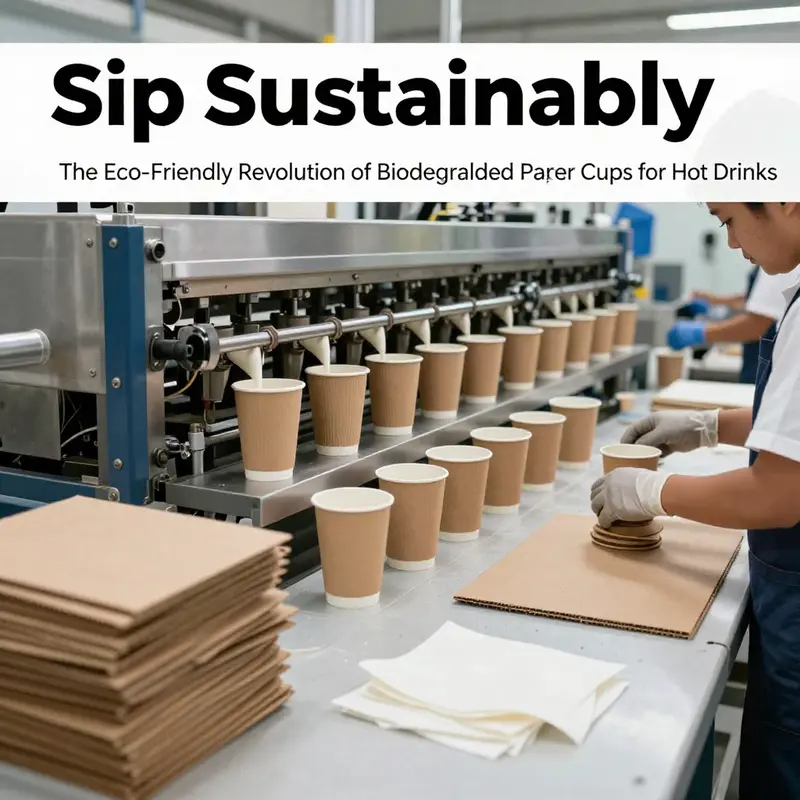
Manufacturing biodegradable paper cups for hot drinks stands at the intersection of material science, precision engineering, and environmental accountability. The goal is not merely to replace plastic with something greener, but to maintain the performance customers expect while aligning with a circular economy. The journey begins with thoughtful material selection and extends through a sequence of tightly controlled processes that shape a cup capable of withstanding heat, delivering reliability, and breaking down in a modern composting facility rather than piling up in landfills. In this landscape, the coating becomes as important as the paper itself, for it is the coating that determines whether the cup remains leak-free under a scalding pour and whether it will actually biodegrade once it arrives at the right facility. The shift from traditional polyethylene to plant-based, compostable alternatives has accelerated over the past decade, driven by consumer demand, regulatory pressure, and advances in biopolymer technology. The core choice often centers on polylactic acid, or PLA, a bio-based polymer derived from fermented plant starches such as corn or sugarcane. PLA forms a thin barrier that can resist hot liquids while still enabling industrial composting conditions to do their work. Yet the story is more nuanced than a single material switch. Researchers and manufacturers are increasingly testing multi-layer structures and alternative bio-based polymers that may blend with natural waxes or other biodegradable barriers to optimize heat resistance, biodegradability, and cost. The objective is to craft a coating that remains robust when hot beverages are poured, yet does not hinder the cup’s end-of-life trajectory in composting streams. In practice, this means a careful assessment of how the coating is applied, how it interacts with the paper substrate, and how the overall structure behaves under real-world use. The coating’s method of application—whether extrusion coating or solvent-free lamination—plays a decisive role in both performance and environmental outcome. Extrusion coating deposits a molten polymer layer that rapidly fuses with the paper, producing a continuous, uniform barrier. Solvent-free lamination can reduce residual solvents and simplify recycling considerations, though it may require different process controls to achieve the same level of barrier performance. In either case, the aim is to minimize any compromise between heat resistance and compostability. Advanced process descriptions from the literature show how multi-layered configurations and refined polymer formulations contribute to fast disintegration under industrial composting while preserving leak resistance during use. A notable reference in this domain highlights a structured approach to achieving these properties through layered architectures and precise thickness control. It is this kind of layered ingenuity that enables a cup to hold hot liquids without surrendering its form, while still satisfying industrial composting standards. The materials choices and coating technologies must be integrated with the cup’s geometry. The shapes range from simple, single-wall designs to more sophisticated double-wall and vacuum-insulated structures. The latter offer superior thermal resistance and a more comfortable exterior surface, which is essential when serving beverages at high temperatures in busy environments. The molding and forming steps rely on high-speed presses and precision tooling to ensure consistent wall thickness, accurate seams, and robust base stability. When coatings are involved, lamination or extrusion must be tuned to avoid pinholes and to maintain bond integrity across the full surface. The production line, therefore, becomes a choreography of process parameters: temperature, roller speed, coating thickness, and cooling rates all synchronized to yield a uniform product. The state of the art in this space calls for stringent quality assurance that guards against defects and ensures that performance is not sacrificed for sustainability. Leakage resistance is tested under conditions that simulate the cup’s hot beverage load. This means exposing the finished cups to hot liquids and examining whether any seepage occurs at the seams or along the inner wall. Heat resistance is another focal point. The outer surface must remain safe to touch when the cup is filled with steaming liquid, a standard often expressed as keeping surface temperatures below a certain threshold, such as 45°C, in contact with 100°C contents. These tests hinge on robust packaging design and a reliable coating-to-paper bond. Equally important is biodegradability. The杯 must break down under industrial composting conditions, typically achieving more than 90 percent disintegration within 180 days, a benchmark used by many certification programs to differentiate truly compostable materials from those that simply degrade slowly or partially. Safety compliance is non-negotiable. Manufacturers assay for potential contaminants, including total fluorine content, which must meet strict limits (for example, ≤100 mg/kg under applicable standards), residual processing chemicals, and any microplastic release. The last item, microplastics, has become a critical lens through which performance and environmental impact are evaluated. The most recent field assessments in major consumer markets underscore a sobering reality: not every cup marketed as compostable fulfills the test. A 2026 consumer protection report from a major city’s consumer council revealed that only about seven of ten tested “compostable” samples fully degraded under industrial composting trials. This gap between marketing claims and material reality underscores the necessity of rigorous quality control, independent certification, and transparent lifecycle information for end users. Certifications such as OK Compost INDUSTRIAL or TÜV Austria provide a seal of credibility that helps buyers and operators distinguish genuinely compliant products from imperfect counterparts. In practice, achieving certification requires a battery of tests and documentation that track raw materials, processing conditions, end-of-life behavior, and safety performance. Certification schemes also influence supplier choices, as many factories adopt standardized processes to meet the criteria quickly and consistently. The manufacturing narrative also carries with it production capacity and supply chain considerations. For large-scale cafés, event venues, and retail settings, the ability to produce hundreds of thousands of units per day can determine project feasibility. The literature and industry reports describe production lines capable of handling volumes as high as several hundred thousand cups daily, with printed designs moving through customized flexographic printing units that can accommodate multiple colors—up to six in typical configurations. These capabilities enable not only functional performance but also branding opportunities that are increasingly important to market success. It is in this context that product designers must also consider the interface between the cup and its end-of-life path. The coating’s biodegradability is closely tied to the surrounding environment and to industrial composting infrastructure. Some newer research and industrial trials suggest that, under suitable conditions, PLA-based coatings can fragment and degrade more efficiently than traditional plastics when subjected to the high-moisture, aeration, and microbial activity of industrial compost facilities. Still, the outcome depends on formulation, thickness, layer sequence, and the presence of any non-biodegradable additives or adhesives. This is why the WIPO patent WO/2019/000514 often surfaces in discussions of advanced multilayer structures. It points toward strategies that optimize barrier performance while maintaining a lean degradation profile, including multi-layer arrangements and precise polymer formulations that accelerate disintegration without sacrificing leak resistance or heat stability. The practical takeaway here is that the most successful manufacturing pathways integrate material science with process discipline. The paperboard used for the cup body typically comes from sustainably sourced pulp with strict traceability. The PLA coating is selected for its heat resistance and compostability, and the method of application is chosen to minimize environmental impact while delivering consistent barrier properties. The molding and forming steps then transform the coated sheet into a cup shape, with careful attention to wall thickness uniformity to ensure structural integrity. Quality assurance functions as a continuous feedback loop. In the final tests, manufacturers look for leakage across a range of temperatures, then evaluate hand-hold comfort after filling, and finally confirm the product’s behavior in industrial composting streams. The consumer protection findings cited earlier remind us that the path from lab bench to consumer bin is not guaranteed unless practitioners maintain rigorous controls, independent verifications, and clear labeling. The end-of-life story is just as important as the performance story. The compostability claim needs to reflect real conditions in industrial facilities, where temperatures, moisture, microbial communities, and processing times all influence outcomes. To that end, buyers increasingly demand transparency about certification status and lifecycle data. The result is a market that rewards materials and processes with proven performance and verified environmental benefit. Within this framework, one practical example of ongoing consumer-facing innovation is the availability of double-wall configurations that bundle heat resistance with a reduced external temperature, enhancing user safety in shopping environments or at events. For readers seeking a concrete reference to a representative product category, see the detailed offering labeled as double-layer paper cups for hot beverages, which illustrates how a well-constructed coating and precision layering translate into a reliable user experience. double-layer-paper-cups-8-24pcs-disposable-paper-cups-for-home-office-party-weddings-coffee-shops-supplies-milk-tea-cups. The practical takeaway from this representation is that branding, performance, and sustainability can coexist on a single platform when manufacturing controls are tight and the supply chain is aligned to the same standards. As the industry progresses, ongoing research will keep refining the balance between barrier properties, heat resilience, and biocycle compatibility. The drive toward more responsible consumption is not a single leap but a series of incremental improvements in materials, coatings, and process innovations. In the end, the value proposition to consumers and operators is clear: cups that perform reliably in hot conditions, minimize waste, and align with the circular economy’s expectations for end-of-life management. For stakeholders, this means partnering with suppliers who can demonstrate real-world performance through certified tests and verifiable data, rather than relying solely on marketing claims. It also means recognizing that certification and independent testing are not optional add-ons but essential components of a competitive, trustworthy offer. The broader environmental implications extend beyond a single cup. By optimizing the entire manufacturing pathway—from pulp to coating to molding to end-of-life—producers contribute to reducing plastic leakage and downstream pollution. They also encourage retailers and consumers to view cups as part of a managed lifecycle rather than a disposable afterthought. The field will continue to evolve with advances in bio-based materials, improved barrier technologies, and smarter packaging designs that marry form with function. The next phase will likely emphasize even tighter integration of lifecycle assessment data, more precise control of industrial compostability criteria, and broader acceptance of standardized certifications across regions. In that sense, the manufacturing pathway for biodegradable paper cups is not a static set of procedures; it is an evolving discipline that responds to scientific insight, regulatory expectations, and the practical realities of everyday use. External resource: Shanghai Consumer Council – Report on Biodegradable Disposable Cups (February 2026): https://www.shcc.org.cn/zh-cn/news/2026/02/biodegradable-cup-test-results-20260208
Heat, Habits, and Green Packaging: Navigating Market Trends in Biodegradable Paper Cups for Hot Drinks
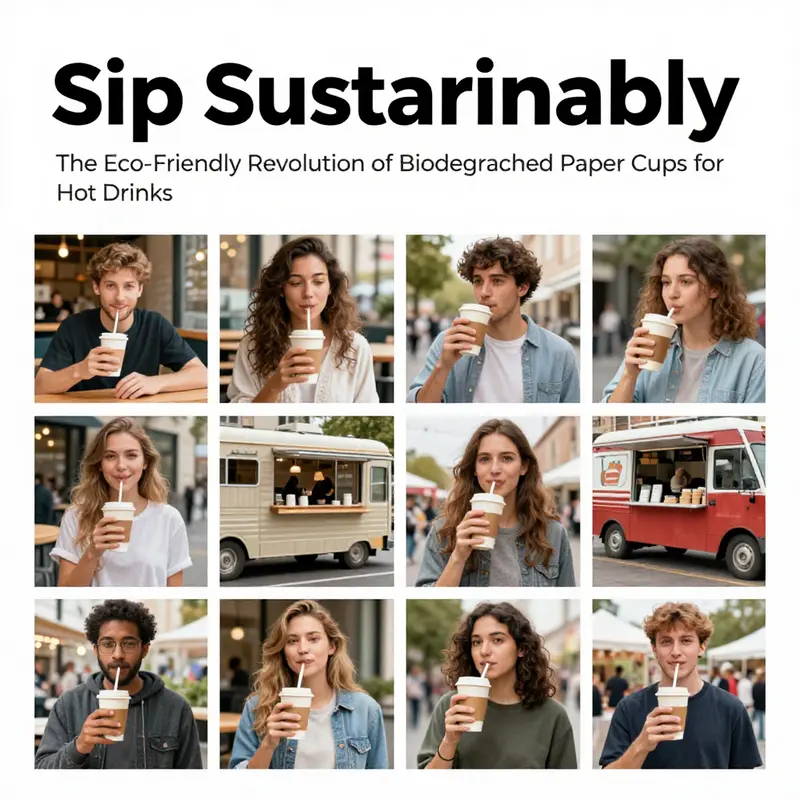
Biodegradable paper cups for hot drinks are moving from a niche option to a mainstream packaging choice, not merely because they promise a greener footprint but because they adapt to the evolving rituals of everyday coffee, tea, and the social moments that accompany them. The market is being shaped by a powerful blend of consumer awareness, regulatory signals, and the practical demands of serving hot beverages cleanly and consistently. In 2026, a LinkedIn-backed projection describes the global biodegradable paper cups market as poised to reach several billion dollars by the mid-2020s, with a compound annual growth rate exceeding 4 percent. That trajectory is not an abstract forecast; it translates into tangible choices for cafes, caterers, and event organizers who want reliable performance without compromising environmental values. The picture that emerges is one of rising expectations placed on materials, coatings, and designs that can handle heat, deliver branding, and still meet end-of-life ambitions.
At the heart of this shift is a clear acknowledgment that plastic pollution is a global concern that travelers, commuters, and shopfront customers can no longer ignore. People increasingly seek products aligned with renewable materials and responsible production, and they respond to packaging that openly communicates a brand’s commitment to sustainability. Paperboard, a renewable resource, becomes more attractive when it is coupled with coatings that are compatible with industrial composting conditions. PLA, derived from corn starch, is a common choice for hot beverage cups because it provides a barrier against penetration and leakage while remaining biodegradable in appropriate facilities. This combination—paperboard plus PLA coating—delivers a dual promise: the cup can withstand the rigors of hot liquids, and it can eventually return to a composting stream rather than a landfill. Yet the transition is not simply about materials; it is about how those materials are integrated into products that meet high-volume demand, maintain print fidelity, and support strong branding.
Consumers are drawn to cups that feel sturdy in the hand and resistant to heat transfer, but they also want the narrative behind the cup to be credible. The eco-friendly story gains credibility when the cup supports a tangible reduction in waste, both in the sourcing of materials and in the end-of-life pathway. In practice, this means single or double-wall PLA coatings that optimize heat resistance and leak protection, particularly for beverages served at higher temperatures or over longer durations. The design flexibility behind these cups is part of their competitive advantage. Vendors commonly offer a spectrum of sizes—from 8-ounce to 24-ounce variants—because different beverage occasions require different capacities. The ability to tailor cup size to the occasion reduces waste by encouraging appropriate portioning, a subtle but meaningful contribution to sustainability. When branding is essential, the cups can be customized with up to six colors through flexographic printing, allowing a café’s color palette and logo to shine without sacrificing print clarity on a curved surface.
The production ecosystem around biodegradable hot-drink cups reflects the same push toward efficiency that characterizes modern manufacturing. High-speed equipment, automated moldings, and precision coating processes enable volumes well into the hundreds of thousands per day. The capacity to produce more than 100,000 units per day is common among leading suppliers, which helps to meet both small- and large-scale demands. For shops planning seasonal campaigns or large events, this scalability is a critical factor. It also helps keep unit costs competitive, a frequent point of negotiation with buyers who must balance sustainability with a careful budgeting framework. Minimum order quantities for printed designs, often around 100,000 units, exist to ensure that customization remains cost-effective for brands and venue operators.
To a visitor stepping into a café or a trade show, these cups do more than keep drinks hot. They support the customer experience by reducing the thermal gap between the drink and the hand, thanks to double-wall constructions that improve heat retention and comfort. The double-wall design washers away the need for a sleeve, while delivering a more refined tactile experience. This is especially important in markets where the visual identity of the cup forms part of the brand story. In many cases, the coating remains compliant with compostability standards under industrial conditions, which is a reminder that end-of-life considerations are not just a theoretical posture but a practical element of product specification. The marketing narrative around these cups, therefore, extends beyond aesthetics. It becomes a concrete promise: a commitment to responsible materials, to performance under heat, and to a path toward more sustainable consumption.
The consumer-facing implications of these developments are nuanced and evolving. On one hand, more people are willing to choose a biodegradable option when it aligns with their environmental values and when the price difference is manageable. On the other hand, there is a growing expectation that packaging will not only be renewable but also clearly understood in terms of its end-of-life route. Education emerges as a factor in shaping behavior. When customers understand that a cup is designed to be composted in industrial facilities, they become more mindful about their disposal habits and more engaged in the sustainability conversation that many cafés seek to cultivate. That dynamic places a premium on strong partnerships with composting networks and clear labeling on cups to guide users through the proper disposal steps.
From a business perspective, the market is becoming more accessible thanks to a combination of reliable supply chains and improving cost discipline. Suppliers emphasize consistent quality, uniform coating performance, and robust heat resistance, ensuring that a drink remains free from leakage while staying warm for the customer. The coating itself—whether single or double layer—plays a central role in this reliability. Coatings must resist the chemical components of hot beverages, resist wicking at the seam, and maintain a clean, glossy surface suitable for branding. In practice, this translates into extensive testing and rigorous quality control, with facilities that can simulate a wide range of beverage temperatures and storage conditions.
Branding, too, becomes more data-driven. Design options that were once considered premium add-ons—intricate color schemes, textured finishes, or bold, full-bleed imagery—are increasingly standard in hybrid offerings that balance aesthetics with cost considerations. The combination of high-speed printing capabilities and careful material selection enables brands to align their packaging with their broader sustainability narratives. The story of the cup merges with the story of the business behind it. A café that positions itself as a destination for ethically sourced beverages can now extend that identity into the packaging itself, communicating a durable commitment to the environment without compromising the user experience.
As with any product category that intersects with sustainability, the economics matter as much as the ecology. While the PLA coating adds a renewable dimension to the cup, it also requires compatibility with the downstream waste streams used by consumer communities. In regions where industrial composting infrastructure is robust, the value proposition is straightforward: a product that supports hot beverages, reduces plastic waste, and completes its life cycle in a controlled composting environment. In other locales, the path to responsible disposal may be more complex, prompting makers and buyers to invest in consumer education and to collaborate with waste managers to optimize collection and processing. In this context, the supply chain becomes a bridge between product design and waste infrastructure, a partnership that is essential for realizing the full environmental benefits these cups promise.
The decision to adopt biodegradable cups for hot drinks often hinges on a balanced view of cost, performance, and sustainability. While the upfront price per cup may be higher than traditional paper cups with plastic coatings, the long-term value proposition can be compelling. For operators with high throughput and strong branding ambitions, the ability to offer a sustainable alternative that does not compromise heat retention or leak resistance can translate into increased customer loyalty and better market differentiation. For events and venues, the flexibility to order in large quantities, with customization aligned to a theme or sponsor, adds another layer of value. The readiness of suppliers to accommodate high-volume demands—up to 500,000 pieces per day in some cases—coupled with MOQs around printed designs, makes these cups viable even for larger operators and not just boutique cafés.
Alongside product and process considerations, the market’s momentum is reinforced by consumer and corporate expectations around transparency and accountability. Brands increasingly share lifecycle information, supplier certifications, and compostability claims to build trust with customers who scrutinize packaging choices before making a purchase. This transparency is not merely a marketing advantage; it is a practical necessity in a world where sustainability claims can be tested against understood standards and real-world outcomes. As adoption accelerates, it becomes crucial to maintain clear communication about what customers can do with the cups after use and how to connect with local composting or recycling streams that can handle PLA-coated paper.
Within this landscape, buyers often navigate a spectrum of options that vary in coating thickness, insulation levels, and print capabilities. For many, the choice is not simply between compostable and non-compostable; it is about striking the right balance between heat protection, structural integrity, branding reach, and end-of-life compatibility. The industry’s response has been to broaden the design space while preserving a consistent commitment to biodegradability. This means more nuanced product lines, where a café can select from variations in wall construction, coating layers, and color runs to match its price envelope and service model. It also means ongoing innovation in materials science, where researchers and manufacturers seek coatings that perform even better at higher temperatures, remain compostable under a wider range of industrial facilities, and degrade more efficiently in the presence of common curbside waste streams.
For readers who want to see a concrete example of the range of options available for hot-drink cups, a representative product page showcases the practical breadth of designs, sizes, and branding capabilities. The page highlights cups sized 8-ounce to 24-ounce, with options for single or double-wall insulation and up to six-color printing. It is a tangible reminder that the market’s trajectory is not only about future potential but about current capabilities that empower cafés and events to serve customers with confidence. Whether a shop is pursuing seasonal campaigns, corporate partnerships, or daily takeaway service, the cup becomes a visible instrument of sustainability, quality, and customer experience. The choice of cup thus reflects a broader commitment to responsible consumption, one that acknowledges the role of packaging in shaping how people connect with their beverages while also shaping how communities manage waste.
To explore a practical example of the cup options and branding choices in this space, see this product page that focuses on disposable paper cups for hot drinking. It demonstrates how a brand can tailor size, coating, and print to create a cohesive customer experience from first glance to final disposal.
disposable paper cups for hot drinking
Looking ahead, the market’s growth will likely be shaped by continued advances in material science, consumer education, and collaborative waste-management solutions. Companies that align their product development with the realities of composting infrastructure, while maintaining high performance and attractive branding, will be best positioned to capitalize on the momentum described in market analyses. The trend toward sustainable, high-quality, and customizable cups is not a passing phase; it is becoming a standard expectation for hot-beverage service. As more operators adopt these cups, they will contribute to a cumulative effect: a shift in everyday packaging norms that makes sustainability appear routine rather than exceptional. In this light, the biodegradable paper cup for hot drinks is not only a product category but a signal about how communities, businesses, and consumers can coexist with greater responsibility.
For readers seeking a deeper, market-wide perspective on trends and forecasts, an external resource offers detailed analysis that complements this chapter’s focus on design, production, and end-of-life considerations. See the broader market trends and forecasts at the linked external resource. https://www.linkedin.com/pulse/biodegradable-paper-cups-market-2026-2033-trends-growth-forecast/
From Local Bans to Global Standards: Navigating Regulations for Biodegradable Paper Cups in Hot-Drink Service
Regulatory regimes governing biodegradable paper cups for hot drinks unfold like a shifting tide, driven by the twin currents of environmental urgency and the practical demands of a service economy that treats coffee and tea as everyday rituals. The narrative is not merely one of bans or certifications; it is a story about how policy, commerce, and consumer expectations converge to shape the materials that touch our hands and our mouths each day. In regions where waste management infrastructure and regulatory intent align, biodegradable cups move from novelty to norm; in others, the regulatory landscape remains fragmented, demanding careful navigation from manufacturers, distributors, retailers, and cafe operators who want to offer warmth and convenience without compromising sustainability commitments. The result is a multilayered framework in which performance, end-of-life pathways, and transparency about product claims must be harmonized to pass the test of markets that increasingly prize accountability as much as practicality.
In Europe, the trajectory of regulation has become a reference point for many markets worldwide. The European Union’s Single-Use Plastics Directive, enacted in 2021 and reinforced through subsequent updates in 2023, marks a decisive move to phase out plastic-dependent single-use products and to replace them with sustainable alternatives. This legislative direction does not merely target single-use plastics in isolation; it reframes the entire lifecycle of products that rely on plastic coatings or laminates to hold liquids, resist heat, and maintain form. For paper cups specifically, the directive has accelerated the shift away from plastic-coated formats toward more recyclable or compostable configurations that can be effectively recovered through post-consumer waste streams. The emphasis on recyclability is paired with an expectation that packaging be demonstrably capable of returning to the economy rather than ending up in landfills or incineration without value.
Beyond the framework of the SUPD, several certification and responsibility regimes have become essential for market access within Europe. Across Germany, France, and other EU member states, chains of custody and material provenance are scrutinized through third-party certification schemes that verify sustainable sourcing, such as forest stewardship standards, and end-of-life responsibility through producer responsibility arrangements. These certifications serve a dual purpose: they reassure customers about where raw materials originate and they compel producers to commit to explicit take-back or recovery strategies at the end of a cup’s life. In a practical sense, this means that cups used for hot beverages are increasingly expected to be not only biodegradable but also certified for responsible sourcing and recoverability in the circular economy. The consequence for manufacturers is clear: compliance cannot be an afterthought or a marketing claim; it must be embedded in product design, supply chain governance, and communications with business partners and regulators alike.
The European example also underscores a broader shift toward packaging that is not only biodegradable but compatible with existing waste management infrastructure. A key design concern is choosing coatings that enable heat resistance and leak prevention while avoiding barrier layers that disrupt recyclability or compostability. Without careful material selection and lifecycle thinking, a cup that performs well in the cup rack may fail when it comes to actual recovery after disposal. This is why the EU focus on credible certifications—coupled with transparent lifecycle data—matters so much. It helps to prevent greenwashing and creates a level playing field where manufacturers can compete on real environmental performance rather than on claims that cannot be substantiated in post-consumer settings.
In North America, the regulatory landscape presents a more mixed picture, with no single federal ban mirroring Europe’s comprehensive stance. Instead, a mosaic of state and city regulations has emerged, often driven by concerns about waste streams and the desire to curb plastic pollution in urban environments. In practical terms, this means several jurisdictions have moved to restrict or prohibit polystyrene foam and certain plastic-coated paper products, especially in foodservice settings. The result is a heightened incentive for producers and retailers to adopt polyethylene-free, compostable solutions that align with evolving local rules and with consumer expectations for sustainability. As with Europe, the North American experience highlights the importance of end-of-life considerations. Industrial composting facilities play a critical role in the current architecture of the market, but their distribution and capacity vary by region. When a cafe serves biodegradable cups that require industrial composting to achieve the intended environmental benefit, the business chain must acknowledge the realities of waste infrastructure and educate customers about proper disposal practices. The outcome is a stronger emphasis on waste sorting, labels that clearly explain disposal pathways, and partnerships with waste processors that can handle the specific materials in use.
Asia presents a diverse regulatory picture, reflecting its own mix of development stages, enforcement rigor, and cultural approaches to packaging. In countries such as Japan and South Korea, recycling programs are well established, and green packaging initiatives have gained traction as part of broader environmental agendas. These markets reward packaging that can be effectively collected, separated, and redirected to an appropriate end-of-life stream. Yet in other parts of the region, regulatory enforcement can be uneven, and the pace of policy development varies. This does not deter the trend toward biodegradable cups, but it does encourage a more cautious, risk-aware approach for companies seeking to export across multiple Asian markets. In these environments, voluntary adoption of sustainable materials often serves as a bridge to compliance with international standards and consumer demand, while also signaling a brand’s commitment to responsible practices to partners and retailers who are acutely aware of regulatory risk.
Taken together, the regional patterns reveal two overarching truths. First, regulatory regimes are increasingly expensive to ignore. Not only do they set minimum performance thresholds, they also shape the conditions for market access, labeling, and post-consumer recovery. Second, the regulatory environment is inherently dynamic. Policies evolve as waste management infrastructure expands and as evidence of environmental impact accumulates. A company that watches the horizon tends to avoid disruptive adjustments that could arise from sudden policy shifts. Instead, it adopts a strategic posture that integrates policy understanding with product development and supply-chain planning. This means investing in robust lifecycle data, maintaining flexibility in coating choices, and building cross-border compliance capabilities that can adapt to different regulatory trajectories without sacrificing product performance.
From a practical standpoint, the policy conversation intersects with the everyday realities of a coffee shop or a campus cafe. When baristas fill a biodegradable cup, they rely on more than a heat-resistant material; they rely on public confidence that the cup will perform its function and then actually disappear through an appropriate disposal route. This is not a theoretical ideal; it requires a credible network of certification, material science, and waste infrastructure. It also requires clear, honest communication about what “biodegradable” means in the context of hot beverages. Across markets, terms like biodegradability, compostability, and recyclability carry different implications depending on the local waste system. An informed operator therefore benefits from a shared vocabulary that reflects not only the material properties of the cup but also the realities of what happens to it after disposal.
The chapter of regulation does not end with certifications and infrastructure. It extends into the more nuanced territory of claims and labeling. In a zone where the SUPD and similar laws encourage transparency about environmental performance, companies must avoid vague assertions. The consumer’s eye is trained to interpret claims such as “biodegradable” or “compostable” through the lens of actual disposal pathways. A cup might be labeled as compostable, yet if it ends up in a standard landfill without access to industrial composting, the environmental benefits may not be realized. For this reason, credible programs emphasize third-party verification and accessible information about end-of-life options. The conversation thus moves beyond the cup itself to a broader accountability narrative that links material choice, manufacturing practices, distribution, and waste processing in a continuous loop.
As the regulatory landscape evolves, so too does the business calculus of suppliers and buyers. Production capacity, demonstrated through scalable runs and consistent quality, becomes integral to compliance. Rules increasingly expect traceability—from forest to cup—so that every link in the chain can be audited for responsible sourcing and recovery. This is not just about meeting a regulatory threshold; it is about shaping the future of packaging for hot beverages in a way that reduces environmental footprints without compromising user experience. In practice, this means that a supplier must be prepared to provide documentation on material composition, coating formulations, and end-of-life pathways. It means that buyers need to understand disposal realities in their markets and align purchasing decisions with the infrastructure that can actually deliver the promised environmental outcomes. The synthesis of policy, science, and logistics thus becomes a core capability of modern packaging programs.
In guiding stakeholders through this regulatory current, a few cross-cutting implications stand out. First, credibility matters more than ever. A claim of biodegradability or compostability must be backed by recognized certifications and by a realistic map of recovery options. Second, consistency across markets is valuable but not always possible in the short term. Companies may offer PE-free and compostable options in many regions while navigating transitional rules in others. Third, the conversation around packaging must enmesh the whole supply chain, from raw materials to waste management partners. This holistic view makes it possible to design cups that perform reliably in hot drinks service while also serving as responsible packaging in the eyes of regulators and consumers. Finally, clear communication is essential. Businesses should help customers understand disposal pathways and the environmental rationale behind material choices, so the act of buying a biodegradable cup becomes part of a broader, visible commitment to sustainability.
The interconnectivity of policy and practice is symbolized in a simple, practical way: the container that holds a hot beverage is also a conduit for environmental values. When a cafe serves a biodegradable cup that complies with regional standards and is supported by robust end-of-life infrastructure, it becomes part of a narrative that extends beyond taste and temperature to include stewardship of resources. As regulations tighten and consumer attention sharpens, the cups that carry our daily rituals are increasingly framed as instruments of accountability as well as convenience. This reframing invites operators to think not only about the immediate performance of a cup but also about its eventual return to the materials economy. It invites suppliers to design with end-of-life recovery in mind, not as an afterthought, and to document clearly how the product will be processed after use. It invites policymakers to continue refining standards so that they reflect real-world recycling and composting capabilities, reducing the gap between what packaging promises and what waste streams can deliver.
For readers seeking actionable guidance on navigating this landscape, the core message is to adopt a governance mindset that integrates policy awareness with product development and supply-chain collaboration. Keep abreast of regional developments and anticipate shifts in certification expectations. Build product specifications that favor recyclability and industrially compostable pathways, even if current infrastructure is uneven across markets. Engage with waste management partners early in the design and procurement process to align on practical recovery options. And, perhaps most important, communicate openly with customers about how and why these cups perform as they do, and where their disposed cups will ultimately end up. The journey from policy to practice is continuous, and the most resilient players are those who treat regulation not as a hurdle but as a roadmap to more responsible packaging choices for hot beverages.
To explore a broader view of how packaging ecosystems are aligning with sustainability goals, consider the broader context of eco-friendly takeout boxes for food packaging, which reflects a shared aspiration across packaging formats to harmonize performance, aesthetics, and end-of-life recovery. eco-friendly takeout boxes for food packaging. For policymakers seeking authoritative baseline information on regional regulatory developments, the European Commission’s framework on plastic waste remains a critical reference point for understanding the direction of travel and the policy instruments at play in shaping a more sustainable packaging landscape. External resource: European Commission on Plastic Waste: https://ec.europa.eu/environment/waste/plastic-waste/
Final thoughts
Embracing biodegradable paper cups for hot drinks is more than a trend; it’s a commitment to reducing environmental impact while fulfilling customer expectations. As the market continues to evolve, food and beverage businesses can lead the charge towards sustainability and set an example for others. By understanding the critical aspects discussed in this article—from sustainability effects and manufacturing processes to market trends and regulatory practices—brands can make informed decisions that not only benefit the planet but also enhance their product offerings positively. It’s time to sip sustainably.