
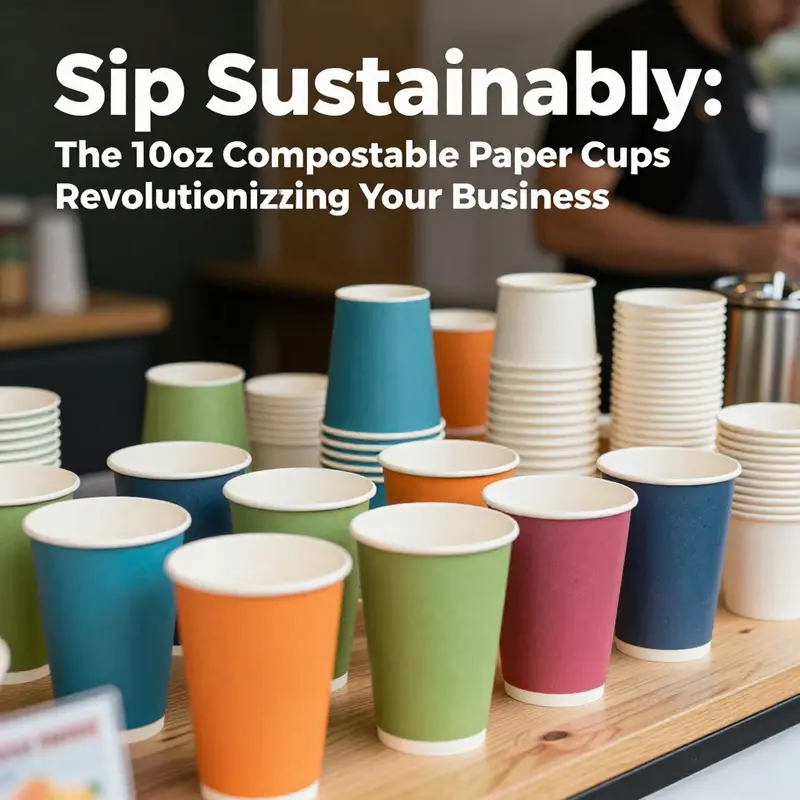
As the demand for sustainable practices grows, businesses across various sectors—particularly Bubble Tea Shops, Restaurants, Food Trucks, and Corporate Procurement Teams—are exploring eco-friendly alternatives to traditional disposable materials. One standout option is the inexpensive 10oz compostable paper cup, designed to meet the needs of both hot and cold beverages. With an incredibly low cost per cup and a commitment to environmental sustainability, these cups are not just good for the planet but also gentle on your budget. Throughout the following chapters, we will dive deeper into cost-effective options, the environmental benefits of switching to compostable cups, and the current market trends shaping this crucial sector. Each section will highlight how these cups can seamlessly integrate into and elevate your business operations.
Stretching the Green Dollar: Cost-Efficient Pathways to 10oz Compostable Paper Cups for Scale
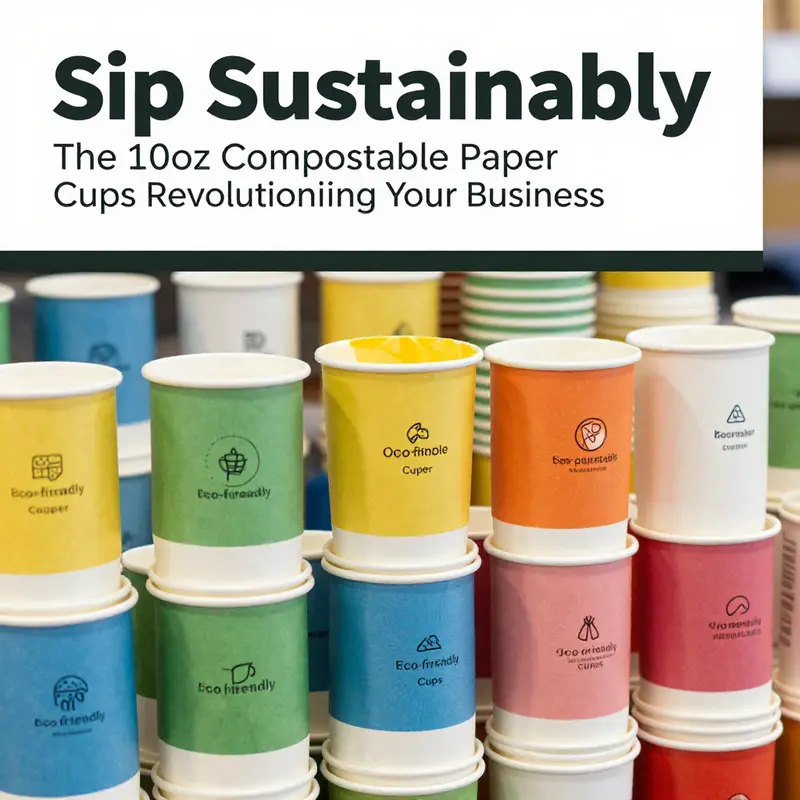
A shift is underway in the way beverage offerings are packaged and presented. Across fast casuals, cafes, and event spaces, operators are balancing the desire to reduce footprint with the need to control costs in a market that remains volatile for inputs. In this context, cheap 10oz compostable paper cups stand out as a practical intersection of affordability and environmental values. They offer a means to extend sustainability from the kitchen to the customer’s experience without forcing heavy compromises on price points or service speed. The core appeal is simple: when you can source a bulk supply of cups that are both compostable and inexpensive, you reduce the financial friction that often accompanies green choices. The practical consequence is clear for any business operating at scale. The larger the batch you purchase, the closer you come to a per unit price that dissolves into the everyday cost structure. A supplier listing that highlights a bulk price near US$0.02 per cup at a minimum order of 50 000 units is not just a number. It signals a real possibility that an operation can modernize its disposables while staying within tight budgetary confines. The effect ripples through the menu, the packaging presentation, and the end of life story for a cup that once felt like a compromise between function and responsibility.
The materials story behind these cheap compostable cups is equally instructive. In the market, options span multiple coatings and bases, each with its own cost and performance profile. PLA and PBAT coatings have been widely discussed in sustainability conversations for their compostability, yet they often come at a premium compared with aqueous coatings. The aqueous route, particularly in double wall designs, has emerged as a leading choice for straightforward cost efficiency. A typical specification might read as 10oz double wall paper cup with 300gsm base and an 8 micrometer aqueous coating. While the numbers vary by supplier, the overarching pattern is consistent: an aqueous coated cup tends to carry the lowest incremental cost while delivering acceptable grease resistance and moisture handling for many hot and cold beverages. For a buyer looking to keep variable costs predictable, this coating strategy reduces the price sensitivity to minor fluctuations in raw materials and processing technology, which is especially valuable when each order runs into tens of thousands of units.
Beyond the price per cup, there is a strategic calculus on what 10oz actually means for a business. The 10oz size is a staple in the universe of disposable beverage service. It aligns with standard beverage offerings for iced and hot drinks, commonly used in coffee shops, catering setups, and grab-and-go operations. The 10oz class also lends itself to a double-wall configuration that can provide insulation and grip without the need for external sleeves. Such insulation matters not only for the customer’s comfort but also for the operator who wants to maintain beverage temperature through to the last sip. When you couple a double-wall design with an aqueous coating, you often land on a combination that supports efficient production and robust on-counter performance. The design is not merely a matter of convenience; it translates into the sensory experience the customer associates with the cup. A well-insulated cup helps keep the drink at the desired temperature longer, which can influence perceived quality and satisfaction. When executed well, it reduces the need for extra insulating sleeves, aligning with waste reduction goals while preserving the consumer experience that a hot cup of coffee or a chilled beverage should deliver.
The market signals are not merely about price points; they also emphasize availability. The 10oz size is consistently listed across vendors as a standard item in compostable disposable lines. This consistency gives buyers confidence that their forecasts for inventory will align with supplier capabilities, a crucial factor when lead times and minimum order quantities loom large. In practice, a buyer contemplating a transition to compostable disposables for hot and cold beverages learns to weigh three interconnected elements: cost per unit, coating type, and insulation design. The aqueous coated double-wall option often leads the pack on cost, while still delivering the practical benefits of compostability. The challenge becomes navigating the trade-offs: while compostable cups with simple aqueous coatings are affordable, the barrier performance and grease resistance are inherently linked to coating thickness and the base paper quality. Readers should understand this as a spectrum rather than a single best option. In many cases, the lowest cost is achieved by buying in bulk, selecting an aqueous coating, and leaning into a standard 10oz double-wall design that offers predictable performance across hot and cold beverages.
To ground these ideas in a realistic decision framework, think of a business scenario where the goal is to retrofit a customer-facing operation with compostable cups that do not blow through the annual disposable budget. A bulk purchase at roughly US$0.02 per cup for 50 000 cups is not simply a line item on a contract; it is a lever that lowers the marginal cost of sustainable service. It allows a company to price beverages in a way that respects environmental commitments without pushing customers toward higher prices, a balance that is increasingly important as consumer expectations become more attuned to green practices. The key to making this work lies in selecting the right material pathway. For many operators, the aqueous coated cups within a double-wall architecture strike the best balance between expense and utility. The triple win here is tangible: lower unit costs, a cup that performs adequately for hot drinks with a degree of insulation, and a disposal pathway that aligns with composting infrastructure. Of course, this is not a universal prescription. Some venues require extra grease resistance for certain menu items or demand a cup that stands up to particularly aggressive condensation. In those cases, a PLA or PBAT coated option might be considered, accepting a higher per cup price to ensure the integrity of the user experience. The practical message is clear though: for bulk buyers focused on cost efficiency, aqueous coated 10oz compostable cups appear to be the most economical route, especially when the goal is to serve a large volume of hot or cold drinks without sacrificing compostability or on-counter performance.
From a supply chain perspective, the value proposition becomes more nuanced. Securing a price of US$0.02 per cup for a 50 000 unit order suggests a supplier with efficient manufacturing lines, reliable sourcing of base papers, and a coating process that scales under bulk demand. The very existence of such pricing at scale signals a market in which eco friendly disposables are not niche but mainstream enough to attract bulk buyers who can commit to longer-term supplier relationships. For the buyer, this reduces the cost of change across the business and creates room for strategic experimentation. A company can pilot a compostable 10oz program in a single store or a segment of a catering operation, measure the impact on waste streams and customer perception, and then roll out the program more broadly if the results align with sustainability targets and financial expectations. The scalability of a cheap 10oz compostable cup, when combined with smart procurement, becomes an important enabler of an integrated sustainability strategy rather than a mere packaging choice.
An important element in evaluating options is understanding the role of compostability in different contexts. Compostable cups are designed to break down in appropriate composting streams, often industrial facilities, where temperatures and microbial activity are managed to convert the cup into organic matter. Home composting is less reliable for many such products, and a business should be transparent about how the cups are disposed of and what end-of-life channel they expect customers to use. A cost-effective approach does not preclude environmental accountability. In fact, it creates an opportunity to educate customers about proper disposal and to route the cups into the most suitable composting infrastructure available. When a coffee shop communicates clearly that the cups are compostable and provides guidance on local facilities or programs, it can transform the customer experience from passive ingestion to an informed, participating role in a greener cycle. The packaging narrative thus becomes part of the brand story rather than a peripheral detail.
To further illuminate the practicalities, consider the specific material pathway of the cheapest option. An aqueous coating, applied to a standard 300gsm base, represents a disciplined choice that lowers material costs while preserving the essential barrier properties needed for short to moderate shelf life beverages. This path can yield a cost curve that flatters the economics of scale. Operators often prefer to avoid multi layer or high barrier coatings unless the menu demands them, which is not typically the case for daily coffee or tea service in most outlets. The reduced complexity of aqueous coated cups also translates into more predictable manufacturing tolerances, lower defect rates, and easier quality control during high-volume production runs. In other words, the savings are amplified not only in the unit price but also in yield and reliability. The trade-off is sometimes a slightly less robust barrier against grease and moisture at the margins, but for many beverage profiles the performance remains comfortably within acceptable ranges, especially when paired with effective cup sleeve design and proper serving temperatures.
A practical takeaway for procurement teams is to align the choice of cup with the intended beverage profile and the expected service conditions. For hot drinks with moderate fat content and typical serving temperatures, an aqueous coated double-wall 10oz cup often satisfies both performance and price objectives. For iced beverages or drinks that sit longer for takeout, the insulation benefit of double-wall helps maintain temperature and reduces condensation on the outer surface, which can be valuable for customer comfort and hands-free handling. For venues with a heavier grease load or more aggressive condensation scenarios, it may be tempting to upgrade to coatings with higher grease resistance or to select a thinner paper with a specialized grease barrier. While such adjustments can improve specific performance metrics, they tend to come with a higher price tag, which can erode the cost advantage achieved through bulk procurement. The decision framework then becomes a matter of prioritizing which performance attributes are truly needed by a particular operation and which ones can be satisfied through process improvements in service, rather than higher cost packaging. Overall, price plus performance typically aligns best when aqueous coated cups are paired with a robust double-wall formation, a recipe that has proven scalable across a broad spectrum of beverage businesses.
As buyers navigate this landscape, the choice to source the cheapest option is not simply a function of per unit price alone. It also involves evaluating the full cost of ownership, including storage, lead times, waste handling, and the potential end-of-life logistics. For a business planning a multi store rollout, the economics of 50 000 cup orders and similar bulk quantities are not just about lowering the purchase price. They also shape supplier reliability, forecast accuracy, and the ability to negotiate favorable terms on future orders. In practice, the most cost-effective approach often entails a staged procurement strategy that begins with a pilot program in a few outlets, followed by a scaling phase contingent on waste diversion success and customer feedback. The pilot helps the operator calibrate the balance between cup cost, service speed, and customer satisfaction, and it provides real world data about end-of-life disposal rates and composting infrastructure participation. In short, the cheapest cup is powerful not because it is the least expensive option in isolation, but because it is the most compatible with a business model that wants to expand sustainable offerings without destabilizing unit economics.
One practical way to connect the discussion to everyday sourcing is to consider the availability of a range of compostable options across major suppliers who routinely publish bulk pricing and MOQ details. A buyer looking to optimize for cost should not assume that the lowest price is always the best path, but the data points indicate a credible ceiling under which competitive suppliers operate when serving large scale clients. The ability to negotiate price based on high volume, coupled with the compatibility of a 10oz size with common beverage recipes, creates a compelling case for integrating these cups into a broader sustainability program. It is not simply about replacing a conventional cup with a compostable alternative; it is about reimagining the value proposition of takeout and self-serve beverage service. If a business can demonstrate that customers appreciate the service quality and the environmental responsibility, the cups, despite being inexpensive, play a key role in shaping customer perception and loyalty.
To connect the narrative to tangible sourcing choices, consider the following practical steps. First, confirm your beverage profile and anticipated turnover to estimate the monthly volume and the corresponding bulk price tier you can realistically secure. Second, request a supplier evaluation that includes details on coating type, wall thickness, and compostability certification, ensuring alignment with local waste management capabilities. Third, explore the insulation advantages of double-wall designs, particularly for venues with higher service temperatures, to gauge whether the incremental cost justifies the improved customer experience. Fourth, run a small pilot to test disposal behavior and collect feedback from customers about the packaging experience. These steps help transform a theoretical cost advantage into a measurable business benefit. Finally, when communicating with internal stakeholders, frame the choice not as a trade-off between price and ecology, but as a strategic alignment of price, performance, and end-of-life outcomes that can reinforce a brand story around responsible serving practices.
The bottom line for businesses exploring cheap 10oz compostable cups is that scale matters. The more you buy, the closer you get to a price point that makes green packaging a routine part of operations rather than a strategic exception. The aqueous coated, double-wall pathway offers a compelling combination of low cost, reliable performance, and a disposal narrative that fits with composting infrastructure. Yet it is essential to remain mindful of local conditions, including the availability of composting facilities and the practical realities of end-of-life handling. The market is mature enough in many regions to support bulk purchases that drive down cost while still delivering a product that aligns with environmental commitments. Buyers who approach procurement with a clear plan, a willingness to test, and a preference for reliable supplier relationships will be well positioned to implement a scalable deployment that serves both the business and the planet. The story behind cheap 10oz compostable cups, in this sense, is not merely about price. It is about how scale, performance, and sustainability coalesce to redefine the economics of responsible beverage service.
For readers seeking a concrete sourcing example, one can reference a supplier offering 10oz aqueous biodegradable compostable coffee cups in bulk, which illustrates the cost dynamics described here. The listing emphasizes a price point near US$0.02 per cup for an order of 50 000 units, underscoring the practical feasibility of bulk purchasing at scale. This data point is a useful benchmark for planning, forecasting, and supplier conversations when a business is charting a path toward affordable compostable disposables that can support broad environmental commitments without eroding margins. It is important to approach such data with a critical eye, confirming current pricing in the market and validating that the coating and substrate specifications match performance needs. Nevertheless, the presence of bulk pricing at such a level is an encouraging signal that the market has matured to support environmentally sustainable practices at scale.
As you plan the next steps for your operation, keep in mind the broader ecosystem that surrounds compostable disposables. The path to responsible packaging requires attention to the entire lifecycle, from production decisions to end-of-life processing. When done thoughtfully, inexpensive cups do more than hold beverages; they help cultivate a culture of sustainability within the organization and among customers. The economics of cheap 10oz compostable cups are compelling not only because of the price tag but because they enable a broader shift toward sustainable service models that can be implemented incrementally, tested, and refined over time. In this way, price becomes a strategic instrument rather than a barrier, and the choice to embrace compostable packaging becomes an operational advantage that can be scaled alongside the growth of the business.
To deepen practical understanding, consider the following real world touchpoints. First, examine the specific application needs of hot versus cold drinks. Second, assess whether the facility network for composting is accessible to the customer base and whether clear disposal guidance can be provided. Third, evaluate whether the cup design supports the brand experience, including handling comfort and the perceived quality of service. Fourth, verify the compatibility of the chosen cup with existing equipment such as cup dispensers, napkin stands, and display fridges, ensuring a seamless integration into daily workflows. Fifth, engage with suppliers about lead times and stock availability to guard against shortages that can disrupt service during peak periods. By weaving together these threads, a business can translate the simple objective of lowering costs into a robust, scalable program that advances sustainability without compromising service quality or price integrity.
Internal resource note: for teams seeking a concrete example of a short list of hot beverage cup options, see the following product page that highlights disposable paper cups in the 8-10-12-16oz range suitable for hot drinking contexts. This internal reference provides a practical overview of how a supplier frames the various size offerings and confirms the relevance of standard sizes to daily operations. https://ecocupbowl.com/product/20-50-200pcs/disposable-paper-cups-kraft-paper-cups-coffee-milk-cup-paper-cup-for-hot-drinking-party-supplies-8-10-12-16oz-cups/
External resource: https://www.alibaba.com/product-detail/10oz-Aqueous-Biodegradable-Compostable-Coffee_1600477954367.html
Small Cup, Big Change: The Economic and Environmental Promise of Cheap 10oz Compostable Paper Cups
Across the beverage service landscape, a quiet revolution is taking place in the everyday choices that customers rarely notice yet gently shape the world they drink from. The 10 ounce size, a familiar standard for cold brews, hot teas, and a host of on-the-go favorites, has emerged as more than a convenient measure. It has become a focal point for vendors and operators who want scalability, cost discipline, and a tangible reduction in environmental impact. The appeal rests not only in the price tag but in the way these cups align with a broader shift toward materials that can rejoin the cycle of nature rather than linger as waste in landfills. When a business can source a disposable cup for roughly two cents in bulk, the math is compelling enough to prompt a rethink of procurement strategies, packaging assortments, and even the customer experience itself. The economics of cheap 10oz compostable cups are not simply about lower per unit costs; they also enable more responsible choices at scale, reducing the incremental burden of going green as the operation grows from family run to multisite enterprise.
What makes these cups affordable, and why does that affordability matter beyond the ledger? The answer begins with the materials and the manufacturing techniques that have matured in the last decade. Many compostable cups designed for mass distribution rely on plant-based coatings or bioplastic linings that derive from renewable feedstocks such as cornstarch. A water-based coating or a sustainable lining, often labeled as OK compost or similar certifications, can replace the traditional petroleum-derived plastics that have long underpinned single-use drinkware. Because these materials arrive with a compatibility profile for industrial composting systems, companies can claim a credible end-of-life pathway when the infrastructure exists. The price point mentioned in supplier catalogs—roughly US$0.02 per cup for bulk orders at a minimum of 50,000 units—highlights how the economics are aligned with wide adoption. It is not merely a marginal saving; it is a leap that makes it feasible for small cafés to think in terms of sustainability without sacrificing profit margins, and for large chains to standardize their disposable offerings around a common, greener footprint.
The market for cheap 10oz compostable paper cups sits at the intersection of cost efficiency and environmental stewardship. It reflects a recognition that sustainability is not a luxury feature but a business imperative driven by consumer expectations and regulatory clarity in many regions. The 10oz format itself is ubiquitous across beverage programs, from hot drinks that benefit from double-wall insulation to cold beverages that demand a lighter, recyclable paper construction. The existence of double-wall variants designed to hold both hot and cold drinks, while not always accompanied by explicit price data, underscores a key practical argument: the same material science that makes compostable cups feasible for cold beverages can often be extended to provide better insulation for hot drinks. Operators who serve both hot and cold beverages can standardize on a single cup family, reducing inventory complexity and the chance of mix-ups at the point of sale. In practice, this standardization translates into lower carrying costs, more predictable supplier performance, and a straightforward messaging story for customers who are increasingly attuned to the environmental narratives that accompany the items they purchase.
The far-reaching implications of embracing cheap compostable cups extend beyond the plant at the point of use. When a business chooses a cup that is designed to be compostable in commercial facilities, it is embracing a lifecycle that ends with returning nutrients to the soil rather than leaving residues in a landfill. The biodegradability and compostability are guided by industry standards that certify safe and complete decomposition under industrial conditions. Organizations such as TÜV Austria’s OK Compost scheme and the Biodegradable Products Institute provide consistent criteria that help buyers separate hype from credible performance. The public conversation around compostable cups often centers on the end of life, but the broader value emerges only when we consider the full lifecycle. The production phase typically uses renewable resources and energy-efficient processes, sometimes leveraging recycled content and responsibly sourced paperboard. In the end, the cup is not merely a convenient container; it is a node in a circular economy where resources flow back to the soil rather than accumulating in environments where they do not belong.
The environmental advantage of compostable cups also hinges on consumer safety and the absence of harmful chemicals. Modern quality control disciplines emphasize that the coatings and bioplastics used in compostable cup linings are chosen not only for performance but for safety, minimizing potential migration of substances into hot or cold beverages. This aspect is critical for trust, especially in settings like schools, workplaces, and events where repeated use cycles and high volumes demand consistent quality. The commitment to chemical safety aligns with broader concerns about microplastics and the long-term impacts of packaging materials. By steering away from petroleum-based plastics and rich in renewable content, compostable cups contribute to lower embedded energy and fewer fossil fuel inputs in the manufacturing stage. In practical terms, that means the carbon footprint of a single cup can be lower than that of a traditional plastic equivalent, even when production scales to meet mass market demand. The cumulative effect becomes meaningful at the level of a business’s annual material spend and in the data points customers use to gauge the company’s environmental commitments.
One of the practical appeals of the cheap 10oz compostable cup lies in its compatibility with existing disposal streams where a composting facility is accessible. In regions with robust industrial composting infrastructure, these cups can be diverted from the traditional waste stream and processed into compost that improves soil health. That alignment with composting infrastructure is not universal, which is why the certification layer matters. The comfort around a credible end-of-life path is not a marketing ploy; it is a necessary condition for achieving real environmental benefits. In many contexts, a cup that is labeled compostable may still be challenging to recycle depending on local facilities and municipal guidelines. The nuance matters because it influences how businesses educate customers and how retailers partner with waste management services to maximize the likelihood that the cup reaches the intended end of life. Yet even with these complexities, the advantages are tangible: when a customer places a cup into the compost stream rather than the general waste bin, it helps to close the loop in a system designed to return nutrients to the earth rather than extract more resources to make yet another disposable container.
The discussion around recyclability is equally nuanced. Compostable cups crafted from plant-based materials often avoid the troublesome wax linings and non-renewable plastics that complicate recycling streams. In many cases, the absence of plastic linings makes the cups simpler to recycle alongside paper products in specialized facilities that can separate coatings, fibers, and plastics. But the reality of recycling versus composting varies by locale, and this reality invites managers to plan with local partners in mind. For organizations pursuing a lean waste strategy, the decision to move forward with compostable cups is not a blanket endorsement of every setting; it is a credible plan that acknowledges local capabilities—whether municipal composting is available, whether post-consumer recycling streams accommodate coated paper, or whether a dedicated composting partner can manage industrial grade facilities. The interplay between end-of-life options and procurement decisions is intricate, yet the trend toward compostable cup adoption remains strong where consumers expect eco-responsible practice and where operations can be aligned with practical disposal pathways.
In terms of resource use and supply chain resilience, the shift toward plant-based cup materials supports a form of circular economy that can contribute to reduced dependence on non-renewable inputs. The plant-based fiber—often from responsibly managed forests or agricultural byproducts—engages a cycle where materials can be replenished and harvested with environmental safeguards. Suppliers increasingly emphasize transparency in sourcing and the use of recycled content in paperboard. This approach not only reduces the environmental footprint of the cup itself but also supports a broader supply chain that values sustainable practices. The cumulative effect for a business is not merely a green badge; it is a robust governance story that can resonate with customers, investors, and partners who want to see real commitments reflected in everyday choices. The price point makes the story accessible to a wider audience, enabling smaller operators to participate in the transition, while large operators can standardize on a consistent product family across multiple locations. That consistency matters when a brand communicates its environmental values to its audiences. A single cup family shared across dozens or hundreds of sites creates a coherent narrative and a predictable customer experience that reinforces trust, rather than a patchwork of different cups with varying coatings and disposal recommendations.
Beyond the observable benefits, there are several practical considerations that shape how businesses implement the use of cheap compostable cups. The first is certification and verification. A cup that bears a credible certification is more likely to be accepted by customers who are uncertain about disposal methods and the sometimes confusing landscape of waste streams. Industry bodies and independent inspectors help ensure that what is marketed as compostable will perform as promised under industrial composting conditions. The second consideration is the disposal pathway available at the point of service. Businesses that operate in markets without convenient composting infrastructure may need to invest in education and labeling that clarifies whether the cup should go to compost or to a specialized recycling stream. The third consideration is taste and performance. There is a broad spectrum of coatings, thicknesses, and insulating properties, and buyers will seek products that do not compromise beverage temperature, integrity, or the drinking experience. Fortunately, the 10oz format has proven adaptable to both hot and cold beverages, with double-wall designs offering enhanced insulation for hot drinks while remaining compatible with compostable coatings. This dual capability makes the category attractive to a wide range of operators who aim to deliver consistent service without sacrificing environmental commitments.
The broader implications of choosing inexpensive compostable cups extend into the financial planning and competitive positioning of a business. Price stability in bulk procurement reduces the risk of sudden cost spikes that could ripple through seasonal menus or promotional campaigns. In markets where consumer demand for green options is rising, offering affordable, compostable cup options becomes a differentiator that can broaden a brand’s appeal to eco-minded customers who previously might have lamented the tradeoffs between price, convenience, and sustainability. It is not just about being green; it is about being smart in allocating resources where the cradle-to-grave footprint matters most, and where customers value the alignment between what they buy and what they believe. When a café or event operator can reconcile a low per cup cost with a credible end-of-life solution, the decision to switch from conventional wax-coated or plastic-lined cups to compostable ones becomes a straightforward business choice rather than a moral exhortation. In this sense, the cheap 10oz compostable cup is not a marginal improvement; it is a strategic lever that can catalyze broader changes in how an organization thinks about packaging, waste, and customer engagement.
The journey from price to planetary benefit is not automatic, and it requires thoughtful coordination with supply chains, waste streams, and consumer education. Yet the potential payoff is meaningful. The cup becomes a symbol of practical sustainability: a tangible item that customers can relate to, purchase, and trust to perform in the harsh realities of busy service environments. When handled correctly, the end-of-life story stays consistent with the upstream choices in sourcing and manufacturing, reinforcing a credible narrative about stewardship rather than a one-off marketing claim. The end result is a more resilient, more transparent supply chain that rewards responsible procurement with reductions in waste, lower energy demand, and a lower carbon footprint per beverage served. The fact that these cups can be deployed widely, at a competitive price point, and with a credible compostable pathway, magnifies their impact beyond the walls of a single operation. They become a shared instrument by which diverse stakeholders—cafés, bakeries, event organizers, schools, and corporate cafeterias—participate in a larger movement toward sustainable consumption.
As organizations evaluate options, one practical step is to explore the catalogues and supplier notes for a bulk cup that aligns with compostability claims and disposal realities in their region. A simple, robust approach is to choose a cup that sits at the intersection of price, performance, and credible end-of-life routing. This approach minimizes the risk of sitting with a product that cannot be composted in the available facilities or that requires specialized handling. It also reduces the need for extensive consumer education programs, as clear labeling and standard disposal instructions can help customers make the right choice at the point of disposal. Brands that pursue this path are not only delivering a more sustainable option for their customers; they are contributing to a broader market environment in which responsible packaging becomes the baseline expectation, rather than the exception.
In the end, the environmental benefits of cheap 10oz compostable paper cups are not a solitary claim but part of a wider conversation about how modern food service can prize both efficiency and stewardship. The collaboration among material science, manufacturing practices, certification regimes, and waste management systems can translate a simple cup into a vehicle for meaningful change. The price point matters because it makes sustainable packaging accessible to a wide audience, enabling small businesses to adopt green practices with less financial strain and allowing large networks to standardize their commitments across many locations. The true value lies in the cumulative effects: in reduced reliance on non-renewable resources, in a cleaner end-of-life outcome, and in the reassurance that the cups used to serve beverages are doing their part to protect the planet while still delivering the reliability customers expect. For many operators, that alignment is not just desirable; it is essential to building durable brands that can thrive in markets that increasingly reward thoughtful packaging choices and responsible waste management.
For readers seeking to deepen their understanding of certification standards and disposal guidance, credible references provide a clear frame for evaluating compostable cups. Further information can be found on recognized certification bodies that set the benchmarks for industrial compostability, ensuring that claims about compostability translate into real-world performance. As the market continues to evolve, these standards will remain a critical compass for buyers who want to ensure their purchases yield tangible environmental benefits, while also delivering on the practical expectations of both customers and operations. Understanding the end-to-end lifecycle from raw materials to compostable end products is central to appreciating why cheap 10oz compostable cups matter. They embody a pragmatic, scalable path toward reducing waste, conserving resources, and aligning everyday choices with a sustainable future.
Internal link note: for readers exploring bulk options aligned with the practical needs described here, consider reviewing the bulk disposable paper cups page to see how a standardized offering can simplify procurement across multiple sites and occasions. This resource presents a straightforward catalog entry that resonates with the broader theme of affordable, sustainable packaging that does not compromise service quality. It is a useful touchpoint for managers seeking to balance cost, performance, and environmental responsibility in a single decision. Visit the bulk disposable paper cups page at https://ecocupbowl.com/product/20-50-200pcs-disposable-paper-cups-kraft-paper-cups-coffee-milk-cup-paper-cup-for-hot-drinking-party-supplies-8-10-12-16oz-cups/
External link: for certification and disposal guidance, see credible standards organizations and their resources to better understand how compostability is defined and tested in real-world facilities, such as BPI World at https://www.bpiworld.org/.
Thin Walls, Big Ambitions: The Rise of Cheap 10oz Compostable Paper Cups in a Green Packaging Era
In summary, the trajectory of cheap 10 oz compostable cups is characterized by a willingness of the market to absorb price-sensitive, sustainable packaging as a standard practice rather than exceptional sourcing. Environmental awareness, supported by a robust array of coating technologies and wall designs, continues to expand the possibilities for cost-effective compostable cups. The convergence of consumer preference, regulatory momentum, and supplier innovation yields a compelling case for embracing compostable cup options as a core element of beverage programs. This is not a fleeting fad but a structural shift in how the foodservice industry thinks about convenience, cost, and the planet. The next steps for decision-makers lie in careful testing, transparent communication with customers about end-of-life pathways, and building procurement strategies that keep a steady pace with evolving standards and market opportunities.
Final thoughts
As businesses face increasing pressure to adopt sustainable practices, cheap 10oz compostable paper cups emerge as an excellent solution that combines cost-efficiency with environmental responsibility. These cups are not only affordable but also align perfectly with growing consumer preferences for eco-friendly options. By integrating compostable cups into your service, you can reduce waste, promote your brand’s commitment to sustainability, and satisfy environmentally conscious customers. Embracing this trend will not only enhance your offerings but also contribute to a more sustainable future, making it an investment worth considering. Begin your journey toward sustainability today by opting for cost-effective, compostable solutions that meet your business needs.