

Clear 16-oz plastic cups are essential tools for beverage shops and catering services, offering durability and visual appeal. These cups provide an easy way to elevate the beverage experience, whether poured with colorful bubble tea or refreshing cocktails. In this exploration, we will delve into the performance characteristics that make these cups industry favorites, the different types available for various applications, insights into market availability from leading suppliers, and consider sustainable options that align with eco-conscious business practices. With each area contributing valuable knowledge, you’ll understand how to choose the best clear plastic cups for your establishment.
Clear Vessels, Visible Value: The Performance and Properties of 16-Ounce Clear Cups in Modern Beverage Service

In the fast-paced world of beverage service, a bag of 16-oz clear cups sits at the intersection of science, design, and practicality. These cups are more than disposable containers; they are instruments of perception, engineering, and logistics that shape how a drink is presented and experienced. The performance of these cups hinges on materials that can withstand handling, designs that promote efficiency, and an environmental and safety profile that aligns with evolving expectations from operators and consumers.
Material choice defines the balance. The most common material for 16-oz clear cups is PET, a robust, transparent thermoplastic that has become the workhorse of foodservice. PET’s clarity is unmatched in many contexts, enabling catering and restaurant operations to showcase the beverage with fidelity. PET cups resist shattering in typical service and maintain their shape across a broad temperature range. They handle cold drinks and moderate heat without deforming, making PET versatile for a spectrum of drinks. Yet high-volume use demands consistent production quality: a cup that delaminates or becomes cloudy disrupts service and can affect branding.
Bioplastics offer another strategic option. PLA, derived from renewable resources like cornstarch, can align with sustainability goals. PLA’s compostability is a strong point for venues that want to reduce footprint while maintaining clean presentation. Certification by compostability bodies signals end-of-life planning, while keeping transparency during use. However, PLA heat resistance is generally more limited than PET, so hot beverages or high-temperature environments require careful selection. The lifecycle choice depends on beverage type, temperature, and waste management capabilities.
Beyond material, cup geometry matters. A typical 16-oz cup features a straight or slightly tapered rim to promote stability during pouring, stacking, and transport. The opening is wide enough for easy filling and drinking; the lip is shaped for comfort. A dome lid provides spill protection, accommodates foamy drinks, and offers clearance for toppings and ice. In busy settings, these design choices translate into speed, reliability, and customer satisfaction. Clear walls invite color and layering to become part of the drink’s narrative, inviting branding opportunities that ride along the exterior and stay legible when held aloft.
Functional performance shines in real-world settings. In high-volume environments, clarity, light yet sturdy construction, and predictable shape support a smooth workflow. Staff fill cups rapidly, seal with lids if needed, and transport them without spills. The transparent surface turns the beverage into a display, helping staff monitor fill levels and guests appreciate color and layering. For customers, transparency often correlates with trust—seeing the drink inside communicates freshness and quality. The same optics can reinforce perceived value in a dining room, bar, or festival.
Nevertheless, clarity can reveal imperfections. Scratches or fingerprint smudges become more noticeable on a transparent wall, so operators balance aesthetics with reuse, clearance, and handling realities. Some models offer smooth walls that feel premium and resist fingerprints, while others favor textures that improve grip in damp or slick conditions. The choice affects perception, handling ease, and stacking reliability in storage.
From a sustainability lens, PET’s recyclability is well established, with facilities able to reintegrate PET into new products. PLA adds a compostability dimension, but its processing requires appropriate industrial facilities. Home composting is unreliable, and some venues must educate guests about disposal. Labeling can help end users separate cups by material and disposal channel, supporting responsible waste management.
Safety and compatibility also matter. While PET and PLA cover a broad range of beverages, some high-heat applications require caution. Not all plastic cups are suitable for hot liquids; certain materials can leach components under extreme temperatures. Service environments with mixed drinks—iced tea to hot coffee—often use different cup materials to ensure safety and preserve flavor. A thoughtful approach reflects a commitment to guest experience as much as to the cups themselves.
The economics of 16-oz clear cups tie to material choice, design features, and customization. Bulk procurement for large events can unlock favorable unit costs, especially when ordering in volume and choosing dependable designs. Prices vary with material, customization extent, and order size. Operators weigh upfront costs against downstream benefits like branding impact, reduced breakage, and efficiency gains in busy periods. The decision is holistic, considering throughput, guest perception, waste management, and branding across the lifecycle of an event.
In the broader packaging and service design narrative, the bag of clear 16-oz cups embodies form meeting function. As venues balance speed, aesthetics, and responsibility, these cups become more than vessels—they are the interface between beverage and guest. The design language stays restrained, letting the drink take center stage while offering a dependable platform for service teams facing immediate expectations. Clarity that elevates appearance, durability for performance, and recyclability or compostability signaling accountability combine to realize the value of a simple cup in practical terms.
For practitioners seeking deeper technical dimensions, the conversation returns to materials and how they respond to service rituals. PET resists deformation during pouring and handling; its transparency supports beverage presentation. When PLA is chosen, consider the life cycle from sourcing to end-of-life. The bag of clear 16-oz cups can serve as a practical case study of how material science, industrial design, and environmental stewardship converge in everyday commerce. It reminds us that even ordinary items carry technical nuance and strategic significance for quality and guest experience.
External resource: https://www.alibaba.com/product-detail/16oz-PLA-Clear-Plastic-Disposable-Cold_1600578423973.html?spm=a2700.details.related.1.2f3b6d65XxUZpI
null

null
Seeing Through Service: Sourcing and Market Dynamics of the 16-Ounce Clear Plastic Cups for Modern Beverage Service
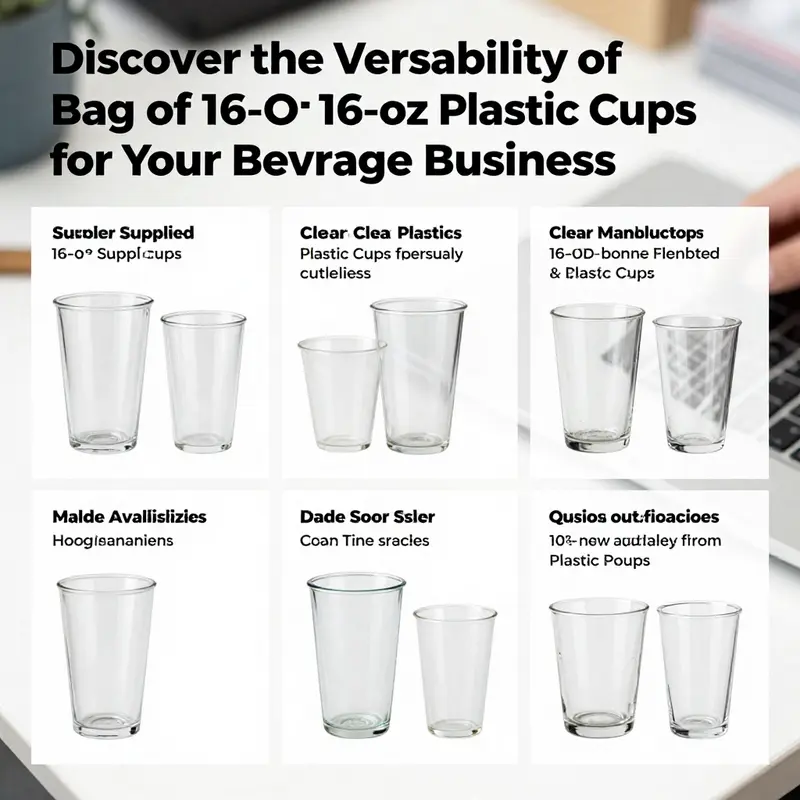
A bag of clear 16-oz cups is more than a simple container; it is a quiet conductor of experience, a small yet powerful piece of infrastructure that shapes how beverages are observed, poured, and enjoyed at scale. In busy service settings—from bustling cafes and catering events to hotels and pop-up gatherings—the choice of a clear cup does more than hold a drink. It influences presentation, portioning, and even the tempo of service. The market for these 16-ounce vessels is large, intricate, and increasingly aware of sustainability, which means every purchase decision sits at the intersection of clarity, durability, economy, and responsibility. This chapter weaves together what it means to source and employ a bag of these cups, how the materials we choose affect performance, and why the procurement pathway matters just as much as the product itself.
At the heart of the conversation is material. The most common version of these cups is based on a transparent, rigid polymer that locks in color and texture while resisting the daily grind of service environments. Clarity is more than aesthetics; it is a functional attribute. When a beverage is layered or has gradient hues, a crystal-clear cup makes the beverage’s composition legible at a glance, which helps servers and guests gauge portioning and appeal. The rigidity and pliability of the material determine how a cup behaves from the tap to the table: how it withstands stacking, how it tolerates ice and heat, and how it resists cracking if accidentally knocked against a counter. In practice, PET, a widely adopted polymer, is favored for its combination of optical clarity, strength, and recyclability. A clear 16-oz PET cup can present a drink with a brightness that preserves the visual impact of layered beverages and vibrant fruit infusions, an effect that matters when presentation is a strategic asset—whether in a wedding reception, a corporate luncheon, or a seaside festival.
Yet the market also offers alternatives. Some cups use polypropylene, another sturdy and clear option, which can yield different handling characteristics and cost profiles. There is growing interest in biodegradable variants derived from polylactic acid, or PLA, which are positioned as environmentally friendlier options. These compostable cups promise a path to disposal that aligns with sustainability goals, but they require careful attention to end-of-life conditions. Underground composting infrastructure is not universal, and compostability claims can be misleading if the waste stream cannot support proper processing. In practice, this means buyers should distinguish between true compostability and simple biodegradability, and they should understand how a given cup will perform in a real-world recycling or composting program. The nuanced truth is that even the most well-intentioned projects benefit from clear guidelines about disposal, rather than relying on a misperception of “green” as a universal solution.
From a design standpoint, the cup’s surface treatment and rim profile contribute to the user experience as much as the material itself. Smooth-wall cups offer a premium, minimalist look that is well suited to upscale events and brand-forward settings. They present a clean silhouette, which is attractive for logo printing and color branding, and they are typically easier to clean and reuse in controlled environments. However, smooth walls can feel slippery when wet, and they may offer less grip in high-traffic service, which matters in crowded bars or outdoor festivals. In contrast, clear transparent cups emphasize the internal contents so that the drink’s color, layers, and texture take center stage. They remain popular for beverages where presentation is essential, but fingerprints and smudges can be more visible on such surfaces, requiring attentive handling and quick-dry procedures in fast-service contexts.
Straight rim designs deliver stability during pouring, stacking, and transport. A uniform rim reduces the chance of leaks and spills, a practical advantage for high-volume operations where speed and reliability are paramount. The combination of a straight rim with a clear body contributes to a reliable, predictable experience for staff—facilitating faster service while preserving an orderly appearance on crowded tables or at buffet lines.
With the functional characteristics in view, the market landscape becomes central to how a business approaches buying. The global supply of 16-oz clear cups is robust, driven by a wide range of suppliers positioned to meet varied demand—from small parties to large-scale events. The market is accustomed to bulk orders, and this has shaped typical purchasing dynamics. Minimum order quantities can span a broad range, reflecting the level of customization and the material selected. Customization, including logo printing and color branding, is frequently offered as an OEM/ODM service, enabling a business to align the cup’s appearance with its event styling or retail presentation. The price cadence often reflects the material choice, the level of customization, and the order volume. For very large orders, unit costs can fall into a tight band, while standard, non-custom options may carry higher per-unit costs when bought in smaller quantities. In practice, buyers should not only consider the per-unit price but also the total landed cost, which includes packaging, freight, and any minimums that can influence how many cartons or pallets a project requires.
The packaging story is not incidental. These cups are frequently offered in flexible packaging configurations—such as cups per bag and bags per carton—designed to optimize warehousing, shipping, and on-site handling. The packaging itself can support efficient stacking and reduce breakage during transit, a nontrivial concern when orders reach venues via multiple legs of a supply chain. The ability to choose a packaging format that fits with the user’s operations—whether a compact, bagged setup for a mobile catering staff or a carton-based arrangement for a fixed-service venue—adds another layer of operational efficiency to an already crowded space.
Beyond the mechanics of sourcing, sustainability has moved from a marketing talking point to a practical criterion. The growing availability of biodegradable variants signals a shift in how buyers evaluate end-of-life options. PLA-based cups, derived from renewable corn-based sources, offer the possibility of composting under the right conditions. Yet real-world disposal requires an understanding of local waste streams. If the composting infrastructure is not widely established, PLA cups may be relegated to conventional recycling or even landfilling, which undermines the intended environmental benefit. For organizations prioritizing sustainable procurement, it is essential to evaluate whether the disposal ecosystem aligns with the cup’s material claims and to consider life-cycle impacts alongside price and performance.
To assist with eco-conscious decisions, some producers pursue certifications that signal environmental responsibility. Certifications related to eco-friendliness help buyers verify claims about recyclability, compostability, or the use of recycled content. These signals can offer a degree of assurance in a market where complexity—ranging from material composition to end-of-life pathways—often clouds straightforward comparisons. In any case, the broader lesson remains: sustainability is an expectation that shapes supplier evaluation, product design, and the total cost of ownership, not merely a banner on a product page.
From a practical perspective, buyers frequently weigh several dimensions when selecting a supplier and a specific cup configuration. Material choice informs performance under heat and cold, resistance to cracking, and how well a cup tolerates stacks and rough handling. The availability of different sizes and rim designs can influence compatibility with lids and straws, which is a practical consideration for venues that rely on spill protection or on-the-go service. The presence of inventory in the required quantities, the ability to scale quickly, and the reliability of delivery timelines all feed into the decision calculus. A reliable supply chain is as critical as the product itself, especially for events with precise dates, seasonal peaks, or multi-site deployments. In some cases, buyers will request samples to assess clarity, thickness, and overall feel, while others will base decisions on established supplier performance and documented certifications.
Pricing and value are rarely one-dimensional. A low per-unit price can be appealing, but it must be weighed against the total cost of ownership, including the costs of lids, straws, and any branding. Color or logo customization adds a premium, yet it also creates a tangible marketing asset that can enhance event branding and guest recall. The trade-offs among price, customization, and delivery speed require a careful analysis of the event calendar, staffing efficiency, and the guest experience—factors that are not always obvious at the moment a purchase order is placed. For operators managing multiple events or locations, a consistent supply of high-quality, compatible cups can yield significant savings in training, storage, and branding coherence.
The practical implications of choosing a 16-oz clear cup extend into the everyday rhythms of beverage service. For coffee and tea programs, the clarity of the cup helps showcase the drink’s color, layering, and texture, which can be especially important for beverages with added syrups, foams, or fruit infusions. For juice and smoothie bars, the cup becomes a transparent stage where the vibrancy of the ingredients is on display. For bartending or catering, the ability to present cocktails or mocktails with a visible gradient or topping becomes part of the theatrical moment guests experience. Even water and ice-forward beverages gain a certain aesthetic clarity when presented in a crisp, transparent vessel. In each scenario, the cup’s performance—its strength, its grip, its stacking stability, and its end-of-life story—contributes to the overall efficiency and impression of the service.
For operations planning, one practical takeaway is to approach these cups as a component of the broader service ecosystem rather than a one-off purchase. Consider how the cup aligns with lids and straw systems, how it fits into the venue’s waste and recycling programs, and how its branding can reinforce the event or brand narrative. A well-chosen cup can reduce friction in service, minimize breakage, and amplify the perceived quality of the beverage experience. Conversely, a mismatch in material, design, or packaging can create friction—slippery handling, increased spoilage from micro-mobility, or mismatched branding—that undermines the intended guest experience. In this light, the bag of clear 16-oz cups becomes a strategic asset rather than a mere consumable.
As the field evolves, buyers may encounter a spectrum of options—from straightforward, non-customized cups to highly tailored configurations that integrate lids, spill-proof features, and branding. The core insight across these options is consistency. Consistency in cup dimension, lid compatibility, stacking behavior, and disposal pathways translates into smoother operations, fewer on-site surprises, and a more cohesive event or venue identity. The ongoing evolution of materials science, packaging logistics, and sustainability standards suggests that the next generation of 16-oz clear cups will continue to refine clarity and strength while offering clearer, more accountable end-of-life options. In the meantime, the bag you choose today—its material, its design, and its supplier—will shape not only the look and feel of beverages but also the efficiency and responsibility of the service that brings them to life.
For those tasked with sourcing these cups, the path is less about chasing the lowest price and more about balancing clarity, durability, value, and environmental considerations. It is about selecting a cup that presents the beverage at its best, that stacks and travels without incident, and that can be responsibly disposed of within the operational realities of the event or venue. In a market overflowing with options, the best choice is the choice that harmonizes product performance with the realities of your supply chain, your branding objectives, and your commitments to sustainability. This harmony is what elevates a simple bag of cups into a reliable partner in service, a tangible bridge between the drink and the guest experience, and a practical anchor for events large and small.
External resource: https://www.alibaba.com
Clear Yet Considered: Navigating Sustainability for 16-Ounce Transparent PET Cups

The glassy gleam of a 16-oz clear cup is more than visual appeal. In the fast-paced world of service and hospitality, these cups are the silent stagehands that frame a drink’s color, layering, and texture. They carry the branding message, the mood of a event, and, increasingly, a responsibility discourse. A bag of clear 16-oz cups sits on a loading dock, or tucked among ice, napkins, and lids, and what seems straightforward—a simple vessel—unfolds into a set of choices about materials, end-of-life fate, and the broader footprint of a single-use habit. The sustainability conversation around these cups is not a rejection of clarity or convenience but a careful reckoning of how those attributes align with environmental impacts across supply, use, and disposal. The question for many buyers is not whether to use clear cups, but how to choose and manage them in a way that preserves the positive attributes of clarity while advancing practical stewardship of resources and waste streams.
At the core of sustainability for these cups is material choice. PET, the polymer that underpins most 16-oz clear cups, is prized for its clarity, strength, and relative cost effectiveness. Its translucence makes a strawberry puree glow with color, a layered cocktail appear luminous, and a smoothie’s gradient look intentional rather to accidental. Yet clarity carries a near-constant reminder: the same transparency that makes drinks visually appealing can mask the waste narrative if recycling is incomplete. PET is technically recyclable, but the real-world recycling rate for these cups hinges on a chain of behaviors and infrastructures—collection systems, sorting facilities, and consumer participation. When cups end up contaminated or mixed with other packaging streams, the efficiency of recycling drops, and many cups still finish their days in landfills or as litter. In practical terms, the sustainability potential of PET hinges less on the material’s default recyclability and more on the end-to-end systems that accompany it.
Bioplastics present an alternative that fuels debate as much as it answers it. PLA, derived from renewable resources like cornstarch, promises better end-of-life options in industrial composting environments. The reset in thinking is to recognize that “compostable” does not automatically equate to a friendly fate in typical home compost bins or standard landfills. The industrial composting infrastructure required to achieve meaningful decomposition is not universal, and mis disposal can leave PLA persisting in the environment much like conventional plastics if the waste stream is mismanaged. This reality underscores a recurring theme in sustainability for clear cups: the best outcomes arise when end-of-life options are aligned with infrastructure and consumer behavior. The promise of compostable alternatives depends on robust, certified composting pathways and clear consumer guidance about where to dispose of cups and lids, a guidance framework that remains uneven across regions. In this sense, green claims require scrutiny and verification, not just goodwill.
The design of the cup system itself matters as much as the material. A single-serve cup in a lineup may be paired with a lid and a straw, or it may stand alone. Each additional component tends to complicate recycling streams and increases the overall waste volume. A cup with a tight-fitting lid can be convenient for transport and spill prevention, yet the lid’s material may not be fully compatible with the cup’s material in a single-stream recycling system. When institutions optimize, they often seek to minimize mixed material components and to standardize packaging so that recycling facilities can more readily identify compatible streams. Layering decisions, such as using a uniform rim or a consistent lidding material, can reduce sorting complexity and improve downstream processing. These seemingly small choices accumulate into measurable impacts on material recovery rates and wasted energy, especially during high-volume events where thousands of cups move through kitchens, bars, and service lines in a short window.
Another dimension to consider is lifecycle and usage, rather than a single moment of disposal. Even with a clear, well-made PET cup, the lifetime environmental footprint includes extraction of raw materials, manufacturing energy, transport emissions, and the fate of the packaging after use. A lifecycles approach invites questions about whether the cups are sourced with recycled content, whether suppliers offer post-consumer recycled (PCR) materials, and whether there is a credible plan to close the loop at end-of-life. The push toward PCR content is increasingly common in the industry, offering a pathway to reduce reliance on virgin polymers and to keep more material within the circular economy. Yet PCR content must be carefully sourced, tested for performance, and clearly labeled so that downstream recyclers can recognize and properly handle the material.
A growing thread in sustainability conversations around cups emphasizes the potential for reuse programs as a complement to or substitute for disposable use. Reusable cup programs, when feasible, can dramatically reduce waste by extending the life of a single container across dozens or hundreds of uses. In this framing, the real question becomes operational: can a venue support a system to collect, sanitize, and return cups efficiently? What about the labor, the storage, the return logistics, and the customer adoption rate? The answers will vary by event size, venue type, and geographic region, but the underlying principle remains consistent: durability and reusability, when implemented thoughtfully, can coexist with the desire for clean, transparent cups in a way that shifts the waste equation toward reuse rather than disposal.
The consumer’s role in sustainable outcomes cannot be overstated. A clear cup’s fate often rests on how it is disposed of after use. Even the best-designed system is undermined if waste streams are not properly sorted or if people assume that a recyclable product in a given jurisdiction will automatically be recycled. Education, labeling, and simple guidance—such as whether the cup should be rinsed before recycling, or whether the lid and cup should be separated—can improve recovery. In many settings, streamlining the user experience around disposal by providing clearly labeled bins and simple instructions helps reduce contamination and increase recycling rates. This is why packaging transparency about materials and end-of-life options matters so much. When brands and venues communicate clearly about how to dispose of cups and lids, they empower customers to participate in the sustainability story rather than to inadvertently hamper it through misinformed disposal.
In practice, responsible purchasing decisions for a bag of clear cups involve several cross-cutting considerations. First, buyers should seek clarity about material sourcing and end-of-life management. If a supplier offers PET cups, they should also provide documentation about the proportion of PCR content and whether the product is compatible with common curbside recycling streams in the buyer’s region. If a PLA option is offered, buyers should inquire about the specific composting pathways required and the availability of industrial composting facilities accessible to their customers. Second, buyers should evaluate the design for end-of-life simplicity. A straightforward, single-material construction with minimal multi-material interfaces increases the odds that recycling facilities can recover the cup. Third, buyers should demand transparency regarding third-party certifications and standards met by the product. Labels such as “compostable” or “eco-friendly” require careful vetting by credible bodies to avoid greenwashing. In this regard, third-party certification becomes not a luxury but a prerequisite for credible sustainability claims.
For organizations seeking practical guidance, there is value in looking at representative options without losing sight of the broader context. The choice of a particular cup line can reflect a commitment to a broader sustainability program, including supply chain transparency, waste reduction, and consumer education. In some cases, a brand may highlight a line such as the Green Soil Lotus cup, which can be used as a touchpoint in communications about sustainable packaging choices. The product page for that line (Green Soil Lotus) can be a resource for understanding how a supplier positions a cup within a sustainability narrative, how the material mix is disclosed, and how end-of-life options are framed for customers. You can explore that option here: Green Soil Lotus product page. This linkage serves not only as a practical example but as a reminder that the sustainability discussion is iterative: it evolves as new materials, new processing methods, and new consumer expectations emerge.
Beyond the technical and logistical aspects, the marketing and branding implications of sustainability for a bag of clear 16-oz cups deserve attention. Clarity remains a strong driver of consumer trust; the ability to showcase vibrant beverages supports perceptions of quality and care. Yet the same clarity that highlights beauty also exposes contamination and design flaws more readily. In this dynamic, the most compelling sustainability stories are grounded in honesty and measurable action. Brands that publish clear information about the materials used, the availability of recycled content, the end-of-life pathways, and the steps taken to reduce waste are more likely to earn consumer trust. This means communicating not just a product’s features but its lifecycle story in a way that helps customers make informed choices. It also means partnering with recyclers and composters to identify feasible pathways, and then communicating those pathways clearly to end users.
In the end, sustainability is not a single policy or a single product choice. It is a continuous practice that requires alignment across procurement, operations, and engagement with customers. For many foodservice operators, this means integrating a lifecycle mindset into everyday decisions—from supplier selection and packaging design to staff training and customer education. It means testing and learning, measuring waste streams, and iterating toward packaging configurations that preserve the advantages of clear presentation while elevating responsibility. The bag of 16-oz clear cups thus becomes a case study in balancing aesthetics, practicality, and stewardship. The cups are still chosen for their clarity and performance, but their broader value is amplified when the path from production to disposal is thoughtfully managed, documented, and communicated. As with any packaging decision, the objective is not to forfeit beauty or convenience but to enlarge the possibilities for reuse, recycling, and responsible disposal without sacrificing the customer experience.
External resources and standards can guide this journey. For organizations seeking authoritative guidance on what truly qualifies as compostable and environmentally responsible packaging, the Biodegradable Products Institute (BPI) provides essential standards and certification criteria. Access to their guidance helps ensure that sustainability claims are grounded in tested, credible practices rather than marketing alone. See https://www.bpiworld.org/ for detailed criteria and documentation.
Final thoughts
Clear 16-oz plastic cups are integral to the beverage service landscape, offering exceptional performance and versatile options for any occasion. Additionally, with the rise of eco-friendly solutions, businesses can align their operations with sustainable practices. Whether you are running a bubble tea shop, restaurant, food truck, or planning an event, these cups will enhance your service experience. Embrace the clarity and quality of these cups to attract customers and build a sustainable future for your beverage business.