
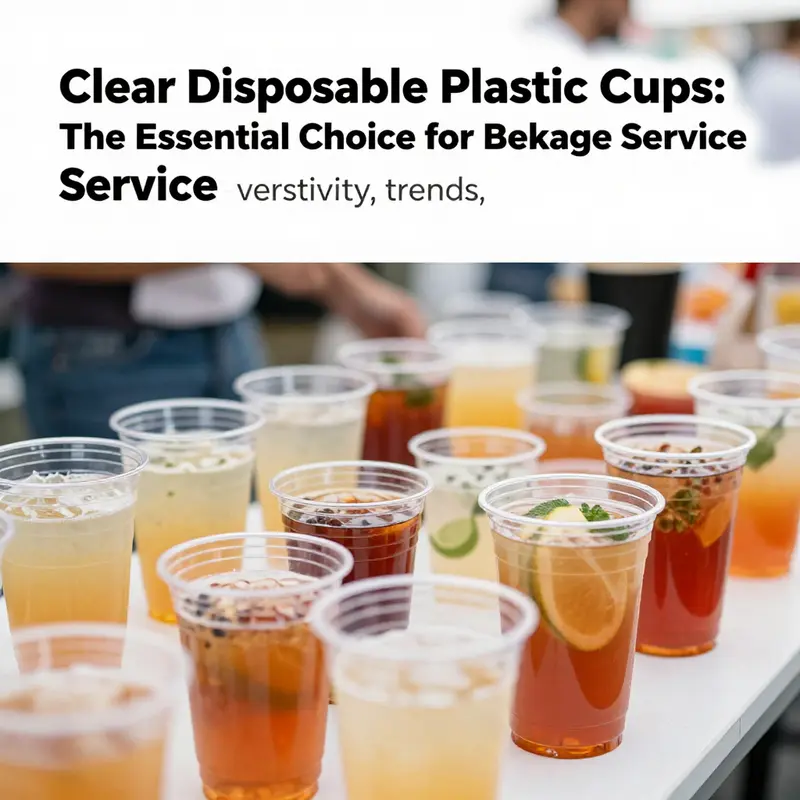
Clear disposable plastic cups are an indispensable asset for businesses in the beverage industry, from bubble tea shops to catering services. Their transparency not only enhances the visual appeal of beverages but also adds practical benefits across various settings. In this article, we dive into the different types and features of clear disposable plastic cups that cater to diverse needs. We will also explore current market trends, pricing strategies, and the environmental implications tied to their use. By understanding these aspects, you will be better equipped to make informed decisions for your establishment, whether you’re planning a large event or simply enhancing your daily operations.
Seeing Through the Cup: How Types and Features Shape the Use of Clear Disposable Plastic Cups
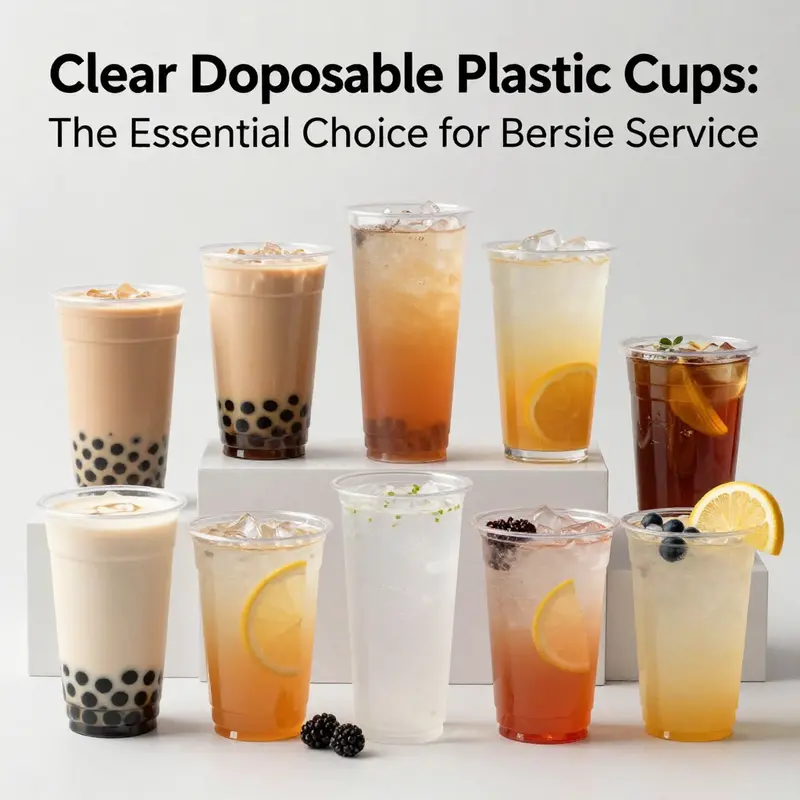
Clear disposable plastic cups are more than mere vessels for beverages. They are the interfaces through which color, aroma, temperature, and even a dash of personality travel from a drink to a guest. The transparency that defines these cups does more than showcase a beverage; it communicates expectations. In a crowded event space, in a sunlit cafe, or at a quick-service counter, a crystal-clear cup allows the liquid to tell its own story. The shade of a lemonade, the gradient of a smoothie, or the hue of a cocktail becomes part of the overall sensory experience. This visibility influences perception—from perceived freshness to perceived value—and that is why the choice of cup matters as much as the contents themselves. The journey of a clear cup from the factory to the table is not a simple path of disposal; it is a careful balance of material science, design nuance, cost considerations, and evolving attitudes toward sustainability. When we attend to the details, the cup emerges as a surprisingly sophisticated piece of equipment that supports service speed, presentation, and even the marketing message a business wants to convey.
The most common families of clear disposable cups are defined by their material core: polypropylene and PET. Polypropylene, or PP, has earned a strong reputation for durability and heat resistance. It is well suited for beverages that arrive hot or warm, as well as for cold drinks, because the material maintains form without becoming brittle or deforming under typical service conditions. That resilience translates into a quieter, more confident experience for the user—the rim remains comfortable, the cup holds its shape when stacked or transported, and the likelihood of leakage is minimized as long as the lid and seal are properly matched to the cup size. In practical terms, PP cups expand the range of beverages you can offer in a single service setting: coffee, tea, hot chocolate, and even certain kinds of smoothies can be presented in a single, coherent family of cups without requiring a separate line for hot drinks. From a safety standpoint, PP cups are widely marketed as BPA-free, a feature that resonates with consumers who feel uneasy about chemical exposure. The combination of heat tolerance and safety provides a clear edge for venues that must manage both hot and cold offerings in the same event or location.
PET cups, by contrast, are renowned for exceptional clarity and crisp visibility. They often create a sense of premium presentation because the liquid color seems purer and more saturated. PET’s optical properties are hard to match in the disposable cup category, which makes it an attractive choice for beverages where appearance matters—water with a color gradient, bright fruit juices, or cocktails that rely on a visual cue to signal quality. The trade-off with PET is that it can be less forgiving with high-temperature contents; while PET is strong and reliable for cold beverages, its performance under heat can be more limited than PP in certain designs. This does not negate PET’s usefulness; it simply nudges the decision toward matching the material to the intended use. Businesses often choose PET for sheer presentation, then pair it with cold beverages, precise glass-like clarity, and a strong brand impression. Custom printing on PET cups is common, and the clarity can enhance marketing elements such as logos or color-tinted beverages, heightening overall recognition at events or in storefront displays.
In the broader market, there is a growing interest in compostable or biodegradable cups that still deliver the characteristic clarity consumers expect. These eco-conscious options frequently rely on plant-based polymers like PLA, which can meet compostability criteria in industrial facilities. The appeal is clear: a sustainable narrative that aligns with growing consumer demand for responsible packaging. Yet there are realities to balance. Compostable cups often come at a higher price point and may require specific disposal infrastructure to achieve the intended environmental benefit. They may also exhibit different handling characteristics, such as a shorter shelf life or different stiffness, compared with traditional PP or PET cups. For planners and operators, the choice to adopt compostable cups is a strategic one that hinges on waste management capabilities, customer expectations, and the overall sustainability story a brand wants to tell. The conversation around clear cups thus sits at the intersection of performance, aesthetics, and responsibility—a triad that defines modern packaging decisions.
Beyond the core materials, the design of clear disposable cups includes practical features that broaden their utility. Lids designed to fit snugly with corresponding cup sizes create a spill-resistant experience that is particularly valuable for takeaway contexts, air travel, or busy venues where customers are moving between spaces. In many markets, the combination of a clear cup with a matching lid and straw has become a standard package for bubble tea, iced coffee, and smoothies, reflecting a consumer expectation for cohesive, on-the-go solutions. The ability to seal contents not only protects the beverage but also supports hygiene and transport efficiency, which are essential for venues that process large volumes daily. The design language of these cups—whether the rim is rounded for comfort, the wall thickness is optimized for grip, or the body is slightly tapered to aid stacking—directly affects user interaction. Small differences in geometry can influence perceived quality, ease of handling, and even the ease with which staff can fill, seal, and dispense beverages.
Size variety remains a central feature of the clear cup category. The spectrum typically ranges from smaller 9-ounce to 10-ounce servings intended for water, juice, and lighter beverages, up to larger 16-ounce or more for milk teas, iced coffees, cocktails, or smoothies. This range supports diverse service models, from quick-service counters to full-service beverage stations, because operators can standardize cup stock while tailoring the beverage size to customer expectations. The ability to mix sizes within a single service flow reduces bottlenecks and allows staff to respond quickly to customer preferences. For events and promotions, the visual impact of a lineup of uniform, crystal-clear cups can reinforce a brand’s color story or mood palette, turning simple drink service into a coherent design moment. The physical differences among sizes—rim diameter, wall thickness, and capacity—also influence practical considerations such as how many cups can be stacked on a cart, how many can be stored per unit, and how easily lids can be retrieved during a busy service window.
From a procurement perspective, cost is a meaningful consideration, but it is not the only factor. The unit price of clear cups varies with size, material, quantity, and whether there is customization. In bulk orders, the price can fall toward a few fractions of a cent per cup, while smaller runs without customization tend to be higher per unit. This pricing dynamic makes bulk purchasing especially appealing for venues with predictable beverage volumes, such as cafeterias, event spaces, and catering operations. The minimum order quantities (MOQs) associated with suppliers often run into the thousands or tens of thousands, reflecting the industrial scale of manufacturing and the efficiencies that come with mass production. For organizations planning large events or ongoing beverage service, negotiating terms for volume and lead times becomes a central part of operations. The clear cups’ affordability, combined with customization options, makes them a versatile tool for both functional service and promotional campaigns. When a business considers a promotion or a seasonal campaign, the ability to add branding or tailored artwork to a clear cup can transform a simple drink into a portable advertisement that travels with the guest back into daily life.
Customization is a defining feature that gives clear cups a marketing edge. Companies across hospitality, education, and corporate spaces invest in printing logos, slogans, or color palettes directly onto the cup surface. The result is a cost-effective, mobile billboard that accompanies customers beyond the service counter. This capability dovetails with promotional strategies, event branding, and corporate gifting. The aesthetic impact of a well-designed cup can amplify the perceived value of the beverage and align with broader brand initiatives. At the same time, customization adds an additional layer of complexity to procurement. It can introduce higher MOQs, longer lead times, and increased upfront costs. Deciding whether to pursue customization often hinges on the anticipated return in brand visibility and the scale of distribution. In contexts where mass branding is essential, the improved recognition may offset incremental costs, turning every drink into a potential touchpoint for brand engagement. For readers planning such initiatives, it’s useful to align material choice, cup size, lid type, and printing strategy with the event’s objectives, audience expectations, and logistical realities.
As the market evolves, several strands of information influence the decision-making process around clear cups. First, environmental concerns shape demand in ways that cascade through material choice and end-of-life considerations. Compostable and biodegradable options, while attractive in principle, require careful alignment with waste streams, as not all facilities accept PLA-based cups in the same way. Second, consumer expectations around safety and health influence how products are marketed. BPA-free labeling remains a fundamental reassurance for many buyers, even as some markets push for broader transparency about all potential leachables and the overall safety profile of single-use plastics. Third, the design and user experience component—how the cup feels in hand, how easy it is to stack, and how well it accepts lids and straws—can be decisive in high-volume settings where staff must move quickly without sacrificing presentation or reliability. The interplay of these factors—material science, aesthetics, and sustainability—informs not only product selection but the broader service blueprint of a beverage program. The end result is a category that remains both practical and dynamic, capable of meeting everyday needs while also supporting strategic branding and responsible disposal narratives.
For those who are actively planning events, cafes, or hospitality concepts, a practical lesson emerges from the broader landscape of clear disposable cups: align the cup with the drink, the moment, and the waste stream. If the objective is to deliver a warm, comforting experience, a PP cup that tolerates heat and offers a comfortable grip is a sensible choice. If the priority is pure visual appeal—especially for cold beverages where color and clarity become a design feature—PET cups deliver a crisp presentation that can elevate the perceived quality of the beverage. If the aim is sustainability and industrial composting infrastructure exists in the locale, compostable cups provide an option that supports a broader environmental narrative, though careful planning around disposal logistics and customer education is required. No single choice is universally “best”; the most effective approach is to map each option to the service scenario, the beverage portfolio, and the expectations of the audience. In practice, many operations adopt a combination of cup types, sizes, and customization levels to cover a range of service contexts—from quick service and takeaway to dine-in experiences and branded promotion moments. The result is a flexible system that preserves the clarity and practicality of the cup while expanding the ways it can contribute to a beverage program—and to the story a brand tells about how it serves guests.
For sourcing considerations, the practical reality is that clear cups are widely available in bulk, with a spectrum of options that lets buyers tailor performance to budget and purpose. A well-planned procurement strategy often begins with the core questions: Will the operation prioritize hot beverages, cold drinks, or both? How important is branding on the cup surface? What are the waste management capabilities in the service area—recyclers, composters, or landfill disposal? Addressing these questions helps determine whether to lean toward PP or PET, or to explore compostable alternatives where disposal infrastructure supports them. It also clarifies the importance of lids and straws, which, when paired with a clear cup, complete the on-the-go experience that today’s consumers increasingly expect. The story of clear disposable cups thus unfolds as a practical, design-aware, and increasingly sustainability-conscious narrative. It is about balancing the realities of cost and performance with the opportunities that clarity, customization, and responsible disposal offer to modern beverage service. And it is about recognizing that the cup, in its simplicity, carries a surprising density of meaning—from the moment a drink is poured to the moment it travels with a guest through an event, a cafe, or a daily routine.
To connect these ideas to a practical reference, readers may explore sources that discuss disposable cup options, including models designed for outdoor or on-the-go use. For a concise look at a widely available option that combines clarity with practical portability, see the disposable clear cup page linked here as a representative example of how such cups are positioned for events and everyday use: disposable-clear-plastic-cup-outdoor-picnic-pet-cup-drinking-cup-for-parties-birthdays-weddings-camping-utensils. This link illustrates how a simple product page communicates the core attributes—clarity, safety, compatibility with lids and straws, and the emphasis on practicality—while serving as a practical entry point for planners to compare sizes, materials, and customization possibilities across different contexts.
As a closing reflection that helps tie the chapter together without resting on a single conclusion, consider how these cups function as the quiet ambassadors of a beverage program. Their clear surfaces invite the eye to travel along the color and texture of the drink, inviting guests to gauge freshness and appeal. Their durability supports busy service environments where speed and reliability matter. Their potential for branding extends a beverage experience beyond the counter, turning a simple rule-of-thumb item into a touchpoint for brand storytelling. And their environmental footprint, while not a single answer, invites ongoing evaluation of material choices, disposal practices, and consumer expectations. In this way, the choice of clear disposable cups becomes a dialogue about taste, design, responsibility, and the quiet elegance of good service. The next chapter will continue this dialogue by turning toward the systems that support sustainable packaging choices, examining how waste management, lifecycle thinking, and consumer education shape the long arc of single-use beverageware in a world that increasingly values clarity—both in appearance and in intention.
External resource for further reading: https://www.epa.gov/recycle
Seeing Through Demand: Market Trends, Pricing Dynamics, and the Sustainability Drive for Clear Disposable Plastic Cups

Clear disposable plastic cups exist at a curious crossroads of practicality and perception. They are the kind of product people notice only when they are reliant on them, yet their presence shapes everyday experiences at parties, cafés, and fast-casual venues. At a global scale, the market for these cups is expanding, driven not merely by the volume of beverages served but by a complex mix of consumer expectations, regulatory ambitions, and relentless material innovation. Recent market analyses show a trajectory that begins with broad usage and moves toward a more purposeful, sustainability-conscious production and consumption pattern. In 2025, the market surpassed a substantial threshold, and projections put the 2035 size well above the two-hundred-billion-dollar mark. A compound annual growth rate around 5.6 percent over that decade signals ongoing appetite while signaling shift—an appetite tempered by an urgent need to reconcile convenience with responsibility. The transparency that defines these cups is not just about visual appeal; it is an invitation to weigh what is seen with what is sustainable, and in that balance, the industry is evolving.
At the heart of this evolution is a triad of forces: natural substitutes, sustainable practices, and ongoing technical refinement. The demand for natural substitutes—materials that are biodegradable, bio-based, or easier to recycle—has moved from a niche corner to the mainstream. Stakeholders across hospitality and retail increasingly seek cups made from paper, bagasse (the fibrous residue from sugarcane), or corn-starch-based bioplastics. These options promise clear transparency while offering a stronger alignment with circular economy principles. The push toward compostability and recyclability is not simply a popular sentiment; it reflects regulatory pressures and brand commitments that treat packaging as part of a broader social contract with consumers and communities.
Alongside material choices, the industry has embraced sustainable production practices. Manufacturers are adopting energy-efficient processes, reducing water use, and designing cups so they are easier to recycle after use. This shift is not a mere compliance exercise; it translates into product performance gains. Improved surface treatments and thinner, yet sturdier, wall constructions can preserve clarity while delivering better heat resistance and break resistance. The optics of a cup—its clarity, its gloss, the way a beverage’s color reads through the wall—remain a powerful marketing lever, but the engineering behind that clarity is now deeply intertwined with the life cycle of the product. In practice, this means better packaging design that minimizes waste and improves post-consumer recyclability, which, in turn, resonates with retailers and venues aiming to demonstrate responsible stewardship.
Technological innovation is the engine that keeps these improvements both practical and affordable. Material science has yielded options that balance durability with lightness, and manufacturing methods have evolved to produce more consistent clarity at scale. Heat resistance, previously the realm of thicker or sturdier cups, is now addressed through resin blends and wall-thickness optimization that do not compromise transparency. These advances enable cups to transition smoothly from hot coffee to cold beverages without warping, while keeping costs in check for large-volume buyers. The innovation pipeline also extends to design elements that support modern consumption patterns. Thin, tall designs—often referred to as “skinny cups”—have emerged to accommodate thicker beverages like milk tea and smoothies while enabling easier use with standard straws and lids. These designs reflect a nuanced understanding of how shape influences both user experience and the economics of serving drinks in bulk.
Geography plays a subtle but significant role in how market dynamics unfold. North America stands as the largest market for clear disposable cups, a reflection of mature consumption habits, a robust hospitality sector, and sophisticated supply chains that can move large orders efficiently. Yet growth there is often accompanied by heightened scrutiny of waste and a growing emphasis on recycling infrastructure. Other regions show momentum through expanding café cultures, more organized distribution networks, and the gradual penetration of standardized packaging solutions into mid-sized and smaller food-service operators. As global supply chains adapt to shifting energy costs, tariff landscapes, and regional waste-management capabilities, buyers are increasingly prioritizing suppliers with resilient, end-to-end capabilities—from material sourcing and production to packaging design and logistics.
Pricing, always a practical touchstone for decision-makers, reveals the tension between volume-driven economics and customization. In 2026, the headline price range for clear disposable cups is broadly quoted between roughly 0.012 and 0.02 U.S. dollars per unit. That band reflects differences in material type—whether the cups are polypropylene, polystyrene, or another clear-grade resin—the wall thickness, and the degree of customization, such as printed logos or branding. Bulk purchases typically anchor prices in the lower portion of that spectrum, with volume discounts amplifying the savings as order sizes climb into tens or hundreds of thousands of units. The economics of customization, however, can lift per-unit costs, particularly when complex printing or color matching is required. In practice, a middle-ground benchmark emerges for standard, unprinted clear cups in moderate quantities, while bespoke offerings pull prices upward.
The contrast between bulk and small-order pricing is stark. A bulk supplier can offer a per-unit price around the 0.012–0.02 range, often with minimal lead time and consistent quality across tens of thousands of units. The flip side appears in smaller runs: a consumer seeking 250 cups, for instance, may encounter prices that rise sharply due to setup costs, tooling, and higher per-unit production overheads. A representative small-order example—noted in wholesale price discussions—illustrates how a 16-ounce clear cup may cost roughly 14.6 cents when purchased in a 250-unit package. The effect is a classic example of high fixed costs in manufacturing and the way scale can dramatically shift the economics of a product that seems simple at first glance.
These pricing dynamics are not just about the base material and tooling; they also hinge on broader market conditions. Raw material costs, largely tied to petrochemical inputs, can swing with energy markets and global supply constraints. Transportation costs, too, influence landed price, particularly for buyers relying on imports. Finally, regulatory compliance—safety standards, labeling requirements, and end-of-life considerations—introduces additional costs that are more pronounced for cups designed to meet hot and cold beverage use cases while maintaining clear visibility of the drink inside. All of these variables coalesce to shape the pricing fabric that buyers navigate when planning events, outfitting cafés, or stocking school or corporate breakrooms.
Within this landscape, the role of alternative formats cannot be ignored. Biobased and compostable cups, often made from polylactic acid (PLA) or other plant-derived materials, present an appealing sustainability narrative but come with their own price and performance trade-offs. In many listings, compostable variants hover around a higher unit price—roughly six cents per cup or more—reflecting raw-material costs, production complexities, and the relatively smaller economies of scale compared with conventional clear cups. The trade-off is not solely cost; it is a balance among transparency, stiffness, heat tolerance, and the ease with which the cup can be incorporated into existing waste streams or composting programs. For buyers who prioritize environmental credentials or who must align with specific sustainability pledges, these options offer a meaningful path forward, even as they demand a careful appraisal of total cost of ownership across the product’s life cycle.
The pricing narrative, therefore, cannot be divorced from the broader trend toward responsible packaging. Brand managers, procurement officers, and operators who commission large events are increasingly asking not only for low unit prices but for clarity about environmental impact, recyclability, and compatibility with local handling infrastructure. The interplay between price and responsibility is now a central feature of the market discourse. It is not a simple trade-off; rather, it is an integrated calculus in which material choice, design sophistication, and supply-chain resilience all contribute to the final value proposition that buyers present to their customers and guests.
One practical implication of these trends is the growing emphasis on standardized specifications and interchangeable components. The market’s scale favors consistency in cup diameter, height, and wall thickness so that lids, sleeves, and other accessories can be manufactured and stocked uniformly. This standardization reduces overall logistics complexity and improves predictability for buyers who operate multiple venues or a distributed network of locations. It also supports the possibility of achieving higher recycling rates by simplifying the pathways for post-consumer cups into existing waste streams. Standardization, then, becomes a quiet but formidable driver of both cost containment and environmental performance, reinforcing the idea that clarity in a cup is matched by clarity in its life cycle and its role in waste management.
The consumer-facing narrative wraps these technical and economic realities into a simple sensory impression: a transparent cup that showcases the drink’s color while delivering dependable performance. Yet beneath this surface lies a sophisticated system in which material science, manufacturing efficiency, and regulatory alignment converge. The result is a market that remains robust in size and growth, even as it becomes more discerning about what it makes and how it makes it. The footprint of this market extends well beyond a single meal or event; it informs inventory decisions for hospitality operators, dictates standards for corporate cafeterias, and shapes how promotional campaigns are executed across various sectors. When a brand promises consistency, reliability, and a commitment to responsible packaging, the clear cup becomes a silent ambassador for that promise—transparent by design, and increasingly intentional in purpose.
From a purchasing perspective, the presence of a clear price corridor, the persistence of bulk discounts, and the premium for customization all imply a pragmatic approach to sourcing. Buyers who routinely place large orders gain the advantage of lowered per-unit costs, while those who need flexibility for smaller gatherings must accept higher unit costs or explore alternative options that maintain the desired aesthetic. The market’s growth, then, is not simply a matter of more cups being used; it is a matter of better-fitting cups that perform consistently across use cases, supply chains, and end-of-life scenarios. In this sense, the current market is about more than dollars per cup; it is about the total value a cup brings to a consumption ecosystem that prizes clarity, reliability, and sustainability in equal measure.
To illustrate the practicalities behind these trends, consider the real-world pricing fabric that buyers encounter. The standard cup, in a typical unprinted configuration, may sit near the lower end of the price band when purchased in bulk—an arrangement that suits large operators such as venues, event organizers, and distributors who plan well in advance. Conversely, smaller operators or promotions requiring rapid procurement for a limited window often face higher per-unit costs because the economies of scale that drive bulk pricing do not apply. The different pricing scenarios underscore the importance of strategic planning and supplier relationship management. They also highlight how a seemingly modest product—the clear disposable cup—embeds itself in a larger financial and environmental decision-making framework that modern businesses increasingly adopt as a matter of course.
With sustainability at the core of future strategy, the chapter of clear cups will continue to be written not only in terms of price and volume but in terms of their role within broader waste-reduction initiatives and the circular economy. The story is not merely about keeping beverages visible; it is about ensuring that visibility does not come at an unsustainable cost. In practice, this means more responsible material selection, smarter design for recyclability, and transparent communication with customers about end-of-life options. It means suppliers building resilient, scalable operations that can respond to sudden shifts in demand or regulatory changes without sacrificing performance. And it means buyers embracing a more nuanced approach to value, where the appeal of a crystal-clear cup is matched by the sustainability credentials of the entire packaging chain.
For readers exploring this landscape, a convenient point of reference is a product listing that directly presents the realities of clear plastic cups designed for outdoor and party use. The listing describes a disposable clear plastic cup suitable for picnics, celebrations, and camping—an example of how such cups are marketed in real-world contexts and how their attributes align with typical consumer expectations for convenience, durability, and portability. See the linked product here: disposable-clear-plastic-cup-outdoor-picnic-pet-cup-drinking-cup-for-parties-birthdays-weddings-camping-utensils.
External resources and ongoing market data are essential to situate these insights within a broader commercial framework. The external reference below provides a global catalog of plastic cup offerings and pricing data that can help buyers compare specifications, margins, and supplier capabilities across the market. External resource: https://www.made-in-china.com/products-search/hot-products/Plastic-Cups.html. This external link serves as a snapshot of how wholesale markets present a spectrum of clear cup options and related packaging solutions, offering a practical vantage point for buyers aiming to calibrate their procurement strategies with current industry benchmarks. It is important to interpret such data with an understanding of regional regulatory environments and the particular needs of end users who may require different material properties or end-of-life pathways.
The chapter’s synthesis points toward a future in which clear disposable cups remain indispensable but are increasingly defined by sustainability choices, manufacturing excellence, and adaptive design. The market’s growth will likely continue to push manufacturers toward more recyclable or compostable solutions, encouraging investments in process optimization and materials research. As consumers become more conscious of packaging footprints, the appeal of transparent cups will endure when they are part of end-to-end systems that minimize waste and maximize efficiency. In this sense, the most compelling narrative about clear cups is not merely about their current price or market size; it is about how they will evolve to support a more responsible, resource-conscious beverage ecosystem that preserves the benefits of clarity while reducing the environmental costs traditionally associated with disposable packaging.
Clear Cups, Complex Consequences: Reassessing the Environmental Footprint and Greener Pathways

Clear disposable plastic cups offer an instantly recognizable and practical solution for serving beverages across a spectrum of settings, from bustling cafés to intimate gatherings. Their appeal lies in transparency: the color and texture of a drink can be seen clearly, which can enhance the consumer experience and elevate the presentation of a brand or event. Yet behind that clarity lies a set of environmental considerations that complicate the simple convenience these cups provide. To understand their place in a sustainable future, it helps to look at the materials they are made from, the life cycle those materials undergo, and the broader system in which waste is managed. The most common compositions for clear disposable cups are polypropylene (PP) and, in some cases, polylactic acid (PLA). PP is favored for its heat resistance and durability, making it suitable for hot and cold beverages alike, and many formulations are BPA-free, a factor that matters to health-conscious consumers. PLA, a bio-based option derived from corn or other plant sources, is marketed as a compostable alternative. The preference for clarity remains a defining feature of these cups, but the environmental calculus is more nuanced than the visual appeal alone.
If we step back and consider the scale of usage, the magnitude can be surprising. Estimates commonly cited in environmental assessments point to hundreds of billions of disposable cups entering circulation each year worldwide. In the global landscape of single-use plastics, these cups contribute meaningfully to the waste stream and, when discarded improperly, to litter in streets and waterways. The sheer volume matters because even small inefficiencies in collection, sorting, and end-of-life processing multiply into outsized environmental impacts. The life cycle of a typical clear cup begins with raw material extraction, moves through manufacturing and filling, and ends in a disposal pathway that may include recycling, composting under the right conditions, or landfilling. Each stage carries its own set of energy demands, emissions, and potential ecological effects.
The environmental story of clear cups is inseparable from the fossil-fuel basis of much of modern plastic production. Even when bio-based PLA is used, the full life cycle does not automatically guarantee a lower environmental burden. The energy used to cultivate feedstocks, convert them into resin, and manufacture cups, coupled with the end-of-life phase, often yields results that are not unequivocally better than conventional plastics in all categories. A German study highlighted a critical nuance: PLA cups may exhibit lower chemical migration toxicity relative to PP cups, yet when ecosystems, climate effects, eutrophication potential, and terrestrial ecotoxicity are evaluated together, there was no consistent, across-the-board environmental advantage for PLA. This finding underscores a central point of life-cycle thinking: choosing one material over another requires looking beyond a single indicator.
The gravity of the issue becomes clearer when it is placed in a global context. A rough, if sobering, baseline is that the sector produces a stream of cups that persist in the environment for long periods if not properly managed. Even biodegradable or compostable variants, particularly PLA, can fail to deliver meaningful benefits if the local waste management infrastructure cannot support industrial composting or if consumer behavior leads to improper disposal. In other words, the best material choice on paper may not translate into real-world environmental gains if the systems that govern end-of-life do not align with the material’s designed destiny. This is not to cast doubt on the value of trying to shift toward greener options, but rather to emphasize that material substitution must be paired with robust waste-management capabilities and behavior change.
Beyond the chemistry of cups themselves, the broader environmental calculus includes climate change implications, nutrient loading of aquatic systems, and the ecological health of soils and waterways. Life-cycle assessments consistently remind us that production emissions, energy use, and waste management outcomes are interconnected. The climate signal from producing and discarding disposable cups can be substantial, especially when the energy mix used in manufacturing is fossil-fuel–intensive and when recycling rates are suboptimal. Eutrophication potential, driven by nutrient inputs from manufacturing and litter, and ecotoxicity assessments tied to mismanaged plastics, both contribute to the bigger picture of environmental risk. In this sense, the issue is not simply a matter of whether a cup is made from PP or PLA; it is about how societies collect, treat, and reintegrate such materials into circular flows.
As the debate evolves, several pathways have gained traction as practical, scalable alternatives to traditional clear cups. One family is paper cups with plant-based linings. These products aim to maintain the familiar, clean appearance of disposables while reducing reliance on fossil fuels in the outer shell. They also appeal to outlets with branding needs, since many can be printed with logos and designs that preserve the clarity of the drink itself. Another avenue is cups made from bamboo fiber, a material sourced from a rapidly renewable resource. Bamboo cups offer biodegradability and a distinct, natural aesthetic, with performance suited to both hot and cold beverages in many cases. Sugarcane-based cups, often referred to as bagasse cups, leverage byproducts of sugar production and present a compostable option that aligns with waste-to-resource thinking. These choices broaden the material palette beyond PP and PLA and encourage a more diversified approach to disposables.
A fourth path remains the compostable PLA option itself, which is still widely discussed in policy and industry circles. Compostable PLA cups strive to balance the demand for eco-friendliness with the realities of manufacturing and supply. They are designed to decompose when subjected to appropriate composting conditions, ideally turning into biomass, water, and carbon dioxide rather than accumulating as persistent litter. The caveat, however, is critical: many compostable products require industrial composting environments that are not universally available. In neighborhoods without industrial composting facilities, PLA cups may simply end up in conventional landfills where decomposition is slow or negligible, thereby diminishing the perceived environmental upside. These practical constraints highlight a recurring theme in sustainable materials: the ideal solution depends as much on the ecosystem of waste management as on the material itself.
Given these dynamics, it becomes clear that reducing environmental impact cannot rely on a single material switch. It requires a combination of intelligent product design, better waste infrastructure, and shifts in consumer and business behavior. In practice, this translates to strategies that protect the gains of a greener cup even as the supply chain evolves. For instance, reintroducing and reinforcing the role of reusable systems can dramatically lower per-use environmental burdens when used consistently. Stainless steel, glass, and BPA-free high-durability plastics can form the backbone of reusables in settings where washing, sanitizing, and return logistics are feasible. Reusable solutions bring a different set of challenges—initial cost, cleaning energy, and logistics—but they demonstrate a compelling trajectory toward minimizing waste per consumption event over time.
Yet the shift to reusable systems does not happen in a vacuum. It hinges on consumer habits, organizational commitments, and incentives that encourage people to bring their own cups, or for venues to implement cup-waste-reduction programs that reward repeated use. When evaluated over many cycles, reusable systems often outperform disposables on environmental performance, particularly in regions with efficient water and energy utilities and where the distribution network for takeout is mature enough to support a return and reuse model. The lesson is not to demonize disposables, but to recognize that the environmental burden of clear cups is highly sensitive to how societies manage materials at end of life, how often items are used, and what alternative systems are put in place.
From a behavioral standpoint, the path toward lower impact rests on several levers. Clear cups do not exist in isolation; they are part of a broader consumption culture that prizes convenience, speed, and branding. Without changes in behavior, even the most well-intentioned material substitutions may yield modest gains. Public education about proper disposal, improved labeling that clarifies whether a cup is recyclable or compostable, and clearer pathways to local facilities can shift outcomes. Businesses play a pivotal role here. They can partner with waste-management providers to optimize collection routes, invest in on-site composting where feasible, or pilot programs that reward customers for bringing their own containers. The economics of these decisions will always be a balance between upfront costs and long-term savings, but the environmental payoff can be meaningful when programs are well-designed and widely adopted.
In considering these alternatives, it is also essential to connect the dialogue to real-world practices that respect local systems. For example, some establishments use paper cups with plant-based linings for hot beverages, paired with well-managed recycling streams for the outer materials, while others embrace bagasse cups alongside industrial composting facilities. The viability of each option is deeply tied to local regulations, municipal composting capabilities, and consumer participation rates. This is why readers should not view the problem as a simple material choice but as an integrated waste-management decision. The compatibility between product design and local infrastructure often determines whether a given option yields a tangible environmental benefit.
To someone exploring practical and scalable alternatives, the search for a better path might lead toward more than a single product category. It can involve a portfolio approach: embracing multiple materials that fit different contexts, investing in reusable systems for frequent-use environments, and collaborating with waste-management operators to ensure the end of life is managed properly. This integrated approach recognizes that sustainability is not a one-size-fits-all prescription but a suite of options that, when used together, can reduce the overall footprint of beverage service. It also honors the aesthetic and functional preferences that drive consumer satisfaction, since clear cups have earned their place not only for their practical benefits but also for the confidence they inspire in customers who want to see their drink.
For readers seeking deeper, more technical validation of these trade-offs, a foundational study in Sustainable Production and Consumption (2025) provides a comprehensive analysis of the environmental and littering impacts of disposable cups made from polypropylene and polylactic acid in Germany. This reference offers a nuanced examination of how the choice of cup material interacts with factors like climate change, eutrophication, and ecotoxicity across multiple life-cycle stages. It is a reminder that even well-intentioned shifts require careful evaluation of local capabilities and long-term outcomes. To explore the broader discussion, consider the resource that synthesizes these insights and situates them within a global perspective.
In translating these ideas to everyday decisions, one can imagine a practical framework for organizations and individuals: assess the local waste-management landscape, consider both the visible appeal and the invisible costs of cup materials, and couple any substitution with a plan to reduce overall single-use consumption. When possible, design events and operations around reusable systems, paired with clear communication about disposal pathways for any disposables that are used. In the end, the objective is not to surrender the convenience of a clear cup but to ensure that its story ends in a way that aligns with a healthier, more resilient environment.
Internal link note: for those who want to see concrete, ready-to-implement options that align with the idea of greener takeaway packaging, a relevant resource is available under eco-friendly takeout boxes and containers designed for minimal environmental impact. This link offers practical examples of how packaging can maintain usability and branding while supporting waste-reduction goals: eco-friendly takeout boxes for food packaging.
External resource for further reading is provided below to ground these discussions in peer-reviewed findings and policy-relevant analyses. As with any complex environmental topic, the state of knowledge continues to evolve, and ongoing research will refine our understanding of the most effective levers for change. For readers seeking an in-depth, technico-economic perspective on the trade-offs between PP and PLA cups, the external reference offers a detailed account of how life-cycle outcomes vary by category and region, underscoring the importance of context and infrastructure in determining true environmental performance.
External reading: https://www.sciencedirect.com/science/article/pii/S187640352500012X
Final thoughts
In conclusion, clear disposable plastic cups remain a practical and stylish solution for beverage service, offering versatility and appealing presentation for various drinks. Understanding the types available, market dynamics, and the environmental considerations connected with their use allows businesses to choose wisely. As the industry trends toward sustainability, exploring biodegradable options can not only meet customer expectations but also enhance brand image. By incorporating the right disposable tableware into your operations, you can elevate the intended experience for your customers while aligning with broader environmental goals. Choosing suitable cup options can significantly impact your service delivery and resonate with an increasingly eco-conscious clientele.