
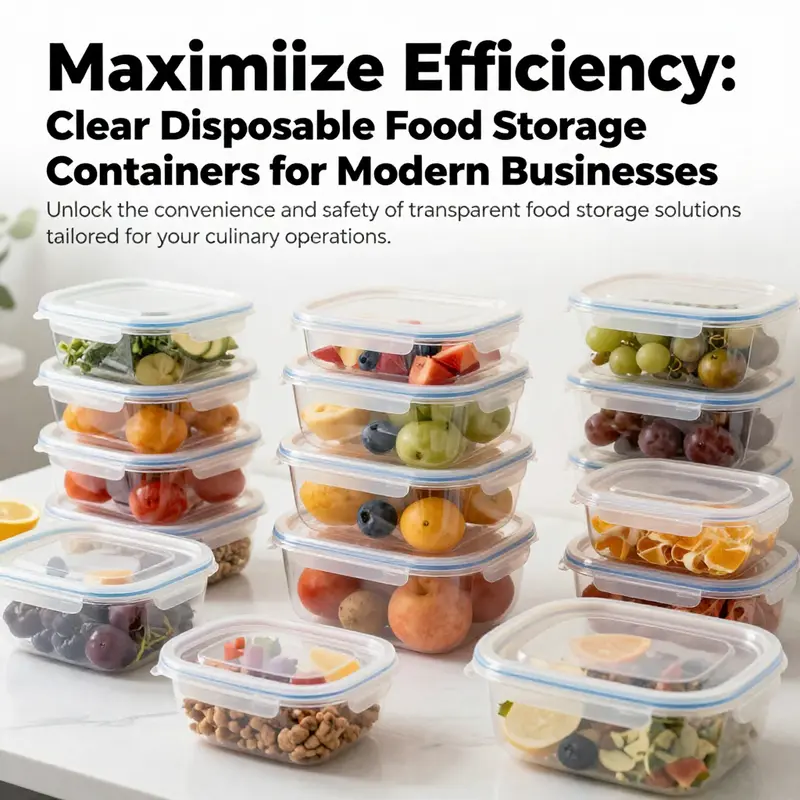
In the bustling food service industry, a reliable storage solution can significantly enhance operational efficiency and customer satisfaction. Transparent disposable food storage containers offer unparalleled visibility and practicality for a range of applications—from bubble tea shops to catering services. This article delves into the core features and advantages of these containers, explores various capacities and specifications to meet diverse needs, and presents popular product recommendations to help your business thrive. By understanding the benefits and optimal choices in transparent disposable food storage, you can elevate your food service business while ensuring food safety and convenience.
Seeing Freshness, Saving Time: The Practical Power of Clear Disposable Food Storage Containers
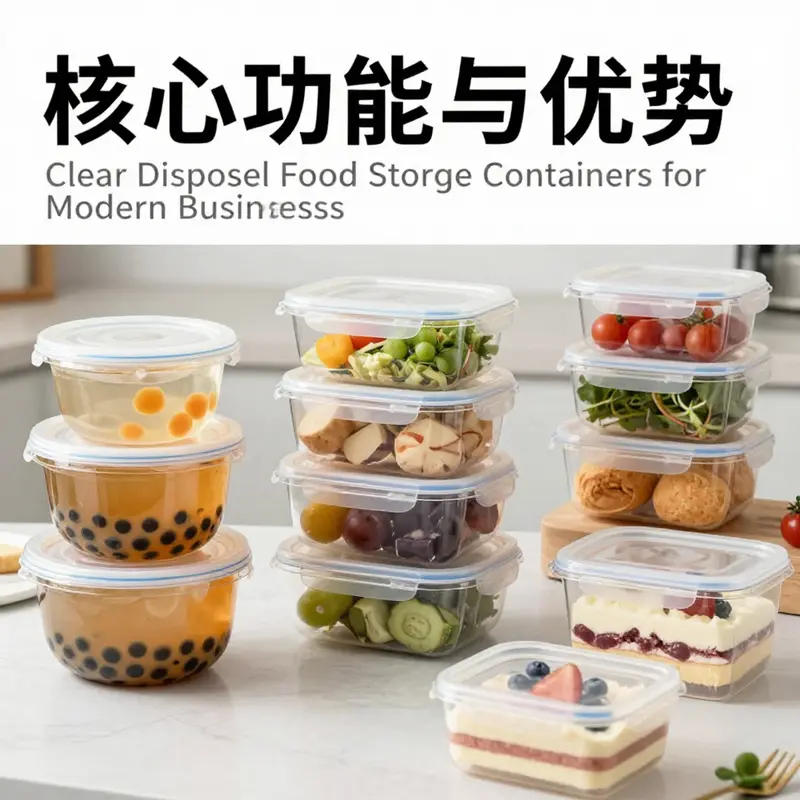
When you open the fridge or a desk drawer, you reach for what’s easiest. But real practicality is a system: transparency, safety, and simplicity that reduce waste, save time, and keep food at its best. Clear disposable containers do more than hold portions; they make the state of meals visible, measurable, and manageable. In fast-paced routines, these containers have evolved from packaging to a backbone of organized kitchens and on-the-go planning. The core appeal rests on two pillars: convenience and safety. Convenience comes from seeing inside at a glance, a snug lid, and the ability to withstand fridge, microwave, and dishwasher use. Safety follows: food-contact materials, predictable temperature tolerance, and leak resistance reduce cross-contamination and spills. Together, these traits address everyday pain points with thoughtful design, material science, and user behavior.
The immediate benefit is visual clarity. A transparent box lets you read a shelf of ingredients without opening every container. This isn’t just aesthetics; it informs decisions about use-by dates, moisture loss, and portion plans, and helps prevent overpurchasing or mislabeling. In bulk-prep settings, visibility becomes a form of memory—labels on the outside, contents inside, and quick glances that keep meals on track. When meals are prepared in advance, tracking portions fosters better inventory discipline and makes the container a portable dashboard for cooking, storage, and consumption.
This visibility extends beyond the fridge. For store-bought ingredients and pre-portioned meals, clear containers provide a marketing signal: the consumer judges freshness by sight and texture. In professional settings, transparent packaging communicates quality and openness. A bakery or caterer displaying products in clear boxes invites confidence; the shopper can assess texture and color at a glance. This dynamic translates into trust, repeat purchases, and a practical reduction in returns and complaints.
But visibility must be paired with performance. Clear containers should feel sturdy in hand and resist staining or cracking. Materials such as food-grade PET or PP are favored for clarity, rigidity, and resilience. They’re typically BPA-free and designed for cold and warm foods, making them suitable for chopped vegetables, salads, soups, or a quick heat-and-serve. The practical impact is reliable performance across a week of meals, picnics, and events.
Temperature resilience is another keystone. The best options tolerate a wide range—from near-freezing storage to moderate reheating—without warping. This minimizes waste by preserving texture and moisture. Tight-sealing lids and robust locking mechanisms further reduce leaks during transport and everyday handling.
Stackability and space efficiency complete the equation. Nested or stackable designs maximize fridge and pantry capacity, reduce clutter, and speed decision-making at the moment of hunger. The lid’s sealing system protects against leaks and keeps moisture in, improving overall workflow in busy kitchens.
In practice, clear disposable containers support less guesswork, less waste, and more confidence in food safety. They align with a modern rhythm of meal prep and on-the-go living while inviting reflection on disposal and recycling options. Labels on the outside and visibility inside lower the cognitive load for shoppers and users, supporting a smoother consumer journey from purchase to consumption.
For shoppers selecting among many options, practical criteria matter: capacity ranges, lid design, food-grade safety, temperature tolerance, stackability, and price per unit. The best choice balances typical portions, storage needs, and the expected lifespan of a disposable item, tailored to the user’s routines and hygiene expectations.
External resource: a display-driven packaging concept that leverages transparency to improve consumer confidence and product appeal illustrates how visibility supports texture and presentation at a glance. While dimensions vary, the philosophy remains consistent: clarity, reliability, and convenience across the broader spectrum of clear, disposable storage.
Today’s landscape shows how transparency and safety together enable efficiency, mindful consumption, and simpler routines. Clear disposable containers can turn a chaotic fridge into an organized pantry, support faster meal prep, and help hosts, professionals, and families handle food with clarity that reduces waste and elevates everyday life.
Seeing Clearly, Storing Smarter: Essential Specs and Capacity Choices in Transparent Disposable Food Containers
Transparency is more than a visual cue. In food storage, it is a practical compass that guides everyday decisions. When you open the pantry, peek into the fridge, or pack a lunch for the road, the ability to see what’s inside a container at a glance saves time, reduces waste, and lowers the risk of spoilage. Clear disposable food storage containers embody this principle by marrying visibility with convenience, safety, and versatile design. The journey from sight to service hinges on a handful of core decisions: material safety, sealing reliability, temperature resilience, and capacity. These elements shape how well a container performs in real life—whether it is the one you reach for during meal prep at home, the box you hand to a customer for takeout, or the compact vessel you bring along to a picnic or a camping trip. Understanding these decisions helps explain why clear containers have become staples in households and kitchens alike, and why choosing the right size and specification matters as much as choosing the right lid or the right price point.
Material choice is the foundation of safe, dependable use. In the spectrum of clear containers, two polymers dominate: polypropylene (PP) and polyethylene terephthalate (PET). Each brings a distinct set of strengths that cater to different use cases. PP is renowned for its high heat tolerance. It can stand up to temperatures well above what most meals require, making it an excellent candidate for microwave reheating and for hot foods that you might want to reheat shortly after preparation. The safety profile of PP is robust, particularly for food contact, because it resists absorbing odors and flavors, and it does not readily react with acidic or fatty foods. This makes PP-based clear containers a reliable choice for soups, gravies, and sauces that you might want to reheat in the same vessel. PET, on the other hand, is prized for its stability at room temperature and its inert behavior with a broad range of foods. It performs exceptionally well for salads, fruit, and other composition-heavy items where a crisp, fresh presentation matters. PET’s molecular stability translates into a packaging option that remains clear and sturdy over time, reducing the need for frequent replacement and helping minimize waste from fragile or leaky containers.
A crucial safety note threads through material selection. A large portion of consumer-grade clear disposables are marketed as BPA-free, and rightly so, given ongoing consumer demand for materials with minimized health concerns. BPA-free PP and PET varieties help ensure there is no detectable bisphenol A leaching into foods, especially when items are stored in the fridge, frozen, or gently warmed. Yet safety is not solely about the absence of a specific chemical. It also involves how the material behaves under typical conditions—how it handles cold and heat, how it resists cracking under pressure during transport, and how it maintains its shape when stacked in a crowded fridge. In addition to safety claims, genuine durability comes from thoughtful design choices like wall thickness and the rigidity of the container. A well-made clear container typically uses a thicker wall in proportion to its size, creating a confident bite when you pick it up and a dependable feel when you press the lid to seal it.
The seal is the heartbeat of a practical container. Clear disposables owe much of their everyday reliability to the fidelity of the lid and the seal mechanism. The best examples deliver a tight, uniform seal that prevents leaks even when the container is tipped or jostled during transit. This is especially important for liquid-based foods—dressings, soups, stews, or broths—that might travel in a backpack, tote, or car trunk. A seal that reliably clamps down reduces the chance of spillover and mess, which in turn reduces waste, preserves the integrity of the food, and lowers the risk of cross-contamination in crowded environments such as offices, schools, or catering operations. In some designs, the latch or snap mechanism adds an extra dimension of security. A small, well-engineered locking feature can transform a simple container into a trusted carrier for a day’s worth of meals or a party’s worth of finger foods, especially when the user needs to transport multiple portions at once.
Durability in a clear container is more nuanced than “thick is better.” While a robust wall helps resist punctures and keep shape, the real-world resilience comes from a balanced approach: a thoughtful joint design where the lid meets the rim, a precise molding process that minimizes stress points, and a surface finish that resists scuffing and microcracks. When a container is stacked in a fridge or pantry, or nested for space-saving storage, these design choices matter. A container that maintains its integrity through multiple cold freezes or moderate heating cycles can outlast cheaper alternatives that become brittle or warp after repeated use. This durability translates into practical benefits: containers that survive the rigors of grocery runs, school lunches, or a busy kitchen line reduce waste, cut replacement costs, and contribute to a more organized food system.
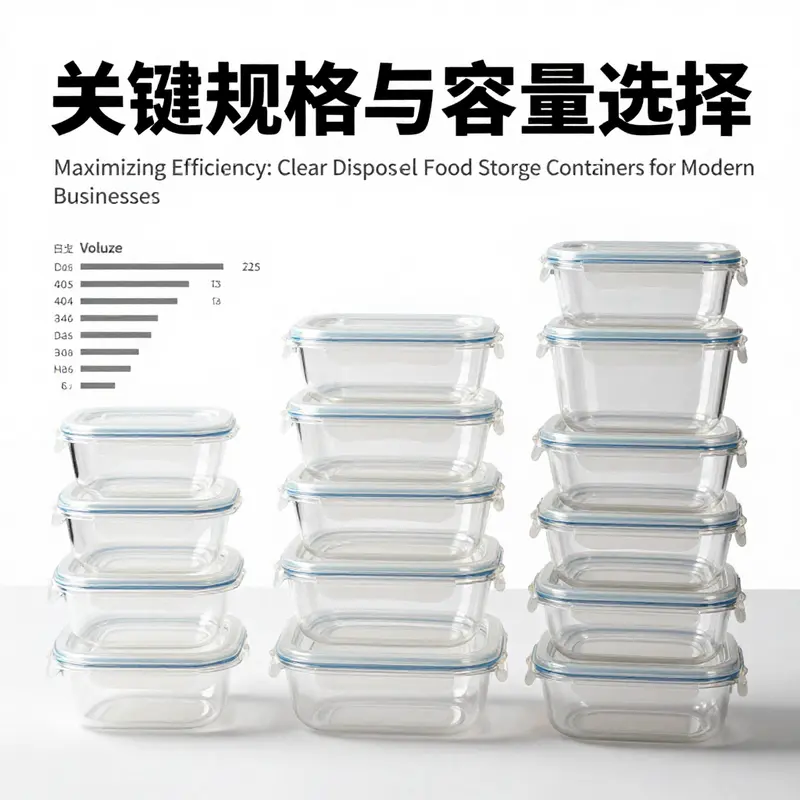
Capacity and sizing are the language through which a container speaks to a user’s needs. The market presents a spectrum from compact, single-serve portions to substantial, family-sized vessels. Small portions, typically in the 150 to 250 milliliter range, excel for sauces, dips, or sample-sized bites. They are ideal for portion control, for labeling and prep work, and for events where guests sample items in small quantities. Mid-range capacities—roughly 500 to 600 milliliters—are the workhorse sizes for a standard takeout meal, a portion of soup, or a mixed dish that includes several components. Large capacities of 900 milliliters or more are well-suited for sharing meals or bulk preparations, and they can simplify batch cooking for meal prep enthusiasts. The ability to stack these containers neatly in the fridge or freezer is as important as the capacity itself. Thoughtful stack-ability reduces space usage and makes inventory management far easier for households and commercial kitchens alike.
Another dimension of capacity is how the container’s geometry affects storage efficiency. Some designs minimize height or optimize a nested profile, enabling more efficient use of freezer shelves or kitchen cabinets. A container that nests with its lid, or that stacks with minimal air gaps, can dramatically increase storage density. In households where every inch of space counts, this can be the difference between a perfectly organized fridge and a cluttered one. Likewise, the surface area of the lid and rim can influence how easily containers are stacked and how stable they feel when loaded with heavier items. These seemingly modest design decisions accumulate to create a user experience that feels effortless and reliable, whether you are portioning out a week’s worth of lunches or lining up takeout boxes for a catered event.
The practical reach of clear disposable containers extends far beyond the kitchen. In the home, they simplify meal prepping and leftover management. It becomes straightforward to hide the day’s prep work behind a transparent lid and return it to the fridge, knowing exactly what is inside without opening every container. In a commercial setting, the ability to present foods in a clear, well-sealed vessel enhances display and customer trust. A visually appealing meal that clearly shows the contents—colorful salads, layered desserts, or soups with visible chunks—can captivate a customer’s eye and reinforce the perception of freshness. For gatherings or outdoor events, the combination of a sturdy build, reliable seal, and convenient size makes these containers dependable companions. They can go from kitchen to office break room to park bench with minimal risk of leaks or mess, enabling smoother logistics and improved guest experience.
The design philosophy behind these containers also embraces a broader sustainability mindset. When a product is designed for optimal visibility, it helps reduce waste by making it easier to monitor food quantities and freshness. A clearly visible amount of sauce or soup encourages mindful consumption and timely use of leftovers. In other words, the transparency feature supports a practical, waste-conscious approach to food management, aligning with contemporary expectations for hygienic, efficient, and responsible storage options. This alignment is not merely about reducing waste; it is about empowering people to make smarter choices in how they prepare, store, and transport food.
Within this framework of clarity and practicality, an example of the broader design logic shows how packaging can serve multiple roles without redundancy. Bakery packaging, for instance, often adopts clear, windowed designs to showcase the product’s color and texture while still providing protection and portioning control. Such concepts translate neatly to other food categories as well, including meals, snacks, and side dishes. The same principles that guide a windowed bakery box can inform the development of a clear disposable container intended for takeaway or meal prep kits: transparency for content visibility, a secure seal to prevent leaks, robust yet flexible walls to resist everyday handling, and an ergonomic lid that makes opening and re-closing easy. This cross-pollination of ideas reinforces the idea that a well-designed container is not merely a receptacle; it is a small system that improves how people store, transport, and enjoy food.
For readers seeking a tangible exemplar of the design approach discussed, consider a packaging option designed to balance aesthetics and utility. While brand names are not the focal point here, the principle is clear: a product that combines a transparent body with a secure, well-fitting lid, available in multiple sizes, and engineered to withstand typical food service and home-use conditions, demonstrates how the core specs translate into real-world practicality. In practice, you will find a range of products with similar attributes—clear material, BPA-free safety, microwave or freezer compatibility, leak resistance, and space-saving stacking features. The decisive factor is not a single feature but the harmony of all features working together to deliver dependable, everyday value. The more a container supports accurate portioning, clean handling, and safe transport, the more it earns a place in both kitchens and food-service workflows.
The topic naturally extends to how a consumer evaluates options during shopping and decision-making. Clear containers make visible the quality of construction, the integrity of the seal, and the uniformity of the lid-fit across a batch. When selecting sizes, a practical approach is to map typical meals and prep patterns. Small volumes for sauces and dressings, mid-range sizes for a single-serving meal, and larger capacities for bulk storage or family meals together form a logical ladder of choices. In this context, the interplay of material properties and design features matters as much as price. A value proposition becomes clear: a container that performs reliably across a range of temperatures, resists leaks, and stacks efficiently is not merely a convenience—it is a sturdy facilitator of consistent food safety, quality, and planning efficiency.
From a customer communication perspective, labeling and clear safety cues on the packaging can reinforce confidence. Product literature that highlights microwave safety, freezer endurance, and dishwasher compatibility helps end users trust the container for real-world tasks. The language should be precise yet accessible, focusing on what the container can do and under what conditions. For instance, statements about heat tolerance in degrees or the precise seal mechanism should be presented in a way that is easy to understand and verify. This transparency in communication parallels the literal transparency of the container itself, creating a coherent user experience that reduces ambiguity and builds trust.
In practice, a single smart choice—stocking a range of sizes, ensuring consistent sealing, and choosing materials with verified safety profiles—can streamline a kitchen workflow. It reduces the cognitive load on meal prep, simplifies inventory management, and reinforces a culture of cleanliness and order. The result is a more efficient routine, whether you are preparing meals for one, packing meals for a family, or supplying a small catering operation. The invisible benefits—fewer spills, less waste, more predictable results—often become the most persuasive reasons to select items that embody this design philosophy.
To connect these principles back to a tangible packaging idea without naming brands, consider a widely accessible concept: a transparent container set that includes a variety of sizes with matching lids, all designed to seal securely and resist leakage. Such a line would also benefit from the inclusion of a clearly labeled “microwave safe” or “freezer safe” indicator and a stack-friendly profile. The set should offer containers that are easy to open, easy to snap shut, and easy to clean, with a surface finish that resists scuffing and staining. Above all, the designs should prioritize visibility without compromising structural integrity. This is the essence of how a well-engineered clear disposable container becomes more than just a disposable item; it becomes a trusted tool in everyday life, a reliable partner in meal prep and takeout logistics, and a subtle but meaningful step toward more organized, efficient kitchens.
A final reflection on the practical design language of these containers highlights how accessibility and usability are inseparable from the science of materials and the craft of molding. The end user benefits when the packaging announces, through its build and its behavior, that it is designed for real life. This means not only withstanding the demands of freezing, reheating, and dishwashing but also enabling quick identification of contents, clean handoffs between home and work, and straightforward cleaning and reuse where appropriate. A container that makes itself predictable in a busy morning, a crowded office, or a bustling catering operation becomes a quiet ally in daily routines and routines that are not so ordinary. The interplay of material choice, sealing reliability, durability, and capacity forms a cohesive whole that explains why clear disposable containers remain essential in modern food storage and distribution, even as new manufacturing, sustainability, and consumer safety standards continue to evolve.
In closing, remember that the most effective choice is often the simplest: select containers with a clearly documented safety profile, a robust lid system, adequate wall thickness, and a size range that fits your typical foods and portions. Transparent design is not a cosmetic feature; it is a working principle that improves efficiency, safety, and enjoyment across home, work, and outdoor settings. When you align these elements, you do more than store food—you create a reliable, visible system that supports healthy eating, mindful consumption, and well-organized kitchens. For readers who want to explore related packaging concepts that further illustrate these design principles, a related example shows how windowed packaging enhances product presentation while preserving content integrity. See the option linked here: Pure Color Foldable Cake Boxes with Window. While the focus remains on clear disposables, this example helps visualize how transparency can elevate both aesthetic appeal and practical function in packaging products.
For additional reading on safe handling and storage practices, consult authoritative resources that review food safety guidelines and packaging safety standards. These references can help reinforce the practical choices described above and provide a broader framework for evaluating containers against real-world scenarios. You can explore foundational guidance at the following external resource: FDA Food Safety Information.
Clearer Choices, Bigger Impact: A Market Overview of Disposable Transparent Food Storage Containers
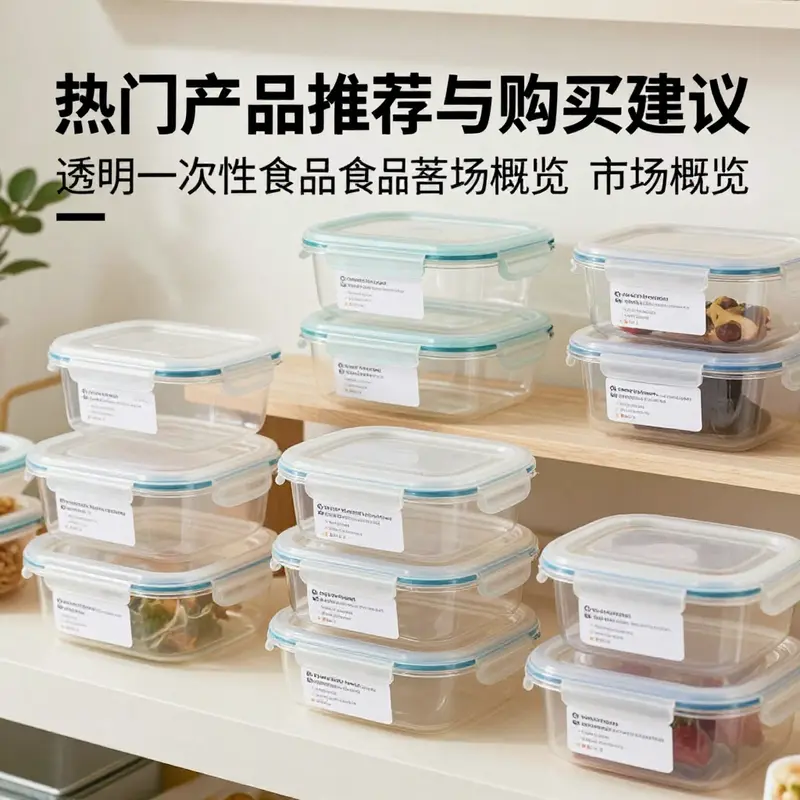
Transparent, clear, and purpose-built—these containers have become more than just a convenience in kitchens and delivery operations. They are a lens into how modern packaging balances visibility with safety, sustainability, and practicality. In 2026, the market for disposable transparent food storage containers reflects a migration from simple, bulky plastics toward materials and designs that honor consumer demand for clean readability of contents, reliable seals, and responsible use of resources. This chapter peels back the layers of that evolution, revealing why the see-through box remains indispensable, how it is being reimagined to meet environmental and regulatory pressures, and how shoppers and professionals alike can navigate purchase decisions with clarity and confidence.
At the heart of the appeal lies a straightforward premise: high visibility. When you can scan a refrigerator or a catering lineup and instantly identify a dish, portion, or ingredient, waste drops and accuracy rises. The clear plastic or bioplastic lid becomes a window into the meal plan, the feast, or the prep rack. For households practicing meal prep, the benefit is not just convenience; it is the reduction of spoilage and the streamlining of planning. For takeout and catering, it is a practical edge in the chain of custody—delivered food arrives with minimal guesswork about what’s inside, how much, and when it should be used. For outdoor events, a transparent container doubles as a portable display: the food’s appearance can entice without needing to remove a lid, which preserves hygiene and temperature. This is where the design meets the user’s need for speed and accuracy in busy environments.
Yet visibility is only one axis. Temperature resilience, sealing integrity, and material safety intersect with the ethical and environmental expectations of today’s buyers. BPA-free plastics have become the baseline for many vendors, a minimum requirement that signals a commitment to food-safe packaging. The capacity to withstand a broad temperature spectrum—ranging from freezer cold to microwave warm—expands the container’s utility across cooking, chilling, reheating, and even light disinfection. When a container can safely perform in a household freezer, in a nuclear family’s microwave rotation, and in a dishwasher without deteriorating, it earns genuine trust from users who juggle multiple meal routines and schedules.
A parallel thread in the current market is the push toward sustainable materials and responsible end-of-life options. The shift away from traditional, nondegradable plastics is driven by regulatory pushes and consumer sentiment, both of which reward clarity about composition and end-of-life behavior. Biobased and compostable options—such as polylactic acid (PLA) and other plant-derived or bio-based formulations—illustrate a longer-term industry bet that disposability can coexist with reduced environmental footprints. These materials are often designed to be compatible with composting streams or recyclability programs, and they are increasingly accompanied by certifications from recognized testing bodies. For instance, materials claiming PLA content or compostability typically seek alignment with standards and certifications that reassure buyers about whether the product will break down under specific industrial or home composting conditions. In practice, this means labels, certifications, and third-party attestations become part of the shopping checklist—no longer an afterthought but a primary signal of value and safety.
As with any packaging category, performance continues to hinge on smart engineering. The modern clear container is more than a rigid shell; it is a system. Lids with airtight or tight-seal mechanisms, sometimes enhanced by silicone gaskets, keep liquids contained and aromas localized, which matters for soups, sauces, dressings, or marinated ingredients. Some designs incorporate venting to prevent pressure buildup during microwaving, while others feature hinge lids that stay attached, improving user experience and reducing the risk of misplacing components. The sealing system is complemented by wall-thickness optimization and wall geometry that resist cracking or deformation during cold storage or hot washing. In short, durability is no longer an afterthought; it is a core performance metric that affects repeat use and long-term cost of ownership.
In capacity terms, the market remains diverse enough to cover everyday household use and bulk food preparation alike. Small formats, such as roughly 160 milliliters (about 5.5 ounces), are common for sauces, dips, and portioned ingredients. Mid-range containers—roughly 473 milliliters (16 ounces)—continue to be the standard for a single entrée or a generous serving of soup. Large formats approaching a liter or more cater to bulk meal prep, batch cooking, or family-size salads. The design philosophy around these sizes emphasizes modularity; stackable profiles and interlocking lids reduce pantry chaos and allow efficient fridge organization. A growing subset of containers features multi-compartment configurations, which facilitate keeping different components separate for freshness, texture, or dietary considerations—an option favored by meal-prep enthusiasts and health-conscious consumers alike.
The consumer landscape shaping these products is characterized by heightened expectations around both safety and sustainability. Certifications play a decisive role in signaling compliance with food-contact standards across regions. In the Chinese and broader Asian markets, for example, products frequently reference relevant safety and process standards that govern materials intended for food contact, while global buyers look for internationally recognized marks such as FDA approval or LFGB compliance. The presence of such certifications is not merely bureaucratic; it translates into tangible confidence that a container will not adversely affect flavor, aroma, or health. It also aligns with broader corporate commitments to transparent supply chains and responsible sourcing, a theme increasingly prioritized by caterers, schools, and corporate kitchens that must demonstrate stewardship to stakeholders and regulators.
From a materials science perspective, the evolution is twofold. On the one hand, the mainstream remains rooted in polyolefin-based thermoplastics that offer reliable clarity, rigidity, and cost efficiency. On the other hand, the most forward-looking segment experiments with bio-based or biodegradable formulations that maintain the indispensable properties of clear plastics while offering improved end-of-life options. PLA-based films or coatings, when used as interlayers or entire containers, can provide transparency with a reduced carbon footprint, though their compostability is often contingent on industrial facilities rather than home composting. Some designs blend materials to balance mechanical strength, heat resistance, and compostability, trading a portion of recyclability for the environmental benefits associated with bio-based content. This balancing act reflects a broader industry acknowledgment that “green” packaging is not monolithic; it is a spectrum that includes recyclability, biodegradability, reduced material intensity, and responsible supply chains.
For buyers, the material question intersects with practical concerns about performance in everyday settings. A clear container must be robust enough to withstand stacking, transport, and repeated cycles of use and washing. It must resist clouding and surface damage that can obscure visibility over time. It must tolerate the rigors of household dishwashers and, in some cases, commercial-style warm or hot-water circulation. The best options provide clear, durable visibility while offering a clear path to disposal that aligns with local recycling or composting infrastructure. In markets where composting programs are expanding, suppliers increasingly emphasize the container’s compatibility with those streams, along with detailed guidance on preparation for disposal to avoid contamination.
The market’s competitive dynamics also reflect an emphasis on value and convenience. For many buyers, the decision comes down to a trade-off between upfront cost and lifecycle value. A slightly pricier container with a superior seal, better clarity, and compatibility with a broader range of temperatures can offer substantial savings by reducing waste, spoilage, and the frequency of replacements. Conversely, when a project requires large volumes on a tight budget—takeout services or large events—the appeal of economic, mass-produced options remains strong. Even in this space, more buyers seek products that clearly disclose material composition and safety certifications, recognizing that transparency about what is inside the box is as important as what is inside the box.
Amid these shifts, the way people discover and evaluate products also evolves. Consumer reviews, expert analyses, and regulatory disclosures increasingly influence purchasing behavior. In this environment, a reputable retailer or supplier becomes a trusted guide. Buyers are not just seeking a pretty container; they are seeking a packaging solution that aligns with their safety standards, environmental goals, and operational realities. An informed buyer will weigh the container’s thermal tolerance against its intended use—freezer storage versus hot food service—before committing to a given size, shape, or material. They will examine labeling for clarity about microwave and dishwasher safety, as well as the presence of any adhesives or coatings that could affect flavor or safety. And they will consider the container’s end-of-life pathway, which often determines whether a purchase supports a broader sustainability strategy.
For those who curate content or educational materials around packaging, there is a practical angle as well. It is helpful to illustrate the continuum from raw material to finished product and to explain how a single container can serve multiple roles—from a home meal prep vessel to a professional takeaway box. In this sense, the container becomes a case study in design-for-resilience: a product that remains functional and attractive under varying temperatures, handling conditions, and reuse cycles, while enabling responsible disposal when its life ends. A clever packaging solution does not merely hold food; it communicates values—clarity, safety, and respect for the environment—through function, form, and typography on the label.
To connect the broader market to tangible choices, consider how an item designed for everyday use can also be a part of larger packaging ecosystems. In catering or event settings, for instance, a transparent, secure box can be chosen not only for its visual appeal but for its compatibility with branding opportunities, portion control, and logistics workflows. An elegant lid with a seal can convey reliability in transit, while the container’s clear body showcases the culinary craftsmanship from the first glance. When a box integrates with a product line that emphasizes green credentials, it reinforces a consistent narrative about quality and responsibility across all touchpoints—restaurant, consumer, and recycler alike.
For readers seeking concrete stepping stones in this evolving landscape, a practical approach helps. Start by identifying your primary use case: meal prep at home, takeaway service for a cafe, or bulk packing for a party. Then map the requirements against four anchor criteria: safety, seal integrity, temperature resilience, and end-of-life suitability. Safety includes BPA-free status, compliant certifications, and absence of contaminants that could migrate into food. Seal integrity means evaluating whether the lid’s mechanism prevents leaks and preserves freshness during transport. Temperature resilience requires confirming a container’s suitability for the temperatures you expect to encounter, from freezing to microwaving. End-of-life suitability calls for understanding whether the material is recyclable, compostable (and under what conditions), or otherwise map-ready for your local waste system. The intersection of these criteria will narrow options to a manageable subset of shapes, sizes, and materials that are fit for purpose.
Incorporating a small, strategic internal example helps to illustrate how these criteria translate into everyday choices. Imagine you are planning a weekend family gathering and want to pre-portion sauces, dips, and desserts to minimize waste and mess. A clear container with a reliable, spill-resistant seal becomes essential for transport. A 16-ounce size offers a versatile portion, while a multi-layer or compartment design provides convenient separation of sauces and solids. If you are mindful of sustainability, you might look for a container that incorporates a substantial proportion of bio-based content or that carries a compostability claim approved by a recognized standard. The packaging’s labeling should provide straightforward instructions for disposal and, if applicable, guidance on any required composting conditions. In this scenario, the container’s value is not merely in holding food; it is in enabling a smoother process, reducing waste, and reinforcing trust with guests who expect both convenience and responsibility.
For those who want a tangible tie to product exploration, a useful direction is to explore packaging options that demonstrate the union of function and form. Some designers are pushing toward lighter, thinner walls that retain strength while reducing material use, a shift that helps lower carbon footprints without compromising performance. Others experiment with enhanced sealing geometries or integrated features like pour spouts, steam release vents, or modular dividers that keep different foods neatly separated. The result is a family of containers that feels both practical and premium, capable of handling a busy kitchen or a bustling catering operation with equal aplomb. When shopping, the emphasis shifts from purely aesthetic clarity to clarity of purpose: does this container truly meet your needs for visibility, safety, and sustainability in your specific context?
An increasingly common anchor in the decision process is the signal of end-of-life responsibility embedded in the product’s story. Buyers, especially institutional buyers and environmentally conscious consumers, want to understand not just what the container can do for them today, but how it behaves after its useful life. This means looking for clear disclosures about whether the container is recyclable, compostable, or reusable, and under what conditions. It also means evaluating the durability and reuse potential of the container’s design. A durable, reusable option can extend its footprint beyond a single use and, with proper care, reduce overall waste—although it may not always align with strict single-use expectations in some markets. In many contexts, the best path is a balanced choice that honors the immediate needs for safety and convenience while supporting long-term waste reduction goals.
The landscape is not static. Innovations continue to emerge around barrier properties, ease of cleaning, and compatibility with mixed-use environments. For example, packaging developers are refining material stacks to improve clarity and heat resistance, enabling better performance in both cold storage and warm reheating, which broadens the container’s practical window. They are also refining coating technologies to resist oil and sauce migration, keeping the container looking clean and transparent even after multiple uses. In parallel, supply chain resilience has become a new metric of value. Buyers increasingly prize suppliers who can guarantee reliable delivery, consistent material availability, and responsive customer support—factors that matter just as much as the container’s technical specs when planning a menu, a catering schedule, or a retail rollout.
With all these variables, one practical takeaway stands out for readers who are navigating the current market: transparency pays. Whether you are outfitting a household kitchen or a professional kitchen, a cafe, or a food service operation, selecting containers that clearly disclose material content, safety certifications, and end-of-life pathways helps align procurement with broader safety and sustainability objectives. And because the market rewards those who actively communicate about these aspects, you will find more suppliers providing clear labels, accessible documentation, and straightforward disposal guidance than ever before. To illustrate how real-world packaging options translate into tangible buying decisions, consider a package category that combines form and function—foldable, windowed cake boxes designed for bakeries and patisseries. These types of containers showcase how design can balance visibility, protection, and aesthetic appeal in one compact solution. For an example of this category, you can explore foldable cake boxes with window at this link: foldable cake boxes with window.
As the market continues to mature, it becomes clearer that the “disposable” label is increasingly a reflection of lifecycle thinking rather than a nod to short-term convenience. A well-chosen clear container can be part of a circular strategy that reduces waste and increases value across households and businesses. Consumers and organizations that insist on responsible disposal, accurate labeling, and reliable performance are helping to push the industry toward materials and designs that honor both the food they protect and the planet that hosts us. In this context, the transparent food storage container is not simply a tool for storage; it is a platform for responsible behavior, efficient operations, and clearer thinking about what sustainability means in everyday life. This is the throughline that connects the practical benefits of visibility and reliability with the broader commitments to safety, health, and ecological stewardship that define the modern packaging landscape.
For readers who want to stay current with the top-performing options in a rapidly shifting market, the best approach is a balanced one: prioritize safety signals, weigh performance across temperature and sealing needs, and consider end-of-life characteristics as part of the value proposition. The combination of clear visibility, robust performance, and thoughtful environmental consideration is what differentiates the best disposable transparent containers from the rest. When you align your purchases with these criteria, you gain a packaging solution that not only serves today’s needs but also supports a more sustainable and transparent future for how we store, transport, and savor food.
External resource: For a broad view of current consumer and retailer perspectives on high-demand disposable packaging, see the widely followed best-seller rankings and product assortments on major marketplaces. This external reference provides a snapshot of what buyers are prioritizing in real time and can help readers compare general market trends with specific product features: https://www.amazon.com/gp/bestsellers/home-garden/21378301011
Final thoughts
Transparent disposable food storage containers are not just a practical choice; they are an essential asset for any food service operation focusing on efficiency and customer satisfaction. Their visibility, safety, and versatility can greatly enhance your service delivery, whether you operate a bubble tea shop, restaurant, or catering service. Choosing the right containers tailored to your specific needs can lead to significant benefits, from reducing food waste to improving organizational efficiency in your kitchen or service area. Embrace the advantages of these innovative storage solutions and elevate your operational standards today.