

Clear plastic condiment cups are essential for any food service establishment looking to enhance their customer experience. These versatile containers not only facilitate portion control of sauces and dips but also bring visual appeal to serving presentations. In this exploration, we will dive into the design and functionality of these cups, examining how their features boost both usability and aesthetic value. Following this, we’ll investigate current market trends and diverse applications across various sectors, including beverage chains, food trucks, and catering services. Lastly, we will discuss the sustainability and regulatory aspects surrounding clear plastic condiment cups, ensuring you are informed about compliance and environmental considerations. Together, these chapters will provide a comprehensive understanding of why investing in high-quality condiment cups can benefit your business.
Crystal Clarity, Concrete Convenience: The Design and Functionality of Clear Plastic Condiment Cups
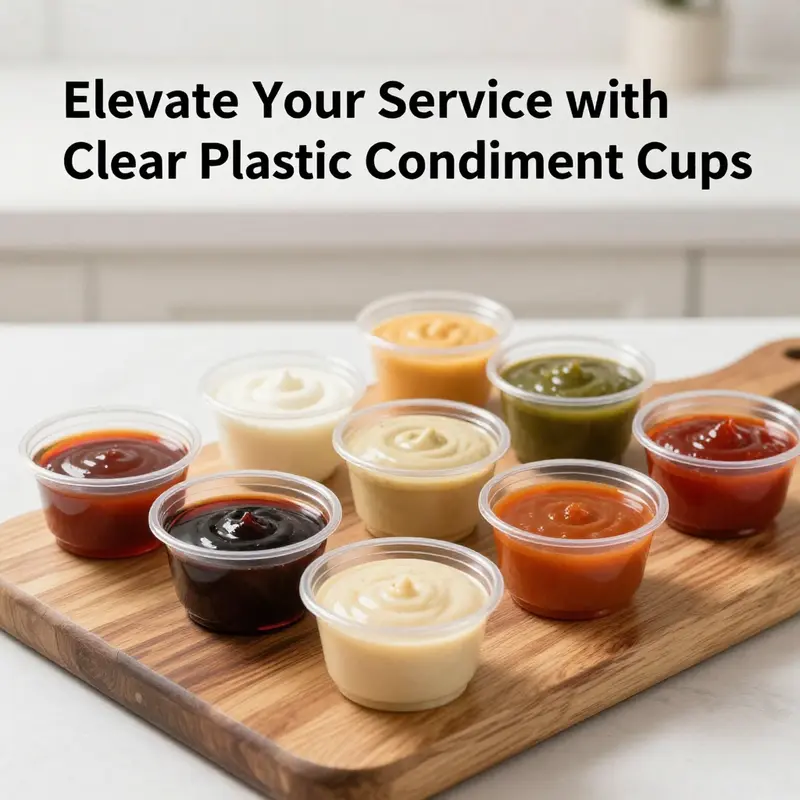
The design and functionality of clear plastic condiment cups weave together visibility, control, and hygiene into a compact, highly usable package. In a kitchen or service line where speed and accuracy determine both the customer experience and the bottom line, these small, transparent vessels become quiet workhorses. Their success rests on a precise balance of material choice, form, and practical details that together support safe food handling, efficient prep, and reliable portability. The result is a tool that looks simple on the shelf yet performs with a level of thoughtfulness that often goes unnoticed until a workflow falters under pressure.
At the heart of every reliable cup is a material choice that harmonizes safety, durability, and cost. Food-grade plastics such as polypropylene and, in some cases, polylactic acid, are selected for their inertness in direct contact with food. Polypropylene offers a blend of stiffness and flexibility that resists cracking under the jostle of a crowded service line, while also enabling a lightweight design that keeps shipping and handling costs in check. PLA introduces an option with a more favorable profile for certain sustainability goals, albeit with trade-offs that can include different heat resistance and compostability considerations. The material choice is not merely about keeping contents contained; it also influences leakage resistance, seal integrity, and the ease with which contents can be dispensed or portioned. In environments where sauces, dressings, or dips must travel from kitchen to table or event to plate with minimal risk of spillage, the interior and exterior finishings of the cup matter as much as the lip, rim, or wall thickness. A smooth interior, in particular, reduces friction during filling and dispensing, helping staff maintain a steady, predictable pour—an important factor when portion control is tied to consistency and waste reduction.
Design features that seem obvious—such as a transparent, round silhouette—are in fact deliberate choices that optimize usability across a range of settings. The clear surface allows immediate visual assessment of the contents, enabling cooks and servers to gauge color, texture, and quantity at a glance. In a busy dining hall or bustling catering event, skim-reading a cup’s contents rather than opening lids or attempting to tilt stock to view levels can save seconds per order. This simplicity is not incidental; it is an ergonomic decision designed to reduce errors and speed service. The round form and smooth walls also facilitate thorough cleaning and quick drying, which matters when cups must move rapidly from prep stations through to service without compromising hygiene.
Another practical feature is the inclusion of secure, sealable lids. The lids play a pivotal role in preventing leaks during transport, storage, and stacking. They are not mere afterthought accessories; they are essential for on-the-go service, for example in takeout or catered events where multiple servings of sauces or dressings might be transported in the same carrier. A reliable seal diminishes cross-contamination risks and keeps product aromas contained, which is particularly important for delicate dressings and spiced sauces. In high-volume operations, the combination of a secure lid and a well-fitting cup reduces the need for secondary containment and minimizes the risk of messy spills that can undermine both safety and presentation.
Labeling and branding are seamlessly integrated into the cup design through UV-printed labels and bold, vivid visuals. This approach serves a dual purpose: it enhances quick identification and elevates the perceived quality of the product, especially in fast-service contexts where menus change and options vary by day. The ability to clearly display a sauce or dressing name at a glance supports efficient line management and reduces the likelihood of mix-ups during busy periods. It also offers a subtle branding opportunity when coupled with color motifs or distinctive graphic cues. The printed area morphs into a visual cue that can guide customers to the right choice without requiring staff intervention, contributing to a smoother guest experience.
Size options for clear condiment cups are typically standardized for portion control. Commonly, cups in the 1-ounce to 2-ounce range (roughly 30 to 60 milliliters) align with common serving sizes for dips, dressings, and small-taste portions. This standardization supports consistent portioning across multiple locations and shifts, aiding in inventory planning and waste minimization. By using a defined, small-volume cup, kitchens can enforce a predictable portion while still offering enough product to be satisfying. The uniformity simplifies the training of staff, who can rely on a familiar container that behaves consistently from one station to the next, reducing the risk of under- or over-serving.
In practice, the cups excel in applications that benefit from controlled portions and clean presentation. They are well-suited for dipping sauces at appetizer stations, salad dressings in pre-portioned salad bars, and small tasting portions in catering setups. They also lend themselves to desserts and snacks at events when small, clearly labeled servings are preferred for aesthetic appeal and practical handling. The transparent design enhances the visual appeal of the contents, turning even a modest portion into a showcase that can entice guests and help drive cross-selling opportunities. The combination of form and function—clarity of appearance, controlled volume, and secure containment—creates a reliable framework for consistent customer experiences across diverse service environments.
The functionality of these cups extends beyond immediate use to operational efficiency. Their disposable nature reduces cross-contamination risks and simplifies post-event or post-service cleanup. In many workflows, the ability to replace a used cup with a clean, sealed unit without washing or sterilizing equipment saves significant time and labor. Suppliers often report that such cups can contribute to faster post-use cleanup, a benefit that compounds when scaled to events, cafeterias, or large catering operations where thousands of units may be handled over a single shift. While the exact figures can vary by operation, the general expectation is a meaningful reduction in cleanup time compared with bulk containers that require washing and sanitizing between uses. This advantage is particularly valuable in high-volume service contexts where every minute saved translates into greater throughput and reduced labor costs.
Storage and transport considerations also influence the design. Stackability is a practical feature that enables compact storage and efficient loading into delivery carts, coolers, or service trays. A well-designed stack reduces space requirements in crowded kitchens and during transport, ensuring that a large number of servings can be organized neatly without risking damage to the cups or their lids. The stackable attribute, coupled with the lids, supports a streamlined supply chain from central prep areas to front-line service stations. In environments that rely on quick replenishment, stackable cups simplify restocking procedures and minimize the disruption to service when new batches are opened.
The customization and branding potential embedded in many cup models further extends their value beyond mere utility. Businesses can incorporate color accents, logos, or themed graphics that align with a broader brand strategy. This capability is especially useful in event catering or themed dining experiences, where cohesive presentation enhances the guest impression and reinforces brand recognition. The design approach that combines clarity with visible branding helps ensure that even small portion containers contribute to a larger narrative—the story of a restaurant or event that cares about detail, consistency, and presentation.
From a safety and compliance standpoint, the cups are anchored by third-party certifications that signal adherence to rigorous standards for food safety and environmental considerations. Certifications such as FDA compliance, BPA-free status, CE certification, BV (Bureau Veritas), and ISO standards provide assurance to buyers that the products meet established safety benchmarks. For operators in regulated markets, these certifications offer a clear framework to verify that packaging materials are suitable for direct contact with food, do not introduce unsafe levels of chemicals, and align with broader environmental and quality management expectations. In practice, this means a lower barrier to entry for markets with specific procurement requirements and a more predictable path to regulatory approval when introducing new packaging into a menu or event. The certifications also support consumer confidence, an increasingly critical factor as guests become more mindful of packaging materials and their environmental footprint.
An often-underappreciated dimension of design is how these cups interact with the wider ecosystem of foodservice packaging. Clear condiment cups sit alongside lids, label prints, and additional accessories that complete a modular system for portioning, branding, and transport. The interoperability of these components matters. When lids fit securely and labels align with the cup surface without peeling or bubbling, service runs more smoothly and returns are reduced. A well-integrated system minimizes errors such as mismatched labels or poorly sealed cups, thereby sustaining efficiency across the supply chain. The cups’ design is thus not an isolated choice but a strategic element of a broader packaging strategy that supports consistent service quality, inventory management, and guest experience.
In reflecting on their overall value, it is useful to consider how the design translates into real-world outcomes. The transparency of the cup transforms the plating and presentation dynamics of a dish, providing a tactile sense of how a portion looks before it lands on a plate. The visual cue helps staff anticipate the customer’s needs and adjust the flow of service to maintain pace without compromising accuracy. The reliability of the seal reduces the anxiety around transport; servers can carry multiple portions without concern about leakage or cross-contamination, even when journeys involve uneven terrain or crowded aisles. The familiar shape and clear contents become a quiet backbone for efficient service, allowing chefs and front-line staff to focus more attention on flavor and guest interaction rather than on packaging issues.
The chapter’s exploration of design and functionality therefore circles back to a simple, enduring truth: clarity and thoughtfulness in a small packaging element can significantly elevate operational performance. The clear plastic condiment cup embodies that principle. It is not merely a container but a carefully engineered tool that supports portion control, consistency, safety, branding, and speed. Its strength lies in the alignment of material properties, form, and practical features with the demands of modern food service and home meal-prep routines. In a landscape where customers increasingly expect precision and presentation, the cup offers a reliable, scalable solution that can adapt from a single café counter to a multi-site catering operation.
For teams seeking to optimize their packaging strategy, recognizing the value of these design decisions can inform better procurement choices. The balance between durability, visibility, and seal integrity should guide how cups are selected for different applications. The flexibility to choose sizing that matches portion needs, along with branding opportunities through customization, can help facilities create a cohesive look across service formats while maintaining the efficiencies that come with standardized containers. When combined with certifications that verify safety and environmental responsibility, these cups become a dependable component of a responsible and effective foodservice operation. They are, in essence, a small but mighty part of the broader system that turns raw ingredients into predictable, appealing, and safe guest experiences.
As this chapter connects to the broader article on clear plastic condiment cups, it invites readers to see beyond surface aesthetics and recognize how thoughtful design shapes practical outcomes. The cups’ transparency, sealability, and ergonomic form are not mere market trends; they are functional responses to the realities of fast-paced kitchens and event settings. The result is a packaging choice that supports precise service, clean handling, and a confident brand story—crafted not only in the recipes that emerge from the kitchen but also in the simple, reliable vessels that carry them. In the end, the design and functionality of clear plastic condiment cups illustrate how restraint and clarity in packaging design can yield tangible gains in efficiency, safety, and customer satisfaction.
For readers exploring more about how such cups fit into broader event and foodservice packaging strategies, a practical example of the type of disposable, clear plastic cups used for parties, gatherings, and on-the-go service can be found here: Disposable clear plastic cup for parties and events. https://ecocupbowl.com/product/disposable-clear-plastic-cup-outdoor-picnic-pet-cup-drinking-cup-for-parties-birthdays-weddings-camping-utensils/ This reference helps illustrate how the combination of clear visibility, secure lids, and easy handling translates into a cohesive approach to service design. It offers a concrete reminder that even seemingly small packaging choices influence the pace of service, the accuracy of orders, and the overall guest experience.
External resource: https://www.alibaba.com/product-detail/Clear-Dipping-Sauce-Cups-small-plastic-condiment_1600479518988.html
Clear Windows, Measured Servings: How Clear Plastic Condiment Cups Shape Service, Safety, and Sustainability
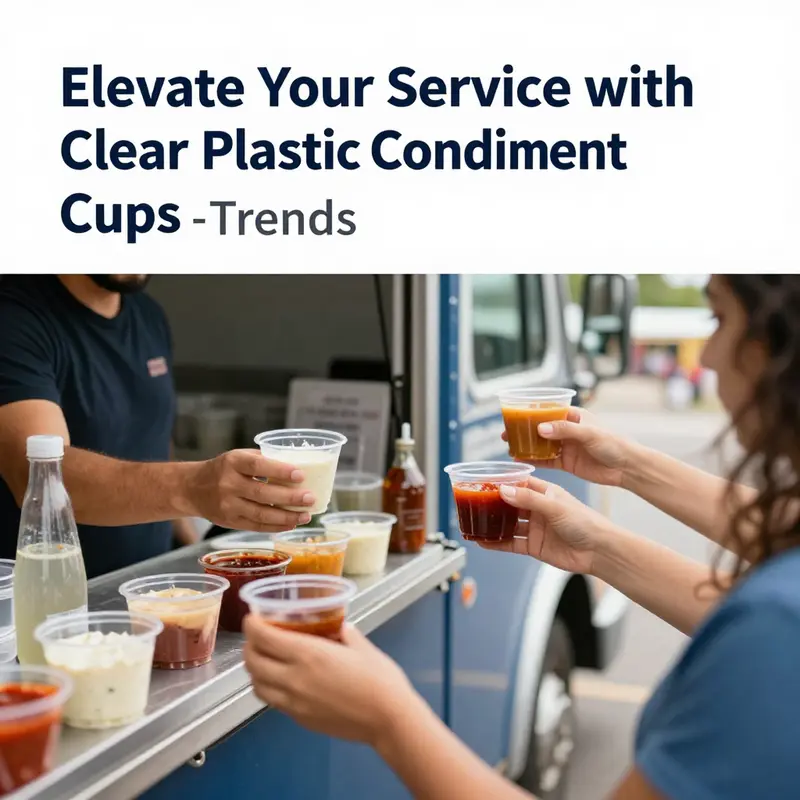
The rise of clear plastic condiment cups reflects a broader shift in how kitchens, retailers, and event planners think about warmth, efficiency, and control. These small, transparent containers have moved far beyond their original role as simple dispensers; they have become flexible tools that support hygiene, portion accuracy, branding, and even the consumer’s sensory experience. In a world where customers expect speed without compromise, where takeout and catering demand precise handling, and where waste reduction is no longer optional, clear plastic condiment cups stand at the crossroads of convenience and responsibility. The packaging choice is telling: a see-through shell that invites trust, reveals content instantly, and communicates a commitment to clean, measured service. The material most commonly used—food-grade polypropylene—offers a practical blend of lightness, durability, and safety. PP resists leaks and holds its shape under pressure, making it well suited for the rigors of high-volume service and transport. It also plays well with the standards that govern modern food safety: compatibility with direct food contact, predictably low migration, and a long track record of reliability. While the core function remains dispensing, the subtle synergy between design, material, and regulatory alignment creates a product category that can scale from a home kitchen to a global supply chain without losing its core advantages.
Transparency is more than a cosmetic feature. It is a design principle that enhances portion control by enabling staff and customers to see how much sauce, dressing, or dip remains. This visibility supports accurate counting for nutrition labeling and portioned meal plans in institutional settings, while reducing guesswork in fast-paced venues. A clear window also invites the eye to the hue and texture of the content, which can heighten appetite and improve perception of freshness. In this sense, the cup becomes a visual cue as much as a functional vessel. To maximize this effect, many designs rely on round, clean lines that emphasize the purity of the contents and the crispness of the presentation. The minimal outer silhouette keeps the focus on what matters most: the sauce, dip, or dressing inside. And with secure, sealable lids, these cups offer leak resistance that translates into tangible operational benefits. The lid becomes a dependable partner in transport, ensuring that merchandise remains intact during delivery, at a catered event, or as a customer carries a takeout meal through crowded spaces. The result is a compact, one-time-use solution that preserves quality and reduces the need for extensive cleaning in busy facilities.
From a materials and safety standpoint, the design language of clear condiment cups aligns with broader industry demands for compliant, hygienic packaging. The PP base is typically chosen for its balance of rigidity and lightness, its heat resistance within the typical serving temperature range, and its ease of sterilization in manufacturing contexts. For buyers, third-party certifications are a critical layer of assurance. FDA compliance and BPA-free status are often highlighted as baseline expectations, especially for cups intended for direct food contact. Additional certifications—CE, BV, and ISO standards—signal alignment with international safety and environmental guidelines. These credentials matter not just as a marketing badge but as a practical signal to health departments and corporate procurement teams that the cups meet established benchmarks for contamination control, chemical resistance, and durable performance in diverse environments. In a marketplace where customers increasingly scrutinize packaging integrity, these certifications translate into reduced compliance risk and smoother onboarding for large buyers who require standardized specifications across fleets of locations.
The practical versatility of clear cups is one of their defining strengths. A single cup size spectrum—commonly from 1 ounce to 2 ounces (roughly 30 ml to 60 ml)—covers a wide array of applications. In cafeterias and quick-service venues, these portions are well suited for self-serve dressings, sauces, and dips. In catering and events, the cups provide a convenient way to present sample portions, enabling guests to explore a menu’s range without committing to full servings. When used for soufflés, jellies, or delicate desserts in tasting menus, the same container can carry a guarded portion that maintains its shape and presentation until the moment of serving. The clear exterior supports bright, UV-printed labels that identify flavor or sauce type with bold graphics—an expressive branding device that can speed customer recognition in bustling settings. At the same time, the round geometry and the predictable stacking of cups make them ideal for bulk storage and efficient inventory management in warehouses or back-of-house operations.
Portion control is not merely an organizational advantage; it is a core cost-management tool. In large kitchens and catering fleets, every drop over- or under-serving has ripple effects on margins, recipe accuracy, and nutritional labeling. Clear cups, with measurable volume markings that staff can reference during prep, help enforce consistent servings. This is especially valuable when menus vary across locations or when promotional items require precise calibration to maintain recipe integrity and price points. The combinations of clear visibility and precise volume control translate into operational discipline that supports both consistency and accountability. In health-conscious markets, where nutritional and allergen labeling may accompany dishes, having an exact, visible measure of condiments helps ensure that disclosures are accurate and transparent to diners.
Beyond the kitchen, the applications extend into event planning and consumer-facing retail. In buffets, weddings, corporate functions, and community gatherings, the cups offer a spill-resistant, hygienic option that simplifies cleanup and reduces cross-contamination risk. The sealable lids prevent leakage during transport from kitchen to venue and during guest movements across buffet lines. In retail contexts, clear cups with spot-on labeling allow customers to quickly identify dressings, sauces, or dips at-a-glance, which supports impulse purchasing and improves overall satisfaction. The transparency becomes a storytelling device: the color and texture of each product—whether a tangy vinaigrette, a creamy ranch, or a bright salsa—are visible, inviting, and informative. The cups thus serve as a small but meaningful facet of the consumer’s trust in a brand’s commitment to quality and safety.
In the realm of personal care and cosmetics, the same packaging logic finds new applications. Trial-sized samples and miniature containers are a natural fit for testers and corner-store promotions, where a clean, hygienic, and cost-effective delivery mechanism matters. The clear plastic cup makes it easy for customers to gauge the amount in a sample and to appraise texture and color without opening packaging. The same principles extend to clinical and laboratory settings where small-volume samples are collected, stored, and transported. Clarity of the container is essential for rapid visual checks, and the chemical resistance of PP helps protect sample integrity against cross-contamination and evaporation under typical handling conditions. Here again, the emphasis on safety certifications and material purity is key, as any migration or residue could compromise sensitive analyses or product trials.
As these cups proliferate across industries, market trends reveal a shift toward sustainability without sacrificing performance. The ongoing demand for eco-friendly materials is driving research and development in bio-based and recyclable alternatives that maintain the practical advantages of PP and similar plastics. Suppliers increasingly highlight environmental credentials alongside food-safety certifications, recognizing that buyers are integrating packaging decisions into broader sustainability goals. This trend is supported by the procurement landscape, where buyers seek reliable supply chains that can deliver consistent quality at scale. Platforms that connect buyers with verified suppliers offer CE, BV, and ISO-certified products, enabling efficient bulk procurement while ensuring alignment with environmental regulations and industry standards. In practice, this means a growing range of options for customers who want to favor recyclable materials or reduce waste through optimized packaging configurations, such as perfect-fit lids and stackable cup designs that minimize space and material use during storage and transport.
Another dynamic force shaping the market is the integration of clear cups with branding and digital ordering ecosystems. UV printing enables vibrant, product-specific graphics on the exterior of the cup, transforming a simple single-serve vessel into a portable billboard that communicates flavor profiles, dietary notes, or seasonal campaigns at a glance. Clear cups thus become a canvas for brand storytelling, not merely a vessel for contents. The aesthetic possibilities support differentiation in competitive retail environments and at events where quick visual recognition matters. In addition, the rise of pre-packaged meal kits and delivery services has reinforced the role of these cups as essential components of low-waste, ready-to-assemble offerings. When a consumer opens a kit, the clear cup’s contents are immediately recognizable, contributing to a sense of freshness and care that enhances overall satisfaction.
From a logistics perspective, supply chain considerations are central to how these cups scale to meet demand. Bulk packaging, efficient loading, and standardized dimensions align with warehouse operations and distribution networks. Suppliers note the value of certifications that reassure buyers about both safety and environmental performance, a combo that resonates with food service operators, healthcare facilities, and educational institutions alike. For buyers evaluating options, the decision matrix often includes compatibility with existing dispensing systems, the ability to customize with branding, and the reliability of the supply chain to prevent interruptions during peak seasons. The ability to source from platforms that verify compliance—especially with FDA, BPA-free, CE, BV, and ISO standards—reduces the risk associated with large-scale implementation and long-term commitments. It also supports a smoother transition from bulk containers to single-serve formats during seasonal surges or promotional periods, helping operators manage demand while preserving service quality.
In the context of consumer trends, the visible, portion-controlled format of clear cups aligns with growing expectations for transparency and health-conscious choices. Food safety remains a top priority, and the clear container is a convenient way to reassure customers that contents are uncontaminated and fresh. The combination of leak-proof lids, precise volume options, and clear labeling positions these cups as a practical, reliable solution for both everyday meals and special occasions. The cups are adaptable enough to support a spectrum of culinary expressions—from tangy sauces to delicate dressings and flavorful dips—while enabling vendors to control inventory, reduce waste, and maintain consistent presentation across channels. The interplay between form and function is a core reason why these containers have sustained momentum and why they appear in procurement lists across disparate sectors.
As the landscape evolves, such containers will continue to respond to regulatory developments and evolving consumer expectations. The push toward more sustainable packaging will likely expand the range of materials available, while the demand for high-clarity, food-safe options will keep PP and related polymers at the center of design decisions. For buyers, the practical takeaway is clear: select containers with robust safety credentials, compatibility with your service model, and a path to sustainable procurement that does not compromise performance. The most successful deployments balance the visual appeal of a transparent cup with the quiet confidence of a well-managed supply chain, a thoughtful branding strategy, and the assurance of third-party certifications that validate cleaning, safety, and environmental stewardship. In this sense, the humble clear condiment cup becomes a strategic asset—an unassuming but powerful element in the choreography of modern food service and packaged goods.
For readers seeking a concrete example of portable, sturdy options aligned with on-the-go use, consider exploring a range of clear plastic cups designed for outdoor events and picnics. These products demonstrate how portability, leak resistance, and clear presentation converge in a single package, supporting the seamless transition from kitchen to crowd without sacrificing cleanliness or convenience. You can explore one such option here: clear-plastic-cup-outdoor-picnic-pet-cup-drinking-cup-for-parties-birthdays-weddings-camping-utensils. The same principles scale to indoor service, where a well-designed, transparent cup contributes to a smooth guest experience, precise portioning, and easier back-of-house operations. This alignment—between design intent, user experience, and supply-chain practicality—helps explain why clear plastic condiment cups have become a standard feature in so many service paradigms.
In sum, these cups embody a practical convergence of hygiene, convenience, and aesthetics. They enable precise portioning, minimize cross-contamination, and support consistent branding and presentation across diverse channels. They also reflect a broader market movement toward safer, more sustainable packaging that still delivers the speed, reliability, and cost control that modern food service and retail demand. The ongoing evolution of materials science, printing technologies, and global sourcing will continue to broaden the possibilities, allowing operators to tailor cups to their specific workflows while maintaining the core advantages that have made this packaging format indispensable. As buyers look ahead, the winning combination will be stability, safety, and visibility—three attributes that align with every successful service scenario, from the first bite to the final clean-up. External references and supplier resources remain essential for navigating the choices, ensuring that selected solutions meet the highest standards of safety, quality, and environmental responsibility. For further reading and sourcing, stakeholders can consult external materials and supplier listings that discuss certification pathways and material options in depth. External reference: https://www.alibaba.com/product-detail/Clear-Dipping-Sauce-Cups-Small-Plastic_1600745882192.html?spm=a2700.1.women.1
Balancing Convenience and Responsibility: Sustainability and Regulatory Shaping of Clear Plastic Condiment Cups
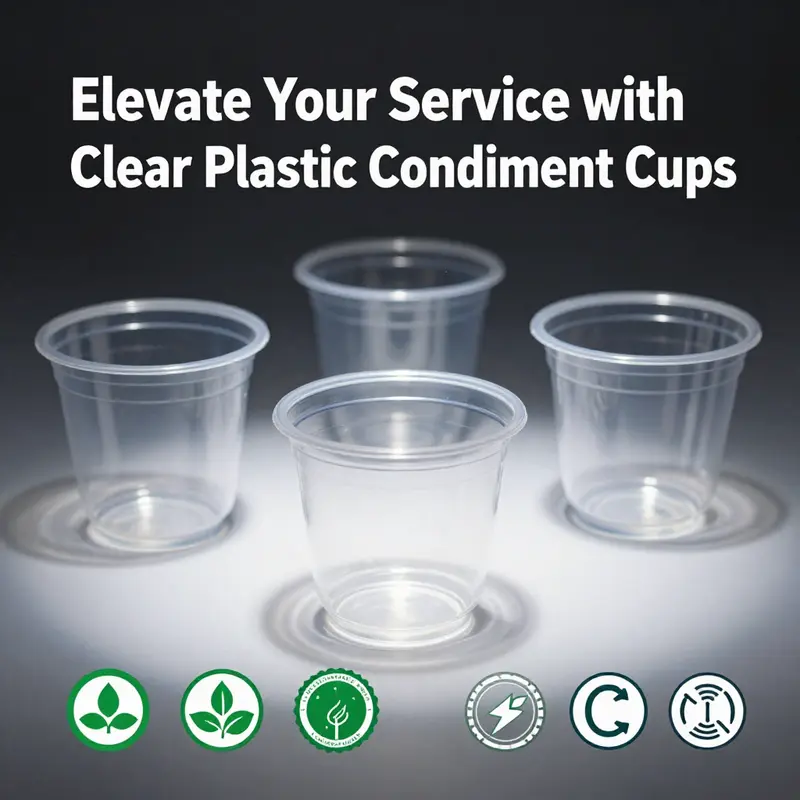
The story of clear plastic condiment cups unfolds at the intersection of convenience, hygiene, and responsibility. As single-use components of countless foodservice operations, they epitomize a packaging solution built for speed and clarity: a transparent vessel that lets a sauce’s color and texture speak for itself while controlling portions and reducing cross-contamination. Yet beneath the gloss of convenience lies a regulatory and environmental web that is tightening around every link in the chain—from raw material selection to end-of-life disposal. In this chapter, we trace how sustainability concerns and evolving rules are reconfiguring the design, use, and perception of these cups, while preserving the practical benefits that food-service professionals rely on every day. The discussion moves beyond safety certifications to address lifecycle impact, material choices, and the emerging ecosystem of take-back programs and greener alternatives. It is a conversation about responsible procurement, informed operation, and the public expectations that increasingly define what “clean” packaging means in a modern, health-conscious market.
At the core of the sustainability conversation is the material itself. Clear dipping sauce cups are almost universally fashioned from food-grade polypropylene, a material chosen for its light weight, resilience against leaks, and compatibility with cold-to-warm contents. Polypropylene’s recyclability, while a significant advantage over many alternatives, is not a silver bullet. In practice, the end-of-life fate of these cups depends on the efficiency of local recycling streams, the presence of clean separation between cups and lids, and the existence of facilities that can process polypropylene with minimal contamination. This is where regulatory bodies and industry standards begin to matter in daily operations. When a jurisdiction signals a preference or mandate to curb plastic waste, suppliers must demonstrate not only that their products are safe for food contact but that they fit into a circuit that minimizes landfill burden and maximizes recovery.
The regulatory landscape for single-use plastic tableware has grown more complex and purposeful in recent years. A notable development, though grounded in a broader global trend, is LCQ16, a framework aimed at reducing the disposal of plastic tableware and regulated plastic products in landfills. Introduced with the intention of pushing industry players and consumers toward more sustainable practices, LCQ16 affects decisions along the supply chain—from what materials are chosen to how products are designed for recycling or reuse. For a business that relies on clear cups for portion control and on-the-go service, LCQ16 translates into practical pressures: the need to quantify and reduce waste streams, to segregate plastics for more efficient recycling, and to explore options beyond single-use disposables when feasible. The guidelines encourage operators to consider the entire lifecycle of a product, including production, distribution, usage, and post-use handling. This eyes-on-the-horizon approach aligns well with the broader sustainability narrative that many foodservice operators are adopting to meet both regulatory expectations and consumer demands for environmental stewardship.
From a compliance perspective, certifications such as FDA-compliance and BPA-free status are indispensable. They certify that the material is safe for direct contact with food and free from substances that might pose health risks. But these certifications address health and safety rather than the lifecycle footprint of the product. A growing chorus of stakeholders urges a more holistic approach: certifications that also account for recyclability, recyclability labeling accuracy, and supply-chain transparency. In the market, suppliers emphasize standards like ISO and other third-party attestations that reflect a commitment to consistent quality management and environmental responsibility. These certifications help businesses meet health-code requirements while signaling to customers that safety and environmental promises are not mutually exclusive. The challenge for buyers is to read the certification landscape with nuance, recognizing that a product may be safe and compliant today while still presenting opportunities for waste reduction and improved end-of-life outcomes in the future.
To translate certification and regulation into actionable practice, design decisions play a pivotal role. The transparent, rounded form of many clear cups is not merely for aesthetics; it supports visual control over portioning and product identification. UV-printed labels or clear branding can help operators communicate flavor profiles, ingredients, and promotional messaging without adding opaque packaging that could hinder recycling. Yet every label, adhesive, or decoration potentially complicates recycling streams if it is not compatible with the material base. For this reason, many manufacturers advocate minimal, single-material construction or clearly separable components. A lid that can be easily detached from the cup without leaving composite residues, for example, can significantly improve recyclability. In practice, this often means selecting lids and cups that are both made from the same material family and free from lamination or metallized elements that would complicate processing. The objective is not to eliminate branding or functionality, but to harmonize them with end-of-life realities so that the product performs in-service while faring better in recycling facilities.
The sustainability narrative also extends to the supply chain and production efficiency. Lightweighting is a common strategy—reducing the resin thickness, optimizing flute geometry, and refining mold design to use less plastic without sacrificing performance. These measures lower the product’s overall environmental footprint by reducing material use and energy consumption during manufacturing and transport. However, lighter weight must be balanced against durability and leakage resistance, especially in multi-sauce applications or in transport scenarios where cups endure jostling and temperature fluctuations. The goal is resilience with less material, a balance that is technically achievable through process optimization and careful raw-material specification. Alongside lightweighting, there is growing attention to the recyclability logistics surrounding these cups. Simple, well-documented labeling that indicates the correct recycling stream can reduce contamination rates and improve diversion from landfills. In regions where local recycling infrastructure is still developing, producers and distributors increasingly share guidance about how to manage clean collection points, how to separate cups from lids, and how to clean and prepare containers for reuse or recycling. The practical effect is a shift from passive compliance to active stewardship in everyday operations.
The consumer dimension of sustainability also asserts itself in subtle but meaningful ways. For many diners, the choice of packaging signals a brand’s values long before the taste of the sauce is considered. When operations communicate a commitment to greener packaging—whether through consumer education, transparent labeling, or visible recycling instructions—customers respond with greater trust. In this context, the design of the cup becomes part of a brand’s environmental story. For operators, it is about aligning product features with consumer expectations while maintaining the efficiency gains that come from single-serving packaging. A well-executed sustainability approach can even collateralize marketing efforts, transforming a simple condiment cup into a tangible demonstration of responsibility. Yet the narrative must avoid over-promising; it should acknowledge current limitations—such as the imperfect reach of recycling systems or the ongoing development of alternative materials—while outlining concrete steps to improve performance over time.
A practical challenge in meeting LCQ16 objectives is the tension between convenience and collective responsibility. Foodservice operations rely on the speed and hygiene of single-use cups to handle high volumes and minimize labor. Demanding reductions in waste cannot compromise safety or service levels. The compromise is not a rejection of single-use cups but a thoughtful integration of waste-minimization strategies. For example, operators can combine single-use cups with clear, easy-to-follow disposal instructions for customers, implement centralized sorting at back-of-house points, and participate in take-back or recycling programs that collect and process used plastics. These measures create a more closed-loop approach within the constraints of busy foodservice environments. They also encourage a culture in which staff view packaging as a shared responsibility rather than a one-off purchase decision.
To illustrate how supply chains are responding, consider the broader market shift toward packaging ecosystems that pair clear, recyclable cups with compatible takeout containers and lids that are designed for end-of-life compatibility. The intention is to reduce material heterogeneity at the point of disposal and to simplify sorting by waste processors. In practice, this means that the packaging system as a whole should be considered—cups, lids, labels, and any accompanying components need to be designed with an eye toward recyclability and minimal contamination risk. The result is not a radical departure from current practice but a calculated, systems-level improvement that preserves the core benefits of the product while making responsible disposal easier for operators and consumers alike. It is a collaborative journey—across manufacturers, distributors, regulators, and end users—toward packaging that serves today’s needs without compromising tomorrow’s environmental and regulatory realities.
Within this evolving landscape, one practical cue for operators is the value of selecting packaging options that align with both compliance and stewardship goals. While the binary choice between disposable versus reusable remains context-dependent, the trend favors solutions that enable efficient separation at the point of disposal and provide clear pathways for recovery and recycling. For those who want to explore broader packaging options without abandoning the familiar ease of single-serve cups, there is a growing array of eco-conscious packaging families that integrate compostable liners, recyclable plastics, and information-rich labeling. These options aim to deliver the same level of hygiene and portion control, while enabling facilities to meet LCQ16 targets and to demonstrate progress to customers who increasingly scrutinize packaging footprints. The result is a more resilient, adaptable supply chain in which the packaging works in concert with waste-management systems rather than against them.
For readers who want to see how these concepts translate in marketplace practice, a broader view of eco-friendly packaging ecosystems can be illuminating. One example of a packaging approach that complements clear cups with compatible eco-conscious solutions is demonstrated in suppliers’ broader offerings that emphasize recyclable, grease-resistant, and microwave-safe takeout packaging. Such ecosystems illustrate how a product can be designed for compatibility across categories—cups, lids, carriers, and containers—while maintaining a coherent sustainability narrative. The key is alignment: alignment between material choices, end-of-life pathways, and practical food-service needs. When these align, the path to LCQ16-compliant waste reduction becomes clearer and more actionable for operators who must balance regulatory obligations with day-to-day service demands. In this sense, sustainability is less about choosing a single “green” feature and more about building a cohesive packaging system that supports responsible disposal, energy efficiency, and a calm confidence in compliance.
As the regulatory and sustainability dialogue continues to evolve, the industry will benefit from ongoing transparency and dialogue with regulators, recycling stakeholders, and consumers. The LCQ16 guidelines provide a framework for measurable progress, but the real momentum comes from continuous improvement at every step—from resin selection and molding to labeling, packaging design, and end-of-life management. In practice, this means documenting material streams, monitoring contamination rates, and investing in rapid, cost-effective recycling or recovery pathways. It also means communicating clearly with customers about how to dispose of these items responsibly. In a world where the perception of plastic packaging is increasingly colored by environmental considerations, the ability to tell a credible story about material safety, recycling potential, and waste reduction becomes as important as the cup’s functional performance.
The future of clear plastic condiment cups, then, is not a simple return to the past or a reckless push toward novelty. It is a disciplined, iterative course that weighs safety, convenience, cost, and environmental impact in equal measure. It requires embracing standards that go beyond basic compliance, pursuing innovations in materials and design that support recycling, and fostering a supply chain that can adapt to shifting regulations and evolving consumer expectations. For practitioners, that means keeping a close eye on regulatory developments, engaging with suppliers who can demonstrate lifecycle thinking, and guiding staff and customers through disposal options with clarity and integrity. The aim is not perfection but progress—consistent, measurable improvements that keep the packaging channel aligned with the broader goals of public health, resource stewardship, and a healthier planet.
External resources can illuminate the regulatory framework and offer practical guidance for aligning operations with LCQ16 and related standards. For a concise overview of the regulatory context governing single-use plastics in the relevant jurisdiction, see the official LCQ16 guidelines: https://www.gov.hk/en/about/abouthk/legislation/lcq16.htm. And for those seeking examples of packaging ecosystems designed to support greener outcomes while preserving the advantages of single-use solutions, industry literature and supplier catalogs often highlight integrated approaches that pair recyclable cups with compatible, eco-conscious takeout packaging. As operators explore these options, one practical starting point is to consider how a packaging system might look when it is designed for end-of-life recovery from the outset. For instance, arranging for clearly labeled collection points and training staff to guide customers in proper disposal can yield tangible improvements in diversion rates and overall waste footprints. The journey is collaborative and ongoing, but with thoughtful choices and committed implementation, clear plastic condiment cups can continue to serve the demand for hygiene and portion control while contributing to a more sustainable and regulated packaging landscape.
For further reading on broader packaging-policy developments and the kinds of systemic changes driving the shift toward greener packaging solutions, you may explore related resources or supplier perspectives that discuss sustainability, safety, and lifecycle thinking in concert. Internal links to related packaging ecosystems can deepen understanding without compromising the focus on clear cups themselves; for example, a broader exploration of eco-friendly takeout packaging can provide context for how compatible components work together to reduce waste. To learn more about packaging options that align with sustainable goals, see the ongoing discussions and examples in the packaging industry’s public-facing resources, and consider how a coordinated approach to design, disposal, and regulatory compliance can yield tangible benefits for both operators and communities.
Finally, the regulatory landscape is not static. It invites ongoing adaptation and investment in better materials, smarter design, and more efficient waste management. The conversation around LCQ16 underscores a broader commitment to responsibility that goes beyond individual product categories. It invites stakeholders to reimagine packaging as a system that serves people, supports safety, and respects the environment. In that sense, the future of clear plastic condiment cups is not a diminishing story but a transforming one—one in which the simplest, most familiar packaging becomes a catalyzing force for sustainable practice across the foodservice industry.
Internal link reference: For a practical look at an ecosystem of eco-friendly packaging options that complements clear cups, see the broader packaging solutions here: eco-friendly takeout boxes for food packaging.
External resource: LCQ16 guidelines and related regulatory guidance can be reviewed here: https://www.gov.hk/en/about/abouthk/legislation/lcq16.htm
Final thoughts
Clear plastic condiment cups combine practicality with aesthetic appeal, making them a must-have in any food service environment. Their thoughtful design—ranging from secure lids to vibrant labeling—enhances usability for both operators and consumers. Understanding their applications and keeping informed about market trends enables food businesses, from bubble tea shops to catering services, to meet customer expectations effectively. Additionally, with sustainability and compliance at the forefront of industry standards, investing in certified high-quality cups not only underscores a business’s commitment to safety but also to environmental responsibility. Choosing these versatile containers is a step toward elevating service and enhancing overall customer satisfaction.