

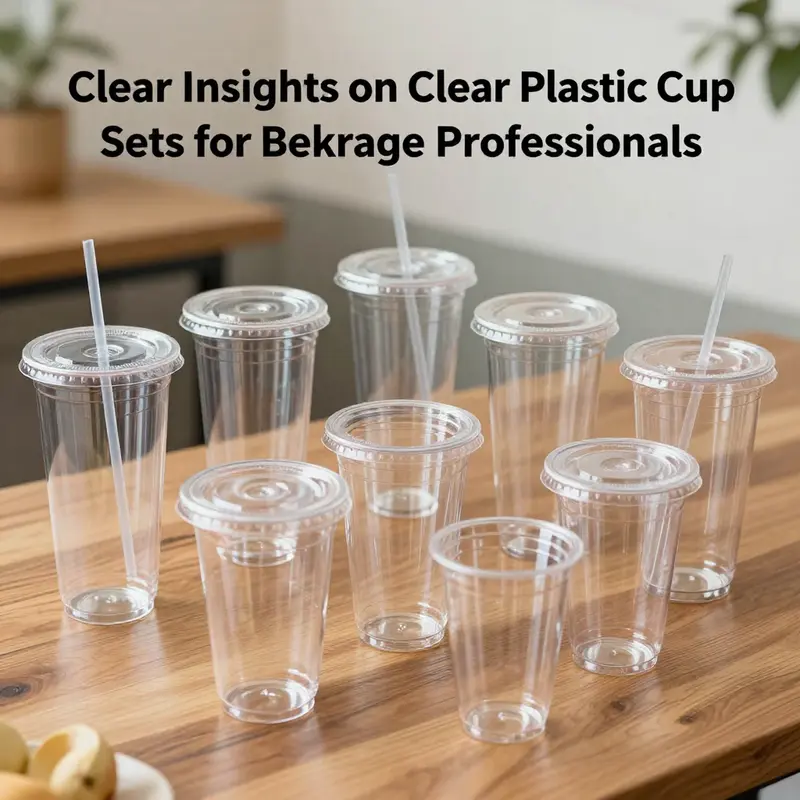
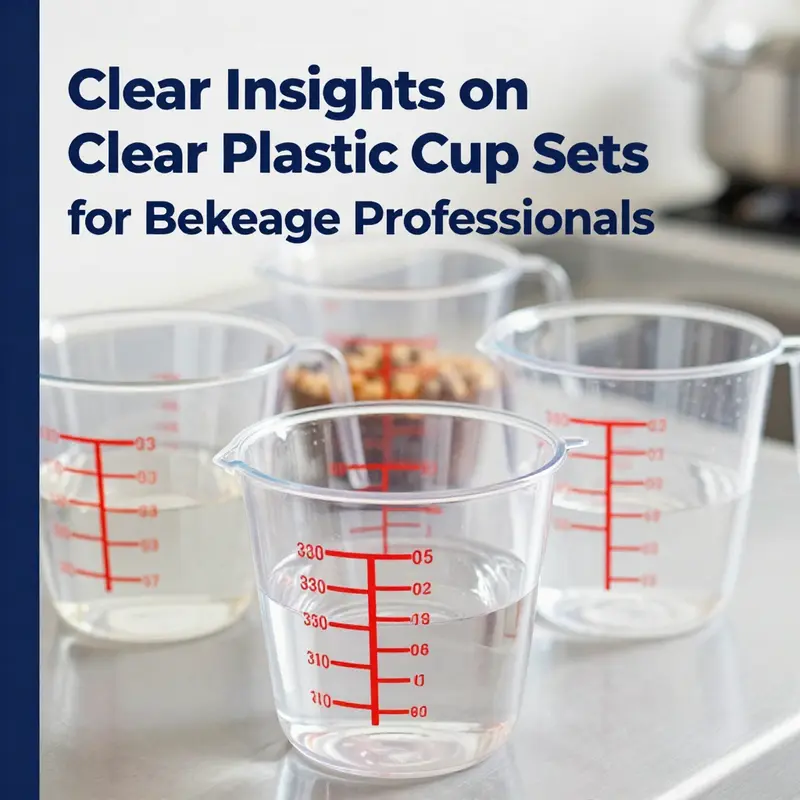
Clear plastic cup sets are essential assets for bubble tea shops, restaurants, and catering services. They play a critical role in delivering a seamless customer experience, whether it’s through reusable options for sustainability or disposable sets for convenience at large events. Understanding the distinctions and functionalities of various types of clear plastic cups can assist professionals in making informed choices that enhance service quality. The following sections delve into reusable and durable cups, disposable options tailored for large-scale needs, and specialized measuring tools that can help streamline beverage preparation operations. Each chapter provides insights that will empower beverage industry professionals to elevate their service and operational efficiency.
null
null
Crystal Clarity in Service: Understanding Disposable Clear Plastic Cup Sets for Events and Everyday Use
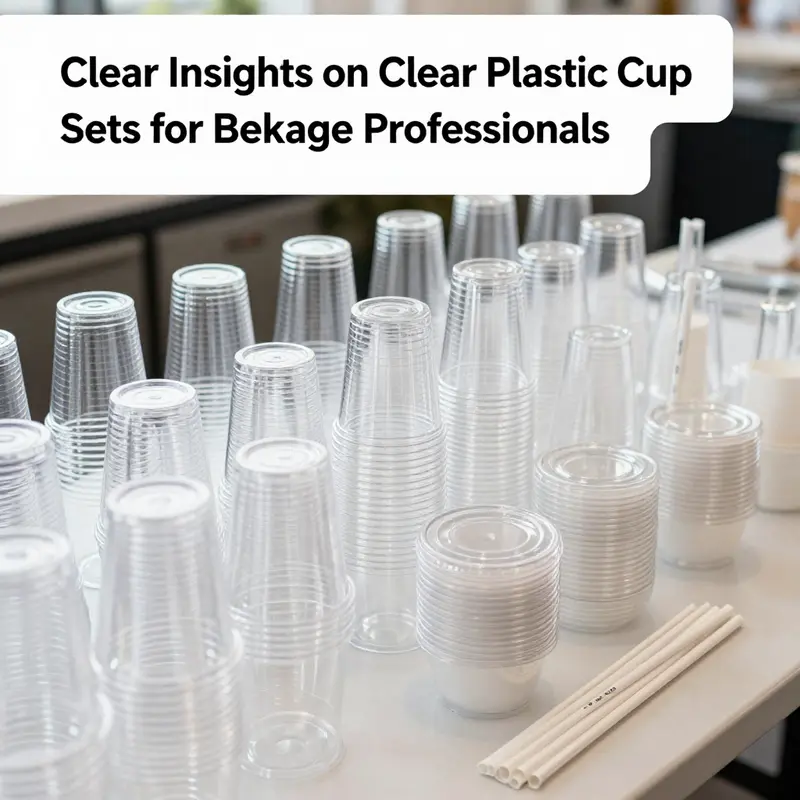
Clear, transparent cups have become a staple in the toolkit of modern beverage service. They offer an immediate visual appeal: drink color and texture are visible, which can elevate perception of quality and freshness. Yet beyond aesthetics, the utility of disposable clear plastic cup sets lies in a careful balance of material science, practical design, and economical logistics. When arranged for a party, a wedding, a corporate gathering, or everyday home use, these cups act as frontline containers that must deliver reliability, safety, and convenience while also meeting budgetary and environmental expectations. The chapter that follows is not a catalog of individual models but a synthesis of how such sets perform in real life, why certain choices matter, and how buyers can navigate a market that swings between bulk affordability and the demand for features like lids, double-wall construction, and branding customization. It is a narrative about clarity—clarity of purpose, clarity of material, and clarity of value.
To begin, it helps to map out the core options that shape what a disposable clear cup set can do. Most sets are built from clear polymers, most commonly polypropylene (PP) or polyethylene terephthalate (PET). These materials are chosen not only for their transparency but for how they respond to temperature, handling, and end-of-life considerations. PP is widely recognized for its heat resistance and toughness. It resists cracking when hot beverages are served or when cups are handled with care under warm conditions. PET, on the other hand, is lighter and excellent at preserving the crisp, clear appearance that consumers expect from a disposable cup. It is a dependable choice for cold drinks and for applications where minimizing weight reduces shipping costs and fatigue during large-scale events. The distinction matters because the choice between PP and PET can influence whether a cup feels premium in the hand, how well it stands up to hot drinks or outdoor use, and how it lands on a sustainability checklist.
The sizing of these cups mirrors the way customers use them in real scenarios. Common capacities include 12 ounces, 16 ounces, and 24 ounces, with smaller options like 7 or 9 ounces appearing in some catalogs. For many catering situations, a 12/16-ounce set with a matching lid represents the sweet spot; it accommodates a wide range of beverages—from milk tea and coffee to juice and cocktails—while keeping the footprint manageable on tables and in service stations. Double-wall variants add a layer of insulation and a comfortable grip, making hot drinks easier to handle for service staff and guests alike. The value proposition here is straightforward: a lid protects against spills during transport, storage, or when guests move from one area to another. In venues where mobility is part of the experience, the combination of clarity and practical design reduces mess and enhances overall guest satisfaction.
When considering whether to purchase a disposable clear cup set with or without a lid, it helps to imagine the flow of a typical service scenario. In a bustling reception or outdoor festival, cups without lids can seem lighter and more economical at first glance. Yet the absence of lids often translates into higher risk of spills, compromised transport, and a heightened need for dedicated staff to manage beverages at every turn. Sets that include matching lids embrace a different logic. They facilitate grab-and-go service, secure transport between stations, and tidy stacking during cleanup. For cold drinks, the lid helps preserve temperature and minimizes environmental exposure to dust or rain. For hot drinks, a double-wall construction, when available, further improves heat management and comfort by reducing exterior heat transfer. These design choices—lid compatibility, insulation strategy, and the overall build—are not cosmetic; they determine how smoothly a service runs, how guests feel about the experience, and how efficiently operations can scale from a small party to a large corporate affair.
Prices, of course, matter. The market for disposable clear cup sets is characterized by bulk pricing dynamics that reward larger orders and standard configurations. In bulk terms, the per-piece cost can be remarkably low, especially when the purchase is measured in tens or hundreds of thousands of cups. For instance, bulk cold-drink cups in common sizes have been documented at roughly two cents per piece for very large orders, with further reductions possible as quantities climb toward the millions. That kind of pricing empowers event planners and food-service providers to offer a consistent beverage experience across dozens or hundreds of service points without sacrificing margins. It also makes disposable clear cups attractive to venues that operate on tight budgets. It is not unusual to find 12-ounce and 16-ounce cup-and-lid sets priced in the low single-digit cents per unit when volume targets reach tens of thousands. Smaller wholesale runs—though more expensive per unit—still offer compelling options for smaller events, seasonal pop-ups, or branded hospitality experiences. In practice, buyers frequently weigh the cost per cup against the cost of lids, printed logos, and additional features such as double-wall construction. The broader takeaway is that the economics of disposable clear cups hinge on volume, configuration, and the trade-offs visitors are willing to accept between simplicity and performance.
The story of these cups also intersects with expectations around customization and speed of delivery. In many markets, suppliers offer options beyond basic translucence: the chance to print logos, apply color branding, or select different lid styles. For a corporate event or brand activation, even a subtle branding element on the lid or the cup itself can transform a practical item into a marketing asset. The price implications of customization vary with the degree of complexity, but even modest typography or a small logo can be accommodated within cost structures that otherwise favor bulk purchases. Some buyers value samples at little to no cost, enabling rapid testing of print quality, clarity of the material, and the fit with lids and accessories before committing to a large order. The ability to test is not merely about aesthetics; it is a risk-management tool that helps ensure that the final production run meets expectations for performance, appearance, and compatibility with other serviceware on hand.
Sustainability considerations also inform decisions in the disposable cup space. Clear cups are often marketed as recyclable, and many suppliers emphasize the recyclability of PP and PET materials. While disposables inherently generate waste, the choice of material, the recyclability of the cups, and the efficiency of packaging and transport can influence the overall environmental footprint of a beverage service. For events that aim to minimize waste, attendees may favor compostable liners or post-use recycling programs, even when cups themselves are recyclable. In practice, a well-designed disposable clear cup set can complement broader sustainability strategies when paired with proper waste streams and education for guests. The operational advantage—ease of cleanup, reduced need for glassware handling, and faster turnover—remains a strong driver for venues that prioritize reliability and speed in service.
From the procurement perspective, buyers often begin with a clear sense of scale: how many cups are needed, what beverages will be served, whether hot drinks are on the menu, and whether guests will be moving between spaces. A first-pass decision may prioritize the basic 12-ounce or 16-ounce diameter for cold beverages, with optional lids evaluated for transport and spill prevention. If hot drinks or festive beverages are part of the plan, a more careful choice of material and construction becomes prudent. Some suppliers offer double-wall configurations, which can address heat concerns and contribute to guest comfort without relying entirely on sleeves or staff handling. In short, the procurement decision rests on aligning the drink profiles, event flow, and guest experience with the appropriate cup construction, while keeping a close eye on price signals that emerge from bulk versus small-batch orders.
The practical dimensions of decision-making extend to supply chain reliability and lead times. Buyers pursuing large-scale events will benefit from suppliers who can deliver consistently, with documented capabilities to meet multi-site needs. The credibility of a supplier, reflected in track records of consistent shipments, clear product specifications, and transparent packaging details, contributes to a smoother procurement process. When these factors align with clear cups’ utility—transparency, lightness, and compatibility with quick-serve workflows—organizations can design beverage service that feels effortless even under pressure. The intangible benefits—guest satisfaction, perceived value, and a sense of preparedness—often justify the cost savings and logistical efficiencies that bulk purchasing can deliver.
In practice, it is helpful to imagine the lifecycle of a disposable clear cup set within a typical service scenario. An event organizer purchases a tray of 12-ounce cups with lids for a coffee bar at a morning conference. Attendees inquire about the beverages, and staff deliver chills of cold drinks with visible color and texture. The visibility of the liquid through the cup heightens the sensory appeal, making the experience feel polished and professional. The lids, in turn, enable easy transport from the bar to breakout rooms without spills, a small but meaningful improvement in guest comfort and service speed. As the event shifts to a mid-afternoon smoothie station or a juice stand, the same cups can be adapted for different beverages, with lids or without, depending on the mode of service. In a family gathering or backyard party, guests often appreciate the clean look of the cup, the ease of disposal afterward, and the sense that beverages are served with a simple, unpretentious clarity. These everyday use cases underscore a broader truth: the most successful disposable clear cup sets are those that disappear into the moment, delivering reliability without demanding attention.
To weave this understanding into practical guidance, buyers should start with the basics: material selection, capacity, and the presence or absence of lids. If hot beverages are anticipated at all, prioritizing PP or double-wall construction can reduce heat transfer and improve user experience. For cold beverages and general purpose serving, PET offers excellent clarity and lightness. The choice of capacity should reflect the typical drink profiles at the event; 12-ounce cups suit standard soft drinks and most coffee shop offerings, while 16-ounce cups provide comfortable room for larger beverages, and 24-ounce cups are handy for self-serve or grab-and-go contexts. Lids are a recurring theme; if the event requires secure transport or if space limitations necessitate minimal spillage, sets with lids are worth the extra cost. When customization enters the conversation, the cost-benefit becomes more nuanced. A logo or color branding can elevate the guest experience and reinforce brand identity, but it adds to the unit price and lead times. The decision is ultimately about aligning the event’s objectives with the practical realities of production and delivery, all while preserving the clear, practical appeal that makes these cups so versatile.
In the end, the value of disposable clear cup sets rests not in a single feature but in how a balanced combination of materials, design choices, and procurement strategy delivers a smooth, predictable beverage experience. The market supports a wide spectrum of choices—from simple, unadorned cups designed for rapid turnover to more elaborate configurations that combine heat resistance, insulation, branding potential, and robust lids. For organizers and hosts who value efficiency without sacrificing clarity, these sets offer a reliable foundation for serving beverages gracefully across diverse settings. The best purchases emerge when buyers test options through samples, compare materials with practical usage in mind, and consider the broader logistics that will shape the event’s success: storage, transport, spill prevention, guest satisfaction, and, ultimately, the impression of care reflected in something as seemingly ordinary as a cup. In this way, the humble clear plastic cup becomes more than a disposable item; it functions as a functional link between service design and guest experience, a small but meaningful component of hospitality that holds to a standard of simplicity and reliability.
null
null
Final thoughts
Incorporating the right clear plastic cup sets can significantly enhance the operation of beverage-related businesses. Understanding the specific needs of reusable versus disposable options allows businesses to cater effectively to their clientele while fulfilling sustainability goals. Meanwhile, utilizing proper measuring tools assures consistency in beverage preparation, underscoring quality. Embracing these insights can lead to elevated customer satisfaction and operational excellence within the competitive beverage industry.