
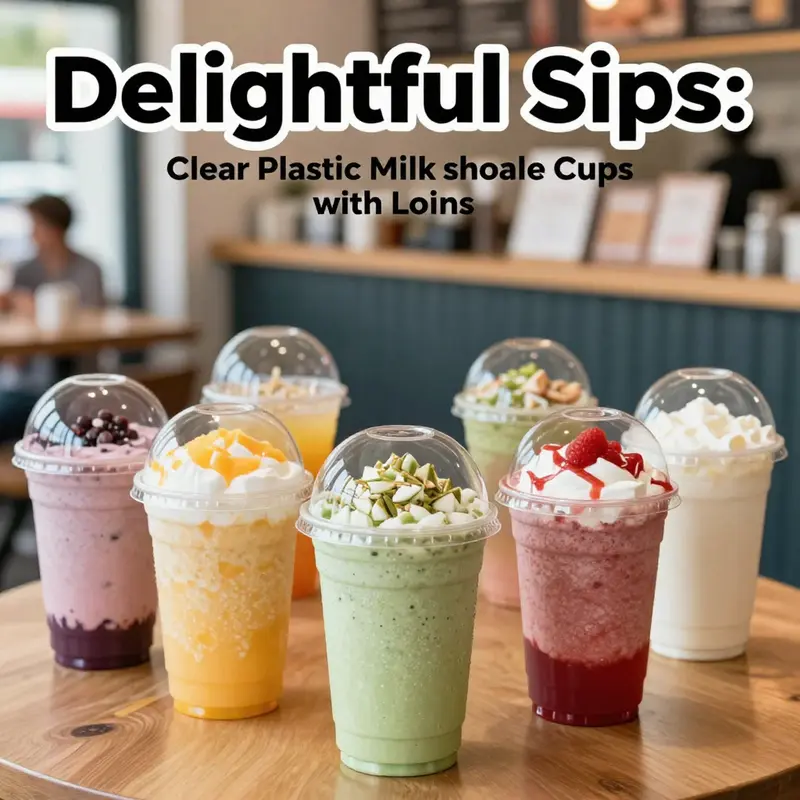
Clear plastic milkshake cups with dome lids represent a perfect blend of functionality and aesthetic appeal. Their versatility makes them an ideal choice for various cold beverages, from thick milkshakes to colorful bubble teas. This article explores the design and material attributes of these cups, delves into their size variations and functional uses, surveys current market preferences, discusses the dynamics of sourcing and eco-friendly options, and highlights their role in social media marketing. Each aspect contributes to a comprehensive understanding of why these cups are essential for beverage shops, restaurants, food trucks, event planners, and corporate procurement teams.
Dome-Lidded Clarity: Material, Form, and Function in Milkshake Cups
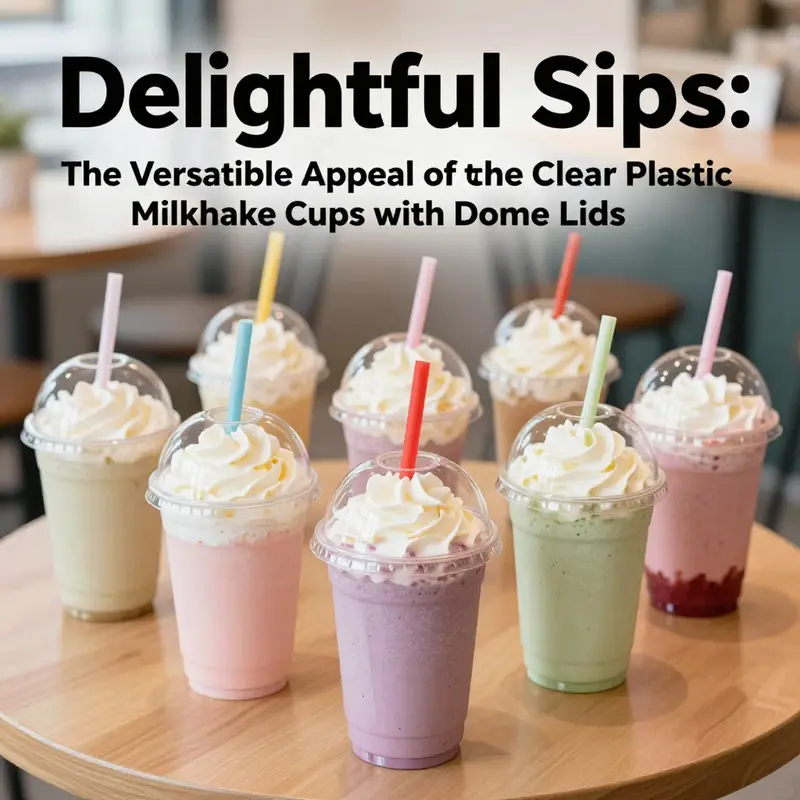
Clear dome-lidded milkshake cups sit at a crossroads of display and practicality. They are not just vessels; they are the interface between beverage and consumer, shaping expectations as color, texture, and layers become visible through transparent walls. The dome lid adds height for toppings and creates space for foamy crowns, while a secure seal supports transport in busy service environments. Material choice matters: PET offers clarity and rigidity, PP provides heat resistance and toughness, and PLA points toward compostability when industrial facilities are available. These materials influence performance in everyday use, from grip and stacking stability to leak resistance and temperature retention. The geometry—conical sides, ribbing for grip—affects ergonomics and stability on crowded counters. In practice, brands leverage the visual storytelling of a clear cup to enhance marketing: color layering, gradients, and toppings become part of the brand narrative. Beyond appearance, supply chains and standards guide procurement, with certifications and sustainability claims weighed against local waste infrastructure. Reusable or compostable options introduce lifecycle thinking and operational trade-offs. Ultimately, the dome-lidded clear cup is a compact system: design for performance, display, and responsibility, all in one transparent package.
Portion, Performance, and Purpose: Choosing the Right Size Clear Plastic Milkshake Cup with Dome Lid
Size, Function and Where to Use Them
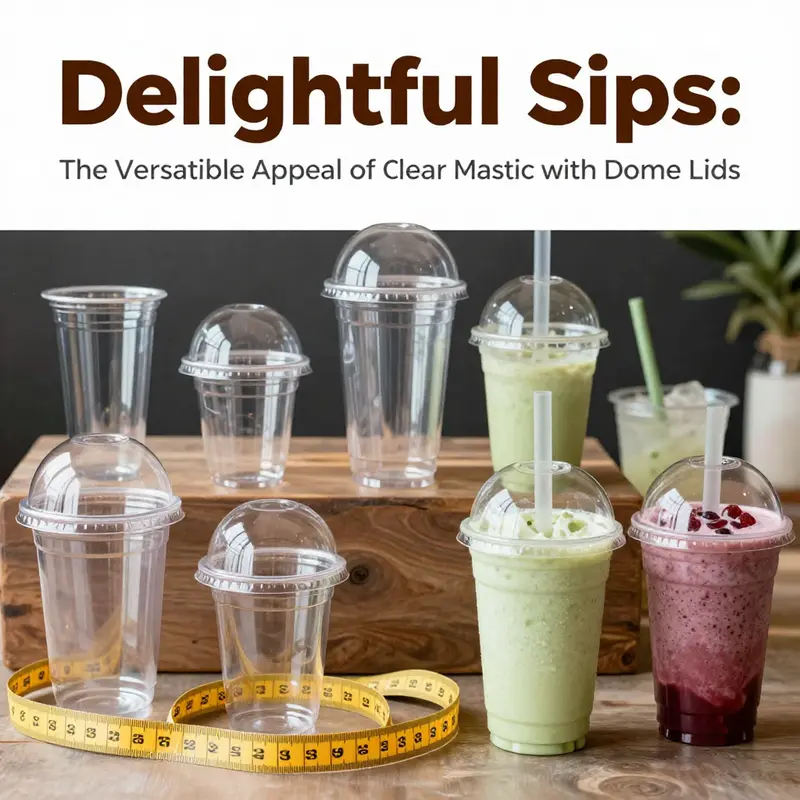
Choosing the right size clear plastic milkshake cup with a dome lid starts with understanding how volume, form and function combine to serve both product and customer. Each capacity—from compact 8 oz cups to generous 24 oz vessels—answers a specific need. Size influences portion control, visual appeal, handling, transport stability, and even the type of lid and straw used. When a beverage needs to look as good as it tastes, clear cups show colors, layers, and textures. That visibility matters for customer satisfaction and social sharing. But behind that surface appeal are practical trade-offs. Smaller cups keep servings concentrated and premium. Mid-size cups balance value and portability. Larger cups accommodate elaborate toppings and long drinks. Knowing how each size performs helps operators choose the right cup for their menu, service style, and logistics.
The 8 oz cup often serves premium or specialty offerings. Its smaller volume encourages rich, indulgent portions. Shops use it for tasting flights, limited-run flavors, or visually layered mini shakes. These cups are frequently double-walled or insulated. The insulation helps maintain temperature and improves grip. A thicker-walled 8 oz cup also feels higher quality in hand, aligning with boutique milkshake bars or dessert cafes that sell on presentation. Because the portion is smaller, the product looks densely packed. That amplifies color contrasts and swirl effects, enhancing photos and in-store displays. Staff benefit too: smaller cups reduce waste when experimenting with high-cost ingredients.
A 9 oz size sits between snack and standard portions. It works well for lighter treats, kids’ servings, and sampling programs. It is flexible for counters that offer both mini shakes and small smoothies. The shape still accommodates dome lids and straws comfortably. For operators, adding a 9 oz option provides menu flexibility without creating many SKU complexities. It can act as a child-friendly version of a signature shake. It also suits promotional pairings, such as a small shake with a dessert plate, where portion control supports consistent margins.
The 10 oz and 16 oz cups are the workhorses of quick-service businesses. They fit a wide range of cold beverages. Conical or slightly tapered shapes make them ergonomic. The inward taper near the rim allows lids to seal tightly and reduces sloshing. For delivery and mobile vending, that secure dome seal matters. These sizes commonly include a straw slot. The slot allows convenient sipping while retaining spill resistance. Mid-range cups excel for classic milkshakes, smoothies, iced coffees, and juices. They provide a clear view that highlights layered ingredients and textures. For operators, their popularity brings supply advantages. These sizes are produced in high volumes. That lowers unit cost and simplifies bulk sourcing.
Large 24 oz cups address operators who sell big-portion beverages. Bubble tea and boba kiosks frequently choose these capacities. The extra volume accommodates pearls, jelly toppings, and generous add-ins. Larger cups are compatible with both dome and flat lids. Many use vented dome lids to manage pressure and foam generated by blending. Venting prevents lid deformation and keeps carbonated or frothy drinks stable. However, these cups are not suitable for hot liquids, given material temperature limits. For cold, iced, or blended beverages they perform well. Large cups also demand consideration for straw diameter and length. Thicker, oversized straws improve the experience when toppings are present.
Beyond volume, lid design influences function. Dome lids create extra headspace, which is ideal for whipped cream, meringue, or piled toppings. They allow baristas and servers to present dramatic finishes without risking contact between topping and lid. Vented domes offer pressure relief for carbonated or heavily aerated drinks. Flat lids, by contrast, provide a lower profile for beverages meant for tight stacking or compact delivery. Choosing between dome and flat lids is a decision about presentation versus transport efficiency.
Ergonomics and stability are functions of cup shape and size. The tapered form improves grip and helps the cup sit securely in cup holders. Shorter, wider cups are more stable on flat surfaces; taller, slender cups travel more easily but may be more prone to tipping during abrupt motion. For mobile vendors, choosing a cup that balances height and base diameter reduces spills. Stackability matters for storage and service speed. Many clear plastic cups nest efficiently when empty. That saves back-bar space and speeds refill during rushes.
Visual merchandising is a powerful use-case for clear cups. Transparent walls showcase color gradients, fruit chunks, layered syrups and toppings. In juice bars and smoothie shops, that see-through quality becomes part of the product story. Marketing teams leverage that to create shareable imagery. Even small servings benefit; the compact, rich look of an 8 oz cup can feel premium on camera. Packaging choices therefore influence both on-site sales and social media traction.
Operationally, size selection impacts inventory planning and cost control. Offering too many cup sizes multiplies SKUs and complicates reorder cycles. Most businesses find two or three sizes sufficient. For example, pairing 10 oz and 16 oz cups covers the majority of daily orders. Adding a single 24 oz option supports specialty or seasonal items. When ordering in bulk, certifications and supplier reliability become important. Quality marks assure food safety and consistent material performance, vital for commercial kitchens and retail chains.
Compatibility with accessories is another practical factor. Straw diameter must match the drink’s texture and toppings. Bubble tea needs wide-bore straws, while a classic milkshake works with a standard thick straw. Suppliers offer individually wrapped straws that preserve hygiene and ease distribution. For operators who value single-serve hygiene options, individually packaged milkshake straws make sense for both on-the-go and sit-down service. Disposable spoons, wooden cutlery for toppings, and sauce containers also complement cup choices when toppings are part of the menu.
Sustainability and material choices play a growing role. Clear cups are commonly made from PET, prized for clarity and strength. Reusable versions are also available in sturdier plastics or designs aimed at events. Operators must weigh the benefits of clarity and cost against environmental goals. For businesses seeking greener options, offering a reusable cup program or choosing compostable accessories can reduce waste without sacrificing product display.
Finally, sizing influences customer perception of value. Portions that match expectations reduce complaints and returns. Smaller sizes can signal premium quality, while larger cups convey abundance. Clear cups with dome lids give operators creative control over presentation. They let sellers highlight ingredients, textures, and portion size simultaneously. When operators align cup size with menu strategy, service style, and logistics, they create consistent experiences. Those experiences drive repeat business, efficient operations, and strong visual appeal for both in-store and online audiences.
For a deeper look at material grades, performance, and industrial uses for disposable milkshake cups with lids, see this comprehensive guide: https://www.google.com/amp/s/www.benjaminross.com/blog/disposable-milkshake-cups-with-lid-material-grades-performance-industrial-uses/amp/.
Seeing Through Value: The Strategic Rise of Clear Milkshake Cups with Dome Lids in Foodservice

In the crowded landscape of foodservice packaging, few design choices influence the customer experience as directly as the humble clear plastic milkshake cup with a dome lid. What begins as a utilitarian vessel soon becomes a stage for color, texture, and momentum, a key asset in a brand’s on-the-go storytelling. In markets undergoing rapid expansion, particularly where the “new tea” and blended beverage categories are redefining fast service, visibility is not a mere aesthetic preference; it is a competitive differentiator. The glass-clear window of the cup allows the beverage’s colors—ice-quenched blues, sunset pinks, and emerald greens—to travel from the cup to the customer’s eye and, increasingly, to the screen. The layers within a milkshake or smoothie—swirls of syrup, fruit, froth, and cream—become a living advertisement for quality. When a shop chooses a cup that preserves that clarity, it is making a silent promise: the drink you see is the drink you get. This is not accidental. It is the result of a market evolving toward packaging that does more than hold; it enhances value through visibility.
The visual appeal of a transparent cup sits atop a foundation of functional requirements that buyers increasingly demand. Clarity is no longer a cosmetic feature; it is a performance indicator. High light transmission ensures the drink’s colors and textures remain vivid from the moment the cup is filled to the instant it reaches a customer’s lips. Equally critical is heat resistance. Beverages served hot or frothy, even during transport, must resist clouding or deformation of the cup itself. Market data from the Chinese context shows a growing emphasis on materials able to withstand temperatures of at least 95 degrees Celsius without compromising structural integrity or optical clarity. Anti-deformation design plays a parallel role, preserving the cup’s shape during vigorous shaking, layering, or stacking in busy service environments. The dome lid—with its integrated straw hole and, in some variants, a vent to manage pressurized foam—completes this protective system. Together, these features minimize leaks and spills, a factor that directly influences brand reputation and guest satisfaction in high-volume settings, such as busy campus outlets, kiosks, or mobile carts.
In practice, the product family behind these cups spans a spectrum of sizes and profiles. A typical range offers 8-ounce to 16-ounce options, with occasional larger offerings up to 24 ounces to accommodate extra-crunchy toppings or extra-sweet indulgence. The design language is often tapered or conical: a wider mouth for easy pouring and a base that narrows to improve grip and stability in crowded hands or compact service environments. The dome lid, which houses an opening for a straw, provides not only a seal against leakage but also a degree of visual enclosure that can make the beverage appear more premium. For beverages prone to foaming or carbonation, vented lid variants help release built-up pressure as needed, reducing the risk of leaking or lid-separation during transport. The result is a packaging solution that protects the product from the inside out while allowing the consumer to celebrate its appearance from first glance to last sip.
These functional attributes exist in a market that is growing not merely because of consumer preference for aesthetics, but because of a broader shift in how operators source, price, and position their beverage offerings. In the segment of transparent plastic cups, the demand for milkshake and blended beverages mirrors a surge in on-the-go consumption and a desire for social-media-ready presentation. A recent market snapshot highlights that the new tea or bubble-tea channel alone accounted for a substantial share of transparent cup demand, underscoring the link between beverage trends and packaging choices. Visibility matters when every cup becomes a potential post, a story, a moment of sharing. In this context, clear cups with dome lids are not just containers; they are canvases that frame the drink’s perceived value and the operator’s brand message.
The breadth of product options in this category is vast: a proliferation of transparent cups and associated dome-lid systems has occurred as brands seek to differentiate themselves through clearer optics and more reliable performance. Industry observers note an active, highly competitive landscape, with thousands of SKUs in the broader category of transparent cups and a sizable subset explicitly dedicated to milkshakes and similar beverages. This competition translates into more than choice; it drives an upward trend in average selling prices as buyers gravitate toward higher-quality, feature-rich solutions. The shift from a pure commodity model to a value-oriented approach is evident in the way manufacturers and suppliers describe the capabilities of their offerings: higher-transmission plastics, improved heat resistance, and more robust, deformation-resistant geometries. In practical terms, a shop that invests in a cup designed for high transmission and temperature resilience will see a payoff in reduced waste, fewer refills due to spills, and a more confident, consistent customer experience.
From a materials science perspective, the move toward clear, durable cups has been accompanied by a transition in resin choices. Food-grade polypropylene and AS resin, prized for their clarity, strength, and flexibility, are increasingly favored over more traditional polystyrene. This shift supports not just better optical performance but longer-term reliability under the rigors of fast-service environments. High-speed injection molding has emerged as a key manufacturing technology, delivering tight tolerances and a near-perfect yield rate that translates into cost efficiency and reliable supply. When a bottle-neck in production is replaced by a smoothly running process, brands can maintain consistent cup clarity across thousands or millions of units, a prerequisite for maintaining the consistent visual story that drives consumer engagement. The quality uplift from advanced materials and precision molding becomes especially meaningful in the context of brand differentiation. In a market segment where presentation and reliability are almost inseparable from the product itself, such manufacturing advantages become tangible competitive edges.
The impact of packaging on brand experience cannot be overstated. The sees-through nature of the cup invites consumers to gauge the drink’s appeal before purchase, a factor that is particularly relevant in the competition for impulse buys and social-media sharing. The beverage’s color, the gradient of layers, the sheen of whipped cream—these are all cues that shape perceived quality and willingness to pay. In a market where average selling prices are rising, operators can justify premium pricing by pointing to durability, clarity, and the assurance of a clean, leak-proof experience. The dome lid plays a crucial supporting role here: a secure seal reduces spillage and keeps the drink pristine as customers navigate the march from counter to curb, curbside pickup, or a seat by the window. A well-conceived lid also reinforces the beverage’s premium feel; it signals that the operator has chosen a packaging system that values integrity as much as appearance.
What this convergence means for operators is a call to integrate packaging strategy with product development and marketing. The cup is not merely a container; it is a conduit for flavor perception, brand storytelling, and operational efficiency. In practice, operators should look for cups that deliver persistent clarity under heat, resist deformation during transport, and support a comfortable grip. They should prefer dome lid variants with dependable seals and thoughtfully placed straw openings, and consider vented lids when their beverages include foamy or carbonated elements. The right combination reduces waste, minimizes spill-related incidents, and enhances the consumer’s on-the-go experience, which in turn boosts repeat purchases and social media mentions.
As supply chains scale to meet demand, the capacity to source clear, high-performance cups in bulk becomes essential. Procurement teams should verify that their chosen cups meet relevant safety and quality certifications, such as CE, BV, and ISO, which provide reassurance about quality and safety standards in global distribution networks. Bulk sourcing often involves a marketplace or platform that aggregates a wide range of products; in practice, buyers can access thousands of transparent cup options, including those optimized for heat resistance and clarity. The diversity of options allows operators to tailor their packaging to the beverage lineup, store format, and marketing goals. When contracts are written to include explicit performance criteria—transparency, temperature tolerance, leak resistance, and lid reliability—providers can align with operators’ service-level expectations, ensuring a consistent customer experience across locations and channels.
Beyond the direct mechanics of performance, there is value in acknowledging the broader consumer and brand ecosystem surrounding these cups. The visual transparency of the cup amplifies the beverage’s appeal and invites social media engagement. Retailers and beverage brands increasingly leverage this aspect by producing vibrant color contrasts and layered presentations that photograph well under natural or artificial light. The hum of activity around a busy shop—pouring, shaking, layering, and serving—occurs within a packaging system that preserves the drink’s visual identity from the counter to the street. The magnitude of this effect is not abstract; it translates into tangible outcomes like higher perceived value, faster decision-making at the point of sale, and stronger brand recall. In a market where the “new tea” segment is a major driver of cup demand, the ability to present a visually striking, well-sealed, and reliably carried beverage becomes a differentiator that can amplify a brand’s growth trajectory.
For operators exploring the opportunity further, it is helpful to consider the broader market dynamics while staying grounded in practical buying criteria. Transparent milkshake cups with dome lids are enabling smiles at first sight and confidence at the table. They support a business model that values speed, presentation, and reliability in equal measure. The combination of high-clarity materials, heat resilience, and robust lid designs helps ensure orders remain intact during transit while still showcasing the beverage’s appeal upon arrival. In a marketing sense, this packaging configuration offers a canvas for framing the product experience—colors, textures, and layers become part of the brand’s narrative, functioning as a visible promise that reinforces quality from the moment the customer selects the cup to the last sip.
To connect the discussion with real-world sourcing options, consider the broad landscape of clear-cup suppliers that emphasize visibility and portability in their offerings. A representative range of options highlights the emphasis on clear plastics designed for outdoor and on-the-go use, including cup configurations suitable for parties, birthdays, weddings, and camping. These options illustrate how packaging can be aligned with various event contexts while preserving the drink’s visual integrity. For readers seeking a concrete example of the type of clear cup that supports on-the-go consumption, see the disposable-clear-plastic-cup-outdoor-picnic-pet-cup-drinking-cup-for-parties-birthdays-weddings-camping-utensils product page. This connection underscores how a single packaging choice can influence a shop’s versatility and its ability to adapt to seasonal promotions, mobile service models, and event-based marketing campaigns. disposable-clear-plastic-cup-outdoor-picnic-pet-cup-drinking-cup-for-parties-birthdays-weddings-camping-utensils
The data landscape that informs these conclusions points to a broader trend: the market for transparent cups is not just growing; it is evolving toward higher quality, better performance, and richer consumer experiences. The segment associated with milkshakes and blended beverages is a primary catalyst for this shift. A leading data point shows that the new tea channel alone accounted for a large share of the transparent-cup market in 2025, signaling how a beverage category can steer packaging innovation and procurement priorities. Against this backdrop, manufacturers are pivoting toward materials and processes that deliver superior optical clarity, stronger heat resistance, and robust deformation resistance, all while enabling efficient, scalable production. A notable development is the increasingly prevalent use of food-grade polypropylene and AS resin, which offer advantages over traditional polymers in terms of clarity, toughness, and chemical resistance. When integrated with precision molding technology, these materials allow for rapid, high-yield production that reduces waste and sustains consistent performance as orders scale. Operators benefit from consistent quality, predictable lead times, and the confidence that their packaging can carry the brand promise across a growing number of locations and delivery channels.
The story of clear plastic milkshake cups with dome lids, therefore, is a story of alignment—alignment between consumer desires for visible quality and brand storytelling, alignment between product performance and the realities of fast-service operations, and alignment between procurement strategy and the dynamic growth of beverage formats. It is a story that acknowledges the role of design not only in protecting the drink but in shaping the drink’s perceived value. It is a reminder that every layer in the supply chain—from resin choice through injection-molding efficiency to the lid’s seal—contributes to the end-user experience and to a brand’s ability to stand out in a crowded market. As the industry continues to refine its materials and processes, the clear cup with a dome lid remains central to the on-the-go beverage ritual, a simple yet powerful interface between product and consumer that makes the act of choosing a drink as visually compelling as the drink itself.
External resource: https://www.zhiyanzixun.com/report/2026-china-transparent-plastic-cup-industry-market-size-investment-prospects-predictive-analysis-report.html
Between Clarity and Conservation: Navigating Suppliers, Materials, and Design for Clear Plastic Milkshake Cups with Dome Lids
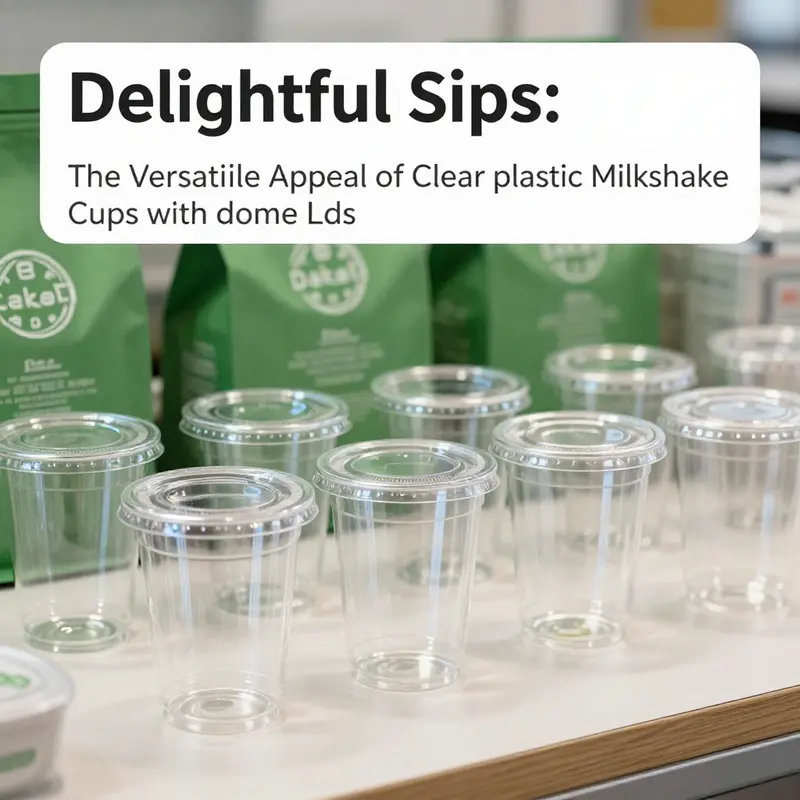
Clear plastic milkshake cups with dome lids sit at the junction of visual appeal, everyday practicality, and sustainability. In the quick service landscape, operators seek vessels that are sturdy, transparent, and compatible with a range of beverages. PET remains dominant for clarity and recyclability in many streams. Dome lids with straw apertures and vents are designed to minimize leaks and maintain smooth service. The market also includes alternative materials like PLA, which offer compostability but can perform poorly under humidity. Many suppliers pursue hybrid approaches, balancing recyclability with selective compostable options and striving for certifications that prove real-world sustainability. Size and lid design, from 8 to 20 ounces, influence grip, stability, and spill resistance. The supplier ecosystem emphasizes consistency across cups and lids, branding opportunities, and reliable lead times. In sustainability terms, recyclability is often a pragmatic goal, with transparent reporting on recycling rates and system availability. For brands pursuing compostable options, industrial composting capacity is a prerequisite, and cost premiums may apply. Ultimately, successful packaging blends clear performance with credible environmental commitments, enabling cups and lids to support brand experience while remaining efficient in busy service environments.
null

null
Final thoughts
Clear plastic milkshake cups with dome lids are more than just a convenient beverage option; they encapsulate a blend of design, functionality, and marketing appeal that caters to various business needs. Understanding their attributes, size variations, market preferences, supplier dynamics, and social media impact allows businesses to leverage these products to enhance customer experiences and promote their brand effectively. As the beverage industry continues to evolve, embracing such versatile solutions will be crucial for success.