

Clear plastic tea cups and saucers have become indispensable in the beverage and event industries, merging practicality with style. With their growing popularity among bubble tea shops, catering services, and event planners, these items are being used not just for tea but for a wide array of beverages—from iced coffees to smoothies. This article will delve into the innovations that are shaping clear plastic tea cups and saucers, market trends influencing their design and usage, their environmental impact, and the cultural significance they carry across various social settings. By examining these aspects, businesses can understand how to seamlessly integrate these versatile tools into their service offerings, ultimately enhancing customer experience and operational efficiency.
Clarity in Design: Innovations Redefining Clear Plastic Tea Cups and Saucers for Modern Tea Culture

Clear plastic tea cups and saucers have long earned a place in both intimate gatherings and bustling venues because of their combination of practicality and contemporary aesthetic. Yet beneath the glassy surface, a quiet revolution is reshaping how these pieces look, feel, and perform. As events shift toward experiences that blend elegance with ease, manufacturers are exploring materials, shapes, and technologies that preserve the transparency that showcases the tea’s color while elevating the user’s interaction with the drink. The result is not merely a disposable option but a thoughtful platform for conversation, ceremony, and everyday ritual alike. In this evolving landscape, the cup is no longer a simple vessel; it is a stage on which hospitality and innovation perform together, inviting hosts to curate moments with a clarity that mirrors the tea within.
At the heart of these innovations lies material science that respects both aesthetics and environmental responsibility. Biodegradable and compostable alternatives derived from plant-based sources—cornstarch and other feedstocks—are expanding the universe of options beyond traditional petroleum-based plastics. These new formulations aim to deliver the same crystalline clarity and resilience that customers expect from a clear cup, but with a reduced environmental footprint that aligns with growing consumer demands for responsible consumption. The goal is not to trade beauty for virtue; instead, designers seek a balance where the cup remains visually pure enough to honor the tea’s hue while breaking down more readily at the end of its life. For upscale events and cafes that prize a minimalist, almost couture look, these plant-based materials offer a path to maintain the refined aesthetic without compromising ecological values.
Another thread of innovation centers on design features that improve the user experience without sacrificing the clean lines that define clear plastic ware. Double-walled constructions have emerged as a practical solution for hot beverages, providing insulation that helps keep tea warmer longer while protecting fingertips from heat. This not only enhances comfort but also broadens the settings in which plastic cups can be used—showcasing how a modern cup can perform as well in a formal tasting as it does at a casual brunch. Ergonomic handles, integrated with non-slip grips, contribute to a more secure hold, reducing the chance of spills during service or at a bustling table. In parallel, integrated lids are engineered to minimize spills during transport and table placement, while allowing sipping without removing the top, a feature that proves especially valuable in venues with service dynamics that favor speed and efficiency.
Technology has begun to permeate even the surface of the cup, extending its function beyond the beverage itself. Some manufacturers are embedding QR codes or near-field communication (NFC) tags on the base of the cup. This subtle addition opens doors to digital menus, provenance tracking, and loyalty programs, blending the tactile elegance of a traditional tea ceremony with the convenience of a connected customer experience. The same cup that carries a hot infusion can also carry data about its journey from source to service, turning a simple tea break into an encounter with transparency and story. This integration of digital touchpoints is not about distraction; it is about coupling the act of drinking with meaningful engagement. In environments where guests are venturing into tasting flights or curated blends, such features can guide selections, provide brewing tips, or connect guests with sustainable sourcing narratives, enriching the ritual rather than interrupting it.
Manufacturing advances have similarly refined the physical character of clear plastic cups and saucers. Thinner, lighter constructions have not been achieved at the expense of strength; instead, precision in injection molding and material science has yielded cups that are both durable and resource-efficient. The slimmer profile reduces material use while maintaining stiffness and clarity, a crucial balance that supports high-volume service without sacrificing the sense of quality that guests associate with ceramic or glass alternatives. Even the delicate appearance of decorative elements, such as metallic or foil accents, has benefited from these advances. Modern molding techniques permit intricate detailing that reads as sophisticated elegance rather than mere ornamentation, enabling a refined silhouette that remains fully transparent when held to a light. The outcome is a cup that communicates a modern sensibility—clean lines, shimmering accents, and a light touch that keeps the focus on the tea itself.
Consumers are noticing these shifts in a way that influences choices across different contexts. For many, sustainability remains a defining criterion, but it is now intertwined with expectations of performance and aesthetics. A product that can withstand a hot infusion, stay clean and clear under bright café lighting, and be disposed of or recycled with relative ease earns a distinct edge. In practice, this translates to a willingness to trade off for a longer-lasting item in those settings where reuse is feasible, while maintaining the option of quick, hygienic disposal for events where single-use remains practical. The more discerning consumer also values safety cues, such as BPA-free formulations, and seeks assurances that the cup will not impart flavors or odors to the tea—a concern for those who favor a pristine, unaltered tasting experience.
The comparison with other materials—glass or ceramic—remains nuanced. Clear plastic offers shatter resistance and safer handling in busy environments, reducing the risk of accidents and breakage that can complicate service or high-traffic gatherings. It also lends itself to a more forgiving lifecycle for large events where numbers matter and cleanup time is at a premium. Yet the aesthetic appeal of glass or porcelain persists for those moments when a more elevated feel is desired. The plastic option, however, has evolved to approach that elegance through thoughtful details: precise edge finishes that catch the light just so, and subtle, interference-free clarity that preserves the beverage’s color and aroma. This convergence of resilience and refinement is what makes the modern clear plastic cup a versatile tool for hospitality, one that can adapt to intimate tea ceremonies, festive showers, or contemporary café settings alike.
In terms of end-of-life considerations, the industry is increasingly transparent about disposal options and recycling pathways. While plastic may not be the first material one associates with compostability, the emergence of plant-based alternatives offers a spectrum of choices, each with its own handling requirements. Consumers and event organizers alike are learning to navigate these options, selecting solutions that align with the venue’s waste streams and with local infrastructure. Paper-based cups with thin polyethylene linings, for example, present a different set of trade-offs. They may offer compostability in some programs but often lack the durability required for hot liquids over extended periods. The growing ecosystem of sustainable plastics aims to preserve the clarity and disposability guests expect, while aligning with broader environmental goals. The conversation thus shifts from whether plastic can be green to how plastic can be responsibly designed, produced, and disposed of within a circular economy.
The aesthetic potential of clear plastic cups and saucers continues to be unlocked through careful pairing with saucers that echo the minimalist modernism of the cups themselves. The choice to keep the saucer simple and functional serves a practical purpose—catching drips, stabilizing the cup, and offering a surface for delicate tea rituals without competing with the cup’s transparency. When a saucer completes the set with a restrained, elegant geometry, the overall presentation speaks to a curated experience rather than a disposable moment. In many contexts, the clear cup becomes a stage that highlights the beverage’s hue and aroma, allowing color variations—from pale greens to amber infusions—to tell their own stories about blending, brewing times, and water quality. The saucer, meanwhile, anchors the scene, providing a subtle frame that guides the eye toward the tea’s color as a form of living expression.
Future developments are likely to further knit together sustainability, usability, and digital connectivity. The most compelling innovations will not merely add features but will harmonize them into a coherent user journey. A cup that keeps tea warm longer, feels comfortable in the hand, guides guests through a tactile and visual narrative via its design, and offers a digital touchpoint for information and loyalty, represents a holistic approach to form and function. Designers and manufacturers are continually testing new materials, refining surface finishes to resist staining and scratching, and exploring collaborations with cafés and event organizers to tailor shapes, sizes, and capacities to specific service models. The goal is a family of clear plastic cups and saucers that can adapt across cultures, occasions, and cuisines while maintaining a shared language of clarity, simplicity, and responsible stewardship.
The trajectory of these innovations reveals a market that values clarity not just as a visual attribute but as a signal of care—from the choosing of materials to the moment a guest lifts the cup and peers at the tea’s surface. It is a reminder that modern hospitality can honor both the ritual of tea and the ethics of modern production. In a world where the everyday act of sharing a drink can carry social and environmental meaning, the clear plastic tea cup and saucer evolve from a utilitarian prop into a thoughtful instrument for hospitality. They invite hosts to design moments with intention, to consider how a cup’s shape, weight, and transparency interacts with heat, aroma, and memory. As with any material that enters the public sphere, success rests on balancing performance with responsibility, beauty with practicality, and novelty with timelessness. The result is not a single innovation but a continuum of improvements that redefine what a simple cup can be—and what a modern tea moment can feel like.
For readers seeking a broader context on eco-conscious innovations in disposable cup design, a careful examination of industry developments and sustainable material options provides valuable perspective. This larger conversation situates clear plastic cups and saucers within a broader movement toward smarter packaging that respects both people and the planet. External insights into these trends underscore the ongoing collaboration between designers, manufacturers, and venues to create products that are not only attractive and reliable but also aligned with a responsible approach to resource use. As the field progresses, the dialogue among suppliers, consumers, and regulation will continue to shape the pathways through which clarity, quality, and sustainability intersect in the cup that holds our tea. https://www.greenbiz.com/article/eco-friendly-disposable-cups-innovation
Crystal Clarity, Lasting Impressions: Market Currents in Clear Plastic Tea Cups and Saucers

Crystal clarity is more than a visual trait; it signals a market that reads color, temperature, and occasion with equal immediacy. Clear plastic tea cups and saucers sit at the intersection of practicality and elegance, making them a staple for casual gatherings as well as more curated experiences. From intimate tea parties to modern cafés, these vessels enable hosts to stage moments where the tea’s hue becomes a design element, and where cleanup and safety are quietly prioritized behind the scenes. In this landscape, the category tracks broader shifts in consumer expectations, supply chain resilience, and the push toward responsible, design-forward packaging. As events proliferate and the pace of consumption accelerates, the demand for a product that looks premium yet remains affordable continues to shape product development, retail strategies, and the way buyers evaluate value in a crowded marketplace.
The sustainability imperative is now central to how brands compete in this space. Consumers increasingly map value not only to price and performance but to a company’s environmental footprint and social responsibility. In response, manufacturers have explored biodegradable and compostable plastics derived from renewable resources, especially polylactic acid (PLA). These materials promise the transparency and rigidity that buyers expect in a clear cup while offering a clearer end-of-life path. Yet the transition is nuanced. Compostability requires suitable industrial facilities and clear consumer guidance, and not all markets have equal access to recycling or composting infrastructure. As a result, suppliers and event planners are weighing lifecycle considerations—whether to emphasize recyclable, reusable, or compostable options—and often design programs that blend these approaches across different contexts. The result is a spectrum of choices, from cost-conscious disposables optimized for quick turnover to durable, multi-use sets that can be sanitized and reused in high-traffic settings. In every case, the aim is to preserve the perceived quality and hygienic reassurance embedded in a clear vessel, while minimizing environmental impact and waste.
But sustainability does not stand alone. A second driver shaping the market is the growing capacity for customization, powered by advanced manufacturing and digital workflows. Production ecosystems in key regional hubs have matured into highly integrated operations, enabling brands to move from concept to finished, branded sets with remarkable speed. Digital printing, sublimation, and laser-engraved accents are no longer niche capabilities; they are accessible options that empower themed events, corporate branding, and boutique tea experiences. The ability to imprint logos, color gradients, or event-specific motifs directly on cups or saucers helps companies create cohesive visual narratives without sacrificing clarity. This shift is enabled by lean prototyping cycles and scalable tooling that reduce the friction and cost previously associated with customization. It also means buyers can test new aesthetics in small batches, adjust to feedback, and align designs with evolving trends without incurring prohibitive inventory risk. For operators, this translates into sharper merchandising, the ability to refresh offerings with the season, and a more compelling value proposition for guests who expect both beauty and practicality in serviceware.
The third strand of momentum centers on the demand for premium, reusable designs that imitate the look of glass while delivering the safety and resilience of plastic. Contemporary material choices—especially high-clarity PET and food-grade acrylic—have narrowed the gap between disposables and reusable tableware. In hospitality settings, where service speed, durability, and ease of cleaning matter, these options offer compelling combinations of aesthetics and performance. The market increasingly favors cups and saucers that withstand frequent handling, resist chipping, and maintain a crystal-clear appearance over time. A notable feature is the emphasis on safety credentials; many clear plastics used for tableware are now BPA-free and engineered to tolerate hot liquids, with a subset designed for oven-use in specific, limited scenarios. This expansion broadens the practical utility of clear plastic systems, enabling venues to create consistent experiences across beverages that arrive at different temperatures. The upshot is a more versatile catalog of vessels that can anchor a hospitality concept from morning tea through late-afternoon tastings, while helping operators reduce breakage-related waste and maintenance requirements.
Market projections underscore the resilience and growth potential of this category. The global disposable cups market is forecast to rise from roughly USD 15.88 billion in 2025 to about USD 27.38 billion by 2035, a compound annual growth rate of around 5.6 percent. This trajectory is driven by a blend of event-driven demand—where large gatherings, weddings, conferences, and seasonal promotions create steady demand—and ongoing material and design innovations. Improvements in heat resistance, more reliable leak-proof lids, and ergonomic features are repeatedly cited as value-adds that justify higher price points and longer usage cycles. In practice, brands are able to present a more compelling story to customers who demand both convenience and a sense of occasion. The expansion is not merely about larger volumes; it reflects a broader shift toward smarter product design that marries user experience with operational efficiency, a pairing particularly powerful for venues that juggle multi-location events, pop-ups, and fast-paced service models. The rise of themed experiences—tea tastings, bridal showers, brunch concepts, and experiential cafés—also fuels the logic of buying sets that are visually cohesive, easy to stock, and adaptable to a range of service contexts without incurring a premium for custom fabrication each time.
Strategic sourcing plays a pivotal role in realizing these opportunities. Buyers increasingly seek partnerships that deliver end-to-end value, from concept development to final delivery and post-use considerations. Compliance certifications, such as FDA- and LFGB-style assurances, remain a baseline for food-contact products in many markets, because they underpin consumer confidence and retailer acceptance. Quality control protocols are now more comprehensive, often encompassing batch sampling, traceability, and standardized performance testing for heat resistance, clarity, and chemical safety. Flexibility in logistics—ranging from less-than-container-load shipments to full container loads, and from sea freight to air express—helps organizations ride demand cycles and manage lead times. The most effective sourcing strategies recognize that cost is only one dimension of value; reliability, consistency across batches, and the ability to respond swiftly to design changes are equally critical. This approach often involves curating a network of suppliers who can handle not just the core product but also packaging, branding, and delivery coordination, thereby reducing the complexity of procurement across multiple markets.
In practice, these sourcing dynamics are reinforced by global trade activity and industry events that connect designers with manufacturers, buyers with suppliers, and brands with new capability sets. The landscape is also influenced by a broader push toward sustainability and transparency, encouraging suppliers to articulate the environmental footprint of materials, production processes, and end-of-life options. Even as competition intensifies, this alignment around responsible sourcing helps preserve long-term value for both buyers and manufacturers, ensuring that growth does not outpace governance and ethical standards. This is why many buyers increasingly reference not just price and performance but also supplier stability, continuous improvement practices, and the capacity for ongoing collaboration. Trade shows, industry associations, and sourcing platforms continue to play a central role in disseminating best practices, surfacing innovative materials, and enabling cross-border partnerships that support scalable, responsible growth. For organizations navigating this space, success hinges on selecting partners who can balance clarity, consistency, and creative capacity in equal measure, while maintaining a careful eye on lifecycle impacts and regulatory compliance. The future of clear plastic tea cups and saucers, then, rests on a triad of design excellence, operational reliability, and accountability—an equation that brands, retailers, and venues will increasingly demand as they craft memorable experiences.
As markets evolve, the narrative around clear plastic tea cups and saucers is less about choosing between disposables and reusables and more about how form, function, and responsibility can reinforce one another. The most compelling offerings harmonize elegant transparency with durable performance, enabling hosts to stage atmospheres that feel both timeless and contemporary. They support the aesthetics of a beverage, the rhythm of a service, and the logistics of a busy hospitality operation, all while aligning with environmental and social goals that contemporary consumers increasingly expect. The result is a category that not only serves tea but also serves as a compact embodiment of modern consumer culture: clarity, care, and convenient capability wrapped in a single, thoughtfully designed vessel. For buyers and suppliers alike, the path forward is about cultivating partnerships that extend beyond a single order, building ecosystems that can adapt to shifting tastes, evolving regulations, and the inevitable changes in event formats. In this sense, the market for clear plastic tea cups and saucers remains a dynamic laboratory for how small design choices can ripple into broader business value, shaping guest experiences, supplier relationships, and the pace of innovation across the global tableware landscape. For those seeking deeper sourcing insights and market context, a broader industry resource offers updated perspectives on supplier capabilities and regional dynamics at the link below.
External resource for further reading: https://www.hktdc.com/wholesale-tea-cups-and-saucers-suppliers-manufacturers-2026.htm
Clear Yet Costly: The Environmental Toll of Plastic Tea Cups and Saucers
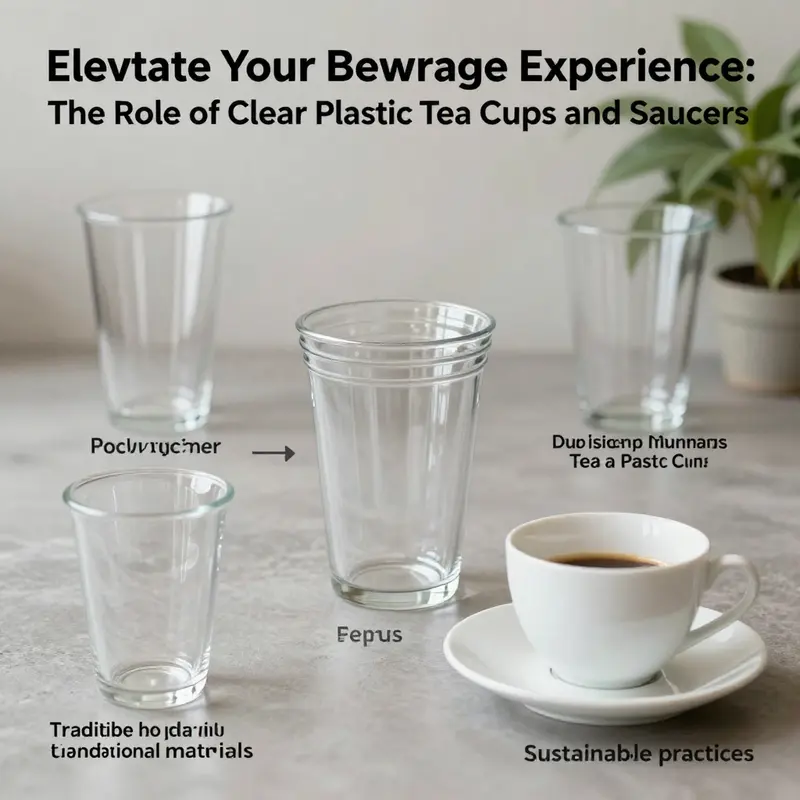
Clear plastic tea cups and saucers offer undeniable practicality. They are lightweight, shatter-resistant, and quick to clean, a combination that has made them staples at everything from casual gatherings to larger, more formal events. Their transparency lets the color and aroma of tea or other beverages shine, and the hygienic, disposable nature of many options makes them appealing for venues that prioritize speed and ease of maintenance. Yet the very traits that make clear plastic cups appealing—durability in the face of impact, the ability to be manufactured and shipped cheaply, and the convenience of disposal—also illuminate a pressing environmental incongruity. The clarity that makes them visually pleasing conceals a complex lifecycle filled with resource use, energy input, and waste that lingers long after the final pour has been served. In examining their environmental footprint, the narrative is less about aesthetics and more about responsibility: the choices made before, during, and after a gathering determine whether the same cups that make a party easier also contribute to broader ecological challenges.
At the heart of the environmental concern is plastic pollution. Most clear cups today are made from polymers such as polystyrene (PS) or polypropylene (PP). These materials are chosen for their clarity, rigidity, and low manufacturing cost, but they are not biodegradable in any practical sense. They can persist in the environment for hundreds of years, slowly breaking into smaller fragments that spread across land and sea. When they escape proper waste streams, they become litter in parks, streets, and beaches, and eventually can migrate toward rivers and oceans. The consequence is not only an unsightly reminder of careless consumption; it is an ongoing source of environmental burdens that communities spend resources to mitigate. The journey from a countertop to a landfill or a wind-blown roadside is short for many cups, and the short-term convenience is paid for, in time, by long-term environmental costs. This is not a tale of a single bad actor but a systemic issue tied to how disposal systems are designed and funded, and how consumer habits intersect with municipal waste management.
Where the effects become more acute is in marine environments. Plastic cups that find their way into waterways can be mistaken for food by marine life, especially small fish and seabirds. Ingested plastics can cause internal injury, reduce the animals’ ability to feed, or lead to fatal blockages. The implications extend beyond single organisms; when plastics fragment into microplastics, they become part of the broader food web. Microplastics have been detected in a range of marine species, and scientists worry about how these particles may accumulate through trophic levels, potentially entering the human diet indirectly. The result is a cascade of ecological disturbances that begin with a simple, everyday item and end with broader questions about how material choices translate into environmental exposure for wildlife and humans alike.
From a production standpoint, the footprint of clear plastic cups is closely tied to fossil fuels and energy use. The extraction, refinement, and processing of petroleum-based feedstocks require energy and produce greenhouse gases. Even though some marketing messages emphasize the reduced shipping emissions that accompany lighter, compact packaging, the overall climate impact remains influenced by the full life cycle. The net effect is a release of carbon and other pollutants that contribute to climate change, a backdrop against which any assessment of convenience must be weighed. And because these cups are typically designed for single-use scenarios, manufacturers anticipate large volumes, and those volumes translate into cumulative environmental pressure when scaled to global demand. The environmental conversation thus shifts from the surface appeal of a pristine, transparent cup to the realities of energy intensity and emissions embedded in material production and distribution.
Recycling presents its own set of obstacles. The variety of polymer types used in disposable cups, along with the presence of additives that enhance clarity and rigidity, creates a mosaic of plastics that is not always readily sorted by curbside recycling programs. Even when facilities exist to collect and process PS or PP, the rates of successful recycling remain uneven. Contamination from food residues, the mixing of different plastic types, and the economic realities of recycling markets can all reduce the likelihood that cups are actually repurposed rather than landfilled. In many places, the proportion of cups that get recycled is small, and a sizable share ends up in landfills or as litter. The result is a paradox: items designed to simplify cleanup can, in some contexts, complicate waste management and degrade the cleanliness and functionality of ecosystems.
There are ongoing discussions about alternatives that could soften these impacts. Some manufacturers promote disposable cups made from food-grade paper with a thin polyethylene (PE) lining, a system believed to improve compostability and reduce some plastic waste. However, these options are not without their own drawbacks. Paper-based cups with PE linings tend to be less durable for repeated handling, and their acceptance in composting streams varies widely. They are often less suitable for hot beverages for extended periods, and even when compostable, they require industrial composting facilities to achieve meaningful break-down, which are not universally accessible. In practice, this means that a substitution of one material problem for another can occur if waste management infrastructure and consumer behavior do not align. The environmental calculus therefore becomes a question of context: local waste capabilities, event scale, and the specific beverages being served all influence whether a given alternative reduces overall impact.
Given these complexities, some readers may feel overwhelmed by the array of options for achieving both elegance and environmental responsibility at events. The choice landscape spans beyond material science into consumer behavior, venue policies, and municipal infrastructure. For venues seeking a middle ground, the practical path often involves combining robust waste reduction strategies with smarter product design. Reusable options—such as glassware or ceramic cups and saucers—offer a clear environmental upside if they can be cleaned efficiently and stored without excessive energy use. When reuse is not practical, venues can lean on durable, returnable systems or on arrangements that emphasize proper waste segregation and high recycling rates. This approach can help reconcile the desire for a sleek, modern aesthetic with a commitment to environmental stewardship. The path to improvement also includes better labeling, clearer guidance on disposal, and partnerships with suppliers who optimize for circularity in their product design and end-of-life handling. These steps, though modest in isolation, accumulate into meaningful reductions in waste and resource use over time. A practical sense of the landscape can be gleaned by understanding how different waste streams are treated in local contexts and by exploring how retailers and venues frame sustainability without resorting to empty branding.
For readers who want to see how sustainability options are framed in real-world procurement contexts, one can observe that some suppliers highlight alternatives and stewardship approaches when presenting their product families. A useful touchpoint is a dedicated product page that showcases a plant-based or otherwise more sustainable option within their catalog. This serves as a reminder that the choice of serving ware is not a one-off decision but part of a broader conversation about how events are staged and how waste is managed. To get a sense of this framing in a concrete product context, you can explore the Green Soil Lotus product page, which illustrates how a retailer might present sustainable options alongside traditional choices. Green Soil Lotus product page.
The environmental conversation around clear plastic cups and saucers does not end with the facts of pollution and waste streams. It includes a broader call to rethink consumption patterns, design for circularity, and invest in waste-management infrastructure that can transform end-of-life outcomes. The most actionable takeaway is not that every event must forego clear plastic altogether, but that every choice—material, supplier, and disposal plan—deserves scrutiny. When venues, caterers, and consumers collaborate to minimize waste, maximize recyclability, and prioritize reusable or compostable options where feasible, they tilt the balance toward durability of ecosystems rather than disposable convenience. The literature and guidance on the subject converge on a central point: meaningful reduction in environmental impact requires systems thinking and coordinated action across producers, distributors, and end users. External resources that synthesize the broader debates reinforce the sense that this is a public-good issue, not a personal preference alone. External resource: https://www.greenpeace.org.uk/2025/11/18/environmental-impacts-of-plastic-cups/.
Clarity, Convenience, and Ceremony: The Modern Cultural Footprint of Clear Plastic Tea Cups and Saucers

The surfaces of a clear plastic tea cup catch light in a way that invites a visual gentle audit of what lies inside. In contemporary settings, from sunlit patios to hotel banquets, these vessels have earned a quiet legitimacy not by tradition but by a pragmatic clarity. They are not the heirlooms passed down through generations, nor the ceremonially carved vessels breathed into life by ancient kilns. Yet they have woven themselves into the fabric of everyday sociability, shaping how people gather, sip, and judge the moment of tea. The cultural significance of clear plastic tea cups and saucers, then, sits at the crossroads of utility and perception. Their value is less about lineage and more about the social arithmetic of modern life: they are light, resistant to impact, and inexpensive enough to democratize a shared ritual that might otherwise be reserved for formal settings. In this sense, their cultural footprint is not about reverence but about accessibility and adaptability—a testament to a culture that prizes ease and portability as much as taste and aroma.
What changes in the act of drinking tea when the vessel is transparent? The answer lies in how color and clarity become part of the sensory experience. The tea’s hue—amber, ruby, pale gold—appears with a directness that invites visual appraisal of brew strength and infusion. A beverage’s color is not just aesthetic; it is a signal about temperature, steep time, even the possible presence of delicate aromatics that might otherwise escape notice in opaque ware. The clear cup, then, becomes a stage on which the tea performs. The eye anticipates the scent, the scent primes the palate, and the palate anticipates the mouthfeel. This sequence—sight, smell, taste—unfolds more transparently when the cup itself offers no barrier between liquid and observer. In casual gatherings, that transparency fosters a democratized appreciation: everyone witnesses the same color story, which reduces ambiguity around strength and flavor. This aligns neatly with a social culture that values quick, shared understanding as much as it values politeness and hospitality.
Yet the cultural story of these cups is not only about what is seen. It is also about how the material performs under real-life conditions. Plastic, particularly clear PET or acrylic, emerges as a reliable partner for modern routines that prize durability and ease of cleanup. They resist shattering in the hands of excited children, survive the jostle of crowded events, and push to the foreground a philosophy of consumption that favors one-time use or simple reuse without ceremony. The implication for culture, then, is not a retreat from ritual but a reconfiguration of it. The ritual becomes portable, adaptable to picnics, office breaks, airport lounges, and pop-up cafés where ceramic or porcelain would be impractical. In this sense, the cup’s materiality becomes a form of social engineering: it enables gatherings that are less bound by setting and more defined by momentary need. A sleek, transparent cup communicates a desire for modern aesthetics—clean lines, minimal ornamentation, and the perception of purity in the beverage itself—without demanding ritual fidelity that would slow a spontaneous exchange.
There is another layer to this story, a quiet negotiation with the past. The old tea wares—ceramic, porcelain, metal—carried within them centuries of ritual, etiquette, and contemplation. They encoded a philosophy of tea as a mindful practice, a conversation between host and guest conducted across the material’s texture and resonance. Clear plastic cups do not carry the same ceremonial gravity. They are not designed to bloom into the contemplative stillness of a tea ceremony; their virtue lies in speed, breadth, and resilience. This is not a denigration of tradition but a recognition of shifting cultural priorities. In many contemporary settings, tea is less about meditative ritual and more about social connection, workplace rituals, or family time in which the act of sharing tea is inseparable from the rhythm of daily life. Plastic cups, with their unobtrusive translucence, accommodate that rhythm: they do not intrude upon conversation, they do not demand a pause for washing and polishing, and they keep the focus on the people gathered rather than the vessels they use.
There is also a design dimension that shapes cultural meaning. A clear cup that carries a subtle gold trim or a delicate lip line can evoke a sense of occasion without overturning practicality. The balance between simplicity and elegance—between a minimalist silhouette and a hint of refinement—speaks to a modern cultural appetite for aesthetics that do not shout but communicate. In events like casual bridal showers, baby showers, or brunches, such cups enable a visual narrative of celebration without imposing stern ritual requirements. The saucer, too, participates in this reimagined ceremony. It anchors the cup, catching drips and condensation, while its edge reflects ambient light into a soft halo around the beverage. In an era when Instagrammable moments often hinge on the choreography of small details, even a seemingly ordinary saucer can contribute to a mood: neat, tidy, bright, and ready for a quick snapshot that records a shared experience rather than a solemn tradition.
Of course, culture does not exist in a vacuum. The widespread adoption of clear plastic tea cups is inseparable from broader conversations about materials, waste, and sustainability. Plastic has earned a reputation for being both pragmatic and precarious: sturdy for transport and disposal, but sometimes questioned for its long-term environmental impact. In some event contexts, the contrast with paper or reusable options is stark. Paper cups with a thin plastic lining may appear convenient and eco-conscious at a glance, yet they compromise durability and heat retention, especially with hot beverages. Clear plastic cups—when used responsibly—offer a middle path: a reusable or a recyclable option that supports quick service and reduces breakage in high-energy environments. The knowledge that these cups can be part of a recyclable loop or reused in appropriate contexts adds a layer of cultural responsibility that resonates with modern consumer expectations. Guests who drink tea from such vessels participate in a broader social contract about waste, logistics, and mindful consumption, even when the primary aim remains simple pleasure.
The global market for clear plastic tea cups and saucers further reshapes cultural meaning through accessibility. Mass production and wholesale distribution mean that an elegant, modern tea moment can be scaled to meet demand in diverse settings—from wedding receptions in urban centers to school fairs in regional towns. This accessibility democratizes a sense of hospitality: a host can present tea in a way that feels considered and stylish, without the costly or fragile constraints of traditional wares. In this light, the cultural significance expands beyond aesthetics or practicality. It becomes a statement about inclusivity and adaptability: a shared ritual that travels easily and is accessible to a wide range of hosts and guests. The ease of obtaining clear plastic sets, their consistent appearance, and their compatibility with a variety of beverages—from black teas to herbal infusions—contributes to a flexible social script. It allows communities to gather around tea in places where formality would otherwise be a barrier, whether at a community center, a picnic, or a coffee shop that favors a casual, contemporary vibe.
Within this evolving landscape, the idea of authenticity also enters the conversation, not as a rejection of modern materials but as a reflection on what people want from tea moments today. There is a tension between the warmth and-depth of traditional teaware and the transparent, quick-satisfying practicality of clear plastic. Some tea lovers will still seek the tactile, resonant touch of thick-walled porcelain or the earthy aroma that clay can impart. Others will celebrate the clarity and resilience of plastic as a practical ally in the busy world. The social value of tea—its ability to slow a moment, invite companionship, or offer a pause in a hectic day—persists, even as the vessel evolves. In absorbing this evolution, culture reveals its adaptability: it redefines what it means to host, to share, and to taste in ways that honor convenience without discarding experiential richness.
As the conversation around material culture continues to unfold, clear plastic tea cups and saucers occupy a nuanced niche. They are not the custodians of a distant etiquette but the facilitators of present-day sociability. They enable a range of occasions to feel approachable, inclusive, and stylish in a way that aligns with contemporary life. The aesthetic of transparency—unobstructed view, unembellished form—echoes a broader cultural preference for clarity in communication, design, and experience. In this sense, the cups do more than hold tea; they hold a dynamic memory of how people gather, share, and appreciate one another in a world that prizes speed, simplicity, and shared moments without sacrificing lightness or charm.
For readers exploring the practical implications and trade-offs of these vessels, it is helpful to acknowledge the broader context in which they exist. The conversation about plastic in tea ware is not simply about convenience; it touches on sensory neutrality, heat management, and durability, all of which shape taste perception and comfort. While the literature notes that plastic can differ from ceramic in its thermal insulation and flavor neutrality, it also highlights that modern formulations strive to balance these factors with usability. This balancing act—between form, function, and flavor—is a telling reflection of how material choices mirror cultural priorities at any given moment. Clear plastic tea cups and saucers, therefore, illuminate a period in which the act of tea is increasingly social, inclusive, and adaptable, while still cherished for the colors and clarity that the beverage reveals when held in a transparent cup.
External perspective can illuminate this shift further. While plastics offer notable advantages in convenience and resilience, readers are encouraged to weigh the environmental considerations and personal preferences that accompany disposable or reusable options. A broader understanding of their place in the tea ecosystem invites a balanced view: a recognition that modern life values both the accessibility of a well-prepared beverage and the responsibility that accompanies consumption choices. For a broader look at the practical trade-offs of plastic tea cups, including considerations of taste and insulation, see this external resource: https://www.alibaba.com/product-detail/Plastic-Tea-Cups-Set-Transparent-Disposable_1600472893523.html?spm=a2700.details.0.0.7c5d4f31ZvVtJW
Final thoughts
Clear plastic tea cups and saucers stand at the crossroads of innovation, market demands, and environmental consciousness, making them essential for any business in the beverage sector. As trends evolve, so too will the designs and functionalities of these products, paving the way for even more sustainable solutions. By understanding their market relevance and cultural significance, businesses can leverage clear plastic tea cups and saucers to enhance customer experiences and align with modern aesthetics. As a business owner or event planner, investing in high-quality clear plastic tea ware certainly paves the way for a stylish yet practical offering, delighting customers and elevating your service standards.