
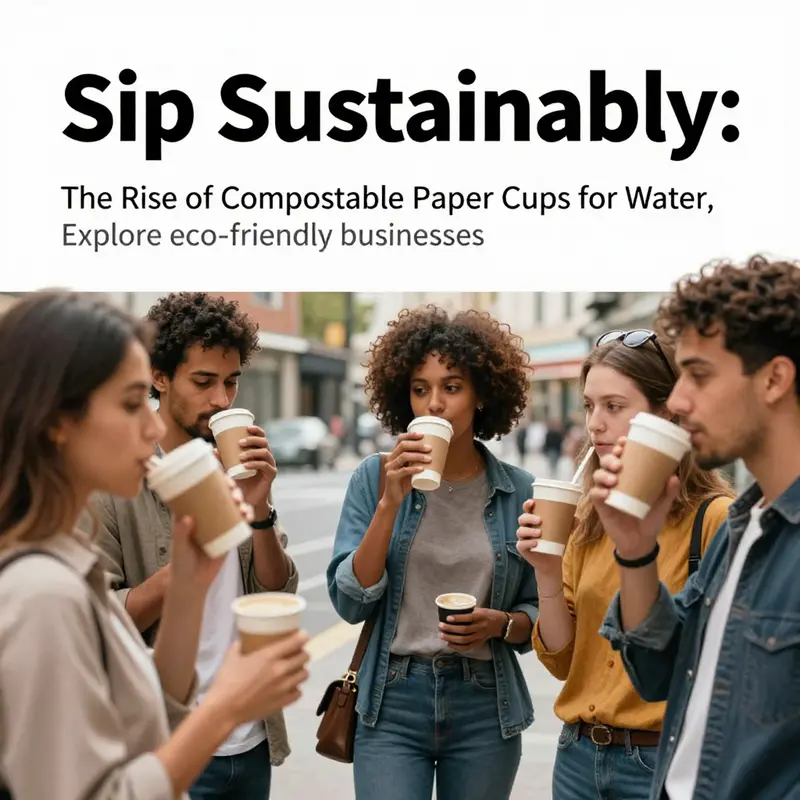
As sustainability becomes a cornerstone in the food and beverage industry, compostable paper cups for water are emerging as a responsible alternative to plastic. These cups not only offer a practical way to serve beverages at cafes, food trucks, and events but also align with growing environmental conscientiousness among consumers and businesses alike. Each chapter delves into the crucial aspects of compostable paper cups, from their environmental benefits to the materials used in their production. Additionally, we will explore economic advantages, customizable design options, and safety standards, igniting a complete understanding of why adopting these cups is not only beneficial for the planet but can also enhance brand image and customer experience.
Water, Waste, and Renewal: The Real Environmental Footprint of Compostable Paper Cups for Hydration
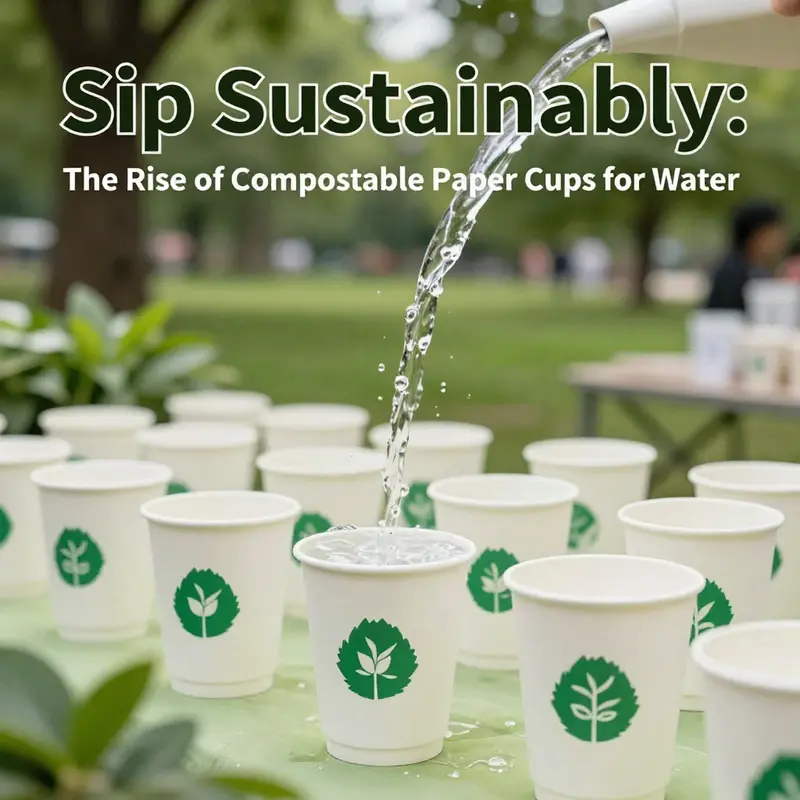
Water is a shared resource, and the packaging that carries it can either amplify or undermine the stewardship we owe to ecosystems. Compostable paper cups designed for water promise a cleaner option than traditional plastic-lined alternatives, yet their environmental impact unfolds most clearly when we look beyond their outer appearance and into the full lifecycle—from raw materials to end-of-life. The narrative is not simply one of materials breaking down more quickly under industrial heat; it is a story about systems, infrastructure, and human behavior, all of which shape whether a cup that reaches a waste stream actually contributes to renewal rather than another form of waste.
From the outset, these cups often position themselves as renewable, plant-based options. They are typically built from bagasse or Kraft paper and carry a compostable lining, frequently a water-based coating designed to keep beverages dry and safe for hot or cold use. In a world that has grown wary of single-use plastics, such combinations appear to offer a clear advantage: a packaging choice aligned with a circular mindset where the container can return to the soil in an industrial composting facility. Yet the pathway from soft pulp to nutrient-rich compost is not a guaranteed shortcut to sustainability. The real question becomes: under what conditions does this pathway unlock genuine environmental benefit, and where does it stall or even backfire?
One of the most important realities is that end-of-life outcomes depend less on the cup’s material identity and more on the disposal infrastructure that exists where the cup is discarded. In many regions, industrial composting facilities are not ubiquitous or fully accessible to households and businesses alike. The mere presence of a compostable lining does not ensure appropriate disposal; if a cup is placed in a municipal landfill or mixed with recycling streams that cannot accommodate compostables, the cup may languish for years, or it may contaminate other recyclable materials, reducing the efficiency of the entire waste stream. This is not a trivial matter. The type of facility available, its temperature and humidity capabilities, and the policies that govern what materials can be accepted all shape whether a compostable cup actually becomes compost.
To illustrate the complexity, it helps to compare the two major branches that often seem parallel but diverge sharply in practice: industrial composting and traditional recycling or landfill streams. Compostable cups are designed with plant-based fibers and a bioplastic-like lining in many cases, with the intent that they break down under high-temperature, moisture-rich conditions found in certified facilities. Unfortunately, a significant portion of the waste system remains outside this ideal pathway. Home composting, municipal compost programs, and even recycling streams frequently cannot handle these materials cleanly. The result is that a large share of compostable cups ends up in landfills, where degradation processes are slower and less predictable, thereby diminishing or neutralizing the anticipated environmental gains.
Beyond disposal, the production side introduces its own set of trade-offs. The cultivation of feedstocks such as corn for bioplastics and the growth of fiber crops require land, water, and energy. Even when the upstream carbon footprint is lower than that of petroleum-based plastics, the downstream benefits depend on agricultural practices. Sustainable farming practices—soil health, water stewardship, pesticide management, and deforestation controls—play a decisive role in whether the cradle-to-grave impact tilts toward real sustainability or toward unintended consequences elsewhere in the supply chain. In some cases, the drive toward renewables can inadvertently compete with food production or drive land-use changes that carry ecological costs. These nuances remind us that environmental performance cannot be reduced to a single metric; it must be understood as a balance across multiple inputs and outcomes.
A crucial, often overlooked dimension is contamination, which can unravel the integrity of an entire recycling or composting system. When cups, liners, or lids are misidentified or improperly sorted, facilities must divert time and energy to separate materials that do not belong in a given stream. Such missteps can lead to higher costs, reduced throughput, and limited capacity to process truly compostable items. Education of consumers and clear labeling at the point of sale become essential components of any strategy that seeks to maximize these cups’ potential benefits. Without reliable separation and clear guidance, even well-intentioned products risk becoming part of a problem they were meant to solve.
In light of these realities, we must examine the comparison with traditional paper cups more carefully. Conventional cups, often lined with polyethylene, are notoriously difficult to recycle in many municipal systems and are frequently relegated to landfills. Compostable cups attempt to improve this fate by offering a material composition designed to break down in controlled conditions. The contrast is not a straightforward victory; it hinges on whether the waste management landscape supports the intended end-of-life scenario. If an industrial facility is unavailable or if contamination levels rise, the supposed advantage of a compostable option can diminish. The resulting takeaway is not a dismissal of compostable materials, but a call for a holistic approach. The environmental benefits are real when coupled with infrastructure, policy alignment, and informed consumer action.
The lifecycle lens also reframes the water-centric question at the heart of this topic. Water use is not confined to the cup’s time in the cupholder; it travels with the entire supply chain—from irrigation for fiber crops to cleaning processes in manufacturing facilities and energy use in processing and transportation. When a cup finally meets its end at an industrial composting facility, the ultimate outcome—biomass, heat, and a small proportion of residuals—depends on facility efficiency, feedstock mix, and post-processing energy balances. If the system is designed to close the loop, the water used in production can be offset by the water recovery and nutrient return embedded in the compost product. If not, the same water input has limited returns, and the payoff toward a lower overall footprint becomes questionable.
One pragmatic takeaway emerges from studies and field observations: the relative advantage of compostable cups is amplified when they are part of a broader strategy that prioritizes reuse and efficiency. Reusable alternatives, where feasible, offer the strongest reduction in resource use over the long term. Yet in contexts where single-use remains unavoidable—hot beverages, events, or quick-service settings—the emphasis should shift toward designs that optimize end-of-life performance. This includes not only choosing plant-based materials with robust certification but also ensuring that cup shapes, coatings, and lids are engineered for compatibility with available composting streams. The packaging ecosystem must strive for standardization in labeling and clearer pathways for compliant disposal, so that a consumer’s good intention is not undermined by confusion at the bin.
The policy and governance dimensions cannot be ignored. Regulators, waste-management operators, and industry players are increasingly aware that material substitution alone does not deliver systemic sustainability. The most meaningful progress comes from aligning incentives, infrastructure investments, and consumer education. In practical terms, this means expanding certified composting capacity, funding facilities that can handle a range of biobased packaging, and implementing labeling schemes that help end-users sort correctly. It also means encouraging manufacturers to optimize for minimum resource use in production, minimize water footprints through efficiency gains, and design packaging that integrates seamlessly with existing waste streams. When such alignment exists, the environmental benefits of compostable cups for water are more likely to materialize in real-world settings rather than remaining theoretical advantages.
In the broader conversation about water and waste, the chapter’s message is not that compostable cups are a universal answer or that their impact is uniformly positive. It is, instead, that the real power lies in the alignment of product design with disposal infrastructure, consumer behavior, and policy frameworks. The lifecycle knows no single hero—the improvement comes from a network of improvements that reduce contamination, increase facility throughput, and boost consumer confidence in proper disposal. As researchers, practitioners, and everyday users navigate this landscape, the goal remains clear: reduce single-use consumption where possible, choose packaging that plays well with local waste systems, and invest in education that helps people do the right thing at the right time.
In the end, the environmental impact of compostable paper cups for water is contingent on a robust, accessible composting network and responsible consumption. When these conditions are in place, the cups can contribute to a more sustainable hydration cycle—one that respects the water we drink, the land that sustains us, and the energy that powers production. When they are not, the same cups risk becoming a missed opportunity, reminding us that sustainability is not a property of a material alone but of a system that brings together design, disposal, and desire for a better future.
For readers curious about real-world product options that align with sustainable usage patterns, a representative range of disposable paper cup sizes and configurations is available to explore, including kraft-based options designed for hot beverages and cold drinks alike. These options illustrate how form and function can be balanced with environmental considerations, while still meeting the practical demands of water service in cafes, events, and foodservice environments. As the conversation evolves, so too will the opportunities to refine materials, enhance composting capabilities, and expand the shared infrastructure that makes true environmental improvement possible. For those who want to investigate specific packaging configurations further, one practical entry point is a catalog of disposable cups that highlight kraft paper composition and compatible linings, which can be accessed here: disposable paper cups – kraft paper cups for hot drinking.
External resource: For a broader regulatory and policy context on organics and composting, see the U.S. Environmental Protection Agency’s Organics and Composting Information, which provides foundational guidance on how compostable materials fit into waste management systems. https://www.epa.gov/organics
null
null
From Footprint to Bottom Line: The Economic Benefits of Compostable Paper Cups in Water Service
Transitioning to compostable paper cups for water service is an economic decision as much as an environmental one. When you view the service system holistically, compostables can lower long-term costs, reduce risk, and strengthen brand equity. The core logic rests on more than price per cup; it hinges on waste streams, regulatory expectations, supplier alignment with a circular economy, and customer perception.
Reducing waste management costs sits at the heart of the financial case. Fully compostable cups designed for industrial composting divert waste from landfills and can reduce disposal fees when waste streams are well managed. The impact is clearest in high-volume settings where cups are used frequently, making the marginal cost per cup more predictable and easier to manage over time.
Beyond disposal costs, the economics connect to how brands interact with customers. Sustainability signals can bolster loyalty and reduce price resistance, helping offset incremental per-unit costs through stronger spend and repeat visits, especially at events or venues that emphasize responsible practices.
Regulatory dynamics add another layer of certainty and risk mitigation. Regions considering bans or taxes on single-use plastics create a financial hedge for compostable cups, reducing exposure to penalties and retrofits, and potentially unlocking incentives.
The supply chain dimension adds to the case. Plant-based packaging expands demand for agricultural inputs and processing capacity, which can improve supplier collaboration, lead times, and stability of total cost of ownership.
Innovation incentives and early adoption offer strategic upside. Early movers may access government or industry grants, or collaborative programs, while signaling leadership in sustainable packaging that attracts partners and talent.
Lifecycle thinking provides a practical frame. A higher upfront cost can be offset by lower waste handling fees, reduced contamination risk, and stronger customer goodwill that translates into repeat visits and higher share of wallet. Operators can test cup sizes and coatings to identify the most cost-effective mix.
In practice, align disposal streams with local composting facilities and ensure staff and customers understand proper separation. The resulting economics are sustained over time and the environmental benefits translate into tangible business performance.
For practitioners, a representative category of disposable cups built from kraft-based materials shows how design choices affect user experience and waste processing, shaping the overall cost profile. The alignment with local capabilities is essential for minimizing mis-sorted waste and contamination risk.
In closing, the economic benefits of compostable paper cups extend beyond the unit price. They can lower landfill burdens, stimulate local processing, and strengthen trust with customers, contributing to a more resilient and future-ready business model.
From Form to Footprint: Designing and Customizing Compostable Paper Cups for Water
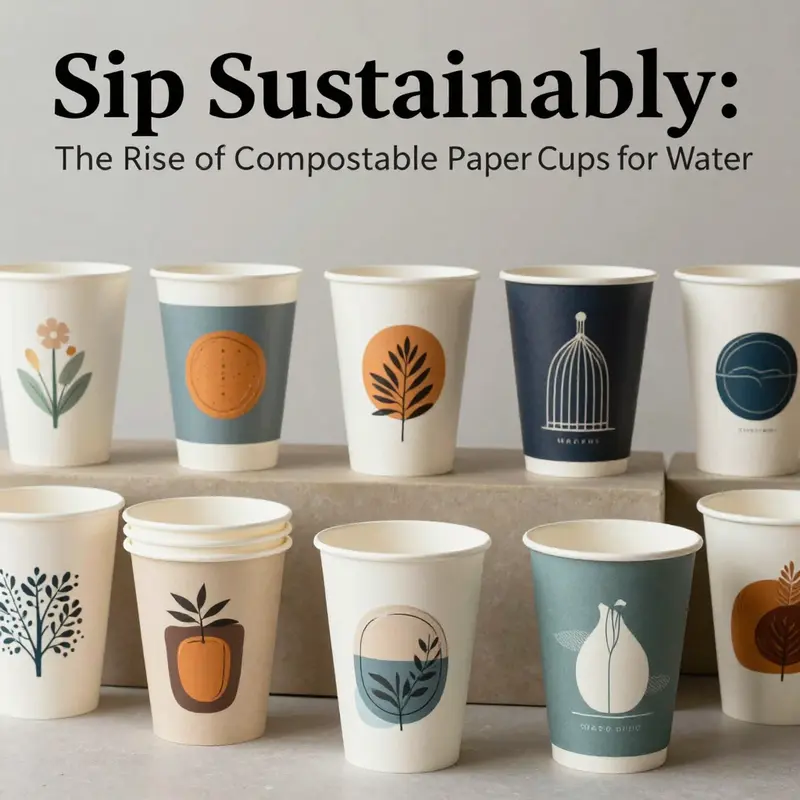
What makes a cup more than a simple vessel for water is not only its ability to hold liquid securely but also how its design communicates care for people and the planet. In the evolving landscape of beverage packaging, compostable paper cups designed for water stand at a compelling crossroads of performance, aesthetics, and end-of-life responsibility.
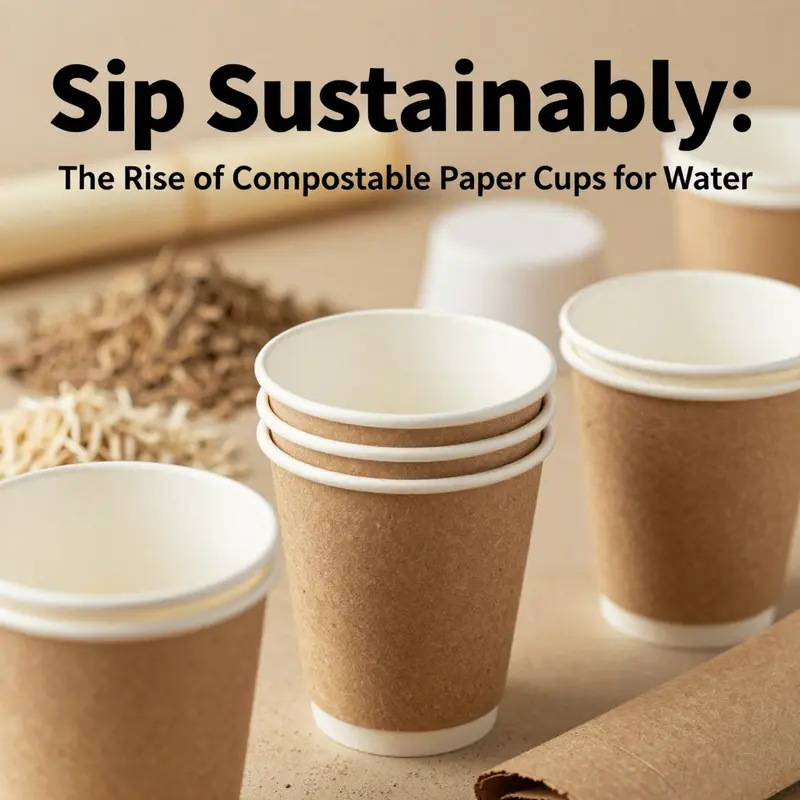
The design journey begins with material choice, a decision that echoes beyond the cup’s appearance. These cups are commonly crafted from renewable resources such as bagasse, bamboo, or recycled paper pulp. Each material brings its own texture, strength, and impression. Bagasse offers a sturdy, natural feel; bamboo brings a smooth, even surface and a warmer tone; recycled pulp can provide a clean, uniform appearance that lends itself to crisp branding.
In all cases, the overarching objective is to create a cup that can break down naturally when composted, leaving behind no residual toxins or persistent plastics. This is not simply about being biodegradable; it is about aligning the cup’s life cycle with a system that can process plant-based waste efficiently in industrial facilities designed for composting.
A crucial design element is the interior and exterior protection against liquid leakage. The typical solution is a water-based, plant-derived lining that serves as a waterproof barrier without compromising compostability. Plant-based coatings, often derived from PLA or similar biopolymer formulations, can provide the necessary moisture resistance while remaining compatible with industrial composting streams. The choice between a liner and a purely barrier-treated surface involves trade-offs. A thicker polymer layer might improve resilience against hot liquids, but it could complicate compostability if the coating introduces non-renewable residues. A thinner, plant-based coating can strike a balance, preserving both performance and end-of-life goals.
Form follows function in the tactile and functional aspects of the cup. Functionality includes weight, rigidity, and ease of handling. A cup for water must be light yet rigid enough to resist deformation during transport and use. The interior surface should be smooth to facilitate rinsing between servings, while the exterior finish should convey a premium feel without compromising compostability. The rim and lip influence sipping, pouring, and overall user comfort; a well-designed rim reduces spills and supports a positive drinking experience in busy service settings.
Lid design adds practicality and sustainability. For water service, a lid must secure the contents while minimizing spills, especially outdoors or in crowds. Compostable lids, often made from the same plant-based materials, are becoming common. The goal is a seamless interaction that enables quick sealing and easy re-opening without forcing the cup to crack or degrade. A secure lid also reduces waste by preventing spills during transit.
Customization emerges as a major differentiator. Branding, color, and pattern communicate a company’s values while preserving environmental responsibility. Printing can be done with flexographic or digital methods, enabling vibrant logos without compromising compostability. Inks, coatings, and adhesives must be chosen for compatibility with industrial composting and for certifications that reassure customers about end-of-life performance. Some models add ergonomic features that improve grip, especially for younger users or outdoor events.
Sizes and variability help meet diverse consumer needs. Water cups typically come in compact sizes such as 8, 12, or 16 ounces. The interior geometry can be tuned to optimize mouthfeel and reduce drips. Lid compatibility varies, with snap-on, screw-top, or press-fit designs offering different levels of spill resistance. Each combination must be validated for typical service conditions.
Customization also intersects with the supply chain and manufacturing. Suppliers emphasize quality-management standards and traceability of materials to support credible compostability claims. A well-designed cup can scale from samples to tens of thousands per month while maintaining performance and end-of-life stewardship.
The applications of compostable water cups span cafes, events, and corporate settings, where environmental values meet user experience. Clear disposal instructions and access to appropriate composting facilities further reinforce the upstream design choices. The chapter closes with a reminder that the end-of-life story is integral to the product, ensuring that compostability translates into real-world waste reduction.
Practitioners and students alike can use this chapter as a practical lens for case studies and supplier conversations, with the understanding that sustainable design blends material science, user experience, and responsible systems thinking.
Certification and Safety Standards for Compostable Paper Cups in Water Service
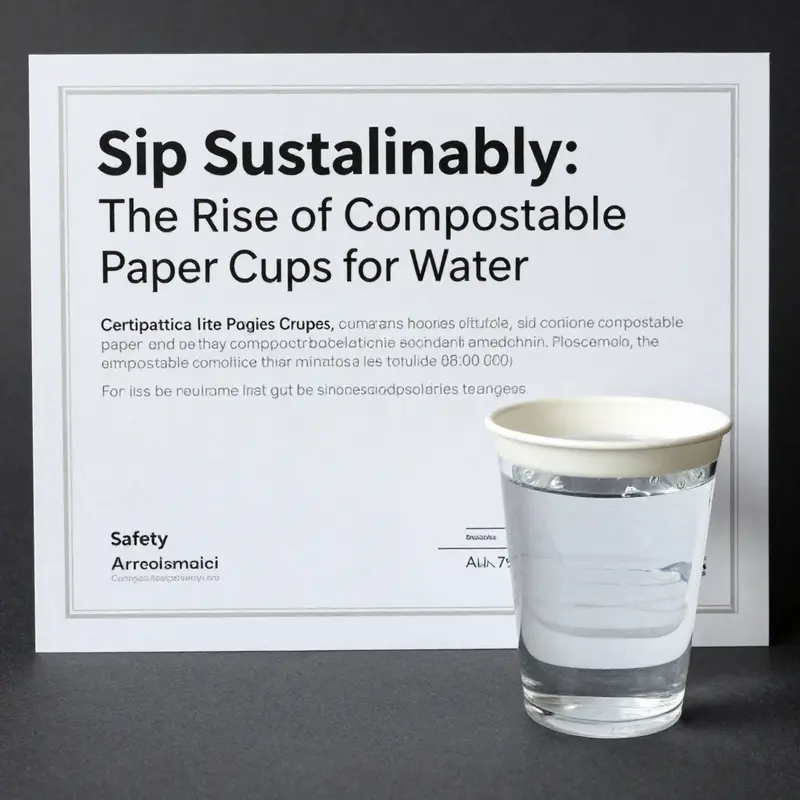
Compostable paper cups for water service sit at the intersection of practical hospitality and planetary stewardship. For venues that serve water by the cup, choosing certified compostable cups supports waste diversion and a clearer end-of-life pathway. The promise is a cup made from renewable fibers that can break down into natural elements in an appropriate composting facility, leaving no toxic residues and enabling a return to soil rather than a landfill.
Key certifications provide the trusted signal buyers need. European standards often anchor industrial composting requirements; for example, the EN 13432 standard is used alongside third-party verification such as the OK Compost INDUSTRIAL seal from TUV Austria. In practice, a cup carrying this certification should disintegrate and biodegrade in an industrial facility within a defined timeframe under controlled heat and moisture, reducing cross-contamination with conventional plastics.
In the United States, ASTM D6400 specifies performance criteria for compostable products in industrial facilities, including disintegration, biodegradation, and absence of ecotoxicity. When a supplier meets D6400, buyers gain confidence that the cup contributes to organics streams in compatible municipal systems and that residues are safe for soil.
A third pillar is the Biodegradable Products Institute (BPI) certification, which helps verify that products meet D6400 criteria and provides a clear consumer-facing seal. BPI verification involves documentation, testing, and facility checks that align labels with real-world waste management.
Material choices and coatings matter for end-of-life behavior. Base fibers such as bagasse or kraft offer renewable origins, and water-based barrier coatings improve compatibility with composting streams while maintaining performance in use. Throughout the cup, checks for contaminants such as PFAS guard against residues that could migrate into a beverage or soil.
For procurement, a certified cup simplifies communications with customers and waste processors and reduces risk if a facility is uncertain about material compatibility. Procurement teams should request certification documents and test results from suppliers, and consider the availability of local organics programs when industrial composting is not accessible. When used consistently across related packaging components—lids, sleeves, and compatible containers—a coherent, certified system supports a circular economy and a clearer waste stream.
Ultimately, compostable cups in water service are not a standalone product but a node in a broader packaging strategy. Certification ties material choice to environmental outcomes and consumer safety, helping brands demonstrate tangible commitments to sustainability while supporting robust end-of-life infrastructure.
Final thoughts
Incorporating compostable paper cups for water into your business not only supports a cleaner environment but also resonates with increasingly eco-conscious consumers. By understanding the environmental impact, the materials utilized, economic advantages, design customization, and safety certifications, businesses can make informed choices that benefit both the planet and their profitability. Transitioning to these sustainable solutions is essential in moving forward towards a more sustainable future, ensuring you’re positioned as a leader in environmental responsibility.