
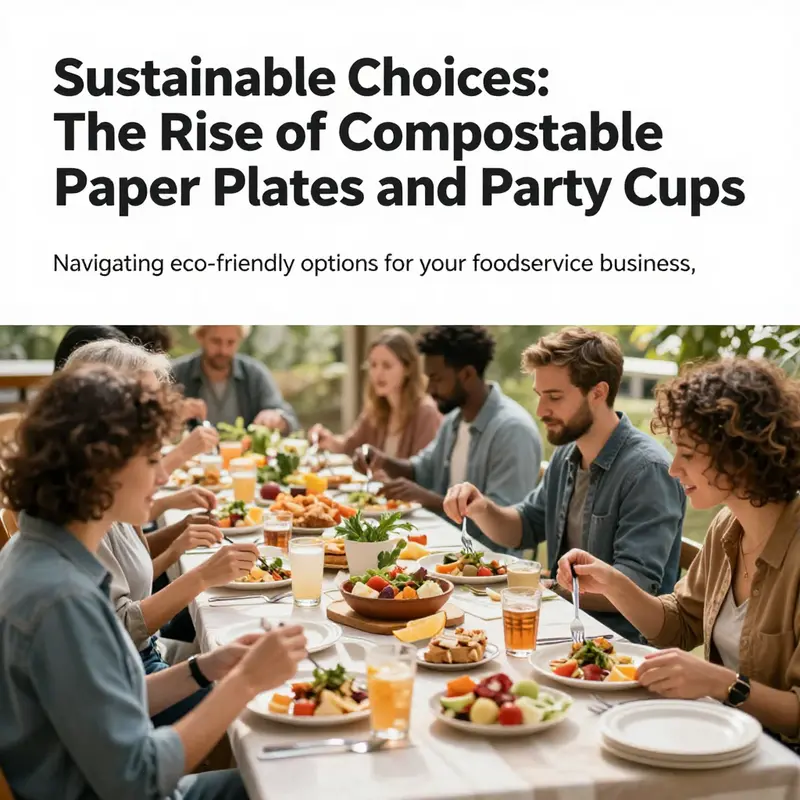
As concerns about sustainability and environmental impact gain traction, foodservice businesses are increasingly seeking eco-friendly disposable tableware. One significant culprit in environmental degradation is traditional paper plates and party cups, often coated in harmful chemicals that hinder their recyclability. In this landscape, compostable plates and party cups emerge as viable alternatives. This article will explore not only the environmental advantages of these products but also their design features and economic viability to help restaurants, food trucks, and event planners make better choices for their operations.
From Coatings to Compost: Redefining the Environmental Footprint of Paper Plates and Party Cups
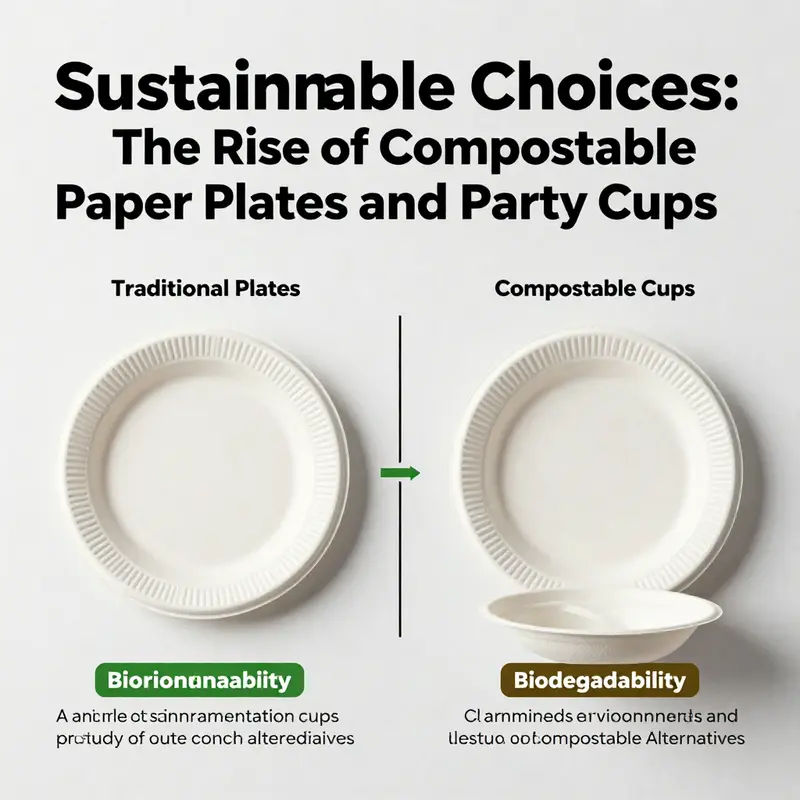
Choosing the right disposable tableware for a sustainability-minded gathering is more than a quick decision. It unfolds as a chain of choices that start with material origins and extend through production, use, and end-of-life. This chapter examines how coatings, materials, and waste streams shape the true environmental footprint of paper plates and party cups.
Coatings deepen the complexity. Many traditional plates are coated with polyethylene or other plastics to resist grease, but these coatings can hinder recycling and compostability, leaving residues that contaminate streams or slow decomposition.
Compostable alternatives offer plant-based materials like bagasse, bamboo, palm leaves, or PLA-based resins. They require appropriate industrial composting facilities; in areas without access, the environmental benefit may be limited. The chapter discusses how to read labels, understand local infrastructure, and design events that maximize end-of-life outcomes.
A practical framework helps hosts decide between compostables, reusables, or optimized recycling streams. It emphasizes answering three questions: Where will the product be disposed? What is its material basis and trade-off in resources? How will guests be guided to the correct disposal stream? The goal is to align product choice with local facilities and guest behavior to achieve genuine environmental gains.
Ultimately, true sustainability comes from the full lifecycle: sourcing, manufacturing energy use, transport, and end-of-life processing. Certifications can help, but they are not a magic key. The most credible approaches rely on transparent information, robust waste management, and a culture of careful disposal among guests.
Sustainable Tables: The Design and Durability of Compostable Paper Plates and Party Cups for Eco‑Friendly Gatherings
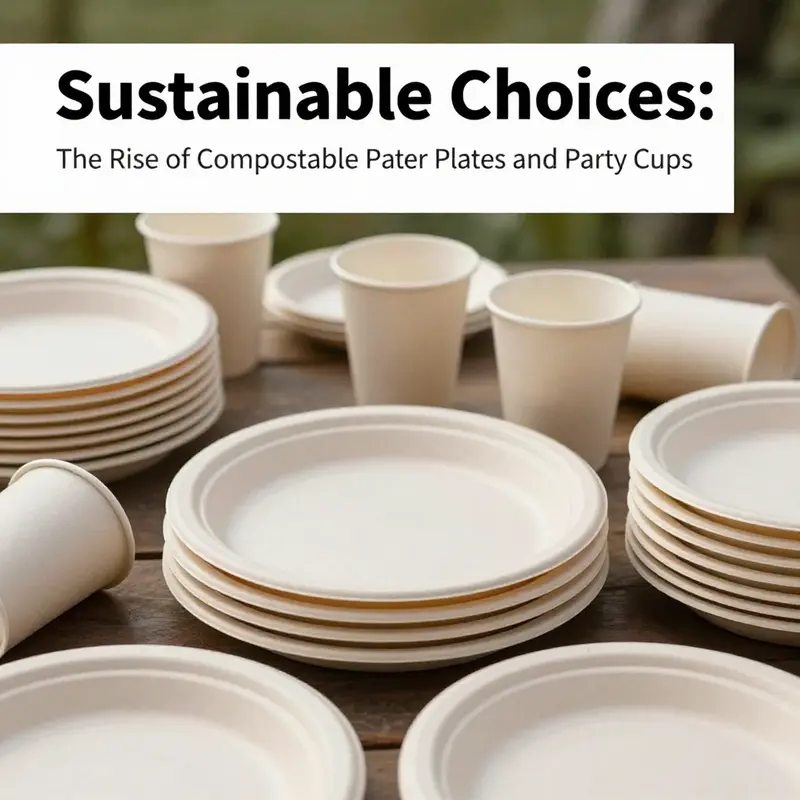
Every gathering, from a sun-soaked outdoor wedding to a bustling city block party, carries an invisible afterlife that can tilt the environmental balance one way or another. When guests sip, eat, and linger, the disposable tableware in use leaves a trace long after the last plate is cleared. The chapter that follows does not simply catalog materials or dismiss plastics; it weaves a narrative of design choices, performance, and end-of-life considerations that together determine whether a party can feel festive without leaving a chemical footprint. In this context, compostable paper plates and party cups emerge not just as convenient substitutes for traditional disposables, but as carefully engineered instruments for sustainable events. Their promise rests on a combination of renewable material sources, thoughtful manufacturing, and a disposal pathway that actually closes the loop rather than shifting waste from one jar to another.
At the heart of compostable tableware is material choice. Rather than relying on wood pulp alone, many of these products leverage the byproducts and fibers of other crops—sugarcane bagasse, bamboo, palm leaf, cornstarch-derived PLA, or wheat straw. Bagasse, the fibrous residue left after extracting juice from sugarcane, is particularly valued for its rigidity and moisture resistance. It allows plates to hold sauces and sauces without bending, even when hot. In practical terms, this means a 6- to 9-inch plate made from bagasse or similar plant-based fibers can support a main course, a sauce-heavy entrée, or a plateful of dessert without collapsing or soaking through. This characteristic often translates into a more predictable dining experience for guests at outdoor weddings, corporate picnics, and community feasts where the environment can be less controlled than a banquet hall.
The design of compostable tableware intentionally balances a straightforward consumer experience with the complexities of food safety and environmental responsibility. On the functional side, these products are engineered to resist grease and moisture without relying on traditional plastic coatings. Instead of polyethylene or PFAS, many certified compostable plates use food-safe, biodegradable sealants. This distinction matters not only for the safety of the food served but also for the integrity of compost streams. When a plate is labeled compostable, it invites a disposal pathway that aims to return organics to the soil rather than to a landfill or recycling facility where plastics can contaminate streams. The use of plant-based coatings or sealants is a practical compromise that preserves performance while aligning with sustainability goals.
Aesthetics and utility are not sacrificed in the name of virtue. The design options for compostable plates and cups are varied enough to accommodate the visual and logistical demands of different events. Plates commonly come in sizes ranging from 6 to 9 inches, a range that supports diverse meal portions and presentation styles—from simple family-style servings to buffet-ready configurations. Shapes include round, square, and even fashionable 3-compartment designs that enable a more organized layout for plates with multiple components, such as a protein, starch, and vegetable trio. The 3-compartment option is particularly well-suited for buffets and dessert tables, where guests may want to combine several components without crossing flavors and textures. The heavy-duty construction ensures that a plate can withstand the rigors of fast-paced service, outdoor dining, and the occasional enthusiastic guest who piles on seconds. In many event contexts, durability translates directly into guest satisfaction, reducing the risk of spills and enabling a smoother flow of service.
A companion story is told by compostable party cups. These are often made by combining renewable paper fiber with a polycarbonate-like interior lining based on PLA or other plant-derived polymers. The exterior provides the familiar paper feel and rigidity, while the inner lining delivers liquid resistance that lets cups hold hot beverages or chilled drinks without weakening or leaking. The true strength of these cups is their ability to perform under temperature stress. Many designs tolerate temperatures up to about 200°F, a threshold that covers coffee and hot teas as well as some hot chocolate offerings found at winter events. More impressively, these cups resist soaking for significant periods—over 45 minutes in some formulations—before any perceptible loss of integrity occurs. For outdoor festivals, rooftop gatherings, or graduation celebrations, that margin of resilience can be the difference between a successful service and a drained, frustrated crew.
Beyond the immediate performance, the environmental performance of compostable tableware hinges on how it is disposed of after use. Certification bodies such as BPI or equivalent European testing regimes set standards for industrial compostability. These standards define not only the rate at which products break down but also the absence of toxic residues in the resulting compost. The practical implication is clear: compostable plates and cups can become organic matter that contributes to soil health when they end up in a properly managed industrial composting facility. This does not automatically happen in every jurisdiction or municipal program, which underscores the importance of alignment between event organizers, waste haulers, and local composting infrastructure. Educating guests about what to do with used tableware—whether it goes into a dedicated compost stream or a specific “green” bin—becomes part of the event’s design itself. The success of a sustainability claim, therefore, rests not only on the material or coating but on the entire chain that moves from plate to compost.
Equally central is the question of lifecycle and responsibility. Renewable plant-based inputs are a core advantage, but they are not a panacea. The environmental footprint of compostable tableware also depends on agricultural practices, processing energy, transport distances, and the efficiency of the industrial composting facility. A bagasse-based plate manufactured near the event site, transported with minimal packaging, and then composted in a nearby facility can present a favorable lifecycle balance. Conversely, if a compostable plate travels great distances and is disposed of in a jurisdiction without industrial composting facilities, its environmental benefits may be less pronounced. The subtlety here matters because the public often evaluates sustainability claims through the lens of convenience and result rather than chain-of-custody. A truly sustainable choice acknowledges this complexity and seeks to optimize the entire chain—from harvest and processing to end-of-life management.
As with any material choice, a cost and supply dynamic also interacts with environmental outcomes. Compostable tableware is generally priced above conventional paper disposables, reflecting the higher processing costs and the niche supply chain, yet the premium can be justified by the reduced waste stream complexity when end-of-life flows are properly managed. For large events, bulk ordering becomes an essential planning tool. It helps stabilize costs and ensures consistent quality across thousands of servings. It also minimizes wasteful surcharges tied to last-minute shipments or shortages. The durability and multi-use potential of certain heavy-duty options can further justify the investment, especially for events that aim to minimize tableware breakage and mess, thereby reducing ancillary waste from replacements and cleanup.
A practical planning lens for organizers is to think about the entire event flow. How will guests be served? Will there be a buffet or a plated service? Will beverages be offered in cups with a plant-based lining, or will guests bring reusables? The answers to these questions shape the choice of plates and cups. In outdoor settings, a unified aesthetic that still communicates sustainability can be achieved by selecting natural-toned or subtly dyed plates that complement the event’s color scheme. The design language should not feel like a sacrifice for the sake of ecology; instead, it should evoke a cohesive narrative where guests sense that sustainability is an integral part of the experience, not an afterthought.
To illustrate how design meets function in practice, consider the 6–9 inch range and the 3-compartment format as a deliberate choice for varied meals. A three-compartment plate can keep side dishes separate, reducing cross-contamination of flavors and enabling a neater dining experience without forks, knives, and spoons becoming a separate accessory. The durability of the material means guests can tackle a range of courses—salads with dressing, saucy entrees, and dessert dips—without the plate warping or collapsing under pressure. The inner lining of the cups works with hot and cold drinks alike, delivering a crisp experience that doesn’t betray the compostable promise with sogginess or taste transfer. In the context of sustainability advocacy, these tangible performance traits reinforce a broader message: responsible choices do not require compromise on the guest experience.
From a supply-chain perspective, the compostable segment represents a network of producers, distributors, and recyclers who are increasingly aligned with circular economy principles. Certifications and standardized testing provide a shared language for reliability and performance. Yet this alignment requires collaboration at the event level. Hosts must clearly label waste streams, provide accessible signage, and train staff to guide guests toward proper disposal. A well-executed waste management plan can transform the act of dining into an educational moment, reinforcing the idea that everyday choices—such as selecting compostable tableware—can contribute to environmental goals without dampening the celebratory spirit of the event.
An interesting dimension of design emerges when considering branding and customization. Some planners want tableware that carries a logo or color theme, and compostable options now include finishes and coatings that are compatible with branding while remaining biodegradable. This integration of aesthetics and sustainability offers a nuanced advantage: guests leave with a positive impression not just of the event, but of the organizers’ commitment to responsible consumption. The ability to align visual identity with ecological values can be a subtle differentiator in a crowded event landscape, where attendees remember the experience long after the last plate is cleared.
As a closing thread, the greener choice in disposable tableware is less about one single feature and more about an ecosystem of decisions. It is about selecting materials that leverage agricultural byproducts, choosing coatings that are plant-based and food-safe, and ensuring that the disposal pathway exists and is accessible. It is about designing plates and cups that meet the real needs of service—temperature tolerance, grease resistance, and structural integrity—without compromising ecological integrity. And it is about recognizing that true sustainability is not static; it involves continuous collaboration among suppliers, waste managers, and event organizers to adapt to changing regulations, evolving infrastructure, and shifting consumer expectations. When these pieces come together, compostable paper plates and party cups become a practical embodiment of a circular economy—where dining experiences are not only enjoyable but also restorative for the environment.
For readers seeking a concrete reference to product examples that mirror the described characteristics, a selection of disposable paper plate options can be explored here: disposable-paper-plate-tableware-set-wooden-knife-fork-and-spoon-set-paper-plate-paper-bowl-zebra-pattern-tableware. This internal link offers a window into design variations that blend form and function while aligning with sustainability goals. While the exact configurations and aesthetics may differ from one supplier to another, the underlying principles—rigidity, moisture resistance, and a credible end-of-life pathway—remain consistent across the best options in this category.
External resources can provide further context on certification and industry standards that help validate the claims surrounding industrial compostability and responsible disposal. For a practical reference to commercially available compostable paper plates, see the following external resource: https://www.alibaba.com/product-detail/100-compostable-paper-plates-3-compartment-disposable1600584787753.html?spm=a2700.galleryofferlist.normaloffer_list.1.6a2b6c32TlRmZD&fsb=y&src=gallery
Economics of Green Tables: Measuring the Market Momentum for Compostable Paper Plates and Party Cups

Choosing disposable tableware for a sustainability-focused event is rarely a simple arithmetic choice. It is, at its core, an assessment of value: value in performance, value in waste management, and value in long-term environmental stewardship.
The market for compostable paper plates and party cups sits at the intersection of these values, buoyed by a rising tide of consumer awareness and a regulatory environment that nudges businesses toward more responsible packaging. What starts as a preference for greener materials often ripens into a practical decision about cost, supply reliability, and the broader benefits of aligning events with a circular economy. In this context, the economics of compostable tableware are not a niche concern; they are a lens through which the entire food-service and event industry is rethinking material choices, supplier relationships, and the choreography of waste streams. The trajectory is clear: demand is growing, products are becoming more resilient and capable, and prices are moving toward a more competitive equilibrium as scales of production are realized and efficiencies are unlocked.
The market momentum is underpinned by a potent blend of consumer preference, material science, and policy signals that together tilt the economics in favor of compostable options. Consumers are increasingly seeking products that are not only plant-based or renewable but also certified for safety and performance. This matters because compostable cups and plates must endure a buffet of realities—from greasy sauces to hot soups and long service-to-table times—while still degrading responsibly after use. Certifications such as LFGB or EU equivalents reassure buyers that the materials meet stringent food-contact standards, a crucial factor when planning weddings, corporate gatherings, or outdoor festivals where guest experience hinges on reliability as much as sustainability. The material story matters here because it explains why cost differences between traditional paper and compostable alternatives are narrowing: bagasse, bamboo, palm leaves, cornstarch (PLA), and other plant fibers offer grease and water resistance without the plastic coatings that complicate recycling and composting. In practice, this means plates and cups that perform under pressure, yet disappear into industrial composting streams in a matter of months rather than lingering for years in landfills.
From a production perspective, the economics of compostable tableware are significantly shaped by the source material and the processing steps required to render it food-safe and sturdy. Bagasse pulp, for instance, leverages the residual fiber from sugarcane processing, turning what was once waste into a high-strength substrate that resists moisture. Similarly, PLA-coated papers and other bio-based laminates provide a grease barrier while remaining compatible with composting streams that can process plant-based polymers. These material traits translate into practical advantages: plates that hold up under heavy portions, cups that resist leaks, and packaging that keeps contents intact during transport and service. The capacity to withstand temperatures from subzero to near-boiling, and even to tolerate microwave use in some cases, expands the use scenarios—from camping and tailgating to catered weddings and corporate picnics. It is precisely this range of performance that helps justify the premium that compostable options sometimes command; the premium is not merely about bio-based content but about reliability and end-of-life outcomes in real-world settings.
Economies of scale are a crucial lever shaping price and availability. The economics literature and supplier disclosures converge on a common insight: as orders scale, per-unit costs drop, enabling a broader adoption across catering, events, and hospitality segments. Some suppliers report that compostable paper cups can be sourced at markedly low per-piece costs when ordered in bulk, with estimates in the vicinity of a few cents per unit for very large quantities. These numbers illustrate a broader pattern: the cost curve steeply flattens as production expands, standardizes, and integrates with efficient packaging formats. Retailers and event planners who previously viewed compostable tableware as a niche or premium option are increasingly discovering that the total cost of ownership—considering waste management, disposal fees, and environmental impact—can tilt in favor of compostables when the event scale justifies it. The narrative here is not just about raw materials; it is about value propositions, including the branding and messaging that accompany sustainable choices. Many organizers want their guests to leave with a tangible sense that the event prioritized environmental stewardship, and the availability of customizable, compostable tableware supports that narrative.
Crucially, the commercial viability picture is reinforced by regulatory momentum. Governments around the world are tightening standards for disposable tableware, encouraging manufacturers to design for compostability and ensuring that facilities exist to process the discarded materials. This policy environment reduces the risk of stranded assets—materials that cannot be properly composted after use—and helps align producer incentives with the broader goals of waste reduction and resource recovery. In practical terms, this means more suppliers are investing in certified compostable lines, more facilities are equipped to handle the streams, and more buyers can claim credible compliance through certifications and verified end-of-life pathways. For events, this reduces the uncertainty that often accompanies sustainability claims: a compostable plate or cup with a credible certification carries more weight with guests, partners, and hosting venues, and it minimizes the fear that a “green” choice may backfire if the waste stream is compromised.
Another driver of market growth lies in the versatility and adaptability of compostable tableware. The landscape has evolved beyond single-use plates to include heavy-duty options, such as 6–9 inch plates designed for substantial meals, and 3-compartment configurations that facilitate varied portions and neat presentation in buffets and family-style settings. The ability to withstand both hot foods and oil-heavy contents makes these products suitable for a wide spectrum of events—from rustic outdoor weddings to high-volume catering for large gatherings. The versatility also extends to branding and guest experience. Many suppliers offer OEM customization and branded packaging that can align with event themes without sacrificing compostability. The net effect is a more compelling value proposition for event organizers who must balance aesthetic expectations with environmental responsibilities. A well-executed branding strategy using compostable tableware can reinforce a message of stewardship and sustainability, turning a practical choice into a memorable part of the guest experience.
In discussing cost, it is important to acknowledge that unit prices remain contingent on several variables: order size, the exact mix of products (plates, bowls, cups, lids, and accessories), certifications, and the degree of surface customization. For example, in large-scale orders, per-unit costs can dip to a level that makes compostable solutions comparable to or even cheaper than some traditional disposable options when accounting for waste handling and end-of-life considerations. This does not imply a universal price parity in every scenario; rather, it signals a trend toward more predictable pricing as the supply chain matures and manufacturing processes optimize. For those planning events or running catering businesses, the practical takeaway is to design procurement strategies that optimize bulk purchasing, diversify product mixes to reduce waste, and leverage packaging efficiencies to further reduce per-event costs. The numbers emerging from supplier discussions and market analyses point to a narrowing gap between conventional disposables and compostable alternatives, particularly as technological advances reduce the resource intensity of production and as distributors consolidate to offer more attractive freight terms and packaging configurations.
The macroeconomic context further supports the viability of compostable tableware. Analysts project a robust growth path for the global biodegradable tableware market, with a projected market size of around USD 30.27 billion by 2034 and a compound annual growth rate (CAGR) near 6.28 percent. This forecast reflects sustained consumer demand for eco-friendly options, the expansion of formal composting infrastructure, and a willingness among businesses to invest in sustainable packaging as a core component of brand promise. For sectors such as catering, events, weddings, and outdoor activities, the implications are clear: as the market expands, the pipeline of product innovations grows, delivering better performance at lower relative cost and enabling more venues to implement comprehensive sustainability programs. The total cost of adopting compostable tableware is increasingly perceived not as a line item to be minimized on a single event but as part of a broader strategy to minimize environmental footprints, improve service quality, and meet the expectations of a growing community of conscious consumers.
Yet the economic story is not without its caveats. Access to reliable industrial composting infrastructure remains a critical factor in realizing true end-of-life benefits. In regions where facilities are sparse or where composting programs are inconsistent, the compostable label can be a source of confusion rather than clarity. Sorting and contamination issues can compromise the integrity of compost streams, reducing the value of compostable products and complicating municipal waste systems. This highlights the need for comprehensive waste-management planning at the event level, including clear labeling, guest education, and collaboration with waste processors to ensure proper separation of compostable materials from other streams. The supply chain must also cultivate transparent certification processes and robust supply assurances to mitigate risks associated with feedstock variability, material quality, and manufacturing consistency. In other words, the economic viability of compostable tableware is maximized only when it is integrated into an end-to-end solution that aligns procurement, use, and disposal with the realities of the local waste ecosystem.
The strategic implications for suppliers and buyers alike center on collaboration and planning. For suppliers, the message is to invest in scalable production facilities, diversify raw-material portfolios, and maintain rigorous quality controls that preserve performance under real-world conditions. For buyers—caterers, event planners, and hospitality operators—the lesson is to view compostable tableware as part of a broader service package. This means coordinating with waste-management partners, modeling per-event waste streams, and incorporating sustainability into the event brief from the outset. In practice, this involves forecasting demand, designing menus around the capabilities of compostable tableware, and developing procurement contracts that reward reliability, consistency, and clear environmental benefits. The convergence of material science, policy alignment, consumer demand, and scalable production creates a virtuous cycle: better products enable broader adoption, broader adoption drives economies of scale, and economies of scale reinforce the business case for sustainable choices at every event.
Within this evolving landscape, the potential for customized, thematic packaging and tableware solutions becomes a meaningful differentiator. A practical approach for those aiming to maximize both impact and efficiency is to explore supplier partnerships that offer flexible, sustainable packaging options alongside their standard lines. For instance, collaborative packaging strategies—such as custom takeaway packaging that complements theme-specific tableware—can reduce waste while enhancing the guest experience and the event’s branding. See for example custom-takeaway-packaging-supplies-disposable-tableware-for-theme-party. This kind of collaboration not only drives product adoption but also signals to clients that sustainability is woven into every aspect of the service, from the plate to the packaging. It is in these synergies that economic viability finds its most tangible expression: when a sustainable choice also serves as a strategic asset—delivering cost efficiency, brand alignment, and guest satisfaction in equal measure.
As the market continues to mature, the most successful players will be those who translate these macroeconomic trends into concrete, site-specific plans. This means building procurement models that combine bulk purchasing with smart inventory management, implementing waste-stream analyses that quantify the end-of-life benefits of compostable tableware, and communicating environmental outcomes in a way that resonates with clients and guests alike. The growth potential is substantial, but it is not automatic. It requires deliberate strategy, credible certification, and the willingness to invest in supply chains that can reliably deliver compostable products at scale. When these conditions are in place, events of all sizes can shift from being a test of convenience to a demonstration of responsible hospitality, a tangible expression of how modern consumption can align with ecological realities while still delivering the high standard of service that guests expect.
In sum, the economics of compostable paper plates and party cups extend beyond price tags. They encompass a broader value proposition that includes safety, performance, certification credibility, and end-of-life outcomes. The projected market growth, the affordability achieved through scale, and the regulatory and consumer pressures converging in many markets point toward a durable trajectory for compostable tableware. For event organizers and food-service operators, the implication is clear: adopt a planning mindset that integrates sustainability with operational efficiency, invest in reliable supply chains that can meet demand with consistent quality, and leverage the storytelling power of compostability to elevate guest experience. When approached in this way, the move toward compostable tableware becomes less about choosing between convenience and responsibility and more about choosing a future where every plate and cup serves a purpose beyond its brief use—creating less waste, enabling cleaner recycling and composting streams, and supporting a more resilient, circular economy for gatherings large and small.
External resource: https://www.grandviewresearch.com/industry-analysis/biodegradable-tableware-market
Final thoughts
Choosing compostable paper plates and cups is not just a sustainable decision; it’s one that aligns with modern consumer values and expectations surrounding environmental responsibility. By opting for these products, foodservice operators can enhance their brand reputation while reducing their environmental footprint. This shift is not only beneficial for the planet but also economically viable, as the demand for eco-friendly solutions continues to rise. Embrace the future of sustainable dining today.