
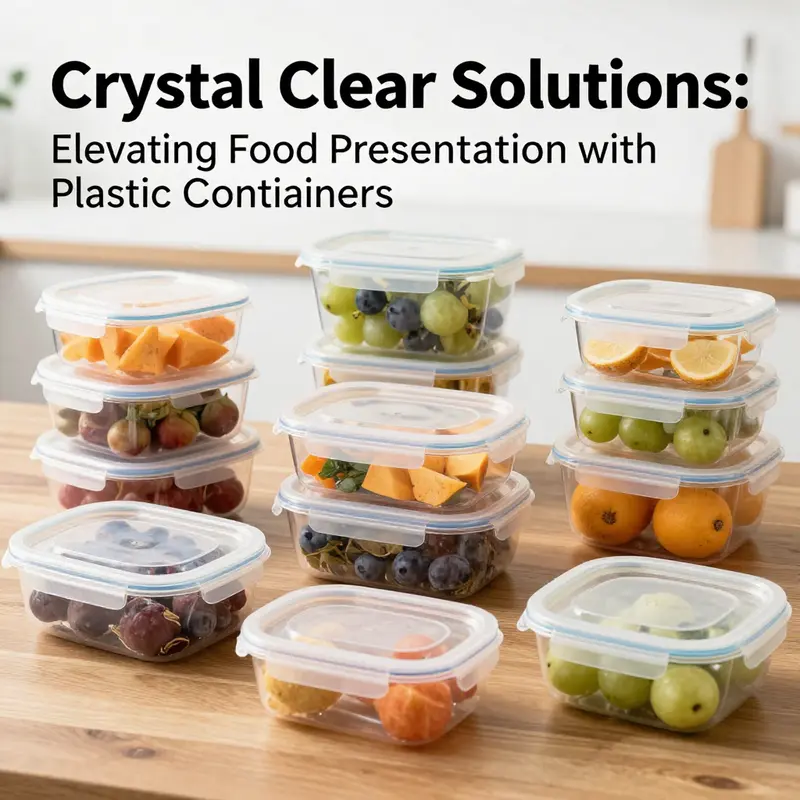
Crystal clear plastic food containers are increasingly pivotal in food service industries such as bubble tea shops, restaurants, food trucks, catering, and event planning. Their transparent design not only showcases the beauty of food and beverages but also emphasizes freshness and hygiene. Through a journey of material understanding, durability insights, and practical applications, this article will unveil how these containers can enhance your business operations and customer satisfaction. Each chapter serves as a building block toward a comprehensive understanding of how integrating crystal clear plastic containers can optimize service delivery and elevate brand presentation.
Crystal Clarity, Real Materials: A Deep Dive into PET, Tritan, and the Polymers Behind Clear Food Containers
Crystal clear plastic food containers captivate the eye and shape everyday choices. The appeal goes beyond aesthetics; it sits at the intersection of visibility, hygiene, durability, and practical use. When a shopper lifts a tray or a takeout box and can see the contents clearly, confidence follows. Whether in a home kitchen or a bustling commercial kitchen, the ability to assess freshness, portion size, and presentation at a glance reduces waste and speeds up service. Yet behind that glass-like transparency lies a family of polymers whose properties, safety profiles, and performance envelopes determine how well a container preserves flavor, blocks moisture and oxygen, resists staining and odors, and endures repeated use. Understanding these materials helps consumers and professionals make informed choices that align with budget, sustainability goals, and food safety standards, without sacrificing the essential clarity that defines this category of packaging.
At the core of most crystal clear containers is PET, or polyethylene terephthalate, a material that has become almost synonymous with visibility and strength in food packaging. PET offers exceptionally high clarity, a quality that remains stable through cycles of use and washing. Its structural integrity resists cracking and clouding, which means that a lid or body made from PET can retain its transparent appeal even after many uses. This resilience is especially valuable in retail settings, where merchandise relies on clear presentation to entice customers and convey freshness. From a practical standpoint, PET also provides a reliable barrier against moisture and oxygen, helping to slow the process of staling and freezer burn when containers are used for perishable items. The barrier properties are not miraculous, but they are sufficiently effective for a wide range of foods, including salads, pre-cooked meals, and ready-to-heat dishes, where a crisp, vibrant display matters as much as the containment.
PET’s advantages, however, extend beyond mere clarity. It is comparatively lightweight, which translates into lower transport costs and easier handling for both consumers and restaurant staff. Recyclability is another pillar of PET’s appeal. In many regions, PET is widely accepted by curbside recycling programs, allowing containers to be diverted from landfills and returned to the supply stream for reuse in bottles and new packaging. This recyclability is a meaningful factor for operations aiming to reduce waste while maintaining cost efficiency. But the life cycle of PET also depends on how the material is used and cleaned. Proper washing and drying prevent faint hazing that can occur if residues are not fully removed. The more PET is reused rather than discarded after a single use, the more its environmental advantages multiply, though the economics of reuse must be weighed against the costs of cleaning, sanitizing, and potential odor transfer.
A step beyond PET in the realm of durable, crystal-clear containers is Tritan, a BPA-free copolyester designed to mimic glass in clarity and feel while delivering superior resilience. Tritan’s standout benefits include excellent impact resistance, which makes it far less prone to shattering than traditional glass or brittle plastics when dropped in busy kitchens or during transport. This shatter resistance translates into safer handling in high-traffic foodservice environments, where accidental drops and rough handling are common. Tritan also demonstrates outstanding resistance to staining and odor retention. In a professional setting, where a container may be used for a variety of sauces, spicy dishes, or highly pigmented ingredients, this resistance helps maintain hygiene and aesthetics across multiple uses. Importantly, Tritan’s chemical stability means it can withstand repeated exposure to heat and a broad spectrum of cleaning agents without leaching substances or degrading its surface clarity. For consumers who are particularly concerned about chemical safety, Tritan offers a BPA-free option that aligns with contemporary expectations for safer, long-lasting plasticware.
The practical implications of using PET and Tritan come into sharper focus when the intended use, cleaning regime, and service environment are considered. PET’s excellent clarity is most advantageous for items where visibility of contents is essential, such as ready-to-eat meals, deli pre-packages, and display-ready salads. It performs well in refrigerated environments and can tolerate modest temperature variations without warping. Tritan, with its premium feel and resilience, is well suited for frequent use in homes and coffee shops, where containers might be opened and closed repeatedly, scrubbed in dishwashers, or microwaved under careful guidelines. In both cases, the material choice influences not only beauty and practicality but also safety and maintenance. While PET can deliver robust performance, Tritan often carries an edge in long-term repeated-use scenarios where the risk of breakage and the risk of chemical interaction with aggressive cleaners are considerations.
Beyond PET and Tritan, other polymers commonly found in transparent food containers play important roles in balancing cost, performance, and suitability for different tasks. Polypropylene (PP) is one such material that often accompanies PET in the broader category of clear or near-clear food storage. PP is known for its good heat resistance and chemical compatibility, making it a common choice for containers intended for reheating or storing hot foods. Its clarity may not always reach the same level as PET or Tritan, especially after repeated cycles of washing, but it offers a strong value proposition where affordability, heat tolerance, and durability are prioritized. High-density polyethylene (HDPE) is another widely used option. HDPE provides toughness and chemical resistance, particularly for containers designed for bulk storage or longer-term use, though it typically exhibits less transparency than PET or Tritan. In some designs, a layer of clear PET or a PET-PP blend is employed to preserve visibility while leveraging PP’s heat tolerance or HDPE’s ruggedness. In practice, manufacturers curate these materials into sophisticated combinations that optimize weight, clarity, barrier strength, and cost to match the diverse needs of households, cafes, caterers, and large-scale kitchens.
Judgments about which material to select hinge on several interrelated factors. Clarity is not merely a luxury; it is a functional attribute that informs decision-making about freshness and portion control. For businesses that rely on fast, accurate food service, the ability to quickly assess a container’s contents supports speed of service and reduces errors. Durability is another essential criterion. In environments where containers are stacked, shipped, or repeatedly opened and closed, a material’s resistance to impact, cracking, and deformation matters for both safety and cost. The strength-to-weight ratio also matters in logistics; lighter containers lower shipping costs and reduce fatigue for staff handling. Heat tolerance and chemical resistance influence whether a container can be used for reheating, dishwashing, or cleansing with standard sanitizers. Finally, safety and environmental impact shape long-term sourcing decisions. A growing number of facilities prioritize BPA-free options and recyclable materials, seeking to align with regulations and sustainability goals while maintaining performance.
The environmental conversation surrounding crystal clear plastics is nuanced. PET remains a workhorse in beverages and food packaging because of its clarity, strength, and recyclability. Its recycling infrastructure is mature in many regions, and consumer-facing programs have made PET a recognizable symbol of recyclable packaging. Tritan’s eco profile is buoyed by the absence of BPA and its durability, which translates into potential reductions in the number of containers discarded due to breakage or warping. However, the recyclability of Tritan can vary by locale, and the availability of compatible recycling streams or reprocessing facilities can influence the overall environmental advantage. PP and HDPE bring additional options, with PP often being favored for its resistance to heat and chemical cleaners, and HDPE valued for its toughness and long shelf life for bulk storage. The overarching takeaway is that the environmental footprint of a crystal clear container hinges on a chain that begins with material choice and ends with post-consumer recovery. Consumers and operators who actively participate in sorting, cleaning, and recycling contribute to closing material loops and extending the usefulness of durable plastics.
Alongside the material performance story runs a thread about safety and regulatory expectations. Food-grade plastics are designed to limit the migration of chemicals into food, a concern that becomes especially salient when containers are used with hot foods or exposed to aggressive cleansers. PET is widely designated as food-safe, and many regions require labeling that confirms its suitability for contact with edible products. Tritan’s BPA-free claim is a response to consumer demand for safer plastics, and often accompanies testing that demonstrates stability under heat and repeated washing. PP’s heat tolerance must be respected to avoid deformation or leaching under high temperatures, while HDPE seeks to balance leak resistance with chemical stability. In practice, these safety considerations influence not only product development but also consumer habits: the types of foods stored, the temperatures used for reheating, and the detergents employed in cleaning protocols. The upshot is that material selection is a practical safety decision as much as it is a cosmetic or economic choice.
For anyone seeking to understand the wider landscape beyond a single product or brand, a broader technical guide offers a structured overview of standards, properties, and applications for clear food containers. It situates PET, Tritan, PP, and HDPE within a framework of performance metrics, regulatory expectations, and usage scenarios. This resource can help designers, manufacturers, and buyers align expectations with real-world requirements while avoiding hype around novelty materials or marketing-driven claims. In the end, the most satisfying choice tends to be one that harmonizes clarity with durability, safety with reuse potential, and cost with sustainability over the container’s entire life cycle.
In exploring these materials, readers encounter a balance between the immediacy of visibility and the longer arc of environmental stewardship. The decision to select PET, Tritan, PP, or HDPE is not merely a matter of which offers the sharpest image or the stiffest shell. It is about matching the container’s material properties to the food’s needs, the service environment, and the end-of-life pathway. For a deli counter showcasing fresh salads, a PET-based clamshell might deliver the needed transparency while maintaining cold-chain integrity. For a busy catering operation that handles hot meals and a high volume of reuse, a Tritan option could deliver the durability and heat tolerance that keep images of cleanliness and reliability intact over time. For bulk storage or cost-sensitive applications, PP or HDPE might provide the right combination of resilience and affordability. Each material has a role in the broader ecosystem of crystal clear plastic food containers, and the most effective approach often involves selecting a system that thoughtfully integrates multiple materials to address specific tasks.
As the conversation about materials continues to evolve, one practical takeaway stands out: clarity is best supported by a material that refuses to haze or degrade under intended use, while safety and sustainability are advanced through thoughtful design and responsible lifecycle choices. The best containers are those that remain visually honest—allowing contents to be seen without distortion—while delivering predictable performance across multiple cycles of use. They should also invite responsible care—simple cleaning, proper drying, and mindful disposal—that sustains their value for as long as possible. In a world where packaging choices can influence waste streams, food safety, and the consumer experience, the materials at the heart of crystal clear containers deserve careful attention and informed planning. The story is not only about what is visible on the outside but also about what is happening inside the plastic—how it feels, how it behaves under heat and pressure, and how it behaves when it finally returns to the recycling stream.
For readers who want to explore a concrete example of how material choices translate into practical packaging decisions, a linked resource offers a concise snapshot of how different designs address visible appeal, barrier performance, and reuse potential. picnic-kraft-paper-cake-boxes-clear-windows-dessert-fruit-packing-eco-friendly-food-container-home-kitchen-takeaway-party-event
In sum, crystal clear plastic containers are defined by the materials they are made from as much as by the promises they keep. PET and Tritan stand out for their clarity and resilience, while PP and HDPE provide alternatives that emphasize heat tolerance, chemical stability, and cost considerations. The conversation about materials is not purely technical; it informs how containers perform in real kitchens, how they age with repeated use, and how they align with evolving expectations around safety and sustainability. As products and processes continue to improve, the material choices behind crystal clear containers will increasingly reflect a coordinated approach to visibility, hygiene, durability, and lifecycle responsibility. The best decisions emerge when buyers look beyond a single attribute—clarity—and weigh the full spectrum of performance, safety, and environmental impact that these remarkable polymers can offer over time.
External resource: For a broader, standards-focused perspective on clear food containers and their applications in practice, see the official technical guide on wholesale container standards and properties: https://www.foodserviceequipment.com/technical-guide-clear-food-containers-wholesale
Clear, Confident Choices: Weighing Durability and Safety in Crystal Clear Plastic Food Containers

Crystal clear plastic food containers present a paradox many kitchens navigate every day. They offer an almost invisible presence on shelves and in storage, yet behind that transparency lies a web of material science, thermodynamics, and safety considerations that determines how long they last, how safely they perform, and how confidently users can rely on them for preserving freshness. The conversation around durability and safety is not merely about avoiding cracks or clouding; it is about selecting a material and a design that align with the specific demands of use, whether in a bustling commercial kitchen or a quiet home pantry. In examining the main polymers that define this category—PET and its variants, HDPE, PP, and the increasingly popular Tritan copolyester—we can map how each one behaves under the pressures of handling, heating, and repeated reuse. This chapter moves through that landscape with an eye toward practical selection, responsible use, and mindful maintenance, all while keeping sight of the larger context in which clear plastic containers operate within the food system. The goal is not to exalt one material over another but to illuminate the trade-offs that come with different choices, so readers can tailor their containers to their unique workflows, storage needs, and safety standards.
Durability in crystal clear plastics begins with the chemistry of the polymer and ends in the daily realities of use. PET, especially in its amorphous APET form, is prized for its exceptional clarity and respectable impact resistance. The virtue of transparency is not merely aesthetic; it translates into consumer trust. When a shopper or a chef can see a product with pristine visibility, they are more likely to perceive freshness and quality. Yet PET is not a universal solvent for every scenario. Its clarity can temper its toughness in the face of sharp temperature swings or persistent heat. In environments where containers routinely move from fridge to microwave, or where hot dishes emerge from ovens and plunge into cold storage, PET can experience warping or clouding over time. This is not a fatal flaw, but it is a limitation that must be acknowledged in selection and use. The balance point often emerges in hybrid choices: containers engineered with PET’s visual appeal in mind but reinforced by wall thickness, ribbing, or blends that improve heat resistance and structural integrity.
HDPE and polypropylene—HDPE in particular for its sturdiness and chemical resistance, PP for its heat tolerance—offer a different stability profile. HDPE tends to shrug off minor impacts and resists many acids and oils that can degrade plastics. It is less likely to crack under normal handling and stacking, a practical advantage for school cafeterias, catering services, and home kitchens with busy routines. PP, meanwhile, is renowned for its remarkable heat tolerance and resilience under repeated microwave and dishwasher cycles. It can survive the swing from freezer to high-temperature reheating without excessive distortion, a key factor for households and food-service environments that rely on reuse and quick turnarounds. The trade-off with these materials often centers on appearance and stiffness: PP and HDPE are typically less transparent than PET, so they may not deliver the same wow-factor in display or see-through inspection. Still, when the aim is durability and enduring performance, PP and HDPE frequently rise to the top in practical terms.
A relatively newer member of the durable family is Tritan copolyester. Tritan is celebrated for its shatter resistance, which translates into a safety advantage in busy service lines and homes where accidental drops are common. It also resists staining and odor absorption, even after repeated exposure to pungent or strongly flavored foods. This combination—toughness, odor resistance, and the absence of detectable leaching under normal use—near aligns with consumer expectations that a reusable container should stay visually appealing and chemically inert over many cycles. However, Tritan is not immune to misuse. Like all plastics, it has recommended temperature ranges and care guidelines. When subjected to extreme heat beyond its design window or misused on stovetops or broilers, even the most resilient formats can warp or degrade in clarity. Safety and durability thus converge on the principle that material choice should reflect the actual life cycle of the container: how often it is used, how hot foods get, and how rigorously it is cleaned.
The practical implications of these material differences extend into everyday decisions. For home cooks or kitchen managers, the choice often depends on the kinds of foods stored, the frequency of heating, and the desire to preserve appearance alongside performance. For example, containers used for fresh-cut produce or ready-to-eat meals benefit from high clarity that shows product quality at a glance. In these cases, PET offers the best visual appeal, provided the usage confines itself to conditions within its safe operating envelope. On the other hand, containers that shuttle hot dishes, soups, or stews between prep areas and service counters, or those that undergo repeated dishwashing, are likely to benefit from the added toughness and heat stability of PP or Tritan. In commercial kitchens, where the pace is relentless and the risk of breakage or clouding translates into costs and downtime, the value of a shatter-resistant, chemically inert option becomes even more evident. The choice is rarely about a single property in isolation; it is about an integrated profile that includes impact resistance, temperature tolerance, chemical inertness, and longevity under recurrent use.
Safety is inseparable from durability, because the two concerns shape how a container performs in contact with food and how it interacts with heat, cleaning processes, and time. All approved food-grade plastics employed in crystal clear containers carry assurances of non-toxicity and limits on harmful substances. The modern priority is BPA-free formulations, along with minimized risk of leaching of phthalates and heavy metals. Yet safety is not a static certificate stamped at purchase. It is a practice—one that begins with understanding that not all plastics in contact with food are created equal and ends with ongoing vigilance about wear, cleanliness, and proper usage. When a container has visible scratches, cracks, or cloudiness, its barrier properties are compromised. Scratches and micro-cracks can harbor bacteria and create niches where heat or acidic components migrate more readily. The surface integrity of the container is a silent indicator of safety: a clear, smooth surface should not be dismissed as cosmetic. It represents the likelihood that the container will perform predictably during reheating, storage, and washing.
Heat is a central axis around which durability and safety revolve. While many modern containers claim microwave safety, the phrase can mask nuance. Microwave-safe labels typically reflect a tested compatibility with microwave heating. Still, repeated exposure to microwaves, especially with fatty, acidic, or salty foods, can gradually degrade polymer barriers and alter mechanical properties. Some materials may show clouding, micro-warping, or minor loss of stiffness after numerous cycles. Dishwashing, whether in a domestic machine or a commercial rack, also imposes a heat and chemical load. The detergents used in high-temperature wash cycles can interact with plastic surfaces over time, contributing to surface roughness, odor retention, or chalky residues if not properly rinsed. The safety calculation thus includes careful adherence to manufacturer guidelines, particularly regarding temperature maxima, dishwasher rack placement, and the recommended lifespan of reuse cycles. When in doubt, a conservative approach—moving toward containers designed for higher thermal duty or switching to less aggressive cleaning regimes—can preserve both safety and appearance.
Another safety dimension is chemical migration. Even in BPA-free formulations, trace migration of additives can occur under stress, particularly when containers are heated or come into contact with acidic inputs like citrus, tomatoes, or vinegar-based dressings. The risk is not a single event but a function of time, temperature, and the nature of the food. Research and regulatory guidelines emphasize that higher-quality materials with robust polymer matrices and well-tested additive packages are less prone to migration. Users can reduce risk by avoiding damaged containers, limiting the use of old or scratched plastics for hot or acidic foods, and favoring materials explicitly labeled for the intended use. This is especially important in bulk cooking or catering contexts, where repeated heating and re-serving increase cumulative exposure.
The narrative of durability and safety would be incomplete without acknowledging alternatives. Tempered glass, for example, offers a chemically inert, non-porous surface that does not absorb odors or flavors and can withstand oven-to-freezer transitions. It is, however, heavier and more fragile in practice than plastic. For some operators, the trade-off is straightforward: glass delivers chemical inertness and clarity without the migration concerns that sometimes accompany plastic, but it sacrifices the lightness, resilience to impact, and stackability that plastic provides. This contrast underscores a guiding principle: durability and safety are not absolutes but are best understood as a spectrum of performances that align with the specific demands of storage, reheating, and transport. The decision to favor one material over another should be anchored in the real-world workflow, including how often containers are opened, how hot they get, and how they are cleaned.
Maintenance habits have a measurable impact on both durability and safety. Cleaning practices that remove stubborn residues and prevent lingering odors help preserve the visual appeal and barrier properties of crystal clear plastics. Deep-cleaning strategies that rely on thorough rinsing and appropriate detergents reduce the likelihood of odor migration that can later affect flavor transfer and perception. For many users, regular inspection is a practical safeguard: check for cloudiness, scratches, or dulling of the surface; confirm there are no cracks that could propagate under pressure; verify that any labeling indicating “BPA-free” or “food-grade” remains legible—labels are not merely marketing but a reminder of compliance and safety. Storage conditions should also be considered. Excessive humidity, prolonged exposure to direct sunlight, or repeated freezing and thawing can alter the mechanical and optical properties of plastic containers. If a container exhibits any of these warning signs, retiring it from frequent use and moving toward newer, validated options is a prudent step.
From the perspective of a kitchen or hospitality operation, the choice of container becomes a question of lifecycle planning. A well-considered approach accounts for the expected throughput, the types of foods stored, and the temperatures encountered along the way. For high-volume settings where containers repeatedly shuttle between prep, cooling, freezing, reheating, and serving, PP and Tritan formats often provide an optimal blend of resilience and ease of use. For applications that prioritize display and consumer confidence—think kitchen counters or retail displays—PET-based formats with reinforced design features can deliver the necessary clarity with adequate durability. In situations that demand ultimate durability and reduced odor absorption, Tritan’s combination of toughness and chemical inertness can be particularly advantageous. Across all scenarios, the guiding principle remains: select a material whose properties align with the expected cycle of use, maintain it with diligent cleaning, and retire it when signs of wear compromise safety or performance.
To illustrate how design nuances intersect with durability, consider the role of container geometry. Thick walls and curved profiles can distribute impact forces more evenly, reducing the likelihood of cracks from drops or bangs. Smooth interior surfaces reduce the propensity for food to cling, making cleaning more efficient and helping preserve odor control. The combination of clear aesthetics and robust design is the outcome of deliberate engineering: choosing the right polymer, calibrating wall thickness, and shaping rims and lids to ensure a tight seal without introducing stress points. For users who routinely rely on airtight seals to maintain freshness, the integrity of the lid mechanism and its compatibility with the body of the container matter as much as the plastic type. A secure seal mitigates moisture and oxygen ingress, preserving flavor and texture while extending shelf life. In this light, durability is not merely about resisting breakage but about maintaining barrier performance and alignment with food safety expectations through the container’s entire lifecycle.
As readers navigate the options, a practical reminder can help bridge theory and everyday use. Start by identifying the food handling profile: are you storing dry goods, leftovers, soups, or sauces? How often do you reheat, and at what temperatures? Will the containers endure frequent dishwasher cycles, or will they be hand-washed? How important is the visual appeal of the contents during storage and display? Answering these questions guides material selection and informs expectations about longevity and safety.
In the realm of information and decision aids, it is useful to recognize that the field has matured alongside evolving safety standards and material science. Standards bodies and technical guides provide the framework for evaluating materials, across criteria such as heat resistance, chemical compatibility, migration potential, and long-term performance under repeated use. The referenced technical overview, developed to cover standards, properties, and practical applications in wholesale contexts, offers a structured lens for comparing container options. It highlights that while debates about clarity and toughness often center on consumer perception, the real work happens in how the chosen material behaves under heat, mechanical stress, and routine cleaning. The guide also underscores the importance of selecting materials that are explicitly qualified for food contact, including labeling that conveys BPA-free status and compliance with safety limits. For practitioners who want to ground their choices in published standards, this resource provides a credible baseline and a pathway to deeper technical understanding.
In a broader sense, durability and safety converge on the idea of responsible use. Consumers and professionals alike should approach crystal clear plastic containers with an awareness of their limits and opportunities. The most durable plastic is rarely the most appropriate for every task. The most reassuring safety label is not just a sticker but a verified, transparent commitment to food safety. The best practice is to pair material choice with clear usage guidelines: avoid heating containers on direct heat sources, respect temperature ratings, and implement a routine of inspection and retirement when surfaces show wear or when performance declines. When these practices are followed, the clarity of the container remains a reliable window into the freshness of its contents, not a misleading gloss masking a compromised barrier.
To connect these considerations to the broad ecosystem of packaging and service, one can reflect on the choices faced in commercial settings where speed, cost, and presentation intersect. In such environments, the decision matrix extends beyond material properties to include supply chain reliability, availability, cleaning compatibility, and waste considerations. Clear plastic containers that balance optical clarity with durability and safe-use credentials become assets that support efficient workflows, consistent presentation, and responsible handling. They enable staff to monitor product quality at a glance, reduce the need for excessive repackaging, and support containment during transport. In this way, the material science of clear plastics intersects with everyday operational realities, influencing not only the shelf life of foods but also the efficiency, safety, and sustainability of the service system that surrounds them.
For readers who want to explore practical takeout and storage options that complement these plastic choices, a broader look at packaging solutions for theme events and takeout contexts can provide additional perspective. One useful example is the option to customize takeaway packaging supplies, which can offer a balance of durability, ease of use, and visual appeal that aligns with brand or event needs. The linked resource presents a catalog of such options and demonstrates how the packaging choice can extend beyond mere containment to support presentation and experience. This practical line of thought reinforces the idea that material selection is best approached as part of an integrated system, rather than as an isolated decision about one attribute or another. Custom takeaway packaging supplies for theme parties is a concrete example of how packaging options can be aligned with use-case requirements while maintaining the clarity and safety that consumers expect from modern crystal clear plastics.
On a closing note, the interplay of durability and safety in crystal clear plastic food containers is less about chasing a single ideal and more about calibrating a portfolio of options that fit the diverse demands of storage, reheating, display, and sanitation. PET remains a strong choice where visual appeal matters and usage is within its safe envelope. PP and Tritan offer routes to greater heat tolerance and long-term resilience, with Tritan delivering notable resistance to odor absorption and impact. Safety procedures—manifested in choosing BPA-free materials, inspecting surfaces for wear, avoiding extreme heat, and following cleaning guidelines—are the guardrails that ensure these containers stay trustworthy over time. The chain from material science to kitchen practice is a continuous loop: the polymer informs performance, which informs usage, which in turn informs maintenance and eventual replacement. Reading the signs of wear, understanding the limits of heat and chemical exposure, and aligning choices with the actual workflow will help keep crystal clear plastics contributing to freshness, safety, and efficiency rather than becoming candidates for early retirement.
External reference: A Technical Guide to Clear Food Containers Wholesale: Standards, Properties, and Applications in Practice. For a comprehensive overview of material standards and practical specifications across industries, see https://www.foodserviceequipment.com/technical-guide-clear-food-containers-wholesale.
Seeing Through Freshness: The Integral Role of Crystal Clear Plastic Food Containers in Modern Food Handling and Display

Crystal clear plastic food containers do more than cradle lunch remnants or keep deli salads tidy. They operate at the intersection of visibility, protection, and practicality, turning ordinary storage into an opportunity to preserve quality, reassure customers, and streamline operations. When light passes through a flawless crystal-clear wall and lands on a neatly arranged stack of prepared foods, it is not merely a matter of aesthetics. Clarity reveals, and in revealing, it communicates safety, care, and consistency. This is the quiet strength of transparent polymer containers in the food industry, a strength rooted in material science as much as in thoughtful design and disciplined use. Behind the transparency lies a family of plastics—PET, HDPE, and PP—that have become the workhorse materials of both home kitchens and commercial operations. PET, in particular, has earned much of the day-to-day trust placed on clear containers because of its exceptional clarity, light weight, and respectable barrier properties against moisture and oxygen. It presents foods in their best light, literally enabling cooks, servers, and shoppers to assess freshness at a glance without peeling back lids or peering into opaque cores. Yet the story is not a single-note admiration of transparency. It is a nuanced account of how these containers perform across contexts, from fast-paced catering and grab-and-go retail displays to long-term bulk storage in freezers and cold rooms. In many facilities, the choice of material is more than a preference; it is a matter of regulatory compliance, consumer confidence, and operational efficiency. Crystalline clarity is not a cosmetic luxury but a functional feature that guides decisions about what to store, how to store it, and how to move it through service channels with minimal risk to quality. To understand these containers deeply is to recognize the balance they strike between visual appeal and robust performance. They must be optically pristine—free of clouding that can distort the appearance of a layered salad, a fruit medley, or a slice of cake—while also offering mechanical resilience to withstand the knocks of daily handling, stacking, and transport. They must resist staining from sauces and dressings, and avoid absorbing smells that can migrate into other foods and compromise flavors. They must tolerate temperature swings, from the chill of a freezer to the warmth of a microwave or pass-through to a hot food bar, without warping, cracking, or leaching. And they must do all this while maintaining food safety standards that reassure operators and customers alike. The materials science behind these containers is as important as the marketing appeal of their transparency. PET, HDPE, and PP each bring a distinct blend of characteristics. PET is celebrated for its clarity; it gives a fresh, glass-like appearance that makes contents look almost new, a quality particularly prized in consumer-facing retail environments and takeout packaging. This visibility is critical in display cases where the visual appeal of ready-to-eat meals, salads, or prepared fruit can determine purchase decisions. HDPE contributes rugged durability and chemical resistance, qualities that are essential in heavy-use storage bins, bulk food trays, and containers designed for freezing or hot-fill processes. PP, with its balance of rigidity and heat tolerance, often serves in containers that demand repeated use and dishwasher-safe performance. In recent years, a new material family has gained traction for those who seek a safer, more durable pairing with long-term reuse: Tritan™. Known for being BPA-free, Tritan™ plastics are designed to withstand repeated handling and washing without the risk of chemical leaching, a concern that has guided procurement policies in schools, hospitals, and family households alike. The appeal of Tritan lies not only in safety but in its resilience; it resists shattering and maintains clarity after repeated cycles of use, which makes it well-suited for both home and professional kitchens seeking a more sustainable, durable option. This is the kind of material evolution that matters at the point where a product shifts from single-use practicality to a reusable, visibledriven display strategy. Alongside these materials, manufacturers have been emphasizing designs that maximize seal integrity and ease of cleaning while preserving clarity. A robust lid with a tight gasket, secure latch, and a smooth interior surface reduces the risk of leaks and simplifies sanitation. The less nooks and crannies a container has, the easier it is to prevent odor retention and to ensure that every washing cycle returns a container to a neutral state ready for its next use. In practice, these design features translate into tangible benefits: fewer product losses due to leaks or contamination, less time spent on scrubbing stubborn residues, and more consistent performance across high-volume service periods. This is where the connection between form and function becomes most evident. The ability to see the inside of a container influences routine workflows in kitchens and retail environments. In a busy kitchen or a bustling deli, staff rely on quick recognition to locate ingredients and prepared items, and clear containers support rapid rotation, identification, and portioning. The visibility also aids inventory control, helping managers monitor leftovers, identify stock nearing its shelf life, and make timely decisions about reuse, repackaging, or discounting. The advantages extend into consumer-facing settings as well. When a shopper in a supermarket can scan the contents of a transparent clamshell or a clear fruit tray, they gain confidence in the product’s freshness and quality. The above-ground presentation—how clean, bright, and neatly arranged the contents appear—becomes part of the overall perceived value. In such contexts, the container is not a mere vessel; it becomes a canvas that frames the food. That framing matters, because it reinforces standards of care and hygiene. A container that looks pristine signals that the product inside has been handled with attention and is being protected from contamination and moisture. It is a small but meaningful form of quality assurance that travels with the product from kitchen to customer’s table. The practical applications of crystal clear containers span several core arenas: storage, takeout and catering, and retail display, with ancillary roles in specialized packaging like pharmaceutical and personal care product packaging where clarity is a valued attribute for quality control. In storage, clarity supports organization. In a backline walk-in or a pantry shelf, the ability to identify contents without opening every lid reduces the risk of cross-contact and makes stock rotation more efficient. This is particularly valuable for items stored in bulk, where a simple glance can distinguish between similar-looking products, ensuring that the oldest items are used first and that spoilage is minimized. For institutions that prepare meals in bulk, the ability to seal and label containers clearly helps maintain consistency across menus and service cycles. In the takeout and catering space, crystal clear containers carry a dual function: protective performance and persuasive presentation. The sturdy construction of HDPE- or PET-based containers ensures they can withstand the rigors of transport, from kitchen to venue or customer doorstep, without compromising contents. The clarity of the walls and lids keeps the meal visually appealing, which matters for both impulse purchases and perceived value. Moreover, when a customer sees a well-presented, neatly arranged meal through a transparent lid, they gain confidence that the dish has not been tampered with and that it has been prepared in a clean, controlled environment. This perception can influence repeat purchases and overall satisfaction, especially in settings where customers choose meals on the go or in a busy catering environment. In the retail sphere, the appeal of clear packaging is most evident when fresh foods are displayed in front of shoppers. The ability to see the texture, color, and moisture content of fruit cups, salads, or yogurt parfaits can significantly influence buying decisions. Packaging designers and store managers recognize that clarity is part of the sensory experience, working in tandem with color, labeling, and product placement to communicate quality and freshness at a glance. The packaging also serves a protective function: it keeps contaminants out while preventing spillage and reducing exposure to air that can accelerate spoilage. This dual role—display and protection—makes crystal clear plastic containers a staple in the fresh foods section of supermarkets, deli counters, and ready-meal displays. Beyond these core applications, a broader sense of responsibility shapes how the industry uses these containers. The modern food system places an imperative on safety and sustainability. Many containers are now marketed as BPA-free, reflecting a cautious approach to potential chemical migration, particularly for foods high in fats or acids and for meals that are heated in the container. The emergence of alloys and copolymers that resist chemical leaching underscores a trend toward safer, more durable materials that can be reused multiple times without compromising integrity. In this evolving landscape, Tritan™ and similar BPA-free plastics offer a compelling balance of clarity, heat tolerance, and resilience. The emphasis on repeated-use performance aligns with growing consumer and regulatory expectations for sustainable packaging. Environmental considerations also extend to how these containers are disposed of and recycled. The recyclability of PET, HDPE, and PP is well established in many regions, though it varies by local recycling streams and contamination levels. Proper cleaning and separation at the source—keeping containers free from food residues and detergents—supports recycling efficiency and reduces the risk of cross-contamination in facilities. Operators who adopt reusable or returnable packaging programs often combine crystal clear containers with efficient washing cycles in the back of house, facilitating a quick turnover that maintains product integrity while reducing waste. At the same time, the industry seeks to balance convenience with environmental stewardship. For single-use or limited-use scenarios, plastic containers offer undeniable cost advantages and logistical simplicity, especially for delivery services and takeout. They enable quick, lightweight, compact transport and straightforward disposal in line with regional guidelines. However, informed choices also encourage consideration of alternatives where appropriate. For instance, tempered glass containers present a non-toxic, chemically inert option for certain applications. Glass does not absorb odors and resists staining to the same degree as some plastics, and it can be oven-safe and microwave-safe depending on design. The trade-offs are clear: heavier weight, greater fragility, and higher breakage rates, which translate into different logistics and cost considerations. In settings where durability, stackability, and long-term reuse are prioritized, designers and operators may favor high-quality plastic with advanced clarity and robust seals. This is where the conversation moves from materials alone to packaging systems: lids, gaskets, venting mechanisms, labeling, and cleaning protocols. A well-conceived system reduces the risk of cross-contamination and preserves the sensorial qualities of foods—flavor, aroma, texture, and appearance. It also contributes to operational efficiency. The clearer the container, the more reliable the staff’s perception of what is stored, so the team can allocate resources, plan menus, and monitor inventory with greater confidence. This integrated approach—material choice, container design, and stewardship of disposal or reuse—constitutes a practical framework for modern food packaging. As with any packaging decision, context matters. A high-volume kitchen that serves hundreds of customers daily benefits from reliable, clear containers that can withstand routine washing and heavy handling. A small café may prize a smaller footprint, ease of stacking, and the ability to display its signature items to entice customers. A grocery deli, balancing presentation and protection, will look for containers that maintain the appeal of color and texture even after multiple hours on the sales floor. In all cases, the emphasis remains on maintaining product integrity while enabling quick, accurate decision-making for staff and visible assurance for customers. The science behind these choices is robust, and the practical implications are profound. The interplay of glass-like clarity, chemical resistance, and mechanical performance is not accidental. It results from deliberate material selection, testing for thermal tolerance across the temperatures typical of kitchen environments, and careful attention to design features that promote ease of cleaning and long-term durability. As materials continue to evolve, the sector will likely see further improvements in clarity retention after repeated cycles, better odor resistance, and enhanced barrier properties that help lock in freshness for longer periods. The future may also bring more advanced, BPA-free systems that deliver the same level of optical quality with even greater confidence in safety and environmental sustainability. The overarching takeaway is that crystal clear plastic containers are not just passive vessels. They are active participants in the food system, shaping how food is stored, displayed, transported, and perceived. They help kitchens operate with speed and precision, enable retailers to present their products attractively, and provide consumers with reliable signals of freshness and safety. The best choices arise when operators weigh material properties against use-case realities, including temperature range, frequency of use, cleaning protocols, and disposal or recycling pathways. To explore practical packaging choices that align with clear plastic containers in takeout and catering contexts, consider material and product options that emphasize durability and ease of use. For example, a Take-away packaging solution built around clear plastic containers offers predictable performance during transport, while an integrated lid system minimizes the risk of leaks. Such packaging choices can complement the optical advantages of crystal clear containers and create a cohesive, efficient service model that keeps food fresh, presentable, and appealing from kitchen to customer. For more context on packaging options that line up with clear plastics in modern service environments, you can explore resources on take-out packaging here: Take-away food packaging boxes.
In sum, crystal clear plastic food containers are an enduring fixture of the food industry because they deliver a blend of visibility, protection, and practicality that few other packaging options can match. They enable precise inventory control, elevate product presentation, and support safe handling across a range of environments—from back-of-house storage rooms to front-of-house display cases, and from cold-chain storage to the heat of service. The ongoing evolution of materials and designs—toward safer, more durable, and more sustainable options—will likely reinforce their central role in kitchens and stores alike. At the same time, mindful choices about where plastic is the best fit—and where alternatives like tempered glass might be more appropriate—will help the industry meet rising expectations for safety, environmental responsibility, and consumer trust. The chapter that follows will build on these foundations, examining how advances in container shape, seal technology, and recycling infrastructure interact with policy and consumer behavior to shape the next generation of food packaging. External resources on clear plastic container packaging offer deeper dives into standards, properties, and real-world applications, including detailed comparisons of material performance and practical uses in engineering contexts: https://www.engineering.com/technical-articles/clear-plastic-container-food-packaging-complete-guide-applications-types-and-practical-uses-in-engineering.
Final thoughts
Embracing the use of crystal clear plastic food containers offers numerous advantages for catering services, beverage chains, restaurants, and more. Their material clarity and structural integrity contribute not only to food safety but also enhance visual appeal. By understanding material choices, durability requirements, and specific applications, businesses can make informed decisions that elevate customer satisfaction and operational efficiency. Choosing the right containers is vital in today’s competitive food industry landscape, and investing in quality is a step toward establishing trust and reliability in your brand.