
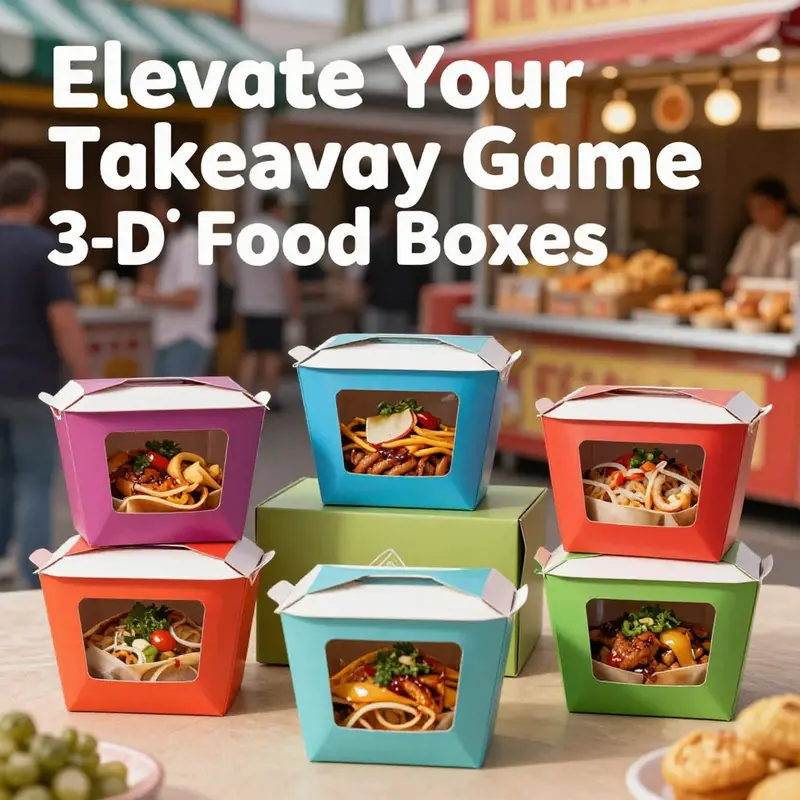
In today’s food service landscape, where delivery is on the rise, offering an appealing and practical packaging solution is key. The custom 3-division takeaway food box with a window stands out as an innovative choice, ideal for bubble tea shops, restaurants, food trucks, and catering services. This article explores the key features that make these boxes a perfect fit for various applications, with a particular focus on their benefits for the food and beverage industry. By examining current sourcing trends and manufacturing insights from China, we provide a holistic understanding of how these boxes can enhance customer satisfaction while meeting business needs.
Design, Function, and Sourcing: What Makes a Custom 3-Division Takeaway Box with Window Work
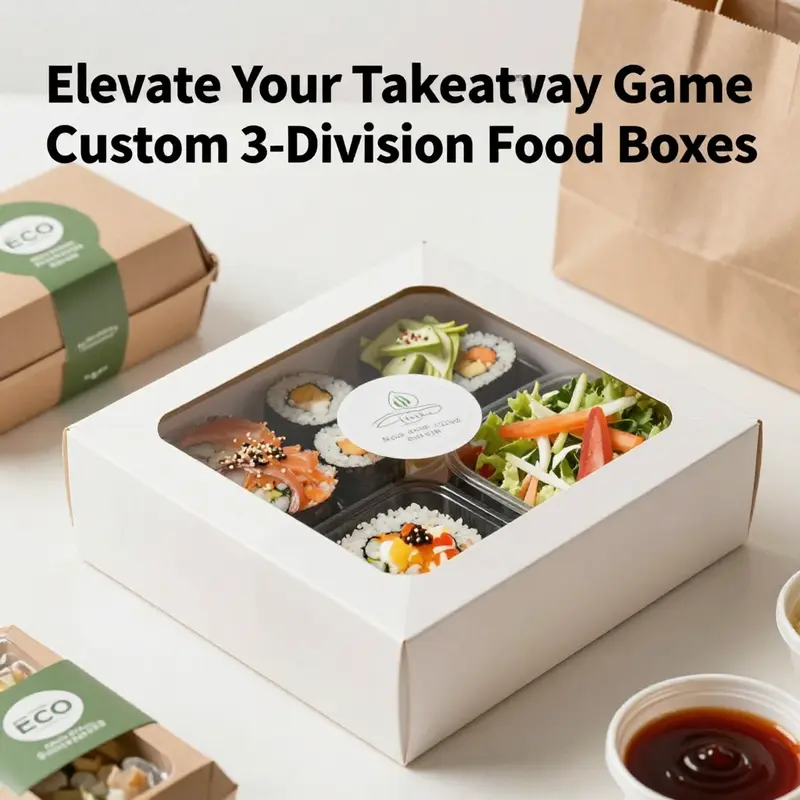
A single package that organizes flavors, showcases food, and supports a brand’s sustainability goals — the custom three-division takeaway box with a window is engineered to perform across those demands. This chapter walks through how the compartmentalized structure, transparent window, material choices, and customization options come together to create a practical product for modern food service. It also connects those design decisions to real procurement considerations and market trends so designers and buyers can make informed choices that balance presentation, protection, and purpose.
The most visible and immediate advantage of a three-division box is the way it preserves the integrity of a composed meal. Three compartments create distinct zones for different components: a main item, one or two sides, and a small condiment or garnish. That simple separation prevents unwanted moisture transfer and flavor migration. When sauces are kept apart from fries or when a salad avoids absorbing dressing until the moment of eating, the perceived quality of the meal improves. Chefs and operators can think in layers—texture, temperature, and aroma—knowing the packaging will keep those layers discrete during storage and transport.
Designing the internal partitions involves trade-offs. Fixed partitions provide rigidity and consistent portioning, which is ideal for standardized menu items and high-volume production. Removable or fold-flat dividers offer flexibility for variable orders and for restaurants that want multi-use packaging. Effective partitions strike a balance: they must be high enough to limit spillage but low enough to allow comfortable access for the end consumer. The box footprint should accommodate common portion sizes while minimizing dead space, because wasted interior volume increases material use and transport costs.
The integrated window transforms the box from a purely functional container into a marketing tool. A well-positioned, die-cut transparent window lets customers preview the contents without breaking the seal. That visual confirmation builds trust and raises the perceived value of the food. For retail counters and delivery snapshots, a window-driven composition can reduce returns and complaints by matching expectation to reality.
Window material selection matters. Food-safe films like PET and BOPP are common because they resist grease, remain clear at a range of temperatures, and meet food-contact regulations. For operators prioritizing compostability or recyclability, cellulose-based films or certified compostable film options exist, though they demand careful selection to ensure compatibility with the box substrate and reuse of industrial compost streams. The window’s placement and size influence structural integrity; manufacturers reinforce the surrounding panel to prevent sagging or tearing when filled.
Customization is where the box turns into a brand statement. Printing options range from simple two-color logos to full digital printing with photographic detail. Digital presses enable short runs and seasonal variations without costly tooling. Colors, typefaces, and the interplay between printed art and the visible food beneath the window create a layered brand experience: customers see the logo and graphics while also seeing the product. Embossing, spot UV, or subtle varnishes can add tactile cues, though these effects should be used judiciously to avoid compromising recyclability or compostability.
Size and form-factor customization also impact usability. Taller compartments can accommodate stacked items such as burgers and sides, while shallow trays are better for pastries or delicate desserts. Some designs incorporate an interlocking lid that doubles as a carrying platform, or include perforated vents for hot foods to avoid steam accumulation. Effective closures—self-locking tabs, tuck-in flaps, or interlocking edges—provide secure transit without adhesives. These closures must be robust enough for delivery couriers and hand-offs but still easy for consumers to open cleanly.
Material choice is central to performance and sustainability claims. Recycled kraft paper and biodegradable corrugated board are popular because they offer a credible environmental message while maintaining structural strength. Kraft paper is oil-resistant when treated or lined appropriately, but greaseproof coatings must be selected to preserve compostability and recyclability. Some manufacturers apply a thin grease barrier inside one compartment only, keeping the rest of the box uncoated to enable recycling in systems that accept mixed fiber. For customers requiring microwave reheating, the substrate and any film used for the window must be rated for the intended temperature range.
Beyond substrate selection, manufacturers can introduce functional inner linings or splash guards around sauce portions. These small design choices reduce leakage and maintain a clean presentation. Designers should specify barrier requirements based on menu chemistry: high-oil dressings, acidic marinades, and hot sauces interact differently with paper fibers and coatings.
Versatility extends the box’s value across food types and retail channels. The three-division layout suits composed meals like bento-style lunches, burger-and-side combos, or dessert assortments. It adapts to non-food uses too—gift packaging, sample kits, or packaged merchandising—because the compartments present variety attractively and mitigate product shift. For event catering and airline service, stackability and secure closure are crucial. When boxes nest efficiently empty and lock securely when full, they save storage space and reduce handling errors.
Operational concerns must be addressed early in the design process. Assembly time on the line is a direct labor cost. Self-locking designs that fold into shape in seconds reduce labor and error. Suppliers often offer pre-glued or pre-scored variants that assemble faster but raise material and tooling costs. Lead times and minimum order quantities affect whether a small business can iterate quickly or must commit to larger runs. These logistical details strongly influence the choice of printing technology: digital printing offers low-MOQ customization, while offset or flexo is economical at scale but requires higher minimums.
Sourcing locations and manufacturing capabilities shape price, quality, and lead times. Production centers known for volume manufacturing provide cost advantages and rapid turnaround. Regions that focus on automation and innovation supply more complex options, including advanced coatings and precision die-cutting. Buyers should weigh unit cost against total landed cost, which includes shipping, tariffs, and time-to-market. Working with suppliers who understand food-contact regulations and can supply material certifications becomes particularly important when shipping internationally.
Quality assurance processes are essential for food-contact packaging. Manufacturers should provide certifications that align with destination-market regulations. Look for documentation for food safety standards and for compliance with migration limits of inks and adhesives. Physical testing—burst strength, drop tests, and leak tests—confirms the box will perform in real-world conditions. Requesting samples early allows for bench testing with actual menu items. Sample runs reveal how the box handles weight distribution, condensation, and grease.
Sustainability claims must be verifiable. If a box is marketed as recyclable, verify that local waste systems accept the combination of paper and window film. If compostable claims are made, ensure certification is backed by recognized standards and that the material is compatible with industrial or home compost conditions, as applicable. Transparent communication with consumers about disposal helps brands avoid greenwashing risks.
Packaging design increasingly includes digital engagement. Placing a QR code or NFC tag near the window area takes advantage of the visible space and invites customers to interact with the brand. A short scan can reveal nutritional details, allergy information, reheating instructions, or provenance storytelling about ingredients. These features create an opportunity to reduce printed materials on the box while enhancing the customer experience through dynamic content.
The three-division box with a window must also address waste reduction in production and logistics. Efficient die layouts reduce offcuts and lower material costs. Modular designs that allow a single die to produce multiple box sizes help smaller operators reduce inventory complexity. Suppliers who can fold and pack boards in space-saving patterns reduce shipping volume. All these optimizations compound into reduced carbon footprint and better margins.
A thoughtful approach to closures preserves both presentation and transport security. Self-locking tabs are a popular compromise: they lock securely yet unfold easily for the consumer. For delivery applications, an additional tamper-evident flap or sticker may be appropriate. The window must remain sealed to avoid contamination while still providing a satisfying reveal when opened.
Designers must pay close attention to the interplay of print and the visible product. A busy print that competes with the food inside reduces the window’s marketing value. Conversely, a minimalist graphic palette can frame the product, drawing attention to colors and textures inside. Consider how ink opacity and finish will appear against the real food visible through the window, and test under typical lighting conditions.
Finally, the box must be evaluated as a holistic system: form, material, manufacturing, and end-of-life. Procurement decisions hinge on matching design intent to operational reality. Shorter runs and seasonal items favor digital printing and flexible partitioning. High-volume standardized menus favor robust, low-cost substrates and classic self-locking formats. Sustainability goals require early engagement with suppliers about material choices and local disposal streams.
For a practical example of a commercially available design that embodies many of these features—three compartments, material focus on recyclability, and a clear window—see the eco-friendly disposable option that targets fast-food and takeout needs: eco-friendly disposable 3-compartment food-grade packaging box for fast food, high-quality takeout boxes.
For technical guidance on dimensions, tolerances, and standards to use when specifying boxes for manufacture, consult an industry design guide that covers technical specifications, standards, and use cases: https://www.benjaminross.com/takeaway-food-box-design-guide.
By aligning compartment geometry, window placement, material selection, and production strategy, brands and manufacturers can create a three-division takeaway box that delivers on presentation, protection, and sustainability. The result is packaging that supports operational efficiency, reduces waste, and elevates the customer’s interaction with the food and the brand.
Seeing Taste Before the First Bite: Real-World Applications of the Custom 3-Division Windowed Takeaway Box
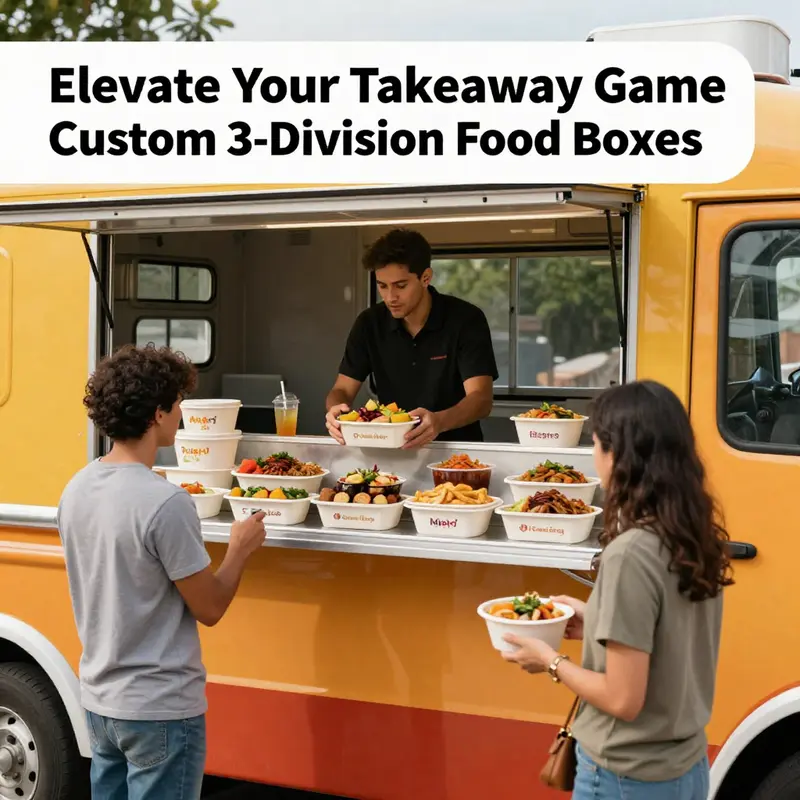
When a consumer opens a takeout box, the first impression often comes not from aroma alone but from the careful orchestration of design and function that unfolds before the first bite. The custom 3-division takeaway box with a window has emerged as a compelling answer to this demand, marrying practical separation with a visual invitation. It is not merely a container; it is a tangible extension of a brand’s promise, a micro-stage on which the meal is presented, portioned, and protected as it travels from kitchen to customer. The box’s three compartments provide distinct shells for different components of a dish, allowing main courses, sides, and sauces to sit side by side without mingling their flavors, textures, or temperatures. This separation is essential for restaurants pushing multi-component concepts, whether a bento-style offering, a premium burger duo with a side, or a vibrant salad bar that invites customization. In the busy ecosystem of food delivery, where speed and reliability are crucial, the internal partitions act as a practical backbone. They prevent collisions during transit and reduce the likelihood of leaks or cross-contamination, which is especially important for dishes that vary in moisture and oil content. The three compartments also make it easier for kitchen staff to prepare meals that cater to different dietary preferences within the same order, a growing demand in diverse urban markets. A well-designed three-zone arrangement can even support marketing initiatives by enabling strategic stacking of components that highlight color, texture, and height, turning a simple box into a visually compelling narrative that aligns with a brand’s culinary story. The window, usually formed by a food-safe film such as BOPP, elevates this narrative further. It offers a transparent view into the contents, inviting curiosity and trust without requiring the consumer to crack the lid and potentially disturb the arrangement. The window becomes a gateway to appreciating the artistry of the dish—the sheen on a glossy glaze, the crisp edge of a fried item, the verdant contrast of fresh greens, or the careful drizzle of a sauce that pulls flavors together. For many operators, this visibility is more than aesthetic; it is a catalyst for perceived quality and value. When customers can glimpse what is inside, they form an immediate impression of freshness, portion size, and the care that went into packaging. This is not just about looking good; it is about reducing post-purchase cognitive dissonance. People want to see what they are paying for, especially in markets where food presentation is a key differentiator. The window also provides a powerful tool for food safety and freshness signals. A clear view of the contents allows both the consumer and the delivery personnel to assess whether the product appears orderly and intact. In many cases, seeing a neatly arranged meal can reduce the number of calls or complaints related to mispacked orders, which in turn strengthens customer trust and loyalty. The deliberate combination of compartments and window also has implications for branding and storytelling. Color choices, logos, and even the type of material chosen can communicate values such as sustainability, modernity, or premium quality. A bold window frame with a contrasting color, for example, can draw attention to the color palette of the meal itself, making the dish look more vibrant and appetizing. The packaging then becomes an extension of the dining experience rather than a mere afterthought. The design approach is not just about aesthetics; it also considers practicalities of use. Three compartments give the kitchen a flexible template for delivering a wide range of formats, from compact, single-protein dishes to more elaborate multi-component meals. The internal partitions can be arranged to accommodate different portion sizes, ensuring stability and reducing the risk of items shifting during transit. In addition, the materials chosen for these boxes—whether recycled kraft paper, corrugated board, or biodegradable composites—are part of a broader conversation about sustainability and corporate responsibility. The market’s growing appetite for eco-friendly packaging means that brands can align packaging choices with consumer values. Recycled or responsibly sourced materials can be paired with a window that uses food-safe, often compostable, films. This arrangement can help brands demonstrate a concrete commitment to minimizing environmental impact while maintaining a high standard of presentation. The role of customization cannot be overstated. The size, shape, color, and printing scheme of the box can be tailored to match a brand’s identity, seasonal promotions, or menu changes. Digital printing has accelerated the ability to produce vivid, brand-specific designs without sacrificing speed or cost efficiency. A brand might, for instance, feature a seasonal color scheme on the box and pair it with a window that frames a signature composition, reinforcing the restaurant’s culinary narrative at the moment of purchase. A striking visual cue—such as a color-blocked lid or a contrasting inner lining—can enhance recognition in a crowded marketplace, making the box not just a carrier but a portable billboard for the dish inside. The three-division concept also lends itself to a broad array of service models. In fast-casual settings, it can streamline kitchen workflows by standardizing how items are assembled and packaged. For salad bars or cold-forward concepts, it enables clean separation of greens, toppings, and dressings, preserving texture and flavor until the lid is opened. In more complex culinary cultures, the box can support bento-inspired offerings where components vary in temperature and humidity. The ability to keep soy-marinated protein separate from citrus-glazed vegetables, or to place a delicate pickled item in its own compartment, is a practical advantage that can translate into higher customer satisfaction and repeat business. The packaging solution also touches on the meal-prep and catering segments, where portions must be meticulously controlled and presented. Home-delivery programs often require that meals stay visually appealing over a longer window of time. The sunken aromas or moisture migration that can occur when items are mixed or crushed against one another is minimized by the three-zone format, which helps maintain the integrity of each item as delivery slows down or routes are extended. Meal prep services that operate on a subscription model can benefit as well. When customers anticipate consistent portions and clean separation of ingredients, they gain confidence in the service’s quality control. The box becomes a crucial touchpoint, signaling a reliable standard that aligns with health-conscious and time-efficient consumer expectations. The concept’s appeal expands into broader sectors such as catering for events or air travel. In event catering, the need to present an array of items—finger foods, small salads, sauces, and desserts—in a single, organized package makes the three-compartment windowed design particularly attractive. The window again plays a dual role, supporting both display and order accuracy: while guests can see the offerings at a glance, event coordinators can verify that components remain in their intended positions throughout service. In airline and long-haul catering, where space and safety are at a premium, the secure closure and three-chamber architecture contribute to a predictable, efficient service flow. The self-locking lids or flap-top closures often used with these boxes supply a secure seal that stays intact during turbulence or transit, reducing the risk of spills and waste. The potential for customization is closely tied to material science and consumer preferences. Eco-conscious trends are pushing brands toward recycled kraft and biodegradable substrates, sometimes layered with a protective lining that can resist grease and moisture without compromising recyclability or compostability. The window itself must be thoughtfully specified to ensure it remains food-safe, transparent, and compatible with the chosen packaging film. The film’s clarity, impact resistance, and barrier properties influence not only appearance but also preservation of aroma and texture. In practical terms, brands can leverage the window to boost perceived value. A well-presented meal that shows off a glossy glaze, the crisp edge of a fry, or the vibrant greens of a salad can justify premium pricing. This is particularly true for premium fast-food concepts, boutique sandwich shops, or gourmet meal-prep services where presentation is as vital as flavor. The applications described above also reflect a broader market dynamic: the rise of sustainability and digital customization. Consumers increasingly expect packaging to reflect responsible practices, and brands respond by choosing materials and printing methods that minimize environmental impact while delivering on-brand storytelling. Digital printing enables vibrant, high-contrast imprints that can be adapted for seasonal menus, regional tastes, or limited-time offers without sacrificing production speed or increasing waste. The three-division windowed box thus becomes a canvas for brand narrative as well as a delivery vessel. The sourcing and procurement landscape supports this narrative through regional specialization. In large-scale manufacturing hubs, suppliers in certain Chinese regions are known for efficiency and scale; others prioritize high-end customization and sustainable materials. The Guangdong region, with its proximity to major export ports and established logistics networks, offers cost-effective mass production, making it feasible for brands to deploy uniform packaging across multiple locations. Meanwhile, Zhejiang and Shanghai serve as centers of innovation and customization, where automated processes and advanced printing capabilities enable more complex, brand-specific designs and sustainable material combinations. Quality assurance in this ecosystem is a practical discipline. Brands should verify certifications for food safety, such as FDA or LFGB equivalents, and seek ISO standards where applicable. Requesting samples before bulk orders, as a standard practice, helps verify not only safety but also print quality, seal integrity, and the effectiveness of the window area. Lead times and MOQs are particularly important for customized designs; understanding these early in the relationship prevents disruptions in product launches and seasonal campaigns. These procurement considerations tie directly to the chapters that explore ecosystem dynamics, supplier reliability, and how packaging choices influence overall customer experience. For readers seeking practical appraisal of sourcing and technical considerations, a targeted reference point exists outside the brand narrative. An external resource provides a structured guide to the mechanics of takeaway box production, including structure, composition, and applications. This reference can help teams assess machine compatibility, process flows, and quality benchmarks when scaling packaging programs. The local decisions—whether to prioritize recycled content, the presence of a window, or the shape of the lid—play into bigger questions about brand differentiation and operational resilience in a marketplace where speed, sustainability, and presentation converge. In addition to the functional and aesthetic benefits, the three-division windowed box offers a strategic pathway for cross-channel storytelling. The same packaging used for takeout can be adapted for in-store pickup, curbside, or delivery from third-party platforms, with minor adjustments in labeling and branding. The window ensures consistency in customer experience by preserving the visual impression of the dish, regardless of the pickup method. From a consumer behavior standpoint, the windowed view reduces uncertainty at the moment of purchase. Seeing the meal contributes to perceived value and confidence, which translates into higher willingness to pay and a lower likelihood of order dissatisfaction. This perceptual effect reinforces the monetary value of investing in a well-designed box, especially in markets where competition is intense and presentation becomes a meaningful differentiator. The future of this packaging format will likely hinge on continued material innovation and smarter integration with consumer engagement tools. The window area can serve as a platform for interactive experiences, including QR codes or NFC tags discreetly placed within the window border. Scanning a code could reveal nutritional information, sourcing stories, or pairing suggestions, thereby deepening the relationship between consumer and brand. The seamless blend of form and function—visible contents, secure multi-compartment design, and sustainable material choices—positions the three-division windowed box as more than a packaging option. It is a conduit for consistency in quality, a driver of trust, and a catalyst for brand storytelling that travels with the meal. For operators, the payoff is clear: improved order accuracy, enhanced product visibility, and a packaging solution that respects both consumer expectations and environmental responsibilities. As delivery ecosystems continue to evolve, the capacity to adapt packaging quickly without sacrificing integrity will be a competitive advantage. The box’s modular nature supports quick menu changes and seasonal promotions, allowing brands to refresh visuals and configurations with relative ease. The end-to-end experience—from the kitchen assembly line through delivery to the consumer’s table—benefits from a packaging system that aligns operational practicality with visual appeal. In sum, the real-world applications of the custom 3-division takeaway box with a window underscore a straightforward but powerful truth: packaging that protects, presents, and personalizes can elevate the entire dining experience. It is a small but meaningful intersection of design thinking, supply chain strategy, and consumer psychology that, when executed well, reinforces quality, enhances satisfaction, and supports sustainable business growth. For brands exploring the next step in packaging innovation, it is worth examining the tangible benefits that a three-compartment, windowed system can deliver across menus, channels, and markets. It is not merely about containment; it is about elevating perception, ensuring consistency, and inviting customers to engage with the meal before they even take a bite. This is the essence of packaging as storytelling—visible, valuable, and verifiably responsible. As markets continue to demand smarter, greener, and more visually compelling solutions, the three-division windowed box stands out as a versatile platform capable of supporting a broad spectrum of culinary concepts while maintaining the simplicity customers expect when they place an order. The conversation around its applications is ongoing, but the trajectory is clear: more brands will adopt this design language to craft experiences that delight the eye, protect the palate, and honor the planet. For those seeking a concrete example of this approach in practice, explore the concept of an eco-friendly 3-compartment packaging box for fast food and see how it translates the theory into tangible results. eco-friendly 3-compartment packaging box for fast food. As the dialogue around sustainable, visually engaging packaging continues to expand, this model offers a practical blueprint for brands aiming to deliver consistent quality, striking presentation, and responsible procurement all in one compact, portable package. External references can provide deeper insight into the machinery and processes behind these containers, such as the technical guide to takeaway food box making machines and their structural considerations. External resource: https://www.example.com/food-box-machine-guide
Mapping the Makers: Sourcing and Manufacturing Trends for Custom 3-Compartment Windowed Takeaway Boxes in China
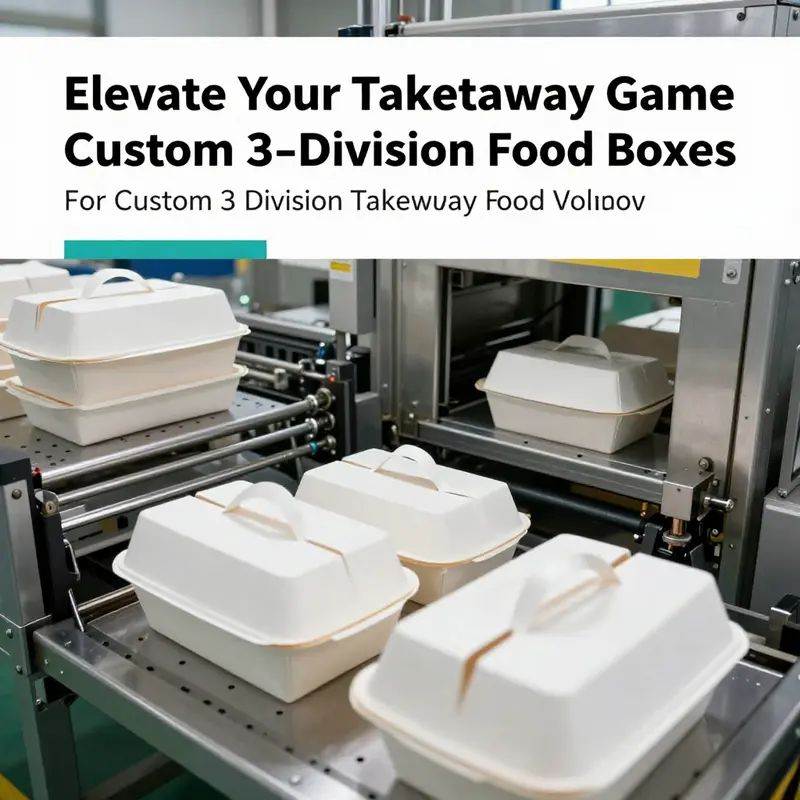
The rise of custom 3-compartment takeaway boxes with a window marks a distinct turning point in how food packaging can contribute to dining experiences, brand storytelling, and operational efficiency. In markets where speed, reliability, and visual appeal collide, the ability to segregate components—main course, sides, and sauces—without cross-flavor contamination becomes a tangible advantage. A window that reveals the dish inside adds an instant layer of trust, letting customers judge freshness and quality before they ever bite. That combination of function and perception sits at the core of what manufacturers and buyers alike seek in China, a hub whose scale, diversity, and continuous push for improvement keep pushing the boundaries of what is possible with disposable packaging for takeout. Across restaurants, meal-prep services, caterers, and even airline or event operations, the demand for these multi-compartment boxes with clear sightlines is responding to a broader shift: packaging is no longer a passive vessel but a strategic touchpoint that shapes customer satisfaction, brand loyalty, and sustainability metrics.
To understand where this market is headed, it helps to trace the regional anatomy of Chinese production and the structural shifts that influence what is feasible, affordable, and compliant. The Guangdong region remains the nerve center of mass production and cost efficiency. Its dense network of suppliers, logistics infrastructure, and proximity to major export ports translate into faster turnarounds and pricing advantages that can be quantified in the typical 10–15 percent range versus other regions with comparable capabilities. This is not merely a function of scale; it is the outcome of an integrated ecosystem where plastic resin suppliers, converters, print houses, and box manufacturers co-locate or coordinate through tightly orchestrated supply chains. For brands eyeing high-volume orders, Guangdong offers the ability to translate rapid prototyping into mass production with controlled lead times, a critical factor when the concept calls for design iterations tied to seasonal menus or limited-time offers.
Yet the story does not end there. Zhejiang Province, with hubs around cities known for their advanced manufacturing culture, is stepping forward as a center of sustainable manufacturing, automation, and flexible production. Here the emphasis shifts toward eco-friendly substrates and precision molding, enabling a more agile response to brands that want to experiment with greener inputs, such as compostable or recyclable polymers, without sacrificing the structural integrity demanded by hot and greasy foods. The factories in this corridor invest heavily in automation and process control, which translates into tighter tolerances for the window cutouts, more consistent folding scores, and better seal performance across batches. The result is not only a cleaner environmental footprint but also a more predictable path from concept to certified product, which is particularly valuable for brands seeking to satisfy stringent EU or North American environmental regulations while maintaining the aesthetic fidelity that digital printing can deliver.
Anhui and Fujian offer another, often overlooked, dimension to this landscape: cost-effective, large-scale production with a growing emphasis on biodegradable and compostable materials. These provinces are increasingly incubating capabilities around plant-based substrates and the associated processing technologies, creating a comparatively favorable environment for startups and niche brands testing new green packaging concepts. The combination of lower base costs and accessible R&D pipelines can shorten the development cycle for novel box formats, window materials, and internal partitioning that must withstand heat, moisture, and rough handling during transit. The ecosystem here supports experimentation with different stiffness levels, surface finishes, and barrier properties, empowering brands to refine both the user experience and the end-of-life story of the packaging.
Beyond geography, the dominant trend driving these regional ecosystems is a clear pivot toward sustainability. The market is gradually stepping away from conventional plastics toward materials that balance machinability, printability, and environmental responsibility. Biodegradable and compostable substrates—whether plant-based polymers or naturally sourced fibers—are entering production lines with increasing frequency, not as a niche, but as a genuine alternative that can meet consumer expectations and regulatory demands. In parallel, recycled kraft paper and corrugated boards with barrier coatings are becoming more common for inner liners and partitions. The window itself, typically made from a food-safe film such as a transparent BOPP layer, is evolving as well. The demand is for film that resists fogging, maintains clarity under heat, and supports high-definition branding through digital printing on adjacent panel areas. The upshot is a packaging solution that can be as visually compelling as it is functionally reliable, opening opportunities for brands to tell a more compelling story through imagery and color while keeping ecosystems in mind.
As buyers navigate this landscape, the ability to customize becomes a central differentiator. The modern factory floor in these regions is increasingly equipped with digital design tools and rapid prototyping capabilities that allow clients to iterate on three critical dimensions: the size and shape of the three compartments, the precise location and size of the window, and the securing mechanism that ensures a snug fit during transit. The three-compartment concept requires careful partition design to avoid cross-contact and flavor migration, particularly with sauces or very pungent components. Digital prototyping helps validate tolerances for heat expansion, moisture management, and stacking pressure—factors that influence whether a box can survive a typical delivery cycle without buckling or leaking. It is this fusion of design agility and scalable production that makes China an attractive partner for brands pursuing distinctive takes on the classic three-compartment model, especially when the window becomes a brand asset rather than a mere feature.
But the path from concept to container is not simply a technical translation; it is a careful negotiation of risk, safety, and compliance. Food safety certifications have become a baseline expectation across Western markets, with buyers pressing for documents that verify materials, processes, and supply chains. The most common benchmarks cited are established food safety management standards and certifications, with suppliers expected to demonstrate traceability from raw materials to finished cartons. For buyers, it is sufficient to request third-party certifications such as recognized food safety management systems and material safety data, then verify these through samples and supplier audits. The procurement process is thus not just about price per unit but about the reliability of documentation, the credibility of tracking systems, and the suppliers’ ability to provide clear, verifiable records for each batch. In practical terms, this means a policy of requesting samples before bulk orders, confirming MOQs in the context of customization, and validating lead times against production calendars and shipping windows.
A growing portion of the packaging dialogue centers on branding and market impact. The window becomes a canvas for storytelling, and the ability to print with high fidelity directly on the box amplifies the impact of a brand’s color language and typography. The use of digital printing technologies—enabled by the regional emphasis on innovation—allows for vibrant, brand-consistent graphics that can be updated with seasonal campaigns without the need for expensive tooling. In Guangdong’s printing ecosystems, this capability is particularly pronounced, with facilities geared to handle complex layouts, microtext, and color gradients across variable formats. The interplay between window placement and printing strategy is nuanced: brands may align window edges with art assets or use the window as a frame for a hero image, but the printing must remain legible and resilient to humidity and handling. This is where pre-production prototyping proves its value again, producing realistic mockups that reveal how the window, misalignment risk, and print quality interact under real-world conditions.
From a procurement perspective, the modern path toward a reliable supply chain for these boxes involves a structured blend of regional strengths, supplier validation, and process transparency. Guangdong provides scale and speed; Zhejiang offers a gateway to sustainable approaches and automated precision; Anhui and Fujian supply eco-friendly materials and cost-effective mass production. The optimal strategy for a brand often looks like a hybrid plan, leveraging multi-regional sourcing to diversify risk and capture the best of each region’s competencies. This approach can reduce vulnerability to port delays, currency fluctuations, and single-supplier bottlenecks while maintaining the ability to deliver consistent quality across large campaigns. To operationalize this strategy, buyers should map the supply network with clear criteria: material safety certifications, environmental compliance with intended markets, tolerance to high-temperature exposure, window clarity and anti-fog performance, and internal partition strength. Each supplier relationship should be underpinned by a documented quality management framework, a robust testing regime for prototypes, and a clear dispute-resolution mechanism.
In practical terms, the procurement journey often begins with a specification brief that outlines three core requirements: a windowed design that showcases food while preserving heat and moisture, a three-compartment layout that keeps flavors separate and allows different components to be served in a single container, and a sealing mechanism that remains secure in transit without impeding quick assembly by restaurant staff. The briefing should also specify the preferred materials or acceptable alternatives, with a preference for materials that can be sourced responsibly within the target regulatory environments. Given the ongoing emphasis on sustainability, brands may request options such as recyclable or compostable substrates, along with performance data on barrier properties, stiffness, and printability. The window material should be specified to support high-clarity visibility while resisting fogging at typical service temperatures. The partition system must be tested for repeated opening cycles and must not compromise the seal when stacked or dropped during delivery.
As the design evolves, the packaging partner’s capability in rapid prototyping becomes a decisive advantage. Digital tools can translate design concepts into printable artwork, then into 3D-printed or laser-cut test models that reveal how the partitions align with logos and imagery. This iterative loop—design, test, refine—reduces the risk of costly missteps in large batches and shortens the time-to-market. It also enables a more precise assessment of how the window area will interact with branding elements on the adjacent panels. The most successful engagements are those where the supplier demonstrates a track record of consistent material sourcing, traceable compliance, and a willingness to iterate with the buyer on multiple design generations before finalizing a production-ready specification.
One practical note for teams building their supplier shortlist is the value of requesting a compact set of benchmarks and proof points. These should include material safety certifications for each substrate, performance tests for rigidity and seal integrity, and a rendering of the window placed against a full-dish photograph to anticipate visual outcomes. The testing should extend to the packing and transit scenario most likely to occur in the buyer’s logistics network, including stacking strength, impact resilience, and moisture tolerance. With a windowed box, fogging tests are essential because moisture exposure could degrade visibility and undermine the consumer experience. The partitions must also prove robust against expansion and contraction due to temperature changes, ensuring the compartments remain effectively separated even after hours of transit in varying climates.
In discussing design and production capabilities, it is useful to anchor the conversation to the branding layer embedded within the packaging. The window-driven display is an invitation to show, not just tell, which means the aesthetic partnership between the brand and the manufacturer matters as much as the mechanical fit. Guangdong’s ecosystem’s strength in high-precision printing supports this expectation. Brands can expect color reproduction that aligns with their digital art assets and packaging guidelines, enabling consistent shelf-to-table experiences across channels. The ability to print with variable data—such as batch-specific artwork or regional campaigns—can also be a strategic differentiator for operators with geographically diverse delivery footprints. Meanwhile, Zhejiang’s emphasis on sustainability and automation helps ensure that those sophisticated branding efforts do not come at the expense of environmental responsibility or supply reliability. For brands exploring alternative materials or life-cycle analysis, Anhui and Fujian provide a realistic pathway to scale environmentally friendlier options without prohibitive cost or lead times.
Sourcing and procurement, at its core, is about aligning the pace of product development with the pace of consumer demand. The 3-compartment windowed box is a vehicle for delivering not just meals but a narrative—a story about care, quality, and consideration for the planet. The regional dynamics in China provide a menu of choices that can be tailored to the unique requirements of a brand’s menu, service model, and geographic footprint. The supply chain choices must therefore be accompanied by a robust due-diligence framework: a clear request for certifications, a careful review of material safety data sheets, and a transparent plan for ongoing supplier audits. A pragmatic approach is to treat suppliers as strategic partners rather than transactional vendors, inviting them to contribute not only to a box’s measurements but also to its user experiencia, its sustainability trajectory, and its ability to scale alongside the brand’s growth.
To illustrate how these considerations come together in practice, consider a hypothetical but plausible scenario where a brand aims to launch a seasonally updated menu with three distinct components that must travel together, maintain distinct flavors, and present a strong visual impression upon delivery. A Guangdong-based supplier can fulfill the bulk, high-volume component of the order with rapid cycle times and a controlled cost baseline, enabling the brand to meet price-sensitive demand efficiently. A Zhejiang-based partner can collaborate on the sustainable materials mix and the more sophisticated, high-resolution print processes that ensure the window’s edges do not blur the brand graphics and that the overall package remains lift-resistant when hot foods are inside. An Anhui- or Fujian-derived operation could provide the eco-friendly substrates and longer-term supply security for the green packaging lane, with a focus on compostable options and a lower environmental footprint. The combined supply network benefits from redundancy in critical steps: material supply, printing, assembly, and quality testing. In practice, this means the brand can shift production volumes between facilities in response to demand signals, weathering supply shocks while preserving quality and brand integrity.
As the market continues to evolve, one must also anticipate evolving regulatory expectations, especially for brands expanding into stringent export markets. The sourcing playbook should incorporate proactive checks on compliance, with a readiness to adapt to certification changes, new labeling requirements, and evolving environmental standards. The teams must stay aligned on documentation practices that support end-to-end traceability, from incoming raw materials to final packaging, and this alignment often requires a shared digital platform that records batch data, testing results, and packaging lifecycle metrics. In this sense, the evolving value proposition for custom 3-compartment windowed boxes is not only about physical performance but about the synergy between design, manufacturing discipline, and regulatory stewardship. When done well, the result is a packaging solution that protects contents, communicates value, and reinforces a brand’s commitment to quality and responsibility across the supply chain.
For readers seeking actionable paths to connect with the right partners, a practical step is to approach the procurement journey as a staged collaboration rather than a single-order transaction. Start with a clear brief and a prioritized list of material and performance criteria. Seek samples that reproduce the window’s clarity under typical service conditions, and evaluate the partitions under load and exposure to heat. Parallel to this, conduct a formal vendor assessment that looks beyond price to include quality control processes, certifications, lead-time reliability, and the supplier’s willingness to engage in ongoing improvement cycles. In regions like Guangdong, Zhejiang, and the neighboring provinces, the market offers a spectrum of capabilities, from large-scale container-ready operations to agile studios capable of rapid prototyping and design refinement. The most successful partnerships tend to be those that establish mutual expectations early, document testing protocols, and commit to shared milestones for product validation and certification attainment.
From a narrative standpoint, the packaging itself tells part of the story. The window invites the customer to anticipate the dish, while the three compartments deliver a structured, organized eating experience. The materials chosen, and the way they are sourced and manufactured, reflect a brand’s values and its stance on sustainability. The convergence of Guangdong’s scale, Zhejiang’s precision, and Anhui/Fujian’s green innovation creates a holistic ecosystem that can support both the incremental improvements of existing products and the bold, new iterations required to differentiate in crowded markets. The future of these boxes lies in continued investments in digital printing, smarter window configurations that optimize visibility without compromising integrity, and more efficient, transparent supply chains that can respond to shifting consumer preferences without sacrificing safety or reliability.
As you move toward finalizing supplier relationships and turning a design concept into a mass-produced, windowed three-division container, remember that the success of this packaging hinges on three interlocking strands: mechanical performance, visual narrative, and material stewardship. The mechanical strand covers partition strength, seal reliability, and window integrity. The visual strand encompasses print quality, color fidelity, and the strategic use of the window as a branding tool. The stewardship strand focuses on the life cycle of the packaging, from sourcing to end-of-life. When these strands are woven together through careful regional collaboration, stringent QA processes, and a shared commitment to sustainability, the resulting packaging not only holds and transports food but elevates the overall customer experience. It becomes a tangible expression of a brand’s promise and a lever for marketing that resonates at the moment of delivery.
For teams that want a concrete touchpoint to explore capabilities in this space, a well-timed conversation with potential suppliers can center on the balance between volume and customization. Ask how the factory handles three-dimensional tolerances for the compartments and how the window’s film resists fogging with hot contents. Seek evidence of printing consistency across a job lot and across multiple runs, including color matching and registration. Inquire about the checks that occur during production, the kind of pre-shipment inspections performed, and the documentation provided to verify conformity with safety standards. These conversations, grounded in a clear technical brief and a mutual understanding of regional strengths, help shape a procurement plan that is resilient, scalable, and aligned with a brand’s sustainability commitments. The result is not simply a new container but a reliable, brand-enhancing partnership that can carry a menu through multiple cycles of innovation and market iteration.
In short, the China sourcing and manufacturing landscape for custom 3-compartment takeaway boxes with a window is a dynamic blend of geographic specialization, material evolution, and design-forward manufacturing. Brands that succeed in this space do more than select a vendor; they curate a network that can support rapid prototyping, scalable production, and responsible packaging decisions. They recognize the window as a strategic asset, not merely a feature, and they understand that the partitions must operate in harmony with the contents, the branding, and the end-of-life story. The future of these boxes lies in continued collaboration across regions, ongoing investment in sustainable materials, and a shared commitment to transparency and quality that reassures customers from first glance to final bite. The result is packaging that is not only functional and visually compelling but also aligned with the evolving expectations of responsible consumption and global trade.
Internal link for further reading: eco-friendly-disposable-3-compartment-food-grade-packaging-box-for-fast-food-high-quality-takeout-boxes-for-fried-chicken-french-fries-packaging
External resource: https://www.iso.org/iso-22000-food-safety-management.html
Final thoughts
Custom 3-division takeaway food boxes with windows represent a strategic investment for businesses aiming to enhance their food service offerings. Their compartmentalized design keeps meals organized while the window feature boosts customer engagement by showcasing food quality. With sustainability being a priority, sourcing these boxes from manufacturers in China ensures businesses can meet both economic and environmental goals. By opting for this packaging solution, you not only elevate your brand image but also cater to the growing demand for functional and aesthetically pleasing food containers. Take the step to implement these innovative boxes today for a noticeable improvement in customer satisfaction and business performance.