
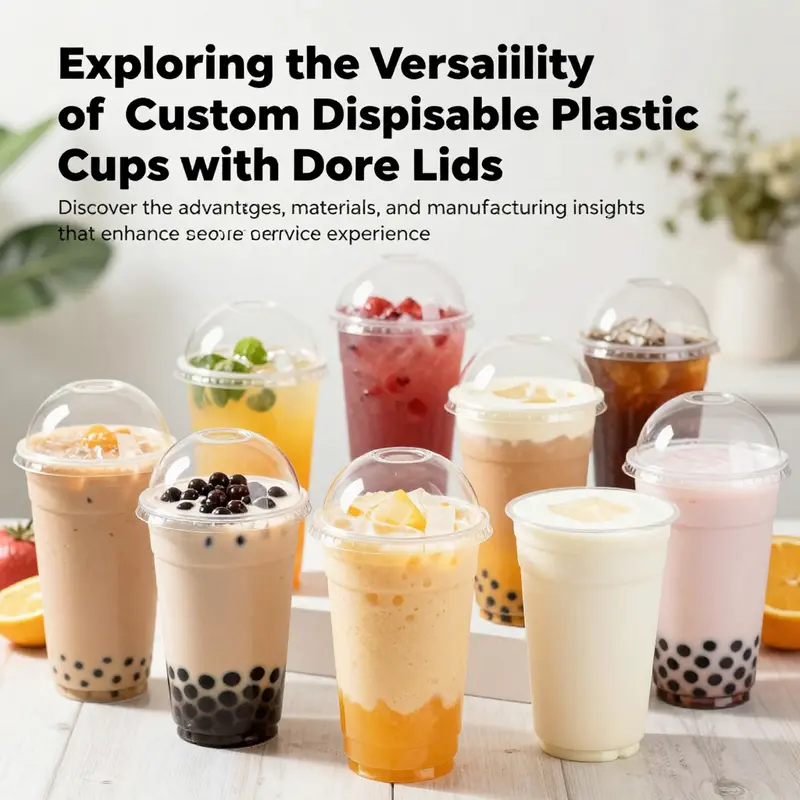
Custom disposable plastic cups with dome lids are becoming essential for bubble tea shops, restaurants, food trucks, and catering services. These innovative cups provide practical advantages such as spill prevention and aesthetic appeal, making them perfect for serving a variety of beverages, from thick smoothies to layered milkshakes. This article will delve into the distinct advantages of using these cups, the materials they are made from, the meticulous manufacturing processes behind them, and the emerging market trends with a focus on sustainability. By the end, you’ll see how these cups can elevate your beverage offerings while aligning with modern consumer preferences.
Dome-Top Impact: How Custom Disposable Cups with Dome Lids Redefine Freshness, Function, and Brand Visibility
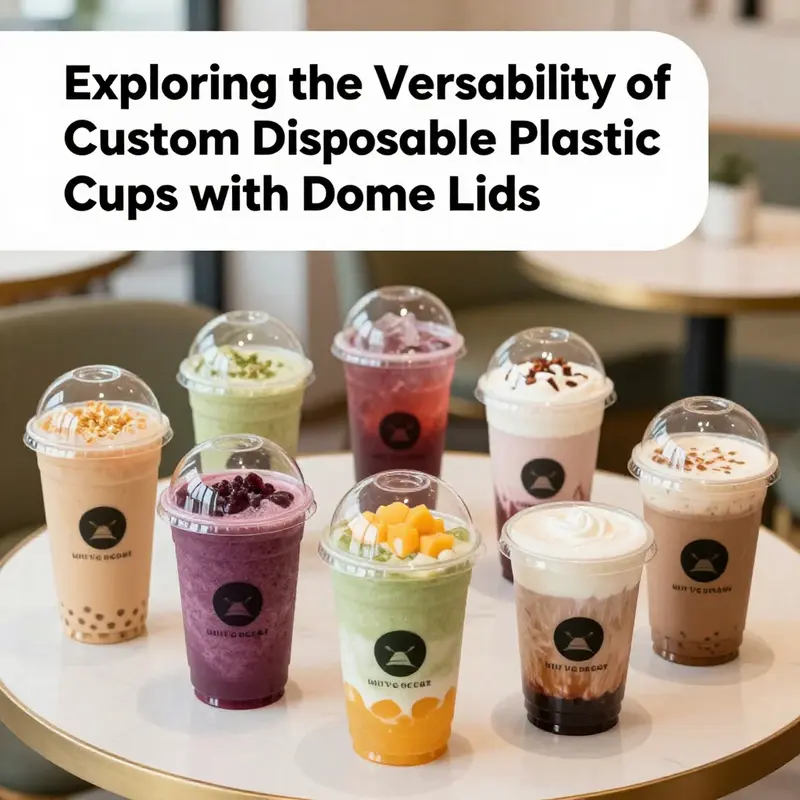
A single cup can carry more than a beverage; it carries a promise. In the world of grab-and-go hospitality, custom disposable cups with dome lids have quietly become a strategic tool, blending practical engineering with visual storytelling. When a barista or smoothie shop looks to elevate a drink beyond its ingredients, they often start with the vessel that carries it. The dome lid, tall and curved, does more than cap the cup. It creates a breathing space for foam, cream, and toppings, while preserving the integrity of the liquid beneath. This is not merely about containment; it is about shaping an experience from the first moment the lid is touched and the cup is grasped. The dome adds height to the presentation, inviting customers to linger a moment longer as the color, texture, and layers of the drink reveal themselves through a crystal-clear surface. In practice, the dome lid acts as a stage for the beverage, a tiny billboard for the brand, and a protective shield against the unpredictability of transit from counter to curb.
What makes the dome lid so effective starts with its sealing ability. A dome lid forms a sealed environment around the beverage, guarding it from dust, airborne microbes, and incidental contact. This is especially important for beverages that are prepared in advance, then carried away in takeout settings. The dome’s elevated profile also minimizes the chance that a lid press or a jostling encounter with a bag will push the drink into a spill. For customers who pick up a shaken milkshake or a thick smoothie, that extra headspace is a practical marvel. It accommodates foam and swirl without compressing the top layer into a mess by the time it reaches the table. The lid’s geometry is designed to maintain the drink’s architecture, ensuring that the whipped cream, cocoa dusting, or caramel drizzle does not smear across a consumer’s fingertips or create awkward drips along the cup’s exterior.
But the advantages extend beyond protection and practicality. The transparent nature of the cup paired with a dome lid allows the beverage to tell its own story. The liquid’s color, the gradient of a layered drink, or the shimmer of a bubble-tea topping can all be instantly legible. This visual honesty fosters trust; customers feel confident about what they are buying because they can see the volume and the composition. For brands, this is a powerful opportunity to showcase quality and portion size without extra messaging on the wrapper. Print on the cup itself is a robust channel for branding, logistics, and seasonal campaigns. When a customer carries a cup with a distinctive logo, color palette, or custom artwork, that branding travels with them beyond the counter. The combination of transparency and customization makes the cup a mobile canvas, turning every beverage into a branded touchpoint.
The dome lid also contributes to the practical, on-the-go lifestyle that defines many modern service models. A well-designed lid can incorporate a vent or a carefully positioned sip-through aperture that supports easy drinking without full removal. This spill-free feature is particularly valuable in outdoor settings, for deliveries, or during events where people are handling food and beverages in crowded spaces. The result is a cup that performs gracefully under everyday strain: it stays intact in a crowded bag, it travels through bustling lines, and it still delivers on the promise of a flavorful, well-presented drink. The dome’s shape ensures that the cup remains stable when set on a counter or a table, helping to prevent tipping. In this way, the design reduces waste and saves staff time spent on cleanup, enabling teams to focus more on crafting quality beverages and less on managing mishaps.
Storage efficiency often goes overlooked, yet it matters when a business scales. Empty dome-lid cups nest more effectively than many other formats, thanks to a geometry that allows them to fit tightly together without sticking. This nesting capability has tangible benefits for warehouses and retailers. Fewer pallets and less floor space required for storage translates into lower carrying costs and a leaner supply chain. When orders are high and shelves are crowded, the ability to pack more into the same footprint becomes a quiet driver of efficiency. The nesting trait also informs transportation logistics, reducing load sizes and enabling more predictable delivery windows. In a market where every mile and minute counts, such small savings compound into real bottom-line impact. In tandem with color coding or branding on the cup, nesting supports not only storage efficiency but fast restocking and consistent presentation at the point of sale.
Customization is where this packaging truly earns its keep. Suppliers offer a spectrum of materials, sizes, and printing options that let a business tailor the cup to its identity. PET, PP, and PS are common, each with its own balance of clarity, rigidity, and heat tolerance. PLA-based options bring compostable appeal, appealing to customers who prioritize environmental responsibility. The choice of material becomes part of a broader sustainability story, aligning with evolving consumer expectations around how products are disposed of after use. Customization extends to the lid itself, where printed logos, brand colors, or even interesting lid textures can reinforce brand recognition during the crucial moments of product selection and unwrapping. The result is a packaging ecosystem that communicates care and attention to detail, a message that resonates in a crowded marketplace where beverages are increasingly differentiated by more than just flavor.
Of course, every customization program must balance aesthetics with practical constraints. Production realities determine how quickly a business can move from concept to blueprinted cup. MOQs often reflect the degree of customization; standard clear cups may begin at lower quantities, while fully printed or uniquely shaped domes may require larger runs. Production capacity can climb into the hundreds of thousands per day when demand is high, allowing brands to respond rapidly to seasonal spikes or major promotions. Quality assurance processes are essential to maintain consistency across thousands, even millions, of units. Leak testing, rim integrity checks, and lid fit verification are routine steps that protect the drink from leakage and the brand from reputational damage. These checks are not mere formality; they are a guardrail that ensures the customer experience does not hinge on the luck of a brittle seal or a misaligned dome that fails on the move. The capacity to issue samples without cost, albeit sometimes with shipping considerations, helps buyers validate fit, aesthetics, and performance before committing to large orders. And as the market evolves, certifications such as food-safety approvals and environmental standards become more than a marketing statement; they become a baseline expectation that signals trust to the end consumer.
From a financial perspective, the journey from inquiry to delivery is anchored by practical terms that influence every decision. Payment terms typically involve a deposit with a balance before shipment, a structure that supports manufacturers in meeting production schedules while giving buyers a predictable model for cash flow. Delivery timelines reflect the scale of operations and the complexity of customization. First-time orders may experience longer lead times as tooling, setup, and color-matching are finalized. Repeat orders, in contrast, often enjoy shorter windows as relationships mature and production ramps up. While the core function of the dome lid remains literal—keeping beverages secure and presentable—the surrounding logistics shape how quickly a brand can bring a feature drink to market and how reliably it can reproduce that drink across multiple locations.
The sustainability conversation around custom cups with dome lids has grown louder as consumer expectations shift toward responsible packaging. Modern options emphasize food-grade safety and more sustainable materials, acknowledging that businesses are under pressure to reduce their environmental footprint without compromising performance. PLA and other compostable or bio-based alternatives offer a pathway to align with eco-conscious values while maintaining the premium feel of a dome-lidded beverage. Even with disposables, there is room for stewardship: designing for recyclability, selecting materials with lower life-cycle impacts, and communicating disposal instructions clearly to customers can turn a simple cup into a part of a brand’s responsible storytelling. In practice, this often means combining attractive aesthetics with durable, recyclable, or compostable materials that hold up through the customer journey—from vendor to vehicle to handoff at the event or cafe counter. The choice of materials, the scope of branding, and the manufacturing scale all converge to shape a packaging solution that supports both the drink’s integrity and the business’s broader sustainability goals.
What all these elements come together to reveal is a cohesive system in which the dome lid is not an afterthought but a deliberate design decision. It is a tool that assists baristas in maintaining quality, a canvas for the brand, and a practical component that supports efficient operations. The advantages are not isolated advantages but a set of interlocking benefits that improve safety, preserve product integrity, enhance visual appeal, and strengthen the customer’s emotional connection to the brand. When a business seeks to differentiate in a crowded field, the combination of dome lid and customized cup becomes a compelling answer. It communicates confidence in product quality, readiness for the demands of a fast-moving workflow, and a commitment to delivering a consistent, visually engaging experience at every touchpoint.
As the beverage landscape continues to evolve, the dome lid’s role in shaping consumer perception cannot be overstated. It carries a story about care and thoughtfulness: a product that waits to be opened, a carefully designed arc that respects the drink’s layers, and a lid that respects the journey from the moment the cup leaves the counter until it reaches the consumer’s hand. In this sense, the dome lid is more than a lid. It is a part of the beverage’s identity, a portable sign of quality that travels with the drink and travels with the brand. For operators, the practical benefits—spillage reduction, enhanced headspace for foam, nesting efficiency, and scalable production—translate directly into smoother service, happier customers, and more consistent operations across a network of locations. For consumers, the experience is more seamless, more elevated, and more memorable. The cup becomes a small stage from which the drink’s story unfolds, a micro-environment where texture, color, aroma, and taste come together in a moment of user delight. This is the dome lid’s quiet revolution: simplicity that enables sophistication, reliability that supports creativity, and packaging that becomes an ally in building brand loyalty across diverse markets.
For practitioners evaluating a move to dome lid technology, the question often centers on the trade-off between cost and value. Dome-lid cups may carry a modest premium compared with flat-lidded alternatives, but that premium is frequently offset by gains in product integrity, customer satisfaction, and brand impact. A well-chosen dome lid can reduce the need for second-layer packaging, diminish spill-related waste, and improve delivery outcomes, all of which contribute to a more efficient and positive customer experience. The result is a packaging system that not only protects and presents but also reinforces a brand’s promise at every purchase point. In this sense, the advantages of custom disposable cups with dome lids extend beyond the beverage itself; they act as a strategic instrument for brand differentiation, operational excellence, and sustainable growth across channels.
External resource for further detail and production context: https://www.alibaba.com/product-detail/12-oz-Custom-U-Shape-Disposable-Bubble-Tea1601395815755.html?spm=a2700.galleryofferlist.puser_gallery.2.43f93d5cQJbKjG&thk=1
null
null
From Mold to Moment: Precision, Materials, and Quality in Dome-Lid Custom Cups

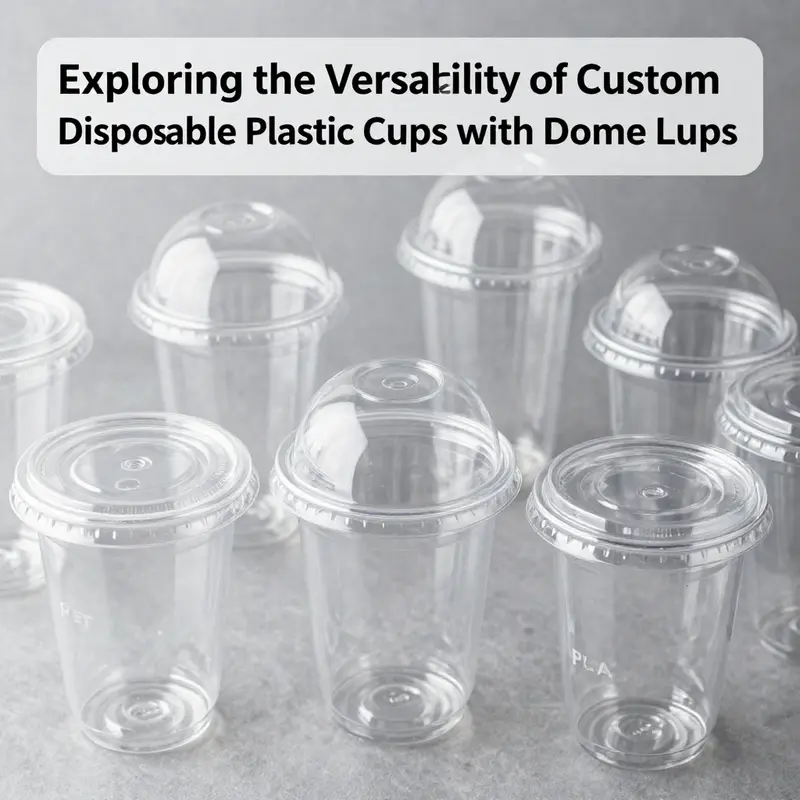
The manufacturing journey behind custom disposable plastic cups with dome lids is rarely seen, yet it shapes every sip, seal, and brand impression that reaches a consumer. These cups are not mere vessels; they are carefully engineered systems where material science, precision tooling, and rigorous quality control converge to deliver performance that feels almost seamless at point of service. A dome lid does more than cap a beverage. It governs how thick liquids flow, how the drink is presented, how easily a customer swirls and pours, and how reliably a lid seals during transport. In a market that prizes both reliability and presentation, a well-made dome-lid cup becomes a silent ambassador for a brand’s quality culture. The chapter that follows weaves together the choices in material selection, the discipline of mold design, the fine-tuned parameters of injection molding, the subtleties of lid formation, and the relentless discipline of testing and traceability. It is a narrative of how precision turns design intent into a tangible, trusted product on every shelf or pickup counter.
Material selection sets the stage for every subsequent decision. For cups intended to carry cold beverages, transparent and lightweight options like PET are common; they deliver clarity without excessive weight and are gentle on the wallet for high-volume runs. When heat resilience is a factor—hot drinks, layered beverages, or soups—a polypropylene (PP) base often becomes the preferred choice because of its robust heat tolerance and compatibility with food-contact standards. Polystyrene (PS) also appears in certain segments thanks to its rigidity and clarity, though its heat resistance is more limited. In the world of dome lids, PP or PS dominate because they maintain the shape of the dome under pressure, preserve a secure seal, and accommodate the structural demands of a thinner wall that must still resist deformation. The resin blends themselves are not merely about performance; they speak to safety and sustainability. Additives such as colorants and antioxidants are carefully dosed in controlled ranges—often around 0.5% to 1%—to ensure color stability and resistance to degradation during processing and storage, while staying within food-safety guidelines. In environments where compostable or bio-based options are a growing preference, polylactic acid (PLA)—though more challenging to heat and moisture manage—offers a pathway to more eco-conscious offerings. The selection of each material becomes a statement about how the cup will perform at rest, under the stresses of transport, and in the eye of the consumer’s brand narrative, where clarity and cleanliness are as important as strength and reliability.
But material choices alone do not guarantee success. The molds that shape both the cup and the lid sit at the heart of the manufacturing system. Precision in mold design translates directly into consistency in every unit. Dimensional tolerance must be tightly controlled; features such as the rim and sealing surfaces often demand accuracy within about plus or minus 0.1 millimeters. The cooling system inside the mold is a silent but constant director of quality, employing multi-point independent circuits to maintain temperature uniformity within a few degrees. This level of control minimizes warpage and reduces the risk of leaks, while also supporting a stable fit between cup and lid across thousands of cycles. The ejection mechanism, too, plays a subtle but critical role. A smooth, well-tuned ejection path prevents surface marring that could otherwise disrupt sealing performance or impede downstream decoration. The interplay between tool geometry, cooling, and ejection is not just a matter of engineering elegance; it is a practical discipline that yields leak-proof seals, repeatable diameters, and a consistent surface finish that looks premium on a shelf.
Inside the injection molding process, every parameter is a carefully tuned dial rather than a blunt lever. The dimensional integrity of the product hinges on the temperature gradient along the barrel and the mold. Operators manage temperature in stages, with the polymer transitioning through a controlled range that might span roughly 180 to 240°C, carefully avoiding thermal degradation while ensuring rapid flow into the thin-walled sections of the dome lid and cup walls. Pressure and speed are calibrated to balance fill and form: injection pressures commonly sit in the 80 to 140 MPa range, with higher pressures used for thinner sections to maintain the shape and integrity of the dome. Backpressure—typically 5 to 20 MPa—helps to evacuate trapped air and improve surface finish. Cycle times are a product of efficiency and quality; 15 to 30 seconds per cycle is typical, with cooling consuming about the majority of that time. The result is a high-throughput process that still respects the micro-level details—flake-free surfaces, uniform wall thickness, and a sealing bead that mates perfectly with the chosen dome lid.
Lid formation and sealing technology reveals a further layer of sophistication. Dome lids can be produced through injection molding or thermoforming, depending on volume, geometry, and fabrication economics. A major advantage for any operation handling custom orders is the ability to switch between sizes and lid designs quickly. Even a modest downtime, measured in hours, can become a costly bottleneck when a brand requests multiple configurations. Innovations in automated, intelligent mold-changing systems dramatically shorten changeover times, enabling rapid transitions from one cup size or lid style to another. This capability supports not just efficiency but market responsiveness. When a client requests a premium look or a specialized curvature that enhances both spill resistance and beverage presentation, the changeover agility ensures the manufacturer can honor small-batch, high-variety orders that would have been economically impractical in the past. The precision of these systems ensures consistent lid fit and sealing performance across batches, a nontrivial achievement given the variability that accompanies high-midelity lid geometries and the subtle differences in wall thickness that accompany customized cups.
Post-processing and surface finishing complete the journey from molten resin to market-ready cup. After tooling, parts are subject to deburring and trimming to remove flash and sharp edges. Surface treatment techniques, such as fine polishing or plasma treatment, can raise the surface quality to a level that enhances tactile feel and print adhesion without compromising barrier properties. Where branding is critical, decoration through digital or flexographic printing can add logos, brand colors, and messaging that must withstand moisture, repeated handling, and temperature variations during service. The challenge here is not only to make the print look sharp but to ensure it remains legible and vibrant throughout the product’s life, from display to consumer use. Subtle changes in surface texture, gloss, and wettability can influence how a drink looks in a cup, how easily the lid seats, and how confident a customer feels about the brand’s attention to detail.
Quality control sits at the apex of the manufacturing chain. A comprehensive quality management system monitors every link in the chain—from material certification to the shelf life of the final unit. Seal integrity testing is fundamental. Water submersion tests at around 0.1 MPa for one minute are used to flag any early weakness in the cup-lid interface, with pass rates typically targeting or exceeding 99.5%. Negative pressure tests, such as applying a vacuum of -0.08 MPa for 30 seconds, validate the seal’s resilience when confronted with real-world handling that might temporarily stress the seal. Beyond seal performance, the products undergo durability and environmental simulation to ensure the package survives in a typical supply chain: a drop test from about 1.2 meters, thermal cycling between -20°C and 100°C, and long-term stability checks that project a service life of at least three years under normal usage. Traceability is also essential. Each batch is tracked from raw material input through to final packaging via Manufacturing Execution Systems, enabling rapid recalls or investigations if a field issue arises. This level of visibility is not just about compliance; it is about confidence. When a chain of custody is transparent, brands can promise consistency across thousands of orders and across continents, and retailers can trust the sustained performance of the packaging they rely on.
Customization and market responsiveness have evolved from niche capabilities to core competencies for many manufacturers. Original Design Manufacturer approaches empower suppliers to tailor equipment and processes to specific client needs, rather than simply offering a one-size-fits-all solution. The trend toward ultra-thin-walled cups for eco-friendly lines, or into complex geometries that support premium brands, illustrates how flexibility and precision can coexist with high-volume efficiency. This flexibility is enabled by tight collaboration with clients, advanced process control, and scalable manufacturing architectures that can absorb small-batch, high-variety orders without sacrificing throughput. In practice, MOQs and lead times can vary significantly with the scope of customization. For standard clear cups, MOQs can be lower, while fully printed or specially shaped cups demand higher volumes to justify tooling and process adaptation. The result is a manufacturing ecosystem where brands can experiment with new aesthetics or functional features—such as integrated straw slots within the dome lid—without surrendering the protections of a well-controlled process.
From a broader perspective, the sustainability dimension remains a guiding light for design and manufacturing choices. The mixture of materials, coatings, and end-of-life options influences the environmental footprint. PET’s recyclability complements the conventional want for clear presentation, while PP supports service in warmer beverages with its higher heat resistance. PLA introduces an option that aligns with compostable aspirations, but its performance requires careful system-level consideration, including end-of-life handling and compostability certifications. Certifications, quality marks, and testing align with both safety requirements and consumer expectations—an alignment that strengthens brand credibility in markets increasingly sensitive to the lifecycle impact of packaging. In this context, the best manufacturers do not simply chase compliance; they pursue continuous improvement across material selection, process stability, and post-use outcomes. They invest in data-driven quality assurance, use traceability to drive root-cause analysis, and cultivate a culture where engineering discipline and design aesthetics walk hand in hand.
The chapter’s thread leads toward a practical synthesis: a dome-lid cup is a compact, highly engineered system. Each choice—from resin type to tool geometry, from injection parameters to post-mold finishing—builds toward a product that performs as reliably in a busy cafe lineup as it does on a delivery route. The best manufacturers are those that harmonize speed with precision, customization with standardization, and a premium look with practical performance. They do not merely produce cups; they deliver a packaging experience that respects the beverage, the brand, and the consumer’s time. As the packaging landscape continues to evolve—driven by consumer demand for convenience, aesthetics, and sustainability—the capacity to adapt without sacrificing quality will distinguish leaders from followers. For readers who want a more in-depth look at automation-driven ODM solutions that enable rapid, flexible production of customized cups and lids, see the external resource linked below.
External resource: https://www.zhongnengmachine.com/zh/news/2026/01/22/revolutionizing-plastic-cup-production-with-odm-solutions.html
Dome-Lid Dynamics: Market Trends, Customization, and the Pursuit of Sustainable Disposable Cups

The market for custom disposable plastic cups with dome lids unfolds as a study in contrasts. On one side, the immediate demands of fast-casual eateries, food-delivery platforms, and event vendors favor packaging that is convenient, affordable, and visually appealing. On the other side, a rising tide of environmental scrutiny and evolving regulations presses manufacturers and buyers to balance performance with responsibility. Dome lids—an architectural detail that may have seemed minor a few years ago—have emerged as a pivotal feature, shaping how beverages are presented, consumed, and perceived in a crowded competitive landscape. They control flow for thick liquids, crown a premium appearance, and enable a brand’s message to travel farther, from storefronts to social feeds. Yet as the market expands, the same dome lid becomes a focal point for sustainability considerations that demand careful choice of materials, supply-chain agility, and a more deliberate design philosophy that blends function with stewardship.
In the ongoing transition toward more responsible packaging, material choice sits at the heart of buyer decision-making. Clear plastics such as PET and PP still dominate standard disposables for their transparency, strength, and recyclability profiles. PET, in particular, is often favored for its clarity and lightweight performance, which translates into cost savings during transport and a cleaner presentation of the beverage inside. PP offers robust heat resistance and flexibility in molding, enabling a wide range of lid geometries and straw-slot integrations that maintain a secure seal even when the cup is jostled during delivery. At the same time, there is a growing cadre of biodegradable options, notably PLA, derived from renewable resources like corn starch. PLA can position a brand as eco-conscious, particularly for menus that emphasize sustainability or for vendors who want a visible narrative around compostable or at least compost-friendly packaging. The regulatory climate reinforces this push. The European Union’s Single-Use Plastics Directive, for instance, has effectively raised the bar for packaging materials and waste management in many markets. In response, manufacturers are not merely substituting one polymer for another; they are innovating across a spectrum of solutions, from recycled-content blends to compostability certifications and more transparent labeling about end-of-life pathways.
But the environmental story of dome-lid cups is not a simple binary between recyclable and non-recyclable. It is a nuanced dialogue about how packaging fits into a circular economy, how waste is managed after consumption, and how brands can align with consumer values without sacrificing the convenience that drives purchases in busy service environments. The market’s emphasis on sustainability does not erase the realities of demand, scale, and price. MOQs (minimum order quantities) and production capacities still matter as much as ever when a business is negotiating a deal that will support a season of promotions or a year-long catering program. Suppliers in major manufacturing hubs—areas renowned for precision tooling, food-safety compliance, and integrated services—are meeting these needs with end-to-end offerings. They provide mold design, raw-material sourcing, printing, quality control, and even complex fittings that guarantee a dome lid seals tightly onto a cup and remains intact from prep through transport to the point of consumption.
The customization trend has grown from a differentiator to a baseline expectation. A brand’s identity—logos, color palettes, and even custom cup sizes—can ride on the surface of the cup as it leaves the counter and enters the consumer’s world. When a dome lid frames a thick shake or a layered yogurt parfait, the cup becomes a mobile billboard and a tactile experience. The dome lid’s shape enhances perception; the viewer sees a premium presentation and, simultaneously, feels confident that the beverage won’t spill during transit. This visual and practical combination supports a premium positioning for brands that want to convey care and craft without abandoning the practical needs of busy service environments. It is no longer enough to offer a leak-resistant lid; the lid must be capable of showcasing a brand story through color, graphic fidelity, and the smooth finish of the print on the cup—while also maintaining reliability in the face of cold-to-warm temperature swings and the rigors of daily handling.
Manufacturers are responding by expanding customization options without compromising safety and quality. Integrated manufacturing services are now standard in many top-tier factories. The most capable operations provide a seamless pipeline—from mold design and material selection to inline printing and post-production quality checks. This reduces the risk of misalignment between cup and lid, simplifies certification processes, and accelerates time-to-market for promotional campaigns or seasonal launches. In practice, this means a brand can iterate its packaging concept quickly, test market responses, and adjust sizes, prints, and lid features in cycles that align with demand. The result is a more agile supply chain, better fit for campaigns that hinge on premium presentation and reliable performance.
Quality assurance remains a non-negotiable pillar of the dome-lid cup story. A comprehensive QA program covers appearance, measurements, and functional performance. Appearance checks ensure rims remain clean, prints stay crisp, and color consistency holds across batches. Leaking tests verify that the lid seals are capable of withstanding the pressures of stacking, transport, and handling by staff or couriers. Fitting inspections ensure the lid seats securely on a variety of cup rims and that straw slots remain unobstructed while not compromising the seal. These procedures are particularly important for high-volume outlets that rely on speed and consistency; a single quality hiccup can disrupt service flow and erode a brand’s reputation in a moment. In this context, the choice of materials, the precision of tooling, and the rigor of testing become strategic levers. They determine whether a cup can reliably carry a thick smoothie through a busy delivery route or whether a dispenser drawer will jam during peak hours. In essence, the seller who can demonstrate a track record of consistent performance across appearance and function while maintaining rigorous safety standards becomes a trusted partner for brands seeking scale without compromise.
If the conversation is about responsibility, it must also be about the lifecycle of the packaging. The environmental considerations extend beyond the point of sale and into disposal, collection, and recycling streams. Transparent labeling about material composition and end-of-life options helps consumers make informed decisions and can influence municipal recycling systems to classify and process these cups more efficiently. Yet the reality is that not all markets have the same infrastructure to handle post-use plastics. In some regions, recycled content programs and PET/PP recycling streams are well established, enabling a circular flow that reduces virgin material demand. In others, compostable options like PLA can offer a pathway to divert packaging from landfills, but only if industrial composting facilities are available and accessible. Home composting, which some brands advertise, is seldom reliable for compliant labeling, and that ambiguity can confuse consumers and undermine the ecological intent. The best practice is to offer a clear, credible end-of-life plan that aligns with local waste-management capabilities. The market’s best players embrace such transparency and are prepared to educate customers and partners about practical steps to minimize environmental impact.
As the adoption of eco-friendly materials grows, the tension between performance and sustainability persists, but it also generates opportunities. The same dome lid that constrains spillage can be redesigned to reduce material use without compromising seal integrity. Lightweighting programs—a strategy that reduces the cup’s mass while preserving mechanical strength—can cut transport emissions and lower material costs. Recycled-content formulations, when properly validated for food safety and printability, can help brands claim a genuine sustainability arc. And the provision of compostable PLA variants is not merely a marketing pitch but a carefully engineered option that requires compatibility with existing composting infrastructure and clear consumer guidance on disposal. All these considerations feed back into the purchasing decision as buyers weigh not only unit price but the broader lifecycle costs and reputational value of packaging choices.
In practice, a buyer’s approach to selecting dome-lid cups has become a balancing act among several variables. First, there is performance: the cup must handle thick or layered beverages, resist leaks, and accommodate accessories such as straw slots without failing at the seam. Second, customization: a brand expects its cups to reflect its visual identity and messaging, whether through bold prints, subtle branding, or a cohesive color story across sizes like 12oz, 16oz, and 24oz. Third, sustainability: materials and end-of-life options must align with corporate responsibility goals and local regulations. Fourth, scalability: suppliers must be able to deliver large orders on tight deadlines while maintaining quality. Finally, total cost of ownership matters. A seemingly small price difference per unit can add up across tens or hundreds of thousands of pieces, so buyers increasingly favor partners who offer transparent pricing structures, consistent MOQs, and predictable lead times.
Within this framework of expectations, the supply chain must remain flexible enough to accommodate regional variations in regulation, consumer taste, and infrastructure. An efficient supplier will not only provide the dome-lid solution but also guidance on material selection based on climate considerations (for instance, how a cup performs in hot summer service versus cold beverage storage). They will articulate the trade-offs between clarity and branding potential in ensemble packaging with the dome lid, where the visual appeal of the beverage is enhanced by the way the cap frames the contents. And they will be ready to collaborate on certifications and documentation that reassure buyers about food-grade safety, leak resistance, and quality-control processes. In short, the market is moving toward an ecosystem in which packaging is more than a vessel; it is a strategic asset that supports brand storytelling, operational efficiency, and environmental accountability.
For brands exploring the value of customization and sustainability, it is helpful to look at the integration of design and production as a single narrative. The most successful programs treat the cup and lid as a coordinated system rather than two separate parts. In a coordinated system, the dome lid’s geometry supports an enhanced user experience—minimizing spill risk during handling, enabling an aesthetically pleasing reveal of the beverage, and accommodating flow control for thick mixes—while the cup’s exterior provides a canvas that can carry a vibrant brand identity. The result is a packaging experience that feels premium from the first glance to the last sip. As the market evolves, suppliers will continue to invest in digital printing capabilities that deliver high-resolution branding with fast turnaround, alongside advanced mold-making and quality-assurance technologies that can reproduce precise features across high-volume runs. This combination ensures that the consumer sees consistent branding and performance in every cup, every time.
To illuminate the ongoing conversation about sustainability and market dynamics, it helps to acknowledge how information and guidance circulate among manufacturers, buyers, and analysts. The broader landscape features industry guides and supplier encyclopedias that map current capabilities, highlight best practices, and forecast forthcoming material innovations. For readers seeking a deeper dive into sourcing strategies and supplier qualifications, there is a well-regarded reference that outlines strategic considerations for disposable cups with lids, including procurement, testing, and certification processes. This resource complements the field observations described above and provides a framework for evaluating supplier partnerships in a way that emphasizes both performance and responsibility. For a concrete example of how customization becomes a branding asset, see one supplier’s product page old-lady-cactus.
Looking ahead, the trajectory for custom disposable plastic cups with dome lids leans toward a more nuanced synthesis of form, function, and footprint. Brands will increasingly demand packaging that not only protects and showcases beverages but also communicates a commitment to sustainability that resonates with conscientious consumers. Suppliers will respond by offering a spectrum of materials and finishes, from traditional PET and PP to advanced bio-based alternatives and recycled-content blends. They will refine integrated manufacturing services to reduce lead times, improve quality consistency, and support complex branding requirements. And they will help navigate the realities of waste management by providing clear guidance on disposal and end-of-life pathways. The process of balancing efficiency with environmental responsibility is not a fixed endpoint but a continuous optimization that reflects changing regulations, evolving consumer expectations, and advances in material science. In this sense, dome-lid packaging embodies the broader transformation occurring across the packaging industry: a shift from convenience-focused single-use solutions toward packaging systems that are increasingly designed for clarity, durability, and accountability.
External resources can offer additional context for the more technical or regulatory dimensions of this topic. For readers seeking a broader, external perspective on sourcing and sustainability in disposable cup packaging, the following guide provides valuable insights into the B2B supplier landscape and the strategic considerations that buyers weigh when planning large-scale deployments: https://www.alibaba.com/product-detail/Strategic-Sourcing-of-Disposable-Plastic-Cups1600578932171.html?spm=a2700.galleryofferlist.pclick&fsm=detail%3Aproduct_detail&albTrackId=1600578932171
In sum, the dome lid transforms a simple beverage container into a sophisticated packaging proposition that can elevate a brand’s image and improve the consumer experience, while also inviting a careful, transparent approach to sustainability. The chapters ahead will continue to build on these themes, exploring how brands implement circular design principles, how regulations shape product design and labeling, and how manufacturers align quality with speed in a market that prizes both reliability and responsible stewardship.
Final thoughts
Custom disposable plastic cups with dome lids represent a merging of practicality, branding opportunities, and sustainability that resonates well with today’s consumers. They not only enhance the drinking experience for thick beverages but also allow businesses to strengthen their brand presence at the point of sale. Understanding the materials, manufacturing quality, and market trends your business faces will empower you to make informed decisions about packaging. Embrace these versatile cups to meet modern demands and foster customer satisfaction — elevating your service to new heights.