
The demand for customized, eco-friendly beverage solutions is surging in today’s market, presenting a golden opportunity for bubble tea shops, restaurants, food trucks, catering services, event planners, and corporate teams. Custom plastic non-disposable coffee cups with lids not only offer practicality but also reflect an evolving consumer preference for sustainability. This article delves into the market trends, innovative designs, economic benefits, and environmental impacts associated with these versatile products, equipping your business with holistic insights into promoting a greener, customer-friendly beverage experience.
Brewing Durable Brands: Market Trends and Demand for Custom Plastic Non-Disposable Coffee Cups with Lids
Across the coffee service landscape, a quiet but powerful shift is taking shape. The conversation is no longer solely about what a cup can hold, but about what the cup represents over time. Custom plastic non-disposable coffee cups with lids are entering a spotlight that is increasingly about durability, brand fidelity, and a measurable reduction in waste. This shift is not a fleeting preference; it is being driven by a convergence of sustainability concerns, regulatory pressure, and the practical realities of branding in a world where every interaction with a cup is a touchpoint for a company’s values. The narrative moving through markets and boardrooms alike is that a well-designed, reusable cup can serve as both a practical tool and a living ambassador for a brand’s commitment to responsible stewardship. In that sense, the cup becomes a canvas for continuity, a way to remind customers that the relationship between coffee, culture, and consumption can be reimagined to minimize harm while maximizing memorable experiences.\n\nFrom a macro perspective, the market for reusable coffee vessels has grown into a sizable force with implications that ripple through manufacturing, logistics, design, and corporate strategy. The most referenced forecasts place the global reusable coffee cup market on a pronounced ascent. While exact figures fluctuate by source, the trajectory is consistently upward, underscoring a substantial shift from disposables toward durable solutions. A core feature of this trajectory is not just the volume but the velocity of adoption among consumers who value longevity and the chance to align daily routines with broader environmental goals. The economic logic accompanies this shift: consumers, particularly younger cohorts, show a willingness to pay a modest premium—typically in the range of about 10 to 15 percent more—for products perceived as environmentally responsible. That premium is not a trivial margin; it supports improved materials, better manufacturing practices, and more sophisticated customization, all of which contribute to a more resilient product ecosystem for reusable cups with lids.\n\nThis market dynamics picture is reinforced by the growing clamor around environmental concerns associated with single-use plastics, including the perceived health considerations tied to some plastic-lined cup configurations. Research highlights that microplastic fragments can find their way into hot beverages served in certain cup formats, raising questions about long-term exposure and consumer trust in disposable options. While the precise mechanisms and materials vary, the broader implication is clear: there is a substantive consumer and regulatory impetus to pivot away from traditional plastics. In parallel, several large beverage-service networks are actively exploring or adopting compostable or biodegradable alternatives for cash-and-carry service, which signals a longer-term trend toward materials that can be responsibly managed at end of life. For brands contemplating the value proposition of custom plastic non-disposable cups with lids, this regulatory and environmental context matters as both a risk indicator and a signaling opportunity. It suggests that success in this domain will hinge on the ability to integrate recyclability, lifecycle thinking, and clear end-of-life pathways into the design brief.\n\nThe customization dimension remains a central differentiator in a market that could otherwise be characterized by functional sameness. In the realm of reusable cups with lids, brands seek to capture attention and build affinity through distinctive designs, logos, and ergonomic features. Ergonomic handles, silicone sleeves for insulation, tactile textures, and colorways that convey brand personality all contribute to a winning proposition. The ability to tailor a cup to specific campaigns, corporate gifts, or loyalty programs creates a channel for ongoing engagement that can translate into repeat business and sustained visibility. In practice, this means more than surface design. It involves thoughtful engineering that considers grip, heat retention, and even compatibility with sleeves or carriers that customers already own. The result is a product ecosystem that supports both B2B and B2C applications, where a branded cup becomes a recurring reminder of a company’s commitment to sustainability and quality experience.\n\nEconomic considerations play a nontrivial role in shaping market dynamics for custom plastic non-disposable cups with lids. A commonly cited cost structure places unit pricing in a range that reflects both material choices and production volumes, often around the mid-to-high single digits for bulk, with a minimum order quantity that tends to sit in the thousands. A typical threshold seen in major sourcing channels aligns around three thousand units, which reflects the scale required to justify tooling, customization processes, and quality control investments. The implication for buyers is that these products function meaningfully within corporate gifting programs, branded events, and loyalty initiatives where the cup acts as a long-term reminder of a brand’s values and promises. For suppliers, the challenge lies in balancing upfront investment in recyclable or biodegradable materials, the efficiency of customization processes, and the compatibility of lids, handles, and insulation features with widespread usage patterns. When these elements line up, the value proposition extends beyond a single-use transaction; it becomes a conduit for year-round engagement and reduced waste over multiple uses.\n\nThe regulatory environment adds another layer of complexity and opportunity. Global and regional policy shifts are accelerating the move away from single-use plastic options toward materials and designs that can align with circular economy principles. A notable development in large markets is the push toward biodegradable or compostable materials such as PLA and PBAT, supported by policy incentives and, in some cases, mandates. Projections suggest that by 2030, a sizable portion of the one-time-use cup market could be replaced with more sustainable materials, reshaping competitive dynamics and material sourcing strategies for cup manufacturers and brand owners alike. This regulatory pressure is not simply about compliance; it nudges the design and procurement ecosystem toward innovations in resin blends, additive manufacturing, and end-of-life technologies that can support easier recycling or composting. The practical implication for a company seeking to deploy custom plastic non-disposable cups with lids is to embed sustainability credentials into the product narrative from the design stage, ensuring that a cup can be accepted into recycling streams or composting programs and that supply chains are prepared to verify and communicate these outcomes.\n\nAgainst this backdrop, customization and branding opportunities retain their distinctive appeal. Even as disposable cups decline in favor of durable solutions, there remains a robust niche for custom, reusable plastic cups with lids. This niche is driven by the need for brand identity in spaces like corporate events, experiential marketing, and loyalty programs where durable goods can become ambassadors for a brand over months or years. The ability to imprint logos, choose color themes aligned with corporate palettes, and incorporate ergonomic lid designs gives brands a powerful tool to create positive associations with a sustainable lifestyle. In practice, a company can leverage this ongoing visibility to reinforce messaging around responsible consumption, fostering a sense of shared purpose with customers and partners. The cups become not just vessels for coffee but artifacts of a broader commitment to sustainability—usable, visible reminders of brand values that extend far beyond a single coffee moment.\n\nDesign and material considerations are a persistent thread in this story. Recyclability, durability, and safety must be harmonized with the desire for customization. Materials scientists and product engineers are increasingly exploring blends that offer strength and heat resistance while remaining compatible with recycling streams. The trend toward recycled-content plastics is not merely a green badge; it answers a practical supply-chain concern by reducing reliance on virgin resin and aligning with circular economy objectives. At the same time, there is growing interest in incorporating biodegradable options where feasible, recognizing that some markets and customers prioritize compostability as a defining feature. The successful implementation of these materials hinges on stringent quality control, clear labeling about end-of-life options, and robust partnerships with recyclers or composters to ensure that the cup’s lifecycle is properly managed. In addition, the lid and sleeve interactions demand careful engineering to prevent leaks, maintain insulation, and preserve the user experience during repeated uses. A well-conceived design approach can address these concerns while enabling customization at scale, ensuring the product remains reliable, attractive, and easy to integrate into existing branding ecosystems.\n\nFrom a strategic viewpoint, the path forward for custom plastic non-disposable cups with lids involves balancing aesthetic appeal, functional performance, and responsible manufacturing practices. Brands aiming to maximize impact must communicate the cup’s lifecycle story—from material selection and manufacturing processes to end-of-life pathways. This narrative strengthens trust and invites customers to view their daily coffee ritual as part of a broader habit of mindful consumption. The economics of scale will continue to shape decisions around color options, lid geometries, and insulation features, as suppliers optimize tooling and production lines to deliver consistent quality at scale. Yet even as mass customization grows more efficient, the value of distinctive, protective designs remains intact. A cup that fits comfortably in a hand, keeps beverages at the right temperature, and carries a visually compelling brand message will stand out in a crowded market and convert occasional buyers into long-term advocates.\n\nWithin this evolving landscape, a pragmatic note about channels and connections helps illustrate how this market operates in real terms. Buyers often look for a balance between cost efficiency and brand impact. They seek suppliers who can deliver on time, with predictable lead times and reliable quality control, while also offering the flexibility to adapt designs for different campaigns and seasonal formats. The ability to integrate with broader packaging ecosystems—such as theme-party or event packaging that complements foodservice needs—enhances the perceived value of the reusable cup, making it part of a holistic brand experience rather than a standalone product. For brands seeking to explore these dimensions, partnerships with packaging providers who can offer end-to-end solutions—such as customized takeaway packaging and related components—can be particularly advantageous. See an example of such an offering here: custom takeaway packaging supplies. This kind of integration demonstrates how a reusable cup can function as a centerpiece of a multi-product ecosystem that supports sustainability while sustaining brand presence across stages of a consumer’s journey.\n\nOn reflection, the market for custom plastic non-disposable cups with lids is not a monolith but a mosaic of opportunities, risks, and evolving preferences. It is shaped by consumer demand for responsible products, the pressure of regulations, and the enduring appeal of personalized branding. The potential for this segment lies in its ability to align durable design with clear sustainability outcomes, offering a pathway for brands to demonstrate commitment through tangible, reusable experiences. It is not merely about replacing a disposables segment with a different plastic option; it is about reframing the coffee cup as a durable, customizable, and responsible artifact that travels with customers from the first sip to multiple refills. As markets continue to respond to environmental challenges and as consumer expectations evolve toward transparency and accountability, the practical value of such cups will increasingly be measured not only by performance and aesthetics, but by demonstrated lifecycle stewardship and the clarity of the story behind each cup. The chapter of this transition is being written with every design choice, every material decision, and every conversation about end-of-life options. In that sense, the cup becomes a small but meaningful instrument of cultural change—one that blends everyday utility with a growing sense of collective responsibility.\n\nExternal resource: for broader market context and trajectory, see the forecasted growth and segmentation in the reusable coffee cup market. https://www.marketsandmarkets.com/Market-Reports/reusable-coffee-cups-market-1769.html
Reimagining Reusables: Design Innovations in Custom Plastic Non-Disposable Coffee Cups with Lids
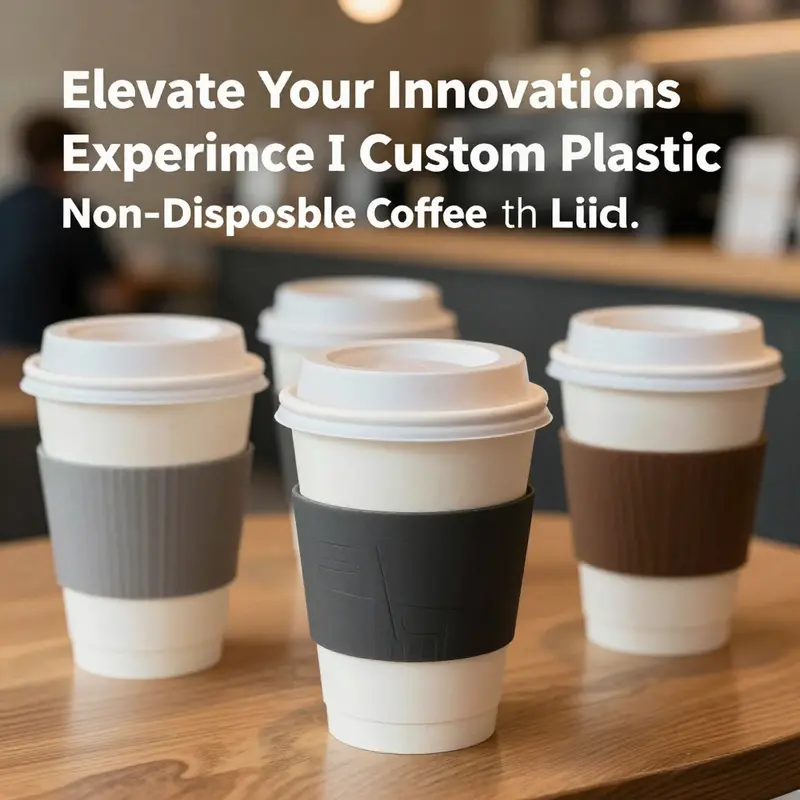
Across the coffee landscape, a shift is unfolding. The market that once prioritized convenience through disposable cups is increasingly turning to durable, reusable solutions. Brands and manufacturers are not simply offering a sturdier cup; they are redefining what a custom cup can be. The chapter that follows traces how design innovations rooted in material science, sealing architecture, ergonomic refinement, and branding flexibility are turning plastic non-disposable coffee cups with lids into the kind of everyday hardware that customers want to own, reuse, and invest in. This evolution sits at the intersection of performance, safety, and sustainability, and it is reshaping how cafés, offices, and individuals think about coffeeware as a long-term asset rather than a single-use prop. The best of these designs blend resilience with subtle elegance, enabling a cup that travels from a busy commute to a quiet desk while still carrying a strong brand story and a reduced environmental footprint. In this context, the conversation shifts from disposables to durable, customizable reusables that can stand up to repeated washing, high-temperature sterilization, and the rough-and-tumble realities of daily life. Material choice sits at the heart of this transformation. For reusable plastic cups, food-grade polypropylene (PP) and polycarbonate (PC) are the workhorses. These materials offer a rare combination of heat resistance, impact strength, and chemical stability that matters when a cup sees sunlight on a hot bus ride, endures a dishwasher cycle, or is cranked open and closed dozens of times. The choice of material goes beyond mere durability; it carries safety implications. Reputable designs routinely indicate compliance with recognized food-safety standards, including FDA and EU guidelines. This assurance isn’t a bureaucratic ornament; it translates into real consumer confidence. When a cup can safely endure repeated sterilization and resist the gradual degradation that occurs with aging plastics, it becomes a credible vehicle for a brand’s long-term promise rather than a disposable convenience. And because sustainability underpins purchasing choices, the material narrative now intersects with recyclability and end-of-life considerations. Recyclability is not a mere afterthought; it is a driver of consumer trust and corporate responsibility that can influence a brand’s appeal to eco-conscious buyers. A second axis of innovation centers on sealing and leakage resistance. Modern reusable cup lids have evolved far beyond simple snap-on designs. The most compelling configurations employ a dual-layer sealing structure: an inner silicone ring working in concert with an outer elastic sealing ring. This combination creates a near-leak-proof barrier that can survive the rigors of everyday transport—whether it’s a bumpy ride in a car, a backpack tossed during a morning sprint, or a hurried transfer from kitchen to office. Such sealing precision is more than a technical nicety; it directly affects user behavior. When users trust that their beverage won’t escape at the worst possible moment, they gain confidence to carry their drink more freely, increasing engagement with a reusable cup rather than reverting to disposables. Innovative lid mechanisms further push the envelope. Some lids integrate an intelligent opening and closing system that accommodates drinking through a straw, while also enabling a quick seal when not in use. A small, thoughtfully designed valve at the spout or a gravity-assisted closing feature can prevent drips when the cup is inverted or jostled, a common scenario for commuters and students. In practice, this reduces spontaneous mess and encourages repeated use, which is the core objective of any reusable cup program. These designing choices collectively transform the lid from a simple top to a carefully engineered interface that governs the cup’s performance in real life. Grip and comfort are not afterthoughts in the best designs but essential components of the user experience. The body of a reusable cup is contoured to fit the hand, with anti-slip textures that provide a secure hold in both hot and cold conditions. Temperature considerations are baked into the ergonomics: some models pair the cup with detachable thermal sleeve covers that buffer heat, enhancing comfort during hot beverages and offering additional slip resistance. The tactile experience matters just as much as the visual appeal. The grip quality communicates a sense of quality and durability that aligns with the sustainability narrative, reinforcing the consumer’s sense of stewardship and long-term ownership. These ergonomic touches are particularly important because a reusable cup’s value is often tied to how comfortable it feels after hours of use. If the cup invites a confident grip and reduces the risk of attempted drops, it becomes more likely that users will integrate it into daily routines rather than relegating it to the back of a cabinet. Even when the functional performance is exceptional, branding and customization remain central to market success. The appeal of a reusable cup lies not only in its durability but also in its capacity to carry a brand story, color identity, or even a limited-edition aesthetic. Crafting methods such as screen printing, laser engraving, and heat transfer printing enable corporations and small businesses alike to inscribe logos, slogans, or distinctive patterns on both cup body and lid. The result is a mobile advertisement that travels with the customer, one that coexists with the user’s own sense of style. In practice, this means a cup becomes not just a vessel for coffee but a canvas for identity, a personal item that communicates values—quality, reliability, and a commitment to sustainability. Customization thus expands the product’s lifecycle by enabling repeat purchases and encouraging pride of ownership, which in turn supports higher return rates for refill programs and branded experiences in venues ranging from cafés to corporate offices. As modularity and adaptability enter the conversation, another layer of sophistication appears. Some of the most forward-looking designs explore modularity, allowing users to swap or upgrade functional components over time. Interchangeable insulation layers, adjustable straw lengths, or even built-in micro-filters for certain brew methods illustrate a vision of a cup that can morph to new needs without abandoning its core identity. This modular mindset aligns with consumer desires for long-term utility and evolving use cases, reducing waste not just in the short term but across multiple product cycles. The practical upshot is a cup that can accompany growth in a consumer’s coffee ritual—from a minimalist morning espresso to a longer, more elaborate specialty drink that might involve custom filtration or flavor-enhancing accessories. In a market where customers increasingly look for value and durability, modular design offers a path to continual relevance. Of course, the sustainability narrative extends beyond the product itself to production and lifecycle considerations. Advances in material science, cleaner manufacturing practices, and better end-of-life options are reshaping the environmental footprint of reusable cups. Even as the initial investment in a durable cup is higher than a single-use alternative, the long horizon often proves more economical and ecologically responsible. Reusability reduces waste streams, and when coupled with recyclability and responsible disposal pathways, it closes the loop in a circular economy model. The consumer’s choice, once framed by convenience, now becomes a decision informed by fuel for thought: fewer discarded cups, lower per-use energy, and a product designed to outlast its disposable cousins. In practical terms, this shifts consumer expectations toward gear that can withstand routine cleaning and sterilization, maintain colorfast branding after repeated wash cycles, and remain visually appealing through years of daily use. From a market perspective, these innovations must contend with price points and scale. The reported pricing range for customizable plastic cups with lids—roughly mid-$0.40s to mid-$0.60s per unit—with a minimum order quantity in the thousands, reflects the balance between quality, customization, and production economics. It is a reminder that the shift toward non-disposable options hinges on both perceived value and functional reliability. A customer who invests in a reusable cup anticipates not only a better beverage experience but also a reliable, leak-resistant design that can survive the rigors of daily life. In response, manufacturers optimize molds, streamline assembly, and standardize testing protocols to ensure durability across repeated cycles. The result is a spectrum of designs that can meet the needs of busy workplaces, coffee shops, and households while staying faithful to safety standards and sustainability commitments. The branding dimension, in particular, demonstrates how design choices amplify value beyond the cup’s primary function. A well-crafted cup reinforces a brand’s environmental stance with tangible proof—an object that users are proud to carry and reuse. But branding must be handled with care to avoid overloading the product with traits that complicate cleaning, increase maintenance, or impede material performance. The most successful executions strike a balance: bold visuals that endure washing, subtle contours that remain comfortable in the hand, and surface finishes that resist staining and wear. This careful orchestration helps preserve the cup’s aesthetic appeal over time, which in turn sustains consumer engagement and loyalty. The more a cup can feel like a durable companion rather than a disposable afterthought, the more it supports a broader shift toward sustainable consumption in the coffee ecosystem. The implications for retailers, venues, and designers are clear. To capitalize on the momentum toward non-disposable cups, offerings must combine safety, durability, usability, and branding potential in a single package. Design teams should foreground material choices that can withstand repeated cleaning while meeting regulatory expectations. They should engineer lid systems that merge leak resistance with intuitive operation. They should craft body geometries that feel comfortable during long sips and ensure branding remains vivid after many wash cycles. And they should embrace modular concepts that allow customers to tailor the cup to evolving needs without abandoning the core product. When done well, these factors coalesce into a product that is not only a vessel but a personal commitment—an everyday tool that users choose to keep, reuse, and showcase. For those who want a practical glimpse into how industry players translate these ideas into real products, the literature highlights the role of large-scale marketplaces in shaping supply options and standards. The underlying takeaway is that expectations around material safety, manufacturing quality, and customization are increasingly codified and accessible to buyers who are evaluating options for corporate gifting, café programs, or employee perks. As buyers become more discerning about the lifecycle of their purchases, the value proposition of non-disposable cups with lids grows stronger. A durable, well-sealed, ergonomically friendly cup with room for branding is more than a utilitarian tool; it is a scalable platform for corporate responsibility, customer engagement, and brand storytelling. Internal references and practical sourcing considerations further illuminate how this space is evolving. For instance, the customization and packaging ecosystem surrounding these cups is increasingly attentive to brand transmission and user experience. Buyers can explore options such as tailored takeaway packaging and themed party disposables that align with the cup’s aesthetics and durability, ensuring a cohesive brand narrative from cup to counter to consumer. See for example the guidance available on specialized packaging platforms that discuss how to pair durable cups with custom lids, branding, and packaging solutions. This aligns with the broader shift toward integrated, end-to-end design thinking that treats the cup as part of a holistic system rather than a standalone item. For further reading, industry sources emphasize the role of global procurement platforms in shaping scale, compliance, and customization opportunities, with authoritative references that underline the importance of safety standards and supply chain reliability. External reference: https://www.alibaba.com/product-detail/375-ml-Plastic-Cup-with-Lid-Custom_1600896578376.html Internal link note: for readers seeking practical examples of how branding and packaging integration can be realized in retail and foodservice contexts, the article on custom takeaway packaging supplies provides a useful case study of how packaging design and cup aesthetics can cooperate to enhance brand presence and consumer experience. For convenience, you can consult this resource: custom-takeaway-packaging-supplies-disposable-tableware-for-theme-party. It offers concrete ideas for how a durable cup can be paired with coordinated packaging to deliver a seamless customer experience while preserving the cup’s longevity and branding potential.
Brewing Business Value: The Economic and Brand Payoff of Reusable Custom Plastic Coffee Cups with Lids
Every cup that leaves a shop is a tiny ambassador for a brand. In the realm of coffee, the vessel is more than a vessel; it is a handshake with a customer, a chance to tell a sustainability story, and a measurable line item that can tilt the economics of a business over months and years. The research landscape around custom plastic non-disposable coffee cups with lids shows a clear appetite for eco-friendly options, but it also reveals a striking gap: most data concentrates on single-use cups, with far less information about reusable, non-disposable variants. That gap is not a void to fill; it is a signal. It suggests a ripe area for rigorous testing, thoughtful design, and disciplined cost management. What follows is a narrative that threads together the economic logic, customer psychology, and operational realities that come with adopting reusable, custom plastic coffee cups with lids. It treats the cup not as a perk of branding alone but as a strategic asset that can influence cost structures, waste streams, and loyalty dynamics in meaningful ways. The discussion navigates from the basics of price signals and feasibility to the broader implications for a business’s sustainability identity, ensuring alignment with the industry’s push toward responsible manufacturing and recyclability, while acknowledging the practicalities that accompany any shift in serving ware.
At the core of the economic argument is the recognition that upfront costs matter, but they do not tell the whole story. The market for customizable cups, even when oriented toward reusables, has shown price ranges roughly in the mid to upper single digits per unit for entry points during bulk sourcing, with minimum order quantities in the thousands. Those numbers become a starting point for a longer dialogue about lifecycle economics. A reusable cup demands a different financial calculus than a disposable one. A disposable cup incurs a relatively predictable cost per use, plus ongoing disposal or recycling costs that many businesses treat as a recurring expense. A reusable cup, by contrast, carries a front-loaded investment, followed by a stream of savings that accrue over time through repeated uses, lower per-use waste management costs, and the potential for enhanced brand equity. The challenge is translating that long horizon into a credible and transparent business case for decision-makers who must balance capital expenditure, cash flow, and operational capacity.
The existing data landscape emphasizes disposables. It chronicles certifications, bulk pricing, and the logistical ease of replacing one-time cups. Yet it offers scant direct insights into the durable, multi-use variant. That absence is not a drawback of the material itself; it is a gap in the analytical coverage. For a practical business case, one must move beyond headlines about up-front price and minimum order quantity to a nuanced assessment of lifecycle costs. This includes the durability of the cup material under dishwasher and sanitization processes, the maintenance burden on staff, the rate of return on investment through reduced waste disposal fees, and the receptivity of customers to bring their own branded cups back to the table. In other words, the economic benefits are not merely about saving pennies per cup; they hinge on the total cost of ownership across a cup’s usable life, the efficiency of the back-end cleaning ecosystem, and the value created in the customer relationship through sustainability messaging and consistent branding.
The practical design features that often accompany premium, reusable cups—ergonomic handles, silicone sleeves for insulation, secure lids, and customizable logos—play a crucial role in the financial story. A well-designed cup can reduce breakage, improve grip during transport, and minimize heat loss, all of which contribute to longer lifespans and higher customer satisfaction. When a customer experiences reliable performance and a consistent, attractive appearance, the likelihood of repeat visits increases. This is where the economic case threads into the fabric of customer loyalty and brand identity. A reusable cup becomes a tangible manifestation of the business’s commitment to reducing waste, and that commitment can translate into stronger relationships with patrons who value sustainability. In practical terms, the alignment between product design and customer expectations matters. If a cup looks premium and performs reliably in daily use, it signals to customers that the business treats quality and the environment with seriousness. The result can be a higher probability of loyalty, greater word-of-mouth advocacy, and a willingness among customers to participate in loyalty programs that reward responsible behaviors, such as returning the cup or using it in-store for refills.
From an operational standpoint, the adoption of reusable cups introduces a set of new cost streams and savings. A crucial question is how the cleaning and maintenance ecosystem will scale. Reusable cups require consistent washing, sanitizing, and storage. If a business lacks sufficient dishwashing capacity or staff time to manage cup retrieval and return cycles, the anticipated savings may be offset by operational friction. Therefore, a thoughtful implementation plan is essential. A pilot program can illuminate the true costs and benefits by measuring return rates, the frequency of cup loss or misplacement, and the efficiency of the washing process. The data from such pilots can then guide a broader rollout, with adjustments to inventory levels, loading practices, and staff training that optimize both cost and experience.
A critical but sometimes overlooked factor is the cost of waste disposal and the regulatory or corporate social responsibility (CSR) drivers that increasingly shape procurement choices. Even if a reusable cup requires an initial larger investment, the business may reduce ongoing disposal fees and improve its environmental footprint, which can align with sustainability targets and investor expectations. In markets where regulations or consumer pressure emphasize circular economy principles, a well-executed reuse program offers a strategic hedge against regulatory risk and reputational risk. The economic benefits, in this framing, extend beyond the balance sheet to the business’s brand narrative and long-term market positioning. When a company communicates a credible story about reducing plastic waste and improving recyclability, it signals to customers, partners, and employees that sustainability is embedded in the operating model, not merely a marketing line.
This narrative is not intended to sugarcoat the realities of cost and logistics. The absence of extensive data on non-disposable cups means that business leaders must build their own evidence through careful measurement and transparent reporting. A robust evaluation should consider long-term cost savings from reduced purchase cycles of disposables, the amortized cost per use based on expected lifespan, and the operational efficiencies gained from standardized cup formats that simplify supply chains and training. In addition, it is important to quantify the intangible benefits, such as enhanced brand image and improved customer retention, in ways that are credible and testable. For instance, a business could track changes in repeat visit frequency, the effectiveness of loyalty programs tied to cup usage, and customer feedback on sustainability messaging. These measures, while not purely monetary, contribute to a broader assessment of the program’s financial viability and strategic value.
In the broader ecosystem, there is a spectrum of branding opportunities that come with reusable cups. A cup is not a disposable afterthought but a moving billboard that travels with the customer—into the workplace, into daily routines, and into conversations about environmental responsibility. Customization is a lever here. The more the cup reflects the brand’s visual language and values, the more it reinforces recognition and recall. Yet customization must be balanced with practicality and cost. The most effective branding on a reusable cup is resilient to repeated wash cycles, temperature fluctuations, and constant handling. A durable logo, color treatment, and sleeve design contribute to a premium feel without compromising durability. When the design resonates with customers over time, it reinforces the perceived value of the cup itself and strengthens the association between brand and responsible practice. This is where the economic and marketing narratives converge: a well-executed reusable cup is an investment in customer perception that yields returns through loyalty, differentiation, and a clearer value proposition for sustainable consumption.
A subtle but meaningful dimension of the economic equation is the opportunity to diversify product ecosystems beyond cups alone. The same base design logic—durability, modularity, and branding—can extend to lids, sleeves, and accessories that complement the cup and enhance user experience. By creating a cohesive line of reusable serving ware, a business can streamline procurement, reduce vendor fragmentation, and negotiate better terms through bundled purchasing. The result is a more predictable cost structure and stronger supplier partnerships. The broader strategy here is not merely to swap one disposable item for a reusable one, but to envision a holistic set of reusable items that work together, reinforcing brand integrity while delivering tangible savings and sustainability outcomes over time.
Internal considerations also shape the viability of a reusable cup strategy. For example, there is a natural tension between the desire for lightweight, ergonomic designs and the need for durability under frequent washing. Lids must seal reliably to prevent leaks during transport, but they must also be compatible with existing cups and machines to avoid expensive reconfigurations. Silicone sleeves deliver insulation and grip but add material cost and potential maintenance considerations. Each design decision has a downstream effect on lifecycle costs, energy use in cleaning, and the speed of service during peak hours. The more a team can standardize components—such as lid types, handle shapes, and insulation sleeves—the easier it becomes to manage inventory, reduce waste, and deliver a consistently high customer experience. In turn, that consistency feeds into the loyalty and retention signals that many executives equate with long-term profitability.
For business readers seeking a practical takeaway, the question is not whether reusable cups exist, but when and how to deploy them in a way that respects cost discipline and customer expectations. A prudent path begins with a strategic assessment of usage patterns: how many cups are returned, how often they are cleaned, and what fraction of customers is receptive to bringing their own branded cups back for refills. This understanding informs staffing needs, washing capacity, and the design brief for the cup. It also clarifies the branding and customization priorities. If sustainability messaging aligns with the customer base and the operational model, the payback period can shorten, and the program’s perceived value can rise in tandem with actual cost savings.
An important caveat accompanies any such transition. Reusables require robust sanitation and a clear policy around cup returns, tracking, and accountability. Without reliable processes, the promised economic benefits may erode due to losses, breakages, or contamination concerns. The path forward, therefore, lies in an iterative approach: pilot programs, careful data collection, and gradual scale-up. The data gathered from early pilots—return rates, washing cycle efficiency, user satisfaction, and branding impact—provides the empirical foundation for a business case that can be shared with stakeholders and investors. The broader narrative that emerges is not merely about saving money; it is about transforming the operating model to embrace a more durable form of customer engagement, where a cup becomes a repeatable touchpoint for value exchange and sustainability storytelling.
To connect this discussion with the wider packaging ecosystem, consider how reusable cups fit into a brand’s overall packaging strategy. The shift toward reusables does not happen in isolation. It intersects with how a business positions itself across takeaway packaging, in-store service, and brand experience. An internal reference point is the spectrum of packaging options that brands explore for theme events, loyalty drives, and daily operations. For example, in the broader catalog of branded packaging, there are opportunities to extend reuse concepts beyond cups to other serving components, creating a unified and memorable customer journey. The synergy between cup design, lid compatibility, and branding can yield a cohesive identity that travels with the customer every day, reinforcing the message of responsible consumption at every step.
In sum, the economic case for custom plastic non-disposable coffee cups with lids rests on a careful balancing act: upfront capital must be justified by durable performance, strong brand integration, and scalable operations. The potential returns are multi-faceted. They include tangible cost savings from reduced disposable usage and waste handling, improved customer loyalty driven by a credible sustainability narrative, and strategic differentiation in a crowded market. Designing for durability, ease of use, and branding longevity is essential. The business case gains clarity when leadership grounds it in disciplined piloting, transparent measurement, and a willingness to adapt processes based on real-world data. While the current dataset highlights the dominance of disposable-focused information, the evolving market signals a clear opportunity: when a business treats a reusable cup as a strategic asset rather than a marketing prop, the economics can align with the values customers increasingly expect. The cup becomes part of a responsible business model that supports long-term growth, stronger customer relationships, and a reduce-and-reuse narrative that resonates in a world increasingly attentive to waste and resource use. For brands exploring this transition, a practical step is to look at related packaging ecosystems and consider how branded, reusable serving ware can harmonize with other sustainability initiatives. For instance, in the broader packaging landscape, options exist that emphasize thoughtful design, recyclability, and consumer engagement, as a complement to a reusable coffee cup strategy. See a related overview of branded takeaway packaging for inspiration and context: custom takeaway packaging supplies.
Finally, it is worth acknowledging that the literature on non-disposable cups remains comparatively sparse. The absence of comprehensive datasets should not be interpreted as an obstacle but as an invitation to businesses to generate their own evidence. When the economic case is built on measured outcomes—cost per use, lifecycle durability, return rates, and loyalty metrics—the narrative becomes compelling and defendable. In a marketplace where customers increasingly prize sustainability, the strategic value of reusable, customizable cups can extend beyond cost savings to create a durable competitive advantage. In the end, the decision to invest in reusable cups with lids is a bet on a future in which quality, reliability, and responsible consumption coexist with profitability and growth. It is a bet worth taking for organizations that view commerce as a platform for meaningful change, not merely as a mechanism for short-term gains. And it is a narrative that can be reinforced through ongoing measurement, transparent reporting, and a steady commitment to improvement over time.
External resource for broader context: https://www.un.org/sustainabledevelopment/sustainable-consumption-production/
Rethinking Reusables: The Environmental Dynamics of Custom Plastic Non-Disposable Coffee Cups with Lids in a Circular Economy
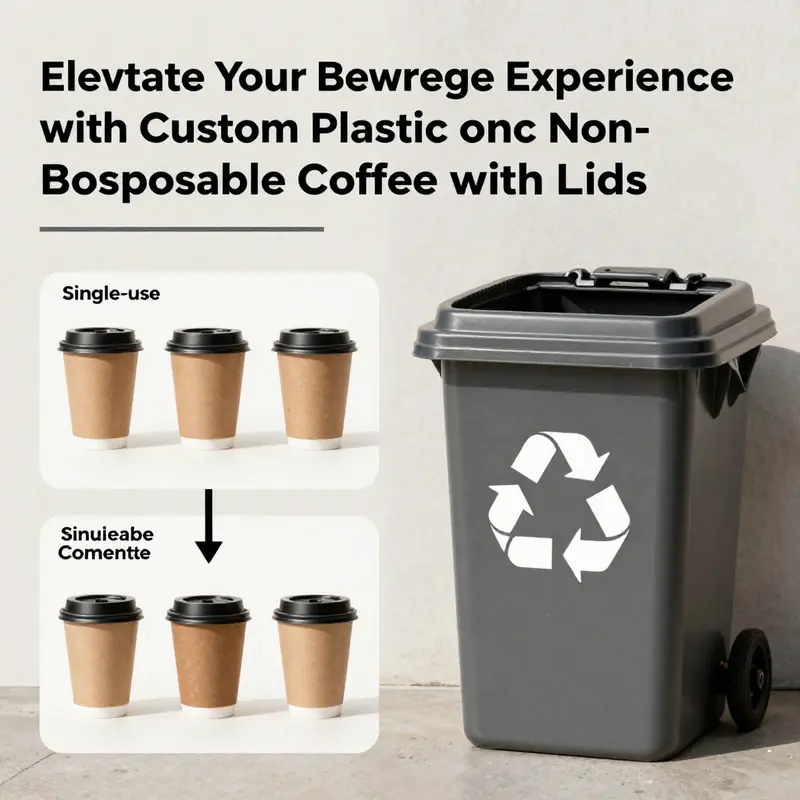
The environmental narrative around custom plastic non-disposable coffee cups with lids unfolds as a careful negotiation between convenience, branding, and the climate realities of everyday use. These cups sit at a crossroads of design and responsibility. On one side is the appeal of a durable, visually customizable vessel that can carry a brand image, maintain heat, and be washed and reused many times. On the other is a web of life-cycle considerations that includes manufacturing energy, raw material streams, wash-and-dry energy, and end-of-life outcomes. The conversation becomes meaningful when we trace a full life cycle rather than focusing on a single moment of use. In this frame, the environmental impact of a reusable cup hinges on how it is produced, how it is used, and how it exits the system. It is not enough to claim that a durable cup lasts longer; we must prove that its total emissions and resource use over time are lower than those of a single-use cup that is discarded after a single use, and then again replaced. A key finding in the broader literature is that single-use cups generate substantial emissions in both production and end-of-life phases. A well-cited assessment from recent years estimates that the carbon dioxide emitted in making and disposing of a disposable cup is about 1.5 times the cup’s own weight in CO2 terms, underscoring how scale magnifies climate impact when millions of cups are produced and discarded. This signal matters for any business that contemplates moving from disposable to reusable designs, especially when the reusable option is customized with ergonomic handles, silicone sleeves for insulation, and branded lids that still seal securely. It invites a more nuanced question: how many times must a reusable cup be used before its climate footprint becomes lower than that of a disposable cup, and how do we ensure that each use pushes the balance more toward savings than risk? The answer is not a single number, but a range shaped by the materials used, the cleaning regime, and the ambient energy mix. The literature consistently points to a roughly ten to twenty use threshold in many contexts, where the reusable cup begins to outperform a single-use option on a life-cycle basis. Those figures imply that the decision to promote reusables cannot rest on a simple preference for durability alone; it must rest on clear plans for how customers will use, care for, and return or recycle these cups within a system that values water, energy, and waste reduction. The practical implication for manufacturers and retailers is to align design choices with realistic usage patterns. The cups themselves must be robust enough to withstand repeated washing cycles in typical consumer or commercial dishwashers, yet light enough to be handled easily, and capable of maintaining heat without demanding excessive energy for warming or cooling. This is where design features become more than aesthetics; they become functional levers that influence the life-cycle performance. In addition, the cleaning phase deserves close attention. Reusable plastic cups often rely on standard washing processes that consume hot water and detergents. The energy used for washing, the water flow, and the detergents’ environmental footprints all accumulate over time. When users wash by hand, extra energy and water may be spent unknowingly, which can offset some of the environmental gains of reuse if not managed thoughtfully. Hygiene considerations also enter the equation. If a cup is damaged or retains residue from improper cleaning, it can become a health concern, prompting earlier replacement. These realities push the discussion beyond the raw material choices into everyday practices and maintenance routines. From a materials perspective, many reusable cups are fabricated from PET or PP, plastics that derive from fossil fuels and have particular end-of-life challenges. The durability that makes them attractive for reuse can, paradoxically, complicate recycling if the material is contaminated or if the local recycling stream is underdeveloped. The end-of-life outcome then depends not only on the material itself but on the available recycling or waste-management infrastructure. This is especially relevant in regions where curbside recycling is inconsistent or where plastics education is uneven. Even when cups are designed for recycling, the presence of silicone sleeves, complex lids, or mixed materials can complicate the separation required for efficient recycling. In a broader sense, the notion of sustainability for these cups sits within a spectrum that includes single-use biodegradable and compostable options. It is tempting to view every compostable cup as a silver bullet, but real-world disposal infrastructure often fails to match marketing narratives. Many single-use bio-based cups require industrial composting facilities that are not everywhere. In the absence of appropriate infrastructure, these cups may end up in landfills, where decomposition can produce methane, a potent greenhouse gas. The result is that the supposed environmental advantage of biodegradable disposables can disappear if the disposal system does not support the intended end-of-life pathway. Against this backdrop, sustainable alternatives are not simply about switching materials; they are about aligning with the realities of waste streams and energy profiles. Eco-compostable PLA bamboo fiber combinations and PLA coated double-wall kraft paper designs aim to preserve functionality while enabling decomposition under controlled conditions. Yet even these options carry caveats: their performance depends on the availability of facilities that can process them and on consumer behavior that favors correct disposal over convenience. In light of these complexities, the most robust environmental strategy remains a durable, long-lasting reusable cup crafted from materials that can be responsibly managed at the end of life, or from certified compostable bioplastics with a clearly defined disposal route. The overarching goal is to reduce the sum of emissions across the lifecycle by encouraging repeated use, enabling efficient cleaning, and ensuring that the end-of-life pathway minimizes methane generation and material leakage into ecosystems. Into this framework enters the design discourse around customization. Custom cups with lids offer a way to build brand identity, improve usability, and potentially encourage more responsible consumption patterns. Ergonomic handles can make the cup easier to carry and lift, reducing the risk of spills and breakage, while silicone sleeves can improve insulation, reducing the energy demands of reheating beverages and keeping contents at the desired temperature for longer periods. The challenge is to ensure that these features do not introduce complications that undermine end-of-life processing. For example, sleeves and certain lid components may be made of materials that resist easy separation in recycling streams, or that require specialized processing. The design team, therefore, faces a delicate balance: maximize user experience and brand value while preserving the cup’s recyclability or compostability. In markets where demand for customization is rising, supplier ecosystems are expanding to offer more than simple branding. The business model often hinges on the appeal of a product that can be used repeatedly in cafes, offices, and homes, while still delivering the visual impact of a branded item. The economics of this pivot are shaped by bulk pricing and minimum order quantities that reflect the scale required to achieve cost efficiency. For instance, bulk suppliers frequently price reusable cups in a range that signals both affordability and the need for significant initial investment, with minimum orders that acknowledge the realities of production capacity and distribution networks. The market signals there are clear: the segment is expanding, yet it is not a free-for-all. Brands and manufacturers must navigate not only the environmental criteria but also consumer expectations about washability, durability, and safety. Customers increasingly expect that reusable cups withstand repeated cleaning in both domestic and commercial settings, remain free of off-taste or odor, and present a clean, professional appearance after many cycles. This places a premium on material choice, manufacturing precision, and quality control during production. The consumer education piece also matters. Buyers must understand how many uses are realistically needed to justify the reusable option, how to clean the cup properly, and how to dispose of it responsibly at the end of its life. When customers are well informed, the cup becomes less a symbol of a one-time novelty and more a dependable component of a sustainable routine. The market dynamics also suggest a path forward for designers who want to bridge the gap between sustainability and customization. Rather than focusing exclusively on the aesthetic aspects of color and branding, designers can emphasize longevity, modularity, and ease of disassembly for end-of-life processing. A thoughtful lid design that can be detached and recycled separately, a sleeve that can be removed and recycled with minimal contamination, and a base that resists cracking after repeated dishwasher cycles—all these features contribute to a lifecycle advantage. The pricing narrative is not merely about the per-unit cost but about total cost of ownership. A reusable cup may have a higher upfront price than a disposable one, but its per-use cost declines with every use, provided the washing process is reasonably efficient and the cup remains in circulation. This is a crucial consideration for cafes, offices, and institutions weighing procurement decisions. It also calls for transparent labeling of end-of-life options, so customers can act in ways that maximize environmental benefits. In practical terms, the chapter’s core takeaway is not a simple verdict but a framework. If an organization can ensure high reuse rates, maintain hygiene through accessible cleaning pathways, and select materials that align with local recycling or composting capabilities, the reusable option is likely to outperform disposable cups in climate terms over time. If reuse is uncertain—if customers tend to lose, replace, or discard cups prematurely, or if local facilities are not equipped to handle the material mix—then the supposed environmental advantage may erode. This paradox underscores the need for systemic thinking: the success of custom plastic non-disposable cups with lids relies as much on consumer behavior and municipal infrastructure as on the design itself. To ground the discussion in practical pathways, many in the sector are exploring how to connect product design with feasible end-of-life solutions. Acknowledging that not all regions share the same waste-management maturity, manufacturers can offer clear, localized guidance about reuse programs, wash protocols, and disposal options. They can also communicate the environmental intent of their designs through credible, third-party validated life-cycle information, so customers can gauge the real-world gains. Consumers, for their part, can contribute by incorporating these cups into consistent routines, using them in environments that support regular cleaning, and advocating for recycling or composting infrastructure that aligns with the cup’s material profile. The synthesis of design, use, and disposal becomes a narrative of collaboration across supply chains, consumer habits, and policy frameworks. In this light, the chapter invites readers to consider the broader ecosystem in which custom plastic non-disposable cups with lids operate. The objective is not merely to replace one product with another but to reimagine the interaction between human behavior and material systems. When a cup’s branding, ergonomics, and durability are married to clear end-of-life pathways and energy-conscious maintenance, the cup becomes a component of a small, measurable reduction in environmental impact. For further context on how packaging choices interact with broader waste streams in real-world settings, see the related category on custom takeaway packaging and theme party disposables, which provides insights into how suppliers frame reuse and disposal within a larger packaging ecosystem. https://ecocupbowl.com/product/custom-takeaway-packaging-supplies-disposable-tableware-for-theme-party/ External research in this field emphasizes that no single solution fits all places or uses. A comprehensive Life Cycle Assessment study from ScienceDirect highlights the importance of site-specific factors, including energy sources, water availability, and waste-treatment capacity, in determining the true environmental performance of different cup types. Readers interested in the detailed lifecycle comparisons can consult the external resource at the end of this chapter for a rigorous, peer-reviewed analysis that complements the practical guidance offered here. External resource: Environmental Impact of Reusable vs Disposable Coffee Cups – Life Cycle Assessment Study (2021) https://www.sciencedirect.com/science/article/abs/pii/S0956053X2100148X
Final thoughts
As the shift towards sustainability and consumer preferences evolves, custom plastic non-disposable coffee cups with lids offer businesses a unique opportunity to align with market trends while enhancing customer satisfaction. Investing in these reusable solutions can lead not only to cost savings but also to a more positive environmental footprint. By embracing this change, bubble tea shops, restaurants, and catering services can cater to eco-conscious customers who prioritize responsible choices. The future of beverage service lies in adapting to these needs, ensuring that both profitability and the planet benefit.