

Customized clear plastic cups have emerged as essential solutions for establishments ranging from bubble tea shops to corporate events. Not only do they provide a practical option for serving beverages, but they also present an opportunity for branding and differentiation in a competitive market. The growing trend towards eco-friendly practices amplifies their allure, particularly when utilizing biodegradable materials. In the following chapters, we will explore customization options, environmental considerations, market trends, and the versatile applications of these cups. Each aspect highlights how tailored solutions can lead to improved customer experiences and foster brand loyalty.
Clarity as Canvas: Customization Strategies for Clear Plastic Cups
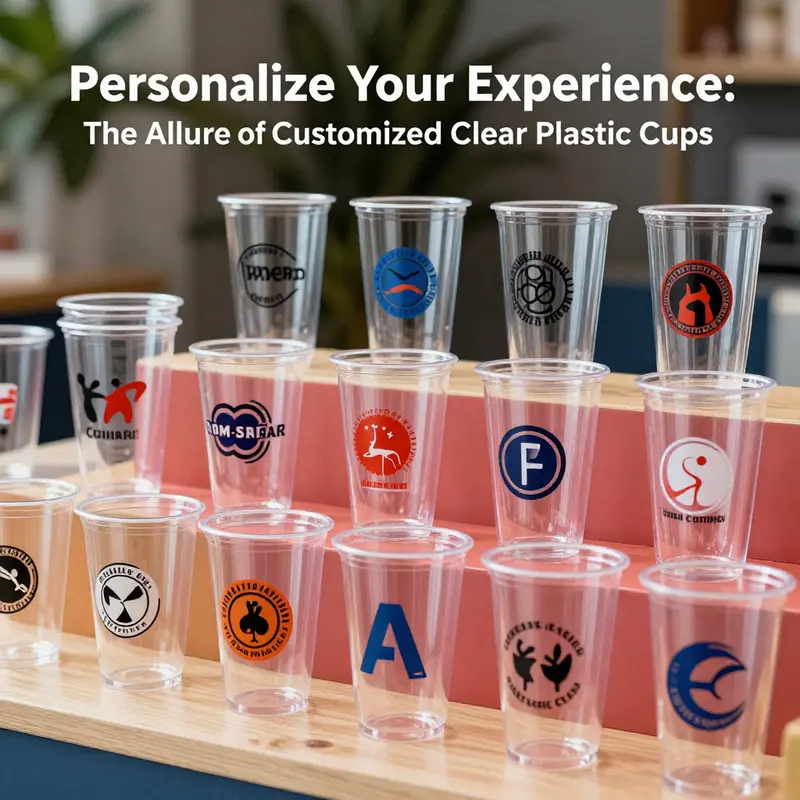
Clear plastic cups are often the most overlooked element of a presentation, yet they are a surprisingly powerful canvas for storytelling and brand expression. Their transparency is not a constraint but an invitation: color, light, and typography become part of the beverage experience rather than mere adornment. When businesses treat these cups as a customization playground rather than a disposable add-on, the payoff is both aesthetic and practical. The chapter that follows peels back the layers of what customization means in practice, showing how each option interacts with consumer perception, operational reality, and sustainability commitments.
At the heart of customization is printing and logo placement. Suppliers offer a spectrum of imprinting methods that balance fidelity, cost, and speed. Full-color digital printing can reproduce gradients and intricate logos across wrap-around surfaces, while traditional screen or pad printing might excel for bold single-color branding on specific panels. The choice of method often hinges on the intended message and the depth of the brand story carried by the cup. A wraparound design can tell a longer narrative, guiding the eye from the logo at the top through a slogan along the body to a callout at the base, creating a subtle stage for the beverage itself. But this stage must remain legible under real-world conditions: the color contrast must pop against the drink’s hue, the typography should stay sharp even when the cup is held at arm’s length, and the print should resist smudging or fading with time in use. For a cohesive effect, many brands favor a multi-layer approach: a solid brand mark on one panel, a secondary motif or pattern that echoes the event theme on another, and perhaps a brief compliance message or recycling symbol in a discreet corner. The result is not clutter but a curated canvas where each element serves a purpose and each purpose reinforces the brand story without overpowering the beverage nor distracting the user.
Color variations offer another axis of customization that expands the design vocabulary while preserving the core strength of a clear cup: visibility. The base transparency remains the star, letting the color and clarity of the drink read true. Yet a spectrum of tinted options—frosted finishes, gentle pastels, or soft hues—gives brands the freedom to align with seasonal campaigns or event palettes. Frosted or semi-opaque cups can help emphasize the beverage while softening reflections that might obscure a logo, especially under bright lighting. Pastel tones can conjure a mood—playful, elegant, or festive—without resorting to opaque substitutes that would hide the beverage. For drinks whose appearance is a selling point, such as layered cocktails or color-rich smoothies, maintaining visibility remains essential, so many designers opt for transparent walls with restrained tinting or opt for clear cups with selectively colored lids or accessories to reinforce a brand color story. In practice, the decision to tint or keep clear should be guided by the natural color and luminosity of the beverage, the venue’s lighting, and the intended consumer takeaway: is the cup a backdrop for the drink, or a prominent element of the brand’s identity?
Selection of size and capacity is not merely a matter of portion control. It is a strategic choice that shapes user experience, product positioning, and operational efficiency. Cups span a range from compact 160 ml vessels ideal for concentrated beverages or sampling, to larger 700 ml forms that suit iced drinks, smoothies, and cocktails. The shape of the cup—whether a straight-sided cylinder, a subtle taper, or a more sculpted contour—interacts with grip, Sip-ability, and even stackability for storage and transport. Each size carries its own implications for branding: a small cup may host a bold, high-contrast logo that remains legible at a glance, while a larger format affords more expansive print areas for taglines, QR codes, or thematic artwork that enhances a promotion without sacrificing readability. Event planners and retailers increasingly lean on this versatility to tailor servings to the setting: espresso-based beverages may fit neatly into compact cups that prioritize speed and clarity at a counter, while festive gatherings may deploy larger vessels that invite guests to mingle and sample a range of flavors. The compatibility of the beverage type with the cup size ensures that the customer experience feels deliberate and coherent rather than improvised.
Lid and accessory options further refine the user experience and the overall aesthetic. Custom lids with or without sip holes, straw compatibility, and even built-in handles extend the functional envelope of a basic cup. A lid can seal in aroma and prevent spills at an outdoor event or during transport, while a sip-hole design can optimize flow for hot or cold drinks alike. Some models feature built-in handles that offer a tactile grip, improving ergonomics for all ages and hands of varying sizes, and others provide modular lids that can be swapped for strawless or straw-enabled configurations depending on the venue’s sustainability goals or consumer preferences. Matching lids and straws contribute to a polished, all-in-one experience, especially for cafes and event venues where speed and consistency are key. The interplay between cup body design, lid style, and any accompanying accessory is a subtle but powerful aspect of customization: it signals attention to detail, supports speed of service, and reinforces brand messaging through cohesive packaging cues.
Material selection stands as a fundamental axis of customization, shaping durability, heat tolerance, and reusability. The most common plastics—polystyrene (PS), polypropylene (PP), and polycarbonate (PC)—each bring distinct advantages. PS cups are well suited to cold drinks and single-use applications due to their lightness and cost efficiency. PP cups offer greater toughness and heat resistance, making them a practical choice for slightly warmer beverages or for venues that expect rough handling or longer consumption times. PC cups push durability further, supporting higher resistance to impact and repeated use, which aligns with reusable or multi-serve strategies in venues that emphasize sustainability and long-term value. Beyond these core materials, there is growing interest in eco-friendly options, including biodegradable formulations that align with greener branding narratives. The material choice interacts with the printing approach, as some inks and coatings adhere differently to each surface. It also affects the user feel—the tactile experience of the cup when held, the perceived premium quality, and the potential for reuse across multiple events. In the context of sustainability, many buyers weigh the trade-offs between a longer-lasting cup that reduces waste versus a lighter, fully recyclable or compostable option that simplifies end-of-life handling. A thoughtful material strategy is not merely a cost calculation; it is a statement about the brand’s environmental commitments and its approach to product stewardship.
Packaging and bulk-order logistics are the practical backbone of any customization program. For wholesale buyers and event organizers, cups are typically sold in bulk with packaging options designed to optimize storage, loading, and on-site distribution. Packs might range from small counts to larger cases, sometimes with clear labeling on the packaging itself to aid inventory management. The ability to source in large quantities—often with a minimum order running into the thousands or tens of thousands—offers meaningful cost advantages per unit, which can be a decisive factor for large-scale promotions. Yet bulk pricing must be balanced with lead times, quality assurance, and the flexibility to adjust designs for different campaigns. Many suppliers also offer sample services, allowing buyers to evaluate the print fidelity, color accuracy, and overall look and feel before committing to a full run. This sampling process helps ensure that the final product aligns with brand standards and event objectives, reducing the risk of costly misprints or misalignments during a high-stakes launch. When packaging is branded or includes inserts, it becomes an extension of the marketing message, turning unboxing into a moment of brand reinforcement and consumer delight. The choice of packaging and the structure of bulk orders thus reinforce not only efficiency but also the storytelling embedded in the cup itself.
Design features beyond the basics can elevate a cup from a simple vessel to an emblem of the experience. Many manufacturers experiment with geometric or tactile design elements that add grip, texture, or a sense of movement. Wave-patterned walls, vertical ribs, or octagonal facets can transform handling and visual perception, particularly when logos and messages are printed in high-contrast tones. Textured finishes—whether they evoke the look of ice, frost, or abstract patterns—create a tactile cue that enhances grip while adding a layer of sophistication to the product. Ergonomic considerations are not merely cosmetic; they influence how customers interact with the drink, from the moment it is picked up to the last sip. When such features are combined with print elements, the cup becomes a cohesive piece of branding that communicates through sight, touch, and even sound as the beverage rattles against a patterned interior. The result is a multi-sensory experience that supports recall and affinity, especially at busy events or bustling cafe counters where every micro-interaction matters.
The strategic impact of customization becomes clearer when viewed through the lens of context. In cafes, the cup can embody the house style and carry seasonal campaigns, linking aesthetic decisions to drink offerings and loyalty programs. At weddings and corporate events, the cup can mirror a theme—from minimalist elegance to vibrant celebration—while providing practical cues for service flow and guest familiarization. In retail or promotional settings, the cup functions as a portable billboard, converting a brief moment of drinking into a shared brand moment that can be photographed, tagged, and remembered long after the event ends. The unifying thread across all these applications is the deliberate pairing of form and function: print and color support the beverage narrative, while shape, material, and lid choices reinforce the intended use case and durability expectations.
A critical part of the customization journey is the decision process itself. Brands must translate their core identity into a few clear design rules that guide the selection of size, color, print method, and accessory options. The goal is to ensure consistency across campaigns while preserving enough flexibility to tailor details for specific promotions. In practice, this means starting with a concise design brief that outlines the brand colors, font styles, and any required regulatory marks, then mapping these elements to compatible cup options. It also means recognizing the limits and strengths of each option: some colors may print better with particular methods, some finishes may affect legibility against certain beverages, and certain lid configurations may be more suited to hot drinks or on-the-go consumption. Once the design parameters are set, ordering samples becomes a valuable checkpoint to verify that every element—from the logo silhouette to the final shade of tint—reads correctly in real-world lighting and usage scenarios. This iterative sampling process helps prevent misalignment between the brand’s ideals and the physical product, ensuring that the final cups reinforce the intended narrative rather than merely serving a functional purpose.
Quality assurance threads through every stage of customization. Color consistency across runs, print durability under typical consumer handling, and the stability of the materials when exposed to cold or mild heat all matter. Clear instructions and proper testing can prevent common issues such as color bleed, print delamination, or surface scuffing after repeated use. Although a clear cup should remain visually simple, the added complexity of branding elevates the standard for quality, because any flaw is more noticeable on a surface that is otherwise transparent. Suppliers that offer robust QA processes—such as pre-production samples, color-matching protocols, and post-production inspections—provide a layer of assurance that becomes especially valuable for large campaigns where the financial stakes and brand impact are high. For buyers, this means a smoother path from concept to delivery and a higher likelihood that the cups will perform as intended in busy environments where speed and reliability are essential.
Taken together, customization options for clear plastic cups form a holistic toolkit. They enable a brand to communicate its values, align with event themes, and enhance the consumer experience without sacrificing practicality. The most effective programs are those that treat the cup not as a disposable vessel but as a well-considered extension of the brand—one that communicates with clarity, resonates with the target audience, and aligns with sustainable and operational goals. As the market for these customizable containers evolves, the emphasis shifts from simply achieving a pretty print to orchestrating a cohesive experience that travels from the point of sale to the table, and finally to the consumer’s social feed and memories. In the chapters that follow, this larger frame will weave together the practical steps of vendor selection, cost considerations, and lifecycle thinking, so that readers can implement customization programs that are both distinctive and responsible.
Beyond the Brand: Tracing the Hidden Footprint of Customized Clear Plastic Cups
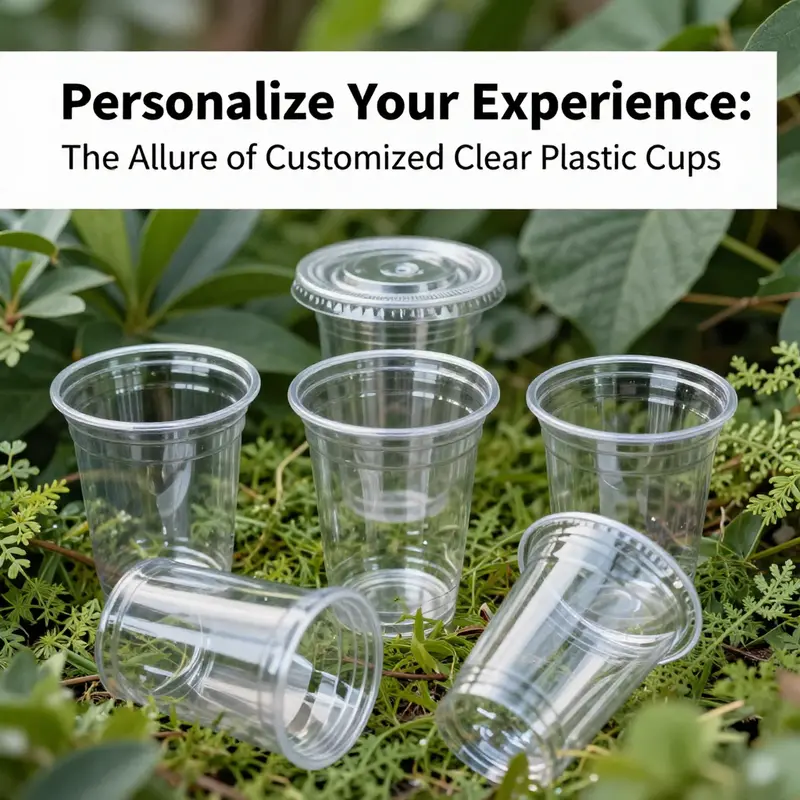
When a brand wires its identity into a cup, the cup carries more than a beverage; it carries a footprint that begins long before the liquid is poured and extends long after the last sip. Customized clear plastic cups are prized for their transparency, which lets logos and messages shine without distraction, and for the practical versatility they offer in a range of settings from casual gatherings to corporate events. Yet the very traits that make these cups so appealing—their crisp clarity, their light weight, and their capacity for mass customization—also tie them to environmental challenges that ripple through production lines, supply chains, and waste streams. This chapter explores that footprint in a holistic way, tracing how choices at the design table translate into real-world consequences in ecosystems and communities, and how the same choices open paths to more responsible practices without sacrificing the benefits brands seek from customization.
The lifecycle of a customized clear plastic cup begins with raw materials drawn from fossil fuels. Most conventional cups are made from plastics such as polypropylene or polystyrene. These polymers form in processes powered by energy-intensive manufacturing, emitting greenhouse gases and consuming nonrenewable resources. The climate cost of production is magnified when cups are produced at scale for large events or long-running promotions. In addition to the base resin, inks, dyes, and coatings used to render logos and brand colors introduce another layer of chemical processing. The act of printing or applying designs to clear cups is not merely a cosmetic step; it is an energy and chemical sink that can alter the overall environmental profile of the product. And because customization often encourages a broader range of sizes to fit different drinks and serving styles, each size category introduces its own specific fabrication demands and waste streams, multiplying the aggregate footprint across a single campaign.
From a systems perspective, the material choice matters not only for what the cup is made of but for how easily it can be recovered at end of life. Clear plastics that are widely used today typically end up in landfills or informal disposal streams in much of the world, because collection, sorting, and recycling infrastructure do not always align with the characteristics of these products. While some streams do separate clearer plastics for recycling, colorants, inks, and lamination layers can complicate reclamation. In practice, many cups are single-use by design, which intensifies the volume of material entering waste channels over a relatively short time horizon. The consequence is a layered pollution problem: the cups occupy landfills while also fragmenting into microplastics that pervade soil and waterways. In aquatic environments, microplastics can be ingested by marine life, from tiny invertebrates to larger predators, sometimes causing internal injuries or reduced feeding efficiency. When ingested, these tiny particles can travel up the food chain, raising questions about long-term human exposure and ecosystem health. The sheer persistence of these plastics — their capacity to endure in the environment for hundreds of years — makes the issue less about one event and more about a structural supply-and-waste system that struggles to keep pace with consumption today.
The ecological harms extend beyond ingestion. Debris that drifts through oceans and streams can smother coral reefs, damage seafloor habitats, and alter the physical structure of ecosystems that have evolved with different disturbance regimes. On land, plastic residues in agricultural soils can interfere with seed germination, root growth, and microbial activity, subtly shifting nutrient cycles over time. These effects may seem distant from a marketing decision, yet every layer of the product’s journey interacts with the living systems that sustain food security, water quality, and biodiversity. The chemical leaching potential associated with some plastics and additives, even when cups are marketed as BPA-free, invites scrutiny of what exactly migrates over time under various environmental conditions and how that migrates into organisms and, ultimately, human health. While the science of exposure is nuanced and evolving, the precautionary principle urges brands to consider not just what is consumed in a moment, but what remains after disposal and what remains in the environment to interact with soil, water, and living beings.
A key tension emerges when thinking about customization itself. The more elaborate the design, the more complex the production process tends to become. Printing logos, gradients, and color schemes often requires multiple inks, drying steps, and sometimes protective coatings to ensure durability on the shelf or at a crowded event. Each of these steps consumes energy and introduces additional chemicals that must be managed responsibly through waste streams and effluent controls. Even the choice of ink type can influence end-of-life outcomes: solvent-based inks may demand different recycling considerations than water-based inks, while the use of metallic or highly saturated pigments can complicate sorting. In other words, the aesthetic power of customization has a direct, sometimes unseen, correlation with environmental performance. The challenge for brands is not to abandon customization but to integrate sustainable design thinking at the outset so that the visual impact does not come at an unacceptable ecological cost.
The potential for improvement lies in rethinking the system rather than merely replacing one material with another. Alternatives like reusable, durable vessels—glass, stainless steel, or other long-life options—offer a clear path to reducing single-use waste when the event model and consumer behavior align with reuse. Yet this is not a universal remedy. In many fast-paced service contexts, single-use cups remain the most practical option for safety, convenience, and speed. In those cases, the literature and practice point toward a few concrete strategies that can shift the environmental balance without dulling the brand’s message.
First, the shift toward monomaterial, recyclable configurations can simplify recycling processes and improve recovery rates. Designing cups to be recyclable with standard municipal streams reduces the likelihood that a cup will end up in a landfill or the natural environment. This design discipline also invites a more deliberate approach to color and decoration: minimizing multi-layer coatings and avoiding inks that contaminate recycling streams with non-degradable additives. When ink is necessary for branding, opting for inks with lower environmental footprints and reduced volatile organic compound emissions helps limit the chemistry that must be managed downstream. The economics of customization still matter here, because bulk pricing and the prospect of large print runs can be a powerful enabler or disabler of sustainable design choices. Businesses must weigh the saving from larger runs against the potential environmental benefit of simpler, more recyclable forms.
Second, the labeling of sustainability claims for cups should be scrutinized and aligned with actual end-of-life outcomes. A cup may be marketed as compostable or biodegradable, but if it requires industrial composting facilities that are not widely available in a given area, or if the composting process cannot break down the inks and coatings used, the label can be misleading. The environmental advantage of a cup thus becomes contingent on local infrastructure and consumer awareness. In practice, this means responsible suppliers, designers, and buyers collaborate to verify the suitability of a given material for their markets. The aim is not to champion a single material but to opt for the option that integrates with the available waste-management ecosystem and delivers measurable reductions in harm when used at scale.
Third, the customization process itself can become a lever for sustainability. Brands can pursue inks and processes with lower energy footprints, reduced water use, and shorter curing times. Where feasible, using water-based inks or toners that require less energy for drying can trim emissions. Reducing the amount of ink used to convey essential brand information without compromising legibility is another practical path. Even relatively small reductions in color density or the number of color transitions can add up when thousands or millions of cups are produced. Finally, promotions that encourage responsible disposal, curbside recycling, or the return of cups for reuse in events can transform an ostensibly disposable item into a part of a restorative loop.
From a broader perspective, the conversation about customized clear plastic cups also intersects with consumer expectations and behavior. People value customization because it allows them to recognize a brand, celebrate an event, or express a particular mood. But the moment a cup is discarded, the ecological narrative unfolds in ways that may be out of sight to the consumer but are very real in the environment. Brands that frame sustainability as part of the design brief—not as an afterthought—build a credibility that resonates with increasingly eco-conscious audiences. The most persuasive stories are those that connect a cup’s appearance with the actions that minimize harm: responsible sourcing, efficient production, recyclable end-use, and clear communication about disposal. In this sense, customization and stewardship are not opposing forces but complementary strategies that, when harmonized, can sustain both brand value and ecological integrity.
The environmental considerations surrounding customized clear plastic cups are not a fixed verdict but a design and policy space. They invite ongoing experimentation and learning: new materials that behave more predictably in real-world waste streams, better data on end-of-life pathways, and a more nuanced understanding of how consumer choices translate into visible reductions of plastic waste. For brands, the opportunity is to foreground sustainability as a core value of customization rather than as a peripheral concern. For practitioners, the challenge is to translate that value into tangible product-form decisions, supply-chain collaboration, and consumer guidance that supports a healthier planet without sacrificing the expressive power that customization provides.
Ultimately, the conversation about these cups returns to a simple question: what system do we want to support at scale? If the goal is to minimize environmental harm while retaining the benefits of branding and event-friendliness, then a combination of responsible material choices, design-for-recyclability principles, and efficient end-of-life management becomes essential. The path forward is not to abandon customization but to reimagine it within a circular economy mindset—one that treats cups as materials to be recovered, refined, and reintroduced into new products rather than as one-off disposables.
For readers seeking a broader context about plastic pollution and the kinds of systemic solutions that can support this reimagining, see the following external resource that synthesizes current knowledge on lifecycle impacts and practical steps: https://www.nationalgeographic.com/environment/article/plastic-pollution
Clear Branding, Bright Futures: Market Dynamics and Design Convergence in Customized Transparent Cups

The market for customized clear plastic cups is evolving with a measured confidence that mirrors the growing mix of needs in commerce, hospitality, and experiential events. Clarity remains a core asset, but the value proposition now rests as much on strategic branding as on the basic ability to hold a beverage. When brands choose to print logos, colors, and messages directly onto a transparent surface, they are choosing a pathway that connects product contents with visual storytelling in real time. This is not merely about a branded container; it is about a practical, scalable canvas that can be deployed across locations, seasons, and campaigns while retaining a clean, premium appearance. The cups themselves become part of a larger ecosystem of branding assets, from signage to packaging, with the transparent surface enabling a level of visibility and authenticity that opaque alternatives cannot match. In this context the market has begun to reward a disciplined blend of aesthetics, sustainability, and operational flexibility, recognizing that a successful cup program can influence purchase decisions, reinforce loyalty, and extend a brand’s footprint beyond the point of sale.
One of the defining forces behind current growth is the demand for eco conscious customization. Consumers increasingly expect options that align with responsible production and end-of-life outcomes. Manufacturers are responding with materials that emphasize bio-based and compostable characteristics, alongside refashioned barrier properties that preserve clarity and strength. The shift toward polylactic acid and other biodegradable polymers is not just a matter of compliance but a signal that a cup can embody a brand’s environmental values without sacrificing performance. The market reward for credible sustainability narratives is tangible: buyers are more likely to commit to long-term programs when the cup itself communicates a coherent story about origin, materials, and disposal. Yet materials choice must be practical as well as principled. The challenge is to maintain strong print fidelity on surfaces that meet stringent environmental standards while still surviving the rigors of service, transport, and occasional reuse. In practice, this balance requires a careful orchestration of resin blends, coatings, and surface treatments that enhance both appearance and durability without compromising recyclability or compostability. The best programs treat sustainability as a design constraint that informs every decision from ink chemistry to lid compatibility, rather than as a marketing add-on.
At the same time, advances in digital printing technologies have redefined what is possible on a clear surface. High-resolution, full-color printing now enables intricate logos, photorealistic textures, and nuanced gradients to be embedded directly on the cup. This capability unlocks highly targeted marketing campaigns and enables authentic customization at scale. Short-run production and on-demand capabilities mean brands can deploy regionally tailored designs, seasonal themes, or event-specific motifs without incurring prohibitive setup costs or inventory risks. Flexible manufacturing systems are the backbone of this agility, supporting a spectrum of volumes—from a few thousand units for a pilot to tens of thousands for a national rollout—without long lead times. The impact on creative practice is profound: designers can test variations quickly, iterate based on real-world feedback, and execute updates in near real time. The result is a more dynamic dialogue between brand imagination and production reality, a dialogue that makes the cup a live element of the consumer experience rather than a static vessel. When a design can be refreshed mid-campaign to reflect local preferences or emerging trends, the cup becomes a responsive ambassador for the brand, amplifying message consistency while enabling personalization at scale.
Functionality is increasingly a focal point of customization as well. Beyond appearance, consumers and operators demand cups that perform under diverse conditions. Improved heat resistance and durability extend the reliability of a cup in hot beverages and outdoor settings, while advanced seal technologies reduce spillage and preserve product integrity during transport. The customization envelope now often includes options for lids, sleeves, and even integrated handles that align with a cohesive user experience. A lid designed to minimize leakage and to preserve temperature complements a sleeve that offers a tactile grip, turning a simple serving into a more assured, controlled interaction for customers during busy hours or long events. This functional integration matters in practice, where even small gains in spill prevention or insulation can translate into measurable improvements in customer satisfaction and operational efficiency. The design language increasingly considers the entire user journey—from the moment a drink is poured to the moment it is consumed—emphasizing ergonomics, readability, and seamless handoffs. Materials science and molding precision work hand in hand with human factors to deliver cups that feel confident in use and impressive in appearance. Such holistic design thinking makes the cup a reliable ally in fast-moving environments, a small object with outsized effect on perceived quality and reliability.
The procurement landscape underpins these capabilities with economic and strategic considerations. Bulk pricing models increasingly reward scale, making large deployments viable without compromising design integrity. A well structured program balances cost-per-unit with the flexibility to adapt designs across campaigns and geographies. A minimum order quantity provides a predictable pathway for large events, while sample services offer a low risk way to validate print quality, material feel, and overall aesthetics before committing to a full run. In the digital marketplace that increasingly mediates these transactions, buyers gain access to transparent specifications, clear delivery timelines, and traceable production capabilities. Payment protection and service assurances give procurement teams confidence to explore and optimize, knowing that the combination of quality and reliability can be maintained at scale. The cup, in this view, is not a commodity but a controllable variable within a broader program that seeks consistent customer experiences across channels and locations. This unified approach helps brands reduce ambiguity and build trust with partners, suppliers, and end users alike.
Within this integrated framework the cup emerges as a storytelling device with practical power. Clarity on the surface invites a closer look at what lies inside, but it also presents a platform for narratives about how the beverage or product is produced, sourced, and curated for the consumer. Brands leverage the cup as part of a holistic ecosystem—where event graphics, packaging, and environmental commitments align to convey a cohesive message. The conversation with customers extends beyond taste and tradition to include transparency, value, and responsibility. When sustainable materials are part of the cup’s story, the question of disposal becomes part of the brand dialogue rather than a separate afterthought. This alignment matters because consumer decisions are increasingly influenced by perceived authenticity and ethical consistency across touchpoints. In practice, a successful customization program blends striking visuals with clear environmental signals and dependable performance, delivering a compact but persuasive proposition that resonates in crowded marketplaces.
The trajectory ahead is shaped by a synthesis of materials science, digital production capabilities, and user centered design. What we can anticipate is a continued push toward clearer optics, stronger barrier properties, and more recyclable or compostable end-of-life solutions. Innovations in printing workflows will push further toward color accuracy, durability, and efficiency, enabling even more complex campaigns with shorter lead times. As brands broaden their geographic scope, the capacity to maintain consistent color, typography, and image across regions becomes a competitive advantage, ensuring that a cup in Tokyo reads with the same confidence as a cup in Toronto. Yet this progress will require careful attention to regulatory contexts that govern plastics, labeling, and disposal in different jurisdictions. The most successful programs will be those that maintain rigorous quality control while staying adaptable to changing rules and consumer expectations. In such an environment, the clear cup remains not only a container but a cultural artifact—an element of the total customer experience that can articulate a brand’s values with both clarity and care.
Ultimately, the future of customized clear plastic cups will be defined by how well manufacturers integrate sustainability, print fidelity, and functional design into a single, coherent value proposition. The best offerings will demonstrate that a cup can be visually compelling, responsibly sourced, and practically reliable all at once. They will show that customization is not a last mile embellishment but a strategic capability that supports brand differentiation, customer engagement, and operational excellence. As campaigns evolve and consumer expectations become more nuanced, the cup will continue to serve as a compact, portable stage for brands to perform with confidence, clarity, and conscience. This is where the market is headed: toward a future where every transparent surface communicates with truth, every printed detail carries intent, and every choice about materials, ink, and form reinforces a shared commitment to quality and sustainability. In this sense, customized clear plastic cups are more than tools for serving drinks; they are instruments of brand, behavior, and value.
For a broader context on the global transparent plastic market and its trends, see the external resource at https://www.grandviewresearch.com/industry-analysis/global-transparent-plastic-market.
Clear Canvas, Clear Intent: How Customized Cups Shape Service, Style, and Storytelling

The most successful branding moments often arrive from the simplest of vessels. A clear plastic cup, ordinarily dismissed as disposable, can become a carrier of brand promise, a stage for color and texture, and a reliable workhorse in a busy service environment. When these cups are customized, they cease to be mere containers and become visual extensions of a company’s ethos. Their clear surfaces reveal the drink inside with pristine fidelity, allowing the beverage itself to take center stage while the cup quietly amplifies the message that surrounds it. This is not just about aesthetics; it is about choosing tools that align function with fiction, utility with meaning, so every sip contributes to a larger story the brand intends to tell. In this light, customized clear plastic cups are less a commodity and more a deliberate design decision, one that intersects with product quality, consumer perception, and the practical realities of everyday operations in venues ranging from a bustling cafe to a catered wedding, from a trade show floor to a corporate retreat.
The strength of these cups lies in their blend of durability and versatility. The material is transparent and sturdy, capable of withstanding a range of temperatures and handling rhythms that would strain a more fragile option. This makes them ideal for both hot and cold beverages, enabling cafes and event teams to simplify their inventory without sacrificing presentation or safety. The clarity is more than cosmetic; it is functional. When a beverage’s hue—sun-warmed tea, electric-hued smoothie, pale lemonade—can be seen clearly, it becomes easier to judge freshness, quality, and even portion accuracy at a glance. The human eye responds to color and tone, and in a setting where speed matters, that instant visual read aids both staff and customers. The cup acts as a transparent frame, elevating the beverage and making the entire service experience feel more curated, more intentional, and more worthy of sharing with others.
Customization is the lever that turns a practical item into a marketing medium. Brands can imprint logos, slogans, event details, or seasonal motifs directly onto the cup’s surface. Because the cups are clear, the printed design sits at a balancing point between visibility and restraint: it is readable enough to reinforce recognition but not so bold as to overwhelm the drink itself. The result is a cohesive aesthetic that can harmonize with venue graphics, plateware, or decor, reinforcing a narrative rather than interrupting it. For events, this can translate into a cohesive theme—colors that echo a wedding palette, a corporate color story, or a product-launch vibe—creating a moment that attendees can recall long after the event ends. In everyday retail or hospitality settings, customized cups provide a similar advantage: a consistent branding touchpoint that travels with the guest through the service journey, from ordering to pickup to transport and even to the final impression of leaving a tip or sharing a photo on social media.
Beyond logo and color, the design possibilities extend to structural considerations as well. The cups can be offered in multiple sizes to accommodate different drink types, from light, refreshing beverages to dense, smoothie-like concoctions. The choice of size affects not just customer satisfaction but operational efficiency. A smart assortment reduces the need for back-and-forth refills and partial servings, helping staff manage inventory and time more effectively during peak hours or crowded events. The printing and coating techniques used for customization are chosen with care to ensure that the artwork remains legible under condensation, that it resists fading through repeated washes in a busy event environment, and that it complies with safety standards for food-contact surfaces. The end result is a product whose appearance remains consistent across dozens, hundreds, or even thousands of cups, so a brand message maintains its clarity from the first guest’s glance to the last sip.
Sustainability threads through this narrative as well. Nowadays, consumers increasingly expect brands to demonstrate responsibility beyond mere aesthetics. Clear plastic cups can be produced from more sustainable materials, including options that are recyclable or designed for lower environmental impact. When a brand communicates its commitment to sustainability through a visible choice—clear, recyclable, or plant-based materials coupled with responsible disposal guidance—it adds a layer of credibility to the entire experience. The decision to pair a striking design with eco-conscious materials signals a holistic approach to consumer care. It is not enough to attract attention with a bold graphic; the cup must also align with a broader environmental stance. In practical terms, this means selecting materials and finishes that respond gracefully to typical service conditions, are safe for food contact, and can be integrated into a recycling stream with minimal friction for the consumer. The promise is not simply one of beauty or brand recall; it is a promise of respect—respect for the customer’s time, taste, and trust, and respect for the space in which the drink is enjoyed, whether that space is a crowded stadium concourse, a sunlit wedding terrace, or a quiet office break room.
The everyday settings where customized clear cups prove their value are diverse and telling. In a cafe or juice bar, they serve as carriers for tasting flights—small, repeatable samples that invite customers to explore new flavors without commitment. The transparent body showcases the beverage’s color and texture, enabling comparisons by sight in addition to taste. In product launches and promotional events, the cups act as portable billboards and conversation starters. A well-designed cup can spark curiosity, prompting attendees to share photos on social platforms and extend the event’s reach beyond the physical space. For catering and hospitality, the cups contribute to a refined dining perception. They pair well with the presentation of the drink, align with the restaurant’s decor, and reduce the fragility risk that glassware carries, especially in high-traffic environments or outdoor venues where layout and flow are critical to guest experience. Outdoors, these cups offer practical advantages: light weight, shatter resistance, and ease of transport for picnics, festivals, or sport-support settings. For corporate gifting, a customized cup doubles as a thoughtful keepsake that can be used long after the event, reinforcing a sense of appreciation and brand affinity through everyday, practical use.
Educational and institutional settings find a parallel value in these cups as well. In meetings, workshops, or campus events, they provide a safe, cost-effective way to distribute water or beverages with minimal waste. The clear surface helps instructors and organizers monitor portions and maintain a clean, orderly presentation. And in creative or DIY contexts, cups inspired people to rethink what a disposable item can become. People repurpose them into crafts, art projects, or even functional tools for classroom activities. This adaptability reinforces the broader concept that a product’s value is not fixed; it evolves with user needs, making the cup a flexible asset in a repertoire of solutions.
From a supply-chain perspective, the attractiveness of customized clear cups rests on the combination of design fidelity and dependable production. Schedule confidence matters in any event, and brands benefit from knowing that a supplier can deliver on design, material safety, and bulk quantities. The ability to procure large volumes at favorable unit costs helps organizations scale promotions, host larger tastings, or support multiple venues without compromising the integrity of the visual identity. Buyers often have the opportunity to request samples to verify the look, feel, and performance before committing to large orders, mitigating risk and aligning expectations. Payment options and transaction protections across platforms can further smooth the purchasing journey, removing friction when time is of the essence and decisions must be made quickly. In short, customized clear cups not only provide a dependable container; they also offer a strategic line of sight into the way a brand manages consistency, communicates value, and delivers a memorable experience to customers and guests alike.
Looking ahead, the trajectory of customized clear plastic cups is shaped by evolving consumer expectations and ongoing advances in materials science and printing technology. As brands seek to elevate experiences while minimizing environmental impact, there is growing emphasis on compatibility with recycling streams, opportunities for compostable or plant-based alternatives, and improvements in print durability under real-world use. This aligns with broader industry trends that prize transparency not only in the cups but in processes—clear communication about materials, safety, and sustainability that earns consumer trust. The cups themselves become a reflection of the brand’s total approach to quality, not merely a peripheral accessory. In settings where visual storytelling is as important as beverage quality, the cup’s role is to support the narrative without overshadowing it. A well-executed customization strategy respects the drink, the venue, and the guest, while offering a practical tool that simplifies operations and amplifies brand recall.
To ensure the conversation remains grounded in credibility, the underlying principle is straightforward: select materials that meet food-safety standards, match the intended service temperature range, and provide reliable print and finish technology that preserves legibility and vibrancy. This is where a thoughtful supplier relationship matters as much as the design file. A reliable production partner will guide clients through the trade-offs among clarity, durability, cost, and environmental impact, helping them choose a path that aligns with their event goals, guest expectations, and sustainability commitments. In practice, this translates into a careful balance of optical clarity, print fidelity, and coating resilience, backed by clear product specifications and quality assurances. The result is a set of cups that not only perform under pressure but also tell a consistent story—one of care, competence, and a deliberate brand voice.
As brands continue to explore the potential of customized clear cups, they will likely experiment with combinations of size, finish, and color accents that enable ever more precise alignment with consumer moments. The cups become not only vessels but collaborative tools that invite customers to engage more deeply with the brand’s message. They fit seamlessly into a broader packaging and presentation strategy, offering a unified look across multiple touchpoints—from the serving tray to the social media snapshot that accompanies a post-event recap. In this sense, the cups function as quiet ambassadors, easing the path from brand awareness to experiential memory. They support the hospitality team by delivering consistent performance and ease of use, while empowering marketers to craft experiences that feel coherent, intentional, and memorable to diverse audiences.
External reference: for further considerations on safety standards, material choices, and production practices that influence the manufacturing and certification of clear, customized cups, see an industry resource at https://www.lnjrpack.com/.
Final thoughts
The demand for customized clear plastic cups continues to grow as businesses recognize their potential to personalize customer experiences and convey brand identity. By offering unique designs while considering environmentally-friendly practices, brands can effectively attract and engage their target audience. As we have explored, the customization options, awareness of sustainability, and the relevant market trends underline the significance of these cups in a variety of settings. Embracing customized clear plastic cups not only enhances the aesthetic but also supports operational efficacy, making it a win-win for businesses of all kinds.