
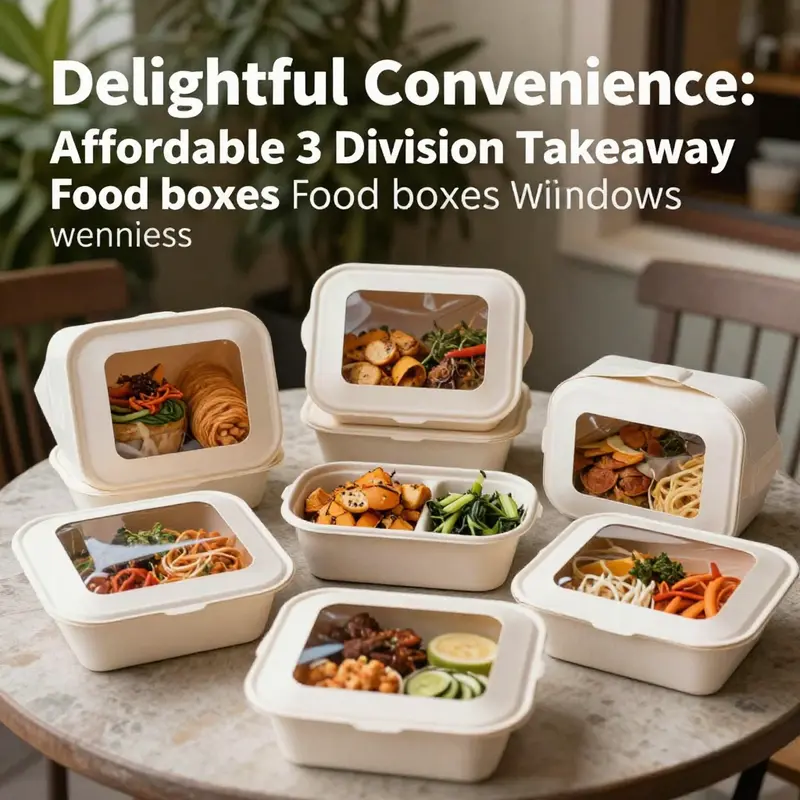
The demand for takeaway food has surged, with a notable preference for convenient and attractive packaging solutions. This trend has given rise to a high market competition for disposable 3-division takeaway food boxes with windows. Packaging is not just about functionality; it also enhances customers’ visual experience, especially for food service providers like bubble tea shops, restaurants, food trucks, catering services, and event planners. This article provides a comprehensive look at this market’s dynamics, innovative materials, effective sourcing strategies, ecological impact, and evolving consumer preferences, equipping you with the knowledge to make informed decisions for your business.
Seeing Through Value: The Rise of Discount 3-Compartment Takeaway Boxes with Windows

The market for discount 3-compartment takeaway boxes with windows has grown from a niche convenience to a core component of the takeout ecosystem. As digital food delivery expands across continents, the packaging that carries the meal becomes part of the consumer experience. In this landscape, the windowed, tri-section box does more than hold food. It frames the meal, signals quality, and enables a quick, confident purchase in seconds. The appeal is not only in the price point, though cost remains a critical driver. It is the combination of affordability, reliability, and the ability to present food attractively that makes these boxes a durable choice for a wide range of operators, from fast-service chains to mid-scale casual restaurants and travel-related food services. The chapter that follows maps the forces shaping this category, weaving together production capabilities, material science, and procurement logic into a cohesive picture that helps buyers and suppliers align on value without losing sight of quality and sustainability.
Manufacturers have cultivated a robust ability to deliver standardized, stackable, leak-resistant packaging at scale. The 3-compartment design, with its natural separation of mains, sides, and condiments, dovetails with common menu formats. It allows a main course to sit beside a starch or grain while accommodating a sauce in its own segment. This configuration is not incidental; it leverages the demand signal from food-delivery platforms that prize predictability in what arrives at a customer’s door. The knock-on effect is a design language that emphasizes clear demarcation between sections, minimized intermixing, and a final presentation that remains intact through transit. The window feature elevates this presentation. A precisely die-cut window built into the top or side panel provides a glimpse of the arrangement inside, inviting curiosity and reducing hesitation at the moment of purchase. The window is usually protected by a transparent film—often PET or a cellulose-based alternative—that preserves food safety while enabling visibility when the lid is closed.
From a materials perspective, suppliers are expanding the range of options to meet different consumer expectations and regulatory requirements. Recyclable kraft paper boxes offer a familiar, sturdy base that supports high-speed printing and branding opportunities. For buyers seeking a lighter environmental footprint, biodegradable options derived from sugarcane bagasse or cornstarch are increasingly common. These materials can be configured into the same 3-compartment geometry, including integrated window areas, and they often come with compostability certifications that resonate with eco-conscious customers. The economic reality is nuanced. Base costs for biodegradable or compostable variants can be higher, yet the per-unit price remains highly competitive in bulk orders, typically trending downward as volume scales and suppliers optimize processes. A widely cited range for biodegradable, windowed, 3-compartment boxes places bulk unit costs in a corridor that makes them accessible to fast-food operators and smaller chains alike, helping to balance budgeting with sustainability goals.
The global supply chain for these boxes leans heavily on regional production hubs. Guangdong Province in southern China stands out for high-volume output, advanced printing, and swift logistics that connect rapidly with major ports and international markets. Shandong Province, in the north, offers another axis of cost efficiency and scale. The proximity of these regions to export corridors reduces lead times and supports just-in-time stocking strategies for large buyers. In practice, this means buyers can secure consistent supply for ongoing promotions or menu refreshes while maintaining tight inventory control. It also means that customization—such as color matching, logos, or special printing effects—can be executed with shorter cycles, enabling brands to refresh packaging without interrupting service. The logistics advantage extends beyond production lines. With ports in the vicinity, shipments to North America, Europe, and Southeast Asia can depart with predictable transit times, a critical factor when a retailer depends on packaging supply as part of store uptime.
Design innovation continues to push the envelope of what a windowed, 3-compartment box can do. In contemporary practice, the die-cut window is often paired with an ergonomic lid design and a self-locking mechanism. The self-lock feature reduces spillage risk during transit and simplifies handling for riders and customers alike. Ergonomic features, such as comfortable grips and a thoughtful lid-to-box alignment, contribute to a smoother user experience and lower return rates due to compromised packaging. Importantly, the window’s visibility must be balanced with grease resistance and moisture management. Coatings and film laminates are chosen to withstand sauces and oils without fogging or delaminating, ensuring the window remains clear throughout the product’s lifecycle. For operators, the functional benefits extend to display—customers are more likely to notice and choose a box that showcases a vibrant, neatly arranged meal, even before unsealing.
Branding and customization also play a pivotal role in how buyers perceive value. The packaging is not merely a vessel; it is a brand touchpoint. Across markets, operators invest in logos, color schemes, and messaging printed on the exterior, transforming the box into a portable advertisement. Offsetting and digital printing enable a broad spectrum of design options, allowing even mid-sized players to emulate the look of larger brands. The combination of a clear window and high-quality print can turn a simple takeout box into a marketing vehicle that travels from restaurant to consumer and beyond. Within the choices available, there is a trade-off: more elaborate printing or premium finishes can raise the unit price, but the effect on brand perception and perceived value can be substantial, particularly for repeat orders and marketing campaigns.
For procurement teams, the decision space around these boxes hinges on a constellation of criteria that extend beyond price alone. Material quality and sustainability certifications—such as FSC for paper substrates or compostable labeling—can influence supplier selection, particularly for brands with strict environmental or corporate social responsibility mandates. Lead times and MOQs are also central; many manufacturers set MOQs in the thousands or tens of thousands, reflecting the scale required for their automated lines. Yet even within those constraints, buyers can negotiate favorable terms when the supplier’s production footprint aligns with regional demand and shipping logistics. Certifications such as food-safety compliance, particularly FDA or equivalent regional standards, provide additional assurance that the packaging can safely contact edible contents. Sample availability remains a practical step in the purchasing process, enabling buyers to verify fit, finish, and performance before committing to long runs.
In practice, the buying decision often becomes a balancing act among price, performance, and sustainability. When price is favorable, it is typically tied to high-volume orders and standardized, non-customized configurations. When sustainability becomes a priority, buyers frequently accept longer lead times or higher MOQs in exchange for certified compostability and recyclable materials. In markets where consumer expectations lean toward transparency and eco-conscious packaging, the windowed design is viewed as a value-add, not merely an aesthetic feature. The visual cue of the window can reinforce trust in the food’s appearance and quality, a factor that translates into higher customer satisfaction and repeat purchases. Operators who can combine cost control with consistent packaging performance often secure a competitive edge—especially in a landscape where delivery platforms reward reliability and speed of service as much as price.
Beyond the supply chain and design considerations, the ongoing evolution of this packaging segment appears in its adaptability to different dining contexts. Airlines, for instance, seek compact, multi-compartment solutions that maintain portion integrity during travel and remain legible in varying cabin conditions. Quick-service eateries value boxes that stack securely for storage, while casual restaurants appreciate the ability to present a neatly arranged meal to patrons who pick up or dine in. The 3-compartment layout with a window thus serves multiple needs: it aids in portion control and separation of components, it enhances visual appeal, and it supports branding efforts that can scale from single outlets to multi-unit chains.
As the market advances, automation and integrated supply chains will push further efficiency gains. Robotic thermoforming lines, automated die-cutting, and coordinated printing workflows can shorten production cycles, reduce waste, and improve consistency across major shipments. Such advancements enable suppliers to offer more aggressive pricing in bulk while maintaining quality. They also enable a broader spectrum of customization options—limited editions for seasonal menus, locale-specific colorways, or mission-driven packaging themes—that help operators connect with customers on deeper levels. The result is a packaging ecosystem that can respond rapidly to changing consumer tastes and competitive dynamics without compromising food safety or performance.
From a strategic vantage point, buyers who want to capitalize on these trends should consider three core priorities. First, align packaging choices with the brand story and customer expectations. The windowed, three-compartment format is compatible with a range of brand narratives—from sustainability-focused messages to premium, crave-driven visuals. Second, evaluate the total cost of ownership, including MOQs, lead times, and post-purchase support. A supplier that can guarantee rapid replenishment and responsive customization is often worth a premium over a lower sticker price. Third, verify environmental credentials and regulatory compliance, ensuring that the packaging materials meet local disposal infrastructure and safety standards. By triangulating these factors, buyers can lock in value that remains stable across demand cycles and market shifts.
For readers seeking a practical pathway to exploring these options, a recent resource on windowed takeaway packaging offers a comprehensive overview of supplier possibilities, regional advantages, and pricing benchmarks. It presents a practical synthesis of market dynamics and supplier criteria that echoes the themes discussed here, reinforcing how a well-chosen box—priced competitively and designed for performance—can reinforce both operational efficiency and brand image. If you want to explore a concrete example of an eco-friendly, disposable 3-compartment packaging option, you can visit the product page that highlights these attributes and discusses sustainability certifications, printing capabilities, and performance in real-world use. This resource provides a helpful bridge from general market understanding to specific procurement decisions while illustrating how windowed packaging can function as a value driver rather than a mere container.
External resource: Alibaba’s windowed takeaway boxes guide offers real-time supplier data, regional insights, pricing benchmarks, and buyer tools tailored for B2B procurement in the food packaging industry. See https://www.alibaba.com/showroom/windowed-takeaway-food-boxes.html for more.
Within this broader context, one can also explore related packaging options that complement the core offering. For example, eco-friendly, 3-compartment packaging solutions that emphasize sustainability without sacrificing performance are becoming increasingly accessible through online catalogs and regional manufacturing hubs. These options illustrate how the market is evolving toward a more integrated approach—where packaging design, manufacturing efficiency, and environmental stewardship converge to deliver value to both operators and consumers. The windowed 3-compartment box thus sits at an intersection of affordability, visibility, and responsible packaging, embodying a pragmatic response to growing demand for reliable, scalable, and branding-friendly takeout solutions. In steady-state operation, the box serves as a reliable workhorse, while in moments of growth or seasonal marketing, it adapts to reinforce a brand’s narrative and keep pace with shifting consumer expectations.
To close this arc, the industry’s trajectory suggests that discount does not mean compromise. Instead, discount represents competitiveness within a robust value proposition: a packaging solution that is stackable, leak-resistant, visually appealing, and adaptable to a variety of foods and service models. The combination of a tri-compartment layout, a transparent window, and a material strategy that spans recyclable kraft to compostable biopolymers forms a resilient platform for takeaway packaging in 2026 and beyond. For buyers and suppliers alike, the challenge is to manage the trade-offs intelligently—balancing price with performance, sustainability with convenience, and speed with customization—so that the packaging not only carries the meal but also carries the brand forward into a future where efficiency and ethics walk hand in hand.
Visible Innovation: Sustainable Materials and Smart Design in Discount 3-Division Windowed Takeout Boxes
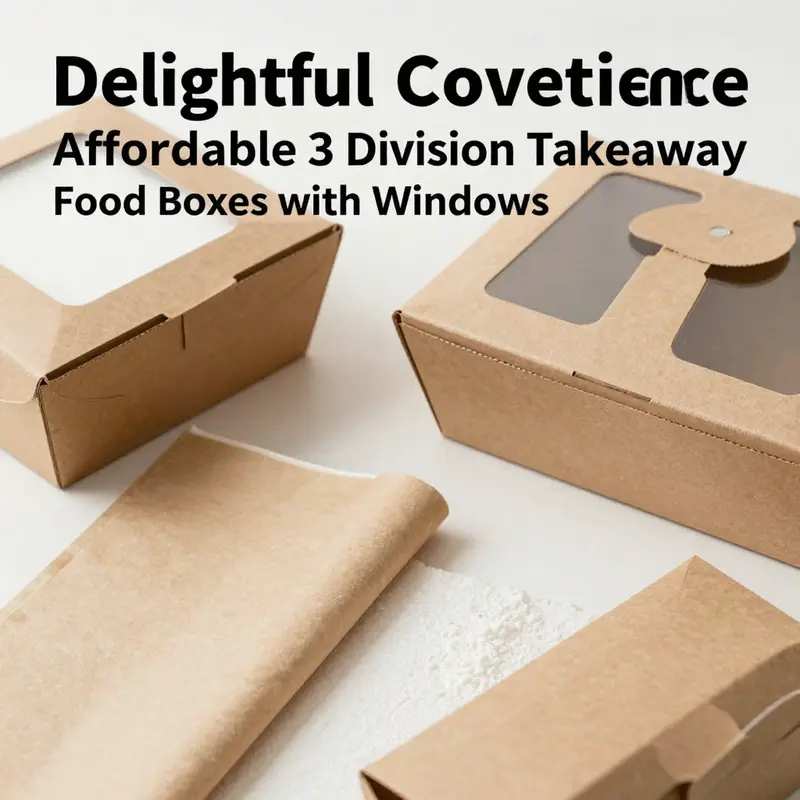
A three-compartment takeaway box with a window is more than a simple packaging decision. It is a compact theater for food, where each section holds a different type of fare, and the window offers a preview that can entice a customer before the lid is lifted. In the discount sector, where price pressure collides with the need for reliability, material innovations have become a decisive driver of value. The latest developments intertwine sustainability, functional performance, and cost efficiency, creating a packaging trio that can appeal to fast food brands, meal-delivery services, and eco-conscious retailers alike. The arc of these innovations runs through the raw materials that form the box, the barrier systems that protect contents, and the films and windows that preserve visibility without compromising end-of-life outcomes. All of this unfolds in manufacturing ecosystems centered in Guangdong and Shandong, where scale, automation, and integrated logistics push products from the press to the port with remarkable speed and consistency.
At the heart of material innovation is a shift toward biodegradable and compostable inputs that reduce the environmental footprint without sacrificing strength or price. Cornstarch-based plastics, commonly referred to in the industry as polylactic acid or PLA blends, have gained prominence as viable alternatives to conventional petroleum-derived plastics. In discount packaging, the appeal is clear: a lower carbon footprint, the potential for consumer-friendly disposal, and compatibility with high-volume production lines. These materials enable 3-division lunch boxes to maintain their structural integrity under the weight of fried items, sauces, and sauces, while offering a path to industrial compostability that aligns with broader green packaging goals. Equally important is the use of sustainable paperboard and corrugates, which can be engineered to resist moisture and oil while still presenting a clean, printable surface for brand messaging. The trend toward recycled content within the base material further strengthens the sustainability story, reducing the reliance on virgin fibers and helping brands meet evolving consumer expectations around circular economies.
A parallel thrust focuses on barrier performance. Paperboard and fiberboard containers historically struggled with moisture, oil migration, and grease seepage when loaded with hot, saucy foods. Modern barrier coatings—many derived from plant-based sources—address these weaknesses by creating moisture resistance and oil resistance without compromising recyclability or compostability. The coatings can be tailored to different food profiles, enabling the same box design to handle chicken, noodles, or heavy sauces without softening, leaks, or texture changes. For operators, this translates into reduced waste from damaged packaging and fewer customer complaints about leaks, which are especially costly in discount channels where margins hinge on efficiency.
The window is a small but powerful hinge on the consumer experience. Traditional windows relied on plastic films that were sturdy but not always environmentally friendly. New approaches embrace compostable cellulose films or plant-based films that maintain clarity and rigidity while being compatible with composting streams. These films perform under microwave or refrigerated conditions and resist fogging, a common issue that diminishes shelf appeal. The combination of a plant-based window film with a sustainable base material creates a truly eco-conscious package that can be disposed of more responsibly at end of life. The environmental story grows still stronger when the window itself is integrated with a rigid, recyclable or compostable structure, ensuring that the entire box aligns with green packaging initiatives rather than adding complexity to waste streams.
Large-scale manufacturers in Guangdong and Shandong are uniquely positioned to translate these material trends into affordable, reliable products. The region’s industrial hubs offer not only access to robust supply chains but also advanced automation, including robotic thermoforming lines and integrated logistics that connect raw materials, packaging components, and finished goods with remarkable speed. This proximity to ports—Shenzhen, Guangzhou, and nearby hubs—means that companies can meet global demand with short lead times, even for orders that require customization such as branding, color matching, or window sizing. For buyers, the economics of mass production are compelling: when a 3-compartment, windowed box can be produced at scale with consistent quality, discounts become a natural outcome of volume, not a trade-off with performance.
Design considerations also play a crucial role in cost management and usability. The die-cut window must be precisely formed, not only for appearance but for mechanical strength. If a window is too large or poorly anchored, the risk of tearing or delamination increases, particularly under the stress of shipping and stacking. Conversely, a smaller or poorly aligned window can reduce visual impact and diminish consumer appeal. Advances in die-cut technology, paired with optimized scoring and folding patterns, allow for windows that maximize viewing area while maintaining a tight seal around the inner compartments. The result is a box that looks premium on a budget, an essential combination for discount operators who rely on impulse purchases and quick turnover.
In practice, the material choices translate into tangible benefits for brands seeking to reduce their environmental impact without compromising performance or price. A cornstarch-based three-compartment box with a plant-based window can offer a competitive unit price in the low single-digit cents when manufactured at scale, especially when combined with bulk purchasing strategies and efficient shipping. This is particularly relevant for operators who handle high volumes, such as fried chicken outlets, barbecue concepts, and noodle or rice bowl services where multiple compartments help manage variety and portion control. The same material system that supports cost efficiency can also satisfy consumer expectations for sustainability, a combination increasingly valued in markets worldwide.
Beyond raw materials and coatings, the question of end-of-life remains central to the sustainability dialogue. Industrial compostability standards, recycling compatibility, and consumer behavior all influence the real-world impact of these boxes. While cornstarch-based plastics and plant-based films can offer compostability, the actual fate of these boxes depends on local waste streams and the availability of industrial composting facilities. Manufacturers and brands alike are therefore pursuing clear labeling, easy separation of components, and compatibility with existing recycling streams. The strategy is to minimize confusion at the consumer level and to maximize the proportion of material that can be diverted from landfills. This is not just an environmental concern; it is also a reputational one. Brands that communicate a transparent, credible end-of-life story can differentiate themselves in crowded markets and justify a premium on what is otherwise a commoditized packaging tier.
Another practical advantage of modern material systems is their compatibility with customization without compromising cost discipline. For example, a three-compartment box with a window can carry custom printing on the paperboard surface and still maintain the integrity of the window film and barrier coatings. This enables brands to maintain a consistent look across promotions and seasonal offers while using the same base packaging architecture. In the discount space, where creative differentiation often hinges on color, texture, and messaging rather than long-term durability, the ability to print vividly on a recycled or sustainably sourced board becomes a meaningful competitive lever. The result is a package that does more than hold food; it communicates values, builds trust, and strengthens brand association at the moment of purchase.
From a sourcing perspective, buyers increasingly weigh reliability and quality control alongside price. A supplier’s capacity to handle customization requests, maintain consistent thickness and coating performance, and deliver on time is as important as the raw material cost per unit. In regions with high-volume, export-oriented production, partnerships built on steady communication, shared interest in sustainability targets, and rigorous quality assurance protocols create a stable platform for growth. For operators who rely on timely replenishment to sustain menu cycles, the ability to forecast demand and secure supply without disruptions can be a decisive factor in choosing a packaging partner.
To illustrate the accessibility of these innovations, consider the way a brand can integrate an eco-conscious identity into a discount packaging program. The same box that carries a hot fried item or a saucy barbecue can be designed to reduce grease migration, resist moisture, and preserve the appearance of the contents through a clear, compostable window. A consistent supply of these boxes, sourced from regions with mature automation and logistics networks, supports lean operations, minimizes waste, and improves shelf presence in a crowded marketplace. The net effect is a packaging solution that honors both the shopper’s expectations and the brand’s commitments to sustainability, all while keeping the unit economics favorable for high-volume sales.
For readers who want to explore concrete examples and supplier capabilities beyond the general principles discussed here, one can examine online catalogs of accessible, eco-minded packaging options. For instance, a representative option demonstrates how a box designed for fast-food throughput can combine a three-compartment layout with a clearly visible window and a barrier system tuned for greasy foods. This kind of packaging, when produced at scale, shows that sustainability and affordability need not be mutually exclusive. The broader trend is toward packaging ecosystems where materials, coatings, and film choices are co-optimized with design, printing, and logistics to yield consistent performance across diverse menus and service models.
As the market evolves, buyers should keep a few practical criteria in view. Reliability in production, robust quality control, the ability to accommodate customization, and efficient shipping timelines take on greater importance as manufacturers scale up. Given the proximity of major manufacturing centers to global ports, there is a natural advantage in lead times and price stability when ordering large lots. The interplay between material choice, manufacturing process, and end-of-life considerations will continue to shape decisions, as brands balance the desire for a strong sustainability narrative with the realities of cost-sensitive operations. In this way, material innovations do not stand alone; they support a holistic packaging strategy that aligns environmental goals with consumer expectations and business performance.
Internal link for further reading: eco-friendly takeout boxes for food packaging.
External resource for additional technical context: For deeper technical specifics, see the Top Manufacturers of Windowed Takeaway Food Boxes in China. https://www.alibaba.com/product-detail/Top-Manufacturers-of-Windowed-Takeaway-Food_1600548927781.html
Windowed Value Chains: A Cohesive Guide to Sourcing Discount 3-Compartment Takeaway Boxes with a View
In the crowded market of takeaway packaging, the search for a windowed, three-compartment box goes beyond chasing the lowest unit price. The window acts as a bridge between brand storytelling and product integrity, and buyers who aim to cut costs without compromising safety, durability, or the consumer experience must map region, materials, process capability, and compliance across the supply chain. The landscape centers on a dense network of manufacturers in China, where high-volume production and integrated logistics create a price-to-performance dynamic that few other regions match. Yet the true savings come from optimizing total cost of ownership, including lead times, defect rates, and the ability to scale with menu changes.
Three regions repeatedly deliver value at scale. Shandong is a base-cost powerhouse for budget-conscious buyers, with lower labor costs and access to polypropylene and molded fiber. Integrated supply chains from resin to finished boxes enable rapid ramp-ups on large orders, supporting promotions and nationwide rollouts. When price matters, Shandong often provides a stable backbone of supply.
Jiangsu, especially hubs like Jiangyin, blends advanced thermoforming with molded fiber capabilities. Automation, process control, and materials science translate into microwave-safe, durable boxes with reliable window seals. Die-cut window accuracy and adhesive strength support multiple configurations across menus.
Fujian leans toward eco-conscious packaging and cost-effective, paper-based options. Quanzhou and nearby clusters push lower-cost, windowed three-compartment boxes with sustainable coatings and recyclable substrates. Biodegradable coatings, compostable films, and recyclability considerations shape performance tradeoffs, especially around heat and moisture.
To capture discount opportunities without sacrificing reliability, buyers should rely on verified supplier platforms, certifications, and buyer feedback; request samples and test for grease resistance, heat endurance, stack durability, and window integrity. Material choices such as PP and MFPP provide strength for heavy use and microwaving; paper-based options may require careful coatings to maintain barrier properties. A balance among strength, barrier performance, and cost shifts with volume and supply conditions.
Regulatory compliance is non-negotiable. Materials should meet FDA 21 CFR and EU Regulation (EC) No 1935/2004, with colorants and additives REACH-compliant. Eco-friendly claims benefit from FSC or OK Compost certification and third-party test results. Seek traceability data from resin to final box.
Price alone is meaningful when tied to a long-term program. Negotiations should consider volume tiers, repeat orders, and the advantages of priority production slots and stable lead times. A diversified supplier base and a defined roadmap for improvements to window adhesives, heat resistance, or coating performance adds strategic value.
Brand storytelling matters; packaging choices can reinforce sustainability without sacrificing performance. Paper-based options may align with eco narratives; polypropylene may offer higher mechanical robustness for fried items. A portfolio approach—mixing materials and configurations—helps cover different product lines while remaining compatible with branding guidelines.
Actionable steps: target Shandong for base-cost advantages and Jiangsu for precision and window integrity; choose Fujian when sustainability is a priority; use verified platforms; request real-world samples; negotiate on volume, anchor with long-term contracts, and demand third-party safety and environmental certifications. Finally, view discount as a strategic asset rather than a risk, underpinned by a reliable ecosystem of suppliers who deliver consistent quality and compliance.
Internal linking note: a recent catalog highlights an eco-friendly disposable 3-compartment packaging box as an example where sustainability and cost efficiency converge. See the reference here: https://ecocupbowl.com/product/eco-friendly-disposable-3-compartment-food-grade-packaging-box-for-fast-food-high-quality-takeout-boxes-for-fried-chicken-french-fries-packaging/.
As this chapter progresses, the window remains the anchor because it connects the product to consumer perception while challenging suppliers to demonstrate performance under pressure. In a fast-moving, competitive market, the strongest advantage lies not in the lowest price per unit but in a resilient supplier network that delivers consistent quality, meets safety standards, and supports a scalable packaging family that grows with the brand.
The Window of Convenience: Unpacking the Environmental Footprint of Discount 3-Division Takeaway Boxes
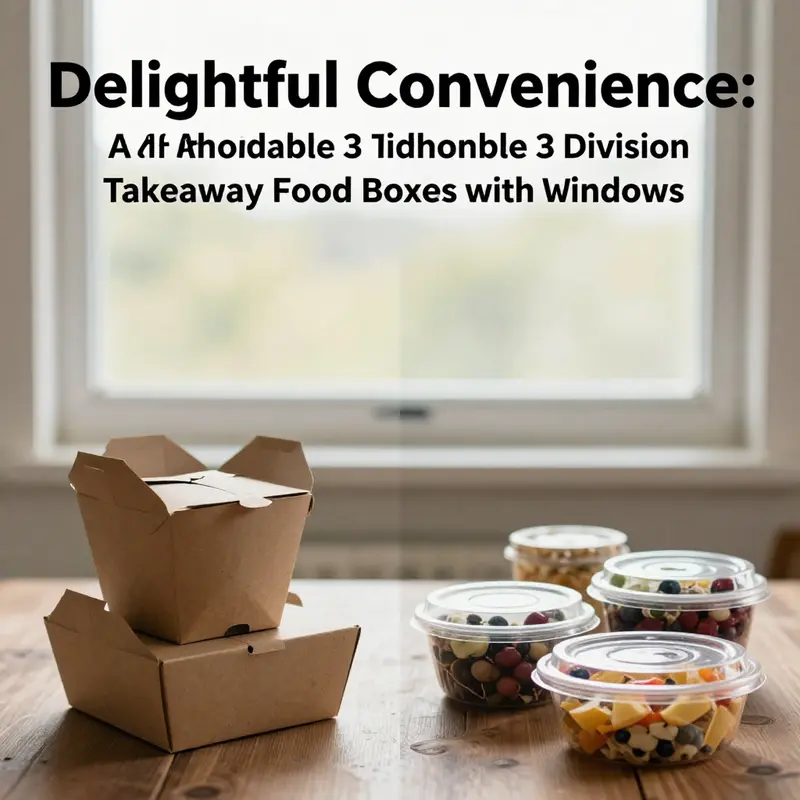
The prospect of a meal carried home in a box with a clear window is appealing on several levels. It promises a glimpse of the arrangement inside, a sense of transparency, and a convenient way to showcase a multi-item meal. Yet behind that window lies a complex chain of choices about materials, design, production, and end-of-life disposal that ripple through the environment far beyond the moment of purchase. In markets where discount three-division takeaway boxes with windows are highly available and fiercely contested, the pressure to trim costs can collide with the longer arc of ecological consequence. This tension invites a closer look at what the windowed format actually costs, not just in dollars per unit, but in resource use, emissions, and waste management outcomes across the life cycle. The chapter moves through the terrain of materials, recycling realities, consumer culture, and the policy and design responses that could realign convenience with stewardship, without sacrificing the practical benefits that drive demand for these boxes in the first place.
A central point arises early in any assessment: the window itself is more than a visual feature. It is typically achieved with a thin film layer—often a form of clear plastic, sometimes a separate PET or PVC film—that sits on or beside the main container. When the box is made from standard food-service materials, such as polystyrene or polypropylene, the addition of a window complicates the end-of-life story. The result is a product whose recycling is not simply a matter of tossing it into a culled curbside bin. It becomes a case study in material mismatch, where the box and its window require different handling streams to maximize recovery. When waste streams mix incompatible plastics or films with the base container, contamination occurs, and the efficiency of recycling declines. The environmental stories of such packaging are, in effect, twofold: the base container’s footprint and the additional processing or disposal burden introduced by the window component.
From a cradle-to-grave perspective, the environmental burdens of these packaging choices accumulate in several dimensions. A body of research conducted in China—using a multi-indicators environmental impact framework based on life cycle assessment—highlights that the takeaway food packaging sector bears substantial costs across resource depletion, greenhouse gas emissions, and ecosystem damage. These findings are especially pronounced when the packaging relies on single-use or non-recyclable plastics. Even when a brand or retailer markets a windowed box as a convenient or premium option, the life cycle profile can be tempered by the realities of waste processing infrastructure, local recycling capabilities, and consumer disposal behavior. The window, thus, becomes a touchpoint for broader questions about material selection, end-of-life pathways, and how much of the box’s life-cycle impact is determined by the window’s presence rather than by the container alone.
The materials themselves deserve careful scrutiny. Low-cost plastics like polystyrene and polypropylene offer light weight, rigidity, and heat resistance that are attractive for quick-service environments. But these same attributes become liabilities when a consumer segment expects high recyclability or compostability. In many urban contexts, the separation of window films from the main container is technically feasible but logistically challenging in everyday sorting facilities. The result is weaker recycling outcomes than would be achieved if the entire box were designed for a single, widely accepted end-of-life stream. On the other hand, some manufacturers and suppliers are turning to more sustainable directions, such as recyclable kraft paper or biodegradable options derived from bagasse or cornstarch. These materials can align better with composting or municipal recycling streams in certain regions, but they come with trade-offs in moisture resistance, structural durability, and shelf life that must be balanced against cost and performance imperatives. The practical question for managers and procurement specialists thus reduces to a careful weighing of trade-offs: price sensitivity versus the reliability and clarity of the end-of-life pathway.
The broader environmental reality cannot be divorced from consumer behavior. A window enhances product visibility and can improve perceived freshness and trust, potentially boosting sales in a competitive marketplace. Yet this perceived benefit must be weighed against the real-world implications of producing, transporting, and discarding those windows. In places where municipal waste management is still developing, the proliferation of windowed, multi-compartment takeout boxes can contribute to growing volumes of disposable packaging that end up in landfills or incinerators. The “throwaway culture” narrative is not merely rhetorical; it tracks actual disposal patterns and the resources required to manage increasing streams of packaging waste. The literature suggests that reducing the environmental footprint of these boxes will require more than consumer education. It will require design changes, material innovations, and policy incentives that reward packaging that is easier to recover and recycle rather than simply easier to produce.
For buyers and brands, the implications of this lifecycle perspective are practical as well as ethical. In addition to price, quality, and supply reliability, stakeholders now face questions about how a packaging solution fits into a broader environmental strategy. How easy is it to separate the window film from the main container at end of life? Is the entire box compatible with a single recycling stream, or does it require specialized facilities that may not be readily available in all markets? Can the same box be redesigned to reduce or eliminate the window while maintaining visual appeal and product protection? These questions push procurement teams to look beyond unit cost to total cost of ownership, which includes the environmental and disposal costs that may be borne by municipalities and waste processors rather than by the brand alone.
A key takeaway from the life cycle discourse is the importance of coherent design for end-of-life. If a box relies on a separate window film, both materials must be considered in the design brief. A more favorable option, where feasible, would be to integrate the window into a single recyclable layer or to use a transparent structural board that can be processed through the same recycling stream as the main container. Such integrated design reduces the risk of contamination and can simplify sorting at the municipal level. When the packaging remains primarily single-material or uses materials that are widely accepted by recycling programs, the environmental payoffs can be more robust and easier to communicate to consumers who want to reduce waste in their own lives.
The research literature also underscores regional variation in environmental performance. In China, where these boxes are produced at scale and connected to dense export networks, the proximity to raw-material inputs, manufacturing hubs, and major ports can influence both the carbon footprint and the logistical efficiency of distribution. Efficient logistics can mitigate some emissions but does not negate the need for responsible material choices and end-of-life planning. Conversely, in markets with mature recycling infrastructure, the emphasis may be less on redesigning for single-stream recyclability and more on ensuring that packaging is actually collected, sorted, and processed effectively. The tension between cost, performance, and environmental outcomes remains a central dilemma for manufacturers who operate under tight price constraints while also facing heightened scrutiny from regulators and consumers who increasingly expect eco-conscious packaging.
Within this context, the chapter briefly gestures toward paths forward without pretending that simple fixes exist. First, material innovation is essential. The development of fully recyclable, compostable, or bio-based window films that align with mainstream recycling streams could significantly ease end-of-life processing. Second, packaging design must move toward modularity or single-material construction where possible. If the window can be achieved through a design that uses the same material as the main body of the box, the separation burden on waste streams is reduced. Third, supply-chain collaboration can play a pivotal role. Manufacturers, packaging converters, retailers, and waste-management facilities can co-create solutions that minimize contamination and improve recovery rates. Fourth, policy tools—such as standardized labeling, clear consumer guidance on disposal, and incentives for packaging that is easier to recycle—can shift incentives in favor of more sustainable outcomes without sacrificing the commercial advantages of bulk production and discount pricing.
The interplay between economics, aesthetics, and ecology is at the heart of decisions about discount three-division takeaway boxes with windows. Price competition in large-scale manufacturing regions can drive rapid shifts in material choice and supply chain configuration. Yet the environmental cost, when aggregated across millions of units, can offset or even overwhelm the perceived savings offered by discounts. It is not a condemnation of lightweight, practical packaging but a call to align cost-effectiveness with environmental accountability. The chapter’s synthesis emphasizes that a windowed box can retain its visual appeal and functional benefits while also delivering a cleaner end-of-life profile, provided that stakeholders commit to design coherence, material compatibility, and robust waste-management infrastructure.
To readers who want concrete stepping stones, the following considerations may help bridge the gap between market realities and environmental aspirations. Start with an audit of current box designs to identify where the window is most likely to impede recyclability. Explore alternatives that reduce or reconfigure window material without compromising product visibility. Engage suppliers who can offer circular-design packages and tested end-of-life performance data. Seek packaging solutions that demonstrate compatibility with local recycling streams and municipal guidelines. And finally, cultivate consumer guidance that clearly communicates disposal options, reducing contamination and improving participation in recycling programs. The goal is not to abandon the window or the utility of three-compartment configurations but to reframe them within a system where convenience and responsibility reinforce each other rather than diverge.
In the spirit of deepening this conversation, one accessible entry point to sustainable options is through suppliers that emphasize integrated, eco-friendly packaging designs. For readers exploring practical design alternatives, one example of an option framed around environmental responsibility is the eco-friendly disposable 3-compartment packaging box for fast food. This resource offers a glimpse into how materials and configurations can be aligned with waste-management realities while preserving the functional benefits that drive consumer acceptance and repeat patronage. You can learn more about this approach here: https://ecocupbowl.com/product/eco-friendly-disposable-3-compartment-food-grade-packaging-box-for-fast-food-high-quality-takeout-boxes-for-fried-chicken-french-fries-packaging/.
The environmental conversation also points to the scholarship that anchors this discussion in empirical analysis. A peer-reviewed study, published in the Journal of Cleaner Production, provides a multi-indicator view of the environmental footprint of takeaway lunch boxes, including those with windows, through life cycle assessment. It underscores how critical it is to consider end-of-life dynamics, material integrity across the life cycle, and the context of local waste-management practices. The study is a reminder that packaging choices cannot be judged solely by their short-term benefits; they demand a broader, systemic assessment of environmental performance that reflects the realities of modern consumption and stewardship. For researchers and practitioners seeking a deeper dive, the external reference can be consulted here: https://doi.org/10.1016/j.jclepro.2024.143589. The integration of such analyses with industry practice has the potential to guide smarter, more sustainable packaging that respects both the needs of fast-food operations and the health of the broader environment.
Seeing Value: Transparent Windows, Three-Compartment Design, and the Value Equation in Discount Takeout Packaging
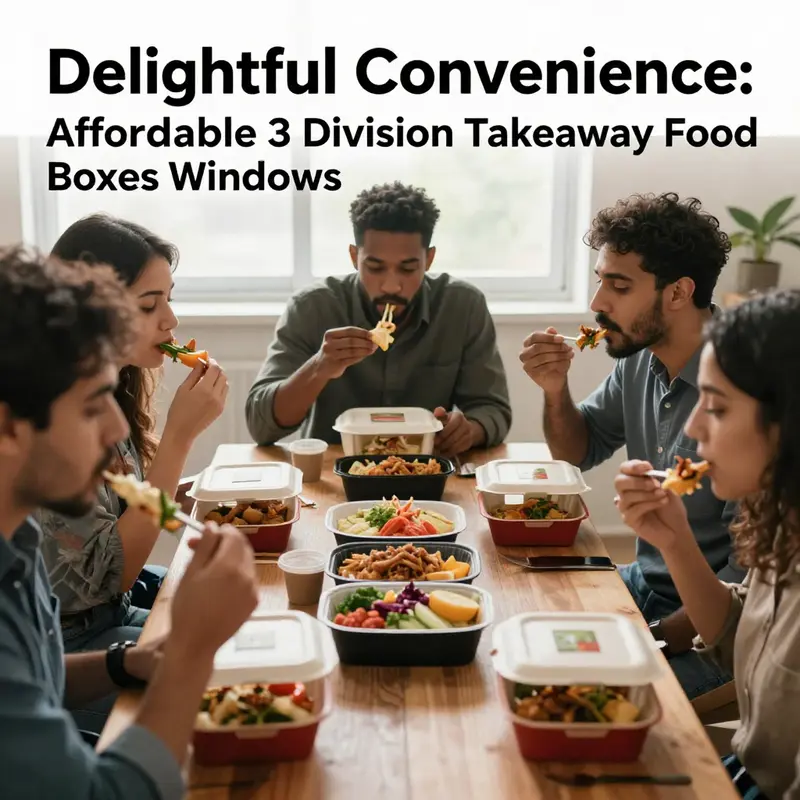
Across a crowded market for takeaway packaging, the three-compartment box with a window has emerged as more than a simple containment solution. It represents a careful balance between affordability, visibility, and stewardship. In environments where price competition is intense and margins are thin, the design choices behind these boxes reveal much about how buyers and sellers interpret value. They are not just boxes; they are signals. They signal trust, efficiency, and a willingness to meet evolving expectations about sustainability without sacrificing the practical demands of fast service, grease resistance, and reliable transport. The story of these windowed, multi-compartment packages begins in places where manufacturing capability, logistics networks, and consumer demand converge—the industrial hubs of southern China and the adjacent coastal corridors where scale and automation enable price discipline while still allowing for customization. Guangdong, with its dense ecosystem of suppliers, equipment manufacturers, and freight nodes, has built a supply fabric that reduces cycle times from order to delivery and keeps costs in check. Proximity to major ports, experienced freight forwarders, and integrated material sourcing translate into shorter replenishment cycles for buyers who must keep dish throughput high while holding inventories lean. The result is a market where bulk purchases drive down unit costs, and the windowed design moves beyond novelty to become a standard feature for retailers who want to showcase meals before the first bite. The window itself is a technical and symbolic feature. A precisely die-cut window on the top or side panel allows customers to glimpse color, texture, and portioning without exposing the contents to air or handling. This visibility has a psychological effect. It reduces perceived risk. It invites trust, because customers can quickly confirm that the meal on display matches what they ordered, whether they are collecting a familiar favorite or trying something new. For operators, the ability to advertise quality at the point of checkout is powerful. A well-framed, bright image through a secure window reduces the cognitive load on the consumer and can tip the decision in favor of a particular item. Yet the window’s value is inseparable from the packaging’s other core traits: the three compartments must contain sauces and sides without leaking, the box must withstand heat and moisture, and the overall form must be compatible with stacking, transport, and shelf conditions. In many markets, these requirements push suppliers toward materials that strike a careful balance between cost, performance, and environmental impact. Kraft paper remains a stalwart for many operators seeking recyclability and a grounded, earthy appearance that resonates with sustainability-minded customers. But the drive toward responsible packaging has broadened the material palette. Biodegradable options such as polylactic acid (PLA) and compostable paperboard are increasingly viable even in budget-minded ranges. Sugarcane bagasse and cornstarch composites offer a mid-path between performance and end-of-life considerations. The common thread across these materials is a willingness to prioritize compostability and recyclability without jettisoning the mechanical attributes that matter in a fast-food workflow: stiffness for stacking, a grease barrier, and the confidence to handle hot foods without deformation. The window’s performance hinges on these materials’ compatibility with the inner structure. A die-cut window must be precise, with clean edges and a seal that prevents delamination as oils migrate or steam builds. The result is a packaging solution that remains sturdy through the trip from kitchen to customer, even when the meal travels through crowded delivery lanes or sits briefly under warmer lights at a retail counter. The economics of these boxes are closely tied to scale. In practice, buyers discover that wholesale purchasing from large manufacturers yields a clear price advantage, especially when the supply chain can be synchronized with raw material procurement, tooling, and the automation of thermoforming lines. When the same facility handles raw-material sourcing, middle-stage conversion, and logistics coordination, the opportunity to offer discounted prices widens. The numbers often surprise early buyers: unit prices in the lower-cents range are feasible for basic configurations, and even with more sustainable materials, the cost delta versus conventional plastics can be modest enough to sustain a healthy margin at volume. The willingness to price-discount in exchange for volume rests on the capacity to guarantee consistent quality and predictable shipping times. For buyers evaluating suppliers, the calculus extends beyond the sticker price. Reliability matters as much as rate; a supplier’s track record for on-time production, quality-control checks, and the ability to accommodate customization—such as specific window shapes, print patterns, or color accents—becomes a deciding factor. In markets where demand is highly seasonal or tied to promotional events, the ability to ramp production without sacrificing quality translates into repeat orders and long-term partnerships. This is where the strategic value of Guangdong’s integrated ecosystem becomes most evident. Factories in key industrial clusters often operate with highly coordinated supply chains. They source recycled fibers or bio-based resins, maintain in-house lamination or coating processes for barrier properties, and then move finished boxes to regional distribution hubs in a matter of days. The proximity to port facilities further compress lead times, enabling quick replenishment for retailers who must respond to evolving consumer tastes or short-term promotions. Consumers today are not simply buying a meal; they are buying assurance that the packaging aligns with values around sustainability and responsible consumption. The visual window helps fulfill that assurance by offering a tangible glimpse of the meal, a cue that the product inside was prepared with care. Yet the market is nuanced. There is growing scrutiny of plastic windows and non-recyclable films, prompting a pivot toward biodegradable or compostable window films that maintain performance while reducing environmental impact. This tension—between the desire for clear product visibility and the imperative to lower ecological footprints—drives ongoing material research and a broader conversation about end-of-life options. The consumer audience for these boxes is diverse, from daily commuters relying on quick-service for lunch to families seeking value during busy weekends. In this mix, the three-compartment design assumes a clear functional advantage. It enables portion control and helps organize sauces, starches, and proteins in a way that reduces cross-contamination and keeps flavors distinct. For many cooks and restaurateurs, the box is a microcosm of how a well-run kitchen operates: the right space for each component, the right moisture management, and a presentation that invites a first impression of freshness. When these design elements come together with a window that is both secure and aesthetically aligned with the brand’s or outlet’s look, the overall packaging becomes part of the dining experience, not merely a vessel. For buyers, cost efficiency remains essential. The ability to secure favorable unit costs through bulk purchases does not absolve the purchase decision of other dimensions. They must assess the supplier’s reliability, the robustness of quality control protocols, and the capacity to handle customization requests. A box that can be printed with simple branding, or that can accommodate a preferred window size, will perform better in a competitive environment than a one-size-fits-all solution. The procurement journey is learning as much as it is negotiation. The operator who understands the trade-offs between window size, material selection, grease resistance, and print capabilities can design a packing solution that balances aesthetics with practicality. In many cases, this involves a dialogue with the supplier to align on testing protocols—wall thickness, seal strength, leak resistance, and print durability under heat and moisture. A well-structured testing regime yields reproducible results across batches, which in turn strengthens reorder rates and fosters long-term trust. The visual appeal afforded by the window complements the practical benefits of the three-compartment arrangement. For certain menus—such as bento-inspired assortments or premium ethnic selections—the container can act as a stage, framing the dish and suggesting quality through sight. The packaging becomes a storytelling device, where the window reveals the artistry of the meal before the consumer takes the first bite. In a competitive landscape, packaging that can deliver both cost savings and emotional resonance offers a durable advantage. The market’s trajectory toward discount options with sustainable materials signals a broader shift in consumer expectations. People want affordable meals, but they also want assurance that their choices align with environmental values. The windowed, three-compartment box is positioned to meet both desires: it provides a visually trustworthy display while accommodating materials that minimize environmental impact and support responsible waste management. Suppliers who invest in logistics coordination and customer experience tend to see higher reorder rates, a practical indicator of value that extends beyond the initial sale. The best suppliers emerge not only with competitive pricing but with a clear plan for consistent supply, effective communication, and a willingness to adapt to the customer’s evolving needs. For buyers exploring options, there is a clear path: favor established, scalable manufacturers that demonstrate a robust end-to-end supply chain, a track record of on-time delivery, and the flexibility to accommodate customization requests without sacrificing quality. The result is a packaging solution that feels affordable without feeling disposable. It reflects a careful alignment of economic, environmental, and experiential considerations. The conversation around discount three-compartment takeaway boxes with windows is thus a conversation about modern consumption itself—how people want to eat, how brands want to present meals, and how suppliers can harmonize price with performance, trust with transparency, and convenience with responsibility. As markets evolve, the windowed box will continue to adapt, adopting new materials and testing protocols while preserving the essential virtues that make it a staple in fast-casual and takeaway ecosystems. In short, the value proposition rests on three interlocking promises: clear visibility of the product, reliable containment under everyday handling, and a sustainability trajectory that makes affordable meals feel thoughtfully chosen rather than merely cheap. For readers seeking a practical entry into this space, the path is about balancing price with process. Seek suppliers who can demonstrate consistency in quality and lead times, and who can tailor the window design and material spec to the specific menu and service model. When these conditions align, discount 3-compartment takeaway boxes with windows become more than packaging; they become a trusted channel for communicating care, taste, and responsibility in a compact, efficient form. eco-friendly disposable 3-compartment packaging serves as a practical touchstone for how a single design choice—an effective window—can harmonize with sustainable materials and scalable production to deliver value across the supply chain. Together with the trend toward compostable films and recycled content, these decisions shape packaging that is not only affordable but also more respectful of the environment and more aligned with consumers’ evolving expectations. For further reading on industry trends and packaging innovations, reference the broader discourse in packaging journalism, such as Packaging Digest, which regularly analyzes material advances, sustainability initiatives, and global supply-chain dynamics in multi-compartment packaging. https://www.packagingdigest.com/
Final thoughts
As the takeaway food packaging market grows, offering attractive, functional, and eco-friendly options is paramount for food service businesses. Discount 3-division takeaway food boxes with windows not only align with current trends but also cater to the demands of environmentally conscious consumers. Effectively understanding the market dynamics, leveraging innovative materials, implementing strategic sourcing, and being aware of environmental impacts will empower your business to thrive. By focusing on these aspects, food service providers can enhance customer satisfaction while embracing sustainable practices.